Title: Epidemic Narratives: The Cultural Construction of Infectious Disease Outbreaks in India
Author: Dilip K. Das
Publisher: Orient BlackSwan
After the major outbreak of COVID-19 pandemic in 2020, there has been a plethora of studies about epidemic narratives in different kinds of literary and visual forms. Not that the issue had not been dealt with earlier, but somehow it increased manifold times and contends with a reality that is now increasingly becoming our way of life as new infectious diseases break out and older ones resurface almost every year. Drawing from the humanities, medicine and social sciences, and using the approach of interdisciplinary studies, this non-fiction examines stories of epidemic outbreaks in India, from the late-nineteenth century to the present, in the form of fiction, film, memoir, blogs, media reports and epidemiological accounts, to show how epidemics have been represented in social understanding.
Epidemics signify a crisis in society on multiple levels. The author, who specialises in medical humanities and has been meticulously studying and teaching courses in this area for several years, realised that very little is readily available in the nature of theoretical and analytical scholarship of epidemic narratives in general and on Indian narratives in particular and so he decided to write this book.
Divided into ten chapters, the study attempts a close textual analysis and focuses on the subjective experience of people affected by the outbreak. This ranges from the emotional impact of the suffering it causes to socio-political conflicts that it brings to the fore as a collective crisis. It poses two questions: what kind of plot do they employ, and what significances do they attribute to outbreaks as complex human events?
In the first chapter, the author discusses the social understanding of epidemics using a theoretical framework drawing on Charles Rosenberg and several other theorists to show how this understanding both derives from and adds to the biomedical view of disease. It examines how, in pluralistic societies, epidemic reality is constructed through both biomedical and cosmological paradigms, leading to contrary ways of responding to it. Thus, worshipping goddesses like Sitala Mata or Corona Devi and ritualising the event in shows of solidarity exists along with scientific perspectives.
The second chapter is about the impact of pandemic on the nation as a community that imagines itself as healthy yet is vulnerable to the threat posed by pathogens and pathogenic outsiders. The COVID-19 pandemic has made it clear that the future of public health in a rapidly globalizing context depends on how nationalism and internationalism balance mutual interests. Chapters three to ten deal with specific outbreaks. The third chapter discusses two intertextual narratives of the plague outbreak Pune in 1897 which culminated in the assassination of the Plague Commissioner Walter Charles Rand. The first is the autobiography of Damodar Hari Chapekar, who was convicted and hanged for the assassination. It shows how the outbreak was constructed and framed as a political event, marking the emergence of militant nationalism and anticipating the freedom struggle. The second narrative is 22 July 1897, a film made on the same incident by Nachiket and Jayoo Patwardhan.
U. R. Ananthamurthy’s novel Samskara1is usually studied as a text that deals with the themes of caste and religious orthodoxy, the role of tradition in a modernising society, and the tension between allegory and realism. In the next chapter, Das argues that plague not only provides the inspiration for the novel and its point of departure but also serves the function of a focaliser. Samskara is about the question of social order, how a particular code of conduct becomes rigid. In this context the plague outbreak serves as a metaphor for larger social and ethical crises.
Chapter five is about Spanish flu, which broke out in Bombay in June 1918 and was rapidly carried to the rest of the country by soldiers returning from the First World War. It begins with two official reports on the flu by the assistant health officer of Bombay municipality and the sanitary commissioner of India. The author examines newspaper accounts of the outbreak and two literary narratives to show how the outbreak was variously framed as a lapse of colonial public health, a personal tragedy and a cosmological crisis. The final section of the chapter discusses the memory of the Spanish flu a hundred years later with the outbreak of COVID-19.
Chapter six deals with an outbreak of viral hepatitis, a disease that is largely endemic but has occurred intermittently in epidemic form in India in the last hundred years. The author analyses Satyajit Ray’s 1990 film Ganashatru, an adaptation of Henrick Ibsen’s An Enemy of the People, which is about an outbreak of infectious hepatitis in a pilgrimage town in West Bengal. Taking the main theme of asserting commitment to ethics as against manipulation of truth for personal gain, Ray changes the plot, characterisation and context of Ibsen’s story to criticise religious dogma which contradicts rationality and places at risk the health of people.
The next chapter analyses narratives of the HIV/AIDS epidemic which broke out in India in 1986. It examines a range of media articles, literary and cinematic texts and an AIDS awareness video to track changes in the social understanding of the disease and those affected by it. From the stigmatising accounts of risk groups and HIV-positive individuals that was characteristic of the early decades of the epidemic in India, the focus shifted at the turn of the century to empathy for them. The author discusses in details the first commercially released Hindi film on AIDS, Naya Zaher (New Poison,1991) directed by Jyoti Sarup, mentions two human interest stories like Ritu Sarin’s ‘The Outcast’ (1990) and Subhash Mishra’s ‘Damned to Death’ (2000), analyzes a film like Ek Alag Mausam ( A Different Season, 2003) directed by K. P. Sasi, Negar Akhavi’s anthology AIDS Sutra (2008), and Kalpana Jain’s Positive Lives (2002) where the author journeys more than 15,000 kilometers in four months in order to get an idea of the epidemic’ s scale. He also analyses movies like Phir Milenge ( We’ll meet again, 2004) directed by Revathy and Onir’s My Brother…Nikhil(2005) and examines the dialectical relation between social understanding and narrative in bringing about this change.
Aashique Abu’s Malayalam film, Virus, is a fictional reconstruction of the outbreak of the Nipah virus disease in Kerala in the summer of 2018 and deals with biomedical explanations as well as accounts of personal suffering. The eighth chapter therefore shows how the film constructs the event as the disintegration and renewal of community and as a sign of the vulnerability of human life. It also shows how the ending denies any assurance that the crisis is over and will not recur.
The recent outbreak of COVID-19 in India that resulted in a nationwide lockdown in 2020 forms the subject of the next chapter. It discusses stories of the pandemic and the lockdown in terms of the suffering they caused, the loneliness, disruption of everyday life, time-space disorientation, loss of life and livelihood, the lack of institutional support, and the precariousness that resulted from all of these. It focuses on two kinds of stories, those of personal suffering like the video Infected 2030 and the Times of India blog ‘My Covid Story’, and those of collective suffering like Vinod Kapri’s documentary 1232 KMS and the book that followed from it, 1232 km: The Long Journey Home. The lockdown following the COVID outbreak in India disproportionately affected migrant workers who lost livelihoods and were prevented by the police and the local administration from returning to the safety of their villages. The author clearly analyses how the governments were unable to deal effectively with so complex a crisis.
The last chapter attempts to explain why narrative is the genre best suited to represent the experience of epidemic, and why epidemic in turn calls forth narrative as its most suitable mode of representation. We make sense of an outbreak in two ways, as an objective event and as subjective human experience. Narratives bring out both these dimensions, by emphasising emotional responses to disease, death and suffering as well as making cognitive sense of it. The book also contains an interesting epilogue by S. Mukundan who examines a narrative poem Plague Sindhu (1924) by Anthony Pillai recording the outbreak of plague in his home district of Theni in Madras Presidency. The poem is an apt example of how an outbreak of infectious disease comes to be socially constructed in terms of both modern scientific ideas of disease-causation and traditional ideas of disease as divine punishment for wrongdoing.
As mentioned earlier Epidemic Narratives takes as its main theme Charles Rosenberg’s argument that the social reality of disease is constituted in the frames of explanation provided by biomedical, political, cultural and social ideals and practices. Das mentions that the book is about “human suffering and compassion” and it will be of interest to researchers and students of literature, cultural studies, the history of medicine and public health policy.
.
Translates to ‘A Rite for a Dead Man’, a Kannada novel written in 1965 ↩︎
Somdatta Mandal, critic and translator, is a former Professor of English at Visva Bharati, Santiniketan.
PLEASE NOTE: ARTICLES CAN ONLY BE REPRODUCED IN OTHER SITES WITH DUE ACKNOWLEDGEMENT TO BORDERLESS JOURNAL
Perhaps, most sceptics will say it is against human nature to stop fighting and fanning differences. The first recorded war was fought more than 13,000 years ago in what is now a desert but was green long ago. Nature changed its face. Continents altered over time. And now again, we are faced with strange shifts in climate that could redefine not just the dimensions of the surface area available to humankind but also our very physical existence. Can we absorb these changes as a species when we cannot change our nature to self-destruct for concepts that with a little redefining could move towards a world without wars leading to famines, starvation, destruction of beautiful edifices of nature and those built by humankind? That we could feed all of humans — a theory that won economist Abhijit Banerjee his Nobel Prize in 2019 so coveted by all humanity — almost seems to have taken a backseat. This confuses — as lemmings self-destruct…do humans too? I would have thought that all humanity would have moved towards resolving hunger and facing the climate crises post-2019 and post-pandemic, instead of killing each other for retaining constructs created by powerbrokers.
In the timeless lyrics of ‘Imagine’, John Lennon found peace by suggesting we do away with manmade constructs which breed war, anger and divisions and share the world as one. Wilfred Owen and many writers involved in the World Wars wrote to showcase the desolation and the heartfelt darkness that is brought on by such acts. Nazrul also created a story based on his experience in the First World War, ‘Hena’, translated for us by Sohana Manzoor. Showcasing the downside of another kind of conflict, a struggle to survive, is a story with a distinctive and yet light touch from S Ramakrishnan translated from Tamil by B Chandramouli. And yet in a conflict-ridden world, humans still yearn to survive, as is evident from Tagore’s poem Pran or ‘Life’. Reflecting it is the conditioning that we go through from our birth that makes us act as we do are translations by Professor Fakrul Alam of Masud Khan’s poetry and from Korean by Ihlwha Choi.
A figure who questioned his own conditioning and founded a new path towards survival; propounded living by need, and not greed; renounced violence and founded a creed that has survived more than 2500 years, is the man who rose to be the Buddha. Born as Prince Siddhartha, he redefined the norms with messages of love and peace. Reiterating the story of this legendary human is debutante author, Advait Kottary with his compelling Siddhartha:The Boy Who Became the Buddha, a book that has been featured in our excerpts too. In an interview, Kottary tells us more of what went into the making of the book which perhaps is the best survivor’s guide for humanity — not that we need to all become Buddhas but more that we need to relook at our own beliefs, choices and ways of life.
Another thinker-cum-film maker interviewed in this edition is Vinta Nanda for her film Shout, which highlights and seeks resolutions for another kind of crisis faced by one half of the world population today. She has been interviewed and her documentary reviewed by Shantanu Ray Chaudhuri. Chaudhuri has also given us an essay on a bookshop called Kunzum which continues to expand and go against the belief we have of shrinking hardcopy markets.
Gastronomical adventures seem to be another concurrent theme in this edition. Rhys Hughes has written of the Indian sweets with gulab jamun as the ultimate life saver from Yetis while trekking in the Himalayas! A musing on lemon pickle by Raka Banerjee and Ravi Shankar’s quest for the ultimate dosaaround the world — from India, to Malaysia, to Aruba, Nepal and more… tickle our palate and make us wonder at the role of food in our lives as does the story about biryani battles by Anagaha Narasimha.
Talk of war, perhaps, conjures up gastronomic dreams as often scarcity of food and resources, even potable water and electricity is a reality of war or conflict. Michael Burch brings to us poignant poetry about war as Ramesh Karthik Nayak has a poem on a weapon used in wars. Ryan Quinn Flanagan has brought another kind of ongoing conflict to our focus with his poetry centring on the National Day (May 5th) in Canada for Vigils for Missing and Murdered Indigenous Women by hanging red clothes from trees, an issue that perhaps has echoes of Vinta Nanda’s Shout and Suzanne Kamata’s poetry for her friend who went missing decades ago as opposed to Rachel Jayen’s defiant poetry where she asserts her womanhood. Ron Pickett, George Freek and Sayantan Sur have given us introspective perspectives in verse. We have more poetry asking for a relook at societal norms with tongue-in -cheek humour by Jason Ryberg and of course, Rhys Hughes with his heartfelt poem on raiders in deserts.
The piece that really brought a smile to the lips this time was Farouk Gulsara’s ‘Humbled by a Pig’, a humorous recount of man’s struggles with nature after he has disrupted it. Keith Lyons has taken a look at the concept of bucket lists, another strange construct, in a light vein. Devraj Singh Kalsi has given a poignant and empathetic piece about trees with a self-reflective and ironic twist. We have narratives from around the world with Suzanne Kamata taking us to Osaka Comic Convention, Meredith Stephens to Sierra Nevada and Shivani Shrivastav to Ladakh. Paul Mirabile has travelled to the subterranean world with his fiction, in the footsteps perhaps of Jules Verne but not quite.
We are grateful to all our wonderful contributors some of whom have not been mentioned here but their works were selected because they truly enriched our June edition. Do visit our contents page to meet and greet all our wonderful authors. I would like to thank the team at Borderless without whose efforts and encouragement our journal would not exist and Sohana Manzoor especially for her fantastic artwork as well. Thank you all.
Wish you another lovely month of interesting reads!
First published in the collection titled Baethar Daan (Offerings of Pain, 1922), Kazi Nazrul Islam’s short story, Hena, is set against the backdrop of the First World War where the writer himself had fought as a young soldier (1917-1919). It has been translated by Sohana Manzoorand brought out to commemorate Nazrul’s 124th Birth Anniversary.
Nazrul in British Army uniformBaethar Daan or Offerings of Pain book cover
A trench in Verdun,France
This must be what they call rain of fire! And the sounds! The roaring sound of the artillery! Not a speck of blue sky can be seen– as if the whole sky has been set on fire. The thick rain of fire that pours down from the exploding cannonballs and bombs is so intense that if those were real raindrops trickling out of the blue eyes of the sky, the entire world would have been flooded just in a day. And if these sounds that were louder and more intense than any thunderstorm, would continue like this, people’s eardrums would split, turning them deaf. Today, we the soldiers could only recall the song that is sung during Holi celebrations:
“We will play holi with swords today,
All the soldiers of the world are gathered here
Shields playing the trumpets, cannon balls the squirt pumps
Ammunitions are colourful, the battle is intense.”
It is very true that the ammunition has caused the sky and ground to turn completely red. The reddest are the congealed blood on the bayonetted chests of the unfortunate ones! No other colour but red! As soldiers fall one by one, each one a martyr, they lie on the ground, dressed in red like bridegrooms!
Agh! The worst of all is the smoky smell. It is enough to turn your stomach. Are not human beings the best of all creations? Then why have them killed in such ugly and terrifying ways? When the inanimate lead bullets, hit someone’s bones, they explode with a horrid force and tear through the flesh.
If human beings used their intelligence in more productive ways, they could have claimed a place close to the angels. Oh, and this heart-rending thirst! The friend lying next to you, his rifle slipping from his hand, cannot be awakened even if a thousand cannons roar by his ear. No general can ever make him obey his orders. After fighting for seven days at a stretch in this muddy trench he has finally fallen asleep. He is finally at peace! A rare touch of soothing contentment lingers on his cold and dry lips.
But I feel so thirsty. Let me take the water-bottle from his waist and take a sip! I haven’t had a drop since yesterday. No one cared to offer me a drink. Aah…! This one sip feels so sweet! My Lewis gun doesn’t work anymore. It grew tired after days of continuous shooting. I will take the gun of my deceased friend then. If his mother, sister or wife were present here, they would surely have taken his broken skull on their laps and cry their hearts out! Well, I guess, in a few minutes, a heavy shell will land in front of the trench and bury the two of us! It won’t be too bad actually!
It is really funny as I think of the women crying. All of us will die one day, what is there to weep? Death is an eternal truth — why should one grieve over something that is so normal and inevitable?
I am going through so much pain, after receiving so many wounds, but my heart is filled with a demonic joy! I cannot sketch this feeling with this wooden pencil! There is often a joy that lies asleep at the heart of extreme pain which we can’t really feel! And is this habit of writing something bad? I have been swimming in fire, with scores of dead bodies under my feet and bombs dropped from aircraft bursting over my head, artillery shells are exploding and rifle and machinegun bullets are zooming past, still, deep inside, I feel restless because I couldn’t write down my innermost thoughts in the past seven days! But today, I feel relieved that I could start writing again!
Let me rest for a while, leaning against my dead friend. Ah, it feels so good!…
An unknown young girl of this distant land across the sea gave me some pickles and two slices of bread with butter which I haven’t had time to eat… The women of this country look at us with affection and pity! . . . . Ha ha ha, look at the bread here—these are dry and seem roasted! Let’s see if the bread is tougher than my teeth. I have no other option but to eat these — I am so hungry. The pickle is still quite fresh though!
That girl who was thirteen or fourteen (in our country, she would be wedded by now, if not already a mother), put her hands around my neck and kissed me. She said, “Brother, you must drive the enemy out with full force.” I broke into a pure, sad smile.
Ah! I can finally see the sky. A strip of blue sky can be seen behind the mass of heavy clouds. It is so beautiful– like a pair of blue eyes filled with tears! Anyway, I will write down my other thoughts later. The spirit of my dead friend must be mad at me by now. What, my friend, you want a drop of water? See, how he is staring at me! No, my friend, I tell you your beloved is waiting for you with a glass of lemonade in the other world. I would not want to disappoint her, would I?
Ah, I seem to remember so many things today. But no! There’s nothing to remember! These are all lies. Let me pick up the Lewis gun and start shooting. I see some of those who are helping me have stolen a nap!
But there, I can hear the sound of footsteps. They are all marching– left-right-left. That sound is so melodious! Are they coming to relieve us from duty?
Ouch! A moment of distraction has allowed a bullet to bruise my arm! Let me dress it. I hate those nurses. If a woman cares for me without loving me, why should I accept it? Ah! A war shows how killing others can be addictive.
The man who has fallen beside me is far stronger and healthier than me! But I have also seen how one’s mind has more strength than one’s body.
This Lewis gun is shooting about six to seven hundred rounds per minute. If only I could know how many I have killed! But the two Lewis guns here are keeping the enemies confined to their position. You can hear the loud groans of the enemies as they die in droves! The beauty of such youthful deaths is boundless!
A tent at the river Seine, France
I slept for all forty-eight hours of the last two days. And now I have to get dressed for battle and go out to destroy God’s creatures once again. The killing game is the right kind of activity for stone-hearted person like me.
Today that kind girl took me to visit her house… How clean and pretty are the houses here! The girl has clearly fallen in love with me. And I, too, have begun to love her… In our country, people would have said that the girl has gone bad… They would not have liked to see a young girl going out with a young man of twenty or twenty-one.
People look at love in such ugly ways these days! Are these human beings, or vultures? There is so much sin in the world! How did the people become so petty? The sky above is so vast and blue, but beneath the same sky human beings are so mean and narrow-minded!
Fire, you keep raining down! Let the curse of God float downward like frozen chunks of ice… Oh the horn of Israfil[1]! Do blow and immobilize the world! Oh, the thunder of destruction, strike inside the human brains, like the bombs and the artillery shells. And let the entire sky fall on the heads of those people who slander love, and blight the flowers…
If I could dress up one of my countrymen the way I am dressed now, and pushed him down, I am sure he wouldn’t be able to get up, no matter how hard he tried. I am highly amused at my bulky and sluggish appearance.
A ‘wicked’ friend once commented “What pleasing looks!” What a weird adjective! And another one is supposed have said, “The bullock looks like a katla fish!”
A thick forest near Paris, France
All on a sudden, we were sent to this dense forest yesterday. I have no clue why we had to fall back. This is the beauty of military life—an order is given and you are told “Get it done!” You can never ask “Why do I have to do this,” or ask for an explanation. It’s an order –that’s all!”
If I say, “I am going to die,” a stern voice will reply, “As long as you breathe, keep on doing what you are doing, if you fall dead on your right foot while you are marching, let your left foot keep up the pace!”
There is a strange beauty in obeying orders with blind obedience! What tenderness it is that lies at the heart of a thunder! If the entire world could come under one (and only) such military regime, then it would turn out so beautiful that even calling it a heaven on earth would not be enough.
The British nation is so great now because of the discipline they exercise on everything they do. They walk so tall that we can never see the crown of their heads no matter how hard we crane our necks — and let our headgears fall off while doing that! To speak frankly, their empire is like a huge clock that is always correct and faultless. Its two hands run in precision. The clock is oiled every day so there is no speck of rust anywhere.
We were the ones who chased the Germans to the Hindenburg Line and then we had to retreat so far! Only the maker of the clock knows which hand has to move at what pace, but the hands don’t know anything about it. But the hands have to keep ticking because these are continuously driven by a spring from the rear.
We badly need a disciplined, clockwork system like this. This reckless nation of ours really needs to be tied up and disciplined; otherwise, there is no hope of it rising anytime in future! If everybody wants to be the leader, who will do the work?
Oh, the artillery shells raining on us even at this distance! This is really uncanny… The war is being fought so far away but cannon-balls are dropping on us in the forest!
Well, an elephant might think that it is the biggest animal in the world. But even a mosquito can cause it enough trouble through a single bite in its head.
It’s cool in this shady darkness here. How my heart had been yearning for this solace in darkness.
Alas! Darkness seems to trigger in my mind so many fond memories! But, no, let me just climb up the tree and see if any enemy is hiding nearby.
How charming that distant ice-covered river looks from the tree! But there are also some big houses around which shells have torn through, leaving ugly gaping holes! This game of destruction reminds me of my childhood when we used to build clay doll’s houses. After we were done with our play, we used to crush them with our feet and sing:
“We made them gleefully with our hands
We broke them gleefully with our feet!”
The cannon-balls are flying through the air and dropping on distant planes, and from my vantage point, they look like falling stars.
And the sound these fighter planes are making! Oh! The way they are climbing and diving– it looks as if an expert kite flier is maneuvering his fighter-kite to hurtle through the sky in search of a rival. That plane is ours! The German zeppelins look from a distant more like big, flying caterpillars.
Anyway, let me get a bit of pickle out of my haversack. That foreign girl is so far away from me today but the pickle seems to retain her touch! Hell! What am I doing? Why do I keep on thinking of all this gibberish? I don’t need the pain that arises from nowhere and tortures me!
Well, well! What do I see there? A friend of mine is trying to take a nap on that tree. See, he has tied himself with his belt to a branch quite tightly. If he somehow falls in the water below, it will be quite a hassle for him! But then why not? Oh God, let him fall!
Should I shoot a bullet past his ear? Ah, no! Poor thing! Let him sleep awhile. Nobody except me has such hapless eyes that sleep never touches, or a blasted mind like mine which gets sick thinking about the goings on in the world. It’s night – quite deep into the night, I guess! I will have to stay here in this crouching position till dawn…. Perhaps when I am old (if I live that long), the trials I am going through will turn into sweet memories.
The light of the moon, which will turn into a full moon tomorrow night, is creating patterns of light and shadow in the forest below, which make the forest look like a giant cheetah! The heavy, dark clouds over my head are slowly drifting towards some unknown destination. A few drops of cool water fall on my head. Ah, how sad these drops feel! Ah!
The moon is now hidden by a cloud, and now it shoots out and hides behind another cloud! It seems like a game of peekaboo played by beauties living in the glass palace of a king. Who is running in the sky now? The clouds or the moon? I would say the clouds but a simple child might say the moon. Who is right? Aha! How lovely is the play of light and shadow!
What’s that bird cooing in the distance? The delicate tones of the bird songs of this country seem to evoke a sweet laziness… I find them intoxicating.
In this light and shadow, I remember so many things! But the memory is so full of pain.
I recall telling her, “I love you so much, Hena.”
Hena shook her raven black silky hair and replied, “But Sohrab, I haven’t been able to love you.”
That day, the bright saffron flowers seemed to be playing a game to welcome the new day in the garden of Balochistan. Unmindfully, I broke a branch of walnut and collected some flowers from the deodar tree and threw them at her feet.
A few drops of tears trickled down her dark eyes lined with Istanbul kohl! Her face turned redder than her henna dyed hands!
I picked up a bunch of raw plums and threw them at the nightingale sitting in bush of screw pine flowers. The birds stopped singing and few away.
What Human beings think is the closest turns out to be the farthest from them! This is indeed a profound mystery! Hena! Oh Hena! There’s just so much regret…!
Hindenburg Line
Oh! What is this place? I cannot believe that this is an underground land of fairies and monsters! Can a trench built during the wartimes be really as huge as a city full of houses? Who could have imagined this? What a gigantic venture so deep down underground! This is indeed another wonder of the world! One can live as luxuriously as the Nabobs of Bengal in this place!
But I did not come here for the peace it offers! I did not ask for comfort. I only wanted pain and suffering. I am not made for enjoyment and comfort! I would have to seek out another path then. It seems like I found a house under the tamarind tree in trying to escape from tasting sour things.
No, I need to be active. I want to drown myself in work. But this life of comfort here is embarrassing!
I heard that iron turns into steel when it burns in fire. What about human beings? Only ‘baptised’?
Being freed of restraints, my mind has fled again to that room full of grapes and pomegranates! I recall those days again!
“Hena, I’m about to jump into the fire that burns in a free country. I am burning inside, so let my body burn too! Maybe, I will never return. But what means do I have? How do I find travel expenses? How will I live in the foreign land?”
Hena’s henna-dyed fingers trembled like young shoots in my hands. She replied in a clear voice, “But that’s not how your life becomes meaningful, Sohrab! This is only the hot-headed youthfulness! You’re clinging to a lie! There is still time for you to get the message!… See I’ve not been able to love you yet.”
All is empty. Nothing remains. A gusty wind blew through the thick tamarisk trees and cried, “Ah!… Ah!… Ah! When the first battalion of our Baloch Regiment 127 started off for this country from Quetta, one of my friends, a young Bengali doctor, sang while sitting under a pear tree:
“How will you make him return
The one you bade farewell in tears.
In this languid air
At night in the garden
Have you recalled him under the bakul tree?
How will you make him return!
The honeymoon of the full moon
Returns from time to time,
But the one who has gone, does not come back!
Now how will you make him return?”
How weak I am! No wonder I did not want to come to this place. What would I do in this palatial life? Fellows of my regiment think there is no one as carefree and happy as I am. It’s because I laugh a lot. Does anybody know how much blood is hidden in the heart of the henna leaves?
I played “Home sweet home” on the piano and sang along so beautifully that the French were amazed! It was as if we are not human beings and so we cannot do anything as well as them! We have to break such preconceived notions.
Hindenburg Line
What else can I do if there’s no work? I have to find something to do. So last night I crawled for about a couple of miles and cut through much of their wires. Nobody seemed to notice.
My commanding officer said, “You’ll be rewarded for this.”
So, I became a corporal today.
The other day, I met that foreign girl too. She has grown much prettier in these two years! She told me directly that if I had no objection, she would like to have me as her partner! I told her, “That’s impossible!”
I said to myself, “A blind man loses his staff only once. Again? No way. I have had enough.”
The way her blue eyes filled with tears and her bosom heaved made a stone-hearted person like me cry!
She controlled herself and said, “But you’ll allow me to love you? Like a brother at least…?”
I am just a god forsaken wayfarer. So, I showed a lot of interest and replied, “Of course.” Then she left bidding me adieu. She never came back! I can only recall that line, “But the one who has gone does not come back.” Oh!
Anyway, the day was well-spent with the Gurkhas. These Gurkhas were really like big babies. I would not have believed that grown men could be so naive and innocent. These Gurkhas and their brothers-in-law, the Garwhals– both turn into killing machines in the battle field! Each of them turns into a tiger, a “Sher-e-Babbar.” Even the Germans throw away their rifles and run off at the sight of their kukri knives. If these two fighter groups did not exist, we would never be able to achieve this much. Only a handful of them are still alive. Entire regiments of them have perished. Yet, the few of them that are still alive are so full of life, as if nothing has happened!
Nobody can make them understand what great feat they have achieved. And those tall and sturdy Sikhs—what betrayers they have turned out to be! Some shot themselves in the arm and ended up at the hospital.
Look there! There is a battalion ‘march’ going on in the trench. We are marching at the beat of a French band! Left- right-left. A thousand people are all marching at the same pace– all at once. How amazing!
Balochistan
My cottage in Quetta
In the grapevine garden
What happened? I am trying to find out an answer to the question, sitting in this walnut and pear garden. All our Indian soldiers have returned home, and so have I. But how happily did those two years pass by!
I am looking at the blue sky washed by rain, which reminds me of the wide blue eyes of the young French woman. Looking at the mountain-yaks I remember her silky curly hair. And those ripe grapes– aren’t they exactly like the sparkling tears of her eyes?
After becoming an ‘officer’ I also received the title “Sardar Bahadur.” My boss would not let go of me. How could I make him understand that I was not there to form a permanent bond? I did not cross the seas with any high ideals. I only went to purify myself in fire — to hide myself too.
And I never thought I would return here of all places. But I had to– it seems I am tied to this land!
I have no one, I have nothing. And yet I feel, everything is here. Who am I trying to comfort?
I have not hurt anybody; nobody hurt me. Then why was I reluctant to come here? But that’s a matter of unspeakable agony. I can’t articulate it well enough. Hena! Oh! There’s nobody around, still the wind carries the broken echo “na…na”. “No” it is then!
The brook still flows through the hill; only the girl Hena, whose footprints are still etched on the stone-steps, is no longer there. There are so many things lying around that remind me of her soft touch.
Hena! Hena! Hena! Again that echo! Na –Na- Na!
***
I have found her! She is — here. Hena! My Hena! I saw you here today, here in Peshawar! Why do you keep hiding the truth behind those lies? She watched me from a distance and cried. She did not utter a word; she only looked at me and shed tears.
In such meetings, tears are the most articulate language of the heart. She told me again that she could not bring herself to love me. The moment she uttered the word “no” she cried so dejectedly that even the morning air became mournful!
The biggest puzzle in this world is the mind of a woman!
Kabul
Dakka camp
When I heard that the great man Ameer Habibullah Khan had been martyred, I felt that the top of the Hindukush had collapsed! And Suleiman Mountain must have been torn out of its base!
And I wondered what I should do. For ten days, I kept on thinking. It was no easy task!
I decided that I would fight for Ameer. Why? Well, there’s no answer to that question. But let me say candidly that I do not consider the British as my enemy. I have always thought of them as my best friends. But even if I say the reason for my joining the war this time was to protect the weak, even if it meant sacrificing my life, it won’t be quite the right answer. Even I do not understand my own whims!
That morning, someone seemed to have set fire to the pomegranates. They looked bright red! That was perhaps the blood from the hearts of many like me!
The vast sky had just paused after crying incessantly. Its eyes are still misty, so it would start crying again. A broken-hearted cuckoo had also been weeping somewhere, turning its eyes red and its voice rang through the damp winds of the autumnal morning. Someone on the other side of the dried river was playing the Asawari raga[2]on the shehnai. Its notes echoed the doleful cries of a lonely heart. I felt the sadness more than anyone else. The strong smell of henna flowers intoxicated me.
I said, “Hena, I am going to war again, to fight for the Ameer. I won’t come back. Even if I live, I won’t come back.”
Hena buried herself in my chest and cried, “Sohrab, my love! Yes, go wherever you will. Now is the time to tell you how much I love you. I won’t hide the truth anymore. I won’t cause my love further pain….”
I understood. She was a warrior-woman, a daughter of the Afghans. Even though being an Afghan myself I have spent my entire life fighting, she had wanted me to sacrifice my life at the feet of our country. She wanted me to sacrifice my life for our land.
O, the heart of a woman! How could you hide yourself like this? What perseverance! How could such a soft-hearted woman be so tough at the same time?
Kabul
My body has taken five bullets. But until the moment I lost consciousness, I had defended my soldiers with all my strength!
O my God! If protecting my country with my blood makes me a martyr, then I am a martyr.
I came back. Hena followed me like a shadow. How could she hold back so much love that flowed like a rapid tumbling uncontrollably down the mountain with her fragile ribcage!
The Ameer has given me a place in his court. I am one of the commanders of his army.
And Hena? There is Hena, sleeping by my side, clinging to my chest…. Her heart is still fluttering with some unknown fear. Her sighs are still pervading the winds with some dissatisfaction.
The poor girl has also been badly wounded like me! Let her sleep. No, we’ll sleep together. O God — don’t give us any more pain by waking us up from this pleasurable sleep! Hena! Hena! –na—na—Ah!
.
[1] The angel who blows the trumpet on the day of judgement in Islam.
[2] A morning raga or melodic composition in the Hindustani classical tradition.
.
Kazi Nazrul Islam(1899-1976) was born in united Bengal, long before the Partition. Known as the Bidrohi Kobi, or “rebel poet”. Nazrul is now regarded as the national poet of Bangladesh though he continues a revered name in the Indian subcontinent. In addition to his prose and poetry, Nazrul wrote about 4000 songs.
Sohana Manzoor is an Associate Professor at the Department of English and Humanities at ULAB, a short story writer, a translator, an essayist and an artist.
PLEASE NOTE: ARTICLES CAN ONLY BE REPRODUCED IN OTHER SITES WITH DUE ACKNOWLEDGEMENT TO BORDERLESS JOURNAL
My friend, you would not tell with such high zest
To children ardent for some desperate glory,
The old Lie: Dulce et decorum est
Pro patria mori*.
-- Dulce et Decorum Est, Wilfred Owen (1893-1918)

*Translated: "It is sweet and fitting to die for the homeland."
South Africa
India
Singapore
World War 1 memorials stretched across countries: Courtesy: Creative Commons
On 11th November, we remember the men who gave up their lives to win wars for those in power. Remembrance Day started as an annual event after the First World War (28th July, 1914- 11the November, 1918) more than a hundred years ago, in memory of soldiers — some of who were lost in the battle grounds, whose remains never got back to their families. Some of these men who fought were from countries that were subservient to colonial powers who started the war and some, like the soldier-poet, Wilfred Owen, were from conquering nations.
This was much before atom bombs were dropped on Hiroshima and Nagasaki. Eventually, a nuclear armistice was declared. Mahatma Gandhi (1869-1948), an internationally acknowledged apostle of peace, had an opinion on this: “‘The very frightfulness of the atom bomb will not force non-violence on the world? If all nations are armed with the atom bomb, they will refrain from using it as it will mean absolute destruction for all concerned?’ I am of the opinion that it will not.” Has this nuclear armistice made the world more peaceful? And if so, what is the quality of peace that has been wrought by drumming fears of annihilation in human hearts? Could the ‘fakir…striding half-naked up the steps of the viceregal palace’ be right after all?
Here we have collected a few stories and poems around ongoing conflicts and wars which stretch to the present day, some old and some new… some even written by men who faced battle…
Poetry
A poem and art by Sybil Pretious in memory of soldiers who died in the World War I.
From the Pages of a Soldier’s Diary… by Mike Smith takes you on a journey through the pages of a colonial diary and muses on choices he has made. Clickhereto read.
Bundu, Consoler of the Rich is a story based on memories of the Partition by Nadir Ali, translated from Punjabi by Amna Ali. Click here to read.
We’ve all heard the adage, those who don’t know history are bound to repeat it. Maybe like any good saying, it’s been over-used and we’ve forgotten to consider its core truism. But think about it. If we don’t remember, we tend to repeat former mistakes, because human-beings are very alike in their actions and reactions, and we have a horrible habit of thinking we’re so unique when we’re anything but that. The ego of is young. Occasionally, ignorance shields us from historical realities. When we get older, we sometimes stop caring and leave it to those younger to us. But both approaches have deep flaws. They abdicate the responsibility of living in this world.
What reason could any of us have for truly abdicating responsibility to our grandchildren, and those who will invariably come after we are gone? Is being young an excuse? Is being old? Or are we intrinsically fond of passing the buck, as American’s say, and not believing we’ll make enough of an impact in this world to even bother? I don’t think it’s that. I think it’s apathy and a childish belief someone else will do it for us. Just look at people who drop litter in the ocean, they don’t care that it will cause havoc on sea-life, they are not thinking of the future repercussion, they are thinking only of now. They don’t see how that one act has this deleterious knock-on effect that reverberates throughout our planet.
If you’re rolling your eyes and are about to give up reading, consider this: What is your value? What do you stand for? If you died tomorrow what would have been your legacy? Don’t think wealth or children, but your place in the chain stretching from the beginning of humanity to now. What have you done to help that chain? If you don’t think that is relevant, consider why this isn’t important to you and why being self-interested is justifiable to you when so many suffer, and the world is damaged by those like yourself who don’t care.
Maybe that sounds judgmental because of course, it is. Too often we can look back in time and see these pioneers and campaigners who try to make a change and be swallowed by disinterest on the part of the masses. Literally speaking then, the masses are the problem, because whilst a few good apples stand out and speak to things we need to do, the majority are thinking of just their survival and their immediate gratification. The concept of immediate gratification has taken deep roots in the current times.
Psychologists and thinkers have many ways to explain why the majority do nothing and seem apparently not to feel they have any obligation to improve the world we live in. Some say, it’s about human development; few attain that stage of self-realization where they feel a need to contribute beyond themselves. Others point to the hardship of life, and how when you struggle, you often do not have enough left over to help others. Of course, we all know notable examples of those who despite a hard life, gave in abundance to others.
If we remove religion and its dictate that people should help each other as part of being a good (Christian, Hindu, Muslim, Jew, Buddhist) would we have a lawless approach to giving and caring, that made social concerns null void? I would say it has less to do with dogma and religion and more to do with personal ethics. There are plenty of atheists who do a great deal for others and this planet, without any desire for recompense or a place in heaven. Therefore, it seems to be a deeply personal choice or evolutionary step.
If so, why do some evolve more than others? What do we need to do to achieve that selflessness and why do not many not want to achieve it? Those questions many never be answered, but they are part of a larger picture, that of our place in this world, and what we do to ensure there is a decent world for our progeny. I’ve been told this is a utopian way of thinking and human nature is baser, seeking only to procreate and thrive, sometimes at the expense of others. I am an idealist in that I believe there is intrinsic good in many (not all) people and that’s what gives being alive its deepest worth. Without helping make the world a better place in some way, we are just oxygen users, having too many children, using too many resources and trying to kid ourselves this won’t affect the future.
Growing up I was familiar with the peace sign so popular in the sixties, and we touted many of those symbols without really considering their history or how ‘working toward peace’ had actually played out through history. Maybe like many words, ‘peace’ is over-used and we don’t consider what it means in relation to today’s world. It’s as relevant as ever. If we think we’re not needed to increase peace, we’re living in cloud cuckoo land. Peace is one of the only consistent needs we have, aside food and water. It is the erosion of peace that causes the majority of our concerns, and the dismissal of peace that leads to some of our greatest strife.
So many continue to live in a part of the planet where peace doesn’t ever reign. Let’s stop and really think about that for a moment. Those of us who don’t live in those parts often try not to think about it, because it makes us feel guilty. What can we really do? Yet if we watch the news, almost nightly politicians debate about how best to deal with this issue. Or that’s what we’re led to believe.
What if we’ve been lied to? What if major world governments and thus, the puppet political system, do not wish for peace but thrive on discord because it permits them to do what they really want, which usually has to do with power, domination/control and profit. Think of all the wars since the second World War America has been involved in. Not one of them has brought peace, not one of them has ensured or guaranteed peace. The money spent is unfathomable and would have been enough to resolve many countries crisis’s forever. The profit is hidden and often in the sole possess of those who really pull the strings and many lives are lost. For what? Peace?
The idea of going to war to promote or guarantee peace is not a new concept. Traditionally however wars were fought for one reason only, one side wanted to conquer the other side to gain something (profit, land, slaves, control) and war was typically a male endeavor and one that seemed to exist in every society where human beings existed. You could say, war was uniquely human. Similar fighting has been witnessed in other primates, and animals, and they often share the occupation or protection of territory as their prime objective, so perhaps it’s an instinctual thing within our animal psyches to go to war. However, wars in the modern sense of the word have not been as basic, and their motivations have increased with the complexity of our societies, to make what we understand by war, a thoroughly human concept.
A complex society, invariably thinks of many more strategies related to war than a simple brawl in the old days, with sharpened rocks. The more complex, the more devastating and wide-reaching and drawn-out wars, think of Rome and their stampede across the world, or Alexander the Great’s conquests. Wars have been the cause of so many negatives, not the least; sexual assault, slavery, subjugation of people’s, famine, destruction of land and property and livelihood, physical and mental suffering and the collection of extreme wealth by the minority. Does that begin to sound modern to you? It does to me.
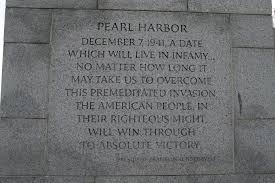
Today’s wars are all about the optics, the phantom, the illusion. Countries go to war to act out their own strength to ensure other countries don’t forget how mighty they are. The people who get caught in these, die or suffer terribly, the displaced cause huge economic fallouts and a minority get rich. It sounds a lot like a pyramid scheme to me. I began to think of the military machine as a pyramid scheme when I began studying the wars America has been in since WW2. One could argue without America half of Europe would be speaking German now. I personally don’t believe this is true, but it’s a common myth that thanks to America, Europe wasn’t destroyed. It might be worthwhile considering how WW2 began, what part America had in it, and the specific strategies employed, because it’s never as simple as it seems, not least this repeated thirst for groups to condemn and persecute other groups. Everyone involved has an agenda, few are as civic minded as they appear, and so a war is, as I said, more complicated.
What we do know is this: The World Wars (which sadly are being phased out of being taught at schools throughout the world, begging the question, if future generations don’t know what happened and why, how can we avoid a repeat?) was a consortium of countries, spearheaded by Germany, seeking to over-run vast parts of the world, and to promote a new ideology. I can resolutely say this needed stopping and at any cost because within that, were persecutions towards groups that led to mass slaughter. This is true in most wars but the difference is, this was on a larger scale (comparatively speaking with the then-populations) and anything less than involvement would have brought disaster.
What’s different about the wars since?
World Wars one and two were world wars, they involved nearly everyone, aside from Switzerland who decided in their neutrality they could make a tidy profit, and Spain, who were having their own civil war, and made a deal to be left out of it. When everyone is involved in a war that involves everyone, we can argue, this is a war that cannot be avoided, defused or worsened by involvement.
Can the same be said of Vietnam? Were the involvements of France and then America beneficial? Could the war have been avoided? Was it necessary?
The same can be said for many other so-called necessary wars, from the smaller (Falkland’s and the UK) to larger Korean or Afghanistan. In every situation, the involvement of other countries that were not directly affected, only worsened the war and suffering, the involvement was not simply to ‘help’ others, that was never the intention, the involvement had many motivations, and only one was a true sense of ‘aid’ with a view to peace. So why is it, when we see the soldiers leaving out, or the declaration of war, we also hear the word ‘peace’ bandied around? Why do people truly believe ‘going to war’ will ensue peace when history tells us, this is rarely the case?
Too often I have heard that people have to go to war for peace, or that peace-keepers will be sent in. I find it hard to find any war that has led to peace and even then, everyone involved would agree, if it could have been avoided, that would have been a better strategy altogether. In truth, WW1 and 2 could have been avoided, if you consider what really caused them. The feelings of helplessness and loss of face, led the German population for example, to vote for candidates who promised them a better future. Nobody knew how bad this would become, but the feelings of resentment and despair were the fuel for why extremism won the vote. In that sense, it’s very much a domino effect.
If then, most modern war begins with issues that can be resolved if identified, isn’t true peace keeping, to deal with those issues, before a war begins, rather than after that? Of course, those people are called diplomats and to be fair to them, many have thwarted worse outcomes through diplomacy, but just as diplomats can be successful, they are also used as pawns in a bigger system, that of the war machine. Certain countries wish to go to war almost at any cost. Consider the war between Pakistan and India and how culpable the English were for their interference with both countries as ‘peace keeper’ when in reality it was all about subjugation, control and imperialism. If we think this is an old-fashioned term, consider the patronizing tone of Western societies when ‘peace keeping’ in other countries, taking the paternalistic approach instead of considering what got them there in the first place. Years of exploitation aren’t easy to undo.
While this is never acknowledged and is hidden behind rhetoric about trying to protect others and ensure peace, we should bear in mind the true motivation. This doesn’t make us conspiracy theorists or negative thinkers, so much as realists who see history and its repetition of such wars and quiet conquests. The homogenization of the media has seemed on the surface, a good thing, but if the ‘facts’ are controlled then it’s more of an illusion of information, although preferable to the situation in those countries where international news is altogether restricted. When I moved to America, I was surprised at how little international news was on nightly TV and of that, how they only glossed over the most salient points. But it seems the rest of the world has followed suit, with the once immutable BBC now expressing opinion rather than fact, it seems they’re all spurred on by the rush to entertain rather than inform.
The outcome of exploitation is today greater than ever. It is the reason why so many refugees seek refuge in countries overburdened with too many asylums for their fragile infrastructures. A no win situation, begun after WW2 where Jews were not permitted asylum and the Geneva Convention acted to prevent this ever occurring again, to displaced peoples, yet countries who do not possess the jobs or social infrastructure like Spain, could not realistically take in the numbers arriving. War is not always the sole determinant for asylum seeking, but it remains the main reasons. Small wars unreported on daily newscasts, prevail in areas ravaged by gangs and corrupt governments. The West might consider themselves far advanced from this desperation but if we consider how many times the West has been implicated (or should have been) in foreign affairs that led to wars, it’s definitely a fully fledged partner in the root cause.
Take the South and Central American refugees streaming into Mexico as I write, seeking asylum in America as a prime example. Thanks in part to years of American meddling in local politics. We can wash our hands of it and say: This is their war! But we should be mindful of what led to the war. It’s never as simple as it seems. Years of erosion, weaponization and drug sales that would not exist if wealthy countries were not buyers, there are so many factors to consider, many of which originate outside of the actual country in question. When civil or border wars begin, they are rarely unprovoked and locally generated, but the result of years of exploitation and meddling from foreign interests.
Maybe we don’t want to admit that. And many times, that’s what politicians do, they simply refuse to see what history proves is true. By stating categorically, ‘this is not our fault or problem’ they tap into those people who desperately want to hear that, rather than take responsibility for something they feel they had no part in. Sometimes they genuinely didn’t have a part in it, but oftentimes we are a part of the problem, even if we aren’t willing to admit it. Every time we buy deeply discounted goods from other countries, we condone through our purchase, the maquiladoras where underaged women work for pittance, displaced from their home towns because NAFTA (North American Free Trade Agreement) created a bigger market and eroded the traditional farmers. They now make our Levi’s jeans which we want at a good price, and therein is our part in the exploitation cycle.
True, we don’t have to admit this. We can turn away from the oceans filled with debris cast off from giant containers routinely sunk poisoning the sea and sea life, even as those containers give us the affordable middle-class existence, we feel we are owed. We can turn away from child labour, gunrunning, drug-crimes, all related to things we set in motion from influential countries. We can say if we specifically didn’t sell Mexico a US gun, we’re not responsible for kids being shot; if we didn’t smoke a joint at college, we can’t be responsible for the drug-trade and its fall out; but the situation is far more insidious. No one trade is in isolation, they are all linked. So, when you smoke a joint from weed coming out of Mexico, you’re not just supporting the drug-trade, you’re supporting the heroin trade, the smack trade, the child-prostitute trade etc.
None of us want to own that kind of legacy, so it’s easier to just say: I have nothing to do with it. I find myself thinking that when I want to buy a cheap dress from a chain store that makes things in China, I should be thinking of the worker who made it and how little they were paid. I feel it when I go for a cheap taco for lunch or expect a Mexican local lawn cutter to charge less for their services, there are so-called levels of ‘innocent’ subjugation we permit because they’re enshrined into our system and only the most moral will ever have the strength to protest them. With regard to peace, we also turn a blind eye, instead of holding people responsible, perhaps because we don’t know how to, we condone non-peaceful interventions throughout the world, in the ‘name’ of peace all the time.
With 9/11 the outrage in the US was at an all-time high. It was the perfect timing for launching a war that in any other setting would have been pronounced doomed, foolish and already tried and failed many times. Yet based on emotion and rhetoric that’s exactly what America did and few protested, because fear, fearmongering and inaccurate emotive rhetoric rules the day. Now with social media, this tendency has run amok and very little fact exists so much as knee-jerk reactions, immediate- gratification and social outrage which is more false outrage than accurate. We feel good if we speak out about injustice as we perceive it, cherry picked by social media as the dish du jour and we don’t ever question how much social media manipulates us.
I find those who are not on social media have the vantage point of not being susceptible to this invariable bias. When we go back and check our ‘facts’ as we perceive them, we run into mine fields of websites littered with inaccuracies and who has the time to truly fact check? Today, the media en mass is less accurate, more reactive, more immediacy-based, and we’re junkies of the like button and click bait more than ever before. In fact, I just finished watching a documentary about how social media is specifically set up to emulate the impulses you have when gambling, with one example being that tempting ‘ding’ we receive when getting a message and how hard it is not to check. This is all psychological programming, and it’s deliberate, but who ever considers that and its far-reaching consequence on truth?
As long as we have our new iPhone (criminally expensive), we’re all good. The modern world keeps us too tired and busy to really muster lasting outrage about anything. In fact, we’re gaslighted if we do. Unless of course it’s the sanctioned ‘approved outrage’ that’s flavour of the week. We’re controlled in our responses more than ever before but believe we are freer than we’ve ever been. What a fallacy and what a stellar job those who control us have done. And before you say, “I’m not controlled!” Think about it – really think about it.
So how can we live in a peaceful world if our very notion of peace is perverted by the long-standing agendas of those who really set the schedule? How do we as individuals have any power for change? If we send our cousin off to war with misgivings and we’re told we’re not patriotic if we question his/her service, how can we ever expose the lies behind the notion of ‘peace keeping’ and what modern-notions of peace really mean? Just like Missionaries who originally might have had good intentions but essentially forced their way into cultures and demanded they adhere to a foreign God, we’re going into countries that have problems, possibly historically caused by the West, and thinking we know best. But there is absolutely no proof we do.
In fact, there is ample proof we don’t and we don’t learn. Of course, there are worse offenders. Iran’s shameful human-rights legacy, their determination to build a nuclear weapon are terrifying. But on the flip side, whilst I will never condone their punishment tactics or human-rights violations, I can see why they would wish to have access to a nuclear weapon if others have. What makes one country have the right to be weaponized and not another? Personally, I wouldn’t want Iran to have nuclear weapons but I also think it’s wrong of countries like America, the only country to have used (and some would argue, abused) a nuclear weapon, to dictate which countries can have access. It’s also wrong when you consider it is the very countries with weapons and power who often have sold those weapons to the countries, they then sanction for trying to build said weapons.
Ultimately as a peace striving person, I would wish NO country had nuclear weapons but how realistic is that nowadays? I think it’s like the Smallpox scenario. We can all agree to get rid of our Smallpox because we have eradicated Smallpox but what if one country keeps theirs and then has the upper hand over the rest? Can we ever trust other countries? Ideals aside, history tells us human nature is such, we rarely can trust even those closer, even our own governments. So perhaps skepticism and mistrust aren’t so much a peace-breaker as a natural response?
I’ve never felt there could be an ideal of total peace. I don’t think it’s within our purview as humans to achieve that. I hope I’m wrong and I hope the day comes that’s proven. Meanwhile, with America and Russia acting like stupid cold-war frien-amies again, I pause before I trust any country totally, not least my own. As such, we invariably have weapons of mass destruction to act as ‘deterrents’ as a stale-mate to prevent out-and-out war. Whether this will be our undoing, remains to be seen. It only takes one nuclear accident to prove anything nuclear wasn’t such a hot idea. Surely, we’ve learnt this? I would argue the younger generations haven’t because it’s not being taught and it takes me back to the idea of those who don’t know history are doomed to repeat it. If you believe your generation is ‘better’ and won’t make that mistake, consider how many generations had the same (wrong-headed) concept and the consequences thereafter.
Is there really an answer? I don’t have it But I think if we all stop hiding from reality and try to figure things out, we have a greater chance. Certainly, having a pie-in-the-sky approach doesn’t work anymore than being too reactionary does. At the moment, America is stymied by its polarization of thought and its reluctance to think. Until those change, we’re just a bunch of fussy children wishing bad things didn’t happen. I believe we can be more than that. Even if we don’t attain total peace, we can get closer.
.
Candice Louisa Daquin is a Psychotherapist and Editor, having worked in Europe, Canada and the USA. Daquins own work is also published widely, she has written five books of poetry, the last published by Finishing Line Press called Pinch the Lock. Her website is www thefeatheredsleep.com
.
PLEASE NOTE: ARTICLES CAN ONLY BE REPRODUCED IN OTHER SITES WITH DUE ACKNOWLEDGEMENT TO BORDERLESS JOURNAL.
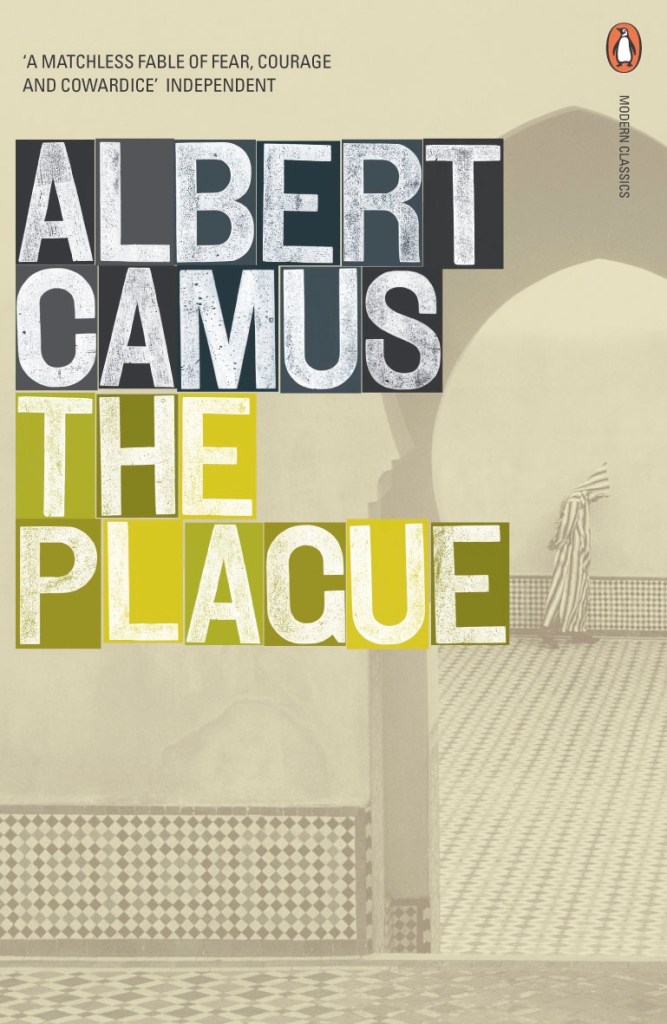
Camus’ La Peste has never been out of print. In the wake of pandemic that now sweeps the entire world, its sale has seen a surge quite unlike at any other time since its publication in 1947. What else can be a greater proof of the relevance of a work that seems to be an ageless parable of human condition.
The novel, most of which he wrote in confinement, away from his family due to his acute illness, is the story of a town suffering from bubonic plague. But this novel can also be seen as an allegory of human crisis brought about by moral contagion.
Camus belonged to a generation which was born either before or during the First World War, reached adolescence during the worldwide economic depression and turned twenty the year of Hitler’s rise to power. Next they saw the civil war in Spain, the Munich Agreements, the start of another World War in 1939, the fall of France in 1940 and four years of enemy occupation and underground struggle.
All of this, in his opinion, resulted in a human crisis where most people, disillusioned by religion or nationalism and wary of the traditional morality imposed upon them, lived in contradiction. They accepted war and violence which was given to them, which they had never wanted but from the consequences of which they could not escape. It was as if the entire generation was plagued by an indifference which led people to accept human suffering as a banal reality.
In one of his lyrical essays, The Almond Trees (1940), Camus wrote:
“I do not have enough faith in reason to subscribe to a belief in progress or to any philosophy of history. But I do atleast believe that men have never ceased to grow in the knowledge of their destiny. We have not overcome our condition and yet we know it better. We know that we live in contradiction, but that we must refuse this contradiction and do what is needed to reduce it. Our task as men is to find those few first principles that will calm the infinite anguish of free souls. We must stitch up what has been torn apart, render justice imaginable in a World which is so obviously unjust, make happiness meaningful for nations poisoned by the misery of this century.”
He believed in human kindness and solidarity. He believed that if in the face of a crisis people could rise and act, not out of some heroic courage expected of them, but with reason and optimism, then it would be possible to reduce human suffering.
Written in the given context, the novel quite pertinently, became a tale of a persisting contradiction and subsequent human actions in overcoming the condition.
“What’s true of all the evils in the world is true of plague as well. It helps men to rise above themselves.”
In the novel, after initially rejecting the plague, the people of Oran are forced to go into isolation and quarantine. In fact the whole city is closed down and its borders are sealed. There are people suffering from the disease, people in exile – away from their loved ones, people serving those ridden with disease and also people trying to make more money by smuggling goods. Here the depiction of illness, loneliness and separation is quite vivid – much that we can relate to as well at present?
Dr. Rieux, the one who detects the illness, assumes his responsibility and does what he must. He is an ordinary man doing extraordinary things, not out of a notion of valour but out of simple decency and a sense of moral obligation. His character personifies individual moral responsibility essential to make effective public choices in a society. At one point, he says:
“When you see the suffering it brings, you have to be mad, blind or a coward to resign yourself to the Plague.”
Rambert, a young journalist who is exiled in Oran, tries to escape the city initially but later he realises that he shares a common fate with rest of the people and joins in serving those afflicted.
Then one fine day, the plague disappears as mysteriously as it had appeared but not without playing havoc with the lives of people. Later when the people celebrate in the streets of Oran, Dr. Rieux observes:
“The plague bacillus never dies or vanishes entirely, it can remain dormant for dozens of years in furniture or clothing, it waits patiently in bedrooms, cellars, trunks, handkerchiefs and old papers, and perhaps the day will come when, for the instruction or misfortune of mankind, the plague will rouse its rats and send them to die in some well-contented city.”
Camus knew that even if a contagion, whether biological or moral, ends – one couldn’t be too sure of its absolute extinction. So in the absence of a clear moral lesson from this book, what is it that makes the book still relevant?
In the face of the present pandemic which lurks in the corners of our cities and stares at us from outside the windows of our isolated homes, this book not only brings to our notice the horrors such plagues can inflict but also the human will, solidarity and collective resistance that remain instrumental in overcoming such disasters. It puts our focus back where it should be – on assuming moral responsibility as individuals — on each act of kindness, on goodness which when collective not only helps combat a pandemic but also rouses our alertness lest our laxity make us miss the signs of an impending darkness.
Rakhi Dalal is an educator by profession. When not working, she can usually be found reading books or writing about reading them. She writes at https://rakhidalal.blogspot.com/ . She lives with her husband and a teenage son, who being sports lovers themselves are yet, after all these years, left surprised each time a book finds its way to their home.




 Borderless