Categories
Contents

Borderless, November 2025

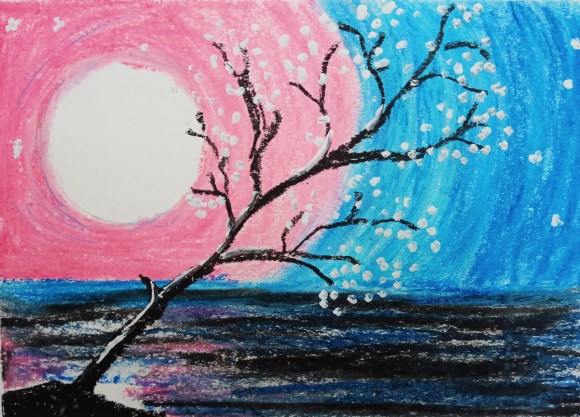
Art by Sohana Manzoor

Editorial

Spring in Winter?… Click here to read.

Translations

Nazrul’s Musafir, Mochh re Aankhi Jol (O wayfarer, wipe your tears) has been translated from Bengali by Professor Fakrul Alam. Click here to read.

Four of his own Malay poems have been translated by Isa Kamari. Click here to read.

Five short poems by Munir Momin have been translated from Balochi by Fazal Baloch. Click here to read.

Five poems by Rohini K.Mukherjee have been translated from Odia by Snehprava Das. Click here to read.

S.Ramakrishnan’s story, Steps of Conscience, has been translated from Tamil by B.Chandramouli. Click here to read.

Tagore’s poem, Sheeth or Winter, has been translated from Bengali by Mitali Chakravarty. Click here to read.

Poetry

Click on the names to read the poems

Ryan Quinn Flanagan, Usha Kishore, Joseph C. Ogbonna, Debadrita Paul, John Valentine, Saranyan BV, Ron Pickett, Shivani Shrivastav, George Freek, Snehaprava Das, William Doreski, Mohit Saini, Rex Tan, John Grey, Raiyan Rashky, Luis Cuauhtémoc Berriozábal

Poets, Poetry & Rhys Hughes

In Nomads of the Bone, Rhys Hughes shares an epic poem. Click here to read.

Musings/Slices from Life

When Nectar Turns Poisonous!

Farouk Gulsara looks at social norms around festive eating. Click here to read.

On a Dark Autumnal Evening

Ahmad Rayees muses on Kashmir and its inhabitants. Click here to read.

The Final Voyage

Meredith Stephens writes of her experience of a disaster while docking their boat along the Australian coastline. Click here to read.

Embracing the Earth and Sky…

Prithvijeet Sinha takes us to the tomb of Saadat Ali Khan in Lucknow. Click here to read.

Musings of a Copywriter

In A Fruit Seller in My Life, Devraj Singh Kalsi explores the marketing skills of his fruit seller a pinch of humour. Click here to read.

Notes from Japan

In Return to Naoshima, Suzanne Kamata takes us to an island museum. Click here to read.

Essays

The Trouble with Cioran

Satyarth Pandita introduces us to Emil Cioran, a twentieth century philosopher. Click here to read.

Once a Student — Once a Teacher

Odbayar Dorj writes of celebrating the start of the new school year in Mongolia and of their festivals around teaching and learning. Click here to read.

Bhaskar’s Corner

In ‘Language… is a mirror of our moral imagination’, Bhaskar Parichha pays a tribute to Prof. Sarbeswar Das. Click here to read.

Stories

Visions

Fabiana Elisa Martínez takes us to Argentina. Click here to read.

My Grandmother’s Guests

Priyanjana Pramanik shares a humorous sketch of a nonagenarian. Click here to read.

After the Gherkin

Deborah Blenkhorn relates a tongue-in-cheek story about a supposed crime. Click here to read.

Pause for the Soul

Sreenath Nagireddy writes of migrant displacement and adjustment. Click here to read.

The Real Enemy 

Naramsetti  Umamaheswararao gives a story set in a village in Andhra Pradesh. Click here to read.

Feature

A conversation with Amina Rahman, owner of Bookworm Bookshop, Dhaka, about her journey from the corporate world to the making of her bookstore with a focus on community building. Click here to read.

Book Excerpts

An excerpt from from Love and Crime in the Time of Plague: A Bombay Mystery by Anuradha Kumar. Click here to read.

An excerpt from Wayne F Burke’s Theodore Dreiser – The Giant. Click here to read.

Book Reviews

Somdatta Mandal reviews M.A.Aldrich’s Old Lhasa: A Biography. Click here to read.

Satya Narayan Misra reviews Amal Allana’s Ebrahim Alkazi: Holding Time Captive. Click here to read.

Anita Balakrishnan reviews Silver Years: Senior Contemporary Indian Women’s Poetry edited by Sanjukta Dasgupta, Malashri Lal and Anita Nahal. Click here to read.

Bhaskar Parichha reviews Diya Gupta’s India in the Second World War: An Emotional History. Click here to read.

.

Click here to access the Borderless anthology, Monalisa No Longer Smiles

Click here to access Monalisa No Longer Smiles on Amazon International
Categories
Editorial

Spring in Winter?

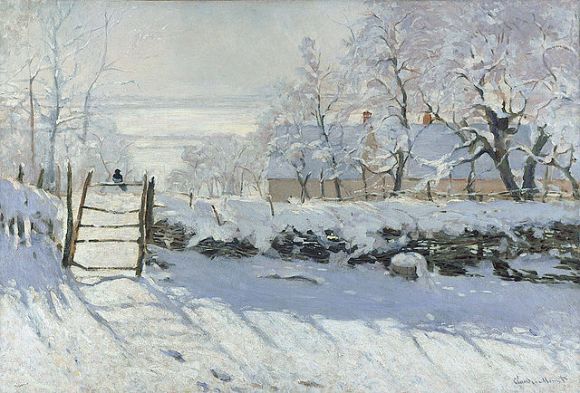
Painting by Claude Monet (1840-1926)
If Winter comes, can Spring be far behind?

'Ode to the West Wind', Percy Bysshe Shelley (1792 -1822)

The idea of spring heralds hope even when it’s deep winter. The colours of spring bring variety along with an assurance of contentment and peace. While wars and climate disasters rage around the world, peace can be found in places like the cloistered walls of Sistine Chapel where conflicts exist only in art. Sometimes, we get a glimpse of peace within ourselves as we gaze at the snowy splendour of Himalayas and sometimes, in smaller things… like a vernal flower or the smile of a young child. Inner peace can at times lead to great art forms as can conflicts where people react with the power of words or visual art. But perhaps, what is most important is the moment of quietness that helps us get in touch with that inner voice giving out words that can change lives. Can written words inspire change?

Our featured bookstore’s owner from Bangladesh, Amina Rahman, thinks it can. Rahman of Bookworm, has a unique perspective for she claims, “A lot of people mistake success with earning huge profits… I get fulfilment out of other things –- community health and happiness and… just interaction.” She provides books from across the world and more while trying to create an oasis of quietude in the busy city of Dhaka. It was wonderful listening to her views — they sounded almost utopian… and perhaps, therefore, so much more in synch with the ideas we host in these pages.

Our content this month are like the colours of the rainbow — varied and from many countries. They ring out in different colours and tones, capturing the multiplicity of human existence. The translations start with Professor Fakrul Alam’s transcreation of Nazrul’s Bengali lyrics in quest of the intangible. Isa Kamari translates four of his own Malay poems on spiritual quest, while from Balochi, Fazal Baloch bring us Munir Momin’s esoteric verses in English. Snehprava Das’s translation of Rohini K.Mukherjee poetry from Odia and S.Ramakrishnan’s story translated from Tamil by B.Chandramouli also have the same transcendental notes. Tagore’s playful poem on winter (Sheeth) mingles a bit for spring, the season welcomed by all creatures great and small.

John Valentine brings us poetry that transcends to the realms of Buddha, while Ryan Quinn Flanagan, Ron Pickett and Saranyan BV use avians in varied ways… each associating the birds with their own lores. George Freek gives us poignant poetry using autumn while Luis Cuauhtémoc Berriozábal expresses different yearnings that beset him in the season. Snehaprava Das and Usha Kishore write to express a sense of identity, though the latter clearly identifies herself as a migrant. Young Debadrita Paul writes poignant lines embracing the darkness of human existence. Joseph C. Ogbonna and Raiyan Rashky write cheeky lines, they say, on love. Mohit Saini interestingly protests patriarchal expectations that rituals of life impose on men. We have more variety in poetry from William Doreski, Rex Tan, Shivani Shrivastav and John Grey. Rhys Hughes in his column shares with us what he calls “A Poem Of Unsuccessful Excess” which includes, Ogden Nash, okras, Atilla the Hun, Ulysees, turmeric and many more spices and names knitting them into a unique ‘Hughesque’ narrative.

Our fiction travels from Argentina with Fabiana Elisa Martínez to light pieces by Deborah Blenkhorn and Priyanjana Pramanik, who shares a fun sketch of a nonagenarian grandma. Sreenath Nagireddy addresses migrant lores while Naramsetti Umamaheswararao gives a story set in a village in Andhra Pradesh.

We have non-fiction from around the world. Farouk Gulsara brings us an unusual perspective on festive eating while Odbayar Dorj celebrates festivals of learning in Mongolia. Satyarth Pandita introduces us to Emil Cioran, a twentieth century philosopher and Bhaskar Parichha pays a tribute to Professor Sarbeswar Das.  Meredith Stephens talks of her first-hand experience of a boat wreck and Prithvijeet Sinha takes us to the tomb of Sadaat Ali Khan. Ahmad Rayees muses on the deaths and darkness in Kashmir that haunt him. Devraj Singh Kalsi brings in a sense of lightness with a soupçon of humour and dreams of being a fruit seller. Suzanne Kamata revisits a museum in Naoshima in Japan.

Our book excerpts are from Anuradha Kumar’s sequel to The Kidnapping of Mark Twain, Love and Crime in the Time of Plague: A Bombay Mystery and Wayne F Burke’s Theodore Dreiser – The Giant, a literary non-fiction. Our reviews homes Somdatta Mandal discussion on M.A.Aldrich’s Old Lhasa: A Biography while Satya Narayan Misra writes an in-depth piece on Amal Allana’s Ebrahim Alkazi: Holding Time Captive. Anita Balakrishnan weaves poetry into this section with her analysis of Silver Years: Senior Contemporary Indian Women’s Poetry edited by Sanjukta Dasgupta, Malashri Lal and Anita Nahal. And Parichha reviews Diya Gupta’s India in the Second World War: An Emotional History, a book that looks at the history of the life of common people during a war where soldiers were all paid to satiate political needs of powerbrokers — as is the case in any war. People who create the need for a war rarely fight in them while common people like us always hope for peace.

We have good news to share — Borderless Journal has had the privilege of being listed on Duotrope – which means more readers and writers for us. We are hugely grateful to all our readers and contributors without who we would not have a journal. Thanks to our wonderful team, especially Sohana Manzoor for her fabulous artwork.

Hope you have a wonderful month as we move towards the end of this year.

Looking forward to a new year and spring!

Mitali Chakravarty

borderlessjournal.com

CLICK HERE TO ACCESS THE CONTENTS FOR THE NOVMBER 2025 ISSUE.

.

READ THE LATEST UPDATES ON THE FIRST BORDERLESS ANTHOLOGY, MONALISA NO LONGER SMILES, BY CLICKING ON THIS LINK.

Categories
Stories

Visions by Fabiana Elisa Martínez

Fabiana Elisa Martínez

“And suddenly, among all those people I didn’t know, I had this strange feeling, this implausible realisation that I was seeing him for the first time. Handsome, confident, articulate in a language I still cannot follow with grace. And I felt this pang inside, you know, as if a naughty elf inside me were swaying my heart with a rope. How can I see my husband for the first time after having been married to him for almost eight years?”

Rosalia remained silent, observing for some speculating seconds the little square of tablet that Rita had brought for their tea.

“Your husband is exactly like this sweet, darling, which, by the way, is delicious. I need the recipe before you leave.”

“Like tablet?” Rita inclined her head to the right in the exact same way her daughter did when she heard anything worth clarification. “My grandmother Cochrane would be very honoured to know you like her Scottish tablet so much. I cannot make anybody eat it at home. Henry says it’s too sweet and Maggie too sticky.”

“Well…,” Rosalia sighed, “for me it’s perfect, and I am sure nobody in this office will say no to this morsel of Heaven. It reminds me of a dulce de leche candy my detestable mother-in-law used to make in Buenos Aires for Christmas. As you can see, even her perfect evilness was imperfect.”

Rita smiled again and rejoiced at the fact that she could come to visit her older friend at the Castelo de San Jorge with the express purpose of selfishly collecting smiles like Maggie used to collect peacock feathers in the garden before she started going to kindergarten. Rosalia’s office was a new environment for their meetings now. A step up on the podium of a friendship that had begun outside the Castelo box office under a narrow eave on a humid stone bench. Rita loved to breathe in the peace of the office, with its austere decor and dark wooden cabinets that had once cherished the delicate porcelain of Portuguese queens and now held Rosalia’s dictionaries alongside maps, brochures, and tourist forms for all those who came to witness the royal luxury of ancient times.

“So, do you mean that this feeling of seeing Henry again for the first time at the bank’s banquet is sweet like my grandmother’s tablet?”

“Not exactly. When I saw those brownish cubes on the plate, I was convinced that it would be difficult for me to bite into them. You know, my weak teeth and all that. But then I bit into one of them, and it melted on my tongue. And I felt this torrent of pleasure bursting in my mouth. I think what happened to you on Saturday is that you saw Henry like random people usually see him. You heard a far echo of the vision you had of him when you fell in love.”

Rita’s inner elf jumped from her heart to her face to make her frown and purse her lips at the same time.

“But sadly,” Rosalia continued, “you already know that what you saw is an act. The source of your confusion and your loneliness. You love a vision in a dream, a beautiful piece of candy in a perfect window shop that gets further and further away as you get closer.”

A soft knock at the door interrupted the old woman’s thought and let Rita take a sip of tea to conceal her disillusionment. Rosalia took the documents that Victor brought, turned to her side desk, and placed one of the pages in her sturdy IBM Selectric. She adjusted the corners of the paper as if she were folding a handkerchief for the ghost of one of the queens that had inhabited the Castelo centuries ago. Rosalia’s eyes were fixed on the rectangular screen of her typewriter as she turned toward Rita and pronounced in perfect French, “Trompe-l’oil…. trompe-l’oil[1] people I call them. What you see is never what you get. The man I married and later divorced, so many decades ago, was like that. Sometimes, out of the blue, I remember how elegant and self-confident he seemed to be, and still, after all this time, that elf you mentioned still plays tricks with my heart and its cords. Do you know the legend of the two Greek painters of ancient times?”

Rita looked up from her cup and raised her left red-haired eyebrow as an invitation.

“There was a competition to declare the most realistic painter in the land. Zeuxis and Parrhasius presented their art. The grapes that Zeuxis had painted were so impossibly real that birds flew into them and crushed their beaks and heads on the purple spheres. They died a cruel death, believing they were tasting the sweetest pulps and the bitterest seeds. Zeuxis, sure of his triumph, asked his opponent where his painting was. Parrhasius walked him in front of the curtain that hid his work. ‘Draw this cloth and you will see it,’ he said humbly. But Zeuxis’ eager hand trampled on the folds of a fake, perfect drapery made of shades, hues, and light. Parrhasius won not only the prize but the admiration of his enemy.”

Rita inclined her head to the left. “I’m sorry for the birds.”

“That’s why I don’t tell this story much. My granddaughter has a phobia of birds that decide to fly stubbornly in the wrong direction. I’m afraid I instilled that in her with this tale.”

Rita picked up a brown crumb from her saucer. “If only I could draw aside the curtain Henry places between himself, Maggie, and me. I’m a good wife. I don’t know what else to do.” Rita dropped the crumb and killed an imminent sob with the tip of her finger.

“You are like the candid birds, my child. You are hurt but strong. Cannot you see?   You’re making sweets with the salt of tears, pure visions of love with the threads of deceit.”

[1] Deceive the eye… deceive the eye

Fabiana Elisa Martínez authored the collections 12 Random Words and Conquered by Fog. Other works of hers have been published in literary publications on five continents.

PLEASE NOTE: ARTICLES CAN ONLY BE REPRODUCED IN OTHER SITES WITH DUE ACKNOWLEDGEMENT TO BORDERLESS JOURNAL

Click here to access the Borderless anthology, Monalisa No Longer Smiles

Click here to access Monalisa No Longer Smiles on Kindle Amazon International