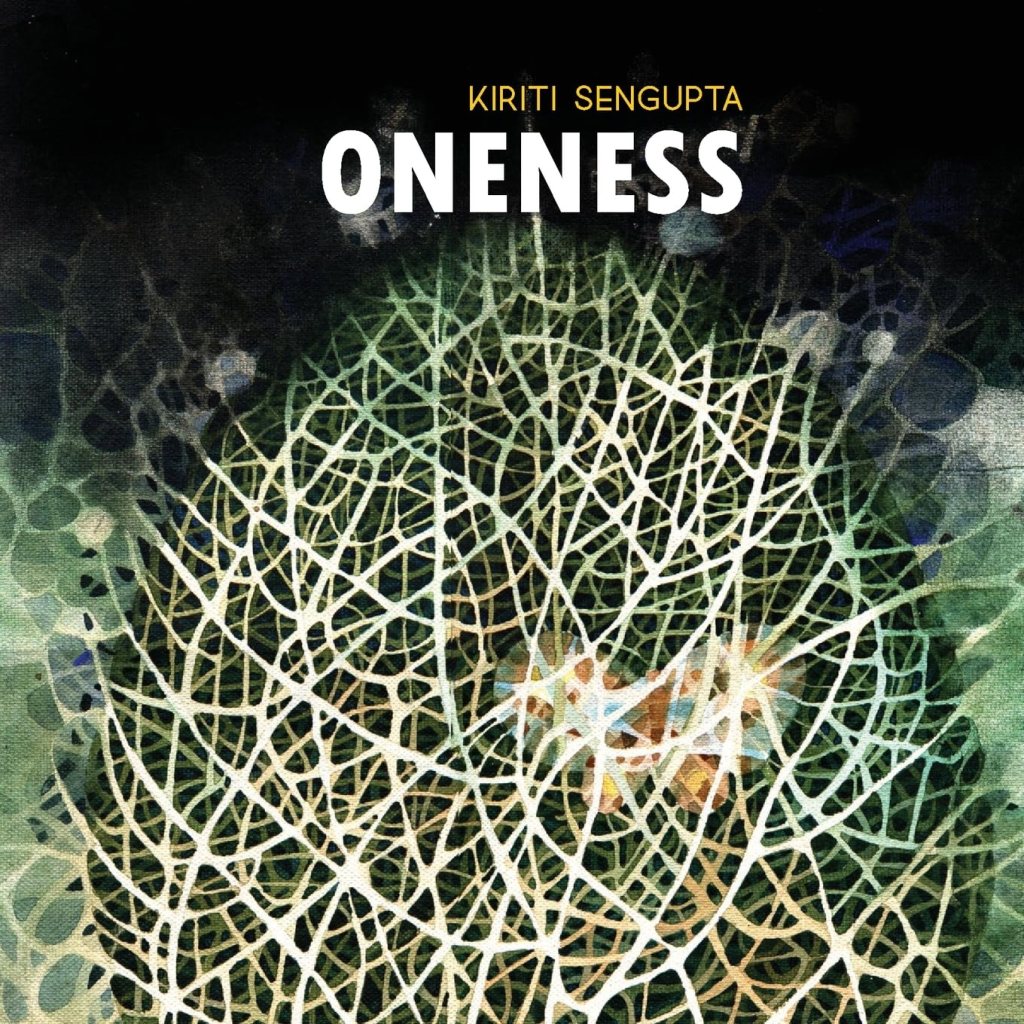
Oneness by Kiriti Sengupta, an established writer and publisher, is the paean of a poet in love with life. This thin volume has the gorgeousness of a Rajasthani miniature: The poems are accompanied by colourful paintings by Pintu Biswas and Samir Mondal. The artwork adds to the magic of the experience that is Oneness. Exploring the pieces, the reader, too, is drawn by the poet into embracing life like an affectionate lover who accepts the highs and lows of our existence or a relationship. The bright tapestry (literal and metaphorical) presented in the little tableau of a book entrances us to appreciate the romance of oneness in the midst of our teeming variety of happenings over time.
The title “Oneness” recalls to mind John Donne’s[1] immortal sermon, delivered after he healed from a prolonged bout of illness, titled ‘No Man is an Island’. Donne’s illness was so severe that he was considered to be on his deathbed, but defying all odds, he survived. And, then, he wrote:
No man is an island,
Entire of itself;
Every man is a piece of the continent,
A part of the main.
Oneness is a celebration of life as much as the start of ‘No Man is an Island’. It expresses an all-encompassing love for other human beings, the realisation that the hues of blood, joys and griefs are same for everyone, that death and sorrow are common to all. Oneness is an eternal feeling captured well in this collection.
Oneness homes haikus, short verses and prose poems. The haikus reflect profoundness with the brevity of words, typical of Sengupta’s style. For instance:
full moon
across the landscape
fireflies.
One would imagine a dark night sky and a full, flowery golden moon, illuminating the black landscape and the pinpricks of lights from the insects. Instead, the accompanying artwork surprises with a canvas awash in swirling cobalt blues a large blazing red moon, and fireflies like bright flames. It forms an interesting contrast.
Some haikus are beautiful and poignant with subtle decadent sadness:
the post box
recedes to rust
the lost art
A post box is part of the past in the twenty-first century with the advent of online communication. The painting shows a cherry-red post box, with two crows frequenting the scene. The crows, presumably, communicate with each other at the site of the letterbox. The visual and the art bring to mind Donne’s lines, “Any man’s death diminishes me / Because I am involved in mankind”. Perhaps there is a need to mourn the metaphorical death of letter writing, a form of genuine, soulful exchange which would wean away from loneliness and the impersonality of online interactions.
Taking other poems into consideration, it is difficult to choose favourites. In ‘Primordial Leaning’, Sengupta begins with an assertive statement, compelling the reader to accept that they define women as Durga or Kali. The rest of the poem intersperses questions and one more statement. The poet questions the attitude adopted by ‘pop feminists’ to ask whether it is ‘kind’ to compare women to these warrior goddesses, and should men, in turn, behave like Shiva, who is the Destroyer in the Hindu Trinity. It is an interesting take that would be of great value to scholars of Gender and Masculinity Studies. There are no easy answers to this interrogative, but Sengupta packs in a punch in his fiery inimitable style.
You define women as Durga
or Kali. Are you a believer? Are you
being kind? You could have convinced
them to fight the evil.
Instead, when you imply the goddess,
do you illustrate
sisterhood with many limbs? Would you
like men to act as Shiva—the destroyer?
The poem ‘Tenure: Early Years’ asserts that one never outgrows one’s early life when he or she is around a parent. Even when the child becomes an adult, a guardian keeps the memories of their wards’ childhood alive through stories and reminiscences. Thus, for a parent, juvenescence lasts forever.
What role do guardians play
when their wards grow up?
They feed lived experiences,
keep childhood alive.
Juvenescence spans the length
of the parent’s life.
In ‘Separation’, man and nature experience alienation, a state prevalent in postmodern times. However, in the artwork facing the poem, the “worn-out tree” is the reflection of the narrator. Perhaps it is a case of pathetic fallacy where nature echoes the loneliness faced by twenty-first century man. Yet, one can always ask: are trees and men, thus, not united in their separation from the rest of the kaleidoscope?
Only a little needs to be invested
in sketching the worn-out tree.
A charcoal or two, canvas, and span.
I place myself amid the landscape
to explain the prevailing isolation.
John Donne’s sermon ends with the idea of the inevitability of Death: “And therefore never send to know for whom the bell tolls;/ It tolls for thee.” The poems in Oneness, on the other hand, create an eternal algorithm of the unity and universality of human existence. Each written piece, with its companion artwork, form an unforgettable vignette; each is a resplendent unveiling of the beauty and truth of life.
.
[1] John Donne (1572-1631), major poet of metaphysical school
.
Jagari Mukherjee is the Editor-in-chief of Narrow Road Literary Journal and the Chief Executive Editor of EKL Review. Jagari has three full-length poetry collections and two chapbooks and a bestselling ebook to her credit.
PLEASE NOTE: ARTICLES CAN ONLY BE REPRODUCED IN OTHER SITES WITH DUE ACKNOWLEDGEMENT TO BORDERLESS JOURNAL
Roquiah Sakhawat Hossein was born in 1880, Kazi Nazrul Islam in 1899. Apart from their difference in gender, there could not have been more differences in the circumstances of their class and upbringing. Roquiah was born and brought up in an affluent Muslim family of Pairaband. Her brothers went to elite schools in Kolkata. Though she was forbidden to read and write Bangla or English as a child, her brother Ibrahim Saber helped her to learn both languages so that she could write fluently in both. Later, her husband, Sakhawat Hossein, encouraged her to read and write, both Bangla and English.
Kazi Nazrul Islam was born in an impoverished family in the village of Churulia in the district of Bardhaman in West Bengal. Nazrul’s father was the khadim or caretaker of a mosque next to his small mud hut. The death of several earlier children led to Nazrul’s being given the nickname “Dukhu Miah,” the sorrowful one, perhaps also to cast off the evil eye. Initially, Nazrul studied in a maktab, an Islamic elementary school. When Nazrul was about nine, his father passed away, and the young boy was obliged to support his family. This might have meant teaching the children at the maktab, cleaning the mosque, and participating in religious rituals which entailed reciting the Quran.
Sometime in 1915, Nazrul got admitted to Searsole Raj High School, and studied there till 1917. This was the longest time he had spent in one place and in one school. However, he did not sit for the matriculation examination, but went off to join the British Indian Army which had started recruiting Bengalis. Posted to Karachi, Nazrul started subscribing to Kolkata papers and also writing for them.
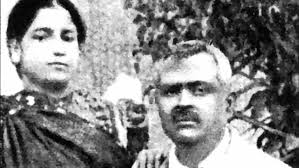
Begum Roquiah (1880-1932) with her husband, Sakhawat Hossein, in 1898
In 1898 – a year before Nazrul was born – Roqiuah Khatun was married to Sakhawat Hossein, an Urdu-speaking widower from Bhagalpur. A civil servant under the British Raj, Sakhawat Hossein, not only encouraged his wife to read and write but was so amazed at her piece of English writing that he showed it to Mr. Macpherson, Commissioner, Bhagalpur. Mr. Macpherson commended the quality and content of the writing. We do not know whether Roquiah sent the story herself to Indian Ladies Magazine (Madras) or whether her husband did so. Nevertheless, Roquiah’s first published writing appeared in the magazine in 1905. Three years later, her Bangla translation of the story – with some changes – was published as a small book by S. K. Lahiri and Co, Kolkata.
Sakhawat Hossein passed away on May 3, 1909, leaving a large sum to his widow to start a school. Roquiah initially started the school in Bhagalpur but was unable to continue there and moved to Kolkata. It was there that, onMarch 16, 1911, she re-started Sakhawat Memorial School at 13 Wellesley Lane. Besides persuading Muslim parents to let their daughters enrol in her school and running it, she also had to write letters explaining why certain things were being done or not being done in her school. In addition to these activities, she started writing for local Kolkata newspapers and journals.
Perhaps the earliest Bangla essay of hers that was published was “Pipasha.” This piece about Muharram was published in Nabaprabha in Falgun 1308 [1](Bangla) corresponding to mid-February to mid-March 1912. She also wrote in other journals such as Mahila, Nabanur, BharatMahila, Al-Eslam, Bangiya Mussulman Sahitya Patrika, Saogat, Sadhana, Naoroz, Mohammadi, Sahityik, Sabujpatra, Muezzin, Bangalakshmi, Gulistan, and Mah-e-Nau. News about her school was published in The Mussulman under her initials, Mrs. R. S. Hossein.
During his deployment in Karachi, Nazrul subscribed to Bangla journals from Kolkata and also sent them some of his writings. His first publication was a short story “Baundeler Atmakahini” [The Autobiography of a Vagabond], which was published in Saogat in May 1919. The short stories “Hena” and “Byathar Dan” [The Gift of Sorrow] were published in Bangiya Mussalman Sahitya Patrika in November 1919 and January 1920 respectively. Roquiah’s writings too were being published in Saogat and Bangiya Mussulman Sahitya Patrika. Though it is not known whether Nazrul and Roquiah actually met, it is impossible that they did not know about each other’s writings.
A few years ago, I asked Majeda Saber, Roquiah’s grandniece who has written considerably on her grandaunt, whether Nazrul and Roquiah had ever met. Majeda Saber did not know. However, even if they did not meet, it is quite evident that Nazrul and Roquiah did meet in print and that they shared some common ideas. Nazrul reveals a deep empathy for women in both his poetry and his fiction. The short story “Rakshushi[2],” about a woman who has killed her husband and gone to jail for her crime, is a sympathetic portrayal of a murderess in her own voice. Nazrul’s poem “Nari[3]” demands equality for women.
I sing of equality.
In my eyes, there is no difference
Between a man and a woman.
Whatever is great and blessed in this world,
Has come equally from both, man and woman.

		(Translated by Selina Hasib)
His song, “Jaago Nari Jaago” [Rise Up, Women], gives a clarion call to all women to rise.
Rise up women – rise up like the flaming fire!
Rise up, O wife of the Sun god,
with the mark of blood on your forehead!!
...

Like the fire blazing out of a smouldering heap,
rise up – all you mothers, daughters, wives, sisters!
              (Translated by Sajed Kamal)
In his epistolary novel, Bandhon Hara [4]– which began to be serialized in Moslem Bharat from mid-April 1920 and was published as a book in 1927 – the feelings of the women letter writers reflect Roquiah’s ideas.
The narrative of Bandhon Hara seems to focus on the soldier-protagonist Nuru. However, the letters of the women not only contribute to the narrative of the triangular love story but also reflect on the condition of Muslim women in seclusion. For example, Mahbuba writes to Sophie – her friend, who, like her, is also in love with Nuru – about the claustrophobic nature of the inner quarters where women reside. It is a place where even the sun may not enter. But women are not criminals, Mahbuba says. “We are entitled to some freedom, for are we not human beings? Are we not made of flesh and blood, don’t we have feelings? Do we not possess a soul?”
After Mahbuba gets married, she writes to Shahoshika, a Brahmo teacher and a family friend, that women are supposed to be self-sacrificing. She tells Shahoshika that she has no wish to be renowned for self-sacrifice. She would like to die but refuses to die locked up in the inner quarters. “If I have to die, I would wish to have all the doors and windows around me open wide . . . I want to die looking straight at Mother Earth”.
In her essay “Subeh Sadek” [Dawn], published in Muezzin between mid-July-mid-August 1930, Roquiah asked women to proclaim aloud that they were human beings, not possessions. “Buk thukiya bolo ma! Amra poshu noi. Bolo bhogini! Amra asbab noi. Bolo konye! Amra jarau olonkar rupe lohar sinduke aboddha thakibar bostu noi. Sokole somoswore bolo,Amra manush. Mother, proclaim aloud, we are not animals. Proclaim, sister, we are not inanimate objects. Proclaim daughter, we are not ornaments set with precious gems to be locked up in iron trunks. Proclaim together, we are human beings.” In Aborodhbashini [The Secluded Ones], published in 1931, several years after Bandhon Hara, she described the claustrophobic, unhealthy, and often fatal conditions of extreme purdah.
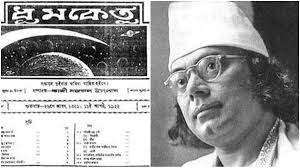
Dhumketu edited by Nazrul
These similarities might simply be coincidences. However, it is clear that Nazrul thought highly of Roquiah and that she too reciprocated that feeling. Roquiah had been contributing to several Kolkata journals. In 1922, she contributed two pieces to the newly founded bi-weekly paper, Dhumketu[5], edited by Nazrul. The paper started publication from 26 Sravan 1329 BS/11 August 1922. A month later, a large extract from Roquiah’s essay “Pipasha”[Thirst] was published in the Muharram issue of 16 Bhadra 1329/ September 2, 1922.
Thanks to Selina Bahar Zaman[6], we have facsimiles of Dhumketu. From this valuable collection we realise that, from the very beginning, the paper not only voiced Nazrul’s anti-British views but also displayed his non-communal and non-gendered outlook. Many of the contributors to the paper included Hindu writers as well as women. There were at least ten women who wrote at least once. One of these included a ten- or eleven-year-old girl as well as a thirteen-year-old girl, the former Hindu, the latter Muslim. Mrs. M. Rahman, to whom Nazrul dedicated his book Bisher Banshi[7], wrote several times. Roquiah – as Mrs R. S. Hossein – was published twice in Dhumketu.
We do not know whether Roquiah sent the extract from “Pipasha” herself or whether Nazrul asked her for the piece for the special issue of twenty pages. The extract published in Dhumketu reflects on the plight of Hazrat Imam Hossain and the group of warriors, women and children, who accompanied him on his tragic journey to Karbala.
The only other piece by Roquiah to appear in Dhumketu was a poem, “Nirupam Bir” [The Dauntless Warrior], published on 5 Ashwin 1329 BS / September 22, 1922. Unlike “Pipasha”, the poem does not seem to have been published before. This time, Roquiah might herself have sent the poem to Dhumketu. She would not have had to go in person to the office of Dhumketu. With a good postal service, contributions were mailed to journals.
“Nirupam Bir” is a remarkable poem from a woman who has been called an “Islamic Feminist.” The 18 August issue of Dhumketu had published a photograph of Kanailal Dutt (1888-1908). Did this inspire Roquiah to write the poem? Kanailal was a revolutionary belonging to the Jugantor Group[8]. Arrested with a number of other revolutionaries, he was imprisoned in Alipore Jail. There, along with another revolutionary, he succeeded in assassinating Narendranth Goswami, a government approver. Kanailal was hanged on 31 August, 1908. He was the second revolutionary to be hanged by the British after Khudiram Bose – whose picture also appeared in Dhumketu.
In the poem, Roquiah eulogises Kanai as the dauntless warrior. The poem begins with the magistrate telling Kanai that he will be hanged. But Kanai – addressed here as Shyam, another name of Krishna – laughs. The one who willingly sacrifices his life does not fear hanging. “Moriya kanai hobe omor/ Shadhyo ki bodhe tarey? By dying Kanai will become immortal. Who can slay him?” The poem ends with a strident call hailing Kanailal: “Bolo bolo ‘Bande Shyam[9].’” It is a brave poem by a woman who was the widow of a government servant, a woman who ran a school for Muslim girls and promised their parents that purdah would be observed.
There were no Muslim revolutionaries at the time – though Nazrul’s friend Muzaffar Ahmad was a communist – and in Mrityukshudha Nazrul would describe a Muslim Bolshevik and in Kuhelika[10] he would portray a Muslim revolutionary. In his two poems on Durga, “Agamoni[11]” and “Anandamoyeer Agamone”, published in the Puja issue of Dhumketu on 9 Ashwin 1329 BS /September 26, 1922, Nazrul used the legend of the goddess to call for the overthrow of the British. In his editorial in the thirteenth issue of Dhumketu, 26 Ashwin 1329 BS / October 13,1922, Nazrul called for complete independence from the British: “‘Dhumketu’ bharater purno swadhinata chay.[Dhumketu wants India’s complete independence]” He quoted a line from his poem “Bidrohi”: “Ami aponare chhara kori na kahare kurnish [I bow to no one but myself].” Unlike Khudiram and Kanai, Nazrul did not resort to bombs or pistols, but to soul-stirring words. Just as in some of his writings, Nazrul revealed the feminist perspectives of Roquiah; in “Nirupam Bir”, Roquiah approached the revolutionary spirit of Nazrul.
Selected Bibliography
Hossein, Roquiah Sakhawat, “Subeh Sadek.” Rokeya Rachanabali ed. Abdul Mannan Syed et al, revised edition. Bangla Academy: 1999.
Islam, Kazi Nazrul. Unfettered (translation of Bandhon Hara).Translated by The Reading Circle Nymphea Publication: 2015.
Niaz Zaman is an academic, writer and translator from Bangladesh. She has published a selection of Kazi Nazrul Islam’s work in the two-volume Kazi Nazrul Islam: Selections. In 2016, she received the Bangla Academy Award for Translation. This essay was first published in In Focus, the Daily Star, December 12, 2022.
.
PLEASE NOTE: ARTICLES CAN ONLY BE REPRODUCED IN OTHER SITES WITH DUE ACKNOWLEDGEMENT TO BORDERLESS JOURNAL
Ratnottama Sengupta in conversation with Sohini Roychowdhury, who uses dancing to build bridges across cultures
“Meet my daughter Sohini,” Uma Di was introducing the dancer who then lived in Madrid. And my first response was, “Why isn’t she in the movies?!”
Sohini Roy Chowdhury. Courtesy: Sohini Roy Chowdhury
Tall, fair, lissome, agile, Sohini Roychowdhury is the stuff beauty queens and show stoppers are made of. That wasn’t surprising: after all, Uma Roychowdhury herself is the picture of perfection in aesthetics.
It didn’t take me long to realise that, much like the well regarded sculptor’s bronzes, her daughter too was made of enduring stuff. One day she was teaching Bharatanatyam to French, Spanish, and Italian enthusiasts. The next day she was lecturing on mythology in New York. One day she was dancing to ‘Jai Ho![1]’ for the director of the Oscar winning Hollywood movie[2]. Another day she was delineating Durga in an Anthropology Museum…
None of these saw her run out of breath. Nor does she, ever, run out of time. When she’s not holding her fingers in a dance mudra, she is holding a metaphoric pen. This month she unveiled her second book, Dance of Goddess Kali. Yes, she has rings on her fingers and bells on her toes — and wherever she goes, there’s dance on the cards!
Here is what she had to say when I spoke to her:
The Dance of Kali follows Dancing with the Gods. How are the two books different?
Dancing With the Gods and The Dance of Kali are two distinct works, each focusing on different aspects of my artistic and spiritual journey.
Conceived by Monideepa Mukherjee and Sutapa Sengupta, featuring photos from Sohinimoksha
Dancing With the Godsis a pictorial, coffee-table book stemming from my journey as a classical Indian dancer with a multinational dance troupe. Its vivid visuals showcase my onstage performances and behind-the-scenes moments. These are highlights of my career as a dancer, both solo and with Sohinimoksha World Dance and Communications[3].
This visually captivating book focuses on imagery and aesthetics. It offers glimpses into my artistic expression through dance, celebrates my journey around the world, and highlights my life-mantra of connecting civilisations through my craft. This tracing of Sohinimoksha’s journey is for a broader audience: Indian dance enthusiasts, art lovers, and individuals interested in my achievements. The aim is to inspire through visually compelling storytelling.
In contrast, The Dance of Kali is a treatise on the ethos of Goddess Kali and Shaktism. It delves into the deeper spiritual and philosophical aspects associated with the goddess, exploring Kali’s symbolism, mythology, and significance within the context of Shaktism, a Hindu tradition of worshiping the divine feminine energy. The tone of this work is contemplative, as it delves into the profound symbolism and the spiritual aspects associated with the Goddess. It incorporates scholarly research, analysis, and interpretations from various perspectives. Hopefully it offers readers a deeper understanding of Kali’s significance in Hindu spirituality.
May I point out here that The Dance of Kali is not a religious book. It is for readers with a specific interest in Hindu mythology, spirituality, or the myths and legends around the resident Goddess of Kolkata. Those seeking a deeper understanding of Kali’s symbolism and philosophical underpinnings within the context of Shaktism, will find this book dispels disrespectful misrepresentations and unfounded Western misconceptions surrounding the images of Kali as a demonic goddess.
To sum up: both the books reflect different facets of my artistic and spiritual journey. However, they differ significantly in their subject matter, focus, tone, and intended audience. One celebrates my achievements as a dancer through captivating visuals. The other is an academic tome exploring the profound symbolism and spirituality associated with Goddess Kali.
What prompted you, an international dancer, to pick such a rooted in mythology subject?
I have always had a personal affinity with or inclination towards Goddess Kali. Many artistes draw inspiration from their own beliefs, experiences, and cultural backgrounds when choosing subjects for their work. I am no different. For me the depiction of the Goddess is an opportunity for artistic exploration. Kali, with her complex symbolism and multifaceted persona, offers rich material for creative interpretation through the arts, be it dance, literature or visual arts.
This book also celebrates India’s rich mythological heritage and the way it connects to other ancient cultures, in Mesopotamia, Egypt, Spain and France. Kali, with her global soul sisters Ishtar or Sara La Kali, holds significant cultural and religious importance, not just in Hinduism, but other cultures as well, particularly within the contexts of worshipping Mother Goddesses. I delve into Kali’s mythology and symbolism to honour this aspect of Indian life, and its universal resonance.
Yes, Goddess Kali is rooted in Indian mythology. But the themes she embodies — feminine power, transformation, and liberation —transcend cultural boundaries. I hope this book will serve to explore universal themes of empowerment and spirituality. It also aims to provide a deeper understanding of Hindu mythology, and the symbolism associated with the Dark Goddess. Effectively I seek to promote intercultural dialogue and foster greater appreciation for diverse religious traditions. Most significantly, I hope to dispel the uneducated interpretations of Kali as a horrific, savage, demonic goddess. How often she is typecast as a symbol of evil — in popular Western films, books and even as Halloween costumes for disrespectful celebrities like Heidi Klum!
I have witnessed your performance as Durga in an anthropology museum in Madrid. I have noted your commitment to meaningful, even profound themes in your endeavours. What has been your grooming in dance?
I started dancing at a young age under renowned Bharatanatyam Guru, Thankamany Kutty. Later I learnt from Kalamandalam Venkitt in Kolkata. I received rigorous training in Bharatanatyam, the dance that originated in the temples of Tamil Nadu. My dedication to classical art led me to delve deep into its nuances. I mastered intricate footwork, expressions, and storytelling techniques. Over the years, I refined my technique and expression through consistent practice and performance and came to embody the essence of Bharatanatyam.
Your father was a renowned sitarist living in Germany. Your mother is a reputed sculptor of Kolkata. Why did you, an only child, not take to any of these streams of creative expression?
Indeed I was born into a family of accomplished artists. My father, Pandit Subroto Roychowdhury was a renowned sitarist, and my mother, Uma Roychowdhury, is a reputed sculptor. But I chose a different path for myself.
As an only child, I was exposed to various forms of creative expression. But my passion for dance was ignited after watching a riveting performance by Yamini Krishnamurthy when I was about four years old. While I deeply respect my family’s artistic legacy, I followed my own calling and embarked on a journey to carve my niche in the world of dance.
What are the values you have imbibed from them individually?
My father’s sitar schools in Germany have produced hundreds of students — including distinguished sitar players. From him I imbibed a profound appreciation for music and rhythm. I learned discipline, dedication, and the importance of perseverance in mastering an art form. From my sculptor mother I inherited a keen love for aesthetics and eye for details. I learned the importance of expressing emotions and stories through visual and performing arts.
Together these values have steered me towards excellence and innovation in my journey as a dancer and communicator.
Mixed genre performance by Sohini Roychowdhury. Courtesy: Sohini Roy Chowdhury
You have lived in Moscow and Madrid. You are guest professor in far-flung Universities, in America and Columbia. You have danced Bharatanatyam and you have danced to Jai ho! at the premiere of Slumdog Millionaire. What have you gained through your international exposure?
My international exposure has enriched me both personally and professionally. Living in cultural environments as diverse as Moscow and Madrid have broadened my perspectives and deepened my understanding of global arts and communication.
More than 2000 students have ‘graduated’ through my two dance schools in Spain — Casa Asia and Sohinimoksha Artes de la India. In Moscow, more than 80 Russian students performed with me on stage at the Embassy of India and Nehru Centre at the end of their course. As a guest professor in universities across Europe, USA and Latin America, teaching dance, Natyashastra [theory of dance] and Indology, I have not only shared my expertise — I have learnt from students, artistes and scholars from different backgrounds.
Through my performances of Bharatanatyam, and collaborations with international artists, have bridged cultural divides. My dancing to Jai Ho! at the European premiere of Slumdog Millionaire showcased the universal appeal of Indian dance and music. It highlighted its ability to connect with people across borders. Today I can confidently claim to have promoted cross-cultural exchange globally.
Coming from an aristocratic, old Calcutta background, what merit do you see in Bollywood dancing?
Despite coming from an aristocratic background rooted in old Calcutta, I recognise the merit in Bollywood dancing which has become a global phenomenon. Not surprising. For, characterised by vibrant energy, expressive movements, and fusion of multiple dance styles — from Salsa to Tango, Twist to ChaChaCha – Bollywood dancing holds mass appeal. It serves as a platform for artists to showcase their talents to diverse audiences and has contributed to the popularization of Indian culture worldwide. It is rooted in traditional Indian dance forms, yet embraces modern influences. And it reflects the evolving tastes of contemporary audiences.
Since the 1960s, Bollywood has drawn inspiration from various musical traditions across the world. This imparted its films a rich tapestry of global influences. This fusion of world music and dance enriched the aesthetic of Bollywood — and in turn contributed to its cultural significance and global appeal.
In the 1960s, Indian cinema underwent a transformation with the emergence of filmmakers like Guru Dutt and Raj Kapoor, who infused their films with elements of Western music and dance. The most iconic example of this is seen in the song Mera joota hai Japani [my shoes are Japanese] from Shree 420 (1955): here Raj Kapoor’s character sings about wearing Japanese shoes, English pantaloons, and Russian caps — all of which symbolised the growing influence of the West in post-colonial India. And yet, as the song stresses, at core these films are Hindustani — Indian.
Throughout the ’60s, ’70s and ’80s, the industry witnessed the rise of dance and music directors who played a pivotal role in incorporating world music and dance forms into Hindi cinema. Composers like OP Nayyar, Shankar Jaikishan, SD Burman, C Ramachandran, Kalyanji Anandji, RD Burman, Laxmikant-Pyarelal, and Bappi Lahiri experimented with disparate musical styles. These ranged from rock-n-roll, rumba, flamenco to disco, reggae and jazz. This infused their compositions with international flavours.
Similarly, choreographers Sohanlal, PL Raj, Herman Benjamin, Suresh Bhatt, Saroj Khan, Chinni and Rekha Prakash, Shiamak Davar, Farah Khan, Remo D’Souza, Terence Lewis, Vaibhavi Merchant, and Prabhu Deva have blended Indian classical dance with Western styles. This has created the unique dance style that is now identified as Bollywood dancing. It has homogenised movements from hip-hop to salsa and contemporary dance.
Soon stars like Shammi Kapoor, Helen, Asha Parekh, Hema Malini, Rishi Kapoor, Mithun Chakraborty, Jeetendra, Govinda, Hrithik Roshan, Madhuri Dixit, and Sridevi became synonymous with Bollywood’s larger-than-life dance numbers. For, it showcased their versatility and flair for different dance steps. Embracing the twist and turn era of the ’60s to the disco craze of ’70s and the hip-hop-inspired moves of the 2000s, Bollywood stars captivated audiences with their energy and charisma.
Along with Western influences, Bollywood also drew from traditional Indian dances. Its choreography incorporated elements of Bharatanatyam, Kathak, and Odissi. Dance sequences like Dola Re Dola from Devdas (2002) and Pinga from Bajirao Mastani (2015) exemplify the fusion of classical and contemporary dances, blending intricate footwork with dynamic movements and expressions.
In recent years, Bollywood has continued to evolve, reflecting the changing tastes and preferences of global audiences. Directors, like Sanjay Leela Bhansali and Farah Khan, have pushed the boundaries of traditional filmmaking, creating visually stunning spectacles that showcase the diversity of world music and dance. Stars like Priyanka Chopra, Deepika Padukone, and Ranveer Singh have embraced this eclectic mix of styles, bringing their own unique interpretations to the screen.
Spanish, Bulgarian and other European dancers from my own troupe, Sohinimoksha World Dance, have performed specially choreographed fusion dance items set to popular Bollywood tracks. Kristina Veselinova danced toMere Dholnafrom Bhool Bhulaiya; Violeta Perez and Lola Martin to Senorita! from Zindagi Na Milegi Dobara and Maria Sanz on Padmavat’s Ghoomer on stages across India and the world. So I readily acknowledge the significance of Bollywood dance in preserving India’s cultural heritage while adapting to changing times.
Would you say our films are taking our dance traditions to votaries abroad? Just as Indian musicians of the 1960s had taken our ragas to the West?
In the 1960s, Ravi Shankar, Ali Akbar Khan and other maestros played a crucial role in initiating the West in the rich notes of Indian classical music — and that had enriched the global cultural landscape. My own father, Pandit Subroto Roychowdhury, spent more than 40 years in Germany and other European countries, spreading and popularising Indian classical music through concerts and classes. Today Indian films, particularly Bollywood, are carrying forward this legacy. They are showcasing the wealth that is Indian dance — often fused with world dance influences. Just as our musicians shared the wealth of ragas with the West, Bollywood films are spreading the infectious exuberance of Indian dance to enthusiasts around the globe. This is fostering cultural exchange on an international scale. Small wonder that Bollywood is now acknowledged as India’s most potent soft power.
What, in your opinion, is needed to make GenNext learn from our past traditions?
If we want GenNext to learn from our past traditions, we must provide them with comprehensive exposure to our rich cultural heritage. For this, we must integrate our arts and cultural practices into educational curricula. We must foster appreciation through interactive experiences — workshops, performances, cultural events. Additionally we must leverage modern technologies and platforms to disseminate information. Let’s make traditional arts more accessible and engaging for the young. Let’s cultivate mentorship programs and intergenerational exchanges. For, we must bridge the gap between past traditions and contemporary lifestyles, to ensure their relevance and continuity for the generations to come.
Sohini I have seen you at close quarters, as a mother, wife, daughter, and daughter-in-law even as you criss-cross the world for your dance. How do you still find time to write, which is such a demanding, reflective expression?
I am fortunate to be able to balance my roles as a mother, wife, daughter, daughter-in-law, and a performing artiste. My experience as much as my dedication to my craft honed my time-management skills. Despite crisscrossing the world for performances, lecture tours, and other professional commitments, I carve out time to write, for I recognise its significance as a reflective form of expression.
To effectively manage my time, I set priorities, create schedules, and maximize productivity during the available windows of time. I designate specific periods for writing, be it early mornings, late evenings, or during travel downtime. I try to integrate writing into my daily routine, seizing moments of inspiration and reflection to jot down ideas or draft passages.
My passion for writing is a driving force — it motivates me to make time for it amidst my busy schedule. Writing provides a creative outlet for introspection, and intellectual exploration. It complements my artistic endeavours and enriches my personal and professional growth.
I am grateful for the support I receive from the network of my family, friends, and collaborators. They play a crucial role in facilitating my writing pursuits. My latest book, The Dance of Kali, was co-written with my son Rishi Dasgupta, an Economics MSc from the University of St Andrews, UK.
However, at the end of the day, that I find time to write amidst my multifaceted life, reflects my passion for engaging in reflective expression. Because? It contributes to my holistic development as an artist and an individual.
[1] A song from the 2008 Bollywood movie, Slumdog Millionaire
[3] A dance troop started by Sohini Roychowdhury with presence in Madrid, Berlin and Kolkata
.
Ratnottama Sengupta, formerly Arts Editor of The Times of India, teaches mass communication and film appreciation, curates film festivals and art exhibitions, and translates and write books. She has been a member of CBFC, served on the National Film Awards jury and has herself won a National Award.
.
PLEASE NOTE: ARTICLES CAN ONLY BE REPRODUCED IN OTHER SITES WITH DUE ACKNOWLEDGEMENT TO BORDERLESS JOURNAL
Autumn,
The bridge between nature’s seasons,
Summer and winter,
Heat and cold,
The cooling whites and the fiery oranges
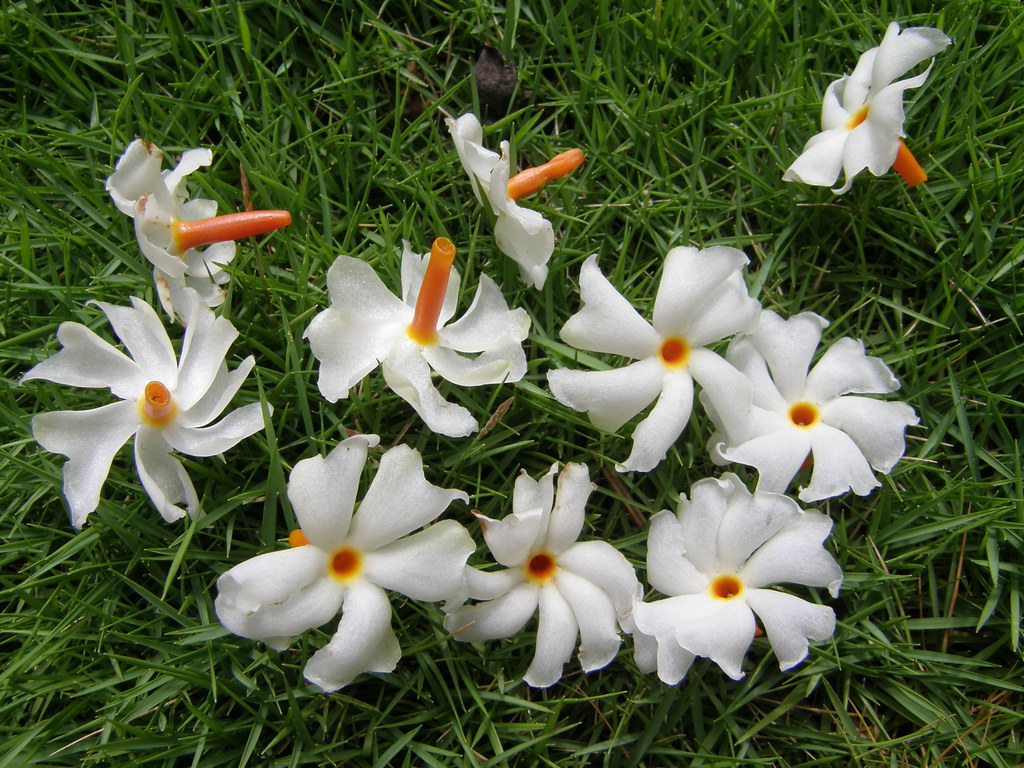
So beautifully reflected in the shiuli’s* colours.

Autumn, when the shiuli carpets the ground in legion,
Signifying the advent of the Goddess Durga in Sharad season,
Corresponding to the months of Ashwin (September-October).
Dusshera, too, comes in this season.
Both celebrate the victory of good over evil and corruption…
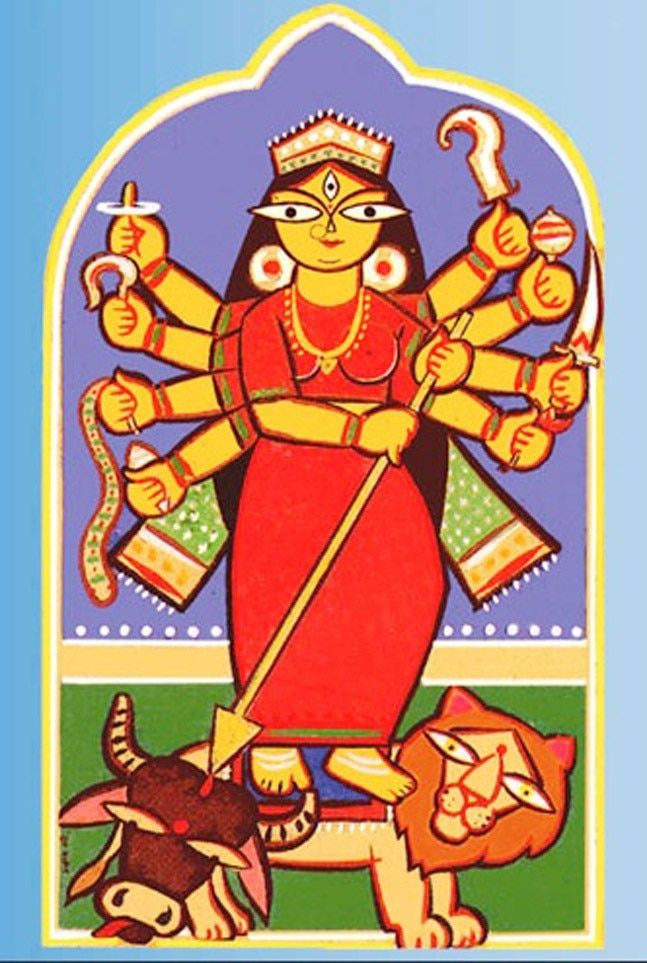
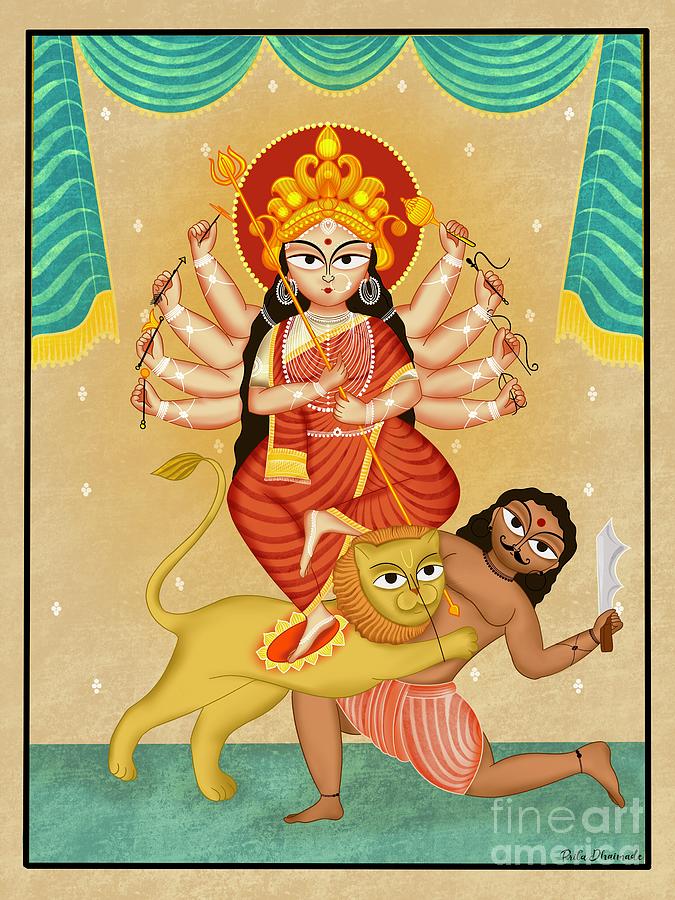
Maa Durga (the Goddess) triumphed over Mahisasur, the demon,
While Lord Rama triumphed over Ravana.

Autumn, that celebrates both festivals with great revelry
Turning our minds towards triumphing over evil
In our own lives, and evil within us.
The evil of ego that is the cause of suffering.
Ego, that is the demon that persuades us to discriminate with frivolity,
Between man and nature leading to a loss of biodiversity,
Between man and man leading to a false state of superiority.
Stemming from a mind of inferiority,
Judging against age, weight, skin colour, poverty and other such absurdity.

Autumn,
The time of the Shiuli flower
The time that reminds us to put our minds in favour
Of the divine and all that they have to teach us with fervour.
In the Guru Granth Sahib, the holy book of the Sikhs,
Guru Arjan says, that when we contemplate on the divine,
In our life manifest immense virtues with blessings combined
Akin to precious jewels like the flowers of the wish-fulfilling Harshringar*.

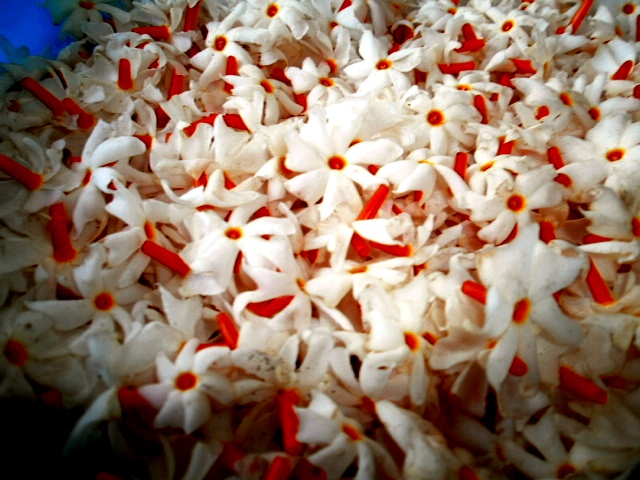
*Shiuli is also known as parijat, harshringar, and night jasmine.
Avantika Vijay Singh is the author of Flowing…in the river of Life and Dancing Motes of Starlight.
.
PLEASE NOTE: ARTICLES CAN ONLY BE REPRODUCED IN OTHER SITES WITH DUE ACKNOWLEDGEMENT TO BORDERLESS JOURNAL
Durga Puja, a community- based festival. Courtesy: Creative Commons
Long ago as children, we looked forward to the autumnal festival of Durga Puja. For those who lived outside Bengal, there was no holiday but it was still a break, a season filled with joie de vivre, when family and friends would gather to celebrate the community-based festival, Durga Puja. Parallelly, many from diverse Indian cultures celebrated Navratri — also to do with Durga. On the last day of the Durga Puja, when the Goddess is said to head home, North Indians and Nepalese and some in Myanmar celebrate Dusshera or Dashain, marking the victory of Rama over Ravana, a victory he achieved by praying to the same Goddess. Perhaps, myriads of festivals bloom in this season as grains would have been harvested and people would have had the leisure to celebrate.
Over time, Durga Puja continues as important as Christmas for Bengalis worldwide, though it evolved only a few centuries ago. For the diaspora, this festival, declared “Intangible Cultural Heritage of Humanity” by UNESCO, is a source of joy. While devotees welcome the Goddess Durga and her children home, sons and daughters living away would use this event as a reason to visit their parents. Often, special journals featuring writings of greats, like Satyajit Ray, Tagore, Syed Mujtaba Ali, Nazrul would be circulated in the spirit of the festival.
The story around the festival gives out that like an immigrant, the married Goddess who lived with her husband, Shiva, would visit her parent’s home for five days. Her advent was called Agomoni. Aruna Chakravarti contends in her essay, Durga’s Agomoni “is an expression, pure and simple, of the everyday life of women in a rural community –their joys and sorrows; hopes and fears”. While some war and kill in the name of religion, as in the recent Middle Eastern conflict, Chakravarti, has given us an essay which shows how folk festivities in Bengal revelled in syncretism. Their origins were more primal than defined by the tenets of organised religion. And people celebrated the occasion together despite differences in beliefs, enjoying — sometimes even traveling. In that spirit, Somdatta Mandal has brought us travel writings by Tagore laced with humour. The spirit continues to be rekindled by writings of Tagore’s student, Syed Mujtaba Ali, and an interview with his translator, Nazes Afroz.
We start this special edition with translations of two writers who continue to be part of the syncretic celebrations beyond their lives, Tagore and Nazrul. Professor Fakrul Alam brings to us the theme of homecoming explored by Nazrul and Tagore describes the spirit that colours this mellow season of Autumn
Poetry
Nazrul’s Kon KuleAaj Bhirlo Tori ( On which shore has my boat moored today?), translated from Bengali by ProfessorFakrul Alam, explores the theme of spiritual homecoming . Click here to read.
Tagore’sAmra Bedhechhi Kasher Guchho (We have Tied Bunches of Kash), translated from Bengali by Mitali Chakravarty, is a hymn to the spirit of autumn which heralds the festival of Durga Puja. Click here to read.
Somdatta Mandal translates from Bengali Travels & Holidays: Humour from Rabindranath. Both the essay and letters are around travel, a favourite past time among Bengalis, especially during this festival. Click here to read.
Meenakshi Malhotra demystifies the autumnal celebration of Durga Puja as a time of homecoming for married daughters through folk songs that are associated with the festival
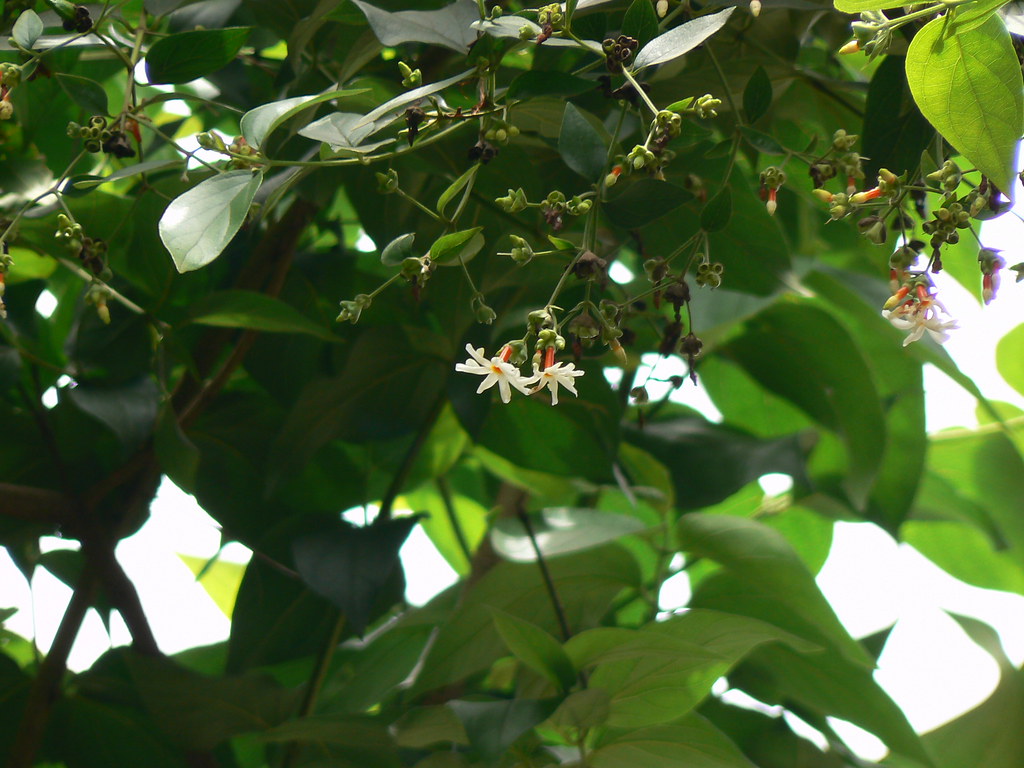
It is that time of the year again… a time of magic and enchantment when the air comes wafting with the fragrance of shiuli flowers, a species of night-flowering coral jasmine also known as the parijat. Legend has it that this flower is from a heavenly tree that was brought to Earth by Lord Krishna, one of the central gods in the Hindu pantheon. Interestingly, in a somewhat unusual twist, this tree is considered so sacred that its flowers picked up from the ground are also deemed appropriate for worship, to make sacred offerings. This is rare, given that flowers offered for worship are usually to be plucked from the tree and not picked up from the ground.
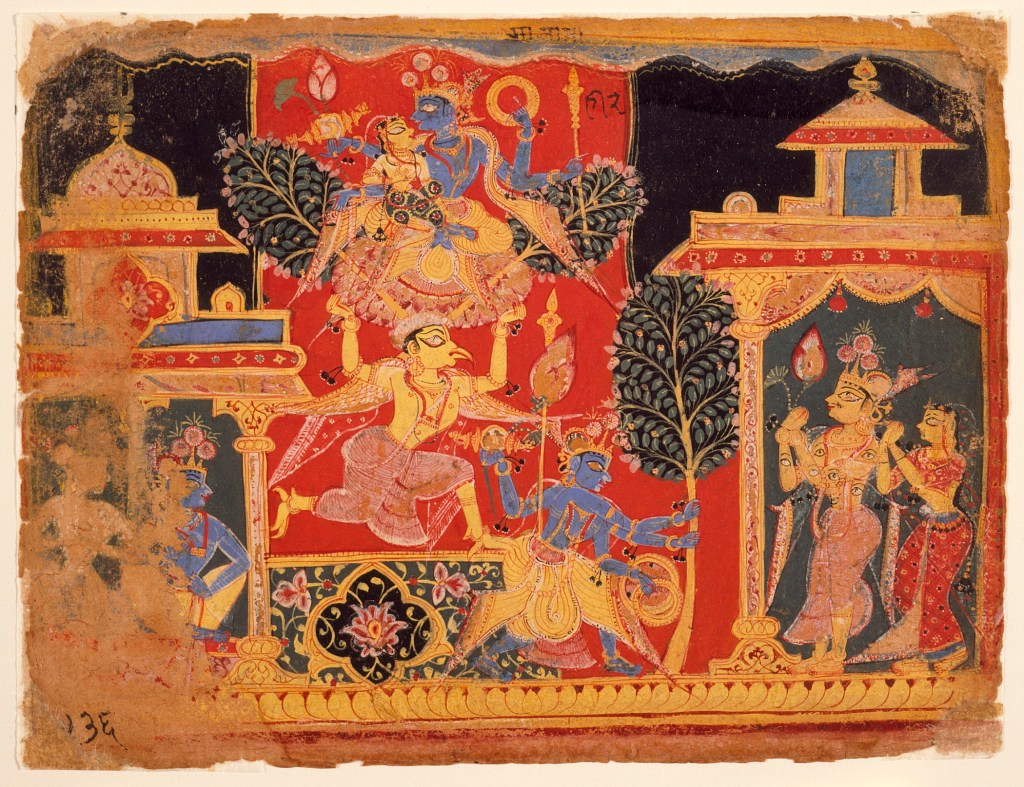
In Hindu mythology, the parijat tree is the tree of the universe which is owned by Indrani, the consort of Indra or the king of the Gods in Hindu mythology. Apparently Krishna stole it from Indra’s consort, Indrani and planted it in a region located between heaven and earth. The tree, also known as “kalpa-taru” or wishing tree, is one which grants all objects of desire.
From the sacred texts like Bhagawat Purana, the Vishnu Purana and the Mahabharata, we learn that the elaborate process of samudra manthan (churning of the ocean of milk) yielded the parijat tree as one of the three valuables. This tree is said to have blossomed atop Mount Meru, the garden of paradise. It was claimed by Indra when it rose to the surface and emitted its fragrance.
Krishna steals the Parijat tree from Mount Meru. Water colour India, app 1525-1550 CE. Courtesy: Creative commons
This is only one of the many gifts of nature, the exquisitely fragrant flowering tree which sheds blossoms and carpets the Earth around it. Autumn, that season so famously invoked as the time of “mellow fruitfulness”, carries hints of ripening and a mature fecundity. For many sections of Indians, it is the time of the goddess, a time that a lot of us associate with the advent of the goddess Durga, who signifies the triumph of good over evil. In Durga, we have the divine represented both in terms of mythic abstractions and the material everyday, as power and poetry, as divine and human, as mother and daughter. Similarly the goddess Durga’s descent on Earth for the days of the festival, is also the advent of the daughter to the house of the mother, a moment which overflows with affection, feelings and emotions.
The event happens at a certain time in the Hindu calendar and participates in linear time, as well as being a part of time imagined as part of a larger ongoing cycle of temporality. Similarly, it participates in mythic and magical time or eternity as it were. For the daughter, longing to be enfolded in the mother’s arms, who counts the days till she can go back to her natal home, albeit for a few days, this is also a special time indeed.
It is this note of longing, dispossession and exile that is captured in the folk songs in the Bengali or Bangla language, which were documented in the 18th century. These songs are called Aagamoni which translates into advent, here referring to one who arrives. Why this gains a certain poignancy is that girlhood in Indian and many traditional cultures was viewed as a fleeting and fugitive time, haunted by transience. Female children were in the past often regarded as temporary occupants in their natal homes and were characterised as ones who do not belong or belong to someone else, whose real home is with their in-laws.
In the Hindu pantheon, Durga, Uma or Parvati is a prominent mother goddess, the consort of Shiva. Her names refer to split roles of the feminine imaginary. As Durga she is the fiery slayer of demons. But– and this is the central theme here– she is also the gentle daughter Uma. It is in her form of the daughter who is separated from her parents, that the songs of Aagomoni and Bijoya emphasise. Bijoya translates as victory and starts with the return of the Goddess to her spouse, Shiva. Aagomoni and Bijoya are genres of Bengali folk songs celebrating the return of the Goddess Durga/Parvati to the home of her parents on the eve of the autumn festival of Durga Puja. The Aagomani songs describe the return of Parvati to her home in rural Bengal, not as Goddess but as daughter, and are followed by Bijoya songs which describe the sorrow of parting three days later as Parvati returns to her husband Shiva. Aagomoni songs can be interpreted as an expression of collective feelings, experiences and aspirations, another way of rethinking or reimagining the self-inscription of a collectivity.
In one of the best known and common Aagomoni songs, ‘Ogo amar agomoni’ (‘The Advent of Durga’):
The Advent of Durga

I herald the advent of the Goddess
With the lighting of my lamps
During the autumn whirlwinds.
At the end of night, the sun bursts forth.

In the swirling storm,
At the end of the night,
The light in my path is turned off.
The beacon of my life has turned off.
I herald the advent of my Goddess.

The lamp that reveals my path,
Brightens my life by pouring
The nectar of your presence.
I am lost in the blackness of fear.
When you come in your radiant chariot,
Your refulgence will shatter the
Deep darkness in all directions.

Play the aubade of aurora.
It will all be divine.
I herald the advent of my Goddess
With the lighting of my lamps.
I herald the advent of our Goddess.

(Translated by Mitali Chakravarty)
The song is full of the imagery of light and refulgence. My goddess “light of my life’’ could be both a reference to the divine mother, as well as to a daughter, who was very often referred to as ‘Ma’ as a term of affection. While this song maps the emotional link between the mother and the daughter and can be seen in terms of affect, the focus is on her refulgence and divinity. The reference to the goddess in terms of the mother/ daughter trope is much more evident in other songs, which narrates the saga of dispossession — the fair princess who has to live in disorderliness and poverty.
Go Get Gouri

Go, go Giriraj
To fetch your daughter Gouri
Uma is in deep sorrow
Uma has cried for her mother
Living in misery

Bhang consuming Shiv
Ash-smeared and wild
Sold off her finery
All her jewellery
To fund his addiction

Bhola revels in intoxication
He has collected hashish from
The three realms….heaven, hell and earth.

Bhola put the intoxicant, bhang
Made with crushed
Datura seed on my Uma’s face.

Go lord of the mountains go
Go to fetch Gouri
Uma has cried herself hoarse.

(Translated by Mitali Chakravarty)
In another evocative song, the mother cries –“Ebaar Uma ele/Aar pathabo naa ( This time when Uma comes/ I will not send her back)”.
When My Uma Returns…

This time when my Uma comes,
I will not send her back.
If people call me bad, let them.
I will not listen to anyone.
This time when my Uma returns,
I will not send her back,
This time when my Uma comes.

If the conqueror of death comes
To talk of taking Uma back,
If Mritunjaya comes
To talk of taking her back,
We, mother and daughter,
together will quarrel with him.
I will not agree because
he is my son-in -law

This time when my Uma returns,
I will not send her back,
This time when my Uma comes...

The poet says
Can life tolerate such wounds?
Shiva roams the cremation grounds,
And does not think of his own home.

This time when my Uma comes,
I will not send her back.
If people call me bad, let them.
I will not listen to anyone.
This time when my Uma returns,
I will not send her back,
This time when my Uma comes...

(Translated by Mitali Chakravarty)
Here, the mother vows not to send Uma back to her wild and undomesticated husband when she comes visiting. This articulates a resolve uttered by the mother not to jeopardize or endanger her daughter by ‘giving’ her to an undeserving husband. The anxiety, insecurity and fear for the daughter’s safety is clearly evident in these lines. Maternity and maternality is here described as a tortuous and beleaguered state. In all these lines, we see a shift from the narrative account of arming and empowerment of the goddess to a more human and humble register. Begging, cajoling, importuning-the mother’s pain and anxiety for the daughter, married to that strange and alien figure, the untamed and undomesticated God Shiva, is evident in every line.
The narrative of mother and daughter pining for each other, appears to have similarities with the Greek myth of Demeter and Persephone. In some, the daughter is imagined as asking her husband for permission to visit her mother: “It has been so many days since I went home and saw my mother face to face ceaselessly… she weeps for me…” (Bhattacharya, in Mc Dermott 2001:132). The men ( both father Giriraj and husband Shiva ) emerge as emotionally unreceptive. (Kaul 2022:9) We hear Menaka bemoaning an emotionally unresponsive husband who won’t fetch the daughter:
“Whom can I tell
the way I feel for Uma?"
Thus the story of the festival of Durga embraces not only the radiant, refulgent and resplendent image of the goddess; behind it lurks the secret sorrows of generations of mothers and daughters caught in the inevitable dance of life as they play out sagas of dispossession. As autumn is the season of liminality poised between summer and on the cusp of winter, the goddess visiting her natal home, is poised between humanity and divinity, both as a daughter in exile and as a slayer of demons. From this paradox, this spectacle that hovers between the majestic and the everyday, a sublime beauty is born.
.
Dr Meenakshi Malhotra is Associate Professor of English Literature at Hansraj College, University of Delhi, and has been involved in teaching and curriculum development in several universities. She has edited two books on Women and Lifewriting, Representing the Self and Claiming the I, in addition to numerous published articles on gender, literature and feminist theory.
.
PLEASE NOTE: ARTICLES CAN ONLY BE REPRODUCED IN OTHER SITES WITH DUE ACKNOWLEDGEMENT TO BORDERLESS JOURNAL




 Borderless