Rabindranath Tagore (1861-1941) in the role of the blind singer in his play, Falguni (published in 1917). Art by Abanindranath Tagore. From Public Domain
On May 7th 1861, or Pochishe Boisakh of the Bengali year 1268, Rabindranth Tagore was born in Jorsanko, Calcutta. That time, there was one subcontinent. Borders were fluid though the concept of countries had already started making inroads with the onset of colonials more than a couple of centuries ago. Rabindranath Tagore — a man who rejected the academia and earned no degrees — set the world aflame with his words and ideals. Many of his works hope to inspire people out of miseries by getting them in touch with their own strength. He created Santiniketan and Sriniketan to train young minds, to close social and economic gaps, to override the stigma of walls that continue to box and divide humanity to this date. Subsequently, his works, especially his writings, have become subjects of much academic discourse as well as part of popular cultural lore.
Tagore celebrated his own birthdays with poetry on Pochishe Boishakh. Pochishe Boisakh falls between 7-9 May on the Gregorian calendar. We start our celebrations with translations of his birthday songs and poems. The song translated by Aruna Chakravarti was the last he wrote, and based on a long poem he had written in 1922, also featured here. We also have the first birthday song he composed in 1899. In prose, we bring to you works that showcase his call for change and reform. Fakrul Alam has translated a powerful play by him, Red Oleanders, which strongly seems to reflect the machinations of the current world and ends on a note of hope. We can only carry an excerpt from this long play but it will be a powerful read when published in full. Somdatta Mandal shares a translations of an essay in which Tagore airs his views on the need for change in social norms — the strange thing is it would still seem relevant today. And Himadri Lahiri rendered an essay from Bengali to English on his views about the British Raj. We also have a story about a woman who changed social norms and her religion, translated by Chakravarti.
Birthday Poems & Lyrics
Hey Nutan or Oh ever new has been translated by Aruna Chakravarti inDaughters of Jorasanko. This was the last birthday song he wrote in 1941, a few months before he died. It was based on the long birthday poem he had written in 1922. Click here to read.
Pochishe Boisakh Cholechhe(The twenty fifth of Boisakh draws close…), a birthday poem written in 1935, seems to be a sad reminder of mortality and dreams left unfinished. Click hereto read.
Pochishe Boisakh(25th of Baisakh) is a birthday poem Tagore wrote in 1922 and the poem from which he derived the lyrics of his last birthday song written in 1941. Click here to read.
Jonmodiner Gaan or Birthday Song by Tagore was written in 1899 and later sung as Bhoye Hote Tobo Abhayemajhe ( Amidst Fears, May Fearlessness). Click hereto read the translation.
Prose
An excerpt from Tagore’s long play, Roktokorobi or Red Oleanders, has been translated by Professor Fakrul Alam. Click here to read.
This essay was first published in Tattwabodhini Patrika, Ashwin issue, 1319 B.S.(September-October, 1912) and reprinted in Pather Sanchoy (Gleanings of the Road). It has been translated from Bengali by Somdatta Mandal.
Tagore at Paris, 1921. From Public Domain
When we travel to Vilayet[1], then it is not simply going from one country to another; for us it is like entering a new household. The external differences of lifestyle are not that important. It is expected that there will be a difference between us and the foreigners in our dress, ornaments, eating and pleasure habits and so that doesn’t bother us too much. But not only in lifestyle, there is a deeper dissimilarity in our evaluation of life and to find a sense of direction there suddenly becomes a very difficult task.
We start feeling this from the moment we board the ship. We understand that we will have to abide by the rules of another different household. This sudden change is not to the liking of man. This is why we do not try to understand it very clearly; we somehow try to follow it or feel disgusted and then utter to ourselves—their manner and behaviour is too artificial.
The truth is that what is important is the difference we have with them regarding our social position. Our society has come and stopped within the limits of our family and village. Within those limits we have evolved certain fixed rules about how to behave with one another. Keeping those limits in mind it has been decided what we should do and what we should not. Some of those rules are superficial whereas others are quite normal.
But the society which is the target of these rules being framed is not very big in size and it is a society of relatives. So, our habits are quite domesticated. You cannot smoke tobacco in front of your father, you are supposed to pay obeisance to the guru and pay him some money, the sister- in- law must cover up her face in the presence of the elder brother-in-law and close proximity to your uncle- in- law is totally prohibited. Those rules that are outside the family or village society are based on caste(varna) differences.
It can be said that the thread of caste difference has tied our village society and families like a chain or necklace. We have reached a conclusion. India has resolved its societal problems once and for all and she feels that if this system can be permanently retained then there is nothing to worry about. That is why modern India is trying to strengthen in all manner this family and social bonding laws woven through the thread of varnashram[2].
It has to be admitted that India had been able to find a solution to the problems it was facing at one point of time. She has somehow reconciled the differences between diverse castes, she has pacified the struggle between diverse classes; by classifying professions she has managed to contain competition and disputes and has staved off the vanity created by differences of wealth and capacity through the fence of caste differences. Though, on the one hand, India has maintained through all means the independence of Brahmins who are at the helm of society to the people belonging to other castes, at the same time, she has also spread out small and big processes through which all facilities and education could be disseminated among the others. This is why what the rich person enjoys in India is also partly distributed among the ordinary people on various pretexts and in this way, by giving shelter to the ordinary and appeasing them, the powerful retains his power. In our country, there is no reason to go into a major clash between the rich and the poor and the necessity has not arisen by which the incapable person has to be protected by legal means.
The Western society is not family oriented; it is an open and large society which is much more widespread than ours. It is more on the outside than on the inside. The concept of family that is there in our country is absent in Europe and that is why the people of Europe are spread everywhere.
The nature of this spread-out society is such that on the one hand it is loosely assimilated and on the other it is more diverse and stronger. It is like composing a prose piece. Poetry is restricted within its rhymes and that is why its binding is simpler. But the prose spreads out. That is why on the one hand it is independent and on the other its steps are bound through logic and reason, through diverse rules on ideas about the development of the mind in a greater way.
Because the English society is so spread out and because all its activities are externally motivated, it must be always prepared for different social rituals. It hardly has time to wear casual domestic clothes. It must remain dressed up because its social area is not that of relatives. Relatives pardon you, tolerate you, but you cannot expect such tolerance on the part of outsiders. Everyone must do each and every work in due time, otherwise one will encroach upon another. If the rail line is in my area or is under the control of a few of my friends and relatives, then we can run the train as we wish and can even halt each other’s train as and when we desire. But if we try to detain a train for five minutes in the ordinary train route where lots of trains move up and down, then there will be lots of problems and that will be difficult to tolerate. Because our society is extremely domesticated or maybe because we are habituated with domestic practices, we behave with each other very loosely—we spread ourselves as much as possible, waste time and criticise formal behaviour as lacking in fraternal feelings. This is the first thing that prevents us from feeling at home in English society—there one cannot act in a carefree manner and then expect that people will pardon us. They have created different rules that will on an average benefit the maximum number of people. They have set up fixed rules for meeting each other, for invitation formalities, for dressing up, for entertaining guests. If we try and impose the laxity that we display with relatives in a place that is not actually a society of relatives, then everything turns out to be horrible and life becomes impossible.
Till now this wide European society has not come up with any solutions. It has made an effort through certain rules and regulations in external rituals and behaviour to retain self-restraint and gracefulness but is unable to make arrangements by which the internal strife at a personal level can be resolved. Europe is only going through experimentation, change and revolution. There is a constant rivalry cropping up between men and women, between religious society and professional society, between the power of the ruler and the ruled, between businessmen and worker groups. It has not pacified itself like the halo round the moon. Even now it is ready like a volcano waiting to erupt.
But how can we say that we have solved all our problems, have finalised our social structure, and are resting as peacefully as dead bodies? Even though time has elapsed, we can retain the system for some time, but we cannot keep the situation in chains. We are facing the entire world, now we cannot do with our domesticated society; these people are not merely our fathers, grandfathers or uncles, they are outsiders. They belong to different countries and so we should be extremely alert while interacting with them. If we are absent-minded and behave in a loose manner, then one day we will be totally unfit to act.
We are proud of our tradition, but it is not at all true that the society of India has not evolved through history. In different situations even India had to go through newer revolutions—there is no doubt about that—and history is replete with instances. But I don’t want to even utter that it is the end of all treading for her and from now on till eternity she will just be there and hold on to her traditionality. Society gets fatigued after each large revolution; during that time, it shuts its doors, switches off all lights and prepares to go to sleep. After the Buddhist revolution India had gone off to sleep latching her doors and windows with the hook of strict laws. She was sleepy. But to boast about this as eternal sleep will become a laughable though pitiable thing. Sleep is good only during the night, when there are no crowds of people outside, and when all the big shops and markets are shut down. But in the morning when everyone is awake and there is activity all around, if you go on quietly lying down and close all the old doors and windows, then you will be the loser.
The rules of the night are very simple. Its arrangements are sparse, and its requirements are very little. That is why we can complete all our tasks and go to sleep in an unperturbed manner. Then things go on lying where they were kept because there is no one to move them. The arrangements during the day are not so simple and completing the job once and for all in the early morning does not mean that one can relax and smoke tobacco the rest of the day. Work keeps pouring down our necks. We must keep attempting new things and if we cannot adjust ourselves to the flow of the outside world, then everything else falls out of place.
For some time, India has spent her nights in a system of strict and fixed set of rules. That does not mean that that situation will permanently remain very comfortable. Getting a beating is most painful and difficult, especially when it falls upon a sleeping body. Daytime is the period to receive such blows. That is why it is most comfortable to remain awake during the daytime.
It is time for us to wake up whether we wish it or not, whether we are full of laziness or not. We are constantly being hurt both internally and externally in society and so we are sad. We are suffering from poverty and famine. The society is breaking down; the joint family system is being split into bits and pieces. And the role of the Brahmins in society has become so demeaning that with the aid of ‘Brahmin societies’ and such other things, they keep on shouting loudly to prove their existence and thus only attest to their weakness. The panchayat[3] system worn in the neck by the government’s chaprasi[4] has committed suicide and its ghost is dominating the village. The food in the country is incapable of satiating the small village schools. Due to famine, they are now relying on the charity of government dole. The rich people of the country have doused the light in their birthplaces and are roaming around in Calcutta in motor cars, and people of noble descent are ready to sacrifice their entire wealth and their daughters at the feet of a graduate groom. There is no point in blaming the Kaliyuga[5], or the foreign king or the native English-speaking people for this misfortune. The truth is that our lord has sent his assistant during the daytime, and he will not stop till such time he can drag us out of our traditional bedrooms. So, we cannot forcibly close our eyes and try to create the night at odd hours. The world that has come to our threshold has to be welcomed inside our house. If we don’t give it a cordial welcome, then it will break open our doors and gain entry. Hasn’t the door not yet been broken now?
So once again, we must think about resolving our problems. It cannot be done by imitating Europe, but we must learn from her. Learning and imitating are not the same thing. Actually, if we learn in the correct way, we will be relieved from the art of imitating. If we cannot know the other truly, then we cannot understand the truth ourselves.
But I was saying that we cannot adjust ourselves in the European society with our loose domestic habits. We can never prepare ourselves in any way. It seems that everyone is pushing us aside, no one is waiting for us for a moment. We are pampered human beings; we feel out of place without our relatives in society. After coming here, I have noticed that since our students are not used to entering other people’s houses, most of them come here and learn things by heart but they do not keep any contact with the society here. The society here is large and so it has more responsibilities. Only if we undertake those responsibilities, can we find a sort of connection with the people of this society. If we cannot connect then we shall be deprived of the greatest learning prevalent here. This is because society is the greatest truth here. The greatest strength, the greatest sublimity is in the society here and not in the battlefield. Sacrifice and self-respect suitable for a broad-minded society are being expressed at every step. They are nurtured here and are preparing themselves in different ways to sacrifice their lives for the welfare of man. In modern India, the educated class of people still consider school education to be the true education. They are deprived of the education of greater society. Even after coming here and entering the school factory, if they come out simply as mechanical things and do not enter the birthplace of humanity visible here then they will be deprived even after coming to a foreign country.
[5] The current age in Hindu mythology which ends when the Kalki avatar comes to rescue humanity from darkness.
Somdatta Mandal is a critic and translator and a former Professor of English at Visva-Bharati, Santiniketan, India.An earlier version of this essay was published in Gleanings of the Road (Niyogi Books, pg 20).
.
PLEASE NOTE: ARTICLES CAN ONLY BE REPRODUCED IN OTHER SITES WITH DUE ACKNOWLEDGEMENT TO BORDERLESS JOURNAL
Based on Paul Gauguin’s life is a book by Somerset Maugham[1] called Moon and the Sixpence[2], a novel about a stockbroker who abandons his profession to become an artist. Gauguin[3] was a stockbroker turned artist, and Maugham was trained a physician but opted to write books and became a famed novelist. While earning a living as solely a writer has become increasingly difficult through the world unless you make it very big like JK Rowling[4], and therefore, most writers opt for being part time writers while holding full time jobs, we do have a few strange aberrations. One of them is Dr Kiriti Sengupta, who turned to publishing and poetry abandoning his profession — that of a dentist.
Kiriti Sengupta: Photo Courtesy: Bitan Chakraborty
He ran away from his home and started writing in a small, rented accommodation in 2011-2012. And now he writes, works as a director in one of India’s top upcoming publishing concerns, Hawakal, and rolls out poetry. Sengupta describes his former profession with, an underlined sense of irony, and perhaps with tongue-in-cheek humour:
I prefer patients who are edentulous. I dread
a tooth will wrangle my expertise, and I’ll fail
to make an impression.
(Rituals, 2019)

Wisdom
the third molar adds
to the surgeon’s expertise
(Oneness, 2024)
He writes about water and the environment:
Water has many colors,
smudging pebbles
along its path

(‘Spectrum’, Water has Many Colours, 2022)


Feed the earth water
she flows in abundance.
Allow the planet to breathe:
the air is her consort.
(‘Hibiscus’, Water has Many Colours, 2022)
He writes for and about women:
How many mujras dwell in a kotha ?

How many neonates hew to a bordello?

Like her admirers
God is silent.
In her sinews
hides a hint of soil
from the yard of courtesans.

*Mujras are courtesan’s song and dance performances
*Kothas are brothels
(‘When God is a Woman’, Rituals, 2019)
And yet critiques stances with a twisted questions:
You define women as Durga
or Kali. Are you a believer? Are you
being kind? You could have convinced
them to fight the evil.
Instead, when you imply the goddess,
do you illustrate
sisterhood with many limbs? Would you
like men to act as Shiva—the destroyer?

(‘Primordial Learning’, Oneness, 2024)
Underlying all of Sengupta’s poetry, is a strong sense of irony which like a veil drapes words with double entendres. While the poems are layered, he dwells on human frailties too… like procrastination with a soupçon of sarcastic humour as in ‘From Being Late in Calcutta’ (Rituals):
As soon as you mark me
I’ll talk about events
that guide me to the records
you maintain.

I’d say crowded buses invite passengers
from unscheduled halts.
I’d emphasize the number of speed-breakers on road,
and their poor performance in preventing accidents.

I’d tell you trains run late.
Signals are laggy between stations.
I won’t forget to mention how
a sudden protest
makes the train stand still for hours.

I’d discuss about the day I reported late,
owing to instantaneous suspension
of underground train services
as a man killed himself on the railway lane.

I’d ask you to remember why I came late the other day.

If you can recall,
I had indigestion despite eating at home.
I blamed farmers for sprinkling pesticides on crops.
I pointed at my salary that failed to buy organic veggies.

And then,
I’d invariably argue about maintenance and population.

I’d appreciate China, one-child policy, and their claim on
how the government prevented four hundred million births.
And how India thrives on the revenues earned
from selling nicotine and condoms.

I’ll explore other issues
the next time I reach late.
He pours out lines on stars, film stars and politicians. Sengupta responds to life with poetry, often terse, brief… sometimes with a wry sense of humour. But in the brevity, lies a depth of mystery, which you can mull and cogitate over endlessly. A flickering of spiritual beliefs and a seriousness of intent despite the apparent lightness of words create a conversation within the poems. In this exclusive, an award-winning author of more than fourteen books, Kiriti Sengupta takes us on whirlwind tour of his life, his ideas and his work.
When and how did you start writing poetry? Why did you switch professions — from a dentist to a poet-publisher? What compulsion made you turn from a lucrative to an uncertain profession? Were you sure you’d succeed? Please share your story with us.
First of all, thank you for inviting me to Borderless for a heart-to-heart, Mitali. I greatly appreciate your dedication to literature, especially quality work. Coming to your first question (a bundle of questions, actually), I don’t remember when I first wrote a poem. Coming from a dentistry background, I never imagined that I would write poems. Until then, I was well acquainted with journalistic articles, critical responses, cultural essays, and, of course, scientific papers. Poetry was out of the question. I believe in karma. Maybe I was destined to write poetry. It wasn’t a deliberate choice. It wasn’t a spontaneous stance either.
I was passing through an obnoxious personal crisis that compelled me to reconsider my career in dentistry. I was comfortably placed in a government institution, enjoying a considerably thick monthly salary. In early 2012, I decided to leave my job and spend some time with myself. However, as you can understand, it was risky, as I was the only breadwinner in my family, which consisted of my wife and son. I had no career options to pursue.
I was new to social media back then. I had the opportunity to become involved with a virtual group, Indies In Action (IIA), run by Stephen L. Wilson. They were raising funds for the victims of the devastating earthquake in Oklahoma. I contributed a few poems to the literary anthology Twist of Fate(ToF), which Steve edited. It was hugely successful, and all proceeds went to the May Tornadoes Relief Fund, managed by United Way. For the promotion of the book, I interviewed a few eminent contributors, such as Bill Lantry, Terry Lucas, Colin Dardis, Marshall G Kent Sr., Allison Bruning, Maggie Rascal, Don Martin, Linda Bonney Olin, Maria Edwards (the then President of the American Authors’ Association), Ency Bearis, among others. Honestly, they all helped me become familiar with the world of poetry.
In 2013, my first book, The Unheard I, was published. It was released simultaneously in India by Dhansere Prakashan and in the United States by Inner Child Press Limited. It was non-fiction, although it contained two chapters dedicated to poetry. In his commentary, Stuart Aken remarked, “It is a scholarly [collection] that will appeal to those with an interest in poetry, particularly spiritual poetry expressed as literature, as well as [to] those who have a leaning toward or a significant interest in Indian myth and religion.”
Even then, I had no plans to pursue writing (or publishing, for that matter) as my career. Gradually, I evolved, and here I stand today. Do I call myself successful? I’m not sure whether I have turned into a consummate writer. Since I write poetry in a niche market worldwide, it is challenging to become a “successful” poet and earn enough royalties to sustain my family. As a publisher, oh yes, Hawakal has emerged as a leading traditional press that has published several writers and poets and enjoys its presence in New Delhi, Kolkata and Nokomis (Florida).
How long have you been in the literary framework? Was it a tough journey moving from dentistry to writing? How did your family respond?
My first essay was published in 1995 in the college magazine. I remember it was written for students suffering from anxiety and family expectations. While studying dentistry at North Bengal Dental College, I joined the All-India Freelance Journalists Association (AFJA, Chennai). My senior colleague, Dr. Falguni Maji and I were commissioned by Uttarbanga Sambad to write an article on the pottery art in Matigara (Siliguri). I was a regular contributor to “The Third Law” in The Telegraph (India). Later, I regularly wrote health-related articles for Ganashakti.
As I said before, I was initiated into poetry quite late. It was a challenging move as I had no formal training, but I was immensely blessed to have a few mentors who honed my skills and taught me the basics of writing poetry.
My family suffered badly from my career-shift. They had to compromise on their living standards. The initial years of becoming a full-time writer were dreadful, to say the least. From only one wholesome meal a day to just a pack of instant noodles for the day — I have personally experienced it all. I ensured that my family didn’t starve, nor did my son lose his schooling. However, their ceaseless support enabled me to survive as a writer and publisher.
How many books have you authored/translated and how many poetry collections, and within how many years? Do you see yourself more as a poet or as a publisher/editor?
I have written fourteen books of prose and poetry, and as a translator, I have two full-length collections of poems. I have also edited nine literary anthologies, including Shimmer Spring, an all-colour, hardback coffee-table book published during the pandemic, which addresses our perceptions of light.
Honestly, I see myself as a patron of Indian arts, literature and fine arts (painting, sculpture, etc.). I’m an admirer of Indian textiles, too! I love buying drapes, be it a saree, a shawl, or a dhoti, in rich fabrics. Bitan and I have plans to start a men’s brand of drapes. We are working on it.
You claim you are a slow writer, and you isolate yourself in a ‘studio’. Tell us about your poetic process. How do you write? What inspires you to write? Are you influenced by any writers/musicians, or artists?
You know, Mitali, we have two studios in India: one in Kolkata and the other in Delhi. These ateliers are essentially stations where we work on the submissions from authors — we read, select, edit, and design the books we publish. We invite authors and readers to have a one-on-one. Readers also drop by to buy a book or two they want. You see, these studios are not meant for our writing. I say “our” because Hawakal is the collective enterprise of Bitan Chakraborty (the founder director) and me. While Bitan oversees the Bengali department, I supervise the English-language division of Hawakal.
It’s difficult to describe how I write. Anything that stirs my imagination or fancy, whether a line from a song, an incident, or a tragedy, often inspires me to pen my thoughts. I am fond of ekphrastic poems and frequently visit art exhibitions to catch a thread or two. However, it takes days or weeks to write a poem, although most of my poems are short or very short. I believe in condensing my thoughts, which is a time-consuming affair.
Your first collection of poems, Healing Waters Floating Lamps (2015), was largely spiritual, while your latest, Oneness (2024), covers multiple aspects of life that may not be purely spiritual. Some of the poems in your later works are also ironic or verge on humour. A gap of nine years and multiple publications reside between the two books. Has there been a change or a progression in your poetry through your journey? Do you feel your poetry has changed?
Healing Waters marks my debut full-length collection of poems. Prior to this, I released 4 books, including My Glass of Wine (2013), which featured autobiographical poetry. My journey as a poet has led to a noticeable evolution. Scholars are more suited to examine these transformations. Some observe that my language and craft have become significantly more refined. They argue that my recent works display a level of sophistication. Conversely, others suggest that my earlier poems felt more spontaneous and grounded. Embracing evolution is crucial; without it, my growth as a writer would stagnate.
You translate from Bengali. Tell us who all you have translated. Have the translations impacted your own poetry. Do you feel translations should be literal or more focussed on capturing the essence of the language?
As I said before, I translated two volumes of Bengali poetry into English: Sumita Nandy’s Desirous Water and Bibhas Roy Chowdhury’s Poem Continuous—Reincarnated Expressions. I am delighted that these books have received rave reviews in India and overseas. Moreover, Hawakal recently released the 10th-anniversary edition of Poem Continuous, which has garnered critical appreciation.
Other than these books, I have translated a few contemporary Bengali poets as well: Ranadeb Dasgupta, Gourob Chakraborty, Rajeswari Sarangi, to name but a few. I can confidently tell you that translating Bengali poems has hardly influenced my work.
Whether translations of poems should be literal or more focussed on capturing the essence of the original is debatable. However, it is even more critical to ensure that the translated piece qualifies as poetry in the first place. If the piece does not read like a poem, regardless of the sincerity of the translator, the labour of translating the original work goes into vain. Every language comes with its own nuances. So, the translator should possess an excellent understanding of both the source and target languages.
Hawakal is regarded as one of the most important publishing houses for poetry in India. When and how did you join Hawakal as the director of the English section? How did you meet Bitan? Could you tell us about the journey?
Thank you for your kind comments on Hawakal, Mitali. Bitan Chakraborty established Hawakal in 2008 in Kolkata. He published numerous Bengali poets until I joined him in 2015. A common friend Kishore Ghosh introduced Bitan to me. Ghosh, a Bengali poet of some renown and a journalist, urged Bitan to publish a collection of literary criticism based on my work and that of Sharmila Ray. The book was titled Rhapsodies and Musings: poets in the mirrors of other eyes and authored by Ketaki Datta and Tania Chakravertty. So, we started our collaboration. Eventually, Bitan induced me to become one of the Directors of Hawakal.
Where do you see Hawakal travels as a publishing concern? What is the scenario like? Do you only bring out writers of Indian origin, or are you open to writers from other backgrounds? What does Hawakal look for in writers to publish with you?
For the past few years, Hawakal has been more focussed on fiction and non-fiction manuscripts. There is no dearth of poetry submissions, though. However, it’s challenging to find an authentic voice. We have published American poets like Dustin Pickering, t. kilgore splake, Marshall G. Kent Sr., Gary Manz, and others. Ethnicity isn’t a limiting factor for someone who wants to get published by Hawakal.
We really want to establish a steady foothold in the United States. Our tiny outlet in Nokomis is currently managed by Dr. Robertson James Short II. It has to grow big. Hawakal seeks original work, and we yearn for quality submissions.
Do you have any suggestions for young writers?
Aspiring writers or poets should read more and be well-versed with the works of contemporary authors. It is important to get published in journals, and accepting rejections from the editors is equally beneficial. Getting published should be a slow process. As the saying goes, there is no shortcut through the forest of life…
Statue of Begum Roquiah in the premises of Rokeya Hall, University of Dhaka. From Public Domain.
Recently, near Shamsun Nahar Hall, the second women’s hall of the University of Dhaka, a resident student defaced graffiti depicting Roquiah Sakhawat Hossein – popularly called Begum Rokeya. Black paint was used to smear her eyes and her mouth. Later, the student apologised for her action and promised to restore the image.
I do not know what upset the young woman. The picture is not offensive. The woman has her hair modestly covered. However, the manner of the defacing is troubling. The eyes have been painted over so that the woman cannot see; the mouth has been painted over so that the woman cannot speak. Why was the young woman denying the rights that Roquiah fought for, that the women of my generation demanded as their fundamental rights, and that the young women of today take for granted? Why was the young woman who defaced the picture denying the rights that the students against discrimination were claiming?
But, then to my surprise, I learned that this was not the only picture of Roquiah’s that had been defaced after August 5. In this other picture she had been given a beard and the derogatory word “magi[1]” written across it. What had Roquiah done to be dishonoured? What had made her controversial? Why was a young generation denying the changes that Roquiah had brought in young women’s lives by sheer perseverance and strength of will? On October 1, 1909, only four months after her husband’s death, Roquiah Sakhawat Hossein started a school in his name at Bhagalpur where she had been residing at the time. It was with great difficulty that she was able to persuade two families to send their daughters to her school. Of the five students, four were sisters.
Forced to leave Bhagalpur for personal reasons, she moved to Calcutta. However, she did not give up her dream and, two years later, on March 16, 1911, she re-started Sakhawat Memorial Girls’ School with eight students. At the time of her death on December 9, 1932, there were more than 100 girls studying at the school. Apart from teaching, the school encouraged girls to take part in sports and cultural activities. In recognition of her contribution to women’s education, the first women’s hall of the University of Dhaka was renamed “Ruqayyah Hall” in 1964.
From Public Domain
More than a century has passed since Roquiah’s Sultana’s Dream was published in the Indian Ladies Magazine in 1905. In Bangladesh, in recent years, more than half of SSC graduates have been girls – who have also outperformed the boys. Though the female to male ratio goes down at the university level, women are working in different professions. Nevertheless, the danger to women that led to the institutionalisation of purdah and its extremes – which Roquiah questioned and decried for its often fatal results and which in Sultana’s Dream she reverses to put men in the “murdana” – still persists.
According to the UN, “Violence against women and girls remains one of the most prevalent and pervasive human rights violations in the world.” It is estimated that almost one in three women has been subjected to physical and/or sexual intimate partner violence, non-partner sexual violence, or both, at least once in her life. Numbers of women’s deaths in 2023 reveal that a woman was killed every 10 minutes.
Sadly, many of the killings are within the family, by husbands, brothers, fathers, mothers-in-law, and mothers – who have internalised the concept of honour and allow their daughters to be killed by those who should protect them. In early November, the murder of five-year-old Muntaha shocked the nation. We learned to our horror that her female tutor has been charged with the murder.
Neither education nor empowerment is proof against violence. What is the answer? Was Roqiuah wrong?
Had Roquiah been here today she would have been surprised to see so many young women wearing jeans but also hijabs – very different from the all-enveloping burqas of her times. Perhaps she would have been happy to see that the young women in the crowded streets were not afraid of the young men, and that, in August, when the traffic police were absent, they were confidently directing traffic. She would have been happy to see that the burqa had changed – as she had once suggested in an essay on the subject that it should.
However, she would have been shocked to see in recent months young men beating each other up with sticks – some even fatally. She had believed in education, believed that education was the answer to improving lives. She had striven to educate girls because she believed that it was education that would change their lives for the better. She would have been horrified to know that most of the young men beating each other up were students. She would perhaps have asked, Was I wrong? If education is not the answer, what is?
It is not enough then to educate women and to empower them. The tutor was educated and empowered. Perhaps what is important then is to realize as Roquiah did that one must have proper values. In “Educational Ideals for the Modern Indian Girl,” she stressed that India[2] must retain what is best about its traditions. Acquiring education did not mean that Indian women should discard their familial roles or forget their cultural values.
Though in this essay Roquiah emphasised traditional roles for women, she also believed that women had roles outside the family. Thus, in a letter to the Mussulman, dated December 6, 1921, she noted that four of the Muslim girls’ schools in Calcutta had headmistresses who had studied at Sakhawat Memorial Girls’ School.
Roquiah has been an icon for the generation of early feminists in East Pakistan/Bangladesh, many of whom like Shamsun Nahar Mahmud and Sufia Kamal were inspired by her and others like Nurunnahar Fyzenessa and Sultana Sarwat Ara who had studied at her school. She was one of the heroines for the generation of women activists of the mid-1970’s who made her call for emancipation their rallying cry. Women for Women, a research and study group, has a poster which quotes lines from Roquiah’s essay, “Subeh Sadek”: Buk thukiya bolo ma! Amra poshu noi. Bolo bhogini! Amra Asbab noi…Shokole shomobeshe bolo, amra manush. Proclaim confidently, daughter, we are not animals. Proclaim, sister, we are not inanimate objects… Proclaim it together, we are human beings.
Many people are frightened of the word feminism and believe it means a radicalism that would destroy society. But in reality, feminism is a call for equality and justice. Yes, Roquiah was a feminist, who saw the positive side of Islam and decried the absurdity and injustices of society. Roquiah would not have radically changed gender relationships but in both Sultana’s Dream and her novel Padmarag (1924), she suggests that women can have identities that are not dependent on their relationships to men. Yes, she was bound by her times, but the courage with which she lived her life – refusing to be shattered by personal tragedies and trying to make the world better for others – is still relevant today. As is the rationality that she stressed at all times.
In Conversation with Malashri Lal, about her debut poetry collection, Mandalas of Time, Hawakal Publishers
Professor Malashree Lal
Time present and time past Are both perhaps present in time future, And time future contained in time past. If all time is eternally present All time is unredeemable.
‘Mandalas’ means circle in Sanskrit, the root, or at last the influencer, of most of the Indian languages in the subcontinent. Sanskrit belongs to the Indo-Germanic family, which homes Latin and Greek among other languages. Malashri Lal, a former professor in Delhi University, has called her poetry collection Mandalas of Time.
Her poetry reiterates the cyclical nature of the title, loaning from the past to blend the ideas with the present and stretching to assimilate the varied colours of cultures around the world.
Embracing an array of subjects from her heritage to her family — with beautiful touching poems for her grandchild — to migrants and subtle ones on climate change too, the words journey through a plethora of ideas. Nature plays an important role in concretising and conveying her thoughts. In one of the poems there is a fleeting reference to wars — entwined with the Pilkhan (fig) tree:
The Pilkhan tree thinks of its many years
Of shedding leaves, bearing inedible fruit, of losing limbs
But smiles at his troubles being far less
Than of unfortunate humans
Who kill each other in word and deed
But gather around the tree each Christmas
With fulsome gifts and vacant smiles
To bring in another New Year.

--Another New Year
Amaltas (Indian Laburnum) or Bougainvillea bind her love for nature to real world issues:
Only the Amaltas roots, meshed underground
Thrust their tendrils into the earth’s sinews below.
Sucking moisture from the granular sand, desperately.
The golden flowers pendent in the sun, mock the traveller
Plump, succulent, beacon-like, they tease with
The promise of water
Where there is none.

--Amaltas in Summer
And…
The Bougainvillea is a migrant tree, blossom and thorn
That took root in our land
And spread its deception
Of beauty.

--Bougainvillea
Her most impactful poems are women centric.
Words crushed into silence
Lips sealed against utterance
Eyes hooded guardedly
Body cringing into wrinkled tightness
Is this what elders called
‘Maidenly virtue?’

--Crushed
There is one about a homeless woman giving birth at Ratlam station during the pandemic chaos, based on a real-life incident:
Leave the slum or pay the rent
Who cares if she is pregnant,
Get out — go anywhere.
…
Ratlam station; steady hands lead her to the platform.
Screened by women surrounding her
A kind lady doctor takes control.
Pooja sees a puckered face squinting into the first light.
"This is home," she mutters wanly,
"Among strangers who cut the cord and feed my newborn,”

-- Ladies Special
In another, she writes of Shakuntala — a real-world migrant who gave birth during the covid exodus. She birthed a child and within the hour was on her way to her home again — walking. It reminds one of Pearl S Buck’s description of the peasant woman in Good Earth (1931) who pauses to give birth and then continues to labour in the field.
Most interesting is her use of mythology — especially Radha and Sita — two iconic characters out of Indian lore. In one poem, she finds a parallel to “Sita’s exile” in Italy, at Belisama’s shrine. In another, she finds the divine beloved Radha, who was older to Krishna and married to another, pining after the divinity when he leaves to pursue his life as an adult. And yet, she questions modern stances through poems on more historical women who self-immolated themselves when their husbands lost in battle!
Malashri Lal has turned her faculties post-retirement to literary pursuits. One of her co- authored books around the life of the poet Michael Madhusudan Dutt, received the Kalinga award for fiction. She currently serves on the English advisory board of Sahitya Akademi. In this conversation, Lal discusses her poetry, her journey and unique perceptions of two iconic mythological women who figure in her poetry.
When did you start writing poetry?
Possibly my earliest poetry was written when I was about twelve, struggling with the confusing emotions of an adolescent. I would send off my writing to The Illustrated Weekly which used to have pages for young people, and occasionally I got published. After that, I didn’t write poetry till I was almost in my middle age when the personal crisis of losing my parents together in a road accident brought me to the outpourings and healing that poetry allows.
What gets your muse going?
Emotional turmoil, either my own or what I observe within the paradigms of social change. With my interest in women’s issues, my attention is arrested immediately when I hear or read about injustice, violence, exploitation or negligence of women or girl children. It doesn’t have to be a dramatic or extreme event but even the simple occurrences of decision making by a husband without consulting his wife has me concerned about the dignity and agency of a woman. Some poems like “Escape”, hint at such inequality that society takes for granted. On the other hand, my poems about migrant women giving birth on the long march to a hypothetical village “home” during the pandemic, are vivid transferences from newspaper stories. “Ladies Special” is about Pooja Devi giving birth at Ratlam station; “The Woman Migrant Worker” is based on a report about Shakuntala who stopped by the roadside to give birth to a baby and a few hours later, joined the walking crowd again.
Why did you name your poetry book Mandalas of Time?
To me ‘Mandalas’ denote centres of energy. Each node, though distinct in itself, coheres with the others that are contiguous, thus resulting in a corporeal body of interrelatedness. My poems are short bursts of such energy, concentrated on a subject. They are indicative of a situation but not prescriptive in offering solutions. Hence the spiritual energy of ‘Mandalas’, a term used in many traditions, seemed best suited to my offering of poems written during periods of heightened consciousness and introspection. The poems are also multilayered, hence in constant flux, to be interpreted through the reader’s response. Many of them end in questions, as I do not have answers. The reader is implicitly invited to peruse the subject some more . It’s not about closure but openness. See for instance: “Crushed”, or “Shyamoli”.
Today, I rebel and tug at a
Divided loyalty —
The feudal heritage of my childhood
Fights off the reformist Bengali lineage,
My troubled feminism struggling
Between Poshak  and Purdah
White Thaan  and patriotism
Can one push these ghosts aside?

--Shyamoli
*Poshak: Rajasthani dress
*Thaan: White saree worn by the Bengali widow
You have written briefly of your mixed heritage, also reflected in your poem dedicated to Tagore, in whose verses it seems you find resolution. Can you tell us of this internal clash of cultures? What exactly evolved out of it?
My bloodline is purely Bengali but my parents nor I ever lived in Bengal. My father was in the IAS in the Rajasthan cadre and my mother, raised in Dehradun, did a lot of social work. In the 1950s and 1960s, Rajasthan was economically and socially confined to a feudal heritage and a strictly hierarchical structure. Rama Mehta’s novel Inside the Haveli (1979), describes this social construction with great sensitivity. Elite homes had separate areas for men and women, and, within that, a layout of rooms and courtyards that were defined for specific use by specified individuals according to their seniority or significance. Such hierarchies existed in Bengal too — the ‘antarmahal[1]’ references bear this out — but the multiple layers in Rajasthan seemed more restrictive.
In my “mixed heritage” of being born of Bengali parents but raised in Rajasthan, I started noting the contrasts as well as the similarities. I recall that when my father went on tours by jeep into the interior villages along rutted roads, I would simply clamber on. At one time I lived in a tent, with my parents, during the entire camel fair at Pushkar. I would listen to the Bhopa singers of the Phad painting tradition late into the evening. So my understanding and experience of Rajasthan is deep into its roots.
Phad paintingBhopa singersFrom Public Domain
Bengal– that is only Calcutta and Santiniketan–I know through my visits to grandparents, aunts and uncles. My cousins and I continue to be very close. I saw a fairly elite side of Calcutta—the Clubs, the Race Course, the restaurants on Park Street, the shopping at New Market, and sarees displays at Rashbehari Avenue. Santiniketan though was different. I was drawn to the stories of the Santhal communities, visited their villages, attended the Poush Mela[2] regularly and knew several people in the university. After Delhi, the wide-open spaces, the ranga maati (red soil), the Mayurakhi River, and the tribal stories were fascinating. I am fluent in Bengali and because of my relatives in Calcutta as well as Santiniketan, I never felt an outsider. My father’s side of the family has been at Viswa Bharati since the time of Rabindranath Tagore. So, I felt comfortable in that environment. And through an NGO called Women’s Interlink Foundation, established by Mrs Aloka Mitra, I had easy access to Santhal villages such as Bonerpukur Danga.
Poush Mela, started by the Tagore Family in 1894Santhali Performance at Poush Mela
However, in summary, though I lived with both the strains of Bengal and Rajasthan, the daily interaction in Jaipur where I received all my education till PhD, was more deeply my world. The fragmented identity that some poems convey is a genuine expression of figuring out a cultural belonging. Poems such as “To Rabindranath Tagore” helped me to understand that one can have multiple exposures and affiliations and be enriched by it.
Do you feel — as I felt in your poetry — that there is a difference in the cultural heritage of Bengal and Rajasthan that leads you to be more perceptive of the treatment of women in the latter state? Please elaborate.
Indeed, you are right. Bengal has a reformist history, and my family are Brahmo Samaj followers. Education for women, choice in marriage partner, ability to take up a career were thought to be possible. My paternal grandmother, Jyotirmoyi Mukerji, was one of the early graduates from Calcutta University; she worked as an Inspectress of Schools, often travelling by bullock carts, and she married a school teacher who was a little younger than her. They together chose to live in Rangoon in undivided India, heading a school there. These were radical steps for women in the late 19th century. My father grew up in Rangoon and came to Rajasthan as a refugee during the Second World War. My grandmother, who lived with us, was a tremendous influence denoting women’s empowerment. But what we saw around us in Jaipur was the feudal system and purdah for women in Rajasthan.
Fortunately, Maharani Gayatri Devi had set up a school in 1943 in Jaipur to bring modern thinking in the women, and I was fortunate to study there till I went to university. Let’s recall that Maharani Gayatri Devi was from Coochbehar (Bengal) and had studied at Santiniketan. She brought Bengal’s progressive ideas to the privileged classes of Rajasthan. My classmates were mostly princesses. I visited their homes and families and delved deeply into their history of feudalism. Without being judgmental, I must say that Rajasthan’s heritage is very complex and one must understand the reasons behind many practices and not condemn them.
You have brought in very popular mythological characters in your poems — Sita and Radha — both seen from a perspective that is unusual. Can you explain the similarity between Sita’s exile and Belisama’s shrine (in Italy)? Also why did you choose to deal with Radha in a post-Krishna world?
Namita Gokhale and I have completed what is popularly known as the “Goddess Trilogy”. After In Search of Sita and Finding Radha, the latest book, Treasures of Lakshmi: The Goddess Who Gives, was launched in February 2024 at the Jaipur Literature Festival, and the Delhi launch was on 8th October 2024 to invoke the festive season.
Version 1.0.0
In answering your question let me say that myth is storytelling, an indirect way of contending with issues that are beyond ordinary logic or understanding. Sita and Belisama coming together is an illustration of what I mean. The backstory is that Namita Gokhale and I had a joint residency at Villa Serbelloni in Bellagio (Italy) and we were revising the final manuscript of our book In Search of Sita. The thrust of that book is to recall the strength of Sita in decision making, in being supportive of other women, in emerging as an independent minded person. Our research had unearthed a lot of new material including oral history and folklore. In Bellagio, we started enquiring about local mythical stories and chanced upon Belisama,[3] a Celtic goddess known for her radiant fire and light, and in the village we chanced upon an old grotto like structure. Unlike in India, where we have a living mythology of commonly told and retold tales, in Italy the ancient legends were not remembered. The poem “Bellagio, Italy” took shape in my imagination bringing Sita and Belisama, two extraordinary women, together.
As to my poems on Radha, I cannot think of a “post-Krishna” world since Vrindavan and Mathura keep alive the practices that are ancient and continuous. Radha is the symbol of a seeker and Krishna is the elusive but ever watchful divine. They are body and soul, inseparable. The stories about “Radha’s Flute” or “Radha’s Dilemma” in poems by those names have an oral quality about them. The craft of writing is important, and for me, the theme decides the form.
Interesting, as both the poems you mention made me think of Radha after Krishna left her for Rukmini, for his role in an adult world. You have a poem on Padmini. Again, your stance is unusual. Can you explain what exactly you mean — can self-immolation be justified in any way?
This is a poem embedded in the larger query about comparative cultural studies. Rani Padmini’s story was written by Jayasi[4] in 1540, and it described a ‘heroic’ decision by Padmini that she and her handmaidens should commit Jauhar (mass self-immolation) rather than be taken prisoners and face humiliation and violent abuse by the men captors. You will note that my poem ends on a question mark: “I ask you if you can rewrite /values the past held strong?” Self-immolation has to be seen in the context of social practices at the time of Padmini (13-14th queen in Mewar, Rajasthan). The jauhar performed by Rani Padmini of Chittor is narrated even now through ballads and tales extolling the act if one goes into oral culture. But there is counter thinking too, as was evident in the controversy over Sanjay Leela Bhansali’s film Padmavat (2018) which stirred discussions on historicity, customary practice and oral traditions. Sati and Jauhar are now punishable offences under Indian law, but in recording oral history can one change the storyline? It’s not just self-immolation that comes under such a category of questioning the past — polygamy, polyandry, child marriage, prohibitions on widows and many other practices are to be critiqued in modern discourse, but one cannot rewrite what has already been inscribed in an old literary text.
This is a question that draws from what I felt your poems led to, especially, the one on Padmini. Do you think by changing text in books, history can be changed?
“History” is a matter of perspective combined with the factual record of events and episodes. Who writes the “history” and in what circumstances is necessary to ask. The narration or interpretation of history can be changed, and sometimes ought to be. To take an obvious case why is the “Sepoy Mutiny” of 1857 now referred to as the “First War of Independence”? In current discussions on Rana Pratap[5] in Rajasthan’s history, there are documents in local languages that reinterpret the Haldighati battle of 1576 not as the Rana’s defeat but his retreat into the forests and setting up his new kingdom in Chavand where he died in 1597. The colonial writers of history—at least in Rajasthan– were dependent on local informers and had little understanding of the vast oral repertoire of the state. Even Col. James Tod’s Annals and Antiquities of Rajasthan (1829) about the history, culture, and geography of some areas in Rajasthan, is often reproducing what he has heard from the bards and balladeers which are colourful and hyperbolic renderings as was the custom then. In Bengal, the impact of Tod is seen in Abanindranath Tagore’s[6]Rajkahini (1946), which is storytelling rather than verified facts. I feel history cannot be objective, it is author dependent.
Nature, especially certain trees and plants seem to evoke poetry in you. It was interesting to see you pick a fig tree for commenting on conflicts. Why a Pilkhan tree?
The Pilkhan is an enormous, bearded old fig tree that lives in our garden and is a witness to our periodic poetic gatherings. Mandalas of Time is dedicated to “The Poets under the Pilkhan Tree” because my book emerged from the camaraderie and the encouragement of this group. I see the tree as an observer and thinker about social change—it notes intergenerational conflict in “Another New Year”, it offers consolation against the terrors of the pandemic in the poem “Krishna’s Flute”. It’s my green oasis in an urban, concrete-dominated Delhi. In the evening the birds chirp so loudly that we cannot hear ourselves speak. Squirrels have built nests into the Pilkhan’s wide girth. It’s not a glamorous tree but ordinary and ample—just as life is. By now, my poet friends recognise the joy of sharing their work sitting in the shadow of this ancient giant. There are no hierarchies of age or reputation here. We are the chirping birds—equal and loquacious!
You have successfully dabbled in both poetry and fiction, what genre do you prefer and why?
Mandalas of Time is my first book of poems and it comprises of material written unselfconsciously over decades. During the pandemic years, I decided to put the manuscript together, urged by friends. Meanwhile my poems started appearing in several journals.
As to fiction, I’ve published a few short stories and I tend to write ghostly tales set in the mountains of Shimla. Its possibly the old and the new that collides there that holds my attention. I’ve been urged to write a few more and publish a book—but that may take a while.
Should we be expecting something new from your pen?
Mandalas of Time has met with an amazing response in terms of reviews, interviews, speaking assignments, and online presentations. The translation in Hindi by 13 well known poets is going into print very soon. Permission has been sought for a Punjabi translation. I’m overwhelmed by this wide empathy and it is making me consider putting together another book of poems.
I hear the scents whisper. Familiar fragrances of clove and cinnamon, imbued with spicy notes of pepper and eucalyptus beckon and tease. Elusive murmurs of mysterious oils and herbs tinge the air as I walk along a narrow-paved lane in Old Dhaka, overshadowed by looming walls on either side. I ignore the press of prying eyes and inquisitive bodies that accompany my passage. The call of the scents is irresistible, and I feel strangely unafraid of what lies before the next turn in the path ahead. These were the scents of my childhood — of summer afternoons spent secretly exploring the forbidden depths of my grandmother’s closet, the kaancher almarih[1] where her medicines were stored in shiny glass bottles with peeling labels.
The narrow lane spills into a small courtyard hemmed by buildings on three sides. Everything is closed because it is Friday, the day of prayer in Bangladesh. Peering through grimy windows, I see gigantic iron cauldrons, cavernous kansa kadhais[2], their gold gleaming in glimpses amidst sooty splatters, huge ladles and enormous tongs. Some vessels perch on hand-crafted mud stoves, their sides smoothened and baked by fires. Wooden logs are stacked in the corner along with bulging sacks of coal. Nearby, some large pieces of cloth, perhaps used for straining, are hung out to dry. In the shadowy recesses, shelves stacked with glass bottles glisten with reflected light. It seems almost staged, like a theatrical representation of a medieval kitchen and yet the evidence of daily use is undeniable.
The fourth side of the courtyard has an open doorway. A sudden urge, an inexplicable pull, lures me towards it. I feel I know what lies beyond its brink. Yet how could that be? In this alien city, situated in a land scarred by a brutal Partition, from where does this knowing come? Concentrating on lifting the edge of my saree as I step across the threshold, it takes me a moment to lift my eyes to see what lies ahead. A painting of a pot-bellied man seated cross legged on an asana[3], a sacred thread adorning the vast expanse of his chest, looks solemnly back at me. Before me was the same face I’d seen on countless bottles in that medicine cupboard of my childhood — the same glossy hair, oiled and parted with precision, the same curled moustache, the same narrow bordered white dhoti[4].
The author with her great grandfather’s portrait in Dhaka. Photo Courtesy: Ranu Bhattacharyya
I find myself before a life-size portrait of my great grandfather, Mathura Mohan Chakraborty, founder of Shakti Aushadhalaya, the Ayurvedic pharmacy famed in the streets of Dhaka, Calcutta, Patna, Benaras and Rangoon at the turn of the 19th century. The kitchen behind me was the pharmacy’s karkhana[5] to prepare medicines of his formulations. His portrait hung before the inner sanctum of the temple he had dedicated to the revered Bengali saint, Lokenath Baba. Legend claimed that the mystic had whispered the recipe of the first medicinal formulation to his most faithful disciple — my great grandfather.
Ever since I arrived in Dhaka as an expat, I had been searching for the Shakti Aushadhalaya premises. Everyone knew of the company; yet nobody seemed to know where it was located. I was introduced everywhere as a young scion of the family. And though whispers followed me at gatherings and smiles broadened on hearing I was the great granddaughter of Mathurababu, my questions regarding the whereabouts of the company drew blank stares and confused responses. In horticulture, the word scion, refers to the detached living part of a plant that is cut to be grafted onto another plant. The sundering of this particular scion had been so complete, over so many generations, through such a series of violent events that it seemed my search for the original plant would remain elusive.
It was only through persistent enquiry that I found myself in Swamibagh Road in Old Dhaka where the manufacturing unit of Shakti Aushadhalaya was located. Mathurababu had founded the company in Patuatuli, Dhaka, in 1901. Family lore suggests Lokenath Baba inspired him to venture far from his origins as a schoolteacher in Bikrampur. The ascetic recognised his potential, unusual in those times, as a graduate versed in three languages — Bengali, Sanskrit and English. Starting from humble beginnings in the family kitchen, peddling hair oil and tooth powder in his neighbourhood, Mathurababu’s prescient business acumen saw his enterprise flourish. The company produced and supplied quality Ayurvedic medicines at low prices. Mathurababu also established an Ayurvedic institute, attached to his manufacturing unit to popularise Ayurvedic knowledge. The institute taught Ayurveda and philosophy in Sanskrit. Students were offered free tuition, boarding, and lodging.
Ayurveda, considered the oldest existing health science in the world, is believed to have originated in India 5000 years ago. The journey of Ayurveda from ancient times to its present incarnation is a fascinating story that follows several simultaneous trajectories, embracing geopolitics and history, trade and commerce, science and industry, technology and travel.
It is with a sense of wonder that I encounter my great grandfather’s name in journals and books that describe the history of Ayurveda in India. He was among the earliest entrepreneurs to transition towards production of Ayurvedic drugs for the market. Directly involved in all aspects of his company, Mathurbabu immersed himself in the study of Ayurveda and had an extensive library of rare treatises on ancient Indian medical traditions, including a prized copy of Susruta Sanhita[6].
He noticed that Western medicines advertised their products in newspapers and journals. Following this model, he embraced a similar practice for his own company. An advertisement published in Muhammadi in February 1940 included endorsements from freedom fighter Chittaranjan Das, Lord Lytton, the Viceroy of India, and Lord Ronaldshay, the Governor General of Bengal. In the vintage advertisement, Lord Lytton wrote: “I was very interested to see this remarkable factory which owes its success to the energy and enthusiasm of its proprietor Babu Mathura Mohan Chakravarty B.A. The preparation of indigenous drugs on so large a scale is a very great achievement. The factory appeared to me to be exceedingly well managed and well equipped &c. &c.” In the same advertisement, in Bengali, Chittaranjan Das endorsed that nothing could surpass the production processes for medicines at Shakti Aushadhalaya.
Since the mid-19th century, several eminent leaders of the Indian freedom struggle visited Mathurbabu’s factory in Dhaka. On June 6, 1939, in the company’s visitor’s book, Subhash Chandra Bose wrote, “I visited the Sakti Oushadhalaya[7], Dacca, today and was very kindly shown around the premises. Indigenous medicines are prepared here on a large scale and in accordance with Ayurvedic principles. The institution reflects great credit on Babu Mathura Mohan Chakravarty, whose enterprise has brought Ayurvedic medicines within the reach of the poor. I wish him all success to the institution which he has built up after so much enterprise and hard labour for a long period. The success of Sakti Oushadhalaya, Dacca, means the popularity of Ayurveda throughout the country and this in its turn means the relief of suffering humanity.”
When my parents visited us in Dhaka a year after our arrival, we went back to Swamibagh Road. Our visit included a trip to the shop where the medicines of Shakti Aushadhalaya were sold.
Despite being taken over by the Pakistan government in 1971 and subsequently acquired by a private entrepreneur, the company remains operational in Bangladesh to this day with 37 branches nationwide. Though Mathurababu’s portrait is no longer on the medicine bottles in the shop, the names of the formulations inscribed, are still recognised by my mother. As we browse through the offerings, a crowd begins to form around her, hailed and welcomed as Mathurababu’s direct descendant. Much to my mother’s delight, the crowd guided her to his house, a now derelict mansion hidden in the by-lanes of Old Dhaka.
We entered the property through an ornamented gatehouse that opened to a large courtyard. On one side was the Baithakghar, the public receiving room with the Nat Mandir, the family temple in front of us. On the other side was the majestic mansion with tall columns, topped with ornate capitals. Next to the Nat Mandir was a small doorway that led to a shaded courtyard with a well, meant for the family’s private use. Beyond was yet another courtyard, enclosed with buildings on three sides.
Parts of the ancestral home. Photo Courtesy: Ranu Bhattacharyya
As I climbed the stairs leading to the second floor, I had a feeling of déjà vu. I felt I had been here before through my grandmother’s stories. Her small feet must have climbed these stairs. There was the arched windows she had said she gazed out of, and the vast veranda with colonnades, where she played with her eight siblings. Wandering through the rooms, I hear her voice narrating tales of her childhood — kite races on the terrace, indolent boat rides on the Padma, and the indulgence of choosing sarees from the weavers who came all the way from Benaras.
The house is now home to several families who regard our arrival with wary welcome. “Where are the Italian painted tiles?” I ask eagerly. The story of the tiles imported by her father from Italy were amongst the kaleidoscope of stories that my grandmother had shared with me. Whisperings and murmurings ensue amidst the crowd and then a hefty cupboard was pushed aside to reveal the tiles in all their faded glory.
Slowly it dawns upon me that the silent bottle in my grandmother’s cupboard had encoded stories that belied its seemingly mundane materiality. To uncover these lost stories, I embark on a renewed search for those old medicine bottles of my childhood. Their fragrance lingers at the edges of my memory, offering tantalising glimpses to fragments of knowledge. The sense of smell is our oldest sense. My memories of stories narrated by my grandmother were inextricably connected to the scents locked in that bottle. Would holding the bottle in my hand peel back the layers of my memory, answer some unanswered questions about my grandmother’s roots, help me map the route of our family’s journey? But alas! Those bottles are lost to time. My grandmother’s generation is gone and I search among Mathurababu’s scattered grandchildren and great grandchildren to no avail.
My grandmother left Dhaka in 1936, never to return. Mathurbabu’s house on Calcutta’s Central Street was completed that year, and it is there he moved with his wife and three youngest unwed daughters, including my grandmother. His older son remained in Dhaka to oversee the factory and drug production, while Mathurbabu focused on controlling the distribution from a central office in Calcutta. Till his death in 1942, despite his ailing health and flagging energy, he visited the company’s distribution centres spread across Calcutta everyday, accompanied by his faithful retainer Nathu. Probing for reasons for this abrupt migration, my uncle gave me a solitary clue. He recalled that my great grandfather had felt his family was unsafe in Dhaka. With this obscure clue in hand, I delved into history books for elaboration. I read about the rise of communal tensions in Bengal from the mid-1920’s. The Dhaka riots of 1930 targeted several well-established businessmen and involved loot and arson of their business and personal properties.
In 1947, there was yet another wave of migrations far more existential and grimmer. After the borders were drawn between the newly formed nations of India and Pakistan, the remaining family fled Dhaka overnight, leaving behind the factory, the mansion, in fact, all their material possessions in a land suddenly hostile to their continued habitation. Unable to exercise control over their properties in East Pakistan, there was an initial attempt by Mathurbabu’s heirs to establish a factory in Chandernagore. Without my great grandfather at the helm, this nascent enterprise floundered and ultimately sank. Cut from its moorings in Dhaka, Mathurbabu’s inheritors could not keep the business afloat in India. Slowly his legacy dissipated. The Shakti Aushadhalaya head office in Calcutta’s Beadon Street closed and the shops in Calcutta, Karachi, Kabul, and Colombo lowered their shutters.
Through generations of migration and resettlement, we are left with only scattered memories and fragmented stories. These intangible remains are my inheritance today. These intangibles are bound neither by form, nor by time. Instead, they offer limitless possibilities for exploration, crafting and archiving. Memory, nourished by the repeated telling of stories, provides continuity. These intangible wisps of legacy — a remembered glimpse of a peeling label, the stories heard from my grandmother, the whispered whiff of a familiar fragrance, open a door to the past and invite me to connect it to the present. “Listen to us,” the scents call. “Let us tell you our story.”
Ranu Bhattacharyya, author of The Castle in the Classroom: Story as a Springboard for Early Literacy, Stenhouse, 2010, is an educator and writer who has lived and worked across the world, exploring and archiving narratives that connect people and cultures.
.
PLEASE NOTE: ARTICLES CAN ONLY BE REPRODUCED IN OTHER SITES WITH DUE ACKNOWLEDGEMENT TO BORDERLESS JOURNAL
Titles: The Poisoner of Bengal/The Prince and the Poisoner
Author: Dan Morrison
Publishers: Juggernaut (India)/ The History Press (UK)
November1933:HowrahStation
For most of the year, Calcutta is a city of steam, a purgatory of sweaty shirt-backs, fogged spectacles, and dampened décolletage. A place for melting. In summer the cart horses pull their wagons bent low under the weight of the sun, nostrils brushing hooves, eyes without hope, like survivors of a high desert massacre. The streets are ‘the desolate earth of some volcanic valley’, where stevedores nap on pavements in the shade of merchant houses, deaf to the music of clinking ice and whirring fans behind the shuttered windows above.
The hot season gives way to monsoon and, for a while, Calcuttans take relief in the lightning-charged air, the moody day- time sky, and swaying trees that carpet the street with wet leaves, until the monotony of downpour and confinement drives them to misery. The cars of the rich lie stalled in the downpour, their bonnets enveloped in steam, while city trams scrape along the tracks. Then the heat returns, wetter this time, to torment again.
Each winter there comes an unexpected reprieve from the furious summer and the monsoon’s biblical flooding. For a few fleeting months, the brow remains dry for much of each day, the mind refreshingly clear. It is a season of enjoyment, of shopping for Kashmiri shawls and attending the races. Their memories of the recently passed Puja holidays still fresh, residents begin decking the avenues in red and gold in anticipation of Christmas. With the season’s cool nights and determined merriment, to breathe becomes, at last, a pleasure.
Winter is a gift, providing a forgiving interval in which, sur- rounded by goodwill and a merciful breeze, even the most determined man might pause to reconsider the murderous urges born of a more oppressive season.
Or so you would think.
On 26 November 1933, the mercury in the former capital of the British Raj peaked at a temperate 28°C, with just a spot of rain and seasonally low humidity. On Chowringhee Road, the colonial quarter’s posh main drag, managers at the white- columned Grand Hotel awaited the arrival of the Arab-American bandleader Herbert Flemming and his International Rhythm Aces for an extended engagement of exotic jazz numbers. Such was Flemming’s popularity that the Grand had provided his band with suites overlooking Calcutta’s majestic, lordly, central Maidan with its generous lawns and arcing pathways, as well as a platoon of servants including cooks, bearers, valets, a housekeeper, and a pair of taciturn Gurkha guardsmen armed with their signature curved kukri machetes. Calcuttans, Flemming later recalled, ‘were fond lovers of jazz music’. A mile south of the Grand, just off Park Street, John Abriani’s Six, featuring the dimple-chinned South African Al Bowlly, were midway through a two-year stand entertaining well-heeled and well-connected audiences at the stylish Saturday Club.
The city was full of diversions.
Despite the differences in culture and climate, if an Englishman were to look at the empire’s second city through just the right lens, he might sometimes be reminded of London. The glimmer- ing of the Chowringhee streetlights ‘calls back to many the similar reflection from the Embankment to be witnessed in the Thames’, one chronicler wrote. Calcutta’s cinemas and restaurants were no less stuffed with patrons than those in London or New York, even if police had recently shuttered the nightly cabaret acts that were common in popular European eateries, and even if the Great Depression could now be felt lapping at India’s shores, leaving a worrisome slick of unemployment in its wake.
With a million and a half people, a thriving port, and as the former seat of government for a nation stretching from the plains of Afghanistan to the Burma frontier, Calcutta was a thrumming engine of politics, culture, commerce – and crime. Detectives had just corralled a gang of looters for making off with a small fortune in gold idols and jewellery – worth £500,000 today – from a Hindu temple dedicated to the goddess Kali. In the unpaved, unlit countryside, families lived in fear of an ‘orgy’ of abductions in which young, disaffected wives were manipulated into deserting their husbands, carried away in the dead of night by boat or on horseback, and forced into lives of sexual bondage.
Every day, it seemed, another boy or girl from a ‘good’ middle- class family was arrested with bomb-making materials, counterfeit rupees, or nationalist literature. Each month seemed to bring another assassination attempt targeting high officials of the Raj. The bloodshed, and growing public support for it, was disturbing proof that Britain had lost the Indian middle class – if it had ever had them.
Non-violence was far from a universal creed among Indians yearning to expel the English, but it had mass support thanks to the moral authority of Mohandas Gandhi. Gandhi, the ascetic spiritual leader whose campaigns of civil disobedience had galvanised tens of millions, was then touring central India, and trying to balance the social aspirations of India’s untouchables with the virulent opposition of orthodox Hindus – a tightrope that neither he nor his movement would ever manage to cross.
And from his palatial family seat at Allahabad, the decidedly non-ascetic Jawaharlal Nehru, the energetic general secretary of the Indian National Congress, issued a broadside condemning his country’s Hindu and Muslim hardliners as saboteurs to the cause of a free and secular India. Nehru had already spent more than 1,200 days behind bars for his pro-independence speeches and organising. Soon the son of one of India’s most prominent would again return to the custody of His Majesty’s Government, this time in Calcutta, accused of sedition.
It was in this thriving metropolis, the booming heart of the world’s mightiest empire, that, shortly after two o’clock in the afternoon on that last Sunday in November, well below the radar of world events, a young, slim aristocrat threaded his way through a crowd of turbaned porters, frantic passengers, and sweating ticket collectors at Howrah, British India’s busiest railway station.
He had less than eight days to live.
About the Book:
A crowded train platform. A painful jolt to the arm. A mysterious fever. And a fortune in the balance. Welcome to a Calcutta murder so diabolical in planning and so cold in execution that it made headlines from London to Sydney to New York.
Amarendra Chandra Pandey, 22, was the scion of a prominent zamindari family, a model son, and heir to half the Pakur Raj estate. Benoyendra Chandra Pandey, 32, was his rebellious, hardpartying halfbrother – and heir to the other half. Their dispute became the germ for a crime that, with its elements of science, sex, and cinema, sent shockwaves across the British Raj.
Working his way through archives and libraries on three continents, Dan Morrison has dug deep into trial records, police files, witness testimonies, and newspaper clippings to investigate what he calls ‘the oldest of crimes, fratricide, executed with utterly modern tools’. He expertly plots every twist and turn of this repelling yet riveting story –right up to the killer’s cinematic last stand.
About the Author:
Dan Morrison is a regular contributor to The New York Times, Guardian, BBC News and the San Francisco Chronicle. He is the author of The Black Nile (Viking US, 2010), an account of his voyage from Lake Victoria to Rosetta, through Uganda, Sudan and Egypt. Having lived in India for five years, he currently splits his time between his native Brooklyn, Ireland and Chennai.
.
PLEASE NOTE: ARTICLES CAN ONLY BE REPRODUCED IN OTHER SITES WITH DUE ACKNOWLEDGEMENT TO BORDERLESS JOURNAL
Ratnottama Sengupta muses on acts of terror and translates a Bengali poem by Tarik Sujat which had come as a reaction to an act of terror. Click here to read.
Renee Melchert Thorpe recounts her mother’s migration story, hopping multiple countries, starting with colonial Calcutta and Darjeeling. Click here to read.
Paul Mirabile wanders into the realm of the supernatural dating back to the Potato Famine of Ireland in the 1800s. Clickhere to read.
Conversations
In conversation with eminent Singaporean poet and academic, Kirpal Singh, about how his family migrated to Malaya and subsequently Singapore more than 120 years ago. Click hereto read.
I wanted to see him for a considerable period, of course, for a purpose. I wished to offer him a few of my poetry books—not because I had read a whole bunch of his poems and considered him a great poet, but because alongside my poems, my books featured paintings and illustrations by a few talented artists from Calcutta. I wanted his remarks on the artwork, for the person in this context was the Padma Bhushan awardee Jatin Das, an Indian artist who rightfully deserved to be portrayed as a legend.
Jatin Das and Kiriti Sengupta meet for the first time. Photo provided by Kiriti Sengupta
I first met Jatin Das at the India Habitat Centre for an event organised by Oxford Bookstore on April 29, 2024. Honestly, I had no clue I would meet him there. Post-event, I introduced myself and offered him my new book, Oneness. “Ah, you are a poet. What do you do for a living?”—Das was eager to know. “I deal with books; I represent an independent press named Hawakal,” I answered. “Do you have a business card?” Das inquired, but I didn’t have one.
I need to be equipped with a visiting card. I’m severely laid back when presenting myself, even for “business”. I’m yet to learn where my inhibition stems from. I’m not otherwise lethargic.
Nevertheless, as I intended to leave, I humbly told Das, “Sir, Paritosh Sen was my great-uncle—my Dad’s youngest uncle.” His eyes glittered; he gently pressed my cheeks and embraced me in his arms. Das was visibly surprised. “But Paritosh-da was taller than you. Do you live in Calcutta?” I quickly responded to his last question for that evening, “I currently live in Delhi. It’s been three years.” Das shared his card, “Drop by my studio; call me when you want to.”
“I will,” I promised and introduced my wife (Bhaswati) and son (Aishikk) to him before I left the party. My son had a semester break at his college in Chennai. He had come to Delhi with his mother as we had planned a trip to Mussoorie. We headed to the hill station the next day, and on our way, I got a call from an unknown number. I was stunned as I found Jatin Das on the other side. He affirmed, “Your book is nicely done. I asked my staff to find you on the Internet.” After knowing that we were out for a vacation, Das asked, “When will you return? Do visit my studio when you come back to Delhi.” Receiving a surprise call from someone like Jatin Das was the least expected because he didn’t have my number.
Photograph of Bitan Chakraborty and Kiriti taken by Jatin Das. Photo provided by Kiriti Sengupta
“Fold your hands when you greet someone to say Namaskar. You may not utter the word, but the right gesture is important. You are a Bengali, come on,” Jatin Das firmly put forward his directions as I met him again on May 6, 2024, at his studio in Delhi. I was accompanied by Bitan Chakraborty, who followed Das’s instructions as he introduced us to the studio members. There was a visitors’ book where I put down our names and other details. Das looked at us with a hint of bewilderment, “Ah, you guys don identical shirts and trousers? This is amazing. I feel energised seeing you. Let me click a photo; I must do it. Stand together.”
Das isn’t tech-savvy. He categorically refuses to become one. “I am 83,” he proudly mentions his age. However, getting clicked by an artist of his stature is rare, especially his warm compliments for dressing up in similar clothes were overwhelming.
What followed was a guided tour inside his large atelier, packed with his paintings, sketches, books, souvenirs, pots and vessels, numerous folders, paper documents, poems written in loose pages, hats, and other items of art and aesthetics.
Painting by Jatin Das
Every nook and corner of the studio brightly declared the presence of an agile artist who declined to halt his sojourn with art and creativity. Meanwhile, Das had another visitor. While wrapping up his conversations with her, he wanted us to introduce ourselves to the lady. As we exchanged pleasantries, Das pointed at my conduct, “Please stand up when you greet someone. I maintain the same stance even if someone as young as twenty comes to meet me.” Another lesson learned.
As I offered him three of my books, Das urged, “Sign them for me.” I was hesitant. I needed to be more confident; signing my books never comforted me. He skimmed through the books and paused at Shimmer Spring, an all-colour, square-back coffee table book I edited in 2020. He inquired, “Who’s the artist?”
“Pintu Biswas,” I informed him.
“I don’t know about him. He must be young, but it’s fine work, I can tell you,” Das remarked as he carefully probed Shimmer Spring.
We were offered water before a boy in his studio served tea in transparent glass cups. “Finish the water first,” Das directed us. He also warned me to check on my sugar intake as I added two teaspoonfuls of white sugar to the cup of tea. He checked on the water again, “Finish your glasses.” As we savoured the aromatic tea, we discussed several matters like poetry, publishing, Indian publishers, his acquaintance with Dom Moraes, Hawakal’s journey, Das’s first book of poems, which was published by Writers’ Workshop (Calcutta) in 1972, JD Centre of Art (JDCA, Bhubaneshwar) among other things.
We had a challenging two-hour-long intriguing session with the artist. Before leaving his studio, we bowed before him to pay our obeisance. “People don’t offer Pranam anymore,” quipped Das. While returning home, I asked Bitan, “Was it really important to empty the glass of water?” His face glowed when Bitan said, “Drinking a glass of water wasn’t a big deal; it’s an alert. Maybe he wanted to convey his concern about the wastage of water.” Jatin Das—the artist and his intrinsic consciousness dawned on us.
Painting by Jatin Das
Kiriti Sengupta, has authored fourteen books of poetry and prose; two books of translation; and edited nine anthologies. Sengupta lives in New Delhi.
PLEASE NOTE: ARTICLES CAN ONLY BE REPRODUCED IN OTHER SITES WITH DUE ACKNOWLEDGEMENT TO BORDERLESS JOURNAL
Formative years can imply simply a growing body or the development of a complex outlook on life. My mother, born Mary Ann Hostetler in Pontiac, Illinois, lived her formative years in colonial India. Here is what I know about two formative migrations that made her who she was. She was a quick study, a keen photographer, and resourceful traveler, but she also had an uncanny sensitivity to the need of people to feel welcome anyplace.
She had a deeply fond memory of arriving with her family in West Bengal when she was a mere 2 years old. On the dock of Calcutta, waiting to greet the Hostetlers, was another Mennonite missionary, a man who would escort the family to the mission compound. Dispatched aloft by her mother, little Mary Ann absolutely “sailed into his arms”, feeling sincere love and comfort from this steady and attentive new man. He would sometimes take her for walks in the farms and villages, letting her reach out safely. There was nothing to fear in this new place, and she was allowed to build her confidence.
Crates and luggage would have been handled by porters, a first lesson in India’s system of echelons, privileges and defenses, which even Anabaptists would adopt. India would embrace Mary Ann with her cacophony and vibrancy. There was always the conservative life at home and in the classroom, but she could escape into the chowrasta[1], eat street food, and read the discarded letters such food was wrapped in.
From the age of 5, she boarded at a dreary school in the extraordinary altitude of Darjeeling, wintered in the rural outskirts of Calcutta, spoke street dialect like an urchin, and learned to draw from memory a Mercator map of the world showing the borders of all the British colonies. During school break back in her parents’ mission compound, she and her brother might pass time picking fat ticks from the tender hide of a little bullock her parents kept, but her favourite activity in those warm days was to climb an old mango tree which stood just out of range of her mother’s call and read a book. Any book. She was never without one.
She and her family made two returns to the US, the first in 1936 for a Mission Board furlough, and again in 1944, when she had graduated from high school and the war, closing in first on the Straits Settlements, and soon after striking the Calcutta docks, was too close for comfort.
For that 1936 furlough, the family stayed a few days in Calcutta’s Salvation Army hotel while her mother shopped for items to bring back with them to the States. Her list would have included a tablecloth and sheeting, cotton yardage, British wool, perhaps a few sandalwood items. These things would not have been exotic souvenirs but rather, practical items for their year ahead enduring America’s Great Depression. They were, after all, the family of a pastor, disinclined to appear exceptional or proud.
Through their Salvation Army hotel window, my mother gazed down at the Fairlawn Hotel next door, where well-heeled families relaxed with tea service on white rattan furniture, children scattered gleefully on the vast greensward, late afternoon birdsong above, and a distant Victrola warbling from inside the forbidden edifice. She longed to experience such pleasures, and decades later, she did finally stay a few nights at the Fairlawn in 1992, with me, as I had chosen the hotel without knowing its gnawing maneuvers deep in my mother’s soul.
Checking in, we met the flamboyant and zaftig British redhead in charge of the place, my mother’s very age, daughter of the owner from those last days of the Raj. That woman could scream gutter Bengali at the top of her lungs, and the next moment turn to my mother and politely ask about some little thing important only to little girls from a faraway garden city. I watched as these two disparate women embraced and laughed together.
The day she and her own mother arrived in the Los Angeles port of San Pedro, she was astonished to disembark and hear sweaty stevedores yelling and chattering in English. This told her more about America and what was purportedly its classless society, than any adult’s own description could have. She thrilled at this discovery. She was unconcerned about fitting in with new school mates, got along well with them, even though they whispered amongst themselves about “her brogue.”
She never told me anything about her trip back to India, a year later. But she would have sailed again, stuffed into Second Class. I imagine her trying to lose her parents, availing herself of the ship’s library. But I don’t know.
She graduated from Mount Hermon School as the “Best Girl,” although if you visit there, you can discover that the clueless new headmaster from her graduation year neglected to have the big silver trophy emblazoned with her name for the class of 1944. Her brother’s is there with the year 1943 on the school’s “Best Boy” cup. But he simply forgot to put in the engraving order when it was Mary Ann Hostetler’s honor. My mother harbored few resentments, but this was a sore point, as she had worked very hard at academics.
I have never seen Bombay Harbour, where she finally left India as a young woman, but this is what she has told me. It was wartime, 1944, but she was full of hope and thrilled to be out of that grim and cold school in the clouds.
Mary Ann and her family boarded a passenger liner repurposed to carry a large number of troops. A little sister had been born in India, making the family five, now billeted in what was once a First Class cabin, as were other American families leaving India. Of course, no monogrammed towels or French milled soaps awaited them, but she relished the luxury of portholes and her own bunk.
The ship left Victoria Dock in April of 1944, mere days before the catastrophic accident of the munitions-laden SS Fort Stikine accidental fire and explosion, which destroyed every vessel in the harbor. Wartime secrecy held successfully for decades, and my mother never learned of the near miss until many years after the war was over.
All kinds of security measures were taken, even though the atmosphere on the crowded ship was convivial and relaxed. No flags flew. And they sailed a zigzag course as a precaution against torpedoes. They were in a convoy with two other soldier and civilian transports, but never saw the other ships except when in harbour. One of those harbours was Melbourne, where boarded dozens of Australian war brides, and every last one of those young women, my mother said, had a screaming infant. Those women shared second class cabins. Two mother/baby pairs had bunks and one pair slept on their cabin floor.
Everyone aboard seemed to be flirting with the soldiers and welcoming distraction. My mother and her new girlfriends, and even a few of the young Australian mothers, were nurturing chaste romances and enjoying their youth. It was so much fun, and so stress-free, that my mother looked down at her wrist one day, where there had flourished for many months a large filiform wart, resembling some sort of fleshy agave plant; it had vanished.
They went through the Panama Canal, a surprise for everyone aboard as well as for their stateside families. All had been told by the war department that the convoy would land in San Francisco. Instead, they went to Boston. Plans were upset, lives were disrupted, and thousands of families who had made their way to California were now faced with crossing the wide country to meet their loved ones. Typical instance, my mother said, of the war and the US government inflicting the population with whimsy, wasted efforts, or red tape in the name of national security.
To glimpse at last the American flag flying in Boston harbour gave my mother an indescribable feeling of safety and delight. Worries carefully buried were truly gone. The war would end in a little over a year’s time. She had the rest of her life ahead of her.
The USA was a safe harbour for a few years of university before she was off again, this time to Japan. Decades later, with an empty nest, she and my father chose Italy. Migrations were just part of living, and wherever she went, if she met another person displaced by whatever reason, she had a new best friend. I knew them, too. The Finnish dry cleaner, the Salvadorian woman who answered the phone at the Honda repair shop, or the Japanese lady who ran an art supply store: these people came from away, and so had she.
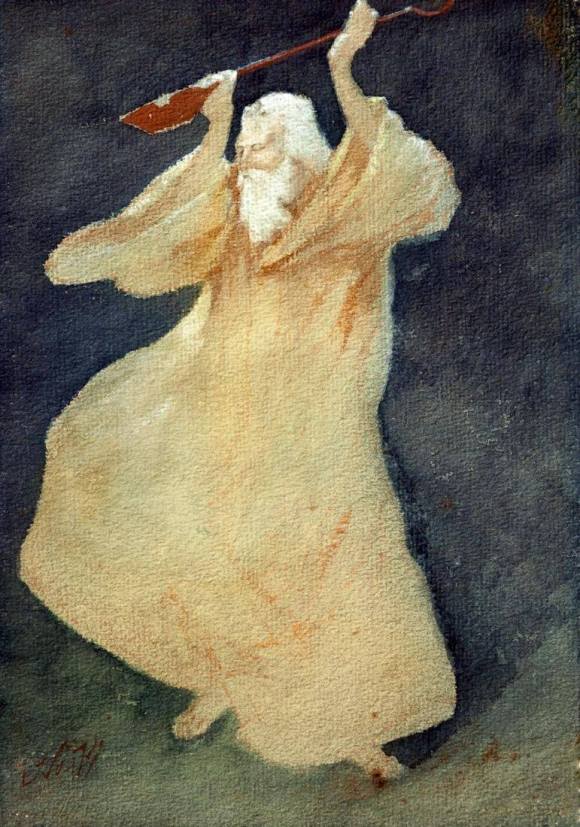
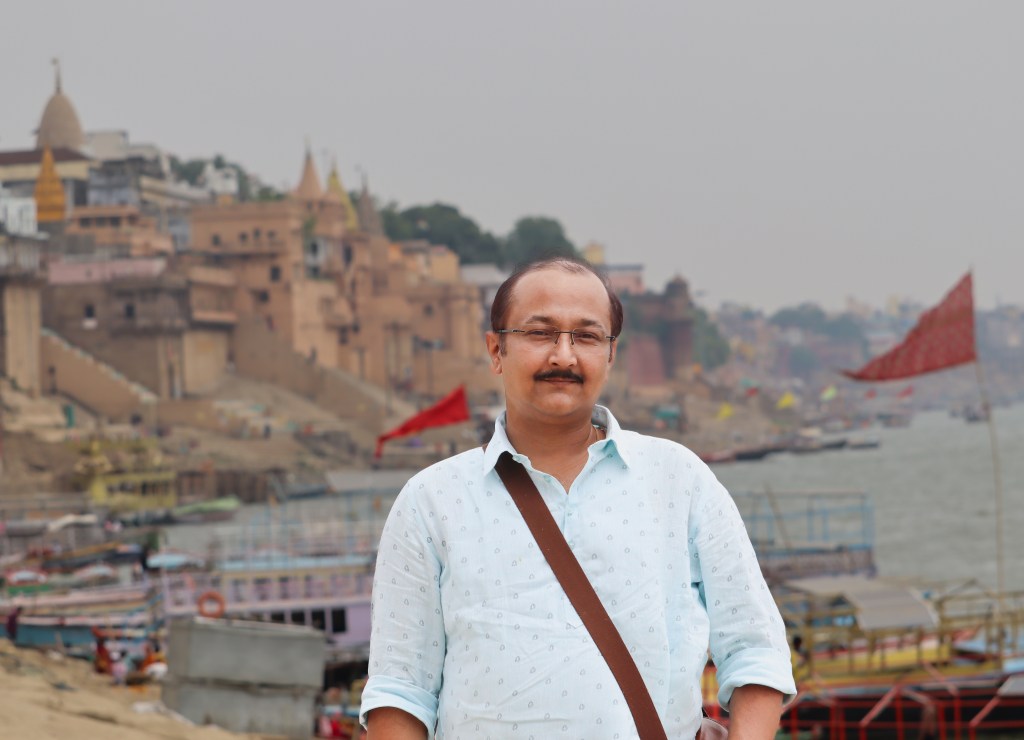
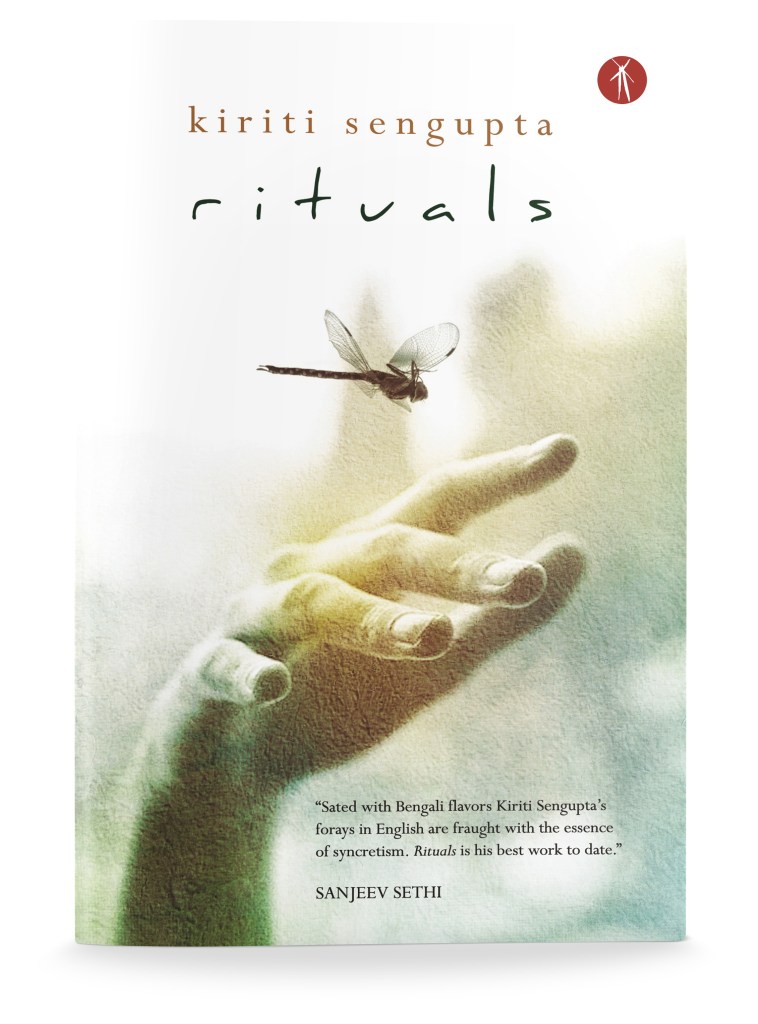

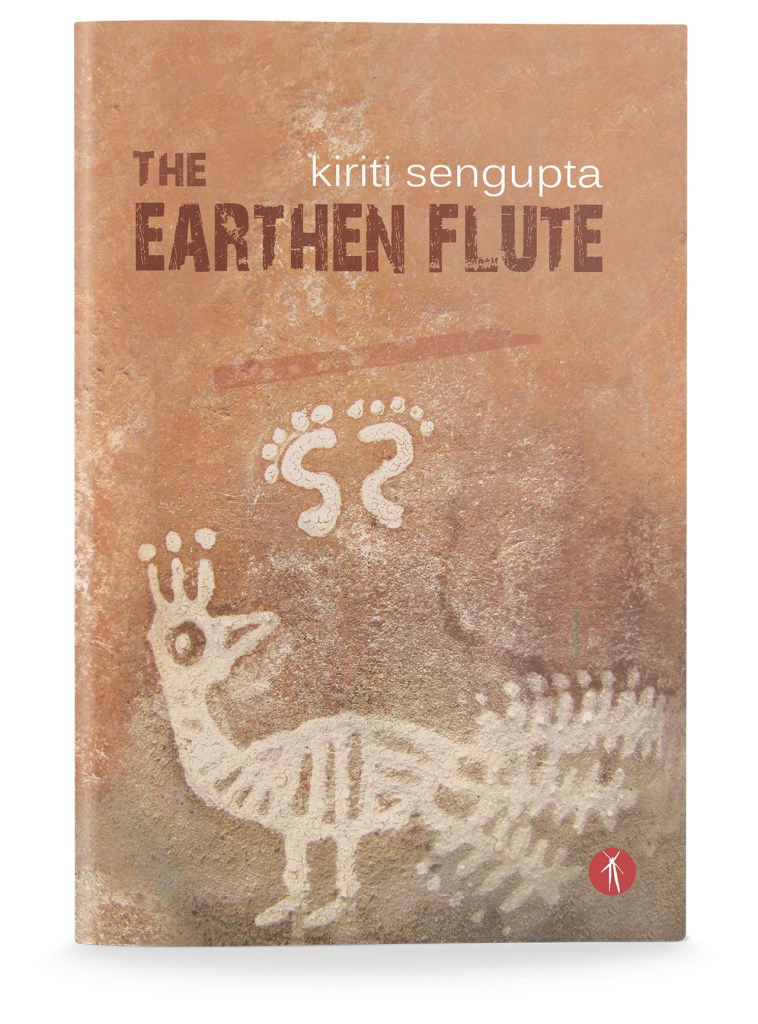
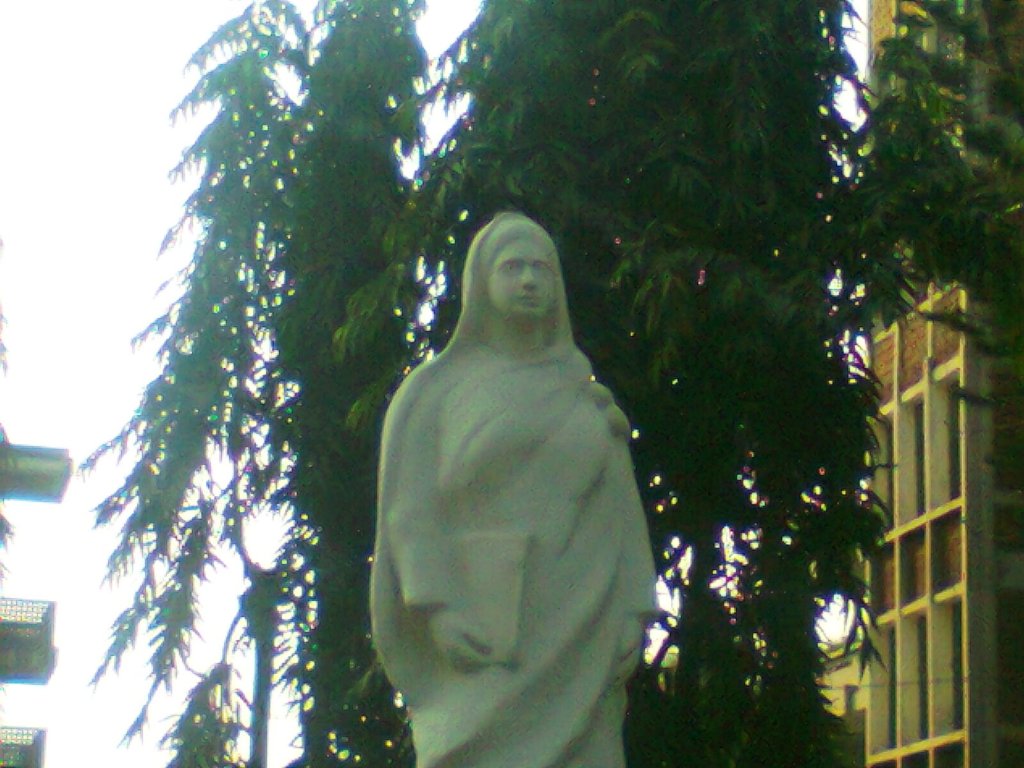
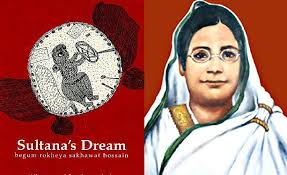
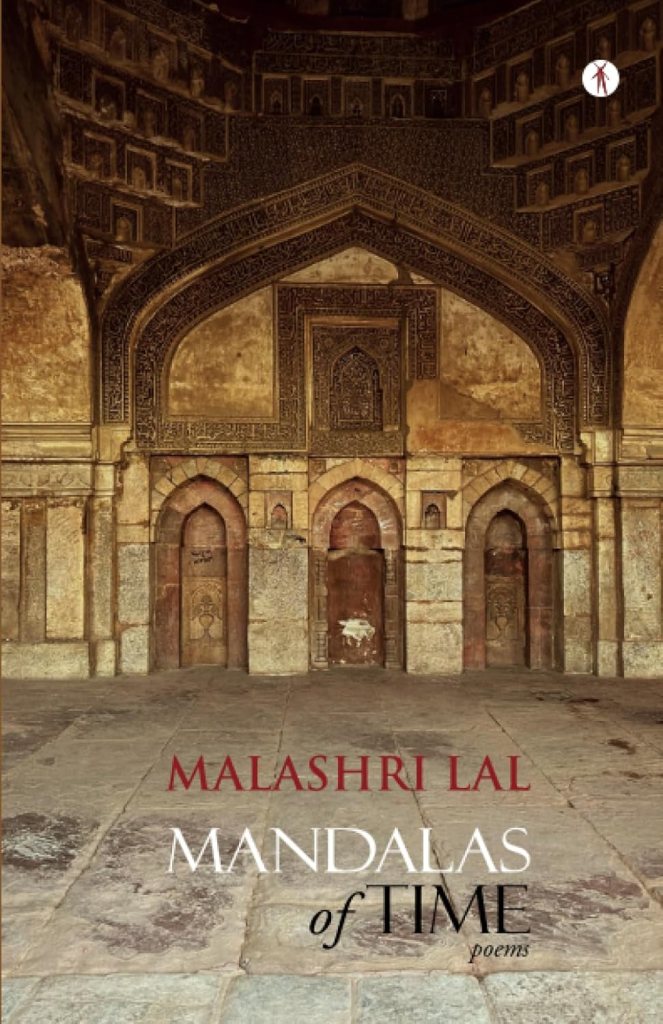
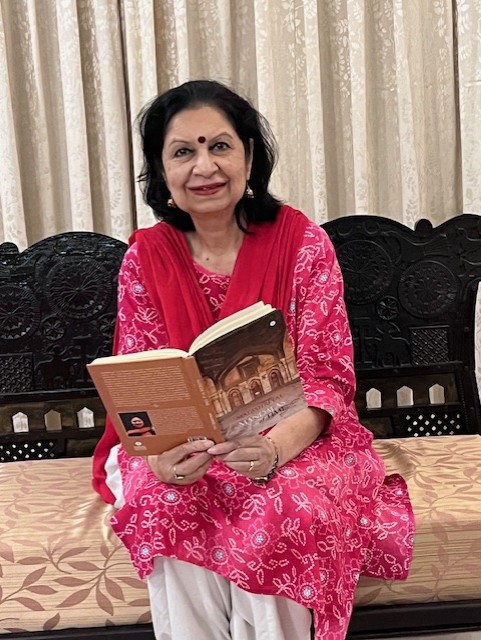
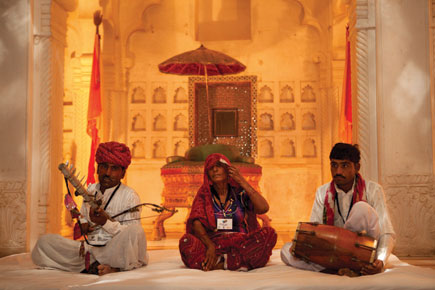
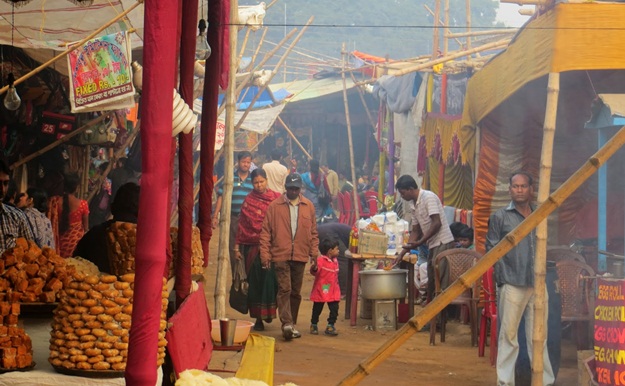
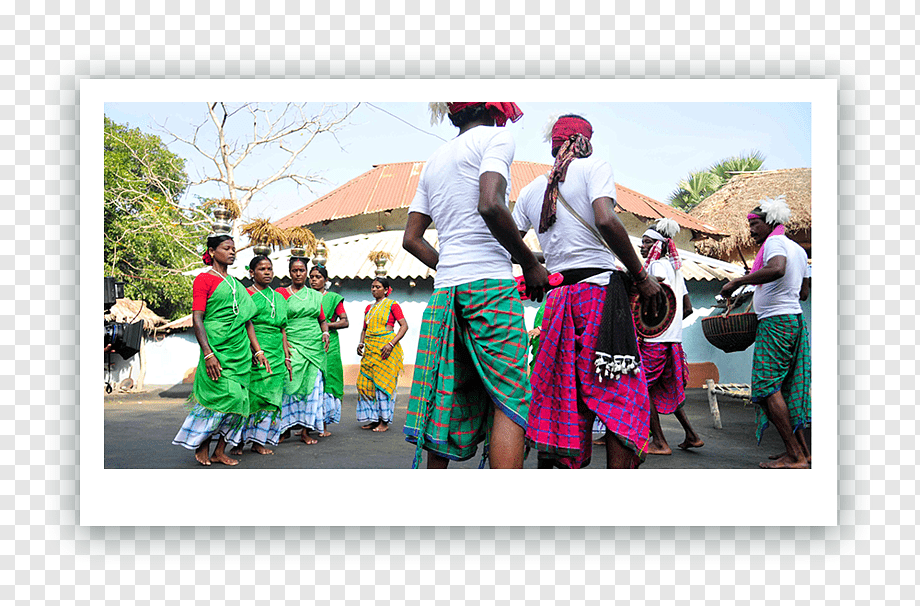
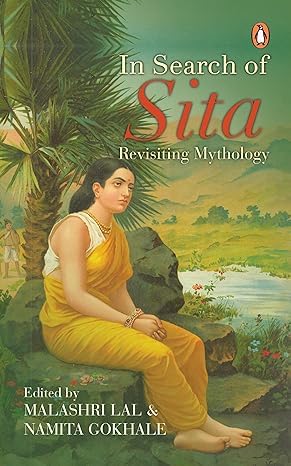
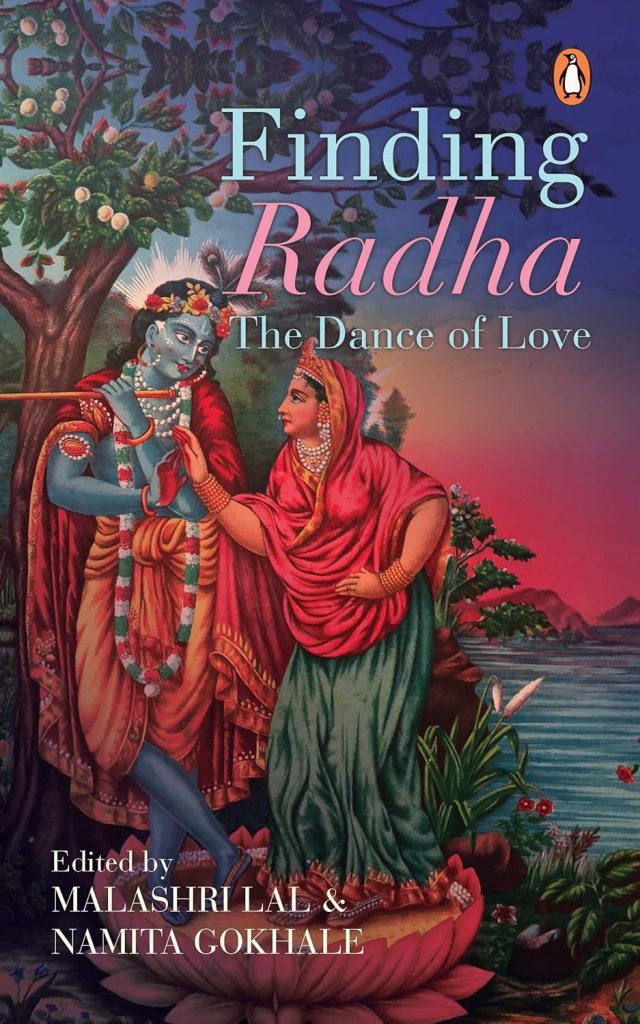
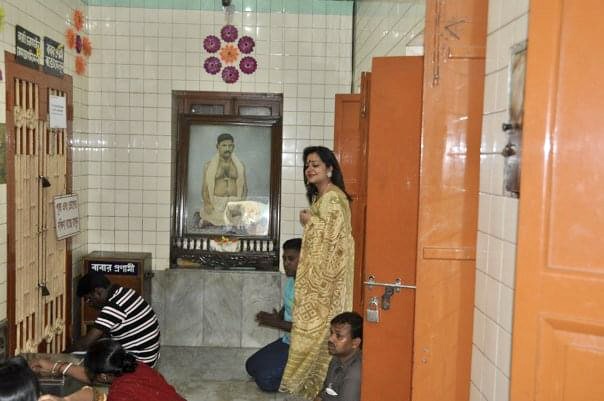
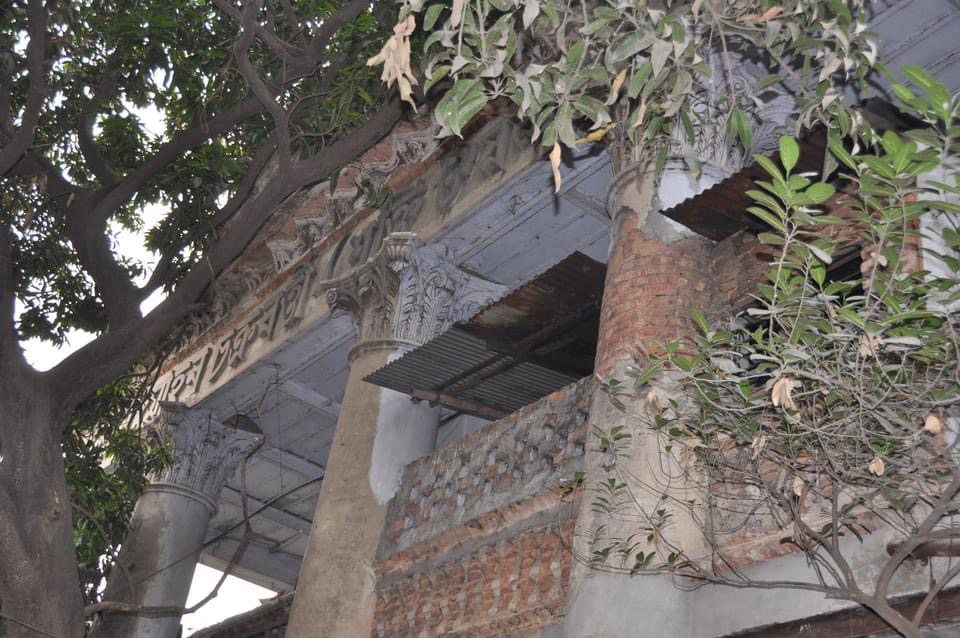
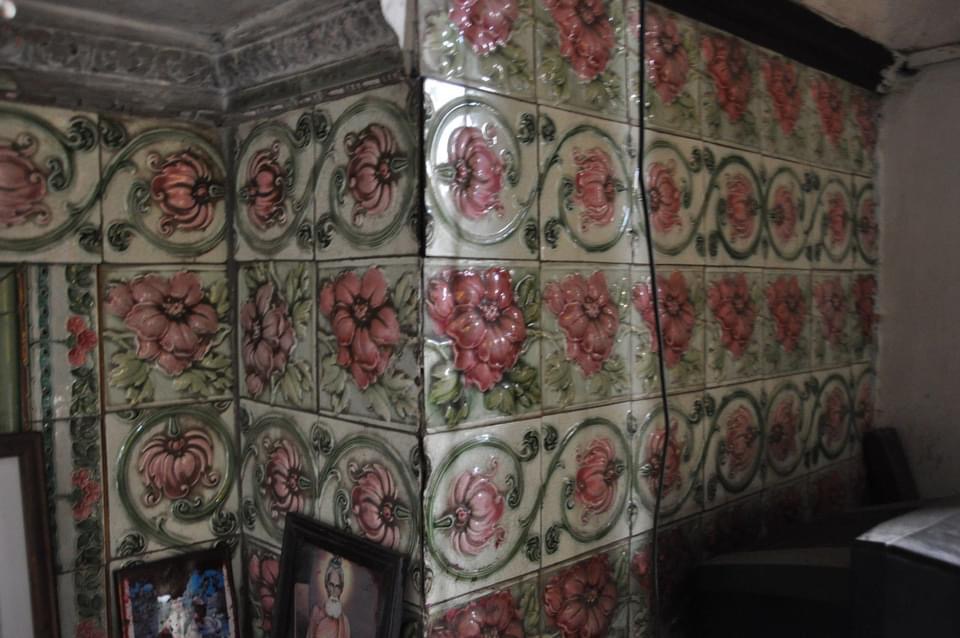
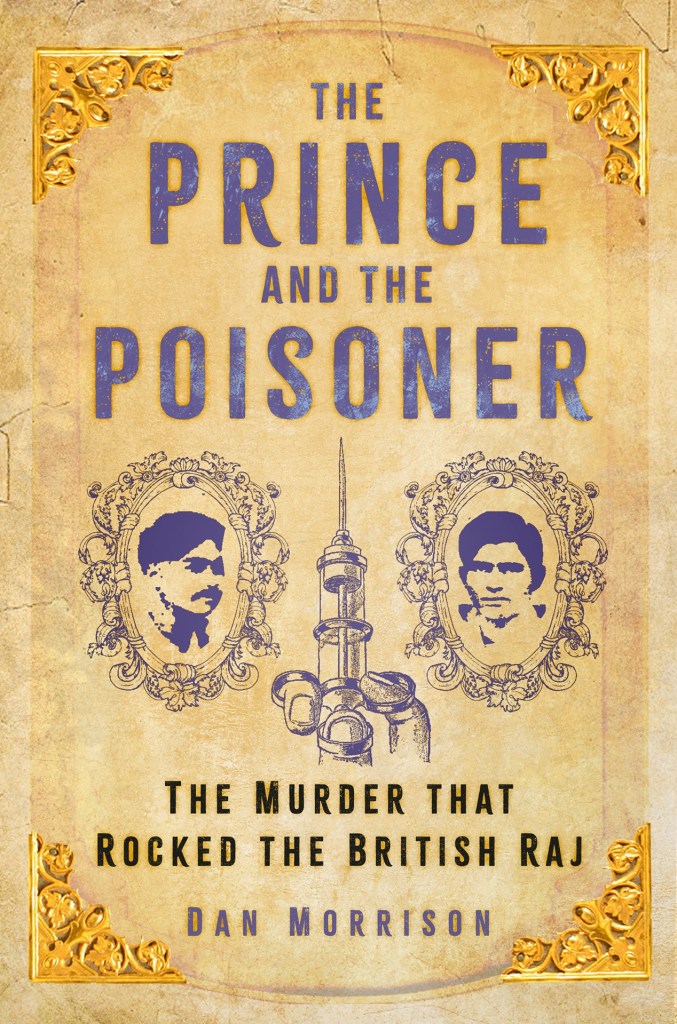
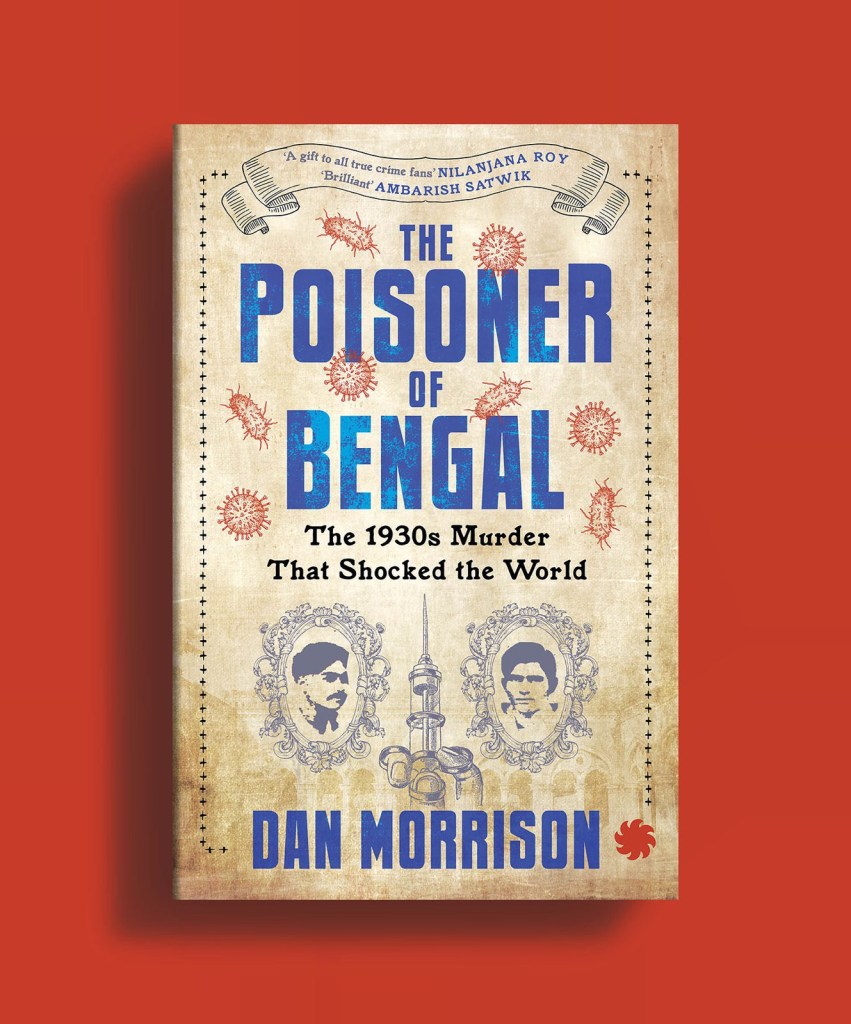


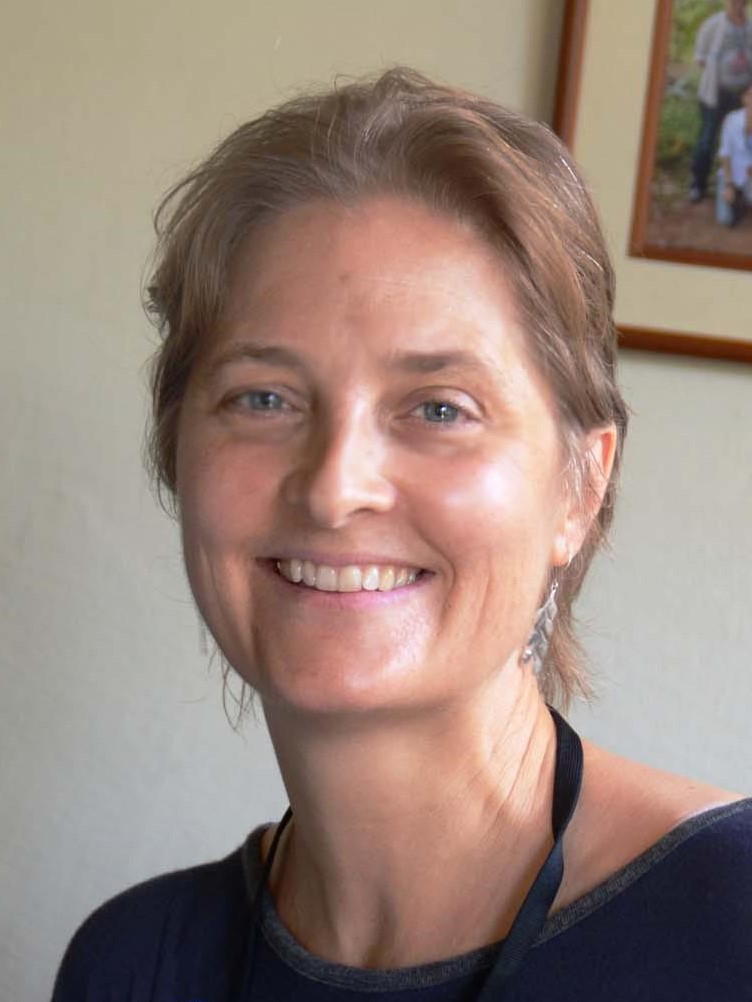
 Borderless