Categories
Contents

Borderless, February 2026

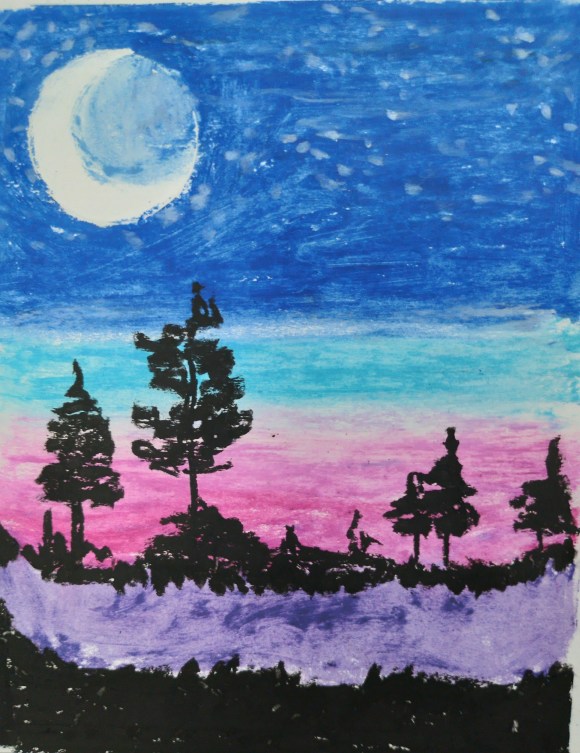
Art by Sohana Manzoor

Editorial

What Do We Yearn for?… Click here to read.

Translations

Nazrul’s Ashlo Jokhon Phuler Phalgun (When Flowers Bloom Spring) has been translated from Bengali to English by Professor Fakrul Alam. Click here to read.

An Elegy for the Merchant of Hope by Atta Shad has been translated from Balochi by Fazal Baloch. Click here to read.

Four of his own Malay poems have been translated by Isa Kamari. Click here to read.

Two of her own Persian poems have been written and translated by Akram Yazdani. Click here to read.

The Beaten Rooster, a short story by Hamiruddin Middya, has been translated from Bengali by V Ramaswamy. Click here to read.

Tagore’s Shishur Jibon (The Child’s Life) has been translated from Bengali by Mitali Chakravarty. Click here to read.

Poetry

Click on the names to read the poems

Allan Lake, Goutam Roy, Chris Ringrose, Alpana, Lynn White, C.Mikal Oness, Shamim Akhtar, Luis Cuauhtémoc Berriozábal, Snehaprava Das, Jim Bellamy, Manahil Tahir, John Swain, Mohul Bhowmick, Ryan Quinn Flanagan, SR Inciardi

Poets, Poetry & Rhys Hughes

In The Clumsy Giant, Rhys Hughes shares a funny poem about a gaint who keeps stubbing his toes! Click here to read.

Musings/Slice from Life

From the Land of a Thousand Temples

Farouk Gulsara shares attitudes towards linguistic heritage. Click here to read.

A Tangle of Clothes Hangers

Mario Fenech explores the idea of time. Click here to read.

Dreaming in Pondicherry

Mohul Bhowmick muses in Pondicherry. Click here to read.

Champagne Sailing

Meredith Stephens narrated a yatch race between Sydney and Hobart with photographs by Alan Noble. Click here to read.

In the Company of Words

Gower Bhat shares a heartfelt account of a bibliophile. Click here to read.

Musings of a Copywriter

In Horoscope or Horrorscope, Devraj Singh Kalsi reflects on predictions made at his birth. Click here to read.

Essays

The Chickpea That Logged More Mileage Than You

Ravi Varmman K Kanniappan gives an interesting account of the chickpeas journey through time and space, woven with a bit of irony. Click here to read.

Memories: Where Culture Meets Biology

Amir Zadnemat writes of how memory is impacted by both science and humanities. Click here to read.

The Restoration of Silence

Andriy Nivchuk brings to us repetitious realities that occur through histories. Click here to read.

Aeons of Art

In If Variety is the Spice of Life…, Ratnottama Sengupta introduces upcoming contemporary artists. Click here to read.

Stories

The Onion

JK Miller brings to us the story of a child in Khan Yunis. Click here to read.

Santa in the Autorickshaw

Snigdha Agrawal takes us to meet a syncretic spirit with a heartwarming but light touch. Click here to read.

Disillusioned

Sayan Sarkar shares a story of friendship and disillusionment. Click here to read.

Decluttering

Vela Noble shares a spooky fantasy. Click here to read.

The Value of Money

Naramsetti Umamaheswararao writes a story that reiterates family values. Click here to read.

Book Excerpts

An excerpt from Arupa Kalita Patangia’s Moonlight Saga, translated from Assamese by Ranjita Biswas. Click here to read.

An excerpt from Natalie Turner’s The Red Silk Dress. Click here to read.

Interview

Keith Lyons in conversation with Natalie Turner, author of The Red Silk Dress. Clickhere to read.

Book Reviews

Somdatta Mandal reviews Sanjoy Hazarika’s River Traveller: Journeys on the TSANGO-BRAHMAPUTRA from Tibet to the Bay of Bengal. Click here to read.

Rakhi Dalal reviews Sujit Saraf’s Every Room Has a View — A Novel. Click here to read.

Anindita Basak reviews Taslima Nasrin’s Burning Roses in my Garden, translated from Bengali by Jesse Waters. Click here to read.

Bhaskar Parichha reviews Kailash Satyarthi’s Karuna: The Power of Compassion. Click here to read.

.

Click here to access the Borderless anthology, Monalisa No Longer Smiles

Click here to access Monalisa No Longer Smiles on Amazon International

Categories
Editorial

What Do We Yearn for?

Most people like you and me connect with the commonality of felt emotions and needs. We feel hungry, happy, sad, loved or unloved and express a larger plethora of feelings through art, theatre, music, painting, photography and words… With these, we tend to connect. And yet, larger structures created over time to offer security and governance to the masses—of which you and I are a part — have grown divisive, and, by the looks of it, the fences nurtured over time seem insurmountable. To retain these structures that were meant to keep us safe, wars are being fought and many are getting killed, losing homes and going hungry. We showcase such stories, poems and non-fiction to create an awareness among those who are lucky enough to remain untouched. But is there a way out, so that all of us can live peacefully, without war, without hunger and with love and a vision towards surviving climate change which (like it or not) is upon us?

Creating an awareness of hunger and destruction wreaked by war is a heartrending story set in Gaza by JK Miller. While Snigdha Agrawal’s narrative gives a sense of hope, recounting a small kindness by a common person, Sayan Sarkar shares a more personal saga of friendship and disillusionment — where people have choice. But does war leave us a choice as it annihilates friendships, cities, homes and families? Naramsetti Umamaheswararao’s story reiterates the belief in the family – peace being an accepted unit. Vela Noble’s fantastical fiction and art comes like a respite– though there is a darker side to it — with a touch of fun. Perhaps, a bit of fantasy and humour opens the mind to deal with the more sombre notes of existence.

The translation section hosts a story by Hamiruddin Middya, who grew up as a farmer’s son in Bengal. Steeped in local colours, it has been rendered into English by V Ramaswamy. Nazrul’s song revelling in the colours of spring has been translated from Bengali by Professor Fakrul Alam. Atta Shad’s pensive Balochi lines have been brought to us in English by Fazal Baloch. Isa Kamari continues to bring the flavours of an older, more laid-back Singapore with translations of his own Malay poems. A couple of Persian verses have been rendered into English by the poet, Akram Yazdani, herself. Questing for harmony, Tagore’s translated poem while reflecting on a child’s life, urges us to have the courage to be like a child — open, innocent and willing to imagine a world laced with trust and hope. If we were all to do that, do you think we’d still have wars, violence and walls built on hate and intolerance?

While in a Tagorean universe, children are viewed as trusting and open, does that continue a reality in the current world that believes in keeping peace with weapons? Contemporary voices think otherwise. Manahil Tahir brings us a touching poem in a doll’s voice, a doll belonging to a child victimised by violence. While violence pollutes childhood, pollution in Delhi has been addressed by Goutam Roy in verse. Poignant lines from Luis Cuauhtémoc Berriozábal make one question the idea of home and borders while Snehaprava Das has interpreted the word ‘borderless’ in her own way. We have more colours of humanity from Allan Lake, Chris Ringrose, Alpana, Lynn White, C.Mikal Oness, Shamim Akhtar, Jim Bellamy,John Swain, Mohul Bhowmick and SR Inciardi. Ryan Quinn Flanagan has given fun lines about a snow fight while Rhys Hughes has shared a humorous poem about a clumsy giant.

Bringing in humour in prose is Devraj Singh Kalsi’s musing about horoscopes! While, with a soupçon of irony Farouk Gulsara talks of his ‘holiday’, Meredith Stephen takes us to a yacht race in Australia and Mohul Bhowmick to Pondicherry. Gower Bhat writes of his passion for words while discussing his favourite books. Ratnottama Sengupta introduces us to contemporary artists from her part of the world.

Mario Fenech takes a look at the idea of time. Amir Zadnemat writes of how memory is impacted by both science and humanities while Andriy Nivchuk brings to us snippets from Herodotus’s and Pericles’s lives that still read relevant. Ravi Varmman K Kanniappan gives the journey of chickpeas across space and time, asserting: “The chickpea does not care about your ideology, your portfolio, or your meticulously curated identity. It will grow, fix nitrogen, feed someone, and move on without a press release.” It has survived over aeons in a borderless state!

In book excerpts, we have a book that transcends borders as it’s a translation from Assamese by Ranjita Biswas of Arupa Kalita Patangia’s Moonlight Saga. Any translation is an attempt to integrate the margins into the mainstream of literature, and this is no less. The other excerpt is from Natalie Turner’s The Red Silk Dress. Keith Lyons has interviewed Turner about her novel which crosses multiple cultures too while on a personal quest.

In reviews, Somdatta Mandal discusses a book that explores the colours of a river across three sets of borders, Sanjoy Hazarika’s River Traveller: Journeys on the TSANGO-BRAHMAPUTRA from Tibet to the Bay of Bengal. Rakhi Dalal writes about a narrative centring around migrants, Sujit Saraf’s Every Room Has a View — A Novel. Anindita Basak reviews Taslima Nasrin’s poetry, Burning Roses in my Garden, translated from Bengali by Jesse Waters. Bhaskar Parichha reviews Kailash Satyarthi’s Karuna: The Power of Compassion. In it, Satyarthi suggest the creation of CQ — Compassion Quotient— like IQ and EQ, claiming it will improve our quality of life. What a wonderful thought!

Could we be yearning compassion?

Holding on to that idea, we invite you to savour the contents of our February issue.

Huge thanks to all our contributors and readers for making this issue possible. Heartfelt thanks to our wonderful team, especially Sohana Manzoor for her fabulous artwork.

Enjoy the reads!

Let’s look forward to the spring… May it bring new ideas to help us all move towards more amicable times.

Mitali Chakravarty

borderlessjournal.com

CLICK HERE TO ACCESS THE CONTENTS FOR THE FEBRUARY 2026 ISSUE.

.

READ THE LATEST UPDATES ON THE FIRST BORDERLESS ANTHOLOGY, MONALISA NO LONGER SMILES, BY CLICKING ON THIS LINK.

Categories
Poetry

At Large in a Big City by Allan Lake

From Public Domain
AT LARGE IN A BIG CITY  

Beside a relentless freeway,
which is anything but free and takes
its toll on users and non-users as well,
‘boys’ meet for coffee at Mothers Instinct
with no apostrophe or wives in sight.
They’re old boys now, content to breathe
and able to coast on Old Age Pension.
They laboured long, fathered kids by un-
leashing millions of apostrophes into wives,
had operations via Medicare to fix things
that could have meant never retiring.
Considering current high price of houses
in their suburb, they are now wealthy but
that does not stop them breakfasting
at home before venturing out for second
coffees. Too late to become loose with money,
they leave that to the next generation.
Every boy knows what every other boy
knows – they watch same TV shows –
so, no serious debate. Chuckle, toss gossip,
kid each other, talk sport while picking
at pastries that wives wouldn’t approve.
You’d think their lives had been one long
joke here in big city. Sip that pricey espresso,
chat, zone out then wander home for lunch.
Their wives, the ‘girls’, are elsewhere for
pre-coffee yoga. They also laboured long,
had the babies, kept every body fed.
Fact is women usually outlive men,
perhaps due to mothers’ instinct.

Allan Lake is a migrant poet from Allover, Canada, who now lives in Allover, Australia. He has published poems in 24 countries. His latest chapbook of poems, entitled My Photos of Sicily, was published by Ginninderra Press.

PLEASE NOTE: ARTICLES CAN ONLY BE REPRODUCED IN OTHER SITES WITH DUE ACKNOWLEDGEMENT TO BORDERLESS JOURNAL

Click here to access the Borderless anthology, Monalisa No Longer Smiles

Click here to access Monalisa No Longer Smiles on Amazon International

Categories
Contents

Borderless, June 2025

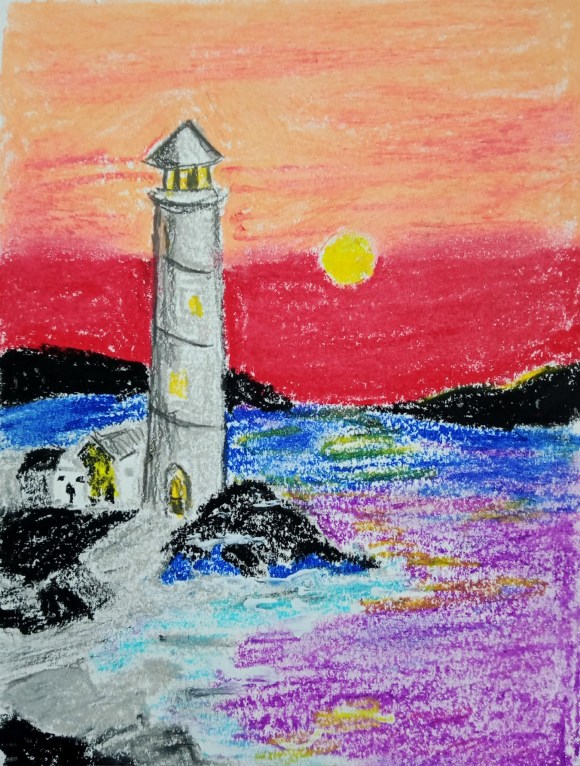
Art by Sohana Manzoor

Editorial

‘How do you rebuild a life when all that remains is dust?’… Click here to read.

Translations

The Great War is Over and A Nobody by Jibanananda Das have been translated from Bengali by Professor Fakrul Alam. Click here to read.

Sukanta Bhattacharya’s poem, Therefore, has been translated from Bengali by Kiriti Sengupta. Click here to read.

 Five poems by Soubhagyabanta Maharana  have been translated from Odia by Snehaprava Das. Click here to read.

Animate Debris, a poem by Sangita Swechcha has been translated from Nepali by Saudamini Chalise. Click here to read.

Lost Poem, a poem by Ihlwha Choi  has been translated from Korean by the poet himself. Click here to read.

Sonar Tori (Golden Boat), a poem by Tagore, has been translated from Bengali by Mitali Chakravarty. Click here to read.

Poetry

Click on the names to read the poems

Allan Lake, Shobha Tharoor Srinivasan, Ron Pickett, Ananya Sarkar, George Freek, Bibhuti Narayan Biswal, Jim Bellamy, Pramod Rastogi, Vern Fein, Saranyan BV, Ryan Quinn Flanagan, Juairia Hossain, Gautham Pradeep, Jenny Middleton, Mandavi Choudhary, Rhys Hughes

Musings/Slices from Life

Where Should We Go After the Last Frontiers?

Ahamad Rayees writes from a village in Kashmir which homed refugees and still faced bombing. Click here to read.

The Jetty Chihuahuas

Vela Noble takes us for a stroll to the seaside at Adelaide. Click here to read.

Hope Lies Buried in Eternity

Farouk Gulsara muses on hope. Click here to read.

Undertourism in the Outback

Merdith Stephens writes from the Australian Outback with photographs from Alan Nobel. Click here to read.

Musings of a Copywriter

In Driving with Devraj, Devraj Singh Kalsi writes of his driving lessons. Click here to read.

Notes from Japan

In The Tent, Suzanne Kamata visits crimes and safety. Click here to read.

Essays

Public Intellectuals Walked, So Influencers Could Run

Lopamudra Nayak explores changing trends. Click here to read.

Where No One Wins or Loses a War…From Lucknow with Love

Prithvijeet Sinha takes us to a palace of a European begum in Lucknow. Click here to read.

Bhaskar’s Corner

In Can Odia Literature Connect Traditional Narratives with Contemporary Ones, Bhaskar Parichha discusses the said issue. Click here to read.

Feature

The story of Hawakal Publishers, based on a face-to-face tête-à-tête, and an online conversation with founder Bitan Chakraborty with his responses in Bengali translated by Kiriti Sengupta. Click here to read.

Stories

The Year the Fireflies Didn’t Come Back

Leishilembi Terem gives a poignant story set in conflict-ridden Manipur. Click here to read.

The Stranger

Jeena R. Papaadi writes of the vagaries of human relationships. Click here to read.

The Opening

Naramsetti Umamaheswararao relates a value based story in a small hamlet of southern India. Click here to read.

Book Excerpts

An excerpt from Wendy Doniger’s The Cave of Echoes: Stories about Gods, Animals and Other Strangers. Click here to read.

An excerpt from Mohua Chinappa’s Thorns in My Quilt: Letters from a Daughter to Her Father. Click here to read.

Book Reviews

Somdatta Mandal reviews Madhurima Vidyarthi’s Job Charnock and the Potter’s Boy. Click here to read.

Rakhi Dalal reviews Dhruba Hazarika’s The Shoot: Stories. Click here to read.

Satya Narayan Misra reviews Bakhtiyar K Dadabhoy’s Honest John – A Life of John Matthai. Click here to read.

Bhaskar Parichha reviews David C Engerman’s Apostles of Development: Six Economists and the World They Made. Click here to read.

.


Click here to access the Borderless anthology, Monalisa No Longer Smiles

Click here to access Monalisa No Longer Smiles on Amazon International
Categories
Editorial

‘How do you rebuild a life when all that remains is dust?’

The Great War is over
And yet there is left its vast gloom.
Our skies, light and society’s soul have been overcast…

'The Great War is Over' by Jibanananda Das (1899-1954), translated from Bengali by Professor Fakrul Alam.

Jibanananda Das wrote the above lines in the last century and yet great wars rage even now. As the world struggles to breathe looking for a beam of hope to drag itself out of the darkness induced by natural calamities, accidents, terror attacks and wars that seem to rage endlessly, are we moving towards the dystopian scenario created by George Orwell in 1984, which would be around the same time as Jibanananda Das’s ‘The Great War is Over’?

Describing such a scenario, Ahmed Rayees writes a moving piece from the Kashmiri village of Sheeri, the last refuge of the displaced refugees who were bombarded after peace was declared in their refuge during the clash across Indo-Pak borders. He contends: “People walked back not to homes, but to ruins. Entire communities had been reduced to ash and rubble. Crops were destroyed, livestock gone, schools turned into shelters or craters. How do you rebuild a life when all that remains is dust?”

People could be asking the same questions without finding answers in Gaza or Ukraine, where the cities are reduced to rubble. While we look for a ray of sunshine, amidst the rubble, Farouk Gulsara muses on hope that has its roots in eternity. Vela Noble wanders on nostalgic beaches in Adelaide. And Meredith Stephens travels to the Australian outback. Devraj Singh Kalsi brings in lighter notes writing of driving lessons while Suzanne Kamata creeps back to darker recesses musing on likely ‘criminals’ and crimes in her neighbourhood.

Lopamudra Nayak writes on social media and its impact while Bhaskar Parichha writes of trends that could be brought into Odia literature.  What he writes could apply well to all regional literature, where they lose their individual colouring to paint dystopian realities of the present world. Does modernising make us lose our ethnic identity and how important is that? These are questions that sprung to the mind reading his essay. As if in an attempt to hold on to the past ethos, Prithvijeet Sinha wafts around old ruins in Lucknow and sees a cemetery for colonial soldiers and concludes: “Everybody has formidable stakes, and the dead don’t preach the gospel of victory or sombre defeat.”

Taking up a similar theme of death and war is a poem from Saranyan BV. In poetry, we have colours from around the world with poems from Allan Lake, Ron Pickett, Ananya Sarkar, George Freek, Jim Bellamy, Ryan Quinn Flanagan, Juairia Hossain, Gautham Pradeep, Jenny Middleton, Mandavi Choudhary and many more. Multiple themes are woven into a variety of perspectives, including nature and environment, with June hosting the World Environment Day. Rhys Hughes gives a funny poem on the Welsh outlaw, Twm Siôn Cati.

We have mainly poetry in translation this time. Snehaprava Das has brought to us Soubhagyabanta Maharana’s poems from Odia and Ihlwha Choi has translated his own poem from Korean. Sangita Swechcha’s poem in Nepali has been rendered to English by Saudamini Chalise. From Bengali, other that Jibanananda Das’s poems translated by Professor Fakrul Alam, we have Tagore’s pensive and beautiful poem, Sonar Tori (the golden boat). Yet another Bengali poet, one who died young and yet left his mark, Sukanta Bhattacharya (1926-1947), has been translated by Kiriti Sengupta. Sengupta has also translated the responses of Bitan Chakravarty in a candid conversation about his dream child — the Hawakal Publishers. We also have a feature on this based on a face-to-face conversation, giving the story of how this publishing house grew out of an idea. Now, they publish poetry traditionally, without costs to the poet. Their range of authors are spread across continents.

Our fiction again returns to the darkness of war. Young Leishilembi Terem has given a story set in conflict-ridden Manipur from where she has emerged safely — a story that reiterates the senselessness of violence and politics. While Jeena R. Papaadi writes of modern human relationships that end without commitment, Naramsetti Umamaheswararao relates a value-based story in a small hamlet of southern India. 

From stories, our book excerpts return to the real world, where a daughter grieves her father in Mohua Chinappa’s Thorns in My Quilt: Letters from a Daughter to Her Father while Wendy Doniger’s The Cave of Echoes: Stories about Gods, Animals and Other Strangers, dwells on demystifying structures that create borders. We have two non-fiction reviews. Parichha writes about David C Engerman’s Apostles of Development: Six Economists and the World They Made. And Satya Narayan Misra discusses Bakhtiyar K Dadabhoy’s Honest John – A Life of John Matthai. Somdatta Mandal this time explores a historical fiction based around the founding of Calcutta, Madhurima Vidyarthi’s Job Charnock and the Potter’s Boy while Rakhi Dalal looks at fiction born of environmental awareness, Dhruba Hazarika’s The Shoot: Stories.

We have more content. Do pause by our contents page and take a look.

Huge thanks to all our contributors without who this issue would not have materialised. Heartfelt thanks to the team at Borderless for their support, especially Sohana Manzoor for her iconic artwork that has almost become a signature statement for Borderless.

Let’s hope that next month brings better news for the whole world.

Best wishes,

Mitali Chakravarty

borderlessjournal.com

Click here to access the contents for thJune 2025 Issue

READ THE LATEST UPDATES ON THE FIRST BORDERLESS ANTHOLOGY, MONALISA NO LONGER SMILES, BY CLICKING ON THIS LINK.

Categories
Poetry

Poetry by Allan Lake

Allan Lake
ON EARTH

Such a nice, perhaps one-of-a-kind, planet.
Spacious. Water, oxygen, fertile earth.
Let’s simply name it after what it is.
Look at that waterfall, taste it, take a cold
shower. You wouldn’t want to be anyone
or anywhere else. Build shelter, pick fruit,
grow food then share it with neighbours,
invent language so you can compete with
birds that make poems and songs to express
the wonder of it all and praise Mother Nature
and their luck for having survived arrival.
You have never seen anywhere else except
this generous plain but, surely, this must be
a paradise without one flaw.

Allan Lake, originally from Canada, has lived in Saskatoon, Cape Breton Island, Ibiza, Tasmania, and Melbourne, Australia. His latest chapbook of poems, My Photos of Sicily, was published by Ginninderra Press. Such journals as The Hong Kong Review, Tokyo Poetry Journal, New Philosopher and The Fabians Review have published his poems.  

.

PLEASE NOTE: ARTICLES CAN ONLY BE REPRODUCED IN OTHER SITES WITH DUE ACKNOWLEDGEMENT TO BORDERLESS JOURNAL

Click here to access the Borderless anthology, Monalisa No Longer Smiles

Click here to access Monalisa No Longer Smiles on Kindle Amazon International