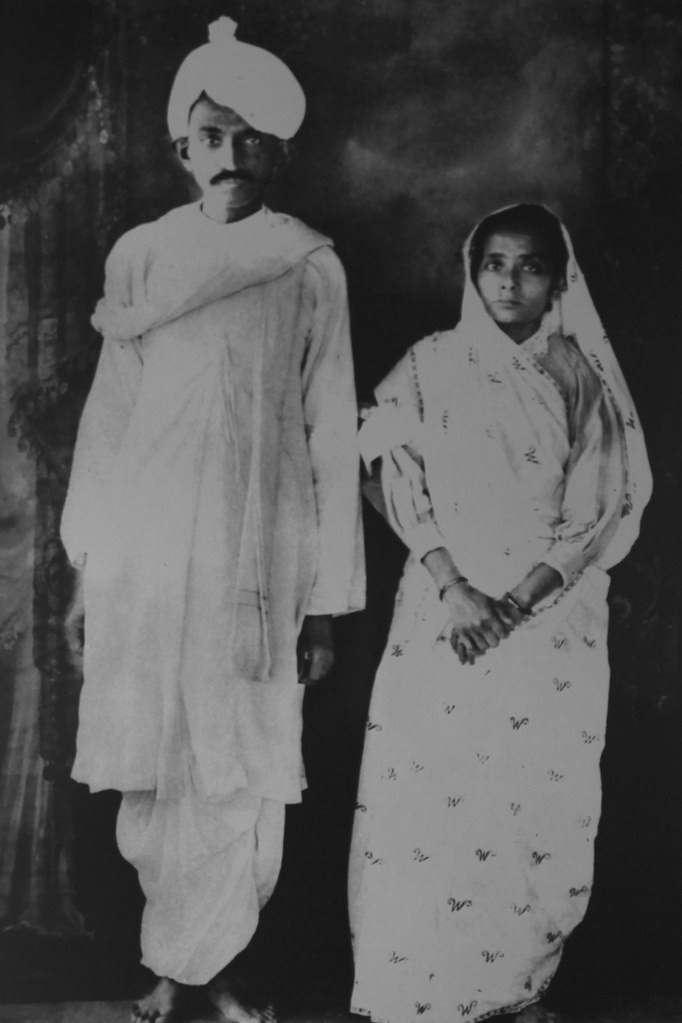
Gandhi and his wife, KasturbaGandhi’s statue in AtlantaCourtesy: Creative Commons
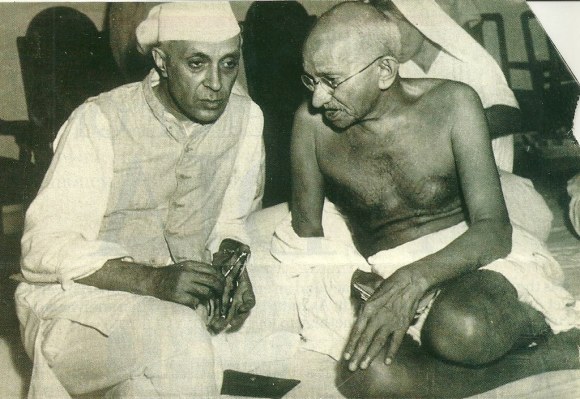
Mohandas Karamchand Gandhi (1869-1948) was an ordinary man who became extraordinary in quest of a just world. With his strong belief in non-violence and truth, Gandhi set out to find freedom, dignity and respect for his compatriots with peaceful weapons he evolved reading greats like Tolstoy, Thoreau and many more. He named these; Ahimsa or non-violence, Satyagraha or the way of truth and civil disobedience or peaceful protest by disobeying an unjust law.
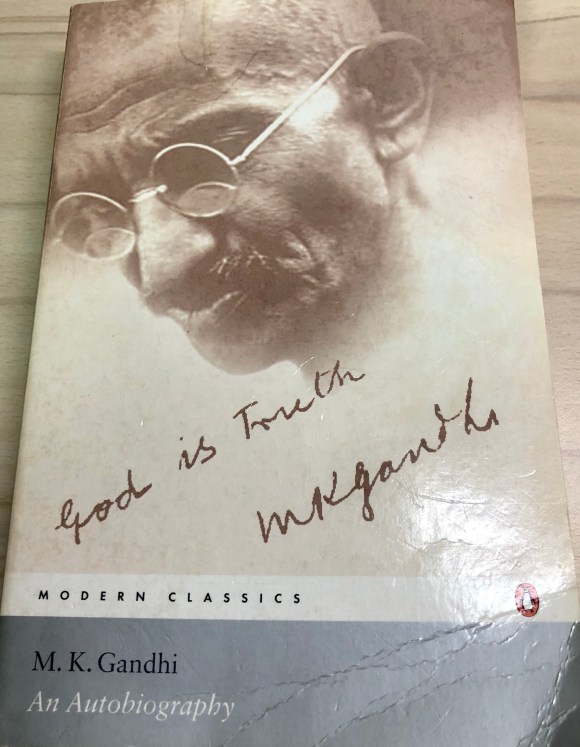
To use these wisely, we needed a certain amount of education and preparation — not in terms of degrees from universities but in terms of spiritual growth. In his An Autobiography or My Experiments with Truth, Gandhi wrote: “A Satyagrahi obeys the laws of society intelligently and off his own free will, because he considers it to be his second duty to do so. It is only when a person has thus obeyed the laws of society scrupulously that he is in a position to judge as to which particular rules are good and just which are unjust and iniquitous. Only then does the right accrue to him to the civil disobedience of certain laws in well-defined circumstances. My error lay in my failure to observe this necessary limitation. I had called on the people to launch upon civil disobedience before they had qualified themselves for it, and this mistake seem to me of Himalayan magnitude.” Have we done anything to rectify his self-professed oversight?
Now as we commemorate his 153rd birth anniversary, in the midst of war, violence, hatred, intolerance, where do we stand in terms of Gandhi’s ideology? For a man lives on only if his ideals survive.
Exploring this issue is an essay by Debraj Mookerjee, who wonders if the man and his values will face complete erasure? Reinforcing this thought is a Manipuri poem by Thangjam Ibopishak, translated by Robin S Ngangom, and a review of a book by Bhaskar Parichha on the conspiracy that led to the assassination of Gandhi. On the other hand is Keith Lyon’s essay on Gandhi’s ‘enduring vision‘ and winding up the prose is Rakhi Dalal’s essay urging us to pursue Gandhi’s vision, titled after the words of a man who did live by Gandhi’s ideals, Martin Luther King, while Aminath Neena gives us an inspirational poem along those lines.
Gandhi & the Robot, a poem relooking at Gandhi’s ideology in the present context, written in Manipuri by Thangjam Ibopishak and translated by RobinS Ngangom. Click hereto read.
Book review of Tagore’s last novel by Meenakshi Malhotraon his death anniversary
Title: Four Chapters
Author: Rabindranath Tagore
Translator: Radha Chakravarty
Publisher: Penguin
With Char Adhyay (1934, Four Chapters), Tagore’s last novel, he returns to his critique of violence, an almost ubiquitous preoccupation in this last phase of his writing which had earlier witnessed the production of Ghare Baire (1916, The Home and the World) and his essays on nationalism. Both, The Home and the World and Four Chapters, share an underlying preoccupation about the limits of patriotism and the legitimacy of violence: does love for one’s own country justify violence and revolutionary terrorism? To put it in a philosophical vein: do the ends justify the means?
Like in The Home and the World , Tagore uses a triangulated relationship, if not a tripartite narrative structure. The plot could be summed up thus: Ela, a modern woman, looks for engagement, to give structure and meaning to her existence. At odds initially with her traditional but authoritarian mother, she grows up developing a strong sense of justice and a mistrust of blind superstitions and meaningless rituals, which hardly equip her to fit into a traditional marriage. After losing both her parents, she is under the care of her uncle and aunt, when she meets the charismatic Indranath, a disappointed scientist who has now turned to militancy and revolutionary terrorism. On the other side is Atindranath or Atin (also called Antu), with whom Ela forms a romantic attachment. In the last segment of the novel, we realise that Ela’s politicisation had also pushed Atin into militancy since Ela’s dedication to the cause had co-opted him into it.
Stylistically this novel is striking. It consists of little narrative but is dialogic for the most part. As such, as the editor-translator mentions, the work acquires a dramatic quality. Also, Four Chapters comes across as a vehicle for ideas and at times, the novel seems to be weighed down by the predominance of ideas. Thus ideas of national regeneration, selfless action circulate in the text without being directly co-related with the plot and story structure. The characters often are eloquent in their own praise. They seem to be mouthpieces produced as a result of clashing ideologies.
Four Chapters depicts the new, modern woman in all her complexity and confusion, poised on the brink of something new, yet unable to let go completely of the old. Torn between political zeal and romantic passion, Ela represents a model of womanhood which is recognisable and perhaps relatable. Displaying agency, she says she wants to “publicize the increase in women’s rights in the modern age.” Women , she feels, “don’t hesitate to speak the truth now”. In the “new literature, Bengali women’s characters are eloquent in their own praise. They have usurped the clay sculptor’s role of fashioning the images of goddesses.”
Both a scientist as well as a political leader, Indranath surveys human history as a continuing saga of oppression, death and destruction. His cold impersonality is contrasted with the romantic zeal and passion of Atin, who is devoted to Ela beyond doubt. Though Ela reciprocates his passion, she is committed to bow to the overarching cause of the nation and its freedom from subjugation. Yet Ela shows herself capable of great devotion as is evident in her impassioned exchanges with Atin. She tells him, “You are great. I can see your brilliance, dazzling as a flash of lightning.” Fully aware of his devotion and of his romantic idealisation of her, she contrasts the small details which preoccupy women to the dazzling brilliance of Atin’s mind. In all these exchanges, we see her intelligence shine through. Moreover, she realises the entrapment of women’s biology. Nature, she feels, “has humiliated women from the time of our birth.” “We enter this world bearing destiny’s purpose in our biology, our bodies.”
In contrast to the passionate and emotional Atin is the character of Indranath, who, seems cold, calculating and two-dimensional and driven by a single ideological narrative. Indranath, the political zealot is charismatic but professes to be impersonal, commands and considers herself pledged to the nation’s cause. It is he who wins Ela over to the nationalist cause.
Nationalism here serves as a veneer for his revolutionary terrorism. As Radha Chakravarty writes in the ‘Introduction’ to the translated edition, “The novel charts the volatile scenario that arises from the conflict between Ela’s forbidden love and her dangerous involvement with political violence. Through the relationships between Ela, Atin and Indranath, the narrative explores the interface between love and revolutionary politics”. She also adds that the first draft of the novel focused on the romantic plot and did not have the character of Indranath. The character of Indranath is supposedly based upon a scholar-activist who was criticised by Tagore. In a letter written in August 1934, Tagore wrote to Prafulla Nath Tagore, saying that the latter must be aware of his eschewal of violence: “You are aware that I am completely against the oppressive tactics of those who follow the path of terrorism…I have written a work of fiction that is cast as a protest against the terrorists.”
Tagore’s political views and novelistic stance elicited the wrath of many compatriots, political activists, extremists and nationalists who felt that this stance was expressive of his collusion with colonialism. Further, as Chakravarty phrases it, his “challenge to authoritarianism and insistence on freedom of thought” also aroused the suspicion of the British administration in India. Anticipating controversy, Tagore himself took steps to have it translated into English, though it took some time for the translation to see the light of day.
Radha Chakravarty’s recent translation captures the nuances of a complex text. It is one of the rare instances where the translation has rescued the occasional stiltedness of the original and thus fares better in some instances. The novel, which runs the occasional danger of collapsing under the weight of its own ideas in the original Bengali version, is modernised and through this particular translation, the narrative is made more empathetic to the needs of the contemporary reader. This is a translation of a difficult novel which serves to give a fresh lease of life to an important but not a very popular book, and restores it for the modern reader.
.
Dr Meenakshi Malhotra is Associate Professor of English Literature at Hansraj College, University of Delhi, and has been involved in teaching and curriculum development in several universities. She has edited two books on Women and Lifewriting, Representing the Self and Claiming the I, in addition to numerous published articles on gender, literature and feminist theory.
.
PLEASE NOTE: ARTICLES CAN ONLY BE REPRODUCED IN OTHER SITES WITH DUE ACKNOWLEDGEMENT TO BORDERLESS JOURNAL
Ratnottama Sengupta trains the spotlight on actress Swatilekha Sengupta(22nd May 1950- 16th June 2021)
Swatilekha Sengupta in action in Shanu Roy Chowdhury. Photo sourced by Ratnottama Sengupta
“Swatilekha is more talented and far better actor than I. Still, everyone keeps asking for me!” Rudraprasad Sengupta was not boasting to me – the helmsman of the celebrated Nandikar Theatre Group was citing just one instance to show that “women in theatre still suffer bias[1].”
He wasn’t far from the truth: Swatilekha Sengupta, who passed away exactly a year ago on June 16 at 71, had graduated in English, mastered Western classical music in England, received guidance in theatre from iconic names like Tapas Sen, B V Karanth and Khaled Chowdhury. She composed music for, directed and carried on her shoulder Nandikar productions like Madhabi, Shanu Roy Chowdhury, Pata Jhore Jaay (Dry Leaves Fall), Naachni(Dancers).
Madhabi was adapted from Bhishm Sahni’s Mahabharat based play; Shanu Roy Chowdhury was adapted from Willy Russel’s Shirley Valentine; Naachni encapsulated the exploitation of the nautch girls of tribal Purulia. She wrote some, she composed the music for some, she travelled to UK and USA, Germany and Norway and Scotland… with husband Rudrapasad, with daughter Sohini, even to stage a one-woman play. Yet, she is most recalled for playing Bimala in Satyajit Ray’s Ghare Baire (Home and the World, 1985) – although, ironically, she faced fierce criticism for its critical failure!
Growing up in Allahabad Swatilekha – then Chatterjee – had repeatedly watched Charulata (1964) and Mahanagar (1963) with her school friends. She even wrote to Ray seeking an opportunity to work under him. Of course the letter went unanswered – or perhaps it went astray? For, Ray watched Swatilekha in Nandikar’s Galileo and zeroed in on her for the dream role of Bimala: the wife of a forward-thinking zamindar, Nikhiliesh, whose concern for the welfare of the peasantry under his care is critiqued and upended by an upstart revolutionary, Sandip.
Tagore had written the novel, told through the personal stories of the three protagonists, in 1916 when the Nationalist movement was peaking. The 1905 Partition of Bengal had outraged both, the Hindus and the Muslims, and the protests against the religion-based partition also saw Tagore set Bankim Chandra’s Vande Mataram to music and singing the song to protest the imposition of foreign rule. But after the ‘administrative division’ was rescinded, the call to boycott foreign goods in favour of Swadeshi, indigenous, appealed to the masses – and that led to tensions between the anti-British activists and the idealists. Swadeshi was critiqued as being unaffordable for the peasantry by Nikhilesh in the film and by Tagore, who contended that humanity came before nationalism. Effectively, then, the drama had pitted the conservative versus the radical, rational versus the emotional, East versus West. In short, the home versus the world.
So keen was Swatilekha’s appetite for the character that, on the first day, she’d defied a local bandh[2] and walked from her home in north Calcutta to the legend’s Bishop Lefroy address across the city. On learning that she’d not read the Tagore classic the iconic director had insisted that she should NOT read it. On noticing that she was staring at a harpsichord Ray had asked her if she could play it, and on hearing that she played the piano he’d asked her to play a Beethoven and he had himself whistled along!
Swatilekha Sengupta & Soumitra Chatterjee in Satyajit Ray’s 1985 film, Ghare Baire. Photo sourced by Ratnottama Sengupta
All this camaraderie must have passed on to his actor: when the film released to the world, a prestigious American newspaper praised the “immense grace” of the “pretty, surprisingly wilful Bimala”. But the demanding viewers at home tore her to pieces saying “she neither lived nor looked the role”. Suddenly her ‘home’ had turned into a horrid world… “I sunk into depression and wanted to end my life!” Swatilekha had confessed to my young screen-writer friend, Zinia Sen, while preparing to return to the screen 30 years later — with the same co-star, Soumitra Chatterjee, in Bela Sheshe (In the Autumn of My Life, 2015), which is now considered a cult film.
The story of Arati and Biswanath Majumdar takes a curious turn when, on the eve of their 50th anniversary, the husband seeks to divorce his wife. Because? Arati, a typical, traditional housewife, happily spends her life cooking and cleaning, washing and nursing. For, in her vocabulary, those are just other words to say ‘I love you’ to her husband; for looking after her in-laws; for expressing her concern for her daughters and son and grandchildren… This is a far cry from her husband’s definition of a dream partner. For Biswanath, the proprietor of a fabled bookstore, has unending curiosity about the world and wants to travel beyond the map…
The five relationships depicted in the film attempt to define the life-long companionship we brand as marriage. Do marriage vows ensure the fairy tale ending of happiness ever after? Is married life built upon promises kept and love requited? Or do unfilled expectations and unarticulated expressions also cement the friendship? Is it possible to walk into the sunset hand in hand?
Soumitra Chatterjee and Swatilekha Sengupta in Belasheshe. Photo sourced by Ratnottama Sengupta
Bela Sheshe made on a budget of Rs 1.1 crore reaped Rs 2.3 crore. More importantly, while reviving faith in institutionalised partnership it also breathed new box office appeal in the screen partners, Soumitra Chatterjee and Swatilekha Sengupta. In Belashuru (A New Beginning, 2022) the latest outing of Nandita Roy and Shiboprasad Mukherjee, the director duo have again cast them as Arati and Biswanath. This time, though, it is a new beginning for the husband is eagerly striving for his Alzheimer afflicted wife to recognise that the ‘stranger’ who follows her everywhere, even her bed, is her now-aged groom. For, Arati now lives in the past she left in Faridpur, along with the pond she’d fish in with Atindrada and the textile shop of her comrade in crime, when she got married…
The film pivots on Arati, and Swatilekha outshines one and all in the cast. Not surprising: the actor’s total commitment to the character is borne out by Zinia. She recalls that, “when the rest of the unit sat listening to Soumitra Da’s [3]enthralling anecdotes and Kharaj Da’s [4] humour filled recitation, Swati Di[5] refused to join in. Instead, she retired within herself, just as Arati would.”
Swatilekha Sengupta as Ammi in Dharma Juddha, a film that will be released in August 2022. Photo sourced By Ratnottama Sengupta.
This is echoed by Raj Chakraborty, the director of Dharma Juddha (Religious War ) which was screened in the recent Kolkata International Film Festival. He recounts that the film was shot in Purulia that suffers extreme summer, but “since the sequence was set on a winter night, she kept her warm clothes on all through the shoot. Such was her dedication to the character and the script!”
Having followed her theatre over a long time Raj counts it amongst his blessings that he could work with her. “I’m certain there was more left to learn,” he sighs as he awaits the masses’ response to the film which once again, rests on the sturdy shoulder of Ma/ Ammi/Dadi[6]. Raj could envisage none but Swatilekha as the protagonist who shelters to two sets of men and women when Ismailpur is seized by an apocalyptic night of communal rage. The pacifier succeeds in instilling brotherhood in the four victims from rival camps – until the tragic truth about her son’s death is revealed. It drives home the realisation that the foremost religion is humanism.
Like Swatilekha, Soumitra Da too had a strong presence on the stage. And fortunately, the screen pair’s daughters – Sohini and Poulami, respectively – are also deeply into theatre. “I had chosen theatre when I wanted to direct,” he’d said to me when Sangeet Natak Akademi had decorated him, “because, if I make films, people will always compare me with Manikda[7].”
That is why I am doubly delighted that the makers marked the release of Bela Shuru[8]– the duo’s last film – around Swatilekha’s birth anniversary[9], with a unique exhibition. it showcases Soumitra’s typewriter, the script he penned for a play, a collection of pipes acquired on travels abroad; his paintings, poems, letters to his daughter from his Jaisalmer shoot for Sonar Kella (1974)… And it showcases Swatilekha’s violin and mouth-organ; the costumes she wore in Nachni and Bela Shuru; and, a congratulatory letter to Swatilekha, from a star admirer — Amitabh Bachchan…[10]
Soumitra Chatterjee and Swatilekha Sengupta in Bela Shuru. Photo Sourced by Ratnottama Sengupta
Surely a far cry from the bias that you lamented when you celebrated the 150th birth anniversary of Notee Binodini[11] in 2013, Rudra Da[12]?
*
Yes, theatre people the world over agree, that the ‘Moon of Star Theatre’ was deprived of her rightful honour when the theatre that was founded by her not named after her. Why? Because “the aristocrats would not like to enter a place named after a noti.” Thespian Noti Binodini might have been, but she was a fallen woman, wasn’t she? So what if this contemporary of Tagore was the first South Asian actress to pen her own story – Aamar Katha — a lucid memoir that portrays the 19th century society in Bengal which was at ease with European ideas but confined women to homes. So what if the sage Ramakrishna had gone into a trance as he watched her essay Chaitanya Mahaprabhu (1884)? Such was her portrayal that thespian Amritlal Bose wrote, “Whenever I bow to any wooden or painted image of Sri Chaitanya, I see Binodini before my eyes.”
Binodini Dasi had gone onstage at age 12, under mentor Girish Ghosh (1844-1912), and her career had ended when she was just 23. Merely 11 years, but those were the years when the proscenium theatre modelled after European convention was spreading in Bengal. In those 11 years Binodini enacted 80 roles, playing Sita, Draupadi, Radha, Kaikeyi or Pramila, Mrinalini, Motibibi, Ayesha. Please note: She pioneered modern stage make-up by blending European and indigenous styles.
“Because of this, people who had seen her in one role could not recognise her in another,” Girish Ghosh himself wrote. Yet this same stalwart of theatre, to please whom Binodini had drained her own resources and foundedStar Theatre in north Calcutta, refused to write a foreword for My Story as it contained uncomfortable truths about Binodini’s patrons!
Why did the chroniclers of Bengal Renaissance overlook the contribution of this marginalised star to the land’s cultural mileu? “Because of the class-caste divide,” Soumitra Chatterjee suggests in his foreword for the memoir. “How could the Brahmo-Brahmin dominated upper crust acknowledge the talents of a lowborn ‘prostitute’?”
More than a century later, Swatilekha took it upon herself to train the spotlight on the fact that the years had failed to change the plight of another set of dancing artistes – the Nachnis.
[1] Women in Theatre suffer bias.’ – quoted from Times of India, article by Ratnottama Sengupta.
Ratnottama Sengupta, formerly Arts Editor of The Times of India, teaches mass communication and film appreciation, curates film festivals and art exhibitions, and translates and write books. She has been a member of CBFC, served on the National Film Awards jury and has herself won a National Award. Ratnottama Sengupta has the rights to translate her father, Nabendu Ghosh.
.
PLEASE NOTE: ARTICLES CAN ONLY BE REPRODUCED IN OTHER SITES WITH DUE ACKNOWLEDGEMENT TO BORDERLESS JOURNAL
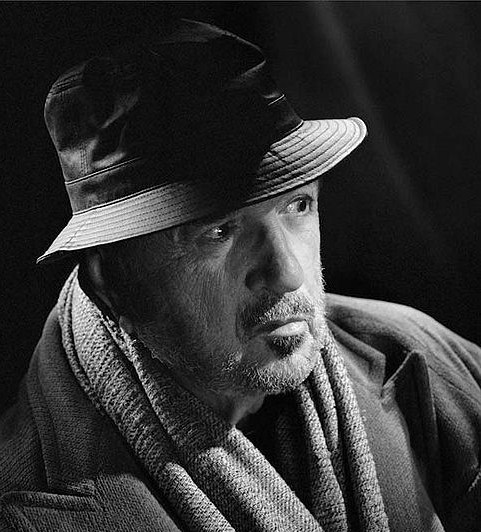
Ratnottama Sengupta pays a homage during the 27th Kolkata Film Festival to Jean Claude Carriere, the legendary screenwriter of Peter Brook’s Mahabharata, first performed on stage in 1985 and then released as a film
A Lifetime Achievement Award from the Academy of Motion Picture Arts and Sciences for someone decorated with a Padmashri? One easily understands the Oscar when you spell out that the awardee had written the screenplay of a hundred and more films for the Who’s Who of World Cinema – starting with Luis Bunuel, and going on to Volker Schloendorff, Milos Forman, Pierre Etaix, Jacques Tati, Andrzej Wajda, Nagisa Oshima, Louis Malle, Abbas Kiarostami, Philip Kaufman, Jean Paul Rappaneu, Jacques Deray… not necessarily in that order. The Padmashri also falls in place the minute you hear it was for the writer of Peter Brook’s Mahabharata. Indeed, how many names have bridged the inner core of two extreme cultures of the East and the West, so smoothly as Jean Claude Carriere?
This French writer-actor’s equation with the land of Kauravas and Pandavas was way beyond that of any tourist who may’ve visited India twenty-five times. For, this was the man theatre legend Peter Brook had zeroed in on to play his Ganesha. Meaning, act in the play? No, he was to write the nine-hour magnum opus that would ensue after sunset and end at sunrise at the theatre annual that identifies Avignon in France. Who could’ve imagined his interpretation that the five sons sired by different deities — Yama, Vayu, Indra, the Ashvins — could be cast as men from different races, leading to Yudhistira being blonde and Bhima an African? This, remember, was three years before Doordarshan started airing the B R Chopra epic that continues to enthral.
A scene from Peter Brook’s Mahabharata. Courtesy: Creative Commons
But why am I comparing Carriere – whom I had the good fortune to meet on one of his visits to Delhi – to Ganesha? Simple: Siddhi Vinayak, the God of Fulfilment, was the ‘scribe’ Vyasa approached to pen down his magnum opus – and he laid the condition that Vyasa should not pause in his narration of the events even once. Vyasa agreed on the condition that Ganesha would not pen down the words without comprehending their depth, their emotion, their implication… Carriere had done just that for Peter Brook. And the mythology had stayed within the writer. Hence, three decades later, he wrote a lyrical text for Sujata Bajaj when the Paris-based Indian artist from Kolkata exhibited her iridescent body of work titled Ganapati.
At least eight years of reading and researching had gone into Mahabharata, 1974 onwards, before Carriere’s forays to India started in 1982. And four years later, it mesmerised viewers in the desolate quarry outside Avignon. For the two following years, the play was performed in French and English, it toured the world for four years, it was adapted for television as a six-hour series, it was shortened to a three-half hour film screened in India, Carriere wrote Battlefield based on it, and published a book sketching his India tours… The 25 actors seen in Avignon 1987 came from 16 countries – and the only Indian was Mallika Sarabhai who played Draupadi!
“I compare India to Draupadi in the dice game – she keeps unfolding,” Carriere famously said later. Elsewhere he said he felt that India was a mansion where one room leads to another, that to yet another, and that to some more rooms… In India, Carriere observed a unique continuity since the antiquity now lost in time — one he did not find in either Greece or Egypt. That is distilled in the book, In Search of the Mahabharata that chronicles the three initial years of his journeys in diary-like jottings and numerous sketches. “They have more immediacy, more intimacy, greater feeling than camera,” he told the book’s Delhi-based translator, Aruna Vasudev.
Carriere of course was a seasoned hand at adaptation. Long before the curtain fell on his 91 years, he had adapted the German novelist Gunter Grass (The Tin Drum, 1979) and French Marcel Proust (Swann in Love, 1984) for Volker Shloendorf; the Russian Dostoevsky for the Polish Andrzej Wajda (The Possessed, 1988), the French journalist Joseph Kessel (Belle de Jour, 1967) and French poet Pierre Louys (That Obscure Object of Desire, 1977) for the Spanish Bunuel, French dramatist Edmond Rostand (Cyrano de Bergerac, 1990) for Jean-Paul Rappaneu, Czech Milan Kundera (The Unbearable Lightness of Being, 1988) for the American Philip Kaufman… And what was the key to this success? It lay in Carriere’s belief that “a scenario is created when you and the director establish a near telepathic communication. This requires on both sides a receptiveness and a trust which can never be taken for granted. The writer must submerge his ego since, ultimately, it is the director’s film and you are there only to facilitate him.”
My first experience of this ‘facilitating’ was Happy Anniversary (1962) that won director Pierre Etaix – who co-produced it with writer Carriere – the Oscar for Best Short. Half-a-century after its viewing the 15-minute short remains vividly etched in memory. A woman is preparing a romantic dinner to celebrate their wedding anniversary while the husband is running around and making stops to pick up gifts for his wife. But the Paris traffic is against him, and by the time he reaches home the flowers for his wife have wilted, and his drunken wife has finished dinner and fallen asleep. What a captivating comment on urban realities!
Carriere’s most abiding partnership — his 20-year-tie with Buñuel – had started in 1963 when the Spanish director was looking for a French co-writer to adapt The Diary of a Chambermaid by Octave Mirbeau. The maid who exposes the sexual, religious and social repressions of the middle class provincial French families set the keynote – social satire – that Buñuel would repeat in Belle de Jour. Its erotic narrative with subversive wit exposed bourgeoise hypocrisy through a respectable doctor’s wife who enjoys her afternoons as an inmate of a high-class brothel. Buñuel’s absurdist humour not only alerts viewers to the failings of the French bourgeoisie, but it also sets the tone for his constant anti-establishment ire. In The Milky Way (1968), two tramps set off from Paris to make a pilgrimage to a Spanish shrine and on the way meet characters who expound on the six central ‘mysteries’ of Catholic dogma. Another amusing anti-clergy film, it reveals Buñuel’s target shifts from the church to the military, to the state — that is, only within the different faces of establishment. This influenced Carriere to later state, “In art a certain anti-conformism is necessary.”
Jean Claude Carriere was a remarkable storyteller, it is clear, just as it is that he had no dogma. Effortlessly he could move from one world to another. One of ideals and spirituality, to that of warfare and political spoils. As one reviewer noted, “he had the knack of entering the dream world not on the wings of some abstract imagination but on the legs of reality – with absolute groundedness.”
Carrier knew what he wrote was not for publishing, it was written not to be read but to be transformed into a film. He is known to have said: “If you want fame, and a beautiful statue made of yourself, don’t be a screenwriter. The writer disappears. He works in the shade.” It was absolutely essential to be forgotten. His art exemplified this, though not the writer who also acted in some films. He knew, if not forgotten, very often screenwriters are ignored. That is why, in his Honorary Oscar acceptance speech in 2014, he expressed his happiness that such an award was given to a screenwriter. For, “they are like shadows passing through the history of cinema. Their names do not appear in reviews, but still they are filmmakers,” he asserted sharing his Oscar with screen writers around the world.
Ratnottama Sengupta, formerly Arts Editor of The Times of India, teaches mass communication and film appreciation, curates film festivals and art exhibitions, and translates and write books. She has been a member of CBFC, served on the National Film Awards jury and has herself won a National Award. Ratnottama Sengupta has the rights to translate her father, Nabendu Ghosh.
.
PLEASE NOTE: ARTICLES CAN ONLY BE REPRODUCED IN OTHER SITES WITH DUE ACKNOWLEDGEMENT TO BORDERLESS JOURNAL
We share the planet with creatures great and small. To commemorate the World Wild Life Day, we present to you a selection of non-fiction, stories and poems around the fauna and its conservation
Rabindranath Tagore’s Ekti Khudro Puraton Golpo (One Small Ancient Tale) from his collection Golpo Guchcho (literally, a bunch of stories) has been translated by Nishat Atiya. The story centres around birds in wilderness. Click hereto read.
Meredith Stephens introduces us to the varied fauna (ranging from seals to monitors) found in South Australia with vivid photographs. Click here to read.
Jibananada Das (1899-1954) was born on 16th of February in a united Bengal under the colonial regime. During his life, Das wrote beautiful poetry, novels, essays and more. He believed: “Poetry and life are two different outpouring of the same thing; life as we usually conceive it contains what we normally accept as reality, but the spectacle of this incoherent and disorderly life can satisfy neither the poet’s talent nor the reader’s imagination … poetry does not contain a complete reconstruction of what we call reality; we have entered a new world.” To try to position any poet or writer in a pantheon as the best or second or third best is unfair to his art. And therefore, on his birth anniversary let us revel in his poetry and share some of the best translations of his poetry to English, along with an essay by an academic who shows how his poetry was influenced by the political ambience of the times. There is so much more to his poetry in Bengali that it can only be savoured as excellent translations in an Anglophone world. The flow and the images are beautiful, often like a painting of the Bengal he lived in…
Rakibul Hasan Khan explores death and darkness in Fakrul Alam’s translation of Jibanananda Das’s poetry. Click hereto read.
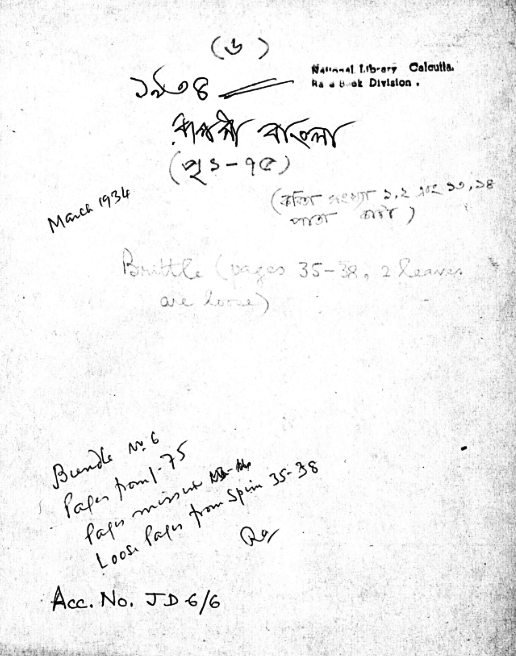
Ruposhi Bangla manuscript, the most popular of Jibananda Das’s poetry collections. Ruposhi Bangla was published posthumously in 1957. The cover of the book was designed by no less than Satyajit Ray, the renowned film director. Courtesy: Creative Commons
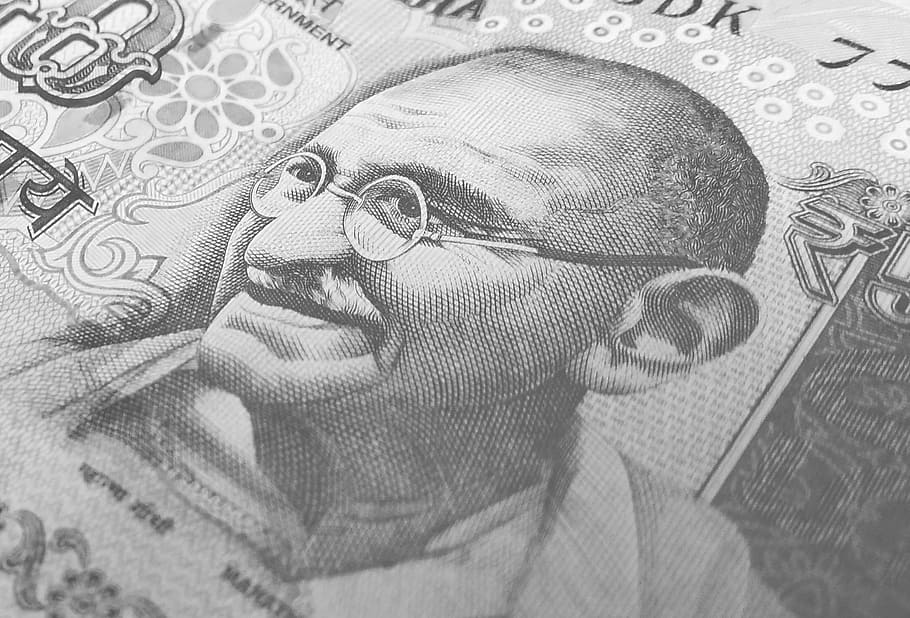
Bapu or Gandhi (2 October 1869 – 30 January 1948) on India’s currency. Courtesy: Creative commons
Gandhi with his call to combat violence and hatred with non- violence and truth is perhaps a voice that needs to be recalled out of history books on dusty shelves. His ideals cry out to be retrieved beyond the reach of currency notes, statues, buildings, names of parks and roads. Like Tagore, we may not agree with all his ideas but he put together an ideology which, perhaps, could be realised and implemented to make a better world across borders. If peace is forced by nuclear warheads and the ruthless are allowed a field day to govern any country because they have the might, perhaps it is time to question the efficacy of manmade constructs created through history, especially after the Second World War. Do we want bloodshed, chaos and the pandemic to be part of our daily news? Or, can we explore the philosophy of a man who mingled the best from the East and the West to create a system which has impacted many across the world? Leaders and great statesmen learnt from him — Martin Luther King Junior, Nelson Mandela, Al Gore, Barack Obama, John Lennon and Albert Einstein to name a few — just as he had learnt from greats across the world.
Today, in an attempt to recall the best in Gandhi’s philosophy, we wanted to present to you a selection that tries to connect us with his ideals — give a glimpse of his dreams that might have led to a better world if we only had listened and acted. Of the pieces we are showcasing here, some have painted a world that needs a Gandhi while others have written what they imbibed from his ideals into their own lives. Can we ride on the crescendo with these voices to achieve a better future for our children by embedding and internalising his values?
Interview
Santosh Bakaya interviews Tushar Gandhi, great-grandson of Mahatma Gandhi. Click here to read.
A poem relooking at Gandhi’s ideology in the present context, written in Manipuri by Thangjam Ibopishak and translated by RobinS Ngangom. Click hereto read.
Michael R Burch wrote this poem under the spell of the famed “I Have a Dream” speech by Martin Luther King Junior, an ardent practitioner of Gandhi’s ideology, a student and disciple of the Mahatma. Click here to read.
Fiction
In Bapu, Denied, Sunil Sharma pulls Gandhi down from a pedestal and explores his ideals in the current world. Clickhere to read.
From our treasury, Debraj Mookerjee reflects on how syncretism impacts greats like Gandhi, Tagore, Tolstoy, Emerson, Martin Luther King Jr and many more. Click hereto read.
Romanticised by writers and artists over time, freedom has been variously interpreted. There is the freedom of birds that fly, of the clouds that float across the connecting blue skies, of the grass that grows across manmade borders, of the blood that flows to protect the liberty of confines or constructs drawn by man, the river that gurgles into the ocean, of the breeze that blows.
The many-splendored interpretations of freedom and its antitheses in Borderless journal are presented here for you to ponder … tell us what you think. Can freedom come without responsibility or a tryst with circumstances?
Exploring the freedom from bondages of education social norms and more, this story has been translated by Radha Chakravarty from Bengali. Clickhere to read.
The mother of a soldier once told me she did not agree that winning a war was a solution to peaceful living. She said, “If our army kill the enemy, some other mothers lose their sons; some other wives are widowed; some other children lose their fathers…”
Her summation of the war seems like an accurate description of the current day scenario. While politically the bombs that killed 140,000 in Hiroshima and 74000 in Nagasaki on 6th and 9th August respectively(1945), destroyed two cities, ended the Second World War (1939-1945) which claimed a total of 70-85 million lives over six years and led to the celebration of VE Day (Victory Europe Day), can we afford such horrors of violence and annihilation again? This is a question that remains in the grey zone as nuclear non-proliferation looks like agreeing to peace because the terror of war frightens. Will we ever have a world where peace is loved for the sake of what it brings and not for the fear of annihilation?
Writers in this special commemorate the horrors of the atom bomb and write their plea for peace. While American-Japanese writer, Suzanne Kamata, and Manjul Miteri of Nepal explore victimhood, Michael Burch talks of the Enola Gay, the legendary bomber that dropped “Little Boy” and annihilated a whole city. He reflects on the testing that continued on Bikini Island and further to ‘maintain peace’. We also have the words of Kathleen Burkinshaw who continues impacted by this terror — though it was her mother who was the hibakusha or survivor of the bomb blast. We round up this section with Candice Louisa Daquin’s reflections on peace and the reality as it is.
Oh Orimen! A poem in Nepalese about a victim of the blast written by a sculptor, Manjul Miteri, who while working on the largest Asian statue of the Buddha in Japan visited the museum dedicated to the impact of the blast. The poem has been translated to English by Hem Bishwakarma. Click hereto read.
Kathleen Burkinshaw is the daughter of a woman who survived the Hiroshima blast. Burkinshaw suffers neural damage herself from the impact of the bomb that her parent faced. She has written a book called The Last Cherry Blossomrecounting her mother’s first hand experiences. Her novel has been taken up by the United Nations as a part of its peacekeeping effort. She has been actively participating in efforts to ban nuclear weapons, including presenting with Nobel Laureates. Click here to read the interview.
In a tribute to Bollywood legend Dileep Kumar or Yusuf Khan in real life, Ratnottama Sengupta, one of India’s most iconic arts journalist, time-travels to the days when the ‘Fankar-e-Azam’ – the great actor – sprinted about on the sets of Bombay’s studios …spiced up with fragments from the autobiography of Sengupta’s father, famed screenwriter and litterateur, Nabendu Ghosh
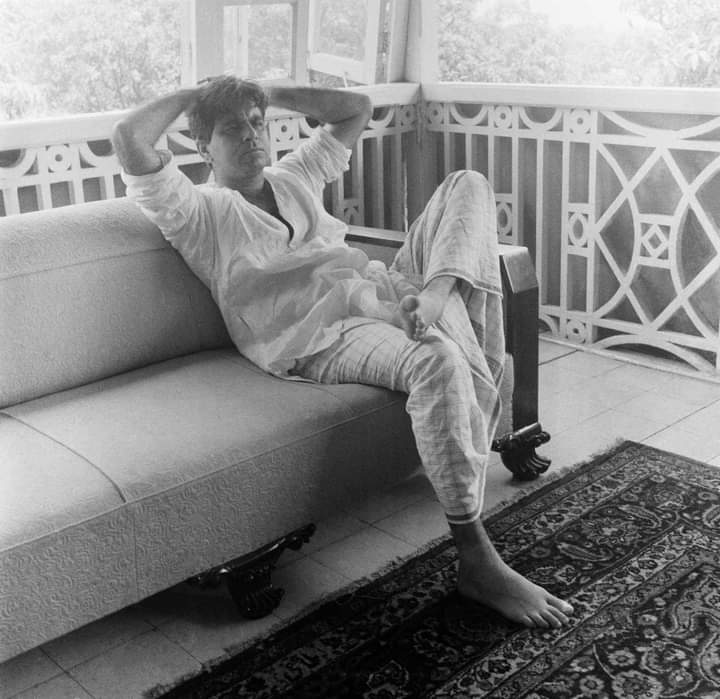
The different faces of Dileep Kumar. Photographs provided by Ratnottama Sengupta
“Actually the quality of a performer is also measured by the contrast that he can handle. To do something different, to be humorous, and intimidating, and also to make them feel sorry for you… that is the way people like you.” – Dilip Kumar
On 7thJuly, 2021, I was at a loss — in trying to think of an epithet for the thespian who had just passed away. So am I now, in deciding where I should start my recollections of the deathless legend. For, Dilip Kumar was already B-I-G when I started understanding the word ‘Cinema’.
I was born in 1955 — the year of Satyajit Ray’s Pather Panchali in Bengal, Bimal Roy’s Devdas in Hindi films, and also of Azad. Years would go before I learnt that Apu-Durga’s Song of the Road had placed India on the celluloid map of the world. Before I understood that my father, Nabendu Ghosh, had a hand in immortalizing Devdas by writing its screenplay – often dubbed ‘direction on paper.’ And before I observed this curious coincidence: Azad had released the same year as Devdas, the ode to undying, self-destructive love. Curious, because it brought the Monarch of Tragedy with Tragedienne, Meena Kumari, in order to create a comedy! A fun outing where a rich man, Azad, rescues Shobha from bandits; and when she decides to marry him, her family discovers Azad is the bandit.
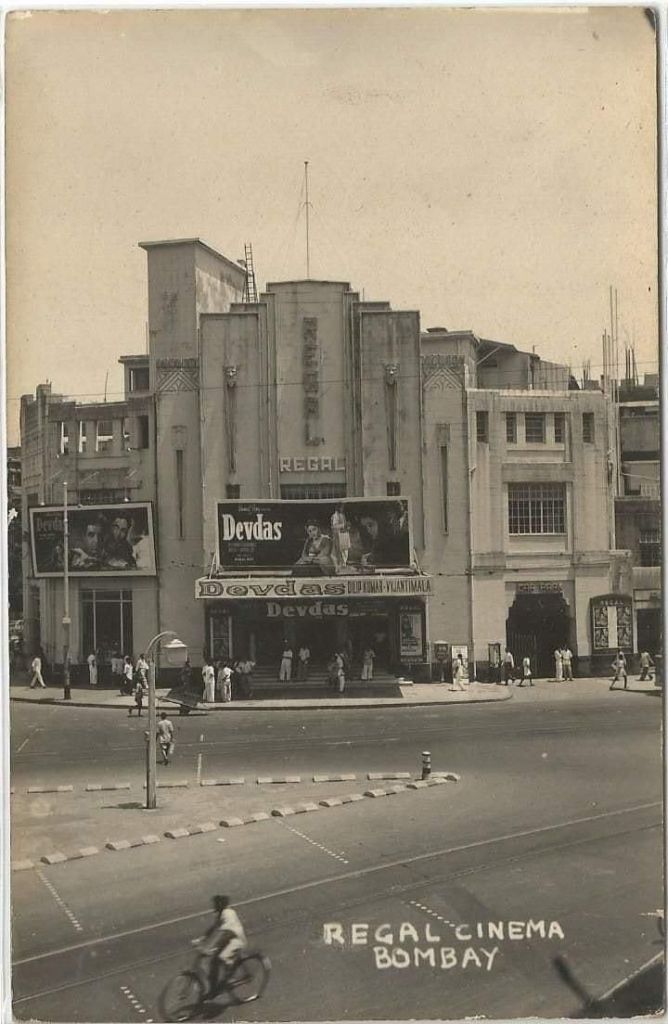
1955 First release of Devdas . Photo provided by Ratnottama Sengupta
I became aware of this film only recently, while working on the song Apalam Chapalam – danced by Sayee and Subbulaxmi – for my underproduction documentary on Dance in Hindi Films. That number is a lesson for anyone studying dance. But aeon before I came to it, I would start dancing every time the Murphy radio in our Malad bungalow played Radha na boley na boley na boley re (Radha shan’t speak to Krishna). I would pick up the hairband lying in front of our mirror, put it on and start swaying in a circular motion. I must have been about two-and-half. There was no television, no silver screen, no Meena Kumari in my life, only a radio. And it cast a spell with this song from Azad, one of the few comedies of Dilip Kumar, with Kohinoor and Ram Aur Shyam.
Years down the star actor had talked about distributors objecting to his playing a comic role. “’But people are used to seeing you in tragic roles… so you will die in the end, right?’ they would insist. ‘But I wanted to alter the image. I did not want to be stuck in one groove. There is a risk in breaking a familiar mould, but if people can anticipate you, that is the end of your mystery! So you must do something different each time, a departure from your familiar personality. You must work a little harder and change the chemistry of the personality’.” This could be the Bible for any actor if he plans to defy time.
Dilip Kumar captivated me with a dance which – like Meena Kumari’s in Azad – was no classical number, only robust, folksy Nain lar jai hey toh manwa ma kasak hoibey kari (When our eyes meet, I feel a pang in my heart). This was in Gunga Jumna (1960), produced by Dilip Kumar and directed by his mentor Nitin Bose. The star gustily dancing with a bunch of guys in dhoti – he was so spontaneous, so natural! This at a time when women danced but men dancing was seen as effeminate. Yes, the traditional dance gurus were male, but the movie idol had to be macho, so no dancing! Dance gurus were revered in life but on screen they were lampooned as in Padosan (The Next-door Neighbour, 1968). But he was so confident, suave you cannot but be infected by his joi de vivre.
The other thing about Gunga Jumna was its dialect. The tongue he speaks — an admixture of Brajbhasha, Khaiboli, Awadhi, Bhojpuri — connects all our people in northern India. That may be why, when Amjad Khan was preparing to play Gabbar Singh, his lines garnished his dhobi’s (washerman’s) dialect with Gunga’s. Again, Lagaan (2001) returns to this tongue which Aamir Khan once more picks up as PK (2014), the alien who knows no earthly language of communication, from a street walker in a psychic manner, by simply holding her hand.
Dilip Kumar’s dialogue delivery was distinctly different from his other contemporaries, Raj Kapoor or Dev Anand. One had cultivated a generous dose of Charlie Chaplin in his mannerism; the other had to thank Gregory Peck for his angular tilt of head. Dilip Kumar’s controlled delivery, low and clear, probably stemmed from his admiration for Paul Muni. He whispered for the benefit of his lady love alone – how romantic! A person standing at an arm’s distance, and being addressed almost with reverence, at a time when so many of contemporaries had yet to cast off the theatrical manner of vociferous enunciation: this intensity charmed my mother’s generation of men and women and spilled over to actors of my preteen years – unabashedly they subscribed to the adage, ‘Imitation is the foremost form of adulation’.
When Joy, the worthy son of Bimal Roy, made his centenary tribute to his father, he had started by interviewing Nabendu Ghosh. In it, while talking about Devdas, the screenwriter says: “On the first day of shooting I saw Dilip Kumar loitering by himself, aloof, remote. So I asked him, ‘What’s the matter Yusuf Bhai? Every day you sit with us, talk to us, join us in our banter. Why are you so preoccupied today?’ He replied, ‘Woh teenon mere kandhe par baithey hain Nabendu Babu (those three are weighing me down like a burden on my shoulder).’ ‘Kaun teen (which three)?’ – I asked him. He replied, ‘Barua Saab, Saigal Saab, and Sarat Chandra.’” The first two legends had played Devdas (1935), Pramathesh Barua in Bengali and K L Saigal in Hindi, in New Theatre’s bilingual production, and Sarat Chandra Chatterjee (the author of Devdas) of course is the most translated author in India: Devdas alone has seen a dozen versions in as many languages if not more. Nabendu continued: “So I asked him, ‘What do you think of Sarat Chandra as a writer?’ And he replied, ‘He had divinity in his pen.’”
What a pithy appreciation of a literary master. Hardly surprising that Dilip Kumar was a major presence on the stage when the Sarat Centenary Celebrations were held in Bombay. Others present included Nitin Bose and Biraj Bahu Kamini Kaushal along with Sunil Gangopadhyay, then a young Turk who pooh-poohed the literary giant. Baba, having scripted Parineeta(1953), Devdas, Biraj Bahu(1954), Majhli Didi(Middle Sister, 1968) and Swami (later filmed by Basu Chatterjee), as much as due to his standing in Bengali literature, had chaired the unforgettable celebration.
When Nabendu Ghosh was wondering about Yusuf Saab’s eloquent reticence, clearly the actor was in the process of pouring himself into the soul of the persona — or was he giving Devdas the stamp of Dilip Kumar? It was this total absorption that saw him transcend every known interpretation of the character and make his Devdas the abiding face of an indecisive, love-torn soul. In an interview Dilip Kumar had said, “If I have to be convincing as a 30-year-old, I must familiarize myself with what he has gone through in the preceding 29 years.”
However in another interview — this one, to renowned film critic, screenwriter and director, Khalid Mohamed — he had debunked method acting saying, “Yeh kis chidiya ka naam hai? What is this thing you call Method Acting?” Okay, so he did not learn – or unlearn – the acting technique of the Russian master Stanislavsky but he certainly believed in the ‘art of experiencing.’ He must have drawn on personal experiences or their memories to inform his characterization, the truth behind the persona who lived and loved in another space and time. This I can say from my visit to the sets of Sungharsh (Clash,1968) directed by H S Rawail.
I can’t remember why I had gone there but I remember visiting with my father. The crew was busy preparing lights for the shot. This was the last film where Dilip Kumar was seen with Vyjayantimala: their first was Devdas, and included Gunga Jumna, Madhumati, Naya Daur, Paigham. I noticed him running round the sets, dressed in a dhoti with a gamchha tied round his waist. “Why is the hero working himself out of breath?” I’d wondered to myself. I got the answer when they started the takes: the scene required him to run up, axe in hand, and breathlessly deliver a message. The film based on Mahasweta Devi’s novel, Layli Aasmaner Aina (The Mirror of Layli Aasman), revolved around a courtesan and a thugee, and almost half a century later Baba wrote Sei Sab Kritantera (Those Gods of Death) which won him the Bankim Puraskar, about the cult of bandits. But circling back to Dilip Kumar, I find it astounding that a quarter century after his screen debut, the legend was preparing for the shot by physically running around!
No wonder he was so natural. Yet this perceptive actor did not skyrocket into fame with Jwar Bhata (Ebb and Flow, 1944), directed by Amiya Chakravarty, nor did Pratima, directed by Jairaj with music by Arun Mukherjee, do any good to his career. It was with Nitin Bose’s Milan (The Union), based on Tagore’s Naukadubi (The Wreck) and released on a Friday preceding 15tH August 1947, that his listless performance gained sparkle. Along with Jugnu (Fireflies), which was the highest grosser of the year, Milan laid the ground for the long innings of the resolved player. Small wonder, when he produced Gunga Jumna, he singled out his mentor to be the director.
All the three films, Jwar Bhata. Pratima and Milan were produced by Bombay Talkies, then being run by Devika Rani and Ashok Kumar. The popular pair of Achhut Kanya (The Untouchable Girl, 1936) was responsible for most decisions in the milestone production company that gave breaks to other majors of Indian cinema like Dev Anand, Gyan Mukherjee, B R Chopra, Sadat Hasan Manto. Ashok Kumar and Devika Rani had given Mohamed Yusuf Khan, the son of a Pathan dry fruits trader from Peshawar, his screen name. “Why did Yusuf Khan become Dilip Kumar?” is a much asked question. To Khalid Mohamed the thespian had revealed, “The choice was between Jehangir and Dilip Kumar. The second seemed a better option because it sits easy on every tongue.” Many others have seen a different reason behind the change.
Ashok Kumar Ganguly was directed to lop off his family name at the instance of Franz Osten, the Bavarian director who partnered Himanshu Rai in the early years of Bombay Talkies, to make him more ‘Indian’ rather than a Bengali or a Brahmin. ‘Kumar’ – meaning, young prince – was, since then, included in their name by most actors — Uttam Kumar too. When Dilip Kumar debuted in mid-1940s, the national movement to free India from colonial harness was coming to a head — as was the crescendo for a separate political identity for the Muslim populace. In this scenario, many in the profession that depended on the support of maximum number of viewers, were opting for names that did not underscore their Islamic roots. Thus Mahjabeen Bano became Meena Kumari, Mumtaz Jehan Dehlavi became Madhubala, Nawab Bano was renamed Nimmi by Raj Kapoor, Nargis had started as Baby Rani, Hamid Ali Khan had assumed the name of Ajit. However, Dilip Kumar spawned many other clones. Thus, commenced the age of Pradeep Kumar, Rajendra Kumar, Manoj Kumar, Sanjeev Kumar, Akshay Kumar. And many tried to clone his histrionic abilities too!
*
The year 1947 proved a turning point in the life of Dilip Kumar in so many ways. Mehboob Khan’s Andaz (Gesture,1949), his Aan (Pride) and Nitin Bose’s Deedar (A Glance), both released in1951, Amiya Chakravarty’s Daag (The Stain,1952), Bimal Roy’s Devdas, Yahudi (Jew), Madhumati, K.Asif’s Mughal-e-Azam (1960) — all the films thereafter proved super hits. They also carried a message for the masses, be it against alcoholism, or war; in favour of fidelity in marriage, or unadulterated friendship. They turned the brooding hero into a popular idol. At a time, the country was rapidly industrializing, Naya Daur (New Age) focused on the conflict between modernity and tradition through a race between a tonga and a bus. Yahudi, through the love between the Jewess and the Roman prince, sent out a message of communal bonding.
Dilip Kumar, it is evident, kept pace with the transformation coming in the nation’s life. His own performance, his selection of roles all reflected this. That could be why Gunga Jumna by the family production house of Citizen Films, became a precursor in so many ways. I have already spoken about its dialect. Projecting dacoits in the central roles was another. Later decades saw dacoits being replaced by smugglers as villain, drag racketeers as the evil guys, terrorists as the despicable ones. But the dacoit theme kept recurring through Mujhe Jeene Do (Let Me Live, 1963), Mera Gaon Mera Desh (My Village My Land, 1971), Sholay (Flames, 1975), Pratiggya(The Oath, 1975(, Ganga Ki Saugandh ( Swear by the Ganga, 1978), Bandit Queen (1994), Pan Singh Tomar (2010). More so, the keynote of two brothers on either side of law was to see many reincarnations – most remarkably in Deewar (The Wall), which turned Amitabh Bachchan into the legend he is. Years later Dilip Kumar teamed with Amitabh Bachchan to play father and son aligned on opposing sides of law – again, with amazing success.
Sangharsh
Ganga Jamuna
Film posters from different films Dileep Kumar starred in. Photograph Courtesy: Ratnottama Sengupta
The legend teaming with a younger icon was not something new for Dilip Kumar, nor would it be the last. Keeping pace with his growing years he had shared screen space with Anil Kapoor in Mashal (The Torch, 1980s), and with Naseeruddin Shah in Karma. Prior to Deewar he had appeared in Paari (1970s), a Bengali film, where the then rising star Dharmendra played the lead. This film was remade as Anokha Milan with the same cast. Likewise, Tapan Sinha’s Sagina Mahato (Bengali) was remade as Sagina (Hindi) with his wife Saira Banu opposite him. This remains one of Dilip Kumar’s most significant performances — perhaps also his most ‘political’ incarnation on screen. Here he is a factory worker who becomes the first to stand up to the tyranny of the British bosses in the tea gardens on the Himalayan reaches of North Bengal. Once more he surprised us, his younger viewers, to whom he was nothing but a man named Sagina Mahato whose naivety was being cleverly exploited. I had seen both the Bengali and Hindi versions but I have no answer as to why the remake did not work a magic nationally. Dilip Kumar was, after all, a master of delivery in Hindi and Urdu, although his English too was flawless.
Dilip Kumar seems to have had a special equation with Bengal, which could have grown out of the fact that so many directors from Bengal dominated the Indian screen through 1940s, 1950s, 1960s, 1970s… in other words, the screen idol’s active years. I was won over by the charisma of the star in Madhumati, incarnated from a story by Ritwik Ghatak. He had penned the first draft of the immortal classic that continues to mesmerise viewers to this day, then he was summoned back to Kolkata to direct two of his own films, Bari Theke Paaliye (The Runaway) and Ajantrik( 1957). The final script was prepared by Bimal Roy, as was his practice, in conference with his team. As a part of this Nabendu Ghosh had worked on detailing the reincarnation film as Dilip Kumar himself revealed in the interview to Khalid Mohamed. I was simply enchanted by the actor’s screen presence. Here I was, growing up in the age of Rajesh Khanna and Amitabh Bachchan, remember? Yet I was compelled to surrender to the charm of this actor! The only other ‘Kumar’ who superseded his charm for me was Uttam Kumar – and both had started their screen journeys in 1940s – long before I was born! Madhumati itself was ‘born again’ – most successfully as Farah Khan’s Om Shanti Om (2007) but the enduring charm of Dilip Kumar as an engineer arriving the upper reaches of Kumaon Hills and losing himself amidst tribals remains matchless.
Baba (Nabendu Ghosh) also scripted Yahudi where Bimal Roy directed Dilip Kumar and Meena Kumari as the Roman prince and the Jewess who fall in love – endangering lives. In the Nehruvian era, it resonated with the values of secularism that the super actor himself enshrined. In his personal life, this saw Dilip Kumar align with the Congress. He donned the hat of the Sherif of Bombay (1980) and raised funds for causes, including for the physically challenged, through exhibition cricket matches. His commitment to the country’s constitutional framework saw him campaign in support of V P Singh — and later Manmohan Singh — as Prime Minister. Nominated to Rajya Sabha — the Upper House of Parliament — from 2000 to 2006, he served in Standing Committees that brought in amendments to Indian Medical Council Act 2006. He used his MP funds to restore Bandra Fort and improve the Bandra Promenade. These kept earning him laurels in India and beyond. The Dadasaheb Phalke Award winner was decorated as Padma Bhushan in (1991), Padma Vibhushan by the present Modi government in 2015, and — befittingly — accorded state honour at his funeral.
My most significant interaction with Dilip Kumar happened four decades after Yahudi – in 1999. Atal Behari Vajpayee was then the Prime Minister, and the Pakistan government was to confer their highest civilian award – Nishan-e-Imtiaz on the actor. In the wake of the Kargill infiltration and the ensuing war this was red rag to the right wingers. Shiv Sena had laid siege outside the thespian’s Pali Hill mansion, objecting to his receiving the award of merit as a betrayal of his own country. At that point Dilip Kumar, who continues to have a massive following across the subcontinent and beyond, had come to meet the Prime Minister. And I, then the Arts Editor of The Times of India, was given a special audience – perhaps also because I was the daughter of ‘Nobendu Babu’.
I clearly recall his words: “I was born in Peshawar, which by a twist of events is now in another land. A boundary line has turned it into a foreign country but I continue to be a produce of that land. I cannot deny that nor do I wish to. And I am not breaking any law of this land by accepting this Order of Excellence. If my country benefits in any way by my refusing this award, then I am willing to do so. If instead it strengthens bonding with a (warring) nation, why should I decline it?”
This is what he said to the Prime Minister too, resulting in Vajpayee ji issuing a statement to the effect that Dilip Kumar does not need to prove his patriotism to anybody. He will do just as his heart dictates. Whether he should accept the Nishan or decline it will be decided by his inner self. No one needs to tell him that.
In later years I have thought to myself: Suchitra Sen, another abiding icon who was paired with Dilip Kumar in Devdas, has been honoured by the Bangladesh government because she was born in Pabna, and we felt happy. Soumitra Chatterjee has been honoured by the French Legion de Honor – as was his mentor Satyajit Ray before him – and we felt honoured. The Government of India conferred the Padma on Sir Richard Attenborough for his directorial essay on Gandhi (1983) and we rejoiced. If all of these gladdened our hearts, why should we take exception to Nishan-e-Imtiaz? Why must we carry scars of the past in our mind and heart? Would it not be better to apply balm on wounds and reinforce peace?
Before I wrap up, I must time-travel back to 1991. That was the year the Film and Television Institute of India (FTII) conferred an Honoris Causa on Nabendu Ghosh whose 25 year association (1966-1991) had seen the emergence of such famous alumni as Kumar Shahani, Jaya Bachchan, Subhash Ghai, Girish Kasaravalli, Aruna Raje, Syed Mirza, Ketan Mehta, Kundan Shah. “By honouring his association with FTII we are also honouring the milestones the screen writer has gifted to the world of cinephile,” Dilip Kumar had said as the Guest of Honour handing over the honorary doctorate. And in his address to the students, who had caused waves of unrest in FTII, he had said: “You have come here to learn the art of filmmaking. Instead, do you wish to teach your teachers? In our times we did not have any institute, we learnt from our directors. Bimal Roy himself was an institution. Nitin Bose, Bimal Roy, Mehboob Khan – they have moulded masters who come to teach you here. You stand to gain if you learn from them. Never forget to benefit from those who have learnt by experience…”
The words stay with me, as do the performances of the timeless actor who stopped short of scoring a century.
.
Ratnottama Sengupta, formerly Arts Editor of The Times of India, teaches mass communication and film appreciation, curates film festivals and art exhibitions, and translates and write books. She has been a member of CBFC, served on the National Film Awards jury and has herself won a National Award.
.
PLEASE NOTE: ARTICLES CAN ONLY BE REPRODUCED IN OTHER SITES WITH DUE ACKNOWLEDGEMENT TO BORDERLESS JOURNAL



















 Borderless