Categories
Contents

Borderless, July 2025

Art by Sohana Manzoor

Editorial

‘…I write from my heart of the raging tempest…’.Click here to read.

Translations

Jibanananda Das’s poem, Given the Boon of Eternity, has been translated from Bengali by Professor Fakrul Alam. Click here to read.

Karim Dashti’s short poems have been translated from Balochi by Fazal Baloch. Click here to read.

Five poems by Sangram Jena have been translated from Odia by Snehprava Das. Click here to read.

Surya Dhananjay’s story, Mastan Anna, has been translated from Telugu by Rahimanuddin Shaik. Click here to read.

The Last Letter, a poem by Ihlwha Choi  has been translated from Korean by the poet himself. Click here to read.

Tagore’s Probhatey (In the Morning) has been translated from Bengali by Mitali Chakravarty. Click here to read.

Poetry

Click on the names to read the poems

Luis Cuauhtémoc Berriozábal, Snehaprava Das, David R Mellor, Snigdha Agrawal, George Freek, Laila Brahmbhatt, Tracy Lee Duffy, John Swain, Amarthya Chandar, Craig Kirchner, Shamim Akhtar, Jason Ryberg, Momina Raza, Ryan Quinn Flanagan, Shahriyer Hossain Shetu, Rhys Hughes

Musings/ Slices from Life

What is Great Anyway?

Farouk Gulsara explores the idea of ‘greatness’ as reflected in history. Click here to read.

From Cape Canaveral to Carnarvon

Merdith Stephens writes of her museum experiences with photographs from Alan Nobel. Click here to read.

A Journey through Pages

Odbayar Dorj writes of library culture in Japan and during her childhood, in Mongolia. Click here to read.

By the Banks of the Beautiful Gomti

Prithvijeet Sinha strolls through the park by the riverfront and muses. Click here to read.

Dhruba Esh & Amiyashankar

Ratnottama Sengupta muses on her encounter with the writings of eminent artist and writer, Dhruba Esh, and translates one his many stories, Amiyashankar Go Back Home from Bengali. Click here to read.

Musings of a Copywriter

In Gastronomy & Inspiration? Sherbets and More…, Devraj Singh Kalsi looks at vintage flavours. Click here to read.

Notes from Japan

In Summer Vacation in Japan: Beetle Keeping and Idea Banks, Suzanne Kamata narrates her experience of school holidays in Japan. Click here to read.

Essays


It doesn’t Rain in Phnom Penh

Mohul Bhowmick writes of his trip to Phnom Penh and Siem Reap. Click here to read.

Haunted by Resemblances: Hunted by Chance

Aparajita De introspects with focus on serendipity. Click here to read.

Stories

Blue Futures, Drowned Pasts

Md Mujib Ullah writes a short cli-fi based on real life events. Click here to read.

Unspoken

Spandan Upadhyay gives a story around relationships. Click here to read.

Misjudged

Vidya Hariharan gives a glimpse of life. Click here to read.

Nico Returns to Burgaz

Paul Mirabile writes about growing up and reclaiming from heritage. Click here to read.

Feature

A review of Anuradha Kumar’s Wanderers, Adventurers, Missionaries: Early Americans in India and an interview with the author. Click here to read.

Book Excerpts

An excerpt from Rhys Hughes’ The Eleventh Commandment And Other Very Short Fictions. Click here to read.

An excerpt from Snehprava Das’s Keep It Secret. Click here to read.

Book Reviews

Somdatta Mandal reviews Dilip K Das’s Epidemic Narratives: The Cultural Construction of Infectious Disease Outbreaks in India. Click here to read.

Rakhi Dalal reviews Rajat Chjaudhuri’s Wonder Tales for a Warming Planet. Click here to read.

Gower Bhat has reviewed Neha Bansal’s Six of Cups. Click here to read.

Bhaskar Parichha reviews Jagadish Shukla’s A Billion Butterflies: A Life in Climate and Chaos Theory. Click here to read.

.

Click here to access the Borderless anthology, Monalisa No Longer Smiles

Click here to access Monalisa No Longer Smiles on Amazon International
Categories
Editorial

‘…I write from my heart of the raging tempest…’

I can see the heartbreak, 
Hear the wailing, the awakening,
I write from my heart
Of the raging tempest.

— Translation of Probhatey or ‘In the Morning’ by Rabindranath Tagore (1906)

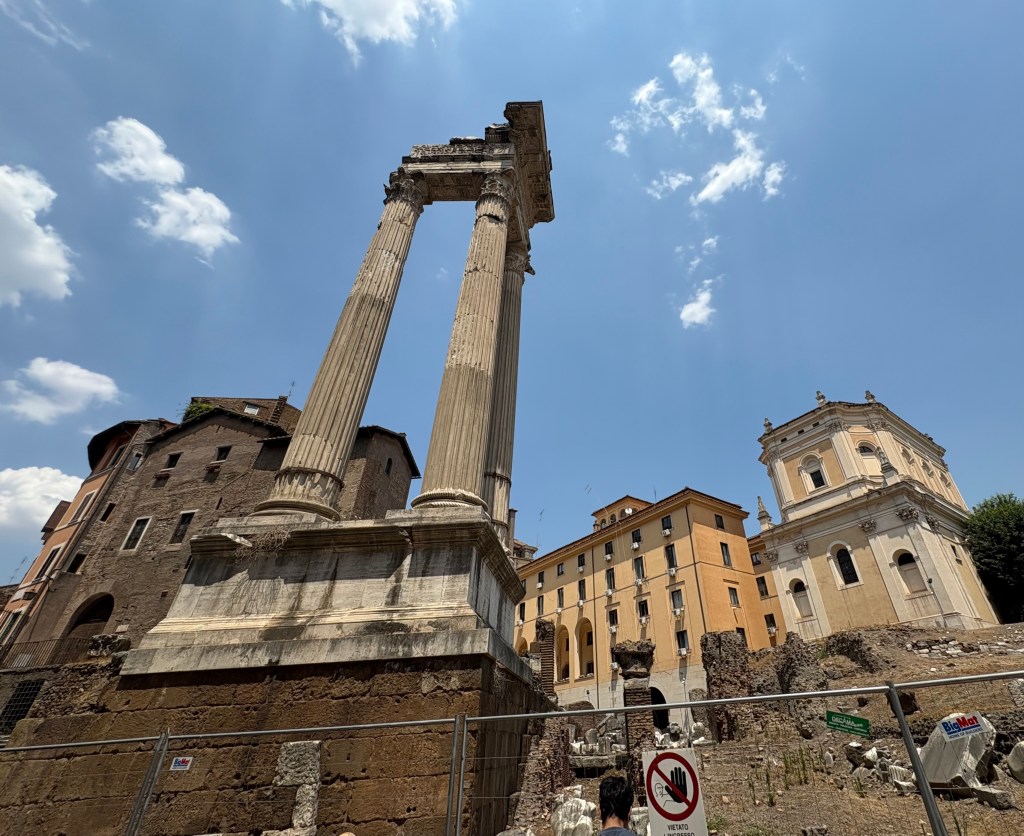
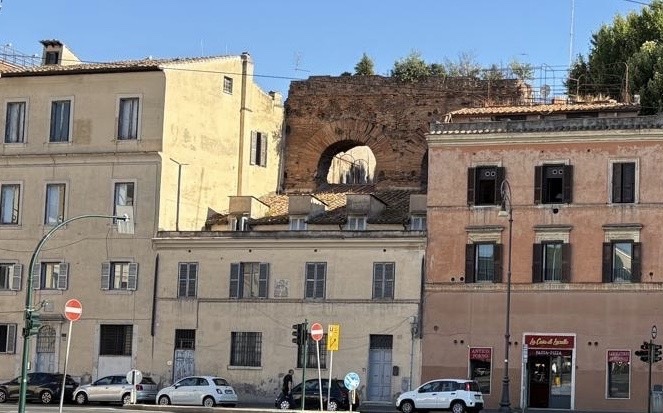
All around us, we hear of disasters. Often, we try to write of these as Tagore seems to do in the above lines. However, these lines follow after he says he draws solace and inspiration from a ‘serene lotus’, pristine and shining with vibrancy. He gazes at it while looking for that still point which helps him create an impact with words. That is perhaps what we can hope to do too — wait for a morning where clarity will show us the path to express not just what we see, but to find a way to heal and help. Finding parallels in great writings of yore to our own attempts at recreating the present makes us realise that perhaps history is cyclical. In Rome, new structures rear up against thousand-year walls, reflecting how the past congeals into the present.

Congealing the past into our present in this July’s issue are stories of American migrants — like Tom Alter’s family who made India their home — by Anuradha Kumar in her new non-fiction Wanderers, Adventurers, Missionaries: Early Americans in India. We feature this book with a review and an interview with the author where she tells us how and why she chose to write on these people. We have more people writing of their own wanderings. Mohul Bhowmick wanders into Cambodia and makes friends over a local sport while Prithvijeet Sinha strolls by the banks of the River Gomti in Lucknow. Meredith Stephens not only takes us to the Prime Meridien in Greenwich but also to Carnarvon which houses a science and technology centre in Australia. Devraj Singh Kalsi wanders with humour to discover gastronomical inspiration and hopes for sweeter recompense.

The dialogue started by Professor Fakrul Alam on libraries earlier with his essay and by Kalsi (with a pinch of humour) has been continued by Odbayar Dorj. She talks of the fading culture of libraries in Mongolia, her home country, and the vibrant culture that has blossomed in Japan. Suzanne Kamata writes of the rituals of summer holidays in Japan… including looking after a pet dung beetles.

Farouk Gulsara muses on ‘greatness’ as a concept with irony. Aparajita De muses on the word serendipity, applying it to her own situation while Ratnottama Sengupta muses on her encounter with the writings of eminent cover artist and writer who is not only a recipient of the Bangla Academy literary award but also immensely popular with children, Dhruba Esh, and translates one his many stories from Bengali.

In translations, Professor Alam has brought to us a beautiful poem by Jibanananda Das. Karim Drashti’s Balochi short poems have been rendered in English by Fazal Baloch and Snehaprava Das has found for us Odia poems of Sangram Jena in translation. Ihlwha Choi has rendered his own Korean poem to English while Tagore’s poem, ‘Probhatey (In the Morning)’ winds up the poetry in this section. We have more in prose — Surya Dhananjay’s story, Mastan Anna, translated from Telugu by Rahimanuddin Shaik.

In fiction, we have stories from around the world. Paul Mirabile sets his story in Burgaz. Spandan Upadhyay gives a mysterious narrative set in a world outside our waking consciousness and Vidya Hariharan gives us a glimpse of life in modern day India. From Bangladesh, Md Mujib Ullah writes a short cli-fi based on real life events.

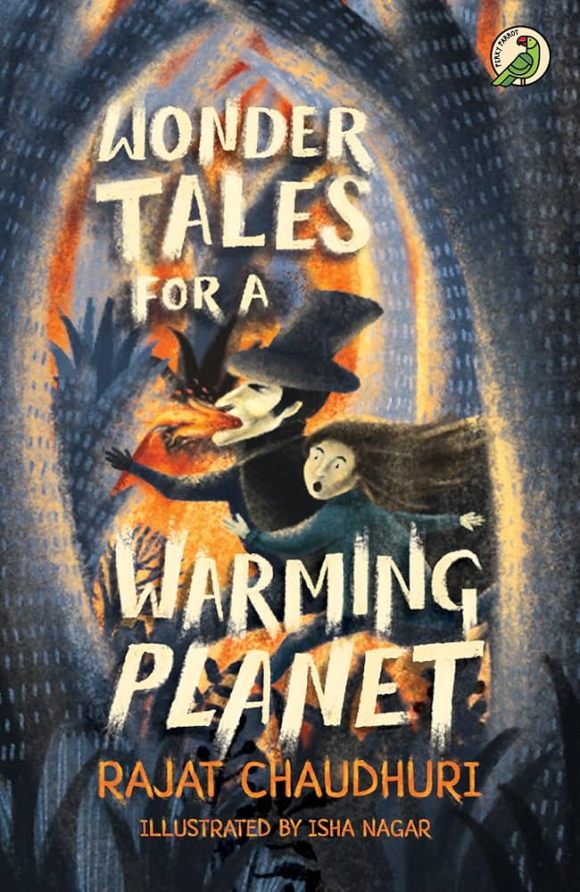
Taking up the theme of cli-fi, Rajat Chaudhuri’s Wonder Tales for a Warming Planet seems to bring hope by suggesting adapting to changing climes. Rakhi Dalal tells us in her review: “It dares to approach the climate crisis through the lens of empathy and imagination rather than panic or guilt. In doing so, Rajat Chaudhuri gives us what many adult climate narratives fail to deliver—a reason to believe that another world is not only possible but already being imagined by the young. All we need to do is listen.” Bhaskar Parichha has discussed the autobiography of a meteorologist and Distinguished University Professor at George Mason University, Jagadish Shukla. In A Billion Butterflies: A Life in Climate and Chaos Theory, he claims Shukla has “revolutionised monsoon forecasting.” Somdatta Mandal has written about Dilip K Das’s Epidemic Narratives: The Cultural Construction of Infectious Disease Outbreaks in India. And Gower Bhat reviews Neha Bansal’s best-selling poetry collection, Six of Cups.

Poetry awakens myriad of hues in Borderless with verses from across the world. We have poems from Luis Cuauhtémoc Berriozábal, Ryan Quinn Flangan, Snehprava Das, George Freek, Laila Brahmbhatt, Tracy Lee Duffy, Amarthya Chandar, Jason Ryberg, Momina Raza, Shahriyer Hossain Shetu and more. Snigdha Agrawal gives a fun-filled poem about a duck and Rhys Hughes has given us a collection of verses like puzzles where we need to guess the animals! We also have an excerpt from Hughes’ The Eleventh Commandment And Other Very Short Fictions and Das’s short stories, Keep It Secret.

With that, we wind up the contents of this month’s issue. Do pause by our content’s page to check it out in more details.

This month’s edition would not have been possible without all our contributors, our fabulous team and especially Sohana Manzoor’s artwork. Huge thanks to all of them and to our wonderful readers who make it worthwhile for us to write and publish. Do write in to us if you have any feedback. Five years ago, we chose to become a monthly from a daily… We have come a long way from then and grown to host writers from more than forty countries and readers from almost all over the world. For this, we owe you all – for being with us and encouraging us to find fresh pastures.

Enjoy the reads!

Wishing you peace and happiness,

Mitali Chakravarty,

borderlessjournal.com

Click here to access the contents for the July 2025 Issue

READ THE LATEST UPDATES ON THE FIRST BORDERLESS ANTHOLOGY, MONALISA NO LONGER SMILES, BY CLICKING ON THIS LINK.

Categories
Review

Imagining Tomorrow: Wonder Tales for a Smouldering Planet

Book Review by Rakhi Dalal


Title: Wonder Tales for a Warming Planet

Author: Rajat Chaudhuri

Publisher: Niyogi Books

In a world teetering on the edge of ecological collapse, it’s often children who inherit the burden of our choices. But what if they could also inherit the tools to re-imagine the future? In Wonder Tales for a Warming Planet, Rajat Chaudhuri doesn’t simply tell stories—he offers blueprints for curiosity, resistance, and wonder. This collection of three speculative tales—’Tina and the Light of the World’, The Seventh Sense’, and‘How Did the Oceans Vanish’—invites young readers to explore climate change not as a distant apocalypse, but as an unfolding narrative in which they are already key players.

Chaudhuri, author of acclaimed climate novels like The Butterfly Effect and Spellcasters, and short story collection like Hotel Calcutta, does not offer didactic lessons to children here. Instead he channels the age-old power of storytelling—immersive, imaginative, and intimate—to speak directly to children. His tales empower children not by shielding them from the truth, but by equipping them with imaginative tools to face it.

The first story, ‘Tina and the Light of the World’, revolves around a young girl’s encounter with a solar-powered future. In a town gripped by blackouts and crumbling infrastructure, where the rich have access to energy while the nights of those poor are engulfed in darkness, Tina meets Stoker who takes her to light but vanishes after sometime. Then Tina meets Anu who accompanies her for a while but soon she leaves her too. Finally, Tina meets sun-catcher in a place where people use solar panels to trap sun’s energy. Tina’s journey—from darkness to a solar-powered community—unfolds like a fable of illumination, both literal and symbolic. The characters she encounters—Stoker, Anu, and the sun-catcher—each represent stages in her awakening to the possibility of decentralised, sustainable energy.  Chaudhuri while suggesting the alternate sources of energy other than those used earlier, cleverly weaves together issues of energy access, decentralised power, and the democratisation of technology. But the story also touches something deeper: the notion that light—both electric and symbolic—can emerge not from grand solutions, but from the small, often overlooked spaces where ingenuity persists.

In ‘The Seventh Sense’, Chaudhuri turns inward, weaving a delicate tale around Gogol, a neuro-divergent boy who develops an extra sense—one attuned to ecological shifts. What initially feels like a fantasy premise soon unfolds into a sophisticated meditation on sensory perception and ecological empathy. This “seventh sense” allows its young bearer to understand the impact of forest cutting to make way for an urban city. The brilliance of this story lies in its central metaphor: that saving the planet may not be about creating more infrastructures mindlessly in the name of fulfilling the needs of people but about cultivating an intuitive, affective connection to the non-human world. The writing is delicate, almost lyrical, yet grounded in a chilling recognition of the precarity the present world seems to now inhabit.

The final tale, ‘How Did the Oceans Vanish’, moves from the speculative to the cautionary. Told as an oral history in a distant future where seas have dried up, the story is framed as a conversation between a grandmother and her grandchild of a different evolved species. Through anecdotal fragments we piece together a slow-motion disaster — brought about by different methods of geo-engineering ushered without considerable testing — that no one tried hard enough to stop. This retrospective mode of storytelling is effective; it avoids heavy-handedness while building a quiet, cumulative sorrow. But even here, Chaudhuri resists fatalism. The tale ends not with despair, but with a question, almost whispered: What will you do differently now?

Across all three stories, Chaudhuri’s prose remains crisp and fluid. He avoids the pitfall of jargon while subtly integrating scientific ideas— alternate energy, sustainable living, geo-engineering, and more. What binds the collection is not only its thematic concern with climate but its faith in the moral imagination of children. These are not just tales about the future; they are invitations to imagine alternate presents.

That said, the book does not attempt to be everything. The storytelling is intentionally restrained. There are no dramatic twists or action-packed sequences. The stakes are emotional and ethical, rather than physical. Young readers who’ve already begun to sense the ambient anxiety of climate discussions—will find in this collection recognition, reassurance, and a language to speak about what they feel but cannot yet articulate.

Wonder Tales for a Warming Planet deserves a place not just in classrooms or children’s libraries, but in dinner table conversations. It dares to approach the climate crisis through the lens of empathy and imagination rather than panic or guilt. In doing so, Rajat Chaudhuri gives us what many adult climate narratives fail to deliver—a reason to believe that another world is not only possible but already being imagined by the young. All we need to do is listen.

Rakhi Dalal is an educator by profession. When not working, she can usually be found reading books or writing about reading them. She writes at https://rakhidalal.blogspot.com/ .

.

PLEASE NOTE: ARTICLES CAN ONLY BE REPRODUCED IN OTHER SITES WITH DUE ACKNOWLEDGEMENT TO BORDERLESS JOURNAL

Click here to access the Borderless anthology, Monalisa No Longer Smiles

Click here to access Monalisa No Longer Smiles on Kindle Amazon International