Categories
Contents

Borderless, April 2025

Art by Sohana Manzoor

Editorial

Seasons in the Sun?….Click here to read.

Translations

An excerpt from Tagore’s long play, Roktokorobi or Red Oleanders, has been translated by Professor Fakrul Alam. Click here to read.

Tagore’s essay, Classifications in Society, has been translated by Somdatta Mandal. Click here to read.

Poems of Longing by Jibananada Das homes two of his poems translated from Bengali by Professor Fakrul Alam. Click here to read.

Four cantos from Ramakanta Rath’s Sri Radha, translated from Odiya by the late poet himself, have been excerpted from his full length translation. Click here to read.

An excerpt from Syad Zahoor Shah Hashmi’s Nazuk, has been translated from Balochi by Fazal Baloch. Click here to read.

Disappearance by Bitan Chakraborty has been translated from Bengali by Kiriti Sengupta. Click here to read.

Roadside Ritual, a poem by Ihlwha Choi  has been translated from Korean by the poet himself. Click here to read.

Tagore’s Pochishe Boisakh Cholechhe (The twenty fifth of Boisakh draws close…) from Bengali by Mitali Chakravarty. Click here to read.

Poetry

Click on the names to read the poems

Luis Cuauhtémoc Berriozábal, Thompson Emate, Pramod Rastogi, George Freek, Vidya Hariharan, Stuart McFarlane, Meetu Mishra, Lizzie Packer, Saranyan BV, Paul Mirabile, Hema Ravi, Ryan Quinn Flanagan, Rhys Hughes

Poets, Poetry & Rhys Hughes

In Three Gothic Poems, Rhys Hughes explores the world of horrific with a light touch. Click here to read.

Musings/Slices from Life

The Day the Earth Quaked

Amy Sawitta Lefevre gives an eyewitness account of the March 28th earthquake from Bangkok. Click here to read.

Felix, the Philosophical Cat

Farouk Gulsara shares lessons learnt from his spoilt pet with a touch of humour. Click here to read.

Not Everyone is Invited to a Child’s Haircut Ceremony

Odbayar Dorje muses on Mongolian traditions. Click here to read.

From a Bucking Bronco to an Ageing Clydesdale

Meredith Stephens writes of sailing on rough seas one dark night. Click here to read.

Musings of a Copywriter

Stay Blessed! by Devraj Singh Kalsi is a tongue-in-cheek musing on social norms and niceties. Click here to read.

Notes from Japan

On Safari in South Africa by Suzanne Kamata takes us to a photographic and narrative treat of the Kruger National Park. Click here to read.

Essays

Songs of the Adivasi Earth

Ratnottama Sengupta introduces us to the art of Haren Thakur, rooted in tribal lores. Click here to read.

‘Rajnigandha’: A Celebration of the Middle-of-the-Road

Tamara Raza writes of a film that she loves. Click here to read.

‘Climate change matters to me, and it should matter to you too’

Zeeshan Nasir writes of the impact of the recent climate disasters in Pakistan, with special focus on Balochistan. Click here to read.

Bhaskar’s Corner

Ramakanta Rath: A Monument of Literature: Bhaskar Parichha pays a tribute to the late poet. Click here to read.

Stories

Jai Ho Chai

Snigdha Agrawal narrates a funny narrative about sadhus and AI. Click here to read.

The Mischief

Mitra Samal writes a sensitive story about childhood. Click here to read.

Lending a hand

Naramsetti Umamaheswararao takes us back to school. Click here to read.

Conversation

Ratnottama Sengupta talks to filmmaker and author Leslie Carvalho about his old film, The Outhouse, that will be screened this month and his new book, Smoke on the Backwaters. Click here to read.

Book Excerpts

An excerpt from Anuradha Kumar’s Wanderers, Adventurers, Missionaries: Early Americans in India. Click here to read.

An excerpt from Snigdha Agrawal’s Fragments of Time (Memoirs). Click here to read.

Book Reviews

Somdatta Mandal reviews Sheela Rohekar’s Miss Samuel: A Jewish Indian Saga, translated by Madhu Singh. Click here to read.

Gracy Samjetsabam reviews Tony K Stewart’s Needle at the Bottom of the Sea: Classic Bengali Tales from the Sundarbans. Click here to read.

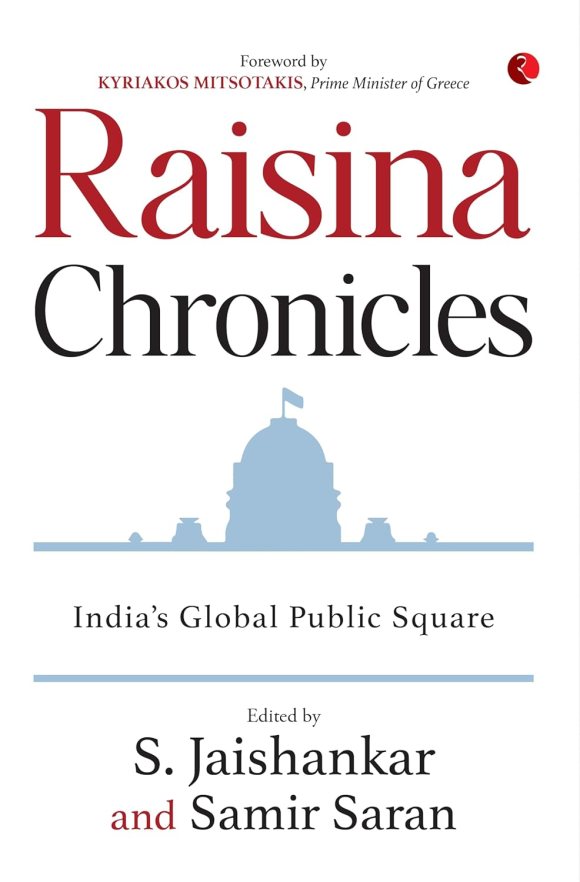
Bhaskar Parichha reviews Raisina Chronicles: India’s Global Public Square by S. Jaishankar & Samir Saran. Click here to read.

.

Click here to access the Borderless anthology, Monalisa No Longer Smiles

Click here to access Monalisa No Longer Smiles on Amazon International

Categories
Editorial

Seasons in the Sun?

April is a month full of celebrations around the world. Asia hosts a spray of New Year festivities. Then there are festivals like Qing Ming Jie, Good Friday and Easter. All these are in a way reminders of our past. And yet, we critique things as old fashioned! So, where does tradition end and ‘outdated’ or ‘outmoded’ start? Meanwhile we continue to celebrate these festivals with joy but what happens to those who have lost their home, family and their living due to war or climate disasters? Can they too join in with the joie de vivre? Can we take our celebrations to them to give solace in some way?

In our April issue, we have stories from climate and conflict-ridden parts of the world. From Bangkok, Amy Sawitta Lefevre gives an eyewitness account of the March 28th Earthquake that originated in Myanmar. While in her city, the disaster was managed, she writes: “I’m also thinking of all the children in Myanmar who are sleeping in the open, who lost loved ones, who are feeling scared and alone, with no one to reassure them.” As news reels tell us, in Myanmar there have been thousands of casualties from the earthquake as well as shootings by the army.

From another troubled region, Pakistan, Zeeshan Nasir gives a heartrending narrative about climate change, which also dwells on the human suffering, including increase in underage marriages.

Human suffering can be generated by rituals and customs too. For instance, if festivals dwell on exclusivity, they can hurt those who are left out of the celebrations. Odbayar Dorje muses along those lines on Mongolian traditions and calls for inclusivity and the need to change norms. On the other hand, Devraj Singh Kalsi hums with humour as he reflects on social norms and niceties and hints at the need for change in a light-hearted manner. Farouk Gulsara makes us laugh with the antics of his spoilt pet cat. And Suzanne Kamata dwells on her animal sightings in Kruger National Park with her words and camera while Meredith Stephens takes us sailing on stormy seas… that too at night.

Art is brought into focus by Ratnottama Sengupta who introduces artist Haren Thakur with his adaptation of tribal styles that has been compared to that of Paul Klee (1879-1940). She also converses with filmmaker Leslie Carvalho, known for his film The Outhouse, and his new novel, Smoke on the Backwaters. Both of these have a focus on the Anglo-Indian community in India. Also writing on Indian film trends of the 1970s is Tamara Raza. Bhaskar Parichha pays tribute to the late Ramakanta Rath (1934-2025), whose powerful and touching poetry, translated from Odia by the poet himself, can be found in our translations section.

We have an excerpt from Professor Fakrul Alam’s unpublished translation of Tagore’s Red Oleanders. It’s a long play and truly relevant for our times. Somdatta Mandal shares with us her translation of Tagore’s essay called ‘The Classification in Society’, an essay where the writer dwells on the need for change in mindsets of individuals that make up a community to move forward. A transcreation of a poem by Tagore for his birthday in 1935 reflects the darkness he overcame in his own life. Two poems expressive of longings by Jibananada Das have been translated from Bengali by Professor Alam aswell. From Balochistan, we have an excerpt from the first Balochi novel, Nazuk, written by the late Syad Zahoor Shah Hashmi and rendered into English by Fazal Baloch. Among contemporaries, we have a short story by Bitan Chakraborty translated from Bengali by Kiriti Sengupta, a poignant story that reflects on gaps in our society. And a Korean poem by Ihlwha Choi rendered to English by the poet himself.

Our poetry section celebrates nature with poetry by Lizzie Packer. Many of the poems draw from nature like that of George Freek and Luis Cuauhtémoc Berriozábal. Some talk of the relationship between man and nature as does Stuart McFarlane. We have a variety of themes addressed in poems by Thompson Emate, Meetu Mishra, Saranyan BV, Paul Mirabile, Pramod Rastogi, Ryan Quinn Flanagan and many more. Rhys Hughes brings in both humour and social commentary of sorts with his poem. And in his column, Hughes has shared three gothic poems which he claims are horrible but there is that twinge of fable and lightness similar to the ghosts of Ebenezer Scrooge’s world[1]— colourful and symbolic.

Stories sprinkle humour of different shades with Snigdha Agrawal’s narrative about mendicants and AI and Mitra Samal’s strange tale about childhood pranks. Naramsetti Umamaheswararao takes us back to schooldays with his narrative. We have a fun book excerpt from Agrawal’s Fragments of Time (Memoirs), almost in tone with some of her stories and musings.

An extract from Anuradha Kumar’s latest non-fiction making bridges across time and geographies. Called Wanderers, Adventurers, Missionaries: Early Americans in India, the book is an intriguing read. We have a review by Professor Mandal of Sheela Rohekar’s Miss Samuel: A Jewish Indian Saga, translated by Madhu Singh. Highlighting syncretic folk traditions, Gracy Samjetsabam has discussed the late Tony K Stewart’s translation of oral folklore in Needle at the Bottom of the Sea: Classic Bengali Tales from the Sundarbans. Parichha has written about a high-profile book that also hopes to draw bridges across the world, Raisina Chronicles: India’s Global Public Square, by S. Jaishankar and Samir Saran.

This issue has been made possible because of support from all of you. Huge thanks to the team, all our contributors and readers. Thanks to Sohana Manzoor for her fabulous artwork. Do pause by our contents page as all the content could not be covered here.

Perhaps, world events leave a sense of pensiveness in all of us and an aura of insecurity. But, as Scarlett O’ Hara of Gone with the Wind[2] fame says, “After all, tomorrow is another day.” 

Looking forward to a new day with hope, let’s dream of happier times filled with sunshine and change.

Enjoy the reads!

Mitali Chakravarty

borderlessjournal.com

[1] A Christmas Carol by Charles Dickens, 1843

[2] Gone With the Wind, a novel by Margaret Mitchell, published in 1936

Click here to access the contents page for the April 2025 Issue

READ THE LATEST UPDATES ON THE FIRST BORDERLESS ANTHOLOGY, MONALISA NO LONGER SMILES, BY CLICKING ON THIS LINK.

Categories
Review

Proclamation for the Future

Book Review by Bhaskar Parichha

Title: Raisina Chronicles: India’s Global Public Square 

Author: S. Jaishankar & Samir Saran

Publisher: Rupa Publications

Raisina Chronicles: India’s Global Public Square by  S. Jaishankar and Samir Saran commemorates a decade of the Raisina Dialogue, India’s flagship geopolitical and geo-economics conference. The book reflects on the journey of the Raisina Dialogue and its impact on global discourse. It brings together contributions from leaders, thinkers, and diplomats, scholars, and policymakers worldwide, offering insights into addressing global challenges through collaboration and dialogue.

S. Jaishankar has been India’s External Affairs Minister since May 2019 and represents Gujarat in the Rajya Sabha. He was the Foreign Secretary from 2015 to 2018 and has held ambassadorial roles in the U.S., China, and the Czech Republic, as well as High Commissioner to Singapore. He authored notable books like The India Way: Strategies for an Uncertain World and Why Bharat Matters. Samir Saran is the President of the Observer Research Foundation (ORF), a leading Indian policy think tank. He has enhanced ORF’s influence in the U.S. and the Middle East and provides strategic guidance at the board level. Saran curates the Raisina Dialogue, co-chairs the World Economic Forum’s Global Future Council on Geopolitics, and serves on the Board of Governors of The East West Centre in the US. He has written five books, edited key monographs and journals, and contributed to numerous academic papers and essays, appearing in both Indian and international media.

The book brings together voices from across the world—of leaders and thinkers reflecting on the Raisina Dialogue’s impact on how we may navigate global challenges and create solutions that work. Putting India at the forefront of leading the change, the effect of these Dialogues is felt across policies and projections.

The editors emphasise that diversity, dissent, discord, and divergence of opinion make for the necessary ingredients for a sustainable future, shaped and owned by all. Ten years since its inception, the Raisina Dialogue has become the paramount platform for bringing together cultures, peoples and opinions. It is now India’s flagship geopolitical and geo-economics conference and has truly become a global public square—located in New Delhi, incubated by the world.

It emphasises the importance of diversity in thought, approaches, beliefs, and politics. It highlights how pluralism and heterogeneity contribute to resilience and societal evolution. Raisina Dialogue serves as a platform for inclusive participation, welcoming voices from underrepresented geographies and institutions.

While it showcases India’s emergence as a global leader in addressing development challenges and fostering international cooperation, it reflects the philosophy of Vasudhaiva Kutumbakam (the world is one family) and its efforts to harmonise local solutions with global needs.

Through initiatives like the G20 Presidency, India has shared transformative models such as digital public infrastructure (e.g., India Stack), offering templates for financial inclusion and tech-enabled development globally.

Alongside the carefully organised discussions, Raisina Chronicles examines the evolution of the Dialogue and presents its audience with a comprehensive volume that offers deep insights and an unwavering optimism for achieving shared solutions to worldwide issues.

As the globe approaches significant structural and historical transformations, the core aspiration of this work is to ensure that the voices of the populace are prioritised in global politics and policymaking, echoing through influential circles and reaching the broader community. For leaders to effect change, it is essential for society to unite and take a decisive step forward in the right direction.

Raisina Dialogue is also portrayed as a crucial venue for bridging divides in a fractured world. It fosters open discussions among diverse stakeholders—diplomats, scholars, business leaders, civil society members—to discover shared futures and solutions. The book underscores the importance of dialogue over polemics and inclusivity over exclusivity in shaping global policies.

Contributions from high profile global leaders such as Kyriakos Mitsotakis (Prime Minister of Greece), Mette Frederiksen (Prime Minister of Denmark), Penny Wong (Australian Foreign Minister) and others enrich the book with perspectives on international cooperation, climate goals, defence partnerships, and multilateralism.

The book serves as both a retrospective of the Raisina Dialogue’s achievements over ten years and a forward-looking guide for navigating global challenges. It positions India at the heart of global conversations, highlighting its role in fostering equitable dialogue and creating solutions that resonate across borders.

This volume is not just a collection of essays but also an intellectual testament to the transformative power of dialogue in shaping a sustainable future for humanity.

Bhaskar Parichha is a journalist and author of Cyclones in Odisha: Landfall, Wreckage and ResilienceUnbiasedNo Strings Attached: Writings on Odisha and Biju Patnaik – A Political Biography. He lives in Bhubaneswar and writes bilingually. Besides writing for newspapers, he also reviews books on various media platforms.

.

PLEASE NOTE: ARTICLES CAN ONLY BE REPRODUCED IN OTHER SITES WITH DUE ACKNOWLEDGEMENT TO BORDERLESS JOURNAL

Click here to access the Borderless anthology, Monalisa No Longer Smiles

Click here to access Monalisa No Longer Smiles on Amazon International