Categories
Musings

When Nectar Turns Poisonous!

By Farouk Gulsara

” No, you cannot refuse this!” my wife said. “This is prasad, the divine offering to the gods.”

A motichoor laddoo… Photo courtesy: Farouk Gulsara

I reluctantly looked at the glazed motichoor ladoo[1]. The memories of my last blood test results started flooding my mind. 

The learned GP looked disapprovingly at my results through his reading glasses, one eye fixed on the result and the other condescendingly on me. Did I hear geckos chapping away in the background, or is the doctor making disgruntled sounds about my glucose levels?

“9.0 fasting sugar is not good! Congratulations, you are a diabetic now!” he declared. I thought I saw a gleam in his eyes as he announced it. 

“Let him have his day,” I told myself. “This is his terrain, let him have his last say.”

Quietly, I was guessing how well the doctor’s fasting sugar would be. Looking at his general appearance, it would not be so great. Proudly carrying around his protuberant apron of a paunch, slouched in his chair all day, the closest he must come to exertion would be leaning forward to examine his patients; he does not scream of a paradigm of health. Yet, this is his turf. Hence, I sheepishly blurted, “Yes, doctor.”

There are some things in life one cannot fight, like who your parents are and the garbage of genetic material one is thrown with. With my very strong family history of diabetes, it was a matter of time before I was garlanded with the same laurel. No amount of time spent at the gym or hours of burning the soles of my running shoes was going to steer me away from his genetic heirloom. I knew that. Still, it is unfair to say, nevertheless. 

So when she offered me the sucrose-dripping divine offerings, I looked at them as my mug of hemlock, as a concoction offered with an intended outcome, no matter how much one can sugarcoat it with divine intervention. Like an accountant who tallies debit and credit transactions, the body does not take into account whether a food is blessed or otherwise. It is quite transactional in its dealings with the trash that is shoved in versus the energy consumed, aided by detoxifying and catalytic agents. 

My mind then wandered upon the practice of emphasising food as one of the highest deeds one can offer to humanity. Every religious function invariably ends with a big feast. Forget prayers; one would get upset if a wedding, a birthday invitation, or even a casual visit to an acquaintance’s home is not accompanied by a meal or at least a snack. What is a birthday party without loads of sugar or unnecessary calories? Feuds have occurred in the past when caterers failed to meet their hosts’ promises. Our community believes that the taste of the wedding meals should be savoured much longer than the newlyweds keep their wedding vows. 

The highest brownie points in most religions must surely be for feeding the masses. No one is denied a meal in most places of worship. Why this fixation on meals and their intermingling with divinity? If any calamity were to befall any part of the world, the Sikh brothers would always be the first to be at Ground Zero to whip out some piping hot vegetarian food for the victims. Where do the homeless in the underprivileged part of town go for a square meal? A langar[2] , the Sikh community kitchen, of course.

I once heard an actress boasting about her polyamorous lifestyle and how she managed to win so many hearts. Her answer stuck in my mind. “Honey, the sure way to a man’s heart is through his stomach. You can either stir a nice meal, or you can compliment him on how slim he looks. You can tell him you can hardly see his stomach!” The actress also said that Belgian chocolates win any girl’s heart. 

Why this fixation on meals and their intermingling with the human psyche and divinity? Food and divinity are closely intertwined, not only because a hungry soul cannot sing praises of the giver, but also because the gratitude and joy showered upon their givers can be intoxicating. It fosters human connection at a primordial level, regulating social orders. After all, hunger remains one of the primitive needs before social conditioning expanded our insatiable wants. 

Famine has been a regular feature in the Indian subcontinent[3]On the other end of society, opulence and wastage were prevalent. The society decided to imbue the act of ‘giving a dog a bone’ with religious fervour, bestowing it with a divine status. We were undernourished then and overnourished now. Either way, we are malnourished[4] , just that in the former, we were fed a wee bit too little, while in the latter, a tad too much. Both leave us much to be desired, metabolically speaking. 

Just as Empress Marie Antoinette could not comprehend why the peasants did not stop their boisterous shouts and just eat the cake[5], my wife cannot understand why I am having second thoughts about indulging in some blessed sweet ladoos.

.

[1] Sweet

[2] A Sikh community kitchen serving free meals to all regardless of religion, caste, gender, economic status, and ethnicity

[3] https://en.wikipedia.org/wiki/Timeline_of_major_famines_in_India_prior_to_1765

[4] . Malnutrition is an imbalance between the nutrients your body needs to function and the nutrients it gets. It can mean undernutrition or overnutrition.

https://my.clevelandclinic.org/health/diseases/22987-malnutrition

[5] “Let them eat cake” is the traditional translation of the French phrase, “qu’ils mangent de la brioche“, said by ‘a great princess’ according to Rosseau. It has been attributed to Marie Antoinette. Brioche is not cake but an enriched bread made with eggs, flour, butter and sugar. (ref:  https://en.wikipedia.org/wiki/Let_them_eat_cake)

Farouk Gulsara is a daytime healer and a writer by night. After developing his left side of his brain almost half his lifetime, this johnny-come-lately decided to stimulate the non-dominant part of his remaining half. An author of two non-fiction books, Inside the twisted mind of Rifle Range Boy and Real Lessons from Reel Life, he writes regularly in his blog, Rifle Range Boy.

PLEASE NOTE: ARTICLES CAN ONLY BE REPRODUCED IN OTHER SITES WITH DUE ACKNOWLEDGEMENT TO BORDERLESS JOURNAL

Click here to access the Borderless anthology, Monalisa No Longer Smiles

Click here to access Monalisa No Longer Smiles on Kindle Amazon International

Categories
Review

Connecting Diverse Cultures and Generations

Book review by Bhaskar Parichha


Title: Unpartioned Time: A Daughter’s Story 

Author: Malvika Rajkotia

Publisher: Speaking Tiger Books

Malavika Rajkotia is a prominent divorce attorney based in Delhi. She has collaborated with numerous non-governmental organisations addressing civil liberties and human rights concerns. Additionally, she has a strong background in theatre, participating in approximately thirty productions in both Hindi and English. She has also served as the host of Shakti, the inaugural television talk show in India dedicated to women’s rights.

Her memoir, Unpartitioned Time: A Daughter’s Story, is a complex tale that intertwines the history and current experiences of a family following the Partition. Jindo, Malavika Rajkotia’s father, arrives in India amidst the chaos of the Partition riots. He is allocated a piece of desolate land in the small town of Karnal, where he must clear and cultivate the land to reclaim his role as landlord and patriarch. However, devoid of his past and confronted with an uncertain future in a place where the language is foreign to him, he undergoes a significant transformation. Rajkotia intricately weaves a narrative around this generous, humorous, loving, and increasingly despondent figure, delving into her family’s history and present.

The story explores themes of yearning and belonging, the nature of privilege and its loss, while reflecting on the resilience of a people stripped of their autonomy. Through her evocative and lyrical writing, she leads readers through the challenges faced by a large family—comprising uncles, aunts, siblings, cousins, and esteemed figures—who are all in pursuit of recognition, identity, and stability.

Rajkotia fearlessly confronts her milieu, whether navigating the radical Khalistan movement, the tensions between the Sikh faith and Hindu nationalism, or the pervasive cynicism of Indian politics. Her vivid, meditative, finely detailed portraits of a rich family life are filled with moments of tears, laughter, and music, and a diverse array of characters who are immensely relatable. Ultimately, this brave and moving book is about the enduring quest for meaning and fulfilment that transcends cultural boundaries.

Narrates Rajkotia: “The diffused light of dawn lit a dull, flat landscape cut by the highway, gleaming under randomly spaced streetlights. Until about thirty years ago, this single carriageway witnessed an almost daily carnage that left heavy and light motor vehicles, bicyclists, and bullock carts in confused mangles. Everyone had a personal story of loss on this road. Three of my family was killed in two separate accidents. A splintered windshield glass lodged in a young girl’s throat. An aunt and cousin died when their car rammed into a truck to avoid a cyclist.”

She has a detailed account of the road in Karnal town thus: “For over 2,500 years, this road has streamed with traders from Central Asia, scholars from China, adventurers from Europe, sadhus from the Himalayas, and armies coveting Hindustan. This portion of the road was the battlefield of the story of the eighteen-day Mahabharata war, marking the cusp of the end of the Dwapar Yuga and the rise of the Kali Yuga. Eighteen days of soldiers’ cries and trumpeting elephants and neighing horses, each ending with sunsets blackened by smoke from the funeral pyres hanging heavy until impelled by the sounds of wailing women.

“From myth, we come to somewhat recorded history in 300 BCE, when Chandragupta Maurya built this road to connect his fast-growing kingdom, spanning the north of the subcontinent from the source of the Ganga to its northwestern limits. The road was developed by Sher Shah Suri. My father remembered the time when it was called ‘Jarnailly Sadak’ under the British, and then GT Road, its official name, The Grand Trunk Road. The government of independent India called it Sher Shah Suri Marg, the Sanskrit ‘marg’ guillotining the English ‘road’ and the Urdu ‘sadak’.”

The memoir stands as a testament to the power of storytelling in bridging gaps between cultures and generations, ensuring that the voices of those who experienced Partition are heard and remembered. As part of the growing body of literature on this subject, it encourages further exploration and discussion, ultimately contributing to a more nuanced understanding of the complexities surrounding Partition and its enduring legacy.

.

Bhaskar Parichha is a journalist and author of UnbiasedNo Strings Attached: Writings on Odisha and Biju Patnaik – A Political Biography. He lives in Bhubaneswar and writes bilingually. Besides writing for newspapers, he also reviews books on various media platforms.

.

PLEASE NOTE: ARTICLES CAN ONLY BE REPRODUCED IN OTHER SITES WITH DUE ACKNOWLEDGEMENT TO BORDERLESS JOURNAL

Click here to access the Borderless anthology, Monalisa No Longer Smiles

Click here to access Monalisa No Longer Smiles on Amazon International

Categories
Conversation

‘Home has been a Process of Lifelong Search’

In Conversation with Kirpal Singh

Dr Kirpal Singh

 “Singapore is intimately linked with home and, yet for me, home has always been a process of lifelong search. Partly because of the early months of my birth. The record says I was born in March 1949, but the time was not certain as I do not have a birth certificate. My father forgot to register my birth,” reminisces Dr Kirpal Singh, an internationally recognised scholar. Born in the Straits Settlement of Singapore, before the island emerged as an independent entity, he has lived through much of history. He tells a story of multi-racial, multi-cultural growth that the island afforded him.  

His father, he tells us, was “well known throughout Malaya — Jeswant Singh nicknamed as ‘Just One’ — a boxer who would knock people down with his left hook. In 1954, he left boxing when he killed someone during a match.” His mother, a Jewish Scot who he cannot recollect, he tells us, “ might have been David Marshall’s sister according to my stepsister but no one else has said that.”  Marshall[1] was the first Chief Minister of Singapore from 1955 to 1956 and then Singapore’s Ambassador to France, Portugal, Spain, and Switzerland 1978 to 1993. He is the founder of the Worker’s Party. His parents had emigrated from Baghdad to Singapore in 1908 according to current resources.

How did Singh’s parents come to be in Singapore? Were they immigrants or colonials?

He responds with what he knows: “My grandfather and grandmother came to Singapore on board a ship in 1900. They left Jullunder, Punjab, in 1899. By the time they reached Singapore, it was the end of 1900. They left to seek their fortune. They were from the farming community. My grandfather was only sixteen and my grandmother was about twelve. They were in transit in Penang for six months. They came to Singapore in 1901. Actually, it was all Malaya — Singapore was part of the Straits Settlement. They came to Singapore by train. Trains were just starting out. It was around August 1901.

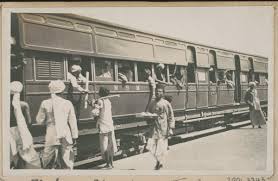
Trains in Malaya

“My uncle was conceived during this journey. They halted in Singapore for only two or three weeks. My grandfather’s cousin was in Perak[2], in Malaya. So, he wanted to be with his cousin. His cousin had cattle. Most of the Sikhs were cattle farmers. They settled in Pahang[3], an area which eventually became a nuclear dump[4] for Australia. It is closed to public now. There was a stone that proclaimed the land was a nuclear dump when I went with my son a few years ago.

“My father moved to Singapore as his prospects were better here as a boxer. This is where he met my mother. I was born here. He actually met mum because my mother’s two brothers had invited her to come from Glasgow. My mother is Scottish, from an industrial background. Her brothers came to the Far East to make money.  She finished her school leaving exams and came to visit her brothers during her vacation. She would go with her bothers to watch boxing, where she saw my father, the champ. She was only fifteen or sixteen. The next thing the brothers knew was she was pregnant with me.”

Jeswant Singh was popular with colonials. Kirpal Singh tells us: “Some Europeans saw him box and offered him a job then in the Base Ordinance Depot. This was the British Military camps in the Far East. There were three bases in Singapore: the naval base, Kranji and one in the South. He worked there for thirty years and retired after that. In 1972[5], after the final British withdrawal from Singapore, dad’s formal employment status ended. After that he just did odd jobs, ending up as a security guard, looking after the factories in Jurong, earning about two to three hundred dollars a month.”

Kirpal Singh spent his childhood with his grandmother and uncle. Before he started schooling, his father left him with his grandmother and divorced his mother in favour of a new bride. Dr Singh tells us the story of how he returned to Singapore: “I was basically in Perak with my grandmother. My uncle, who was the first Sikh to become a Christian in Southeast Asia, left home because his father gave him a beating for changing his religion. My uncle was an Anglican. His conversion saved him from the Great Depression as the clergy was very well looked after. From 1929 to 1933, the church looked after him because he was the priest in Seramban. My father was still young. My uncle was born in 1911 and my dad in 1923. My grandmother bore eighteen children. Five of the infants passed away before they were one month old. But thirteen survived. She passed away at 95… I knew when I left for my doctorate programme in Adelaide that that was the last time I would see her. I had a hunch and was crying on the plane. Six weeks later, I got a letter with the news of her death.”

He adds: “Dad was in not in a position to look after me. The responsibility fell on his brother William. His full name was William Massa Singh s/o Deva Singh. He had studied at the Ipoh Chinese school, topped the school, eventually worked as an insurance agent. He was very good in English. The principal of his school, a New Zealander, arranged for my uncle to move to Singapore. Then my father moved there too. Singapore was the metropolis even then. It was the centre of English education. Penang was the other one. In 1956, I was sent to Singapore from Perak on a train — a one-and-a-half-day journey to my uncle.”

His grandmother joined them within a few months as his uncle was, he says, “more interested in aiding Lee Kuan Yew get rid of the colonials. Lee Kuan Yew was a self-made man. He met Goh Keng Swee[6] and Rajaratnam[7] as students in England. They became buddies and wanted to move out of colonial rule and be independent.”

Then, how did a young child survive? Dr Singh tells us: “I used to earn my pocket money from age five six by watering gardens. I have had very interesting experiences. When I was in primary two, I used to give tuition to primary one students. With enough gumption, you can survive in this world.”

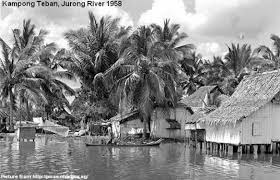
“I grew up with my uncle’s wards, who were brought home to be educated. There was even one who was a Chinese-Japanese mix. So, I grew up being familiar cross-cultural marriages and in a multicultural home. I grew up in the kampong with a Chinese boy and we became friends from the age of seven-and-a-half when we were in primary two. His name is Tan Jwee Song — I call him Jwee, ‘my good saint’.  He told me after O-levels he would support me to study further and took to teaching. At that time, you could become a teacher after completing your O level. I joined Raffles late during my time in high school because it was too expensive for me. I taught in night classes started by Lee Kuan Yew and studied. I owed Jwee $80,000 dollars and I wanted to pay his widow back — but she would not accept it. When I graduated in 1973 with an honours’ degree, I was $44 thousand in debt. Then, I was given a scholarship.”

And slowly, Kirpal Singh came to his own. When television came into being, he tells us: “I was often on TV in 1970s — days of early television — debates and interviews as a guest.” Kirpal Singh grew into an intellectual of repute as he worked and studied with the support of the many races and many people who, often like him, were migrants to Singapore.

As time moves forward, these stories — that are almost as natural as the sand, the wind and the sea — ask to be caught in words and stored for posterity, stories from life that show how narrow borders drawn by human constructs cannot come in the way of those with ‘gumption’.

(Written by Mitali Chakravarty based on a face to face conversation with Kirpal Singh. Published with permission of Kirpal Singh)

[1] https://www.roots.gov.sg/stories-landing/stories/david-marshall/story

[2] Now in Malaysia

[3] Now in Malaysia

[4] https://buletinonlines.net/v7/index.php/lynas-radioactive-waste-to-be-dumped-in-pahang-tax-free-while-australia-gets-a18-million-in-taxes-2/

[5] The British armed forces were scheduled to withdraw from Singapore by 1971. https://eresources.nlb.gov.sg/infopedia/articles/SIP_1001_2009-02-10.html#:~:text=On%2018%20July%201967%2C%20Britain,Singapore%27s%20defence%20and%20economic%20security.

[6] Deputy Prime Minister of Singapore, 1973-1980, one of the founding members of the ruling PAP (People’s Action Party) https://www.roots.gov.sg/stories-landing/stories/goh-keng-swee/story

[7] Deputy Prime Minister of Singapore from 1980 to 1985, one of the founding members of the ruling PAP https://www.roots.gov.sg/stories-landing/stories/sinnathamby-rajaratnam/story

PLEASE NOTE: ARTICLES CAN ONLY BE REPRODUCED IN OTHER SITES WITH DUE ACKNOWLEDGEMENT TO BORDERLESS JOURNAL. 

Click here to access the Borderless anthology, Monalisa No Longer Smiles

Click here to access Monalisa No Longer Smiles on Kindle Amazon Internation


Categories
Essay

Travels of Debendranath Tagore

Narrative by Debendranath Tagore, translated from Bengali by Somdatta Mandal

Note from the Translator

Debendranath, Father of Rabindranath Tagore

Born to Dwarkanath Tagore in Shelaidah, Debendranath Tagore (15 May 1817 – 19 January 1905) was a Hindu philosopher and religious reformer. One of the founders of the Brahmo religion in 1848, his journey in the role of ‘Maharshi’, the great ascetic, was an attempt to spread the Brahmo faith and he travelled extensively to various places, especially in different parts of the Himalayas like Mussourie, Shimla, Kashmir, and Dalhousie.  He even constructed a house in Bakrota called ‘The Snow Dawn’ where he used to reside for months. Although Debendranath was deeply spiritual, he managed to continue to maintain his worldly affairs — he did not renounce his material possessions, as some Hindu traditions prescribed, but instead continued to enjoy them in a spirit of detachment. His considerable material property included estates spread over several districts in Bengal. Debendranath was a master of the Upanishads and played no small role in the education and cultivation of the faculties of his sons.

In his memoir, Jeevan Smriti [Memories of Life], Rabindranath also narrates in detail about his trip with his father in the Himalayas when he was just eleven years old. Debendranth founded the Tattwabodhini Patrika (1843) as a mouthpiece of the Brahmo Samaj and apart from his autobiography, wrote several other prose pieces which also reveal his wanderlust.

Among the two entries included here, we have ‘Moulmein Bhraman’ which is an interesting travel piece narrating his sojourn in Burma in September/October 1850. In the Chaitra 1817 Saka issue of Tattwabodhini Patrika, a travelogue ‘Mori Bhraman’ narrating Debendranath’s trip to Mori was published. Interestingly, as a prologue to this piece Sri Chintamani Chattopadhyay tells us that he was so enamoured after listening to Debendranath’s oral narration of the trip undertaken 28 years earlier, that he decided to transcribe it for the satisfaction of the readers.

Moulmein Bhraman (Travel to Moulmein)

After a year, the splendour of autumn revealed once again and the desire to travel blossomed in my mind. I could not make up my mind where to go for a trip this time. I thought I would make a trip on the river and so went to the bank of the Ganges to look for a suitable boat. I saw that several khalasis — dockyard workers – of a huge steamer were busy at their work. It seemed that this steamer would soon set sail.

“When would this steamer go to Allahabad?” I asked them.

In reply they said, “Within two or three days this will venture into the sea.”

On hearing that this steamer would go to the sea, I thought that this was the easiest way my desire for a sea journey could be fulfilled. I went to the captain instantly and rented a cabin and in due time boarded that steamer to begin my sea journey.

I had never seen the blue colour of the sea water before. I kept on watching the beautiful sights by day and night amid the continuous bright blue waves and remained immersed in the glory of the eternal spirit. After entering the sea and swaying with the waves for one night, the ship dropped anchor at three o’clock the next afternoon. In front of us, I saw a stretch of white sand and something that looked like human habitation. So, I took a boat and went to see it. As I was wandering about the place, I saw a few Bengali men from Chittagong with charms around their necks coming towards me. I asked them, “How come you are here? What do you do?”

“We do business here. We have procured the idol of Goddess Durga in this month of Ashwin[1],” they replied.

I was really surprised to hear that they celebrate Durga puja here in Khaekfu town of Burma. Durga puja was celebrated even here!

From there, I came back to the ship and started towards Moulmein. When the ship left the sea and entered the Moulmein River, I remembered the scene of leaving Gangasagar Island and going into the Ganges River. But this river did not offer any such good scenery. The water was muddy and full of crocodiles; no one bathed in it. The ship came and dropped anchor at Moulmein. Here a Madrasi resident called Mudeliar came and greeted me[2]. He came on his own and introduced himself. He was a high-level government official and a true gentleman. He took me to his house, and I remained a guest there and accepted his hospitality for the few days I stayed at Moulmein. I stayed very comfortably in his house.

The streets in the city of Moulmein were wide and clean. The shops that lined both sides of the street selling different kinds of things were all manned by women. I bought a box, and some very fine silk clothes from them. Going around the marketplace I went to the fish market at one time. I saw big fish for sale displayed on huge tables.

 “What are these big fish called?”

They replied, “Crocodiles.” So, the Burmese ate crocodiles; they spoke verbally about ahimsa and the Buddhist religion, but their stomachs were filled with crocodiles!

One evening when I was wandering on the wide streets of Moulmein, I saw a man walking towards me. When he came close, I understood that he was a Bengali. I was quite surprised to see a Bengali there. From where did this Bengali arrive across the ocean? It seemed there were no places where Bengalis did not go. I asked him, “From where have you come?”

“I was in trouble and so came here,” he replied.

Instantly I understood his trouble[3]. I asked him further, “How many years of trouble?”

“Seven years,” he replied again.

“What did you do?”

“Nothing much. I just duplicated some papers of a company. Now my term is over, but I cannot go home because I do not have the money.”

I offered to give him the passage money. But how will he go home? He had set up a business, had got married, and was living quite comfortably. Would he ever go back to our country to show his shameful black face there?

Mudeliar told me that there was a mountain cave here which people went to visit[4]. If I wished he would accompany me there. I agreed. On the first moon night[5], he brought a long boat during the high tide. There was a wooden cabin in the centre of that boat. That night, Mudeliar, I, the captain of the ship and seven or eight other people boarded the boat and it left at two o’clock at night. We sat up for the whole night in that boat. The foreigners kept on singing English songs and requested me to sing Bengali songs. So, I kept on singing Brahma-sangeet occasionally. No one understood anything. They did not like them and went on laughing. We travelled for about twenty-seven miles that night and reached our destination at four o’clock in the morning.

Our boat reached the shore. Everything was still dark. On the shore I saw a cottage full of trees and creepers from which light was coming out. I got curious and ventured alone to that unknown place in the darkness. On reaching there I found it was a tiny cottage. Inside several bald-headed priests in yellow ochre robes were placing candles in different parts of the room. I was quite surprised to see people resembling the priests of Kashi[6] here. How did they come here? Later I came to know that they were the leaders of the Buddhist monks and known as Phungis. I hid myself and observed them playing with the lamps but suddenly one of them saw me and took me inside. They gave me a mat to sit on and water to wash my feet. I had come to their house, so this was their way of entertaining guests. According to the Buddhists, serving guests was a sacred act.

I returned to the boat at early dawn. The sun rose. Mudeliar and the other invited guests came and joined us. This made us fifty in number. Mudeliar fed all of us there. He had arranged for several elephants; about two or four people got on each elephant and proceeded towards the dense jungle. There were small hills all around and in between was that dense forest. There was no other way of travelling here except on elephant back. We reached the entrance of the cave in the mountain around three o’clock in the afternoon.

We descended from the back of the elephants and started to walk in the jungle where the undergrowth was waist high. The entrance to the cave was small; we had to crawl in. After crawling in a little we could stand up straight. It was very slippery inside and we kept on slipping and falling. So, we started walking very cautiously. It was pitch dark inside. Though it was three in the afternoon it seemed like three at night. I was scared that if we lost our way in the tunnel, we would not be able to come out. We would then have to wander inside the cave for the whole day. So, wherever I went, I kept an eye on the faint light at the entrance of the cave. All the fifty of us spread ourselves in various parts of the cave and everyone had sulfur powder in their hands. Then each person put a little sulfur powder in the little holes in the cave next to where he was standing.

After everyone’s place was defined, the captain lit his share of the sulfur powder. Instantly each one of us lit matches and ignited our portion. Now the cave was lit simultaneously at fifty different places like fireworks, and we could see the inside clearly. What a huge cave it was! On looking up to the ceiling our vision could not gauge its height. We saw the different natural formations that had been caused by rainwater seepage inside and were really surprised.

Later, we came out and had a picnic in the forest and then came back to Moulmein. On our way back we heard different musical instruments being played together. Locating that sound, we went forward and saw a few Burmese people dancing with all kinds of gestures of their bodies. Our captain and the foreigners also joined them and started to dance in a similar manner. They found great pleasure. A Burmese lady was standing at the entrance of her house. She watched the mimicry of the foreigners and went and whispered something in the men’s ears.  They stopped their singing and dancing immediately, and all of them suddenly left the scene and disappeared somewhere.  The captain went on entreating them to resume their dance, but they did not listen. It was amazing to see how much hold the Burmese women had over their men.

We came back to Moulmein. I went to meet a high-level Burmese official at his house. He received me very politely. There was a huge room and in its four corners sat four young women stitching something.

When I sat down, he said “Ada[7].”

One of the girls instantly came and handed me a round box full of betel leaves. On opening it I found it to contain different condiments. This was the local Buddhist custom of receiving guests. He then gifted me some excellent saplings resembling the Ashok flower. I had brought them home and planted them in my garden, but they did not survive despite great care. The fruit of this tree is very popular with the Burmese. If someone had sixteen rupees then he would spend the entire amount to buy that fruit. We disliked their favourite fruit because of its smell[8].

Mori Bhraman (Travel to Murree)

On the 10th of Pous, 1789 Saka[9], I abandoned all work and ventured in full earnest to go for a tour in the west. I did not decide where I would go. Just as a confined river feels overjoyed when released, I too left home with equal enthusiasm. Two servants accompanied me. One was a Punjabi Sikh called Gour Singh, the other was Kashi Singh, an Odiya Kshatri. At that time the train went only up to Delhi.

Upon arriving at Delhi, I found out that there was no other way to go except by mail coach. So, I booked a seat on it. My destination was Punjab. The horses of the coach in which I travelled up to a place near Sutlej were not steady. Because of them the coach swayed on both sides. I feared that it might topple, and it did tilt on one side and fell down on the ground.

I got out of the coach through its panel and shouted at the driver in the topmost voice – “You made me fall down, the body is hurt in many places and the nose is bleeding.” The driver had assumed that I had already died under the pressure of the carriage. Feeling assured after hearing my voice he replied, “Baancha to – at least you are alive.” My servant brought some water from a nearby well. I washed my nose. It was almost evening by then. Seeing a rest house nearby, I spent the night there.

Early next morning, I boarded the mail carriage again. It crossed the huge bridge upon the river Sutlej. Upon looking down I saw that the water had a tremendous current. I had never seen such a large bridge before. The wind was blowing fiercely. The strange sound of the waves hitting one another created great pleasure in my mind.

After that I reached an inn near the Beas River. Having our lunch there, I boarded the coach again at four in the afternoon. It was almost evening; we hadn’t progressed far when all of a sudden, a heavy storm rose. The road was just along the river. Sand started blowing to form clouds and cover the surroundings. Nothing was visible in front of us. Sand filled our nostrils and the coach could hardly move. I couldn’t decide where to go and take shelter. We found a settlement a little further ahead. Seeing a two-storied house I got off the coach and spent the night there. The storm continued unabated till three o’clock at night. As soon as it stopped, I boarded the coach again.

In this manner, travelling from one inn to another, I ultimately reached Amritsar. Earlier when I had gone to Shimla, I had spent a few days with great pleasure in Amritsar in an old, dilapidated house located next to a narrow sewer line. Immediately upon reaching Amritsar, I went looking for that beloved house.

I came next to the sewage line but saw that the house did not exist anymore. There wasn’t even a sign of it anywhere. This was an example that nothing was permanent in our lives.

I came back from there in a depressed mood. I rented a small single storied hut next to the road. As a traveller on the road, I stayed there amid the dust in that small room quite stoically but with great excitement. I cannot express in words how much I enjoyed living in such seclusion. The room wasn’t much taller than the road. Unknown travellers would stop by and speak to me in a manner as if we had been acquainted before. I was also happy to interact with them. One of them was a devotee of Hafiz and I too became an admirer. He did not want to leave me and became an earnest friend of mine.

Days went by in this manner. One day a Brahmo gentleman called Shibchandra babu came from the Brahmo Samaj at Lahore. He said that he had been sent by the Brahmos there once they heard that I was here, and I had to go to Lahore. Seeing his eagerness I started for Lahore. Babu Nabinchandra Roy had arranged for my accommodation beforehand in a house located next to a wide road at Anarkali. Once I reached there, the Brahmos came and surrounded me with devotion. During my stay in Lahore, I even had to deliver a lecture in Hindi.

From there the Brahmos arranged for my stay inside a garden. Surrounded by lime trees, the dwelling house was in the middle. With only two servants accompanying me, who was going to cook for me? I developed diarrhoea after eating the hard rotis that were served. Soon, I was also attacked by malaria. The Brahmos informed a Muslim doctor, and he came and saw me. I did not take the medicines prescribed by him. My own medicine was powdered Myrobalan and I took that. The next day there was a lot of emission of blood. I became weak; wanting fresh air I went up to the first floor. There I felt the tremendous heat of the sun and my head started reeling. The very next moment I fainted. Upon hearing this news, two Brahmos came and started feeding me sugar cane and I regained my consciousness after their nursing.

The body was in a miserable condition. The next day I sat wondering where I could go in such a state and that too without a cook. How could I return home in the heat of summer? As I was feeling tense thinking about it and could not decide what to do, my heart suddenly said, “Go to Murree.”

Thinking this to be a god-sent instruction I started preparing to go to Murree. The local Brahmos came to meet me at around two in the afternoon. My body was still very weak, and I didn’t have the energy to even talk much. They asked me what I wanted to do now, and I told them that I had decided to go to Murree and would begin my journey that day itself. After they left, Nabin babu and a few other Brahmos came.

I told them, “I want to go to Murree today so please arrange for a coach.”

They sent Gour Singh and arranged a mail carriage for me. Nabin babu asked me what I would eat on the way. He then gave me two bottles of pomegranate juice. After the coach arrived, I had the two big trunks loaded on its roof and got inside with the two bottles of juice as sustenance. Two servants sat on the roof of the coach. Despite my objection, the Brahmos dismantled the horses and started pulling the coach by themselves. I had to persuade them to stop. The coachmen attached the horses again and started moving.

After travelling a little I realised that the coach was swaying too much, and it was also not strong enough. The Sikh Gour Singh who was sitting on top was very strong, and there were two heavy trunks; if the roof collapsed on my head, there would be nothing I could do. I started feeling scared. Travelling in this manner, I reached a dak bungalow. It was a great relief and I felt that my life was saved. After eating there, I boarded the coach again. Gradually I came to the Jhelum. Gour Singh’s house was located there. He stopped the coach and was pleased to call his relatives and introduce me to them.

In this manner I arrived at Rawalpindi, which was situated in the Murree valley. From this point the road went up and down. Many broken wheels lay scattered here and there as proof of this dangerous road. I became scared on seeing them and kept wondering what would happen to me if the wheels of this unstable coach also broke. But by God’s grace, we overcame all these various hurdles and safely reached another dak bungalow[10]. As soon as I arrived there, the local Bengali gentlemen came to meet me. The pain in my body and the strain of travel made it difficult for me to speak. A gentleman called Dwarik babu started taking special care of me. He went here and there looking for a house, and at last went and requested a Parsi gentleman to allow me to stay in his garden.

I stayed in that garden and a Punjabi doctor came to see me. I told him that milk was my only food, but I could not digest that milk very well. I asked him for some medicines that would help me to digest that milk and was slightly relieved with what he gave me. I had become very weak. At night when I went to bed, I felt that I would not be able to get up the next day.

When Dwarik babu came the following day, I told him that I wanted to go to Murree. He told me that there were still no shops and markets at Murree, and I would find it difficult to stay there. But I went on pestering him. So having no other way he arranged for two basket carriages called dulis that would take me to Murree. I went in one duli and my luggage was put in the other one, while the servants went walking. I reached Murree after three days and a lot of hardship.

It was situated at a height of 7,500 feet. The bearers asked me where I wanted to go, and I told them to take me to the place where the sahibs usually landed. They took me to a huge house which was totally deserted and not a single human being was around.

I told them, “Why did you bring me here? Take me to a bungalow where people are staying.”

So, they took me to another bungalow. But the people there told me that it was a club house and not a place for travellers to stay. So, I could not put up there. I told the bearers to take me back to that same uninhabited house where they had taken me at first. They got annoyed and went back there and said that they would not go anywhere else. They placed my duli under a tree in front of that house. Looking up I saw the sky overcast with clouds. Here in the hills, it doesn’t take long for clouds to gather and rain. I was worried and wondered where to go now. I asked the bearers to take me inside and they carried the duli up to the verandah. I got down and inspected the house. There was no one anywhere. I selected a room and again asked the bearers to bring all by bedding from the carriage and spread it out near the wall so that I could sit up and take some rest. They did that and the very next moment quickly disappeared with their dulis.

A little later it started raining. The servants had not reached till then. Through the windowpanes, I could see that a heavy storm was raging outside. The leafless branches of all the big trees were fiercely swaying and big hailstones started hitting the windowpanes as if they would break them, but nothing happened. I kept on thinking that if I arrived here a little late then I would surely have died inside the duli in this severe hailstorm.

After a while the two servants came shivering. With the cold, the rain, and the hailstorm, they were in very bad shape. After wringing their clothes, they came near me. I told Gour Singh to look for a bearer or the caretaker of this hotel and bring him to me.

So he went and got the chowkidar. I asked him to fetch the furniture for the room, but he said he couldn’t do that till he received orders from the master. I threatened him that if he did not bring the furniture out under my orders and if his owner got to know about it, then he would be instantly dismissed from his job. The man got scared and then brought out a charpoi. I spread out my bedding on that cot and lay down. That night Gour Singh brought me a roti and some water. I could neither eat that hard roti nor drink the ice-cold water of Murree. So, I spent the night without any food. In the morning, I sent Gour Singh to fetch some milk and kept on counting the hours until his return.

It was eight o’clock and still there was no sign of Gour Singh. Those eight hours seemed like eight days. At last, he came back at 9 am with some buffalo milk. Upon drinking it, I found it to be diluted with water and tasteless. I could not digest that milk, and nothing remained in my stomach. The milk just passed out as it was. I covered myself with layers of blankets and shawls and went to sleep in the charpoi in that tremendously cold weather.

While I was lying down, I saw a shivering sahib entering my room. I realised how extremely cold it was outside when I found his teeth were chattering. He lit a fire in the next room and because of that I felt a bit comfortable.

The next day Gour Singh brought such diluted buffalo milk once again. I drank it but again the milk went out of my body as it is. Having starved for three nights I felt almost half-dead on the third night. I laid down quite comfortably on the charpoi with all the warm clothes layered upon my body and did not feel any pain. I felt as if someone like my mother was sitting near my head. I was breathing and along with that breath I saw my friend, Sajuja, also looking at me.  Breathing in and out in that manner I spent the whole night doing easy yoga and cannot describe how happy I felt.

Soon the night was over, and it was morning. Once again Gour Singh brought that kind of diluted buffalo milk. I drank it. How strange! I digested the milk that day. Since pure milk was unavailable here, I told Gour Singh that it would be nice if he went looking for a cow.  So, he went to Rawalpindi and bought a small cow for thirty rupees. He said that she gave ten seers of milk per day. Now milk has become my staple diet.

After drinking that milk my body became a little stronger. I had been staying in Bekereya Hotel from the beginning but now I decided that it was not feasible to continue staying there any longer. So, I went to look for a rented house. I went up the hill in that extremely weak condition and found an empty house. But it was so cold there that I did not find it suitable. A little lower from that point I found another house and liked it. I rented it for nine hundred rupees and started staying there. The next day the postal peon brought me a letter from my nephew Gnanendranath. I opened it with excitement, and he had included a Brahma-sangeet which read thus:

Gao rey tahar naam
Rochito jaar visvadhaam.
Dayar jaar nahi biram
Jharey abitito dhaarey.

[Sing His name/He who has created this world/Whose blessings endless/Falls continuously on earth]

I had already received His blessings to get back my life from the verge of death; the same blessings that were referred to in this song made me feel excited and my heart leaped with joy. This sort of a letter, and at such a time! How strange! How strange!

In this new house I managed to get a cook. He prepared green moong dal for me, and I liked its taste. It was sufficient for my lunch. After a long time, I felt satiated after an afternoon meal. As my health started improving, I gradually began to increase the quantity of my milk consumption. Early in the morning after the upasana was over, they brought the cow in front of me, and I would immediately send a bowl for the cow to be milked before my eyes. The bowl of milk was brought to me; I drank it and sent the bowl back. The cow would then be milked again, and I would once again drink from the bowl. This procedure was repeated several times and after drinking four or five bowls of milk, I would go for a walk in the mountains. Walking in the fresh cool breeze and under the direct rays of the morning sun, I wandered here and there and then came home. Instantly I would have tea, chocolate, and milk. During lunch I would drink milk again, and in the evening, and before going to bed. In this manner, I would drink about ten seers of milk each day and whatever was left over was made into butter to be consumed with rotis the next morning.

Within seven days, I regained my strength and, feeling exuberated started travelling in the mountains. I started singing songs praising the grace of our creator and there was no end to those songs. For a long time, I had been cherishing dreams of visiting Kashmir and it seemed that our creator would now fulfill it. So, I started enquiring about how to go to Kashmir. By the beginning of May, Murree became full of people and the place took a new look with the red uniform of the British soldiers and the fanciful clothes of the other British men and women. Deserting its shabby look, even nature filled up the place with varieties of flowers. After staying in Murree for three months, I heartily began my journey to Kashmir on the 4th of September.

 [ Excerpted from Wanderlust: Travels of the Tagore Family. Translated and Edited by Somdatta Mandal. Kolkata: Visva-Bharati, 2014]

[1] Septemmber-October

[2] Sri Murugesam Mudeliar was the then Commissariat contractor of the military outpost at Moulmein.

[3] The fact was that the man had been banished here. Usually, political prisoners were interned in Moulmein prior to 1848.  But after 1848 Port Blair in the Andaman Islands was made the new place for banishment and imprisonment. This narrative is dated 1850.

[4] The local name of this famous cave was Kha-yon-gu, and Farm Cave in English. It was situated in the northeast part of Moulmein town and was approachable through the Ataran River.

[5] This was on the 4th of November, 1850.

[6] Varanasi

[7] In the Burmese language a guest was called ai the(y), which was pronounced like ‘aah’ and which when suddenly heard sounded like ‘ada’.

[8] The Durian looks somewhat like a jackfruit but is leaner and smaller in size.

[9] This would be 1867 CE.

[10] A dak bungalow was a circuit house along the postal route for the administrative officials to spend nights.

Somdatta Mandal, critic and translator, is a former Professor of English from Visva-Bharati University, Santiniketan, India.

.

PLEASE NOTE: ARTICLES CAN ONLY BE REPRODUCED IN OTHER SITES WITH DUE ACKNOWLEDGEMENT TO BORDERLESS JOURNAL

Click here to access the Borderless anthology, Monalisa No Longer Smiles

Click here to access Monalisa No Longer Smiles on Kindle Amazon International

Categories
Stories

The Rebel Sardar

By Devraj Singh Kalsi

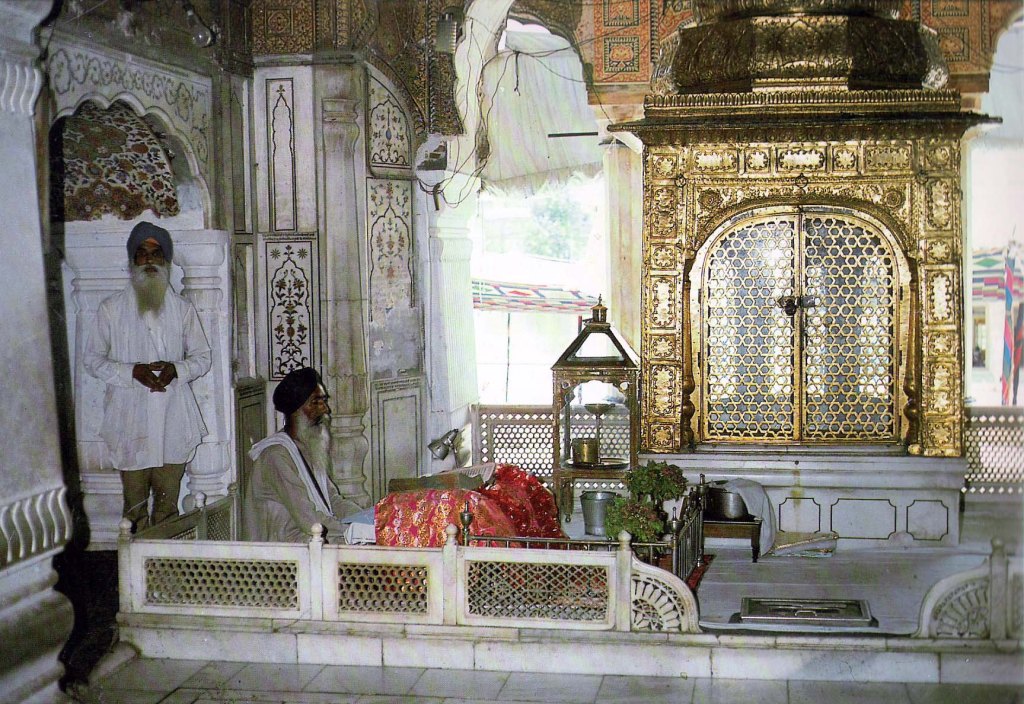
Sikh Altar. Courtesy: Creative Commons

On Sangrand, Sardar Ratan Singh and his wife went to the Gurudwara with a bagful of marigold garlands in the morning. The canopy of the Lord would be bedecked with flowers of the season on the first day of the new month. The response was cold when he handed it over to the priest who walked a few steps to place it on the wooden table near the entrance door. The prolonged silence seeded doubt in Sardar Ratan Singh’s wife who asked him politely, “Any problem, Babaji?”

“The Gurudwara Committee has ordered flowers should not be brought inside the hall.  But I will do the job of decorating. Put these on the railings, the front part at least, and the rest near the main door. I will manage if the Committee members object,” Babaji assured the couple who brought these garlands with much devotion.

Sardar Ratan Singh was unable to figure out how the Gurudwara Committee, headed by the elderly, could issue such a guideline. Sardarni Simran Kaur was anguished to hear these words from the priest who was supposed to be the custodian of the Rehat Maryada, the code of conduct for Sikhs.

“The guideline goes against the Sikh tradition. All Gurudwaras are decorated with flowers during Gurpurab and other festive occasions,” Sardarni Simran Kaur asserted, with hope that this comparison would suffice.

Babaji endorsed her statement before reiterating his stand: “What you are saying is correct. I have myself seen that in many Gurudwaras. But I have to obey the Committee rules. I will do it today since you were unaware of the order, but next time onwards please do not bring flowers to decorate the Guru Granth Sahib. They will hold me responsible for breaking the rules.”

Although Babaji conveyed the rules of this particular Gurudwara, it was agonising to hear the outright rejection of floral service by devotees. Not the one to be cowed down, Sardarni Simran Kaur transformed herself into a warrior-spirited lady and made herself clear: “Thanks for being kind enough to allow this today, but the Gurudwara Committee has no power to frame such laws. I am going to bring flowers and garlands again and decorate the canopy myself. I would like to see how the Committee members gang up and stop me from doing this sewa (service).”

Babaji understood that the lady was determined to proceed with her plans. He stood with folded hands, with lowered gaze, with a humble request to reconsider the decision. Sardar Ratan Singh gauged the growing discomfort in Babaji who feared losing his job if he failed to execute the orders of the Committee.

Assuring Babaji that they would not drag him into the tussle with the Committee, Sardar Ratan Singh said, offering his visiting card, “You can mention my name to the Committee and ask them to have a word with me. We are going to bring flowers next month as well. If they charge you, just dial the number on this card and connect me to the Committee.”

Babaji was relieved he had their contact number to give to the Committee in case he was charged with dereliction of duty. Somewhat enthused by their confidence, a fleeting smile appeared on his sullen face. He carried the garlands inside the hall while Sardar Ratan Singh and Sardarni Simran Kaur proceeded to bow down before the Lord and pray for strength to stand up against injustice. Babaji began to decorate the front part of the canopy and specified to the couple once again that the remaining garlands would be used to decorate the entrance door. It appeared to be a risky exercise for Babaji to cover the sanctum sanctorum with flowers as he knew the members of the Committee would corner him in the evening durbar.

That is exactly what happened that evening when Sardar Ajit Singh entered the Gurudwara. Anger was etched his face as the garlands brushed against his turban. He cast a furious glance at Babaji who sat fine-tuning his musical instrument. After genuflecting before the Lord, Sardar Ajit Singh swerved around and hurled his first question: “Who brought these flowers?”

“Sardar Ratan Singh,” Babaji replied promptly without looking at him. He muffled his simmering anger with a tight slap on the tabla.

“Did you not tell him the Gurudwara rule?”

“I told everything but he gave me the phone number, to forward to the Committee if they objected,” Babaji responded while fishing out the visiting card from his kurta pocket and flashing it before his eyes. Sardar Ajit Singh hated English and he never read anything written in the Queen’s language. Babaji further added without losing composure, “Sardar Ratan Singh’s wife said she would come again with flowers next month.”

This nugget of information weakened the resolve of Sardar Ajit Singh who had a bad record of losing arguments with women. A couple of months ago, he threatened to drive out girls who spoke English instead of Punjabi inside the Gurudwara premises. Since he did readings from the holy scriptures every day, he exercised special authority and treated the Gurudwara as his fiefdom, seeking submissiveness from people to support the rules formulated by the Committee, based on his recommendations.

Despite being well-versed with Guru Granth Sahib, septuagenarian Sardar Ajit Singh showed no signs of understanding the true meaning of Shabad, the words of God and crushing his haume or ego. Since he hailed from a money-lending family which  had diversified into respectable businesses like travel and transport, he knew his brothers would support his decisions and the sangat, the fellowship, would never mess with those who wielded political clout and muscle power in society.

Showdown was unavoidable. The Committee would definitely object to what Sardar Ratan Singh was up to. Sardarni Simran Kaur expected the misgovernance phase to be over at the earliest – preferably through amicable discussions.

From reliable sources, it was gathered that Sardar Ratan Singh was relocating to Punjab. The Committee wondered whether it was better to avoid a conflict. Most of the members suggested a wait and watch policy. But the secretary and the treasurer were adamant that punitive action must be taken otherwise this would encourage others to flout the norms.

Sardar Ratan Singh noticed another shortcoming when Babaji did not offer the traditional karah parshad of flour halva after Ardaas, the Sikh prayers. When he asked for it, Babaji said with a tinge of regret, “The Committee stopped making karah parshad. Allowed only on special occasions.”

The cauldron was stirred once again as Sardarni Simran Kaur resumed the discontinued practice of preparing karah parshad in the gurudwara every day. Sardar Satwant Singh, who had become the Secretary five years ago, implemented this order and his acolytes rallied behind him in support. Being diabetic, many members of the Committee could not consume karah parshad. Babaji was asked to stop this exercise as the turnout was thin every evening. Though this excuse was not justifiable under any condition, the sangat was made the scapegoat.

It was a momentous decision in a Gurudwara but the Committee members harboured no guilt. The practice started by Guru Nanak had been discontinued by his followers here.

Sardar Ratan Singh and Sardarni Simran Kaur came with the necessary ingredients to the Gurudwara next week. Offering ghee, wheat flour, and sugar to Babaji, she said, “From now on, we would like to do karah parshad sewa every day, every month, every year.”

Babaji did not know how to react. This was the second instance in one month that made him nervous. Although devotees chose to prepare it for a day or two, this was a unique case where the couple wanted to take the full responsibility of sponsoring karah parshad for the entire year. Babaji realised this would be another provocation challenging the Gurudwara Committee. One individual was trying to revive a tradition that was suspended by the Committee. Since they were not incurring any expenses, they should have continued to stay out of it. But the pesky members would get curious to know who was behind the resumption of karah parshad.

“Babaji, use words like ‘Gurmukh parivar’(Gurmukh family) during ardaas instead of mentioning our name because it is not proper to highlight that while we perform a service for the community,” Sardar Ratan Singh requested the priest.

It was a valid ground to hide this secret. Babaji accepted the ingredients and specified the monthly quota of ingredients to be supplied henceforth. Agreeing to deliver the requirements, she said, “Since the Committee has stopped making karah parshad, we see no point in informing them about it. But we know they will interfere in this matter again. Just like flowers are thorns for them, this one is going to prick them as well. It is not our intent to antagonise them. But if they make an issue out of it, we are definitely going to oppose them again. You can convey this to the Committee head in advance.”

Babaji looked confident of handling this better. When he served karah parshad the next evening to all, he was very happy he was doing the right thing after a long time. The sangat got parshad and looked blessed. Sardar Satwant Singh took a small bit reluctantly and his wife asked, “Gurmukh parivaar who?”

Babaji pretended not to hear it but the question was repeated. Left without choice, Babaji had to disclose the name of Sardar Ratan Singh. The karah parshad was stuck in his throat now. Instead of saying anything to Babaji, Satwant Singh communicated through Vimal Rai.

Babaji got a call late at night. He felt like dropping the call because it was time to sleep as he had to wake up early for the pre-dawn prayers, the amrit vela. But he changed his mind and answered the phone call. The voice on the other side hollered right away, “If anyone wants to do karah parshad sewa, tell him the Committee should be approached first as we alone decide the quantity. Tell him to pay us the money and we will take charge of making it. It has to be done through us only. No direct sewa allowed. You should mention us instead of directly taking up such responsibility.”

Babaji got miffed this time and said, “How can I stop a devotee like that? You should call him and tell him all this. I cannot. Sat Sri Akal.”

The priest knew this behaviour would be read as gross insubordination with dire consequences. But he had restored full faith in God because he felt God had sent Sardar Ratan Singh with a definite plan. He was mentally prepared for the worst now.

When Sardarni Simran Kaur came in next week with the supplies, Babaji made brave effort to defend the Committee and test her resolve, “Avoid taking the trouble of bringing this every week and instead give the money to Committee to prepare karah parshad.”

She sensed some kind of agreement had been reached and the Committee wanted to take charge. “Is there any problem if we bring the samagri? We maintain hygiene and purchase from the best shops. Besides, I want to do this on my own, just paying money is not enough. We do not trust the Committee. Whether they would use pure ghee or not, whether they would save money and divert it. There is enough ground for mistrust an suspicion. It is quite possible they would ask you to mix Dalda (vegetable oil) with desi ghee or reduce the daily quantity after taking full money. The Committee that discontinued parshad sewa cannot be trusted with its resumption.”

Babaji heard the candid reply from the lady without saying a word. The Committee had indeed made incorrect decisions with brute majority and imposed the same upon the sangat who did not expect this would happen.

When Vimal Rai came for the evening durbar, he heard Babaji’s reply. “I told them to contact you, to give the Committee the duty of making of parshad but they refused. They said it is the duty of the Committee to make it themselves instead of seeking money from us to make it. This tradition is followed in all Gurudwaras across the country.”

Vimal Rai was upset to hear this valid point. He came with the desire of singing Shabad Gurbani but the notes of harmony were lost. He delivered a spiel as the Sangat was yet to arrive: “Why doesn’t he understand we are Committee, here to look after everything. Where was he all these years? Why does he emerge now and try to run a parallel system? You can tell him our decision is final and binding. In this Gurudwara, karah parshad will be made with our permission only. Warn him not to try our patience. We have been merciful but we cannot let this rebellion take root while we sat quiet and observe anarchy spread like wild fire.”

Harsh words flowed out instead of ambrosial nectar. The situation was spiralling out of control, reaching a flashpoint. If he conveyed his message in the same language, Sardar Ratan Singh would retaliate. When the couple came for morning prayers, Babaji conveyed bad news to them. It was the most important task he was assigned to prove his loyalty to the Committee. He tried to look the other way to make it less hurtful: “Actually, the Committee has made new rules and these do not allow me to prepare parshad unless it comes as an order from the Committee. The order came last mid-night. Please excuse me and understand I am working under the Committee. My hands are tied.”

Realising these were sacrilegious words, tears welled up in his eyes. He broke down and disclosed that he was planning to leave this place as his salary was delayed every month and he was never paid in full.

The couple had full sympathy for the priest as he was conveying the words of the Committee. “I do not understand what sadistic pleasure they get by delaying his salary and deducting money? He has a family to feed, kids to educate,” Sardarni Simran Kaur urged her husband to take note of this injustice. “Don’t you think the Committee has crossed the limits by misbehaving with the priest who serves Wahe Guru every day? Our silence would mean participation, don’t you think so?”

It was a fact that Babaji was not accorded respect. There were several such instances. They shouted at him for trivial reasons and dominated him as much as possible. The Committee had deviated from the path of righteousness. After listening to his wife, Sardar Ratan Singh assured Babaji, “Will pursue these matters but you do not think of leaving this place. Our ancestors built this Gurudwara and it is our duty to ensure injustice does not happen.”

Feeling encouraged, Babaji spilled the beans, revealing the recent case of theft. The donation box was emptied but the locks were not broken. This mischief pointed to the fact that the members of the Committee who had the keys played a role in it. Besides, there was no official complaint lodged. The large sum of money collected throughout the year just vanished. Not reporting such grave offences meant there was some kind of tacit involvement.

In the afternoon, after lunch, Sardarni Simran Kaur urged her husband to raise his voice, and he said, “Such issues will not get community support. Haven’t you seen how these members stand with folded hands in front of Sangat? Who will believe us? Babaji will be the loser as they will sack him and bring another one next month.”

Sardarni Simran Kaur highlighted these points in her group and specified salary deductions. “Why does he not speak up?” The headmistress of a primary school wanted to know.

“He is under their employment. He was promised free gas and electricity connection but he has to bear these bills every month.”

“I will discuss with my husband and let you know,” she assured Sardarni Simran Kaur.

“Just make sure Babaji is not involved otherwise he will be in trouble. My husband says men should quit and women members should form the Committee,” Sardarni Simran Kaur added, to make her feel enthusiastic about the slew of changes on the anvil.

In the meantime, Sardar Ratan Singh started gathering more facts from those who lived near the Gurudwara. The inside stories always help. He spoke with a senior lady who stayed beside the Gurudwara and she gave a true account of the events inside.

“Many things are not right here but there is nobody to object. All are businessmen and linked to each other and they do not offend the rich. That is the story. Small fish afraid of big fish,” she summed up the story without mentioning the names.

“That does not mean the Committee should have the freedom to commit wrongs and get away with it. There has to be some accountability,” Sardar Ratan Singh reasoned.

“Beta, we have lost faith and have accepted this as the reality. We go to Gurudwara, pray, and come back. No discussions. They change timings, set their own programmes as per their convenience and the sangat is never involved. There are many improprieties but it is useless to discuss these now,” she gave ample indications.  

The cashier of the Gurudwara entered the premises while they were discussing. He wished her a loud Sat Sri Akal intentionally while ignoring Sardar Ratan Singh. She quickly made her move as he would report this interaction to other members of the Committee. With the glut of information indicating multiple misdoings, Sardar Ratan Singh went inside and bowed before the Lord seeking the strength to set things right. When he came home, he thought of possibilities. The easiest way was to bring in changes unilaterally – without involving the Committee.

Next day, both of them came to the Gurudwara with three large crystal chandeliers to light up the aisle, along with an electrician who cracked open the false ceiling right from the middle to access the electric points and hang them firmly. The entire operation was done within two hours. Babaji observed the smooth execution in stunned silence. When everything was over, Sardar Ratan Singh called up the Pradhan, the chief of the Committee, from Babaji’s phone and introduced himself, “Sardar Ratan Singh calling. I have installed three chandeliers in the hall without seeking your prior permission.”

 
The Pradhan could not utter a single word even though he was keen to teach the rebellious Sardar a good lesson in the recent past.

“Do you have any objection, Pradhan ji?” Sardar Ratan Singh asked in a stentorian voice again.

“No, no, it is guru ki sewa. Every person has the right to do it.”

“Exactly, Pradhan ji. Hope you really believe so.”

Babaji took the phone and clicked pictures of illuminated chandeliers and posted them in the group of Committee members along with the name of Sardar Ratan Singh typed in the message box. Babaji was glad to see the flood of lights inside, the dazzling shimmer inside big gurudwaras was here as well.

Thrilled, he extended a personal invite: “Performing special kirtan in the evening, please be here.”  

“Ok, Babaji, we will come in the evening,” Sardar Ratan Singh promised, “and if any member of the Committee worries about the spike in electricity bill, I am ready to bear the extra charges.”

Babaji kept wondering that the Pradhan who spoke angrily had turned into a meek lamb all a sudden. God’s miracle? One thing was clear that the Committee members did not shoulder individual blame. They preferred to hide behind their collective might. Since Vimal Rai was charged directly, he chickened out despite the golden opportunity to lambast the rebellious Sardar.

The hall was packed with Committee members and their families who were looking at the dazzling lights and pondering over the inflated electricity bill. The Pradhan was informed by Babaji that Sardar Ratan Singh would pay extra for the electricity consumed by the chandeliers.

Such a lit-up Gurudwara they were seeing for the first time in the small town. The Sangat was happy to see these chandeliers inside the Lord’s abode. They were curious to know the name of the donor. Sardar Ratan Singh rolled off the priest’s tongue with pride and the Committee members looked down. By this time, Sardar Ratan Singh and his wife came in and bowed before the Lord and then proceeded to sit near the door. The Committee members sat close to the Lord.

Babaji sang two new Shabads with full energy and the Committee members looked around, asking each other in hushed tones how much these would have cost. The guessing game kept them away from God and Shabad Kirtan.

When the Durbar drew to a close, Vimal Rai and Satwant Singh smiled at Sardar Ratan Singh and exchanged pleasantries in front of the Sangat to cultivate their good image. Was it beyond their power to switch off these chandeliers forever? Should they formulate a new law to stop Sewa by individuals?  Every evening they would switch on the chandeliers and get dazzled by the glare. The name of Sardar Ratan Singh would flash before them.

The reaction to assert hegemony came in fast. The Committee suspended the services of the tabla player using the excuse that the turnout was poor. When Sardar Ratan Singh noticed that the tabla player was not coming for more than a week and Babaji had to face difficulty because of the missing accompanist, he posed this question to Sardar Satwant Singh in front of a sizeable crowd, “Why did you stop the tabla player from coming in the evenings?”

 He was not expecting to be charged in this manner in front of so many people. He looked at the faces of his team mates but they were not willing to rise up in his support. He delivered whatever came to his mind in his ruffled state of mind: “The sangat does not come regularly, no use wasting resources that should be put to better use.”

“The sangat is blamed for everything. You stop karah parshad, the sangat is blamed. You don’t want flowers inside. What is going on in this Gurudwara? Rules are made to break rules. From where does the Committee learn this audacity? Even if one person comes to Gurudwara he should get karah parshad, he should get to hear kirtan. With all modesty, I am ready to bear the salary of the tabla player if the Committee cannot afford. But make sure he is hired soon. And if you want to do good, hike the salary of the priest so that he can engage an expert to train his son to play the tabla with him daily.”

Vimal Rai inched closer to Satwant Singh and pulled his arm. There were women who got to know many startling facts. The Committee was exposed in front of the Sangat for the first time in years.  

Vimal Rai cut in politely, “We will look into the matter and respond soon. Many charges were pressed against us, but it should not have happened. We are elderly and deserve respect from the younger generation.”

Satwant Singh and Vimal Rai went near the garage to have a brief meeting. This open mutiny meant this man had to be reined in somehow otherwise they would face further insults and all their misdoings and misuse of power would come out in the open.

Sardarni Simran Kaur tried to explain certain facts to women but the wives of the Committee members formed a separate group. The split was clear. How this face-off was going to pan out? Whether the priest would lose his job, whether the Committee would get stricter now? Speculations were rife.

The Committee decided to hold a Durbar with snacks and tea on Sunday mornings with the hope that this session would fetch big crowds. It was also an attempt to mobilise the crowds and keep up appearances. After Sukhmani Path, the prayer for peace, snacks like samosas and jalebis were served. But the turnout was not as expected. The next month, the Committee decided to hold langar every week. They hoped this would surely bring in more sangat. Even this bait was a damp squib.

Finally, the Committee started wondering why these arrangements failed to draw large crowds. Was it God’s will that the sangat would not be impressed with whatever the Committee did? Was this a retribution for their misbehaviour with Babaji in the past? The Committee ordered that more members of each family participate and that the appeal of the Committee should be honoured by the entire community. Forwarding messages was suggested as an effective way to make the sangat aware that the Committee was indeed doing a lot.

Sardar Ratan Singh continued with his makeover exercise. He donated chhatars to decorate the canopy. The gold and diamond plated pieces looked wonderful. When Sardar Ajit Singh came to pray and saw the chhatars, he was livid and charged Babaji with gross negligence, “The canopy cloth must be damaged with piercing in several places. Who will pay for its replacement?”

“Sardar Ratan Singh has said he would donate a new Chanani next month,” Babaji said coolly. He was inside the Gurudwara otherwise he would have grabbed his neck for uttering that vile name. Sardar Ajit Singh did not sit for Chaur Sewa and stomped out of the hall.

Sardar Ratan Singh and his wife continued making visible changes inside the Gurudwara and the Committee was irritated by all the new installations without their consent or permission. Sardar Ajit Singh turned competitive and donated three chairs for the elderly. Sardar Ratan Singh matched this move by placing three velvet cushions on the chairs. Babaji was given a new comfy mattress with frills on the bed cover for the wooden diwan where he sat for Kirtan every evening. Sardar Ajit Singh was miffed but he could not say anything. He kept asking himself: Why is this man after us?

In less than three months many things underwent changes and the Committee became jittery about losing control. It tried to do new things to win the trust of the sangat. But the sangat had seen this Committee for years and the sudden switch to action mode was not difficult to comprehend. It was clearly to suppress the dissident Sardar Ratan Singh, who enjoyed the support of the sangat for the makeover that made them feel good. Besides, they were happy that a single person had stood up and fought against the Committee. All the energies were invested in the task of painting Sardar Ratan Singh as a villain who did not respect the senior members of the Committee. Sardar Ratan Singh and his wife had quietly overturned their rules and set new things in place.

The pipe of the wash basin was broken. It remained like that for months but now it was replaced quickly. Satwant Singh approached every single member to seek feedback regarding the efforts to spruce up the Gurudwara premises. The cashier was engaged with the task of collecting more funds.

One evening, they planned to approach Sardar Ratan Singh for monetary assistance as he was spending a lot on the upkeep of the Gurudwara. His response took them by surprise: “I am doing sewa for the Guru and that is all. I do not intend to pay money to any Committee.” His refusal to shell out big bucks inflamed them. Sardar Ajit Singh went ballistic, “We are committee members and you do not acknowledge us. The Gurudwara is under our control.”

“Yes, the Gurudwara is under your control, but not the Lord. How can you stop us from doing sewa? What kind of devotees you are? Are you Sikhs?”

They chickened out one by one without answering him. It was clear the Committee would make it a rule that Sardar Ratan Singh would not be allowed to do sewa on his own.  

Next morning, a big truck with marbles arrived, followed by sand and cement bags. A team of masons arrived within hours. The Committee was challenged to stop him when this process started. Sardar Satwant Singh and Vimal Rai were asked to be present.

“You have to answer an important call from Amritsar. Come to the Gurudwara,” Sardar Ratan Singh called up the Pradhan using Babaji’s phone.

Satwant Singh and the cashier came along with Vimal Rai to boost his morale. The cashier was asked to answer the phone but ultimately the Pradhan had to connect.

He heard a faint voice from the other side in Punjabi seeking confirmation they were Committee members. The name of Sardar Ratan Singh was mentioned and the proposal to send a representative was conveyed to the Committee head. Vimal Rai could not muster the courage to seek identification of the caller or press for the purpose behind sending a representative. But he understood he was some authority and the representative was coming here to look into the affairs.

Vimal Rai stared at Sardar Ratan Singh for going this far. He informed his friends that an authority was coming here soon. Satwant Singh and the cashier looked worried about the external interference. Sensing that difficult times were in store now, Vimal Rai sought relief on health grounds and tendered his resignation from the post of Pradhan.  

Within a week, a senior person arrived and asked specific questions about the management of the Gurudwara. Babaji was asked to explain fearlessly and he disclosed how the Committee was mishandling everything. Based on the facts shared, it was clear that the Committee could not answer many questions. So, the visitors recommended dissolution of the Committee and the formation of a new one.

Many women wanted Sardar Ratan Singh to be the new Committee head, but his wife, Sardarni Simran Kaur explained, “We do not want power for ourselves. My husband hates it. But we would certainly like the Gurudwara to be managed by true devotees who pray, do the Nitnem, understand Baani, and lead honest lives.”

The task of finding such devotees was not Herculean as Babaji had already shortlisted two women who did Sewa with selflessness. They were made the joint heads of the new Committee and it was hoped the Gurudwara would not be mismanaged henceforth. Sardar Ratan Singh and his wife were now relieved of the tension.

Babaji was asked to make karah parshad every day and the diwan had to be florally decorated. A new tabla player was hired and the durbar was now teeming with devotees. Many people who had stopped coming to Gurudwara after a former priest was manhandled by a son of the Committee member were now back in full strength.

Satwant Singh, Ajit Singh, Vimal Rai, and the cashier also resumed regular visits to the Gurudwara. But they sat aloof, huddled in a corner. Stripped of power, they were now ordinary sangat who did not have the right to order other people to do sewa.

Sardar Ratan Singh and his wife would be leaving for Punjab from Bengal forever, and so they hosted a langar in memory of their parents. There was a huge crowd on the day of langar. A big change was introduced. The newly-formed Committee allowed the poor people to come in and sit beside the well-off people in true Sikh tradition. Without any discrimination of caste or status. The closed gates of Gurudwara Khalsa Diwan for the poor on langar* days were now thrown wide open.

*Langar is a communal Sikh Kitchen which feeds the poor and rich alike.

.

Devraj Singh Kalsi works as a senior copywriter in Kolkata. His short stories and essays have been published in Deccan Herald, Tehelka, Kitaab, Earthen Lamp Journal, Assam Tribune, and The Statesman. Pal Motors is his first novel.  


PLEASE NOTE: ARTICLES CAN ONLY BE REPRODUCED IN OTHER SITES WITH DUE ACKNOWLEDGEMENT TO BORDERLESS JOURNAL. 


Categories
Stories

Faith and Fortune

By Devraj Singh Kalsi

Sardar Randhir Singh wears the turban and a steel bangle – the symbols of Sikh faith. But he does not believe in the Sikh Gurus or the Guru Granth Sahib. Though he identifies himself as a Sikh, he does not visit any Gurudwara. When his son tied the knot, it was the last time he made a reluctant concession. When his son purchased an apartment, the holy book was brought inside during the housewarming ceremony for a few hours one afternoon.    

“When you do not have faith in the holy book, when you follow a cult Guru instead, was it necessary for me to marry in a Gurudwara or carry the holy book for the housewarming ceremony?” Shivjeet asked his father to clarify the duality.   

Sardar Randhir Singh wasn’t prepared for his son to pose this question to him. He couldn’t explain why this was unavoidable. He closed his eyes and scoured the maze of the distant past, remembering his own youthful days when he lit incense sticks and prayed before Guru Nanak, seeking divine intervention to bail him out of debt.

Shivjeet waited for an answer. He had to frame something to the best of his abilities. He scratched his dyed beard and fumbled to explain, “Beta, the entire community is involved and they raise too many questions and doubts.”

“So, you avoid being isolated in the Sikh community. But it confuses us. We do not know the path to follow,” Shivjeet spoke like a schoolboy who had deviated from the right path and was seeking guidance.  

“No, the path is clear. You follow the Living Guru and make your partner walk along the same path. I will take you to Babaji when he visits the city for discourse next month. Remember, we are Sikhs, but we do not feel like Sikhs. At least I do not. You are an engineer, my son, apply your intellect. How can you rationalise the holy book to be the embodiment of Living Guru? Many educated Sikhs are wondering, wandering, and consulting Babaji for salvation. Our spiritual Master is very much alive, and we reject what the Sikh clergy says. Beta, this is just between the two of us,” Sardar Randhir Singh tried his best to pass on this balancing act as the way forward.

The brief conversation on religion was important. Shivjeet was married into a family that believed in the same cult Guru. This was in fact one of the prime reasons why this marriage was formalised. But the daughter-in-law, Nikita, was never comfortable with the idea of Sikh rituals and customs being followed at home. She complained to Shivjeet that it was unnecessary to bring the holy Granth home since none of the family members believed in it: “When we do not subscribe to what is written in it, what is the need of carrying the Granth on your head and bringing it home? Just for the sake of community?” she asked him while stacking up the washed clothes in her wardrobe.  

“I raised the same point of getting rid of this farce with Papa and he explained the logic. Perhaps he is right,” Shivjeet replied, making her jittery about losing her ground.

“Let me know what new logic he applied. It is sheer hypocrisy – nothing else. Our Guru is Babaji – a living one – and we married because of common faith in Babaji. At least your family said it vocally at the time of our marriage. But now your father brings home his hardcore Sikhism from time to time for the sake of relatives. I should have listened to my parents and held griha pravesh, with Panditji performing the puja here,” Nikita trailed off like a seasoned strategist.

“No, no, Papa is not a believer in the Granth. You got it all wrong. To avoid questions and grilling from relatives. You know well we do not visit any Gurudwara and many people keep asking us why we are not present there during important Sikh festivals. This exercise appears an attempt to connect with them. If more Sikhs turn rebels, then it becomes easier to explain our position and reject tradition.”  

“Tell your father clearly, I am not going to raise my son as a Sardar. No way. Your father should be the last Sikh in our family. After that, no Sikhism in our lives, remember that. It is good you are not a practicing Sikh and you do not wear the turban. So, make sure our son also stays away from it and sticks to the path shown by Babaji. If your father intends to make our son wear turban when he grows up, please tell him in advance that we have jointly decided not to raise him as a Sardar. His formal name will also not be some Rajinder or Jatinder. I think we have decided that already, Ambar is nice,” Nikita poured forth to make her stand clear on this issue and expected her husband to stick to that. 

“No need to get hyper, I also do not want our son to be identified as a minority. With turban, you are considered dumb, subjected to all kinds of vulgar jokes. And I hate that. I snipped my hair long ago in high school because of that reason.”

“Was your father okay with that? I mean he could not do it for himself?” Nikita cut in, wondering how the identity issue panned out.

“I told him my friends make fun. He said okay — go ahead, become clean-shaven. There was no discussion or argument,” Shivjeet explained how easy it was for him to chop off his locks. “However, some relatives did object and criticise but the blazing guns soon fell silent when he passed the buck on to me. It was my hair, and I alone had the right to decide what to do with it. He posed helpless in this matter.” 

The next morning Sardar Randhir Singh was ready with his wife, Kulwant Kaur to go to the Dera for community service. He was in charge of shed construction, to oversee its completion before Babaji arrived here to give darshan to his burgeoning tribe of followers. His wife was also thinking of making the son take the spiritual path early, while they were alive.

“Since he stays away for job purpose, he should have Naam from Babaji. I am sure Nikita will also agree,” Kulwant Kaur said, seeking his reaction. “Let us get it formalised this time. I will discuss with her in the evening.”

When they returned home, she asked Nikita to sit with them for a while. “Beta, I have some important matter to discuss with you.”

“Yes, Mummyji,” Nikita said, showing submissiveness without any design.

Beta, we thought both of you should take Naam now. With Babaji’s grace, he has stopped drinking now,” Kulwant Kaur laid the foundation.

For Nikita, this was really good news but she showed fake concern. “I have no issues but after taking Naam, baptism strictures have to be followed. No chicken or meat. Will he turn vegetarian?”

“Turning him vegetarian is all up to you, beta, he will eat whatever you offer and obey your orders,” Kulwant Kaur entrusted this responsibility to Nikita who felt an overwhelming sense of power. “If you are ready, it is enough. He can be moulded.”

Nikita understood her mother-in-law knew his weakness well. It made her realise she had been doing it all these years. Kulwant Kaur was restrained by Sardar Randhir Singh after Shivjeet got married, to let Nikita wield more control. It was a challenge for the mother to overcome the urge to be protective about the only son, but she believed Babaji gave her strength to give up attachment.    

While serving dinner, Kulwant Kaur took the centre stage. Passing the bowl of Rajma, she said softly, “Puttar, take Naam when Babaji comes next month. Both of you.”

“Mummy, I have not thought of it yet,” Shivjeet replied quickly, looking at his wife, gauging her facial reaction to his words.

“Nikita also feels so,” his mother added, to make it easy for him to decide.

“You will have to become totally vegetarian, no meat, no fish,” Nikita said.

He looked at her and wondered if she was actually in favour of taking Naam or not. She had not said anything to him.  

Seeing the blank look, Nikita said, “Yes, Mummyji, we should go for Naam. I have already given order for big portraits of Babaji, framing them for the living room wall.  

Sardar Randhir Singh slowed down his mastication to pick up a cucumber slice from the salad plate and congratulated her, “That’s wonderful, beta, just tell him golden border frame must. So it is final then. Both of you are taking Naam next month. Right?”  

Shivjeet was unusually quiet at the dinner-table. His parents expected a vocal, resounding yes. Giving up his favourite cuisine was a sacrifice he was not prepared for yet.  He knew his father turned vegetarian after the age of sixty, after enjoying all kinds of meat including venison and pork during his hunting expeditions. He was in his late thirties and would lose the chance to indulge in meat-eating forever. This was no challenge for his wife as she was a strict vegetarian like her parents.

Shivjeet broke his silence. Mustering courage, he said firmly, “Will give it a thought. Nikita can go ahead, no issues.” Taking a separate stand for himself surprised Kulwant Kaur who hoped he would do what Nikita would ask him to do. The streak of individualism baffled Nikita who felt her power was tamed by his assertion.

This was not the kind of response Sardar Randhir Singh was expecting from his submissive son but he did not press further. Both of them hoped Nikita would persuade him to accept the proposal.  

At night, after two bouts of making love, Nikita said, “You are away from home most of the time, turn vegetarian when you are here, but eat outside.” This fabulous offer of infidelity came as a surprise from her. A horny stud who came home once in three months was not likely to abstain from sex for that long. Was it a trap by Nikita to know how comfortable he was with this dual arrangement? If he agreed readily, would it give any hint he was disloyal?

Covering her bosom with the floral blanket, Shivjeet peered out of the large window and said, “But this is cheating. Taking Naam and not following the guidelines would be worse. Being a Sikh is better for two reasons at least. Whiskey and chicken. You don’t have to give it up.”

There were many things Shivjeet did outside but his image at home was squeaky clean. He was projected as a man of principles at home. He rejected her ideas as she would suspect he followed flexible morality. He was not prepared to raise doubts in her mind as she would suspect his morality to be wobbly.  

While the family was united in following Babaji, Sardar Randhir Singh knew his elder daughter, married into a Sikh family, was still following the Granth Sahib. He had tried to convince his son-in law but he was unsuccessful on repeated occasions. He hoped he would manage to convince his daughter but not the son-in-law. He wished he should face some challenges and ordeals in life so that he can suggest Babaji as the solution provider.  

The next day, Kulwant Kaur called up their daughter around noon. She got a message when the call was dropped. “In gurudwara,” Kulwant Kaur read the message and showed it to him.  

“What is she doing in gurudwara? She is my daughter,” Sardar Randhir Singh thrummed, losing his calm, and stabbing the slice of bread with butter knife.

“But she is married now and her family believes in something else. Why do you always blame her? We should damage our ties with her,” Kulwant Kaur defended her elder daughter.

Shivjeet walked into the living room, drying his wet face with a towel and spoke in defence of his elder sister though he never liked her or her husband. Sardar Randhir Singh was hurt she was in a gurudwara. When she called back later in the day, his first complaint was related to her gurudwara trip.

“Whenever your mother calls, you are in Gurudwara. Has your husband shifted there?” The acerbic comment was not what a true believer delivers.  

During the telephonic chat, Kulwant Kaur specified that her brother and his wife were taking Naam. “You also come and take Naam along with them,” Kulwant Kaur offered, to please her husband sitting in front though she knew it was just another weak attempt that would be rejected by her elder daughter.   

Guru Granth Sahib is our only Guru and we believe in Nanak,” her elder daughter said loudly and clearly. Sardar Randhir Singh snatched the phone and began scolding her. Shivjeet sat nearby to observe his father fuming at his elder daughter. He never spoke to his son like that. For daughter, the patriarch had a different set of rules.

“Have you gone mad like that crazy husband of yours? How can a book be God or Guru? Answer me that,” Sardar Randhir Singh lambasted her, his flared-up nostrils drawing the attention of his son who drew vicarious pleasure from this feisty exchange.

“Papa, I do not argue on matters of religion. You are free to do whatever you like. We also have that freedom. No question of force. Jo simrey jin simraye,” Harpreet wrapped it up wisely.

 “Yes, I know the bhajan. Don’t teach me, I am your father.”

Sardar Randhir Singh hollered when Harpeet rectified him by saying it was a Shabad, not a Bhajan. Kulwant Kaur grabbed the phone and ended the conversation abruptly, “Acha, beta, talk to you later, bye, love you beta.”

Acha, why do you get so worked up on this issue? We posed as Sikhs when we married her in that family and they believed us though we were not practicing Sikhism. We hid this fact. They are okay with what we believe in and never influence us, so we should also let them do what they like,” Kulwant Kaur tried to sound fair.

Harpreet had many times thought of settling it differently but her husband stopped her from firing salvos that would give Nikita and Shivjeet a valid reason to stop her entry in their home forever. 

“This is precisely why that son-in-law is still hopeless. I regret the day I chose him for my daughter. Let him surrender to my Babaji, seek mercy and then see how he will progress in career like my son. That chap does odd jobs and behaves like a great artist. He is all fake, a big nobody, lives off ancestral property and lectures on Sikh faith. Does he understand the value of hard work? I am sure she will leave him and also give up his faith, end her unhappiness and come back to our Babaji to find bliss. Babaji will definitely bring her to the fold one day and then we all will have the same Guru.”  

“But has she ever said she is unhappy there?” Kulwant Kaur asked.    

“He does not let her come here. He does not meet us. What kind of a relationship is that? In their own world. Nobody else matters. This is no Canada or London. My brothers and sisters all are together. One big family. Even today we call up once every day.”

“I know how close you all are,” Kulwant Kaur said sarcastically, to stall his train of thoughts.

“You could not sell the joint property or convince your brothers to sign in your favour. Nobody likes you but nobody says that in front of you and you think they respect you. Stop believing them.”

“Babaji will decide when it is the right time. I know I have to sell that property and give the proceeds to our son to repay his home loan obligations,” Sardar Randhir Singh revealed his strategic mind in front of Shivjeet who was listening attentively to their conversation.  

Shivjeet could not discuss anything with his elder sister and Nikita also maintained formal ties with her, to keep her at a safe distance from her domestic world. She did not like any interference in her life and had advised Shivjeet to minimise contact with his sisters.  

When Shivjeet went upstairs and told Nikita about the phone chat with Harpreet, she called up her sister-in-law and cleared the ground, “Hello Di, when are you coming? It has been long since you were here. Have some good news to share. Both of us are planning to take Naam when Babaji comes next month. Nice if you could also be with us.”

There was enough gunpowder in her words to trigger an explosion but Harpreet always maintained a stoic calm. Though Nikita knew Harpreet she was not in pursuit of cult gurus and deras, she poked her on this ground to keep the kettle on the boil. 

Being of a wiser strain, Harpreet said, “It is not possible for me to be present there, but I respect your decision and wish you both all the best. Shivjeet heard this exchange but he did not talk to Harpreet except on birthdays and anniversary occasions.

Nanak taught the need to respect all faiths and believers. Harpreet sincerely followed that but she did not think it was right to leave one fold to embrace another or experiment with faith. Religion came to her from parents and disowning it would be disowning parents. Being the eldest child, she had faint memories of her mother doing paath at home. Her father also paid obeisance to Guru Nanak but that was all long ago, more than two decades. A lot had changed in her family since then. Setbacks had shaken the foundation of faith and led Sardar Randhir Singh away from the Sikh fold. It was like a termite attack that hollowed him inside.  

Since the in-laws of Harpreet and his extended family were sincerely following the Granth Sahib as their guru, it was impossible to make them change their path. Her parents said she lacked the power to convince her husband, to change her husband’s mind but she never tried to do that or exercise undue influence. Her husband was following the Sikh norms and she saw no reason to interfere in this aspect and ruin her family life. She was pretty surprised when Shivjeet called her for advice one afternoon.

“Di, all are saying I should take Naam from Babaji but I am not too sure. Can I talk to Jija ji for a minute,” Shivjeet pleaded.

“Oh sure, wait, just a minute, calling him, Suno –” Harpreet summoned him from the reading room. 

Her husband, Daljeet picked up the phone and listened to the full story. He felt tempted to discourage Shivjeet from going ahead. But when he said he was ready to take Naam, it was clear it was just a matter of time and he wanted his help and guidance to find some ways to delay by a decade.

“May I know the reason if it is not too personal, brother.”
Jiju, you know this is not the age to take up the spiritual path. Nikita wants me to take it up though I am not confident. She wants to be sure we have given up Sikhism forever.” He was hopeful that Daljeet would suggest some way to wriggle out of this messy situation for some years at least.

“Since you are okay with joining a Dehdari Guru and your wife is also on the same page, you should do the needful at the earliest,” Daljeet played it safe as he did not wish to worsen his ties with in-laws.

When the call ended, Daljeet spoke his mind.  

“Now your entire family has made an exit from Sikhism. So this is why they did not want a Sikh daughter-in-law.”

“Many Sikh families are now chasing living gurus. It is rather unfortunate,” Harpreet expressed grief and appeared helpless.

“Exactly, these ‘hidden’ devotees are more dangerous for the Sikh faith. They are destroying us from within,” Daljeet added. “These Babajis travel business class, have limos and grab land of villagers to build posh commune. It is a big scam, business idea mixed with religion.”

Harpeet did not argue and let it pass with a mild nod. 

“Next month, there is Mummyji’s death anniversary and there is langar scheduled in the gurudwara. Should I invite my family?” Harpreet sought his permission.

“It is a mere formality. Your parents will not enter gurudwara. Besides, their Babaji is coming next month and they will be busy with their programme,” Daljeet explained the trajectory. 

There was a sudden development as the cult guru cancelled his programme because of court summons regarding a money laundering deal. Most relieved was Shivjeet as the tension of taking Naam was over.

 “Is there a superior power than Babaji helping me out?” Shivjeet thought when he first heard the news from his disappointed father. 

Showing fake interest, Shivjeet asked his father, “When will Babaji come next?”

“Not in the next couple of years. He is going on a world tour – to Singapore and the US soon,”  Sardar Randhir Singh was bereaved to make this announcement.

He cut grass inside the Dera premises to prepare the ground and his hard work was all waste now.  It would again grow to knee-length in two years.   

Shivjeet went to the terrace to share this good news with his elder sister. He did not want any member, not even his wife, to get an idea of unbridled happiness. Harpreet told her brother of the death anniversary in the family but did not ask him to be present. 

Preet did not want her father and mother to be present on the occasion of death anniversary as their sacrilegious behaviour would be tough for her. Besides, she did not want them to poison her ears with repeated proposals to switch to Babaji. Harpreet was happy with formless worship.

The last time she offered karah parshad to her mother, she said it would increase her sugar level and her father refused to have it as it would block his arteries because of ghee (clarified butter). It was surprising for them to hear their daughter prepares karah parshad at home after reciting Japji Sahib.   

When she sent her video of making karah parshad, her mother messaged her nothing, just a smiley emoji. Nikita also sent a smiley.  

When her father heard that, he mockingly said he must talk to her now before she becomes a paathi or raagi.

Nikita dialled her number. Being the connecting link between the father and the daughter thrilled her.  

“Yes, I am learning shabad kirtan and soon sending you video recording of singing shabads in the gurudwara,” Harpreet shared this update with her father who was not happy to hear that but did not say anything to discourage her. He gave the phone to Kulwant Kaur who performed the duty of congratulating her daughter. She knew Harpreet was interested in singing from childhood but Sardar Randhir Singh never allowed that as he did not consider it to be a good pursuit.    

Within a few days, Harpreet recorded one shabad at the local gurudwara and sent the video to her family. When they viewed it, her father had the same mocking tenor while suggesting a career option, “Tell her try Bollywood. These won’t make her famous.”

Nikita messaged the exact words to Harpreet who was hurt to read what her father said. Why was it so hard to utter a word of genuine praise for his daughter when he went gaga over everything his son achieved?    

Her faith was shaken and she wept and prayed to Wahe Guru that He should do some miracle in her life so that these dirty taunts dry up forever.  

Her prayers were answered when she soon got the chance to record a shabad for a Punjabi film. Daljeet had uploaded her video on Youtube and it caught the attention of a Punjabi film-maker who wanted her voice recorded. Sardar Randhir Singh made fun of her shabad singing and the same shabad opened for her the floodgates of success. Her voice found appreciation across the industry and she got multiple offers to sing in Bollywood.

The situation at home changed dramatically for her. The father who ridiculed her was now taking full credit for motivating her.

“See, I told you, she should try Bollywood. It worked. She is my daughter.”

He waited for Nikita and Shivjeet to second him but they were unusually quiet. They never imagined Harpreet would take the lead and prove to be more successful than her brother. She was already a celebrity in her own right. Nikita thought it prudent to be her friend as she would introduce her to her friends in the film industry and she could also fulfill her dream of opening a design studio using her contacts.   

The vocal orchestration of Babaji being superior was finally over. Kulwant Kaur never mentioned Babaji again in front of Harpreet. Sardar Randhir Singh never ridiculed her faith. Offending successful people is an offence and nobody does that. Harpreet and Daljeet thanked Wahe Guru for connecting with the masses. They organised Akhand Paath at their residence to thank the Supreme Lord and invited her family. Surprisingly, they all turned up in full strength.  What was more surprising was Sardar Randhir Singh bowing down before the Holy Granth. The sudden meltdown was attributed to her grand success. Perhaps he had never received such benevolence from Wahe Guru.   

Harpreet was now in a position to help her father and family. She asked her mother if their ancestral property, jointly owned, had been sold. She asked her how much they were expecting. He quoted a fanciful figure he never expected to get. Harpreet expressed the desire to buy his share in the property. Since it was more than the market price, he agreed to transfer it in her name. When Shivjeet heard this from his father, he was glad he would now repay all his loans.  

The entire family was thankful to Harpreet and terribly ashamed of how they treated her and her husband.

Sardar Randhir Singh had been struggling to sort out the property issue but God made it happen through his daughter. Harpreet was happy to see her parents. Seeking karah parshad from the gurudwara, they promised that their grandson would be raised as a Sikh. Nikita now had no problem with that – indeed she was smarter than the chameleon. She wanted to meet film crowds and hobnob with them.

Harpreet and Daljeet were both happy that Sikhism would be revived in Sardar Randhir Singh’s house after almost three decades. The property matter was one prime reason why he drifted away and after a long wait of twenty years, the problem was finally solved amicably with handsome profit coming his way. Sikhs leaving the fold because of materialistic issues return once these issues get resolved. A transactional and reciprocal relationship with Wahe Guru is reflective of their mindset.

Sardar Randhir Singh and Kulwant Kaur started visiting all the Sikh temples and went on pilgrimage to convince their daughter they were really back in the Sikh fold. When Harpreet reminded them that Babaji was coming to the city after a long gap of two years, they feigned ignorance.

Sardar Randhir Singh said, “We are now totally gurudwara focused, beta.”

There were media reports of Babaji being involved in a big scam but he took no interest in the matter, made no attempt to reject it as a conspiracy to defame their Spiritual Master. Perhaps there is no smoke without fire prevailed over his mind.

“God knows the truth. But Nanak is our rakha tey palan haar, our protector and caretaker. He alone can forgive our sins, dear.”

Kulwant Kaur was excited when Harpreet proposed a visit to Kartarpur corridor. Shivjeet and Nikita were also ready to go wherever their elder sister would take them.  

“So let us get our passports ready, beta,” Sardar Randhir Singh declared with enthusiasm, while checking out the validity of the document.  

Glossary

Beta/Puttar – Son

Guru Granth Sahib – Holy text of Sikhs

Griha pravesh – A ceremony for entering a new house

Panditji — Priest

Puja – Payer

Gurudwara – A Sikh Temple

Sardar – A follower of Sikhism

Dera – Camp or a stage set up for viewing

Darshan — An opportunity to see or an occasion of seeing a holy person or the image of a deity. (Oxford Dictionary)

Naam – Initiation

Jo simrey jin simraye — They alone remember Him in meditation, whom He inspires to meditate, a sikh hymn

Bhajan/ kirtan – Devotional songs

Shabad – Hymn

Achha — okay

Paath – Reading the holy texts

Jija ji – Brother-in-law

Suno – listen

Dehdari guru – a living guru

Langar – a Sikh communal free kitchen

Karah parshad – whole wheat dessert offering

Japji Sahib – Sikh scriptures

 Ragi – a Sikh religious singer

Wahe Guru – God described in Guru Granth Sahib

.

Devraj Singh Kalsi works as a senior copywriter in Kolkata. His short stories and essays have been published in Deccan Herald, Tehelka, Kitaab, Earthen Lamp Journal, Assam Tribune, and The Statesman. Pal Motors is his first novel.  


PLEASE NOTE: ARTICLES CAN ONLY BE REPRODUCED IN OTHER SITES WITH DUE ACKNOWLEDGEMENT TO BORDERLESS JOURNAL.