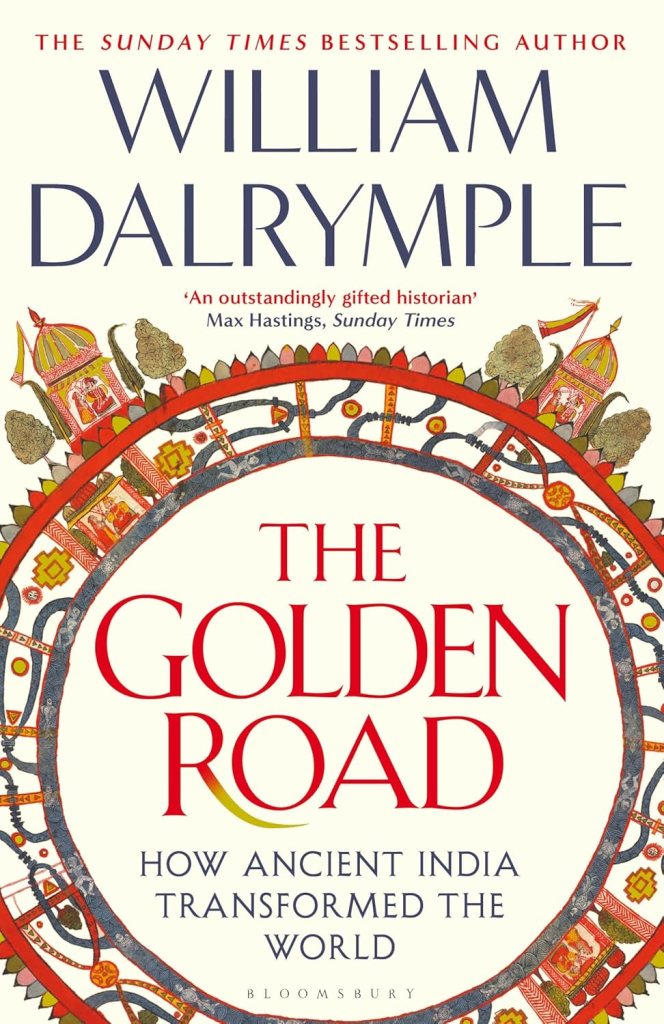
Farouk Gulsara discussed William Dalrymple’s latest book
Growing up in the later part of the 1970s, kids of my generation were drilled with stories that India was a subcontinent of poverty, filth, and pickpockets. Even our history books taught us that it was a land of darkness, living in its myths, superstitions, and cults, waiting to be civilised by the mighty European race and their scientific discoveries.
That was what was impressed upon us as we sauntered into adulthood. The media did not help either. With eye-catching news like a particular Indian Prime Minister having his daily dose of gau mutra[1] for breakfast and another ousted after thirteen days of taking oath as the Prime Minister, India was made out to be just another third-world country. Then came the 21st century and the turn of tides. Locally bred academicians started teasing deeper into India’s forgotten history. They started doubting the self-deprecating history that was taught to them by leftist historians in the textbooks.
Like many historians before him, historian William Dalrymple, in his latest book, The Golden Road: How Ancient India Transformed the World outlines the importance of India as a cradle of knowledge that peddled wisdom to regions near and far. Its scientific knowledge was far ahead of its time. This know-how was put into practice and spread via trade routes. Their port of entry received not just their goods but also their culture and way of life.
Enduring attack after attack from foreign invaders, Indians had already forgotten their glorious past by the time of the British Raj. A tiger hunting expedition inadvertently brought British hunters to various beautiful cave carvings and Buddhist sculptures. That kind of rekindled India’s history, which had disappeared from the Indian imagination.
India had been a crucial economic fulcrum and a civilisational engine in early world history. As early as 31BCE, Indians had learnt to manipulate the monsoonal winds to steer their ship to the West to the prosperous kingdom of Ethiopia, Egypt and subsequent access to the Mediterranean. With their mammoth merchant ships, they transported pearls, spices, diamonds, incense, slaves and even exotic animals like elephants and tigers in exchange for gold. Trade favoured India so much that a Roman Naval Commander, Pliny the Elder, lamented the unnecessary spicing of the food and the almost transparent Indian fabric that left nothing to the imagination. It is said Buddhism reached the shores of Egypt through these ships. The Christian monastic way of life is said to have been influenced by these monks.
With seasonal monsoon winds, Indian ships brought not just trade but philosophy, politics, and architectural ideas to Southeast Asia, China, and even Japan. All this cultural allure and sophistication did not happen through conquest. Sanskrit was the language of knowledge and a conduit for spreading knowledge.
Buddhism emerged in the 5th century BCE as an alternative to caste-centred and animal sacrifice-filled rituals. Unlike Jainism’s strict austerities, it offered a middle path. Due to King Ashoka’s untiring efforts, Buddhism spread beyond its borders. Contrary to the belief that Buddhism promotes an impoverished way of living, early Buddhists drew interests (and resources) from the merchant group, as evidenced by the Ajanta Caves’ findings. Buddhism drew many Chinese scholars to India’s centres of higher learning in Nalanda and Kanchipuram in the South to get first-hand experience reading Buddhist scriptures in Sanskrit. India’s universities later became the template for other varsities the world over.
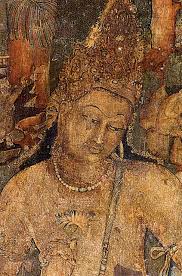
Ajanta CavesAjanta Painting inside the caveFrom Public Domain
India’s cultural influence on South Sea Asia is phenomenal. Stories from Indian epics, Ramayana and Bhagvad Gita, are told and retold in children’s stories, plays and cultural art forms. Their ruling elites were Hindus. The biggest Hindu and Buddhist temples are not in India but in Cambodia and Java, respectively, as Angkor Wat and Borobudur. Marvellous stony statues and temple are similar to those in India. At a time when the Byzantines were presiding over Europe, the Suryavarman clan was ruling a Hindu Empire so huge it would dwarf their European counterpart.
The 5th to 7th century of the common era was the golden age of Indian mathematics. Between Aryabhata and Brahmagupta, their knowledge of the nine-number system (and zero) brought them the know-how of negative numbers, algebra, trigonometry, algorithms and astronomy far ahead of their time. They understood that Earth was a sphere spinning on its axis, about the eclipse, gravity and planetary rotations. The Indians even built a space observatory tower in Ujjain to study constellations and devise a solar calendar. The idea of a prime meridian arose from here.
In the 8th century, the Abbasids exerted control over the Afghanistan region through treaties with local viziers. At that time, the Bamiyan region in Afghanistan had over 460 monasteries and 10,000 monks. A member of an influential Buddhist family, the Barmakid, converted to Islam to establish his family in the Abbasid fold. They brought Indian medicines, texts, and scholars with them and encouraged and promoted Islamic engagement with the East. Sanskrit texts were translated into Arabic. It is said that the Barmakids were instrumental in the building of Baghdad.
The Islamic hegemony spread, as did the scholarship it had built.
The Bamakid-Abbasid liaison met a tragic end due to palace power dynamics. The Abbasids started looking at the Romans for inspiration. Many Europeans were drawn to the Golden Age of Islam. Many texts were translated into Latin. Toledo of Andalusia introduced the science of timekeeping from Ujjain to Oxford. A particular young Italian named Leonardo of Pisa picked up the beauty of Mathematics during his stay in Algeria. He returned to publish ‘Liber Abaci‘ (The Book of Calculation) in 1202, which introduced Europe to the sequence of Fibonacci numbers and the mystic power of mathematics. This sudden gush of knowledge spurred the European Renaissance.
First published in 1202, Liber abaci was one of the most important books on mathematics in the Middle Ages, introducing Arabic numerals and methods throughout Europe. Its author, Leonardo Pisano of Pisa is known today as Fibonacci .Stature of Fibonacci (1170-1240/50) in PisaFrom Public Domain
The whole cycle completed its full arc when European powers rose to great heights. Benefitting from the knowledge from India that layered its way through, passing from hand to hand, the colonial masters returned to chop off[2]the hands that had nourished it.
Emerging rejuvenated from their occupation-induced slumber, with their Anglophilic familiarity, Indians have risen from the ashes to claim their status in the Indosphere[3], a world where Indian influences permeated every layer of society.
This well-researched, unputdownable book is for all history buffs. Infused with little nuggets from cover to cover that would excite nerds, it is a joy to read about the history of India in a way that is not often told in the mainstream.
[1]Gau mutra, cow urine, has a sacred role in some forms of Hinduism and Zoroastrianism and is used for medicinal purposes and in some Hindu ceremonies.
[3]Indosphere is a collective linguistic term for areas under Indian linguistic influence. It includes countries in the Southern, Southeast, and East Asian regions. 22 languages, including Indo-European and Dravidian languages, are recognised under this category and are considered to have originated in India.
Farouk Gulsara is a daytime healer and a writer by night. After developing his left side of his brain almost half his lifetime, this johnny-come-lately decided to stimulate the non-dominant part of his remaining half. An author of two non-fiction books, Inside the twisted mind of Rifle Range Boy and Real Lessons from Reel Life, he writes regularly in his blog, Rifle Range Boy.
.
PLEASE NOTE: ARTICLES CAN ONLY BE REPRODUCED IN OTHER SITES WITH DUE ACKNOWLEDGEMENT TO BORDERLESS JOURNAL
Jahar sang out, “Bimal Roy, the Director of Udayer Pathey! He was all praises for one of your writings. So I offered to escort you — and introduce you if he so wished. He said, ‘He is a creative talent, I’d surely likely to meet him.’ Forthwith I set out on this venture.”
I was stunned. Overwhelmed. My experience of the craze in Rajsahi – when the police had to lathi charge on the crowds that thronged the theatre where Udayer Pathey had released — flashed through my mind. I recalled my deep seated desire to work with him.
At this point Kanaklata stepped into the room. Jahar sprung forward and despite her vehement protest he bowed to the ground and touched her feet. “Boudi,” he spoke to her, “renowned director Bimal Roy has expressed his wish to meet Nabenduda. I’m here to escort him.”
“Sure, after you’ve tasted some sweetmeat and had a drink of water. The fish curry rice can wait for you to come back for lunch.”
“Thy wished is my command Boudi!” Jahar bowed again.
*
Bimal Roy lived on Sardar Shankar Road in South Calcutta. Tall, fair complexioned, attractive looking with a commanding presence, Bimal Roy was a heavy smoker.
After a while of polite conversation he said, “I’ve read your Daak Diye Jaai[3]and Phears Lane. As an admirer of your writing I can say that it has all the essentials of a screenplay.”
This observation brought me alive to a latent aspect of my writing. I kind of rediscovered myself. Gratefully I thanked him.
“Why don’t you narrate a story that can be made into a film?” he said. “Something new, different, and arresting,” he added.
So I narrated the storyline of my new novel, Ajab Nagarer Kahini (Tales of a Curious Land). It was an allegorical story about contemporary civilisation, about the state, and about love too. His face lit up as he listened to the story. He sat still for a couple of minutes. When I stopped, I waited eagerly for his response. Tense.
“I liked the story very much,” Bimal Roy pronounced. “It’s a peerless but relatable and captivating emblematic story. But there’s a slight problem. Mr B N Sircar, the proprietor of New Theatres must hear the story. I firmly believe he will also like it. But right now he is not in Calcutta. Just a few days ago he left for Europe. He will be back after two months. So you will have to wait this while.”
“I will wait,” I replied, earnestly.
*
Two months went by.
One day Mrinal Sen came over.
“Welcome Mrinal Babu, do come in.” Soon as he sat down Mrinal excitedly said, “I’ve got a producer. I’ll direct a film – so I need a good story.”
I narrated two stories, of which Mrinal liked one. Then, after some random conversation I spilled out that “Bimal Roy of Udayer Pathe fame has selected a story of mine.” Mrinal was naturally curious and I had to narrate the storyline to him as well.
The minute I stopped the narration Mrinal clasped my hand, “Give this story to me.”
“But Bimal Roy…” I started out but before I could finish the sentence Mrinal said,“Ritwik [Ghatak] and Hrishikesh [Mukherjee] will both be working with me.”
“Who’s Hrishikesh?”
“He is a well-known assistant in the Editing department of New Theatres. Very intelligent.”
“I cannot give you the story without having a word with Bimal Roy,” I told Mrinal. Mr Sircar will be back in a matter of days.”
Mrinal left for the day.
*
I met Bimal Roy the very next day. He informed me that Mr Sircar’s return had been delayed, it will be some more weeks before he returns.
But more than a fortnight went by and I did not hear from Bimal Roy. Besides, I was facing financial hardship. I needed money to keep the kitchen fire going.
Suddenly Mrinal showed up again. “I must have that story Nabendu Babu,” he said and shoved 500/- rupees in my hand.
I ended up saying ‘Yes’ to Mrinal Sen.
Two days later we signed an agreement.
On the third day a postcard landed in my flat. Bimal Roy was writing to say that, “Mr Sircar is back from Europe. He has also liked the story idea of Ajab NagarerKahini. Come over right away, we must meet Mr Sircar to sign the contract with him.”
The next morning I went to his house and told Bimal Roy about Mrinal Sen. The solemn gentleman turned grave.
I sat still with bowed head.
The Shubh Mahurat, two months later spelt the ‘auspicious commencement’ of the film. The lead character of Arindam was to be played by Sambhu Mitra, the famous theatre personality who is still revered as an actor, director, playwright, and reciter. In Technicians Studio, the clapstick was sounded on a shot of him by the eminent actor of Bengali theatre and screen ‘Maharshi’, whose name was Monoranjan Bhattacharya. But why was he called ‘Maharshi’? Because the very first role he essayed was of Maharshi Balmiki in Sita produced and acted by Sisir Kumar Bhaduri[4]. His Ramchandra was an amazing portrayal of Lord Rama. So long back he had portrayed the author of Ramayan, yet that remained his calling card in popular imagination, for decades. Why? Because he was a stalwart as far as his wisdom and character was concerned too.
Mahurat, yes, but that initial instalment of Rs 501 was not followed up by another. So what if an agreement was drawn up and signed!
“Oh sir!” I complained to Mrinal Sen, “I need…”
“Yes, he will give,” Mrinal assured me, “in a few days you will get the second instalment. I have spoken with him.”
Six months later Mrinal himself told me, “This producer does not have any fund. You better send him a notice.”
So I sent him a notice – to the effect that unless you clear all my dues within 15 days, then the agreement will stand cancelled. Null and void. The producer did not bother to grace me with a reply. So legally the rights to the story was now mine again.
*
Forthwith I visited Bimal Roy again.
“Come, come Nabendu Babu…”
His gracious welcome was encouraging. I said, “It’s been a while since I was here. So, what’s keeping you busy?”
Bimal Roy smiled, “Your story was not available, so I am currently shooting a film about Netaji’s INA.”
“Who is the author?”
” Nazir Hussain, a gentleman who was formerly with INA.”
“Excellent,” I said. Then I murmured in a low voice, “Necessity obfuscates clarity of thought. That’s what happened with me Mr Roy. But my story is back with me now. Those who had acquired the right did not have the wherewithal to film it.”
“Let me complete this film,” Bimal Roy said, “I will speak with Mr Sircar after that. I’ll be happy if we can film your story.”
I drank up the tea, greeted him with folded hands and came away.
*
Then I went through a difficult phase. To put it bluntly, I was in dire need of money. Here’s why.
Literature was my main occupation. However, writing the scripts for Putul Nacher Itikatha and SwarnaSita[5]had spelt a certain prosperity and made life easier. But both literature and cinema was dealt a blow by the political development of 1947.
I think of the Partition as a national curse. I still think so. The direct impact of that was I was alienated from my birthplace, Dhaka, which had become East Pakistan. I still had a link – Bengali Literature and Bengali Cinema. But Pakistan was Pakistan, be it East or West. So the Pak mind thinks differently – rather, quite the opposite. Iconic dramatist Dwijendralal Roy’s classic play Shahjahan had a scene revolving around Danishmand, a celebrated figure from Persia who came to India and was the court jester during Aurangzeb’s rule. Then, he went by the name of Dildar. In the aforementioned scene he discussed the Hindus and Muslims and commented that “These two communities will remain opposites. One prays facing East, the other faces West; one writes from left to right, the other from right to left. One wears a pleated dhoti, the other wears the unpleated lungi. One has a pig tail at the back of his head; the other nurses nur, a tuft of hair on his chin.”
I recalled the scene in the fading days of 1948 when the government of East Pakistan dealt a blow to Bengali language and films by declaring Urdu as the national language of Pakistan at the cost of Bengali, the language of the people’s heart.
In fact, those deciding the fate of the people from distant Islamabad mandated that Bengali too should be written in the Arabic script. What is more, to destroy every emotive link between Bengalis on either side of the divide, Bengali books and Bengali movies were banned in East Pakistan. As a result, once again the middle class and upper class Hindus started deserting their home and hearth and crossing the borders even to live as refugees in West Bengal.
This dealt a massive blow to the commerce of publishing and cinema.
I had just completed a short novel; I started doing the rounds of publishers to try my luck with it. My household was crying out for money to keep the kitchen fire alive.
I went over to Bengal Publishers. Manoj Da said, “I will definitely publish this Nabendu but after two-three months. The market is stymied right now.”
Sachin Babu of Baak Sahitya also said the same thing in polite words.
I walked over to Cornwallis Street and into the office of D M Library. Gopal Das Majumdar warmly welcomed me and treated me to tea and sandesh[6]. Then he said, “You leave the manuscript with me. I will most certainly publish it but not right away. The market is reeling under this attack by Pakistan. Just wait for a couple of months. Meanwhile here’s an advance for you.”
That’s what I did eventually. That novel was titled Nahe Phoolhaar[7].
Meanwhile, since Gana Natya Sangha, the radical theatre group or People’s Theatre Association that attempted to bring social and political theatre to rural villages in the 1930s and 1940s, was banned by the West Bengal government. Bijon Bhattacharya, the famed dramatist of the classic Nabanna (1944), and other major members founded another organisation named Natyachakra. On its very first night of performance Neel Darpan[8], written by Dinabandhu Mitra in 1858-1859 and pivotal to the Indigo Revolt of 1859, raised a storm amongst the theatre lovers. We the members of Natyachakra were inspired by that.
*
Almost a year had passed by. One day I was visiting my friend Santosh Kumar Ghosh in Bhowanipore. One of the majors in the editorial department of the newspaper, Ananda Bazar Patrika, who was acclaimed as the author of Kinu Gowalar Gali, this friend of mine lived on the first floor of a house opposite Bijoli Cinema. On this visit I noticed that Bijoli was showing Pahela Aadmi[9].
I glanced at my wrist watch — 5.30 pm. “I feel like watching a movie,” I told Santosh Babu. “Care to join me?”
“Which film?”
“That one playing in Bijoli – Bimal Roy’s latest creation. The evening show starts at 6 pm.”
“I’m game for it,” Santosh Kumar said in English. “Let’s go.”
Right away the two of us friends made our way to the balcony of Bijoli Cinema.
Some of the scenes of Azad Hind Fauj[10] excited us and made us feel proud. The structuring of the story and direction made me salute Bimal Roy once more. “Jai Hind[11],” I said to myself in his honour. Santosh Ghosh also highly praised the film. ‘’This gentleman Bimal Roy is a rare talent – and this film once again proves that. Well done.”
As soon as I reached home I told Kanaklata about Pahela Aadmi. She was happy and unhappy, “Such a nice film but I didn’t get to see it.”
“I will take you to watch the film – it is worth a second viewing.”
Next morning at 9 am, I told Kanaklata, “I need to buy some writing paper, I’ll just be back from the market.” But I did not go to the market. I headed straight for Sardar Sankar Road, to Bimal Roy’s residence.
“Come Nabendu Babu, step inside.” Bimal Roy was, as before, holding a cigarette between his fore fingers.
“I watched Pahela Admi yesterday,” I started the conversation.
“In which theatre?” he asked, smiling. “Bijoli. And with me was Santosh Kumar Ghosh of Ananda Bazaar Patrika.”
“Yes Sir. Both of us liked the film very much. It’s very courageous. To make a film concerning INA[13] calls for a lot of courage. We congratulate both New Theatres and you Sir.”
“Thank you,” he replied with a smile. Then he called out, directing his voice inward, “Two cups of tea here, please.”
“Yes, I will send…” a lady’s voice replied. Then he puffed his cigarette in silence. After a few seconds I mumbled what I had actually come for, “Now that Pahela Aadmi has released, will you consider my story?”
“No,” Bimal Roy looked straight at me and shook his head. “And I am sorry to say this. Because I am leaving New Theatres to go to Bombay. There, no one will value your story the way Bengali cinema would. Besides, I am going to Bombay to make a Hindi film for Bombay Talkies.”
He fell silent. And I felt darkness descend around me.
Bimal Roy had not finished. He took a puff off his cigarette and then spoke again, “Himangshu Rai’s wife Devika Rani has sold all the rights over Bombay Talkies and left. At present thespian Ashok Kumar is the owner of the Bombay Talkies. He has invited me to make a film.”
“Waah!” I was overwhelmed on hearing the name, Ashok Kumar.
Bimal Roy went on speaking, “Bombay is at the other end of India. The demands of the Hindi film world are quite different, so there is a risk involved in this. Besides, the financial condition of Bombay Talkies is not robust at the moment. If I cannot make a film that is both good and successful, then…” his voice trailed off.
Silently I started pondering over what options I had before me.
A maid brought tea and biscuits for us. “Have the tea,” Bimal Roy’s voice cut into my thoughts. I kept thinking even as I downed the tea, “What now? Pakistan has as good as killed the markets for both, books and films. Everything was uncertain at the moment. I had no option but to send off Kanaklata and our four year old son to live with her parents in Malda.”
“Nabendu Babu,” Bimal Roy’s voice floated into my ears. I looked at him. He smiled a bit as he said, “My chief assistant Asit Sen is going with me and so is Hrishikesh Mukherjee as the editor in my team. Can you join us as our screenplay writer?”
‘Ayn!’ Surprised, I looked at him with renewed attention. “Are you asking me to go to Bombay with you?” I sought to clarify my own thoughts perhaps. “Yes. Screenplay writing is a very serious part of filmmaking. Not everybody can become a screenplay writer. Along with the ability to wield the pen the person must also possess a sound sense of drama. You have that.”
Am I dreaming! Was I dreaming?! After watching Udayer Pathe in Rajsahi I had secretly desired to work with that film’s director. God seemed to have heard me then and was all set to fulfil that desire.
“I will be happy to do so, Mr Roy,” I replied, gratitude overflowing in my voice.
“Our future is uncertain, let me caution you Nabendu Babu. You will have to treat it as an adventure. And, another thing: Asit, Hrishi, all these guys will go alone for now, leaving their families here.”
“So will I Mr Roy,” I stressed. “I will go with you to Bombay — ”
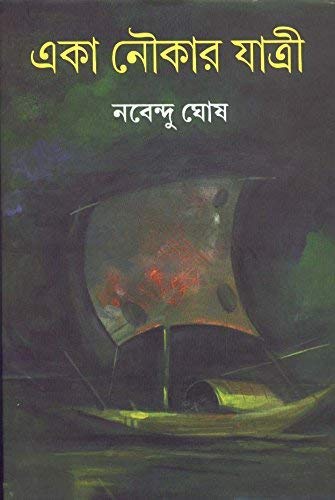
About the Book: Published in 2008, this is the autobiography of the legendary screenplay writer and Bengali litterateur, Nabendu Ghosh. Spanning through Pre-Partition India to the modern times, it is both a political and an artistic commentary of his times.
About the author: Nabendu Ghosh was born 27 March 1917 in Dhaka (now in Bangladesh). At the age of 12 he became a popular actor on stage. As an acclaimed dancer in Uday Shankar style, he won several medals between 1939 and 1945. Ghosh lost a government job in 1944 for writing Dak Diye Jaai, set against the Quit India Movement launched by Indian National Congress. The novel catapulted him to fame and he moved to Calcutta in 1945. He soon ranked among the most progressive young writers in Bengali literature.
Nabendu Ghosh has written on all historical upheavals of 1940s – famine, riots, partition – as well as love. His oeuvre bears the distinct stamp of his outlook towards life. His literary efforts are ‘pointing fingers.’ There is a multi-coloured variety, a deep empathy for human emotions, mysterious layers of meaning, subtle symbolism, description of unbearable life. Love for humanity is also reflected in his writings. He has to his credit 26 novels and 14 collections of short story. He directed the film Trishagni (1988), based on Saradindu Bandopadhyay‘s historical short story Maru O Sangha.
He died on 15 December 2007.
About the Translator: Ratnottama Sengupta, formerly Arts Editor of The Times of India, teaches mass communication and film appreciation, curates film festivals and art exhibitions, and translates and write books. She has been a member of CBFC, served on the National Film Awards jury and has herself won a National Award.
.
PLEASE NOTE: ARTICLES CAN ONLY BE REPRODUCED IN OTHER SITES WITH DUE ACKNOWLEDGEMENT TO BORDERLESS JOURNAL
In a medium that is known for its regressive content, Gajra Kottary, novelist and short-story writer, has time and again gone against the tide and broken taboos. Shantanu Ray Chaudhuri looks at five shows she has written that went against the grain and emerged triumphant…
Growing up in the 1980s, one of the many pleasures of a less cluttered and leisurely time was the birth of the TV series. Many people I know would swear by the fact that the first of these represented the best of Indian television. Even close to forty years later, I can still rattle off the days on which each was telecast: Karamchand on Mondays; Hum Log[1]and then Buniyaad[2] on Tuesdays and Saturdays; Khandan[3] on Wednesdays; Ados Pados[4]on Thursdays; Yeh Jo Hain Zindagi[5]on Fridays. You had stalwarts like Satyajit Ray, Mrinal Sen, Shyam Benegal and Basu Chatterjee make fine works for the television.
Sometime by the end of the decade kitsch entered in the shape of Ramayan and Mahabharat. I moved on and lost touch. A resurgence of sorts happened with the coming of cable television, and we had path-breaking shows like Shanti and Tara. And then it became increasingly difficult to keep track of TV shows. The shows changed beyond recognition. Led by the likes of Kyunki Saas Bhi Kabhi Bahu Thi,[6] they became more and more ridiculous in the worlds they represented. One word came to be bandied about regularly with respect to soap operas: regressive.
However, like all generalised judgements, a blanket application of the word is unfair to a number of serials that tried to, and often succeeded in breaking taboos, while operating within the limitations dictated by the medium and the grammar of its narrative. And the one writer who has time and again bucked the trend, gone against the tide, is Gajra Kottary, the creator of historic shows like Astitva: Ek Prem Kahani[7]and Balika Vadhu.[8]
Gajra Kottary with Shantanu Ray Chaudhuri. Photo provided by Shantanu Ray Chaudhuri
Journalism and Fiction Writing
One of the reasons Gajra manages to break new ground in her television narratives might have something to do with her training as a journalist. “IIMC [Indian Institute of Mass Communication] was a tough course to get into and we had a few fresh graduates like me, and a whole lot of older and established professional journalists from other non-aligned countries studying with us, a great mix,” she says. It provided her with a grounding in fact-based narratives while polishing her skills as a writer, of which she had provided glimpses in college, when two stories she wrote got published in Eve’s Weekly, along with two fiction-style middles in TheTimes of India. “The IIMC stint helped because as I have observed over the years, I have more respect for the sanctity of facts even while taking my flights of fancy than others in the business. I take fewer creative liberties than others. I have done more realistic shows on television which helped forge a distinct identity for my writing.” But it also left her confused since political and economic writing held no interest for her and Delhi offered avenues only for those.
Destiny intervened in the form of Cupid. Falling in love with Sailesh Kottary, a “hotshot and hardcore journalist”, she moved to Bombay. It was here, as a “stay-at-home mom”, that she gave wings to her imagination and honed her writing skills. Watching serials like Saans[9] and The Bold and the Beautiful might also have helped imbibe certain aspects of writing for a visual medium. Her first work of fiction, Fragile Victories, a collection of stories, led to her first assignment in television. She had sent a copy of the book to Mahesh Bhatt, who passed it on to Soni Razdan. Impressed by the collection, the latter signed Gajra up for the story and screenplay of her first TV production, Hamare Tumhare[10](2000), which marked her TV debut, before Astitva made everyone sit up and take notice.
If IIMC shaped her in some ways, another skill-set that has held her in good stead probably came from her experiments in writing fiction. Fragile Victories was followed by another collection of stories, The Last Laugh, and the novels Broken Melodies, Once Upon a Star, Girls Don’t Cry and Not Woman Enough. These helped her to keep to a discipline that could go missing in the never-ending juggernaut that is the TV soap opera. They also are testimony to her willingness to push the envelope when it comes to narratives and characters. Not many know that much before Indian writers, particularly women, began addressing issues of sexual identity and same-sex relationships, Gajra had written about these in her fiction. As she puts it, these themes “continued to ‘consume’ me”. Not Woman Enough may have been published as an e-book only recently, but it evolved from a story that she had published way back in 2003. “I felt that I hadn’t done justice to the theme in the short format, so I wrote a full-length novel titled Not Woman Enough and felt finally relieved of my obsession.” Another story, ‘Two Gold Guineas’, evolved to her third novel Girls Don’t Cry, a pun on the expression ‘boys don’t cry’ and “an ode to the bravery of women and the friendship between a grandmother, mother and daughter”.
What is startling about these works of fiction is her ability to address taboos. Not Woman Enough not only deals with a same-sex relationship, but Gajra has the audacity to set it in rural Rajasthan as opposed to an urban setting, where it would have probably been just another story. She has the perspicacity to understand that the stakes are so much higher for first-generation characters experiencing the forces of social liberation while battling age-old customs. It is the same acuity that she brings to bear upon her iconic TV shows, which have time and again shown what is possible in a medium that allows little leeway for out-of-the-box thinking.
Astitva: Ek Prem Kahani (2002-2006, Zee TV)
Running 668 episodes, over a period of three-and-a-half years, this is the series that launched Gajra into the big league. Today, twenty years after the first episode was aired, an older woman-younger man relationship might appear staid. But back then it was bold, and Indian television had not seen anything like it. It made an icon of its lead, Niki Taneja, who plays a doctor who falls in love with a man ten years younger. What stood out is the maturity with which the series unfolds, largely devoid of the excesses that came to mark television in later years. “The first TV show maker I decided to call upon was Ajai Sinha, who had directed shows like Hasratein[11]and Justajoo[12]. He had been planning a show called Astitva with a bold theme and my timing was bang-on. It spoilt me enough to believe that television too was conducive to the kind of work I felt happy doing.” That this show managed to hold its own against a raging Kyonki[13], speaks volumes of the writer.
Balika Vadhu (2008-2016, Colors TV)
2167 episodes! Yes, you read that right. One of the longest-running shows on Indian television, this cemented Gajra’s reputation as a writer. Here again, Gajra was going out on a limb addressing a much-abused tradition prevalent in large parts of India. And sure enough, the press wasn’t flattering. It is one show that divided opinion like few others. “Yes, we received some negative press, because Anandi was this irrepressible kid, a happy child who kept bouncing back despite dealing with the dark consequences of child marriages of the past playing out in the present. It was a calculated approach as child marriage is a dark and gloomy issue. It was a conscious decision here as we needed to keep the cheer, but critics felt that we were glorifying child marriage. I think they were missing the woods for the trees.”
One possibly needs to understand the medium and its viewership to get a sense of what Gajra means. Unless the packaging is glossy enough – colourful clothes and jewellery – audiences might have been put off entirely by what is a repulsive subject. “And that would mean we would not be able to get across the underlying message of the show. These tactics are important due to the challenge of the medium of television, and the terror of the remote control. It was a classic case of the sugarcoated pill doing its work.”
Apart from the writing, the series was also recognised for its iconic performances and comments on several social issues that ail Indian society, which were woven in organically without being preachy. It also had an authentically rustic feel thanks to Purnendu Shekhar, whose concept it was. Those decrying the glossy packaging forget that the issues the series addressed included girl child education; peer, sibling and parental pressure to do the best; child labour; the begging racket; forced prostitution behind a legal façade; quacks and medical malpractices; date rape; adoption; alcoholism; divorcee and widow remarriage; trafficking in women; surrogacy; juvenile delinquency and teenage crimes, among others. From the comfort of our air-conditioned condos and offices, far removed from these realities, it was easy for the elitist press to criticise the series.
One standout episode dealt with the protagonist’s first experience of menstruation. This is a subject still, despite Padman and the increased conversation around it, spoken of in hushed tones. It is fascinating to hear Gajra’s take on this: “I remember how we involved Avika’s [the child actor who played Anandi] mother to explain to the child privately about menstruation before we shot the scene showing a young girl’s trauma when it happens to her as a bahu in a conservative household. Lots of people wrote to us about delaying the marriages of their girl children after watching Balika Vadhu. There was a girl who was emboldened enough to annul her marriage that had happened as a child when she turned eighteen. We received mails even from parents of city girls who were now reversing their decisions to get their girls married by the time they were sixteen.”
There was of course the flipside of popularity, when the writer received a death threat on Twitter if she dared to kill off the character of Shiv (played by Siddharth Shukla). “Those were the early days of social media, so real people started to write in with their reactions which were usually very intense and sometimes downright ridiculous.”
This series, spanning 55 one-hour episodes, was a huge challenge, involving as it did a historical figure, and one of the most important religious figures of the world. But trust Gajra to approach the subject from a refreshing point a view: as she points out, in school textbooks we go straight from the story of Gautama leaving home to being under the Bodhi tree and achieving enlightenment. But his experiments to arrive at the truth had many stages to it. As she says, “What it did was to dispel my own myths about the Buddha’s life. I had always felt disturbed about his abandonment of his wife and child for his own spiritual search.”
It helped that the show came to her at a point in life when the strong opinions and idealism of youth, both professionally and personally, had given way to the realisation that nothing is or can be ‘perfect’. By the time the show was done she too had evolved to accept that the Buddha had to be true to his heart’s calling. “I understood the ‘larger purpose’ of his life. I came to terms with the ‘abandonment’, though my heart still bleeds for Yashodhara and Rahul. What also helped was learning about Yashodhara’s evolution, albeit painfully, to want to join his sangha voluntarily, and him helping her find her ‘larger purpose’.” The series focuses on aspects of his life after the Enlightenment that many are not aware of. It is this larger view that shapes the series, making it a departure from the dime-a-dozen ‘mythological/religious’ shows with ‘special effects’ that blight our senses.
Extramarital affairs are the oxygen to the beast that is the TV serial. Offhand, I can think of not one serial that does not have a million and more permutations and combinations of the theme. So, it takes a really perceptive writer to give this tired trope a new perspective, and Gajra manages that in Silsila, upending the traditional way that extramarital affairs are portrayed. “Is the ‘other’ woman necessarily a femme fatale, a super-cool career woman, and the wife a boring domestic goddess or could it be the other way round also?” she asks.
The series provides further proof of her ability to give a new spin to a theme that’s been done to death. As she says, “I am emotional about this show as it was inspired by what happened with some close friends and associates. I needed a relief from all the social stuff in Balika Vadhu. Also, I believe that an author’s voice in terms of standing for the right thing can and should reflect in any kind of story, even if it’s not apparently one on a social issue. The classic extramarital affair with the eternal conundrum is a fascinating aspect of human relationship … does a third person enter the picture because a marriage is already collapsing or does the entry of a third person lead to the collapse of a marriage. Is it the cause or effect?”
Molkki (2020-2022, Colors TV)
After Silsila, it was back to a classic social issue for Gajra. At the heart of this show is the tradition of bride-buying in Haryana, which in turn has its roots in the scarcity of brides due to female feticide/infanticide. As Gajra says, “Molkki was a Covid baby, my second project with Ekta Kapoor and it was made keeping in mind all commercial considerations.”
Female infanticide is a recurrent theme in several of her stories. She writes about it in her novel, Girls Don’t Cry, while Not Woman Enough, published as an e-book by Juggernaut, has this as a strong strand, being part of the protagonist’s backstory impacting her psyche. Again, what needs to be noted here is the writer’s willingness to explore issues that contemporary television is not known for, even if the execution falters given the demands of the medium.
Addressing the Regressive Nature of Television
But Gajra does agree that on the whole, television is regressive. Though it is described as a writer’s medium, there’s only so much that writers can do in terms of trying to infuse new ideas and nuanced storytelling in the face of TRPs[16] and other market considerations and entrenched beliefs that ‘bas yahi chalta hai’[17]. So, writers take the easy way out, churning out what the studio executives want. “For the handful of people prepared to take the risk and at least try to do things differently, there are scores of others who would like to use every gimmick in their book and keep regurgitating bad content.”
In terms of audience profiling too, what’s happening with television is that most of the intelligentsia has shifted to web shows. The television viewership class has gone lower down in the social scale. So when content is being made and consumed by a non-thinking class, it also starts reflecting in the TRP studies. The classic chicken-and-egg syndrome.
Looking Ahead
Gajra is currently basking in the success of her latest show, Na Umr Ki Seema Ho,[18] which recently celebrated its hundredth episode. The show is being hailed as ‘different’ by many. As she says, “The most heartening comment that I often get to hear is that ‘it’s the first TV show I have started watching after many years’, from people who had switched full time to watching web shows.”
Shantanu and Gajra with the lead actors of Na Umr Ki Seema Ho. Photo provided by Shantanu Ray Chaudhuri
Any grand obsession, a show she would like to write? “As far as TV goes, I have always dreamed of doing a version of one of my all-time favourite films, Abhimaan[19], with or without the music background. The subject becomes more and more relevant every decade. Frankly, no channel wants to touch it. Though the people one speaks to share my admiration for the story, the ‘system’, they say, is not conducive to making it. I also want to adapt my first novel, Broken Melodies, as a web show or film. It’s the story of a girl growing up in the seventies, torn between the values and stifling world that her classical musician father [an autobiographical element given that Gajra is the daughter of the classical maestro Pandit Amarnath] represents and the liberation that the English education sponsored by her mother affords her.”
One can only say, more power to writers like her, and the breaking of glass ceilings and taboos.
(Originally published in The Telegraph, Kolkata)
Addendum
Shantanu: You grew up in Delhi in the 1980s. That was the birth of the TV era with Hum Log, Buniyad, and all those glorious serials. Did any of these influence you?
Gajra: You’re so right, Shantanu, they hugely did, except that there was no plan that I had then, to actually use that impact to write something similar. I loved both these shows purely as a viewer. HumLog did tackle social issues, for example, dowry, but why I liked it was that it showed the clash of values within a family with different generations, and through that, it entertained and made one feel and think – the sensitization process as its termed. Later, I learned that Hum Log was inspired by the Sabido method (originating in Mexico) where TV is used as a medium to bring about positive social change by making viewers ‘feel and think’ rather than preaching to them.
I loved Buniyaad for a purely sentimental reason. My parents were from Lahore and Multan respectively and had come as refugees to Delhi, so we had grown up hearing stories of Partition and here was a show that brought that era alive for me in an extremely moving and entertaining way. So maybe subconsciously both these shows did impact my psyche – as in it was possible to talk emotions that were universal, even while having a responsible author’s voice.
Shantanu: What do you attribute the change in the style and content in TV soaps, first with Tara and Shanti, and then Kyunki Saas Bhi…
Gajra: Tara and Shanti were the first movers, coming in like a breath of fresh air after the DD days which were associated with somewhat stodgy storytelling, Buniyaad etc., being the shining exceptions. Tara and Shanti were great in terms of revolving around thinking and evolved women, but perhaps were ahead of their times…they still are, given where TV storytelling has gone.
By the time Kyunki Saas came to TV screens, middle- and lower-middle-class homes could afford a TV set, so there was a genuine need for TV to go more middle class in its appeal. So, we had a plethora of shows with joint families and generations under one roof, which truly was the reality of such homes, and which therefore connected with the masses easily. Ekta Kapoor also upped the drama quotient hugely, so there was no way it wasn’t going to work with the masses.
Unfortunately, however, everyone went about copying the formula and there was the overdose factor. So, TV honchos were afraid of trying different subjects and worlds and that for a very long time became the bane of TV writers.
Shantanu: On Buddha: ‘dispel your own myths, you say …’ What apart from his abandonment of his wife and child haunted you. Do you reconcile with the abandonment once you had done the writing for this? Did it make sense now?
Gajra:Buddha, the show, came to me at a point in life when the strong opinions and idealism of youth – both in professional and family life – had given way to some acceptance and the realisation that actually nothing is or can be ‘perfect’. And certainly not any decisions of life that we might make. So, we might as well make the decision, and accept and live with the consequences as positively as one can. I know that that’s so ‘anti’ the way today’s youngsters think!
So yes, from his wife and family’s point of view his decision seemed ‘selfish’ but he had to be true to his heart’s calling and that so-called ‘selfishness’ of his is what made him give so much to the world to make it a better one. I understood the ‘larger purpose’ part of the Buddha’s life after I started researching more and more while writing the story for the show. I came to terms with the ‘abandonment’, though my heart still bleeds for Yashodhara and Rahul, when I think about them. What also helped was me learning the historical truths about how Yashodhara evolved, albeit painfully, to want to join his sangha voluntarily at some point, and him helping her find her ‘larger purpose’.
Also, what I realised is that in school textbooks we go straight from the story of Buddha leaving home to being under the Bodhi tree and achieving enlightenment and uplifting the world. This had been my myth too. But, in reality, the Buddha’s many experiments to arrive at the truth had many stages to it. He went through extreme deprivation, abnegation, self-loathing and much else, before he arrived at the eight-fold path – the most practical and fair way to lead life in any time and space.
And he certainly did not advocate renunciation for all or even the perception of Buddhism as a religion. His was the ultimate live-and-let- live approach to life – just that his methods helped his followers lead a life of peace and equanimity within their chosen path. Through writing the show I realised that there could be no other way of life that was so compatible with the modern way of thinking and doing. So I am not a ‘Buddhist’ but I still try to recall the eight-fold path at various difficult points in my life and it really helps me.
Shantanu Ray Chaudhuriis a film buff, editor, publisher, film critic and writer. Books commissioned and edited by him have won the National Award for Best Book on Cinema twice and the inaugural MAMI (Mumbai Academy of Moving Images) Award for Best Writing on Cinema. In 2017, he was named Editor of the Year by the apex publishing body, Publishing Next. He has contributed to a number of magazines and websites like The Daily Eye, Cinemaazi, Film Companion, The Wire, Outlook, The Taj, and others. He is the author of two books: Whims – A Book of Poems(published by Writers Workshop) and Icons from Bollywood (published by Penguin/Puffin).
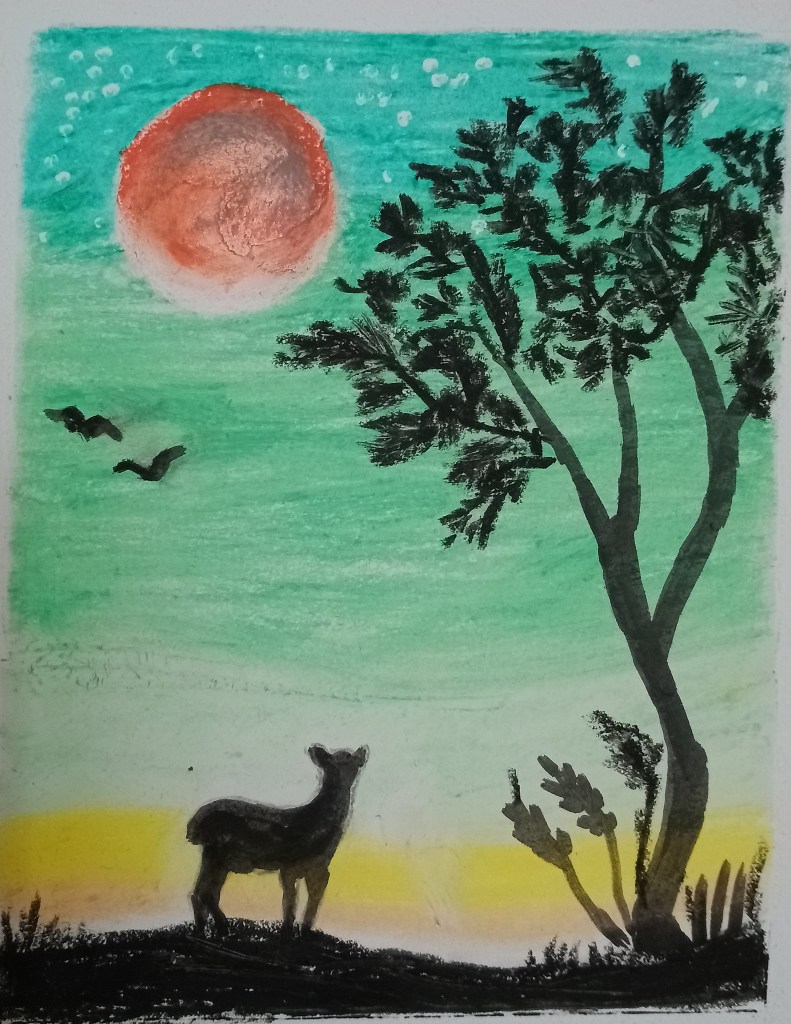
Written in 1910, Amar Sonar Horin Chai ( I want the Golden Deer) is a popular Rabindra Sangeet that is often performed on stage. Seemingly simple, it explores the poet’s yearning for the intangible and ends with the sense of euphoria generated by his quest for the impalpable.
Sohana Manzoor’s interpretation in pastel & ink of ‘Amar Sonar Horin Chai’
The Golden Deer

Regardless of what you say,I want the golden deer.
Enchanting,nimble footed,I want that golden deer.
He runs startled,eludes our gaze,and cannot be tied.
If he comes within our reach,he escapes puzzling our vision.
Chasing the elusive one who continues to evade capture
Through fields and forests,I lose myself.
Things that you can buy in bazaars are stored in homes.
Why do I look for that which cannot be bought?
I lost what I had while yearning for the intangible.
Do you think I am grieving for my lost treasures?
I am content to live with a smile devoid of sorrow,
Disappearing in my mind amidst meadows and woods.
Ratnottama Sengupta, eminent journalist and daughter of Bengali writer Nabendu Ghosh, has been a force behind translating Bengali literature and bringing it to the doorstep of those who do not know the language. In this exclusive, she discusses how translations impact the world of literature.
I have often been asked, “Nabendu Ghosh was a literary figure and a screenwriter. How much importance did he place on translation?” Truthfully, because he was a literary person, my father placed a lot of importance on translations which, as he once pointed out, has given us access to almost all the first books in a bevy of Indian languages.
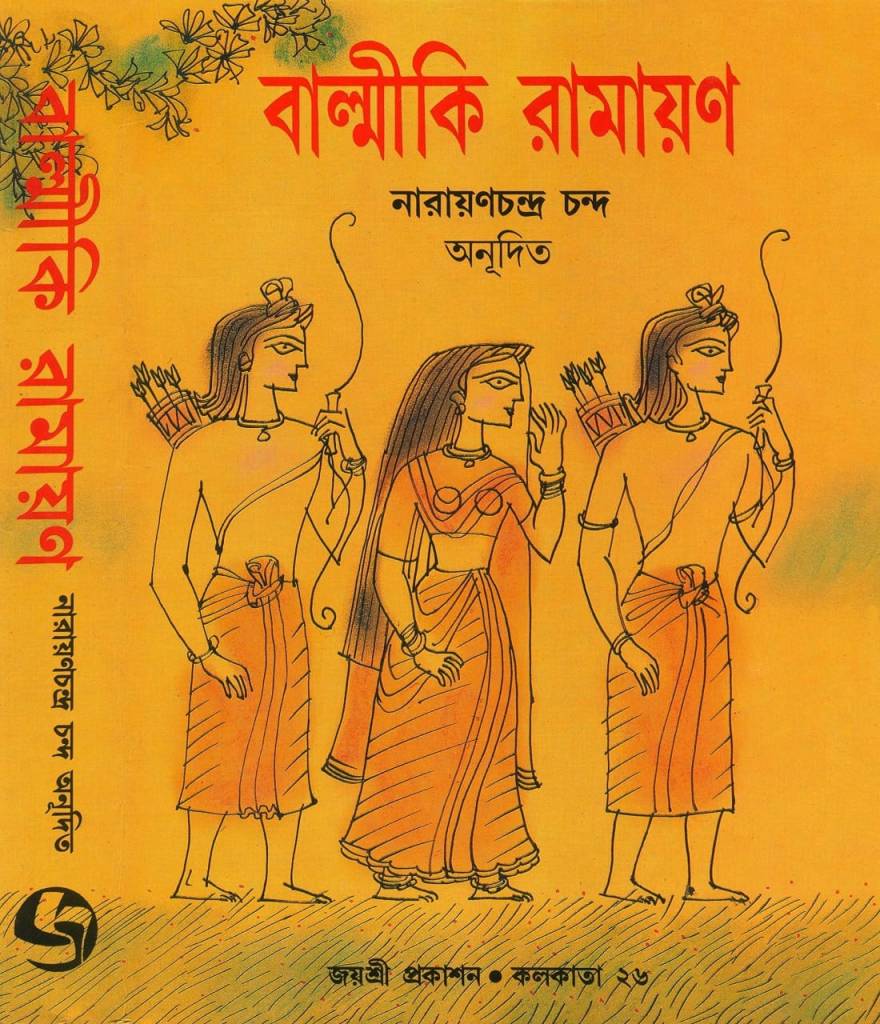
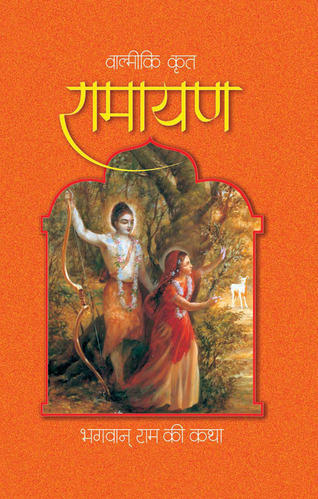
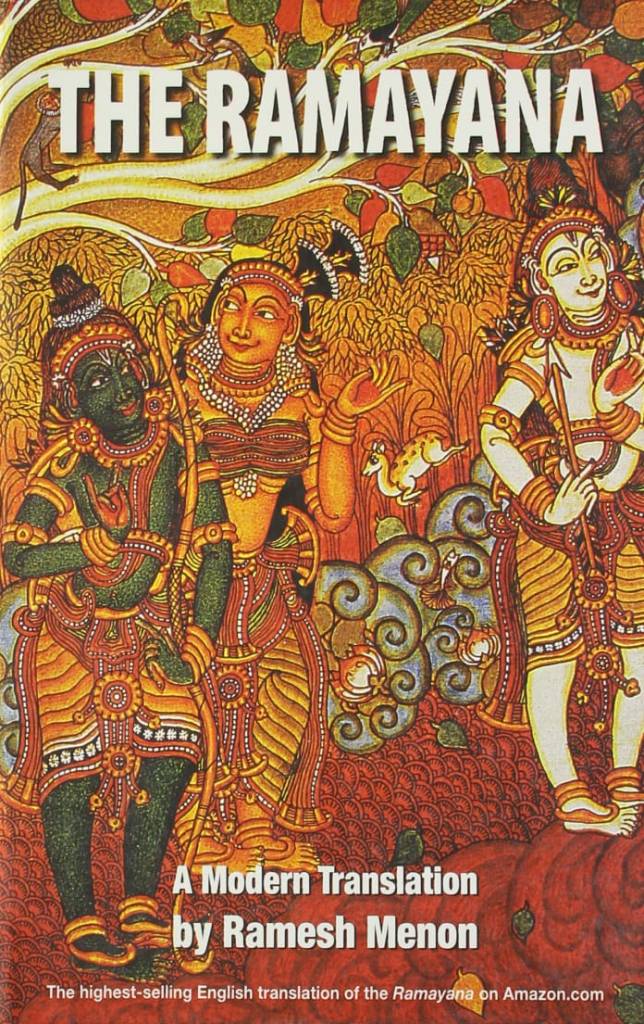
Let me elaborate. Adi Kavi Valmiki, the harbinger poet in Sanskrit literature, composed the original – ‘mool’ – Ramayan long before the first century BC. But Krittibas Ojha’s 15th century rendition in Bengali ‘Panchali’ style is not merely a rewording of the original epic, it gives a description of Bengal’s society and culture in the Middle Ages. It also explores the concept of Bhakti which later contributed to the emergence of Vaishnavism in the Gangetic belt.
This is said to have had a profound impact on the literature of the surrounding region. In Bihar of 16th century Goswami Tulsidas heightened the Bhakti quotient as he retold Ramayan in Hindi, as Ramcharit Manas. The same happened in Orissa. Earlier it had been adapted, with plot twists and thematic adaptations, in the 12th century Tamil Ramavataram; 14th century Telugu Sri Ranganatha Ramayanam; several Kannada versions, starting in 12th century; Ramacharitam in Malayalam; into Marathi also around this time.
My father had inculcated in us this love for multiple languages when I was about ten. As we all sat around after dinner, he would read from these texts – Valmiki’s Ramayan, Tulsi’s Ramcharit Manas, The Old Testament from the Bible, Buddhist Jataka Tales, and Sri Sri Ramakrishna Kathamrita wherein Mahendra Nath Gupta recounts, word for Bengali word, the conversations and activities of the 19th century Indian mystic. Published in five volumes between 1902 and 1910, this work summing up the life philosophy of Ramkrishna Paramahans through simple anecdotes and parables, has been translated into English and Hindi.
Before that, at the young age of nine, I was also initiated into the crème de la crème of world literature – Tolstoy, Gorky, Mark Twain, and Shakespeare too – through translations into Bengali. Abridged versions of Crime and Punishment, Mother, Adventures of Tom Sawyer, Blue Bird, and Hamlet, Lear, Othello, Romeo and Juliet were published by Deb Sahitya Kutir — among other Bengali publishers — for young readers. Later in life, as a student of English Literature, I realized that our understanding of the ways and woes of our world would be so much poorer if Iliad and Odyssey had remained confined to Greek readers; if Henrik Ibsen’s A Doll’s House had not crossed the frontiers of Norway; if Don Quixote were to be read only in the Spanish that Miguel Cervantes wrote in; if The Hunchback of Notre Dame was meant only for those raised in French, or if Faust were to be played only to German viewers.
And, talking of viewers: how would the world have known about the Russian Sergei Eisenstein, the Japanese Akira Kurosawa, the Greek Theo Angelopoulos, the Italian Michelangelo Antonioni and Federico Fellini, the French Jean Luc Godard and Francois Truffaut, the Swedish Ingmar Bergman, the Polish Andrzej Wajda, the Czech Jiri Menzel, the Argentinian Fernando Solanas, the Turkish Yilmaz Guney, the Chinese Zhang Yimou, the Iranian Abbas Kiarostami, or our very own Satyajit Ray? Unthinkable, the world of cinema without subtitles in this day and age when Hollywood films come with subtitles in not just English and Hindi – the two official languages of India – but also in its umpteen regional languages to reach viewers in pockets that speak only Tamil, Telugu, Malayalam, Marathi, Bengali…
The importance of translation is best exemplified by the Song Offerings. If Rabindranath Tagore had not translated the poems of Gitanjali, Asia would have had to wait longer for its first Nobel Prize. Incidentally the central theme of this work too is devotion – and it is part of UNESCO’s collection of Representative Works. And it is my belief that no other Nobel for literature has come to India because we have not come up with any worthy translation – say, of Bibhuti Bhushan Bandopadhyay? At least, not until recent years, nor in a big way.
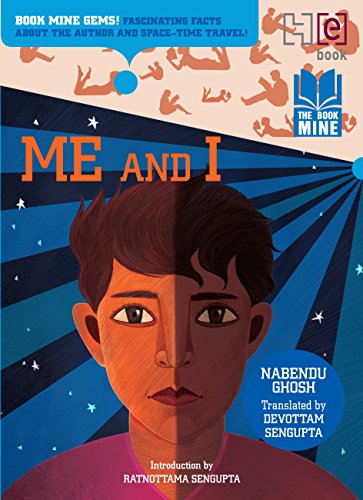
Also, it is my own experience that only after Me and I — translated from the Bengali original, Aami O Aami by Devottam Sengupta — was published by Hachette India that a major international publishing house got interested in translating Nabendu Ghosh into French.
*
That brings me to the frequently asked question: “Why are you translating Nabendu Ghosh rather than publishing his Bengali originals?” The answer takes me back to 1940s when Baba’s Phears Lane was translated into Urdu and published in Lahore. Clearly Nabendu Ghosh was a ‘star’ in Bengali literature then. Allow me to quote Soumitra Chatterjee, the thespian who we lost so recently and was a Master in Bengali: “I had known about Nabendu Ghosh even before I took to studying Bengali literature, since Daak Diye Jaai (The Clarion Call) was a sensation even when I was in school. His writing was not confined to urban setting and city life. He went to the villages and wrote about the man of the soil too. His characters were always flesh and blood humans.”
But the Partition of India had halved the market for books and films in Bengali, dimming the prospects of even established directors and writers who sought a new opening on the shores of the Arabian Sea. Thus, when Bimal Roy – a celluloid star after his meteoric debut with Udayer Pathey ( In the Path of Sunrise, 1943) — left for Bombay in 1950 to make a film for Bombay talkies, Nabendu Ghosh joined his unit. However, in Bombay he found that his kind of writing did not have as much of a prospect in films which were made primarily for the entertainment of an amorphous mass. So, he decided to write scripts based on other people’s stories, and his own thought-provoking stories — which he described as ‘fingers pointing at what ails society’ — he continued to write as pure literature, in Bengali, and send to publishers in Kolkata.
This oeuvre bears the distinct stamp of his outlook towards life, society, or state. As a critic wrote, “There is deep empathy for human emotions, layers of meaning that add to the depth of the spoken words, subtle symbolism, description of unbearable life paired with flight in the open sky of imagination.” But this aspect of the writer got buried under the glamour of screen writing, and even in Bengal people thought of him only as the screen writer of successful films. Small wonder, since he wrote more than eighty scripts, for directors like Bimal Roy, Guru Dutt, Hrishikesh Mukherjee, Basu Bhattacharya, Vijay Bhatt, Sultan Ahmed, Dulal Guha, Lekh Tandon, Phani Majumdar, Satyen Bose, Shakti Samanta, Sushil Mazumdar, among others. Most of them are considered classics of the Indian screen: Sujata, Bandini, Devdas, Parineeta, Aar Paar, Majhli Didi, Teesri Kasam, Chaitanya Mahaprabhu, Ganga Ki Saugandh, Khan Dost, Baadbaan, Insaan Jaag Utha, Lal Patthar …
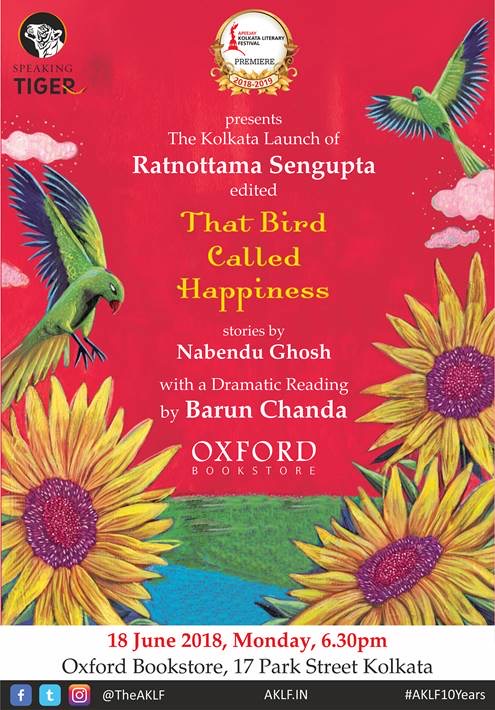
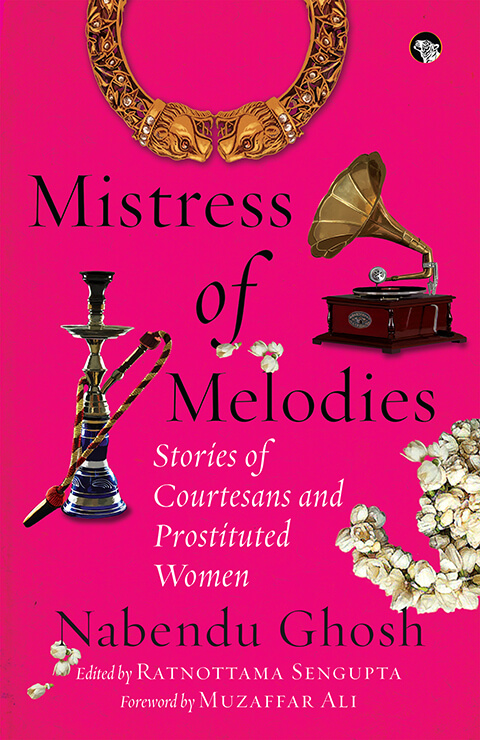
But Baba was saddened that even his colleagues in the filmdom did not know his literary pouring as only a handful were translated into Hindi and none into English. This is what I have tried to rectify through Chuninda Kahaniyaan (2009), Me and I (2017), and That Bird Called Happiness (2017). Mistress of Melodies (2020) you could say is a part of a continuum that started with River of Flesh (2016) and comes after That Bird Called Happiness. Nabendu Ghosh would read up volumes — books, news items, dictionaries and encyclopedia — when he fleshed out his characters. Perhaps that is why they play out their lives before you, like moving images. It was no different when he was writing Song of a Sarangi/ Ekti Sarengir Sur, included in Chaand Dekhechhilo that won him the Bankim Puraskar.
But above all, the reason for putting my energy in this art is to take a part of my heritage to the world. Because, as the celebrated Bengali writer Shirshendu Mukherjee said about Nabendu Ghosh, he is a writer who deserves to be read. Allow me to finish with a quote from him as he talked about his senior’s continuing relevance, to readers of Bengali literature and outside.
“Nabendu Da’s use of language was remarkable. He starts one of his stories with the word ‘Bhabchhi / (I’m) Thinking.’ It is a single word, that is also a complete sentence, and it has been used as a para in itself. One of his stories, Khumuchis, explores the secret language used by pickpockets. Bichitra Ek Prem Gatha (A Wondrous Love) – published to mark 2550th year of the Buddha — uses a vocabulary that is devoid of any word that would not have existed before the advent of Islam.
“He had an amazing sense of the optimum in this matter — he never overdid it. Not many writers of his time were into such experiments. Nabendu Ghosh did. He stood apart from his contemporaries in this respect. A part of his mind always ticked away, thinking of how his characters would speak. This added to the readability of his novels and stories. It quickened the pace of unfolding the narrative. They were all so racy! So fast paced, so real, so full of conflict and its resolution… Exceptional is the only word to describe it.
“And this was because of his language/ vocabulary. He was always pushing the boundaries of the language. His ‘throw’ was such that it turns into an eternal emotion which continues to cast its spell.
The same focused development of a plot shorn of every trivial and expendable branch, razor sharp emotions, whirlwind passion — I feel writing itself was a passion for him. He did not write with his head alone, his heart bled for the human condition.
“And this is why he never dated. His writing is the stuff that makes a story universal, eternal. For today’s readers he is a lesson in how to write — they can master how to write a narrative that flows like a boat down a rapid stream. In terms of language, structure, characters and situation, he is a writer who would be relevant to the young readers of not only Bengal but worldwide.”
Translations of Nabendu Ghosh novels initiated by Ratnottama Sengupta in recent years
Ratnottama Sengupta, formerly Arts Editor of The Times of India, teaches mass communication and film appreciation, curates film festivals and art exhibitions, and translates and write books. She has been a member of CBFC, served on the National Film Awards jury and has herself won a National Award.
.
PLEASE NOTE: ARTICLES CAN ONLY BE REPRODUCED IN OTHER SITES WITH DUE ACKNOWLEDGEMENT TO BORDERLESS JOURNAL
Who knew a repeat telecast of a mythological series based on the life of a man/God would set me on the road to new discovery about my own parents. When Ramayan began to be re-telecast on the national television, I had no intention of being glued to it. I am not a big fan of men who abandon their wives, even if they are the Supreme Being/Leader. So, it was a surprise that I ended up watching a whole episode of the series with my family.
Now, you need to understand that the drawing room, where we have our TV, is the war room of my home. It is where all the wars in the family are fought so as to ensure those passing by our house know every minute details of the bombs being dropped. A stranger can walk into our house and determine how the hierarchy works by looking at who has the remote.
It is also the place everyone in my family rushes to while talking loudly on their mobile. They then proceed to glare at the occupants until the television is meekly muted. It is where we have our breakfast, lunch and dinner and where we perform acrobatics sitting on the sofa to avoid getting up when the maid comes to clean the room. It is where my mother finds it necessary to place a chair bang in front of the television so that 80% of the occupants get to watch her back and not what is on the screen.
Since my parents won’t let us have a slice of television time, I have, like a true scavenger, taken to stealing bits and pieces of their fun time. I do it by pestering my parents with intelligent queries about the dumb soap operas that they like to watch.
So, when I sat down together to watch Ramayan, after losing yet another remote war to my parents, I had every intention of ruining their fun. The over- the-top acting, the poor production and the almost hilarious expressions the actors had in the name of emotions gave me enough ammunition. I began a running commentary that could rival that of Navjot Sidhu, the cricket player turned commentator. But my mom was not pleased and she soon sent me to shell some peas. Yes, my mother, the innovator that she is, has over the years devised better punishment-cum-chores for her adult children when they outgrew their ‘face the wall’ disciplining.
As I sat with the peas, I could not but help notice the delight with which my mom watched the series. Her face mirrored every expression that the characters had. I felt bad for trying to ruin it for her and could not help but ask, “Why are you so excited about watching the re-run of a series you watched three decades ago?”
“I never watched it. We did not have a TV at home then,” she replied, still glued to the television.
“What, then how do I remember watching it?” I asked.
“You kids would go with your dad to the neighbour’s house to watch it on a Sunday. I had to cook for everyone, so I never came,” she said in a matter-of-fact tone.
Suddenly it occurred to me that watching Ramayan on television was not the only thing my mother had given up. I remember going on trips with my dad on his scooter leaving my mom behind as the vehicle could not ferry all five of us. Everytime we went to do all the fun things, my mom voluntarily stayed back because a taxi was a luxury we could hardly afford. Three decades of living with my mom and there were chapters of her life I was never privy to. I decided to shut up and vowed to ask her more about her life as a young career woman with three kids once the episode came to an end.
Since multi-tasking was never my strength, I ended up ignoring the peas and actually watched Ramayan with my parents. While my parents seemed to follow the series, I felt like I had skipped several important chapters in the story.
So, when the episode came to an end, I had several queries. What forced King Dashrath to grant a boon to his third wife Kayekayi? What is Parsuram’s background? How come two avatars of Vishnu happened to inhabit the earth at the same time during Ramayan?
My dad seemed to know the answer to all the questions I had and that is when I discovered what an amazing story teller he is. As a kid, I don’t remember him ever reading us a bedtime story. A voracious reader himself, he bought us a lot of books but never read to us, maybe because he preferred Malyalam and we deviated towards English. I think it was also because both my parents were caught in the struggle to provide the three of us a decent living and at the end of the day, they did not have much energy to do anything other than order us to go to sleep, bedtime stories be damned.
I soon found out that he had extensive knowledge of Indian mythology and could weave a story that could put the best bards to shame. He had read the Bhagavad Gita and the Bible and could quote couplets from them with ease. When had he learned this? How is it that living in the same house I had missed so much about my own father? Why is it that despite having no pressure, I had not taken out the time to interact with my own parents? How had I taken them for granted to such an extent that so many aspects of their life had remained hidden from me?
As I interacted more with my parents over Ramayan I realised that they had earned the right to hog the remote. It was their attempt at ‘having fun’ at an age where their health limited the avenues for entertainment. For them, it was not mindless television watching. It was their way of relaxing after a life spent giving up on things. The way they saw it, it was time for the kids to return the favour.
Smitha R is a former journalist with a passion for travel that often fails to take into consideration her poor financial health. When she is not whipping up a disaster in the kitchen, she is busy distributing ‘an honest opinion’, unmindful of the perils..




 Borderless