In Did He Ever?,Rhys Hughes gives fun-filled verses on Lafcadio Hearn, a bridge between the East and West from more than a hundred years ago. Clickhere to read.
Dolly Narang muses on Satyajit Ray’s world beyond films and shares a note by the maestro and an essay on his art by the eminent artist, Paritosh Sen. Clickhere to read.
Poetry, prose — all art forms — gather our emotions into concentrates that distil perhaps the finest in human emotions. They touch hearts across borders and gather us all with the commonality of feelings. We no longer care for borders drawn by divisive human constructs but find ourselves connecting despite distances. Strangers or enemies can feel the same emotions. Enemies are mostly created to guard walls made by those who want to keep us in boxes, making it easier to manage the masses. It is from these mass of civilians that soldiers are drawn, and from the same crowds, we can find the victims who die in bomb blasts. And yet, we — the masses — fight. For whom, for what and why? A hundred or more years ago, we had poets writing against wars and violence…they still do. Have we learnt nothing from the past, nothing from history — except to repeat ourselves in cycles? By now, war should have become redundant and deadly weapons out of date artefacts instead of threats that are still used to annihilate cities, humans, homes and ravage the Earth. Our major concerns should have evolved to working on social equity, peace, human welfare and climate change.
One of the people who had expressed deep concern for social equity and peace through his films and writings was Satyajit Ray. This issue has an essay that reflects how he used art to concretise his ideas by Dolly Narang, a gallery owner who brought Ray’s handiworks to limelight. The essay includes the maestro’s note in which he admits he considered himself a filmmaker and a writer but never an artist. But Ray had even invented typefaces! Artist Paritosh Sen’s introduction to Ray’s art has been included to add to the impact of Narang’s essay. Another person who consolidates photography and films to do pathbreaking work and tell stories on compelling issues like climate change and helping the differently-abled is Vijay S Jodha. Ratnottama Sengupta has interviewed this upcoming artiste.
Reflecting the themes of welfare and conflict, Prithvijeet Sinha’s essay takes us to a monument in Lucknow that had been built for love but fell victim to war. Some conflicts are personal like the ones of Odbayar Dorj who finds acceptance not in her hometown in Mongolia but in the city, she calls home now. Jun A. Alindogan from Manila explores social media in action whereas Eshana Sarah Singh takes us to her home in Jakarta to celebrate the Chinese New Year! Farouk Gulsara looks into the likely impact of genetic engineering in a world already ripped by violence and Devraj Singh Kalsi muses on his source of inspiration, his writing desk. Meredith Stephens tells the touching story of a mother’s concern for her child in Australia and Suzanne Kamata exhibits the same concern as she travels to Happy Village in Japan to meet her differently-abled daughter and her friends.
As these real-life narratives weave commonalities of human emotions, so do fictive stories. Some reflect the need for change. Fiona Sinclair writes a layered story set in London on how lived experiences define differences in human perspectives while Parnika Shirwaikar explores the need to learn to accept changes set in her part of the universe. Spandan Upadhyay explores the spirit of the city of Kolkata as a migrant with a focus on social equity. Both Paul Mirabile and Naramsetti Umamaheswararao write stories around childhood, one set in Europe and the other in Asia.
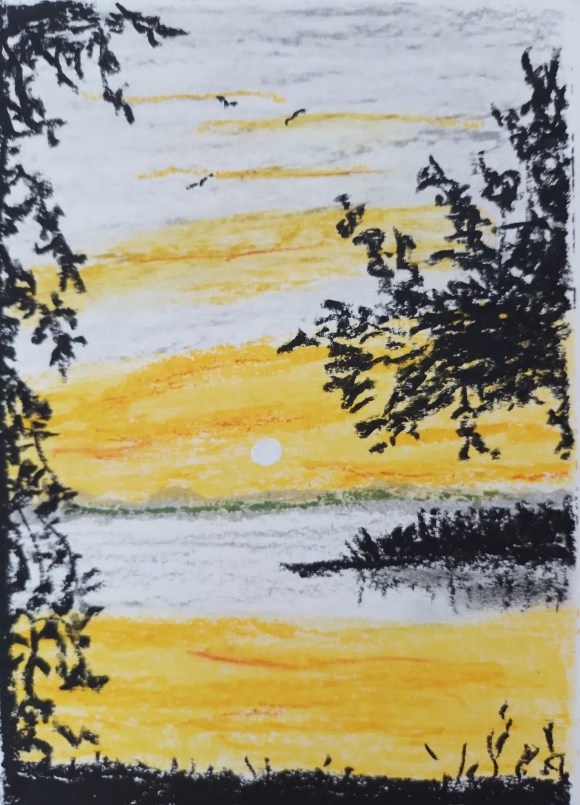
Do pause by our contents page for this issue and enjoy the reads. We are ever grateful to our ever-growing evergreen readership some of whom have started sharing their fabulous narratives with us. Thanks to all our readers and contributors. Huge thanks to our wonderful team without whose efforts we could not have curated such valuable content and thanks specially to Sohana Manzoor for her art. Thank you all for making a whiff of an idea a reality!
Ira’s mornings followed a ritual, one she would never compromise on. There was something grounding in the familiarity, the routine that made her mornings feel like a soft, warm blanket. Every weekday, she would stop by the small café across the street from her office, nestled between a quaint bookshop and a flower shop. It wasn’t the coffee itself that she adored, though it was undoubtedly good; it was the sense of community, of being part of something small yet significant.
The barista, Sana, knew her order before she even had the chance to speak. She could almost feel the warmth of the cappuccino in her hands before it was handed over, the foam expertly swirled into a delicate, lacy pattern on top. The air was always filled with the smell of freshly baked bread and coffee which was rich and inviting. She could hear the sounds of chatter rising and falling, a perfect background hum to her quiet moments. There was always someone new she would bump into, from the elderly Parsi lady in her mid-seventies, who came in for a muffin and a tea, to the young man who had just started bringing his dog along. It was the little things, the casual greetings and shared smiles with strangers who had become familiar faces, that made Ira’s mornings feel less like a rush and more like a soft, unhurried rhythm.
Her favourite part, though, was the corner table by the window. That spot was hers, as much a part of her morning ritual as the coffee itself. She’d been coming to the café for months, and every time she arrived, the corner was waiting for her. The way the sunlight filtered through the window at just the right angle made it the perfect seat, just warm enough for her to relax in, but not hot enough to make her uncomfortable. It offered the best view of the street outside: the bustling pedestrians, the cars honking, the kids running to school, the dogs barking as they tried to get to each other first whilst their owners tried to make them behave. In that little space, Ira could watch the world move without being part of the frenzy. Her seat was a kind of stillness in the middle of chaos. It was where she felt most herself. Centered, grounded, and ready for whatever the day ahead would bring.
But today, things were different.
Ira walked into the café a few minutes later than usual, but that wasn’t the problem. As she stepped in, the smell of coffee already hit her, and her eyes instinctively scanned the room for her usual seat.
The seat, her seat, was taken.
A young man, probably in his mid-twenties, with tousled brown hair peeking from under a beanie, was sitting at her spot. He was hunched over his laptop, fingers moving absentmindedly over the keyboard. His presence was so casual, so comfortable, as though he had claimed that corner for months.
Ira hesitated for a moment, gripping the strap of her bag a little tighter. The seat wasn’t reserved, she knew that, but it didn’t matter. It was like an unspoken rule, almost sacred that the seat belonged to her. The feeling of disappointment washed over her in an instant. She exhaled sharply, forcing herself to take a breath before marching up to the counter.
“Morning, Ira!” greeted Sana, the barista, already reaching for a cappuccino cup.
“You let someone sit in my spot,” Ira deadpanned, raising an eyebrow.
Sana snorted. Her laughter was infectious. “You didn’t call for a reservation,” she shot back, a playful glint in her eye.
Ira huffed, rolling her eyes. “It’s just that I always sit there. It’s my spot.”
Sana slid the coffee across the counter and gestured to the only other open table, near the door. “Well, you’ll have to make do with that one today.” She pointed, and Ira glanced over at the small table with a resigned sigh. Ira had no choice but to sit there. She took the cup in hand and made her way to the table near the door. After a long pause, she lowered herself into the chair and took a long sip of her cappuccino. The coffee was as good as always, but something was missing.
Minutes passed, and Ira tried her best to focus on drafting her work email, but her gaze kept drifting back to her usual corner. The guy was still there, hunched over his laptop, utterly unaware of the territorial crisis he had caused. She could see his fingers flying over the keyboard, absorbed in whatever he was doing. His focus seemed so intense, so at ease. He was clearly one of those people who could work anywhere, in any environment, without needing the perfect surroundings. And yet, Ira couldn’t shake the feeling that he didn’t belong there. It was as if his presence had intruded on her space, one that was supposed to be quiet, hers, a part of her morning ritual.
Then, as if sensing her gaze, he looked up. Their eyes met, and Ira froze for a moment, her thoughts racing. She wasn’t prepared for him to smile and wave at her.
“You keep looking over,” he said, his voice light and teasing. “Do I have something on my face?”
Ira blinked, caught off guard. “Oh, no. Umm… you’re in my seat.”
His eyebrows shot up. “Oh,” he said slowly, “I didn’t see a reserved sign on it.”
“There was no reservation,” Ira admitted, her voice softer now, feeling a little awkward. “But I always sit there.”
The guy leaned back in his chair, looking thoughtful. “Huh. And what happens if you don’t?” He tilted his head slightly. “What changes?”
Ira frowned, trying to make sense of his question. “What?” she asked, her voice not quite hiding her confusion.
“If you don’t sit here,” he said, gesturing to the chair beneath him, “what changes?”
Ira opened her mouth, then closed it again. What was she supposed to say to that? Her instinct was to reply with something dramatic, something like, “Everything changes.” But that would sound ridiculous.
She wasn’t sure why this seat mattered so much, but it did. Instead, she shrugged, choosing to settle for a more composed answer. “It’s just part of my routine,” she said. “I like watching the street from that window. The sunlight is nice there. It feels just right.” She said it all quickly, almost to herself, trying to justify why it meant something.
He considered her words, his gaze steady. “Maybe you just like the idea,” he said after a moment and a thoughtful look crossed his face.
Ira narrowed her eyes, slightly annoyed. “What is that supposed to mean?”
He raised his eyebrows, taking a slow sip of his coffee. “We attach meaning to things because they’re familiar, not because they’re irreplaceable. You think you need this seat, but really, you just need a seat. Any seat. This one or that one.” He gestured to the seat across from him. “What difference does it make? Same coffee, same café. Same morning.”
Ira felt a mix of frustration and curiosity, not sure if she was just annoyed or if he actually had a point. She studied him for a moment, taking in his casual demeanor, the way he spoke with such ease and conviction. “I don’t know,” she said slowly. “I just like the comfort of it.”
He smiled, a little half-smile that seemed to carry a deeper understanding. “Maybe comfort is overrated.”
Ira rolled her eyes. “Are you a philosophy major or just insufferable?”
He leaned back in his chair, smiling wider now. He tapped his pen against a book and gestured at an empty bench across from him. “If you want, you can sit here. Different angle, same coffee.”
Ira studied him for a moment, while stirring her coffee before shaking her head. “No, its fine.”
The guy chuckled. “See? Change isn’t that bad.”
With a sigh, Ira picked up her bag and coffee cup and walked over to the bench across from him. As she sat down, she took in the new view. The street still moved as it always did. People came and went, a rush of morning traffic blurring by, but now from this angle, she could see the entire café. She noticed things she hadn’t seen before. The way Sana spilled some coffee on the counter as she wiped it. The line of people waiting to place their orders. The man on the phone, his voice hushed as he hesitated to answer a call. The woman across from her, turning her ring on her finger as she stared off into space, lost in thought.
Ira smiled to herself. Maybe change wasn’t so bad after all.
Maybe tomorrow she’d try a different seat again. Or maybe, just maybe, she’d get here early enough to reclaim her corner.
The coffee, however, still tasted the same.
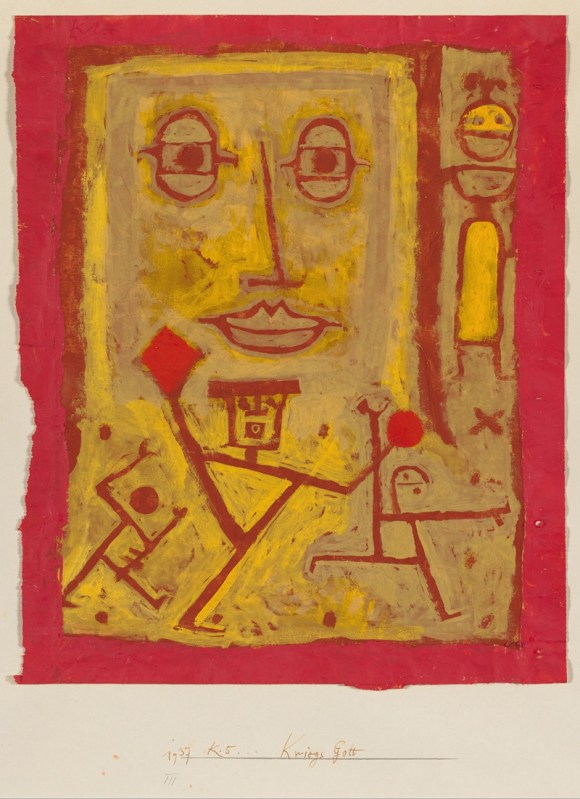
From Public Domain
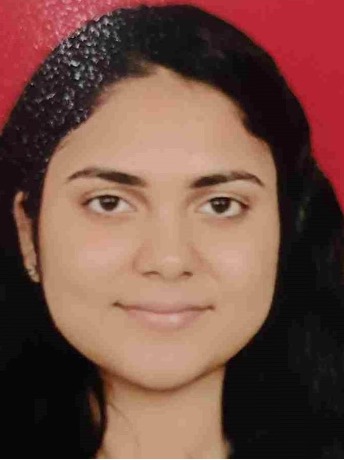
Parnika Shirwaikar is a law student with keen interest in literature and storytelling. When not studying she immerses herself in books, movies, music and everyday moments seeking inspiration for her next story.
.
PLEASE NOTE: ARTICLES CAN ONLY BE REPRODUCED IN OTHER SITES WITH DUE ACKNOWLEDGEMENT TO BORDERLESS JOURNAL.

 Borderless