Categories
Tagore Translations

Tagore Songs in Translation

We salute Rabindranath Tagore (1861-1941) for his inspirational writing and ideology. Here, we have attempted to translate/transcreate his songs while retaining the essence of the spirit and flavour of his lyrics.
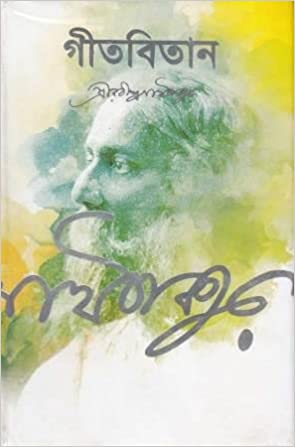
Gitabitan, houses 2232 songs by Tagore. Some of the songs on this page are a part of this collection.

Kothao Amar Hariye Jawa Nei Mana or Losing Myself invokes for us the joy of losing oneself in an imaginary world that the poet revels in… the result of the creative stillness he experiences in his mind…

Losing myself...
(A translation/transcreation of Kothao Amar Hariye Jawa Nei Mana, 1939)

There is no bar to losing myself in an imaginary world.
I can soar high on the wings of a song in my mind. 
Weaving fantasies into vast tracts of lands and unexplored oceans, 
I lose my path in the distant shore of quietude —
I get acquainted with the champak blooms in the parul woods.
When the sun sets, I gather flowers in the sky amidst the clouds.
Mingling with the foam of the seven seas,
I reach the shores of faraway lands —
I knock at the closed doors of fairyland in my mind. 
This song has been rendered in Bengali by Indranil Sen, a modern contemporary artiste

The poet as a visionary perceives the world in a different way, breaking class and caste barriers — he embraces humanity of all strata with affection. Here is a song about a young girl called Krishnokoli, who worked in fields and lived among cows, unable to follow the traditions of oborodh or purdah like genteel women because she had to work.

Krishnokoli
(A translation/transcreation of Krishnokoli, 1900)

I call her Krishnokoli* though villagers call her dark.
On an overcast day, I saw in a field, a dark girl with dark deer eyes. 
Her head was bare, her braid swung down her back.
Dark? However dark she is, I have seen her dark deer eyes. 

The clouds closed in as two ebony cows lowed, 
The dusky girl came out of the hut with hurried, uneasy steps.
She looked up with arched brows at the sky, heard the clouds rumble.

Suddenly, a gust from the East gambolled a wave through the rice crops. 
Alone, I stood between the fields, there was no one else in the expanse.
Did our glances meet? That remains a secret between her and me.
Dark? However dark she is, I have seen her dark deer eyes. 

They remind me of the kohl-clouds that collect in the North-east each summer,
Of the soft dark shadows that descend on the tamal grove when the rains start, 
Of the happiness that unexpectedly fills my being on a monsoon night.

I call her Krishnokoli even if others call her by a different name. 
I had seen her in Moynapara meadows, a dark girl with dark deer eyes. 
She left her head uncovered as she had no leisure to be shy. 
Dark? However dark she is, I have seen her dark deer eyes. 


*Krishnokoli: An indigenous name of a flower in Bengal, also can be seen as associated with Krishna, the dark God. Koli in Bengali means bud.
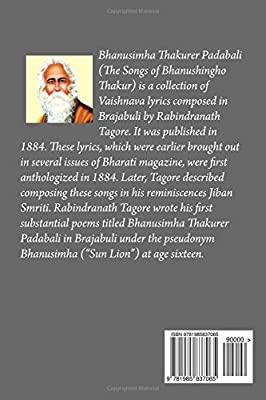
This song has been rendered in Bengali by the legendary Suchitra Mitra (1924-2011)

Tagore, the multi-faceted, experimented with languages. Here is the transcreation of a song written originally in Brajabuli, a dialect based on Maithali that was popularised for poetry by the medieval poet Vidyapati. Composed in 1877. it became a part of Bhanusingher Padabali in 1884. This song draws from the lore of Radha and Krishna.

Against the Monsoon Skies… 
(from Shaongaganeghorghanaghata, 1884)
 

Against the monsoon skies, heavy clouds wrack the deep of night.
How will a helpless girl go through the thick groves, O friend?
Crazed winds sweep by the Yamuna as clouds thunder loud.
Lightning strikes: the trees have fallen, the body trembles
In the heavy rain, the clouds shower a downpour.
Under the shaal, piyale, taal, tamal trees, the grove is lonely and quiet at night.
Where, friend, is he hiding in this treacherous grove
And enticing us with his wonderful flute calling out to Radha?
Put on a garland of pearls, a shithi* in my parting,
My odni* is flying as is my hair; tie a champak garland.
 
Don’t go in the deep of the night to the youth, O young girl.
You are scared of the loud clapping thunder, says Bhanu your humble server.
 
*shithi: Ornament worn in the parting of the hair.
*odni: A long stole or scarf
Song by Sourendro-Soumyojit, Dance by Priyanka

The creative stillness, or quietude, experienced by the maestro, takes him further into a perception of the world where he empathises with nature and feels the tides rush through his veins.

The Star-Studded Sky 
(A translation/transcreation of Akash Bhora, Shurjo Tara, 1924)

The sky is replete with sun and stars, the Earth, brimming with life --
In the midst of this universe, I have found my abode.
Spellbound by the plenitude, songs awaken in my being.

The infinite, eternal waves that create planetary tides
Resonate through the blood coursing in my veins.

As I walk to the woods, I step on the grass.
Heady perfumes of flowers startle me into a rhapsody.
Benefactions of joy anoint the universe.

I have listened, I have watched, I have poured my life into the Earth.
Through knowing, I have sought the unknown.
Spellbound by the plenitude, songs awaken in my being.
This song has been rendered by Srikanto Acharya, a modern day legend.

Tagore wrote intense and non-intense songs, though his rhapsodic connection with nature even tinge the lighter songs with a unique lyrical beauty. Here is a song that is often used to depict joie de vivre and plays beautifully on a piano as the tune borrows from the Scottish tune of ‘Ye Banks And Braes’. It is a part of a what is popularly known as a dance-drama, called Kal Mrigaya by the maestro himself. The story was based on an event from the Indian epic, Ramayana.

The Swaying Flowers
( from Phoole Phoole Dhole Dhole,1882)

The flowers sway in the soft breeze.
The river waves and gurgles as it flows.
The birds in bowers trill a tune 
I cannot fathom the yearning that fills my being.
This song has been rendered by Sahana Bajpaie, a well-known singer and Tagore scholar

Rabindranath Tagore (1861 to 1941) was a brilliant poet, writer, musician, artist, educator – a polymath. He was the first Nobel Laureate from Asia. His writing spanned across genres, across global issues and across the world. His works remains relevant to this day.

(Most of the songs have been translated/transcreated solely on behalf of Borderless Journal by Mitali Chakravarty with feedback from Sohana Manzoor, Meenakshi Malhotra and Vatsala Radhakeesoon. Krishnokoli was improved further with advise from Aruna Chakravarti. Only ‘Against the Monsoon Skies…’ was first translated by Mitali Chakravarty and published in SETU).

.

PLEASE NOTE: ARTICLES CAN ONLY BE REPRODUCED IN OTHER SITES WITH DUE ACKNOWLEDGEMENT TO BORDERLESS JOURNAL

Categories
Tagore Translations

Greetings on Asian New Years in April!

 This song by Tagore welcoming the new year, Esho He Baishakh, is especially relevant because it talks of the New Year wiping away diseases that weaken and kill humanity. Here is a translation of the lyrics and renditions by popular contemporary voices and a video of a dance performance to this song.

Come O Boisakh!
(A translation of Tagore's Esho He Boisakh, Esho, Esho, 1927)

Hail O boisakh! Welcome. 

Blow away deadly diseases with your ascetic breath. 
May the debris from the old year disappear. 
Let go of old memories, let go of old melodies. 
May sorrows and tears evaporate. 
Wipe away slanders, wipe away infirmities. 
May the Earth be purified by fire. 
Wither obsessive unhealthy passions. 
Summon a storm with a conch call to
Transfigure the misty webs woven by Maya*.

*Maya is an illusory play of divine intervention.

Jayati Chakraborty Click here to listen.

Iman Chakraborty Click here to listen.

Lopamudra Mitra Click here to listen.

Sadi Mohammad Click here to listen.

New Year arrives in some parts of Asia every April, around 13th to 15th. India celebrates new year under various names and with many different traditions –  such as Ugadi in Karnataka, Vishu in Kerala, Baisakhi among Sikhs and many more. Nepal observes Nava Varsha. Thailand celebrates Songkran, which is a bit like Holi in India as it involves water play and a bit like the Thingyan, the Myanmar New Year. Sri Lanka calls their festival Avurudu, which seems to have customs close to the Tamilian new year Puthandu or that of Karnataka. Bangladesh livens up with a national festival, called Pohela Boisakh, which is a bit different from the Polia Boisakh celebrations in the Eastern parts of India.

Intrinsic to all these is the joie de vivre of the festivities whether with water play, food, Bhangra dancing or with Rabindra Sangeet.

May we all have a glorious entry into our plethora of New Years!

Greetings again for all Asian New Years !

(Written and translated by Mitali Chakravarty)

PLEASE NOTE: ARTICLES CAN ONLY BE REPRODUCED IN OTHER SITES WITH DUE ACKNOWLEDGEMENT TO BORDERLESS JOURNAL

Click here to access the Borderless anthology, Monalisa No Longer Smiles

Click here to access Monalisa No Longer Smiles on Kindle Amazon International

Categories
World Poetry Day, 2021

Celebrating Poetry without Borders

“And as imagination bodies forth
The forms of things unknown, the poet’s pen
Turns them to shapes and gives to airy nothing
A local habitation and a name”

(William Shakespeare, A Midsummer's Night's Dream,1596)

Like clouds float, words waft through currents of ideas and take shapes and forms. We celebrate poetry across the world, across space and time, with the greatest and the new… our homage in words to the past, present and future…

A paean to the skies, the Earth and empathy with nature sets the tone for this poetic treat. I offer you a translation/transcreation of a Tagore song, from the original lyrics penned by the maestro in Bengali…

The Star-Studded Sky  by Rabindranath Tagore

( A translation/transcreation of Akash Bhora, Shurjo Tara, 1924)

The sky replete with sun and stars, the Earth brimming with life,
In the midst of this universe, I have found my abode.
Spellbound by the plenitude, songs awaken in my being. 

The infinite, eternal waves that create planetary tides 
Resonate through the blood coursing in my veins.

As I walk to the woods, I step on the grass. 
Heady perfumes of flowers startle me into a rhapsody.
Benefactions of joy anoint the universe.

I have listened, I have watched, I have poured my life into the Earth.
Through knowing, I have sought the unknown. 
Spellbound by the plenitude, songs awaken in my being. 

(Translated/transcreated by Mitali Chakravarty on behalf of Borderless Journal,2021)

Poetry connects with eternal human emotions over space and time with snippets from old and verses from new.

Poets continue to draw from nature to express and emote. In empathy with the forces that swirl around us are poems written by moderns, like Jared Carter.

 What is that calling on the wind
           that never seems a moment still?
 That moves in darkness like a hand
           of many fingers taken chill?

(Excerpted from Visitant by Jared Carter)

Click here to read Jared Carter’s Visitant and more poems.

Tagore wrote and painted. Here we have a poem about a painting done by the poet-artist herself, Vatsala Radhakeesoon.

An endless expanse swirls
over the tropical island.
At the foot of the Meditative Mountain,
birds, bees and butterflies wonder --
who is this mystic blue?

(Excerpted from Swirling Blues by Vatsala Radhakeesoon)

Click here to read Swirling Blues by Vatsala Radhakeesoon and gaze at the painting.

Separated by oceans and decades, were poets empathetic?

I CELEBRATE myself, and sing myself,
And what I assume you shall assume,
For every atom belonging to me as good belongs to you...

The smoke of my own breath,...

My respiration and inspiration, the beating of my heart, the passing of blood and air through my lungs,
The sniff of green leaves and dry leaves, and of the shore and 
dark-color'd sea-rocks, and of hay in the barn,
The sound of the belch'd words of my voice loos'd to the eddies of the wind,
A few light kisses, a few embraces, a reaching around of arms,
The play of shine and shade on the trees as the supple boughs wag,
The delight alone or in the rush of the streets, or along the fields and hill-sides,
The feeling of health, the full-noon trill, the song of me rising from bed and meeting the sun.

(Excerpted from Song of Myself, Walt Whitman, 1881)

And despite exuberance of poets and their love of nature, came wars from across continents. Here are some of the responses of poets from all over the world to war and the pain it brings…

A soldier and a poet, Bijan Najdi (1941-1997) wrote in Persian, he captured the loss and the pain generated by war on children for us. This has been translated by Davood Jalili for Borderless

The world does not become bitter with the sword.

It does not become bitter with shooting, cries and fists.

The bitterness of the world

Is not the deer’s necks

And leopard’s tooth

And the death of a fish...

(Excerpted from Our Children by Bijan Najdi)

Click here to read Our Children by Bijan Najdi

Maybe children have a special place in poets’ hearts. Michael R Burch from across the Pacific writes of their longings too…

I, too, have a dream …

that one day Jews and Christians

will see me as I am:

a small child, lonely and afraid,

staring down the barrels of their big bazookas,

(Excerpted from I, too have a dream by Michael R Burch)

Click here to read Dreams of Children by Michael R Burch and more by him.

From Nepal, Manjul Miteri travelled to Japan to design a giant Buddha. While visiting the Hiroshima museum, he responded to the exhibits of the 1945 nuclear blast, a bombardment that ended not just the war, but many lives, many hopes and dreams… It heralded the passing of an era. Miteri’s poem was translated by Hem Biswakarma for us from Nepali.

Orimen*!
Oh, Orimen!
Mouthful of your Tiffin
Snatched by the ‘Little Boy’*!
The Tiffin box, adorned with flowers,
Scattered and spoilt,
Blown out brutally.

(Excerpted from Oh Orimen! by Manjul Miteri)

Click here to read Majul Miteri’s Oh Orimen!

Continuing on the theme of war, what can war weapons not do? Karunakaran has written a seemingly small poem about warplanes in Malayalam that embraces the nuclear holocaust and more. The words are few but they say much… It has been translated by Aditya Shankar for us.

No warplane 
has ever flown like a bird,
has lost way like a bird,
has halted mid-flight reminiscing a bygone aroma.

(Excerpted from No Warplane Has Ever Flown Like A Bird by Karunakaran)

Click here to read No Warplane Has Ever Flown Like A Bird by Karunakaran.

From wars and acquisition of wealth, grew the greed for immortality.

Aditya Shankar writes rebelling against man’s greed, greed that also leads to war.

Through the tube,

the world poured into that room

with news of war and blood.

(Excerpted from Human Immortality Project  by Aditya Shankar)

Click here to read Human Immortality Project by Aditya Shankar.

Continuing the dialogue on discrepancies is a poem written by a visiting professor from Korea. Ihlwha Choi was in Santiniketan and just like Tagore found poetry in Krishnokoli, he found poetry in Nandini…

There was Nandini’s small shop along with fruits' stalls and the bike shop.

Cows passing by would thrust their heads suddenly

Into the shop thatched with bamboo stems....

...There lived a flower-like little girl selling chai near the old house of Poet R. Tagore.

(Excerpted from Nandini by Ihlwha Choi)

Click here to read Nandini by Ihlwha Choi

Poetry is about moods — happiness and sadness, laughter and tears.

Reflecting on multiple themes that mankind jubilates and weeps about is the poetry of John Grey, camping out in Australian outbacks, revelling in the stars and yet empathising with hunger… A few lines from his poem hunger.

Hunger can sing soft but compelling

in the voice of the one who last

provided you with three meals a day.

That’s years ago now.

Hunger has no memory

but it assumes that you do.

(Excerpted from Hunger by John Grey)

Click here to read Camping out, Hunger and more … by John Grey

And now we introduce some laughter. A story-poem by Rhys Hughes, about an alien who likes to be tickled…

“Oh, tickle me under the chin,
   the chin,
 please tickle me
 under the chin.
 It might seem quite fickle
 or even a sin
 to make this request,
 to ask such a thing,
 but I must confess
 that to ease my distress
 there’s nothing so fine
    as a tickle.
 So please tickle me 
 under the chin,
    the chin.
 Tickle me under the chin.” 

(Excerpted from The Tickle Imp by Rhys Hughes)

Click here to read The Tickle Imp by Rhys Hughes

And here is a poem by Tamoha Siddiqui, jubilating the borderless world of friendship.

Yesterday I heard the sound of colourful feet

to Indonesian beats, in the middle of Michigan:

white, black, brown, all were one

pitter-patter paces in a conference hall.

(Excerpted from Birth of an Ally by Tamoha Siddiqui)

Click here to read Tamoha Siddiqui’s Birth of an Ally

We share with you now from the most unusual poetry we have on our site, from a book called Corybantic Fulgours. If you want to know what it means, click here to check it out!

Concluding our oeuvre to jubilate a world without borders, here are lines from a poet who probably has influenced and united majority of writers across the world…another truly universal voice.

Time present and time past
Are both perhaps present in time future,
And time future contained in time past.
If all time is eternally present
All time is unredeemable.
What might have been is an abstraction
Remaining a perpetual possibility
Only in a world of speculation.
What might have been and what has been
Point to one end, which is always present.
...
The dance along the artery
The circulation of the lymph
Are figured in the drift of stars
Ascend to summer in the tree
We move above the moving tree
In light upon the figured leaf
And hear upon the sodden floor
Below, the boarhound and the boar
Pursue their pattern as before
But reconciled among the stars.

Excerpted from TS Eliot's Four Quartets, Burnt Norton(1936)

The poetry of the historic greats are all woven by eternal threads that transcend man made boundaries. They see themselves almost as an extension of the Earth we live. Tagore, Whitman and Eliot write of the universe coursing through their veins. Shakespeare gives the ultimate statement when he brings in the play between imagination and nature to lift the mundane out of the ordinary. With inspiration from all these, may we move into a sphere, where poetry not only moves but also generates visions for a more wholistic and inclusive future.

.

PLEASE NOTE: ARTICLES CAN ONLY BE REPRODUCED IN OTHER SITES WITH DUE ACKNOWLEDGEMENT TO BORDERLESS JOURNAL
Categories
Editorial

Happy Birthday Borderless Journal🎉

A huge thank-you to all our contributors and readers across the world.

Borderless Journal has contributors from all the marked areas in the world map.

Borderless Journal was launched on March 14th, 2020, exactly one year ago, with eight published pieces from four countries. Today, we celebrate our journal’s year-old existence with more than six hundred publications online from 31 countries across the world. All this would not have been possible without the commitment of some very gifted writers. So, we have made a couple of additions to our ‘About Us’ — Writers in Residence and the Children’s Section Facilitator. We did this to express our gratitude to these excellent writers and the Children’s Section Facilitator, Archana Mohan of Bookosmia, for contributing pro bono to Borderless, selflessly and generously with words that enriched our journal. We plan to continue pro bono with goodwill as our only profit, giving our readers free, unpaid, advertisement-free access to excellent works.

In this first year, not only has our content grown but we have moved forward in our attempt to be a repository of quality writing in the virtual world. Translations of greats like Saratchandra Chatterjee, Tarashankar Bandopadhyay, Rabindranath Tagore, Bijan Najdi, Syad Zahoor Shah Hashmi and Nabendu Ghosh nestle along with writings by the moderns. We have published works by winners of the Sahitya Akademi award and the Pushcart along with that of novices. Our oldest contributor was born in 1924 and the youngest, in our young persons’ selections, was four years old.

Values and issues taken up by writers across time have often been similar. At Borderless, we look for writing that breaks borders, not so much of techniques but of issues that affect our civilisation. We want to create a flood of positive values that will deluge the world’s negatives, help to usher in an era of development, tolerance, love and peace. We are often told that this is unrealistic. But when have ideals and utopias ever been based on realism? And yet they changed the world over a period of time. We would not have the wheel or the fire if cave dwellers had not imagined them.  Borderless hopes to walk untrodden paths. Our journal also aspires to respond to the calls made by youngsters for a better Earth, to explore and store samples of human excellence for posterity, and to support attempts to improve the future of our species.

As a part of our celebrations, we are also announcing two books, constructed with selected content from Borderless. Bookosmia is bringing out a book from the children’s section, thanks to both Nidhi Mishra and Archana Mohan. For our adult contributors and readers, we are also announcing a second book stocked with some of the gems we have collected over the year. We are in conversation with a publisher. Once that is finalised, we will announce the book on social media.

This month, we had given the theme of ‘as mad as a March hare’ and aliens were invited to contribute. That resulted in some fantastic poetry from Rhys Hughes and Vatsala Radhakeesoon and also from one of our Contributing Editors, Michael R. Burch. Rhys has given us a funny story poem about an alien who tickles our sensibilities. Our poetry section only improves with Michael’s touch. We have poetry again from Pushcart winner Jared Carter, Tom Merrill, Ihlwa Choi, and new writers like Vijayalakshmi Harish and Shraddha Arora.

We carry a translation of a well-known poet from Nepal, Krishna Bajgai. Aditya Shankar translated a Malayalam poem about violence against women by young Krispin George. It is a powerful poem and an excellent translation that sets the tone for the month hosting the International Women’s Day. That the protest is voiced by men is also significant, especially in a world where margins need to blend into a single united shout against all injustices. While the poem critiques a crime, the translated prose shows how despite violations and oppressions, humankind have progressed.

A short story by Tagore’s sister, Swarnakumari Devi (1855-1932), one of the first female editors of the Tagore family journal and one of the earliest progressive women of the nineteenth century, has been translated by Chaitali Sengupta. Juxtaposed to the story by Swarnakumari Devi which was perceived as an act of defiance against the voicelessness imposed on women in a patriarchal set up, we have an unusual reflection translated by the noted filmmaker and journalist, Ratnottama Sengupta. Written in Bengali by Sandhya Sinha (1928-2016) the piece, while being an in-depth analysis of Arabian Nights, is an emphasis on how women progressed within the century to become independent, intellectual, thinking entities beyond the bounds set on them by outmoded norms. Thus, while the prose showcases how much women have progressed, the poetry contribution by young Krispin George and Aditya Shankar reflects how men and women are now united in their struggle for justice. We have indeed come far from the biases inherent in Rudyard Kipling’s poem, ‘Mandalay’, which was written after Swarnakumari Devi had already started writing and working against such divisive mindsets. Historically, we have moved forward.

A literary essay by Mike Smith tries to explore a new paradigm. He ponders if a short fiction by the first émigré Nobel Laureate from Russia, Ivan Bunin, could have been a precursor to flash fiction. We have experimented with a photo essay by Penny and Michael Wilkes. Some lovely photographs of the sea can also be found in the slice of life sent to us from Australia by Meredith Stephens. In Travels with the Backpacking Granny, Sybil Pretious takes the readers to the slopes of the Kiliminjaro with her 63-year-old self. Devraj Singh Kalsi in Musings of the Copywriter gives us his perception of creativity and madness – which you might say go hand-in-hand when you think of Vincent Van Gogh cutting off his ear and F Scott Fitzgerald who along with his wife, Zelda, suffered from depression. Kalsi gives the subject a satirical twist to explore if insanity can be substituted as medals of honour by a writer instead of ‘bits of metal’ that subscribe to more conventional concepts of fame and sanity. It is a fun read!

One of my favourite essays is by Debraj Mookerjee, who has shown how when West meets East, greatness blooms. He takes on giants like Tagore, Tolstoy, Emerson and many more. Reflecting the thoughts of one of these giants mentioned in the essay, is a book on the socio-political thoughts of Tagore where the author, Bidyut Sarkar, who is also the Vice Chancellor of Vishva-Bharati University and an erudite scholar, states: “Tagore stayed away from the hurly-burly of national politics. Despite sharing the nationalistic condemnation of the colonizer, Tagore never allowed this restrictive vision to cloud his concern for human emancipation.” Bhaskar Parichha has done an excellent review of the book.

Sutputra Radheye’s poetry collection from the Delhi Slam has been reviewed by Rakhi Dalal and Suzanne Kamata’s Indigo Girl has been reviewed by Gracy Samjetsabam. Indigo Girl is a novel that breaks cultural borders and norms to find love through a part-Japanese-part-American’s journey, with lessons learnt from a survivor of the Tohoku Tsunami in March 2011, where more than 15,500 died, a disaster that also led to the Fukushima nuclear plant melt down. The economic losses were estimated at $235 billion and people continue to be impacted by the decade-old disaster to this date. Indigo Girl, thus, is a celebration of mankind’s survival against multiple odds. It builds bridges across differences and disasters, a story of hope and friendships, values cherished in a borderless world.

We have an interesting excerpt from a book I really enjoyed, a collection of short stories that challenge man-made constructs, A Sense of Time and Other Stories. The author whom we interviewed, Anuradha Kumar, has 31 books with publishers like Hachette India to her credit, plus two Commonwealth awards and more. The other interview also stretches geographical bounds drawn by politicians. An American translator who lives in Thailand and translates from Japanese to English, Avery Fischer Udagawa, speaks to about her journey. Finding literature and bridging borders with translations is a recurrent theme in Borderless.

A number of stories that again look for the unusual can be found in this issue. I would like to mention an interesting one from Jessie Michael of Malaysia exploring blind beliefs, ‘Orang Minyak or The Ghost‘, while Sunil Sharma gives us a story that I will let you explore yourself. Sara’s Selections, showcasing a selection of writing from Bookosmia, adds to our oeuvre.

As usual, I have mentioned a few but not all of our content, which remains tempting.

I hope all of you will continue to enhance our writing and publishing experience by patronising our site and reading us regularly. Please do share our posts with your friends and family. We continue a family-friendly journal.

Again, a huge thanks and warm congratulations to the Borderless team and to all our fabulous contributors. We value each one of your pieces. Thank you.

To all our readers, welcome to our world and thanks for being with us and inspiring us to aspire for more. We have readership from more than 130 countries across the world.

Looking forward to the next lap of our journey –

Mitali Chakravarty

Borderless, March, 2021

Borderless Journal is read in more than 130 countries across the world.
Map Courtesy: WordPress
Categories
Editorial

The Happiness Quotient

Happiness and humour! Is that an unrealistic goal to achieve in this life? Moving away from the contentiousness of fame, of argument, of who achieves how much more and how much faster, we might be able to uncover a world sheathed in happy smiles. Is it only the pandemic spreading gloom?

The fear of dying or suffering does create a shroud of gloom that often interrupts our social interactions. The unreasonableness of fear draws us away from reality. Hans Rosling, a Swedish physician who called himself a possibilist, says: “There’s no room for facts when our minds are occupied by fear.” Fear or depression is the opposite of humour and happiness. The ability to think clearly and laugh at situations leaves us when we are fearful. Fear also leads to depression and the feeling of being oppressed. Humour is perhaps the only antidote to laugh away our fears and depression, to combat darkness and bring back smiles, hope and happiness. We have laughter clubs. Laughter binds all its members in happiness. And that is why we try to host plenty of it in Borderless Journal.

Embedded in the musings, fiction and poetry sections, we have humour, pathos, poignancy and laughter. Rhys Hughes with his tongue-in-cheek poetry, musings by Will Neussle and a short flash fiction by Brindley Hallam Dennis make us laugh outright as do some of the wonderful pieces written by youngsters in ‘Sara’s Selections’ hosted by Bookosmia, thanks to Nidhi Mishra and Archana Mohan. Michael Burch has also given us humour, happiness and poignancy in his collection of poems in memory of his mother.

We have introduced a new column that creates bridges across the world with not just facts but compassion and comprehension of the suffering and bravery of mankind by a woman who has traversed through diverse cultures all her life, Sybil Pretious. In this episode of ‘Adventures of the Backpacking Granny’, she explores the impact of Perestroika while in St Petersburg (Russia). Devraj Singh Kalsi has also given us an unusual piece talking about the impact of Partition on the family structure within the subcontinent. These two musings, while resting on major political events that changed the world for many of us, reflect different perspectives and are handled in vastly different ways by both the writers.

Reflecting on binaries, is a story from the imagined township of Ghumi, a series that Nabanita Sengupta has been publishing with us for more than six months now. Sohana Manzoor has given us a poignant story with a surprise ending from Bangladesh on the theme of witch-hunting, previously reflected upon in one of Aruna Chakravarti’s translations of Tarashankar’s famous story, ‘Daini’ (The Witch). Sunil Sharma has given us another interesting cross-cultural narrative based on his interpretation of Don Quixote and has also provided us a poem. We have a lovely collection of poetry this time, thanks to Michael Burch, who has helped with the editing and selection of poems. Vatsala Radhakeesoon has shared both her painting and a poem based on the painting with us – both vibrant and unusual works.

We have, for the first time a writer from Iran and translations from Persian to English by Davood Jalili of his works. A poem and an essay by Iranian poet Bijan Najdi give us a glimpse of their stories and perspectives. Jalili has also translated Devaki Jain’s interview to Persian to publish in the Arzhang, the online journal where the previously translated Aruna Chakravarti’s interview had found a home. We are very grateful to him for giving wider exposure to the content of Borderless as we are to Binu Mathews of Countercurrents for sharing our content in his popular site. Jalili with his translations to English brings in new perspectives into our fold as do Aditya Shankar with his translation from Malayalam poetry and Fazal Baloch with his translation of a Balochi folk tale.

The other major translation we have is that of a Nabendu Ghosh story by his late son, Dipankar Ghosh. ‘The Saviours’ had been translated previously by Bhashabi Fraser in a collection of Partition stories and was seen as representative of that era. However, as a literary paper from Universidad de Cádiz indicates, the story steps beyond the Partition to another relevant issue that continues to plague India — the divide created by wealth, caste and education, the absolute obtuseness of the affluent to the suffering of the less privileged, an issue that continues to shame as we reel from the pandemic.

There is an in-depth book review of a translation of Satyajit Ray’s grandfather, Upendrakishore Ray Chowdhury, by academic Nivedita Sen. Immortalised by the grandson in an award winning film, Goopy Gyne Bagha Byne, the story has been recently translated to English from Bengali and published under the title of The Adventures of Goopy the Singer and Bagha the Drummer.

An essay on translations by eminent journalist Ratnottama Sengupta, who has been bringing out works of Bengali writers in English and Hindi, explains the need for building these bridges across time and cultures. Candice Louisa Daquin’s essay on the Kali Project, which resulted in an anthology of poems on feminist issues in India initiated by an American concern, attempts to transcend borders as does the interview with Suzanne Kamata, an award-winning writer based out of Japan but born and brought up in the USA.

Candice Daquin has also given us another powerful reflection on the core values of mankind. This theme of an exploration of humane values has been reiterated in our interview with Avik Chanda, the author of the best-selling history of Dara Shukoh.

We have featured an excerpt from Nishi Pulugurtha’s anthology of travel essays’. Pulugurtha’s collection featuring multiple writers has been reviewed by Gracy Samjetsabam. Bhaskar Parichcha has given us an interesting review of Wendy Doniger’s book, Beyond Dharma — Dissent in the Ancient Sciences of Sex and Politics.

Do visit and take a look at our oeuvre, which far exceeds what has been mentioned in this little note.  We value both our contributors and readers. Please feel free to comment and make suggestions so that we can serve you better.

Have a lovely month, looking forward to spring and newness!

Wishing you all happiness and hope.

Mitali Chakravarty

Borderless Journal

Categories
Editorial

Liberté, Égalité, Fraternité

“All the world’s a stage, and all the men and women merely players. They have their exits and their entrances; And one man in his time plays many parts.”

— William Shakespeare, As You Like It

The theatrics in the US Capitol at the outset of 2021 might make us think bleakly, but they have exposed the flaws of a system that obviously needs changes. Does this mean democracy has failed? There have always been challenges, sometimes of colonialism, sometimes, of wars. But as long as mankind survives, they will have a voice and the voice will always sound out against injustice.

The uneducated exist in all systems and mob attack is not an unknown phenomenon. Education along with the ability to examine and correct one’s biases could perhaps bridge the gaps. Think of the French Revolution. How many were guillotined? And some among the beheaded were innocent. Yet these killers also were part of a movement that spoke of liberty, equality and fraternity. We grew up believing in these tenets. As such, these are good tenets.

I see the January sixth attack as an attempt to disregard and humiliate an institution. Mankind is resilient enough to withstand such an assault. One has to remember that there are miscreants in every system and society and that is why we have laws. It is time for a number of exits; of the current man in the chair of the POTUS; of COVID-19 via the vaccines or herd immunity, have it your way; of dark clouds that have gathered over positive actions to heal our planet and make it a wonderful home for our species. The darkest hours are said to be before the advent of dawn. Things can only get better with a soupçon of love, kindness and generosity. It is again a time to hope, the theme of Borderless Journal in this edition.

We have hope pronouncedly from our young people’s section hosted by Nidhi Mishra and Archana Mohan from Bookosmia and also in our poetry. Michael Burch’s poetry resounds with hope. The voices of children from Gaza — pleading with the hope of redemption from the darker events in their lives — much as we are doing in the current crisis, looking for mercy and hope in a pandemic-worn world. We have poetry by Sanket Mhatre on hope.

Vatsala Radhakeesoon has given us a brilliant piece in ‘Queenie the Sloth‘ — check it out. Rhys Hughes has taken on mythology and given it a spin that not just makes us laugh but also think. Aditya Shankar has given us a poignant poem concerning the Human Immortality Project(HIP), a rich man’s dream of being above death, which has been under fire in Yuval Noah Harari’s Homo Deus too. Our poetry section still has a very colourful borderless veneer with poets contributing from multiple countries, including Korea. I love the narratives that Ilhwa Choi weaves into his poetry.

The reason I am pausing on poetry is also to inform readers that we have decided to pull up our socks and be very selective about the poems we publish. Michael Burch is on the panel helping select poetry and he is truly a connoisseur as you can see from the collection in his blog, The Hyper Texts. Though Sunil Sharma has poetry there, we have his stories here. He has given us a wonderful story by the banks of the river Chenab — a story of hope, love and terror. The piece de resistance, I would say, among our stories is one by Tagore — a translation of ‘Bolai’ by Chaitali Sengupta. A story that talks trees and children – a powerful one that moves with its vibrancy, captured very well by the translator.

We have some interesting essays including one by our humourist Devraj Singh Kalsi, in which he explores the ongoing protest of Sikh farmers with humour and another by John Drew on China, the West and Bangladesh. Thanks to Sohana Manzoor for helping us access it. Another one I particularly liked is by Sameer Arshad Khatlani, author of The Other Side of the Divide, on the syncretic lore of India and Pakistan. It is a perfect essay towards the upcoming celebration of the anniversary of the declaration of democracy by India on 26th January 1950 – when it had done away with all individual dynastic regimes. And yet one wonders if that was or is a reality?

Nishi Pulugurtha has given us a musing on how the pandemic affects children and how it might affect this year’s celebrations of the Indian Republic Day. We have an ex-colonial’s son Mike Smith from UK reflecting on the regime prior to the Partition, the rule that tickled the divisive mindset of the Indian subcontinent, through the pages of his father’s diary. This mindset has also been dwelt on by Maithreyi Karnoor in her poetry. And we have our dollop of humour in Musings of the Copywriter with a fun filled narrative of an elopement. We have a whiff of hope from the Southern hemisphere with writings of Keith Lyons from New Zealand and Meredith Stephens from Australia. These also add to the colours of our journal.   

The book excerpt is from Devaki Jain’s autobiography, The Brass Notebook. A powerful book that generates hope and was reviewed last month. This particular bit is about her driving trip with students from different countries – all the way from England to India. We have an invigorating interview with her too this time. The other interview is with Mosarrap Hossain Khan, founder of Café Dissensus, and hopes to enlighten readers more about this well-loved website and also gives a glimpse of the ideology and the man behind it.

Books reviewed include Bhaskar Parichcha’s No Strings Attached by Bijaya Kumar Mohanty, Dom Moraes’s Gone Away by Bhaskar Parichcha and Waiting for the Dust to Settle by Rakhi Dalal. These are a few of the highlights I have mentioned. We have a wide selection of writings. Till now we have managed to showcase writers from twenty-eight countries, and we hope to can continue expanding virtually across more political borders.

The other news I would like to share is our last month’s interview with Aruna Chakravarti other than being republished in Countercurrents.org was translated to Persian by Davood Jalili and published in an Iranian journal called, Arzhang. We are grateful to both Davood Jalili of Arzhang and Binu Mathews of Countercurrents.org for supporting our efforts and finding us wider readership. We are happy that our journal’s content has crossed borders to unite us all together in one world – a world of hope that stretches out its arms towards a future that can only get better!

We wish all our readers and contributors a year filled with hope towards a better future.

Thank you all for accompanying us on our journey.

In hope of a better future,

Mitali Chakravarty

Categories
Editorial

Festive Roundup

Season’s Greetings from Borderless Journal!

Borderless has completed three-quarters of a year or nine months of its virtual existence and bonded us all together in a shared web of ideas — ideas that generate the concept of a world beyond borders. We have all travelled together with words as our tools, gathering thoughts that can create links among all humans despite our perceived differences. During our journey towards the future, we have made alterations or additions where necessary. This month, we have a new addition to our editorial board, Michael R Burch, a poet from USA with 6000 publications under his belt. He brings in new writers and fresh splendour with his own poetry. This time we carry his poems on Gaza — poems of empathy and harmony, one of which has featured in an Amnesty International publication which is used as a resource for training human rights’ activists.

We have plenty of poetry with translations from Armenia, Ukraine and two from Nepal. We also have one of Tagore’s lesser-known essays translated by Chaitali Sengupta. We have interviews with translators too this time: Sahitya Akademi award winning translator of Saratchandra’s Srikanta, Dr Aruna Chakravarti, and senior journalist and writer, Ratnottama Sengupta, who not only translates her father, Nabendu Ghosh, but also compiles anthologies with multiple translators bringing his works to those who cannot read Bengali. We have one of Ghosh’s new collections of short stories, hosting multiple translators, Mistress of Melodies, reviewed by Rakhi Dalal. Bhaskar Parichha has reviewed economist and feminist Devaki Jain’s memoir and Meenakshi Malhotra has done a review of a book on Shaheen Bagh, observing that the spot has become commemorative of democratic values devoid of violence and angst. An interesting concept.

In her essay, Candice Louisa Daquin has commented on how the election results are affecting Americans. On a lighter note, our columnist, Devraj Singh Kalsi, has spoken of the Tump pujas(worship of Trump) that coloured India during the recent US elections. An essay I found immensely relevant by Bhaskar Parichha has been included in our journal, an essay to demystify news media for all of us. The other essay I would like to mention republished from Daily Star, Bangladesh, thanks to their literary page editor, Sohana Manzoor, is on Begum Rokeya, a woman who lived nearly a century ago but thought and wrote of climate and the equality of genders in those days. And she wrote in three languages —English, Bengali and Urdu — impressive! This time we have seven essays.  Do check them out.

Rounding up the year is Anasuya Bhar’s musings. We have the festivals Hannukah and Christmas covered in musings, essay, poetry and a lovely write up by a young girl in Sara’s Selection — a vivacious, happy set of poems, stories and essays, brought to us by Bookosmia — thanks to Nidhi Mishra and Archana Mohan. Keith Lyons from New Zealand has added to the variety of festivities — Santas in shorts— by telling us how Christmas is celebrated together with summer solstice ‘down under’! More on a lighter tone can be found in verses by Vatsala Radhakeesoon and Rhys Hughes and in an essay that talks of ‘the lost art of doing nothing’. I will leave the book excerpt as a surprise for you to uncover. Let it be said it is a book by a writer whose voice is much respected for its candidness and largeness of vision.

We have a number of stories. Our regular columnist, Sunil Sharma has given a poignant exploration of child labour — one of the most touching stories by him. Sohana Manzoor has given us a flash fiction — three short tales of modern life. This time we also have a Balochi folklore retold by Fazal Baloch — magic and a happily ever after fairy tale scenario — I really liked it.

We have a bumper issue of more than 50 posts this time — unravel them and enjoy during your Christmas holidays. Thank you dear readers for being there to make writing a pleasurable activity for us practitioners.

We wish you all a fantastic festive season full of reading and happy thoughts.

Best wishes from all of us at Borderless Journal.

Mitali Chakravarty

Categories
Editorial

Hope in the Future

This last month has been one full of celebrations. Despite climate change, despite COVID, we as humans have not lost hope. Hope that has been restored and reinforced by not just the festivals we celebrate but by the outcome of the US elections — the return of the climate change friendly faction. With global warming, ice melts and rising ocean levels becoming a reality, we find there is still hope for reversing the trend. Johan Rockstrom, an eminent environmental scientist, based in Stockholm, has said that it is possible to transform the future of humanity in the next decade if we conform to the right policies. Though we are moving away from the “safe tipping points” and towards “destabilising the entire planet”, he stated in a TED talk last month “the next 10 years to 2030 must see the most profound transformation the world has ever known”.  The new President elect, Joe Biden has promised not just to support scientists in their attempt to curb the pandemic but has also promised to be climate friendly. That will hopefully move towards restoring the Earth back to health and we, as a race, can continue to survive in an environmentally friendly culture. At least Rockstrom tweeted to that effect: “With Biden the door to ‘well below 2°C/1.5°C’ remains open. Now we have G3 on Climate: G1=EUs net-zero by 2050; G2=Chinas net-zero latest 2060; G3=US net-zero 2050. The three largest economies go carbon neutral in 30 years. Can be the tipping point!”

Full of hope for a happier future, Borderless Journal brings forth its November issue. We had a theme of festivals, climate change and humour. We have fun poetry by Vatsala Radhakeesoon, Penny Wilkes and Rhys Hughes, who has also given us a poem about climate change as have some others, like Kashiana Singh, John Grey, Anita Nahal, Adrian David and more. In prose, our columnist, Devraj Singh Kalsi, weaves in humour as he writes of his travails with tenants. He understates to create an impact. Travel has been covered in a trip to Trieste by Mike Smith of England in a tongue in cheek fashion. There is a musing on climate and man’s impact on the environment, where interestingly, the writer, D V Raghuvamsi, wonders if COVID 19 is a ‘pre-planned act of nature’ to reaffirm that man is not the most powerful creature on Earth — an unsual thought? What do you think? We have a lovely musing on cats during corona by Nishi Pulugurtha and on festivities by Anasuya Bhar too.

Festivals have been taken up in a big way in Sara’s Selections hosted by Bookosmia, Nidhi Mishra and Archana Mohan, with pieces on Halloween, Durga Puja (the landmark festival of Bengalis worldwide) and Diwali. Interestingly the theme of Durga as an icon has found its way to our essay section by the founding editor of Different Truths, a senior journalist, Arindam Roy. He has dealt with not only the legends of Durga but cultures that oppose the legend and glorify the villainous demon the goddess destroyed — and all within the geographical boundary of one country!

On the other hand, Dr Meenakshi Malhotra has taken up Kali, who is worshipped by Bengalis for destroying another demon around Diwali. The myths around Diwali keep astounding me with their variety — different celebrations all around the same time of the year — some related to Krishna, some to Rama and a few to Kali, some of it again captured in our young person’s section. Dr Malhotra’s essay mentions Bankim Chandra Chatterjee’s novel Anandamath (1882) as it centred around the concept of Kali. Some critics, she tells us, claimed he had taken a secular and not a religious stance on the raging independence movement. Having read the book many years ago, I still remember it enough to know that this novel does see religion as part of the movement.

The reason I talk of this is because I wondered why some intellectuals persist in being disconnected from reality — religion is a major part of non-intellectual lives in Bankim’s country. This brings me to the next essay by Pratyusha Pramanik on cancel culture and the Indian intelligentsia. She pretty much explores this distancing of intellectuals from reality. A good essay — I would highly recommend it. I wonder was this distancing also the issue that led to the fall of the Democrats in 2016 in USA?

The theme of women has been reinforced in Bhaskar Parichha’s book review of a translation of Bani Basu’s  A Plate of White Marble. He has reflected on the plight of widows and women. This time Dustin Pickering has given us a review on a book by Korean poet, Wansoo Kim — who has earlier contributed poetry to Borderless, poems transcending the line drawn between the two Koreas. Candice Louisa Daquin has reviewed an interesting collection, Lastbench — basically American voices protesting Trump regime. As hope is he will be soon relinquished off his role, this anthology will be of immense historic interest.

Delving into history this time is our book excerpt from The Birth of The Chronicler of the Hooghly by Shakti Ghosal, exploring the evolution of the Bengali festival as we know it, Durga Puja, with the legendary Robert Clive in the eighteenth century. Also brushing into history and mythology, is the multi-layered short story that explores the Ellora caves and the famous Nataraja statue and union with divinity stretching to Manchester United and soccer by Sunil Sharma. He has an interview with us also as the editor of SETU, a journal that bridges across cultures and languages imbibing the best from all.

The other interview is with Aysha Baqir, who other than being a writer, impresses with her stupendous work in Pakistan. From Bangladesh this time, Sohana Manzoor has again raised voices in support of women.

There are a number of stories but our pièce de résistance is the translation of Bengali writer Tarashankar Bandopadhyay’s Daini (witch) by Aruna Chakravarti. Bandopadhyay, a recipient of probably all the major awards possible at a national level, spins out an intense story on witch hunts in early twentieth century Bengal. This narrative has been flavourfully translated and brought to life by Sahitya Akademy winner Chakravarti.

I know I am not able to write about each writer but each piece in this issue is splendid in my opinion. And I would invite readers, who might be more discerning than me, to take the plunge and discover the wonders of our November edition.

Thank you for being there for us dear readers as without you, we have no one to read us.

I wish all of you a fabulous festive season — Diwali, Kali Puja, Thanksgiving et all.

Have a wonderful read.

Sunshine and Happiness,

Mitali Chakravarty

Categories
Editorial

The Heart of Non-violence

“God is Truth”

That is what Gandhi believed and this month, we celebrate this soul who would have loved a world without borders but was forced to be part of drawing boundaries that still lead to violent dissensions and bloodshed. Gandhi himself dissented but with non-violence.

This I understood well when I completed reading My Experiments with Truth from cover to cover. In the process, I uncovered a man who despite his idiosyncrasies had a lot to offer the world — his outlook and his persistence, his organisational skills, his ability to analyse a solution, his ability to forgive, his presence of mind.

I wonder how many of us understand his ultimate weapons Satyagraha, action based on truth, and ahimsa or non-violence. Is that why often our protests are ineffective as opposed to his protests, only some of his worked in his estimation, like the ones in South Africa? Because people listened and learnt his system. But what happened in India? Bapu’s autobiography cleared up much for me, though only a small portion of the book is devoted to his life in India. He was in South Africa for twenty-one years. I, perhaps, have understood a bit on what he said about protest, about a practitioner of Satyagraha, a Satyagrahi:

“A Satyagrahi obeys the laws of society intelligently and off his own free will, because he considers it to be his sacred duty to do so. It is only when a person has thus obeyed the laws of society scrupulously that he is in a position to judge as to which particular rules are good and just which are unjust and iniquitous. Only then does the right accrue to him to the civil disobedience of certain laws in well-defined circumstances. My error lay in my failure to observe this necessary limitation. I had called on the people to launch upon civil disobedience before they had does qualified themselves for it, and this mistake seem to me of Himalayan magnitude.”

(An Autobiography or My Experiments with Truth, Penguin, Pg423)

Gandhi realised his error and withdrew civil disobedience. But I wonder if every protester across the world understands this definition or accrues more to Malcolm X’s school of getting one’s way by “any means necessary”, a reflection that I borrow from the interview of the writer who wrote Gandhi’s life in ballad form, Santosh Bakaya. The other interview we are carrying is of a journalist who upholds the truth — perhaps someone who Gandhi might have admired, like he did Mrs Besant or Gangaben Majumdar (the woman who helped him realise his dream of Khadi) — Teresa Rehman. An award-winning media person, she has spoken of her journey as a “reporter” or a “chronicler” of people’s lives.

This month we had given a call for writings on Gandhi and humour. Some of the responses were a pleasantly surprised. It was amazing to have a surprise essay from New Zealand by Keith Lyons. I only understood what an impact Bapu has had all over the world after reading Lyons’s essay. This time our essay section is filled with writing on Gandhi — Rakhi Dalal’s essay on the relevance of Gandhian values in the present context and Dustin Pickering’s essay, again on My Experiments with Truth, Gandhi’s autobiography. He has even managed to apply some of Gandhi’s outlook to American politics.

Pickering has also given us a spoof on Trump in the future, which brings a smile to your lips as does Bakaya’s spoof on Gandhi and Martin Luther King Jr in Heaven. We have lot of stories this time, flash fiction and otherwise, few exhibiting Gandhian values. Our fiction columnist, Sunil Sharma has given us a story that revolves around finding the creator of Alice. Also centring around the theme of Alice’s Wonderland is a review we carry on a translation by Arunava Sinha of Sukumar Ray’s Haw Jaw Bo Ro Lo ( Habber Jabber’s Law in English) by an academic who has worked on Bengali Children’s literature, Nivedita Sen.

The other reviews are that of Bhaskar Parichha — essays brought out on Gandhi as part of his sesquicentennial celebrations last year — and Moiank Dutta, who has given a glowing review of Bakaya’s the Ballad of Bapu. Debraj Mookerjee has reviewed a book called India Dissents and has identified Gandhi as the giant of all dissenters. Here is what he says, and I do not think I could have said it better: “He (Gandhi) was a devout Hindu who was secular to a fault, and against the evils inherent in Hindu society. It is precisely because of this that Gandhi was so successful in mobilising India both politically and socially.”

Varied thoughts on a man who is a major contributor to world change, thought and philosophy with his simplicity and stubbornness have been captured in Borderless this month.

We have a couple of musings on Bapu too, including one which attempts to bridge gaps between the different ‘castes’ in New Delhi.

Our columnist, Devraj Singh Kalsi, has given us his trademark poignant cum humorous non-fiction down the memory lane. Veering more towards humour is our book excerpt of Rhys Hughes new book, Corybantic Fulgours. Do pause by to see what this humorist has to say on evolving a new form of artistic expression, that started out with a doodle any one of us could attempt but leads up to an impossibly named book! More humour in verse has been provided by Mauritian poet, Vatsala Radhakeesoon. We are absolutely delighted that she and Hughes have agreed to contribute humour to Borderless on a monthly basis.

Poetry has an interesting collection this time with three Korean poets, mouthing values that sound like those of Tagore and Gandhi! We also have poetry on and around Gandhi. A poem in which the very well-known Nabina Das reflects on the universality of Shaheen Bagh in being a meeting ground for all believers in democracy would have almost been Gandhian in intent but is it? I leave you to decide for yourself.

Sara’s Selections for young people has a range from butterflies to Gandhi, thanks to Nidhi Mishra and Archana Mohan of Bookosmia. They gave a call for young people to write on Gandhian values too and some of the pieces have been amazing.

Our translations this month have housed a pièce de résistance — Saratchandra’s short story, ‘Abhagi’s Heaven’, translated by no less than Akademi Award winner, Aruna Chakravarti. And we have Fazal Baloch with a translated story from Balochistan. The interesting feature we have had in translations is that two poets from Nepal and Kashmir have translated their own poetry in their respective languages to English! 

I leave you all now to discover for yourselves the rest of the magic provided by writers and I thank you all contributors and readers for making Borderless a part of your lives and thoughts!

Wish you happiness and sunshine always!

Mitali Chakravarty

Borderless Journal

Categories
Interview

Teresa Rehman: The Heart of the ‘International Magazine with a North-eastern Soul’

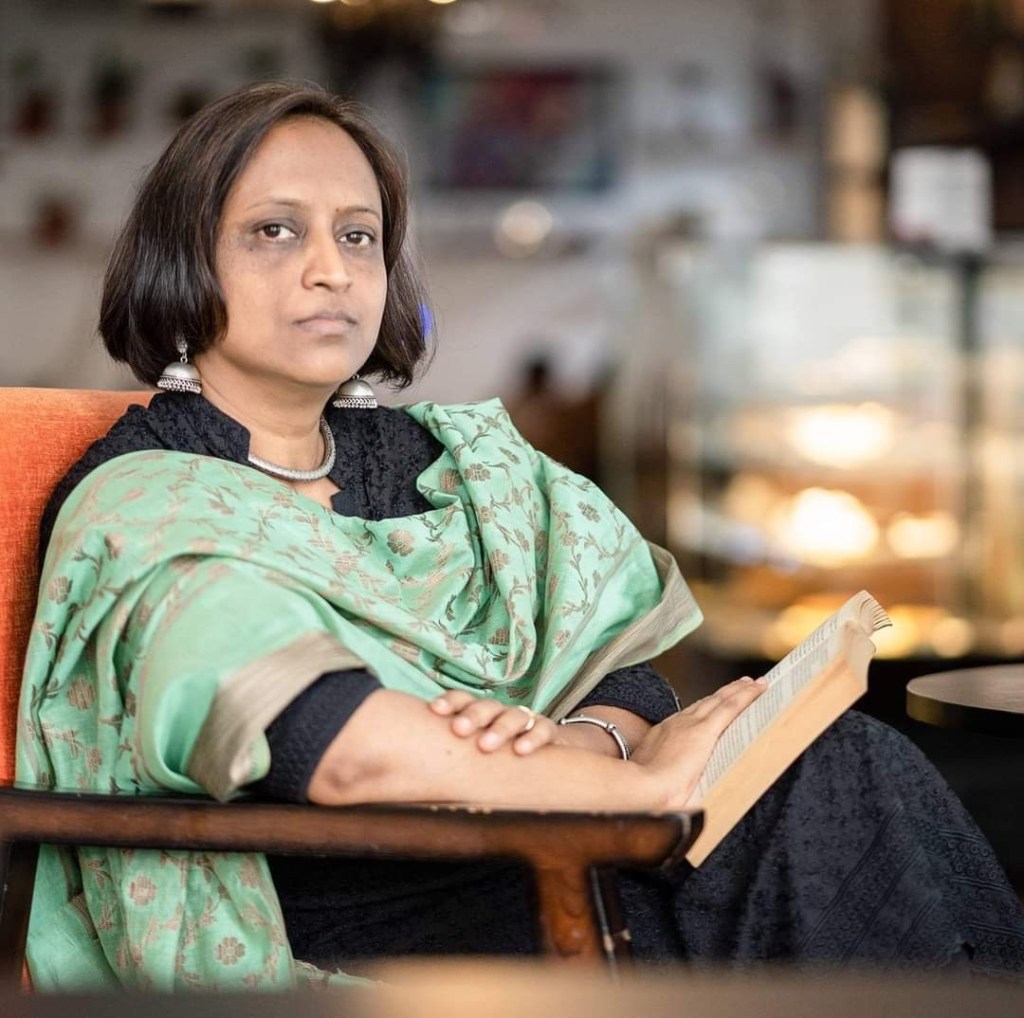
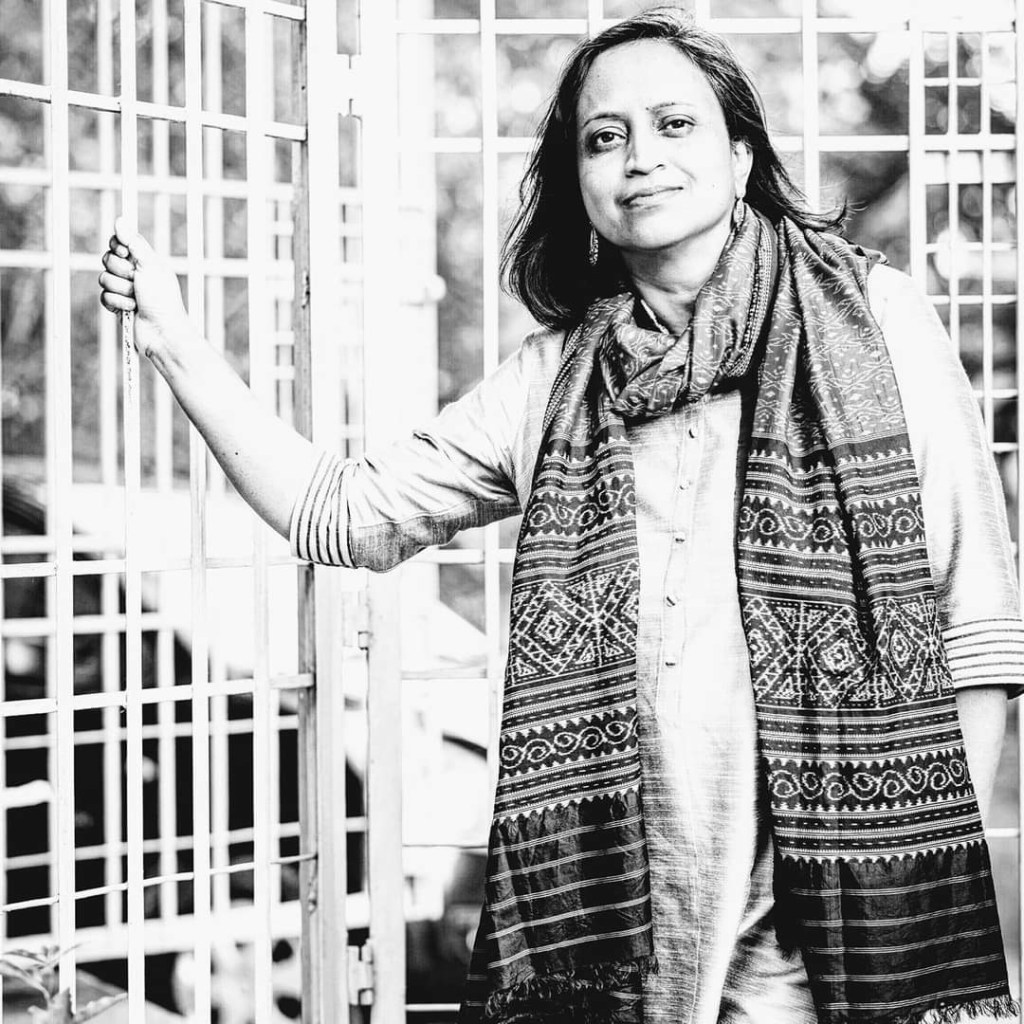
Teresa Rehman

Teresa Rehman is a journalist with a difference. She is woman who feels and conquers with her pen. She does not hanker for anything more than being the spokesperson for voices in the remote areas of North-eastern India. In that spirit, she started her own magazine: The Thumb Print, and also wrote a couple of books which have found their way to even the Strand Bookstore in New York.

Rehman, an award-winning journalist based in North-east India, is known for her resolute grit and matter-of-fact approach to stories. She has worked for years toward bringing the different facets of the region, its diversity and distinct ethos into mainstream media. Rehman’s work in journalism spanned through India Today, Telegraph and Tehelka before she decided to put in all her resources into launching The Thumb Print e-magazine that she edits currently. She has managed to bring in the gender perspective to her stories.

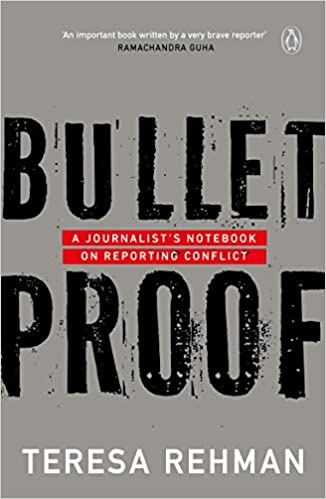
Rehman is known for her unassuming persistence on getting the details, and sensitivity. She was featured in the Power List of Femina magazine in 2012 and has written three books. The Mothers of Manipur (Zubaan Books) and Bulletproof (Penguin Random House India) are among them. Borderless in this exclusive, unravels, Rehman’s journey as a journalist.

You said in one of your Thumb Print conversations, you are a journalist and not a writer. What do you see as the difference between being a journalist and being a writer? You have written a number of books. Does that not make you a writer?

I would always prefer to call myself a journalist and a chronicler who is trying to tell the stories of the men, women and children of one of the most underreported regions of the world, i.e. Northeast India. And the books I had written are journalistic narratives without any frills, of my journey as a reporter into the nook and crannies of the region and the stories behind the stories. I am a reporter who loves her job.

How many newspapers/ magazines have you worked for?

I started off as a cub reporter for the local dailies. And after completing my studies in journalism from the Indian Institute of Mass Communication, New Delhi, I started off as a trainee journalist at the editorial desk of India Today magazine in the capital city. After that, I relocated to Guwahati and started working as a Correspondent with The Telegraph newspaper and later reported for the entire region for Tehelka magazine. Thereafter, my life took a different turn and I became a media entrepreneur by launching the webzine, The Thumb Print in 2012. I have also written about specialised issues like media analysis for The Hoot, climate change for Alertnet Reuters, the environment for The Third Pole and gender for the Women’s Feature Service.

How long have you been a journalist? Does journalism clash with family life more than other professions?

I have been a journalist for almost two decades now. I feel, once a woman steps out of the house for work or any other activity, there are changes in her family life — for some these changes are subtle and for some these changes may be earth shattering. And if a woman finds support at home, she can break any kind of glass ceiling at her workplace. A woman is exploited the most at home. And any kind of changes in her professional life begins and ends at home. I have been quite fortunate to have had a congenial atmosphere to be able to pursue my unconventional career as a journalist. I am a first-generation journalist in my family and though I had erratic working hours, I always managed to create a support system at home. However, not all women are fortunate like I am.

You have been to many places as a journalist that a common person would not visit. Are they all centred in the North- East? Is there a reason you work from this area. Tell us a bit about your experiences in such areas.

A senior journalist had once told me “your location is your disadvantage”. On the contrary, I feel that northeast India is a paradise for journalists. There are so many untold stories waiting to be told. I feel blessed that the region is my home and I chose to work from this difficult space — a region that has witnessed several decades of violent insurgency coupled with a hostile geographical terrain. My experience has been novel, vivid and interesting compared to the rat race in the journalistic circles in the metropolitan cities and the glitz and glamour of television channels. I choose to tread on the untrodden path, in the midst of virgin nature and unwritten stories. I have written about my experiences in reporting conflict in my book Bulletproof (Penguin India). I am glad that internet has opened up immense possibilities and I can work from any place in the world and get my story across to the world.

You are an award-winning journalist. Can you tell us the work that led to these awards? Did you do the work with the intent of getting the award or was that incidental?

It feels good to be recognised for your work. But I never went hankering for awards. I guess your good work speaks for itself. I had bagged some of the most prestigious awards for journalism in India that include the WASH Media Awards 2009-2010, the Ramnath Goenka Excellence in Journalism Award for two consecutive years (2008-09 and 2009-10) for the category ‘Reporting on J & K and the Northeast (Print)’, the Laadli Media Award for Gender Sensitivity 2011, Sanskriti Award 2009 for Excellence in Journalism and the Seventh Sarojini Naidu Prize 2007 for Best Reporting on Panchayati Raj by The Hunger Project. In fact, the WASH Media Award which is given for writing on water, sanitation and hygiene and is sponsored by the Water Supply and Sanitation Collaborative Council (WSSCC) and the Stockholm International Water Institute (SIWI) was given for a story I had done based on the life of my domestic help and her associates. This goes to show that in order to bag a good story, you need to keep your ears and eyes open.

Why did you feel it was important to record your experiences in books? Was writing a book different from writing for a newspaper or magazine?

A book definitely has a longer shelf life and its reach is tremendous. I was surprised to see my book on sale at the Strand Bookstore in New York. A book remains and becomes an important document for posterity as it can also be stored in the libraries of the world. A book has a life of its own compared to newspaper clippings and write-ups. It can travel far and wide.

Tell us a bit about your work in Thumb Print. What started you on Thumb Print?

The Thumb Print was a very angry reaction. When I had to struggle to find space for my stories in the so-called ‘National’ media, I decided to create my own space. This was when I had discovered the might of the internet. The Thumb Print is more like scaffold trying to reach out to the world and bring the world to our doorsteps. We proudly call ourselves an ‘international magazine with a north-eastern soul’.

You do these online interviews with writers, currently on “Why women write?” Why would you choose this topic? Did you face a lot of discrimination as a woman in journalism?

When I started doing hardcore conflict reporting, I realised that I was stepping into an old boy’s club. I was treading into masculine space and I had to manoeuvre my way all by myself. I got no support from my male colleagues. Women, all over the world, face different layers of discrimination when they step out to do something unconventional. That is why I felt that it was important to address this question of ‘Why and how women write’.

Are you planning a new book? What are your future plans?

Yes, I am working on another book on an important aspect of contemporary northeast India. And of course, I intend to dabble with different aspects of media which is trying to keep pace with the fast evolving technology.

Any message for upcoming writers/ journalists?

Yes, journalists should not forget the basic values of good old shoe-leather journalism. A value of a well-told story can never change — though the medium or external packaging might change. In trying to keep pace with technology, we should not forget the values of telling the truth that should be the primary concern of a journalist.

This interview was conducted online by Mitali Chakravarty.

.

PLEASE NOTE: ARTICLES CAN ONLY BE REPRODUCED IN OTHER SITES WITH DUE ACKNOWLEDGEMENT TO BORDERLESS JOURNAL.