sometimes they arrive like a fox with a mouthful of feathers
because somewhere, something has died or been eaten alive
or they startle you like the clapping of pigeon wings – a spasm of applause in a silent wood –
an idea stirring up there in the wet branches, one you’d half forgotten
others push their way out of dreams, in the way tiny quills would poke through a feather bed
or goose down pillow, to remind you of all you are resting on
but the best of them drift down like a blessing, rocking like an airborne cradle
to land between the gold of the nib and the cream of the paper
with a message from the bird who’s already flown
Chris Ringrose is a writer of poetry and fiction who lives in Melbourne, Australia. His latest poetry collection is Palmistry (ICoE Press, Melbourne, 2016). Creative Lives, a collection of interviews with South Asian writers, was published by Ibidem Press, Stuttgart, in 2021. His poetry website is http://www.cringrose.com
.
PLEASE NOTE: ARTICLES CAN ONLY BE REPRODUCED IN OTHER SITES WITH DUE ACKNOWLEDGEMENT TO BORDERLESS JOURNAL.
As a curator, Ratnottama Sengupta writes about the long trajectory of films by artists, beginning with Husain’s Berlinale winner, down to the intrepid band she screened at the just concluded 30th Kolkata International Film Festival
Gaja Gamini: Painting by MF Hussain Gaja Gamini (An elephant’s walk) Movie by MF Hussain
When Maqbool Fida Husain won the Golden Bear in the 17th edition of the Berlin Film Festival, the year was 1967. I, in my pre-teen years, knew little about painting. But growing up in a family of filmmakers I was already conversant with the art of looking through the camera. So I was disoriented that the film critics of the time were baffled by what had impressed the international jury.
Royalty, tigers, ruins, hawks, school children, anklets, on the river bank – all these images moving only to music, not a word uttered. The jury at Berlinale were astounded by the richness of the artist’s idiom that had breathed life into a Rajasthan that is rich in architecture as it is in painting, in costume as in music.
This dawned on me years later, when I curated the exhibition, 3 Dimensions, forthe All India Fine Arts and Crafts Society in New Delhi. It featured paintings, sculpture and graphic art or drawings by artists from Husain, Satish Gujral, Ghulam Mohammad Sheikh, Jatin Das to Sanjay Bhattacharya, Paresh Maity, Mimi Radhakrishnan, Shadab Hussain, among others.
A unique feature of this exhibition was that all the participating artists had interest in another expression of art. So every evening of that week had seen a Ram Kumar and Mimi read their short stories; a Narendra Pal Singh and Jatin Das read their poems; a Sanjay Bhattacharya render Tagore songs of and a Shruti Gupta Chandra perform Kathak. Ratnabali Kant had staged a Performance Art in the presence of Prime Minister V P Singh who had inaugurated the week-long exhibition by reading his poems. And, on the closing day, I had screened Through a Painter’s Eyes. That’s when it dawned on me: it was the originality of vision captured by the 7-minute short film had won over Berlin as also Melbourne and our very own National Awards too.
Subsequently Husain, who had started out from the tenements of Bombay by painting oversized hoardings of Hindi films on the sleeping tramlines at the dead of night, had at the ripe age of 84 made Gaja Gamini (2000) with stars such as Madhuri Dixit, and Minaxi — A Tale of Three Cities (2004) with Tabu and Naseeruddin Shah. Ironically these films baffled the critics just as much as the earlier short film had. However the dazzling visuals of vibrant figures and colourful structuring of the (non)-narrative had found acceptance in the Marche du Film section of Cannes 2004.
*
I have since then tried to fathom what drives artists who are skilled at painting with oil or watercolour, or sculpting wood or stone, metal or clay, or creating graphic images on paper or linoleum, to wield the megaphone. Now, instead of holding the camera or editing the celluloid strips with their hands, they use their mind, their mind’s eyes, their creative imagination.
Some other contemporaries of Husain too had, after attaining glory in the plastic arts, turned to experimenting with the new, ever evolving, ever contemporary art form — cinema. In 1970, Tyeb Mehta, who had briefly worked as an editor, made Koodal, meaning ‘Meeting Ground’ on the Bandra station of Mumbai’s Western Railway. The synthesis of images of humans and animals had won him the Filmfare Critics Award.
Cartoonist Abu — born Attupurathu Mathew Abraham — was a journalist and author who had worked for Punch, Tribune and The Observer in London before returning to work with The Indian Express. He was given a special award by the British Film Institute for the short animation No Ark, clearly a cryptic message deriving from the Biblical tale of Noah’s Ark.
Equally engrossing is the story of Syzygy, also produced by Films Division, and directed by Akbar Padamsee. This 16-minute short, premiered at a UNESCO screening in Paris 1969, had no narrative, no sound, or even colour. It only had lines evoking shapes typically used to refer to the alignment of celestial bodies. Only one man had stayed back till the end of the screening — and he had said to Padamsee, “Most people could not understand your film — it’s a masterpiece.”
Reportedly that man had gone on to become the programming director at Cinematheque Francaise – world’s largest film archive. That’s where Indian filmmaker found Ashim Ahluwalia found a copy of Events in a Cloud Chamber, Padamsee’s second film that was sent for screening at the Delhi Art Expo — never to be returned to the artist. The lost-in-transit film has now been professionally reinterpreted by Ahluwalia.
NB: All these films were supported by filmmaking bodies, and though often baffled, cineastes realised theirs was a new way of seeing the visual expression that goes under the arching umbrella of cinema.
*
This desire to understand, adapt, and get under the skin of a modern medium had driven Tagore, a century ago from today, to paint expressionistic forms and also to film Natir Pujo (1931). And today we find a band of artists from Delhi, Mumbai, Kerala and Baroda making films that bridge disciplines from landscape and abstraction to mimetic movement and drama.
What are the notable features of these films that are mostly made on video? They too have little need for dialogue. Instead, their sight is supported by music of natural sound. If the objects they capture through the lens are arresting forms, vacant spaces can be just as inviting. When they have humans as their protagonists, they are keen to capture body language rather than drama. Colourful palette is not a foregone conclusion – monochromes and black and white can be more poignant. Because? Their visuals are but vehicles for commenting on social reality and for communicating philosophic content.
Legends or veterans, seasoned or sprouting, this intrepid band of adventurers includes Vivan Sundaram, Ranbir Kaleka, Gopi Gajwani, Rameshwar Broota, Bharti Kapadia, Babu Eshwar Prasad, Gigi Scaria, Protul Dash, and Sanjay Roy. They are a continuum of the spirit of experimentation that had driven Husain and Tyeb, Abu Abraham and Akbar Padamsee.
Films by Artists at KIFF*

1 *Disclaimer* 2016/ 9:40 min
By *Gigi Scaria* focuses on the sleight of hands by a magician
2 *On the Road* 2021/ 5:7 min
By *Babu Eshwar Prasad* is a nostalgic look at road movies that are part documentary, part adventure.
3 *Sabash Beta* 3 min
By *Rameshwar Broota* with Vasundhara Tewari applauds the galloping of a fleighty horse.
4 *Leaves Like Hands of Flame* 2010/ 5:34 min
By *Veer Munshi* likens the fallen chinar leaves to the autumn in the lives of uprooted Kashmiris.
5 *L for…* 2019/ 13:14 min
By *Bharti Kapadia* plays with the sight and - surprisingly - the sound of the alphabet.
6 *Fruits Ripen and Rot* 2022/ 4:21 min
By *Sanjay Roy* is a surrealistic look at the divergent responses to food that is central to everyman's existence.
7 *How Far…?* 2023/ 12:37 min
By *Ranveer Kaleka* is an elegy, a dirge, mourning the losses wrought to Planet Earth by human destruction such as war.
8 *Burning Angel* 2024/ 4:37 min
By *Pratul Dash*  is an abstract story of the same destruction.
9 *Turning 2008/ 11 min
By Vivan Sundaram is a silent, colourful comment on the waste created by consumerist civilization.
10 *Time* 1974/13 min
By *Gopi Gajwani* is a riveting tale of how relative a minute is to one in mourning, one waiting, and for one in love.


*Kolkata International Film Festival
.
Ratnottama Sengupta, formerly Arts Editor of The Times of India, teaches mass communication and film appreciation, curates film festivals and art exhibitions, and translates and write books. She has been a member of CBFC, served on the National Film Awards jury and has herself won a National Award.
.
PLEASE NOTE: ARTICLES CAN ONLY BE REPRODUCED IN OTHER SITES WITH DUE ACKNOWLEDGEMENT TO BORDERLESS JOURNAL
A brief overview of Once Around the Sun : From Cambodia to Tibet (Hembury Books) by Jessica Mudditt and a conversation with the author
Jessica Mudditt
Jessica Mudditt’s Once Around the Sun: From Cambodia to Tibet is not just a backpacker’s diary but also her need to relate to humanity, to find friendships and even love, as she does with Kris, a photographer named after Krishna, the Hindu god, because his parents while visiting India fell in love with the divinity!
The Burmese translation of Our Home in Myanmar was published recently.
Hurtling through Cambodia, Vietnam, China, Tibet, young Mudditt concludes her narrative just at the brink of exploring Nepal, India and Pakistan in her next book… leaving the reader looking forward to her next adventure. For this memoir is an adventure that explores humanity at different levels. Before this, Mudditt had authored Our Home in Myanmar – Four years in Yangon, a narrative that led up to the Myanmar attack on Rohingyas and takeover by the military junta. Once Around the Sun: From Cambodia to Tibet is the first part of a prequel to her earlier book, Our Home in Myanmar, both published by her own publishing firm, Hembury Books.
What makes her narrative unique is her candid descriptions of life on a daily basis — that could include drunken revelry or bouts of diarrhoea — while weaving in bits of history and her very humane responses. Her trip to Angkor Wat yields observations which brings into perspective the disparities that exist in our world:
“I was gazing out at an empire that was once the most powerful and sophisticated in the world. In 1400, when London had a middling population of 50,000, the kingdom of Angkor had more than a million inhabitants and a territory that stretched from Vietnam to Brunei. It had flourished for six hundred years, from the ninth to the fifteenth centuries.
“But somehow Cambodia had become one of the world’s poorest countries, and surely the most traumatised too, following a recent war and genocide. I knew that when we came back down to the ground, there would be a collection of ragtag street kids and downtrodden beggars desperately hoping for our spare change. It was difficult to reconcile the grandeur of Cambodia’s past with its heart-breaking present in the twenty-first century. How did a country’s fortunes change so dramatically? Could the situation ever be turned around?”
How indeed?
Then, she writes of Vientaine in Vietnam:
“I was struck by the fact that sex work seemed to be the consequence for countless young women living in poverty. It made me angry, but mostly sad.”
In these countries broken into fragments by intrusions from superpowers in the last century, judged by the standards of the “developed countries” and declared “underdeveloped”, an iron rice bowl becomes more important to survive than adventure, discovering other parts of the world or backpacking to self-discovery. Travel really is the privilege of that part of the world which draws sustenance from those who cannot afford to travel.
Jessica showcases mindsets from that part of the Western world and from the mini-expat world in Hong Kong, which continue alienated from the local cultures that they profess to have set out to explore or help develop. One of the things that never ceases to surprise is that while the ‘developed’ continue to judge the ‘third world’, these countries destroyed by imposed boundaries, foreign values, continue to justify themselves to those who oppress them and also judge themselves by the standards of the oppressors.
Some of these ‘developing’ countries continue to pander to needs of tourism and tourists for the wealth they bring in, as Jessica shows in her narrative. She brings out the sharp differences between the locals from Asia and the budgeted backpackers, who look for cheap alternatives to experience more of the cultures they don’t understand by indulging in explorations that can involve intoxicants and sex, their confidence backed by the assurance that they can return to an abled world.
Backpackers from affluent countries always have their families to fall back on — opulent, abled and reliable. Mudditt with her candid narrative explores that aspect too as she talks of her mother’s response to her being sick and budgeting herself. Her mother urges her to cut short her trip. But she continues, despite the ‘adversities’, with an open mind. That she has a home where she can return if she is in any kind of trouble begs a question — what kind of ‘civilisation’ do we as humans have that she from an abled background has a safe retreat where there are those for whom the reality of their existence is pegged to what she is urged to leave behind for her own well-being? And why — as part of the same species — do we accept this divide that creates ravines and borders too deep to fathom?
Mudditt with her narrative does create a bridge between those who have plenty and those who still look for and need an iron rice bowl. She mingles with people from all walks and writes about her experiences. Hers is a narrative about all of us –- common humanity. Her style is free flowing and easy to read — quite journalistic for she spent ten years working as one in London, Bangladesh and Myanmar, before returning to her home in Australia in 2016. Her articles have been published by Forbes, BBC, GQ and Marie Claire, among others. This conversation takes us to the stories around and beyond her book.
What led you to embark on your backpacking adventure? Was it just wanderlust or were you running away from something?
It was primarily from wanderlust, but I also didn’t know what I was going to do with the rest of my life. After six years at university, I was still yet to have any particular calling. However, I was also glad I didn’t know. It meant that I was free to go and explore the world, because I wasn’t putting my career on hold. I had no career.
I also had a broken heart when I set off for Cambodia – but the trip was planned before that relationship had even begun. But again, part of me was glad that my boyfriend had called it quits, because my plan was to be away for a very long time (and it ended being a decade away).
What made you think of putting down your adventures in writing? As you say, this is a prequel to your first book.
It was the pandemic that made me realise that backpacking was really special. There was a period in 2020 when it looked like travel may never be so unrestricted again, so it motivated me to document my year of complete freedom. It was also before social media was even a thing. When I was lost, I was really lost, and I had to use my problem-solving skills.
Prior to the pandemic, I sort of thought that backpacking itself was too fun to write about. I hadn’t actually lived in any of the countries I visited – I was just passing through. But that is also a valid experience, and one that many people can fondly relate to. There were also some really confronting and difficult moments.
You have written of people you met. How have they responded to your candid portrayals? Or did you change their names and descriptions to convey the essence but kept your characters incognito?
While I was writing the book, I got back in touch with the people I travelled with – I can thank Facebook for still being in touch with most people mentioned. They helped me to remember past anecdotes and I got some of the back story of their own trips. I have only used first names to protect their privacy, although there are some photos in the book too. Thankfully the world is so big that the odds are small that anyone would recognise, say, an Irish guy from Adam in Vietnam in 2006! Clem from Shanghai has just sent me a photo of her with my book, and Romi from Vietnam actually came to my book launch, which was awesome.
What was your favourite episode in this book — as a backpacker and as a writer? Tell us about it.
I think it was crossing into China and meeting ‘the man.’ I felt so alive with every step I took into China after crossing over on foot from Vietnam. To be chaperoned in the way I was – without being able to communicate a single word – was unusual. His kindness left me speechless, so the anecdote has a nice story arc.
In your travels through China, you faced a language handicap and yet found people kind and helpful. Can you tell us a bit about it?
I foolishly underestimated the language barrier. It was profound. In Southeast Asia, there was always at least a sprinkling of English, and I sort of just assumed that I’d be fine. I entered China from Vietnam, so my first port of call was Nanning, where there is not even really an expat population. I couldn’t do the most basic things, from finding the toilet or an internet cafe or something to eat! I used sign language and memorised the Chinese character for ‘female’ to make sure I went into the right toilet! In a restaurant, I just pointed at whatever someone else was eating in the hope that they would bring me a bowl of whatever it was. There were times when I was seriously lost and lonely, but I ended up staying in China for two months and saw the comedic side. I was bumbling around like Mr Bean (who is hugely popular in China).
I met a lot of people who were really kind to me, and I was just so grateful to them. I didn’t have Wi-Fi on my phone back then, so getting lost in a massive city in China was a bit scary. I met a student called Mei-Xing who ‘adopted’ me for a few days in Guilin. We had a really nice time together and it was so great to hang out with a local.
What is/are the biggest takeaway/s you had from your backpacking in this part of the world? Tell us about it.
I think it’s something quite simple: the world can be a very beautiful place, and a very polluted place. Tourism can do a great deal of damage when there are too many people clambering over one area. There is also an incredible level of disparity in a material sense on our planet. Some humans are travelling into space on rockets. Others are pulling rickshaws, as though they are draught horses. It is profoundly inequitable.
Having travelled to large tracts of Asia, what would you think would be the biggest challenge to creating a more equitable world, a more accepting world? Do you think an exposure to culture and history could resolve some of the issues?
I think that democracy is key. It slows us down and forces us to act in the interest of the majority, not the top-level cronies. That is definitely also something I witnessed in Myanmar. When a few people hold all the power, the population is deprived of things that ought to be a human right.
I think that travel definitely alters your perspective and broadens your mind, and it is something I’d recommend to anyone. Realising that the way that things are done in your home country is not the only way of doing things is a valuable thing to learn.
Mostly, you met people off the street. In which country did you find the warmest reception? Why and how?
In Pakistan. The hospitality and friendliness was unparalleled. I think it was in part due to not having many tourists there. Nothing felt transactional. I met some fascinating people in Pakistan who would have a profound impact on my own life. I am still in touch with several people I met there.
At a point you wondered if the poverty you saw could be reversed back to affluence in the context of the Angkor kingdom. Do you have any suggestions on actually restoring the lost glory?
I believe that it is beginning to be restored. Pundits have called this the “Asian Century.” I am convinced that the United States and the UK are in decline, and this process will only speed up. India, to me, holds the most promise as the next superpower, because it is a democracy (albeit flawed – like all of them), English- speaking, enormous, beautiful, fascinating and its soft power is unmatched. China is facing headwinds. I blame that on making people sad by removing their agency.
How long were you backpacking in this part of the world? Was it longer than you had intended? What made you extend your stay and why?
My trip was exactly 365 days long. I planned it that way from the beginning. I wanted to travel for no less than a year (more than a year and I might stay feeling guilty for being so indulgent!). That is also why the book is called Once Around the Sun – my time backpacking was the equivalent of one rotation of the Earth. I set off on 1 June 2006 – the first day of winter in Australia – and I arrived on 1 June 2007 in London, on the first day of the British summer. I love the sunshine.
After having travelled around the large tracts of Asia and in more parts of the world, could you call the whole world your home or is it still Australia? Is your sense of wellbeing defined by political boundaries or by something else?
Home for me is Sydney. I absolutely love it. I get to feel as though I am still travelling, because my home city is Melbourne. I go down a new road every other day and I love that feeling. The harbour is beautiful, and the sun is shining most days. It’s very multicultural too.
My kids are three and five, so I haven’t travelled overseas for years. My plan is to travel with them as much as possible when they are a bit older. I hope they love it as much as me. I cannot wait to return to Asia one day. I am also desperate to visit New York City.
What are your future plans for both your books and your publishing venture?
The second part of Once Around the Sun will come out in 2025. It’s called Kathmandu to the Khyber Pass, and it covers the seven months I spent Nepal, India and Pakistan.
My goal is to complete my fourth memoir by 2027. It will be called My Home in Bangladesh (it will be the prequel to Our Home in Myanmar!).
My fifth book will be about how to write a book. I am a book coach and in a few years I will have identified the most common challenges people face when writing a book, and finding their voice.
In the next twelve months, there will be at least 12 books coming out with Hembury Books, which is my hybrid publishing company. I love being a book coach and publisher and I hope to help as many people as possible to become authors.
Please visit the website and set up a discovery call with me if you plan on writing a nonfiction book, or have gotten stuck midway: https://hemburybooks.com.au/.
Photographs from Once Round the Sun, provided by Jessica Mudditt
(The online interview has been conducted through emails and the review written by Mitali Chakravarty.)
Formative years can imply simply a growing body or the development of a complex outlook on life. My mother, born Mary Ann Hostetler in Pontiac, Illinois, lived her formative years in colonial India. Here is what I know about two formative migrations that made her who she was. She was a quick study, a keen photographer, and resourceful traveler, but she also had an uncanny sensitivity to the need of people to feel welcome anyplace.
She had a deeply fond memory of arriving with her family in West Bengal when she was a mere 2 years old. On the dock of Calcutta, waiting to greet the Hostetlers, was another Mennonite missionary, a man who would escort the family to the mission compound. Dispatched aloft by her mother, little Mary Ann absolutely “sailed into his arms”, feeling sincere love and comfort from this steady and attentive new man. He would sometimes take her for walks in the farms and villages, letting her reach out safely. There was nothing to fear in this new place, and she was allowed to build her confidence.
Crates and luggage would have been handled by porters, a first lesson in India’s system of echelons, privileges and defenses, which even Anabaptists would adopt. India would embrace Mary Ann with her cacophony and vibrancy. There was always the conservative life at home and in the classroom, but she could escape into the chowrasta[1], eat street food, and read the discarded letters such food was wrapped in.
From the age of 5, she boarded at a dreary school in the extraordinary altitude of Darjeeling, wintered in the rural outskirts of Calcutta, spoke street dialect like an urchin, and learned to draw from memory a Mercator map of the world showing the borders of all the British colonies. During school break back in her parents’ mission compound, she and her brother might pass time picking fat ticks from the tender hide of a little bullock her parents kept, but her favourite activity in those warm days was to climb an old mango tree which stood just out of range of her mother’s call and read a book. Any book. She was never without one.
She and her family made two returns to the US, the first in 1936 for a Mission Board furlough, and again in 1944, when she had graduated from high school and the war, closing in first on the Straits Settlements, and soon after striking the Calcutta docks, was too close for comfort.
For that 1936 furlough, the family stayed a few days in Calcutta’s Salvation Army hotel while her mother shopped for items to bring back with them to the States. Her list would have included a tablecloth and sheeting, cotton yardage, British wool, perhaps a few sandalwood items. These things would not have been exotic souvenirs but rather, practical items for their year ahead enduring America’s Great Depression. They were, after all, the family of a pastor, disinclined to appear exceptional or proud.
Through their Salvation Army hotel window, my mother gazed down at the Fairlawn Hotel next door, where well-heeled families relaxed with tea service on white rattan furniture, children scattered gleefully on the vast greensward, late afternoon birdsong above, and a distant Victrola warbling from inside the forbidden edifice. She longed to experience such pleasures, and decades later, she did finally stay a few nights at the Fairlawn in 1992, with me, as I had chosen the hotel without knowing its gnawing maneuvers deep in my mother’s soul.
Checking in, we met the flamboyant and zaftig British redhead in charge of the place, my mother’s very age, daughter of the owner from those last days of the Raj. That woman could scream gutter Bengali at the top of her lungs, and the next moment turn to my mother and politely ask about some little thing important only to little girls from a faraway garden city. I watched as these two disparate women embraced and laughed together.
The day she and her own mother arrived in the Los Angeles port of San Pedro, she was astonished to disembark and hear sweaty stevedores yelling and chattering in English. This told her more about America and what was purportedly its classless society, than any adult’s own description could have. She thrilled at this discovery. She was unconcerned about fitting in with new school mates, got along well with them, even though they whispered amongst themselves about “her brogue.”
She never told me anything about her trip back to India, a year later. But she would have sailed again, stuffed into Second Class. I imagine her trying to lose her parents, availing herself of the ship’s library. But I don’t know.
She graduated from Mount Hermon School as the “Best Girl,” although if you visit there, you can discover that the clueless new headmaster from her graduation year neglected to have the big silver trophy emblazoned with her name for the class of 1944. Her brother’s is there with the year 1943 on the school’s “Best Boy” cup. But he simply forgot to put in the engraving order when it was Mary Ann Hostetler’s honor. My mother harbored few resentments, but this was a sore point, as she had worked very hard at academics.
I have never seen Bombay Harbour, where she finally left India as a young woman, but this is what she has told me. It was wartime, 1944, but she was full of hope and thrilled to be out of that grim and cold school in the clouds.
Mary Ann and her family boarded a passenger liner repurposed to carry a large number of troops. A little sister had been born in India, making the family five, now billeted in what was once a First Class cabin, as were other American families leaving India. Of course, no monogrammed towels or French milled soaps awaited them, but she relished the luxury of portholes and her own bunk.
The ship left Victoria Dock in April of 1944, mere days before the catastrophic accident of the munitions-laden SS Fort Stikine accidental fire and explosion, which destroyed every vessel in the harbor. Wartime secrecy held successfully for decades, and my mother never learned of the near miss until many years after the war was over.
All kinds of security measures were taken, even though the atmosphere on the crowded ship was convivial and relaxed. No flags flew. And they sailed a zigzag course as a precaution against torpedoes. They were in a convoy with two other soldier and civilian transports, but never saw the other ships except when in harbour. One of those harbours was Melbourne, where boarded dozens of Australian war brides, and every last one of those young women, my mother said, had a screaming infant. Those women shared second class cabins. Two mother/baby pairs had bunks and one pair slept on their cabin floor.
Everyone aboard seemed to be flirting with the soldiers and welcoming distraction. My mother and her new girlfriends, and even a few of the young Australian mothers, were nurturing chaste romances and enjoying their youth. It was so much fun, and so stress-free, that my mother looked down at her wrist one day, where there had flourished for many months a large filiform wart, resembling some sort of fleshy agave plant; it had vanished.
They went through the Panama Canal, a surprise for everyone aboard as well as for their stateside families. All had been told by the war department that the convoy would land in San Francisco. Instead, they went to Boston. Plans were upset, lives were disrupted, and thousands of families who had made their way to California were now faced with crossing the wide country to meet their loved ones. Typical instance, my mother said, of the war and the US government inflicting the population with whimsy, wasted efforts, or red tape in the name of national security.
To glimpse at last the American flag flying in Boston harbour gave my mother an indescribable feeling of safety and delight. Worries carefully buried were truly gone. The war would end in a little over a year’s time. She had the rest of her life ahead of her.
The USA was a safe harbour for a few years of university before she was off again, this time to Japan. Decades later, with an empty nest, she and my father chose Italy. Migrations were just part of living, and wherever she went, if she met another person displaced by whatever reason, she had a new best friend. I knew them, too. The Finnish dry cleaner, the Salvadorian woman who answered the phone at the Honda repair shop, or the Japanese lady who ran an art supply store: these people came from away, and so had she.
Title: Once Around the Sun: From Cambodia to Tibet
Author: Jessica Mudditt
Chapter 20 – In or out?
As I walked the streets of downtown Hohhot in search of a travel agency, I felt further than five hundred kilometres from Beijing. I was still in East Asia, but the capital city of Inner Mongolia had Central Asian influences too, such as the cumin seed flatbread I bought from a hawker with ruddy cheeks and a fur hat. I passed a Muslim restaurant with Arabic lettering on the front of its yellow-and-green facade, and many street signs and shops featured Mongolian script as well as Mandarin. With its loops, twirls and thick flourishes, Mongolian looked more similar to Arabic than Chinese. In actual fact, the top-down script is an adaptation of classical Uyghur, which is spoken in an area not far to the west.
The winds that blew in from the Russian border to the northeast were icy cold, so I was glad to soon be inside a travel agency. It was crammed with boxes of brochures and a thick film of dust covered the windowpanes. Hohhot is the main jumping-off point for tours of the grasslands, so I was able to get a ticket for a two-day tour that began the following morning.
I wasn’t enthusiastic about going on a tour because I preferred to move at my own pace, however there was no other way to access the grasslands. The upside was that I was guaranteed to sleep inside a ger, which is a circular tent insulated with felts. The Russian term of ‘yurt’ is better known. I had read that Inner Mongolia was a bit of a tourist trap for mainland Chinese tourists, but I was nonetheless excited to get a glimpse of the Land of the Weeping Camel.
I walked into a noodle shop and a customer almost dropped her chopsticks when she saw me. The girls at the cash register were giggling and covering their faces as I pointed at a flat noodle soup on a laminated menu affixed to the counter.
Foreign tourists must be thin on the ground in Hohhot, I thought as I carried my bowl over to a little table by the window.
Inner Mongolia was one of the few places that Lonely Planet almost discouraged people from visiting: ‘Just how much you can see of the Mongolian way of life in China is dubious.’ But I was still keen to see what I could.
I ate slowly, enjoying each fatty morsel of mutton. I was pretty good with chopsticks by that point – I’d never be a natural, but I didn’t drop any bits of mutton into the soup with a splash, as I used to in Vietnam.
Hohhot seemed a scruffy, rather bleak sort of city – or at least in the area where I was staying close to the train station. Street vendors stood cheek by jowl on one side of the road, calling out the prices of their wares. The opposite side was under construction and the one still in use was unpaved, which meant that two lanes of traffic had to navigate a narrow area of bumpy stones while avoiding massive potholes and piles of dirt. I saw a motorbike and a three-wheel truck almost collide.
I spent the next few hours wandering around the Inner Mongolia Museum, which has a staggering collection of 44,000 items. Some of the best fossils in the world have been discovered in Inner Mongolia because its frozen tundra preserves them so effectively. The standout exhibit for me was the mammoth. It had been discovered in a coal mine in 1984 and most of its skeleton was the original bones rather than replicas. I gazed up at the enormous creature and tried to imagine it roaming the earth over a million years ago. Mind-boggling.
I admired the black-and-white portraits of Mongolian tribesmen, and then took photos of a big bronze statue of Genghis Khan astride his galloping mount. The founding leader of the Mongol Empire was the arch-nemesis of China, and parts of the Great Wall had been built with the express purpose of keeping out his marauding armies. Genghis Khan must have rolled in his grave when China seized control of a large swathe of his territory in 1947.
What was once Mongolia proper became a Chinese province known as ‘Inner Mongolia Autonomous Region’. This long-winded name is an example of Orwellian double-speak. So-called ‘Inner Mongolia’ is part of China, whereas the independent country to the north is by inference ‘Outer Mongolia’. Nor is the Chinese region autonomous. The Chinese state has forced Mongolians to assimilate. Their nomadic lifestyle and Buddhist beliefs had been pretty much eradicated, and although speaking Mongolian wasn’t outlawed, learning the state language of Mandarin was non-negotiable.
On top of this, the government provided tax breaks and other financial incentives to China’s majority ethnic group, the Han Chinese, if they relocated to Inner Mongolia. Mongolians now account for just one in five people among a total population of 24 million. The same policies of ethnic ‘dilution’ exist in China’s four other ‘autonomous regions’, which include Tibet and Xinjiang, the home of the Uyghurs.
Shortly before I left the museum, I came to a plaque that described the official version of history, which was at odds with everything I’d read in my Lonely Planet.
‘Since the founding of Inner Mongolia Autonomous Region fifty years ago, a great change has happened on the grasslands, which is both a great victory of the minority policy and the result of the splendid leadership of the Communist Party of China. The people of all nationalities on the grassland will never forget the kind-hearted concerns of the revolutionary leaders of both the old and new generations.’
I rolled my eyes, snapped a photo of the plaque for posterity, and continued walking.
* * *
I didn’t venture far from my hotel for dinner because I planned on having an early night. I chose a bustling restaurant with lots of families inside and was waiting for a waiter to come and start trying to guess my order when a group of men at the next table caught my eye. They seemed to be waving me over.
Me? I asked by pointing at myself.
Yes, they were nodding. Shi de.
I happily joined the group and introduced myself by saying that I was from ‘Aodàlìyǎ’. I think they were Han Chinese, as they didn’t look Mongolian. I whipped out my phrasebook and tried to say I had come from Beijing, but I was fairly certain they didn’t understand me.
Anyhow, no matter. Ten shot glasses were filled from a huge bottle of baijiu, and I was soon laughing as if I was with old friends. One of the slightly older guys used a set of tongs to place wafer-thin slices of fatty pork into the bubbling hotpot on the table, followed by shiitake mushrooms and leafy greens. As the impromptu guest of honour, my bowl was filled first once it was cooked – by which time I’d already had three shots.
The hotpot was fantastic, and I had to remind myself not to finish everything in my bowl. Bethan had told me that Chinese etiquette requires a small amount of food not to be eaten at each meal. This indicates that it was so satisfying that it wasn’t necessary to eat every last bite. As a kid, it was ingrained in me to finish everything on my plate. I loved food and was generally in the habit of licking my bowl clean, so I had to exercise a certain amount of restraint.
I had just rested my chopsticks across the top of my bowl to signal I was finished when I was invited to go sit on the wives’ table, which was across from the men’s. The women were very sweet and a couple of them seemed to be around my age. I once again tried to communicate using my phrasebook, but I was hopelessly drunk by then. I could hardly string a sentence together in English, let alone Mandarin. I was also beginning to feel queasy from the baijiu, so I gratefully accepted a cup of green tea from the porcelain teapot that came my way on the lazy Susan. After taking some photos together, I bid the two groups ‘zaijian’ (goodnight). I tried to contribute some yuan for the meal, but they wouldn’t hear of it. I curtsied as a stupid sort of thank-you, and then I was on my way.
* * *
More hard liquor awaited me the following day. A striking woman in a red brocade gown with long sleeves handed me a small glass of baijiu as I stepped off the minibus a bit before noon.
‘It’s a tradition,’ she said with a smile, while holding a tray full of shots.
I downed the baijiu with my backpack on and grinned as the backpacker behind me did the same. There were four foreign tourists on the tour, and about eight domestic ones. The liquor gave me an instant buzz, which I needed. I hadn’t slept well and woke up feeling lousy, so I’d kept to myself during the two-hour journey. Even though I should have been excited, I got grumpier and grumpier as the reality of being on a tour began to sink in. Plus, the landscape was not the verdant green steppes I’d been expecting. At this time of year, it was bone dry and dusty. It hadn’t occurred to me to check whether my visit coincided with the low season.
I began chatting to the other tourists. The guy who had the baijiu after me was Lars from Holland. There was also a couple from Germany. I could immediately tell they were pretty straitlaced. Their clothes looked very clean and functional, and the girl refused the baijiu.
The woman in red introduced herself as Li, our tour guide. Then she led us along a path lined with spinifex to a dozen gers. They faced each other in a circle, and off to the right was a much larger ger with the evil eye painted on its roof and Tibetan prayer flags fluttering in the fierce winds. There were no other buildings in sight and no trees.
Li told us to meet inside the big ger in fifteen minutes after we’d put our stuff in the smaller gers she proceeded to assign us. Lars and I would be spending the night in a ger with ‘82’ painted on its rusted red door. There certainly weren’t eighty gers, so the logic behind the numbering system wasn’t clear – but no matter. The German couple took the ger to the right of ours.
These were not portable tents for nomads. Each ger was mounted on a concrete base and I think the actual structure was made of concrete too, and merely wrapped in grey tarpaulins. The door was made of metal and at the top was a sort of chimney structure – perhaps for ventilation. Like igloos, the only opening was the door, and it was pitch-black inside. I located a dangling light switch as I entered.
‘Ah – I love it!’ I exclaimed.
It was a simple set-up, with single beds lining the perimeter and a low table in the middle of the room. Patterned sheets were draped from the concave ceiling. I chose the bed with a framed portrait of Genghis Khan above it. Lars put his backpack next to a bed on the other side. I was happy enough to share a ger with him. He gave off zero sleazy vibes.
‘I might just take a couple of those extra blankets,’ I said to Lars as I piled on a few extra floral quilts from another bed. The wind had an extra iciness to it out on the steppes and I shuddered to think what the temperature would drop to overnight. We zipped our jackets back up and headed out.
I wandered over to the toilet block, which was quite a distance from the gers. I made a mental note to drink as little as possible before getting into bed to avoid having to go in the night. Once I got closer to the toilets, I was glad they were so far away. The stench was unbelievable.
In the female section were two concrete stalls without doors. In the middle of the floor in each was a rectangular gap. I almost gagged. Just a few centimetres away from the concrete was an enormous pile of shit. I could make out bits of used toilet paper and sanitary pads and there were loads of flies buzzing around. Without running water or pipes, the excrement just sat there, day after day, building up. I would have turned and walked straight back out but I was busting for a wee. I held my breath so I wasn’t inhaling the smells. I wanted to close my eyes too, but I was terrified of falling in, so I had to look at what I was doing. I couldn’t get out of there fast enough.
‘Oh my god, Lars – the drop toilets are totally disgusting,’ I said after I met up with him in the big ger. ‘It’s just a pit of shit without running water.’
‘I know an American girl who fell into a drop toilet in China last year,’ he said.
‘No way,’ I said with a shudder.
‘Yeah. She said it was terrible. She was in a really poor village somewhere in central China and she went to the toilet at night. She couldn’t see that some of the wooden planks had gaps in them – and then one of them broke and she fell in. She was up to her neck in shit. She was screaming for people to come help her. Apparently, it took them half an hour to fish her out, and all the while she could feel creatures writhing around her body. She cut her trip short and had to get counselling when she got home.’
‘I bet she did,’ I said. ‘That’s the most disgusting thing I’ve ever heard in my life. The poor girl.’
Just then Li appeared and said we were heading outside to watch horse racing and traditional wrestling after some sweet biscuits and tea. We assembled around a fenced area where there were about thirty ponies tethered to poles. Some were lying down while still saddled.
‘Horses usually sleep while standing up, so these ponies must be knackered – pardon the pun,’ I joked to Lars.
Notwithstanding, they looked to be in reasonably good condition, with shiny coats and no protruding ribs. There were chestnuts, bays and dapple greys.
I heard the sound of hoofbeats and looked behind me. A group of men on horseback came thundering across the steppes. It was a magnificent sight, and any lingering resentment I had about being on a tour melted away.
One of the men rode ahead of the rest. He was wearing a cobalt-blue brocaded tunic and his wavy black hair came down past his ears. He was really good-looking. He approached Li with a smile, said something to her and dismounted with the ease of someone who had probably started riding horses before he learned to walk. Li and the man exchanged a few words – I definitely saw her blush – and then he got back on.
‘Gah!’ he yelled as he dug his heels into his horse’s sides.
The other horsemen followed after him with whoops, leaving a trail of dust in their wake. These Mongolian ponies were only about twelve or thirteen hands, but they sure were fast and could turn on a dime. I loved watching them carve up the dry earth.
Next a group of men on motorcycles appeared along the track. There were quite a lot of them – at least twenty. We formed a big circle, and the traditional wrestling began. I wasn’t sure what the rules were, but it was fairly self-explanatory: one man got another in a headlock and thumped him to the ground. The next man came along and fought the winner, and so on and so forth. The spectators egged on the fighters with what I assumed were good natured cat calls. Everyone was grinning. By the time the wrestling matches were over, the fighters were absolutely covered in dust and the sun was beginning to set. I’m sure it was all staged for our benefit, but it was good fun.
With the seamless orchestration of a tour that has been done a thousand times before, we gravitated to the big ger. Dinner was bubbling away in a large clay pot and it smelled pretty good. There was also a big vat of noodles with black sauce and the ubiquitous Chinese vegetables of thinly sliced carrot, bok choy, baby corn and onion. There was a bottle of baijiu on each table.
We were serenaded with traditional music while we ate. One of the instruments reminded me of the didgeridoo and there was also a violin. I had read that strands of horse mane are used to make violin strings. The male singer had a deep voice that was almost a warble, and it was hauntingly beautiful.
Five men and women emerged from behind a red curtain and began to dance. They wore long-sleeved, billowing satin tunics that were cinched at the waist with embroidered belts. One of the women had a tall hat made of white beads that dangled down to her waist. It must have been heavy. It was a high-energy display of kicks and splits and parts of it were reminiscent of Irish dancing. They twirled their billowing skirts like sufis. The Chinese tourists started clapping in time with the music and then we all joined in. Sure, it was a bit cheesy, but I was really enjoying myself. At the end of the concert, we had photos with the performers as they were still trying to catch their breath.
We were given torches to light our way back to our gers. It was absolutely freezing, so I wore all my clothes to bed. I snuggled into my blankets and pulled them right up to my chin, feeling grateful for the warmth of Bethan’s jumper.
Mercifully, I slept right through until morning and avoided a late-night visit to the shit pit.
When I wandered out of the ger the next morning, breakfast was being prepared nearby. The carcass of a freshly slaughtered sheep was hanging from the back of a trailer. A man was skinning it while the blood drained out of its neck into a big metal bowl. Its head was in a second bowl, while squares of wool were laid out flat to dry on a tarp. A toddler in a puffy orange jacket was playing in the dust while his mother worked away at skinning parts of the wool. What distressed me more than butchery up close was the live sheep that was watching on from the back of the trailer. He presumably knew he was next.
After a breakfast of ‘sheep stomach stew with assorted tendons’ (as Li described it) we headed out for a ride on the steppes. I couldn’t wait to ride a horse again. I’d spent most of my childhood obsessed with horses, and I was lucky enough to have one for a few years, until I got older and became more interested in hockey and parties.
I rode a stocky bay with a trimmed mane that bobbed up and down as it trotted along the path. I looked over its perky little ears. The saddle had an uncomfortable pommel that kept jabbing me in the stomach, but I loved being under the wide open sky. It was a pale blue with just a few wispy clouds. Sheep grazed and crows rested on clumps of rocky outcrops.
I winced at the Chinese guy ahead of me, who was bouncing out of time to the rhythm of his horse’s gait and landing with a heavy bump in the saddle; his oversized suit flapping in the wind and his feet poking out straight in the stirrups. Much easier on the eye was the guide two horses ahead of him. He was every inch the Mongolian cowboy. Dressed from head to toe in black, he wore a leather jacket, cowboy hat and scuffed black cowboy boots. He never took off his wraparound sunglasses and he spoke little. He smouldered like the heartthrob actor, Patrick Swayze.
We’d travelled several kilometres when we came to a building block that was the same greyish brown as the earth. Inside it had a cottage feel. We sat around a table covered with a frilly tablecloth and drank yak milk. As we did, Lars told me about his day trip to North Korea. While in South Korea for a couple of weeks, he had visited the demilitarised zone (better known as the ‘DMZ’), where a ceasefire was negotiated between the two Koreas in 1953. In a military building is what is known as the ‘demarcation line’ – and Lars had one foot in North Korea and another in South Korea. I hung on his every word.
Our conversation got me thinking about how cool it would be to go to North Korea. I was actually quite close to the border. When I got back to the ger, I retrieved my Lonely Planet out of my bag and thumbed to the section titled ‘Getting there and away’, which had instructions for every country that borders China.
‘Visas are difficult to arrange to North Korea and at the time of writing, it was virtually impossible for US and South Korean citizens. Those interested in travelling to North Korea from Beijing should get in touch with Koryo Tours, who can get you there (and back).’
I was pretty sure the cost would be prohibitive for my budget and decided to stick with my existing plan of cutting south-west towards Tibet. Maybe one day I’d get the chance to visit North Korea, but it wouldn’t be on this trip.
Once back in Hohhot, I boarded a train bound for Pingyao. As I watched the apartment blocks pass by in a blur, I thought with satisfaction about the past twenty-four hours. Any visit to Inner Mongolia is problematic, but I couldn’t fault the Chinese tour company. They had made every effort to keep us entertained. Mongolian culture was so new to me that I couldn’t even tell whether something was authentic or staged, but I had seen and done all the things I hoped to during my visit. And, sure, my time there was really brief. But I’d be forever grateful to have seen a part of the world I thought I’d only ever get to see in a documentary.
Photo Courtesy: Jessica Muddit
About the Book: While nursing a broken heart at the age of 25, Jessica Mudditt sets off from Melbourne for a year of solo backpacking through Asia. Her willingness to try almost anything quickly lands her in a scrape in Cambodia. With the nation’s tragic history continuing to play out in the form of widespread poverty, Jessica looks for ways to make a positive impact. She crosses overland into a remote part of Laos, where friendships form fast and jungle adventures await.
Vietnam is an intoxicating sensory overload, and the hedonism of the backpacking scene reaches new heights. Jessica is awed by the scale and beauty of China, but she has underestimated the language barrier and begins her time there feeling lost and lonely. In circumstances that take her by surprise, Jessica finds herself hiking to Mount Everest base camp in Tibet.
From a monks’ dormitory in Laos to the steppes of Inner Mongolia, join Jessica as she travels thousands of kilometres across some of the most beautiful and fascinating parts of the planet.
About the Author: Jessica Mudditt was born in Melbourne, Australia, and currently lives in Sydney. She spent ten years working as a journalist in London, Bangladesh and Myanmar, before returning home in 2016. Her articles have been published by Forbes, BBC, GQ and Marie Claire, among others. Once Around the Sun: From Cambodia to Tibet is a prequel to her earlier book, Our Home in Myanmar.
.
PLEASE NOTE: ARTICLES CAN ONLY BE REPRODUCED IN OTHER SITES WITH DUE ACKNOWLEDGEMENT TO BORDERLESS JOURNAL
We are regular visitors to Kangaroo Island, a nature-lovers’ delight that lies 14 kilometres off the South Australian coast. Much of our time there is spent trying to atone for the environmental damage caused by our European forebears. Swathes of the vegetation have been cleared due to almost two centuries of European farming. Thousands of sheep have grazed on this cleared land for much of that time, and European crops have replaced much of the original flora. The crops have been fertilized for years, and now that we allow the land to remain fallow, noxious weeds take over, fueled by the remnant fertilizer in the soil. Our mission is revegetation, trying to reverse some of the damage from farming.
On our most recent visit, one of my jobs was to uproot the weeds. The task was impossible given that they sprawled across the land as far as the horizon, so we focused on a small fenced-off area. We dared not poison the weeds because they could be consumed by endangered bird species, such as the white-bellied sea eagles that nest nearby. For the same reason we never use rodent poison, but instead trap mice in buckets of water.
White-bellied sea eagle soaring above us
I donned my gardening gloves and grabbed the weeds by their roots, pitted my body weight against the plants, and uprooted them and before discarding them onto the weed pile.
Meanwhile my partner Alex was busying himself planting yet more trees. He was somewhat disgruntled because his boat was being repaired in Yaringa, near Melbourne, after being dismasted in Bass Strait. He gazed longingly out to sea, but seemed to regain a sense of contentment when he was planting trees. For him, planting trees was not a chore, but rather a consuming passion. He made deep holes in the rocky ground with his fencing crowbar, delicately coaxed the seedlings out of their containers, pushed the roots into the hole, pressed the soil back around the seedling, and made a berm around each plant to trap water. Then he drove stakes into the ground around each plant, and encircled them with either a corflute tree guard, or a wire cage, or both. These measures were necessary to protect them from marauding possums and kangaroos, which would otherwise devour the plants overnight.
The fenced-off orchard where we weeded, flanked by Investigator Strait.
There is only so much revegetation you can do without hankering for some relief. Alex was content to plant trees from dawn to dusk but I pressed him to take me on a day excursion. Besides, coming to Kangaroo Island was not just about our earnest efforts at revegetation; it was also meant to be a romantic getaway. Our first outing was to Seal Bay, where the attraction was not in fact seals but rather Australian sea lions. We drove there, now an official tourist destination, and entered through the park office. We walked along the boardwalk with the other tourists, many being international visitors, and gazed down at the sea lions enjoying lying in the sand in the sunshine.
Sea lions under the boardwalk at Seal Bay, Kangaroo Island
Back at the revegetation site, we resumed our routine of weed-whacking and planting for the next few days, by which time we felt we deserved another outing. This time we chose to visit American River (named after visiting American sealers in 1803) known for its picturesque harbour and fresh seafood. But for me, American River was less about the view and the seafood than spotting sea lions. I had spied one on a previous visit and was hoping to see some again. I walked onto the boat ramp near the shed where the reconstruction of the Independence schooner was taking place. (The Independence was the first ship constructed in South Australia, in 1803, commissioned by a visiting American shipmaster and sealer, Isaac Pendleton.) I walked past the door to the boat shed, because as much as I would like to claim interest in the history of local shipbuilding, my real interest was in finding a sea lion.
I was not disappointed. Behind a ‘Resting Seal’ sign explaining that you were required to keep a thirty metre distance from the sea lion, we found what we were looking for.
Sea lion in American River, Kangaroo Island
I glanced into the lagoon, and spied the sea lion’s mate, proudly flipping his body around in the water, before he scrambled onto the shore to demonstrate his supremacy in this territory.
An American tourist next to us asked Alex, “How far is thirty meters?”
He replied, “About one hundred feet, which is twice the distance we are now!”
We all walked backwards trying to preserve the thirty-metre distance between the sea lion and ourselves.
It was mid-afternoon and there were still hours of daylight left, so we decided to visit the nearby eucalyptus distillery. Before entering the building our attention was arrested by young kangaroos, known as joeys, hopping freely around the outside of the building. We entered the premises and purchased some eucalyptus products, and as we left, approached one of the joeys.
Kangaroo Island, like many parts of Australia, has dead wallabies and kangaroos alongside its roads, victims of road-kill. Because kangaroos are marsupials, some of their young may be found alive inside their pouch, even after the mother has been killed. Those finding the road-kill may drag it safely away from the road, after ensuring that no approaching cars are in sight, and then remove the joey from its mother’s pouch. The joeys we came across had been rescued in this way, and hand reared. Unlike most kangaroos, they had no fear of humans. I knelt to pat one of the joeys, and then he gently raised his pointy face to my ear and whispered in it. Then he raised his lips to mine and brushed them against me.
“Don’t let him!” urged Alex. “You’ll get germs from a wild animal.”
I let the joey tickle my lips for a few more seconds, before heeding his urgings. I had been kissed by a kangaroo!
Meredith Stephens is an applied linguist from South Australia. Her work has appeared in Transnational Literature, The Muse, The Font – A Literary Journal for Language Teachers, The Journal of Literature in Language Teaching, The Writers’ and Readers’ Magazine, Reading in a Foreign Language, and in chapters in anthologies published by Demeter Press, Canada.
PLEASE NOTE: ARTICLES CAN ONLY BE REPRODUCED IN OTHER SITES WITH DUE ACKNOWLEDGEMENT TO BORDERLESS JOURNAL
Poet, creative writer and teacher Adam Aitken talks about cross-cultural identity, and the challenges of travel, writing, and belonging with Keith Lyons.
Adam Aitken
Adam Aitken is a London-born teacher and writer with a PhD in creative writing. He migrated to Sydney after spending his early childhood in Thailand and Malaysia. His poetry and prose have been widely anthologized. He has published poetry, chapbooks, essays on Asian Australian literature, book reviews, and was co-editor of Contemporary Asian Australian Poets. The story of his mixed heritage is featured in his creative non-fiction work One Hundred Letters Home. In this exclusive, he shares about the challenges of writing, identity and place.
You were born in the UK and have spent most of your adult life in Australia but tell us about your early childhood in Thailand and Malaysia.
It was a very happy childhood, and I was spoilt by everyone, except my mother, who was chronically anxious every time my father appeared. I was unaware of it at the time, but they were not happy together. I remember my fourth birthday in Birkenhead Liverpool. Then we moved to Southeast Asia. In Thailand, my father was almost always absent. I had good schooling in Kuala Lumpur, at a Catholic pre-school run by the Good Shepherd order. I remember my first day, I was illiterate in prayers and scared of the large carving of Jesus crucified and bleeding from his crown of thorns. Around seven, I went to an international school in Bangkok, which was great except for the bullying I received from an American kid. After he hit me on the head with his sneaker, I reported him, and he was publicly shamed. There are few worse things you can do than insult someone with your shoe, especially by touching the head.
What was your experience like moving to Australia when you were still young? How did your sense of identity or ‘home’ develop?
Worse, the racism in Perth was total, violent, totalitarian. Teachers were complicit. Nothing was done about it. My brother and I were once howled out of the school as we went home. I am afraid that when I talk about the worst aspects of ‘Whiteness’, I remember that time. My father was again absent, unable to get a job he liked and implicated in a civil adultery case involving another couple. We left for Sydney after a year. My poem ‘The Far East’, is an attempt to record that kind of trauma.
When did you first discover that you liked writing creatively, and in particular, writing poetry?
About aged 14, after six years living in Sydney, I started to enjoy my English classes. I had a fabulous teacher Rick Lunn, who I think became a successful sci-fi writer. I will never forget the magic of listening to ‘The Rime of the Ancient Mariner‘. After that I had access to David Malouf’s library in Sydney, when we stayed at his flat for a few months. I discovered the alternative reality that books provide. I bought a typewriter and enjoyed the process of typing on paper. A few years later I attended a poetry reading at Exiles Bookshop in Sydney and was enchanted by the strange glamour and seriousness of the writers. Martin Johnson, John Forbes, Gig Ryan, John Tranter were all there.
What early recognition or encouragement meant you saw being a writer as a career option?
At my primary school, I wrote a poem about a forest walk we did, and on seeing a sea eagle, and that was read to the whole class. At high school in Sydney, a poem or two made it into the school magazine. I think the English Master also recognised me and encouraged me. I was lucky to grow up in a time when creative writing was still valued but not necessarily seen as a vocation for which tertiary qualifications were essential, but at Sydney University, I enjoyed lunchtime poetry workshops when there were no creative writing courses to do at all. I met practising writers in a very informal atmosphere and so ‘being a poet’ seemed a comfortable choice. My mentors were real writers but there was no pressure of assessment. The goal was to get poems into magazines. This happened when I was in 3rd year. I had great lecturers who loved poetry. I was published in Southerly. I featured in an issue of Chris Mansell’s Compass. It was a thrill to have a few pages in a well printed and produced ‘zine. I also read at what was then the largest reading in Sydney, The Harold Park Hotel. Probably Sydney’s most dynamic place at the time, and since.
How did you develop your mastery of the craft, own voice and style?
I baulk at this question as I am not sure how I can define my voice or style. Certainly, early imitation of other poets, practice and attention to poetic technique (metaphor, simile etc.) helped me develop the craft. Listening to poetry out loud helps. Revising and trying out new versions. It’s like writing music. I also have a very good ear for languages so pick up stylistic and prosodic patterns quite quickly. I listened to early advice about metrics and line endings and spent a lot of time reading traditional verse and learning the metres and forms (ie. sonnets), even though I don’t apply them much these days. Writing ‘in the style of’ is an enjoyable exercise and imitating others is fun, even though it can be unoriginal. I tend to allow a line or sentence to suggest its own metrics, then use that to write a draft. I am very much more into allowing content to dictate form.
What do you think is unique about your work, that makes it distinctly yours?
In terms of the questions of form and craft, I don’t think there are many Asian Australian poets who had a traditional training in English Lit, augmented by Modern American literary influences (like the Imagists, Ezra Pound, and the New York School). I was there in the early days of postmodern theory. I was starting out during the ‘Poetry Wars’ in the ‘seventies. I also studied linguistics and became an English language teacher. I was there in the heady days of the Sydney early ’80s. I think this gives me a kind of technical awareness of language and grammar, form and genre. I am probably one of most well know of migrant poets for having been recognised since then. I was fortunate to not have to work so much and so I had plenty of time to develop my craft. On a personal level I don’t know many other Australian poets who have had my parents who were literary enthusiasts, and both culturally eclectic. Of course, Thai heritage has given me a lot. Few Asian Australian writers have had a childhood like mine, or possibly the eclectic experience of reading as I have had. I don’t know of any Asian Australian writer who has explored their cross-cultural heritage as I exhaustively as I have in both poetry and memoir.
How do you communicate through poetry something very personal, to an audience that is on the outside?
I received a ‘New Critical’ dogma about the poem being an impersonal object, but it did not stop me reading Sylvia Plath or Frank O’Hara. I begin by thinking about how the personal could be interesting to someone I don’t know. Attend to the particulars and details of the personal, and to avoid sentimentality. Be as brave as possible as to the trauma of an experience and celebrate the positive. My own preference is to avoid histrionic outbursts, something a learned writing my memoir. Again, the particulars and exactitude of description work better than bare statements. I do still hold to the dictum of showing, not telling.
One of the characteristics of your work is attention to detail. Does that start with being observant and taking notes? How do you then find the most poignant moments or parts?
I often know I have a poignant subject, but often writing leads you to it. The previous answer is relevant here also. I don’t do a lot of notes, but I do a lot of drafts that grow into larger structures. What seems poignant early may pale into insignificance later, so I do a lot of revisiting of old notes and drafts. I often take note of dreams and reflect on what they might mean. I have always been interested in painting, photography, and films, (which I studied at Uni) so I do spend a lot of time thinking about what is ‘in the scene’, what the detail is, how close ups and panning work, what a montage is. As a child I liked to look through microscopes at insects. As far as grammar in concerned, I am fascinated by how grammars work in other languages, and in the etymology of words.
How do you go about writing a poem?
Again, often I start with a fragment, a line, a phrase, and go from there. Sometimes, I set out trying to describe a scene, a photo, a painting, an experience of looking, whether that be looking at a film or a view. Interior monologue or talking to myself and putting thought onto a page helps. I occasionally address a theme, most often at the instigation of a journal issue callout. I also have a long running series of satiric poems written in the character of an avatar, though I sometimes doubt that these amount to anything lasting.
Is poetry about finding meaning and making sense, or looking at something from different perspectives?
The Cubist method has a lot going for it, and I don’t really make the distinction between making sense and the various means we use to perceive of something. I do struggle with the fragmented poem that does not seem to find meaning, that I can’t find the sense in, or that lacks context, a heritage, a precedent in a more powerful text. But that is part of the job, to struggle towards meaning, using what is at hand.
How different is it writing an essay or review, does it use a different part of your brain or a different process?
Well, audience and purpose are more important in an essay, though not as important as I often thought. A review should help a reader decide whether to go and read the text, and I am pragmatic about this. I find writing essays almost impossible now, because I don’t have the patience and attention span needed. Essays and reviews (arguably) have strong generic patterns to follow, whereas I write poetry without constraining myself too strictly to generic considerations. Long forms are exhausting, and my eyesight is deteriorating and so long sessions at the computer are unpleasant.
If the financial rewards from writing aren’t great, does being a writer mean you have to hold a ‘day job’ or other income streams (teaching) to enable you to write?
I have always earned most of my income from teaching English as a Foreign Language, but since COVID, I live on savings. In the space of my career, grants and prizes have only amounted to about a year or two of an average income salary. I admire my peers who are full time creative writing academics but still manage to produce books in between the admin and marking. I’ll be taking up a Visiting Writer job in Singapore in 2024, and I am very much looking forward to that.
How useful have awards, being shortlisted for prizes, and residencies been to your progression as a writer? What specific things have been springboards into new worlds?
Apart from allowing me to take time off from the day job, residencies and grants have helped me to keep going and to believe in myself and has added some motivation for many in the community of like-minded poets where I live now. It is interesting to follow up on what writers have written after a stint in Rome for example.
Residencies help you reside for a longer time than average in places that you can explore. The most difficult residency I have had was probably the Paris Studio, even though I found writing time. I was overwhelmed by ‘Paris’ as a grand subject and theme and had to learn to look for the personal relevance and the original detail again. My stint as Visiting Writer in Hawai’i was powerful, as I had to rethink my use of English and my relationship with the local scene. Working with creative writing students there taught me a lot and brought me into a new way of writing that was alive to vernacular American and local patois.
Certainly, winning a postgraduate award to do a doctorate in creative writing cemented my self-belief while giving me four years of income and time to write my memoir and a thesis on hybridity and cross-cultural desire as a theme in Australian writing. My most productive period was funded by an Australia Council grant that allowed me to live and write for a year in Cambodia. While time and freedom to read and write is unarguably valuable, it allows writers to defamiliarise their surroundings. I was challenged to really question my own privilege as a w\Westerner, and as a relatively wealthy Asian Australian living in a poor country. I was already familiar with the history of the region, but the time there allowed me to have encounters with the real actors (and their descendants) in that history.
How has travel in Asia reinforced/challenged your sense of self and personal/national identity? Do you feel like an Australian, or more of a global citizen?
Travel always brings up questions of where you come from, and where you are headed, but most importantly you begin to situate your identity across a range of places. I am talking about Thailand and France, which have personal family ties. I have spent a lot of time learning French and Thai, in order to be able to feel more at home with people in these places. I feel more intimate with these regions, but not at all with places like the UK, where I was born. Obviously, Sydney is my home, and Sydney is not Cairns or Melbourne, places with which I have a lot less intimacy. I think Sydney was once more of a community, but almost none of my closest university friends live here, and a lot of writers I know have moved elsewhere.
I don’t believe that I personally can embody the concept of a Global Citizen, which is a fiction unless you are rich enough to be able to go where-ever you like and whenever you like and can afford to live anywhere.
I recently flew back from Bali, and the crowd at Denpasar airport were for the most part Australians — somewhat diverse, but also unfamiliar to me, people who would probably not want to hang out with me!
In your memoir One Hundred Letters Home what did you learn about your parents and yourself?
I learned that having intended to explore my mother as the leading agent in our lives, I became drawn into my relationship with my father. He took over the book as a subject, and I learned how complex he was. I learned also that there was a whole stretch of his life that were off limits to me, and I didn’t know enough to write about them. I learned that writing about parents can be a frustrating way to get to learn about yourself. I did learn a lot about my own attempts at identity transformation, I mean the attempt to ‘become a Thai man’. The book is self-analysis, though I did not intend it to be limited by that theme. I think I learned more about intergenerational trauma that is specific to Australian men who were born last century, and of course, more about ways of writing about the father-son relationship that move beyond Freud.
I also learned a lot about my father’s ancestry, that he was descended from an Army family, even though he had been an anti-Vietnam war Moratorium activist. I learned how his branch of the family had been rich, but that a lot of the wealth had never come done to him. I learned that I am the descendant of the founder of Victoria Brewery, or VB. I also learned that my great-grandfather was a survivor of Gallipoli and the Western Front. My father never told me any of this. I also learned that my maternal great-grandfather had been a Protestant Minister of the Australian church, and that he was a pacifist and a teetotaller.
How does writing challenge the status quo/ colonialism/ stereotypes? Was your first poetry collection seeking to challenge Marco Polo’s narrative?
Writing should, in some aesthetic way ‘contaminate’ the status quo, while calling out the conditions of oppression. Naming the invader, and resisting is the intention. Methods can vary from diction and descriptions of outright violence to underhand subversion. Poison the invader’s food, dress as them, but turn it to your advantage. My first book Letter to Marco Polo was a way of putting together poems about foreign travel, as I had spent a year in Thailand and the title of the book seemed obvious after I had written the poem that goes by that title. I liked the casual postcard style of address, – ‘Dear such-and-such the natives do this and that…’ Then it was easy to parody the renaissance ‘travel’ genre (which is a fantasy genre for sure), and it felt like a duty to write my own questions of travel, and to add ‘reality’ to the encounter by re-casting the traveller’s gaze as that of a lost son returning to his ancestral home. My encounters with my mother’s family were life-changing and Letter to Marco Polo was a snapshot into that encounter.
John Kinsella has commented on how my recent poems enact the colonial voice in order to undermine it, which seems paradoxical. He refers to these lines in Revenants (2022):
I read my father’s letter on Hong Kong,
how he loved it:
the heat, the beer in bottles, the tailoring, the freedom.
I imagine him reading Somerset Maugham
with the temperature at 105. Waited on by one silent Chinese boy (sic)
who lights his cigarettes.
Eastern food, and chopsticks. If you can’t use them you can’t eat!
Dense traffic and ceaseless din.
John Kinsella saw me draw attention to colonialism through citing Maugham, and quoting his and my father’s language, only to undermine it, which is a form of irony. John explains it better than I can:
“He contests the language of bigotry (always seeking to ‘centralise’ itself) through the ‘borrowed’ or ‘quoted’ language, as he does through the evocation of a bigoted colonialist and lauded British writer such as Maugham. A colonial positioning takes place and then is undone. The aligning of ‘tailoring’ and ‘freedom’, and the lighting of the cigarettes in the arrangement of master and mastered is painful and unaugmented. It is what it is. The chopsticks line is configured against the Western cliché of density and noise. This weaving of the marginal into the central dialogue of colonial behaviour and colonial imposition is polysituated into the fact of inheriting the array of experiences and impositions, and acting and enacting out of conflicting experiences. Aitken’s poems de-centre racist discourse. They break the binaries. That is not to say that Aitken is aligning his voices as either ‘subaltern’ or ‘master’, but rather attempting to deconstruct the language of such experience without owning that experience.”
It makes some sense to think of this approach as a tactic of mimicry and soft parody, I suppose, rather than a didactic approach.
What’s your process for bringing together work created in different places — such as in Revenants — to create something that is linked and unified?
I had originally intended to put together poems only situated in France, but then I found I wanted the poems situated in other places. Early drafts did not achieve much linking and unification, but Giramondo’s editor Lisa Gorton and I worked through drafts to find something more or less unified. What were unifying tropes were linked to how my father’s travel and my own were comparable: we had both travelled to Asia. We were both foreigners in alien territory and I wanted the book to work on one level as an elegiac dialogue with my father who died in 2017. Memory and the return and siting/sightings of the spirit, of the revenant, were emplaced, embodied and situated, and every place in Revenants has some allusion to the idea of a return of the past. In a way I am mining a post-romantic pantheism. Or perhaps, it’s the spirit, or mana, or the Dreaming (though I am wary of appropriation here!)One can return to a place and feel the past come back through that place, just as one can read a poem and it evokes their presence by quite simply addressing the dead. I speak to the tombstones; I tell my monsters to go away; I speak to my father as if he were listening etc. Of course, in the end the book is tonally and stylistically consistent despite the intertextuality. The unity has to do with editing, the order of the poems, and compression of the lines themselves. I use quoted material economically, but there is quite clearly a ‘lyrical’ pulse to the whole collection.
What are you working on next?
There are the dramatic monologues I have collected over the last 11 years, but also more poems that did not fit into Revenants, but still seem to have legs. I have just returned from three months travel in Thailand, Malaysia and Bali, and I haven’t really written anything related to that yet. I spent time in around 35 hotels, so this suggests a framing device and maybe a new title.
For aspiring writers, what’s your advice?
I have often felt like giving up, but I remind myself that not writing is like death. Persistence but also having a supportive network, especially if you are putting together a book. It’s very important to have trusted readers who are also critical. I don’t react so much to unhelpful reviews these days, though I asked ChatGPT what adverse criticism my poetry has generated and it listed ‘overly experimental’, obscure’ and ‘difficult’. I have always fretted about not connecting with readers, but there are readers for all kinds of poetry these days. My advice is read a lot.
Keith Lyons (keithlyons.net) is an award-winning writer, author and creative writing mentor, who gave up learning to play bagpipes in a Scottish pipe band to focus on after-dark tabs of dark chocolate, early morning slow-lane swimming, and the perfect cup of masala chai tea. Find him@KeithLyonsNZor blogging at Wandering in the World (http://wanderingintheworld.com).
.
PLEASE NOTE: ARTICLES CAN ONLY BE REPRODUCED IN OTHER SITES WITH DUE ACKNOWLEDGEMENT TO BORDERLESS JOURNAL.
they have drawn epistles, narrative cannonballs, dispatched correspondence and reprints

prose before puberty what place would you want in the future..?

Having drawn from many artists, poets, scientists, eccentrics eventually falling into your own house of writing, now I ask how to sit properly or eat before using the cutlery? Am I entitled to this family?

I read books given to me, bought for Christmas and ones I bought myself for true keeps.
Lots were passed down from my older sister Danielle the year I turned 13; the early 70's.
Woman of the Future by David Ireland. I was given this by Danielle with the words, 'this book reminded me of you '.
Althea, the protagonist with a brain full of ideas and the body of the androgen, metamorphosis into a leopard near the end. Besotted I was, I imagined Althea around the places I played. She walked with me to school and stayed with me until I  layed on the grass later in the year, with a new fascination; The Interpretation of Dreams by Freud.  Given to me for my 13th birthday my grandma asked me what it was I liked so much about Freud. I think she thought I was too young to be reading such a controversial composition.
Carefully recording my own dreams, pen in hand, I held a ton of notes in a scrambled batch of excercise books.
My bedroom was strewn with paperwork and pictures of favourite artists. My school work lay around somewhere. I knew how to find anything in a split second.

Oh teachers of the plain high school I attended. I'm sure you meant well but you had a hellraiser on your hands not to mention one up and coming intellectual who was also an existentialist. I wrote an essay on the subject and the teacher didn't believe that I had written it, accusing me of plagiarism. I swore black and blue that I didn't but he gave me a 'D'. Other teachers weren't so hasty in their appraisal, knowing fully well that I was a special case, either doomed for failure or going places with the mind of its own. Right, wrong.

Grieving for years I drank my heart out, writing songs that succeeded traditional melodies using chromatic scales as a base for a tune. I was onstage, my only home. Reality didn't interest me; writing songs about my predictions did. And I was always right. The psychic nature of mine was always accurate.
And so on until I died.

An autopsy revealed that I had consumed a number of barbiturates, heroin and cocaine. My stomach had swollen to the highest value. So I was cremated, indeed the first fire I had ever been to. No, the second.

Once I was running out late, my ex husband following me. As I turned the corner I saw a huge amount of smoke coming from the chemist store. I ran into it, engulfed by fire all around me: burning hell. It looked so strange, like an orange sky lit up for Guy Fawks Night. Quickly I ran across the street without seeing him again and back at home, my clothes worn and black.
For pennies, opals, amethysts and Onyx, my black queen you are the devil and dance of Eden. Fantasy of becoming someone, something, to look for the next new free styler is a hard department at all times. Open only at certain times. It takes luck to know when. Capacity full they say. Not true.
All welcome at the house of fame and glory.
Black Queen knows.
Mimi Bordeaux likes drinking coffee and smoking cigarettes in Melbourne Australia. She writes dark prose and hybrid poetry.
.
PLEASE NOTE: ARTICLES CAN ONLY BE REPRODUCED IN OTHER SITES WITH DUE ACKNOWLEDGEMENT TO BORDERLESS JOURNAL
Keith Lyons from Christchurch discoversthat the big world seems very small when it comes to stockpiling for the coronavirus.
If I had to choose a place to be to sit out the coronavirus pandemic sweeping over the globe, there are probably few places better than the South Island of New Zealand. A significant number of the world’s super-rich have invested in the Southern Hemisphere nation, some even buying residency through a controversial and secretive ‘Investor Plus’ scheme. Tech startup incubator for Reddit, Dropbox and Airbnb, Sam Altman, Pay Pal’s Peter Thiel, and the co-founder of LinkedIn Reid Hoffman are among those who have invested, buying secluded boltholes and luxury bunkers. One US company has constructed more than three dozen doomsday bunkers in New Zealand. Several of my friends have worked for ‘high net worth individuals’ as staff at remote lodges and on luxury super-yachts.
Kim Dotcom, of Megaupload, is among those who have decided to call New Zealand home. I call New Zealand home because I was born here. And now I’ve returned ‘home’ after more than a decade living in China and spending the last few years in South East Asia.
In February, this year, my route back from India via Myanmar took me through Phuket airport where a taxi driver had already been infected with the coronavirus. Transiting Kuala Lumpur’s KLIA2, after an overnight in Denpasar International Airport in Bali, I discovered no tests had been made to determine if anyone had the virus. Then a short stopover in Melbourne, Australia, where there seemed to be no additional measures to combat the spread of the corona virus. Even on arriving in my hometown Christchurch, there were no temperature checks or questioning to see if I had come from China, Italy or South Korea. In mid-February, the most stringent measures encountered were in Central Phuket Festival mall, where the handful of customers going from one half of the normally teeming mall to the other side were stopped for a temperature check.
If 9/11 meant greater security with screening for knives, box-cutters, and nail files, and having to take out water bottles, mobile phones and laptops, almost two decades on, we are now adding to the security screening with thermal cameras and the symbol of 2020: thermometer guns. After the masked official at the Phuket mall held his gun to my forehead, satisfied that I didn’t have a raised temperature indicating fever, he turned it around so I could see the digital reading: 36.8 C. Now, I am not expert on human health, so assumed it was not too hot and not too cold, as I couldn’t make out if the official was smiling or grimacing behind his mask. At least they aren’t taking the readings the old-fashioned way, rectally.
One of the things about the coronavirus is that is it invisible and faceless. Like an imaginary menace. Its presence is only made more tangible and real when we see on TV the patients in ICU units, doctors and nurses in masks and glove hurrying around with beeping ventilators and tubes, maps showing the spread of the new virus which threatens like a hurricane.
The other thing about the coronavirus is the speed at which it moves, spreads, and intensifies. When I travelled back from Asia to Australasia, coronavirus was primarily a Chinese problem, with some possible spread to Italy. But as February turned into March, it became more apparent that this Wuhan wet market virus was going global big time.
I guess we should have all been ready for something like this to happen. It was corona virus — COVID19 — there was bound to be a pandemic which would sweep the world, infecting millions and killing many. After all, such an event has been predicted by everyone from Nostradamus and Bill Gates to author Dean Koontz (see conspiracy theories) and The Simpsons. There are even some among us who believe one episode of The Simpsons foretold the self-isolation of Tom Hanks.
There are also those among us who having known something like this was going to happen have made preparations for their survival. This is now an ‘I told you so’ occasion for the smug ‘preppers’ who feel vindicated having lined their shelters with emergency rations, first aid kits and firearms, though this coronavirus thing is turning out to be mild compared to the much-anticipated zombie apocalypse scenario. Instead, it seems the ‘always carry’ list for those fighting the hidden enemy includes wet wipes, hand sanitiser, and N95 masks. The US company Preppi at one stage marketed a special US$10,000 prep bag which included gold bars for bartering.
My hometown, Christchurch, has experienced several traumatic events this last decade. A large earthquake in mid-2010 followed by a more devastating quake in early 2011 damaged nearly 100,000 buildings, half the city’s roads, and killed 185. A year ago, a white supremacist gunman shot dead 51 people at two city mosques. New Zealand is geologically young, and prone to natural disasters including earthquakes and volcanic eruptions, so most homes have emergency kits with food and water to last at least three days.
However, the prospect of an infectious pandemic with a lengthy lockdown period has taken most citizens by surprise. When on the second-to-last day of February news broke of the first case of coronavirus in New Zealand, brought by a resident returning from Iran, I was in my local supermarket a few hours after the announcement. There was no flour available, the shelves of the 1.5kg bags and 5kg bags were empty. It was not just the ordinary white flour, it was high-grade flour too, along with self-rising flour and wholemeal flour. On the next aisle of the Countdown supermarket, a Thai woman was posing for a photograph in front of shelves half empty of rice. I mentioned my observations later to friends and family, wondering if there was a shortage or some other reason.
A few days later there was news of a second case, this time arriving from Italy. But even though this virus had arrived on our shores, it seemed like its impact would be insignificant, as it was not spreading, and those returning to New Zealand had mild symptoms, not unlike a cold you pick up during a long haul flight. There were reports that some supermarkets have been swamped by customers buying toilet paper, hand sanitiser and tinned food.
Ten days later, the news was full of events happening far, far away in Italy, Iran and South Korea. The coronavirus had spread to more than 100 countries, and infected more than 100,000 — a few days earlier the World Health Organisation declared it an official pandemic. In New Zealand, the sixth case of the virus is confirmed. This did not deter my parents, who did their regular Saturday morning shopping at their usual supermarket. “Yes, it was quite busy, busier than normal,” my father noted.
During our Sunday dinner, I casually mentioned that maybe this was the last weekend that we would have the freedom to do things as normal, and perhaps from now on, it might be best if I went and did the shopping instead. My parents looked at me as if I have overstepped the line between parent and child. Over-reacting again, they are probably thinking.
An international cricket match between New Zealand and Australia was played in an empty stadium, and then the rest of the tour called off. Cancelled too was the memorial service for the mosque attacks. I visited the neighbours of my parents, bringing them a date and walnut cake I had especially made according to a detailed Iraqi recipe. My visit interrupted an interview with a documentary crew from BBC about their son Hussein who was shot dead trying to stop the gunman.
I felt like I am moving between worlds, from the warmth of the kitchen to the coldness of a massacre, and then outside, there was something sinister and foreboding which was looming bigger than kindness, bigger than tragedy, an acute existential crisis that was unknown in its quantity and impact.
In the following week, I set about sourcing various things from around town, and stocking up on supplies. I got some seeds to plant for autumn and winter harvest. I visited two Indian grocery shops to procure green cardamom seeds, almonds, ready-made chapatis, MTR ready-to-eat meals and dosa flour mix. I loaded the boot and back seat of my parent’s Toyota Ractis until its suspension springs almost snap from 450kg of wooden pellets for their fire. With my mother we did one big shop, making sure we got her favourite brands and the foods preferred by my father who is recuperating from an operation for bowel cancer.
During my daily shopping visits, I noticed that this wasn’t the normal shopping experience anymore. I did not witness any of the stockpiling in the early days of the crisis, though at a store I did overhear a staff member tell his colleague, “We need to bring out the remaining fruit stock we have out back, as it is all selling fast. I am not sure why.”
In early March, there was already a run on particular items, most noticeably and perhaps misguidedly, folks were stocking up on toilet paper. I am not sure the rationale behind this, somehow extrapolating that toilet paper might not be available in the future. It seems many people had the fear reaction triggered, and it was compounded by seeing supermarket shelves already half empty of toilet rolls. Toilet paper is non-perishable and will all eventually be used, so it is not an unnecessary purchase. It also is bulky and takes up space, so its absence in supermarket shelves signals to us ‘shortage’, while having it stocked up at home fulfils some primitive need to be prepared and ready, and also signals that we are smart shoppers, having ample supplies of large 16-roll 4-ply toilet paper, what a bargain and an easy way to relieve worries of not being prepared for the impending doom.
There is a meme doing the rounds with a kid asking his mother, “What is the corona virus?” with the parent replying, “Shut up and eat your dinner” with a picture of a bowl serving a roll of toilet paper. The panic buying of toilet paper was a reaction to the mixed messages about the possible severity of the coronavirus, something of an emotional pacifying purchase to gain control over our hygiene. In other countries where a bidet, bum gun or old-fashioned scoop and water pail is used, there must have been some eye-rolling when stories emerged of Westerners stockpiling toilet paper, price gouging and even scuffles in aisles to secure the rolls of toilet paper.
The government was quick to reinforce the message that was enough to go around, and that essentials would be available. That seemed like the sensible approach. And it was an appeal to people’s sense of community and togetherness in fighting the virus spread. But in times like these, a different mindset kicks in. One of my longtime friends showed me a photo of his partner in the supermarket. After finding the shelves stripped bare of toilet paper and hand sanitizer, they found a whole carton of sanitiser behind other items on another aisle, and much to the shame of my friend, his partner (from South America) loaded the carton into their shopping trolley, later posting on social media of her cache.
That shared image, along with the footage of empty shelves and shopping trolleys piled high with supplies reinforce the panic buying mentality across the world. In Hong Kong, thieves held up a supermarket to steal a delivery of toilet paper. In Australia, a newspaper printed eight extra pages for use as emergency toilet paper in case supplies run out. Now in many supermarkets, there is a limit of two items for these symbolic products along with other essentials, with security guards and supermarket staff patrolling aisles and scrutinising shopping carts.
I noticed during my pre-lockdown shopping excursions quite a range of responses by fellow shoppers. Many were doing big shops, marking off items on a checklist. Some were clearly in unfamiliar territory or were struggling to decipher the list given to them by their partners or friends. “Is tomato puree the same as tomato puree?” one man asked me rather than call his wife again to clarify the differences. In the aisles, it was interesting to observe the interactions of couples, with usually one being ultra-cautious and thorough, while the other (usually a male) being more carefree and unperturbed. “Shouldn’t we get one just in case?” I heard a woman still in her airline uniform ask her husband, who was displaying the typical New Zealand ‘no worries’ attitude. “No, she’ll be right. We can always get it later.”
As well as tension between shoppers, there was also a new dynamic I noticed. Individuals or families were largely in their own bubbles, increasingly aware of the need to stay clear of others who might be contagious. But shoppers were also aware of the goods others had purchased, peering into nearby trolleys, noting what products others were stocking up on, or what items they had secured the last of. On a few occasions, my eyes met others after a mutual trolley check out, and I made a mental note to get a particular item, or even scoffed at other’s purchases.
As well as the hoarding of toilet paper and hand sanitizer, it was the quick sell-out of perishable items which suggested widespread fear of missing out. Bread and milk were coveted items, along with eggs, meat and fresh vegetables.
However, it was the stockpiling of non-perishable items which contributed to the overloaded shopping carts and baskets, and perhaps revealed most about our globalised connected world. Despite the news being full of footage from northern Italy about the horrors of the virus, in New Zealand and Australia, and other countries, shoppers opted for Italian food. Pasta, pasta sauces, tinned tomatoes, risotto rice and olive oil quickly disappear from shelves. On one supermarket run, I found only a few packets of flat lasagna, just the wholemeal and wheat-free varieties, and the following day, nothing except a couple of damaged packets of cannelloni, the pasta meal that requires the most preparation.
But it was not just Italian food we sought for comfort in our emergency supplies and lockdown rations. While most of the fresh produce is still grown locally, increasingly more things are being imported from Asia, in particular China, along with Vietnam and Thailand. Even homegrown brands are sourced from overseas or made of ingredients from as far away as Chile, the USA, Ecuador or Spain. Closely reading the fine print on a bag of mashed potatoes reveals it was made in Belgium, the tuna was canned in Bangkok, while the frozen strawberries hail from Peru. In the dry noodle section, I have to choose between Mamee from Malaysia or Yum Yum out of Thailand. It is a small world after all.
As I shop locally but collect items from around the world, I wonder if it is being sensible or selfish. I wonder about those that can’t afford to stock up, who survive week to week.
As the coronavirus morphed from a foreign plague to a resident contagion, stores imposed limits on some items, increased cleaning and hygiene, and tried tactics to ease consumer’s concerns. My local Countdown placed a pallet of toilet paper just inside the entrance to signal that there was plenty of stock available. Health authorities reinforced the key message that soap and hot water for a 20-second hand wash was better than sanitizer. I started to get emails, some obvious ‘cut and paste’ jobs, from every business about how they were protecting their staff and customers.
Around this time, there was news of a case in Christchurch. The next day, the government announces it was closing its border, to all but citizens and permanent residents. On the following Saturday, 21st March, New Zealand Prime Minister Jacinda Ardern announced on a four-level alert system, raising it to Level 2, then a couple of days later raising it to Level 3 and outlining the move to its highest level 48 hours later. Businesses and schools have been closed, everyone had to stay at home, the only reason to venture outside was to shop at supermarkets for essentials, visit a pharmacy, or doctor. It was a lockdown, though people could go out to exercise as long as they did it in their neighbourhood and did not mix with others.
This pandemic quickly changed the boundaries and borders.
It spread. New hotspots light up the world map.
My own personal geography changed too. Other than my local supermarket, less than a 15 -minute-walk, I also factored into my shopping a fresh vegetable market nearby, and a branch store bakery offering bread, milk, savouries and sweets. I figured that this trio of shops within walking distance could be relied upon for my future shopping, along with the pharmacy.
When I first visited the bakery, it was business as usual, and I was rather surprised to see the staff not wearing any additional protective masks or gloves. Three days later, it was a completely different story. I had to wait outside to be called in. There was a station set up with hand sanitizer and blue gloves to be worn (optional) and customers were reminded to keep their distance from others. At the checkout, items had to be placed on the counter, and the customer was asked to step back behind a line so the clerk could price the purchases. The choreography meant the shop assistant would step back and the customer then approached the counter, to pay by card (no cash was accepted), pack their own bags, and then exit, allowing the next person in the queue to go through the routine. On returning home, I described the new shopping behaviour to my parents, who seemed amused at all the fuss. I was half expecting them to say it was all ‘health and safety gone mad’.
The next day I checked Facebook for the store hours and there was a notice that the outlet was now closed to the public. The greengrocer who had reduced hours to ensure more time for restocking also posted a similar notice, not being able to ensure a safe space, and also deemed by the government to be non-essential.
Yesterday I braved the cold winds and ventured out to Countdown (a New Zealand supermarket). Having to wait outside in a long queue, spaced 2m apart, operating on a one-out/one-in rule that meant when I finally got in and cleaned my basket handles, most aisles only had one or two shoppers nervously avoiding each other, and imploring with dagger eyes ‘keep your distance, buddy’. In the chilled food section, I had a moment when I thought I might sneeze, and I worried that if I did, security guards would bundle me up into a bag to be dispatched the hospital. On my list of items to buy was black pepper, but I skipped that, fearing that a whiff of pepper might induce a sneezing fit.
Back home, gloves discarded, hands washed, items sprayed, I pondered the craziness of it all as I savoured my cup of hot miso soup from Japan. All of my shopping could be in vain if I get the virus. One of the first symptoms noted by doctors in Europe is that those with the coronavirus lose their sense of smell and taste.
Keith Lyons (keithlyons.net) is an award-winning writer, author and creative writing mentor, with a background in psychology and social sciences. He has been published in newspapers, magazines, websites and journals around the world, and his work was nominated for the Pushcart prize. Keith was featured as one of the top 10 travel journalists in Roy Stevenson’s ‘Rock Star Travel Writers’ (2018). He has undertaken writer residencies in Antarctica and on an isolated Australian island, and in 2020 plans to finally work out how to add posts to his site Wandering in the World (http://wanderingintheworld.com).
/ for the cupid charges his dart / but to dodge love / for eros is invisible without a lamp /and who the hell knows who we’re really marrying / and venus was angry she had to come down to earth / for kenosis is giving up being god / living between the dark / the night lapping and the shore smacking her lips / the birth of my divine child / my husband promised to return / but the river nile is also the waterfall of the styx and i was sad so many babies had to die /
/ the nurses showed us how to experience death / and we all had to be prepared / but psyche brought her life and her lamp / but the light made his body glow / and i wasn’t ready for god back then / so i dropped the knife and the oil and burnt my own wings / or webs and i wonder how i could have despised my own wedding ring /
/ palm oil has cleared so many forests / but never give alms whilst ascending from hell /for my mother and father will climb on top of my body and we shall both drown / i left my parents but i was rejected by them first / and left bread as crumbs / so he grew out of the water / but an overgrown cupid / there was a door and a yellow light / the boy and a door and blood / my son and a door and i buried his head in the sand / for he drove a dodge dart and the jocasta complex /
/ for so many men say they can tend gardens but in the summer they let their flowers dry up / so i told him to assemble a steering wheel / made out of felt and robin hood green / for mothers must steal from the grinch and let their sons feed from their hands / so i handed him over to my husband / for the father is the son / mutatis mutandis / his wings outstretched on god’s table / the blood and the nails that strengthen the stable and how the fountain lights / his mountain climb /
LAKE MONOGRISTA
/ i thought she said montecristo and i was on the train heading home /
but as i was about to exist / i realized i had forgotten letters / photos of my child when she was young / and i had to stop myself from falling out / the train had walls / and the backs of passengers / for i wanted her to be pretty and pure / to wear a poncho because of my indictment of winter and the fall / hail stones as small as baby teeth and the union of demeter with persephone /
/ only alone / i had to go through lake monogrista / when will the goddess become a woman / energy which embeds will not floar up / above the ceiling / a maze or village roads archetypes or archangels made of white marble / suspended and upside down / for this map and where do i cross or sort out the corn to make flour / the eleusinian mysteries /
/ heilagr bread and i prayed for akeru / for when i’m not sure if what i’m seeing is real or conducive to evolution / wassilissa the beautiful / the black grains and the wild peas / a pestle and mortar like pen and paper / then a grain of earth in the poppy seeds / i prepared kvass on her table / her tongue / small flame heating her lips / pointy fire of a hybrid flower / she had down syndrome / and told me i had been waiting a long time to ask a question /
/ so i gave my child money for her tooth / and for charon a drachma under her tongue and i took her letter / and i hoped she would only ever find the box when she grew /for to have pistis / she made me see a light outside / daylight candle and she was in a cradle in the branches / but to admit she is really here / for newborns were saved and to rock in the wind / but for all their dead weight / or faith that she was a fait / and my fate / to breathe / her out / to life /
TANTUM ERGO SACRAMENTUM
/ limbs / sacred animal / in the ground / i dig with my fingers and my toes / nails like roots / my back / spine rises / snake charmer and out of the casket / when i ask psychoanalysts questions they often say / how does that relate to what we’re talking about / me and peek a boo with the clock / and the whole point is missed and an altered sensorium /
/ so my husband pulled a chandelier out of the ground / arms out of the soil / the colour of spoilt iron / he told me it had sunk with the titanic / ostensorium / in miss havisham’s house / made out of flight light and rock / he swings in my room / he said for those who will hold both order and chaos / or tell the truth and for the stunting of our time / that lovemaking and the tragedy of it / triadic and in christo /
/ for he who acquires patience / discipline to maintain the meaning of ritual / not a single offering will be missed / a man’s joined hand / veins like rope / upright sconce / within his skin / rivers green / yellow strength in his candle / in his body / burdens / burn like a forgotten forest church / for to know the same man since / baring our child / dark garden of gethsemane /
/ he now knows not to move any paper for they are my lifeskins / for my mouth is volubly mute / not to move a single body or a single letter / my altar and my cup / my holden host / golden moon and how our son impailed / the hour of adoration / for i would rather he climb as fragile as a looking glass / tread on me carefully instead /
THE BLACK STEAM TRAIN RATTLES OUR BACK DOORS IN WINTER
/ snake of moses / rose branch to the apple / round as stone / its mouth did speak and the soul was satisfied / so whole he grew / fed his interregnumfrom the birth cord / extended his arm from the ground / took of his body and ate /
/ i was in the desert / for where i grew up and live / bridges wired up like cages / and the silos because the sky / sheets of steel / and our sense of responsibility / for our own lack will give us a life sentence and a prison cell / and i have always felt worried because during the war / and he could not yet cry / for suffering sedates and shuts the eyes /
/ working mechanical shark / iron box crashes / debris of his body / sea ash / how the smoke sits thick like clouds when i burn my wedding ring / the ticking clock and the next train / snake railway / and to trespass the halo of her body / but i was always good at diving in and unhooking the bait from my mouth / o soporific soul and my auseinandersetzung /
/ he hadn’t slept for days / how a man had to watch the child’s head come about 325 wordsengthen off / how he was given a broom to sweep his parts up from the ground / because when he was a boy / but then his mother died / and the easiest way to kill a man’s woman is to send him to war /
/ so there was a border / or the edge of a road / for the vestiges of my old intransigent world / a lily as white as his hand in the sand and as i lay down my clothes / for one must take the time to mourn our absences / my army clothes / his school uniform / because he was now larger than me / i couldn’t yet see the enemy / but to climb / a tomb hollowed out the next word / and we reveled in what he lay /
/ i had to stay with my ear close to his roots / and to run / river of dust when i could detect where they were / our old linen garments / submerged and lifted out of the river / i told my mother to wash our clothes because / it is more comforting to confront death and to know her then / for when your mother will not know you /
HABENTIBUS SYMBOLUM FACILIS EST TRANSITUS
/ fowl sowl of men / mouth of men / sour bowl / i’m sorry / for she wears the devi cloak / how words are left to hang like jowls / uphill road / light forest / crevice of light / cervical and a cat’s eye / the color black is a deep empty hole / both in each other’s soak / for our bodies warm and the nights black / digesting the plaited crop /
/ i always had long births for i hold onto my children for too long / my body / my boy / every six months / the indian lady would sew back my eye / she said i must be patient and i was not to move / and my husband asked me how he was to learn patience / so at the hospital / i asked to have my dream interpreted / she gave me chopped apples in a ceramic bowl and i had to eat them piece by peace / so when i let go from the substructure of the world /for some people cannot live if they are not sticky inside a web / so i remember to smile even if the felicity doesn’t exactly belong to me / breasts of milk / nipples made of pearls /
/ when a mother’s suffering is manifested into her child / then i must unglove and evolve my mother / for it is our children who remain hidden and who always validate the truth /
/ so i took the time to bathe myself / and i remembered the first time my children were awed by their own hands / a leitmotif or iteration / for to see my one body / white as soap / all belonged to be /
Annie Blake(BTeach, GDipEd) is a divergent thinker, a wife and mother of five children. She commenced school as an EAL student and was raised and, continues to live in a multicultural and industrial location in the West of Melbourne. She enjoys experimenting with Blanco’s Symmetrical and Asymmetrical Logic to explore consciousness and the surreal and phantasmagorical nature of unconscious material. Her work is best understood when interpreting them like dreams. She is an advocate of autopsychoanalysis and a member of the C G Jung Society of Melbourne, Australia. You can visit her on annieblakethegatherer.blogspot.com.auandhttps://www.facebook.com/profile.php?id=100009445206990.

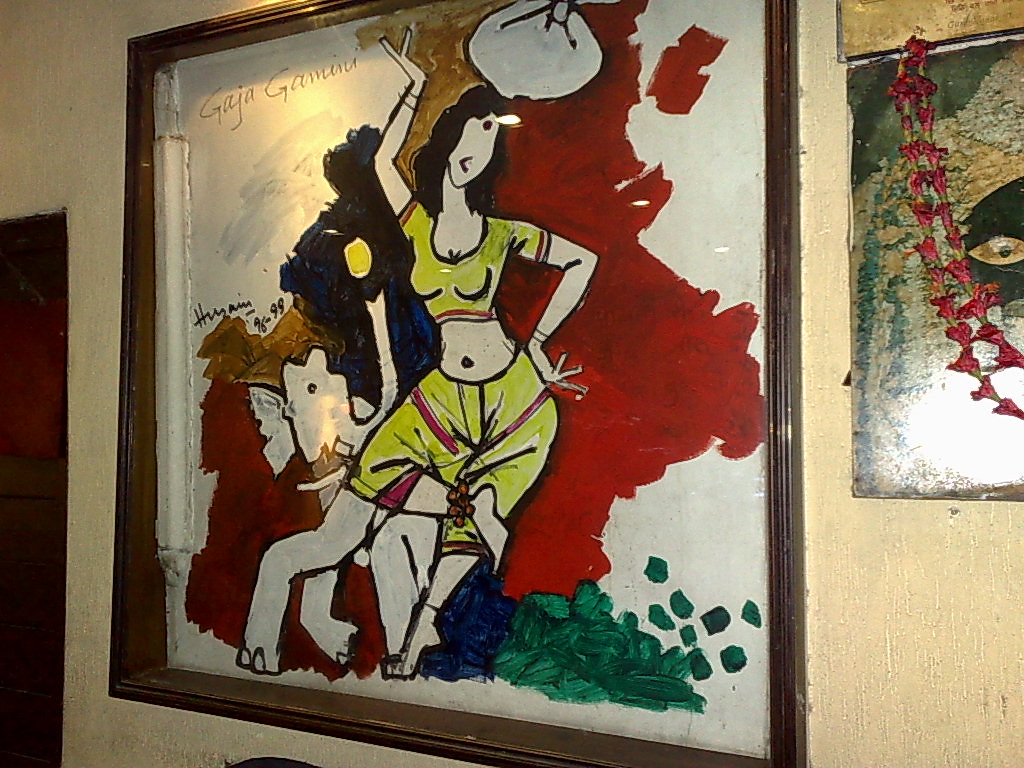
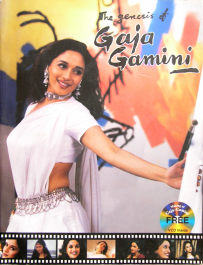
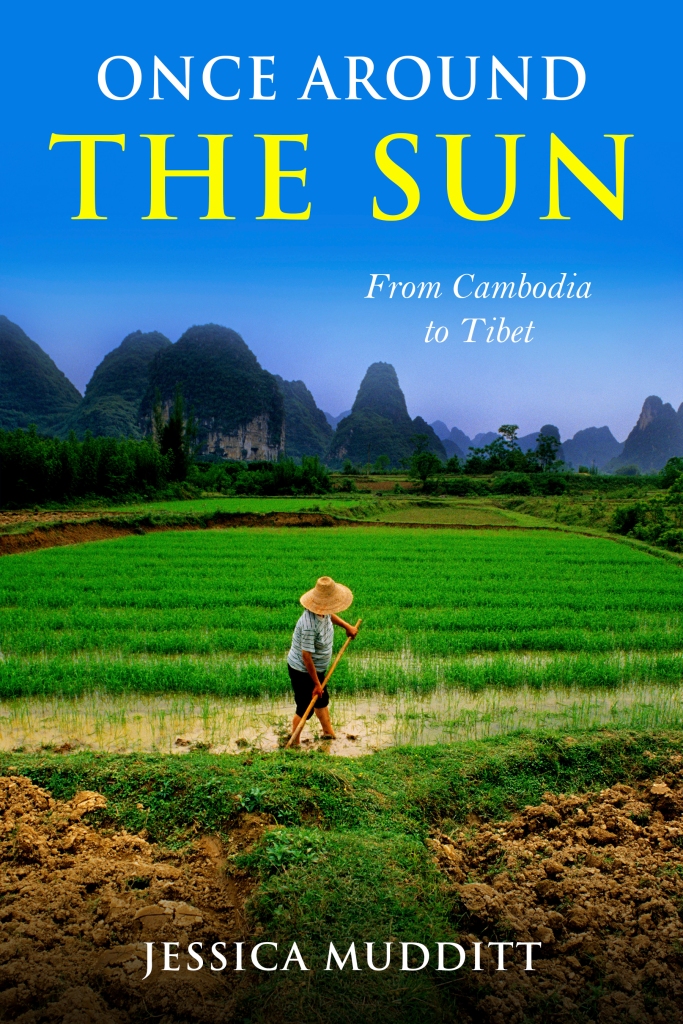


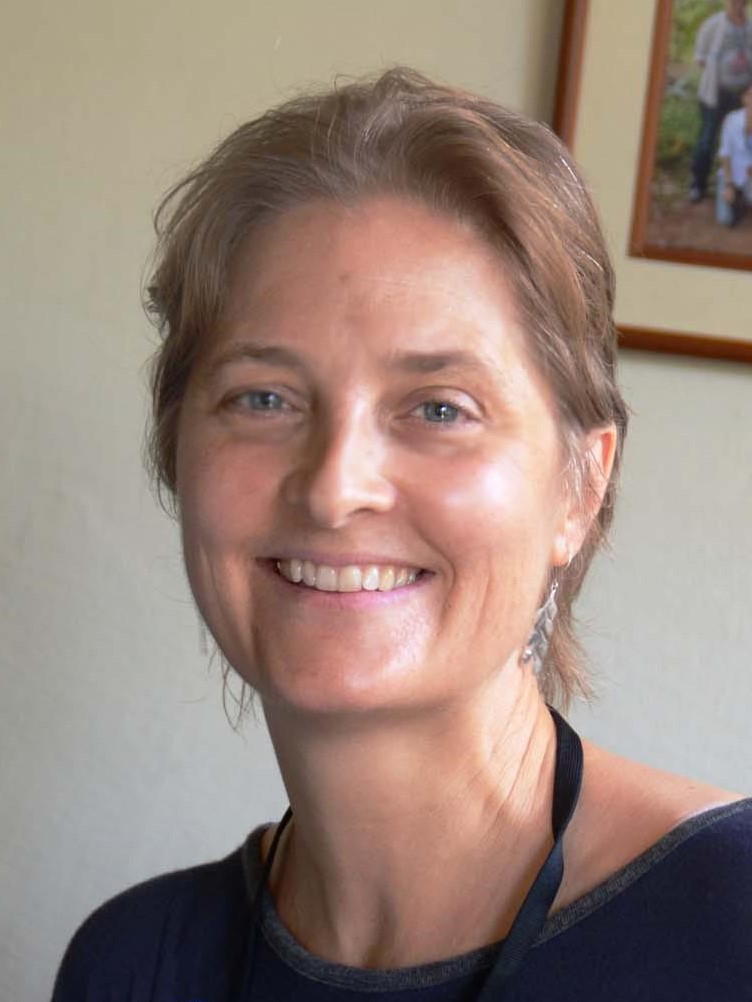

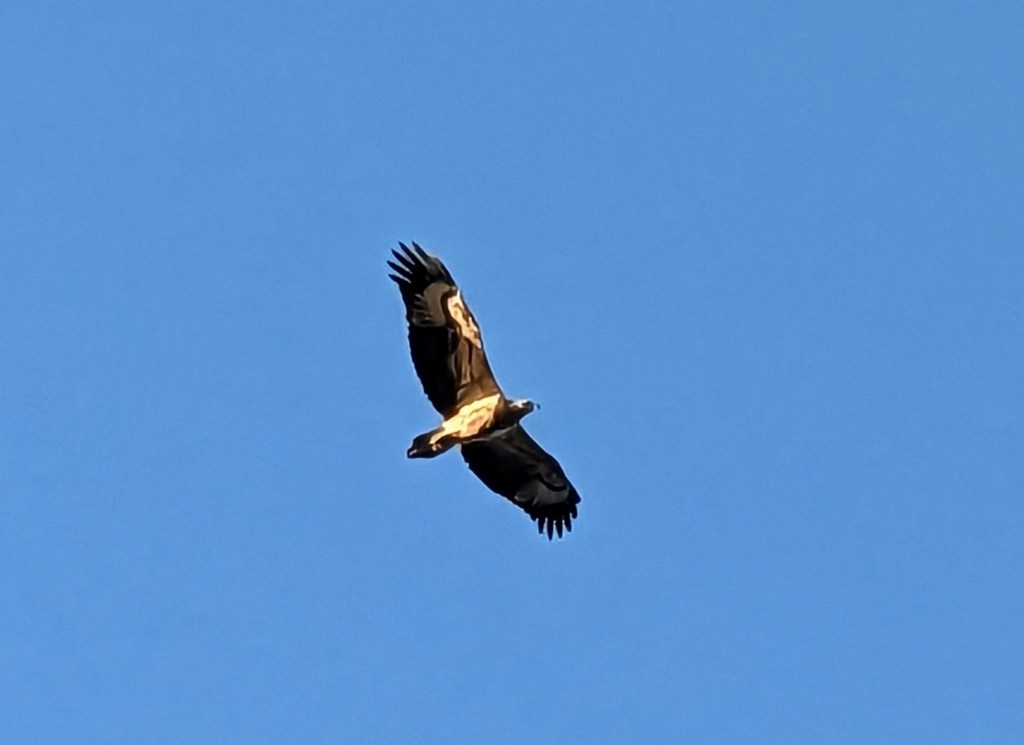
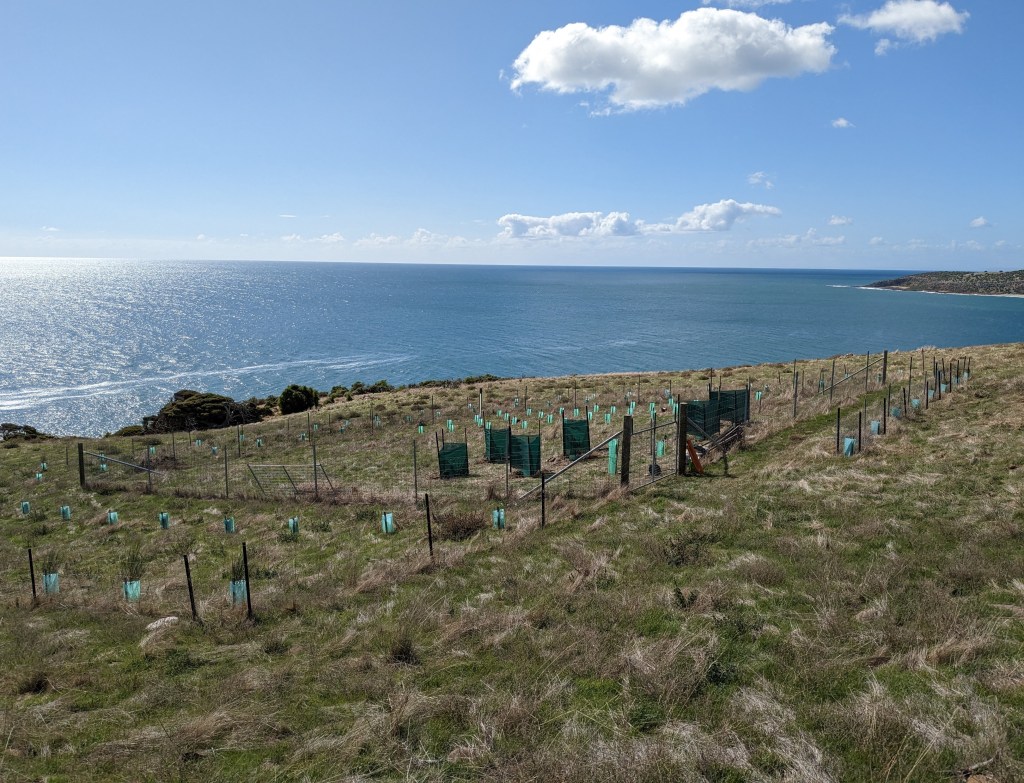
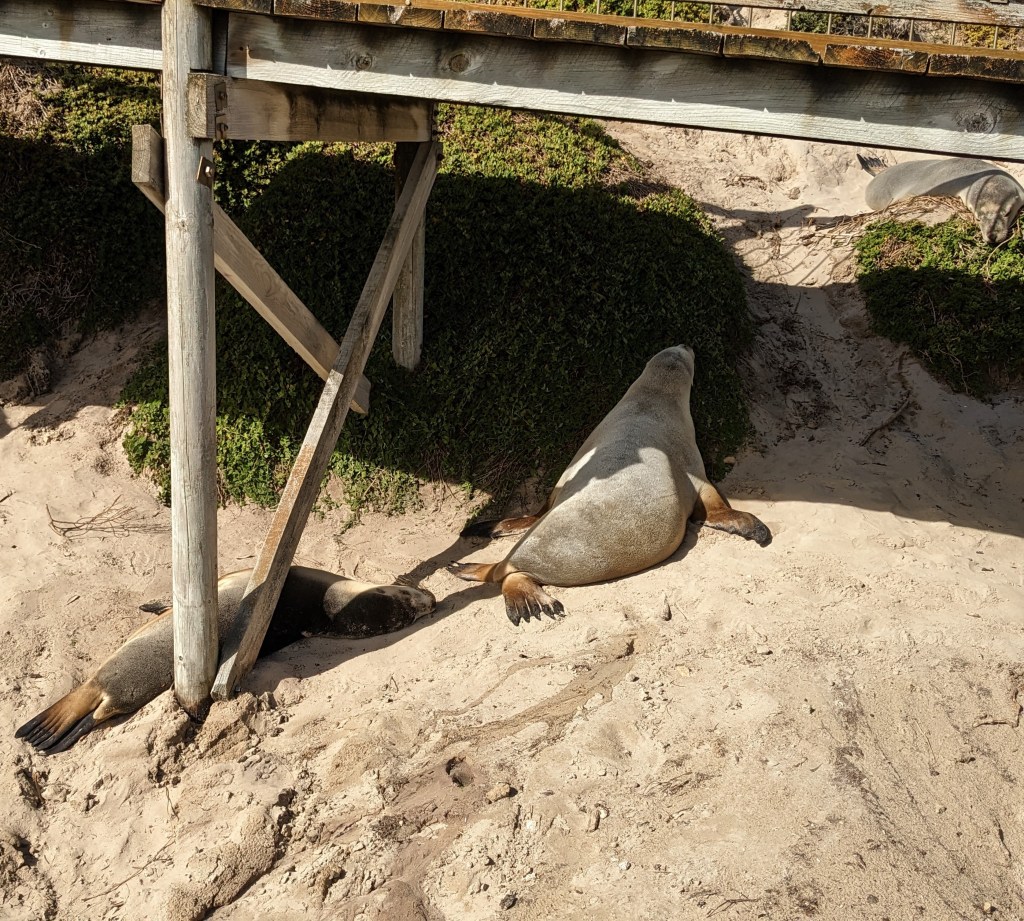
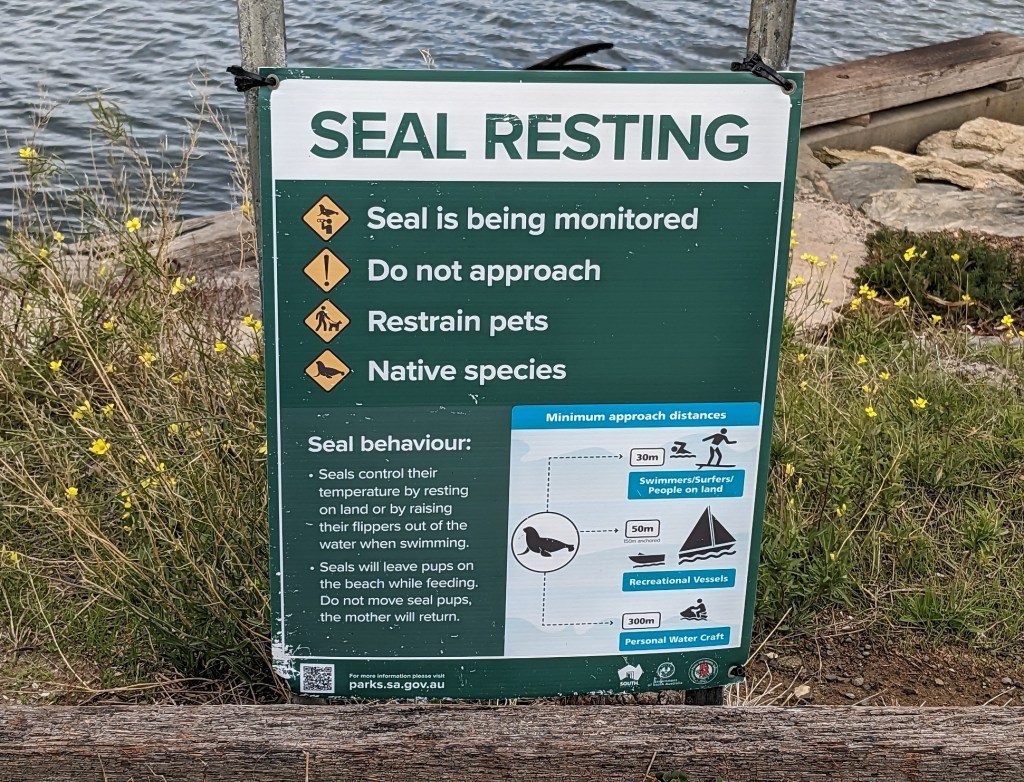
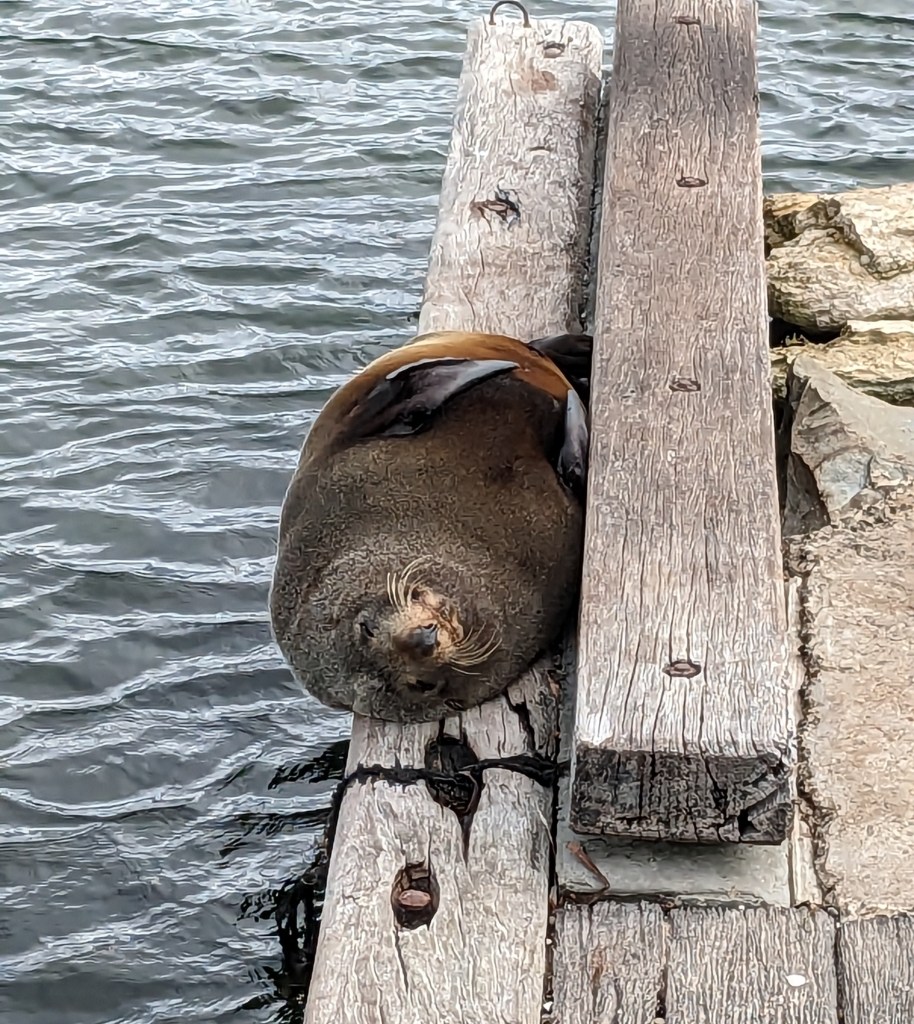
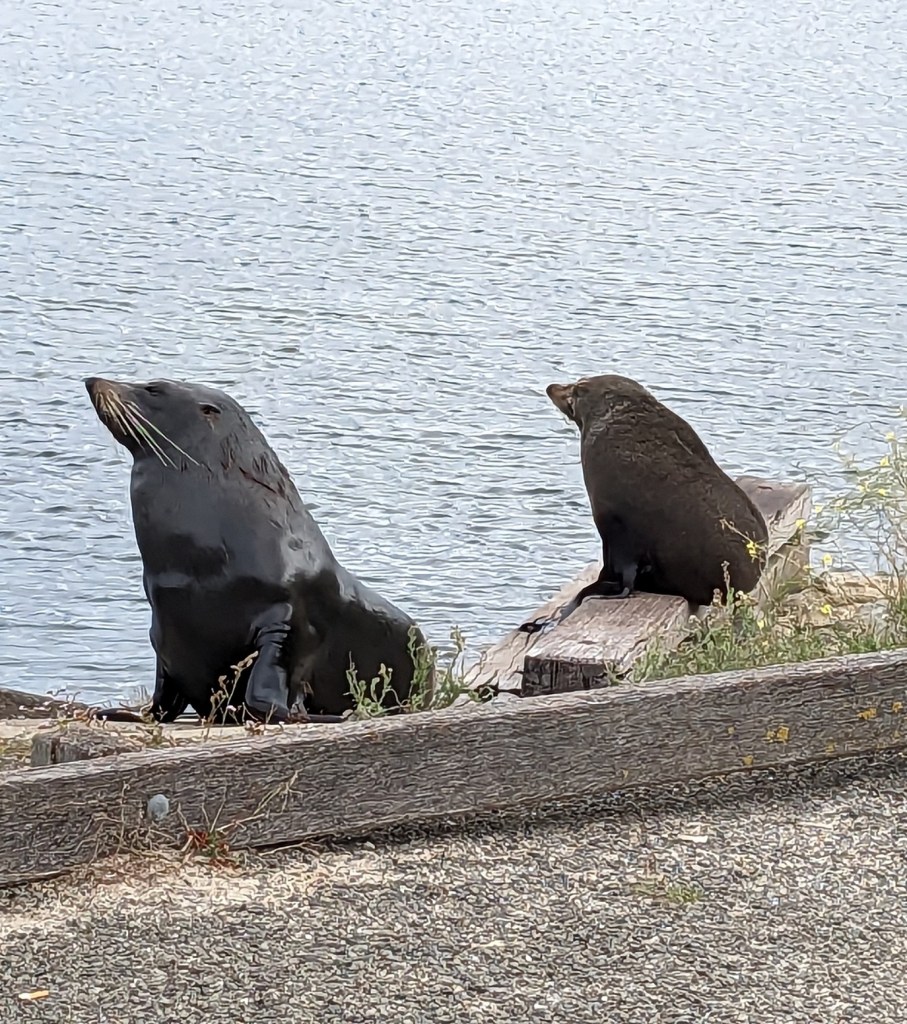
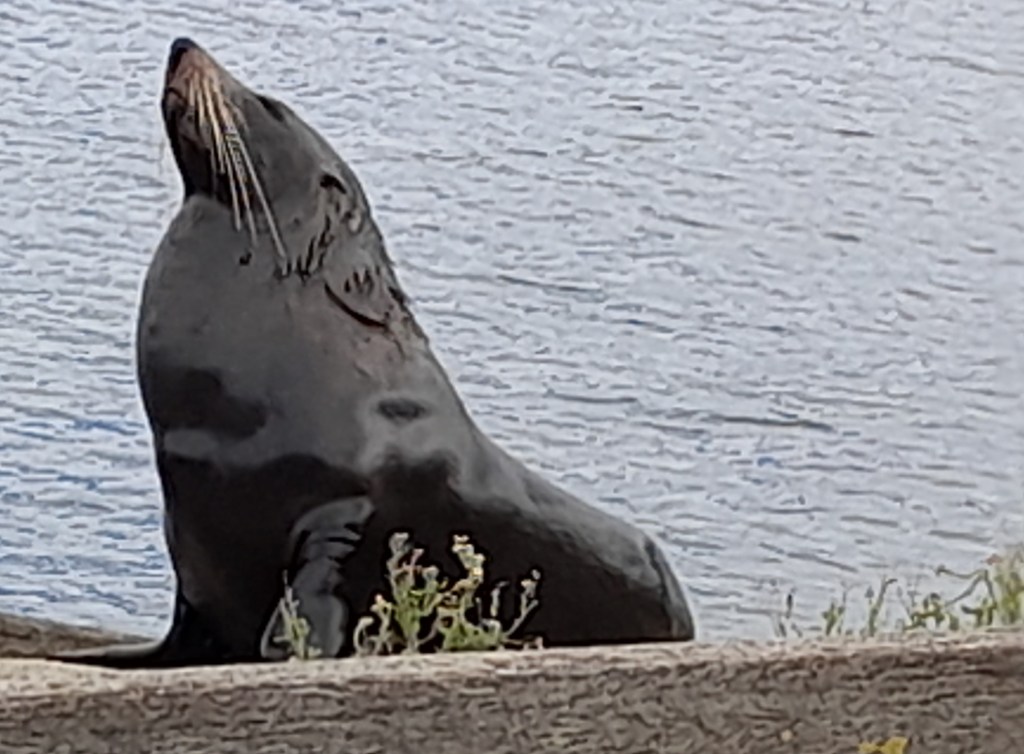
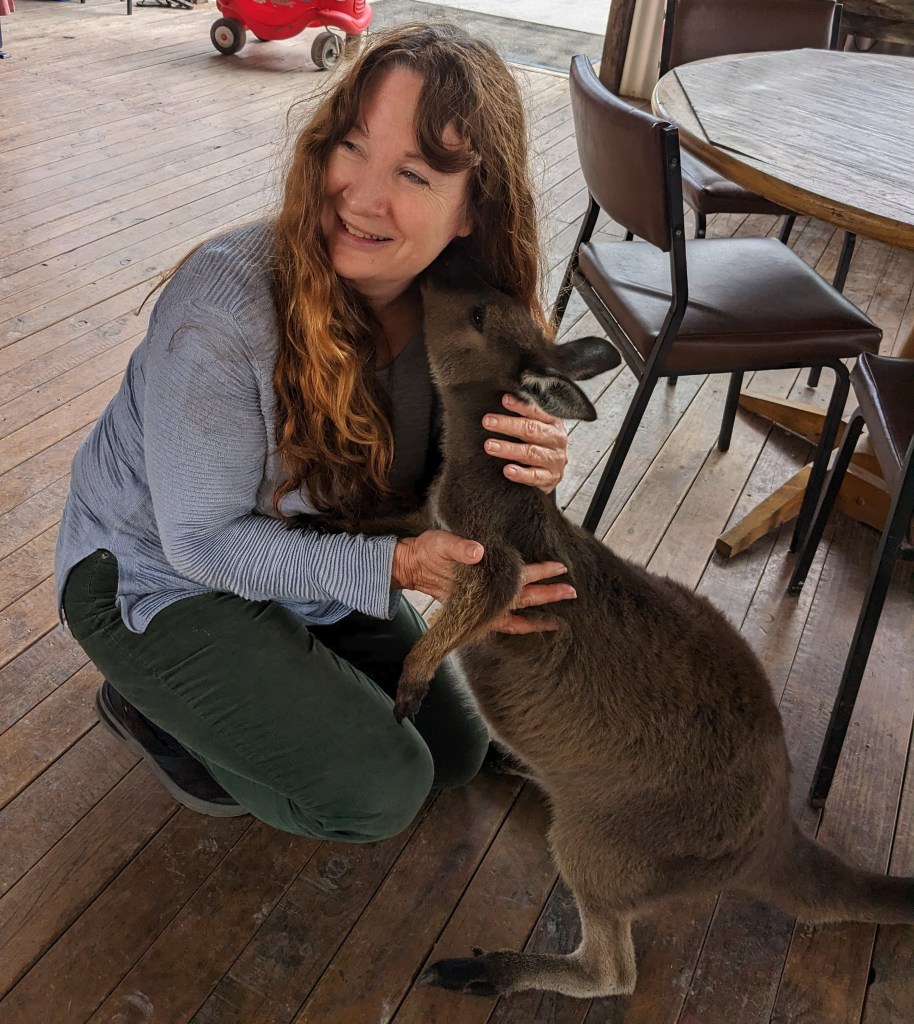
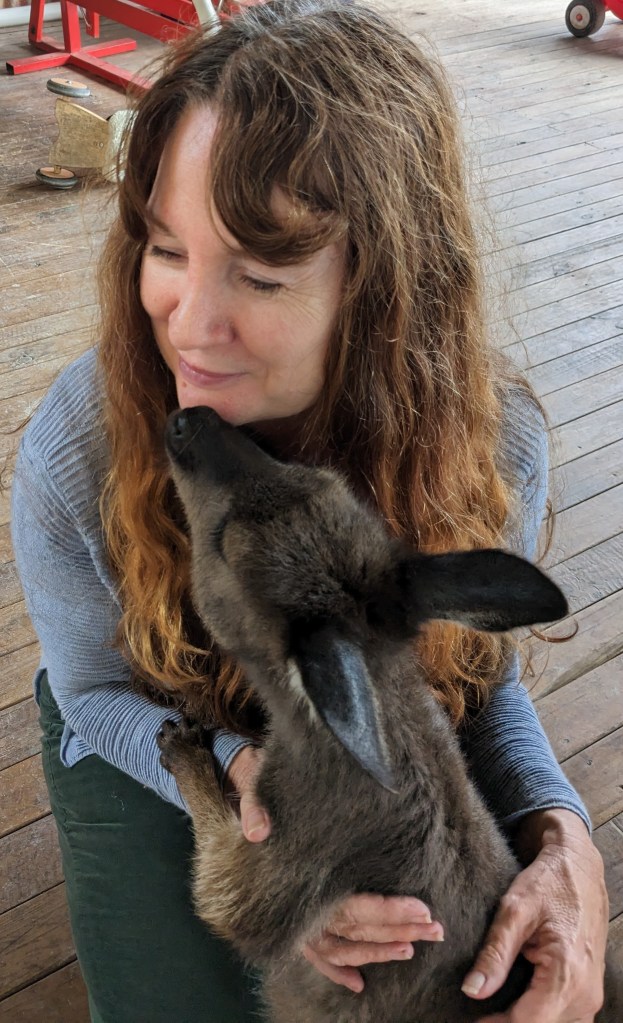

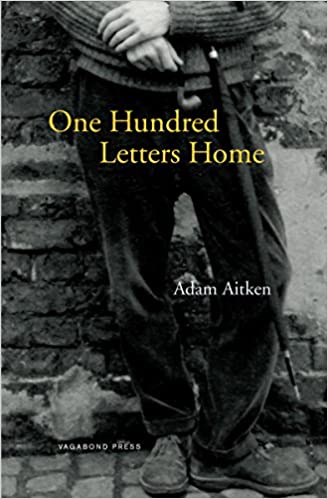

 Borderless