Categories
Essay

Peeking at Beijing: The Epicentre of China

How can anybody comprehend one of the largest and most ancient cities in the world? With its origins dating back three millennia, Beijing has been China’s capital for over 1,200 years. Keith Lyons tries to get to the heart of China’s megacity in just three days.

Photo provided by Keith Lyons

Day Two*

As the strong sun beat down on my pale jet-lagged wintered skin, I tried to guess the temperature of the warm Beijing air enveloping me. Over 30 degrees Celsius, my mind computed. Over 30 was possibly outside my body’s operating range. It was certainly outside my comfort zone.

I concluded that it was unseasonably hot and humid for early autumn, drawing on my vast experience of being in Beijing for just over 24 hours. A bead of sweat formed under my right armpit and started to trickle slowly down my side, the perspiration a futile attempt to cool down. My daypack stuck resolutely to a sweat imprint patch it had made on the back of my freshly laundered shirt. I’d just finished my second can of complimentary hotel soda water, and already the back of my throat felt as dry as the trampled brown grass that lay unloved between the uneven paving stone pavement and the stain-weathered concrete housing estate sweltering in the September mid-morning.

I looked down the wide 4-lane road I’d just walked along in the hope of spotting – like a mirage shimmering in the distance – a bus to rescue me from this situation. But all I could see was another batch of oncoming shiny new electric SUVs, unmarked white delivery vans, and angry-faced FAW trucks overloaded with gravel. The noise of their tyres on the asphalt increased to a roar and then faded away, as if to serve to remind me I was going nowhere fast. The buzz of cicadas hidden in a willow tree on the opposite side of the road taunted my already addled brain. Not only was I hot and flustered, but I was also completely lost. So much for my exceptional navigational skills, my Beijing map pre-loaded on my iPhone, and my ability to read a few Chinese characters.

I had set off early that morning with my detailed trip notes, a plan including the day’s itinerary and lists of vital bus numbers, and the intention of getting into the heart and soul of China’s capital: Tiananmen Square and the Forbidden City. I was so chirpy that I whistled to myself the catchy song from the 2008 Beijing Olympics ‘Bei jing huan ying ni’ (Beijing welcomes you). However, instead of catching a couple of buses the 15km from outside the 4th Ring Road into the downtown, I had mistakenly taken a bus that deposited me on the outskirts of Beijing. To make matters worse, rather than cross the road and hop on a bus going back to where I started, I decided to walk around the corner in the hope of getting a bus that would somehow bring me closer to the Forbidden City.

Not wanting this wrong turn to ruin my day’s plans, I decided first to address the essentials in life: shelter and food. The only shade I could find lay behind the bus shelter, so I leant in close to escape the sun’s harsh rays, every so often checking the road for any signs of salvation. I rummaged around my daypack to locate my emergency stash of muesli bars, and ate one, oblivious to the wrapper information which I understood to mean I’d just consumed 2 teaspoons of refined sugar. Today was not going to be my day to give up sugar.

The insulin spike also fuelled my optimism. As if I had manifested it into being, I saw a bus in the distance coming this way. Not caring about the sun or the heat, I strode out across the pavement to be sure to alert the driver to my desire to get on his bus. But as I waited on the curb, I noticed that the bus didn’t switch lanes to execute a passenger pick up or drop off. No, instead, the bus just kept going, onto the roundabout that joined a busy ring road half a kilometre away. I retreated to the shade again.

The same process repeated itself. Another Beijing bus approaching. Another exit, the shade to stand by the roadside by the broken yellow lines. Another speeding past. It was like Groundhog Day, or The Truman Show. I started to wonder if I was invisible, or just trapped in some time warp. Is this how it ends, I pondered.

With no one around, and no one to ask, I figured eventually a bus might stop. I had read in a travel guide that there were 30,000 buses in Beijing, plying over 1,600 bus lines and routes. And, after all, it was a bus stop. And on the other side of the road, the red, green, yellow city buses were stopping.

A rather podgy man in his 30s appeared, seemingly out of nowhere, to wait for a bus on the opposite side. I was about to go over to ask if he could help me, but then he crossed over to try to catch another bus heading along the road on my side. The bus zoomed past. Shading his phone from the sun’s glare, he peered into the device. I realised, that just like me, he was equally lost, like another soul you meet in a labyrinth limbo dream.

With the morning slipping away, and me getting more and more frustrated at being stuck, I resign myself to the day being a complete write-off. I lower my aspirations to just find my way back to my hotel before dark. So, when the next bus neared, I was less invested in it being my rescue. And, you guessed right, that bus slowed down and stopped, and two relieved passengers got on, grateful just for being transported away from there.

I stayed on that bus as it sped around roundabouts, raced on ring roads, stopped at major intersections and turned onto more crowded streets. Even though I still clutched my lucky list of bus numbers, 1-999, I was less inclined to get off it when I saw one of the route buses I was seeking. Given that there was always the chance I take the right bus line (1-140) the wrong way, I figured it was best to locate a subway station, and then make my way to the centre in a more exact way.

When I did finally spy a subway station and get off the bus, I realised that I’d travelled from the north-east of the city to the south-west in a clockwise direction, albeit in a very random fashion. When I started hours before I was 15km from the centre. Now, after quite a lot of travel and much travail, I had reduced the road distance to the centre to a mere 14km. But at least I was somewhere. Even if from a nearby China Telecom store I heard blaring from the speakers that overplayed tune, ‘Take me to your heart, take me to your soul . . .  It’s easy, take me to your heart.’

Before I could take the subway train, there was a cursory security check with my daybag put on an X-ray conveyor belt, a security gate to walk through, and a bored officer barely out of high school waving his handheld detector wand over me like he was bestowing a lazy blessing rather than seeking out concealed weapons. A row of ticket machines was my next challenge. Even with the option of English, my money was repeated spat out, and then the monitor said unless you have a Chinese ID card go to the help desk to buy your ticket. There was no one staffing the office, but the most alert of the security kids told me to wait, and the clerk duly returned, changed the window sign, confirmed my destination on the electronic route map, took my money, and issued the ticket.

I went up to the ticket gate and eventually worked out which scanner I had to use for my printed ticket. Locals were negotiating the subway with much more ease. Some whipped out mobile phones to use apps, WeChat or e-cards. Others placed their hands on an electronic palm reader, and there was a poster on the wall which seem to suggest that soon, facial recognition could provide express entry and exit to frequent (and trusted) commuters.

When I finally emerged at Tiananmen West Station, I joined a throng of people also intent on venturing into the great square. We marched along the wide barricaded footpath to a security station, me still humming to myself ‘It’s easy, take me to your heart’. As we reached the gate, and I saw a sign in Chinese with a translated version in English, I realised today was not my day. You needed a ticket to enter the square and its attractions. What’s more, the ticket had to be purchased at least a day in advance. There’s a limit of 80,000 tickets available each day. I retraced my steps back to the subway station, but then decided while I was in the neighbourhood, I might as well look around. And even if I couldn’t get into Tiananmen Square itself, or the Forbidden City, National Museum, Zhongshan Park or the quirky Chairman Mao Memorial Hall, I could at least check out the sights that were accessible.

First, there was the Great Hall of the People, built in the imposing Soviet neoclassical style, and then its opposite, the shiny egg-like National Centre for Performing Arts. Further along, there was the anomaly of a church, still in use, which I later learnt was the Methodist Zhushikou church. And in a modern Japanese hotel, featuring bamboo, recycled bricks and lounge walls lined with shelves of books. The hotel has been designed to reflect ‘an anti-gorgeous, anti-cheap concept’ says the website. Rooms are US$110-500 a night.

At the south entrance to Tiananmen Square, I tried again to slip through a gap in the barricades with some other ticketless visitors, but we were turned back by a guard. At the official entrance, I saw a woman was China’s southwest holding her baby sobbing after she too was refused entry.

Having abandoned my pursuit of getting anywhere near the Gate of Heavenly Peace, I took heart from the incursions by others around the periphery of Tiananmen square. The several Starbucks dotted around, including one guarding the entry to Qianmen, the foreboding gate in the Imperial City’s wall, and equally impressive, the first KFC in China which opened in 1987, with over 2,200 buckets of chicken sold from the red and white striped building sporting the Colonel’s smiling face within the first 24 hours. Queues stretched into Tiananmen Square. Mao had died 11 years earlier. He would have turned in his grave . . . however, he’s not buried, but embalmed and on display in a glass case not too far from the smell of Kentucky fast food’s 11 secret herbs and spices, and the burnt, nutty scent of Seattle coffee. A photo I’d taken by the southern entrance, on closer inspection after I’d departed China, included the mausoleum housing Mao Zedong.

Turning my back on Tiananmen, I wandered along the 850m of Qianmen Street, a pedestrian ‘shopping’ street newly restored in the architectural style of old Peking. The Dashilan area has been a place of commerce for nearly six centuries, with medicine, shoes, silk, tea and hats China-famous, but I reckon, most of the buildings date back to 2007, with many away from the main thoroughfare appearing to be under construction.

Photo provided by Keith Lyons

Content with small pleasures and moments, I enjoyed finding a stream running through a neighborhood, with flower gardens, pagodas, and a couple of women taking photos dressed in traditional clothing. I bookmarked it on my map. A reference point was ‘Defeng East Alley No.65 toilet’. I saw an old woman taking a dog and a ginger cat for a walk and was delighted when the cat came up to me, and I chatted with the woman. “Yes, every day the cat goes for a walk with me. The cat and the dog get on. The cat probably thinks it is a dog.”

I finished my day in Beijing’s heart by heading up to the highest point of the central city, with a 10-minute hike up Jingshan Park north of Tiananmen Square for panoramic views of the Forbidden City. The views were expansive, though the visibility wasn’t great due to the air pollution and haze. What was I supposed to be looking at, I wondered. The red walled buildings of the Forbidden City, or the immense void beyond, of Tiananmen Square. So close to the symbolic centre of the Chinese universe, I peered at the scene before me. The dull tones contrasted with the display panel with its brilliant blue skies and landmark buildings. I was thirsty and hungry. The 6pm sun was making for the exit door. It was time to make my way back home to my hotel.

The Forbidden City. Photo provided by Keith Lyons

On my way down, gratitude came through in the last song of my day in my head, “Oh, it’s such a perfect day. I’m glad I spent it with you. Oh, such a perfect day. You just keep me hanging on. You just keep me hanging on.”

*Read the Day One of Keith Lyon’s China trip by clicking here

Keith Lyons (keithlyons.net) is an award-winning writer and creative writing mentor originally from New Zealand who has spent a quarter of his existence living and working in Asia including southwest China, Myanmar and Bali. His Venn diagram of happiness features the aroma of freshly-roasted coffee, the negative ions of the natural world including moving water, and connecting with others in meaningful ways. A Contributing Editor on Borderless journal’sEditorial Board, his work has appeared in Borderless since its early days, and his writing featured in the anthology Monalisa No Longer Smiles.

.

PLEASE NOTE: ARTICLES CAN ONLY BE REPRODUCED IN OTHER SITES WITH DUE ACKNOWLEDGEMENT TO BORDERLESS JOURNAL. 

Click here to access the Borderless anthology, Monalisa No Longer Smiles

Click here to access Monalisa No Longer Smiles on Kindle Amazon International

Categories
Review

No Doomsday Narrative

Book Review by Bhaskar Parichha

Title: Climate Capitalism: Winning the Global Race to Zero Emissions

Author: Akshat Rathi 

Publisher: Hachette India

Climate capitalism combines economic growth and environmental sustainability. This approach leverages market forces and capitalist principles to address climate change. Climate capitalism aims to create a system where businesses can thrive while reducing their carbon footprint and promoting clean technologies. A key driver of climate capitalism is the belief that the market will drive innovation and investment in sustainable practices. The transition to a low-carbon economy can be accelerated by creating economic incentives for companies to adopt clean technologies.

There are many strategies and policies involved in climate capitalism. Carbon pricing mechanisms, such as carbon taxes or cap-and-trade systems, put a price on carbon emissions to create a financial incentive for companies to reduce their emissions. The development and deployment of clean technologies can also be supported through subsidies or grants.

Climate capitalism also integrates environmental considerations into corporate decision-making. Sustainable business strategies include setting greenhouse gas emission targets, adopting environmentally-friendly practices throughout operations, or incorporating sustainability goals into business strategies. Climate capitalism advocates argue that businesses can drive economic growth while also contributing to climate mitigation and adaptation. A more sustainable and prosperous future can be achieved by aligning financial incentives with environmental objectives.

Critics, however, are concerned that greenwashing may result in superficial attempts to appear green. Climate capitalism may not go far enough in addressing the systemic changes necessary to address climate change, and more radical action is needed. Economic development and environmental sustainability are reconciled by climate capitalism. By harnessing market forces to create a more sustainable future, it acknowledges the role that market forces can play in driving change. Whether climate capitalism can deliver on its promises and effectively address climate change challenges remains a subject of debate.

In this context, this book is an excellent addition.Climate Capitalism: Winning the Global Race to Zero EmissionsbyAkshat Rathi is a fascinating book that sheds a fresh look at the issue. Akshat Rathi is a senior reporter at Bloomberg News. Bloomberg Green’s Zero podcast is hosted by him. A PhD in organic chemistry from Oxford and a BTech in chemical engineering from IIT Mumbai, he has worked for QuartzThe Economist and the Royal Society of Chemistry. His writings have also been published in NatureThe Hindu and The Guardian

According to the blurb: “Our age will be defined by the climate emergency. But contrary to the doomist narrative that’s taken hold, the world has already begun deploying the solutions needed to deal with it. On a journey across five continents, Climate Capitalism tracks the unlikely heroes driving the fight against climate change. From the Chinese bureaucrat who did more to make electric cars a reality than Elon Musk, to the Danish students who helped to build the world’s longest-operating wind turbine, or the American oil executive building the technology that can reverse climate damages, we meet the people working to scale technologies that are finally able to bend the emissions curve.”

Through stories that bring people, policy and technology together, Rathi reveals how the green economy is possible, but profitable. This inspiring blend of business, science, and history provides the framework for ensuring that future generations can live in prosperity. It also ensures that progress doesn’t falter.

Which economic policies are most effective at reducing greenhouse gas emissions and combating climate change? Climate Capitalism examines the economics and politics of market-based climate change solutions. It is essential reading for all students and teachers, unionists and business leaders, grassroots activists and politicians.

.

Bhaskar Parichha is a journalist and author of UnbiasedNo Strings Attached: Writings on Odisha and Biju Patnaik – A Political Biography. He lives in Bhubaneswar and writes bilingually. Besides writing for newspapers, he also reviews books on various media platforms.

.

PLEASE NOTE: ARTICLES CAN ONLY BE REPRODUCED IN OTHER SITES WITH DUE ACKNOWLEDGEMENT TO BORDERLESS JOURNAL

Click here to access the Borderless anthology, Monalisa No Longer Smiles

Click here to access Monalisa No Longer Smiles on Kindle Amazon International

Categories
Essay

Coffee, Lima and Legends…

Narratives and photographs by Ravi Shankar

The Pacific coast

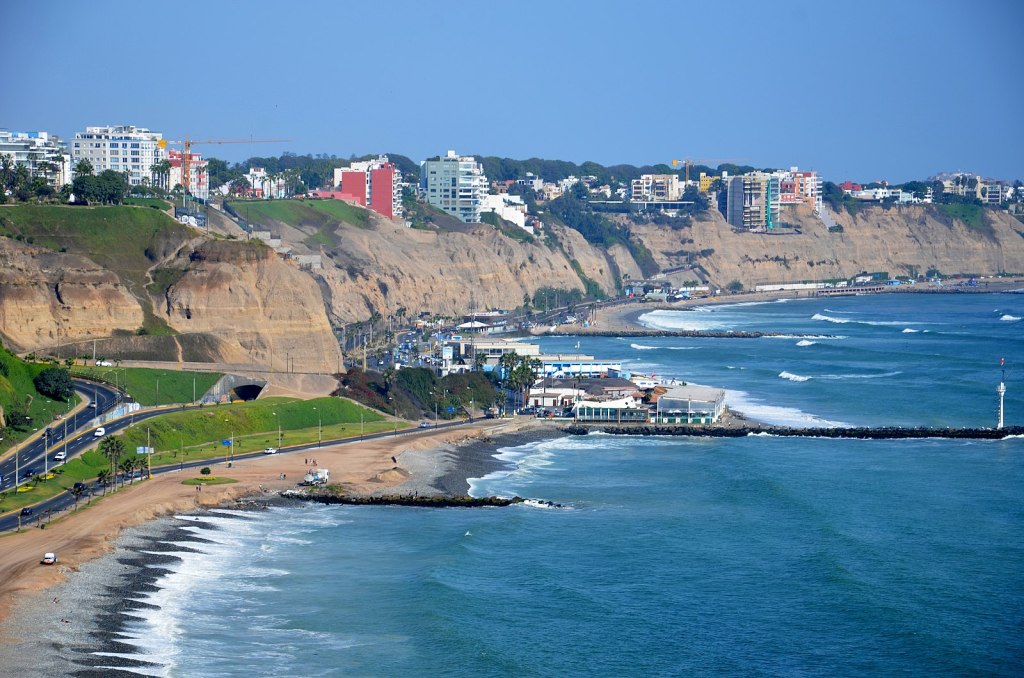
The city of Lima, Peru was founded by the Spanish conquistador, Francisco Pizzaro in 1535. Spanish scouts sent out by him reported the place had ample water, fertile lands, sea access, and fair weather influencing the decision to settle there. Now, the city is in the agricultural region known by the locals as Limaq. It was once the most important city in the Viceroyalty of Peru that ruled over a large part of South America. Today over one-third of Peru’s population resides in the greater Lima area. The moisture-laden winds from the ocean result in fog throughout most of the year. The cold Humboldt current keeps the Pacific Ocean temperatures low. The coastal region of Peru known as the Costa is a dry desert and rainfall is scarce. The combination of very little rain with a thick fog fascinates both residents and visitors. Most mornings were foggy during my stay in Lima.   

Lima serves as the entry point to Peru and during your trips around the country, you can enter and leave Lima multiple times like I did. During one of my visits, I stayed with Cesar, a pharmacist with the Ministry of Health, on the 15th floor of a modern apartment complex overlooking the Pacific Ocean, in Magdalena del Mar, with a beautiful view of the Pacific.

Magdalena del Mar is fast becoming a trendy neighbourhood has an immaculate Heart of Mary Church, an ornate beautifully designed church in pink stone. Roman Catholicism with its emphasis on ceremonies, ornamentation, and ostentatious displays shares many similarities with the religions of the East. One afternoon after lunch, I visited the long stretch of beach which I admired from the fifteenth-floor window. I had to cross the Circuito de Playas, the six-lane highway that links several spots along the coast in Lima.

The city of Lima is famous for its museums. The Museum of Art in Lima is wonderful. Located in downtown Peru at the Parque de la Exposicion (Park of the Exposition), the museum houses one of the best collections of Peruvian art from pre-Columbian times to the modern day. The artworks are mostly grouped according to the period of their creation. Different cultures like the Moche, Nazca, Chimu, Chancay, Ica, and the Incas are represented. After the Spanish conquest, local artists and artisans concentrated on religious Catholic art. Modern Peruvian secular art began in the nineteenth century. I read with great interest the struggle between two schools/visions on how this art should grow and develop. One school wanted a cosmopolitan art like that developing in Europe while the other school wanted Peruvian artists to concentrate on traditional Peruvian topics like Inca buildings, town planning, Peruvian plateaus and mountains, and the Peruvian Indian.

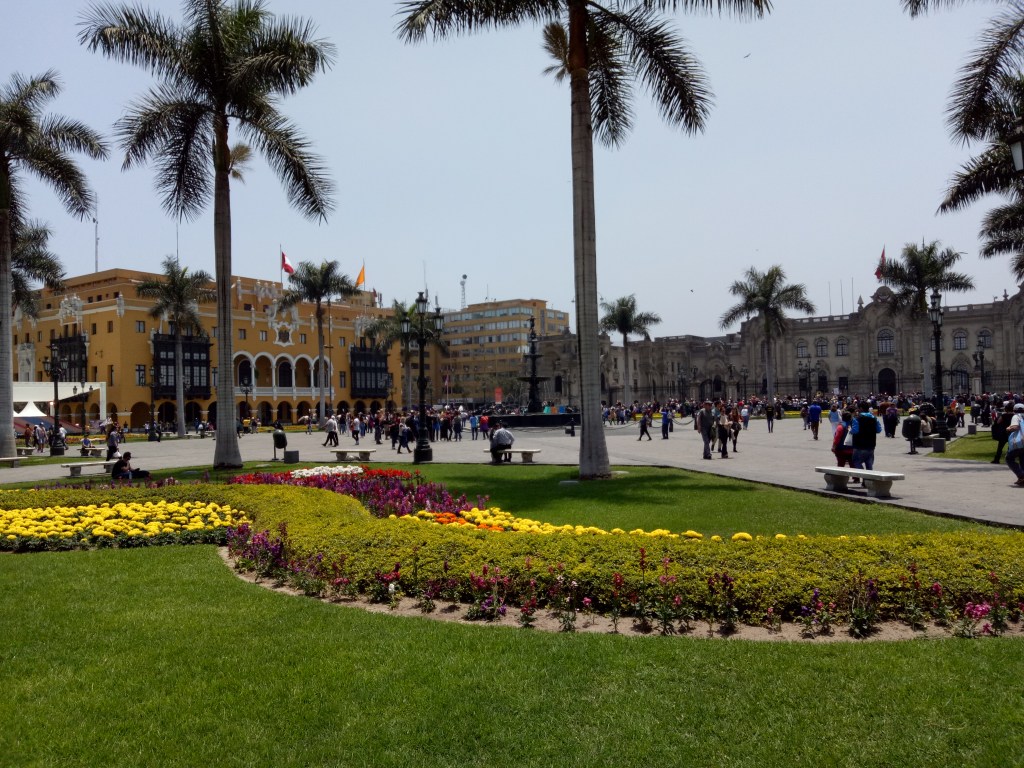
Holiday makers in Plaza de Armas.

The Plaza de San Martin is one of the most representative public spaces in the capital. It was declared a UNESCO World Heritage site in 1988 and is connected to the Plaza de Armas by the Jiron de la Union. The plaza pays homage to the liberator of Peru, Jose San Martin (1778-1850). The plaza was built in 1921 in honor of the 100th anniversary of Peruvian independence. The buildings lining the plaza date from 1910 to the 1940s.

Exhibits of Gold

In the 1960s, Miguel Mujica Gallo used his private collection, gathered throughout his life, to open the “Gold Museum of Peru and Weapons of the World”. The museum has over 7000 gold, silver, and copper objects. Gold and silver had a religious importance in pre-Columbian Peru. Gold represented the Sun while silver represented the Moon. The collection is valued at over 10 million US dollars. The other major section represents the weapons of the world. I found it ironic that humanity expended so much effort and resources on devising better and better ways of killing each other. There is a Japanese room at the museum highlighting the close ties between Japan and Peru. Many Peruvians of Japanese and Chinese descent are still able to read in their native languages while at the same time being fluent in Spanish.

On my last day in Peru, I decided to use the public bus to visit the ruins of Pachacamac which is located outside the capital in the city of Lurin. Pachacamac was a major religious site for the different cultures of Peru. As new cultures became dominant, they added their constructions to the holy site. The site was first settled in 200 AD and is named after the earth-maker God, Pacha Kamac. some museums in Peru there are concessions for teachers which I feel is a very good idea. School children visit museums accompanied by their teachers and museum guides to develop a good understanding of their culture.

Unfortunately, Pachacamac was too near the capital Lima to escape the attention of the rapacious Spaniards. The conquistadores were mainly driven by their limitless appetite for gold and a narrow bigoted religious view which regarded Roman Catholicism as the only true religion and other religions as heretic practices to be destroyed. They caused much damage to Pachacamac.

Pachacamac

The wind started blowing and a flurry of dust pervaded the air. The Sun Temple is the major building. There were separate locations for religious buildings, administrative buildings, and residential buildings and there were also granaries.

View from the Sun Temple

The Incas and the pre-Inca cultures practiced human sacrifice. Enemies were ritually sacrificed but young virgin girls were also sacrificed. These mamacuna (Virgins for the Sun), had important status. They wove textiles for priests, and brewed corn beer which was used in Inca festivals. The women were sacrificed in the highest ritual; they were strangled with cotton garrote. They were wrapped in fine cloth and buried in stone tombs. Each was surrounded by offerings from the highlands of Peru, such as coca, quinoa, and cayenne peppers.

Peruvian coffee like Peruvian food turned out to be a hidden treasure. Smooth without bitterness or harshness, the coffee can be drunk black without milk. Peru is also home to ‘poop coffee’. Dung coffee is made by having an animal (usually a civet) eat coffee cherries. The natural digestion process reduces bitterness. When they poop out the beans, they’re gathered, thoroughly washed, and typically take on flavors of the animal’s diet. Peruvians use the uber-adorable coatis, which are like tiny raccoons. They are fed the best-of-the-best Arabica beans and nature takes over from there!

Twined with the flavour of Peru is a beautiful legend which needs to be told to highlight their colours. In the good old days, a widowed mother, Pacha, worked day and night to feed her three sons. The sons were lazy and survived on the food provided by their mother. One evening while returning home the mother tripped on a stone and was injured. She was bedridden and became dependent on her sons. The sons were too lazy to work their farm and stole from the villagers and eventually started selling their farm part by part. They lied to their mother about their plentiful harvests. One day, the mother went to the farm to see the harvest but was beaten by the villagers who mistook her for a thief. Learning about this, the sons got angry and turned themselves into hail, frost, and furious wind devastating the villagers’ farms and houses. Since that day when the elders gather at night to tell stories, they talk about the hail, the frost, the wind, and how they ruin the fields from time to time, and they continue to blame the men of the village for having mistreated the mother (mother earth / Pachamama)!

I enjoyed my days in the city of kings. The weather was good, the accommodation was great, the food was excellent, great architecture and art greeted one everywhere, getting around was not too difficult and the cost was reasonable. What more can a man want? I plan to return one day in the near future.  

Peruvian camelids

Dr. P Ravi Shankar is a faculty member at the IMU Centre for Education (ICE), International Medical University, Kuala Lumpur, Malaysia. He enjoys traveling and is a creative writer and photographer.

.

PLEASE NOTE: ARTICLES CAN ONLY BE REPRODUCED IN OTHER SITES WITH DUE ACKNOWLEDGEMENT TO BORDERLESS JOURNAL

Click here to access the Borderless anthology, Monalisa No Longer Smiles

Click here to access Monalisa No Longer Smiles on Kindle Amazon International

Categories
Stories

The Wave of Exile

By Paul Mirabile

Mr Richards, employed by the British Council, had been teaching English at a posh, private preparatory school in Thailand for more than four years in the Province of Prachuap Khira Khan in a coastal town named Mawdaung. His first and sixth form pupils enjoyed his humour much more than his tedious grammatical explanations, and Mr Richards had no qualms about this.

Mr Richards taught twelve hours a week which offered him ample time to learn Thai, travel extensively throughout the country, especially up North in the dusk-filled jungles and along the Mekong River shores exploring villages and temples.

The one-storey school, perched high up on the brow of a hill, overlooked the turquoise-tainted Indian Ocean. The large windows of his class afforded pupil and professor much visual pleasure when grammar became too much of a bore, and Mr Richards too weary or hot to break the boredom.

“Now, instead of casting cursory glances out of the windows,” shouted a nettled Mr Richards, one very grey, windy day, “who can tell me what function the word ‘chewing’ plays in the composed word ‘chewing-gum’ ?” All the smiling faces and darting eyes happily translated their perfect ignorance of the answer. However, a minute later, a very pretty girl, one of the brightest in his class, excitedly cried out, “A verb, sir !” Mr Richards gave her a benign smile and shook his head.

“No, no. It is not because it ends in -ing that it is a verb,” he lectured in a paternal tone, so overtly exercised by Mr Richards, and so perfunctorily accepted by the pupils. He scanned the eager heads of the others ; alas none had the desire to crack the enigma. He checked his watch : “Oh well, I’ll let them out ten minutes or so before the bell rings. I have to catch that bus to Bangkok,” he sighed, still waiting for an answer that never came.

“No bother. Tonight think about it and tomorrow morning let me know, right ?” He stood up. “Go on now … down the hill … off to the beach, I’ll give you a treat this afternoon.”

Before he had even finished the word ‘afternoon’ the whole class, besides two girls, grabbed their books and scrambled for the door. Out they stormed, racing downhill towards the shingled beach of the crescent-shaped bay. Mr Richards observed them from the large windows. Their delightful screams made him a bit queasy: he had been told never to allow the pupils out before the bell. He, nevertheless, had done so on several occasions. He shrugged his shoulders, picked up his books and papers from the wooden desk and was about to make for the door when a terrible thundering or roaring sound froze him in his footfalls. He swivelled on his heels and gasped in horror as rolls and rolls of water smashed against the plate glass of the window panes. The violence of the impact threw the two girls to the floor screaming, but besides a few chinks through which spouts of water gushed in, the windows had miraculously withstood the brunt of the tidal wave. For a tidal wave it was, and a tremendous one! The two girls remained lying on the floor, crying but unhurt.

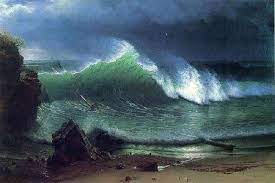
Mr Richards ran to the windows. The waves had receded, but what he espied below on the crescent-shaped seascape, or what had been a crescent-shaped seascape, caused him to fall back and scream involuntarily : “Dear God! There’s nothing left!” Indeed nothing remained: no palm trees, no vendors’ shacks along the shore, no boulders. No shore ! Only a vast ocean that lay several metres below the school, now churning a glaucous thickness under grey, sultry skies, upon which floated a myriad bobbing flotsam: uprooted palm-trees, lifeless cows and dogs, shoals of bloated fish, roofs of straw, pots and pans, planks, bright coloured robes with or without their proprietors’ bodies inside them !

“Bodies !” he cried covering his mouth. “My pupils … Have they all …” He dared not finish his sentence. The two girls stared at him, mouths agape, eyes deorbited. “The boys and girls floating in the water … Dear God they’ve all drowned !” He wept and wailed, stamping his feet, grabbing at his hair. The girls too began to weep and wail.

In an instant he came to himself. “Their deaths are my fault,” he mused. “I let them out too soon … against all school regulations. Blast ! Why did I do that … just today ?” He soon realised that the headmaster would be on to him soon enough; he feared his starched character. And the parents ? They would accuse him of manslaughter.  He would be arrested and put in prison, even hanged for involuntary homicide ! He had every call to be frightened …

Taking hold of himself, Mr Richards knew he had to flee very quickly from Thailand before the headmaster and the parents learned about his unpardonable blunder. And they would learn about it soon enough when the panic and hysteria had died down.

He leapt over the still supine girls and rushed out the door. Once outside he noted that the town near the school had hardly been damaged. But below, he caught glimpses of undulating corpses being poled out of the waters by villagers and policemen in pirogues, rowboats or catamarans. The tidal wave had been gigantic. He turned his attention away from the catastrophe and fled home …

He jogged up to his bungalow further up the grassy hill at the edge of town. Speedily he gathered what he could, for the alert would be out for him at any moment … Or, so he believed. A change of clothes, one or two books and his official documents he stuffed into a small backpack, and without locking his door quickly made a bee-line for the bus station, where luckily he managed to jump on a bus for Bangkok. Apparently no one recognised him, nor followed him. He paid the fare, settled into one of the many empty seats and stared stony-eyed out of the window. His red, puffy eyes filled with tears. What a blithering fool he had been ! And now, what had he become ? A fugitive … no, worse, a murderer ! “Dead ! All dead !” rose a ghastly whisper in his ear.  He had to get away as far as possible as the scenes of the bloated pupils danced before his bloodshot eyes.

Once in Bangkok he wasted no time. Further North he travelled by bus into the Province of Chiang Rai. There, in a village whose name he hardly recalled, he spent two nights pondering his dilemma, assuaging his jaded nerves, chary of leaving any sign or evidence of his frantic intinerary, thinking only of a plan to save his neck. He couldn’t possibly stay in Thailand, the police surely were now on his trail, or would be very soon. Neither could he return to England: the bobbies would be waiting for him at the airport, ready to handcuff the murderer of over a dozen innocent children !

Then in the middle of a hot, sleepless night it suddenly occurred to him: he would shave his head and eyebrows, don a monk’s robe, change his expensive Russell and Bramley shoes for sandals and set out for Laos. He had travelled widely in Laos and could even speak a smattering of Kra-dai. He had taught in Luang Prabang for three years and had many friends amongst his former pupils, two of whom had entered monkhood in Pak Beng at the Wat or temple Jin Jong Jaeng. “I shall escape naked from the shipwreck of mundane life,” he  murmured, smiling inwardly at his little metaphor which he recollected from his childhood upbringing. But would he ?.. Mr Richards sunk into his lumpy bed: the figure of an outlaw, a pariah, a self-exile stood before him like a shadow … a double of himself: -swollen little bodies drift like flotsam in waters, darkly … that fey voice droned above a tumult of incongruous thoughts.

Mr Richards shook his head and said aloud, “To Pak Beng. There I’ll join the sangha[1] of the Theravada monks. There I shall seek spiritual solace, rid my mind and spirit of those drifting bodies of cheerful boys and girls, swept away from the joys of life because I had a bus to catch!” So he hoped.

Yet the obstacles of reaching the temple caused him concern. The Laotian government frowned upon Western spiritual-seekers cluttering their monasteries and temples. He needed a visa. Where would he find a consulate in the North of Thailand ? And would they issue one to a ‘Western monk’ ?

He jumped up from the bed, and as he did his mind cleared of all that tumultuous tossing. He had befriended many of his pupils’ parents whilst working in Luang Prabang, and he knew, by correspondence, and his frequent voyages to Laos, that one of them, Mr Inthavong, had been appointed consul in one of the North Thailand consulates. He rushed down to the reception and asked at the desk where the nearest Laotian consulate could be found.

“You must travel by bus to Wiang Kaen near the Mekong River, sir.”

“Are there any other consulates ?”

“Not that I know of, sir.”

Mr Richards heart skipped a beat; Mr Inthavong must be working there. He had to take the chance.

The next morning the ‘Western monk’ got on a bus for Wiang Kaen, carrying only a small bag for his passport, photos and a bit of lunch. All along the tedious journey to the North-Eastern town Mr Richards prayed that Mr Inthavong would be there; it was his only chance to obtain a visa for Laos.

He reached Wiang Kaen by nightfall, found accommodations at a temple guest house and spent a horribly sleepless night, tormented now by the thought of the failure of his plan, now by the screeching rats and buzzing mosquitoes.

At nine o’clock sharp he was at the front gate of the bright new consulate, a lovely two-storey bungalow-like edifice enshrined by lush gardens carpeted with the most perfume-scented fruit trees and flowers. He rang. The security guard strolled out and sized him up. Mr Richards politely mentioned his friend’s name. The unshaven security guard raised two quizzical eyebrows, but took his passport and photo and left him to ruminate the events that were about to unfold behind that iron barrier, inside the lovely bungalow. It all seemed hours to him as that voice repeated  “irresponsible murderer !” Suddenly the security guard stood before him, together with a small, portly man dressed in a suit and tie.

“Can that be you Mr Richards? A bonze? A monk? What have you done? Where is all your beautiful black hair ?” All this was said in imperious tones much to the delight of the monk who sighed in relief: his pupil’s father had recognised him! He wiped the perspiration off his furrowed brow. “Step in, please … out of the heat,” the consul pleaded. So they both strolled into the air-conditioned consulate, Mr Inthavong wearing Russell and Bramley shoes, recently polished, Mr Richards, a pair of worn-out sandals.

Inside the monk was served tea and a bowl of rice in Mr Inthavong’s office, he himself abstaining from joining him since he had already breakfasted. “I’m so happy to see you Mr Richards,” began the enthusiastic consul. “What brings you here, and dressed like that ? Are you really a monk now ?” Mr Richards broke into a tapestry of lies that, as time went by, he himself began to believe: Living so long in Asia had infused his soul with the compassionate virtues of Buddhism, and in Laos, he hoped to pursue his path deeper in the compassionate depths of Buddhahood in order to glean its treasures. The consul smiled like a child does when listening to his or her favourite nursery rhyme.

Mr Richards then got down to business: his visa ! Mr Inthavong nodded, examining his passport and two photos. “You shall have it in three days. Meanwhile, you are to be my guest here, upstairs with my wife and two children.”

And so the first snag had been circumvented. For those three days, Mr Richards, plied with food, drink and homely conversation, had all but forgotten the wave, the floating bodies and merciless whisper … the abominable figure of a self-exiled …

On the morning of the fourth day, armed with a three-month visa, the Western monk set out to cross the Mekong River to Ban Houei Sai on a Nam Ou boat with six other passengers. It had been so long since he had been on the Mother of all Rivers. He inhaled the tropical river air in silent jubilation. As they navigated slowly downstream, his thoughts interlaced with the flecks of foam, wandered back to his days spent on the Mekong at Guan Lei on the Chinese border, where having been temporarily stranded, he finally was welcomed aboard a small six-cabin dai, a Chinese boat, heading for Thailand.

What a voyage! They had anchored by the soundless jungles at night, machetted through them in the evenings in search of mangoes, navigated by bathing rosy water buffalows and by tiny golden stupa-tipped isles. What an adventure! The crew had left him off in a small Laotian village where he made his way to Luang Prabang on one of those blue, wooden box-boats, gliding by stilt-home villages under whose piles lounged or snorted huge black pigs, scenes so reminiscent of Alix Aymé’s paintings[2] housed at the Luang Prabang Royal Palace. Then the real adventure began, upstream on the Nam Ou in a frail six-seater river boat, slowly weaving between treacherous snags and swift cross-currents. He passed the Park Ou caves, Nong Khiaw and Muang Khwa, sleeping in bungalows and eating rice with thick pieces of pork in the pristine territories of the Hmong tribal peoples. Alas, his grand voyage to Hatsa ended in Sop Pong near the Vietnamese border, the authorities refusing him an entry visa to cross Vietnam then back into Laos where he wished to continue on his river voyage to Chao Dan Tra at the Chinese border.

Ah yes, those were the days of freedom … of existential sovereignty. And now ? A fugitive … a prisoner to his own wretched egoism, Mr Richards suddenly felt overwhelmed by a deep loneliness. His mixed recollections were suddenly interrupted by shouts from the shore : they had reached Ban Houei Sai.

Once the formalities were completed, Mr Richards managed to hop on a collective taxi which sped him towards Pak Beng on a smooth road. He reached the town before nightfall, and to his joy he spotted his two former pupils seated on the temple steps. Were they waiting for him ? Indeed they were, thanks to a letter sent by Mr Inthavong who had explained in great detail to the Satu or Venerable Father of the temple-sangha Mr Richards’ religious fervour and enthusiastic intentions to enter monkhood. The consul had added that nothing should be said to the police or to other state authorities of his entry into Buddhahood.

His former pupils, who had grown into full manhood, heads shaven and bare foot, happily led him to meet the Satu Father. To tell the truth, Mr Richards hardly recognised them. But that made no difference. As expected, he deposited a large donation (all the cash he had on him which amounted to some six hundred pounds), then was given three bright new ochre-coloured robes of pure cotton, shown to his splayed window cell, through which he had a slight view of the inner temple gardens, and was told the daily procedures of his initiation as a pha or a novice: collective prayers in the Prayer Hall, breakfast, Sutra readings until lunch, discussion, rest period, an hour or two of manual labour such as gardening, restoring frescoes or termite-riddled woodwork, personal perpetual moving meditations, yoga exercises, then a light meal before the final collective prayer and sleep until the sound of the gong at four o’clock in the morning.

When the two monks had left him, Mr Richards lay back on the straw mat on the earthen floor that served as a bed. He had been given immaculately clean sheets and a pillow. A mosquito net had been nailed to the splayed window. The walls bore no images nor any other colour than a light beige. Putting his hands behind his head he followed the slowly turning ceiling fan with his eyes: yes, his plan had succeeded. No one would ever find him here. Yet he had no reason to rejoice. He would never again see his aging parents seated at the hearth reading or conversing in low voices, his trusty Irish Setter … his friends at the pub. A sharp pain of remorse, or better put, compunction stabbed at his chest. “Dead! Drowned ! All dead !” the whispers hammered at his temple. Would that relentless voice ever grant him respite ? Would anyone ever forgive him ? Only penance. Only the fires of tribulation could scrape away the rust of vice that had corroded his being. A life of contrition would be the most appropriate path for him, the most responsible. Tears again began to well up in his eyes. He fell asleep and awakened to the cascading sound of two or three vibrating gongs.

So began Mr Richards’ initiation into Therevada monkhood. He had to learn the akkara alphabet in order to read the sutras, the Buddhist acriptures. His practice of many languages enabled him to accomplish this in two months. What he enjoyed most was the tham nong or the musical rhythm method which empowers the monks to memorise the hundreds of sutras of the Sacred Books ; it formed part of the didactic games that the bonzes played every morning and afternoon. These didactic games also included dancing and chanting sessions. The ‘western bonze’ adapted quite rapidly to his new lifestyle … his new home … No doubt his last …

As time passed, the rigours of the monastic code, the kindness of all the monks towards him, his slow but steady immersion into the Kra-Dai language and the marvels of the modality of Buddhist life attenuated, to a certain extent, the mortifying effects his spirit and body had suffered since that horrendous wave. Images of the drowned bodies did wake him up in the middle of certain nights, heaving and panting in one sweaty mass of anguish. However, the whispered voice had long since been silenced. His prayers and ruminations served as a watershed for those waves of guilt, an oceanic ointment for his slowly healing wounds. He was so glad to do service at the temple, run errands for the personnel who worked in the kitchen, wash and hang to dry the three robes of all twenty or so monks.

Gradually he succumbed to the beauties of Buddhahood, of attaining inner peace, his mind having all but vacated that remorseful past. His wide struggles between jubilation and despondency, gaiety and sorrow, ecstasy and debasement dwindled to a few chinks of dread. In short, he enjoyed his laborious leisure …

It was his seventh year at the temple. In spite of his three-month visa having expired, the Satu Father allowed him to take up his begging bowl and go into town to beg for donations, and even have a bite to eat at one of the roadside stands if he so desired. Mr Richards beamed with joy. In all those seven years he had hardly stepped out of the temple. He knew nothing of Pak Bent besides several photos that had been left behind by some tourists on the bench of the veranda of the main Prayer Hall.

He strolled about the crowded streets of the main arteries admiring the colourful markets and smelling the cooked food that had once given him pleasure, especially the pork and prawns. He went from shop to shop, his bowl filling with dented coins and frazzled bills. He was about to order himself a vegetarian meal in one of the market eateries when a group of well-dressed men addressed him in broken English. He shrugged his shoulders, prudently. They then spoke in Thai which he feigned to understand a bit. They appeared to be part of a large tourist group. One man placed a five-dollar bill in the monk’s bowl. They spoke very politely to him, and even invited the good monk to their hotel for a bite to eat … vegetarian of course ! The monk hesitated at first, but finally agreed. Who knows, perhaps these good men, quite wealthy-looking, would donate a fine sum to the temple-sangha.

They hailed two taxis and soon stood outside the palacial Le Grand Pakbeng, a sumptious five-star hotel. The finest in Pak Beng. In the lift that shot them up to the Presidentielle Suite, he looked at himself in the lift mirror ; he hadn’t seen his face for over seven years (the temple-sangha had no mirrors) and noted that the corners of his eyes had shrivelled into crow’s eyes. He winced.

ThePresidentielle Suite was fabulously fitted out with an outdoor spa and living area. The majestic terrace looked out upon the rolling Mekong which snaked through the rich greens of the mountainous forests.

The door was slammed shut and locked behind him … 

And that was the last time anyone ever saw the monk from the Wat Jin Jong Jaeng, alias Mr Richards.

An investigating detective, sent by the Richards’ family, after a year or two of intense enquiry, believed that their son had been abducted by the group of Thai tourists who had checked into Le Grand Pakbeng. The detective, once learning their names, discovered that three or four of them were the parents of the pupils who had drowned in the terrible tidal wave that struck southern Thailand some nine or ten years back. Alas nothing could be proven against them. What proved very odd was the fact that Mr Richards’ parents had no idea their son had been the cause of the drowned children in Thailand, and even ignored his entry into monkhood, having received no letter from him for over seven years ! The detective had nothing to say about this silence. Nor did he wish to say anything.

The detective concluded in his report to the grief-stricken parents, rather sententiously, that no human being has ever disappeared completely, however altered his or her appearance. This trite remark hardly brought a ray of solace to them.

.

[1]        A monastery or convent of Buddhist monks.

[2]        (1894-1989) French painter. She discovered the use of lacquer in her landscape paintings of Southeast Asia.

.

Paul Mirabile is a retired professor of philology now living in France. He has published mostly academic works centred on philology, history, pedagogy and religion. He has also published stories of his travels throughout Asia, where he spent thirty years.

.

PLEASE NOTE: ARTICLES CAN ONLY BE REPRODUCED IN OTHER SITES WITH DUE ACKNOWLEDGEMENT TO BORDERLESS JOURNAL

Click here to access the Borderless anthology, Monalisa No Longer Smiles

Click here to access Monalisa No Longer Smiles on Kindle Amazon International

Categories
Essay

A City for Kings

Narratives and photographs by P Ravi Shankar*1

Lima. Courtesy: Creative Commons

The rich golden-brown skin peeled off easily to expose the pink flesh underneath. The ‘frita’ was a perfect symphony of flavours with every note being in the right place. I enjoyed the entire fish including the bones and the head. I was having a ‘trucha frita’ (fried trout) at a restaurant in Magdalena del Mar, Lima, Peru. The fish was large and had been fried without much oil. Peru is known for its food, and I enjoyed my lunch (almuerzo) throughout my visit. Lunch is the major Peruvian meal. There were special lunch menus and for around 8 nuevo soles (around 2 US dollars and fifty cents). I got an entrada (usually a soup or a salad) and a segundo (seconds with a big variety of dishes) with a drink and often a dessert.

I landed at Lima’s Jorge Chavez International Airport late at night late in September. The airport is not very large by international standards but functions quite well. Taxi fares from the airport are on the higher side. I had taxi-hailing apps on my phone, but they did not seem to work at the airport. Lima is a city of around 11 to 12 million people. About a third of Peru’s population lives in the capital. There has been a recent influx of Venezuelan refugees to the city. The city is crowded but most of it is well-planned with squares, roundabouts, parks, and sidewalks.

I liked Lima. For a large city, it is not very polluted though some areas are dusty. The city is usually covered by haze or fog till late in the morning. The weather is usually cloudy though it rarely rains. About 40% of Peru’s population lives in the arid coastal region (la Costa). You see a lot of cambios or shops where you can change money. You also see a lot of restaurants. Lima is the third largest city in Latin America and recently has gained a reputation for its food. Peru has a lot of Japanese and Chinese immigrants (most of whom arrived at the end of the nineteenth and beginning of the twentieth century) and may be the most ‘Asian’ country in Latin America. Many Chinese run Peruvian Chinese restaurants called ‘chifas’.

Lima gained in importance during the Spanish rule and was the capital of the viceroyalty of Peru which included parts of modern-day Ecuador, Colombia, Bolivia, Chile, and Argentina. The city became very wealthy. During my different visits, I stayed in three different parts of the city — Pueblo Libre (Free town), Magdalena del Mar, and Jesus Maria. Lima is divided into several municipalities.

In Pueblo Libre, I stayed near the Plaza de la Bandera (Plaza of the Flag), a huge roundabout. The archeological ruins of Mateo Salado were nearby. Peruvians take great pride in their rich heritage. Following the Spanish conquest, the pre-Hispanic religions and cultures were violently suppressed by the Spaniards. They do continue to influence modern Peru in several ways but there is a stark discontinuity.

The Larco Museum is one of the many fine museums in the city. The museum has a rich collection of pre-Columbian art, is well-maintained, and is very appealing to the senses. Many civilisations took root on the arid coast. The Paracas and Nazca civilisations were prominent. The population had to learn to harness and use water from underground sources. The Anthropology Museum was under renovation, and I could only see the section commemorating the life of the liberator, Simon Bolivar. Bolivar is very popular in South America with several streets and buildings named after him. There is even a detergent named after him.

The Parque de la Leyendas (Park of Legends) is the zoo. The zoo is huge and is structured according to the three regions of Peru, the coast (costa), the mountains (sierra), and the jungle (selva). The Amazon rainforest constitutes the largest part of the country by land area. The largest city, Iquitos, can be reached only by boat or by air. The zoo also has a huge garden with plants from all over the world and a huge archeological site.

Plaza de Armas

Plaza de Armas de Lima (Plaza Mayor lof Lima) is the main square of the city surrounded by fine Spanish colonial buildings. Every town in Peru has a Plaza de Armas. Town planning is mostly good with numbered sectors and streets within the city. I was fortunate to see the changing of the guard at the Presidential palace which takes place around noon. What a show of pomp, colour, and pageantry on horseback! The synchronisation was perfect. The cathedral of Lima, the municipal palace, and the palace of the Union are major historical buildings.

Changing of Guards

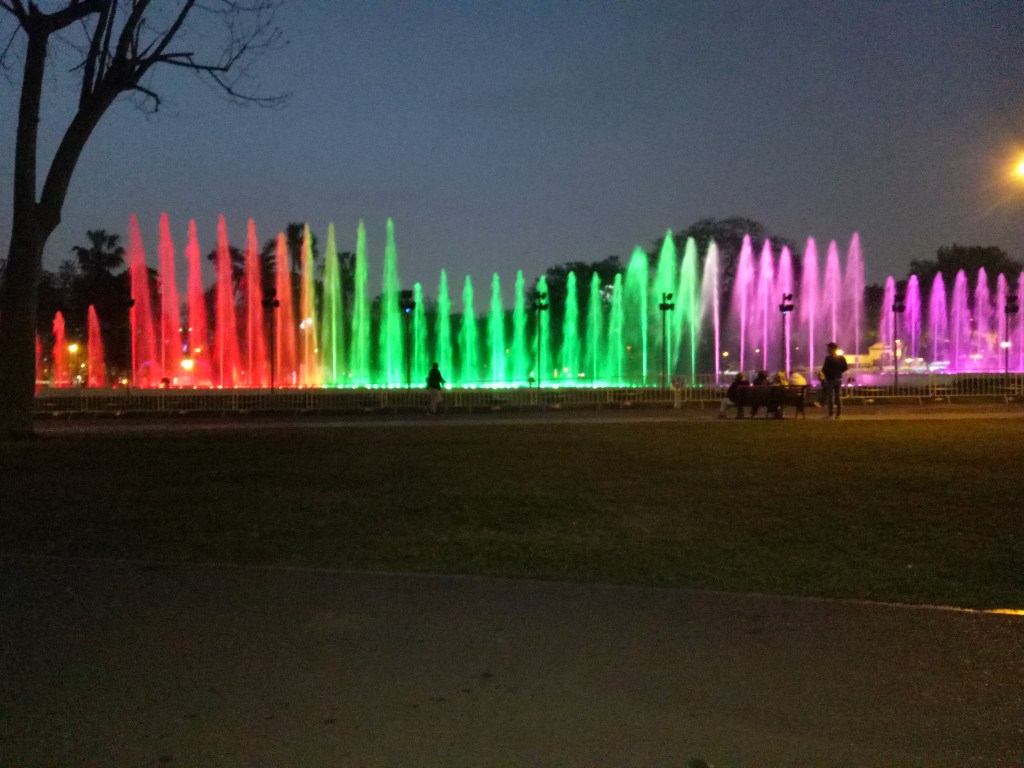
I had heard and read a lot about one of the more recent attractions of Lima – the magical water fountain. The Circuito Magico de Agua creates magic with water. I reached the place mainly known for the spectacular fountains around 5 p.m. You can walk underneath a tunnel of water. As the sun began to set the lights were turned on. The lights at the main fountain could reproduce an extravagant palette of colors and different scenes were created in tune with the music. There was a light show at 7.15 pm. Crowds began to gather around the main fountain. The light and sound show using lasers and lights was spectacular and provided a brief introduction to the rich tapestry of Peru.     

Magical Fountains

Chicha morada is a drink from the Andes region and is made from purple corn. Rich in antioxidants, the drink is refreshing and healthy. Chicha morada is smooth and beautifully complements various Peruvian dishes. The alcoholic variety plays an important role in different religious and other ceremonies from ancient times to the present day. There is a legend about the corn (mama jora, mother corn) plant from which these drinks are derived.

The legend about the chicha[1] is especially popular in Cuzco, the ancient capital of the Inca empire, and also in other cities in Peru. In ancient times the God Viracocha (the creator) saw people working hard. He wanted to help them, so he came down from Hanaq Pacha (the world above) to place in a single plant the powers he wanted to give humans.  He chose a weak plant that struggled to grow amidst spiny weeds. To give his power to this plant, Viracocha took from his bag a sliver of huaranguay wood, a puma hair, a condor feather, and the fox’s brain.  He put them together and placed them on the small plant.

The city that treats visitors like kings with its sumptuous meals and friendliness, creates mystery with magical legends, like the one about Viracocha. Perhaps, that is why a sense of lingering longing and gratitude fills my being as I think of the colourful capital of that distant country on the other side of the globe.

Acknowledgment: Senor Fernando needs to be thanked for his hospitality and help during my visit — Dr P Ravi Shankar

[1] The legend is mentioned in a blog article by WC Morveli titled ‘Drink chicha to become wiser than a fox’ (https://cuzcoeats.com/drink-chicha-wiser-fox/)

  1. Unless otherwise stated ↩︎

Dr. P Ravi Shankar is a faculty member at the IMU Centre for Education (ICE), International Medical University, Kuala Lumpur, Malaysia. He enjoys traveling and is a creative writer and photographer.

.

PLEASE NOTE: ARTICLES CAN ONLY BE REPRODUCED IN OTHER SITES WITH DUE ACKNOWLEDGEMENT TO BORDERLESS JOURNAL

Click here to access the Borderless anthology, Monalisa No Longer Smiles

Click here to access Monalisa No Longer Smiles on Kindle Amazon International

Categories
Musings

Migrating to Myself from Kolkata to Singapore

By Asad Latif

Sir Stamford Raffles (1781-1826). Courtesy: Creative Commons

May I be so bold as to claim that I travelled in the footsteps of Sir Stamford Raffles? That agent of the East Indian Company’s visit to Calcutta (as it was known then, and for much later, till it resumed the phonetic spelling of its original name), led him to set up Singapore as an English trading settlement in 1819. “Footsteps” would be the wrong metaphor, of course. “Seasteps” would have been accurate, since Raffles travelled to Calcutta by sea and arrived water-borne to Singapura (as it was known then). In my case, however, I arrived in Singapore sky-borne, in an aircraft that conveyed me from what was then home to what would become home. Footsteps, seasteps or airsteps, I arrived in Singapore. The year was 1984. I was 27.

Today, at 65, I remember my passage from back home to this home as if it occurred yesterday. I had worked in Hong Kong briefly in 1984 and had been exposed to life in a successful British colony that was in the throes of its return to Chinese rule. Singapore was different. It had merged with the Malaysian Federation in 1963, had separated from it in 1965, and had gone on to carve out an extremely successful space for itself in the international sphere.

Prime Minister Lee Kuan Yew was a household word in Singapore. Not everyone loved him, but no one could deny his singular agency in having created a magnificent city-state that could sustain its independence in spite of its lack of natural resources. To arrive in Singapore was to embrace the possibilities of time.

Calcutta, too, was a historical city par excellence, but its rundown buildings and potholed streets, to say nothing of its potbellied children living on homeless streets, belied the promise of the future. To arrive in Singapore, it appeared, was to have exchanged failure for success.

That was an illusion, of course. All expatriates suffer from a global disease: They latch on to what they love in their countries of arrival by trying to erase what had loved them in their countries of departure. Take the potholed streets of Calcutta, for example. They had conveyed me to College Street on that glad day in 1974 when I joined the English Department of Presidency College. Without that first footfall in the corridors of the greats, I might never have come to Singapore, never got my Chevening Scholarship to Cambridge, my father’s university, and never won the Fulbright to Harvard. The potholes of Calcutta are not as numerous as the culturally blind allege them to be. Nevertheless, they led me on the way to be myself, wherever on earth I would ultimately be.

The way I see it, no matter how far or close wanderings might lead, one migrates ultimately to oneself. Hence, when I left my Calcutta for what would become my Singapore, I did no more than search for a version of my selfhood that would extend my material and imaginative boundaries. In the course of my journey, I discovered that the only borders lie within, borders between being and becoming. In the process of becoming by winnowing the unwanted aspects of being, one returns to a renewed if only autumnal sense of being. Time passes. One passes with it, letting go of the distant past as much as one does the receding immediate past. To live is to gather the passage of time within oneself, hoping that all borders will merge into a lasting apprehension of oneself in the expanding fullness of a single world.  

Calcutta and Singapore are two sides of me. These two great imperial cities have outlived their provenance. Calcutta was once the capital city of colonial India: Today it remains the nation’s cultural capital but political power resides in Delhi (naturally) and there are at least two economic capitals, Mumbai and Chennai. This is why I, along with many of my hapless fellow-Bengalis, suffer from an incurable cultural fetish for the past. That was when the Almighty spoke Bengali – He appears to be switching increasingly to Hindi – and was busy creating top-class poets and formidable social reformers in Bengal. The divine supply of poets and composers has not ebbed but the demand-side having moved to Mumbai, many of the best composers have shifted there and to make a name for themselves. Never mind. Their names remain Bengali, and their fame spreads the vintage mystique of Calcutta like a lingering perfume in India and beyond. I feel happy for the Calcutta part of me.

Singapore, a great trading post, is a now a city-state. Statehood has allowed the nascent nationalism of the colonial era to flourish and grow into a genuine sense of political self. Sovereign Singapore was not expected to survive, but it has done so with a definitiveness that makes the prognoses of the 1960s laughable today.  The national self-confidence of Singapore gives me confidence in my decision to take up Singapore citizenship in 1999. It had not been an easy decision, but I took it when I realised that I would be giving up my Indian citizenship but not my Indian-ness. My Singapore Identity Card records my race as Indian. I could keep the Calcutta part of me intact while adding to it a new Singaporean me.

So, yes, I am grateful that Raffles travelled to Calcutta to set up Singapore. Obviously, he did not do so with my fortunes in mind, but the umbilical connection that he created between the two great port cities has made it easier for me to migrate from India to Singapore. Ultimately, I have done nothing more than migrate to me.  

    .


 Asad Latif is a Singapore-based journalist. He can be contacted at badiarghat@borderlesssg1

PLEASE NOTE: ARTICLES CAN ONLY BE REPRODUCED IN OTHER SITES WITH DUE ACKNOWLEDGEMENT TO BORDERLESS JOURNAL. 

Click here to access the Borderless anthology, Monalisa No Longer Smiles

Click here to access Monalisa No Longer Smiles on Kindle Amazon International

Categories
Stories

The Book Hunter

By Paul Mirabile

Courtesy: Creative Commons

Adamov led an introverted life. Perhaps because everyone, both friends and foes, thought he was ugly. In fact, he himself, when looking in the mirror that hung lopsided on his peeling wallpaper drew the same conclusion. An ugliness that drove him deeper into his own world, and which would lead him to become the foremost collector of books in the Kalmak region of the Caucasian mountains, and even beyond … This intense activity, which began at a very early age until his violent, and I may add, mysterious death in a dingy New York City hotel room, took him to the four corners of the earth, buying, bartering, stealing manuscripts, first published books, political pamphlets, rare essays. He even possessed, heaven knows how, an incunabulum[1]: a Lutheran Bible! Adamov also acquired, as a picturesque pastime, miniatures of Mughal, Kangra and Rajput stamps, Tibetan thankas, Buddhist prayer masks, mediaeval Chinese scroll paintings. It was said that he amassed more than 25,000 books at the humble two-storey lodging of his home village in the mountains of Daghestan ! But this, I will not confirm …

In short, books became his very existence, his raison d’être. His trusty companions and faithful, consoling friends in his many moments of maniac depression. His book-hunting transformed Amadov into a detective, snooping out the scent of an affair, flaring the odour of yellowing pages, crispy to the touch, invigorating to the smell, pleasing to the eye.

For Adamov, it was not just a question of tracking down a book like a hunter hunting his prey, but of locating the author’s place of residence, his or her favourite haunts. He would spend weeks, months in cities and towns, even after having procured his book, following the daily footfalls of those illustrious or obscure writers. If the writer happened to be alive, he would trail him or her from his or her home to a restaurant, a hotel, a library or book-shop, but never like a sleuth. If caught red-handed, this might have caused him some embarrassment. Adamov was afraid of direct confrontation, especially if it involved the law. To tell the truth, Adamov had no real intention of meeting an author, however famous. He reckoned that authors never measure up to their books, so why waste time actually meeting them? What would they talk about anyway: the birds and the bees? The weather?

It was during those moments of utter dolefulness on the road that Adamov recalled his childhood with a faint smile: He recollected rummaging through the dilapidated homes of his village in search of maps, pamphlets, books, picture cards or any scribblings that caught his eye, classing them in files either by theme or by date of their finding. For example, in 1960 he found 345 miscellaneous documents; in 1961, only 127. He had such a wonderful childhood, in spite of the periodic bombings from above, parental scoldings or beatings, visits from the neighbouring village militia that demanded money, food or young blood for the ’cause’ … A ’cause’ which he never adhered to, nor was ever recruited for, given his frail body and nervous disposition …

Finally he left his home village in search of bigger game, although he promised his parents that he would always keep in contact with them by his book trade; that is, every book purchased, after having read it, would be sent to their two-storey home … A home which became legally his after their deaths in the 1970s …

In 1974 we find our book-hunter in Amsterdam, lodged at the Van Acker Hotel, Jan Willem Brouuersstaat 14, just opposite the Concertgebouw, the famous concert hall, where he had been listening to Beethovan’s symphonies during that delightful month of May. It was in that hotel, in his room, that he arranged an appointment with a Dutch book dealer, a pasty-faced, unscrupulous dwarf, who negotiated hard for his wares. He clutched in his chubby, wrinkled arms an XVIIIth century first edition of Dom Bedos’ L’Art du Facteur d’Orgue[2], that Adamov had been tracking down for years. And finally, there it lay in the hands of that despicable dwarf who wanted more than 7,000 guilders for it! Adamov knew this was an illegal purchase, being classed as patrimonial property, probably having been stolen from the National Library by this slimy sod, but he had to possess it ! They haggled over the price for hours and hours well into the night. Following a rather violent squabble, the dwarf suddenly clutched at his chest, gurgled a few irrelevant syllables, and fell stone dead at Adamov’s shoeless feet. He wretched the priceless treasure from the still clutching arms of the dwarf, slipped on his shoes, checked the street from his window, then the corridor from the door, noiselessly. Adamov quickly packed his meagre belongings (he always travelled light), locked the door behind him and silently crept out into the soothing blackness of the street. In his flight, he threw the hotel door key in a rubbish bin, then made a bee-line for the bus station, where at six o’clock in the morning he was already headed for Berlin, and without wasting a moment, on a train for Istanbul where he was expected by an Armenian seller (or reseller ?) who possessed several Armenian illuminated manuscripts of mediaeval stamp, costly indeed, but since he paid nothing for Dom Bedos’ invaluable treasure, after an hour or two of desperate haggling, bought two manuscripts. The Armenian threw in two or three miniatures from Herat and Tabriz in the hope that his client would return for the other four illuminated manuscripts … Adamov never did: He was murdered sixteen years later …

Now the incident in Amsterdam caused our book-hunter much discomfiture; not any pangs of conscience mind you; Adamov felt no grief over the sudden death of that dwarf. He feared rather police enquiries about the death, and the overt fact that he fled from his hotel without assistance to him, and without paying the bill to boot! The police might accuse him of the dwarf’s death … As to the manuscript, that posed no particular problem since the dwarf had undoubtedly had it stolen or had stolen it himself. Wherever he went now, the hunter would have to look over his shoulder, staying at the grottiest hotels imaginable to avoid the police or their hired henchmen, travelling on night-buses or trains or on cargo ships when crossing oceans or seas.

The Amsterdam incident happened three years ago. Since, Adamov had eluded local police and Interpol not by any Arsène Lupin[3] tactics or strategies, but perhaps by some lucky star or a guardian angel, if the readers are inclined to believe in these wardens of the wanton. But still our book-hunter remained on the qui-vive[4]! Since that unfortunate (or fortunate?) incident, Adamov had been seen in Georgia, Armenia, Iran and Uzbekestan, where he spent over a year, illegally (his visa having expired after three months!), in Bukhara haggling over a XIVth century publication of Hoca Ahmet Yesevi’s Hikmets (Strophes of Wisdom)in the original Chagatai language, a language that he learned to read in three months.

How he slipped out of Uzbekistan is anyone’s guess. He probably bribed the custom officials. In any case, we find traces of him in the Yunnan, at Lijiang, southern China, bargaining hard for three colourful Naxi pictographic manuscripts from a Dongba priest, manuscripts which the Chinese government absolutely forbade to be taken out of the country, but whose exorbitant estimated price on the black market, a cheery sum of 25,000 yuan, persuaded the wily priests to take the risk. Besides, the priest could always imitate the three XVIth century manuscripts : it was all a question of time and patience … And he had both! Who would ever know? Adamov sensed the abysmal greed of his vender, and promised him 10,000 yuan more if he would relinquish two more of the forbidden scriptures, but payable in two days since he would have to wire back to Daghestan for the money. The plucky priest, all agog, smiling a wicked smile, handed the two booklets over to him without hesitation. Adamov never returned. He disappeared, travelling quickly through Nepal to the Himalayas via Sikkim, Ladakh and Zanskar, where, at last, at the Phuktal monastery he sojourned for five months, reading a first edition of James Hilton’s Lost Horizons whilst ploughing through the Hungarian philologist and Tibetologist, Alexander Csoma’s Tibetan-English Dictionary. Before he bid farewell to his kind and generous hosts, he had filched six illuminated prayer books in Tibetan, two festival masks and a thangka[5]. By the time the good monks noticed the theft, the incorrigible thief had trekked to Kaylong, bussed it to Manali, finally arriving in Karachi, where he boarded a cargo ship for Japan, then on to Oakland, California.

Aboard the cargo the thief had time to mediate upon his book-hunting existence. He admitted it wasn’t particularly glamorous — abandoned parents, a dead dwarf, stolen patrimonial property, false passports and bribery of officials. Nevertheless, these unsavoury moments of his hunting never dampened his enthusiasm. His lust for sweet-smelling tomes, his craving to possess, at any cost, more and more of them. To tell the truth, Adamov had become completely obsessed by his collection. Oddly enough, the more he accumulated the uglier he became ! In fact, he not only became uglier, he became fatter … Adamov had no qualms about this ponderous load; indeed, it enveloped him with a sort of pompous aura, whose fleshy freight he swaggered about the decks of the ship like some august, stately sultan. It added to the mystery of his past, present … and future. A future that had little cheer and much disquiet. He was running out of money, for he refused to sell what he bought. Even the many stolen books he dreaded to forswear. How many times had he asked himself why he hoarded such a vast treasure without really capitalising on his assets, without developing a trading-network throughout Asia, without, at least, rereading his precious volumes two or three times, sniffing their illuminated contents, inhaling the strange forms of their letters and signs, touching ever so lightly, again and again, the brittle paper of their pages or the calfskin vellum of their covers … To these questions he had no clear answer. He felt trapped in a conundrum, out of whose meshes Adamov, the hunter, gradually fancied himself the hunted!

But by who? The few passengers aboard hardly looked at him, much less spoke to him. He ate his meals with two or three burly fellows, perhaps Koreans, who beyond a good morning, afternoon or night, never pronounced a word to him, nor amongst themselves for that matter.

So he churned these thoughts over and over in his head as the days went by on the never-ending Pacific Ocean. What he needed was a project. Yes, a project that would offer him a meaning to his collecting … to his cherished collection. He resolved to go to New York City once disembarking at Oakland. Why New York City? Because Adamov had read about a Jewish New Yorker, named Louis Wolfson, who spoke many languages and wrote in French because he hated his mother speaking English to him. An odd chap indeed, but this is what he read. The idea fascinated him. The fact that Wolfson was still alive, in spite of the many sojourns in psychiatric wards and clinics. It was his book : Le Schizo et la Langue[6] that he would find and read. This posed no real problem, having been edited and re-edited since 1970. Yes, this book would put him on the trail of something enormous … Something worthwhile. Adamov looking out to sea gazed complacently into his future. A piercing crimson glow hollowed out a widening hole amidst the thick, grey clouds … He spun on his heels. The hunter sensed a pair of eyes bearing down on him. Yet, when he searched out the deck and the bridge high above him there was not a soul in sight. He sighed, padded his paunch, and casually shuffled off to his cabin as the swells lifted the ship high into the crests of the grey sky, only to drop with tremendous speed into the black, oceanic valleys below …

Six months later, Adamov had reached New York City on a greyhound bus from Atlanta, Georgia. He took up his lodgings at a sleezy hotel on the Lower East Side, Water Street, number 9. It wasn’t long before Adamov, weaving in and out of the 8 million New Yorkers day after day, night after night, had purchased a cheap 1970 edition of the aforesaid book by Louis Wolfson, with a preface by Gilles Deleuze, a French philosopher of some renown in Europe. He pored over this odd book as if he himself had written it. His fascination over such a contemporary edition unnerved him. This Wolfson grew on him like a drug-addiction — not for his writing, which indeed proved rather drab, but to the singularity of his method to achieve a written work through strenuous exercises of self-neglect and utter detachment from maternal infringement. The schizophrenic maniac had managed to create his own sphere of reality through the myriad experiences of listening to such diverse languages as Yiddish, French, Russian and German on his make-shift Walkman whilst strutting through the streets, sitting in parks, at the table when eating with his obnoxious mother, ensconced in the public library as he read or wrote in all the languages he knew … except English, that accursed language that his mother tortured him with like a sadist would when ripping out fingernails! That language which he hated as much as he hated his mother …

Adamov bought a Walkman and had recorded Persian, Arabic and Mongolian on it, which he listened to as he strolled about the same streets that Wolfson had strolled. Or, he sat in the same New York Public Library where Wolfson had sat for hours and hours until closing time. He couldn’t give a biscuit where Wolfson was now living, probably locked up in some clinic for the alienated in a straitjacket. He had nothing personal against English. However, these dippings into ‘alien tongues’ hour after hour, day after day, lifted him out of the ‘New World’ into one of his own making … his own created polyphonic world. His excitement grew as he shifted from Wolfson’s book to the many languages that he repeated over and over again …

It was more or less at this time that I penetrated Adamov’s world. I, too, had my grotty lodgings at the same hotel, a room right next to his. At night I heard his wild, inflamed exclamations about things I hardly deciphered. However, one day we met in the low-lit, begrimed corridor as he dawdled to his room. He had shaved his head and let grow a beard down to his chest. He wore a skullcap of pure white. Adamov’s black, beady eyed bore into mine with some suspicion at first, but my soft spoken, causal demeanour put him immediately at ease. I introduced myself, and he invited me into his room for an evening chat …

It was the first and last discussion I had with this odd fellow, and it lasted well into the night. The oddness lay not so much in the subjects that we touched upon, but the dream-like atmosphere that Adamov somehow created. There he sat enthroned behind his reading and writing table near the unclean window like Genghis Khan himself, stroking his beard, turning the pages of Wolfson’s book that lay before him, his pudgy fingers smearing coffee grinds on page 40, heavily marked with pencilled notes ! He would address me in English, then after several minutes switch to Spanish and Italian with the utmost ease, an ease that I echoed since I was well versed in those languages. My host appeared to be pleased by this hollow echo in the night. After a drink or two of some cheap red wine, Adamov would burst into a soliloquy in Turkish, afterwards slipping into Russian, German, Dutch and French, attempting to throw me off the chase, to deviate my beating. And in this, I must confess, he thoroughly succeeded. Oftentimes the sly polyglot began a sentence in Russian and finished it in Chinese or Tamil, a feature that linguists call ‘code-switching’. I was flabbergasted …

But what really stupefied me was this strange man’s ability to alter his speech patterns and accents. Now he would impersonate, linguistically, an American from the deep South, now one from New York City. Now a Frenchman from Paris, now from Marseilles! When he fell into speaking Spanish, he conversed ever so casually with a Mexican ‘gaucho’[7] accent, only to follow up with a ‘caballero’[8] one from Barcelona or Madrid … All these inflections and modulations left me swooning, to say the least. At length, at four in the morning, I rose and retired to my room, having learnt absolutely nothing of importance about this amazing creature. In short, I felt more ignorant of this man than before I ever laid eyes on him …

Everyday Adamov spent over ten hours at the public library. It was there that his great project suddenly took form, looming larger and larger in his excited mind. Why not write stories myself ? Why not write stories in many languages and not just read or listen to them ? Yes, different stories written in different languages, signed by invented names! Twelve stories – fiction, each bearing a style of its own, a flavour and texture of its own, yet signed by twelve different writers. Adamov grew more and more agitated, fidgeting in his chair much to the annoyance of two elderly readers opposite him, poring over a William F. Buckley essay and Eric Lux’s 1991 edition: Woody Allen: A Biography.

But what languages could he choose? French, Spanish, English, Turkish, Italian and German … Any. How about Russian and Chinese? That would make eight. “I can get on all right with Tamil and Persian … and Armenian?” Adamov paused, collecting his thoughts. What would be the twelfth language ? His own ? Never. It was his mother’s tongue, and besides who would ever read it? But was being read all that important, vital to his existence? No. This project was beyond a reading public … beyond mankind’s expectations of what writing and literature meant to him.

By this time, Adamov’s eyes seemed to pop out of their sockets. The two elderly readers rose from their chairs and left with many a smirk and sneer. What did he care? Still, he needed one last language: “I got it, I’ll invent a language from all the languages I know! That will be my twelfth story; a story to end all stories …”

He mapped out his plan of action mentally. Our future short-story writer shot out of his chair and made a bee-line for his hotel. He would put his plan into action that very night … He set to work at his reading and writing table, having decided to begin the Twelve with English, the language that Wolfson loathed! He cringed under that delicious stroke of inspiration. Let the bugger loathe all he might! Adamov could love his book, but he harboured no devotion towards its writer. Besides, he was residing in an English-speaking country and there he wanted to write in English. He would write French in France or Belgium, Spanish in Spain or in Latin America, Turkish in Turkey, and so on.

Hours went by as Adamov pressed on and on, burning oil of the midnight lamps, filling sheets of cheap notebook paper as quickly as his imagination spiralled out. Coffee after coffee kept pace with his hand, à la Balzac, amidst the screaming police sirens, the bickering of pimps and their whores below his window, rubbish bin cans crashing on pavements as stray cats or vagrants rummaged through their contents. Through the thin walls of his room he heard coughing, sneezing, cursing, snoring and sleep-talking.

As the sun broke through the thick, colourless skies of a New York City morning, Adamov, thoroughly exhausted, threw down his mighty writing tool. He had finished the first of the Twelve: The Garden of Enchantment, signed Hilarius Eremita …

Just at that triumphant moment a sudden hammering at his door rocked him out of his reverie. He rose sluggishly and shuffled to the unlocked door. As he grasped the knob the door burst open in one forceful thrust. Two hooded men seized Adamov by the throat, pinned him against the wall and strangled him with their bare hands. The ponderous writer slid limply to the floor, mouth ajar, eyes open in tragic astoundment. The hooded men fled, vanishing into thin air, as the expression goes …

Hearing hurried footsteps, I waited until they had died down, then tip-toed to his room. For some unknown reason his premeditated murder, for premeditated murder it undeniably was, did not surprise nor move me. I swiftly, however, rushed to the writing table : Nothing had been touched ! I gathered all his papers then returned briskly to my room …

And this was how I was able to salvage from the malevolent hands of Adamov, or Hilarius Eremita, the story called,  The Garden of Enchantment

When I think back on this whole affair there is no shadow of a doubt that the hunter had become the hunted for reasons that we shall never really know. In light of that, I departed from New York City the day after the murder on a flight to Buenos Aires, then on to Madrid …

.

[1]          A book printed on a Gutenburg Press before 1500.

[2]          The Art of an Organ Builder.

[3]          Famous French ‘gentleman’ robber who steals from the rich to give to the poor, and in doing so, always outsmarts the police, but without ever shedding any blood. Arsène’s adventures were written by Maurice Leblanc (1864-1941).

[4] On the alert (French)

[5] Tibetan painting

[6]          The Schizophrenic and Language.

[7]          A cowboy from the Mexican plains or pampas.

[8]          ‘Gentleman’.

Paul Mirabile is a retired professor of philology now living in France. He has published mostly academic works centred on philology, history, pedagogy and religion. He has also published stories of his travels throughout Asia, where he spent thirty years.

.

PLEASE NOTE: ARTICLES CAN ONLY BE REPRODUCED IN OTHER SITES WITH DUE ACKNOWLEDGEMENT TO BORDERLESS JOURNAL

Click here to access the Borderless anthology, Monalisa No Longer Smiles

Click here to access Monalisa No Longer Smiles on Kindle Amazon International

Categories
Notes from Japan

Rabbit Island

Narration and photographs by Suzanne Kamata

I first learned of Okunoshima from a Canadian friend’s Facebook post. She’d shared photos of herself surrounded by rabbits. The island just off the coast of Shikoku and only accessible by ferry, was overrun with these adorable animals. How unusual, I thought. How cute! Surprisingly, few Japanese people that I talked to seem to know about this place. However, when it was featured a few months ago on a TV travel show, my daughter Lilia told me that she wanted to visit.

“It’s really far,” I told her. “At least three hours by car.”

“We can take the bus,” she signed to me. (My daughter is deaf.)

I knew that there were no buses that went from our town in Tokushima, on the eastern part of Shikoku, to Tadanoumi in Ehime Prefecture where we could board the ferry to Okunoshima. My daughter, who has cerebral palsy, uses a wheelchair, and it seemed like too much of a hassle to take the bus to Matsuyama and change buses once or twice to get to that tiny coastal town, but I wanted to visit as much as she did. I was charmed by the idea of an island full of bunnies. When I came across a flyer advertising a one-day bus tour to Okunoshima, I immediately signed us up.

We got up extra early that sunny Sunday and met our tour guide in a gravel parking lot near the town gym. I’d told the tour guide that my daughter was disabled, but it wasn’t a big deal. We climbed into the front seat and the guide handed out tea and packaged rice balls. We gazed out at the lush green terraced fields, yellow roadside wildflowers, and flooded rice paddies as we made our way to Ehime Prefecture. The landscape outside our window might have been lifted from the animated film Tottoro.

Inaka,” Lilia signed.

“Yes.” I agreed that we were deep “in the countryside.”

I was a little worried that once we got to the island my daughter would find the real-life rabbits annoying. I remembered how she had been bothered by the notoriously aggressive deer in Nara on her school trip. One deer had tried to eat her notebook. What if the rabbits tried to nibble on her fingers or cellphone? But as we rolled along the highway, she reminisced about the rabbit she and her classmates had taken care of in kindergarten. When it had died, they had held a little ceremony and buried it on the school grounds.

As we approached the port, finally catching a glimpse of the sea, the tour guide gave us some final instructions. “Don’t give the rabbits snacks,” she said. We could buy rabbit food at the port.

The bus took a turn down a narrow road flanked by brown-tiled houses, many of them with solar panels. Finally, we arrived at a parking lot next to a small cluster of buildings. To my surprise, here we were, seemingly in the back of beyond, but a long line of people already snaked around the corner from the ferry dock. The tour guide seemed a bit nervous. “It’s a small boat,” she said, “and they don’t accept reservations.” She hurried off to buy our tickets. Note to self, regarding future visits: arrive plenty early.

The tour guide returned to the bus and informed us that the passengers were lined up for an earlier ferry and that we would be able to board. Phew! Since we had about half-an-hour before our own departure, we all got off the bus. Lilia and I went to a small building with a big clock to buy packets of rabbit pellets.

When it was time to get on the ferry, we were directed to the lower level, along with several young families with strollers. Most of the other passengers went above deck. We stayed to the side as three rows of cars were directed onto the ferry. It was shaded and cool.

Lilia, who has always been far more social than me, tried to get me to start a conversation with a blonde foreign woman standing nearby with her three kids and husband. From the familiar scent of her sunscreen, I assumed that she was American, but I didn’t really feel like talking. I resisted my daughter’s entreaties, suggesting that we just relax and enjoy the wind on our faces, the sight of the waves. I thought it was remarkable, however, that although most Japanese people I’d mentioned the island to had never heard anything about Okunoshima, there seemed to be several groups of foreigners on this ferry alone bound for the island.

We arrived in about twenty minutes. The tour guide had arranged for a mini bus to transport my daughter and me to a restaurant on the island. Lunch was included in our package tour. The rest of the group would be going on foot. The restaurant was only about a fifteen-minute walk from the port.

I had half-expected hordes of rabbits to greet us upon disembarking, but it was hot. The first rabbits I spotted were lolling beneath bushes, their energy apparently sapped by the high temperatures and humidity.

My daughter and I boarded the waiting van. I pointed out rabbits to Lilia: there, in a burrow, there, under the picnic table. It occurred to me that this was the first Japanese island that I had been on that wasn’t home to stray cats.

“Are there any predators on this island?” I asked our driver.

He thought for a moment. “Maybe crows.”

The rest of our group was dining in a tatami room. Because of my daughter’s wheelchair, we ate in another room at a table with chairs. Our pre-ordered lunch consisted of slices of sashimi, miso soup, and rice mixed with vegetables, but at the Usagi Lunch Café, you could order pancakes branded with bunnies, white rice molded into rabbit shapes surrounded by curry, and long-eared rice-filled omelettes.

After lunch, we were free to do as we liked until the ferry departed. We set out to explore. Bicycles can be rented, but it’s possible to walk the four kilometres around the entire island in an hour or less. The bunnies are not hard to find.

Lilia and I ventured on to a grassy lawn, which was full of holes dug by rabbits, making it a bumpy ride with the wheelchair. We settled briefly at a shady spot under some trees where some bunnies had gathered, and lured them with pellets. I was worried that they might bite our fingers, but they were docile and friendly, nibbling only on the food that was offered. “Kawaii!” Lilia said. “Cute!”

Although the rabbits are, for all intents and purposes, wild, they are supposedly descendants of pet rabbits kept at a long-ago school. The story goes that in 1971 schoolchildren released eight of these creatures on the island, and then they began to proliferate, as rabbits do, Now the island is designated as a national park and is home to around 700 bunnies.

There is another more sinister theory as to how the rabbits came to be on the island. Unbeknownst to many Japanese, from 1929-1945, the Secondary Tokyo Military Arsenal manufactured chemical weapons for the Japanese Army on Okunoshima. This project was so secret that during that time, the island was excluded from most maps of Japan. The poisonous gases produced here, including mustard gas, tear gas, and phosgene, were used more than 2,000 times exclusively against the Chinese, killing 80,000 people. The effectiveness of the gases was allegedly tested on rabbits. Some say that the ones now living on the island are descendants from test rabbits released after the facility was destroyed in 1945 by U.S. Forces. However, Hatsuichi Murakami, who worked at the poison gas factory as a teenager and later became director of the Poison Gas Museum, told a New York Times reporter that the present-day rabbits are not related to those used for testing.

My daughter wanted to visit the Poison Gas Museum, which she had also learned about from TV. Having visited the Hiroshima Peace Museum and the Holocaust Museum in Washington D.C. on family trips, she was familiar with the horrors of war, and keen to know more about history. We saved a few pellets for later, and made our way to the small building with a red-brick facade. A ramp made it easily accessible, as did the nominal one-hundred-yen entry fee. The exhibits of gas-making materials, clothing owned by factory workers, and photos take up only two rooms, but their impact is strong. They are labeled in both Japanese and English. According to the museum’s English brochure, “Having seen materials made by concerned people, we hereby declare that war is meaningless and the production of poison gas is tragic. We make an appeal for everlasting peace.”

Once again under the hot afternoon sun, we wandered slowly back toward the port, dispensing pellets as we went. Maybe, I thought, these cute little bunny rabbits were released here to live freely as atonement for the ones who had suffered and died. They are now protected from hunters, dogs, and cats (which are prohibited on the island). Signs warn visitors not to feed them on the road, in order to keep them safely out of the way of oncoming cars. From their appearance, they seem mostly healthy and well cared for. The island itself is now a family-friendly place with a campground and a spa, where people from all over the world gather peacefully.

As we lined up for the ferry to return home, my only regret was that we couldn’t stay longer. Then again, now that we knew how to get there, we could always go back.

Suzanne Kamata was born and raised in Grand Haven, Michigan. She now lives in Japan with her husband and two children. Her short stories, essays, articles and book reviews have appeared in over 100 publications. Her work has been nominated for the Pushcart Prize five times, and received a Special Mention in 2006. She is also a two-time winner of the All Nippon Airways/Wingspan Fiction Contest, winner of the Paris Book Festival, and winner of a SCBWI Magazine Merit Award.

PLEASE NOTE: ARTICLES CAN ONLY BE REPRODUCED IN OTHER SITES WITH DUE ACKNOWLEDGEMENT TO BORDERLESS JOURNAL

Categories
Poetry

Menuki by Jared Carter

A found poem, consisting of various captions copied verbatim from descriptions of small figurines displayed in the Asian Wing of the Dayton Art Institute, in the state of Ohio, in the United States.

Menuki, sometimes called sword fittings, are matching or complementary pairs of tiny metal sculptures, traditionally secured to the hilt of a samurai sword and thought to improve the grip.

They were hammered from sheets of copper or alloys of silver and gold and were held in position on either side of a sword’s hilt by braids of silk.

— Jared Carter

MENUKI

Each in the form of a cluster of branches and a flowering plum
Each in the form of celestial dragons
Each in the form of a cluster of flowers wrapped around a rolled mat
Each in the form of a crane with spread wings
            nestled amidst the upper branches
                        of an ornamental spreading pine

One in the form of a prancing stag
            the other in the form of a stag nuzzling a recumbent doe
One in the form of a cluster of grasses with a crescent moon
            the other of grasses with the new moon
Each in the form of Mount Fuji

One in the form of a court noble in military dress
           the other in the form of a sage holding a book
Each in the form of a woven basket filled with sprays of flowers
Each in the form of a cluster of eggplants
One in the form of a crane taking flight
           the other in the form of a heron

Each in the form of a cluster of peacocks
Each in the form of a crawfish and waterweeds
Each in the form of crickets and wildflowers
Each in the form of two galloping horses
One in the form of a nightingale in flight
           the other in the form of the moon
Each in the form of a horse cleaning itself
           beside a shallow stream

One in the form of a stalking tiger
           the other in the form of a seated tiger
Each in the form of a fisherman walking
           with a large wicker basket

Each in the form of a samurai astride a galloping horse
Each in the form of three Chinese sages playing go
Each in the form of a gold pheasant
            backed by a cluster of kiku, millet,
                        wildflowers, and grasses

Each in the form of a fisherman poling a boat

First published in Nexus.

Jared Carter’s most recent collection, The Land Itself, is from Monongahela Books in West Virginia. His Darkened Rooms of Summer: New and Selected Poems, with an introduction by Ted Kooser, was published by the University of Nebraska Press in 2014. A recipient of several literary awards and fellowships, Carter is from the state of Indiana in the U.S.

.

PLEASE NOTE: ARTICLES CAN ONLY BE REPRODUCED IN OTHER SITES WITH DUE ACKNOWLEDGEMENT TO BORDERLESS JOURNAL

Categories
Interview

At Home Across Continents

In Conversation with Neeman Sobhan

Neeman Sobhan is an expat who shuttles between Italy and Bangladesh and writes. She has a knack of making herself at home in all cultures and all spheres. Having grown up partly in Pakistan (prior to the Liberation War in 1971), Bangladesh and completed her studies in United States, she has good words about time spent in all places. Her background has been and continues to be one of privilege as are that of many Anglophone writers across Asia. Her stories have been part of collections brought out to celebrate the fiftieth anniversary of Bangladesh.

One of her most memorable stories from her short story collection Piazza Bangladesh, located around the 1971 war takes on an unusual angle, where the personal seems to sweep the reader away from the historic amplitude of the event into the heart-rending cries of women at having lost their loved ones in a way that it transcends all borders of politics, anger and hate. The emotional trajectory finds home in a real-world event in the current war. The fate of innocent youngsters dying while not being entrenched in the hatred and violence wrings hearts as reports of such events do even now. I find parallels in the situation with the young Russian soldier whose mother did not know he was in Ukraine and who was killed while WhatsApping his mother his own distress at being there. And yet her stories stay within certain echelons which, as she tells us in the interview, are the spheres that move her muse.

When and how did you pick up a pen to write?

I have always written. The written word has always held a powerful fascination for me, which has not dimmed at all. From my childhood through my teens, I was a voracious and precociously advanced reader, as well as a passionate writer of poetry, and a keeper of a daily journal. My poetry was regularly published in The Pakistan Observer’s Junior page.  I don’t dare look at them now to even assess whether they were embarrassingly bad or surprisingly good enough to be salvaged and resurrected now! I preserved them as the earliest evidence of my continuing evolution as a writer and a poet today.

During those early days, I also won the first prize in a national essay writing competition sponsored by the newspaper. The Pear’s Encyclopedia I won still holds a precious place on my bookshelf.

English was my favourite subject in school and college, and I knew I would study English literature at university. I started out at Dhaka University in 1972 but by some perverse logic, I actually enrolled in the newly opened International Relations department and not the English Department (in which I had applied and been accepted). The reason, I now recall is because the English department was over-flowing with students, while the International Relations department was something exclusive and admitted a handful of students. However, after a few months I realised I had made a disastrous choice.
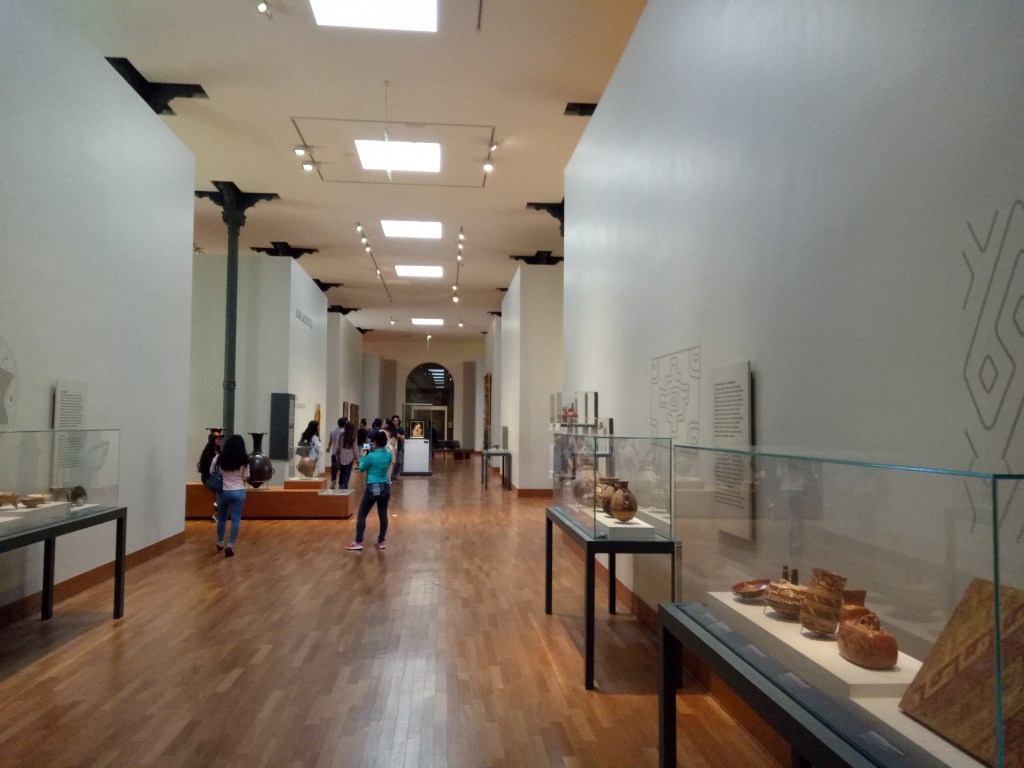
Meantime, my marriage was arranged, and I was whisked away to Marlyland, U.S. My husband, Iqbal, an ex-CSP officer (the Civil Service of Pakistan) was a Ph.d student of Economics at the University of Maryland, and in no time I enrolled as an undergraduate student and blissfully went on to study English and Comparative Literature, graduating eventually with a Masters in English Literature.

That I was going to be a writer was for me, even as a teenager, like a pre-ordained and much desired fate. I never wanted to pursue any other vocation.

What gets your muse going? 

Anything, and everything.  A view, a scent, an overheard conversation, a line of poetry, a memory……If I’m angry and seething, I write; if I’m sad or grieving, I write; if I’m joyous or ecstatic, I write; if I feel aa surge of spiritual bliss, I write; if I’m confused, I write. What form that writing takes is unpredictable. It could become a poem, or a paragraph in my notebook, which later could be part of my fiction, or a column. I wrote a regular column for the Daily Star of Bangladesh.

Writing is my food and nourishment, my therapy, my best friend, my passion. The writer-Me is the twin that lives inside me. It’s my muse and guide that defines my essential self. I am a contented wife of almost 50 years of marriage, a mother of two sons, and a grandmother of four grandsons (aged 5-4-3 & 2). These gratifying roles nourish my spirit, give me joy and inspiration, teach me lessons that help me grow as a human being. But my writer-self exists in its own orbit, proceeding on its solitary journey of self-actualisation, following its inner muse.

You have written of Italy, US and Bangladesh. How many countries have you lived in? 

Yes, I have lived in Italy, US and Bangladesh, which makes 3 countries. But, in fact, I have lived in 4 countries.

Remember that I was born not just in the undivided Pakistan of pre-71, when present day Bangladesh was East Pakistan, but I was actually born in West Pakistan, present day Pakistan, in the cantonment town of Bannu, near the borders of the Khyber Pass and Afghanistan, (formerly, the NWFP or NorthWest Frontier Province, presently KPK or Khyber Pakhtun-Khwa). Although my parents were Bengalis from Dhaka, my father’s government job (not in the army but under the Defence department, ‘Military Lands and Cantonments Services’) meant being posted in both wings of the then Pakistan. So, during my childhood and girlhood, I grew up in Karachi (Sindh), Multan and Kharian (Punjab) and Quetta (Balochistan). As a family of five siblings and our adventurous mother, we always accompanied our father on his official tours, by car or train, over the length and breadth of that country.

In the English medium school I was enrolled in, I had to choose Urdu as the vernacular subject, since Bengali was not taught in West Pakistani schools, though the opposite was not true! Anyway, I have no regrets. I am proficient in both Urdu and my mother tongue Bangla/Bengali, which I learnt at home from my mother, who in Quetta actually set up a small Bengali learning school for Bengali Army officers’ children. I am proud of the fact that I carried my mother’s tradition when I taught Bengali to Italians at the University of Rome, many decades later!   

What is it like being an immigrant writer? Which part of the world makes you feel most at home? Why? 

To start with, and to be honest, I do not really consider myself a true immigrant — someone who bravely and definitively leaves his familiar world and migrates  to another land because he has no other options nor the chance or means to return; rather, I feel lucky to be an ex-patriate — someone who chooses to make a foreign country her home, with the luxury of being able to revisit her original land, and, perhaps, move back one day. In fact, I have dual nationality, and am both an Italian citizen, and continue to hold a Bangladeshi passport. I might be considered to be an Italian-Bangladeshi writer. I consider myself a writer without borders.

I feel equally at home in Italy and in Bangladesh. Before the pandemic, my husband and I would make an annual trip to Dhaka for two months from December to February end, since my classes started in early March. Presently, I am back in Dhaka, after two almost apocalyptic years.

Despite the continuing hurdles of mastering the Italian language and trying to improve it constantly, we love our Roman home as much as our Dhaka home. Still, living away from ones’ original land, whether as an expatriate or an immigrant, is never easy, beset by nostalgia for what was left behind and the struggle to create a new identity of cultural fusion within the dominant and pervasive culture of a foreign land. But in this global age, it’s quite usual to live in a mix of cultures and live in a borderless world where ones national or cultural identity is not so clear cut. (I have a daughter-in-law who is Chinese, and another who is half-English, half-Thai! And my grandchildren are the heirs to a cornucopia of cultures and are true global citizens). Nevertheless, in the four and a half decades of my living away from Bangladesh, the eternal quest for that illusory place called home has shaped the sensibility that nourishes my creativity and compels me to write. Often, it’s the pervasive and underlying theme in my columns, stories and poetry. There is a poem of mine, “False Homecoming” which underlines the poignant sense of displacement a person can feel, not in a foreign land but in ones’ own motherland, or the version from the past. After all, many people who live away, exist in a time-warp.So, no matter which part of the world you feel at home in, it’s temporary. For me, as a writer between countries and homes, it is an external and internal odyssey.

It is the endless journey of a writer in constant evolution.

Tell us a bit about your journey. 

I realised early on that our real world being increasingly borderless, it’s not a tract of land that makes me feel at home. It’s my writing. The Mexican poet Octavio Paz once said, “Words became my dwelling place.” This has always resonated deeply with me, because for me, too, language and literature have been my sanctuary and true homeland. I have lived in that comfort zone at the heart of my creativity, imagination and writing: my dwelling place of words.

Of course, there are as many shapes to the sheltering place of language as there are literary forms. My nest of words was also feathered by my particular exigencies, followed a particular route and journey.

Though I speak various languages, my mother tongue is Poetry. For as far back as I can remember I have always written poetry, like writing in a journal, considering it to be the shorthand of my heart, a secret language. I am a reticent person, and there are writers like me who are content to use writing, whether poetry or prose, as a tool for self-exploration, self-knowledge, self-definition, with no thought of being published. At least, not my personal poems.

Yet with poetic irony, despite being a private person, my career as a writer started when I was jettisoned into that most public form of literary expression: the world of weekly column writing. At the urging of a friend, the editor of the Bangladeshi national daily The Daily Star, I turned into a public chronicler of the minutiae of my world, my life and times. Now I discovered my professional language, my father tongue if you will, the language of prose and my journey as a writer started.

When one reads your writing, it is steeped in a number of cultures. Which culture is most comfortable for you while writing and which one for living? 

There’s no place as beautiful and pleasurable to live in as Italy. Except for two or three months of winter, the climate during the rest of the year is perfect; the natural beauty and historical and artistic richness are unsurpassable, the food is delectable whether it’s based on nature’s bounty or the simple elegance of its distinctive cuisine. But for a writer who is also a housewife, the most comfortable country to write in, for me, is Bangladesh. With the culture of household helps abounding, I often get more writing done in two months of living in my Dhaka apartment than a whole year in Rome. My domestic staff are like family to us, and valued parts of our life. They sustain us and we sustain them, helping them educate their children to stand on their own feet. I miss this support network in Italy.

What are your favourite themes and your favourite genre? Expand on that a bit. 

My favourite genre to both read and write is the short story, poetry, humorous essays, travel writing and insightful book reviews. I read fewer novels now, and I have been writing and struggling to finish my first novel for years. I suspect, this is because I am temperamentally more attuned to the short sprint dash of producing a discrete work of imagination than the long-distance run of a lengthy work. But I am determined to conclude this opus before it becomes an unfinished relic.

I never approach fiction-writing through themes. But in non-fiction prose writings, like essays and articles for columns, I love to write about certain topics, or about books, places, and people, from all walks of life. I also love to write about nature, food, history and traditions, about how to improve our world, our lives and our relationships; and the happy, hopeful moments of life. As far as reading goes, I love reading about travel, love and friendship, human compassion, and anything with a happy ending.

You seem to have centred much of your work on people who are affluent. What about the rest — especially the huge population who serve the affluent? Have you written on them? Tell us why or why not.

That is an incomplete picture, and a wrong perception of my writing. To start with, as a writer I am more interested in the richness of the inner lives of human beings, and less so in the outward, economic and class differences. To me, no one is merely affluent or poor, but human and worthy of a compassionate gaze. The diversity and motivations of characters, whichever strata of society they belong to moves my imagination. I do not write to either preach or disseminate ideas of social justice or to right wrongs, but to explore and present the world we live in, in all its complexities and subtleties, the joys and ugliness, the small dreams and grand passions, the disappointments and triumphs of individuals and generations. I like to delve into the psychological or political motivations of human behaviour, especially within the domestic sphere, the family, an ethnic community.

I have many stories about those who serve or are not from privileged classes. My story ‘A Sprig of Jasmine’ is about a sweeper woman at a school in Bangladesh. Then there is the story ‘The Farewell Party’ about a temporary domestic help in a Bangladeshi home in Rome, suspected of stealing. I also have a sequel to that which explores the life of the same Bengali help now working as a nurse-companion to an old Italian woman.  These and many more are awaiting to be published soon in another collection.

But I never consciously choose a subject or set out specifically to tell the story of an under-privileged, oppressed, or marginalised person. It can happen that the story turns out to be about them, but for me a story reveals itself randomly, through an image or scent or a view or an overheard conversation, once I witnessed a slap being delivered, etc, and I follow its trail till it leads me to an interesting bend where it starts to shape into a story. I never know how a story will start or end. It grows in organic but unpredictable way. That is the challenge, and adventure of writing a story.

For example, one of my most newest stories, titled ‘The Untold Story’, (published in a recent anthology for Bangladesh’s 50th anniversary, When the Mango Tree Blossomed, edited by Niaz Zaman), is two parallel tales of two Birangonas (‘war heroines’ or raped victims during the Bangladesh liberation war ), but it came to me more as a way to explore the craft of storytelling, which is something that always engages me: how a story is narrated, as much as what the narrative is about.

By and large, I like to write stories about the world I know, and the people in my own milieu because no one writes about the expat society of Europe. I like to write about my world in all its details and extrapolate from its larger truths about humanity in general.

Jane Austen wrote about the landed gentry and her corner of England, but the stories ultimately reach our hearts not merely as stories of the affluent but of human foibles. John Updike wrote about his American suburban world. Annie Proulx writes about Wyoming. Alice Munro about the middle-class world of her neck of the Canadian world. Henry James focused on American aristocrats. But what is human and vulnerable, or worthy or unworthy, transcends class barriers. People are interesting, subtle, unpredictable, noble or wicked, no matter whether they are affluent or of straitened means. Tagore’s tales of women trapped in their roles in rich households are just as moving as those among the poor and underprivileged.

There are plenty of writers with a sociologist’s background who can chronicle the lives of the downtrodden whom they meet. I applaud them. My younger son works with the Rohingyas; my brother-in-law, a doctor worked for years with children of addicts. They have their stories to tell. I have mine. I’m interested in humanity, wherever I find them.

In the little I have read of your stories, Bangladesh is depicted in a darker light in your narratives — that it is backward in values, in lifestyles etc. Why? 

I don’t know which particular story or stories you have in mind where you felt that this impression was consciously created. Unless the story was indeed about a backward area, like the dingy alleys and neighbourhoods of old Dhaka in the 60’s and 70’s. Or, the murky values resulting from the explosion of wealth and the rise of corruption, undermining civic and ethical values in the rampantly urbanised zones.

In which case, it’s an unavoidable fact and not a depiction.

However, since I write more in a nostalgic light about Dhaka past rather than the reality of the present, I actually have not really written about the darker sides of the country; and which country or society does not have its seamy side. A good question would have been why I have not depicted Bangladesh in a darker light as contemporary writers of Bengali fiction do, dealing courageously with sinister aspects of politics and corrupt moral values at every level of society.

There is much in the Bangladeshi culture that we are proud of, beautiful traditions, and so much beauty in our natural world. I like to weave these into my narrative. So, I’m surprised that you found my stories to be dark.

 What are your future plans?

One of my most urgent projects is to get my novel-in-progress published.

I’m also planning to come out with another collection of stories, and a collection of my columns on travel, and an Italian and Bengali translation of my fiction.

So far, my three published books, and all the stories that have appeared in various anthologies are just a few milestones but do not define my journey as a writer. Daily I grapple with the insecurities of a writer, and daily I learn new things that help me grow towards being the writer I aspire to be. It’s still a long way to a full flowering, but each passing day I dabble in words, I feel the creative petals unfolding, slowly but surely.

Thank you for your time.

(This is an online interview conducted by Mitali Chakravarty.)

PLEASE NOTE: ARTICLES CAN ONLY BE REPRODUCED IN OTHER SITES WITH DUE ACKNOWLEDGEMENT TO BORDERLESS JOURNAL