The cartographer of rooms maps his way through a labyrinth
of plaster and repurposed floors, smiling frame jobs and flea market
throws, all manner of seating and cushion; quite the thing to behold,
a formation of fire pokers which at first glace appear gathered for
warring parties, and upstairs above the clumsy creak, a writing desk
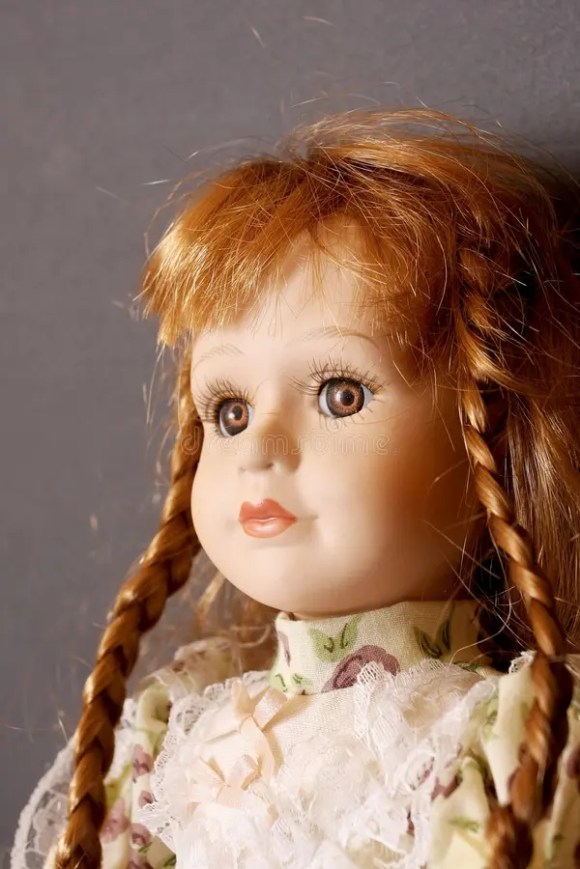
of wobbly scribbles.  The faded ink of this poem for the glassy eyes
of a doll, made in the image by makers on the make, object of
childly affections.  Knotted hair combed out and braided, secrets
exchanged, you can see the beginnings of the gossip parlour.
Dressed in nature's spun mimicry, an inanimate gaze which fires
cruelest imagination.  If anything has begun, it must be that.
First canning to empty pantry.
From Public Domain
Ryan Quinn Flanagan is a Canadian-born author residing in Elliot Lake, Ontario, Canada with his wife and many bears that rifle through his garbage. His work can be found both in print and online in such places as: Evergreen Review, The New York Quarterly, Borderless Journal, GloMag, Red Fez, and Lothlorien Poetry Journal.
.
PLEASE NOTE: ARTICLES CAN ONLY BE REPRODUCED IN OTHER SITES WITH DUE ACKNOWLEDGEMENT TO BORDERLESS JOURNAL
In the Philippines, ‘maximum tolerance’ refers to peacekeepers practicing a high level of restraint during public gatherings to ensure safety and maintain peace, while law enforcement implements action against violent demonstrators and shows tolerance towards those who are peaceful. Essentially, it means tolerating an individual’s capacity for patience, endurance, and long-suffering in the face of behavioral challenges.
Until now, I have maintained a close relationship with an orphaned nephew of a colleague of mine. Our bond grew stronger when he moved to our church shelter from a nearby mountainous town to live with his uncle. I have always empathised with him, as my family also provided care for fatherless children. The purpose of his relocation was to enable him to complete his college education. He eventually graduated with a degree in computer science from an institution that claims to have an Asian focus, despite lacking a physical campus during the Covid-19 pandemic. Understandably, he struggled to find employment. He returned home to stay with his aunt’s family, patiently waiting for an opportunity to secure a job, which proved to be challenging.
During his studies, we would occasionally meet for meals to discuss the work on his paper requirements before graduation and plan his group thesis. When the pandemic hit, our conversations shifted online, but his willingness to seek my assistance remained strong, and I gladly supported him.
His first job involved selling organic powdered coffee imported from Malaysia at an office in the heart of Quezon City. When the Covid-19 virus spiked, all the company’s employees had to work from home. However, there were times when they were asked to come to the office despite the significant health risk.
My friend refused to do so, which was quite reasonable as he lived with his elderly aunt and uncle. As a result, he was reprimanded and issued a memo for unauthorised leave of absence. I had to help him draft a letter in response to the memo. This situation challenged him to assert his rights as an employee as not every human resource policy is beneficial. At times, companies will test your threshold of tolerance to the limit which is not necessarily wrong. Upon repeated emails that we sent to the HR department, he was finally given his last paycheck months after his resignation.
His next job was as a management trainee for a Canadian-based coffee shop in a mall chain. Coffee shops and fast-food stores often hire college graduates from any field to fill staffing gaps caused by high employee turnover, even if their majors are unrelated to the food industry. Unfortunately, he did not pass the probationary period because he said he was verbally mistreated by the store manager over work principles and practices.
His initial job application at a global fast-food chain was unsuccessful, as he did not receive an interview. He ended up taking a part-time online job at a small pharmaceutical company to earn money for his expenses. After a year of waiting, he was finally invited for a management interview at the same fast-food chain in a city near his hometown. He got the job.
He has been working for the global fast-food chain for over two years now and enjoys his role as a specialist manager due to his interest in computing and ordering items. However, the local store management has not been supportive in terms of taking care of their team. For example, when he had a high-grade fever while working, he was not allowed to go home until the next shift manager arrived, in the midst of a heavy, rainy evening. There was even an instance where he had to attend a management meeting at another store after his graveyard shift.
On a particular rest day after his graveyard shift, he was instructed to attend management classes in a southern city for three days, without being given additional days off to offset his attendance during his rest day. Another schedule required him to report at 2pm after working a graveyard shift. At times, he was also instructed to go to other stores to manage, without any fare allowances. All these cases are documented online. The goal is for the team to hit the sales target at whatever cost and without offering any additional incentives. Even when he had toe-surgery and had to go on sick leave, he was still expected to work from home regarding stock orders. The global fast food chain’s work-life balance policy is only superficial.
Maximum tolerance does not mean to allow individuals, communities, and corporations to exploit us to unimaginable levels, where our self-worth is solely dependent on our output. Outstanding results should be based on a holistic approach that recognises everyone’s basic humanity. Resignation prevails simply because individuals are not allowed to exercise and enjoy their humanness in any circumstances. This should not be the case.
This scenario is not only limited to corporations, but also to religious institutions. In the church that I regularly attend, the resident minister encourages members to be involved in various programs, as leadership should not be dependent on a single individual but on the collective efforts of everyone. However, in doing so, he expects every member to participate in a series of activities all day on Sundays. Sundays, or any Sabbath day, should be a day of spiritual and physical refreshment and renewal. However, with the onslaught of day-long programmes each Sunday, the maximum tolerance of members is tested to the point where most skip events instead of feeling encouraged, as the minister makes them feel guilty. Saying ‘n’o is not a sin of omission.
I look forward to a time when it will be common for business enterprises and social institutions to implement appropriate mechanisms that help individuals to be more human, rather than just robots mindlessly following instructions.
Manuel A. Alindogan, Jr. or Jun A. Alindogan is the Academic Director of the Expanded Alternative Learning Program of Empowered East, a Rizal-province based NGO in the Philippines and is also the founder of Speechsmart Online that specialises in English test preparation courses. He is a freelance writer and a member of the Freelance Writers’ Guild of the Philippines (FWGP).
.
PLEASE NOTE: ARTICLES CAN ONLY BE REPRODUCED IN OTHER SITES WITH DUE ACKNOWLEDGEMENT TO BORDERLESS JOURNAL
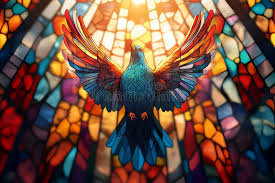
The parried birds escape the sky and the splintering sun illumines the stained-glass windows of the church, breathing richness into all: busied heart, tasked hands, a man of unknown guides, come to things with eyes of marvelous child's zeal, for those colours that haunt as ghosts once did, brilliant blues and chasing yellows.
Ryan Quinn Flanagan is a Canadian-born author residing in Elliot Lake, Ontario, Canada with his wife and many bears that rifle through his garbage. His work can be found both in print and online in such places as: Evergreen Review, The New York Quarterly, Borderless Journal, GloMag, Red Fez, and Lothlorien Poetry Journal.
.
PLEASE NOTE: ARTICLES CAN ONLY BE REPRODUCED IN OTHER SITES WITH DUE ACKNOWLEDGEMENT TO BORDERLESS JOURNAL.
I wish my mental health were a language that the world could understand and respect. I investigate the clouds and the lake up north, I feel I, somehow, belong between them.
On the other side of the world, I see myself in the sobbing misplaced children from countries like my own, where we question our humanity as if we are the only ones alive while others live joyfully.
My parents were always against my way of drinking liquor until I end up drunk and aggressive. Who cares about me anymore? I only hold a sip of a fermented hope, where I dance and sing alone.
If she ever comes back, tell her he’s not interested to walk with her or to give her what she wishes. My depression has conquered me. Congratulations, sorrows! I am now the man banned from falling in love again.
I cannot say I did not miss staring at women near me. I cannot say I did not feel some healing in my wounds. I cannot say I did not enjoy speaking to a woman like you. I wish to know that I am truly yours, but if not,
let me fall asleep with a bullet…
Ahmad Al-Khatat is an Iraqi Canadian poet and writer. His poetry has been translated into other languages and his work has been published in print and online magazines abroad. He resides in Montreal.
PLEASE NOTE: ARTICLES CAN ONLY BE REPRODUCED IN OTHER SITES WITH DUE ACKNOWLEDGEMENT TO BORDERLESS JOURNAL
The humming Coke machine, and I have lost the light. The driving rains outside, and a most terrible truth. The swelling of wet cardboard and that whoosh of darting high beams by the curb. And tucked inside the asbestos house, I watch ceiling particles come to rest on the floor tile. Leaning back in a chair made to brave its own hind legs. A coke from the machine beside me, half-flat and half-finished. The mistrustful eyes of the shop proprietor all over me. I want to tell him the succubus train left her kisses three stations ago, but he wouldn't understand. I want to keep him apprised of any sudden menu changes. I want him to know of that Russian who made X-rays into records and smuggled them to the masses. Paid the hospitals for the discards, and handmade them into bootlegs of all the best banned American music. I want to show him all the strange patterns on the soles of my shoes, but the gophers of the earth have dug holes throughout my body. A tiny troll with purple hair, taped to the back of the register. And $1.50 slices of lukewarm pizza under glass.
From Public Domain
Ryan Quinn Flanagan is a Canadian-born author residing in Elliot Lake, Ontario, Canada with his wife and many bears that rifle through his garbage. His work can be found both in print and online in such places as: Evergreen Review, The New York Quarterly, Borderless Journal, GloMag, Red Fez and Lothlorien Poetry Journal
PLEASE NOTE: ARTICLES CAN ONLY BE REPRODUCED IN OTHER SITES WITH DUE ACKNOWLEDGEMENT TO BORDERLESS JOURNAL
Poetry, prose — all art forms — gather our emotions into concentrates that distil perhaps the finest in human emotions. They touch hearts across borders and gather us all with the commonality of feelings. We no longer care for borders drawn by divisive human constructs but find ourselves connecting despite distances. Strangers or enemies can feel the same emotions. Enemies are mostly created to guard walls made by those who want to keep us in boxes, making it easier to manage the masses. It is from these mass of civilians that soldiers are drawn, and from the same crowds, we can find the victims who die in bomb blasts. And yet, we — the masses — fight. For whom, for what and why? A hundred or more years ago, we had poets writing against wars and violence…they still do. Have we learnt nothing from the past, nothing from history — except to repeat ourselves in cycles? By now, war should have become redundant and deadly weapons out of date artefacts instead of threats that are still used to annihilate cities, humans, homes and ravage the Earth. Our major concerns should have evolved to working on social equity, peace, human welfare and climate change.
One of the people who had expressed deep concern for social equity and peace through his films and writings was Satyajit Ray. This issue has an essay that reflects how he used art to concretise his ideas by Dolly Narang, a gallery owner who brought Ray’s handiworks to limelight. The essay includes the maestro’s note in which he admits he considered himself a filmmaker and a writer but never an artist. But Ray had even invented typefaces! Artist Paritosh Sen’s introduction to Ray’s art has been included to add to the impact of Narang’s essay. Another person who consolidates photography and films to do pathbreaking work and tell stories on compelling issues like climate change and helping the differently-abled is Vijay S Jodha. Ratnottama Sengupta has interviewed this upcoming artiste.
Reflecting the themes of welfare and conflict, Prithvijeet Sinha’s essay takes us to a monument in Lucknow that had been built for love but fell victim to war. Some conflicts are personal like the ones of Odbayar Dorj who finds acceptance not in her hometown in Mongolia but in the city, she calls home now. Jun A. Alindogan from Manila explores social media in action whereas Eshana Sarah Singh takes us to her home in Jakarta to celebrate the Chinese New Year! Farouk Gulsara looks into the likely impact of genetic engineering in a world already ripped by violence and Devraj Singh Kalsi muses on his source of inspiration, his writing desk. Meredith Stephens tells the touching story of a mother’s concern for her child in Australia and Suzanne Kamata exhibits the same concern as she travels to Happy Village in Japan to meet her differently-abled daughter and her friends.
As these real-life narratives weave commonalities of human emotions, so do fictive stories. Some reflect the need for change. Fiona Sinclair writes a layered story set in London on how lived experiences define differences in human perspectives while Parnika Shirwaikar explores the need to learn to accept changes set in her part of the universe. Spandan Upadhyay explores the spirit of the city of Kolkata as a migrant with a focus on social equity. Both Paul Mirabile and Naramsetti Umamaheswararao write stories around childhood, one set in Europe and the other in Asia.
Do pause by our contents page for this issue and enjoy the reads. We are ever grateful to our ever-growing evergreen readership some of whom have started sharing their fabulous narratives with us. Thanks to all our readers and contributors. Huge thanks to our wonderful team without whose efforts we could not have curated such valuable content and thanks specially to Sohana Manzoor for her art. Thank you all for making a whiff of an idea a reality!
Coffee bean on the floor split down the middle like surgical ward incisions, who put you all the way down there, friend, as if starting a long climb from the foot of a volcano? You should feel lucky in many ways to have escaped the grind, your humming dark roast brethren were not so lucky. Now, the house smells kind as candy. Stained lip of a personalised mug. Coffee bean on the floor I will pull up my socks, kick you under the fridge so we can both go into hiding.
(First appeared in BlogNostics)
You gotta be rich to die there
The rich and famous don’t even croak the same as us. They have their own place. The Motion Picture & Television Country House and Hospital.
With plenty of generous donors. George Clooney is one. You gotta be rich to die there.
I guess the celebs see the others at the end and figure it prudent to kick a little cash that way for when it is their turn.
They have a stipulation that you have to have worked “actively” in the film and entertainment industry for at least two decades.
Then you get to be special. Die with original Picasso’s adorning the halls.
I’d imagine their bedpans are solid gold. But Death being what it is, they never stay that way for long
(First appeared in Terror House Magazine)
Marcel Duchamp’s Snow Shovel
Last time I checked they didn’t get a lot of snow in Israel, but they have Marcel Duchamp’s snow shovel there with an inscription that reads: Prelude to a Broken Arm, 1915. I think ole Marcel would have quite a good laugh if he knew his snow shovel was stored in the Holy Land. Seems like the kind of thing you may want to store up in these more arctic of temperaments. I have two snow shovels and the Holy Land isn’t asking for either.
(First appeared in Poetic Musings)
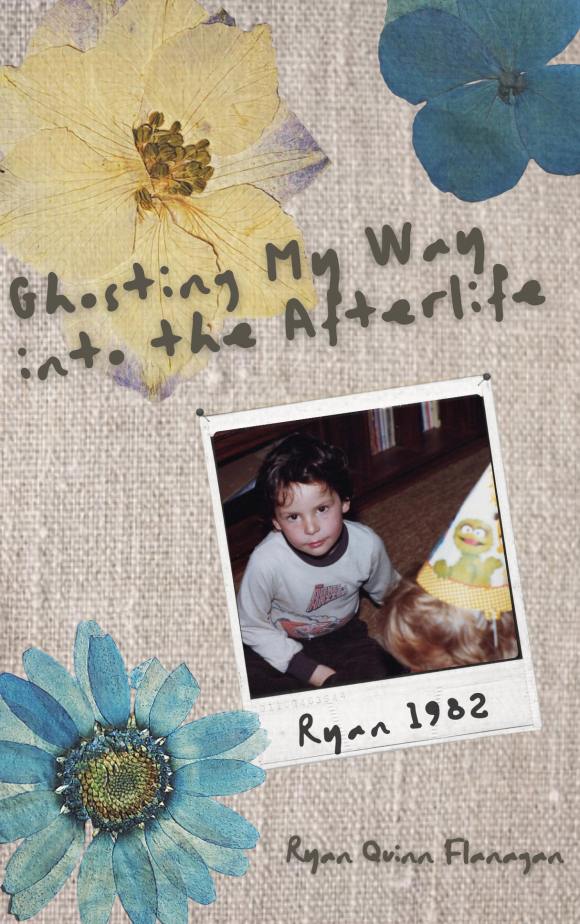
About the Book: This is a collection of recent poems by Ryan Quinn Flangan. He writes on daily lives of people with a fresh pen and a soupçonof humour.
About the Author: Ryan Quinn Flanagan is a Canadian-born author who lives in Elliot Lake, Ontario, Canada with his wife and many bears that rifle through his garbage. His work has been published both in print and online in such places as: The New York Quarterly, Rusty Truck, Borderless Journal, Evergreen Review, Red Fez, Horror Sleaze Trash and The Blue Collar Review. He enjoys listening to the blues and cruising down the TransCanada in his big blacked out truck.
.
PLEASE NOTE: ARTICLES CAN ONLY BE REPRODUCED IN OTHER SITES WITH DUE ACKNOWLEDGEMENT TO BORDERLESS JOURNAL
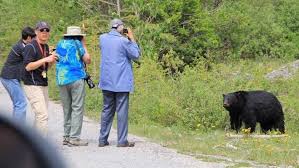
Stabs of natural light
and the bears are woken
from winter.

Bony yearlings
on their own now.

Ambling down the street
with a laboured
chuffing.

Pulling down the early buds
of berry bushes,
looking for an easy meal.

Early risers, the first of the season.

The ones
out at the dump
live right beside the humans.

They are seasoned, more conditioned.

There is a loaded shotgun
in the back of the bulldozer
if there are any issues.

But there is seldom anything.
Old dryers broken down to scrap.

The long winter
has everyone stunted.

Our fleet-footed fox
brought to lumber.

The birds
in the songless
trees.
From Public Domain
Ryan Quinn Flanagan is a Canadian-born author residing in Elliot Lake, Ontario, Canada with his wife and many bears that rifle through his garbage. His work can be found both in print and online in such places as: Evergreen Review, The New York Quarterly, Borderless Journal, GloMag, Red Fez, and Lothlorien Poetry Journal.
.
PLEASE NOTE: ARTICLES CAN ONLY BE REPRODUCED IN OTHER SITES WITH DUE ACKNOWLEDGEMENT TO BORDERLESS JOURNAL
I go outside. Bounding back into childhood. Split melon in hand with infernal separation.
The fatherless sun above rips dancing cornea from my eyes.
While the garden lice under rocks ball up like dirt magicians.
And the balance girls walk the curb, arms extended.
Trying not to fall off.
Ryan Quinn Flanagan is a Canadian-born author residing in Elliot Lake, Ontario, Canada with his wife and many bears that rifle through his garbage. His work can be found both in print and online in such places as: Evergreen Review, The New York Quarterly, Borderless Journal, GloMag, Red Fez, and Lothlorien Poetry Journal.
.
PLEASE NOTE: ARTICLES CAN ONLY BE REPRODUCED IN OTHER SITES WITH DUE ACKNOWLEDGEMENT TO BORDERLESS JOURNAL
When I write a poem about you,
I imagine us together—
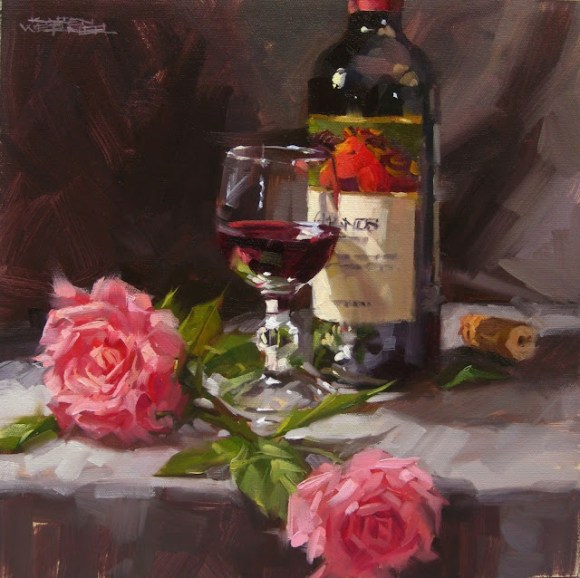
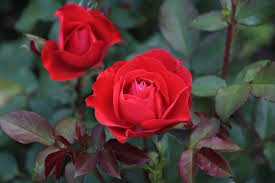
Two roses with green leaves,
You, a spark, an eternal inspiration.

My heart dissolves rapidly
On the papers of my homeland.
You are the pain I recognise,
The ink for my pens, the colour of my pencils.

Lovers erase their agonies with ease,
But my imagination is no fleeting illusion.
You are the brightness on every canvas,
My poem, the brush; my homeland, the water.

Small clouds of cigarette smoke rise above.
I respond to the locked doors of Montreal.
Baghdad throws me a bouquet of wildflowers,
As my pen trembles with nervous hands.

You are the day that will always smile upon me—
A laugh from you, a kiss from your lips, a privilege.
I admire you in the moment you ask me to pause,
To stop running into the night, swallowing poison.
Ahmad Al-Khatat is an Iraqi Canadian writer. His work was nominated for a Pushcart Prize in 2024 by Mad Swirl and Best of the Net 2019. His poetry has been translated into other languages and his work has been published in print and online magazines. He resides in Montreal, Canada, with his spouse.
.
PLEASE NOTE: ARTICLES CAN ONLY BE REPRODUCED IN OTHER SITES WITH DUE ACKNOWLEDGEMENT TO BORDERLESS JOURNAL





 Borderless