Title: India in the Second World War: An Emotional History
Author: Diya Gupta
Publisher: Rupa Publications
When we think of the Second World War, the images that most often come to mind are those of Europe’s ruin — the Blitz in London, the camps in Poland, the victory parades in Paris. India, though one of the largest contributors of men and material to the Allied cause, usually slips to the margins of that global story.
Diya Gupta’s India in the Second World War: An Emotional History sets out to correct that imbalance — and does so not by recounting battles or strategies, but by uncovering the feelings, memories, and private sufferings that shaped India’s wartime experience.
In this groundbreaking work, Gupta turns away from generals and governments to listen instead to soldiers, families, poets, and activists. Through letters, diaries, photographs, memoirs, and literary texts in both English and Bengali, she reconstructs the emotional life of a country caught in the contradictions of fighting for freedom while serving an empire. Her book is as much about the inner weather of a people at war as it is about history itself.
The story begins with the strange binary of India’s position in the 1940s. The British declared India a participant in the war without consulting its leaders. While nationalist politics in the country were reaching their boiling point, over two million Indian men were dispatched to fight on foreign fronts — from North Africa to Burma — under the Union Jack. They fought for a cause that was not their own, for a government that denied them liberty.
Gupta’s focus on emotion allows her to expose this moral paradox with nuance. The letters of sepoys from the Middle East reveal homesickness, confusion, and occasional pride; families back home are haunted by anxiety, caught between imperial propaganda and the whisper of rebellion. The result is a portrait of divided loyalties — of men and women who inhabited both the empire’s war and the nationalist struggle at once.
But it was the Bengal Famine of 1943 that made the war’s cost most brutally visible. Triggered by colonial economic mismanagement and wartime policies, it claimed nearly three million lives. Gupta’s chapter, ‘Every Day I Witness Nightmares’, captures this catastrophe through eyewitness accounts and literature that tried to make sense of it. Hunger, she suggests, became not only a physical condition but an emotional state — an emblem of the moral starvation of empire.
In poems and essays by writers such as Sukanta Bhattacharya and Mulk Raj Anand, the famine appears as a mirror held up to civilisation’s collapse. Tagore’s haunting late work, ‘Crisis in Civilisation’, forms a central thread in Gupta’s narrative — the poet’s disillusionment with humanity, his grief at the world’s descent into barbarism, and his call for renewal through compassion.
One of Gupta’s greatest achievements lies in her ability to braid together the intimate and the historical. The war years, she shows, were also years of reflection and redefinition. In the chapter named ‘The Thing That Was Lost’, she explores how the idea of “home” was transformed by displacement — whether through the departure of men to distant fronts or through the forced migrations caused by famine and air raids. Home, once a site of safety, became a space of longing and loss.
Another chapter, ‘Close to Me as My Very Own Brother”, turns the spotlight on male friendships in Indian war writing. Here, Gupta uncovers the tenderness that often underpinned comradeship — relationships that blurred the lines between duty and affection, and that offered emotional sustenance amid violence and uncertainty. In these pages, she challenges the stereotypes of stoic masculinity, showing that vulnerability and empathy were also part of the soldier’s story.
While the battlefield has long been the focus of war history, Gupta gives equal weight to those who remained behind. The women who waited, worked, and wrote — often in silence — emerge as witnesses in their own right.
Activists such as Tara Ali Baig, nurses and doctors on the Burma front, and countless unnamed mothers and wives populate the emotional landscape she paints. Through their letters and memoirs, we see how war invaded domestic spaces, transforming everyday life into a theatre of endurance.
Gupta writes of “anguished hearts” not as metaphor but as historical evidence. The fear of air raids, the sight of hungry children, the absence of loved ones — these, too, were the realities of India’s war. By restoring emotion to the historical record, she argues that feelings are not soft data but vital clues to understanding how societies survive crisis.
What makes the book so compelling is its insistence on looking at the global war from the Indian perspective. For Britain, the war was a fight for democracy and civilisation; for India, it was also a confrontation with the hypocrisy of those ideals. As Gupta notes, the same empire that called for liberty in Europe jailed Gandhi and suppressed the Quit India movement at home.
Seen from Calcutta rather than London, the war ceases to be a heroic narrative of Allied victory and becomes instead a story of moral contradictions and human cost. Gupta’s intervention is both historiographical and ethical: she reminds us that global history must include the emotions of those who bore its burdens without sharing in its glory.
A historian with literary sensibility, Gupta writes with precision, empathy, and grace. Her prose balances academic rigour with narrative warmth, allowing the reader to move effortlessly between archival fragments and the larger questions they evoke. Each chapter unfolds like a story, yet the cumulative effect is that of a symphony — voices rising and blending, carrying echoes of pain, pride, and endurance.
Gupta’s work has been widely celebrated for its originality and emotional depth. Shortlisted for the 2024 Gladstone Book Prize, it has drawn praise from scholars and critics alike for its fresh approach to war history. What distinguishes her study is not only its range of sources but its refusal to treat emotion as peripheral. For Gupta, feelings are the connective tissue of history — the invisible threads binding individuals to events, memory to nationhood.
The book is more than the war. It is about the human capacity to feel in times of fracture — to love, mourn, and imagine even amid devastation. It shows that the emotional life of a people can illuminate their political choices, their artistic expressions, and their vision of freedom.
By reassembling scattered memories and forgotten emotions, Diya Gupta offers a new way of reading both India and the world in the 1940s. Her India is not a passive colony swept along by imperial tides, but a living, feeling community navigating grief and hope in equal measure. The war, as she reminds us, did not just redraw maps; it reshaped minds and hearts.
In giving voice to those who seldom found one in history books — the sepoy writing from the desert, the poet confronting famine, the mother waiting for news — Gupta transforms statistics into stories, and stories into testimony. Her book stands as a reminder that history is not only written in treaties or timelines but in tears, silences, and the fragile language of feeling.
It ensures that those emotional histories, too long buried under the dust of archives, are heard again — quietly, insistently, and with the full weight of their truth.
.
Bhaskar Parichha is a journalist and author of Cyclones in Odisha: Landfall, Wreckage and Resilience, Unbiased, No Strings Attached: Writings on Odisha and Biju Patnaik – A Political Biography. He lives in Bhubaneswar and writes bilingually. Besides writing for newspapers, he also reviews books on various media platforms.
PLEASE NOTE: ARTICLES CAN ONLY BE REPRODUCED IN OTHER SITES WITH DUE ACKNOWLEDGEMENT TO BORDERLESS JOURNAL
Title: Boats in a Storm: Law, Migration, and Decolonization in South and Southeast Asia, 1942–1962
Author: Kalyani Ramnath
Publisher: Westland/Context
The legal frameworks established during the period from 1942 to 1962 in South and Southeast Asia played a crucial role in shaping migration patterns and influencing decolonisation processes. This era witnessed significant changes as countries in these regions sought to redefine their legal systems in the wake of colonial rule, which in turn affected the movement of people across borders.
Migration patterns were influenced by various factors, including the aftermath of World War II, the struggle for independence, and the establishment of new national identities. Additionally, the decolonisation processes during this time were marked by the emergence of new legal frameworks that aimed to address the complexities of post-colonial governance and the rights of migrants. Understanding the interplay between these legal frameworks, migration trends, and decolonisation efforts provides valuable insights into the socio-political landscape of South and Southeast Asia during this transformative period.
Boats in a Storm: Law, Migration, and Decolonization in South and Southeast Asia, 1942–1962 authored by Kalyani Ramnath is a thoroughly researched work. This book is part of the series South Asia in Motion and was originally published by Stanford University. Ramnath serves as an Assistant Professor of History at the University of Georgia and has conducted extensive research on migration.
Says the blurb: “For more than a century before World War II, traders, merchants, financiers, and laborers steadily moved between places on the Indian Ocean, trading goods, supplying credit, and seeking work. This all changed with the war and as India, Burma, Ceylon, and Malaya wrested independence from the British empire.”
This captivating book is set against the backdrop of the tumultuous post-war period. It delves deeply into the legal struggles encountered by migrants who are determined to maintain their traditional ways of life and cultural practices. The narrative highlights their experiences with citizenship and the broader process of decolonisation. Even as new frameworks of citizenship emerged and the political landscapes of decolonisation created complexities that often obscured the migrations between South and Southeast Asia, these migrants consistently shared their cross-border histories during their engagements with the legal system.
These narratives, often obscured by both domestic and global political developments, contest the notion that stable national identities and loyalties emerged fully formed and free from the influences of migration histories after the fall of empires.
In her book, Kalyani Ramnath draws on archival materials from India, Sri Lanka, Myanmar, London, and Singapore to illustrate how former migrants faced legal challenges in their efforts to reinstate the prewar movement of credit, capital, and labour. The book is set against the backdrop of a climate marked by rising ethno-nationalism, which scapegoated migrants for taking away jobs from citizens and monopolising land.
Ramnath fundamentally illustrates in the book that the process of decolonisation was marked not just by the remnants of collapsed empires and the establishment of nation-states emerging from the debris of imperial breakdown. It also encompasses the often-ignored stories of wartime displacements, the unexpected consequences that arose from these events, and the lasting impacts they have had on societies.
This perspective highlights the complex and multifaceted process of decolonisation, demonstrating how it was shaped not only by significant political transformations but also by the personal narratives and experiences of individuals who faced the challenges of conflict and displacement.
An excellent book to read! .
.
Bhaskar Parichha is a journalist and author of Cyclones in Odisha: Landfall, Wreckage and Resilience, Unbiased, No Strings Attached: Writings on Odisha and Biju Patnaik – A Political Biography. He lives in Bhubaneswar and writes bilingually. Besides writing for newspapers, he also reviews books on various media platforms.
PLEASE NOTE: ARTICLES CAN ONLY BE REPRODUCED IN OTHER SITES WITH DUE ACKNOWLEDGEMENT TO BORDERLESS JOURNAL
How can a 470-page long book turn into a page-turner when it is neither a historical novel nor a whodunit thriller that compels the reader to go on reading as quickly as he/she can? That too when it is a motley collection of twenty-six essays written on different occasions and on different topics for the last twenty-five years. The answer is of course Amitav Ghosh who can literally mesmerise his readers with his multi-faceted interests and subjects ranging from literature and language, climate change and the environment, human lives, travels, and discoveries. Divided into six broad sections, Ghosh clearly mentions in the Introduction that the pieces in this collection are about a wide variety of subjects, yet there is one thread that runs through most of them: of bearing witness to a rupture in time, of chronicling the passing of an era that began 300 years ago, in the eighteenth century. It was a time when the West tightened its grip over most of the world, culminating ultimately in the emergence of the US as the planet’s sole superpower and the profound shocks that began in 2001.
A subject very close to his heart and that is reflected in all the books that he has been writing over the last decade or more, the six essays of the first section are on “Climate Change and Environment.” Ghosh writes about different aspects of migration (both in the sub-continent and in Europe), about the storm in the Bay of Bengal, cyclones, the tsunami affecting the Andaman and Nicobar Islands, and about Ternate, the spice island in Indonesia. According to him, by knowing about anthropogenic greenhouse emissions and their role in intensifying climate disasters, it is no longer possible to cling to the fiction of there being a strict division between the natural and the political. Climate change and migration are, in fact, two cognate aspects of the same thing, in that both are effects of the ever-increasing growth and acceleration of processes of production, consumption and circulation.
According to Ghosh, each of the six essays in the second section entitled “Witnesses” grew out of the research he undertook for his four historical novels, The Glass Palace, and the Ibis Trilogy. All the essays in it “are attempts to account, in one way or another, for the recurrent absences and silences that are so marked a feature of India’s colonial history”. While looking for accounts written by Indian military personnel during the First World War, Ghosh came across two truly amazing books, both written in Bengali, on which three pieces in this section are based. The first of these books is Mokshada Devi’s Kalyan-Pradeep (‘Kalyan’s Lamp’; 1928), an extended commentary on the letters of her grandson, Captain Kalyan Mukherji, who was a doctor in the Indian Medical Service. The second, Abhi Le Baghdad (‘On to Baghdad’), is by Sisir Sarbadhikari, who was a member of the Bengal Ambulance Corps, and is based on his wartime journal. Both Mukherji and Sarbadhikari served in the Mesopotamian campaign of 1915-16; they were both taken captive when the British forces surrendered to the Turkish Army in 1916 after enduring a five-month siege in the town of Kut-al-Amara – the greatest battlefield defeat suffered by the British empire in more than a century. He also writes about how these two prisoners of war witnessed the Armenian genocide.
Regarding the exodus from Burma, Ghosh narrates the plight of one Bengali doctor, Dr. Shanti Brata Ghosh from whose diary (written in English) we are given incidents of events that are a striking contrast to British accounts of the Long March. What the doctor remembered most clearly were his conflicts with his white colleagues and his diary represents a personal assertion of the freedom that his nation’s hard-won independence had bestowed upon him.
Section Four entitled “Narratives” consists of three essays. Speaking about the etymology of the word ‘banyan’, and a short personal anecdote about 11 September 2001, we come to the essay from which the title of this collection – Wild Fictions – is taken. It shows us how the policies and administrative actions have divided landscapes between the ‘natural’ and the ‘social.’ Discussing several environmental issues related to the manner in which over many decades there has been a kind of ethnic cleansing of India’s forests and how the costs of protecting nature have been thrust upon some of the poorest people in the country, while the rewards have been reaped by certain segments of the urban middle class, Ghosh warns us why the exclusivist approach to conservation must be rethought. Before environmental catastrophe happens, we have to find some middle way, one in which the people of the forest are regarded not as enemies but as partners. The idea of an ‘untouched’ forest is none other than a wild fiction.
As mentioned in the beginning, Ghosh’s intellectual curiosity ranges from exploring themes of history, culture, colonialism, climate change and the interconnectedness of human and natural worlds and the readers will get a sample of these different topics in this rich collection. Over the years, we had read some of the essays in journals like Outlook, The New Yorker, The New York Times, The Hindu, The Economic and Political Weekly, The Massachusetts Review, Conde NastTraveller and so on, and some of the articles have been the product of his detailed research before he commenced writing a novel. The five essays in the penultimate section titled “Conversations” begins with a long correspondence that Ghosh had with Dipesh Chakraborty via email after Provincilaizing Europe was published in 2000. The two never met personally as Chakraborty was in Australia at that time, but the exchanges between these two scholars on such wide-ranging issues is surely a reader’s delight. The pieces on Shashi Tharoor’s An Era of Darkness and Priya Satia’s Time’s Monster which were written as reviews also form parts of ongoing dialogue. As Ghosh states, Sattia’s work “has given me new ways of understanding the role that ideas like ‘progress’ have played in the gestation of this time of monsters”. In ‘Storytelling and the Spectrum of the Past’, we are told about the historians versus the novelists view of seeing and documenting themes.
The final and sixth section comprises of three pieces that were originally conceived as blogposts or presentations, accompanied by a succession of images – “the texts that accompany my presentations are scripts for performances rather than essays as such”. In the first one, Ghosh gives us new insights from his diary notes (the Geniza documents) about how he chose to study social anthropology and how In an Antique Land was made—about the Muslim predominance in the Arab village where he stayed and how he evaded the attempt at conversion. In a lecture he delivered at Indian Institute of Technology, Kharagpur, Ghosh asks us to think back for a moment to the intellectual and historical context that led to the foundation of such institutions as the IITs, the IIMs and the outstanding medical institutions of contemporary India. He tells us how we cannot depend on machines alone to provide the solution to our social problems and talks about mercenaries, prisons, the hegemony of the Anglo-American power and how the empires kept close control over rights to knowledge. One of the great regrets of Ghosh’s life was that he never met A.K.Ramanujan and in the concluding essay of this section, he tells us how he considered Ramanujan to be “one of the foremost writers and intellectuals of the twentieth century and how one of the most important aspects of his work is the context from which it emerged.
In the introduction to this collection Ghosh wrote that we were now in a time between the ending of one epoch and the birth of another – ‘a time of monsters’, in the words of Antonio Gramsci. In the Afterword he mentions how the strange thing about this interstitial era is that it could also be described as a ‘time of benedictions’ in that it has suddenly become possible to contemplate, and even embrace, potentialities that were denied or rejected during the age of high modernity. He reiterates that it is the elevation of humans above all other species, indeed above the Earth itself, that is largely responsible for our current planetary crisis. “The discrediting of modernity’s anthropocentricism is itself a part of the ongoing collapse that we are now witnessing.” The only domains of human culture where doubt is held in suspension are poetry and fiction. Though it is not possible to discuss all other aspects that Ghosh deals with in this anthology as the purview of the review is rather limited, I would like to conclude it by quoting the last couple of sentences written by Ghosh himself when he categorically states: “High modernity taught us that the Earth was inert and existed to be exploited by human beings for their own purposes. In this time of angels, we are slowly beginning to understand that in order to hear the Earth, we must first learn to love it.”
.
Somdatta Mandal is a critic and translator and a former Professor of English at Visva-Bharati, Santiniketan, India.
.
PLEASE NOTE: ARTICLES CAN ONLY BE REPRODUCED IN OTHER SITES WITH DUE ACKNOWLEDGEMENT TO BORDERLESS JOURNAL.
The summit of the hill was crowned with a grove of lofty trees. They had stood thus for centuries, opposing their columned strength against wind and storms, against the onslaught of tropical rainfall, even in spite of earth tremors that made them shiver with apprehension. Their crowns were interlaced, so that they must stand or fall together; it was an effective alliance against the forces of nature, which no single tree could hope to withstand.
Within the grove, where the buttressed trunks rose suddenly from the soft earth, stood an ancient shrine, a hermit’s cell with rough stone walls, and a little temple in whose dim recesses might be seen vaguely some symbol of a demon or god, unknown perhaps to the outside world, but appealing to the hearts of the jungle folk, who, suffering patiently as the animals suffer, like them also blindly sought relief. That rugged track, which led from the hill-top into the depth of the forest below, had been marked out by the feet of the notaries of the shrine, who each, as he left after supplication, cast a stone on the slowly growing mounds at the entrance to the grove.
From the hill-top the forest spread on all sides as far as the eye could reach, and it lost itself in the distant horizon where the purple outline of the hills faded into the azure of the evening sky. There was wave upon wave of hills covered with trees, so that the earth lay hidden, and down in the valleys one saw nothing but the crowns of trees forming an impenetrable carpet of foliage; only along the ridges the light filtered in vertical streaks through the closed-up ranks of tree trunks. If there were villages they were hidden in masses of trees; the forest engulfed them and reigned supreme in this lonely corner of the earth.
The sun sank, and the brilliant light of day was followed by the soft illumination of the stars. The forest became dim and indefinite amid an intense and motionless silence. There was no sound of wind, or of animal life; the dew had not begun to drip from the foliage, and each leaf was still as if arrested in its task. Yet there was no sense of fear or oppression: rather the atmosphere was charged with the vitality of countless millions of plants rejoicing in their growth, struggling against the competition of their neighbours, and seizing every chance which offered to reach towards the life-giving light.
At such a time there came upon any human being dwelling in the forest, first, a conviction of nature’s absolute indifference to his proceedings, and next, the peace conferred by personal irresponsibility, to which, if a man succumbs, he joins the vast army of hermits, religious mendicants, and other parasites; while, if he resists, he is left to work out a strenuous existence in conflict with the wild beasts and against the pressure of overwhelming vegetation.
As night drew on, the cooler air became charged with moisture and wrapped itself in mist. The leaves of the forest trees were weighted with the dampness they exuded; it no longer passed away in invisible vapour, but trickled earthwards in heavy splashes, like the sullen sound of mindless rain. From hundreds of miles of forest came the sound of dripping water in a ceaseless murmur, which increased the weirdness of the scene, and even served to make any other sound more distinct. Thus it was that a movement became audible in the distance, at first so slight as to be indistinguishable; it was as if foliage was being quietly brushed aside, as if the dew-laden grass was being crushed by a gentle yet irresistible force. Standing on the summit pf the hill, one looked down on a pass between the mountains, a curved saddle that invited to an easier passage from valley to valley. Over this low pass the waves of mist eddied to and fro, just as if each valley in turn filled with cloud and overflowed into the next.
From the depths below a herd of elephants were ascending the pass in single file and in silence. The leader, an old female, first appeared in sight, walking quickly along the narrow trail. Her trunk hung limply from her broad forehead, touching the earth lightly alternately to right and to left, and with instant precision the fore-foot was placed on the spot which had been tested, and the oval print of the hind-foot immediately overlapped the rounder track. She passed through the eddies of fog, which at times seemed to swallow her up, at others allowed but the glistening outline of her back to become visible; or again hid all but the ponderous legs which moved with regularity through the dim air.
Following, came others who seemed careless of danger through confidence in their leader. Each set foot in the trail of its predecessor, so that soon there was but one track sunk deep in the soft earth, as if some old-time mammoth of enormous size had passed that way. Females, young calves, youthful tuskers, all passed in succession, each rising into sight and disappearing over the narrow pass, plunged into obscurity on the further side. There was silence in the ranks, for the animals were on the march, intent on changing their quarters ere dawn should break. They might have been so travelling for hours, and might continue their resistless way for many more ere they halted thirty or forty miles from their starting point.
Some hours later there was promise of daylight in the sky. The mist now lay thicker over the forest, it had sunk into impenetrable strata which rested heavily on the land. Above its sharp upper line the tops of hills stood out like islands in a sea of white; along the ridges the crowns of trees appeared as if floating in the waves, their stems were hidden in the fog. Again a movement was heard, and from below a single elephant approached, carelessly following in the trail of the herd.
About the Book
In the wild jungles of India, a tusker is born. Maula Bux—as he is later named—grows up loved and adored amongst his herd, learning all that a young calf must to become a majestic elephant. However, an unfortunate encounter with humans leads to his capture and he is sold. His mahout, Kareem, instantly takes a liking towards the tusker and considers him almost to be a brother. Maula Bux is courageous, agile and magnificent, and he and Kareem have many adventures together—from hauling timber deep in the forest to adrenaline-charged tiger chases. At his advancing age, Maula Bux is even appointed to carry an Indian Prince in procession!
Having spent much of his life in the jungles of India and Burma (now Myanmar) S. Eardley-Wilmot was a keen observer of wildlife and spoke out about the necessity to conserve India’s wild spaces and the mighty beings in them. The Life of an Elephant is a must-read for young and older readers alike—for it is not just an insightful story of one of nature’s noblest beings but also an important text about conservation, empathy, and the treatment of animals.
About the Author
S. Eardley-Wilmot (1852–1929) was a British civil servant, forestry officer and conservationist who worked primarily in India and Burma (now Myanmar) and served as Inspector-General of Forests. He joined the Indian Forest Service in 1873 and was appointed to the old North-West Provinces and Oudh region of colonial India. In recognition of his conservation-lead method and unorthodox approach to forestry in India and Burma, Eardley- Wilmot became a Knight Commander of Order of the Indian Empire in 1911.
Eardley-Wilmot’s published books include—Forest Life and Sports in India (1910), Leaves from Indian Forests (1930), and The Life of a Tiger and The Life of an Elephant (1933).
PLEASE NOTE: ARTICLES CAN ONLY BE REPRODUCED IN OTHER SITES WITH DUE ACKNOWLEDGEMENT TO BORDERLESS JOURNAL
Lya Badgley’s life reads like an exotic adventure book you can’t put down, but she writes plot-driven suspense about women overcoming life-changing odds, against a backdrop of global conflict. In this interview, she shares her views about creativity, courage, persistence and resilience.
You’ve had an interesting life – how often do people say that to you? How do you tell the story of your life in a short elevator pitch?
I’ve been very lucky to have had choices – many do not. That said, being born in Myanmar to Montana parents, was a good start. From Seattle’s arts scene to documenting war crimes in Cambodia and opening a restaurant in Yangon, my life experiences fuel my creativity. I’ve been a mother, a former city council member, and an environmental activist and now write novels drawing deeply from my lived experiences.
So, you were born in Yangon, Myanmar. How did your parents from the Rocky Mountains come to be in Burma? What are your first memories from there?
My parents discovered the wider world when my father was stationed in northern Japan during the Korean War. They fell in love with Asia, and he went on to dedicate his life to academia, earning a doctorate in political science. They first arrived in Burma (Myanmar) in the late 1950s. One of my earliest memories is coming home from kindergarten in up-country Burma and telling my mother that all the children spoke English in class. Astonished, she accompanied me to school the next day, only to find that the children were speaking Burmese. I had simply assumed it was English. To this day, I love languages.
What kind of environment did your parents create which encouraged your creativity?
My mother was a true artist, always encouraging me to find beauty in everything around me. My father sparked a deep curiosity about the world, especially about the lives of everyday people. Our dinner table conversations were always lively, full of challenges and excitement, fueling my imagination and intellect. I was never allowed to leave the table without sharing something interesting and eating all my vegetables.
In 1987 what changed your life? How does Multiple Sclerosis affect you today?
In 1987, I developed a persistent headache that wouldn’t go away. Within two weeks, I lost vision in one eye. The diagnosis of Multiple Sclerosis came swiftly. I’ll never forget the mix of terror and wonder as I looked at the pointillistic MRI image of my brain, and the doctor casually said, “Yep, see those spots? That’s definitely MS,” as if he were ordering lunch. Strangely, that diagnosis liberated me—after all, what’s the worst that could happen? Now, as I age, the disease may slow my body, but it hasn’t dimmed my spark.
In what ways has being a musician/poet/writer/artist been a struggle and challenge? Do you think that is part of process and it in turn fosters innovation?
The struggles of being an artist—whether overcoming rejection, creative blocks, or balancing art with daily life—are definitely part of the journey. But there’s also magic in that process. There’s something almost alchemical about wrestling with a challenge and, through that tension, creating something entirely new. It’s in those moments of uncertainty that the most unexpected ideas emerge, as if they’re waiting for the right spark. The struggle doesn’t just foster creativity—it transforms it, turning obstacles into opportunities. And the joy comes from watching that magic unfold, as your vision takes on a life of its own.
When did you return to Southeast Asia, and how did you come to work as a videographer on a clandestine expedition interviewing Burmese insurgents, and later helping document the genocide cases in Cambodia?
The short answer is — a boyfriend! In the early ’90s, I returned to Southeast Asia, driven by a deep connection to the region and feeling uncertain about what to do next after a failed marriage. Through a friend I met during Burmese language studies, I stumbled upon an unexpected opportunity to work as a videographer on a covert mission, documenting interviews with Burmese insurgents. That intense experience then led to my role in Cambodia, where I worked with Cornell University’s Archival Project. There, I helped microfilm documents from the Tuol Sleng Museum of Genocide, preserving crucial evidence that would later hold war criminals accountable. Both experiences were life-changing and cemented my passion for telling these vital stories.
You were among the few foreigners to open businesses in Burma in the 1990s. What hurdles were there to opening the 50th Street Bar & Grill Restaurant in Yangon, Myanmar? How was Burma at that time?
Opening the 50th Street Bar & Grill in Yangon in the mid ’90s was a real adventure, and I take great pride in being part of the first foreign-owned project of its kind at that time. Myanmar was just emerging from decades of isolation, with very few foreigners and even fewer foreign businesses. Navigating the bureaucracy was incredibly challenging — layers of red tape, and we often had to rely on outdated laws from the British colonial era just to get things moving. It took persistence, creative problem-solving, and a lot of patience. I had the advantage of understanding the culture and speaking a bit of the language, and I never worked through a proxy. I handled even the most mundane tasks myself—like sitting for hours in a stifling hot bank, waiting to meet the manager, who was hiding in the bathroom to avoid me!
Basic infrastructure issues like inconsistent electricity and unreliable suppliers were ongoing challenges. But despite all the hurdles, Yangon had a special energy then. The people were incredibly warm and resilient, and there was a palpable sense that the country was on the cusp of major change, even though it remained under military rule. Looking back, I’m proud to have been part of something so groundbreaking during such a unique moment in Myanmar’s history. It’s heartbreaking to see the return of darker times.
When did you first start writing and what has kept you writing?
In the ’80s, I began writing song lyrics for my music, which eventually evolved into poetry. It turned out I had more to say, and my word count steadily grew from there. I write because I have no choice; it’s an essential part of who I am.
Your first novel, The Foreigner’s Confession, out in 2022, in the middle of the Covid-19 pandemic, weaves together one person’s story and a country’s painful history. How do you integrate in the legacy of the past, a personal journey, a war-torn country and the themes of loss and regret?
In The Foreigner’s Confession, I explore the interconnectedness of personal stories and a nation’s history. I like using conflict zones as backdrops for my protagonist’s inner turmoil. These settings highlight the psychological landscape shaped by war and trauma, reflecting the chaos within the character. I’m fascinated by the notion that evil exists in each of us, and under the right circumstances, we’re all capable of bad things. This theme resonates throughout the narrative, as the characters grapple with their moral choices amidst the turmoil surrounding them. As Tom Waits[1] beautifully puts it, “I like beautiful melodies telling me terrible things” — that juxtaposition is central to my writing, illustrating how beauty and darkness can coexist and inform our understanding of the human experience.
When it comes to writing are you a planner or a pantser? What’s your process for writing, particularly when you want to bring in the setting, the history of a place, and authenticity?
I’m a pantser all the way! Just saying the word “spreadsheet” makes me break into a sweat. I wish I could create meticulous diagrams and beautiful whiteboards filled with colorful, fluttering sticky notes, but that just isn’t my style. For me, the story unfolds as I write. I refer to myself as a discovery writer. It’s a slow and sometimes tedious process but discovering what I didn’t know was going to happen is truly amazing. I draw from my personal experiences to provide authenticity.
Does writing suspense/mystery help make a novel more compelling because it has to be well-crafted and cleverly constructed?
I write the story buzzing in my brain and then try to determine the genre.
What do you think about the power and potential of a novel to reach readers in a different way, for example as a vehicle to give insight into the situation in Cambodia or Myanmar, the wider/deeper issues (like geopolitics/colonialism), and the present reflecting a troubled past?
Yes, yes, yes! Novels have the potential to foster empathy and understanding, challenging readers to confront uncomfortable truths. Can we humans please stop being so stupid? It’s doubtful, but we can only hope.
Last year your second novel, The Worth of a Ruby, was launched, and you’ve recently been in Myanmar. What’s been your impression of the place in 2024, still suffering under the coup and with not such good prospects as in the 2010s? Could you ever go back there to live?
Sitting in the Inya Lake Hotel in Yangon as I write this, I can see that the people here carry a veil over their eyes that I don’t recall from my previous visits. Nevertheless, the cyclical nature of oppression has persisted here for a long time. My husband and I would move back in a heartbeat if there were opportunities and adequate healthcare for my situation. This country remains a part of my identity, and I dream of a future where I can return to help contribute to its recovery.
Your current/recent visit to SE Asia has taken you to what places? What have been the most memorable experiences?
I’m in Yangon until mid-October and will then spend a few days in Singapore, slogging my books to the shops there. As always, the most memorable experiences are renewing the deep connections with the people I care about.
Both your books feature people/countries having to confront their past/dark side. How do you think a novel can help navigate through the complexities and nuances of situations, or at least show that nothing is as black and white as first thought?
That’s a complex question, and any answer can only touch the surface. Both of my novels explore people and countries grappling with their pasts and confronting their darker sides, but the truth is, no single story can fully capture the complexity of these situations. What a novel can do, however, is open a window into the nuances and shades of gray that exist beneath the surface. By diving into characters’ personal struggles and the layered histories of their countries, readers can begin to see that nothing is as black and white as it might seem. A novel helps illuminate the hidden motivations, moral ambiguities, and emotional complexities that are often overlooked, offering a more profound understanding of the tangled web of human experience.
Your work-in-progress novel is set in Bosnia. What themes will that explore?
The themes in my work-in-progress novel set in Bosnia will continue to explore the complexities of personal and national histories, much like my previous work. However, this time I’m weaving in elements of magic realism, drawing inspiration from the Sarajevo Haggadah and Balkan folktales. These mystical elements will add a new layer to the narrative, deepening the exploration of identity, memory, and the ways in which the past haunts the present. The use of folklore will allow me to delve into the region’s rich cultural traditions while keeping the focus on the enduring human themes of loss, resilience, and transformation.
Where is ‘home’ for you now? How do you think living in other countries has influenced your outlook and personality?
I am wildly curious, and home is the room I’m sitting in. Though we pay a mortgage on our condo in Snohomish, home has always been more about where I am in the moment than a fixed place. Living in different countries has profoundly shaped my outlook and personality. It’s given me a deep appreciation for diverse perspectives and a sense of adaptability. I’ve learned that people’s values and struggles can be both uniquely local and universally human. Experiencing different cultures has also sparked my curiosity and influenced the way I approach storytelling, allowing me to blend personal and global themes into my work.
What do you think are your points of difference/advantages that you bring to your writing?
One of the key differences I bring to my writing is my unique upbringing. Growing up in Myanmar with parents who encouraged both critical thinking and creativity gave me an early appreciation for the complexities of the world. I’ve lived in many countries and experienced firsthand the way cultures can both clash and blend, and that depth of perspective is something I try to infuse into my stories. Navigating a chronic disease like multiple sclerosis has also shaped my writing. It’s taught me resilience, patience, and how to find beauty in challenging situations. I think these experiences allow me to write characters and narratives that explore the shades of gray in life—the areas where pain, perseverance, and hope intersect.
Why do you think that a high proportion of expats/students/backpackers/digital nomads are from the Pacific Northwest and find themselves living and working in Southeast Asia? (I know three people from Snohomish who live in Asia).
It’s an interesting phenomenon, and I think the Pacific Northwest has some unique qualities that make it a breeding ground for wanderers. Growing up on the edge of the continent, facing west, there’s always been a sense of curiosity about what’s beyond the horizon. The region’s creative spirit—fueled by its music scene, constant rain, endless coffee, and a long history of innovation with computers and tech—fosters a mindset that’s open to exploration and new ideas. People from the PNW are used to thinking outside the box, and there’s a certain resilience that comes from enduring gray skies. This drive for adventure and discovery seems to naturally extend to places like Southeast Asia, where expats, students, backpackers, and digital nomads can experience a different pace of life while still tapping into their creative or entrepreneurial sides. Though, it blows my mind that you know three people from my little town of Snohomish living in Asia!
For aspiring writers and creatives, and for readers of Borderless, what’s your advice?
My advice for aspiring writers, creatives, and readers of Borderless is simple: always take the step, go through the door you don’t know. The unknown is where growth, creativity, and discovery happen. Don’t be afraid to embrace uncertainty and take risks in your work and life. Whether it’s starting a new project, exploring a different idea, or venturing into unfamiliar territory, those leaps often lead to the most rewarding experiences. Stay curious, keep pushing boundaries, and trust that the act of creating—no matter how daunting—will always teach you something new.
Keith Lyons (keithlyons.net) is an award-winning writer and creative writing mentor originally from New Zealand who has spent a quarter of his existence living and working in Asia including southwest China, Myanmar and Bali. His Venn diagram of happiness features the aroma of freshly-roasted coffee, the negative ions of the natural world including moving water, and connecting with others in meaningful ways. A Contributing Editor on Borderless journal’s Editorial Board, his work has appeared in Borderless since its early days, and his writing featured in the anthology Monalisa No Longer Smiles.
.
PLEASE NOTE: ARTICLES CAN ONLY BE REPRODUCED IN OTHER SITES WITH DUE ACKNOWLEDGEMENT TO BORDERLESS JOURNAL.
Titles: The Poisoner of Bengal/The Prince and the Poisoner
Author: Dan Morrison
Publishers: Juggernaut (India)/ The History Press (UK)
November1933:HowrahStation
For most of the year, Calcutta is a city of steam, a purgatory of sweaty shirt-backs, fogged spectacles, and dampened décolletage. A place for melting. In summer the cart horses pull their wagons bent low under the weight of the sun, nostrils brushing hooves, eyes without hope, like survivors of a high desert massacre. The streets are ‘the desolate earth of some volcanic valley’, where stevedores nap on pavements in the shade of merchant houses, deaf to the music of clinking ice and whirring fans behind the shuttered windows above.
The hot season gives way to monsoon and, for a while, Calcuttans take relief in the lightning-charged air, the moody day- time sky, and swaying trees that carpet the street with wet leaves, until the monotony of downpour and confinement drives them to misery. The cars of the rich lie stalled in the downpour, their bonnets enveloped in steam, while city trams scrape along the tracks. Then the heat returns, wetter this time, to torment again.
Each winter there comes an unexpected reprieve from the furious summer and the monsoon’s biblical flooding. For a few fleeting months, the brow remains dry for much of each day, the mind refreshingly clear. It is a season of enjoyment, of shopping for Kashmiri shawls and attending the races. Their memories of the recently passed Puja holidays still fresh, residents begin decking the avenues in red and gold in anticipation of Christmas. With the season’s cool nights and determined merriment, to breathe becomes, at last, a pleasure.
Winter is a gift, providing a forgiving interval in which, sur- rounded by goodwill and a merciful breeze, even the most determined man might pause to reconsider the murderous urges born of a more oppressive season.
Or so you would think.
On 26 November 1933, the mercury in the former capital of the British Raj peaked at a temperate 28°C, with just a spot of rain and seasonally low humidity. On Chowringhee Road, the colonial quarter’s posh main drag, managers at the white- columned Grand Hotel awaited the arrival of the Arab-American bandleader Herbert Flemming and his International Rhythm Aces for an extended engagement of exotic jazz numbers. Such was Flemming’s popularity that the Grand had provided his band with suites overlooking Calcutta’s majestic, lordly, central Maidan with its generous lawns and arcing pathways, as well as a platoon of servants including cooks, bearers, valets, a housekeeper, and a pair of taciturn Gurkha guardsmen armed with their signature curved kukri machetes. Calcuttans, Flemming later recalled, ‘were fond lovers of jazz music’. A mile south of the Grand, just off Park Street, John Abriani’s Six, featuring the dimple-chinned South African Al Bowlly, were midway through a two-year stand entertaining well-heeled and well-connected audiences at the stylish Saturday Club.
The city was full of diversions.
Despite the differences in culture and climate, if an Englishman were to look at the empire’s second city through just the right lens, he might sometimes be reminded of London. The glimmer- ing of the Chowringhee streetlights ‘calls back to many the similar reflection from the Embankment to be witnessed in the Thames’, one chronicler wrote. Calcutta’s cinemas and restaurants were no less stuffed with patrons than those in London or New York, even if police had recently shuttered the nightly cabaret acts that were common in popular European eateries, and even if the Great Depression could now be felt lapping at India’s shores, leaving a worrisome slick of unemployment in its wake.
With a million and a half people, a thriving port, and as the former seat of government for a nation stretching from the plains of Afghanistan to the Burma frontier, Calcutta was a thrumming engine of politics, culture, commerce – and crime. Detectives had just corralled a gang of looters for making off with a small fortune in gold idols and jewellery – worth £500,000 today – from a Hindu temple dedicated to the goddess Kali. In the unpaved, unlit countryside, families lived in fear of an ‘orgy’ of abductions in which young, disaffected wives were manipulated into deserting their husbands, carried away in the dead of night by boat or on horseback, and forced into lives of sexual bondage.
Every day, it seemed, another boy or girl from a ‘good’ middle- class family was arrested with bomb-making materials, counterfeit rupees, or nationalist literature. Each month seemed to bring another assassination attempt targeting high officials of the Raj. The bloodshed, and growing public support for it, was disturbing proof that Britain had lost the Indian middle class – if it had ever had them.
Non-violence was far from a universal creed among Indians yearning to expel the English, but it had mass support thanks to the moral authority of Mohandas Gandhi. Gandhi, the ascetic spiritual leader whose campaigns of civil disobedience had galvanised tens of millions, was then touring central India, and trying to balance the social aspirations of India’s untouchables with the virulent opposition of orthodox Hindus – a tightrope that neither he nor his movement would ever manage to cross.
And from his palatial family seat at Allahabad, the decidedly non-ascetic Jawaharlal Nehru, the energetic general secretary of the Indian National Congress, issued a broadside condemning his country’s Hindu and Muslim hardliners as saboteurs to the cause of a free and secular India. Nehru had already spent more than 1,200 days behind bars for his pro-independence speeches and organising. Soon the son of one of India’s most prominent would again return to the custody of His Majesty’s Government, this time in Calcutta, accused of sedition.
It was in this thriving metropolis, the booming heart of the world’s mightiest empire, that, shortly after two o’clock in the afternoon on that last Sunday in November, well below the radar of world events, a young, slim aristocrat threaded his way through a crowd of turbaned porters, frantic passengers, and sweating ticket collectors at Howrah, British India’s busiest railway station.
He had less than eight days to live.
About the Book:
A crowded train platform. A painful jolt to the arm. A mysterious fever. And a fortune in the balance. Welcome to a Calcutta murder so diabolical in planning and so cold in execution that it made headlines from London to Sydney to New York.
Amarendra Chandra Pandey, 22, was the scion of a prominent zamindari family, a model son, and heir to half the Pakur Raj estate. Benoyendra Chandra Pandey, 32, was his rebellious, hardpartying halfbrother – and heir to the other half. Their dispute became the germ for a crime that, with its elements of science, sex, and cinema, sent shockwaves across the British Raj.
Working his way through archives and libraries on three continents, Dan Morrison has dug deep into trial records, police files, witness testimonies, and newspaper clippings to investigate what he calls ‘the oldest of crimes, fratricide, executed with utterly modern tools’. He expertly plots every twist and turn of this repelling yet riveting story –right up to the killer’s cinematic last stand.
About the Author:
Dan Morrison is a regular contributor to The New York Times, Guardian, BBC News and the San Francisco Chronicle. He is the author of The Black Nile (Viking US, 2010), an account of his voyage from Lake Victoria to Rosetta, through Uganda, Sudan and Egypt. Having lived in India for five years, he currently splits his time between his native Brooklyn, Ireland and Chennai.
.
PLEASE NOTE: ARTICLES CAN ONLY BE REPRODUCED IN OTHER SITES WITH DUE ACKNOWLEDGEMENT TO BORDERLESS JOURNAL
Narrative by Debendranath Tagore, translated from Bengali by Somdatta Mandal
Note from the Translator
Debendranath, Father of Rabindranath Tagore
Born to Dwarkanath Tagore in Shelaidah, Debendranath Tagore (15 May 1817 – 19 January 1905) was a Hindu philosopher and religious reformer. One of the founders of the Brahmo religion in 1848, his journey in the role of ‘Maharshi’, the great ascetic, was an attempt to spread the Brahmo faith and he travelled extensively to various places, especially in different parts of the Himalayas like Mussourie, Shimla, Kashmir, and Dalhousie. He even constructed a house in Bakrota called ‘The Snow Dawn’ where he used to reside for months. Although Debendranath was deeply spiritual, he managed to continue to maintain his worldly affairs — he did not renounce his material possessions, as some Hindu traditions prescribed, but instead continued to enjoy them in a spirit of detachment. His considerable material property included estates spread over several districts in Bengal. Debendranath was a master of the Upanishads and played no small role in the education and cultivation of the faculties of his sons.
In his memoir, Jeevan Smriti [Memories of Life], Rabindranath also narrates in detail about his trip with his father in the Himalayas when he was just eleven years old. Debendranth founded the Tattwabodhini Patrika (1843) as a mouthpiece of the Brahmo Samaj and apart from his autobiography, wrote several other prose pieces which also reveal his wanderlust.
Among the two entries included here, we have ‘Moulmein Bhraman’ which is an interesting travel piece narrating his sojourn in Burma in September/October 1850. In the Chaitra 1817 Saka issue of Tattwabodhini Patrika, a travelogue ‘Mori Bhraman’ narrating Debendranath’s trip to Mori was published. Interestingly, as a prologue to this piece Sri Chintamani Chattopadhyay tells us that he was so enamoured after listening to Debendranath’s oral narration of the trip undertaken 28 years earlier, that he decided to transcribe it for the satisfaction of the readers.
Moulmein Bhraman (Travel to Moulmein)
After a year, the splendour of autumn revealed once again and the desire to travel blossomed in my mind. I could not make up my mind where to go for a trip this time. I thought I would make a trip on the river and so went to the bank of the Ganges to look for a suitable boat. I saw that several khalasis — dockyard workers – of a huge steamer were busy at their work. It seemed that this steamer would soon set sail.
“When would this steamer go to Allahabad?” I asked them.
In reply they said, “Within two or three days this will venture into the sea.”
On hearing that this steamer would go to the sea, I thought that this was the easiest way my desire for a sea journey could be fulfilled. I went to the captain instantly and rented a cabin and in due time boarded that steamer to begin my sea journey.
I had never seen the blue colour of the sea water before. I kept on watching the beautiful sights by day and night amid the continuous bright blue waves and remained immersed in the glory of the eternal spirit. After entering the sea and swaying with the waves for one night, the ship dropped anchor at three o’clock the next afternoon. In front of us, I saw a stretch of white sand and something that looked like human habitation. So, I took a boat and went to see it. As I was wandering about the place, I saw a few Bengali men from Chittagong with charms around their necks coming towards me. I asked them, “How come you are here? What do you do?”
“We do business here. We have procured the idol of Goddess Durga in this month of Ashwin[1],” they replied.
I was really surprised to hear that they celebrate Durga puja here in Khaekfu town of Burma. Durga puja was celebrated even here!
From there, I came back to the ship and started towards Moulmein. When the ship left the sea and entered the Moulmein River, I remembered the scene of leaving Gangasagar Island and going into the Ganges River. But this river did not offer any such good scenery. The water was muddy and full of crocodiles; no one bathed in it. The ship came and dropped anchor at Moulmein. Here a Madrasi resident called Mudeliar came and greeted me[2]. He came on his own and introduced himself. He was a high-level government official and a true gentleman. He took me to his house, and I remained a guest there and accepted his hospitality for the few days I stayed at Moulmein. I stayed very comfortably in his house.
The streets in the city of Moulmein were wide and clean. The shops that lined both sides of the street selling different kinds of things were all manned by women. I bought a box, and some very fine silk clothes from them. Going around the marketplace I went to the fish market at one time. I saw big fish for sale displayed on huge tables.
“What are these big fish called?”
They replied, “Crocodiles.” So, the Burmese ate crocodiles; they spoke verbally about ahimsa and the Buddhist religion, but their stomachs were filled with crocodiles!
One evening when I was wandering on the wide streets of Moulmein, I saw a man walking towards me. When he came close, I understood that he was a Bengali. I was quite surprised to see a Bengali there. From where did this Bengali arrive across the ocean? It seemed there were no places where Bengalis did not go. I asked him, “From where have you come?”
“I was in trouble and so came here,” he replied.
Instantly I understood his trouble[3]. I asked him further, “How many years of trouble?”
“Seven years,” he replied again.
“What did you do?”
“Nothing much. I just duplicated some papers of a company. Now my term is over, but I cannot go home because I do not have the money.”
I offered to give him the passage money. But how will he go home? He had set up a business, had got married, and was living quite comfortably. Would he ever go back to our country to show his shameful black face there?
Mudeliar told me that there was a mountain cave here which people went to visit[4]. If I wished he would accompany me there. I agreed. On the first moon night[5], he brought a long boat during the high tide. There was a wooden cabin in the centre of that boat. That night, Mudeliar, I, the captain of the ship and seven or eight other people boarded the boat and it left at two o’clock at night. We sat up for the whole night in that boat. The foreigners kept on singing English songs and requested me to sing Bengali songs. So, I kept on singing Brahma-sangeet occasionally. No one understood anything. They did not like them and went on laughing. We travelled for about twenty-seven miles that night and reached our destination at four o’clock in the morning.
Our boat reached the shore. Everything was still dark. On the shore I saw a cottage full of trees and creepers from which light was coming out. I got curious and ventured alone to that unknown place in the darkness. On reaching there I found it was a tiny cottage. Inside several bald-headed priests in yellow ochre robes were placing candles in different parts of the room. I was quite surprised to see people resembling the priests of Kashi[6] here. How did they come here? Later I came to know that they were the leaders of the Buddhist monks and known as Phungis. I hid myself and observed them playing with the lamps but suddenly one of them saw me and took me inside. They gave me a mat to sit on and water to wash my feet. I had come to their house, so this was their way of entertaining guests. According to the Buddhists, serving guests was a sacred act.
I returned to the boat at early dawn. The sun rose. Mudeliar and the other invited guests came and joined us. This made us fifty in number. Mudeliar fed all of us there. He had arranged for several elephants; about two or four people got on each elephant and proceeded towards the dense jungle. There were small hills all around and in between was that dense forest. There was no other way of travelling here except on elephant back. We reached the entrance of the cave in the mountain around three o’clock in the afternoon.
We descended from the back of the elephants and started to walk in the jungle where the undergrowth was waist high. The entrance to the cave was small; we had to crawl in. After crawling in a little we could stand up straight. It was very slippery inside and we kept on slipping and falling. So, we started walking very cautiously. It was pitch dark inside. Though it was three in the afternoon it seemed like three at night. I was scared that if we lost our way in the tunnel, we would not be able to come out. We would then have to wander inside the cave for the whole day. So, wherever I went, I kept an eye on the faint light at the entrance of the cave. All the fifty of us spread ourselves in various parts of the cave and everyone had sulfur powder in their hands. Then each person put a little sulfur powder in the little holes in the cave next to where he was standing.
After everyone’s place was defined, the captain lit his share of the sulfur powder. Instantly each one of us lit matches and ignited our portion. Now the cave was lit simultaneously at fifty different places like fireworks, and we could see the inside clearly. What a huge cave it was! On looking up to the ceiling our vision could not gauge its height. We saw the different natural formations that had been caused by rainwater seepage inside and were really surprised.
Later, we came out and had a picnic in the forest and then came back to Moulmein. On our way back we heard different musical instruments being played together. Locating that sound, we went forward and saw a few Burmese people dancing with all kinds of gestures of their bodies. Our captain and the foreigners also joined them and started to dance in a similar manner. They found great pleasure. A Burmese lady was standing at the entrance of her house. She watched the mimicry of the foreigners and went and whispered something in the men’s ears. They stopped their singing and dancing immediately, and all of them suddenly left the scene and disappeared somewhere. The captain went on entreating them to resume their dance, but they did not listen. It was amazing to see how much hold the Burmese women had over their men.
We came back to Moulmein. I went to meet a high-level Burmese official at his house. He received me very politely. There was a huge room and in its four corners sat four young women stitching something.
One of the girls instantly came and handed me a round box full of betel leaves. On opening it I found it to contain different condiments. This was the local Buddhist custom of receiving guests. He then gifted me some excellent saplings resembling the Ashok flower. I had brought them home and planted them in my garden, but they did not survive despite great care. The fruit of this tree is very popular with the Burmese. If someone had sixteen rupees then he would spend the entire amount to buy that fruit. We disliked their favourite fruit because of its smell[8].
Mori Bhraman (Travel to Murree)
On the 10th of Pous, 1789 Saka[9], I abandoned all work and ventured in full earnest to go for a tour in the west. I did not decide where I would go. Just as a confined river feels overjoyed when released, I too left home with equal enthusiasm. Two servants accompanied me. One was a Punjabi Sikh called Gour Singh, the other was Kashi Singh, an Odiya Kshatri. At that time the train went only up to Delhi.
Upon arriving at Delhi, I found out that there was no other way to go except by mail coach. So, I booked a seat on it. My destination was Punjab. The horses of the coach in which I travelled up to a place near Sutlej were not steady. Because of them the coach swayed on both sides. I feared that it might topple, and it did tilt on one side and fell down on the ground.
I got out of the coach through its panel and shouted at the driver in the topmost voice – “You made me fall down, the body is hurt in many places and the nose is bleeding.” The driver had assumed that I had already died under the pressure of the carriage. Feeling assured after hearing my voice he replied, “Baancha to – at least you are alive.” My servant brought some water from a nearby well. I washed my nose. It was almost evening by then. Seeing a rest house nearby, I spent the night there.
Early next morning, I boarded the mail carriage again. It crossed the huge bridge upon the river Sutlej. Upon looking down I saw that the water had a tremendous current. I had never seen such a large bridge before. The wind was blowing fiercely. The strange sound of the waves hitting one another created great pleasure in my mind.
After that I reached an inn near the Beas River. Having our lunch there, I boarded the coach again at four in the afternoon. It was almost evening; we hadn’t progressed far when all of a sudden, a heavy storm rose. The road was just along the river. Sand started blowing to form clouds and cover the surroundings. Nothing was visible in front of us. Sand filled our nostrils and the coach could hardly move. I couldn’t decide where to go and take shelter. We found a settlement a little further ahead. Seeing a two-storied house I got off the coach and spent the night there. The storm continued unabated till three o’clock at night. As soon as it stopped, I boarded the coach again.
In this manner, travelling from one inn to another, I ultimately reached Amritsar. Earlier when I had gone to Shimla, I had spent a few days with great pleasure in Amritsar in an old, dilapidated house located next to a narrow sewer line. Immediately upon reaching Amritsar, I went looking for that beloved house.
I came next to the sewage line but saw that the house did not exist anymore. There wasn’t even a sign of it anywhere. This was an example that nothing was permanent in our lives.
I came back from there in a depressed mood. I rented a small single storied hut next to the road. As a traveller on the road, I stayed there amid the dust in that small room quite stoically but with great excitement. I cannot express in words how much I enjoyed living in such seclusion. The room wasn’t much taller than the road. Unknown travellers would stop by and speak to me in a manner as if we had been acquainted before. I was also happy to interact with them. One of them was a devotee of Hafiz and I too became an admirer. He did not want to leave me and became an earnest friend of mine.
Days went by in this manner. One day a Brahmo gentleman called Shibchandra babu came from the Brahmo Samaj at Lahore. He said that he had been sent by the Brahmos there once they heard that I was here, and I had to go to Lahore. Seeing his eagerness I started for Lahore. Babu Nabinchandra Roy had arranged for my accommodation beforehand in a house located next to a wide road at Anarkali. Once I reached there, the Brahmos came and surrounded me with devotion. During my stay in Lahore, I even had to deliver a lecture in Hindi.
From there the Brahmos arranged for my stay inside a garden. Surrounded by lime trees, the dwelling house was in the middle. With only two servants accompanying me, who was going to cook for me? I developed diarrhoea after eating the hard rotis that were served. Soon, I was also attacked by malaria. The Brahmos informed a Muslim doctor, and he came and saw me. I did not take the medicines prescribed by him. My own medicine was powdered Myrobalan and I took that. The next day there was a lot of emission of blood. I became weak; wanting fresh air I went up to the first floor. There I felt the tremendous heat of the sun and my head started reeling. The very next moment I fainted. Upon hearing this news, two Brahmos came and started feeding me sugar cane and I regained my consciousness after their nursing.
The body was in a miserable condition. The next day I sat wondering where I could go in such a state and that too without a cook. How could I return home in the heat of summer? As I was feeling tense thinking about it and could not decide what to do, my heart suddenly said, “Go to Murree.”
Thinking this to be a god-sent instruction I started preparing to go to Murree. The local Brahmos came to meet me at around two in the afternoon. My body was still very weak, and I didn’t have the energy to even talk much. They asked me what I wanted to do now, and I told them that I had decided to go to Murree and would begin my journey that day itself. After they left, Nabin babu and a few other Brahmos came.
I told them, “I want to go to Murree today so please arrange for a coach.”
They sent Gour Singh and arranged a mail carriage for me. Nabin babu asked me what I would eat on the way. He then gave me two bottles of pomegranate juice. After the coach arrived, I had the two big trunks loaded on its roof and got inside with the two bottles of juice as sustenance. Two servants sat on the roof of the coach. Despite my objection, the Brahmos dismantled the horses and started pulling the coach by themselves. I had to persuade them to stop. The coachmen attached the horses again and started moving.
After travelling a little I realised that the coach was swaying too much, and it was also not strong enough. The Sikh Gour Singh who was sitting on top was very strong, and there were two heavy trunks; if the roof collapsed on my head, there would be nothing I could do. I started feeling scared. Travelling in this manner, I reached a dak bungalow. It was a great relief and I felt that my life was saved. After eating there, I boarded the coach again. Gradually I came to the Jhelum. Gour Singh’s house was located there. He stopped the coach and was pleased to call his relatives and introduce me to them.
In this manner I arrived at Rawalpindi, which was situated in the Murree valley. From this point the road went up and down. Many broken wheels lay scattered here and there as proof of this dangerous road. I became scared on seeing them and kept wondering what would happen to me if the wheels of this unstable coach also broke. But by God’s grace, we overcame all these various hurdles and safely reached another dak bungalow[10]. As soon as I arrived there, the local Bengali gentlemen came to meet me. The pain in my body and the strain of travel made it difficult for me to speak. A gentleman called Dwarik babu started taking special care of me. He went here and there looking for a house, and at last went and requested a Parsi gentleman to allow me to stay in his garden.
I stayed in that garden and a Punjabi doctor came to see me. I told him that milk was my only food, but I could not digest that milk very well. I asked him for some medicines that would help me to digest that milk and was slightly relieved with what he gave me. I had become very weak. At night when I went to bed, I felt that I would not be able to get up the next day.
When Dwarik babu came the following day, I told him that I wanted to go to Murree. He told me that there were still no shops and markets at Murree, and I would find it difficult to stay there. But I went on pestering him. So having no other way he arranged for two basket carriages called dulis that would take me to Murree. I went in one duli and my luggage was put in the other one, while the servants went walking. I reached Murree after three days and a lot of hardship.
It was situated at a height of 7,500 feet. The bearers asked me where I wanted to go, and I told them to take me to the place where the sahibs usually landed. They took me to a huge house which was totally deserted and not a single human being was around.
I told them, “Why did you bring me here? Take me to a bungalow where people are staying.”
So, they took me to another bungalow. But the people there told me that it was a club house and not a place for travellers to stay. So, I could not put up there. I told the bearers to take me back to that same uninhabited house where they had taken me at first. They got annoyed and went back there and said that they would not go anywhere else. They placed my duli under a tree in front of that house. Looking up I saw the sky overcast with clouds. Here in the hills, it doesn’t take long for clouds to gather and rain. I was worried and wondered where to go now. I asked the bearers to take me inside and they carried the duli up to the verandah. I got down and inspected the house. There was no one anywhere. I selected a room and again asked the bearers to bring all by bedding from the carriage and spread it out near the wall so that I could sit up and take some rest. They did that and the very next moment quickly disappeared with their dulis.
A little later it started raining. The servants had not reached till then. Through the windowpanes, I could see that a heavy storm was raging outside. The leafless branches of all the big trees were fiercely swaying and big hailstones started hitting the windowpanes as if they would break them, but nothing happened. I kept on thinking that if I arrived here a little late then I would surely have died inside the duli in this severe hailstorm.
After a while the two servants came shivering. With the cold, the rain, and the hailstorm, they were in very bad shape. After wringing their clothes, they came near me. I told Gour Singh to look for a bearer or the caretaker of this hotel and bring him to me.
So he went and got the chowkidar. I asked him to fetch the furniture for the room, but he said he couldn’t do that till he received orders from the master. I threatened him that if he did not bring the furniture out under my orders and if his owner got to know about it, then he would be instantly dismissed from his job. The man got scared and then brought out a charpoi. I spread out my bedding on that cot and lay down. That night Gour Singh brought me a roti and some water. I could neither eat that hard roti nor drink the ice-cold water of Murree. So, I spent the night without any food. In the morning, I sent Gour Singh to fetch some milk and kept on counting the hours until his return.
It was eight o’clock and still there was no sign of Gour Singh. Those eight hours seemed like eight days. At last, he came back at 9 am with some buffalo milk. Upon drinking it, I found it to be diluted with water and tasteless. I could not digest that milk, and nothing remained in my stomach. The milk just passed out as it was. I covered myself with layers of blankets and shawls and went to sleep in the charpoi in that tremendously cold weather.
While I was lying down, I saw a shivering sahib entering my room. I realised how extremely cold it was outside when I found his teeth were chattering. He lit a fire in the next room and because of that I felt a bit comfortable.
The next day Gour Singh brought such diluted buffalo milk once again. I drank it but again the milk went out of my body as it is. Having starved for three nights I felt almost half-dead on the third night. I laid down quite comfortably on the charpoi with all the warm clothes layered upon my body and did not feel any pain. I felt as if someone like my mother was sitting near my head. I was breathing and along with that breath I saw my friend, Sajuja, also looking at me. Breathing in and out in that manner I spent the whole night doing easy yoga and cannot describe how happy I felt.
Soon the night was over, and it was morning. Once again Gour Singh brought that kind of diluted buffalo milk. I drank it. How strange! I digested the milk that day. Since pure milk was unavailable here, I told Gour Singh that it would be nice if he went looking for a cow. So, he went to Rawalpindi and bought a small cow for thirty rupees. He said that she gave ten seers of milk per day. Now milk has become my staple diet.
After drinking that milk my body became a little stronger. I had been staying in Bekereya Hotel from the beginning but now I decided that it was not feasible to continue staying there any longer. So, I went to look for a rented house. I went up the hill in that extremely weak condition and found an empty house. But it was so cold there that I did not find it suitable. A little lower from that point I found another house and liked it. I rented it for nine hundred rupees and started staying there. The next day the postal peon brought me a letter from my nephew Gnanendranath. I opened it with excitement, and he had included a Brahma-sangeet which read thus:
Gao rey tahar naam
Rochito jaar visvadhaam.
Dayar jaar nahi biram
Jharey abitito dhaarey.

[Sing His name/He who has created this world/Whose blessings endless/Falls continuously on earth]
I had already received His blessings to get back my life from the verge of death; the same blessings that were referred to in this song made me feel excited and my heart leaped with joy. This sort of a letter, and at such a time! How strange! How strange!
In this new house I managed to get a cook. He prepared green moong dal for me, and I liked its taste. It was sufficient for my lunch. After a long time, I felt satiated after an afternoon meal. As my health started improving, I gradually began to increase the quantity of my milk consumption. Early in the morning after the upasana was over, they brought the cow in front of me, and I would immediately send a bowl for the cow to be milked before my eyes. The bowl of milk was brought to me; I drank it and sent the bowl back. The cow would then be milked again, and I would once again drink from the bowl. This procedure was repeated several times and after drinking four or five bowls of milk, I would go for a walk in the mountains. Walking in the fresh cool breeze and under the direct rays of the morning sun, I wandered here and there and then came home. Instantly I would have tea, chocolate, and milk. During lunch I would drink milk again, and in the evening, and before going to bed. In this manner, I would drink about ten seers of milk each day and whatever was left over was made into butter to be consumed with rotis the next morning.
Within seven days, I regained my strength and, feeling exuberated started travelling in the mountains. I started singing songs praising the grace of our creator and there was no end to those songs. For a long time, I had been cherishing dreams of visiting Kashmir and it seemed that our creator would now fulfill it. So, I started enquiring about how to go to Kashmir. By the beginning of May, Murree became full of people and the place took a new look with the red uniform of the British soldiers and the fanciful clothes of the other British men and women. Deserting its shabby look, even nature filled up the place with varieties of flowers. After staying in Murree for three months, I heartily began my journey to Kashmir on the 4th of September.
[ Excerpted from Wanderlust: Travels of the Tagore Family. Translated and Edited by Somdatta Mandal. Kolkata: Visva-Bharati, 2014]
[2] Sri Murugesam Mudeliar was the then Commissariat contractor of the military outpost at Moulmein.
[3] The fact was that the man had been banished here. Usually, political prisoners were interned in Moulmein prior to 1848. But after 1848 Port Blair in the Andaman Islands was made the new place for banishment and imprisonment. This narrative is dated 1850.
[4] The local name of this famous cave was Kha-yon-gu, and Farm Cave in English. It was situated in the northeast part of Moulmein town and was approachable through the Ataran River.
A story based on the end of a world war II soldier by Kamaleswar Barua in Assamese, translated by Bikash K. Bhattacharya
Ei Ran Ei Jivan, a collection of wartime narratives penned and published in 1968 by the Assamese writer, Kamaleswar Barua who served as a military engineer in the British Indian Army during the Second World War. Photo: Bikash K. Bhattacharya
Introduction
This is a translation of the narrative “Uehara” from Kamaleswar Barua’s Ei Ran Ei Jivan [1], a collection of narratives published in Assamese in 1968 based on “true events and characters” the author had encountered while serving as a military engineer in the British Indian Army in the Second World War.
Kamaleswar Barua is a relatively lesser-known figure in Assamese literature. Having earned a bachelor’s degree in Civil Engineering from the University of Calcutta in 1932, Barua joined the British Indian Army as an engineer serving in the Naga hills, Manipur and Burma. Attached to engineering field companies, he saw combat in some of the fiercest battles fought in the region in the course of the Second World War. He rose to the rank of major. After the war, Barua earned a master’s degree in City Planning from the University of California, Berkley, in 1951.
Barua was an active member of Assamese literary clubs and reading groups like the Mukul Sangha, a club formed in January 1945 in Shillong, the then capital of Assam. It was in the weekly meetings of Mukul Sangha that Barua shared his personal accounts of the war before turning them into written narratives. Uehara’s story was also first told to a small audience of Assamese litterateurs who encouraged Barua to publish it [2]. However, the project took a backseat for a long time and Barua finally published an anthology of nine narratives, “based on characters he’d encountered during the war”, in 1968. Titled Ei Ran Ei Jivan—which translates as “This War, This Life” or as “Now War, Now Life”—the anthology’s fourth narrative is “Uehara”.
What makes the anthology interesting is the novelty of the genre. The author terms it “a collection of kahini (narratives) about a few wartime characters.” The standard word for short story in Assamese is galpa, while the word kahini doesn’t refer to a specific literary genre. A kahini could be fictional, but it could also be a true historical account. The generic instability notwithstanding, Barua declares in the preface to the anthology, “The names of the characters have been fictionalised unless they’re historically well-known people. I’ve strived to remain true to the characters as best as I could as I’d known and witnessed them.” The preface makes it amply clear that the kahinis Barua tells us are a specific type of wartime memoir narratives rather than autobiographical short stories.
While Barua’s “Uehara” remains a little-known, obscure work, the most prominent literary artefact in Assamese depicting the Japanese in the Second World War in northeast India is Birendra Kumar Bhattacharyya’s short story ‘AgyaatJapani Xainik’ (An Unknown Japanese Soldier) [3]. However, “Uehara” is probably the only work in Assamese that depicts an actual historical encounter between an Assamese native serving the Raj and an Imperial Japanese Army soldier. Barua’s narrative not only portrays an empathetic picture of the mortally wounded Japanese soldier, which is rare in the region’s Second World War literature, but also evokes Pan-Asianism [4].
The original text, by Barua, didn’t contain any notes in it. The endnotes, referenced to academic works for driving home the broader historical context, or for the purposes of clarification, have been added by the translator.
Translation
Uehara
July, 1944. It wouldn’t be an exaggeration to say that Imphal, the capital of the Kingdom of Manipur, was completely encircled by the Imperial Japanese Army. The only way out of Imphal was via air [5]. The city had been maintaining contact with the outside world through Koirengei airport. The plains of Imphal were surrounded on all sides by circular formations of Japanese troops. The city of Imphal and the Allied troops and war equipment it hosted, had been under siege for three months. During this period, there had been several fights between Allied soldiers and Japanese troops just outside the city centre of Imphal. The Japanese suffered huge losses. Many Japanese soldiers were captured and kept as prisoners of war (POW) by the Allied forces. Those who died were buried in temporary graves. The wounded Japanese soldiers were treated in Allied military hospitals and despatched to POW camps in Imphal. Starvation and sleeplessness had taken a toll on their war-weary, scarred bodies. The medical treatment they received was far from satisfactory. Shortage of doctors, nurses as well as medical supplies made it difficult to meet the requirements of the wounded Allied soldiers [6].In such a dire situation, it was only natural that the Allied forces fell short when it came to providing medical care to the wounded enemy soldiers, the Japanese POWs. As a result, the tally of dead soldiers increased by the day.
I had been undergoing treatment at a hospital in the besieged city of Imphal. I was gradually recovering from an intermediate risk surgery. Wounded soldiers from the frontline were arriving at the hospital all the time. By then, I’d been well acquainted with the horrors of war. The scenes were indescribable. It appeared as if lives and limbs of men had little value. I’d become accustomed to the sight of countless wounded soldiers, without limbs or a portion of the face, being brought to the hospital on stretchers. This war was necessary in order to establish peace and freedom, especially individual freedom, they said!
The ward next to the one I was staying at was reserved for the wounded enemy soldiers. Armed sentries guarded the ward all the time. This was where I met Uehara, an Imperial Japanese Army officer who’d sustained severe combat wounds in his chest. The angel of death appeared to be calling him. Uehara expressed his desire to share his last words with a fellow Asian.
Following the order of the commanding officer of the hospital, a British interpreter with knowledge of the Japanese language accompanied me to Uehara’s bed. I sat on a chair close to his bed and the interpreter sat beside me. As Uehara started to speak in Japanese, the interpreter translated his words into English for me.
Uehara was from a small village located on the outskirts of the city of Nagasaki. He was born to a family of farmers. He studied Japanese language, mathematics, geography and Japanese history in the village school. He started assisting his father in farm work since he was sixteen. They had a small plot of land. They cultivated paddy twice a year, and on a separate plot of land, they planted soy bean and vegetables. They had a cow, a few pigs and a flock of roosters and hens. And they had a small but neat wooden house where the four members of the family—Uehara, his parents and his sister—lived. They also had a small garden consisting of a few cherry trees and chrysanthemums. The blossoming of the cherry flowers in the month of May would bring a joy-filled atmosphere to the family. Although their garden was small, they had different colours of chrysanthemums that decorated the courtyard. Uehara’s sister would take care of the garden. The Ueharas would not earn much but they had a stable and happy life sustained by whatever income they would gain from their farm.
But destiny would not tolerate the peaceful life of the Ueharas. Things would take a sharp turn, and dark clouds of misfortune hung in the heavens.
December, 1941. Japan bombed Pearl Harbour, and the President of the United States of America declared war on the Empire of Japan. The young men of Japan either volunteered for, or drafted to, the Imperial Japanese forces. Uehara was one of them. Having undergone training in Tokyo, he was recruited to the Imperial Guards Division of the Japanese Army where he rose to the rank of officer. While serving in Tokyo, he met Yuzuki, a military nurse.
Yuzuki had a round face, a bright pair of eyes and beautiful black hair tied to the back of her head. Uehara was enamoured of her spritely and empathetic behaviour. They fell in love and got married. As the newlywed couple was nurturing dreams about their future, Uehara’s regiment was ordered to Burma [7]. With teary eyes, Uehara and Yuzuki took leave from each other at the Tokyo airport.
Uehara was hopeful. He had unwavering faith in the Mikado [8] and that Japan would emerge victorious in the war. And once the war was over, Uehara would settle down with Yuzuki somewhere in a quiet corner of Nagasaki or Tokyo in a small house with a courtyard and a garden of cherry trees that would offer a nice view of daybreak on the seashore. There they would raise a small family. This youthful determination kept Uehara and Yuzuki going even in separation.
In the jungles of Burma, Uehara’s regiment kept advancing—capturing town after town, Hakha, Falam, Tedim—on their way to Imphal in Manipur. Along with other Japanese troops, his regiment also took part in the siege of Imphal. One day, during the Battle of Imphal, artillery shells hit his chest, severely wounding him. Once he regained consciousness, Uehara found himself in the Allied military hospital. The days that followed were very painful for him. The doctors, despite their efforts, could not stop the bleeding from the wound. Although war essentially entails killing enemy troops, the rules of war also dictate that one is responsible for providing medical care to enemy soldiers wounded in combat. That said, many wounded soldiers are left in the battlefield to die.
When Uehara was narrating his story through the interpreter, I could not understand his language. But I could feel a sense of calm in his voice. I felt that he had a gentle heart that bore no hatred towards anyone. I tried to figure out what could have been the source of his power: Was it in his Japanese culture? Or, was it in his love for Yuzuki?
Uehara politely asked me to take custody of a few articles he’d with him: a blood-stained silk handkerchief in which both Uehara and Yuzuki’s names were inscribed in Japanese characters, a gift from Yuzuki, he said; an incomplete letter to Yuzuki; a flag of Japan with a blazing morning sun on it [9]; and a sword. He requested me as a fellow Asian to keep these items so that I could return them to his wife, Yuzuki if someday I got such an opportunity. He then handed me a note containing Yuzuki’s address in Japan. I took the items from Uehara and came back to my ward with a heavy heart tormented by sombre thoughts. Alas, this is human life! This is how all the dreams and desires come to an end. The next day, I was told, Uehara passed away.
After the end of the war, my peripatetic life once took me to Tokyo. Needless to mention that I took along with me the items Uehara had entrusted in my custody. With the help of the Indian embassy in Tokyo, I informed Yuzuki about my visit and one afternoon I knocked at her door. Yuzuki and her mother greeted me into their small wooden house. The house consisted of only one large room. There were two floor looms on one side of the room while the other side had a raised wooden sitting arrangement. On the wall was a scroll inscribed with Japanese characters. A framed photo of Uehara in military uniform was placed in the middle of the scroll.
The two women slept on the wooden floor. They cooked in the small kitchen in an extended corner of the room. Yuzuki and her mother received me very warmly. Following the Japanese custom, I’d taken off my shoes before entering the house. It was no exaggeration to say that at that time Japan was under the occupation of the United States of America. Items manufactured in Japan at that time were labelled with the phrase ‘made in Occupied Japan’. The Japanese people had learned to speak English. Yuzuki too could speak English. So I didn’t face any difficulty in communicating with her. The two women were happy to receive me. I gave Yuzuki the items Uehara had left with me. She held each of the items close to her bosom and then placed carefully on a cloth spread on a wooden table. Her face radiated with satisfaction. I saw on her face a sense of determination and self-conviction rather than signs of past trauma. The two women then brought tea and bowls of rice and boiled fish. We had dinner together. I felt like an emissary bringing greetings and news from Uehara. I spent several hours in their company. I took leave from them at about nine in the evening. On the way, I noticed the bright and tender moon in the sky. The cherry flowers were shining under the pale moonlight and I could see ripples on the waters of a nearby lake. The ripening apples on the apple trees that I passed by looked astonishingly fresh. The earth is so beautiful! The people are so good!
Translator’s Notes
[1] Kamaleswar Barua, Ei Ran Ei Jivan (Guwahati: Kamaleswar Barua, 1968), p. 23.
[2] Preface to Ei Ran Ei Jivan.
[3] The short story first appeared in the seventh volume of the Assamese literary magazine Jayanti in 1943-44.
[4] Pan-Asianism is an idea, movement, and ideology based on an assumed cultural and ethnic commonality of Asians. It assumes the existence of common political and economic interests and of a shared destiny which necessitate a union of Asian peoples or countries to realize common aims. For more on Pan-Asianism see Sven Saaler and Christopher W. A. Szpilman (Eds.), Pan-Asianism: A Documentary History, 1850-1920, Volume 1 (Maryland: Rowman & Littlefield Publishers, 2011).
[5] Although the author here states that Imphal remained cut off by the Imperial Japanese Army till July, 1944, the British Indian forces succeeded in opening the Imphal-Kohima road on 22 June, 1944, thus ending the three-month long siege of Imphal. See Raghu Karnad, The Farthest Field: An Indian Story of the Second World War (New Delhi: Fourth Estate, HarperCollins, 2015), p.209.
[6] General Sir George J. Giffard’s despatch submitted to the British Secretary of State for War on operations in Burma and Northeast India, 16 November 1943 to 22 June, 1944, mentioned the “decided shortage of medical officers, and a serious shortage of nurses and nursing personnel, though there has been no general shortage of hospital accommodation.” See John Grehan and Martin Mace, The Battle for Burma 1943-1954: From Kohima & Imphal through to Victory, (South Yorkshire: Pen & Sword, 2015), p.115.
[7] Imperial Guards Division of the Japanese Army didn’t take part in the siege of Imphal and they primarily fought in Malaya, Singapore and China. However, it was not impossible that certain officers from Imperial Guards Division were deployed to the Japanese Fifteenth Army that laid siege in Imphal. In fact, during the invasion of Burma, the Fifteenth Army was commanded by General Shojiro Iida, who had previously commanded the Imperial Guards Division in the China Theatre of the war. See Peter S. Crosthwaite A Bowl of Rice Too Far: The Burma Campaign of the Japanese Fifteenth Army (Fort Leavenworth, Kansas: School of Advanced Military Studies, United States Army Command and General Staff College monograph, 2016), p. 27.
[8] Mikado (御門) is a term commonly used in English and other foreign language writings to refer to the Emperor of Japan. However, the term originally meant not only the Sovereign, but also his palace, the court and even the State, and therefore is misleading when applied only for the Emperor. The native Japanese instead use the term Tennō (天皇) for their emperor. See Kanʼichi Asakawa, The Early Institutional Life of Japan: A Study in the Reform of 645 A.D. (Tokyo: Shueisha, 1903).
[9] Perhaps it was a yosegaki hinomaru, a “good luck” flag gifted to Japanese servicemen deployed into battle. For more on yosegaki hinomaru see Michael A. Bortner, Imperial Japanese Good Luck Flags and One-Thousand Stitch Belts (Schiffer Publishing Ltd., 2008).
.
Bikash K. Bhattacharya is a graduate student of anthropology at the University of Texas at Austin from fall 2023. He is a bilingual author writing in English and Assamese. His works have appeared in Journal of Global Indigeneity, The Indian Express and Border Criminologies among others.
PLEASE NOTE: ARTICLES CAN ONLY BE REPRODUCED IN OTHER SITES WITH DUE ACKNOWLEDGEMENT TO BORDERLESS JOURNAL
I dislike giving advice almost as much as I dislike receiving it, but as a friend recently asked me if I knew of any easy techniques to generate ‘inspiration’ when creating an outline for a story or script. I replied to her request. Somewhat pompously and just a little ponderously, I’d now like to share the answer I gave to her with everyone, even with you out there. This is what I said:
(a) Don’t sit around waiting for inspiration.
(b) Don’t chase it too hard.
Some people appear to assume that ideas are difficult to come by, and if we mean very good ideas, then that’s true. But if we concentrate on workable ideas, the fact is that they can be manufactured easily. Strange useful juxtaposition is one reliable and simple way to create new ideas. Think of the elements hydrogen and oxygen. Pretty neat on their own? Yes, but a bit overdone.
Put them together and what do you get? Water! The first time water was created I am sure that its originality was astounding, far more astounding than might have been anticipated. After all, water is a fusion of hydrogen and oxygen but not just that. It is also something entirely itself, with all its own qualities and properties, most of which hydrogen and oxygen don’t have. Indeed it would be virtually impossible to anticipate the properties of water by examining the behaviours of the elements that constitute it, no matter how minutely detailed the analysis.
Water is a new thing. You can’t pre-empt thingness. It can’t be modelled before it exists. Only with hindsight can we have understanding. We may work backwards as a consequence and then model it as the necessary outcome of a combination of the two elements that constitute it, but this doesn’t change the fact that water is not obviously contained in embryonic form in hydrogen and oxygen. The empirical truth came first, the chemical formula followed, and only later did we nod at each other with the false wisdom of experience disguised as physics.
I repeat, there is nothing in the attributes of the atoms of elements to give us specific clues about the attributes of the compounds they would generate when they are clashed together. The same may be true for ideas, if we regard archetypes or clichés as the atoms of story elements and decide to combine them unusually. This method is one I might use when I want to come up with an outline for a story from scratch. I’ll take two things that aren’t connected and put them together to see what will happen. The less naturally connected those things already are, the better the process and the nicer the outcome, because you can have more fun trying to connect them, and more surprising ideas will be generated as a result.
These original ideas will come with very little effort, because they have no other choice. The simple act of colliding and fusing a pair of unrelated items will mean that such ideas naturally come into being, the same way that water comes into being when we bash hydrogen and oxygen atoms into each other. And one way of finding pairs of things that aren’t naturally connected is to flip open a dictionary at random and jab a finger down onto the page. The finger chooses a word, the first word, then repeats the process for the second word, and the two consequent words are the magnetic poles of the story. They run right through it just as the magnetic poles of our planet spear our globe like a blue pumpkin on a skewer.
I tried the method recently and here are my combinations:
Caffeine addiction and macramé.
Frogs and tangerines.
The fashion world and tropical diseases.
Astronomy and crossbows.
Economic downturn and pickled gherkins.
Liver salts and scarves.
Tinted windows and army trousers.
Bananas and canoes.
Howler monkeys and world peace.
Bellybuttons and cacti.
Castigation and dirigible accidents.
Zoetropes and cheese.
Almost any two unconnected things will work. Maybe pairing together ‘modulus’ and ‘reciprocal’ would cause difficulties. ‘Oneness’ and ‘duplicity’ too. ‘Contradiction’ and ‘congruence’. I am sure there are many others, and that you can devise pairs that defy my technique. But generally speaking the method is sound. And perhaps a very clever person could work perfectly well with all combinations, even those that cancel themselves out, especially with those, one suspects. It ought to be remembered that if two words are picked that the picker doesn’t especially like, the random page flipping can be done again. The method is a tool, not an order. ‘Tool’ and ‘order’ are two words that can surely be combined productively.
Recently I learned that the old British comedy show, The Goodies (1970-1982), used the same technique at the script stage. Perhaps that was where I learned it, for I was a devoted follower of the show when I was very little, but it must have happened by a process of mental osmosis, for I never consciously understood that this was how the writers Graeme Garden, Bill Oddie and Tim Brooke-Taylor generated their initial scenarios. In one episode, a satire on apartheid, the piano in the South African embassy had the white notes grouped at one end of the keyboard and all the black notes at the other. I am wandering off the point, of course, but the joke still seems especially poignant in its absurdity. Back to the day’s business!
There is absolutely no need to stop with only two unusually juxtaposed elements. More may be used according to taste. For example, three parameters may be selected for the structure of the story: (a) location, (b) activity, (c) participant. I open an atlas at random for the location, which turns out to be Rangoon. Now I need an activity. I turn on the radio, which is broadcasting a cricket match. Very well. Now a participant must be found. I look out the window and see a rabbi walking past. So the story must be set in Burma and involve a religious scholar who is a wicket keeper. The basics of the work are already in existence. But what happens next? Another application of the method will bring forth something for this fellow to do. He won’t sit around waiting for inspiration. Nor will he chase it too hard.
A lot of hydrogen and oxygen has combined in his vicinity. Rangoon is flooded. A canoe is provided for him and a bunch of bananas for sustenance. He paddles down the watery streets seeking his only friend, a tailor who has succumbed to malaria. The search is fruitless, so he moors his canoe next to a stall in the market and buys some tangerines while frogs hop all about him. Yes, he has already eaten the bananas. The day is over, night comes and the stars twinkle above him. He is surprised to observe a constellation previously unknown to him.
The twang of a discharged crossbow alarms him. A soldier on a roof is aiming at the new pattern of stars in the shape of a howler monkey. How might world peace be achieved with people like this about? Suddenly the stars vanish. Has the soldier killed them? No, it is merely an unlit dirigible looming from out of the sky. Let’s shout at it for doing so! There is no need for me to continue. The point has been made. The man in the tale has a fictional fate mapped out. This doesn’t mean that his adventures will be any good. That isn’t up to me, but you.
Rhys Hughes has lived in many countries. He graduated as an engineer but currently works as a tutor of mathematics. Since his first book was published in 1995 he has had fifty other books published and his work has been translated into ten languages.
.
PLEASE NOTE: ARTICLES CAN ONLY BE REPRODUCED IN OTHER SITES WITH DUE ACKNOWLEDGEMENT TO BORDERLESS JOURNAL
Ratnottama Sengupta recaptures a time when as a teenager she witnessed a war that was fought to retain a culture
At the border of the two Bengals: Photo Courtesy: Ratnottama Sengupta
“Joy Bangla!”
I was startled by the greeting. I was sixteen-going-on-seventeen and — en route to Darjeeling — I was visiting Malda, my ‘Mamabari’ where my mother lived until she was married at sixteen-just-turned-seventeen. I had just finished my school finals in ‘Bombai’ and was enjoying the long summer break with my school friend Swapna, my paternal didi, Tandra, and my maternal didi, Nanda. My Mama’s son, Shyamal, and his friend, Subhash, had graciously taken upon them the onus of taking us around Gaur, Pandua and Adina. All these are relics of the historical capitals that hark back to a glorious Bengal long past and — for most Indians – lost in oblivion. And here, in the 12-gate mosque of Baroduari, they were singing paeans to the Shahs and Sens and Pals of a medieval Bengal!
I was soon to face history-in-the-making. For, the rectangular brick and stone structure with three aisles, eleven arched openings, and so-many-times-that domes, built sometime in the 16th century and now in the care of Archeological Survey of India, was teeming with barely-clad men women and kids who were fleeing on a daily(or hourly?)-basis the gola-barood of the Razakars – the paramilitary force General Tikka Khan had unleashed in the eastern wing of Pakistan. This was May of 1971 and, even in the apolitical clime of the tinsel town in Bombay, we knew that the Pakistani President Yahya Khan was hounding supporters of the Awami League leader, Sheikh Mujibur Rahman.
I was therefore thrilled to hear the boom-boom-boom periodically rupturing the hazy horizon in the distant. Was it the spiteful army goons or was it the guerrillas fighting back? “How wonderful it would be to meet some of them!” the romantic in me spoke aloud to the red-eyed men and women who had greeted me with ‘Joy Bangla!’
“Don’t!” Shyamal Da and Subhash drew me aside. “Don’t get close to them – don’t you see they have all got ‘joy bangla’?”
“So what?!” I retaliated, “They are all infected with the love for their country – that’s why they are saying ‘Joy Bangla’! Isn’t that good!”
“No, they are all infected with conjunctivitis – it is highly infectious and spreading rapidly in the camps. So now, not only in Malda but all through West Bengal, ‘joy bangla’ is the name for conjunctivitis.”
.
Mangoes. Raw, green, going yellow-orange-red. Stretch out your hand, pluck them off the tree, hit hard on them with your fist and bite into the sour-sweet flesh… But we girls failed to emulate what Shyamal and Subhash could do with such ease on our way to Singhabad, the last stop for our trains this side of the border in that part of Bengal. Nevertheless, the fragrances of Amrapali, Moutuski, Kishanbog and Fazli remain fresh in my memory years after Shyamal, Nandadi, Swapna, Tandradi have all followed Bangobandhu to a borderless land beyond the clouds.
Singhabad is where my mother Kanaklata owned some 27 bighas of cultivable land inherited from her father: Chandrakanta Ghosh had, in 1940s, apportioned plots to his city dwelling daughters, Malati and Ranjita too, worried that they might face difficulties if their ‘job-dependent’ husbands lost their all to the Partition! He had reasons to worry. He had exchanged most of his land in Dinajpur but the daughters were married into families that had their base in Dhaka, Munshigunj and Kustia. Before you turn to your Google Guru let me tell you – all these were part of East Bengal and are now in Bangladesh.
Much later, in 2001, I would understand my grandfather’s angst when centurion Bhabesh Chandra Sanyal told me in Delhi: “This part of the subcontinent has seen three partitions – in 1905, 1947 and 1971.” The doyen of modernism in Indian painting, who had moved from Calcutta to Lahore in his youth and from Lahore to Delhi in 1947, had brought alive another chapter of history that most of us in India or Bangladesh don’t often recall. Yes, in 1905 the ‘territorial reorganisation’ of the Bengal Presidency by Lord Curzon was said to be for “better administration” since Bengal, for centuries, was spread right up to Burma in the East and well into Assam and Tripura in the North-East, into Bihar and Jharkhand in the West and in the South to Odissa. Noted: but why did it have to be along religious lines, separating the ‘Muslim-dominated’ areas from the ‘Hindu-majority’ ones? Because together the Hindus and Muslims had taken up arms against the goras in 1857, and starting from Barrackpore the mutiny had spread to Lucknow, Jhansi, Gwalior, Meerut, Delhi… After 1857, the last Mughal Badshah, 82-year-old Bahadur Shah Zafar, had to be exiled in Rangoon while in 1885 the last emperor of Burma, Thibaw Min, was forced to live in exile at Ratnagiri…
If it were not so tragic, it would have been ludicrous, this ‘exchange’ of emperors.
.
Nandadi’s brother, Nirjhar, now 79, vividly recalls crossing the newly defined boundary to come away for good from Meherpur, in Dinajpur of East Bengal, to Malda with his mother — my aunt — Pramila, his three-year-old sister, Nanda, and a just-born brother, Nirmal. “We were coming in three bullock carts: the first one driven by a certain Mongra carried our eldest Mama, his wife Charulata and youngest son Subrata; and the last had our younger Mama’s wife Gayatri, son Suvendu and daughter Maitreyi. Many people were coming just like us, there was no knowledge of the word ‘Passport’ and no concept of ‘Visa’. Since our Dadu – maternal grandfather Chandra Kanta – had to stay back to wind up things after us, he took us to a dear friend of his, a Muslim named Sukardi Chowdhury, in Anarpur and asked him to accompany us since he had a gun.
“He was to reach us to Jagannathpur where Dadu had built a house on the newly exchanged land just six kilometers away from Meherpur. Sukardi Chowdhury lived two kilometers from the border but we had to cross river Punarbhaba on a boat and then we followed the road along the railway line. All of a sudden, we were startled by a piercing cry in a female voice. ‘Who is this? Who goes there?’ demanded Sukardi Chowdhury. He climbed on to the railway track and witnessed some miscreants harassing a woman. He fired his gun in the air and the rascals fled. He walked up to the woman and found that the malefactors had bitten off the nipples of the woman who was bleeding and writhing in pain.
“Sukardi Chowdhury had a gamchha tied around his head like a bandana. He took it off and wound it around the chest of the victim. He advised her companions to go along the railway track straight to Singhabad station, take a train to Malda and seek medical aid there. ‘That will save your life,’ he assured her. I will never forget.” Incidentally Nirjhar’s father, Makhan Chandra Ghosh, did not cross the border until 1980. Along with his ageing mother he had stayed back to care for his widowed sister since their land further inside Dinajpur could not be exchanged.
.
This 27-acre land in Singhabad adjacent to the No-Man’s Land on the Bangladesh border was so dear to Kanaklata that she would not hear a word about selling it off although she lived far away with her husband, Nabendu, who was busy scripting films. “One should never forget one’s roots,” she told me in 1971 when she went around with a donation-book raising chanda for the Bangla refugees. She was delighted when – later – the government of India issued Refugee Relief stamps that had to be affixed to every letter, be it a postcard, an envelope, or an inland letter. Was it because deep within she identified with the uprooted people who were forced by history to cross borders?
Ma’s love for her land had, perhaps, infected us. When she passed on in 1999, we dispersed her ashes in the pond on this land. In 2007, before my son, Devottam, was to depart for higher studies abroad, he visited this innermost corner of his land. In 2017, when Ma would have turned ninety, my husband, Debasis, celebrated by planting mango trees around the pond and released fish, the sales of which now pays for a Durga Puja on the land. Yet, just last December, we severed our formal ties by selling off the ‘two-acre land.’ But no, Kanaklata is not forgotten by the men and women – many of whom studied in the school she helped set up long before government aid came their way. They are setting up a temple in her memory…
.
But hang on friends, that’s not the end of my story, “picture abhi baaki hai!”
On December 13, 1971, Tandra’s elder sister Chhanda got married. She came from Patna where Nabendu’s brother lived; the groom, Animesh, came from Delhi. But Kanaklata had organised everything in Bombay, in the same house in Malad where our family has lived since 1951. This Goan-style bungalow had a garden surrounding it and this tiny ‘lawn’ was to be the wedding venue. However, ten days before the event when the invitations had gone out and the baratis had already booked their tickets, aerial strikes on Indian air stations led to an all-out war with Pakistan.
This was ominous for many reasons. Six years before this, during another war with Pakistan, my grandfather had passed away in August 1965. This time around, the mighty Seventh Fleet of the USA had entered the Bay of Bengal to support Pakistan in the war. Sirens were being sounded at regular intervals and we joked that – since both the bride and the groom were trained musicians – these sirens were ‘replacing’ shehnai by Bismillah and party. Why? Because the police showed up to warn us that no conch shells or ululations that mark traditional revelry at Bengali weddings were to be sounded — and not even a single ray of light should evade the black-cloth-wrapped pandal that had to be erected to cover the house!
Ill omens? Never mind. You can’t stop a wedding because a war was on! All the Bengali families of Bollywood united that evening to celebrate with bated breath. And on December 16, when the bride was being formally inducted into the groom’s family in Delhi over the sumptuous meal of Boubhat, news came that General Niazi of Pakistan had surrendered to General Jagjit Singh Arora of India.
So Vijay Diwas is one day that unites India and Bangladesh in celebrating its actual secession from Pakistan. “Joy Bangla!” – we all said as Chhanda and Animesh led a chorus that sang,
Aamar Sonar Bangla, aami tomay bhalobashi!*
Oh my glittering Bengal, I love you…
Malda: Photo Courtesy: Ratnottama Sengupta
Glossary
Didi – elder sister
Mama – mother’s brother
golaa-barood — ammunition
Amrapali, Moutuski, Kishanbog and Fazli – Varities of mango
bighas – acres
goras – whites
Badshah — Emperor
chanda – donations
picture abhi baaki hai – The movie is still not over
Boubhat – wedding reception, traditionally
*Song by Tagore that became the national anthem of a free Bangladesh
Ratnottama Sengupta, formerly Arts Editor of The Times of India, teaches mass communication and film appreciation, curates film festivals and art exhibitions, and translates and write books. She has been a member of CBFC, served on the National Film Awards jury and has herself won a National Award.
.
PLEASE NOTE: ARTICLES CAN ONLY BE REPRODUCED IN OTHER SITES WITH DUE ACKNOWLEDGEMENT TO BORDERLESS JOURNAL



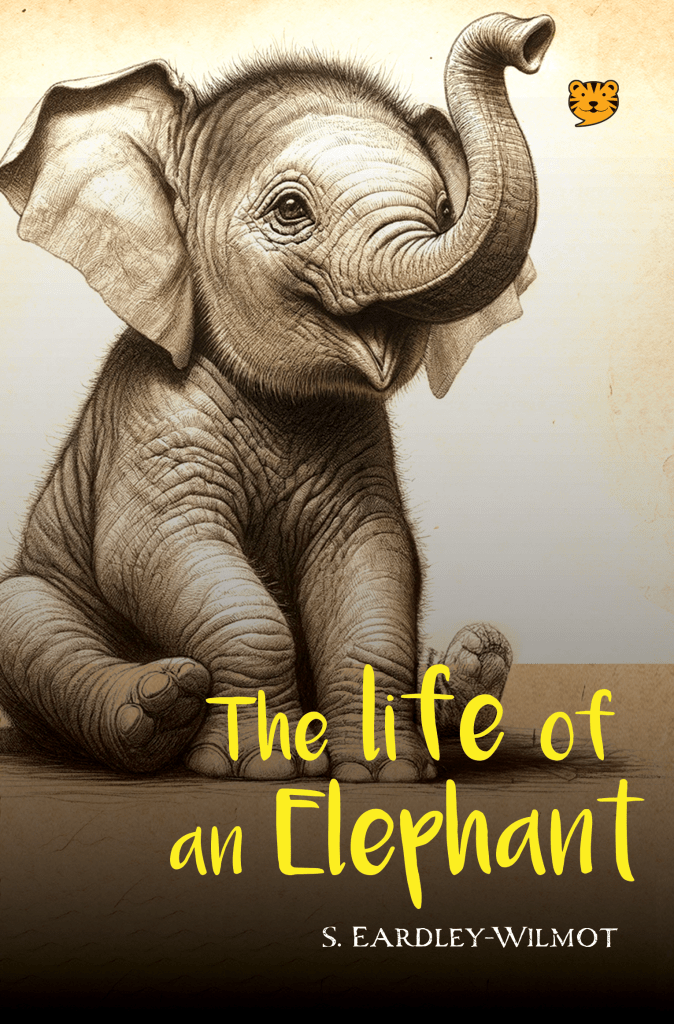


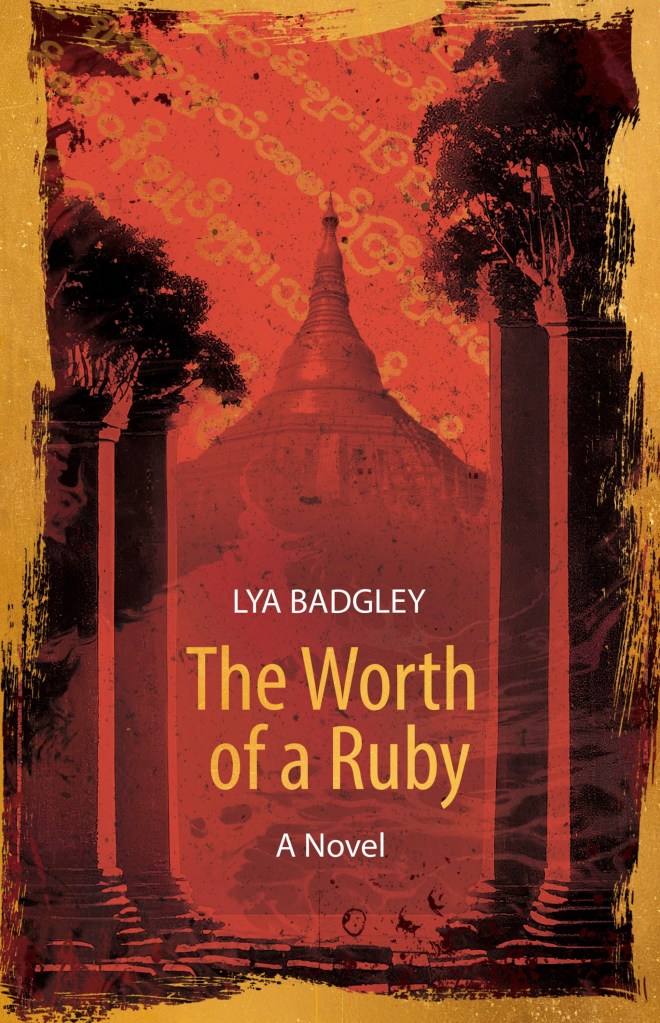
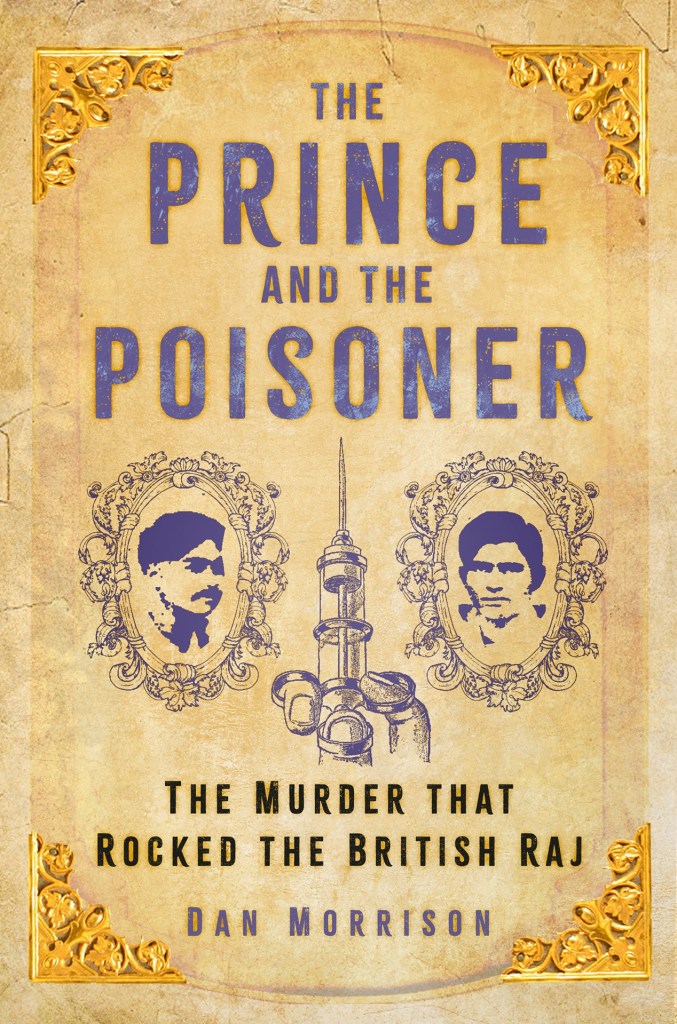
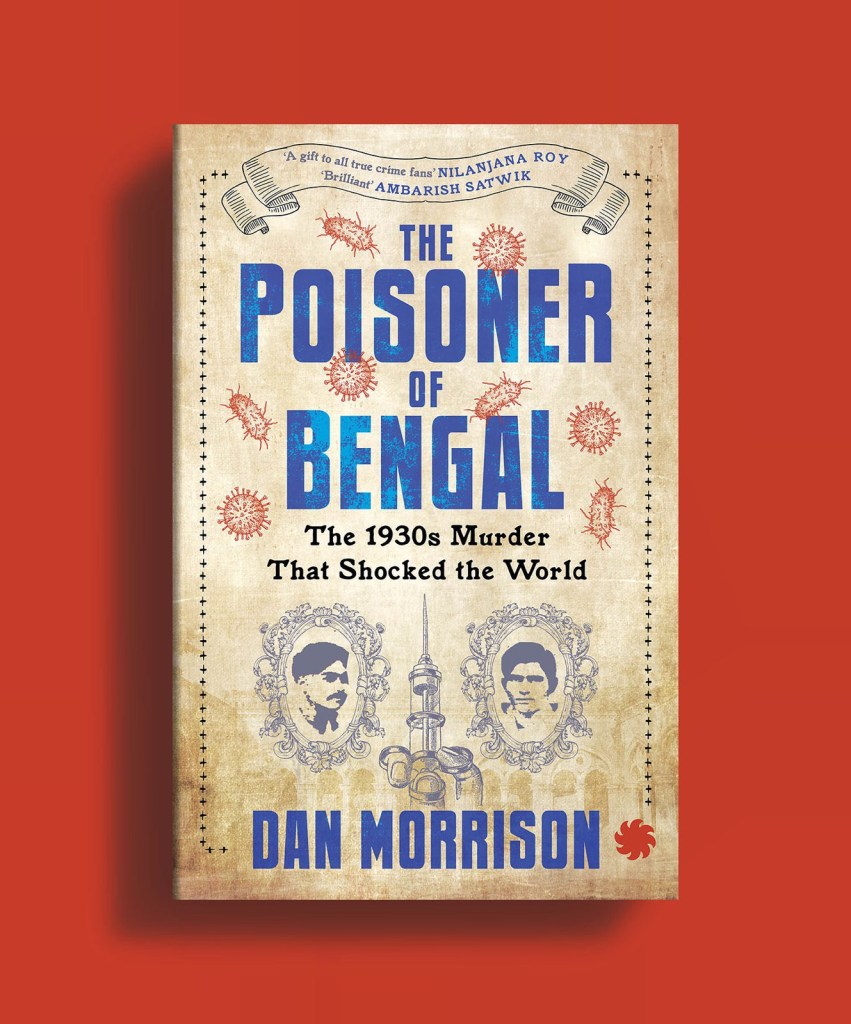





 Borderless