Prof. Sarbeswar Das (1925–2009): A scholar of depth, a teacher of light. Photo Provided by Bhaskar Parichha
In the intellectual history of modern Odisha, Professor Sarbeswar Das stands as one of those rare figures who seamlessly bridged scholarship, ethics, and social commitment. A luminous teacher, an erudite writer, and a quiet Gandhian, his life and work embodied the moral seriousness and intellectual curiosity that marked a generation shaped by the freedom struggle and the promise of a newly independent India.
Born in Sriramchandrapur village in the Puri district of Odisha in 1925, Sarbeswar Das grew up in a milieu where simplicity, discipline, and community values were deeply ingrained. His brilliance shone early—he topped the matriculation examination across Odisha and Bihar, a distinction that foreshadowed a lifetime of academic excellence.
His educational journey took him first to Ravenshaw College, Cuttack, the cradle of higher education in Odisha, where he absorbed the liberal spirit and rigorous intellectual training that the institution was known for. He later studied at Allahabad University, one of India’s foremost centers of learning, before proceeding to the University of Minnesota, for advanced studies in English literature.
His exposure to American academia at a time when few Indian scholars ventured abroad profoundly shaped his intellectual orientation. The years in Minnesota opened to him a new world of thought—modern literary criticism, American fiction, and the philosophy of democratic humanism—all of which left a deep imprint on his teaching and writing in later years.
On returning to India, Das joined the teaching profession, which he would pursue with remarkable dedication and grace for several decades. He served as a professor of English in some of Odisha’s most respected institutions—Christ College (Cuttack), SCS College (Puri), Khallikote College (Berhampur), and Ravenshaw College (Cuttack).
As a teacher, he was known not only for his formidable command of English but also for his clarity of expression, quiet humour, and empathetic engagement with students. He could bring Shakespeare and Emerson alive in the classroom, weaving them into the moral fabric of everyday Indian life. His pioneering initiative was the introduction of American Literature as a formal subject of study in Indian universities, long before it became fashionable to do so.
In an age when English studies in Odisha were largely confined to the British canon, he expanded its horizons by introducing writers like Walt Whitman, Emily Dickinson, William Faulkner, and Mark Twain to Indian classrooms.
Das believed that literature must connect with lived experience. He often told his students: “Language is not just a means of expression; it is a mirror of our moral imagination.” This conviction shaped generations of students who went on to become writers, teachers, and civil servants. Among them was the late Ramakanta Rath, later one of Odisha’s most celebrated poets, who fondly remembered Prof. Das as a teacher who inspired intellectual courage and aesthetic sensitivity.
Alongside his teaching, Prof. Das was a prolific writer and scholar. He authored around twenty-five books spanning essays, literary criticism, translations, and reflections on education and society. His writings in English and Odia reveal a mind steeped in both classical and modern traditions. Fluent in English, Odia, and Sanskrit, he was at ease quoting from the Bhagavad Gita and Hamlet in the same breath.
His essays in English reflected on the role of language in education, the cultural responsibility of intellectuals, and the need for moral clarity in modern life. He consistently argued for a vernacular humanism—a belief that English education must not estrange Indian students from their cultural roots but rather help them view their own traditions through a broader, universal lens.
As a principal, he brought administrative efficiency and human warmth to his role. His tenure is remembered for reforms that encouraged academic discipline, faculty collaboration, and student participation. He believed that education was not merely about acquiring degrees but about shaping ethical citizens.
Prof. Das’s intellectual life was inseparable from his moral and civic commitments. As a young man, he participated in the Quit India Movement, aligning himself with the Gandhian values of simplicity, non-violence, and service throughout his life.
Late in life, Prof. Das turned inward to recount his journey in his autobiography, Mo Kahani (My Story), which has since acquired the stature of a modern Odia classic. Spanning eight decades of personal and social history, it offers not only a memoir of a life well-lived but also a vivid ethnography of Odisha across the twentieth century.
In Mo Kahani, he paints rich, affectionate portraits of his family—his parents and sisters, Suruji and Hara Nani—and evokes the rhythms of village life, with its festivals, hierarchies, and hardships. His account of the great famine of 1919, passed down through family memory, is a haunting narrative of suffering and resilience.
The autobiography captures the moral universe of rural Odisha—its compassion, faith, and silent endurance—while chronicling the social changes wrought by modernity, education, and political awakening.
The book transcends personal recollection to become a social document of rare authenticity, preserving the voices and values of an era in transition. Scholars have hailed it as a valuable resource for understanding Odia social and cultural history, as well as a significant contribution to Indian autobiographical writing.
Prof. Sarbeswar Das passed away in 2009 at the age of 84, leaving behind a legacy of intellectual depth and human kindness. Those who knew him remember his calm demeanour, his Gandhian simplicity, and his unwavering belief in the power of education as a moral force. His students and colleagues regarded him not merely as a teacher but as a guide who exemplified integrity and humility in every aspect of life.
His contributions to English literary education in Odisha were transformative. By introducing American literature, promoting cross-cultural study, and insisting on a pedagogy grounded in ethical reflection, he helped modernise the study of English in the state and inspired a generation to approach literature as a bridge between worlds.
Even today, his writings—both critical and autobiographical—continue to speak to the challenges of our times: the search for meaning in education, the reconciliation of global and local cultures, and the enduring need for moral clarity in a rapidly changing world.
In the final measure, Prof. Sarbeswar Das remains not only a scholar and educator but also a moral historian of his age—one who chronicled the soul of Odisha with the sensitivity of a poet and the precision of a teacher. His Mo Kahani endures as his final lesson: that learning is not a mere accumulation of knowledge, but a lifelong practice of understanding, empathy, and truth.
.
Bhaskar Parichha is a journalist and author of Cyclones in Odisha: Landfall, Wreckage and Resilience, Unbiased, No Strings Attached: Writings on Odisha and Biju Patnaik – A Political Biography. He lives in Bhubaneswar and writes bilingually. Besides writing for newspapers, he also reviews books on various media platforms.
PLEASE NOTE: ARTICLES CAN ONLY BE REPRODUCED IN OTHER SITES WITH DUE ACKNOWLEDGEMENT TO BORDERLESS JOURNAL
There is a marble top chest that fills the small wall to the left of the front door. It’s walked by multiple times a day, but unless you do the dusting, you forget it’s there.
Standing in front of it now waiting on Dee, I realise there is a crystal lamp and three books that stand by themselves, thick like upright bricks, no bookends, makes us look well read, haven’t looked at them in years.
There’s Texas by Michener, The Complete Short Stories of Mark Twain, and The Oxford Book of American Verse. She says she’ll be a few more minutes, this is not a rare occurrence.
I take the Oxford back to the couch and let it fall open to Mnemosyne by Trumbull Stickney. There are 1132 pages, what are the odds that it opens to Trumbull Stickney. Trumbull died at thirty of a brain tumor.
He graduated Harvard in 1895, did his doctorate at the Sorbonne on the Bhagavad Gita. Had he lived longer he would have been one of the greats, his work did not have time to mature. I’m wondering what matures the work of poetry.
Certainly, sitting in this tome at the front door, aging like fine wine, tannins have smoothed the legacy of Trumbull’s goddess of memory. During the next wait, while Dee primps, I’m going to randomly open to a short story.
I lived in Texas for three long years and saw the movie with Glenn Ford, it doesn’t hold a candle to Mark Twain, and can’t touch what is now the undying remembrance, the myth of the near greatness of Trumbull Stickney.
PALM READER
Well, let’s take a look. You haven’t had to work too hard.
I haven’t dug graves or felled trees, but I’ve always worked hard.
I didn’t mean you weren’t productive, I just meant they’re smooth, not roughened, and of course, at your age, a little pruney.
Well, now that we have that out of the way, what about the future?
First the past. You don’t anymore, but you used to bite your nails and cuticles. You have an attention deficit and an inner tension. You also have a soulmate, someone who has loved you unconditionally your whole life. That doesn’t make you exclusive, but it is rare.
Right on both counts. There are children being slaughtered and neglected. It bothers me …. a lot.
It will take time away from you. You should do what you can to step away from these thoughts and this bitterness. Find a happy place as often as possible.
Are you suggesting political ignorance would make me live longer?
No, that would not make you happy, but you dwell on not being able to do anything, and you can. You can care, as you do, you can also spend more time focusing on the good around you and less on the evil. And as we both know you have the hands of a poet.
Craig Kirchner loves storytelling. He has been nominated for the Pushcart three times, and has a book of poetry, Roomful of Navels. He’s been published in Chiron Review, The Main Street Rag, Borderless and dozens of other journals.
PLEASE NOTE: ARTICLES CAN ONLY BE REPRODUCED IN OTHER SITES WITH DUE ACKNOWLEDGEMENT TO BORDERLESS JOURNAL
‘So what is it like being the son of Bimal Roy[1]?’ Ratnottama Sengupta asked the author of Ramblings of a Bandra Boy
Ratnottama Sengupta and Joy Bimal Roy. Photo Courtesy: Debashish Sengupta
Rambling, when used for writing – or speech – implies unmapped, confused or, at worst, inconsequential flow of thoughts. In another usage, the word applies to walking in the countryside for sheer pleasure. It is in this second sense that Joy Bimal Roy’s digitally published text, Ramblings of a Bandra Boyis a perfect match of form and content. For, its sweeping take hops from landscape to landscape and life to life of persons who have peopled the world of the author born in a typical Bandra household precisely 70 years ago.
Why typical Bandra household? Because Bandra – derived from the word bandar, meaning harbour – is the Queen of Mumbai’s suburbs. This pocket of history in the heart of the Financial Capital of India is also the home of VIPs, of Bollywood and of political variety too. As the time-weathered Bandra Fort overlooking the Arabian Sea vouches, Bandra predates the British ownership of the Seven Islands gifted to the Crown when Charles II married Princess Catherine of Portugal. Indeed, St Andrew’s Church, in existence since 1575, came up on the strength of Jesuit Priests who won over Koli fishermen winning Christians a stronghold in this part of coastal Maharashtra, much like in Goa.
In the 21st century, Bandra is where Mehboob Studios and Lilavati Hospital stand. Where the Bandra-Kurla Complex defines the dreams of the rich and the rising, overshadowing Asia’s biggest shanty town, Dharavi. And where the awe inspiring Bandra-Worli Sealink bridges the southern extreme of ‘Bombay’ with its ever growing ‘suburbs’.
But all through my lifetime, Bandra has been better recognised as the home of celebrities. Bollywood thespians, Dilip Kumar and Sunil Dutt, to Shah Rukh Khan and Salman Khan; art personalities, KK Hebbar to Kekoo Gandhy; actors, Rekha to Raakhee; directors, Nitin Bose and Hrishikesh Mukherjee, writer Gulzar and cricketer Sachin Tendulkar; umpteen fashion designers and models too have boasted 400050 as their Pincode.
Joy Bimal Roy’s Ramblings takes you on a multi-stop tour of this ‘port’ of India’s social fabric. For, as you skid from one story to another, in no predetermined chronology or thematic order, you get to meet his Yusuf Uncle (Dilip Kumar of Devdas[2] fame) and Bhoba Kaka (Ritwik Ghatak of Madhumati[3]fame), Lata Bai (Mangeshkar) and the Dutts — father Sunil and daughter Priya — who have represented North West Bombay in Parliament even as one member of that family slogged in a jail.
Take a quizzical look at Bollywood divas and peep at actors in their skin labouring on in a posh gym. Get a warm handshake with Shashi Kapoor and gift a sari to Sanjana. Riveting tales of travels to Lebanon, Beirut, Abu Dhabi, Greece, Switzerland, England, San Francisco and San Jose – they’re crowned by nuggets like “I delved into my sister’s recipe book… it has taken the place of Bhagvad Gita in my life” and “I do wish food wasn’t such an important feature in my life. Because it directly correlates to my expanding waistline.”
That’s not all. Here’s a reverential insight into what constituted Shyam Benegal’s greatness — and several irreverent accounts of the crème de la crème schools and colleges that have shaped the author who could have been a top notch contemporary artist, a charming singer, an enviable fashion designer, or an accoladed filmmaker.
Joy Bimal Roy chose not to be either of these. Instead, he stitched together Imagesof Kumbha Mela when he chanced upon the footage that were to be Bimal Roy’s last film. And he directed Remembering Bimal Roy[4]when his father’s birth centenary came around. He has mounted a series of world class exhibitions to showcase the photography of his mother, Manobina Roy, who, along with her twin Debalina Majumdar, was one of India’s earliest woman photo artist. And in her memory he has installed an imposing sculpture of two hands raised in prayer, ‘Requeim’, at the Bandstand promenade. He has got a road named after his venerable father. He has designed the career of musical talents like Alisha Chinai. He has up-cycled heritage saris and jewellery to support hospices. And he has been editing a newsletter chronicling the life of Bandra, the neighbourhood he was born in, grew up in, and continues to breathe life into.
Now Joy has given us Ramblings, a compilation of his posts on social media between 2017 and 2020. These slices of life “served without any extra seasoning or fancy garnish” as he puts it, have been described by Rachel Dwyer, professor of Indian Cultures and Cinema at SOAS[5], London, as jottings in kheror khata, the traditional cloth bound notebook that Satyajit Ray — and his father Sukumar Ray before him — used to pen down thoughts and visuals that are world’s treasure. In this exclusive, he converses about his book and his life.
What is your earliest memory of being the son of Bimal Roy?
Finding out in school from classmates that my father was famous!
What is the strongest impression you retain of 8th January 1966 – the day Bimal Roy passed into eternity?
I remember hearing a song from the basti[6] behind our house while I was taking a bath. That song still haunts me. I wasn’t allowed into the living room where Baba’s body was kept, so I peered in through the slats of the back door of the living room. We lived in an old Parsi Bungalow where the wooden doors were 8 ft high and had moveable wooden shutters. The room was packed to capacity but there was pin drop silence. Time stood still. It hadn’t yet sunk in that I would never see Baba again.
Did you develop a deeper understanding of what Bimal Roy was, in the process of makingRemembering Bimal Roy?
Absolutely. It was a cathartic and moving experience to hear the memories of people he had worked with over 60 years ago. Not only Tapan Sinha, who was with him in New Theatres; poet, lyricist, director Gulzar who had started as assistant in Bandini; Sharmistha Roy, daughter of his art director Sudhendu Roy; and his accountant Amrit Shah – even next generation personalities like Javed Akhtar and Ashutosh Gowarikar remembered him with so much love and respect that it brought tears to my eyes. I discovered anew that Baba was not only a superlative filmmaker but also a wonderful human being.
Did you likewise get to know Manobina Roy a little more through her photography?
Not really. I was fortunate to have her presence for 46 years of my life. So I grew up being photographed and seeing her photos. But it was only after her death that I discovered from a Bengali book called Chhobi Tola that she and her sister Debalina were two of the earliest known women photographers of India.
Has the insight into Bimal Roy films equipped you to be a responsible filmmaker? Or did you gain greater practical experience as an understudy/ through your interactions with Shyam Benegal, Girish Karnad[7], Basuda[8], and Hrishi Kaku[9]?
I had no interaction with Basuda and Girish in connection with film making. What I learned after watching the making of Chaitali[10] — the last film made under the banner of Bimal Roy Productions, nine years after Baba passed away — was how NOT to make a film.
Whatever I learned about filmmaking was from watching Baba’s films and my work experience with Shyam Benegal.
I wouldn’t really describe myself as a ‘filmmaker’ after making one documentary on Baba. However it is true that I have very high standards and living up to them was a big responsibility. After all, I am my father’s son. He was a perfectionist and so am I. It took me six months to edit a one-hour film simply because I was striving to do the best possible job with the material I had in hand.
Before you got into films you have ‘dabbled’ in fashion designing, worked with HMV[11], and now you are a most absorbing and prolific writer. Personally, I have always admired your painting (which I seldom see you do now). And I know you have mesmerised your college events with your singing. Which of these is your natural calling?
All of them unfortunately, which is why I didn’t know which one I should follow. As a result I have been a ‘dabbler’ — to use your own word. You could accuse me of being a dilettante but as I said before, I have high standards. So whatever I did, it was with all my heart and soul.
Tell me about the joys and woes of assisting Shyam Benegal.
That is impossible to describe as one question in an interview. It would be an entire interview! You can, however, get some answers in my book.
Which of the film stars of Bimal Roy’s team have you been closest to?
None. Because I was not even eleven when Baba passed away. But we did keep in touch with Yusuf Uncle. He was incomparable.
What difference in the work culture or cinematic ethics have you noticed between these two legends?
Baba and Shyam? I can only judge Baba from his films, but I worked with Shyam. It’s a difficult question to answer.
Please tell us about Uttama, Papri, Roopu, Sharmistha (Buri?), Aloka – essentially, about the extended Family of Bimal Roy?
That’s what all of them were and are: Family. One accepts and embraces them as they are.
What led you to the Ramblings which has been described as ‘social document of our times’?
My Facebook friends led me to Ramblings. They drove me mad demanding a book. I did it more to oblige them and make them stop making demands.
What next — cinema a la Bimal Roy — or books after Monobina Roy, who, besides being an ace photo artiste and a fabled cook, wrote Jato Door Tato Kachhe?[12]
A Bengali translation of Ramblings of a Bandra Boy.
[2] Hindi movie, 1955, Dileep Kumar (1922-2021) played the titular role
[3] Hindi movie, 1958, written by Ritwick Ghatak (1925-1976)
[4] Joy Bimal Roy lost his father filmmaker Bimal Roy when he was 11 years. Joy remembered very little of his father. ‘Remembering Bimal Roy’ made by Joy Bimal Roy is the search of a son for his father.
Ratnottama Sengupta, formerly Arts Editor of The Times of India, teaches mass communication and film appreciation, curates film festivals and art exhibitions, and translates and write books. She has been a member of CBFC, served on the National Film Awards jury and has herself won a National Award.
.
PLEASE NOTE: ARTICLES CAN ONLY BE REPRODUCED IN OTHER SITES WITH DUE ACKNOWLEDGEMENT TO BORDERLESS JOURNAL
Farouk Gulsara discussed William Dalrymple’s latest book
Growing up in the later part of the 1970s, kids of my generation were drilled with stories that India was a subcontinent of poverty, filth, and pickpockets. Even our history books taught us that it was a land of darkness, living in its myths, superstitions, and cults, waiting to be civilised by the mighty European race and their scientific discoveries.
That was what was impressed upon us as we sauntered into adulthood. The media did not help either. With eye-catching news like a particular Indian Prime Minister having his daily dose of gau mutra[1] for breakfast and another ousted after thirteen days of taking oath as the Prime Minister, India was made out to be just another third-world country. Then came the 21st century and the turn of tides. Locally bred academicians started teasing deeper into India’s forgotten history. They started doubting the self-deprecating history that was taught to them by leftist historians in the textbooks.
Like many historians before him, historian William Dalrymple, in his latest book, The Golden Road: How Ancient India Transformed the World outlines the importance of India as a cradle of knowledge that peddled wisdom to regions near and far. Its scientific knowledge was far ahead of its time. This know-how was put into practice and spread via trade routes. Their port of entry received not just their goods but also their culture and way of life.
Enduring attack after attack from foreign invaders, Indians had already forgotten their glorious past by the time of the British Raj. A tiger hunting expedition inadvertently brought British hunters to various beautiful cave carvings and Buddhist sculptures. That kind of rekindled India’s history, which had disappeared from the Indian imagination.
India had been a crucial economic fulcrum and a civilisational engine in early world history. As early as 31BCE, Indians had learnt to manipulate the monsoonal winds to steer their ship to the West to the prosperous kingdom of Ethiopia, Egypt and subsequent access to the Mediterranean. With their mammoth merchant ships, they transported pearls, spices, diamonds, incense, slaves and even exotic animals like elephants and tigers in exchange for gold. Trade favoured India so much that a Roman Naval Commander, Pliny the Elder, lamented the unnecessary spicing of the food and the almost transparent Indian fabric that left nothing to the imagination. It is said Buddhism reached the shores of Egypt through these ships. The Christian monastic way of life is said to have been influenced by these monks.
With seasonal monsoon winds, Indian ships brought not just trade but philosophy, politics, and architectural ideas to Southeast Asia, China, and even Japan. All this cultural allure and sophistication did not happen through conquest. Sanskrit was the language of knowledge and a conduit for spreading knowledge.
Buddhism emerged in the 5th century BCE as an alternative to caste-centred and animal sacrifice-filled rituals. Unlike Jainism’s strict austerities, it offered a middle path. Due to King Ashoka’s untiring efforts, Buddhism spread beyond its borders. Contrary to the belief that Buddhism promotes an impoverished way of living, early Buddhists drew interests (and resources) from the merchant group, as evidenced by the Ajanta Caves’ findings. Buddhism drew many Chinese scholars to India’s centres of higher learning in Nalanda and Kanchipuram in the South to get first-hand experience reading Buddhist scriptures in Sanskrit. India’s universities later became the template for other varsities the world over.
Ajanta CavesAjanta Painting inside the caveFrom Public Domain
India’s cultural influence on South Sea Asia is phenomenal. Stories from Indian epics, Ramayana and Bhagvad Gita, are told and retold in children’s stories, plays and cultural art forms. Their ruling elites were Hindus. The biggest Hindu and Buddhist temples are not in India but in Cambodia and Java, respectively, as Angkor Wat and Borobudur. Marvellous stony statues and temple are similar to those in India. At a time when the Byzantines were presiding over Europe, the Suryavarman clan was ruling a Hindu Empire so huge it would dwarf their European counterpart.
The 5th to 7th century of the common era was the golden age of Indian mathematics. Between Aryabhata and Brahmagupta, their knowledge of the nine-number system (and zero) brought them the know-how of negative numbers, algebra, trigonometry, algorithms and astronomy far ahead of their time. They understood that Earth was a sphere spinning on its axis, about the eclipse, gravity and planetary rotations. The Indians even built a space observatory tower in Ujjain to study constellations and devise a solar calendar. The idea of a prime meridian arose from here.
In the 8th century, the Abbasids exerted control over the Afghanistan region through treaties with local viziers. At that time, the Bamiyan region in Afghanistan had over 460 monasteries and 10,000 monks. A member of an influential Buddhist family, the Barmakid, converted to Islam to establish his family in the Abbasid fold. They brought Indian medicines, texts, and scholars with them and encouraged and promoted Islamic engagement with the East. Sanskrit texts were translated into Arabic. It is said that the Barmakids were instrumental in the building of Baghdad.
The Islamic hegemony spread, as did the scholarship it had built.
The Bamakid-Abbasid liaison met a tragic end due to palace power dynamics. The Abbasids started looking at the Romans for inspiration. Many Europeans were drawn to the Golden Age of Islam. Many texts were translated into Latin. Toledo of Andalusia introduced the science of timekeeping from Ujjain to Oxford. A particular young Italian named Leonardo of Pisa picked up the beauty of Mathematics during his stay in Algeria. He returned to publish ‘Liber Abaci‘ (The Book of Calculation) in 1202, which introduced Europe to the sequence of Fibonacci numbers and the mystic power of mathematics. This sudden gush of knowledge spurred the European Renaissance.
First published in 1202, Liber abaci was one of the most important books on mathematics in the Middle Ages, introducing Arabic numerals and methods throughout Europe. Its author, Leonardo Pisano of Pisa is known today as Fibonacci .Stature of Fibonacci (1170-1240/50) in PisaFrom Public Domain
The whole cycle completed its full arc when European powers rose to great heights. Benefitting from the knowledge from India that layered its way through, passing from hand to hand, the colonial masters returned to chop off[2]the hands that had nourished it.
Emerging rejuvenated from their occupation-induced slumber, with their Anglophilic familiarity, Indians have risen from the ashes to claim their status in the Indosphere[3], a world where Indian influences permeated every layer of society.
This well-researched, unputdownable book is for all history buffs. Infused with little nuggets from cover to cover that would excite nerds, it is a joy to read about the history of India in a way that is not often told in the mainstream.
[1]Gau mutra, cow urine, has a sacred role in some forms of Hinduism and Zoroastrianism and is used for medicinal purposes and in some Hindu ceremonies.
[3]Indosphere is a collective linguistic term for areas under Indian linguistic influence. It includes countries in the Southern, Southeast, and East Asian regions. 22 languages, including Indo-European and Dravidian languages, are recognised under this category and are considered to have originated in India.
Farouk Gulsara is a daytime healer and a writer by night. After developing his left side of his brain almost half his lifetime, this johnny-come-lately decided to stimulate the non-dominant part of his remaining half. An author of two non-fiction books, Inside the twisted mind of Rifle Range Boy and Real Lessons from Reel Life, he writes regularly in his blog, Rifle Range Boy.
.
PLEASE NOTE: ARTICLES CAN ONLY BE REPRODUCED IN OTHER SITES WITH DUE ACKNOWLEDGEMENT TO BORDERLESS JOURNAL
‘Himalaya Jatra’ (A trip to the Himalayas) has been excerpted from Jibon Smriti[1] and translated by Somdatta Mandal.
Jibon Smriti by Rabindranath Tagore (1861-1941)
After my head was shaved for the upanayan (sacred thread) ceremony, I was seriously troubled thinking how I would go to school. However serious attraction the European boys had towards the bovine race; they did not have that much respect for the Brahmins. So even if they did not throw anything over the shaven head, they would surely make fun of it.
While I was worried with such thoughts, I got a call one day from the room on the second floor. Father asked me whether I would like to go with him to the Himalayas. If I could shout the words “Yes I do” at a sky-rendering tone, then the feelings of my heart would have been suitably expressed. Where was the Bengal Academy and where the Himalayas!
Before leaving, Father assembled everyone in the house and according to his tradition did the upasana – the traditional prayers. After paying obeisance to all the elders I entered the coach along with Father. At my age, this was the first time that clothes had been tailored for me. Father had personally ordered the colour and the quality of the fabric. A round velvet cap with design in zari[2] was also made for me. I held that in my hand because I felt reluctant to wear it on my shaven head. As soon as I entered the coach, Father ordered, “Wear it on the head.” He did not leave any scope for untidiness and so I had to wear that cap over my shameful head. In the train, I would take it off whenever I got an opportunity to do so but that did not escape Father’s notice. So, I had to keep it in its right place.
Right from youth to maturity, all the ideas and work of my father were always perfect. He could not leave anything hazy in his mind and could not do any work in a haphazard manner. For him his duty towards others and the duty of others towards him were defined very clearly. By nature, we are an easy-going people and not concerned when we deviate a little here and there. So, we were always very scared and alert about our behaviour towards him. Though it did not cause any serious damage, he felt hurt if there was any deviation from his agenda. Before making any resolution, he would mentally visualise everything clearly in all its details. So, for any occasion he would plan where each object should be placed, who would be placed in which position, who would be entrusted with which responsibility and to what extent there would be no deviation from that on any account. After the work was complete, he would gather reports from different people. Then he would compare each description and by putting them together in his mind, tried to see everything clearly. In this respect he did not possess our national character at all. There was no chance for the minutest deviation in his resolutions, thoughts, behaviour and performance. For this reason, for all the days I was with him on this trip to the Himalayas, I had plenty of freedom on the one hand but on the other, all my behaviour was determined in such a manner that it could not be transgressed. When he declared a holiday then he would not prevent one doing anything for any reason whatsoever; when he fixed some rules then he didn’t leave any scope for minute lapses.
Before our journey to the Himalayas commenced, we were supposed to stay for some days at Bolpur. Satya had gone there some time back with his parents. No nineteenth century child from any respectable household would ever believe his travel accounts. But we had not yet learnt to decipher the demarcating line between possible and impossible acts. Even Krittibas or Kashiram Das could not help us in this matter. The colourful children’s books and magazines with pictures in them did not warn us beforehand about the difference between fact and fiction. We had to learn the hard way that there was strict discipline in the world.
Satya[3] had told me that boarding the train was a dangerous act and one could not do it if one did not have special abilities for it. There was no way to save oneself if one slipped and fell. Also, when the train would start moving after that, they would need to assemble all the strength in the body and force themselves to sit down otherwise they would be pushed in such a strong manner that everyone would just get thrown out, scattered, and lost. So, I was quite scared when I reached the station. But when I got onto the train so easily, I started doubting whether the actual part of the boarding was yet to take place. After that when the train started to move very smoothly then I became demoralized that there was no sign of danger.
As the train kept on moving rows of green trees, blue bordered fields and shady villages ran past on both sides like a flood of mirages. We reached Bolpur in the evening. As soon as I got inside the palanquin, I closed my eyes. I wanted to discover all the surprises that Bolpur had in store for me only the next morning when I would open my eyes again. If I got a hint of it in this hazy unclear evening, then I would miss the charm of total happiness the next morning.
Early next morning, I came and stood outside with a tremble in my heart. The erstwhile traveller had told me that Bolpur was different from all other places in the world because though there was no roof over the pathway leading from the main house to the kitchen one would not have to face any rain or sunshine. So, I started looking for that strange path. Readers please do not be surprised to know that I have not found that path to date.
Being a city-bred boy, I had never seen paddy fields before and had painted rosy pictures about shepherd boys in my imagination after reading about them in books. Satya had told me that the fields around Bolpur were full of paddy and playing every day with the shepherd boys was a daily affair. The main aspect of this game was to collect rice from the fields, cook it and sit down with them to share that meal.
I looked desperately on all sides. Where were the paddy fields in this desert land? There might be a few shepherd boys in some field somewhere but there was no way to identify them. It did not take long to regret what I could not see because what I saw was enough for me. There was no control by the servants here. The only line of control was the blue line on the horizon which nature had demarcated and so there was no deterrent for me to roam about freely.
Even though I was quite small, Father did not prevent me from moving about freely on my own. At some places in the meadows of Bolpur the sandy topsoil on the ground had eroded in the monsoon rain and below that level created small caves, rivers, streams, and tiny hillocks full of red gravel and different kinds of stones. It was a complete geographical world for young children. The hillocks and pits here were known as the Khoai. From here I collected different kinds of stones in my pockets and took them to Father. He never made fun of this childish effort even for a single day. He would express interest and say, “How nice! From where did you get them?” I would reply, “There are thousands of stones like this. I can bring them for you every day.” He would then say, “That would be nice. Why don’t you decorate this hill with those stones?”
Earlier an attempt had been made to dig a pond but was left midway because the soil was very hard. Part of the soil from that incomplete hole was heaped up on the southern side like a hill. Father would sit there on a wooden stool early every morning for his upasana. The sun would rise from the eastern horizon in front of him. He would encourage me to decorate that hill with those stones. When I left Bolpur I felt very sad because I could not carry that huge collection of stones along with me. I had not realised then that there was a responsibility and cost for carrying any sort of burden. I could not even claim the ownership and maintain relationship with them just because I had saved them. Even today I sometimes fail to realise it. If God then listened to my sincerest prayers and blessed me with a boon, “From now on you will go on bearing the weight of these stones forever,” I would not be able to laugh and make fun of it as I am doing now.
There was a place in the Khoai where water had seeped through the soil and accumulated in a deep hole. This water would sometimes overflow and trickle very slowly through the sand. Near the mouth of that hole, I found many small fish that dared to swim against the flow of that water. I went and told Father, “I have seen a very beautiful stream, and it would be nice if we could get our drinking and bathing water from there.” He added to the excitement by saying, “Is that so? It will be good then.” and then decided to bring water from there just to award a prize to the discoverer.
I would roam around the hillocks and pits of Khoai at any time of the day and would look for discovering something extraordinary. I was Livingstone in this tiny unknown land. It seemed like land on the opposite side of a binocular. The rivers and the hillocks were so small, the scattered wild berry and wild date palm trees were equally stunted. The fish that I had discovered in that tiny river were equally small and of course there was no need to mention that the discoverer was small as well.
To develop my alertness, Father would give me two or four annas to keep and I had to account for it. He also entrusted me with winding his expensive gold watch regularly. He did not think that there was a possibility of damage; his mission was to teach me a sense of responsibility. When he went out for a walk in the morning he used to take me along. If he met a beggar on the way he would instruct me to give him alms. At the end when it was time to submit the accounts, I could never tally the amount received and spent. One day when my funds extended, he said, “I think I will have to appoint you as cashier; money grows in your hands.” I would take great care to wind his watch regularly. But the amount of care was perhaps a little more than required because very soon the watch had to be sent to Calcutta for repair.
When I grew up later, I remembered those days when I had to submit all accounts to him. At that time, he used to live on Park Street. I had to read the accounts to him every second or third day of the month. He could not read anything by himself then. I had to compare the accounts of last month and last year and place them in front of him. First, he heard the big figures and calculated them mentally. If he had any doubts in his mind, I would have to read out the smaller expenses. Sometimes it had also happened that I had evaded some sections of the accounts which did not tally so that he would not get annoyed but somehow it could never be suppressed. He would sketch the complete accounts in his mind and could detect wherever there were lapses. For this reason, those two days were full of anxiety for me. I have already mentioned how it was his habit to frame a clear picture in his mind – whether it was accounts or any natural scenery or arranging for any celebration. He had not seen the new mandir (prayer hall) and many other things at Santiniketan, but he got the details from different people who went there and then collated the picture in his mind. He had an extraordinary memory and power of assessment. So, once he had something in his mind it could never be erased.
Father had identified certain slokas[4] he liked from the Bhagavad Gita and asked me to copy them along with their Bengali translations. I was an ordinary boy at home, so I basked in the glory of that very serious task assigned to me. In the meantime, I had done away with that tattered blue exercise book and collected a bound Lett’s Diary. To maintain the prestige of a poet my attention was now focused on keeping proper notebooks and other external manifestations. Apart from writing poetry, in my own imagination I tried to establish myself as a poet. For this reason, whenever I wrote poems in Bolpur I would stretch my legs and sit below the small coconut palm tree at the end of the garden and love to fill up my notebooks. This felt quite poetic. Sitting on that grassless stony bed in the heat of the sun I had composed a heroic poem called ‘Prithvirajer Parajoy’ (The Defeat of Prithviraj). Despite having such heroic rasas, that poem could not be saved from destruction. Like its elder sister, the blue notebook, that bound Lett’s Diary also got lost in oblivion.
Starting from Bolpur we went to Sahebgunj, Danapur, Allahabad, Kanpur, and other places. After halting at some of them, we finally reached Amritsar. On the way one incident remains clearly etched in my mind. The train had halted at some big station. A ticket checker came to verify our tickets and after looking at me once he suspected something but did not dare to mention it. After some time, another checker arrived, and both stood uneasy for some time near the door and then left. The third time probably the station master himself arrived. He checked my half-ticket and asked Father, “Isn’t this boy above twelve years?” Father replied, “No.” I was eleven years old then but had more intelligence compared to my age. Then the station master said, “You will have to pay full fare for him.” My father’s eyes glowed in rage. He took out some notes from his box and gave them. When they deducted the fare and returned the change, Father took the money and threw it on the platform which made a jingling sound on the stone and was scattered everywhere. The station master was ashamed and left immediately. That Father would be lying for such a petty thing just to save money was something that made him bow his head in shame.
I remember the gurdwara[5] in Amritsar like a dream. On several mornings I would walk along with Father to that Sikh temple in the middle of the lake. There worship would go on throughout the day. My father went and sat among the Sikh worshippers and would suddenly start singing the hymns along with them. Listening to this song of praise being sung by an outsider, they got excited and got up to welcome him. On our way back we were given pieces of sugar candy and halwa.
Once, Father invited one of the singers of the gurdwara to our house just to listen to his bhajans[6]. The singer would probably be happy even with the lesser amount of money that was given to him. As a result, there were so many enthusiasts willing to come and sing at our house that a strict arrangement had to be made to prevent their entry. Unable to enter the house, they started attacking us on the street. Every morning, Father would take me along with him for his morning walk. During that time singers with tambourines on their shoulders would suddenly appear from nowhere. Just as a bird gets startled when it sees someone with a gun on his shoulders and thinks he is a hunter, so we would also get scared whenever we saw the tip of a tambourine at a distance. But the prey had become so clever that the sound of the tambourine was merely an empty one; it would chase us far away and couldn’t capture us.
In the evening Father would sit in the verandah in front of the garden. I was then called to sing Brahmasangeet[7] for him. The moon would rise, and moonlight infiltrated through the leaves of the trees and fell on the verandah while I sang a song in the raga Behag:
Without you Lord who is our saviour
Who is our support in this dark world?
I can still recollect that picture – Father sitting quietly in the evening with his head bent low, listening to the song with his palms folded on his lap.
I had mentioned before how Father had heard from Srikantha babu and laughed at the two spiritual poems which I had composed. I could take revenge for that much later when I grew older. Let me mention it here. Once I had composed several songs to be sung at the Maghotsav celebrations in the morning and evening. One song among them was worded, “I cannot see you, but you are there in all our eyes.” Father was then staying at Chinsurah and Jyoti dada and I were summoned there. He asked Jyoti dada to sit at the harmonium and asked me to sing all the new songs one by one. He even asked me to repeat some songs. After that he said, “If the king of this land knew the language of this country and could appreciate her literature, he would reward the poet. Since there is no such possibility for the king to do so, I will have to perform that duty.” Saying these words, he handed me a cheque for five hundred rupees.
Father wanted to teach me English and had carried with him several volumes of the series called Peter Parley’s Tales. Among them he selected for me the biography of Benjamin Franklin. He had thought that the biography could be read like a story, and I would benefit from it. But he realised his mistake soon. Benjamin Franklin was surely an intelligent man, but his religious worldview pained Father. At times while reading the text, he would become very annoyed with the extremely materialistic knowledge and advice of Franklin and could not stop without protesting it.
Except for learning Mugdhabodh by heart, I had not learnt any Sanskrit before this. Father started teaching me directly from the second volume of Rijupath and along with it asked me to memorize the word formation from Upakramanika. The way we had been taught Bengali helped us in our learning of Sanskrit. He encouraged me to learn Sanskrit right from the beginning. I would reverse all the words I had learnt and created complex sentences on my own by adding grammatical notes wherever I felt like. In this manner I transformed the language of the gods to the language of the demons. But Father did not make fun of my weird boldness even for a day. Besides that, he would explain to me many things about astronomy verbally from the simplified English text of Proctor. I would write them down in Bengali.
Among the books Father carried with him for his own reading I noticed one book in particular. This was Gibbon’s Rome bound in ten or twelve volumes. From their appearance, they did not seem to have any entertainment value. I used to think that since I was a child I had no choice and was forced to read many things but if Father wished he could easily avoid reading this book. Then why this sorrow?
We stayed in Amritsar for about a month. Towards the end of Chaitra [mid-April], we started our journey from there towards the hills of Dalhousie. In Amritsar, time did not seem to pass, and the call of the Himalayas was making me restless. While we were climbing the mountains in a sort of litter used in the hills, the entire region was full of different kinds of seasonal crops which grew in layers on the mountain slopes and looked very beautiful. We would have milk and bread and then leave early in the morning and take a rest at dak bungalows in the afternoon. My eyes did not rest for the whole day; I feared that I might miss noticing something. When we reached a corner of the mountain at the turn of the road, the bearers would put down our basket carriage and take rest under the dense shade of the trees that bent down with the weight of their leaves; a place where one or two streams leapt down over the mossy black stones that resembled playful daughters of the sages sitting at the feet of old meditating ascetics. I would covetously keep on thinking why they did not leave us there as it would be nice to stay at such a place.
Getting acquainted with something new always has its advantages. Till then the mind does not know that there are many more places like that. Once you get to know it, the mind starts saving its attentive powers but when it sees that everything is very rare then it does away with its stinginess and pays full attention to it. Now on some days when I walk on the streets of Calcutta, I imagine that I am a foreigner. Then I can imagine that there are plenty of things to see, but we don’t see them because we don’t have a mind to value them. That is the reason why people go abroad to satiate their visual hunger.
Father had entrusted me with his small cash box for safekeeping. There was no reason to think that I was the most suitable person for that job. A lot of money was kept there to be spent during our travels. He could have been more assured if he gave it to Kishori Chatterjee, but he had a special reason for handing it over to me. One day after reaching a dak bungalow, I had left that box on the table in the room and Father had chided me for that. After reaching the dak bungalow Father would sit on a bench outside. When it was evening and the stars shone brightly in the clear mountain sky, Father would teach me how to identify the planets and the stars and would discuss astronomy.
Our house in Bakrota was on the highest peak of a mountain. Though it was the month of Baisakh, it was very cold. The snow had not melted at many places on the road, especially where the sunlight did not fall directly. Father did not apprehend any danger here and so did not prevent me from wandering in the mountains at my own free will. There was a big pine forest in the valley near our house. I went alone to that forest quite frequently along with my metal-headed stick. The trees along with their shadows stood like giants and were many hundred years old. But they could not even speak a word when a small human child roamed among them. I would get a special touch from those trees as soon as I entered the shadow of the forest. It seemed to have the coldness of a reptile. The light and shade that fell on the dry leaves seemed like various lines drawn on the body of a huge prehistoric reptile.
Sketch of the house ‘The Snow Dawn’ at Bakrota. Photo provided by Somdatta Mandal
My bedroom was right at the end of the house. Lying on my bed at night I could see the faint light of the planets and the brightness of the snow on the mountain peaks through the windows. I don’t know at what hour of the night it was when I saw Father in a red shawl walking silently with a candle in his hand. He was going to the glass-enclosed verandah outside to sit and pray. After another bout of sleep Father shook me and asked me to wake up. The darkness of the night had not gone away completely. That time was fixed for me to learn by heart the “naroh, narou, narah” grammar from the Upakramanika. Getting out of the warm blankets in that cold weather was indeed a sad beginning.
At sunrise, Father finished drinking a bowl of milk after his morning prayers and then made me sit beside him. He would pray once more by chanting mantras from the Upanishads. After that he took me out for a walk. I could not compete with him. I would stop somewhere in the middle of the path and climb up through a short cut to go back to our house.
After Father came back, I had to study English for about an hour. After that a cold-water bath was scheduled at ten o’clock and there was no respite from this. The servants did not dare to mix some hot water against his orders. Father encouraged me by telling me stories about how he used to bathe in intolerably cold water in his younger days.
Drinking milk was another trial for me. Father drank plenty of milk. I wasn’t sure whether I inherited this strength of drinking milk from him or not, but I have mentioned earlier the reason why my eating and drinking habits went in a completely opposite direction. But I had to drink the milk along with him. I had to beg the servants and they took pity on me by filling up the bowl with less milk and more froth.
After lunch Father sat down once again to teach me but it was impossible to keep my eyes open as the spoilt morning sleep would take its revenge now. I would just doze off to sleep. Seeing my condition, Father would let me go but then the sleep would instantly run away. After that it was the turn of the mountains. On some afternoons I would take my stick and walk alone from one mountain to another. Father never expressed his anxiety over it. Till the end of my life, I have seen that he never wanted to restrain our independence. I did a lot of things that were against his taste or will, and if he so wished he could have scolded and prevented me from doing it. But he never did that. He would wait and see whether I performed all my duties from the core of my heart. He did not accept that we followed truth and beauty only as external manifestations; he knew that if we moved away from truth, we could return to it once again but if we were forced to accept truth through false discipline then it would block the path of our return.
At the beginning of my youth, I had the fancy that I would travel by bullock cart on the Grand Trunk Road and go up to Peshawar. No one approved of my proposal and cited various reasons against it. But when I went and told Father about it, he said, “This is a very good idea. Travelling by train is not real travel at all.” Then he narrated tales of how he travelled to different places on foot or in a horse carriage. He never for once mentioned that it would be difficult or dangerous for me to travel in that way.
On another occasion when I was newly appointed as the secretary of the Adi Samaj, I went to his house at Park Street and told him, “I do not like this idea that only Brahmins can become Acharyas at the Adi Brahmo Samaj and non-Brahmins cannot do so.” He then told me, “All right try and bring a remedy to this if you can.” After I received his permission, I realised that I did not have the power to do so. I could only see the deficiency but was unable to create something wholeheartedly. Where was my strength to do so? Where was the ingredient with which I could break something and rebuild something else? He knew that until the right person came forward, it was better to follow the old rules, but he did not discourage me by mentioning any such problem. Just as he had given me the freedom to roam around in the mountains alone, in a similar way he gave me the freedom to find the right path on my own. He was not scared that I would commit mistakes, did not express his doubts so that I would suffer. He just held the ideals of life in front of us but did not use the rod of discipline.
I would often spend time with Father talking about things at home. As soon as I received any letter from home I would go and show it to him. I am sure he got a lot of information from me about things that he did not have the possibility of getting from anyone else. He would also let me read the letters he received from Baro dada and Mejo dada, my elder brothers. In this manner I also learnt the art of writing letters and he knew that I also needed to learn all these external ways and manners as well.
I still remember that in one of Mejo dada’s letters he had used a phrase which meant that he was slogging at his workplace with a rope tied around his neck. Father repeated a few of those words and asked me the meaning of it. He did not approve of my explanation and offered a different meaning to it. But I had such impertinence that I was unwilling to accept it and argued with him for a long time. If it was anyone else, he would surely have scolded me and asked me to stop, but Father listened to all my protests with patience and then tried to make me understand.
Father even told me many funny stories which included stories about the whims of the rich people in those days. Since the border of the sari or dhoti would hurt their delicate skin, some of these fanciful people would tear the border off and then wear the cloth. Since the milkman used to mix water with the milk, a servant was appointed to look after it. Then another inspector was appointed to keep an eye on that servant. In this way the number of inspectors went on increasing while the colour of the milk turned paler and gradually became as crystal clear as water. When asked for an explanation the milkman replied that if the number of inspectors went on increasing then there would be no other way but to add snails, mussels, and prawns in the milk. I really enjoyed listening to this story when I heard it from him for the first time.
After several months passed by in this manner, Father sent me back to Calcutta along with his assistant Kishori Chatterjee.
.
[1] An early translation of Tagore’s Jibonsmriti (1911, Memories of Life), entitled My Reminiscences, had been done by Surendranath Tagore in 1916 and was reprinted in 1990 by Mitra and Ghosh Publishers, Calcutta. The translation of this particular section has been done by Somdatta Mandal from the original Bengali text.
[7] The songs sung by the people of the Brahmo faith and popularised by Tagore’s father, Debendranath Tagore.
Rabindranath Tagore (1861 to 1941) was a brilliant poet, writer, musician, artist, educator – a polymath. He was the first Nobel Laureate from Asia. His writing spanned across genres, across global issues and across the world. His works remains relevant to this day.
Somdatta Mandal is a critic and translator and a former Professor of English at Visva-Bharati, Santiniketan, India.
.
PLEASE NOTE: ARTICLES CAN ONLY BE REPRODUCED IN OTHER SITES WITH DUE ACKNOWLEDGEMENT TO BORDERLESS JOURNAL
Debraj Mookerjee explores how syncretism permeates between the West and the East — how the two lores do meet
TolstoyGandhiMartin Luther King Junior
Cultural influences travel at the speed of human imagination. In the modern world it is easy to plot the journey of cultural influences across the planet, thanks to the seamlessness created by communication technologies. The Internet links us all. But we also know cultural influences travelled through the globe since the earliest migration of humans. We know the Chinese invented paper some 2,000 years ago. We know potato came to India from the new world through the Portuguese and became widely popular only around the 19th century. We know Marco Polo brought pasta from China to Italy. These are things we know. We also know because these are things. But along with things, ideas also travelled, as did poetry and song. Philosophy travelled, and ways of knowing and experiencing the world travelled. How many of us know for example that Ibn Rushid, an Andalusian of Arabic descent born in Islamic Cordoba, Spain, in 1126, translated Aristotelian philosophy into Arabic? Or the fact that these translations were further retranslated into Latin by Thomas Aquinas, a mediaeval scholar who was influenced by, though he differed strongly with, Ibn Rushid? Such is the power of ideas. Ideas are borderless. That is their power.
In the context of the so-called East–West encounter, there are so many cross-cultural influences we are unaware of. Influences that travelled to and fro between the West and the East. India seeped into the cultural experiences of either of the two worlds. History and society can be viewed in many different ways. As E. M. Forster suggests in his essay ‘Art for Art’s Sake’, politics often invents a vocabulary that insists on differences; art on the other hand weaves patterns that merge into each other, producing beautiful new forms that emerge organically.
Art and the philosophy surrounding it bring different cultures into play with each other. We will walk around some examples of such cross-fertilisation. And in the process, perhaps, expand the borders of our own minds and how we look at the world. I shall dwell on two such instances of cross-cultural influences. First, I shall look at Gandhi and the influences he shared with the West and the sharing of political ideas and philosophies they produced. I will explore the diverse trajectories his core ideas of non-violence and civil disobedience took in shaping up to what they eventually became, and even the influences they have had after him. I shall thereafter present Tagore and begin by looking at the shaping of his worldview as a thinker and as an artist, reading closely into his specific interactions with particular milieus in England. Finally, I shall look at Tagore iconic music (Rabindra Sangeet) and trace the influence Western (especially Welsh) music had on his works.
“You can love a person dear to you with a human love, but an enemy can only be loved with divine love.”
“Let us forgive each other—only then will we live in peace.”
Who would you imagine might have spoken these words?
Gandhi? Almost, but not quite. These are Tolstoy’s words. Tolstoy was a writer, a philosopher and a religious thinker. Gandhi was particularly influenced by Tolstoy’s The Kingdom of God is Within You and his essay ‘Christianity and Patriotism’. Tolstoy’s ideal of “simplicity of life and purity of purpose” had a deep and abiding impact on Gandhi’s core thinking. In ‘Christianity and Patriotism’, Tolstoy writes: “Patriotism may have been a virtue in the ancient world when it compelled men to serve the highest idea of those days—the fatherland. But how can patriotism be a virtue in these days when it requires of men an ideal exactly opposite to that of our religion and morality—an admission not of the equality and fraternity of all men but of the dominance of one country or nations over all others? But not only is this sentiment no virtue in our times, but it is indubitably a vice; for this sentiment of patriotism cannot now exist, because there is neither material nor moral foundation for its conception.”
Gandhi had carried Tolstoy in his heart for the longest time. But shortly before Tolstoy passed away in 1910, as Gandhi began the active phase of his fight for human rights for Indians in South Africa, and thereafter his struggle for India’s independence, he wrote to Tolstoy, prompted by the writer’s ‘Letter to a Hindoo’, in which he paves a path for freedom sans violence. The letter from Tolstoy was addressed to Tarak Nath Das, editor of Free Hindustan, who advocated the violent approach.
Gandhi apprised Tolstoy about the Indians’ ‘passive resistance’ against racial oppression in Transvaal. He wrote (in October, 1909) that nearly half of the total Indian population of 13,000 in Transvaal had left Transvaal rather than submit to the degrading law, and “nearly 2,500 have for conscience’s sake allowed themselves to be imprisoned, some as many as five times”. Tolstoy’s letter explained why non-violent resistance and a resolve by Indians to become free were the only solution. Gandhi sought Tolstoy’s confirmation for his letter to Das and his approval to print 20,000 copies for distribution and having it translated to Indian languages. He had “taken the liberty” to write the letter “in the interests of truth, and in order to have your advice on problems the solution of which you have made your life-work”. Gandhi quoted Tolstoy thus, as he introduced his letter, when indeed it was widely distributed: “Do not resist evil, but also do not yourselves participate in evil: in the collection of taxes, and in the violent deeds of the law courts and (what is more important) the soldiers. Then, no one in the world will enslave you.”
But there is a bigger symmetry at work here than just the transfer of wisdom from Tolstoy to Gandhi. Thiruvalluvar was a legendary Tamil poet who lived sometime between the fourth and first century BCE. His work Thirukkural is an unparalleled treatise on ethics, communicated in verse. The first translation of the Thirukkural in a European language was done in Latin by Constanzo Beschi, a Jesuit Missionary, in 1730. Beschi himself was a Tamil scholar and poet, known as Viramamunivar. Tolstoy is said to have read a German translation of the work. And his ‘Letter to a Hindoo’ was apparently inspired by what he’d read in the Tamil saint-poet’s work.
Around the time, Gandhi wrote an article, ‘Tolstoy’s Satyagraha’, showing how thousands, acting on his views “advising people not to obey the laws of the Russian Government, not to serve in the army, and so on”, were going to jail. Tolstoy’s writings, though proscribed, were being published, leading to the imprisonment of his agent. Tolstoy thought that “my views are true, and that it is my duty to propagate them”. Gandhi concluded: “True freedom is to be found—only in such a life. That is the kind of freedom we want to achieve in the Transvaal. If India were to achieve such freedom, that indeed would be swarajya.”
Gandhi had told Rev. J.J. Doke, his first biographer (1909): “It was the New Testament which really awakened me to the rightness and value of Passive Resistance. When I read in the Sermon on the Mount such passages as ‘Resist not him that is evil’, I was simply overjoyed, and found my own opinion confirmed when I least expected it. The Bhagavad Gita deepened the impression and Tolstoy’s The Kingdom of God Is Within You gave it a permanent form.”
When we imagine Gandhi, along with perhaps Asoka and the Prophet Muhammad, as among those historical figures who imagined society and politics through the prism of morality, we ought to know the influence of Tolstoy’s thoughts. Tolstoy thought of morality as a category that steps beyond politics. Gandhi could not afford that luxury. India needed freedom. So, he introduced morality into politics.
Gandhi harvested patriotism through the principles of ahimsa and satyagraha —non-violence and truth force. The latter was the goal and the former the means. In these he drew influences from ancient Indian philosophy, and from thinkers like Tolstoy and the transcendentalists of America—more on the latter in a bit. So, we find a saint-like figure, a Russian aristocrat and also among the more celebrated writers of his time, conversing across time and space with one whom Churchill infamously labelled as the ‘Naked Fakir’, but who went on to become the Father of a Nation.
Beyond the influence of Tolstoy — and we need to frame this in the context of the Cold War that was to commence soon after the assassination of Gandhi—the other major influence on Gandhi came from the United States of America. The transcendentalists were radical thinkers of the early 19th century who rejected organised traditional religious belief systems. They believed in the ‘oneself’ of the self and the universe. Ralph Waldo Emerson, thinker, poet, writer, philosopher, and the most famous of the transcendentalists, once wrote: “Within man is the soul of the whole; the wise silence; the universal beauty; to which every part and particle is equally related; the eternal ONE.”
Emerson took interest in Hindu texts thanks to his aunt Mary Moody. His idea of the over-soul, the universal oneness can be read as a derivative of the idea of Brahman —the singular force signified by the chant ‘Aum’. In this poem by Emerson entitled ‘Bhrama’, the oneness mentioned above is emphasised, as an idea subsumed in the concept of ‘Brahman’, which goes beyond this or that or even the specific injunctions of scripture:
 If the red slayer think he slays,
 Or if the slain think he is slain,
 They know not well the subtle ways
 I keep, and pass, and turn again.

 Far or forgot to me is near;
 Shadow and sunlight are the same;
 The vanished gods to me appear;
 And one to me are shame and fame.

 They reckon ill who leave me out;
 When me they fly, I am the wings;
 I am the doubter and the doubt,
 I am the hymn the Brahmin sings.

 The strong gods pine for my abode,
 And pine in vain the sacred Seven;
 But thou, meek lover of the good!
 Find me, and turn thy back on heaven.
A contemporary of Emerson and one deeply influenced by him was Henry David Thoreau, who advocated both self-reliance and civil disobedience, elaborately discussed in his book, Walden Pond, which is an account of his experiments with asceticism. His practices were motivated by his encounter with yoga. Thoreau seldom was ecstatic. And yet he wrote: “What extracts from the Vedas I have read fall on me like light of a higher and purer luminary, which describes a loftier course through a purer stratum, free from particulars, simple, universal.”
He was fond of quoting from the Bhagavad Gita, as was Gandhi. Gandhi was significantly influenced by Thoreau’s experiments and ideas. Gandhi, to correct the misperceptions (thanks to the British media) in the American mind about the Indian freedom struggle, wrote a letter (on October 3rd, 1942, while travelling to Bombay from Wardha, where the Congress had just held a session in which it had urged the British to withdraw from India in the interest of the Allied cause) that was to be sent via the India league, ‘To American Friends’. He wrote, very cleverly invoking Thoreau to buttress India’s cause (having already written separately to Roosevelt on the issue): “You have given me a teacher in Thoreau, who furnished me through his essay on the ‘Duty of Civil Disobedience’ scientific confirmation of what I was doing in South Africa”.
At the Second Round Table Conference in London in 1931, the American reporter Webb Miller, a long-time admirer of Thoreau, asked Gandhi, “Did you ever read an American named Henry D. Thoreau?” Gandhi replied: “Why, of course I read Thoreau. I read Walden first in Johannesburg in South Africa in 1906 and his ideas influenced me greatly. I adopted some of them and recommended the study of Thoreau to all my friends who were helping me in the cause of Indian independence. Why, I actually took the name of my movement from Thoreau’s essay, ‘On the Duty of Civil Disobedience,’ written about eighty years ago.”
Miller noticed that Gandhi, a ‘Hindu mystic’, adopted from Thoreau the philosophy which was to affect millions of Indians and inspire them to defy the powerful British Empire. “It would seem,” Miller concluded, “that Gandhi received back from America what was fundamentally the philosophy of India after it had been distilled and crystallised in the mind of Thoreau.”
The back and forth does not end here. We all know how Martin Luther King Jr was influenced by Gandhi. He once wrote, “While the Montgomery boycott was going on, India’s Gandhi was the guiding light of our technique of nonviolent social change.”
So ancient Indian philosophy influenced the transcendentalists. The transcendentalists influenced Gandhi. And Gandhi went on to influence Martin Luther King Jr Kipling might have written that “East is east, and the West is West. And ne’er the twain shall meet”, at the cost of sounding frivolous, perhaps he had not read Walt Whitman’s famous poem, ‘A passage to India’.
Gandhi and Tagore were in conversation in the deepest sense of the term, both captured by the tight frame of history, yet never ever contained by it. It is apposite, therefore, to try and capture within the rubric of the larger argument, the influences and intellectual trajectories of both Gandhi and Tagore. Tagore, India’s iconic poet, the first non-European to receive a Nobel Prize, who travelled to England in 1912 clutching a collection of 103 self-translated English poems, became a world phenomenon in a little more than a year. Though Tagore is revered among Bengalis and indeed all Indians as ‘Kobi guru’ (Poet Guru, as it were), his development as an artist was syncretic.
Ralph Waldo EmersonTagoreRobert Burns
As a young boy, he spent a month in Amritsar with his father and was greatly impressed by the devotional songs sung inside the Golden Temple, with his father often joining in. While a landlord in East Bengal during the 1890s he became familiar with the great baul tradition of Lalon Shah. He absorbed Western influences, especially in his poetry, but also influences as diverse as the paintings of specific communities in islands as far-flung as New Ireland in Papua New Guinea! Tagore took to painting later in age and was never quite sure of his own work, but they have a magical haunting quality that is all too difficult to pin onto a singular culture.
One of the first persons whom Tagore wanted to meet and know about in London was Stopford A Brooke[4]. Tagore, being a prominent member of the Brahmo Samaj, which was closely allied to Unitarianism, had heard so much of him, and had perceived an alignment of convictions. Sir William Rothenstein,in his account of Tagore’s days in London, says, “Stopford Brooke asked me to bring Tagore to Manchester Square; ‘but tell him’, he said, ‘that I am not a spiritual man’.”
Soon Tagore would become quite the toast of young poets, who would seek him out, Ezra Pound being prominent among them. Among others whom Tagore met were Shaw, Wells, Galsworthy, Andrew Bradley, Sturge Moore and Robert Bridges. In a 1915 letter to Robert Bridges, Tagore wrote, “I know what this war is to you… Please let Mrs. Bridges accept my heartfelt sympathy and reverence [for one] whose son is fighting for the cause of liberty in one of the greatest wars in the history of mankind.” Bridges included Tagore’s poems in his anthology The Spirit of Man in 1915. On his part, Tagore was struck by the breadth of view and the rapidity of thought that he found among his new friends. Rothenstein recounts that while addressing his English audience, Tagore said, “Those who know the English only in India, do not know Englishmen … All you people live, think and talk while a strong, critical light is constantly focussed on you. This creates a high social civilisation. We in India, on the contrary, live secluded among a crowd of relations. Things are done and said within the family circle which would not be tolerated outside; and this keeps our social standards low.”
Tagore famous novel, Ghare Baire (Home and the World, 1916; trans. 1919) presents his disquiet with insular nationalist sentiments, to the exclusion (of what he believed) larger humanist imperatives. His protagonist, Nikhil articulates liberal universal values and is willing to sacrifice his life to ensure peace in his domain (he is a landlord). His fiery friend, the nation- (as mother) worshipping ultra-nationalist radical Sandeep, stokes the violence that ultimately consumes Nikhil, but from which he himself stealthily slinks away.
Tagore absorbed more than just ideas from the West. His music, especially the scores of many of his songs, was influenced by his interactions with the West. On his 2012 visit, he’d heard the music hall songs and folk tunes that he later incorporated into his distinctive musical genre, Rabindra Sangeet. As a child, he’d heard his siblings play myriad instruments. His older brother Jyotirindranath, significantly, played the piano and violin. From him, Tagore developed an early ear for Western musical lilts. Lively English, Irish and Scottish folk tunes impressed Tagore, whose own tradition of Brahmo hymnody was subdued. Tagore confesses: “At seventeen, when I first came to Europe, I came to know it intimately, but even before that time I had heard European music in our own household. I had heard the music of Chopin and others at an early age.”
Of particular note is Robert Burns, whose poetry and music were quite widely known in metropolitan Bengal. His work was particularly popular with Bengali students in the early days of Hindu College (now Presidency University), Calcutta (Kolkata now). The Scottish missionary to India, Alexander Duff, remembers students in Henry Derozio’s (poet and assistant headmaster of Hindu College) discussion group reciting Burns’s poetry and singing his democratic anthem ‘A man’s a man for a’ that’. Two of Burns’s sons served for many years in the Company army, and one of them, James Glencairn Burns, was later appointed judge and collector of Cachar (in Assam), and became an expert in Hindi, instructing company cadets in the language on his return to England in 1839. Burns’s songs pervaded 19th century British India and were well known to many Indians: Rabindranath Tagore adapted at least three of them and set musical scores to the Bengali versions of the original melodies.
Tagore created one of his most popular songs, ‘Purano shei deener katha,’ on the model of the old Scottish folk song collected by Robert Burns: ‘Auld lang syne’ (1788). Whereas the Scottish is in dialect, its Bengali counterpart in the standard tongue. There can be no literal translation in songs transcreated, as it were in a different language, since the nature of the two languages is different. And yet, there are great similarities between the songs. The original communicates the eternal sentiment of nostalgia for old friends, memories of good times and longing to revive the same. Tagore communicates the same basic sentiment. One should remember that even though Tagore adapts the tune of the Western songs, he very often varies the tempo and the rhythm to suit his own creative needs. The mention of ‘dola’ (swing), ‘banshi’ (flute) and ‘bokuler tolay’ (beneath the bokul tree) introduces interesting indigenous cultural symbols. These words introduce the concept of the god Krishna and his worldly amour divesting them of both divine and erotic connotation. The Bengali song stands as an eternal paean to reunion of friends of all categories.
Tagore’s ‘Phule phule dhole dhole’ is a transcreation of Burns’ ‘Ye banks and braes of bonny Doon’ (1792), the tune of which is based on ‘The Caledonian Hunt’s delight’. The first four lines of Tagore’s song evoke faint sweet breezes, rippling gurgling stream, cuckoo song and an undefined longing. It is close to the mood of the ‘Ye banks and braes’, though more mystic and abstract. In Burns’ original version, the nostalgia and longing are rooted in unfulfilled love. In the Bengali translation, there is no hint of narrative though the narrative is obviated when sung in its proper context. Sung independently, it appears as a universal romantic desire for an unattainable ‘something’, intensified by the beauty of nature.
But Burns was not the only one to influence Tagore’s music. In 1885, much before his heydays, Tagore composed ‘Kotobar bhebechhilnu’, using the tune of Ben Jonson’s ‘Drink to me only with thine eyes’. The tune of the original English song is adapted to his original Bengali lyrics. Tagore’s song raises interesting cultural issues. The words are radically different, though the mood of love is dominant in both, the English song is much more sensuous, redolent of physical and Petrarchan appeal. Tagore’s Indianisation is romantic, idealistic and self-effacing, but with a witty twist in the last two lines: “Now that you yourself have come to ask me/ How can I explain how much I love you?” Another Irish folk song that inspired Tagore was ‘Go where glory waits thee’ (1807), which was anothologised by Thomas Moore (1779–1852) and based on ‘Maid of the Valley’. Tagore’s songs ‘Ohe Dayamoy’ and ‘Aha aji e basante’ are based on these two originals.
There is a general consensus that Western and Indian songs are essentially different in that in the former the rhythm may change many times within the same song, while it remains the same in most Indian songs. Tagore nevertheless finds the change of rhythms ideally suited to express different facets of feeling (see Tagore’s essay ‘Sangeet o Bhab’). One cannot be entirely sure as to the exact source of his musical preference, whether it came from Western music, or even from his ear for kirtan (popular Bengal devotional music associated with the Vaishnavite tradition). But what is certain is that his music comes from a syncretic imagination, which was able to discern beauty and form beyond the restrictions of nation and culture.
Both Gandhi and Tagore were closely allied to the cause of India’s independence from colonial rule, and they were, therefore required to shape their thoughts and philosophy to serve certain political ends. Notwithstanding this monumental obligation that history chose to rest on their ever-exploring minds, they strove for an imaginative space “Where the world has not been broken up into fragments / By narrow domestic walls.” Both were deeply devoted to the idea of the Indian nation, but not by having to pay the price of a severed humanity. Most significantly they filtered ideas from great minds from around the world, allowing themselves to be suffused by the thoughts of distant thinkers, while also imbuing those thoughts with the inflection of their own greatness. Reading Einstein’s conversations with Tagore, you realise two things. Small things can separate small minds. When it comes to truly big minds, there is little that can separate them.
Debraj Mookerjee has taught literature at the University of Delhi for close to thirty years. He claims he never gets bored. Ever. And that is his highest skill in life. No moment for him is not worth the while. He embraces life and allows life to embrace him.
.
PLEASE NOTE: ARTICLES CAN ONLY BE REPRODUCED IN OTHER SITES WITH DUE ACKNOWLEDGEMENT TO BORDERLESS JOURNAL.
W. H. Auden’s poem “In Memory of W. B. Yeats” is often quoted to dismiss the importance of poetry as a form of social justice. The current fashion among poets is that poetry can revolutionize social inequalities, make positive changes, build empathy for marginalized groups, and convey information about causes important to the poet. For example, Robert Huddleston writes in Boston Review, “In its day, W. H. Auden’s claim that ‘poetry makes nothing happen’ was a necessary reproof to an ideologically mandated culture of protest that had a chokehold on the literary left in the 1930s, an example it remains important to consider today. Clashes over the political rights and wrongs of poetry, then as now, are often disguised contests over cultural and academic turf, ideological purity, and even the relative priority of criticism versus artistic practice.” He is correct concerning the cultural war that cloaks literary discussion. Literary figures and public intellectuals are often chided for their implicit biases. However, I conceive of the poem as saying something drastically different; I do not see it as being a political rebuttal at all, but rather serving as one within a larger context.
Auden’s poem contains these lines:
…For poetry makes nothing happen: it survives
In the valley of its making where executives
Would never want to tamper, flows on south
From ranches of isolation and the busy griefs,
Raw towns that we believe and die in; it survives,
A way of happening, a mouth.
The poem carefully navigates the terrain of the unchangeable dimensions of political life. However, it clears a safe space for the poem as a thing of its own. Poetry does not instigate events; rather, it is an event itself. The day remains cold for Yeats’s death, and his poetry lives beyond him through the many misinterpretations it will face. “In Memory of W. B. Yeats” defies the culture war to uphold the dignity of the human spirit to which poetry testifies. Auden once defended Pound from censorship by his publisher. He said anti-fascism will become the new fascism. The publisher relented and granted Pound a space in the anthology. In this course, Auden defends the integrity of the poet as a person whose work dignifies the ideal humanity. In this respect he clears a space for poetic license because a poet must spend their life empting themselves.
No, poetry makes nothing happen. It is an event itself. It is the fire of intellect applied to the cold apathy and spiritual destitution we suffer. As protest against the human condition, it becomes universal in its design.
Hence poetry is spiritual warfare. The poet is a paradigm for virtue. The contemporary world now challenges the absolute freedom of the visionary. It is historically stated that the visionary should be exempt from moral considerations. Recent shifts in consciousness concerning this attitude are becoming mainstream. The UK Telegraph reports, “Janet Marstine, Honorary (Retired) Associate Professor, School of Museum Studies, University of Leicester, added: ‘The National Gallery has taken an important step in acknowledging that it is no longer ethically tenable to interpret in an aesthetic vacuum. An artist’s position in the Western canon does not make them immune from accountability.’” The visionary in question at the National Gallery is Paul Gauguin. He is under question for exploiting the myth of the noble savage for his sexual and financial gain. The moral dilemma posed by such considerations does not discount the artistry or accomplishments of individual artists. Its intent is to hold artists accountable for immoral behaviour. The hope in the #metoo era is these considerations will keep living artists accountable rather than giving them license to act uninhibited, and influence the broader society.
Vincent van Gogh, a friend of Gauguin who he accused of insanity, wrote, “The way to know life is to love many things.” Van Gogh is historically considered a misunderstood visionary who underwent severe lifetime disappoint and failure. His legacy is a myth of its own. He was expelled from his church where he was minister. His father thought of him as a lunatic with stupid ideas. However, he is also considered a beautiful person who showed the world a light it misses in so much conflict. Don McClean wrote of van Gogh, “The world was never meant for one as beautiful as you.”
These two towering figures in art leave us with widely divergent displays of personal conduct. Van Gogh’s misconduct is chalked up to a serious mental health issue, but Gauguin is a sexual deviant who exploited the European assumption of the noble savage. What can be learned from these patterns? Emerging views of artists’ conduct have more at stake than aesthetic considerations. They are the battleground of the purpose of ideas. Gauguin’s art and moral conduct are under question not because his art is unpleasing, but because ideas hold power: we must take into account how ideas can effect culture and the treatment of others. Misconceptions of indigenous people have serious repercussions historically. Our worldview must consider that others are right to their cultural experience without infringement. This is where the culture war stems.
If we conceive a race as inferior, does our conduct toward them change? Gauguin is not being questioned as much as an entire colonialist legacy and how it shapes the behaviour within the culture that adopts it. Human dignity is universal; a person should never be treated as inferior. Perhaps we are right to question history so vapidly, and demand the culture at large change. The most important thing may be a humanist conception of world culture. Those who deny it are perhaps harming not only others, but also degrading themselves.
The culture war is the domain of values and whose values develop dignity in the human heart. Art is one of the most developed and poignant tools to communicate values. The Marshall Plan advanced capitalism throughout Europe using art to influence people. Culture is what stands as testimony to prevalent attitudes, reactions to those attitudes, and the historical presence of a people. We are right to subject it to deeper inquiry.
In fact, I would consider a moral duty to question historical circumstance through art. Duty is defined in the Bhagavad Gita, “It is better to do one’s own duty, however defective it may be, than to follow the duty of another, however well one may perform it. He who does his duty as his own nature reveals it, never sins.” This offers a subtext for individuality. Art is the historical realm of the individual—they who create art are the most developed in ideas. One’s heart will reveal one’s purpose. St. Paul writes in Romans 12:2 (KJV), “And be not conformed to this world: but be ye transformed by the renewing of your mind, that ye may prove what is that good, and acceptable, and perfect, will of God.” The world’s major faiths are abundant in praises of nonconformity. As St. Paul carefully describes, interpreting the will of God is a struggle. One must resist pressures external to oneself. Sometimes one must question oneself deeply to find the moral current within. Jihad, or “struggle”, is spiritual warfare in three senses: against one’s own temptations, against one’s peers, and in defense of one’s territory. Aristotle wrote, “Wicked men obey from fear; good men, from love.” The perennial wisdom seems to be of the consensus that morality is deeply personal, and one’s character is deeply revelatory. Art is where the person speaks honestly with high eloquence. Art itself is action. How much of artistic achievement depends on cultural consensus? Is art rather a defiance of consensus, bearing more of the soul of the artist than their times? A moral purpose should derive from the inner life, and counter the wheel of consensus in bare revolt. John Milton writes in Paradise Lost:
“A mind not to be changed by place or time. The mind is its own place, and in itself Can make a heav’n of hell, a hell of heav’n.”
Vatsala Radhakeesoon, contemporary poet of Mauritius, grants insight into the nature of freedom, character, and morality of being in her poem “Unconditional Thread”:
Born from the Divine’s golden thread Molded with perfection, purity and grace I’m the invisible heart – the unconditional thread ruling the universe
I’m soft I’m generous I’m not from the Mundane the materialistic world the uncanny competitive rules
I’m omnipresent but recognized, seen only by the unadulterated
I, Unconditional Thread survive in immortal realms and go on whispering in every ear “ Love, love and love discarding mental blocks and embracing spontaneity.”
A poet warrior embraces compassion, action, duty, and dream. Henry Miller writes, “All growth is a leap in the dark, a spontaneous unpremeditated act without benefit of experience.” One’s leap becomes one’s light. The darkness illumined is one’s spiritual landmark. To seek beyond one’s perilous comfort is an act of defiance in a world where complacency is sanctified. The artist’s presence stirs the world from sleep if they are securing their foundations. Ultimately, we are clueless about life: where it takes us, what it means, how we cope with it. We engage in symbolic acts of protest and incite civil discussion on important issues. Papers are published on every subject; scholars shake their fists at apathy and ignorance. Theories emerge from data and trends. Life’s most recent turn provides us with newfound perspectives. Once the trend is fulfilled, new storms rage on the horizon. Science is continuously revising and incorporating new facts and figures. There is nothing steady in the order we endure; in fact, to call it order defies its purpose.
In such a world of flux, kindness is even spirited defiance. In “Kindness”, Naomi Shihab Nye carefully constructs the meaning of kindness in counterintuitive language:
Before you know what kindness really is
you must lose things, feel the future dissolve in a moment
like salt weakened in a broth.
What you held in your hand,
What you counted and carefully saved,
all this must go so you know
how desolate the landscape can be
between the regions of kindness.
How you ride and ride
thinking the bus will never stop,
the passengers eating maize and chicken
will stare out the window forever.
Walter Pater writes in The Conclusion to The Renaissance: Studies in Art and Ideas, “Great passions may give us this quickened sense of life, ecstasy and sorrow of love, the various forms of enthusiastic activity, disinterested or otherwise, which comes naturally to many of us. Only be sure it is passion—that it does yield you this fruit of a quickened, multiplied consciousness.” Kindness is passion. Etymologically speaking, “passion” reflects suffering, endurance, and loss. Compassion means to “suffer with”; hence, Nye’s poetic rendering of kindness defines it as passion.
St. Francis of Assisi writes in “Praises of the Christian Virtues” of the three virtues of Wisdom, Poverty, and Charity that “Whoever possesses one virtue without offending the others, possesses them all.” Guatama Buddha is recorded as saying something profoundly similar, “We will develop and cultivate the liberation of mind by loving kindness, make it our vehicle, make it our basis, stabilize it, exercise ourselves in it, and fully perfect it.” In the doctrines of Buddhism, the problem of suffering is rooted in attachment. Attachment pertains to physical things, mental habits, and stubborn attitudes. When one is attached, the object of attachment invokes fear of its loss, and can trap the mind in unhealthy suffering. In Sanskrit, the word samsara translates “it flows together.” In Hinduism and Buddhism, the concept signifies worldliness, attachment, and the cycle of rebirth and suffering. To be released from this cycle one must be released of oneself and desire. This state of enlightenment is called Nirvana.
Octavio Paz, poet and ambassador of Mexico to India, writes in “Perpetua Incarnada”:
Hour by hour I saw him slide
wide and happy like a river
shadow and light linked its shores
and a yellow swirl
single monotonous intensity
the sun set in its center
Then he writes:
I ask for strength I ask for detachment
open the eyes
unharmed evidence
between the clarities that are canceled
Not the abolition of images
the incarnation of pronouns
the world that we all invented
sign town
and in its center
Solitary
Perpetual incarnate
one half woman
peña manantial the other
Word of all with whom we speak alone
I ask that you always accompany me
man reason
This poem reflects an existential loneliness but it extends into territories much broader. He asks prayerfully that the world be returned to the state of the ‘Word’ from its embodiment of images. Once again, we return to Pater in his essay on Leonardo da Vinci. “We recognise one of those symbolical inventions in which the ostensible subject is used, not as a matter for definite pictorial realisation, but as the starting point of a train of sentiment, subtle and vague as a piece of music.”
In “Flux and Movement in Walter Pater’s Leonardo Essay” critic Lene Østermark-Johansen writes, “The body which twists around its own spine creates the illusion of moving from one extreme to another thus resulting in a kind of harmony of opposites, a concordia discours.” This statement not only describes drawings and sculpture, but applies to rhetoric also. The concept of Self is illusion because all things contain their opposites. One cannot step in the same river twice. We are the river, and our Self is a form within the flux of promissory existence. We are granted time within this cycle of birth, death, and rebirth. As the Cross represents redemption, one reaches Nirvana by letting go. Christ is reborn to demonstrate he can conquer the forces of death.
Chögyam Trungpa Rinpoche writes, “The Shambhala teachings are founded on the premise that there is basic human wisdom that can help solve the world’s problems… Shambhala vision teaches that, in the face of the world’s problems, we can be heroic and kind at the same time.” A warrior poet sets the world aright through their heroism, but what does setting the world aright mean exactly? According to Shambhala: the sacred path of the warrior, the world must restore its focus to human dignity.
Mirabai writes:
O friend, I sit alone while the world sleeps. In the palace that held love’s pleasure the abandoned one sits. She who once threaded a necklace of pearls is now stringing tears. He has left me. The night passes while I count stars. When will the Hour arrive? This sorrow must end. Mira says: Lifter of Mountains, return.
– “The Necklace”
We cannot restore dignity alone. Existential dread implies that as individuals we are alone to choose and must live with that responsibility. In her abandonment, Mirabai still affirms her dignity as God’s beloved. She calls to God to return. This reflects the cycle of birth, death, and rebirth as eternal flux which harmonises with our physical existence. God is with us. Christ is ever present in our domain of suffering.
It is no coincidence that Paz concludes his poem with the words “I ask to be obedient to this day and tonight.”
U.S. Poet Laureate Joy Harjo writes in “The Myth of Blackbirds”:
“Justice is a story by heart in the beloved country where imagination weeps. The sacred mountains only appear to be asleep…We cannot be separated in the loop of mystery between blackbirds and the memory of blackbirds.”
Myth is a cultural awakening. Being “alone to choose” does not defer human dignity or one’s relationship to the divine because we are creatures of memory. As Plato reflected, learning is remembering what one already knows. Such a cycle is not promising. It is eternal.
We are ripe with questioning historical errors in this period of history. “The emergence of pessimistic philosophies is by no means a sign of some great and terrible distress; rather, these question marks regarding the worth of life arise when the human condition has been so improved and ameliorated that the mosquito bites of the body and soul are found too altogether gruesome and gory, and in their poverty of experience of actual pain, people will even take being troubled by ideas to be suffering of the highest order,” writes Nietzsche in The Joyous Science. Is our ability and right to assess history as such a privilege offered by our affluence and security? It was the intellectual who once hid in ivory towers. Now, do we all live in ivory towers with epigenetic fears and concerns?
Such a question does not demean our relative poverty, private traumas, failures and shortcomings, or deprivation. What it suggests is we have plateaued to become so complacent and unconcerned that it requires serious tragic thinking to stir our imaginations. We may long for suffering; yes, we may hunger for the cross. As they say, comedy is born of tragedy. Is the opposite also true?
Wendy Chen-Tanner describes Kai Coggin’s collection Wingspan in the following words: “Wingspan is a book about becoming, transforming, and unfurling into the fullness of selfhood in all its disparate parts.” The human soul fluxes and fades with the human condition. Being is Becoming. This discovery of the fullness of being is impressively expressed in “Everything Silver/Artemis and Her Lover.” Students of Greek myth know the story of Actaeon and his tutelage under Chiron. When he witnesses Artemis bathing, she turns him from hunter to the hunted. Coggin’s poem is deeply personal. She observes the two as lovers experiencing oneness together. She writes:
“I will watch them,
the hunter and the hunted,
these lovers mounted in the stars,
I will watch them,
and wish for an arrow to fall from the sky into my open heart.”
Aside from the sheer beauty of these lines, the poet transforms herself into hunted for the sake of the poem. Perhaps it is self-voyeurism—the poem is solitary in tone. Gazing into the attic of her heart, Coggin sees the night sky and the eternal myth of huntress and hunted. The ebb and flow of life enchants the poet deeply and she wishes to be one with it. The opening phrase “attic of my heart” parallels the night sky and symbolically suggests yearning for oneness. Chen-Tanner’s description is impressively accurate. Jeremy Taylor writes in Psychology Today, “The universally experienced world of dreams and dreaming has always been a deep mystery, ever since the first confusing hints of self-awareness arose in our instinctively nervous, curious mammalian ancestors. Awakening and remembering that we were dreaming just a moment ago always suggests that we live in two successively alternating worlds – one of made of dreams, and the other composed of our waking experiences.” The article (“The Expanse of Our Unconscious is as Immense as the Night Sky”) combines psychology with evolutionary principles to explain the interconnectedness of the dream and waking worlds. Poetically rendered, Taylor incidentally offers insight into the importance of myth. Our minds are myth-makers in their own right. The bridge between self-awareness and yearning, our ancestral past and myth, is accentuated in the story of Actaeon and Artemis. Coggin immortalises them in the starry fixtures of night. The hunter and hunted are not only archetypes, but also offer a dialectical conversation with oneself. Akin to Hegel’s master and servant dialectic, the need for truth anticipates struggle and dissipation.
Coggin’s poems are rich in spiritedness, thoughtfulness, and hope. Hope strives for unity of self, toward knowledge of one’s desires, and deeper into the wilderness of dream. The dialectic flips on itself as the wise hunter becomes the hunted—his desires are too stubborn to resist, and he is transfixed by the translucent beauty of the immortal. He ascends into fatherhood by transfiguration into his master’s image. The transfiguration is an exact mirror-image of his role as hunter. This reversal is symbolically important because it reflects a registry of Becoming. Revolutionary ideas shrivel into double standards, mimicry of their exactness, and memory. Hope is a struggle against the unfathomable and inevitable decline of meaning. It is assertive. Like energy within neurological structures, it dissipates and connects. The mind is forever incorporating the ancient and traumatic into meaning.
Andrea Gibson writes of Coggin’s Periscope Heart, “Kai Coggin’s Periscope Heart is beauty mapping the dark, a canyon of becoming and letting go.”
I want to learn you like a language,
speak you on my tongue until I am
no longer foreign to your body…
Periscope Heart feels more personal. In “Language”, loving is compared to constructing a language. In a real sense, myth-making is language. Language is universal mapping, constructing roads through the caverns of being, and developing a common language. Powerful insight serves as the poet’s resolution.
Dorothy Day writes, “To offer the suffering of celibacy, temporary or permanent, to the Lord is to make use, in the best possible way, of man’s greatest joy.” Such is the world we live in, Day writes, that “The lack of tenderness in people’s relations with each other, tenderness expressed by warmth of voice and speech, handclasp and embrace–in other words, the warmth of friendship–lack of these things too means a concentration on sex, and the physical aspects, the animal aspects of sex.” Poet and reviewer Jagari Mukhergee writes in “Metapoem”:
“My poems are vinyl dolls that I make for you sketching in eyes and nose and lips with watercolor ink. My poems are glass lanterns — every time one is lit on nights when the soul has no electricity from within… My poems are a dusty tempest seething. Each a life.”
The warrior poet brings light to the world. Her tenderness is chastity and her self-love is universal nature. Her tears water the foundations of our aching existence. Our longings are satisfied in her dissolutions and dreams. The warrior poet is the self within each person.
Dustin Pickering is the founder of Transcendent Zero Press and editor-in-chief of Harbinger Asylum. He has authored several poetry collections, a short story collection, and a novella. He is a Pushcart nominee and was a finalist in Adelaide Literary Journal’s short story contest in 2018. He is a former contributor to Huffington Post.
Disclaimer: The opinions expressed are solely that of the author.

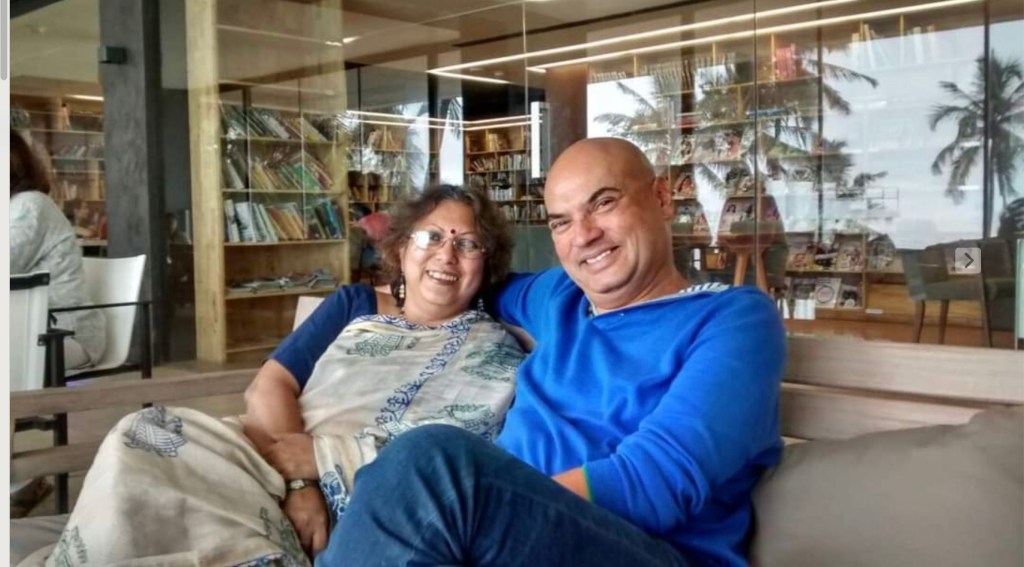
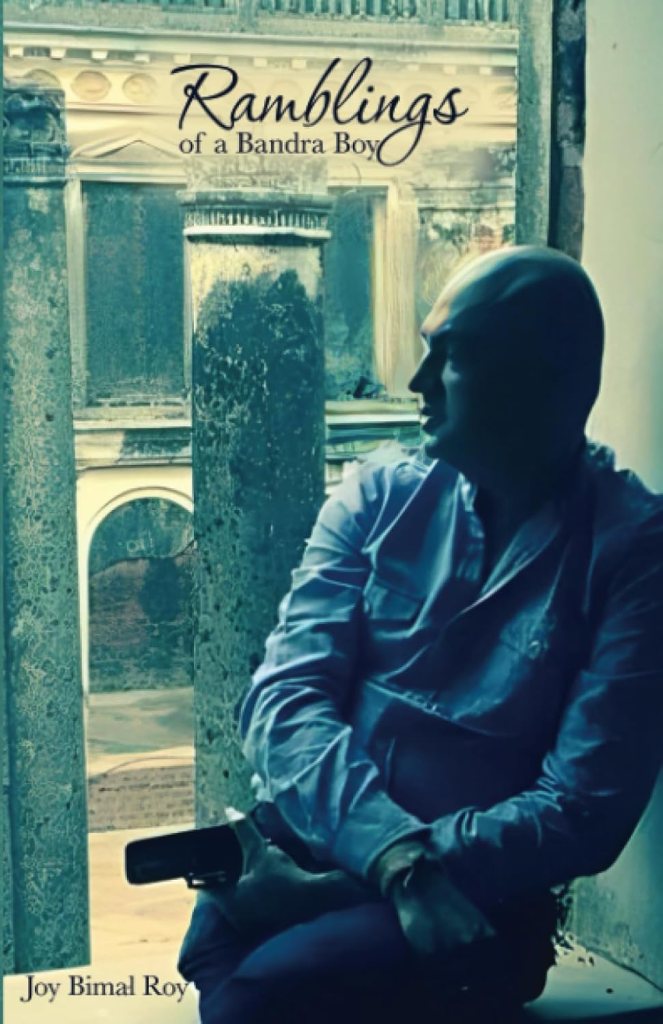

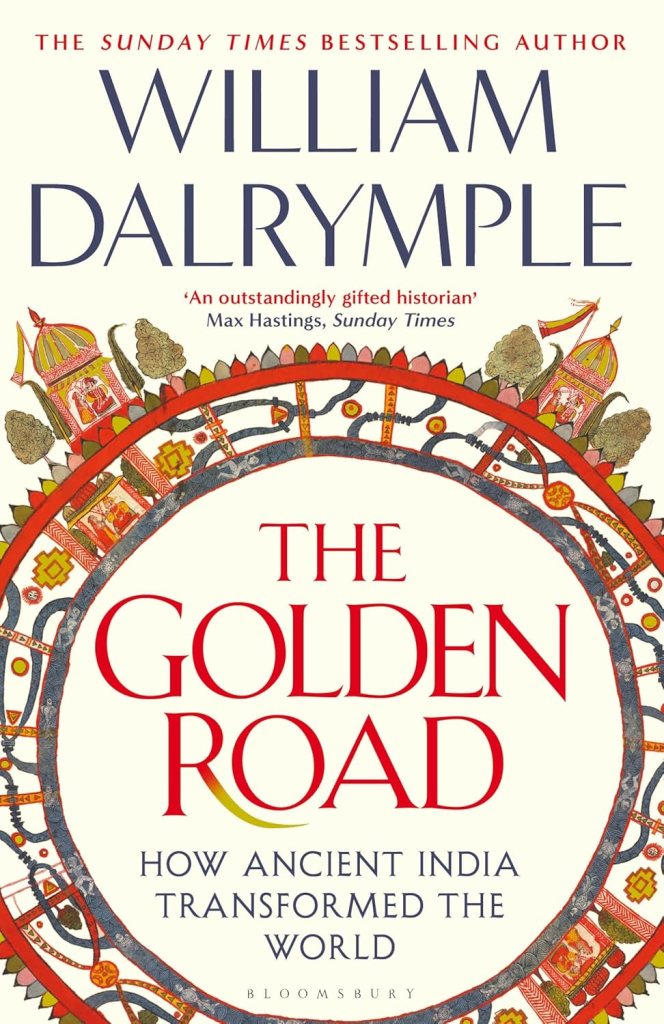

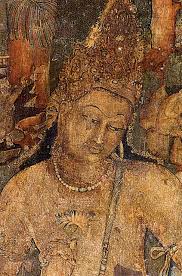


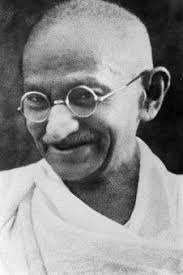

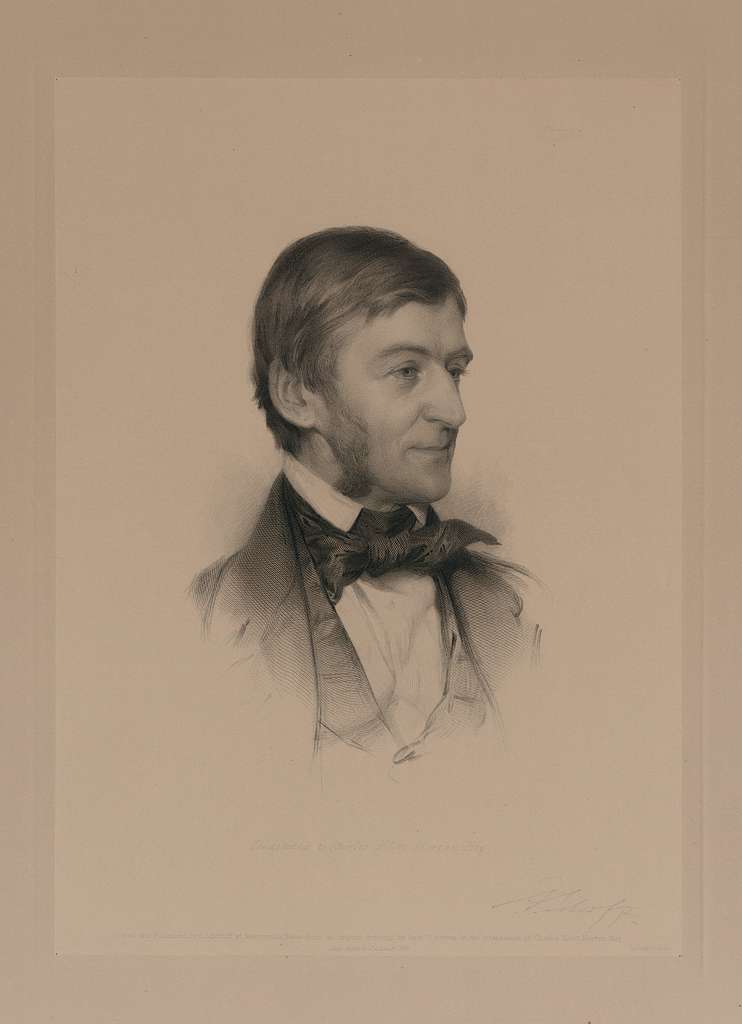

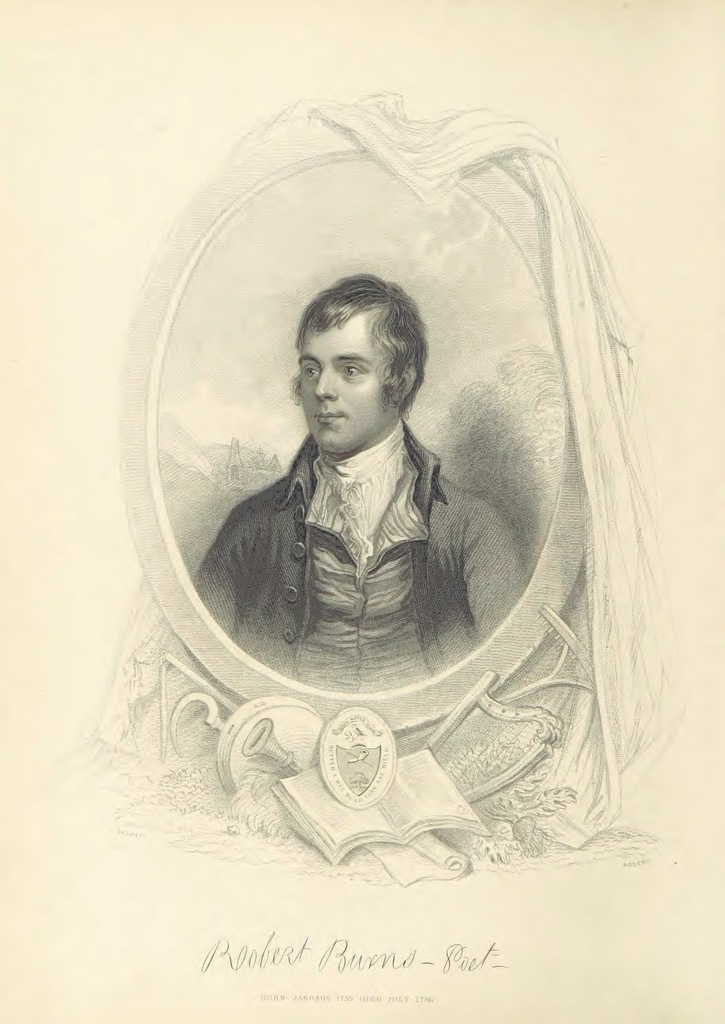

 Borderless