
Editorial
Where Have All the Sunflowers Gone?… Click here to read.
Ukranian Refrains
In ‘When will we ever learn? Oh, will we ever learn?’, Ratnottama Sengupta, comments on the current situation in Ukraine while dwelling on her memorable meeting with folk legend Pete Seeger, a pacifist, who wrote ‘Where have all the Flowers gone’, based on a folk song from Ukraine. Click here to read.
In Can Peace come Dropping by…,Candice Louisa Daquin explores war and peace pausing over the attack on Ukraine. Click here to read.
Three Poems from Ukraine by Leslya Bakun. Click here to read.
Translations
Manush: Nazrul’s Lines for Humankind: Translated from Bengali by Professor Fakrul Alam. Click here to read.
Jibananda Das’s Where have all these Birds Gone & On the Pathways for Long…translated from Bengali by Professor Fakrul Alam. Click here to read.
Munir Momin’s You & I translated from Balochi by Fazal Baloch. Click here to read.
Down the stairs by Nabendu Ghosh, a gripping story exploring the greyer areas of ethical dilemmas, has been translated by Sarmishta Mukhopadhyay with editorial input from Ratnottama Sengupta. Click here to read.
Autumn is Long, a poem written in Korean and translated to English by Ihlwha Choi. Click here to read.
Tagore’s Anondodhara Bohichche Bhubone (The Universe reverberates with celestial ecstasy)…translated from Bengali by Mitali Chakravarty. Click here to read.
Pandies’ Corner
These narratives are written by youngsters from the Nithari village who transcended childhood trauma and deprivation. A letter to God by Tanveer Hussain uses the epistolary technique to asks questions that would be relevant for all humankind. It has been translated from Hindustani by Vritika Thareja. Click here to read.
Poetry
Click on the names to read
Kirpal Singh, Rhys Hughes, Sutputra Radheye, Jay Nicholls, Uma Gowrishankar, Mike Smith, Anasuya Bhar, Luis Cuauhtémoc Berriozábal, Supatra Sen, George Freek, Pramod Rastogi, Ryan Quinn Flanagan, Ananta Kumar Singh, Michael R Burch, Shaza Khan
Nature’s Musings
In Storms & Seas, Penny Wilkes explores birds and the ocean during rough weather. Click here to read.
Poets, Poetry or Rhys Hughes
In Tall or Short Tales, Rhys Hughes explores the absurd. Click here to read.
Musings/Slices from Life
San Lin Tun writes of how, in Yangon, he spends the lockdown watching a travel blog by Eva Zu Beck. Click here to read.
Messages through Space and Time
Meredith Stephens explores how the art of letter writing creates links across borders of time and place. Click here to read.
It’s Amazing the Things We can Do
Erwin Coombs takes us through his life in Egypt and has a relook at Nazi occupied Europe with a dollop of humour to come to an amazing conclusion. Click here to read.
G Venkatesh uses the laws of thermodynamics to try to interpret the laws that define life. Click here to read.
Musings of a Copywriter
Devraj Singh Kalsi ponders on his Visit to a Book Fair. Click here to read.
Notes from Japan
In Imagining a Possible Future: Filmmaker Felicity Tillack, Suzanne Kamata introduces us to an Australian film maker who is making films in Japan now and some are in Japanese. Click here to read.
Mission Earth
Kenny Peavy starts his column with Mama Calling, a cry to go back to living with nature. Click here to read.
Interviews
From the Himalayas to the Banks of Thames: In Conversation with Sangita Swechcha, a writer shuttles between England and Nepal and writes of her homeland. Click here to read.
At Home Across Continents : In Conversation with Neeman Sobhan, a Bangladeshi-born writer who writes of her experiences as an expat in Pakistan, Bangladesh, Italy and America. Click here to read.
Stories
Kieran Martin tells a tall tale or is it short? Click here to read.
Munaj Gul Muhammed captures the wafting sadness of grieving in this short poetic narrative. Click here to read.
Sharika Nair paints a vignette of the past merging with the present in her narrative. Click here to read.
Devraj Singh Kalsi shows how the twists of faith are aligned to wealth and fame. Click here to read.
Farah Ghuznavi follows a conglomerate of people on board a flight to address issues ranging from Rohingyas to race bias. Click here to read.
Essays
The Kaleidoscopic World of Satyajit Ray
Anasuya Bhar takes us into the literary world of Satyajit Ray, the world famous film director. Click here to read.
Are Some of Us More Human than Others ?
Meenakshi Malhotra ponders at the exclusivity that reinforces divisions, margins and borders that continue to plague humankind, against the backdrop of the Women’s Month, March. Click here to read.
The Observant Immigrant
In The Paradox of Modern Communication, Candice Louisa Daquin takes us through the absurdities that haunt modern verbal communication. Click here to read.
Book Excerpts
An excerpt from Friends in Wild Places: Birds, Beasts and Other Companions by Ruskin Bond. Click here to read.
An excerpt of a short story by Yang Ming from Asian Anthology, edited by Ivy Ngeow. Click here to read an excerpt.
Book Reviews
Meenakshi Malhotra reviews Mahasweta Devi, Our Santiniketan translated by Radha Chakravarty. Click here to read.
Indrashish Banerjee reviews The Tombstone in My Garden: Stories From Nagaland by Temsula Ao. Click here to read.
Keith Lyons reviews Asian Anthology: New Writing Vol. 1: Stories by Writers from Around the World, edited by Ivy Ngeow. Click here to read.
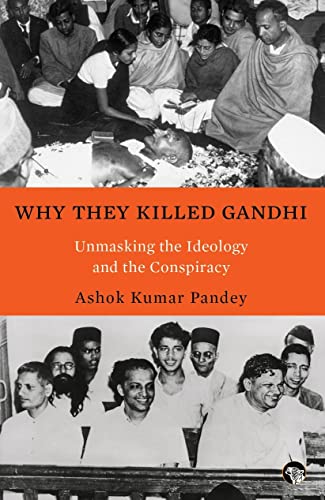
Bhaskar Parichha reviews Why They Killed Gandhi; Unmasking the Ideology and the Conspiracy by Ashok Kumar Pandey. Click here to read.
Special Issues
Imagine… Click here to read our World Poetry Day Special.
 Borderless