Categories
Contents

Borderless, July 2025

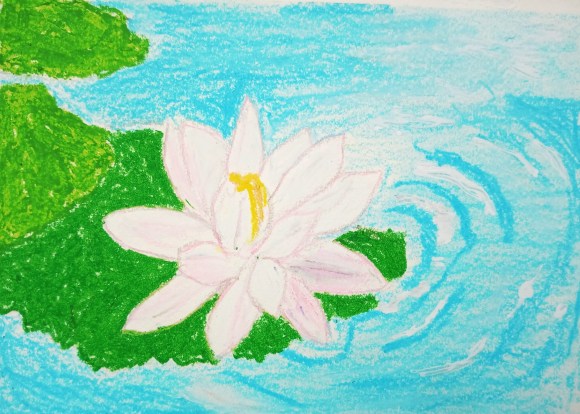
Art by Sohana Manzoor

Editorial

‘…I write from my heart of the raging tempest…’.Click here to read.

Translations

Jibanananda Das’s poem, Given the Boon of Eternity, has been translated from Bengali by Professor Fakrul Alam. Click here to read.

Karim Dashti’s short poems have been translated from Balochi by Fazal Baloch. Click here to read.

Five poems by Sangram Jena have been translated from Odia by Snehprava Das. Click here to read.

Surya Dhananjay’s story, Mastan Anna, has been translated from Telugu by Rahimanuddin Shaik. Click here to read.

The Last Letter, a poem by Ihlwha Choi  has been translated from Korean by the poet himself. Click here to read.

Tagore’s Probhatey (In the Morning) has been translated from Bengali by Mitali Chakravarty. Click here to read.

Poetry

Click on the names to read the poems

Luis Cuauhtémoc Berriozábal, Snehaprava Das, David R Mellor, Snigdha Agrawal, George Freek, Laila Brahmbhatt, Tracy Lee Duffy, John Swain, Amarthya Chandar, Craig Kirchner, Shamim Akhtar, Jason Ryberg, Momina Raza, Ryan Quinn Flanagan, Shahriyer Hossain Shetu, Rhys Hughes

Musings/ Slices from Life

What is Great Anyway?

Farouk Gulsara explores the idea of ‘greatness’ as reflected in history. Click here to read.

From Cape Canaveral to Carnarvon

Merdith Stephens writes of her museum experiences with photographs from Alan Nobel. Click here to read.

A Journey through Pages

Odbayar Dorj writes of library culture in Japan and during her childhood, in Mongolia. Click here to read.

By the Banks of the Beautiful Gomti

Prithvijeet Sinha strolls through the park by the riverfront and muses. Click here to read.

Dhruba Esh & Amiyashankar

Ratnottama Sengupta muses on her encounter with the writings of eminent artist and writer, Dhruba Esh, and translates one his many stories, Amiyashankar Go Back Home from Bengali. Click here to read.

Musings of a Copywriter

In Gastronomy & Inspiration? Sherbets and More…, Devraj Singh Kalsi looks at vintage flavours. Click here to read.

Notes from Japan

In Summer Vacation in Japan: Beetle Keeping and Idea Banks, Suzanne Kamata narrates her experience of school holidays in Japan. Click here to read.

Essays


It doesn’t Rain in Phnom Penh

Mohul Bhowmick writes of his trip to Phnom Penh and Siem Reap. Click here to read.

Haunted by Resemblances: Hunted by Chance

Aparajita De introspects with focus on serendipity. Click here to read.

Stories

Blue Futures, Drowned Pasts

Md Mujib Ullah writes a short cli-fi based on real life events. Click here to read.

Unspoken

Spandan Upadhyay gives a story around relationships. Click here to read.

Misjudged

Vidya Hariharan gives a glimpse of life. Click here to read.

Nico Returns to Burgaz

Paul Mirabile writes about growing up and reclaiming from heritage. Click here to read.

Feature

A review of Anuradha Kumar’s Wanderers, Adventurers, Missionaries: Early Americans in India and an interview with the author. Click here to read.

Book Excerpts

An excerpt from Rhys Hughes’ The Eleventh Commandment And Other Very Short Fictions. Click here to read.

An excerpt from Snehprava Das’s Keep It Secret. Click here to read.

Book Reviews

Somdatta Mandal reviews Dilip K Das’s Epidemic Narratives: The Cultural Construction of Infectious Disease Outbreaks in India. Click here to read.

Rakhi Dalal reviews Rajat Chjaudhuri’s Wonder Tales for a Warming Planet. Click here to read.

Gower Bhat has reviewed Neha Bansal’s Six of Cups. Click here to read.

Bhaskar Parichha reviews Jagadish Shukla’s A Billion Butterflies: A Life in Climate and Chaos Theory. Click here to read.

.

Click here to access the Borderless anthology, Monalisa No Longer Smiles

Click here to access Monalisa No Longer Smiles on Amazon International
Categories
Editorial

‘…I write from my heart of the raging tempest…’

I can see the heartbreak, 
Hear the wailing, the awakening,
I write from my heart
Of the raging tempest.

— Translation of Probhatey or ‘In the Morning’ by Rabindranath Tagore (1906)

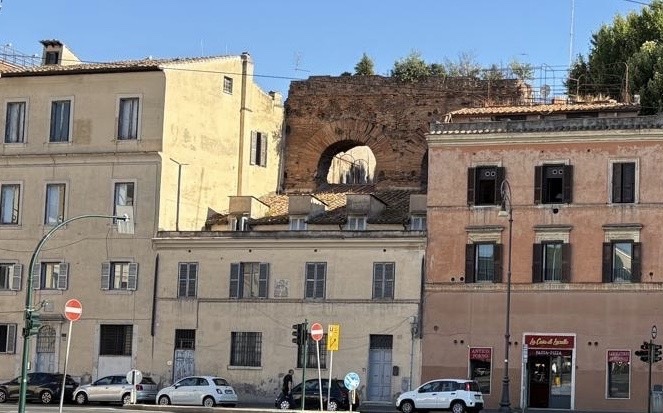
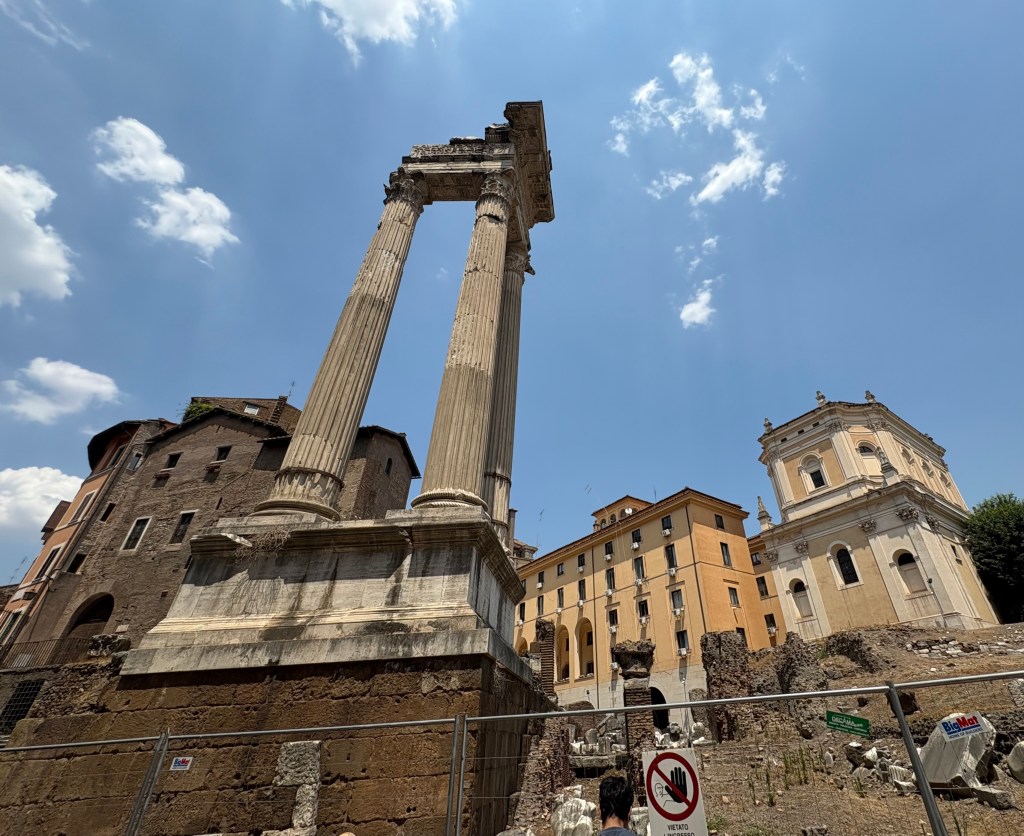
All around us, we hear of disasters. Often, we try to write of these as Tagore seems to do in the above lines. However, these lines follow after he says he draws solace and inspiration from a ‘serene lotus’, pristine and shining with vibrancy. He gazes at it while looking for that still point which helps him create an impact with words. That is perhaps what we can hope to do too — wait for a morning where clarity will show us the path to express not just what we see, but to find a way to heal and help. Finding parallels in great writings of yore to our own attempts at recreating the present makes us realise that perhaps history is cyclical. In Rome, new structures rear up against thousand-year walls, reflecting how the past congeals into the present.

Congealing the past into our present in this July’s issue are stories of American migrants — like Tom Alter’s family who made India their home — by Anuradha Kumar in her new non-fiction Wanderers, Adventurers, Missionaries: Early Americans in India. We feature this book with a review and an interview with the author where she tells us how and why she chose to write on these people. We have more people writing of their own wanderings. Mohul Bhowmick wanders into Cambodia and makes friends over a local sport while Prithvijeet Sinha strolls by the banks of the River Gomti in Lucknow. Meredith Stephens not only takes us to the Prime Meridien in Greenwich but also to Carnarvon which houses a science and technology centre in Australia. Devraj Singh Kalsi wanders with humour to discover gastronomical inspiration and hopes for sweeter recompense.

The dialogue started by Professor Fakrul Alam on libraries earlier with his essay and by Kalsi (with a pinch of humour) has been continued by Odbayar Dorj. She talks of the fading culture of libraries in Mongolia, her home country, and the vibrant culture that has blossomed in Japan. Suzanne Kamata writes of the rituals of summer holidays in Japan… including looking after a pet dung beetles.

Farouk Gulsara muses on ‘greatness’ as a concept with irony. Aparajita De muses on the word serendipity, applying it to her own situation while Ratnottama Sengupta muses on her encounter with the writings of eminent cover artist and writer who is not only a recipient of the Bangla Academy literary award but also immensely popular with children, Dhruba Esh, and translates one his many stories from Bengali.

In translations, Professor Alam has brought to us a beautiful poem by Jibanananda Das. Karim Drashti’s Balochi short poems have been rendered in English by Fazal Baloch and Snehaprava Das has found for us Odia poems of Sangram Jena in translation. Ihlwha Choi has rendered his own Korean poem to English while Tagore’s poem, ‘Probhatey (In the Morning)’ winds up the poetry in this section. We have more in prose — Surya Dhananjay’s story, Mastan Anna, translated from Telugu by Rahimanuddin Shaik.

In fiction, we have stories from around the world. Paul Mirabile sets his story in Burgaz. Spandan Upadhyay gives a mysterious narrative set in a world outside our waking consciousness and Vidya Hariharan gives us a glimpse of life in modern day India. From Bangladesh, Md Mujib Ullah writes a short cli-fi based on real life events.

Taking up the theme of cli-fi, Rajat Chaudhuri’s Wonder Tales for a Warming Planet seems to bring hope by suggesting adapting to changing climes. Rakhi Dalal tells us in her review: “It dares to approach the climate crisis through the lens of empathy and imagination rather than panic or guilt. In doing so, Rajat Chaudhuri gives us what many adult climate narratives fail to deliver—a reason to believe that another world is not only possible but already being imagined by the young. All we need to do is listen.” Bhaskar Parichha has discussed the autobiography of a meteorologist and Distinguished University Professor at George Mason University, Jagadish Shukla. In A Billion Butterflies: A Life in Climate and Chaos Theory, he claims Shukla has “revolutionised monsoon forecasting.” Somdatta Mandal has written about Dilip K Das’s Epidemic Narratives: The Cultural Construction of Infectious Disease Outbreaks in India. And Gower Bhat reviews Neha Bansal’s best-selling poetry collection, Six of Cups.

Poetry awakens myriad of hues in Borderless with verses from across the world. We have poems from Luis Cuauhtémoc Berriozábal, Ryan Quinn Flangan, Snehprava Das, George Freek, Laila Brahmbhatt, Tracy Lee Duffy, Amarthya Chandar, Jason Ryberg, Momina Raza, Shahriyer Hossain Shetu and more. Snigdha Agrawal gives a fun-filled poem about a duck and Rhys Hughes has given us a collection of verses like puzzles where we need to guess the animals! We also have an excerpt from Hughes’ The Eleventh Commandment And Other Very Short Fictions and Das’s short stories, Keep It Secret.

With that, we wind up the contents of this month’s issue. Do pause by our content’s page to check it out in more details.

This month’s edition would not have been possible without all our contributors, our fabulous team and especially Sohana Manzoor’s artwork. Huge thanks to all of them and to our wonderful readers who make it worthwhile for us to write and publish. Do write in to us if you have any feedback. Five years ago, we chose to become a monthly from a daily… We have come a long way from then and grown to host writers from more than forty countries and readers from almost all over the world. For this, we owe you all – for being with us and encouraging us to find fresh pastures.

Enjoy the reads!

Wishing you peace and happiness,

Mitali Chakravarty,

borderlessjournal.com

Click here to access the contents for the July 2025 Issue

READ THE LATEST UPDATES ON THE FIRST BORDERLESS ANTHOLOGY, MONALISA NO LONGER SMILES, BY CLICKING ON THIS LINK.

Categories
Essay

Haunted by Resemblances: Hunted by Chance

By Aparajita De

I first encountered the word in a B-grade flick of the same name. Ever since then, the word has struck my fantasy. Serendipity. My birth: serendipitously born after a son’s birth and death; coincidentally, even if a consolation prize, I am a cisgender[1] female. A girl child! What a joke. A substitute, but a girl version. I have often laughed, perhaps, loudly in my head at the joke that serendipitously played on my mother’s body. At the same time, another part of me wondered if that birth was serendipitous or the result of a deliberate quest that emerged from the nebulous grief of my mother. Was I a loss, a replenishment, or just serendipitous—just there? That is a conversation I have chosen not to have with the person who holds the secret of my birth. My birth mother. Some things are best left serendipitous.

Then came the best part of being in places I was never supposed to be found in. In family lore, always the darker-skinned, the book bug, the quieter child, who lacked the tall gait and the elegance of looks that one associates with class-caste. I was never that child. The second best and the serendipitous.

At best. I looked like my paternal grandmother; her broad forehead, dusky complexion, laborious quiet life, and ever-brooding absence in our growing up sealed her in my memory—a shadow without form. The faded yellow print of her pictures rotting in the corner frame above the walls in the rooms of my childhood held her in a stony gaze, looking over us. I looked like her, everyone said. Every mirror time, I tried to notice the resemblance and failed. Serendipitous. And so, I heard that she had died cooking for a family of 14 during the 1950s, in the heat and the labours of the kitchen and the birthing and rearing of children; she had gone just like that. Unnoticed. Serendipitously. At that reckoning, I had no idea what she might have thought of her life or its worth or if those thoughts were relevant and meaningful.

Yet, I looked like her, and by some strange rationale, I felt that I might start and end like her, except that I had to blot out that fatal certainty of her being absent. Her life’s work remained unmentionable, making her especially precarious and serendipitous among us siblings. But I had to do the erasing without any radical shifts. A bloodless coup over destiny. To live looking like her and yet living, unlike any of her days. It was as if my war with serendipity would have to be conducted serendipitously. Unseen. It was behind the covers of the book I was authoring—my life. Or so I felt at the time.

Our resemblances in looks took me to places far away in the books I preyed on. Sometimes, she became Bertha Mason[2], hovering over me, around me, hunting me down to consume my Self; some other times, I thought of the chances I could explore to blot her out and start owning me. I also wondered, somewhat fantastically, about who’d witness our meeting, our two entities fusing in a symphony unheard of. Sometimes, her emergence and eclipsing me seemed possible since I was not supposed to own any articulative space. At all. I was to gradually become the lady in the photo who was my father’s mother. I looked like her. And as my looks distanced me from my mother, I had to stay aloof, forever stuck in the picture, when the individual, my grandmother, was never a real presence in our lives growing up. She was gone before my parents were married. Gone before the serendipitous connection between the daughter of her sixth child could be made, and what would decide my fantasy with her.

Early on, like a gothic heroine coming to claim her rightful place after her travails were written by other men who decided for her, I figured I had to let her go out of that picture and claim space for her while allowing me the freedom where I was not the second best, the substitute child, the replacement, the accidental error. But the person who mattered. My paternal grandmother had not counted, and I did not either. But somehow, she had to come out of the picture so I could. Too. In my adolescence, there was this constant war against the serendipity of the accident of my birth, and it was shaping me from unnoticeable presences that shaped my sense of self at the time. A continual tug of war with the self.

In picture after picture, after adolescent year after year, the resemblances kept piling up. Anyone meeting me from my mother’s side noticed how I did not quite look like anyone they knew on their side. The voices noticing that I did look like someone long since passed crept up, ambushing me serendipitously. “You look just like her. Her forehead and complexion look just like hers.” I was aghast. What did she sound like? Are there stories I could find about her? Things she liked? Books she may have read? Stories of her girlhood she may have shared? Anything that took me back in time and let me feel her for real, like the person I looked like, but had never seen or felt a presence of. How can I think of her and me in me simultaneously? My thakurma[3] haunted me. And so did the fact that her granddaughter from her sixth child, whom she could not have foreseen, would become obsessed with her. She haunted me with her absence.

The lost child, the one lost in time, haunted my parents in his way. He came to live between us. Every time, a caress on a birthday, a milestone in life, or a decade past, I have been reminded that if he were here, we would be two years apart and that the gathering would only enrich itself if he were here. I was never enough. My decades, milestones, and being me were never enough. Either as the serendipitous birth or the look that outed me every time I stood before the parents or their side of the family, I became more and more distant from the people I came home to. Or I thought I had. While the people in the pictures, a dead person who birthed my father, who birthed me, became more defined in my life, and another dead person, a dead son, replaced me every time I tried being me.

A strange dilemma crept on me over time. The fantasy with the mingling of the pictures had disappeared, just like the stories that I had suddenly grown out of. A maturer self-reflected on the depression that came serendipitously to inhabit the space between my mother and me. My heart rumbled, and my eyes cried at the helplessness of that disorder. Was the boy child ever going to stop haunting my mom? If my thakurma were alive, could she steer my mother back to the present moment where she had her own children? Me? I reflected deeply as I entered my 30s at the time, torn apart by a conflict I could never quite diagnose myself, and a voice I could never hear, yet a presence that kept haunting us.

Both dead voices. Dead people. They were long gone in time. Yet never absent. Serendipitously creeping up on me. Ambushing me every time I peeked out.

[1] A person whose gender identity corresponds with the sex registered for them at birth

[2] Bertha Mason was the first wife (afflicted severely mentally)  of Edward Rochester, the hero of Jane Eyre, Charlotte Bronte’s novel published first in 1847.

[3] Paternal grandmother

Aparajita De is a mid-career academic, trying her hand at creative writing. this short piece represents her efforts juggling to find a voice between academic writing and more accessible creative writing. Aparajita has been published in venues such as Kitaab.orgTin LunchBox Minimag, and The Journal of Epxressive Writing. Aparajita also plants, walks, and organises.

PLEASE NOTE: ARTICLES CAN ONLY BE REPRODUCED IN OTHER SITES WITH DUE ACKNOWLEDGEMENT TO BORDERLESS JOURNAL

Click here to access the Borderless anthology, Monalisa No Longer Smiles

Click here to access Monalisa No Longer Smiles on Amazon International