Publisher: Ebury Press (an imprint of Penguin Random House)
“A debilitating symptom of exile is unfamiliarity with your homeland” – Karan Mujoo
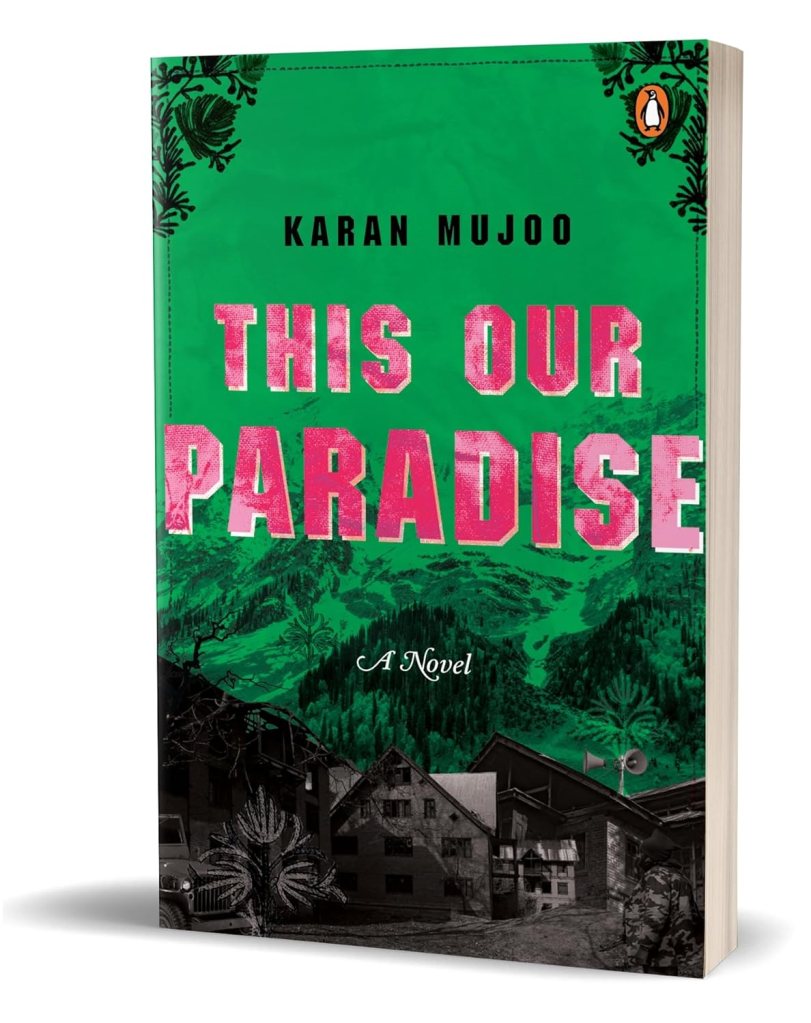
For ages, Kashmir had been defined as a paradise on earth. However, with the advent of insurgency, political unrest, strife, bloodshed, terrorism and insecurity for the past several decades, this picture of the ideal and beautiful place has been largely shattered. This debut novel by a person of Kashmiri origin, now settled near Delhi, is a moving tale of the ground realities that have been taking place in this region for a long time. Adding the suffix of “A Novel” to the title, the author obviously wants to steer clear of all the controversies that might arise because as he himself states in the “Author’s Note” at the end, “the names and places in this book are a mix of the real and the imaginary… Certain incidents in the novel are based on real events. But their details have been imagined. Hence the names of victims and perpetrators have been changed or tweaked.”
The author was acutely aware of the fact that Kashmir is too large a canvas to be contained in a single book or movie, and so he tells the story of two Kashmiri families, one Hindu and the other Muslim. The stories of both families intertwine tragically in the end. In both cases, the boys are at the mercy of forces much larger than them. Both lose their Kashmir, in different ways. The first story is of a Kashmiri Pandit family who, when the narrative begins, is moving half-heartedly from their house in Bagh-i-Mehtab in Srinagar to their new home in Talab Tillo in Jammu, which was just a dilapidated 12×12 foot hovel with a tin roof and crumbling walls. The patriarch Papaji is a clerk in a food cooperative and his wife Byenji is a homemaker. He is very optimistic that all this is a temporary affair. He still believed in the inherent goodness of people, in ties built over generations and that things would soon turn for the better. The narrator is their eight-year-old grandson who is one of the thousands of children of exile who had nothing to do, nowhere to go. He spent his days playing cricket and climbing the tangkul[1]in the garden. Everything is rosy till 1989. But then, propelled by ISI and the Jamaat, a secessionist movement rises and changes everything. There was gun culture everywhere. For the media, too, Kashmiri Pandits became disposable footnotes in a far greater struggle. Slowly they joined the ranks of the forgotten and became a tragedy that could not be prioritised. At the end of the novel, we find that the idea of exile which harboured within it the hope of return, did not apply to them anymore. They were truly displaced.
Mujoo juxtaposes the earlier story with the story of a Muslim family, set in Zogam, a small village in Lolab Valley. There, after years of prayers, a boy named Shahid is born to Zun and her husband in 1968. Quarantined from everyone else in the village, Sahid’s days passed listening to tales and making them up. As a result, he slowly developed into a shy, quiet boy who found it difficult to mingle with others and liked being with nature. Compared to the slick city dwellers, the people of Zogam seemed like wretched beings with no dreams and ambitions. They were content with their lot because they were not exposed to the luxuries and opportunities life held. Sahid gradually grew up in a society where corruption and unemployment were rife. He made friends with Rashid, who believed that the system had to be dismantled. The trajectory of his life changes when he meets Syed Sahab ― an Islamic theologian and rabble-rouser, who wants to overthrow the Indian state. He brainwashes the young boys into believing that the day they made Sharia their lives, their lives would become Jannat[2]. He preached that Jihad[3] was coming to the Valley soon, and everyone should be ready for it.
The next section takes us back once again to the Pandit protagonists and their life story. The year is 1968 and our young narrator gradually turns worldly-wise when he is taken to different places by his young uncle, Vicky, including the Dal Lake and the Sheikh Colony – a settlement of sweepers, scavengers and tanners who were reviled by all Kashmiris. Believing that education would relieve them of all penury and social ostracisation, Vicky becomes their temporary teacher. Without the knowledge of his parents, he gradually gets enmeshed within other radical ideas and different military groups that had emerged in the city. On the other hand, Shahid realised he could either be a clerk and part-time Jamaat[4]sympathiser or a full-time Jamaat worker. In the end, he opts for the latter and believes that he was no longer a poor farmer’s son from Zogam whose life and death were insignificant.
An interesting section of the narrative told in minute details is how the young jihadis[5] are escorted over the difficult mountain terrain by a Gujjar guide and clandestinely taken across the border to makeshift and rudimentary Pakistani camps in Muzaffarabad. The aim was to indoctrinate the boys in orthodox Islamic ideology and impart basic military training. They were brainwashed into believing that the most important thing was to attack all symbols of India: blow up government banks and offices, kill army and police personnel, murder judges, bureaucrats, teachers, politicians, cripple the state, silence all the voices who oppose the Tehreek[6] and instill the fear of Allah in the hearts of all unbelievers. After they are once again brought back to the Indian side, the boys turn into hardcore terrorists and Sahid is no exception. No matter how hard his parents tried, he had simply become one of the thousands of boys who were ready to fight for the cause.
Without giving out further details of the parallel storylines, we can conclude by stating that through this book Karan Mujoo has tried to ask some fundamental questions. How does a boy become a terrorist? How does society crumble? What forces a family to go into exile? To serve this need, to create a picture of these chaotic years, he has attempted a certain sort of distillation. He only hopes that the illusion has been marginally successful. Through the vividly drawn characters whose lives intersect with one another, each navigating their own paths through love and life, the author successfully captures the essence of human experience and the eternal yet illusive search for paradise.
We have been reading fictional and non-fictional accounts of the problems in Kashmir for a long time, but the painstaking way in which this debut novelist has tried to give us the entire scenario in a nutshell is praiseworthy. The book is strongly recommended for all readers who would find the universal quest for happiness really moving, and how the author has blended fact and fiction with remarkable ease.
Translators: Jerry Pinto, Pratik Kanjilal, Nirupama Dutt, Sukant Deepak
Publisher: Speaking Tiger Books
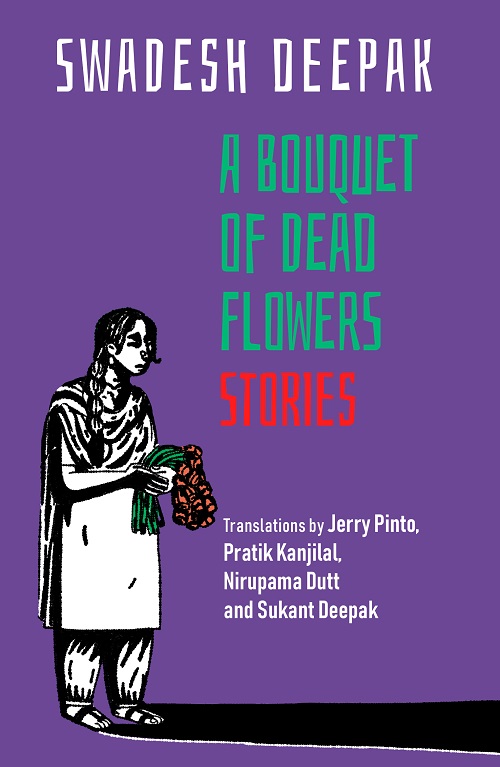
“Hindi literature, Swadesh Deepak maintained, had to be forced out of its comfort zone. The reader here is treated no less savagely,” writes Jerry Pinto in his introduction to this collection of ten stories by Swadesh Deepak, an author and playwright who was born in Rawalpindi on 6th August, 1942. After his masters in English Literature, he taught for a long time at the Gandhi Memorial National College, Ambala Cantonment. Following a period of illness from 1991 to 1997, when he had little contact with anyone other than his family and close friends, he made a momentous return to the world of letters with an autobiographical account of his illness, Maine Mandu Nahin Dekha[1], and the play Sabse Udaas Kavita[2]. He received the Sangeet Natak Akademi Award in 2004. He has a total of 15 published books to his name including short-story collections such as Tamasha, Baal Bhagwan[3]and Kisi Ek Pedh Ka Naam Lo[4]and hugely successful plays such as Court Martial and Kaal Kothri[5]. In 2006 he left home for a walk and never returned. He has been missing ever since.
These stories, deeply unsettling, challenge readers by taking them into a world where unknown forces work mysteriously, upending and affecting the lives of its characters, leaving them vulnerable at the mercy of chance happenings which rarely bring them relief. Much akin to what Thomas Hardy called as the Immanent Will — a blind and indifferent force determining the fates (and generally blighting the lives) of the privileged and the common people alike.
Whether it is the hunger for food, a ravenous longing of the starved and the deprived as portrayed in the stories ‘Hunger’ and ‘The Child God’, the mystery around the fate of a loved one in ‘For the Wind Cannot Read’, the struggle with depression in ‘Pears from Rawalpindi’ or ‘Horsemen’[, the unrequited yearning for a life of togetherness in ‘Dread and Dead End’, the author’s masterful play of the elements comes to the fore with an intensity that shakes and stuns the reader. Pinto refers to the author as the master of neo gothic,
The sunlight, the wind, the trees, the figure of a broken man, appears again and again. It seems as if it is just not the fate but also the forces of natural elements that keep rattling the course of the lives of the characters. The trees stand as guards, or sway in delight or offer a refuge, the sunlight “makes a hesitant arrival” sitting quietly or climbing the hills or sometimes streaking in the rooms, the wind is at times playful and at others vindictive. Then there are the flowers, the dead flowers of memories, whose bouquets one keeps holding, clinging to and clasping. And then there is the poetic play of words – “a pale yellow georgette afternoon in November” – bringing to life the patchy sunlight of autumn.
In the figure of broken man which appears again and again in stories, the author seems to be questioning the role that society has forced upon a man – that of a provider of the family, a role sometimes begrudgingly assumed in the stories because “no one respects a man without work, no matter how talented he is.”
In each story, the author weaves a tale that becomes a commentary — on society and its inherent evils, on relationships within a family stifled by arrogance, ignorance or circumstances and quietly working on the minds of those inhabiting it, on human greed engendered by depravity, hunger or lust, on the mysteriousness of fate whose force makes the mighty cower.
The translation, well executed, offers a closer reading experience and leaves a bilingual reader with the wish to approach the author’s works in original as well. I must make a special note on the introduction by the acclaimed writer and translator Jerry Pinto who offers a peek into the mind of Swadesh Deepak through a couple of excerpts of the author’s conversations with his psychiatrist and also with a convict brought to the hospital for evaluation. Perhaps these ideas had haunted him in the mental ward of the hospital and later seeped into his stories. Pinto in the introduction not only seeks to make sense of Deepak’s writing but also makes for a compelling reason to read his works – to read on without looking over one’s shoulders.
Rakhi Dalal is an educator by profession. When not working, she can usually be found reading books or writing about reading them. She writes at https://rakhidalal.blogspot.com/ .
.
PLEASE NOTE: ARTICLES CAN ONLY BE REPRODUCED IN OTHER SITES WITH DUE ACKNOWLEDGEMENT TO BORDERLESS JOURNAL
Title: Ayurveda, Nation and Society: United Provinces, c. 1890–1950
Author: Saurav Kumar Rai
Publisher: Orient Blackswan
The ayurvedic revivalist movement significantly influenced medical nationalism in the United Provinces[1] during the late 19th and early 20th centuries. This period saw a concerted effort to re-establish ayurveda as a legitimate and valuable medical system in the face of colonial dominance and the growing influence of Western medicine
The revival of ayurveda was intertwined with the broader nationalist movement in India. Proponents of this school sought to assert an indigenous identity, positioning ayurveda as a symbol of cultural pride and resistance against colonial rule. This was particularly important as the demand for swaraj (self-rule) intensified, necessitating a projection of India as a modern and scientifically progressive nation.
The formation of groups like the All India Ayurvedic Congress in 1907 created an opportunity for the practitioners to come together, exchange insights, and push for the acknowledgment of their stream in the broader national conversation. These meetings encouraged dialogue on blending ayurvedic and wHindu
estern medical approaches, positioning the indigenous school as a legitimate alternative to the colonial healthcare systems.
In a way, the proliferation of ayurvedic literature in various languages during this period helped democratise access to its content. This literature aimed to transform ayurveda from a specialised knowledge system into a shared cultural heritage, reinforcing its relevance in contemporary society. The revivalist discourse often emphasised the scientific basis of ayurveda, thereby aligning it with modernity and progress.
Fascinatingly, the ayurvedic revivalists critiqued colonial medical practices, often blaming external factors, particularly the ‘Other’, for health crises affecting the Hindu population. This narrative not only served to unify the community around ayurveda but also reinforced a sense of collective identity against colonial narratives that marginalised indigenous practices.
Also, the movement led to the commercialisation of ayurvedic medicine, with an increase in its products and practitioners. This economic aspect played a crucial role in embedding ayurveda within the social fabric of the United Provinces, making it a part of everyday life and health practices
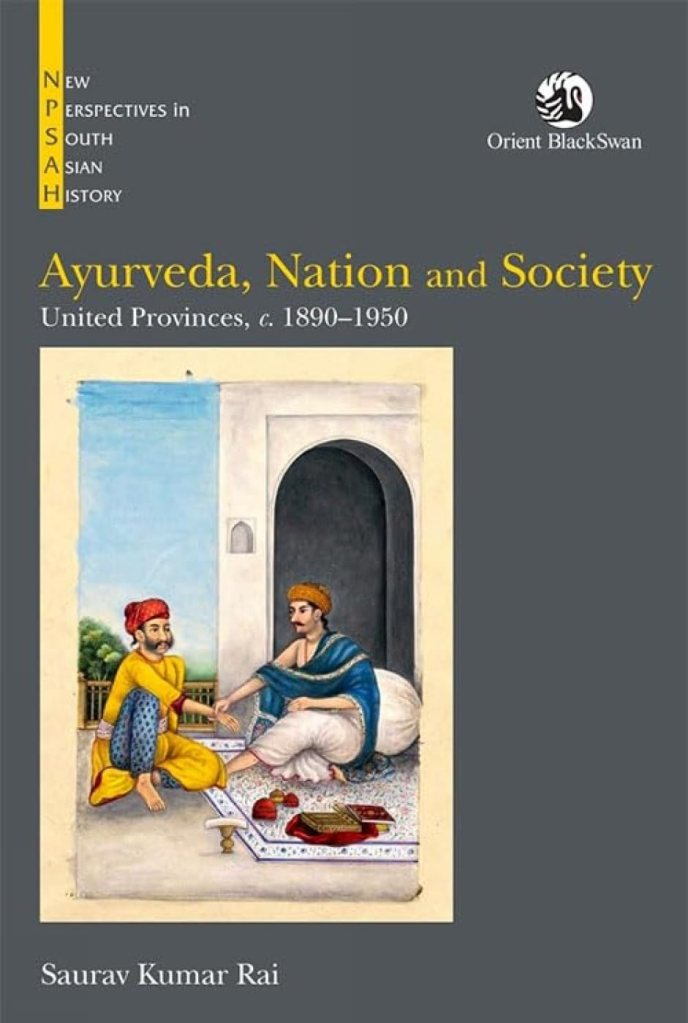
It is in this backdrop that this book holds significance. Ayurveda, Nation and Society: United Provinces, c. 1890–195o by Saurav Kumar Rai explores the historical and socio-political dimensions of ayurveda during a transformative period in India. It is part of the New Perspectives in South Asian History series by Orient Blackswan. Saurav Kumar Rai is Research Officer, at Gandhi Smriti and Darshan Samiti, New Delhi.
Says the blurb: “Ayurveda enjoys a growing global appeal, and is often touted as ‘true’ and ‘time-tested’ by contemporary political actors, governments, social groups, practitioners and NGOs in India. With ‘indigenous’ healing systems enjoying increasing state support today, an examination of the socio-political aspects of medicine, in particular Ayurveda, and its role in nation-building is critically important. Ayurveda, Nation and Society, the latest in Orient Blackswan’s ‘New Perspectives in South Asian History’ series, captures the late nineteenth and early twentieth century growth of ‘medical nationalism’ through the Ayurvedic revivalist movement in the United Provinces, and observes the ensuing change and continuity in the attitude towards ‘indigenous’ medicine in independent India.”
This study investigates the emergence of medical nationalism as reflected in the ayurvedic revivalist movement within the United Provinces, focusing on its role in the nation-building process. It offers a critique of the social dynamics of the era, drawing attention to the caste, communal, class, and gender biases that permeated ayurvedic discussions. The author contends that advocates of ayurveda played a significant role in the reconstruction of both tradition and society, frequently attributing health crises affecting the Hindu male demographic to external ‘Others.’
The book contextualises ayurveda as an indigenous medical system, delving into its complexities during the late 19th and early 20th centuries. It examines the involvement of the Indian National Congress in the ayurvedic movement, illustrating how political groups harnessed this school of medicine to foster national identity. The author further explores the influence of print media and organisational initiatives in shaping ayurvedic discourse and rallying societal support. Additionally, the commercialisation of ayurveda is analysed through its print and pharmaceutical markets, investigating the impact of economic factors on health practices. The narrative also encompasses the period surrounding India’s independence, evaluating the evolution of ayurvedic practices during this pivotal transition.
This book stands out as an important resource for those looking to deepen their knowledge of health and medicine during colonial India, attracting both scholars and general readers who are curious about the development of ayurveda and its relevance today.
[1] Present day Uttar Pradesh and Uttarakhand in India was called United Province during this period
Bhaskar Parichha is a journalist and author of Unbiased, No Strings Attached: Writings on Odisha and Biju Patnaik – A Political Biography. He lives in Bhubaneswar and writes bilingually. Besides writing for newspapers, he also reviews books on various media platforms.
PLEASE NOTE: ARTICLES CAN ONLY BE REPRODUCED IN OTHER SITES WITH DUE ACKNOWLEDGEMENT TO BORDERLESS JOURNAL
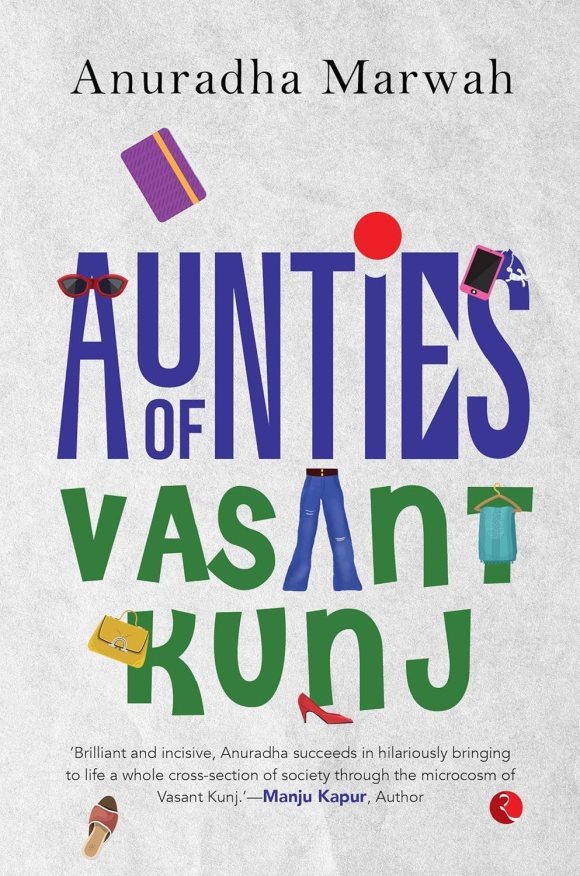
A well-conceived and captivating take on the lives and circumstances of three different women who happen to inhabit the same building in the middle class not so ‘posh’ locality in South Delhi called Vasant Kunj, Anuradha Marwah’s observations about class, domesticity and “auntyhood” in the novel are both humorous and accurate. With three novels in her authorial bag, the fourth, Aunties of Vasant Kun,j revisits that time in a woman’s life when she is supposedly teetering on the verge of being middle-aged , somewhat on the wrong side of forty, except that the “aunties” are nowhere near “auntie-dom” understood in the conventional sense. In fact, in the 21st century urban churn, women and men are probably more unsettled than ever before, and often embrace that uncertainty. The subtle or not so subtle tension between traditional gender roles and expectations and the actual lives of urban middle class women is wittily and sensitively portrayed in this extremely readable novel.
The three women are almost wholly different from each other except in the fact that each of them is grappling with their own struggles where they have to juggle multiple issues. The protagonists are Shailaja, raw from her recent experience of betrayal by her long-standing boyfriend and facing harrassment at her workplace; Dini, in a demanding job with an international NGO, a single-parented child, experiencing a half-acknowledged attraction to a handsome grass-roots activist and Mrs Gandhi who has subsumed her identity in the household resulting in a sense of neglect and loss of confidence. Ignored by her husband who seems to spend more time with his secretary than with his wife, we realise that Sunil “Casanova” Gandhi has not only a roving eye, but is actively engaged in pursuit of other women. In a clever sleight of hand, Anuradha Marwah turns a slice of life novel focusing on the everyday lives of women into a delicious take on the new modern woman as she navigates the quicksands of desire and domesticity, motherhood, meditation and professional commitments, simultaneously.
Shailaja, a newly single academic whose workplace woes are comparable to her messy not-quite-resolved (are they ever?) relationship with a recalcitrant ex who meanders in and out of her life, moves into Vasant Kunj which also houses the hospitable Mrs Gandhi, and the prickly Dini, who is fierce about guarding her privacy. The latter has also become equally adept at dodging both the hospitality as well as the probing questions thrown her way by the determined- to- be- friendly Mrs Gandhi. Mrs Nilima Gandhi has her own share of troubles-a difficult mother-in -law, a cheating husband who has a roving eye that preys upon other women, a dismissive daughter who gangs up with her father to demean her mother — all these combine in varying degrees to further lower her already plummeting self-esteem. She is rescued from the throes of self-pity by the timely intervention of Mrs Malhotra and Navneeta Singh who encourage her to adopt the Buddhist practice of chanting as a way to address her problems. Listening to Mrs Singh’s optimistic projections, Mrs Gandhi experiences a twinge of doubt but nevertheless goes about it with single minded determination to transform her life and turn it around. As some things start falling into place for her, Shailaja and Dini, the three women strike an unlikely friendship which provides a holding structure as they negotiate everyday challenges. Dini ‘succumbs’ to the abrasive charms of Radhey Shyam and Shailaja is able to shake off the vestiges of her previous relationship and take a bold new step forward. Mrs Gandhi is able to regain a sort of equilibrium.
As the women collectively register and celebrate their small and big victories in the course of the novel’s unfolding, we as readers are brought face to face with a relatively new sub-genre in the Indian English novel. It is the story of women by women narrated with both humour and compassion, occupying a niche in popular literature between chick-lit and mature women’s fiction, between popular and literary fiction. It actually challenges taxonomies of ‘literary’ vs ‘popular’ fiction. This is clear from the choice of a title that is quite a masterstroke. Though it sounds subversive, the title seems to be the choice of an author who refuses to take herself too seriously. The lightness of tone is sustained as the novel critiques societal attitudes towards single women and the entitled behaviour of men who are never held responsible or called to account within patriarchy. Perhaps the only deviation from the lightness of tone is the autobiographical fragment towards the close of the novel which provides a sort of afterword articulating the impulse and desire to write the Aunties of Vasant Kunj. Post-publication, when the author was asked what impels her to create fiction, she replied that it was the hope of getting a glimpse of all the other lives that she might have lived. Marwah has achieved a fine balance in nuancing all her characters, making their stories at once convincing and identifiable.
She has depicted the rhythms of everyday life and nuanced the dialogues to suggest a bilingual sensibility. Cinematic and captivating, Aunties of Vasant Kunj provides plenty of fun and frolic without trivialising the serious concerns and conflicts of the three protagonists. Marwah’s humour is spot on, and she does not miss a beat in capturing the water woes and other roadblocks of quotidian life in the sprawling urban metropolis /megapolis of Delhi. The novel is likely to resonate with many readers in its highlighting of vital aspects of life in the city, along with the varied kinds of crises experienced daily.
The novel narrates the stories of its protagonists with verve and humour and with exactly the ‘mot juste’ or the right words to irradiate them, creating a smorgasboard of delights for the reader.
Dr Meenakshi Malhotra is Associate Professor of English Literature at Hansraj College, University of Delhi, and has been involved in teaching and curriculum development in several universities. She has edited two books on Women and Lifewriting, Representing the Self and Claiming the I, in addition to numerous published articles on gender, literature and feminist theory. Her most recent publication is The Gendered Body: Negotiation, Resistance, Struggle.
.
PLEASE NOTE: ARTICLES CAN ONLY BE REPRODUCED IN OTHER SITES WITH DUE ACKNOWLEDGEMENT TO BORDERLESS JOURNAL
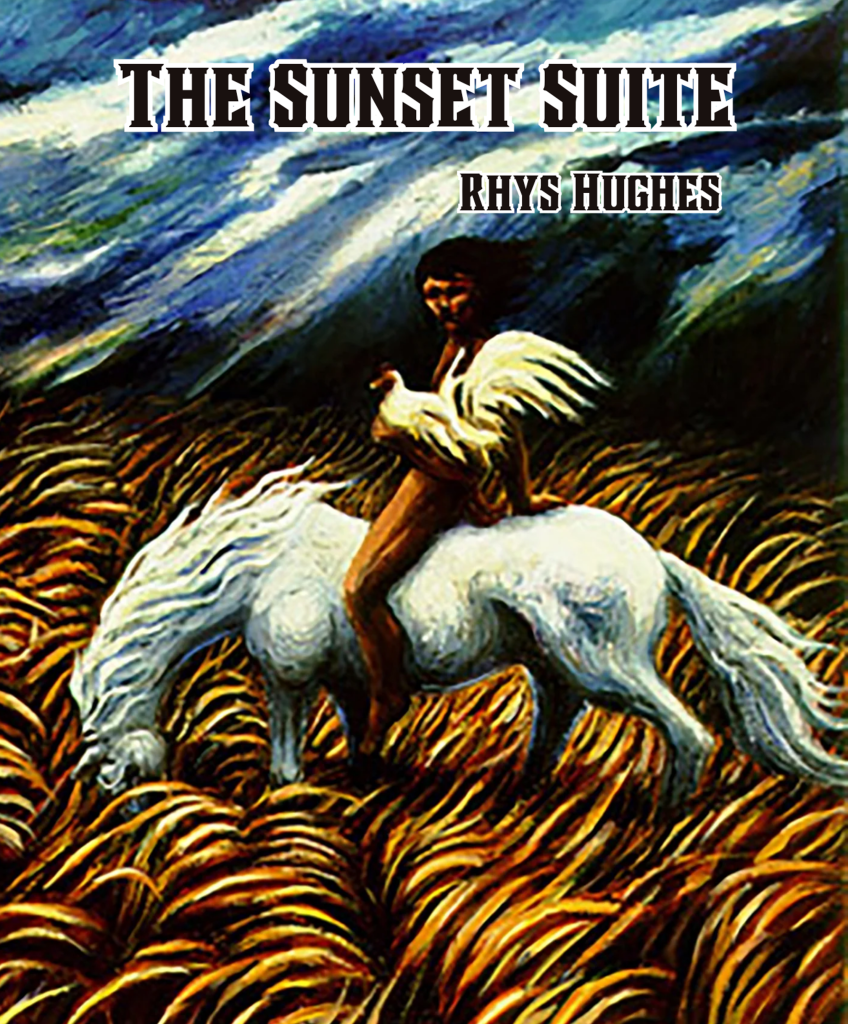
A brief introduction to Rhys Hughes’ Sunset Suite, published by Gibbon Moon Books this year, and a discussion with the author on this ‘Weird Western’ and more…
Rhys Hughes
Perhaps — that’s the wrong way to start a review or any article— but given that this is a book that offers immeasurable possibilities, like sunsets or stars, one could still start with a ‘perhaps’… You might start with another word of course!
Perhaps, Rhys Hughes’ TheSunset Suite is a novel? Or, is it not? It seems to be a group of short, tall tales tied neatly into coffee lore, coming closest structurally to The Arabian Nights — stories told by the Scheherazade, originating around Middle Ages, much after coffee was discovered in Ethiopia by a goatherd in 800 CE. The book departs in various shades from the One Thousand and One Nights, even though magic creeps in every now and then.
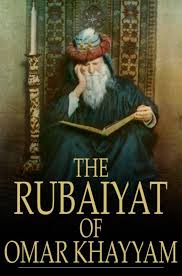
Hughes also seems to have a fascination for coffee lores for he redid TheRubaiyatof Omar Khayyam (1048-1131), translated from Persian by Edward Fitzgerald, substituting the wine with coffee a year ago. And here you have two men in the Wild West, telling tall tales, inspired by 26 mugs of coffee.
In The Empire Podcast by William Dalrymple and Anita Anand, there are a couple of episodes on coffee. Coffee houses sprouted around the fifteenth century in the Middle East and flourished during the Ottoman Empire, spreading over time to Europe, and even to America… if we are to believe Hughes! In those times, soldiers, among others, gathered in coffee houses, much to the dismay of kings. The warriors started turning to tall tales, philosophy and gossip instead of training all the time. The rulers were unhappy at the turn of events. Germany went so far as to ban coffee. An article on food history tells us: “One of the most curious of these events happened in Prussia, a precursor to modern-day Germany, where it’s leader Frederick the Great banned coffee by decree in 1777. And he did it for a reason that is almost baffling to modern notions of health and what’s good for society: He wanted people to drink more beer.” In the podcast, they do tell us Germany produced beer. In those days, coffee was seen as a suspicious drink, an aphrodisiac with magical qualities. It is these magical qualities that are invoked in TheSunset Suite.
Brand and Thorn are two coffee drinkers under the stars, sitting over a bubbling pot — and each cup from the pot has a tale in it, professes the author. That the tales are part of a dreamscape of darker hues verging on the absurd, bringing out the strangeness of the illusion we call life and its endless possibilities, comes as a surprise.
People turn into corn cobs, biscuits, musical notes, sombreros and are resurrected in paintings of nightmares at the end, tying the characters loosely into a frame. Phoenixes swim underwater and horses turn into boats and ‘a hill of beans’ becomes a ‘mountain of beans’. The transformations seem to be reminiscent of Kafka’s Metamorphosis (1915) or Pinter’s The Room (1957) … but we are left wondering, are they?
The settings are often realistic at the start but head for the absurd as they end. Each story has a punch and leaves the reader open mouthed in amazement. They are imaginative, clever — sometimes playing on words — like the story of a genie who was told by a robber to make money ‘no object’ — a turn of a phrase which should mean that money is so plentiful that anything is affordable. But the genie, trapped in time and traveling over centuries, misunderstands the grave robber. He makes money into a literal ‘no object’— ‘abstractions, vague colours, mental scents and other intangible things’.
Hughes expands the literary world to a frog, a dog and even an armadillo who are yet to publish their books. This seems almost like an inversion of Luigi Pirandello’s play Six Characters in Search of an author (1921), where the characters left incomplete by a deceased author are looking for a resolution. Hughes’ reader, who talks of these authors from the animal kingdom, waits patiently for the books to turn up. In another story, evocative of the same play by Pirandello, the characters from his earlier tales are trapped in a painting and talk to the artist, ‘the keeper of Lore’, who paints his own nightmares peopled by the creations of Hughes. One of the last narratives, this one ties the stories into a loosely structured unit.
“I am Grampsylvania. That wasn’t my original name, but it’s my name for the foreseeable future. He changed me, you see, from a man into a gigantic but sapient corncob pipe. I don’t mind.”

“And he changed me into a biscuit,” said another voice. “I was just George Lewis once but now I’m The Biscuit Kid.”

A third voice added, “Turned me into a hat, a sombrero. I was Max Grizzly originally. Not that I dislike being a hat.”

“Wonder what he’ll turn you into?” they said to Henry [the artist inside the painting].

“I don’t want to change.”

“Well, you don’t have a say in the matter.”
The idea of the writer as the ultimate creator stretches through tall tales to experimental forms. ‘The Biscuit Kid’ is a one-and-a-half-page story written in one sentence — is it an attempt at what is known as the stream of consciousness technique (as in James Joyce’s Ulysees, 1918) or just a quirky experiment? A strange tale about a man turning into a biscuit in a sulphurous pond with tea dunked into it with an allusion to the Boston Tea Party has the victim floating in infinite circles … is it a comment on history repeating itself? The narrative of ‘Reintarnation Smith’ maps the history of the world rather randomly through the many reincarnations of the protagonist, from a palaeolithic shaman (were there shamans in that time frame?) to a Napoleonic soldier and a First World War trooper to an intelligent tree in a world where humanity has become extinct! The alternatives offered and suggested are mind boggling…
Each story sees itself as a possibility expressed in a light gripping vein, characteristic of the author, who has ostensibly been seen as a cult writer… though I am not sure what that term means or how Hughes, who has authored more than fifty books and writes up storms of stories and poems, feels about it — Let’s ask him. We start with the most pressing question —
This is on something that has me perplexed after reading Sunset Suite. How do you think a frog, a dog or an armadillo would hold a pen? Can we read frog/ dog/ armadillo — or would one need to download a special app from Google to read their books? Or is it better to have a frogman/ dogman/ armadilloman translate these? Please enlighten us.
Armadillo: Image from Public Domain
I hadn’t really thought about it until you asked the question. They would have to use telekinesis to hold a pen. The power of their minds. Maybe they have bigger minds than we think. Having said that, I don’t know why we always assume that if you have a bigger mind, you will be able to move physical objects just by thinking. When I was young, I often tested my own telekinetic powers. They never worked, of course. Except for once, when I made a cardboard box cover a daisy during a storm. I was staring out the window and willing the box to fall on the daisy and protect it from the wind, and that is what actually happened! All of a sudden, the box rose in the air and came down over the flower. Certainly it was the wind that did the trick, rather than my mental powers, but at the time I wondered if perhaps I had found the secret of telekinesis. Frogs, dogs and armadillos would write books using telekinesis. The real question is how much we would understand of what they had written. I don’t suppose we have much in common with frogs or armadillos. The dog’s books might be more accessible. I guess most of the descriptive writing in a dog’s novel would be smell-based because that’s how dogs map the world. But while reading a dog’s novel, should we dog-ear the pages to keep our places? Or human-ear them?
That’s an astute observation… Maybe we can dino-ear them! Did all dinosaurs have ears…? Let’s leave that discussion for another time. Next, I need to know what is a cult writer? Are you one? Please explain.
I don’t really know, to be honest, and I’m not sure if I am one or not. Many years ago, I was told that I was one. I think it’s another way of saying, “Your books aren’t very popular,” but softening that blow by implying that, “At least some people read and enjoy them.” I embraced the definition for want of any better label. We do like labels, that’s the problem. When I write, I write just for myself. Not quite. I do try to write in a similar mode to the writers I most enjoy, and they have audiences. If they didn’t, I wouldn’t know about them. I adore the books of Italo Calvino [1923-1985], but I don’t know many other readers who read him. Does that make him a cult writer? I don’t think so. I think it’s just more likely that I am a little isolated and simply don’t know the readers who do read that kind of fiction. And yet I am in contact with some people on the internet who seem to share my taste in fiction. In fact, they give me recommendations of authors I’d never heard of, who turn out to be wonderfully in tune with my taste. Apparently, if you are a writer who is more loved by other writers than by readers who don’t write, you are a writer’s writer, and that’s a form of cult writer. Last year, I read the nine novels of the almost forgotten Henry Green [1905-1973], who was described as a writer’s writer’s writer, in other words a cult writer cubed. I suppose that to be a cult writer is simply a stage for some writers as they work their way up to greater popularity. It’s probably possible for writers who were once hugely popular but who are no longer appreciated by a sufficiently wide readership to turn into cult writers on the way down.
Why did you not write of a squonk in this book since it is your favourite fantasy animal? Will you be writing on a squonk soon?
A squonk: A mythical creature in American Folklore. Image from Public Domain.
There are no squonks in The Sunset Suite because I have written too much about them elsewhere. I don’t want to oversquonk myself. I first learned about squonks from Jorge Luis Borges’ Book of Imaginary Beings [1957] I think. And then I noticed references to the creature in all sorts of places. Years ago, I wrote a short story called ‘The Squonk Laughed’ because squonks are the saddest of all entities. I wanted to write about one that cheers up. And one of my longest ever poems is about a squonk ragtime pianist who works in a Wild West saloon, ‘Honky Tonk Squonk’. The very word is funny. It sounds round but also squelchy, rather like a cream-filled pastry. There is an excellent song by the band Genesis about squonks called simply ‘Squonk’ and it’s a song that will tell you absolutely everything you need to know about squonks if you listen carefully to the lyrics. In my book, it seemed to me that it was time to show some restraint when it came to squonks. You can have too much of a good, weepy thing.
How long did this book take to germinate into a full blown one and how did it come about?
Not long at all. Some of my projects proceed very slowly, they take years or even decades to be completed. But most of my projects are done fast. This is because if I take too much time over them, I worry that I will lose the thread or threads of the plot or plots, or that the mood and atmosphere of the work will change and be lost. That’s not always a disadvantage. I might begin work on a book thinking it is going in a certain direction. Then I put the project aside for a long time. When I return to it, I have often forgotten the direction I had intended to take the book. So I make it go in a different direction, and it seems to me that sometimes this other direction is a superior journey to the original intended direction. Who knows? But that has no relevance to The Sunset Suite because I wrote it in just a few weeks. I can’t recall exactly how long it took, but it wasn’t a drawn-out process. It happened to be one of those projects that flowed easily. Many do, and I am always grateful to them. It is almost as if I am not doing the work but simply acting as a channel for a set of stories that exist in some cosmic cloud. This is probably a fanciful delusion, but it is one that many writers have had over many centuries. We are conduits as well as creators. We are pipelines as well as pipers.
Have you actually been to the Wild West? Why have you set your book against this backdrop?
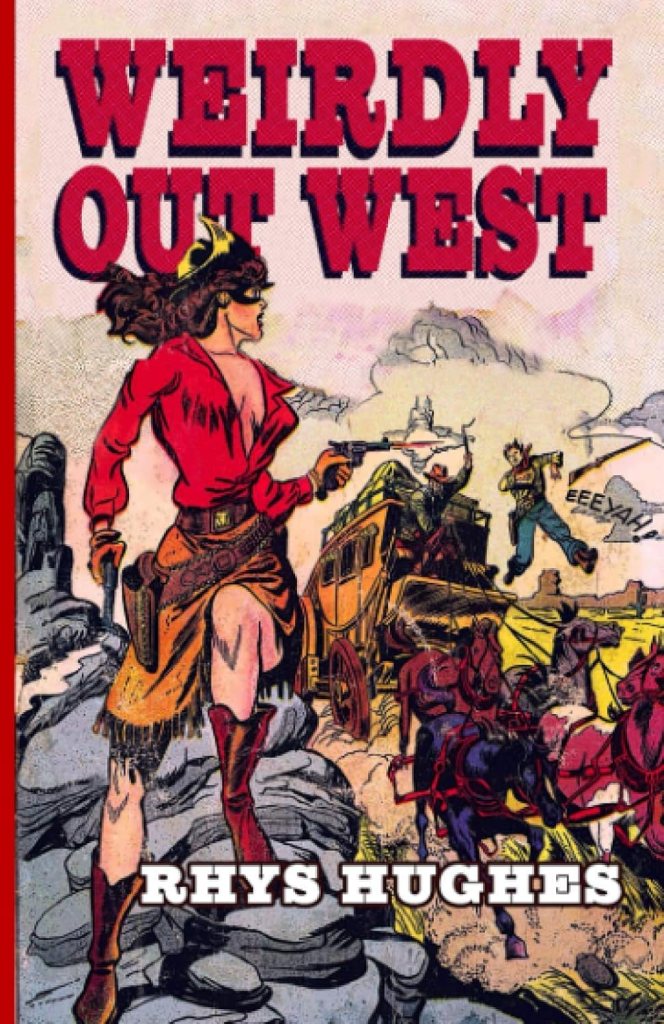
I have never been to the Wild West. I have never even been to the West. Even the most easterly part of the American continent is west to me. The furthest west I have been is Ireland. Yet I love Westerns, especially so-called ‘weird’ Westerns. Having said that, I have been to Almeria in Spain, the only desert in Europe, where many ‘Spaghetti Westerns’ were filmed. It looks the way I imagine Mexico or Arizona might look, but I can’t know that for sure because I haven’t been there. Maybe one day I will. I have written quite a few Westerns, all of them weird and unusual. The first was a novella called The Gargantuan Legion. I had the idea for that when I was very young. Much later I wrote a novel called The Honeymoon Gorillas [2018], and then a collection of stories, poems and short plays called Weirdly Out West [2021]. Shortly after finishing The Sunset Suite, I wrote a Western novel
called Growl at the Moon that has been accepted for publication. I am currently working on a novel titled The Boomerang Gang. I find writing weird Westerns to be great fun, relaxing too, yet they apply a strong stimulus to my imagination. Next year I hope to write a novel called Fists of Fleece, which will combine Welsh folklore with Wild West tall tales, creating an especially offbeat hybrid.
You have strange names given to characters peopling The Sunset Suite. Why? Please elaborate.
I enjoy giving my characters strange names. I also think it’s safer. Suppose I have a character in a story named Tim Jones and something absurdly odd happens to him. There might be a real Tim Jones out there in the world who will start thinking that I am referring to him and maybe even mocking him. It is better to give the character a name that surely no real person will ever have. Argosy Elbows, for example, or Crawly Custard. Readers can regard these as nicknames, if they wish. I often make lists of offbeat names for characters that I will use in future stories. Some of these names have been waiting decades to be used. Other names I invent on the spur of the moment while writing. Invention on the spur of the moment is an appropriate thing to do when writing a Western. But in fact the names in The Sunset Suite are still fairly conventional. Jake Bones, Shorty Potter, Killy the Bid, Grampsylvania, Max Grizzly, Cowboy Bunions, Dan Flyblown, Lanky Ranter. It’s not beyond the bounds of plausibility that real people out there do have such names.
Why do you keep obsessing over coffee? Please explain.
I hope it’s not quite an obsession. I like coffee, that’s all. I guess it’s my favourite drink. No offence to water, tea or beer! I am in the process of cutting down on my coffee consumption. I have been reducing my intake for the past twenty years, but it’s still not at zero. I am reducing it very slowly indeed, that’s why. Mind you, the reason why there is so much coffee in The Sunset Suite is simply because cowboy films always show the characters drinking coffee around a campfire. They surely told stories to each other at night while drinking the coffee. It occurred to me that I could use this as a frame for my book. A sequence of strange stories set in the Wild West linked together by the fact that each tale was generated by a cup of coffee. At the end of the book, the two tale tellers have drunk too much coffee. The book is a warning that will be heeded too late. But we are all adults. We don’t really need to be warned about such perils as coffee consumption.
Since classification is an important aspect of human existence, how would you classify your book?
It’s a ‘Weird Western’. That’s what I have been calling it. This is a real sub-genre, and I think my book can be labelled as such without any objections. I might also call it a comedy, a picaresque or portmanteau farce, a speculative whimsy. But it remains a Western, that’s undeniable. It makes substantial use of parody, pastiche, paradox and probably other things beginning with the letter ‘p’. At the same time, I don’t mind if the book is classified just as a fantasy or even only as fiction.
What have been the influences on this book? On your writing?
The main influences on this particular book of mine were other weird Westerns by writers I admire, in particular The Hawkline Monster [1974] by Richard Brautigan, which was marketed as a Gothic Western. Brautigan was especially good at writing short but thoughtful passages that are often at tangents to each other but nonetheless do combine with each other satisfyingly. Another influence was probably a collection of stories I read when I was young, The Illustrated Man [1951] by Ray Bradbury, in which a sleeping man’s tattoos come alive one at a time and tell stories as they do so. But in my book, it is the cups of coffee that come alive in a fictional sense. I also think that the pulp Western author Max Brand was an influence on my book, especially his stranger works, such as The Untamed [1918], which seem to blend echoes of ancient mythology with the more conventional cowboy motifs and clichés.
Would you call these stories humorous? They do linger with absurdity and a certain cheekiness.
I like to think they are humorous. I like to think that The Sunset Suite is a comedy among other things. Most of my fiction has some comedic elements, even if the general tone of the story is serious. Real life is a mishmash of tragedy, comedy, indifference, absurdity, beauty, and who knows what else, so it’s only right and proper for fiction to be such a mishmash too. Obviously, in a short story there’s not much room in which to throw everything, so one has to be more careful when it comes to constructing the piece. The mode of the book, which features a framing device in which is found a set of individual tales that echo each other’s themes, is one I especially enjoy using. I am planning other books that follow this structure.
What books are you whipping up now?
I always work on several projects at the same time. I am currently working on two novels. One of them is a satirical thriller called Average Assassins, and the other is another weird Western called The Boomerang Gang, which is about an Australian immigrant to the Wild West in the late 19th Century and it features an experimental aeroplane with boomerangs for wings. I am also working on a large project called Dabbler in Drabbles, which consists of four volumes of drabbles. A drabble, as I’m sure you know, is a flash fiction exactly 100 words in length. There will be one thousand drabbles in total when the project is finished. The first three volumes have already been published and I am pushing ahead with the fourth. Yet another project I’m working on is a collection of short meditations called City Life. These meditations are supposedly written by the cities themselves and there will be sixty of them in total. I am working on other projects too, but I won’t mention those yet.
Thank you Rhys for your fantastic writing and your time.
(This interview has been conducted through emails and the review written by Mitali Chakravarty.)
Namita Gokhale is a writer and a festival director. Her work spans various genres, including novels, short stories, Himalayan studies, mythology and books for young readers. She is the author of twenty-three works of fiction and non-fiction, including the novels Paro: Dreams of Passion, Shakuntala, Jaipur Journals, Things to Leave Behind and The Blind Matriarch; and the edited anthologies Mystics and Sceptics: In Search of Himalayan Masters, Himalaya: Adventures, Meditations, Life (with Ruskin Bond), and (with Malashri Lal) In Search of Sita, Finding Radha and Treasures of Lakshmi. Gokhale is the recipient of several awards, including the Sahitya Akademi Award (2021). She is the co-founder and co-director (with William Dalrymple) of the famed Jaipur Literature Festival.
At the outset, Namita Gokhle’s Never Never Land seems conventional, centering on the protagonist’s quest for meaning amidst loneliness in a bustling city life, where relationships and even “monsoon is a betrayal”. What sets this book apart is the imperative nostalgia of both lived and unlived experiences that permeate through the narrative. The author captures the nostalgia well with her style which skilfully moves between a first and third person narrative, navigating between the past and the present, with the principal character embarking upon a journey back to her roots.
The protagonist, Iti Arya, is a single, middle-aged freelance editor/ writer struggling to find a footing in her life. Undetermined about her writing which doesn’t seem to take off, she decides to return to The Dacha, a place of her childhood, in the hilly Kumaon region, where life for her had been beautiful if not downright perfect. It was a place she had longed for while living in dusty Gurgaon surrounded by a concrete forest, a place she hoped to return to find herself, a place where she could find meaning in relationships, a place where validation for who she was and what she strove for ceased to exist. ‘Never Never Land’ seems to be for her, both a literal and symbolic place of return.
Iti returns to her grandmother with whom she has spent the happiest days of her school life, her Badi Amma who used to tell her that when mountains speak, one must listen carefully. She returns to find out the stories that she can only find in the mountains. At Dacha, the cottage owned by a hundred and two years old Rosinka (her amma’s erstwhile employer), she also comes across Nina, around whom an aura of secrecy hovers. The course of the novel then ripples with their interactions providing contexts for Iti’s quest forth. At times, she is awash by the unspoken love of her Badi Amma and Rosinka, feeling secure in their presence and in the knowledge of their affection for her and for each other, an unlikely friendship that is stronger than any relationship she has known. Her stay there makes her re-examine her life to find the missing pieces that lead her to feel lonely and uncomfortable.
An inheritance, a theft, a strange recovery in a deluge, and an unfolding of a truth later, make Iti come face to face with her reality. She makes peace with memories of her now departed mother whom she did not love but wished to be seen by. She holds onto her Badi Amma and Rosinka whom she dreads to lose. She holds onto the place that makes her feel protected. A place she belongs.
The essence of the book lies in the warm relationship shared by the women whose stories are uncovered layer by layer. Women, who lonely in their own ways in life, find comfort with each other and stand guard of each other’s happiness. Reading the book reminds one of the likes of Little Women by Louisa May Alcott, only that here women are not bound by blood but by an understanding that has come with years of living together for one reason or another.
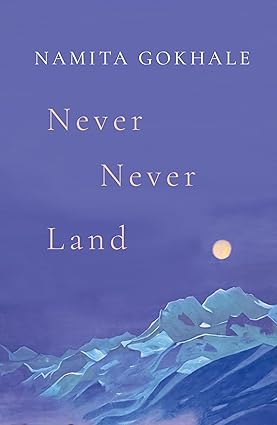
The cover page of the book, inspired by Nicholas Roerich’s painting ‘Himalayas — the Abode of Light’, resonates with Iti’s journey towards clarity and finding a meaning that illuminates her life. At the end of the monsoon, as the sun comes out, she feels revived and willing to carry on, with herself, her grandmothers and the mountains.
Rakhi Dalal is an educator by profession. When not working, she can usually be found reading books or writing about reading them. She writes at https://rakhidalal.blogspot.com/ .
.
PLEASE NOTE: ARTICLES CAN ONLY BE REPRODUCED IN OTHER SITES WITH DUE ACKNOWLEDGEMENT TO BORDERLESS JOURNAL
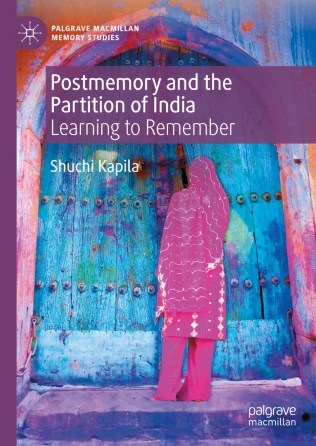
Title: Learning to Remember: Postmemory and the Partition of India
Author: Shuchi Kapila
Publisher: Springer
Shuchi Kapila’s book on Partition focuses on the hinge generation — the one separated by a generation or two from the actual experience of the Partition, but increasingly drawn to analyse its memories in their own lives and its significance for the future. Simply because, the Partition with its trauma and losses remains a huge part of their parental, familial and collective memory.
While Kapila’s book recovers these embedded memories through interesting anecdotes, the fact remains that the historical event of the Partition cast a huge shadow on her parents’ lives, and that of many like her. She, like others (Priya Kumar, Urvashi Butalia) are drawn to excavate and unpack this silence and trauma that impinged upon the parents’ lives and shaped them in umpteen ways. Such postmemory is described by Marianne Hirsch as “the experience of those who grow up dominated by narratives that preceded their birth, whose own belated stories are evacuated by the stories of the previous generation shaped by traumatic events that can be neither understood nor recreated” (Hirsch 1996, 659, quoted by Kapila). She goes on to write: “It is the largeness of these stories that dominate our psyches even as we often know very little about them, a kind of haunting that is often not understood.”
Like many in this generation, Kapila was protected from all knowledge of the event by the silence of those who had experienced it directly. At the same time, she strongly felt a compulsion and an ethical imperative to understand the legacy of the Partition on her own terms.
Kapila points out that the flood of writing on the Partition that has emerged since the fiftieth anniversary of independence in India and Pakistan includes scholarly histories, oral histories, feminist studies, and literary and cultural studies of the Partition (which have poured out in a steady stream in the decades after 1997), show a strong inclination to exhume buried and seemingly lost memories. Priya Kumar’s Limiting Secularism, one of the most significant studies of the ethics of remembering, presents a compelling summary of this terrain of ‘return’ to the Partition. She argues that it is not merely that the first generation of Partition migrants is now dying out leading to an understandable anxiety about capturing their voices(as Butalia also voices in her book The Other Side of Silence) but also that the fact that Partition is the “founding trauma” (Dominick la Capra) of the subcontinent to which we must return in constant acts of “avowal” (Kumar 2008, 87).
Kapila’s book then is one such act of return and avowal in exploring again from a post memorial position the travels and travails of Partition memory. The enormity of the Partition— around a million dead, migration of between twelve and fourteen million across the borders of Punjab and Bengal, 75,000 women of different faiths abducted and very few “rehabilitated”– the numbers are mind-numbing.
Given that Partition was a territorial, social, and political division of peoples who had lived together for the previous centuries, there were many who resisted the idea of this division but recognised equally that it was a moment for Muslim self-determination in the formation of Pakistan. A common feeling in this context which prevailed among all communities, Hindus, Muslims, Sikhs, was a feeling that the departing colonial powers had betrayed them. With these affects,the act of remembering Partition, the author feels, can never be a single, linear, decisive and discrete fact specific to communities but somewhat fuzzy and porous. It is inevitably marked by the recognition of multiple narratives jostling for attention with all communities involved as perpetrators and victims. The Indian nationalist myth that the Indian Congress party wanted a united India whereas Muhammad Ali Jinnah, the leader of the Muslim League, wanted to divide India and secure Pakistan for Muslims has been interrogated most famously by Ayesha Jalal who argues that literary narratives have also offered scholars the opportunity to think through the ethics of co-existence, which is the focus of Priya Kumar’s study, Limiting Secularism (2008), in which she considers how literary texts imagine possibilities and histories of productive relationships that seemed to have been irrevocably lost with partition.
Another significant area of research opened up was that of collecting narrative oral histories, a methodology which has been referred to by Ritu Menon and Kamla Bhasin in Borders and Boundaries(1998) and used powerfully in Urvashi Butalia’s The Other Side of Silence(1998). These accounts revealed that women’s lives were deeply impacted by the rape and violence visited upon them during Partition and the silencing of their narratives as a patriarchal state was inaugurated. Jill Didur (2006) reads the silences and ambiguities of women’s stories as an important counter-narrative that unsettles Partition, revealing, for instance, how the agency of abducted women was completely eluded even in the recovery operations to establish a benevolent paternalist state. Given that there is a necessary relationship between the public and private realms of memory, it is unsurprising that some of the same themes can be found in testimonials and oral histories as well. This is the case made by Anindya Raychaudhuri (2019) whose attempt to think through Partition as “a productive event” is very much in line with Kapila’s effort to highlight the different generational voices of interviewees (Raychaudhuri 2019,13).
The book also considers private family memory and public institutions like the 1947 Partition Archive and the Amritsar Partition Museum. However, Kapila is aware that both these public institutions are relatively recent developments making it difficult to gauge their impact on private memory. Like literature and cinema, oral histories have also expressed themes of loss, violence, home, childhood, and trauma that appear repeatedly in stories of Partition migrants. Yet, as Kapila avers, “despite scholars’ clear understanding of the particularity of each oral history encounter, most studies distill them for themes and documentary evidence rather than as specific performances” based on “the subject position of interviewer and interviewee, time, space, social and regional position.” In contrast to this, Kapila is observant about the processual aspect of memory that are constituted by a more expansive understanding of “the filial and affiliative in each encounter as it rearticulates the nature of family, belonging, and community and while Partition literature and film have coloured narratives and tropes which shape how people remember or narrate,” her focus is on the interaction between the subject position of interviewer and interviewed.
Anjali Gera Roy’s significant work on Partition testimonies works toward an amplification of the historical record, which works by filling in “the personal, sensory, affective memories of both documented and undocumented historical events”(Gera Roy 2019, 24). She describes her work, as a “corrective and as supplement” to historical accounts. In the 160 testimonies gathered by her and her research assistants in many cities of North and East India, she unearths the ‘intangible violence’ of Partition.
The questions she poses sheds considerable light both on the processes and workings of memory as well as the methodology of such an enquiry: “How much of my parents’ relationship was structured by a deep and intimate understanding of Partition trauma? How much of their subterranean anxieties about their children were shaped by the experience of Partition? Heeding Marianne Hirsch’s description of postmemory mediated “not by recall but imaginative investment, projection, and creation,” she asks how we could help in exploring its potential for progressive futures (Hirsch 2012, 5). Family history, though repeated many times and extensively written about is both representative and singular, each experience one more testimony to what millions experienced.
In emphasising a humanistic approach to Partition memory, she explores it not as aggregation of historical or social fact but for the relationship it sets up among post memorial generations and between them and first-generation migrants and the importance of each act of articulation. This book is thus a study of the culture of Partition memory that is being built by post memorial generations through public institutions, research, oral history, and family stories. For these generations, studying Partition is an experience in learning to remember from new socio-political locations not just in South Asia but also in its diaspora in Europe and the United States, and other parts of the world. These acts of memory are significant not only to gain insight into an event, but also ultimately to address the psychological impact of the event.
Kapila’s work is a significant contribution to Partition and memory studies. In revisiting Partition through the lens of memory, her book reminds us about the significance of processing painful memories as a way of approaching the past. The chronology is also significant, coming as it does, more than seventy-five years after Partition. Yet it is precisely this belatedness which makes it significant. In their preface to their edited book on The Psychological Impact of Partition in India, psychiatrists Sanjeev Jain and Alok Sarin (2018), mention the lack of conversation or research material on the psychological impact of Partition in the sub-continent. They flag the urgency of revisiting and processing traumatic memory. Understanding the delayed effects of trauma thanks to their extensive experience as psychiatrists and psychologists, they view the time lapse and belatedness as central to the way memories work.
Kapila’s book has a chapter on the idea of ‘nostalgia’ for instance and then also on new institutions of memory like the museum. She explores different avenues that have been developing to rectify some of this missing memory of Partition, through extensive interviews. This is the thrust of the first half of the book—these intergenerational conversations and understandings of Partition. The second half of the book looks more closely at the two physical spaces that have been established to communicate about Partition. These two physical spaces include the Berkeley, California 1947 Partition Archive, which now contains at least 10,000 oral histories of Partition, available for researchers, scholars, and individuals to explore and examine. India has also recently opened the Partition Museum, Amritsar, the first museum of its kind in India. Museums tend to craft particular narratives of events or experiences, and Kapila considers this new museum in that light
Postmemory and the Partition of India: Learning to Remember is a fascinating interrogation of this concept of remembering and memory, and how we craft narratives of our understandings of events through our memories or the memories of others. Ultimately, Kapila is asking the reader to consider how it is we learn to remember, particularly how we learn to remember complex, political events that shape who we are and how we think of ourselves in the world. Focusing on the centrality of processing traumatic memory in order to negotiate our daily lives, Kapila’s work is deeply interdisciplinary. Her scholarship can also be viewed as a labour of love and a tribute to her parents — and their generation — for the considerable emotional labour they invested to ensure that their children were able to go beyond their own memories of loss.
.
Dr Meenakshi Malhotra is Associate Professor of English Literature at Hansraj College, University of Delhi, and has been involved in teaching and curriculum development in several universities. She has edited two books on Women and Lifewriting, Representing the Self and Claiming the I, in addition to numerous published articles on gender, literature and feminist theory. Her most recent publication is The Gendered Body: Negotiation, Resistance, Struggle.
.
PLEASE NOTE: ARTICLES CAN ONLY BE REPRODUCED IN OTHER SITES WITH DUE ACKNOWLEDGEMENT TO BORDERLESS JOURNAL
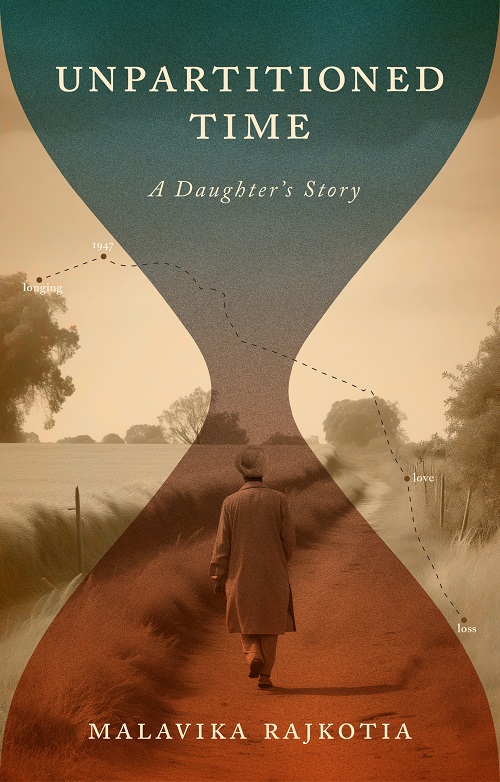
Malavika Rajkotia is a prominent divorce attorney based in Delhi. She has collaborated with numerous non-governmental organisations addressing civil liberties and human rights concerns. Additionally, she has a strong background in theatre, participating in approximately thirty productions in both Hindi and English. She has also served as the host of Shakti, the inaugural television talk show in India dedicated to women’s rights.
Her memoir, Unpartitioned Time: A Daughter’s Story, is a complex tale that intertwines the history and current experiences of a family following the Partition. Jindo, Malavika Rajkotia’s father, arrives in India amidst the chaos of the Partition riots. He is allocated a piece of desolate land in the small town of Karnal, where he must clear and cultivate the land to reclaim his role as landlord and patriarch. However, devoid of his past and confronted with an uncertain future in a place where the language is foreign to him, he undergoes a significant transformation. Rajkotia intricately weaves a narrative around this generous, humorous, loving, and increasingly despondent figure, delving into her family’s history and present.
The story explores themes of yearning and belonging, the nature of privilege and its loss, while reflecting on the resilience of a people stripped of their autonomy. Through her evocative and lyrical writing, she leads readers through the challenges faced by a large family—comprising uncles, aunts, siblings, cousins, and esteemed figures—who are all in pursuit of recognition, identity, and stability.
Rajkotia fearlessly confronts her milieu, whether navigating the radical Khalistan movement, the tensions between the Sikh faith and Hindu nationalism, or the pervasive cynicism of Indian politics. Her vivid, meditative, finely detailed portraits of a rich family life are filled with moments of tears, laughter, and music, and a diverse array of characters who are immensely relatable. Ultimately, this brave and moving book is about the enduring quest for meaning and fulfilment that transcends cultural boundaries.
Narrates Rajkotia: “The diffused light of dawn lit a dull, flat landscape cut by the highway, gleaming under randomly spaced streetlights. Until about thirty years ago, this single carriageway witnessed an almost daily carnage that left heavy and light motor vehicles, bicyclists, and bullock carts in confused mangles. Everyone had a personal story of loss on this road. Three of my family was killed in two separate accidents. A splintered windshield glass lodged in a young girl’s throat. An aunt and cousin died when their car rammed into a truck to avoid a cyclist.”
She has a detailed account of the road in Karnal town thus: “For over 2,500 years, this road has streamed with traders from Central Asia, scholars from China, adventurers from Europe, sadhus from the Himalayas, and armies coveting Hindustan. This portion of the road was the battlefield of the story of the eighteen-day Mahabharata war, marking the cusp of the end of the Dwapar Yuga and the rise of the Kali Yuga. Eighteen days of soldiers’ cries and trumpeting elephants and neighing horses, each ending with sunsets blackened by smoke from the funeral pyres hanging heavy until impelled by the sounds of wailing women.
“From myth, we come to somewhat recorded history in 300 BCE, when Chandragupta Maurya built this road to connect his fast-growing kingdom, spanning the north of the subcontinent from the source of the Ganga to its northwestern limits. The road was developed by Sher Shah Suri. My father remembered the time when it was called ‘Jarnailly Sadak’ under the British, and then GT Road, its official name, The Grand Trunk Road. The government of independent India called it Sher Shah Suri Marg, the Sanskrit ‘marg’ guillotining the English ‘road’ and the Urdu ‘sadak’.”
The memoir stands as a testament to the power of storytelling in bridging gaps between cultures and generations, ensuring that the voices of those who experienced Partition are heard and remembered. As part of the growing body of literature on this subject, it encourages further exploration and discussion, ultimately contributing to a more nuanced understanding of the complexities surrounding Partition and its enduring legacy.
.
Bhaskar Parichha is a journalist and author of Unbiased, No Strings Attached: Writings on Odisha and Biju Patnaik – A Political Biography. He lives in Bhubaneswar and writes bilingually. Besides writing for newspapers, he also reviews books on various media platforms.
.
PLEASE NOTE: ARTICLES CAN ONLY BE REPRODUCED IN OTHER SITES WITH DUE ACKNOWLEDGEMENT TO BORDERLESS JOURNAL
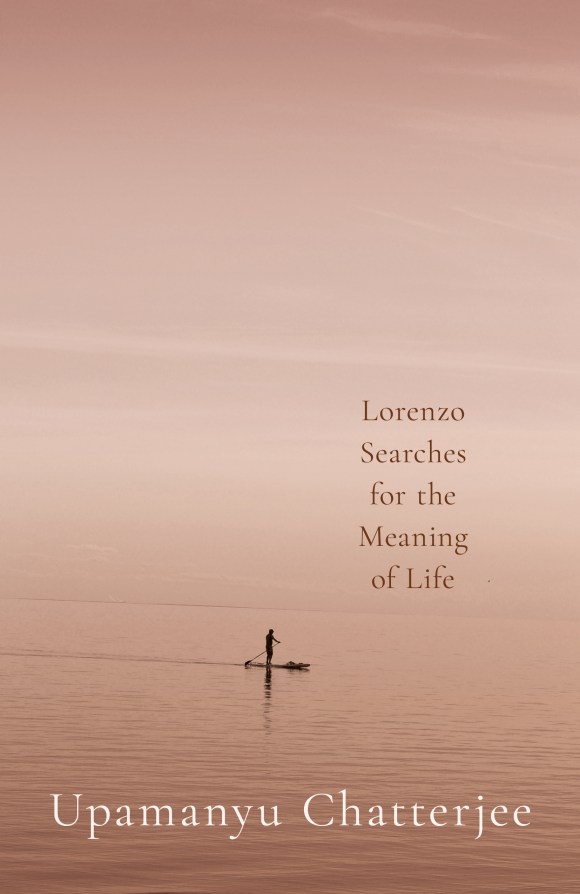
Several years ago, probably around the 1990s, the critic Nilanjana S Roy had defined the current crop of Indian Writing in English novelists as a ‘Doon School-St. Stephens’ conspiracy’. It was an interesting but true observation since the writers who were popular at that time were all products of these elite institutions and were quite adept at imitating western culture and simultaneously wrote in a style that was quite polished and urban. Upamanyu Chatterjee, belonging to this category, and at present a retired Indian civil servant, had shot into fame way back in 1988 by writing a definitive urban Indian coming-of-age story with his first novel, English August: An Indian Story. Several years later in 2000, he won the Sahitya Akademi Award for Mammaries of a Welfare State. His seventh novel Villany focused on a new class of post-liberalisation, westernised urban Indians who were hitherto ignored in the regional as well as the English fiction of India. This meticulously crafted literary thriller, a riveting story of crime and retribution, now stands at the other end of the spectrum when we read Chatterjee’s latest novel Lorenzo Searches for the Meaning of Life (2024). Narrating the life-story of an Italian Benedictine monk Lorenzo Senesi, who is on a spiritual quest to find the meaning in life, this meticulously detailed story is based on the life of Italian Fabrizio Senesi, an acquaintance of Chatterjee in Sri Lanka for the last few years, who turned out to be “a good friend” of his and who is now a European bureaucrat and a Development expert residing in Phnom Penh leading a successful professional as well as a blissful family life. As Chatterjee states in his foreword, “It is a true story, that is to say, like many true stories, it is a work of fiction.”
Divided into nine chapters, the locale of his story moves from Italy to London and then to Bangladesh. This is how things begin. One summer morning in 1977, nineteen-year-old Lorenzo Senesi of Aquilina, Italy, drives his Vespa motor-scooter into a Fiat and breaks his forearm. It keeps him in bed for a month, and his boggled mind thinks of unfamiliar things: where he has come from, where he is going, and how to find out more about where he ought to go. When he recovers, he enrolls for a course in physiotherapy. He also joins a prayer group, and visits Praglia Abbey, a Benedictine monastery in the foothills outside Padua. Detailing this part of his life we are told how this monastery will become his home for ten years, its isolation and discipline the anchors of his life. The first three chapters are full of quotes from the teachings of Saint Benedictine, the different vocations that Lorenzo follows, and give us details of monastic life as led in different Catholic institutions spread throughout Italy.
In the fourth chapter titled ‘The Visitor at the Abbey’, Lorenzo listens to a talk by one Luca Rossini, a Benedictine monk native of Bergamo, who since 1976 has been staying a little over seven thousand kilometers to the east in a place called Phulbari Para near the town of Khulna in Bangladesh where he runs an ashram as a dependent of the Praglia monastery. So, after eight long years of the introspective silence of a monastery, Lorenzo decides to go to Khulna. But before that he must spend eight months in England attending English-to-Speakers of-Other-Languages courses at an Academy there, till Luca would come to pick him up and take him to Bangladesh.
Upon arriving in Dhaka, the cacophony and different aspects of an alien culture that Lorenzo faces is described very beautifully by Chatterjee in great details. He starts wearing a lungi, eating with the fingers of his right hand, washing his clothes in a public tank along with female strangers, studying Bengali in the library with Luca, and tries to acclimatise with the place, the weather, and the people as quickly as possible. Apart from praying seven times a day, he also spends a lot of time decorating the walls of the chapel with different tempura paintings.
After some time, he visits another ashram called Rishilpi run by Enzo and Laura, an Italian missionary couple in Satkhira, some sixty kilometers away. Seeing the multifarious social upliftment activities that are being undertaken at their place, Lorenzo is intrigued by the idea of worming one’s way into a community and working for its betterment from within. Though remaining a Benedictine at heart, he decides to quit the Order and continue his search for some purpose to his life.
At Rishilpi he joins as Deputy Director, Health Services, and opens a sorely needed physiotherapy clinic that would attempt to instill a little meaning in the lives of the disabled and would educate the rest in matters of hygiene, sanitation, medical care and physical well-being. After surviving quite comfortably without money for the past eleven years and living a strict, disciplined monastic life, Lorenzo gradually undergoes a change when he starts interacting with people from all strata of society. Concealing his religion within his heart, he goes on working with a missionary zeal and after some time realises that even working with women felt marvellous.
In due course, he even falls in love and proposes to Dipti, the Headmistress of the same institution, and thus an ex-priest goes on to marry an ex-nun, both remaining devout Catholics forever. They spend the six happiest years of their lives at Rishilpi, till Lorenzo realises it is also life that is holding him back. With children, his responsibilities increase, he cannot go his own way. He needs money to survive and is called upon more and more often to lecture trainees in Dhaka at the Centre for the Rehabilitation of the Paralysed. In this manner, he slowly broadens his acquaintance with the developing world, and becomes the ideal person to build a bridge between the first world donors and third world recipients.
In the brief concluding chapter of the book, Chatterjee tells us that if one ended Lorenzo’s story here, it is because, even though twenty-nine years have passed since his marriage and he and Dipti are alive and well in Phnom-Penh, he has not in essential changed and he is still in spirit, Benedictine. But what is most interesting is the fact that “he still continues, though, to live his life anti-clockwise, as it were, for (as we have seen) after passing his youth in search of direction for his spirit, he turned outward to the community – and to the joys and responsibilities of the domestic life – only in his mid-thirties; and it was not till his early forties that he properly set about addressing the matter of money. It is – broadly – the trajectory of the typical human life but lived in reverse.”
Chatterjee’s tour-de-force is his storytelling and imaginative prose combined with his trademark wit and attention to detail. In the acknowledgement section he thanks his friend Fabrizio Senesi for providing him innumerable clarifications about life in Italy and in Bangladesh. The long list of books that Chatterjee read and mentioned in the end provides ample proof that he undertook his research rather seriously and this is clearly reflected in the intricate details that he provides of places and people throughout the novel. The book is not a page-turner, and one must read it rather seriously to savour the meticulous effort that Chatterjee made to provide us a fascinating tale about an ordinary human being who finds that a life of service to God is enough, and that it is not enough.
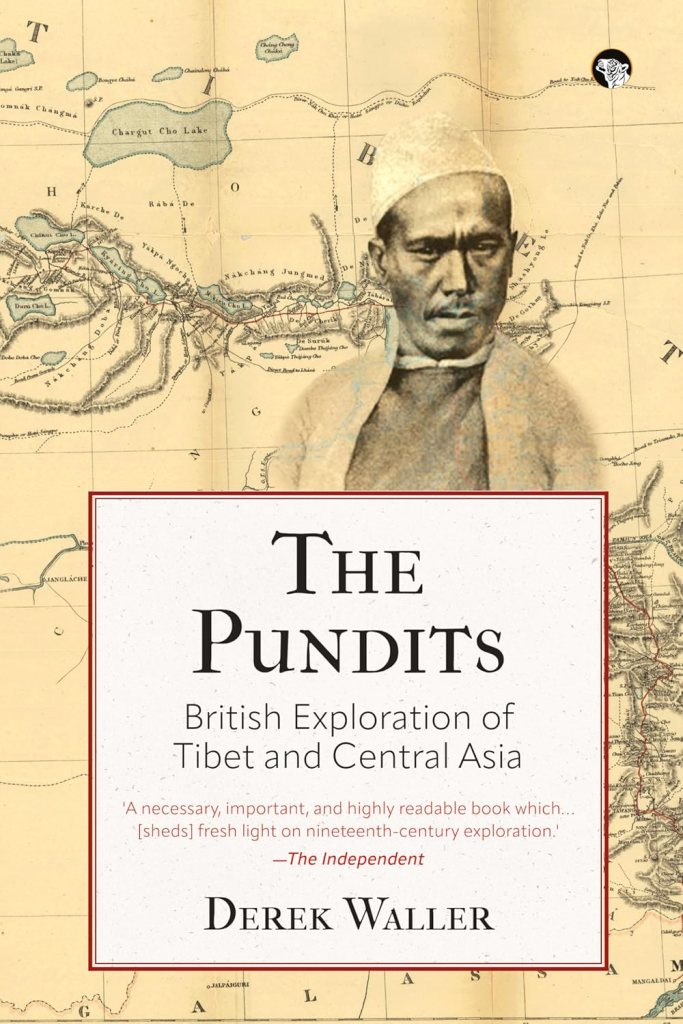
Title: The Pundits: British Exploration of Tibet and Central Asia
Author: Derek Waller
Publisher: Speaking TigerBooks
The British exploration of Tibet and Central Asia began in the 19th century as part of the Great Game, a geopolitical rivalry between the British Empire and the Russian Empire. These British explorers, known as “pundits“, were tasked with gathering intelligence on the region’s geography, culture, and politics to inform British strategic interests in the area. The pundits traveled undercover, disguised as locals, and used their linguistic and navigational skills to map out uncharted territories and report back to British authorities. Their expeditions were instrumental in shaping British policy towards Tibet and Central Asia, and their findings laid the groundwork for future British involvement in the region.
The Pundits: British Exploration of Tibet and Central Asia by Derek Waller is a fascinating book for its rich details and shedding light on the frontier policies of the British Empire. Derek J. Waller served as professor emeritus of political science at Vanderbilt University, where he taught from 1969 until his passing in 2009. He was instrumental in establishing the examination system for the Chinese government at Vanderbilt and played a key role in founding the university’s International Studies Programme in London. Additionally, he held the position of director of Vanderbilt-in-England. Waller is best known for his publication, The Government and Politics of the People’s Republic of China, which was released in 1981.
Says the blurb: “On a September day in 1863, Abdul Hamid entered the Central Asian city of Yarkand. Disguised as a merchant, Hamid was in fact an employee of the Survey of India, carrying concealed instruments to enable him to map the geography of the area. Hamid did not live to provide a first-hand account of his travels. But he was the advance guard of an elite group of Indian trans-Himalayan explorers—recruited, trained, and directed by the officers of the Great Trigonometrical Survey of India—who were to traverse much of Tibet and Central Asia during the next thirty years.”
Waller presents the history of these intrepid explorers—Nain, Mani, Kalian and Kishen Singh, Mirza Shuja, Hyder Shah, Ata Mahomed, Abdul Subhan, Mukhtar Shah, Hari Ram, Rinzing Namgyal, Ugyen Gyatso, Nem Singh, Lala and Kintup—who came to be called ‘native explorers’ or ‘pundits’ in the public documents of the Survey of India. In the closed files of the government of British India, however, they were given their true designation as spies. As they moved northward within the Indian subcontinent, the British demanded precise frontiers and sought orderly political and economic relationships with their neighbours. They were also becoming increasingly aware of and concerned with their ignorance of the geographical, political, and military complexion of the territories beyond the mountain frontiers of the Indian empire. This was particularly true of Tibet.
Despite the fact that the use of pundits was discontinued in the 1890s in favour of exclusively British expeditions, they amassed a vast amount of information on the topography of the region, the customs of its inhabitants, and the nature of its government and military resources. They were able to journey to places where hardly any European could go and did so under conditions of extreme deprivation and great danger. They are credited with documenting an area of over one million square miles, most of which was completely unknown territory to the West.
The Pundits, one of the earliest books to be written about them, is an exceptional piece of scholarly work.
.
Bhaskar Parichha is a journalist and author of Unbiased, No Strings Attached: Writings on Odisha and Biju Patnaik – A Political Biography. He lives in Bhubaneswar and writes bilingually. Besides writing for newspapers, he also reviews books on various media platforms.
.
PLEASE NOTE: ARTICLES CAN ONLY BE REPRODUCED IN OTHER SITES WITH DUE ACKNOWLEDGEMENT TO BORDERLESS JOURNAL






 Borderless