Categories
Discussion

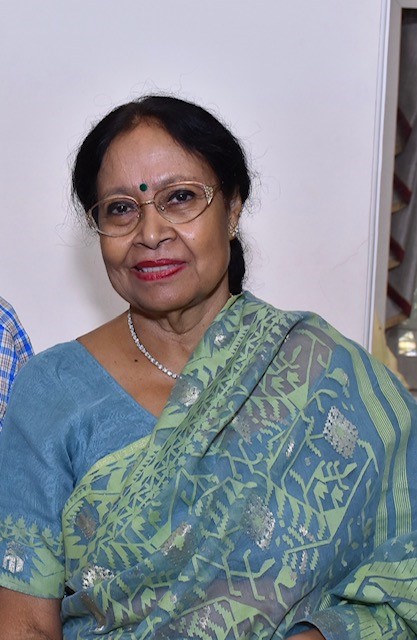
On Bereavement and Resilience: A Conversation with Swati Pal

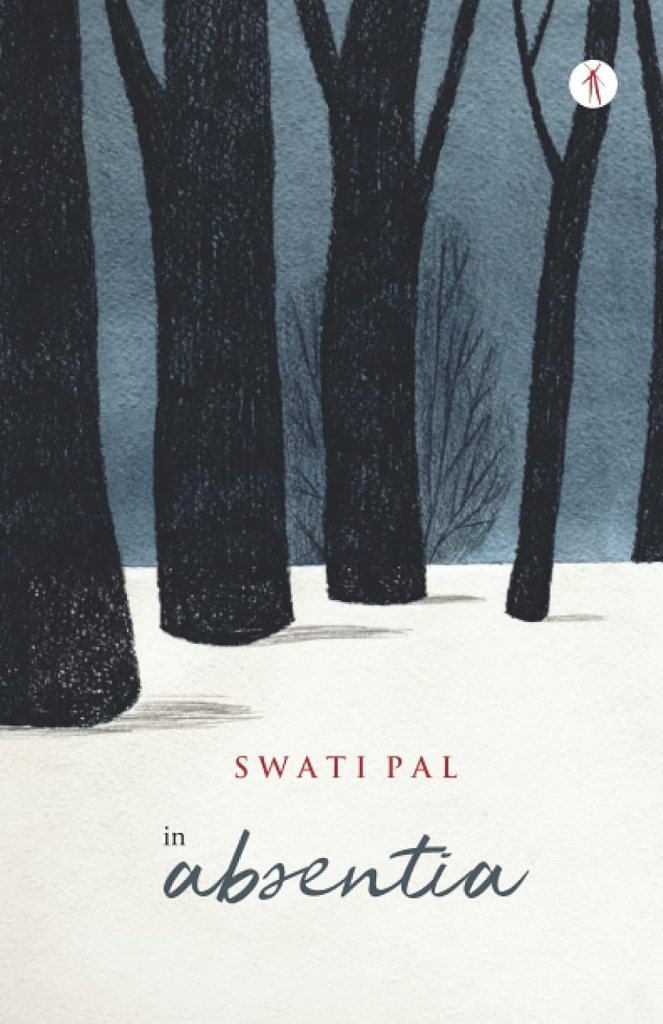
A discussion on writing to heal with Swati Pal, author of Forever Young and In Absentia, both brought out by Hawakal Publishers.

Strength is a badge 
Worn by the bereaved.

(The badge of the bereaved)

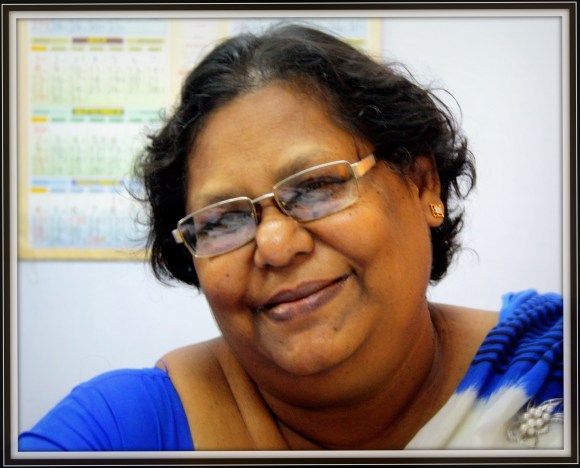
Swati Pal is an accomplished academic, an able administrator, a much-loved teacher. But most of all she is a resilient mother. Her poetry glows with resilience. It’s honest and endearing… perhaps best described by these lines from John Keats’ ‘Ode to a Grecian Urn’: “Beauty is truth, truth beauty — that is all”. She writes poetry for her late son that makes one weep and feel with her.

If you hear a laugh 
Wafting in the breeze
And floating around,
Know that it's me,
Your Diva, Mohan.

(Mohan whispered to me)

She finds him everywhere… he lives on for her.

I can still get
The scent
Of you,
Feel your tousled
Silky hair
And see it
Flying in the breeze.

(A Flower Called You)

What is amazing is that she responded to her loss with a sisterhood, creating a group of poets from grieving women. She brought out with her sisters an anthology on loss, Living On (2022).

Overriding grief with love and action is tough. But that is something that seems to be woven into her earlier poems in In Absentia (2021) and in her most recent collection, which seems more stark, Forever Yours and Other Poems. As Professor Malashri Lal points out, they “resonate beyond her individual story”. Her poems capture the vastness of the universe with their love and longing. One doesn’t know whether to weep or wonder at the beauty that seems to emerge out of the poems — like a flower that blooms unfolding petal by petal. In this conversation, Swati Pal dwells on her journey of resilience and strength through writing.

When did you start writing poetry? What got/gets your muse going?

I was an oversensitive, expressive kid and teenager and went through the classic angst about life that such humans are prone to, I guess! I was complicated and tended to brood about everything with bouts of melancholia, most really genuine, but some a bit because at that age, it appeared to be most ‘romantic’! So writing was something that I turned to almost naturally and then to poetry by instinct. I used to read a lot of poetry actually and somehow was always captivated by the craft– the rhyme or the rhythm, the play with ideas and images, the words few yet saying so much; it was as if an entire universe existed in the poetic world. And I found the form beautiful, exacting and creative.

It helped too when Jayanta Mahapatra would select poems to be published in the Sunday magazine edition of The Telegraph, and he selected one that I dared to send! My vanity/pride was certainly boosted by what I considered a singular honour and the cheque for a small sum of perhaps 150 rupees (I forget the exact amount) was exciting to say the least– my first earning!

It was then the ideal way to deal with my own inner mess. If my morale was low(‘I  am not beautiful’; ‘I can’t do this/ that/ or the other’; ‘So and so is better than me, I can never match up; ‘ Why can’t I have this/that or the other?’) and I was plagued by misery, I would write poetry; sometimes scathing stuff about people and life in scurrilous verse; sometimes light and hopeful like the dappled sunlight playing on the window sill to take my mind away from the negativity and escape into mostly the world of nature.

So poetry, even if it didn’t ever heal me or resolve my doubts and inner conflicts, calmed me. It kept me sane. It kept me rooted. So really, what has always got my Muse going is anything that moves me to tears – not necessarily about myself at all times but even a limping bleeding dog on the road, or a woman in rags and mentally unsound tearing her hair and crying; a leper sitting on the pavement completed dejected with life; pain, grief, loss — whether my own or anyone else’s, keeps my muse going.  

Losing loved ones is tough. You dealt with poetry about your losses.  How did you channelise your grief into writing?

As I said, I have always done so. Anything I found a hurdle, anything that caused me to be moved, anything that hurt my emotions or disturbed my peace, made me seek a companion — one I could pour my heart to. And seek I did! But misery, as they say has no bedfellows. Those I would vent to would get exhausted if the frequency of my exhortations became excessive (which they might have been). I think my emotional outbursts were fairly overpowering and sometimes the best of my friends and family would evade my searching them out, justifiably! But poetry. She never failed me. She was someone I could turn to in the dead of the night or the wee hours of the morning. She would let me rave and rant hysterically or in a fit of rage and tears and then equally quietly, let me rewrite when I was calmer, without remonstrations.

I lost my father when I was eighteen and it was terribly unfair as I had bided my time (the youngest of four siblings) to finally find my exclusive space in his dominion when poof! he was gone. And I was left feeling unanchored as suddenly everything became topsy turvy. That was the time I took to playing the clown at home, my mask ever in place, speaking ridiculous stuff and acting hilariously hoping that my behaviour could dispel the clouds of gloom that hung low over my home for a good many years after he died. And the more I played the clown, the more I longed to break free and scream out my rage and regret, my hurt at the void left by my father’s passing. In despair I turned to poetry and realised that working on making something beautiful, creating a pattern and a tempo with words, would somehow soothe my raging breast. It would stop me from being unhinged.

Since 2019, I when I lost my son, I lost sleep. And when I lie quietly on one side of the bed so that I don’t disturb my husband with my restlessness, I find myself turning to write poetry (on my mobile phone!) to keep me from holding my breath forever.      

How did you form a sisterhood of women while dealing with your losses? 

The sisterhood found me!  I wanted to run away from everyone! To begin with, my sisters especially the eldest and the third, would come home every single evening those first few excruciating months when the loss made my life seem surreal and my physical self something I wanted to cast off. They would just sit with me; have a cup of tea and a snack they would bring along and chatter gently about the day. If I wept or screamed, they let me, clutching my hand tightly and saying things I shunned but which they spoke anyway. And in this way, through sundry humdrum things, they made the pain, the monumental grief, part of my every day. It is my three elder sisters who first helped me cross the bridge from being a mother with a living son to a mother of an angel with wings. There were others too, some friends since school days, a young sister-in-law, a niece, a young woman who is all but a biological daughter – whose companionship, whose concern in those early days, which soon timed with the Covid isolation, kept me afloat and were a balm to my soul.

And then one day a determined petite young lady was at my doorstep with food and her husband. She had heard about me from a relative, talked to me over the phone and tried to get me to agree to meet her and the support group of grieving mothers which I completely rejected as who on living earth ever wants to join such a group? But she was Radha– and my son is called lovingly, Mohan — and it had to be a Radha who would make me a part of In our hearts forever — a community of sisters and soulmates that are now an integral part of my life.

How can I forget my college students? The young girls with their starry eyes, sometimes brimming with tears when I mention Mohan, hugging me and making me smile with their crazy ways, their unbridled energy, their spontaneous affection — they were step sisters according to Mohan (he always complained that I loved his ‘stepsisters’ more as I spent more time with them!). This was and is a precious sisterhood. A special one.

This is only part of the reality. Lest it not be understood that the world is full of kind people and it is easy to form sisterhoods, I must hasten to add that I actually found, that some of those communities which I thought would form a sisterhood and be my support, turned out to be vicious, toxic and utterly cruel to me — they struck their blows of hatred and malice at a time when I was at my most vulnerable. I now know that I was such a naïve idealistic fool in my expectations! And finally, there were some men too who enabled me, two in particular and it would be so wrong to leave them out of my circle of hand holders.

What led to your anthology, Living On? Tell us a bit about the anthology. 

It was Covid time and all my soulmates in the support group as well as myself were feeling desperate trapped withing the confines of our houses with our grief as our only companion. I could feel us all struggling. I suggested we do something to beat the blues and we would meet online with one person taking the lead to share something and make us do something together in a novel way.

I saw the blues being banished, at least for that time when were online. That made me feel I need to do more. That all my sister grief travellers needed to express their grief and shared the same wish as me: to make our child remembered. We were living on without our children, but our heart was nothing save a bleeding wound.

My first collection of poems had been In Absentia and obviously as the name suggests, it was about absence. It was about my Mohan. I knew now that I had to write about how I was living with that absence. I invited the support group members and others outside it who were also suffering from the grief of other losses such as parent/s to write if they wished. I wrote too. And thus, was created Living on — a chance for us to immortalise our loved one, as best as we could. I can only invite all to read it. It has photographs too of the lost ones. It is a truly moving book of recollection, a book of love. Those who wrote said that when they got the books in their hands, they were initially almost unnerved to see the words and pictures jumping out of the page. That they felt a great sense of achievement but also emotionally drained. All this was only to be expected. But it made us stronger, I think.

Has poetry drawn you closer to your sisters in grief? 

Yes. They feel I speak for all of us. I know that I do.

How does writing help you cope with your loss? 

It stops me from crossing that thin line between sanity and insanity, it gives meaning, at least for a while to my life which seems mostly irrelevant to me now.

You use lot of imagery from nature. It almost feels that you live with the loss all the time. And yet there is a sense of solace in your poems. Would you like to comment on that?

I breathe the pain and loss. It is not forgotten for a single second. Everything in nature reminds me of my son as we spent so much time together, including outdoors. The scent of the flowers in the breeze when we walked at night, the grass on the hockey field where I would time him as he prepped for the 100 meters race which he specialised in, the sound of the birds who Mohan was a bit wary of having been pecked a few times by the eagles and crows.

At first, Nature in fact hurt me as I could not renew myself the way nature does. I would be anguished and did not want to see the flowers blossoming or the squirrels running off the trees for food. But then I learnt that butterflies flitting around the house were a symbol of loved ones who had gone too soon and I began to look out for them. I learnt that feathers, especially pure white ones, were also a sign that our loved ones were hovering around. And that the rain falling on our faces is our loved ones communicating with us, crying with us. Nature does not provide me solace; nothing can and nothing will. But yes, I seek Mohan in nature.

You are a well-known academic and a principal of a college in Delhi University. Does that help in your writerly journey and to build your resilience? Please elaborate.

Well, it certainly makes me more resilient! The experiences I go through even when I battle so many things, do enable resilience, I guess. Writerly journey? I can’t say, I think everything that touches our life shapes the way we think and respond. Including the profession we have. And it is bound to enter into all our communications, including writing.

Would you have turned to poetry if you did not face losses in your life?

Yes, I love it as a form. It stirs me. 

Do you plan to experiment with other genres?

Yes, I have already started with short story writing. And within poetry too, I have experimented with modes– trying my hand at Haiku and the tanka.  

Do you have any advice for people dealing with loss and looking for resilience? 

Clean a cupboard. Seek out people– the more they run away, chase them harder and insist that they cannot leave you alone, that you need them. In other words, do things that bring beauty even through simple acts (writing poetry is just one of the many alternatives; you could equally, scrub the floors!)

People your life. Don’t wait for it to be peopled. Be noisy, without any shame in demanding attention– sometimes people assume you might want to be left alone — let them know that you don’t want the aloneness, that you don’t want to further lose your identity (loss does that you know. When I lost my son, I felt, and still do, that I no longer have any identity). And I have asked myself this question regularly– do I want my son to recognise me for the woman he left on earth? If so, I must keep that woman as alive as possible, even if it kills me. For what would we not do for a great love? I advise young people to tell themselves this when they deal with loss– it will build resilience if nothing else will. 

.

 (This online interview has been conducted by Mitali Chakravarty)

Click here to read an excerpt from Swati Pal’s Forever Yours

PLEASE NOTE: ARTICLES CAN ONLY BE REPRODUCED IN OTHER SITES WITH DUE ACKNOWLEDGEMENT TO BORDERLESS JOURNAL

Click here to access the Borderless anthology, Monalisa No Longer Smiles

Click here to access Monalisa No Longer Smiles on Kindle Amazon International

Categories
Discussion

Bridging Cultures across Time and Space

In Conversation with Translators

Translators are bridge builders across cultures, time and place. We have interviewed five of them from South Asia. While the translators we have interviewed are academics, they have all ventured further than the bounds of academia towards evolving a larger literary persona.

The doyen of translation and the queen of historical fiction, Aruna Chakravarti,  and poet, critic and translator, Radha Chakravarty , feel their experience at bridging cultures has impacted their creative writing aswell. Somdatta Mandal, is prolific with a huge barrage of translations ranging from Tagore, to women to travellers, despite being an essayist and reviewer, claims she does not do creative writing and views translations as her passion. Whereas eminent professor and essayist from Bangladesh, Fakrul Alam tells us that translating helped him as a teacher too. Fazal Baloch, translator and columnist from Balochistan, tells us that translation is immersive, creative and an art into itself. We started the conversation with the most basic question – how do they choose the text they want to translate…

How do you choose which texts to translate?

Aruna Chakravarti

Aruna Chakravarti: A translation is an attempt at communication on behalf of a culture, a tradition and a literature. Choosing an author and, more importantly, the most significant areas of his or her work are the first steps towards this communication, because it is only through translation that masterpieces from a small provincial culture become universal ones. Since I come from Bengal, I have always chosen the best of its literature for translation. My first translation was of Rabindranath Tagore’s lyrics. Rabindranath once said that even if all his other work fades to oblivion, his songs would remain. Saratchandra Chattopadhyay, a leading writer of 19th and early 20th century Bengal, considered Srikanta the best of his novels and the most suited to be conveyed to a global readership. I translated Srikanta. Sunil Gangopadhyay is hailed as the most eminent writer of present-day Bengal.  My translations of his novels and short stories are extraordinarily well received by non-Bengali readers, to this day.

Radha Chakravarty

Radha Chakravarty: Every occasion is different. Sometimes a text chooses itself because I feel compelled to translate it. Sometimes I select texts to translate, in response to suggestions or requests from editors, readers and friends who read. Several of my books in translation evolved alongside my research interests as a scholar and academic. For instance, Vermillion Clouds, my anthology of stories by Bengali women, developed from my general interest in feminist literature and my desire to bring texts from our own culture to the English-speaking world. My translations of Mahasweta Devi’s writings, especially the stories on motherhood in the collection titled In the Name of the Mother, happened when I was working on a chapter about Mahasweta for my PhD thesis. Our Santiniketan, my translation of her childhood memoir, emerged from my interest in her writings, as well as my admiration for Rabindranath Tagore. The translations of Chokher Bali1, Farewell Song (Shesher Kabita) and Four Chapters reflect my special fascination with Tagore’s woman-centred novels, for this was also the subject of my post-doctoral work. Later, I developed this research into my book Novelist Tagore: Gender and Modernity in Selected Texts. For my edited anthology Shades of Difference, a compilation of Tagore’s works on the theme of universality in heterogeneity, the selection involved a great deal of thinking and research. And translating Kazi Nazrul Islam’s essays turned out to be an incredible learning experience.

Somdatta Mandal

Somdatta Mandal: I have been translating different kinds of texts over the last couple of decades, and I have no fixed agenda of what I choose to translate. Usually, I am assigned some particular text by the author or a publisher, but sometimes I pick up texts which I like to do on my own. Since I have been working and researching on travel writing for a long time, I have chosen and translated several travel texts from Bengali to English written by women during the colonial times. I have also translated a lot of Rabindranath Tagore’s essays, letters and memoirs of different women related to him. Recently I translated a seminal Bengali travel text of a sadhu’s sojourn in the Himalayas in the late nineteenth century. I have a huge bucket list of texts that I would love to translate provided I find some publisher willing to undertake it. Since copyright permissions have become quite rigid and complicated nowadays, I have learnt from my own experience that it is always advisable to seek permission from the respective authorities before venturing into translating anything. Earlier I was naïve to translate stories which I liked without seeking necessary permission from the copyright holder and those projects ultimately did not see the light of day.

Fakrul Alam

Fakrul Alam: I have no fixed policy on this issue. Sometimes the texts choose me, so to speak. For instance, I began translating poems from Bengali when I first read Jibanananda Das’s “Banalata Sen”. The poem got hold of me and would not let go. I felt at one point an intense desire to translate it and read more of Jibanananda’s poems. Translating the poem elated me and having the end product in my hand in a printed page was joyous. The more poems I read by Jibanananda afterwards, the more I felt like rendering them into English, as if to share my delight and excitement at coming across such wonderful poems with readers who would not have read them in Bengali. That led to my first book of translations, Jibanananda Das: Selected Poems (Dhaka, UPL, 1999). As I ended my work on Jibanananda I thought: why not translate some poems by Rabindranath too? I had climbed one very high mountain satisfactorily and so why not venture forth and climb the topmost peak of Bengali literature?  And so, I began translating Rabindranath’s poems as well as his songs. I had grown up with them, but till now had never imagined I could render them into English. Kumkum Bhattacharya, a dear friend who at that time was in charge of Viswa-Bharati’s publishing wing, Granthana Vibhaga, had seen samples of my work and told me to think of an anthology of his translated works to be published in Tagore’s sesquicentenary year for them. This led me to the poems, prose pieces and songs by him that I translated for The Essential Tagore (Cambridge, Mass, Harvard UP, 2011 and Kolkata: Viswa Bharati, 2011), a book that I had co-edited (with Radha Chakravarty). My last book of translations, Gitabitan: Selected Song-Lyrics of Rabindranath Tagore (Dhaka: Journeyman Books, 2023) alsocame out of this same compulsion of translating works in Bengali. This particular work is a book of translations of nearly 300 songs that I love to listen to again and again—songs that made me feel every now and then that I had to translate them, especially when I heard them sung by a favourite Tagore singer. My translations of a few Kazi Nazrul Islam’s poems and some of his songs are also the result of such compulsive feelings. 

However, I also translated some works because I was requested to do so by people who knew about my Jibanananda Das and Tagore translations and who felt that I would be a competent translator of works they felt were worth presenting to readers in English versions of Bengali books very dear to them. My three translations of works by Sheikh Mujibur Rahman, The Unfinished Memoirs (Dhaka: UPL Books, 2012), The Prison Dairies (Dhaka: Bangla Academy, 2017), and New China 1952 (Dhaka: Bangla Academy, 2021) were all outcomes of requests made to me to translate them. Translating Ocean of Sorrow, the epic 1891 novel by Mir Mosharraf Hossain, has been the most challenging translating work I have had to undertake till now (Dhaka: Bangla Academy, 2016). I would not have dared take on the task of translating such a long and demanding prose work if Shamsuzzaman Khan, the Director of the Bangla Academy of that period, had not kept requesting me to translate this classic of Bengali Literature.

I will end my response to this question by saying that every now and then I translate poems and prose pieces by leading writers who are my contemporaries and who keep requesting me to translate them. Occasionally, I will also translate poems by major poets of our country of the last century—poets like Shamsur Rahman and Al Mahmud—because a poem or two by them had gripped me and made me feel like venturing forth into the realm of translation.  

Fazal Baloch

Fazal Baloch: Translating poetry and prose are two very different endeavors. Poetry often makes an immediate impact. Sometimes just a few lines strike me powerfully on the first reading, creating an atmosphere that sets the translation process in motion. In other words, I tend to translate the verses that stir something in me or resonate deeply.

Prose translation, by contrast, works differently. It usually unfolds after a longer process and often requires multiple readings of the text. At times, it even calls for a more deliberate, conscious effort.

Does translating impact your own writing?

Aruna Chakravarti: Yes, it does.  While translating the great masters of Bengali literature I have learned much that has impacted my own writing. From Rabindranath I learned that prose need not necessarily be dry and matter of fact. It could be imbued with lyricism without appearing sentimental and over emotional.  Saratchandra taught me the importance of brevity and precision. Search all his novels and you will not find one superfluous word. I try to follow his example and shun over-writing. From Sunil Gangopadhyay, I learned the art of dialogue. His direct, no-nonsense style and use of colloquialisms work best in dialogue.  

Radha Chakravarty: Yes indeed. As I have just indicated in my answer to your previous question, my translations often take a course parallel to my research, and the two strands of my work sometimes become inseparably interrelated. In my critical works on Indian literature, I remain conscious of bringing these writings to an audience beyond India. Hence an element of cultural translation infuses my analysis of texts by Indian writers. In my own English poetry, when I write about Bengali settings and themes, bilingual overtones often seep in.

Somdatta Mandal: No, not at all. I am not a creative writer per se, so there is no way that translation can influence my own writing.

Fakrul Alam: I will start answering the question by saying that apart from translating and writing nonfiction essays in the creative mode, I have not authored literary works. I am first and foremost an academic. Inevitably, translating Rabindranath’s works have impacted on me academically. By now I have at least one collection of essays on various aspects of Rabindranath’s life and enough essays on him that can lead to another such book. No doubt coming to know Rabindranath so intimately through the kind of close reading that is essential for translation work has made me more sensitive to him as a thinker, educator and visionary, as well as a poet and writer of prose and fictional works. Reading literary creations by him, his letters and lectures that I came across because of my involvement with his work has also lead me to editing; the work I did as co-editor of The Essential Tagore is surely proof of that.

Let me add that my translations have also impacted on my teaching. I am now able to draw on comparisons with Bangladeshi writers and Bengali literature for comparison and contrast in the classroom when I teach texts written in English to my students.  Reading up on the authors I have translated has also equipped me to be more aware of Bangladesh’s roots and national identity formation. This has led me to essays on these subjects.   

Fazal Baloch: Translation is not separate from the process of creativity. Through it, we enter a new world of meaning and explore the experiences of others through a creative lens. As a writer, I find translation essential for nurturing and enriching the mind. It is also worth noting that translation is not partial or fragmentary but a complete and holistic act. When I translate, I move with its current just as I do when I write. Both processes unfold in their own rhythm without obstructing one another. In fact, it is through translation that I have come to recognize and understand great works of creativity in a deeper way.

What is the most challenging part of translation? Do you need to research when you translate?

Aruna Chakravarti:  Yes, since a major part of my translation work was set in 19th century Bengal, I needed to understand and imbibe the ethos and ambience of the times. Being a Probasi Bangali who has lived outside Bengal all her life, this was important. Consequently, a fair amount of research was involved. This has stood me in good stead in my own writing.

Speaking about challenges there are many. The more divergent the two literary traditions the greater the dilemma of the translator. But the test of a good translation is the absence of uncertainty, hesitation and strain. Since translation undertakes to build bridges across cultures it is important that it reads like a creative work. The language must be flowing and spontaneous; one that readers from other languages and cultures don’t feel alienated from. One that they are willing, even eager to read. One they can sail through with effortless ease.

On the other hand, readability or beauty of language cannot be the sole test of a good translation. If the translator becomes obsessed with sounding right in the target language, he/she could run the risk of diluting and distorting the original text which would be a disservice to the author. The reader should hear the author’s voice and be conscious of the source language and culture, down to the finest nuance, if the translation is a truly good one. A good translator is constantly trying to keep a balance between Beauty and Fidelity. No translation is perfect but the finer the balance…the better the translation.

Radha Chakravarty: When translating from Bengali into a culturally distant language like English, the greatest challenge is to bring the spirit of the original alive in the target language, for readers who may not be familiar with the local context. Literal translation does not work.

The need for research can vary, depending on the nature of the text being translated, the purpose of the translation, and the target readership. Some texts travel easily across cultural and linguistic borders, while others need to be interpreted in relation to the time, place and milieu to which they belong. The latter demand more research on the part of the translator, who must act as the cultural mediator or interpreter. When translating Tagore’s writings for my anthology The Land of Cards: Stories, Poems and Plays for Children, I found that these works speak to all children without requiring too much explanation or contextualization; very often the context becomes clear from the writing itself. But Boyhood Days, my translation of Tagore’s childhood memories in Chhelebela, required greater contextualization, for present day readers to grasp unfamiliar details of life in old-world Kolkata.

Somdatta Mandal: The most challenging part of translation is to maintain the readability of the text which I consider to be of foremost importance for any text to communicate with its readers. However, this readability should not be achieved at the cost of omission or suppression of portions of the original. Instead of rigidly following one particular criterion, usually my focus has been to choose what best communicates the nuances of the Source Language [SL]. Sometimes of course when it is best to do a literal translation of cultural material rather than obfuscate it by transforming it into an alien idiom taken from the target language resulting thus in a significant loss of the culture reflected in the original text.

As for doing research when I translate, the answer depends on what kind of text I am working on. If it is a serious academic piece, then occasionally I must consult the dictionary or the thesaurus for the most suitable word. Sometimes contextual or historical references need special attention and background research but such instances are occasional. What really attracts me towards translation is the inherent joy of creativity – of being free to frame the writer’s thoughts in your own words.

Fakrul Alam: The most challenging part of translation is getting it right, that is to say, conveying the words and feel of the original as accurately as possible.  But “getting it right” also means being able to convey the form and tone of the original as well as is possible.  In every way the translator must carry on his translating shoulder the burden of accuracy whenever and whatever he or she is into translating. In this respect a translator like me is different from creative people who take on the task of translating ready to take liberties to render the original in distinctive ways that will bear their signatures. They do not feel constrained like translators of my kind who never dare to move away more than a little distance from the original in order to convey the tone and the meaning as imaginatively and creatively as is possible for them.

I have a simple method when it comes to translating. My first draft is the result of no aid other than printed and/or online dictionaries. If there are allusions I come across when readying the first draft, I Google. Lately, AI has been very helpful in this regard—it even gives me the English equivalence for quite a few Bengali words when, for instance, I type the title in English of a Bengali song-lyric by Rabindranath. Then I compare my translation with that of other translations available online to see if my version is deviating to much from the ones I see.

Occasionally, I will need to do research on the work I am translating. In translating Mir Mosharraf Hossein’s epic novel, for example, I kept searching on the net to know more about the characters and situations of history he had rendered into his narrative than I knew from his writing. I will also do a lot of research if and when I feel a poem or prose work needs to be contextualized and footnotes or end notes needed by readers to understand what is being depicted fully. Thus, for Jibanananda Das’s “Banalata Sen” alone I had to Google a number of times to understand fully the imaginative geography of the piece and get a feel of the real-life equivalents of the places and characters mentioned. In particular, for the first stanza of the poem I had to look for glossaries I intended to provide on words like Vimbisar, Vidarbha, Sravasti and Natore for overseas readers.

Fazal Baloch: Translation is not simply the process of transferring of text from one language to another; it is more like a conversation between cultures, a process through which they come closer and begin to understand one another.

For me, the most challenging part of translation is working with idiomatic and metaphorical expressions. Every language has its own unique idioms and linguistic frameworks, and these are often difficult to carry over into another language. To meet this challenge, I often need to conduct research and explore the etymological roots of words.

What is more important in a translation? Capturing the essence of the work or accuracy?

Aruna Chakravarti:  Capturing the essence of the work is certainly more important than accuracy.  Translators shouldn’t translate words. They should convey the spirit, the intent of the work. There are some authors so obsessed with their own use of language… they want translators to find the exact equivalent for each word they have written. This is a bad idea. Firstly, it is simply not possible to find exact equivalents. At least, not in languages as diverse as Bengali and English. Secondly, the job of the translator is not to satisfy the author’s ego. It is to transfer a literary gem from a small readership to a larger, more inclusive one. If one is unable to do so, the author revered in his own country will fail to speak meaningfully across the language barrier and the onus of the failure will fall on the translator.

Radha Chakravarty: A literary text is a living reality, not a corpus of printed words on the page. It is this living spirit that needs to animate the translated text, rather than precise verbal equivalence. The popular emphasis on fidelity in translation is misplaced. For literary translation cannot be a mechanical exercise. It is, in its own right, a creative process, which depends, not on rigid verbal ‘accuracy’, but on the translator’s ability to recreate, in another language, the very soul of the original. Perhaps ‘transcreation’ is a good word to describe this.

Somdatta Mandal: Regarding translation, it must be kept in mind that though something is always lost in translation, one must always attempt to strike the right balance between oversimplification and over-explanation. Translation is also creative and the challenges it poses are significant. The intricate navigation between the source language and the translated language shows that there are two major meanings of translation in South Asia – bhashantar, altering the language, and anuvad, retelling the story. Without going into major theoretical analyses that crowd translation studies per se, I feel one should have an equal grasp over the SL and the TL [Translated Language] to make a translated piece readable. I translate between two languages – Bengali and English. Sometimes of course, cultural fidelity must be prioritised over linguistic fidelity.

Translating has caught up in a big way over the past five or six years. Now big publishing houses are venturing into publishing from regional bhasha [Language] literatures into English and so the possibilities are endless. Now every other day we come across new titles which are translations of regional novels or short stories. Translating should have as its prime motive current readability and not always rigidly adhering to being very particular about remaining close to each individual line of the source text. The target readership should also be kept in mind and so the choice of words used, and glossary should be eliminated or kept to a minimum. The meaning of a foreign word should as far as possible be embedded within the text itself. All these issues would make translating an enjoyable experience. Way back in 1995, Lawrence Venuti popularised the term ‘foreignized’ so that readers can get access to the source culture as well. He used the term to explain the kind of translation that ‘signifies the difference of the foreign text by disrupting the cultural codes that prevail in the target language.’ Thus, the idea of translation is not to just communicate the plot but also to make readers familiar with the traditions, rituals, and world views of the other.

Fakrul Alam: To me the most important goal is to come as close to the original in every possible way. This means aiming for accuracy, but surely it also means coming as near as possible to the essence of the original. In other words, as far as I am concerned, accuracy will lead to essence. But as I indicate above, most creative writers doing translation will go for the essence and forego accuracy. But knowing something will be lost in translation I will try to minimize the loss by sticking close to the original in every possible way—word meaning, the rhythm of speech, sound elements and imagery. Of course, a man’s reach should exceed his grasp but what else is going to bring the translator close to cloud nine? 

Fazal Baloch: Both essence and accuracy matter, but in poetry translation, the limited space to maneuver often makes essence the priority. As I mentioned earlier, the goal of translation is not only to carry over the meaning of the words but also the rhythm, tone, emotion, and cultural context that bring the original to life.

In practice, this means the translator has to balance several tasks at once: preserving cadence and rhythm, maintaining poetic flow, and ensuring semantic clarity. Yet above all, the translator must not lose the spirit of the original when choosing between essence and accuracy.

Prose, on the other hand, offers more freedom. Because it allows greater room to preserve meaning, accuracy tends to matter more, though essence still plays a role.

In short, poetry often gives more weight to essence, while prose allows essence and accuracy to work together more harmoniously.

  1. Best friend from Childhood, literally Sand from the Eye ↩︎

Bios of Featured Translators:

Aruna Chakravarti has been the principal of a prestigious women’s college of Delhi University for ten years. She is also a well-known academic, creative writer and translator. Her novels, JorasankoDaughters of JorasankoThe InheritorsSuralakshmi Villa and The Mendicant Prince have sold widely and received rave reviews. She has two collections of short stories and many translations, the latest being Rising from the Dust. She has also received awards such as the Vaitalik Award, Sahitya Akademi Award and Sarat Puraskar for her translations.

Radha Chakravarty is a poet, critic and translator based in Delhi, India. She has published over 20 books, including translations of major Bengali writers such as Rabindranath Tagore, Bankimchandra Chatterjee and Kazi Nazrul Islam, anthologies of South Asian writing, and several critical monographs. She has co-edited The Essential Tagore (Harvard and Visva-Bharati), named Book of the Year 2011 by Martha Nussbaum. She was Professor of Comparative Literature and Translation Studies at Ambedkar University Delhi.

Somdatta Mandal is the Former Professor of English and Chairperson at the Department of English & Other Modern European Languages, Visva-Bharati, Santiniketan. Somdatta has a keen interest in translation and travel writing.

Fakrul Alam is an academic, translator and writer from Bangladesh. He has translated works of Jibonananda Das and Rabindranath Tagore into English and is the recipient of Bangla Academy Literary Award (2012) for translation and SAARC Literary Award (2012).

Fazal Baloch is a writer and translator. So far, he has published seven English anthologies and one Urdu collection of his translations. His. works include “God and the Blind Man: Selected short stories by Munir Ahmed Badini (Balochistan Academy of Science and Research, 2020), The Broken Verses: Aphorism and Epigrams by Sayad Hashumi (Balochi Academy Quetta 2021), Rising Stars: English Translations of Selected Balochi Literature by the Writers under the Age of Fifty (Pakistan Academy of Letters Islamabad 2022), Muntakhib Balochi Kahaniyan (Pakistan Academy of Letters Islamabad 2022), Adam’s Remorse and Other Poems by Akbar Barakzai (Balochi Academy Quetta 2023), “Why Does the Moon Look So Beautiful?: Selected short stories by Naguman” (Balochistan Academy Turbat, revised edition 2024) and “Every Verse for You”: Selected Poetry by Mubarak Qazi (Balochistan Academy Turbat, revised edition 2025). His translations have also been included in different anthologies such as ‘Silence between the Note’ (Dhauli Books India, 2019), Unheard Voices: Twenty-One Short Stories in Balochi with English translations (Uppsala University Sweden, 2022) and ‘Monalisa No Longer Smiles: An Anthology of Writings from across the World (Om Books International, 2022). He also contributes literary columns to various newspapers and magazines. He lives in Turbat Balochistan where he serves as an Assistant Professor at Atta Shad Degree College Turbat.     

(The interviews were conducted via email by Mitali Chakravarty)

PLEASE NOTE: ARTICLES CAN ONLY BE REPRODUCED IN OTHER SITES WITH DUE ACKNOWLEDGEMENT TO BORDERLESS JOURNAL

Click here to access the Borderless anthology, Monalisa No Longer Smiles

Click here to access Monalisa No Longer Smiles on Kindle Amazon International
Categories
Discussion

No Country for Women

Shantanu Ray Chaudhuri introduces #Shout, a documentary by Vinta Nanda that documents the position of women in Indian society against the backdrop of the #MeToo movement and centuries of oppression and injustice and converses with Vinta about the film.

The team that created Shout with Vinta Nanda in the centre, next to the woman in the yellow. Photo Courtesy: Vinta Nanda

Women are not asking for protection of their vaginas – they are asking for the freedom to live their lives as equal citizens.

The landlord’s son making out with a Dalit girl is a coming-of-age ritual.

These are just two of the many views that stun you in Vinta Nanda’s thought-provoking and disquieting documentary, #Shout. In a little over 90 minutes, the film covers a huge ground, taking into its ambit not just the #MeToo movement, from which it originated, but also the deep-rooted patriarchy and misogyny that has been written into the DNA of our nation. As a respondent in the film, a transgender, says: “We are not good enough to be regular citizens purely because a sexual harassment case filed by a woman could lead to a punishment of seven years whereas a transgender getting raped gets only six months.” The matter-of-fact nature in which the interviewee puts this across only serves to highlight the agony that permeates every word. And the hopelessness of the situation.

You realize – yes, women have an uneven playing field, but the issues the film underlines are not circumscribed by that. And that there are nuances to the debate that we do not even think of. As Tara Kaushal, author of Why Women Rape, says, the discussion on rape has to account for the fact that there’s a whole different dynamic at play when we talk of it in the context of a marriage or when a sex worker is involved. How do you address the fact that ‘stalking’ is seen as a courting ritual than as an offence or as trespassing?

There’s also something intrinsically wrong with a society where a labourer is made to pay with both his arms and a leg for daring to speak up against the rape of his minor daughter in the way Bant Singh of Mansa was. One of the most harrowing and at the same time inspirational passages of the film tells his story – and that brings another dynamic into the dismal picture: that of caste. If there’s one thing as unfortunate as being a woman in this country, it’s being poor and a Dalit. 

Bant Singh. Photo Courtesy: Vinta Nanda

One of the striking aspects is the range of respondents that the director has interviewed. There are academics and writers like Urvashi Butalia and Nirupama Dutt, who bring their experience of the feminist movement in India to bear upon the narrative. There is journalist Namita Bhandare who argues cogently how the conversation in #MeToo tended to become a case of ‘he said /she said’ – the woman’s word against the man’s. There’s Sabita Lahkar from Assam, a journalist who alleged sexual harassment at the hands of a leading journalist and Sahitya Akademi award winner way back in 2003, before ‘me too’ became part of our discourse. And there is Bhanwari Devi, whose ordeal led to the landmark Vishakha guidelines in 1997 and The Sexual Harassment of Women at Workplace (Prevention, Prohibition and Redressal) Act 2013. It is with a sense of awe that you listen to Bhanwari Devi narrate not only the ignominy she was subjected to – imagine the accused in the case being acquitted on the ground that her husband couldn’t have passively watched his wife being gang-raped – but also the vast reserves of fortitude that comes through in her responses on camera.

What’s also commendable about the film is that it does not become an exercise in agitprop. It would be easy to approach the subject with anger. And much of what Vinta documents does leave you seething. However, the anger here is leavened by an intrinsic understanding of the fact that haranguing against or blaming any one section of society serves no purpose. And that there are no overnight solutions in a country that lives in many centuries at the same time. That lends the film an elegiac tone that’s impossible not to be moved by. What also adds to the film’s ‘objective’ take is Vinta’s own history – she was one of the prominent voices in India’s #MeToo story and as such aware of much of the discourse in the film. Against that background, her decision to leave herself out of the narrative is a brave one, and one that gives the film a rare distance too. It must have been tough to condense such a vast spectrum of narratives – the filmmakers had to restrict the number of respondents to 55 – in the span of 90 minutes, and you wonder if the film runs the risk of paying lip service to the issues. The narrative does get somewhat diffused in the last quarter of an hour, when the background score, otherwise well-modulated, tends to sound a trifle at odds with the tone in the rest of the narrative. However, as Vinta argues, none of these issues can be seen in isolation, and each aspect flows into and is born of the others. 

To Vinta’s credit, the film does not lose sight of the little details even when being aware of the larger picture. Justice Sujata Manohar, who was part of the three-member bench which formulated the Vishakha guidelines, has two of the film’s rare amusing moments – which ironically tell a lot about the way we continue to think of women in the workspace. Reminiscing on one of the first cases involving a women barrister in Indian jurisprudence, she narrates how the woman was handed a case that she could not possibly lose. When the lady expressed her surprise at being given the responsibility, something that the male lawyer could easily do, she was told that her client wanted her to take it up only to inflict on his adversary the humiliation of being defeated by a woman! Not much had changed decades later when Justice Manohar was asked if she was in the profession looking for a husband.

These off-the-cuff insights give the film its potency, coexisting with the fiery poetry of Amy Singh or the debate on how a woman’s body becomes a playground for scoring political and religious points. Nowhere better illustrated than the heart-breaking testimony of Deepika Rajawat, advocate of the Jammu and Kashmir High Court, vis-à-vis the Kathua rape case, where the inhuman killing of an eight-year-old snowballed into a Hindu-Muslim debate. Or in the way Chinmayi Sripaada highlights how her testimony in the #MeToo movement was given a political twist. While it was alleged that she was acting at the behest of a powerful political party, Priya Ramani’s equally damaging claims against one of India’s celebrated journalists and a minister at the Centre were sought to be dismissed as a smear campaign against the same party.

This is an important work. And a bleak one. Watching this brought to light the fact that beyond the cases that make the headlines, there’s a whole world that we are simply not aware of or concerned about. And that in the era of social media everything comes with a fifteen-day sell-by date. Not a single region of the country emerges unscathed from the filmmaker’s scalpel. If there’s Asifa Bano in Kashmir, there’s the rape victim in Unnao, Uttar Pradesh, whose father died in judicial custody under suspicious circumstances. If Bhanwari Devi and Roop Kanwar are the shame of Rajasthan, Manorama Devi of Manipur remains a blot on our collective conscience. From Dr Sister Jesme of Kerala (recounting her abuse at the hands of a priest) to Bilkis Bano of Gujarat – the malaise runs deep and wide.

Banwari Devi. Photo Courtesy: Vinta Nanda

After all, what do you say about a country where a former Chief Justice of India addresses allegations of sexual harassment against him by offering his ‘modest’ bank balance as proof of his integrity. Or where almost all the perpetrators of the most heinous crimes of sexual predation have been rehabilitated in major literary, cultural and political circles. This is a film puts the whole country in the dock.

***

Directed by: Vinta Nanda

Produced by: Gayatri Gill, Siddharth Kumar Tewary and Rahul Kumar Tewary

Cinematography: Shanti Bhushan Roy

Editing: Puloma Pal

Sound Supervision: Bishwadeep Dipak Chatterjee

Sound Design: Mohandas

.

Tell us something about the genesis of Shout.

It came to me from out of the blue. I got a call from Siddharth Kumar Tewary, one of three producers with Gayatri Gill and Rahul Kumar Tewary, that Gayatri was toying with the idea of making a documentary on the #MeToo movement. This was in 2019, when the movement was still smouldering. Gayatri and Siddharth were understanding about where I stood, personally, on the issue. The first draft of the write-up I gave to them was a clincher and we were ready to sail.

It covers a whole gamut. Were you daunted that it could become unwieldy with each individual aspect not getting enough space?

Manisha Mashaal, a Dalit leader and women’s rights activist in Kurukshetra, Haryana, says, “We don’t know when the media will have a #MeToo movement for us. We are invisible to the world?” In my understanding of things, she is a feminist. But did she participate in the #MeToo movement? Was she even a voice? Obviously not!

While the #MeToo movement did several things to empower women in general, it also didn’t do other things that it could’ve done. I was clear in my mind about what I felt about the movement. My approach was to put the #MeToo movement in perspective to the attitudes and behaviours of Indian men and women towards women’s rights and also in context of the many other movements that have dotted the gender landscape over the last fifty years or so. Without understanding patriarchy, without applying the context of feminism to the #MeToo movement and without discussing rape, there could only be a voyeuristic offering, and that meant we would be feeding the monster.

I never felt daunted or ever thought it would be unwieldy to deal with the many things because rape, patriarchy and feminism are discussions that belong to the same discourse. The support of the media during the #MeToo movement gave women the confidence to publicly name the men who had abused them, men who were brazen because collective misogyny had provided them a cover.

For something this vast – was there a definite plan to the way the actual shooting was structured. Can you give us a snapshot of the logistics of putting together the documentary?

(Retd) Justice Sujata Manohar says, succinctly, in the film, “We live in several centuries at the same time.” This was also our primary challenge when we started working on the film. How do we make a film which will resonate with people from all walks of life, urban, rural, young, senior, everybody?

We started working on the film in mid-2019. We headed straight to research. Bani Gill, Paroma Sadhana and Shiv Bhalla formed the research team and they came back to us with a vast ocean of knowledge. We were a small but formidable team. Gayatri and I were at the centre, flanked by our creative consultants Priti Chandriani and Veena Bakshi, and then we had Siddharth at the outer ring to present to and who would respond objectively. For about three months we worked every day and dived deep into the way the gender discourse has played itself out in India over many years before the #MeToo movement happened.

While research was under way, we started connecting with the people that our findings were throwing up. We had a huge list but had to put a stop at fifty-five. We divided them by the geographies they belonged to, and planned our travels accordingly. We had worked on the questions but I was also aware that we were meeting women and men of great significance. So each interview I canned is over 40 minutes long because there was so much more to talk about with each of them, which was way beyond what the film could contain. We are working on a website that will carry some of the material, also a YouTube channel. We are also working on a book we plan to publish later this year.

My DOP[Director of Photography], Shanti Bhushan Roy, and I were aligned perfectly. We were travelling to so many places and we decided to capture the beauty of every place that our subjects inhabited – we wanted to capture the sound, the music. Most importantly, we wanted to capture the stillness, too, in India, which was in correspondence with the emptiness we felt.

We were fortunate to finish the shooting before the pandemic was declared, before the first lockdown. I remember we returned to Mumbai from Imphal on 15 March 2020 and the lockdown was declared on 22 March. We were in a good place to start editing.

The editing process was a long one but Puloma Pal, the editor of the film, did a brilliant job. With the first cut, Siddharth, Gayatri and I knew that the soul and the scale we had imagined was there. Then, Puloma divided the film into parts, a process which gave the film its form and rhythm.

Our real struggle started when we handed over our final cut to the sound supervisor, Bishwadeep Dipak Chatterjee. After he saw the cut, he called for a meeting with us where shared his thoughts about the possibilities he could see us achieve with the soundtrack. His conviction was compelling and we decided to revisit the final cut. Puloma and I took a break for a few weeks. I told Puloma that we should give ourselves four weeks, and if we had a Eureka moment we would regroup and re-edit the film. If not, we would go with what we had.

About three weeks later, Puloma called me. She had an epiphany and narrated what she had in mind. She had caught Bishwadeep’s pulse and was ready to give him what he needed to build the soundtrack. After three more rounds of editing we were done. The experience was magical. Then we went to Kolkata to record the song with Usha Uthup, which was composed by Raja and written by Amy Singh. Mohandas started working on the sound design.

Usha Uthup & Vinta Nanda. Photo Courtesy: Vinta Nanda

One remarkable feature is the variety of experiences you have gathered. Can you give us an insight into how you went about choosing the people you have spoken to.

The research brought up many names. The four people who showed us the light along the way were Namita Bhandare, Preeti Gill, Nirupama Dutt and Mitra Phukan. It was Namita who guided us to (Retd) Justice Sujata Manohar, Nikita Saxena, Vandana Grover and others. Preeti led us to Nirupama Dutt, Urvashi Butalia, Bibi Kiranjot Kaur and Amy Singh. Subsequently, Nirupama took us to Bant Singh, Mitra connected us to Bijoy Kumar Tayenjam. It was through Bijoy we met Pradip Phanjubaum and Ratan Thiyam and so on…

Social media helped to trace Sabita Lahkar, some others too. We went on this forty-day journey by road and air to meet survivors, families of victims, feminists, authors, legal experts, activists, poets, religious leaders, actors – all those who had a deep connection with the issue as well as the politics surrounding it.

The most astonishing aspect of the documentary is how all-pervasive the malaise is. We seem to be country united only by the way we mistreat our women.

It is true that if there’s one factor ubiquitous it is the way women are treated in our country. It is no secret that women are second-class citizens wherever they are and whichever profession and hierarchy they belong to. They work as hard as men, often more, but they are not called breadwinners. It is one of the problems. Moreover, as some of the speakers in the film have said, rape is about power and about how power is expressed in our world. It is political, it is feudal and it is the harshest face of the deep patriarchy that defines our culture, our society.

Irrespective of the progress we make, irrespective of the several revolutions of the past centuries, industrial, information-communication or technology, the system remains feudal. The culture that drives behaviours and practices, across economic and social divides, is inflexible. It is intimidated by women and designed to keep them in control, guide the course of their lives.

The system is neither fair to women nor to the men. Why should men be forced to bear the burden of women’s safety on their shoulders? When a system can deliver vaccines to 2 billion people, why can’t it deliver a message, a powerful idea, to every corner of the earth? Obviously there’s a lack of intention and political will. And, moreover, the world still cannot see the advantages, dividends and profit in doing that!

It’s only in recent times that women are beginning to find a voice, and the credit for it goes to the feminist movements that have taken place in India and the rest of the world over the last 50 years at least, at the grassroot level as well as in metropolises. We were sure that we didn’t want to leave the efforts of the past out from our narration. After all, the #MeToo movement would find no ground to keep its feet on if it wasn’t for several battles fought by women for their rights as equal citizens.

As someone who became an important driver of the #MeToo campaign – would you like to share your personal experience of that and how that shaped this film?

I broke my silence during the movement in October 2018 and, overnight, I was speaking to the national media about myself and what had happened to me. Barely a couple of months later it was business as usual for everyone. When left alone, I felt a hollowness and it was then that I, for the first time, introspected and explored the situation. I realised that in India, we had just about touched the surface. And now, we were already waiting for something ‘else’ to happen that would resolve the issue. The introspection decimated my fears and gave me the courage to move forward.

The emptiness I felt, then, was for many reasons. Primary among them was the fact that #MeToo was a media movement and an urban phenomenon. And that it belonged to the upper crust, whereas the most disempowered, excluded and disadvantaged among the women of India are nowhere close to having the access that we have. Neither did the statistics reveal that the #MeToo movement has had an impact. The number of women molested, abused and raped in India kept on rising consistently thereafter. It was the same after Bhanwari, Nirbhaya, Asifa, after Unnao. The anger, the outrage, the vigils, they peter out and an oppressive system knows that well.

Also, I would not have made this film if I wasn’t able to draw from the well of my personal experiences. When I said yes to directing the film, the one condition I put was that I would not be a part of it. I wanted to remain objective in my approach – as far as it was possible. Another advantage of my having been a part of the movement was that all the survivors I interviewed, especially Bhanwari Devi, Asifa’s parents, Sabita Lahkar, Simran Kaur Suri, Saloni Chopra, and Mandana Karimi, felt comfortable and unhesitant. In fact, Bhanwari Devi took me to task for having taken 20 years to talk about what had happened to me. She reprimanded me and scolded me, saying that she had not waited a single day – she was at the police station the next morning.

We wrongly believe that we, who have access, are greatly empowered, because the courage of a Bhanwari and a Bant is way beyond what we can ever imagine to have! All the other interviewees, too, I could sense while making the film, wanted that #SHOUT be made – they were encouraging and stepped out of their way to help us.  

Bollywood cops a lot of blame for the way we treat women. Do you agree that our films are to blame? Or is Bollywood a favourite whipping boy.

Bollywood is to blame to some extent. Yet, the question will be a conundrum because it is more complex than what can be taken at face value. In our film, Tara Kaushal, author of Why Men Rape, asks a pertinent question. “Stalking is akin to love for some men, whereas for women who are stalked, it is harassment. So, how will the two paradigms meet?” Do we blame Bollywood for making stalking an expression of love, or do we blame society for Bollywood adopting stalking from it. We can blame films for all the evil in society, but where does that take us? It’s nothing more or less than a mother saying that her son is a paragon of virtue and it’s his friends who have spoiled him, or it is the movies, social media, or whatever else he is under the influence of. Fact is that it is important for women to feel safe at home and in public spaces, irrespective of what they wear. Their ownership of their bodies is non-negotiable.

I don’t believe it is the item number, so to say, which is wrong. Our classical culture and folklore is full of provocative expression through art, dance, theatre and music, and all of us enjoy the performances as viewers and as actors. It is every man and woman’s right to dress the way he and she wants to, and feel beautiful, be admired and appreciated. It is the angle of the camera and the lens through which the item number is presented to audiences, the positioning, in the most unesthetic and distorted ways, that must change.

Here, I’d like to add that the executive producer of #SHOUT, Sandra de Castro Buffington, is also the co-producer of Nina Menke’s film Brainwashed – another film from Hollywood that is a must-watch, because it shows, historically, how the camera has objectified women and thereby created a perception, over several decades of the existence of cinema, which is not at all justifiable.

Having said all of the above, I would add that Bollywood does need to be careful of what it promotes as acceptable and appropriate behaviour. All the creative folk in the industry need to be sensitised to the impact they have on lives and livelihoods – also the damage they can do consciously and unconsciously. But who is studying behavioural science here, and who cares to impart the knowledge? Everyone is too busy making money to be bothered about how the decisions taken are harming the world, and that’s where the debate rests for now, unfortunately.

One startling statistic that is referred to in the film pertains to the #MeToo campaign – that only 159 cases actually came up despite all the uproar. Would you say that the movement failed? Or was it good enough to bring attention to something that was not spoken of?

We can’t say that the movement didn’t make a difference, in the sense that the implementation of POSH [Prevention of Sexual Harassment] was made mandatory at all places of work, and committees were constituted, but that is where it also ended. The #MeToo movement brought attention to something that was difficult to speak about. Unfortunately, it lasted for too short a while. Ironically, the silence has grown ever since instead of the other way around. Before the movement could go further from urban to rural India, it was over.

I shudder to think what the girls who were abused by Sajid Khan, and had dared to speak out against him during the movement, go through when they watch him on national television. But then, we have to ask the following questions: Who took the decision to make him a participant in the popular show? Did it not cross their mind that what they are doing is ill intended, that a wrong precedent is being set, that it is immoral, sexist and misogynistic?

The answer to all the questions is also clear: of course they knew it. And, that is exactly why they did it. They wanted to be sensational, controversial. They wanted the feminist’s and activist’s outrage to flood social media. They could have made Sajid Khan apologise before he was brought to the house, but they didn’t do it because that would have made neither the viewer, nor for that matter Bollywood happy.

The symbiotic relationship between the content creator and the viewer (especially the male) demanded that Sajid Khan be repositioned strategically in the most crude and brazen manner so that it would result in the outrage required to capture eyeballs. How will women find the courage to speak out against injustice in the future when the whitewashing of Sajid Khan and the feting of the many predators, the editors and writers, at lit fests is the overarching reality they face?

Watching Shout, I could not help wondering if women themselves failed the #MeToo campaign. And that it was also misused to settle personal scores.

I was alert to the reactions of those around me during the movement. One among the many significant things that happened was that all my male friends disappeared – almost immediately. Except for Mahesh Bhatt, who called me and spoke on my behalf right away, Amit Khanna, who reached out, Suryaveer Singh Bhullar, along with his wife Aroona Bhat, Salim Asgarally, my nephew Shiv Bhalla and Kishore Velankar, all the other ‘men’ I knew became incommunicado. Some did make their wives and girlfriends call me to offer their support, which was amusing because the conversations were inquisitorial to my inner space. But by and large everyone else went silent on me.

Among my girlfriends, Ritu Bajaj, in Mumbai, and Ginger, who flew down from Punjab to be with me, and my niece Devki, were my rocks. But there were other girlfriends who said things like, ‘Oh, so this is a nice way to make a comeback to the scene.’ Another girlfriend, an ex-colleague who met me at a coffee shop where I was with some friends, said, ‘By the way, the joke in the industry going around is that the men are now greeting each other with, “#YouToo!” when they meet each other.’ And then, she burst into peals of laughter. These experiences made me realise how far we were from the goalpost. How much longer the struggle was going to take.

To answer your question about women using it as a tool to get after men for personal vendetta, well, there are instances and I, for one, would not deny it. Men face abuse too. The battle we are fighting is against patriarchy and feudalism, against discrimination and exclusion, which hurt both men and women.

Another aspect that comes across tellingly is how women’s bodies become playgrounds for scoring political and religious points. Even as you were putting the final cut together, there was the shameful Bilkis Bano episode playing out.

The perpetrators were released to appease a section of voters prior to the elections in Gujarat. Deal with it! It tells us clearly where we are in the discourse. Bilkis Bano, a woman who belongs to the minority community, fears for her life after the release of the men. The perpetrators roam free. They are celebrated as heroes by a section of one community, which harbours hate for another because our politics has polarised and divided the people of India to this extent – we have become inhuman, barbaric and medieval. That explains it all.

More than a couple of interviewees mention that in the new generation of women we have hope of the tide turning. That every generation builds on the battles the previous generation fought.

Yes, that’s right. As I enter the sixtieth year of my life in 2023, I realise that many of the battles fought by us have given courage to the new generations of women. I also understand that many of the battles fought by our mothers is why we, as a generation of women, could leap ahead from where we were stationed previously. But we must not ignore the roadblocks that the new generation of women will also face as so did we.

The economic, religious and caste inequalities, disadvantages and the exclusion of many of our fellow women will make progress much harder for those of us who are at the frontlines of this battle if there isn’t a dramatic change that takes place immediately. Women of the present generation have to become a part of politics, of administration, of policy and decision making – they must enter the boardrooms and take positions of power in greater numbers to bring about the desired change.

If there is one takeaway from making the film that you were asked to pinpoint, what would that be?

The one takeaway would be that we need to invest in our allies as we go forward. There are so many men who supported and encouraged us during the making of this film. In our immediate circumference, two among the three producers are men, Siddharth and Rahul, the DOP Shanti Bhushan Roy, Sound Supervisor Bishwadeep Dipak Chatterjee, Sound Designer Mohandas VP, and several other members of the crew, who have stood by us are men. I don’t think Gayatri, Puloma and I, the women in the team, could’ve asked for anything more.

Gayatri with the sound director. Photo Courtesy: Vinta Nanda

We have had arguments, discussions, even disagreements with the men, which even led to long spells of cold wars between us, but not for once did anyone impose his will upon us. They understood that this was a film about us, about something we felt more deeply about, and were as often surprised by what they learnt along the way as we were.

My own experience during the #MeToo movement makes me aware that against every detractor, I have at least ten allies in both men and women who I can name. While making the film, the experience was the same. There are more men who wish for change to take place than there are those who don’t. And it is now time for us to tap into this resource.

.

PLEASE NOTE: ARTICLES CAN ONLY BE REPRODUCED IN OTHER SITES WITH DUE ACKNOWLEDGEMENT TO BORDERLESS JOURNAL

Click here to access the Borderless anthology, Monalisa No Longer Smiles

Click here to access Monalisa No Longer Smiles on Kindle Amazon International
Categories
Discussion

Shantanu Ray Chaudhuri Converses with Prerna Gill

A discussion on Prerna Gill’s new book of poems, Meanwhile, published by HarperCollins India

In a social media world teeming with every banality that goes for poetry, Prerna Gill’s is a refreshing voice that does not pander to easy rhetoric and comprehension. If good poetry is all about the silences between words, the spaces between the lines, Meanwhile is a collection that lives up to the test. Shantanu Ray Chaudhuri spoke to the poet on her first collection of poems. 

Your author’s note starts off almost defensive about ‘putting the book out’. It also provides a glimpse of what poetry means to you: ‘…when the guests leave … room is far too still’. Why do you call it narcissistic, and why poetry? Does it help cope with whatever it is that you seek?

Writing is a way through which I examine how I may still be compromised – by fears, by a stillness that some may call the blues, others ennui or even laziness. I think this form of introspection also helps me see how and where I have healed from issues I struggle with, like anxiety. It is therapeutic, almost, and points to how I may show myself grace and where I have some work to do. When poetry does so much for me it almost feels selfish, as though I put the reader second – which is, of course, not by design. I write what I know, but even this indulgence in examining my own psyche through wordcraft does seem terribly narcissistic, like I can’t stop staring into my own shadow. Not all of my poems are about this, but enough of them to make me a little uncomfortable when I do think about it.

When was it that you first realised the urge to write … and was it poetry or the dark mythology which I know is another passion? Do you remember your first attempt at a poem?

The first poem I wrote was in middle school and was about a bat. Animals are so fascinating, but there was always something about bats. I think they are adorable, really, and in no way deserving of their terrible reputation. As for the darker things that crept in later beginning with gothic novels, I loved the atmosphere, and how it was never too cheerful – this made me comfortable because, at the time I got into it, I was not in the sunniest of places in terms of my own headspace. Even now, when I feel much better and more balanced, it is my favourite genre along with horror and dark fantasy. It is quite an obsession, and has led to a supernatural-themed doll collection and a library of cherished horror computer games. At work, this manifests as a publishing list with many horror novels. I want to publish all the ghost stories and books on dark folklore and myths that I can get away with. It’s going quite well.

Do you read a lot of poetry? Are there any particular favourites who inspire you, or influence your poetry?

I read quite a bit, but probably still not as much as I should. I enjoy Anne Carson’s work, also Ella Frears. Currently I am reading Orexia: Poems by Lisa Russ Spaar. Of the older poets, my favourite is Sylvia Plath for how eloquently she captures small moments of violence. Also her free verse – which I enjoy because, in my opinion, it puts the words first and everything follows – like red chasing the scalpel.

Can you talk about the process – the birth of a poem. And whether you rework/rewrite or come upon the poem in one draft, ready… You can talk about, say, (i) ‘come teatime she will inherit the ice’ (On Not Drowning) … how does that line form, where does it begin, and (ii) ‘we will loosen our consonants’ (No Strings) … where does that line originate, and become a part of the poem?

A poem can begin with a name, a random word or thought. I can dwell on a poem for months and then delete the whole damned thing. Other times, I can return to a piece of verse and tinker it into a new animal. The rule I set for myself is to put all my finished poems in one folder and return to them in a different season, a different mood, and see if they still say something – even if it isn’t what I wanted them to. So many are erased, but the ones I like I keep in a new folder, ready to submit wherever I think they may have a chance.

About the line to do with inheriting ice: This is from a ‘Persona’ poem with bits of my own experiences with dissociating in difficult times – something that will eventually be harmful, in that you avoid confronting it. At the same time, the best way to look at something in the dark may be to look beside it – not at it. I am not a psychiatrist, but it is a poem about a coping mechanism, one I was once too familiar with. That said, I wanted to look at the hereditary nature of things like anxiety. I have, in my later teenage years, struggled with moments where I felt I could not move or feel. Like I was numbed by ice. I do not know where that came from, but the persona from the poem does know. Her mother and sister are mentioned at the end of the poem, pulling her out of the underwater world she creates as she drowns. Or rather, doesn’t. The choice of ‘teatime’ was to anchor this moment to a very domestic space with a certain pressure to be social and civil – a difficult moment in which to find yourself frozen in a way handed down by those sipping at their cups around you. I could only imagine what that is like and then it became this poem.

The second line you mention is from a poem that goes in the opposite direction, exploring a moment of fleeting intimacy. It is a line where caution slackens, and where sewing and strings and threads form a lot of the imagery … this lets language come into the picture of a quick moment. We have more consonants than vowels. They form so much of what we say, a lot of which may be sharper and faster moving, not rounded gently by ‘an’ like the apple it may precede. They are brisque, taut strings played more often. To me, they represent the more common things we discuss. Small talk. When looking into this moment in the poem, a one-night stand, the loosening is framed as a deliberate act to serve a purpose. It is affection implemented with steely resolve.

You have six poems on colours – and the author’s note also says ‘there’s no looking past the greys…’ What is it about colour that it plays through your poems.

The grey in the introduction was mostly to highlight the everyday moments compared to the more dramatic milestones. With the poems, I get to explore colour in a slightly different way.

Red: ‘and plain on every face … some of us are grey by twenty-five years’. Red is the first colour to fade from view under water, and that struck me as quite poetic all by itself. The deeper some of us get in our lives, in terms of time and age, or the deeper we sink into our troubles, I find we are at a greater risk of losing what red comes to mean. In terms of my own mental health, I saw red as the opposite end of a spectrum from the odd forms of silence that I would be overcome by: a silence of regular, reasonable thought that would normally counter exaggerated fears. There were also silences of action and movement with a very strange inability to will myself to get up from wherever I had perched at times during the difficult phases. In those times, I would think of red having gone from me. Once I got better, I could put those images into words.

‘Red loses the deeper it goes
And here the kelp and pale coral
        Here silence’

Green (Was struck by the contrast … mother’s rage, green, closing day green): ‘The colour of a closing day …The colour of one mother’s rage’. I do see the connection it has with nature. I also see how nature and a certain vicious protectiveness, especially that which is expressed in a paranoid postpartum state, are inseparable. Motherhood is natural, it is dangerous. The image of the snake on her nest and the way ‘her heart spreads its hood’ comes from a very personal encounter with that sort of anger –which one can do nothing about because it is locked and loaded in case of danger to one’s child. It is a primordial thing. I was very prepared for postpartum depression, so a state of constant, protective anger took me by surprise. It never fully slithered away though. Or rather, it hasn’t yet.

Blue: ‘seas no longer churning wine-dark … Spring draped flat over March … above all memory of the womb’. For ‘Blue’ I could not look past its role in culture, specifically gender. Also, how its symbolism has changed. Some cultures may never have categorised it as a colour and that is so fascinating as an example of how words have such power even over what we see so much of. When Homer described the sea as ‘wine dark’ it was understood to mean blue. It did confuse people for quite some time, that description. This is one of the theories, of course, but it stayed with me: that blue became part of certain languages much later. The poem then explores the link between blue and boyhood. Once, pink was a masculine colour. I suppose people saw that rosy shade as too visceral for young boys then, perhaps too close to the violence that comes just before the guests flood in to coo at a newborn. When you think of the sky and the open ocean it may be easier to forget the nature of birth and blood. Such a stark contrast to life and life-giving. To womanhood.

Yellow: ‘we live between forests … cage small birds in our mouths…’ The poem ‘Yellow’ started out with a different placeholder name: Canary. That’s why the mention of the bird for safety as we go digging deep into the rock for what our predecessors set in stone. The past comes with dangerous problems just waiting to be inherited. The image of having canaries in our mouths was to lay emphasis on how our words, our voices may be all that we have to signal danger when we find ourselves so deep in problems created by evils of the past.

Black: ‘…to a world so tepid green, the fireflies sail white … nothing is as still as you…’ The poem ‘Black’ on the other hand has more to do with very current problems, such as psychological ones, but also others – I wanted that part open to interpretation. What is does specify though is struggle. The way one might gather blood of skin of an assailant one struggles against is reflected in the opening line: ‘You, with nights under your fingernails.’ The rest of the poem moves from a shower stall, where the person, ‘you’, is drained far beneath what they know, to a place that is alien and unfamiliar. Haunting with a strange light, and places you beneath everything you know and remember: like a mute spectator. Unable to move. It ends back in the shower where:

In fogged-mirror silence
Nothing 
  Is as still as you

Here is that stillness, that silence. This poem lets me confront it, like a pair of gloves keeping me safe as I study something I know to be tricky. Sometimes frightening.

White: ‘mogra … fragrant in their grief, we wear white in yearning … and like this we are sky’. With ‘White’ on the other hand the meaning is rather clear. We do wear white for mourning. Or ‘yearning’ as I see it. There is a softness I wanted to keep, given the subject here – death. I am an atheist, but I do believe in a peace that nothingness can bring. This is why I never write about spirituality – I would not know what to say. The beauty to me lies in the difference between nothingness and emptiness. In death you perceive the world in a way that is no different from how the mogra does. Or the smoke. Or the air.

Do you follow the contemporary poetry scene in India? How tough was it to publish a volume? Did it help being a part of a publishing house? Do you think that there is a lot of puerile wordsmithery that gets passed off as poetry on social media and self-publishing platforms … or do you see that as a boon?

I enjoy most contemporary poetry published in India. So many poems by Indian poets in India read like magic. I will say that social media poetry, though, is not for me. But it is working for many. Most of us don’t really have time to sit and chat about how we feel these days, and on social media all you get is quick and easy content to consume. I can see how the poems on certain platforms help people slow down as they scroll. I cannot say what is and isn’t art, but I know these works, often presented in a way that is easy to read and understand, are serving people. They would not be so popular otherwise. That said, I am still waiting for other forms of poetry to appear on mainstream accounts.

About publishing the book: I had a huge advantage. As a writer and editor, I need to show all my work that I intend to publish, to my publisher. I am extremely fortunate that Udayan Mitra liked the poems. I wouldn’t want to publish anywhere else in India because I know that we at HarperCollins India put authors first. Why go anywhere else?

Not many people know of your connection to Dharmendra ji. Since many of us are aware of his skills as a poet in Urdu, have you read his work, and more importantly what does he think of your poetry? Can we hope for the grandfather’s poetry translated by the granddaughter?

I think my Instagram account has made the connection clear to anyone who might look for me on the Internet. He was also kind enough to endorse the book and support it on social media and for that I am so grateful. I do not have any of his talent, but I am confident that I will always have his blessings. The same is true about my uncles. Many of their admirers and followers bought books, or at least wrote to say they would – that is one of the best ways of supporting poetry, which is always hard to sell. As for my grandfather’s poetry – with great sadness I must admit I know very little Urdu. I cannot read the script at all. If I could, I would love to translate his work, because I know he puts so much of his heart into every verse, just like he puts his soul into every character he plays on screen. I do want to publish his poetry – if only he would let me!

.

(Published in multiple sites)

.

Shantanu Ray Chaudhuri is a film buff, editor, publisher, film critic and writer. Books commissioned and edited by him have won the National Award for Best Book on Cinema twice and the inaugural MAMI (Mumbai Academy of Moving Images) Award for Best Writing on Cinema. In 2017, he was named Editor of the Year by the apex publishing body, Publishing Next. He has contributed to a number of magazines and websites like The Daily Eye, Cinemaazi, Film Companion, The Wire, Outlook, The Taj, and others. He is the author of two books: Whims – A Book of Poems(published by Writers Workshop) and Icons from Bollywood (published by Penguin/Puffin).

.

PLEASE NOTE: ARTICLES CAN ONLY BE REPRODUCED IN OTHER SITES WITH DUE ACKNOWLEDGEMENT TO BORDERLESS JOURNAL

Click here to access the Borderless anthology, Monalisa No Longer Smiles

Click here to access Monalisa No Longer Smiles on Kindle Amazon International
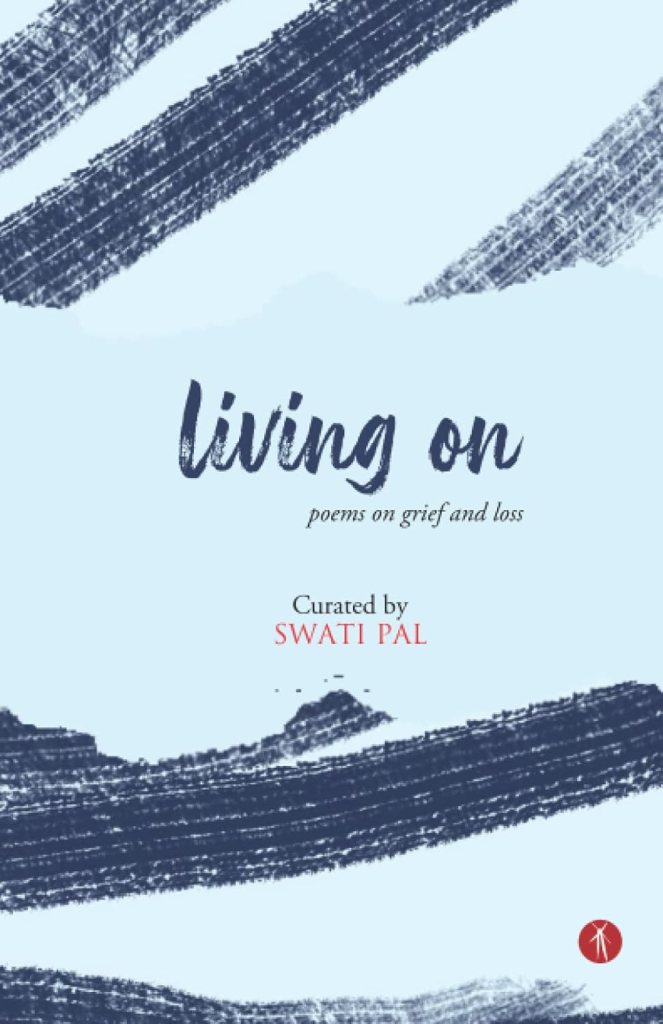
Categories
Discussion

How Gajra Kottary Weaponises Words

In a medium that is known for its regressive content, Gajra Kottary, novelist and short-story writer, has time and again gone against the tide and broken taboos. Shantanu Ray Chaudhuri looks at five shows she has written that went against the grain and emerged triumphant…

Growing up in the 1980s, one of the many pleasures of a less cluttered and leisurely time was the birth of the TV series. Many people I know would swear by the fact that the first of these represented the best of Indian television. Even close to forty years later, I can still rattle off the days on which each was telecast: Karamchand on Mondays; Hum Log[1]and then Buniyaad[2] on Tuesdays and Saturdays; Khandan[3] on Wednesdays; Ados Pados[4]on Thursdays; Yeh Jo Hain Zindagi[5]on Fridays. You had stalwarts like Satyajit Ray, Mrinal Sen, Shyam Benegal and Basu Chatterjee make fine works for the television.

Sometime by the end of the decade kitsch entered in the shape of Ramayan and Mahabharat. I moved on and lost touch. A resurgence of sorts happened with the coming of cable television, and we had path-breaking shows like Shanti and Tara. And then it became increasingly difficult to keep track of TV shows. The shows changed beyond recognition. Led by the likes of Kyunki Saas Bhi Kabhi Bahu Thi,[6] they became more and more ridiculous in the worlds they represented. One word came to be bandied about regularly with respect to soap operas: regressive.

However, like all generalised judgements, a blanket application of the word is unfair to a number of serials that tried to, and often succeeded in breaking taboos, while operating within the limitations dictated by the medium and the grammar of its narrative. And the one writer who has time and again bucked the trend, gone against the tide, is Gajra Kottary, the creator of historic shows like Astitva: Ek Prem Kahani[7]and Balika Vadhu.[8]

Gajra Kottary with Shantanu Ray Chaudhuri. Photo provided by Shantanu Ray Chaudhuri

Journalism and Fiction Writing

One of the reasons Gajra manages to break new ground in her television narratives might have something to do with her training as a journalist. “IIMC [Indian Institute of Mass Communication] was a tough course to get into and we had a few fresh graduates like me, and a whole lot of older and established professional journalists from other non-aligned countries studying with us, a great mix,” she says. It provided her with a grounding in fact-based narratives while polishing her skills as a writer, of which she had provided glimpses in college, when two stories she wrote got published in Eve’s Weekly, along with two fiction-style middles in The Times of India. “The IIMC stint helped because as I have observed over the years, I have more respect for the sanctity of facts even while taking my flights of fancy than others in the business. I take fewer creative liberties than others. I have done more realistic shows on television which helped forge a distinct identity for my writing.” But it also left her confused since political and economic writing held no interest for her and Delhi offered avenues only for those.

Destiny intervened in the form of Cupid. Falling in love with Sailesh Kottary, a “hotshot and hardcore journalist”, she moved to Bombay. It was here, as a “stay-at-home mom”, that she gave wings to her imagination and honed her writing skills. Watching serials like Saans[9] and The Bold and the Beautiful might also have helped imbibe certain aspects of writing for a visual medium. Her first work of fiction, Fragile Victories, a collection of stories, led to her first assignment in television. She had sent a copy of the book to Mahesh Bhatt, who passed it on to Soni Razdan. Impressed by the collection, the latter signed Gajra up for the story and screenplay of her first TV production, Hamare Tumhare[10](2000), which marked her TV debut, before Astitva made everyone sit up and take notice.

If IIMC shaped her in some ways, another skill-set that has held her in good stead probably came from her experiments in writing fiction. Fragile Victories was followed by another collection of stories, The Last Laugh, and the novels Broken Melodies, Once Upon a Star, Girls Don’t Cry and Not Woman Enough. These helped her to keep to a discipline that could go missing in the never-ending juggernaut that is the TV soap opera. They also are testimony to her willingness to push the envelope when it comes to narratives and characters. Not many know that much before Indian writers, particularly women, began addressing issues of sexual identity and same-sex relationships, Gajra had written about these in her fiction. As she puts it, these themes “continued to ‘consume’ me”. Not Woman Enough may have been published as an e-book only recently, but it evolved from a story that she had published way back in 2003. “I felt that I hadn’t done justice to the theme in the short format, so I wrote a full-length novel titled Not Woman Enough and felt finally relieved of my obsession.” Another story, ‘Two Gold Guineas’, evolved to her third novel Girls Don’t Cry, a pun on the expression ‘boys don’t cry’ and “an ode to the bravery of women and the friendship between a grandmother, mother and daughter”.

What is startling about these works of fiction is her ability to address taboos. Not Woman Enough not only deals with a same-sex relationship, but Gajra has the audacity to set it in rural Rajasthan as opposed to an urban setting, where it would have probably been just another story. She has the perspicacity to understand that the stakes are so much higher for first-generation characters experiencing the forces of social liberation while battling age-old customs. It is the same acuity that she brings to bear upon her iconic TV shows, which have time and again shown what is possible in a medium that allows little leeway for out-of-the-box thinking. 

Astitva: Ek Prem Kahani (2002-2006, Zee TV)

Running 668 episodes, over a period of three-and-a-half years, this is the series that launched Gajra into the big league. Today, twenty years after the first episode was aired, an older woman-younger man relationship might appear staid. But back then it was bold, and Indian television had not seen anything like it. It made an icon of its lead, Niki Taneja, who plays a doctor who falls in love with a man ten years younger. What stood out is the maturity with which the series unfolds, largely devoid of the excesses that came to mark television in later years. “The first TV show maker I decided to call upon was Ajai Sinha, who had directed shows like Hasratein [11]and Justajoo[12]. He had been planning a show called Astitva with a bold theme and my timing was bang-on. It spoilt me enough to believe that television too was conducive to the kind of work I felt happy doing.” That this show managed to hold its own against a raging Kyonki[13], speaks volumes of the writer.

Balika Vadhu (2008-2016, Colors TV)

2167 episodes! Yes, you read that right. One of the longest-running shows on Indian television, this cemented Gajra’s reputation as a writer. Here again, Gajra was going out on a limb addressing a much-abused tradition prevalent in large parts of India. And sure enough, the press wasn’t flattering. It is one show that divided opinion like few others. “Yes, we received some negative press, because Anandi was this irrepressible kid, a happy child who kept bouncing back despite dealing with the dark consequences of child marriages of the past playing out in the present. It was a calculated approach as child marriage is a dark and gloomy issue. It was a conscious decision here as we needed to keep the cheer, but critics felt that we were glorifying child marriage. I think they were missing the woods for the trees.”

One possibly needs to understand the medium and its viewership to get a sense of what Gajra means. Unless the packaging is glossy enough – colourful clothes and jewellery – audiences might have been put off entirely by what is a repulsive subject. “And that would mean we would not be able to get across the underlying message of the show. These tactics are important due to the challenge of the medium of television, and the terror of the remote control. It was a classic case of the sugarcoated pill doing its work.”

Apart from the writing, the series was also recognised for its iconic performances and comments on several social issues that ail Indian society, which were woven in organically without being preachy. It also had an authentically rustic feel thanks to Purnendu Shekhar, whose concept it was. Those decrying the glossy packaging forget that the issues the series addressed included girl child education; peer, sibling and parental pressure to do the best; child labour; the begging racket; forced prostitution behind a legal façade; quacks and medical malpractices; date rape; adoption; alcoholism; divorcee and widow remarriage; trafficking in women; surrogacy; juvenile delinquency and teenage crimes, among others. From the comfort of our air-conditioned condos and offices, far removed from these realities, it was easy for the elitist press to criticise the series.

One standout episode dealt with the protagonist’s first experience of menstruation. This is a subject still, despite Padman and the increased conversation around it, spoken of in hushed tones. It is fascinating to hear Gajra’s take on this: “I remember how we involved Avika’s [the child actor who played Anandi] mother to explain to the child privately about menstruation before we shot the scene showing a young girl’s trauma when it happens to her as a bahu in a conservative household. Lots of people wrote to us about delaying the marriages of their girl children after watching Balika Vadhu. There was a girl who was emboldened enough to annul her marriage that had happened as a child when she turned eighteen. We received mails even from parents of city girls who were now reversing their decisions to get their girls married by the time they were sixteen.”

There was of course the flipside of popularity, when the writer received a death threat on Twitter if she dared to kill off the character of Shiv (played by Siddharth Shukla). “Those were the early days of social media, so real people started to write in with their reactions which were usually very intense and sometimes downright ridiculous.”

Buddha (2013-2014, Zee TV, DD[14] National)

This series, spanning 55 one-hour episodes, was a huge challenge, involving as it did a historical figure, and one of the most important religious figures of the world. But trust Gajra to approach the subject from a refreshing point a view: as she points out, in school textbooks we go straight from the story of Gautama leaving home to being under the Bodhi tree and achieving enlightenment. But his experiments to arrive at the truth had many stages to it. As she says, “What it did was to dispel my own myths about the Buddha’s life. I had always felt disturbed about his abandonment of his wife and child for his own spiritual search.”

It helped that the show came to her at a point in life when the strong opinions and idealism of youth, both professionally and personally, had given way to the realisation that nothing is or can be ‘perfect’. By the time the show was done she too had evolved to accept that the Buddha had to be true to his heart’s calling. “I understood the ‘larger purpose’ of his life. I came to terms with the ‘abandonment’, though my heart still bleeds for Yashodhara and Rahul. What also helped was learning about Yashodhara’s evolution, albeit painfully, to want to join his sangha voluntarily, and him helping her find her ‘larger purpose’.” The series focuses on aspects of his life after the Enlightenment that many are not aware of. It is this larger view that shapes the series, making it a departure from the dime-a-dozen ‘mythological/religious’ shows with ‘special effects’ that blight our senses.

Silsila Badalte Rishton Ka[15] (2018-2019, Colors TV)

Extramarital affairs are the oxygen to the beast that is the TV serial. Offhand, I can think of not one serial that does not have a million and more permutations and combinations of the theme. So, it takes a really perceptive writer to give this tired trope a new perspective, and Gajra manages that in Silsila, upending the traditional way that extramarital affairs are portrayed. “Is the ‘other’ woman necessarily a femme fatale, a super-cool career woman, and the wife a boring domestic goddess or could it be the other way round also?” she asks.

The series provides further proof of her ability to give a new spin to a theme that’s been done to death. As she says, “I am emotional about this show as it was inspired by what happened with some close friends and associates. I needed a relief from all the social stuff in Balika Vadhu. Also, I believe that an author’s voice in terms of standing for the right thing can and should reflect in any kind of story, even if it’s not apparently one on a social issue. The classic extramarital affair with the eternal conundrum is a fascinating aspect of human relationship … does a third person enter the picture because a marriage is already collapsing or does the entry of a third person lead to the collapse of a marriage. Is it the cause or effect?”

Molkki (2020-2022, Colors TV)

After Silsila, it was back to a classic social issue for Gajra. At the heart of this show is the tradition of bride-buying in Haryana, which in turn has its roots in the scarcity of brides due to female feticide/infanticide. As Gajra says, “Molkki was a Covid baby, my second project with Ekta Kapoor and it was made keeping in mind all commercial considerations.”

Female infanticide is a recurrent theme in several of her stories. She writes about it in her novel, Girls Don’t Cry, while Not Woman Enough, published as an e-book by Juggernaut, has this as a strong strand, being part of the protagonist’s backstory impacting her psyche. Again, what needs to be noted here is the writer’s willingness to explore issues that contemporary television is not known for, even if the execution falters given the demands of the medium. 

Addressing the Regressive Nature of Television

But Gajra does agree that on the whole, television is regressive. Though it is described as a writer’s medium, there’s only so much that writers can do in terms of trying to infuse new ideas and nuanced storytelling in the face of TRPs[16] and other market considerations and entrenched beliefs that ‘bas yahi chalta hai’[17]. So, writers take the easy way out, churning out what the studio executives want. “For the handful of people prepared to take the risk and at least try to do things differently, there are scores of others who would like to use every gimmick in their book and keep regurgitating bad content.”

In terms of audience profiling too, what’s happening with television is that most of the intelligentsia has shifted to web shows. The television viewership class has gone lower down in the social scale. So when content is being made and consumed by a non-thinking class, it also starts reflecting in the TRP studies. The classic chicken-and-egg syndrome.

Looking Ahead

Gajra is currently basking in the success of her latest show, Na Umr Ki Seema Ho,[18] which recently celebrated its hundredth episode. The show is being hailed as ‘different’ by many. As she says, “The most heartening comment that I often get to hear is that ‘it’s the first TV show I have started watching after many years’, from people who had switched full time to watching web shows.”

Shantanu and Gajra with the lead actors of Na Umr Ki Seema Ho. Photo provided by Shantanu Ray Chaudhuri

Any grand obsession, a show she would like to write? “As far as TV goes, I have always dreamed of doing a version of one of my all-time favourite films, Abhimaan[19], with or without the music background. The subject becomes more and more relevant every decade. Frankly, no channel wants to touch it. Though the people one speaks to share my admiration for the story, the ‘system’, they say, is not conducive to making it. I also want to adapt my first novel, Broken Melodies, as a web show or film. It’s the story of a girl growing up in the seventies, torn between the values and stifling world that her classical musician father [an autobiographical element given that Gajra is the daughter of the classical maestro Pandit Amarnath] represents and the liberation that the English education sponsored by her mother affords her.”

One can only say, more power to writers like her, and the breaking of glass ceilings and taboos.

(Originally published in The Telegraph, Kolkata)

Addendum

Shantanu: You grew up in Delhi in the 1980s. That was the birth of the TV era with Hum Log, Buniyad, and all those glorious serials. Did any of these influence you?

Gajra: You’re so right, Shantanu, they hugely did, except that there was no plan that I had then, to actually use that impact to write something similar. I loved both these shows purely as a viewer. Hum Log did tackle social issues, for example, dowry, but why I liked it was that it showed the clash of values within a family with different generations, and through that, it entertained and made one feel and think – the sensitization process as its termed. Later, I learned that Hum Log was inspired by the Sabido method (originating in Mexico) where TV is used as a medium to bring about positive social change by making viewers ‘feel and think’ rather than preaching to them.

I loved Buniyaad for a purely sentimental reason. My parents were from Lahore and Multan respectively and had come as refugees to Delhi, so we had grown up hearing stories of Partition and here was a show that brought that era alive for me in an extremely moving and entertaining way. So maybe subconsciously both these shows did impact my psyche – as in it was possible to talk emotions that were universal, even while having a responsible author’s voice.

Shantanu: What do you attribute the change in the style and content in TV soaps, first with Tara and Shanti, and then Kyunki Saas Bhi

Gajra: Tara and Shanti were the first movers, coming in like a breath of fresh air after the DD days which were associated with somewhat stodgy storytelling, Buniyaad etc., being the shining exceptions. Tara and Shanti were great in terms of revolving around thinking and evolved women, but perhaps were ahead of their times…they still are, given where TV storytelling has gone.

By the time Kyunki Saas came to TV screens, middle- and lower-middle-class homes could afford a TV set, so there was a genuine need for TV to go more middle class in its appeal. So, we had a plethora of shows with joint families and generations under one roof, which truly was the reality of such homes, and which therefore connected with the masses easily. Ekta Kapoor also upped the drama quotient hugely, so there was no way it wasn’t going to work with the masses.

Unfortunately, however, everyone went about copying the formula and there was the overdose factor. So, TV honchos were afraid of trying different subjects and worlds and that for a very long time became the bane of TV writers.

Shantanu: On Buddha: ‘dispel your own myths, you say …’ What apart from his abandonment of his wife and child haunted you. Do you reconcile with the abandonment once you had done the writing for this? Did it make sense now?

Gajra: Buddha, the show, came to me at a point in life when the strong opinions and idealism of youth – both in professional and family life – had given way to some acceptance and the realisation that actually nothing is or can be ‘perfect’. And certainly not any decisions of life that we might make. So, we might as well make the decision, and accept and live with the consequences as positively as one can. I know that that’s so ‘anti’ the way today’s youngsters think!

So yes, from his wife and family’s point of view his decision seemed ‘selfish’ but he had to be true to his heart’s calling and that so-called ‘selfishness’ of his is what made him give so much to the world to make it a better one. I understood the ‘larger purpose’ part of the Buddha’s life after I started researching more and more while writing the story for the show. I came to terms with the ‘abandonment’, though my heart still bleeds for Yashodhara and Rahul, when I think about them. What also helped was me learning the historical truths about how Yashodhara evolved, albeit painfully, to want to join his sangha voluntarily at some point, and him helping her find her ‘larger purpose’. 

Also, what I realised is that in school textbooks we go straight from the story of Buddha leaving home to being under the Bodhi tree and achieving enlightenment and uplifting the world. This had been my myth too. But, in reality, the Buddha’s many experiments to arrive at the truth had many stages to it. He went through extreme deprivation, abnegation, self-loathing and much else, before he arrived at the eight-fold path – the most practical and fair way to lead life in any time and space.

And he certainly did not advocate renunciation for all or even the perception of Buddhism as a religion. His was the ultimate live-and-let- live approach to life – just that his methods helped his followers lead a life of peace and equanimity within their chosen path. Through writing the show I realised that there could be no other way of life that was so compatible with the modern way of thinking and doing. So I am not a ‘Buddhist’ but I still try to recall the eight-fold path at various difficult points in my life and it really helps me.

Shantanu Ray Chaudhuri is a film buff, editor, publisher, film critic and writer. Books commissioned and edited by him have won the National Award for Best Book on Cinema twice and the inaugural MAMI (Mumbai Academy of Moving Images) Award for Best Writing on Cinema. In 2017, he was named Editor of the Year by the apex publishing body, Publishing Next. He has contributed to a number of magazines and websites like The Daily Eye, Cinemaazi, Film Companion, The Wire, Outlook, The Taj, and others. He is the author of two books: Whims – A Book of Poems(published by Writers Workshop) and Icons from Bollywood (published by Penguin/Puffin).

.

[1] TV series, translates to ‘We – the People’

[2] TV series, translates to ‘Foundation’

[3] TV series, translates to ‘Dynasty’

[4]   TV series, translates to ‘Neighbours’

[5] Comedy TV series, translates to ‘This is life’

[6] TV Series, translates to ‘Because the Mother-in-law was a bride too’

[7] TV Series, translates to ‘Identity: A Love Story’

[8] TV Series, translates to ‘Child Bride’

[9] TV Series, translates to ‘Breath’

[10] TV Series, translates to ‘Ours & Yours’

[11] TV Series, translates to ‘Desires’

[12] TV Series, translates to ‘Search’

[13] TV Series, translates to ‘Because’

[14] Doordarshan or DD, Indian public service broadcaster founded by the government of India

[15] Translates to ‘Changing Relationships’

[16] Target Rating Points

[17] Hindi phrase: ‘This is what works…’

[18] ‘Age is just a number’, literal translation ‘Age has no boundary”

[19] Translates to ‘Ego’, 1973 Bollywood film

PLEASE NOTE: ARTICLES CAN ONLY BE REPRODUCED IN OTHER SITES WITH DUE ACKNOWLEDGEMENT TO BORDERLESS JOURNAL

Click here to access the Borderless anthology, Monalisa No Longer Smiles

Categories
Discussion

Rabindranath Tagore: A Universal Bard

Aruna Chakravarti in discussion with Sunil Gangopadhyay

Rabindranath Tagore (1861 to 1941) was born on May 7th. He was a brilliant poet, writer, musician, artist, educator – a polymath — and of course, we all know of him as the first Nobel Laureate from Asia. His writing spanned across genres, across global issues and across the world.

Today to jubilate this great writer on his one hundred and fifty ninth birth anniversary, we have a conversation by two greats of our era. They, like Tagore, are from Bengal — both Sahitya Akademi award winners; Aruna Chakravarti , a writer who has translated his famed Gitabitaan, and she talks about the great poet with Sunil Gangopadhayay (1934-2012), a renowned Bengali author who authored a novel on Tagore in Bengali, Prothom Alo or First Light.  Aruna Chakravarti has translated Gangopadhyay’s novel too and she also has her own novel on the Tagore family women, Jorasanko, which has been a best seller in India.

The conversation brings out the relevance of Tagore in the current day world and more interesting details focussing on responses of modern day writers to his poetry and philosophy. A part of the celebrations organised by Sahitya Akademi to jubilate the 150th birth anniversary of Tagore in Kochi in 2011, it spans the passing of an era in literature. Borderless is very privileged to host the transcript of the discussion that took place between the two giants of Indian literature, on one of the greatest and most impactful writers of this Earth, a thinker and creator who ascends the boundaries of time – our Kobiguru Rabindranath Tagore.

Aruna Chakravarti:  Sunil da. You have maintained in a number of your public statements that, as a young writer, you had no great admiration for Rabindranath. Neither did your contemporaries of the Kallol group. You considered his work sentimental and archaic and wanted to get out of his shadow. Which you did by writing in a very original and dynamic way. Yet, now that you are in your seventies, we see in you a great admirer of Tagore. You have read his works conscientiously. And I’m told you can sing at least two lines of each of the two thousand songs composed by him. Not only that. You have made him the central character of your novel First Light and used the awakening of his poetic inspiration as a metaphor for the awakening of an entire nation. When and how did this change take place?

Sunil Gangopadhyay :   Yes. We were rebels who wanted to write in a stronger, more down to earth and powerful language. We rejected Rabindranath as a model and had mixed feelings about his work. Some of his poems we thought were dated and some others were too long. But that does not mean we did not admire him. We did admire him particularly his lyrics which we knew, even then, would be immortal.

In one of my poems I have said that even if everything else Rabindranath has written dies out with time — his songs will live. My friends and I used to compete with each other as to who knew the greatest number of his songs. We would spend our evenings singing Rabindra Sangeet and reciting his poems. Some of us could recite reams of pages. But it is true that we admired him in private and rejected him in public. We made our dislike of the Rabindra scholars, who lionised  him shamelessly, quite apparent. They declared that he was the last word. That the pulse of poetry had stopped with him. They turned him into a god.

We couldn’t accept that. We were young and hot headed and reacted strongly. And sometimes we used abusive language. One of my friends declared publicly that he had kicked out a collection of Rabindranath’s poetry. But, in reality, nothing like that had happened. And we hated the term Gurudev. Why Gurudev? Why such blind adulation?

Aruna Chakravarti:  Has any of your work been influenced by Rabindranath’s?

Sunil Gangopadhyay:  No. We tried, very cautiously, not to imitate Rabindranath and if we found the faintest traces of imitation in the work any of our friends, we ridiculed him.

Aruna Chakravarti:  I don’t mean consciously. And I’m not referring to your early writing. Later, when you realised the value of his work, did it not rub off in any way? Subconsciously perhaps?

Sunil Gangopadhyay :  Can any Bengali writer escape Rabindranath? I’ve learned the basics from him. Poetic structures, the use of rhymes and metres—from where else did I learn all this?

Aruna Chakravarti :  Sunil da.  Though you started writing while still in your teens it was exclusively in Bangla till 1987, when your novel Arjun was translated into English. Which makes it a little over a couple of decades that you started reaching out to a Western readership. Something similar happened to Rabindranath. He wrote from childhood upwards in Bangla then, suddenly, chose to turn bilingual at the age of fifty when he translated the lyrics of Gitanjali. Why do you think this happened? As I see it neither of you had any particular compulsions to make your work a part of the literature of the West. Please share your thoughts on this in the light of your own experience.

Sunil Gangopadhyay:  Rabindranath had travelled widely by that time. He, as we all know, was the most widely travelled man of his times — a kind of roving ambassador for India.  He had met many eminent men and women from other countries who were impressed with his personality and curious to know what and how he wrote. They urged him to translate his work. And he did so. That was the primary reason. His family didn’t think much of this endeavour.  Dwijendranath Tagore, his eldest brother, writes in his Memoirs that one day he saw Rabindranath lying on his bed with books and papers spread out before him. On asking him what he was writing Rabindranath told him that he was translating some of his work because the sahebs wanted to read it. Dwijendranath was quite annoyed and told his younger brother, ‘If the sahebs want to read your work they should learn Bengali.’ People did not care for translations then. Bankim translated his own work but did not like them at all.

Aruna Chakravarti: And what about you? You have said, often enough, that you are perfectly content with your Bengali readership and with using Bangla as the sole language of your literary expression. Yet you did commission translations of your work. Why was this?

Sunil Gangopadhyay: Aruna, I must tell you that I’ve never, in my whole life, requested anyone to translate my work. People have done it. I have not stopped them. There is a reason for it. I consider myself a poor writer and believe that my books do not merit translation. I do my best but genuinely believe that a really good and perfect book still remains to be written by me. Besides my English is not so good. I can’t tell if the translation is worthwhile or not. You have done an excellent job. People who know English tell me that your translations are better than the originals.

Aruna Chakravarti:  Really Sunil da! Please don’t embarrass me. But let’s move on from this to another point.From the advent of English education in India writers have sensed a tension within themselves regarding choice of language. Michael Madhusudan and Bankimchandra began their literary careers in English then switched over to Bangla. With Rabindranath the opposite happened.  But not quite. He continued to write prolifically in both languages. But it seems as though he chose English for certain genres and Bangla for others. English—to express his ideas on politics, religion, education and philosophy. In short, he chose to use it as a language of communication with a wider world. But Bangla was the language of his heart. It was his language of communion—the language of his music and poetry. Here I’m reminded of the song Gaaner bhitor diye jakhan dekhi bhuvan khani (I see the universe through my songs) in which he concedes that it is only through his music that he can commune with God and all created things. And, though he doesn’t say so, the fact that he can do this only in Bangla is implicit.  It is interesting to note that he did not write a single song in English. He could have done so. He was sufficiently knowledgeable about Western music and his English, too, was impeccable. We see traces of Western influence in some Bangla songs. But he never, ever, wrote an English song.

Sunil Gangopadhyay:  Quite true. He loved Bengal and the Bengali language. He travelled to so many countries and wrote so much during those times. But the places he visited are conspicuous by their absence in his poetry. Even during his travels, the focus of his songs and lyrics were fixed, unwaveringly, on his own land. Wherever he went — be it Iran, Italy, England or Argentina — he never recorded his experiences there in song. Rather, whatever he composed during those times, reflected the melancholy of parting and a bitter sweet nostalgia for what he had left behind.

Another thing.  Rabindranath always maintained that the English renderings were not good. And I agree. Leave alone the works of others even his own translations are a feeble shadow of the original. Sometimes I wonder why Yeats and Rothenstein liked his English Gitanjali so much. It is nothing compared to the Bangla. And I don’t think his best work has been translated. There are no good translations of the poems of Balaka and Purabi. His work in English are remarkably slender.  It runs into 56 volumes in Bangla and in English we have only four.

Rabindranath may have been a world writer in his views, but he had the heart and soul of a Bengali. He loved Bengal and loved her language. During the Partition of Bengal in 1905, when the language was threatened, Rabindranath came out on the streets, for the first time in his life. He was not that type at all. He hated publicity. But he led his people in protesting against what he considered was an infringement on the lives of Bengalis and a move to crush them by diluting the power of their language. Fortunately, the Partition of Bengal did not happen in his lifetime. It happened six years after his death along with the Partition of India.

Aruna Chakravarti:  Coming back to your comment that, during his travels, he never composed a song on the land in which he was staying, I am put in mind of the song he wrote in Germany once just before Durga Puja. He wrote Chhutir banshi bajlo…ami keno ekla boshe ei bijane (the holiday flute played… why am I sitting alone in this foreign land). Pure déjà vu! To move on to another aspect of Rabindranath’s engagement with the West — we know that Rabindranath fell back on the notion of Gurukul when he started his school in Shantiniketan. He conceived it as a brahmacharyashram with himself as Gurudev or Preceptor. 

This was an expression of his lifelong discomfort level with the western system of education. He had fared badly in all the English schools to which he was sent including the ones in England. Yet Rabindranath responded enthusiastically to European literature, art and music and even studied the new scientific theories with interest from his early youth. The poetry he wrote in his teens was largely inspired by that of Dante and Petrarch. Another interesting fact is that he had not only read the major poets he was also aware of the obscurer ones. For instance, he had read the boy poet Chatterton and saw a close resemblance between himself and him…

Sunil Gangopadhyay:  Bhanu Singher Padavali (Bhanu Singh’s verses)?

Aruna Chakravarti:  Yes. This was particularly apparent when Rabindranath was writing the lyrics which were published as Bhanu Singher Padavali.  Both young men were incurable romantics and obsessive dreamers who lived in a visionary world they half believed in. Like Chatterton, who concealed his identity behind that of the non-existent medieval poet Rowley, Rabindranath used the pseudonym BhanuSingh — a non-existent Vaishnav poet. Do you see a contradiction between his absorbing interest in everything European and his rejection of it in terms of an educational process?

Sunil Gangopadhyay:  Rabindranath couldn’t stand the rigid discipline of the British public school system. He hated confinement of any sort and the notion of being dosed with quantities of knowledge within the four walls of a school room was obnoxious to him. That is why he fared badly in all the English schools to which he was sent—both in India and in England.

Aruna Chakravarti:  Yes. His brother Somendranath, who wasn’t quite normal as a boy and became distinctly unhinged in later life, fared better.  But Rabindranath’s inability to benefit from a structured system of education wasn’t restricted to English schools. His brother Hemendranath, who had taken charge of the primary education of the children of Jorasanko, told his father often — Robi mon dei na (Robi doesn’t pay attention). His music tutors complained that he didn’t attend his classes regularly and even when he did, was inattentive and careless.

Yet Rabindranath rose to be one of the world’s greatest composers and could be numbered among a dozen of its most learned men. What, in your opinion, lay behind the strange amalgam of qualities that made up Rabindranath? The meticulous self-education he put himself through with no aids other than simple lexicons and dictionaries indicate rigorous self discipline.  A wondrous ability to imbibe knowledge and an instinctive rejection of a formal, structured process of education! How does one explain it?

Sunil Gangopadhyay:   Well. He was a genius Aruna. And who can gauge the psyche of a genius? Or even try to analyse it?  And what is more he developed his art slowly and carefully. He did not rest on his extraordinary abilities. He worked hard at them. He was one of the most disciplined and hardworking men born in this world. He made some mistakes in his life, but doesn’t everyone make mistakes? When he established the brahmacharyashram he did it on the advice of his friend Brahma Vidya Upadhyay. The idea appealed to him, but he did not realise that it was a highly impractical one. Impossible to implement. 

He began by enrolling students without charging fees. But he could not keep it up. He had to sell his wife’s jewellery, even his own favourite watch, to pay his teachers. But how long could these funds last? He couldn’t make ends meet. Finally, he had to start charging fees.

Another defective system he introduced was the observance of caste. Brahmin boys would not touch the feet of Kayastha teachers. But Kayastha teachers would touch the feet of their Brahmin colleagues. Even that had to be given up.

But the great thing about him was that he never failed to admit his mistakes and rectify them. He realised that even a guru has to grow and evolve. And he learned steadily and continuously from the journey of his life. He was truly successful with his experiment of Viswa Bharati, the meeting of Bharat with Viswa—India with the world. He realized that India’s greatness lay not in her ancient system of education but in her ability to assimilate and bring together all the nations and cultures of the world.  Ei bharater mahamanaber sagar teere (In this land of Bharat, rests the ocean of all races of mankind).

Aruna Chakravarti: Very true. But some of the systems he introduced in Shantiniketan have remained to this day.  For example, his belief that a child can learn only if he’s in the midst of nature, which must have been behind the concept of the “open air schoolhe started, is still respected. No class rooms. Learning only on bedis (platforms) under the trees.

Sunil Gangopadhyay:  That was a foolish idea! And it didn’t work. It rains three months in the year in Birbhum and the rest of the year, it is either burning hot or bitterly cold. There are only short spells of pleasant weather in spring and autumn. The open-air school was impractical. It was at best a gesture. And it has remained a gesture. And to tell you the truth—I’ve never understood why Rabindranath had to open a school. He was a poet and should have remained content with writing poetry. Why did he have to pose as an educationist? Where was the need?

Aruna Chakravarti:  The time is running out, Sunil da, and I can see the Chair gesturing to me to start winding up.  I had many more questions and was looking forward to hearing your views on the conflicting Western responses to Gitanjali prior to the Nobel Prize and after. But it looks as though I’ll have to keep it aside for a private discussion. I’d like to end with one observation. Though it is not a question I would be happy to have your response. Many of your admirers, among whom I count myself, are of the opinion that no other Indian writer has come closer to Rabindranath’s prolificity, his vast range of genres and the depth and expanse of his vision than yourself. Many of us see you as Rabindranath’s legitimate successor and feel sure that you will be recognized as such and invested with his literary mantle in the not so distant future. Would you like to respond to this prophesy?

Sunil Gangopadhyay:  Thank you Aruna. But no. I have nothing to say.

Aruna Chakravarti:  Thank you, Sunil da, for your inputs. They have been most interesting and have certainly pushed the borders of our understanding of Rabindranath substantially. Thank you once again. 

 This conversation took place at a Tagore Conference organised by the Sahitya Akademi in Kochy in 2011.