She skips
 She runs
  You chase
   You think you'll never catch up
    She stops
     and as you think you'll catch her
      she ducks
       and runs away again
        You huff
         and despair
          But we all know
           if she stayed
            and explained
             you'd never try to catch her
              in the first place
Ana Marija Meshkova is from North Macedonia. She is one of the founding members of Far Horizons e-magazine and has been published in a few anthologies. She is currently working on her first book.
Raya had always seen Sunny with one leg bent at such an angle that made walking a difficult process. But she was so used to seeing him as such that it had never struck her as anything unusual. The boy had a happy face that never failed to cheer her up whenever they met. So that day when she was feeling particularly miffed with the world, a chat with Sunny was all she wanted. The reason for her sudden dip in mood was the forthcoming annual function of her school. When was the last time that she did not participate in the school annual programme? But this year Madam Rawat did not select her for any of the performances. The play that her class was doing had only one female character and that role went to Pankhuri Sharma. Wasn’t it a conspiracy against her!
— But she can’t even speak a single line properly!
Raya complained to Sunny. Sunny smiled at her, his eyes displaying wisdom much beyond his eleven years. He was Raya’s classmate, her best friend, her companion in their short walk to school, yet somewhere he was way ahead of her in understanding and patience. Perhaps in denying him the use of one limb God had given him these qualities in ample amount to survive in this complex and selfish world of negotiations. The time that children of his age spent in running about, Sunny contemplated – thoughts from all parts of the world congregated in his mind, and he coloured them with his imagination and experience. Raya of course didn’t understand all this. To her Sunny was the comfort zone where she could release all the pent up emotions of her life. His words had magic and she always found the world better after a little chat with him.
She continued with her rantings against Pankhuri and Rawat ma’am on their way to school along the fiery orange corridor of the palash and krishnachura. Sunny listened, without interrupting her tirade. Few minutes later she was already feeling better, after pouring out her brooding heart to a sympathetic listener.
“What would Elizabeth Jane do in this situation?”
He remarked casually after she had calmed down a bit. But she didn’t fail to notice the mischievous twinkling in his eyes. They were currently engrossed in the Naughtiest Girl series by Enid Blyton and often imagined adapting some of her pranks in their own school. He knew Raya loved role playing from her favourite book and that never failed to cheer her up.
“Of course she would cook up an awesome plan to avenge herself!” Raya piped.
“But whom would she avenge herself on?”
“On Pankhuri! She stole the role!”
“Poor Pankhuri, she was just following the teacher’s orders.”
“Alright, then on Rawat ma’am.”
“And what would be the charges against her?”
“Not taking an audition of course! Do you think with an audition Pankhuri could have surpassed me?”
“Well, you have a point there! But tell me when was the last time you went for an audition in all these past years!”
Suddenly, Raya realised, like always, Sunny had shown her the one-sidedness of her thoughts. There was no answer to his last question. She didn’t feel that anger bubbling in her anymore though a whiff of disappointment surrounded her like the glow on the western sky even after the sun had set.
Slowly it was the day of the programme and she felt excited like all other students. Those who were not participating would get to watch it along with their parents and other distinguished guests. This was the first year that Raya was going to watch it from the audience’s perspective. Every year she had spent this time along with other participants in the green room, coming onstage only for her part. This year, she thought she would watch the entire programme with Sunny and other friends.
As the curtains were drawn, Sunny intoned in a deliberate monotony: “ Now the Principal will come on stage and deliver a speech lasting half-an-hour, followed by another short speech by the headmistress. Then the first programme will be that of the outgoing classes of tenth and twelfth. These students will then be allowed to go home while rest of the programmes will follow.” He also told her that this was the schedule followed every year. While the principal was delivering his lecture, Sunny entertained Raya by anticipating most of his words.
Raya somehow managed to stifle her laughter and said, “have you fitted telescopic eyes into his notes! How do you manage to anticipate so much! I don’t know any of these, how come you know all about the order of performances!”
Sunny replied, “Just as I don’t know anything that happens on the other side of the wings Raya… You are lucky enough to get a glimpse of both sides of the curtain. I don’t think I will ever get to see the other side.” His tone was quite even but Raya was once again left speechless. She suddenly realised how privileged she had been in her life, just to be born in a way which most people considered normal! She flinched at her own insensitivity towards her best friend, the umpteen times in which she had cried for some trivial injustice, without even realising how unfair life had been to her friend. She held his hand and silently promised to herself that in one of the Annual Days of her school, she and Sunny would perform together on stage. Sunny would see the other side of the curtain too.
.
Nabanita Sengupta is an Assistant Professor of English by profession and creative writer by passion. Translation remains one of her chief areas of work and interest. Her works can be read in various journals, anthologies and e-zines.
.
PLEASE NOTE: ARTICLES CAN ONLY BE REPRODUCED IN OTHER SITES WITH DUE ACKNOWLEDGEMENT TO BORDERLESS JOURNAL
ONE LAST TIME

The world’s melting before my eyes,
Drowning in the ocean of neglect,
Gasping for air one last time,
Till it freezes to death.

Hear! Hear! Hear them cry,
Those innocent lives,
Trying to hold their pieces together,
In the eye of storm one last time.

When will the dawn break?
Shrouded and invisible in the darkest night they ask,
Clinging together, floating and gasping,
To be seen and saved one last time.
Heena Chauhan teaches English Literature at University of Delhi, India. Also, a research scholar, Heena spends most of her time in reading her favourite authors, cooking and skygazing.
.
PLEASE NOTE: ARTICLES CAN ONLY BE REPRODUCED IN OTHER SITES WITH DUE ACKNOWLEDGEMENT TO BORDERLESS JOURNAL
Picking up a second-hand classic from a College Street bookshop before entering the Coffee House made you feel like a literary icon in the making even if your secret mission was to clear the national or state level entrance test and join any college as a lecturer. Having a girlfriend who saw in you the potential to become the next big novelist or a poet par excellence with utmost sensitivity – just because you took unusually long to gently push back a curl of hair from her face – was fine to stay motivated but you knew full well that she was creating a romantic rebel for a torrid fling before marrying a businessman or a secure job holder. So when she insisted you should write and write and write, she was pushing you into a dark pit from where you would never emerge again to give her a chase and disrupt her marital harmony by sending across your self-published volumes of poetry in India or in obscure journals abroad to prove her right.
If you are a professor who wanted to be a writer or a poet, you have probably saved yourself from imagining the peak of literary success too early. If you have become a writer or poet because of a girlfriend who wanted to love a literary guy, you have done the worst by following her advice. You stand ruined because of love, love, and love alone – love that not only made you lose her but also your career.
It is not a tough task to find tutors and trainers who were once upon a time literary dreamers. Once they lost the plot and the pressure of survival took a toll, they had to take up odd jobs. In their possession, you found a trove of poems written as an ode to the lost love, the burden of amateurish stories that are amusing to read today but were once considered classic material by a bevy of garrulous girls in the canteen. You read out those to her sitting in the park and she fiddled with her locks and admired your stuff with an orgasmic wow. You were inspired to write love poems and you wrote dozens and read them all to her. She was thrilled she was creating a poet for the world to applaud – a poet who made her the muse. If you were a campus poet or a lyrical bloke of such intensity for years, console yourself for the inevitable self-destruction you have brought home. If you have been able to salvage your life from the ruins she left you in, consider yourself a lucky fellow. Because most of such types seldom recover later: some go mad trying to prove the correctness of their muse and spend their life in an asylum, some end their lives by committing suicide and some die in abject poverty.
Those young guys who became poets and writers in their college and university days to win the love of the girlfriend or to woo the most beautiful girl around and impress her were the ones who belonged to a sad club of jilted lovers. These guys eulogised their lovers to the skies and they were rewarded with hugs and kisses. They continued to prove an artist was throbbing, lurking, or blooming somewhere inside while the beauties mapped out their future well. One fine day they would come to inform about their marriage that was part-arranged part-love, to deliver a formal invitation to come and shower red roses and marigolds for their happy married life or play on the grand piano a mushy song topped with best wishes for the future.
You did not realise she had no dream of struggling with an artist and dumped you at the earliest, expecting that this heartbreak would just be the right blow to make you write a masterpiece. Unable to bear the rejection you went to a bar, gulped down several pegs to drain out the last dregs of sorrow, and spent the dark, treacherous night comforted by a matronly courtesan who understood your heartbreak and shared her saga of betrayals in love that continued till the wee hours of the morning.
The vivid memories of lost love remained and you channelised the passion to write an ambitious novel that consumed three critical years and you spent another three to get it published. By this time you were well past the age to be eligible for competitive exams. If there is a survey done to gauge the extent of damage done to spurned lovers in the 70s, 80s, and 90s, you will find many middle-aged and senior citizens now regretting fulsome praise from lissome campus beauties who spotted talent where editors found nothing literary. .
If you meet any such writer or poet who destroyed his life for the sake of unrequited love, please show him some sympathy. If there is any romantic fool in the family or the neighbourhood who still adores lost love and feels her true love will make things turnaround soon, there is nothing more illusory for the eternal optimist who refuses to see the reality around and still thinks she was right not to waste her life for him. Although this misfortune was a creation of his choice, it is sad he was made to overestimate himself, like an overvalued stock in the market that would crash anytime. Was it right for the guy to think he was a literary sensation just because a girl or her cabal of friends told him so? For a sound reality check, he should have approached the head of the department and got his creative writing skills assessed with objectivity or tried sending his output to magazines and newspapers – to experience rejection in love and rejection by editors simultaneously.
And yes, had the girl wanted to choose him, she would have certainly taken him away from creativity or urged him to try these things later. How could she commit such a crime? It would have led to a sacrifice of another kind – separation from art for love’s sake.
.
Devraj Singh Kalsiworks as a senior copywriter in Kolkata. His short stories and essays have been published in Deccan Herald, Tehelka, Kitaab, Earthen Lamp Journal, Assam Tribune, and The Statesman. Pal Motors is his first novel.
PLEASE NOTE: ARTICLES CAN ONLY BE REPRODUCED IN OTHER SITES WITH DUE ACKNOWLEDGEMENT TO BORDERLESS JOURNAL.
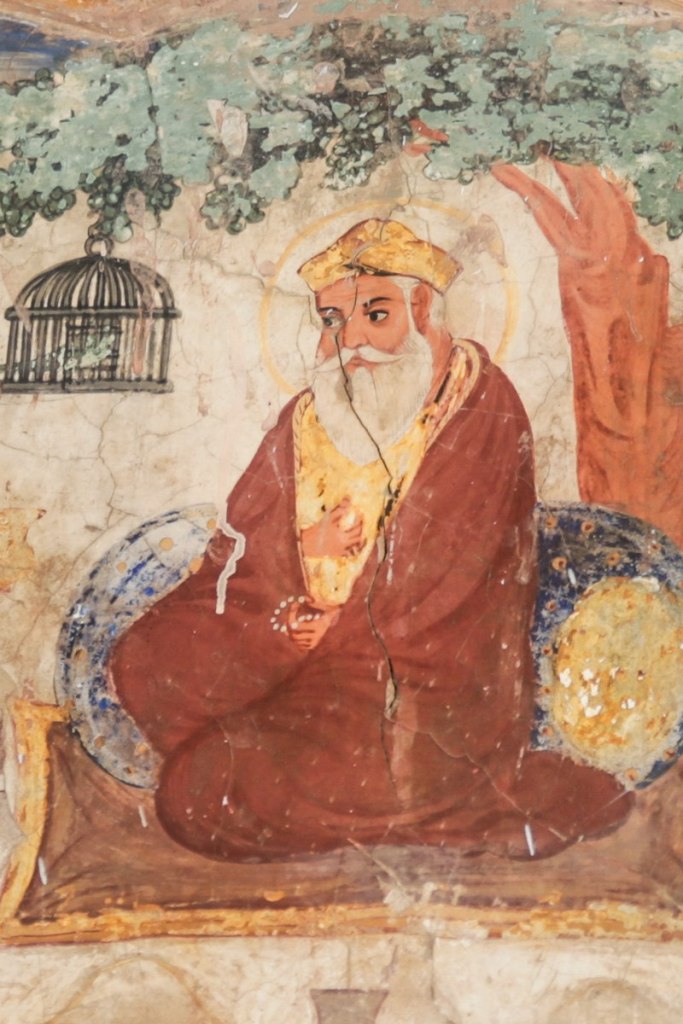
19th century mural painting depicting Nanak. Courtesy: Creative Commons
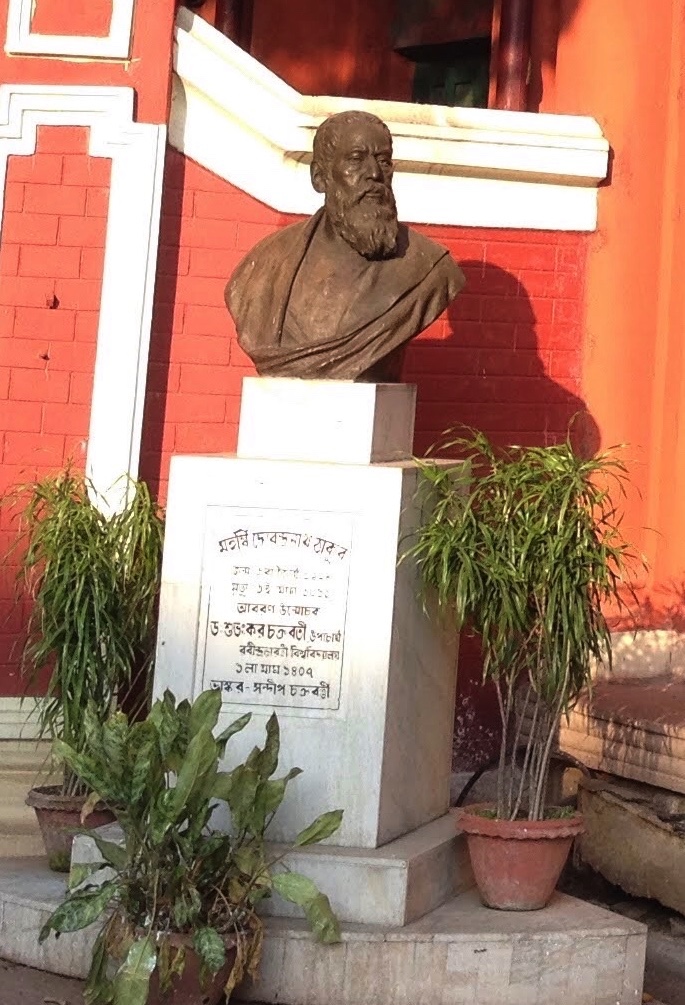
Rabindranath Tagore, Jorasanko
Debendranath Tagore frequently visited Amritsar to pay obeisance at Shri Harimandir Sahib and also while on his way to Dalhousie hills for a summer retreat. He even spent a couple of months to learn Gurmukhi from the qualified teachers (Granthis) so that he could read and recite Gurbani (or the hymns of Guru) in original. Sikhism, being a monotheistic faith induced eagerness in him to gain the insights gifted by the ten Gurus.
Rabindranath Tagore accompanied his father, Debendranath, to Amritsar in 1872. This impacted his later writings. In his Jibansmriti, he mentions having a deep impact that the recitation of verses of Guru Granth Sahib (Sikh religious scripture) had on his mind. These recitations are said to have impacted the practice of recitation of Brahmo religious texts and the singing of Brahmo Sangeet at Shantiniketan. As he witnessed the internal contradictions within the Indian society in his mature years, he turned more towards concepts of universal love, equality and unity preached by the poet saints, who had been allotted a revered place in Guru Granth Sahib. Many of his lectures like Seattle lectures (1916), Hibbert Lectures (1930), Kamla lectures (1933) mentioned Guru Nanak and Kabir for their words of unifying the nation by eradicating the ills of the caste-driven society.
Tagore believed that Guru Nanak’s vision envisioned a casteless, discrimination free society, which was a perfect model for carving out a new nation in India. His father encouraged him to read, understand and gain wisdom from gurbani. Rabindranath translated a few hymns from Gurmukhi to Bengali. As a teenager, he rendered into Bengali, several hymns (pauris) from the Japji, part of Guru Granth Sahib, some of which would then be sung at the Sunday prayer of Brahmo Samaj. One of the more famous translations is that of the Arti, a hymn that is part of the Sohilabaani or Sikh bedtime prayers. It can be found in the fourth volume of the birth-centenary edition of Rabindrarachanavali.
The sky is puja thaal (platter used for the artis), in which sun and moon are the diyas (lamps), the stars in the constellations are the jewels
dhoop malyanlo pavan chavro kare sagal banraye phulant joti,
The wind, laden with sandal-wood fragrance, is the celestial fan/
kaisi arti hoye bhav khandna teri arti.” (Guru Granth Sahib)
All the flowering fields, forests are radiance! What wonderful worship this is, oh! Destroyer of fear, this is your arti (prayer)!
Many other writings of Tagore substantiate his urge for a moral regeneration by following the wisdom of these saints. He read Janamsakhis that contained stories about the lives of the Sikh Gurus and the historical accounts of their lifetimes, and he wrote these stories in Bengali in the youth magazine Balak. The first of these was published in 1885 as ‘Kajer Lok ke’ (Bengali , meaning ‘For the Man who Works’) on the life of Guru Nanak. It unravelled the faqir in the temperament of Guru Nanak in contrast to the businessman-like character of his father who gave him some money to do a sacha sauda (a fair trade). Guru Nanak spent the whole amount on feeding hungry sadhus or mendicants and discussing the mysteries of the universe with them. He further narrates Nanak’s experiences at Sultanpur Lodhi and his travels and extensive tours to distant places like Haridwar, Mecca, Ceylon (Sri Lanka) and some more which he could access by walking to spread his message. Guru Nanak settled at Kartarpur in the later years of his life, living the life of a farmer. Tagore’s views coincided with this role model of Nanak who pursued his mystical goals while leading the life of a householder as he himself found his image of mangal (well- being of all) and kalyan (universal good) in universal love and doing good to all.
His next engagement was with the lives of Sikh martyrs and significantly with Guru Gobind Singh, the tenth Guru. But he initiated his contribution to Bengali literature for children and youth in Balak with a marked influence of Guru Nanak, his life and writings. Tagore realized that Guru Nanak’s disapproval of idolatory and his monotheism had stirred the elders of the Brahmo Samaj but that idealism would not touch children’s hearts. They would respond to a more lucid account in informal language.
In the last paragraph of ‘Kajer Lok ke’, he tells his young readers: “The Sikhs whom you see around you today, men of sturdy built, handsome countenance, tough strength and unflinching courage, are the sishyas (disciples) of Baba Nanak. There were no Sikhs before Nanak. It was his noble personality and sublime spirituality that brought this race into existence. It is through his teachings that their temper is fearless, they keep their heads erect, and their character and countenance are brightened with magnanimity” (Rabindra Rachanabali, vol.XV, trans. Amalendu Bose).
Today in times of uncertainty, proliferation of data-knowledge that lacks practical and spiritual wisdom, and the deadly pandemic, the world needs this vision of oneness of Guru Nanak and the inclusiveness of Tagore, who embraced everything that would work for the well-being of the individual and the nation, irrespective of any disparities and anomalies. The readiness to accept, imbibe and disseminate the best has been the quintessential attribute of Tagore.
Parneet Jaggi is Associate Professor of English, poet, critic, author of the historical fiction (co-authored) The Call of the Citadel. She was declared ‘Poet of the Year 2019’ and ‘Critic of the Year 2019’ by Destinypoets, UK.
.
PLEASE NOTE: ARTICLES CAN ONLY BE REPRODUCED IN OTHER SITES WITH DUE ACKNOWLEDGEMENT TO BORDERLESS JOURNAL
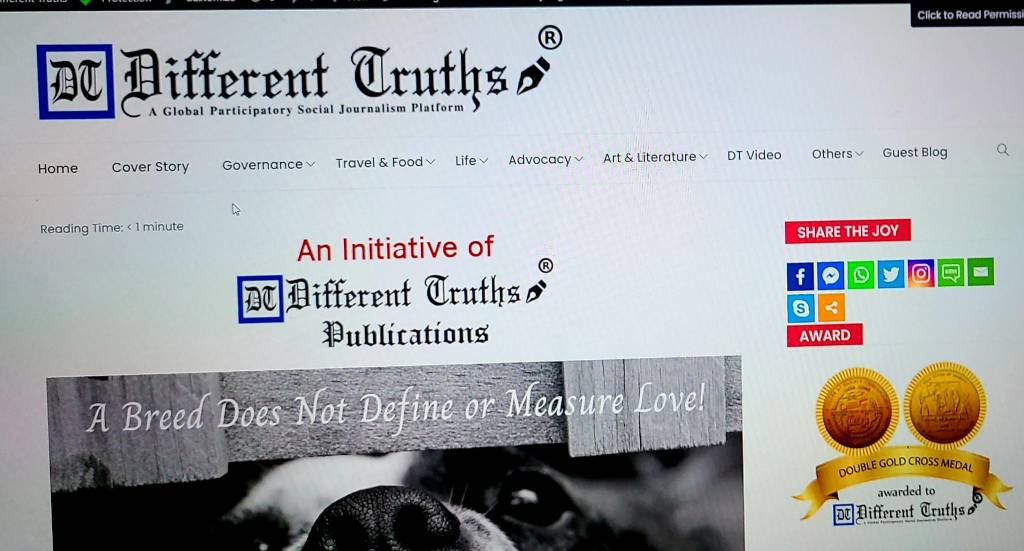
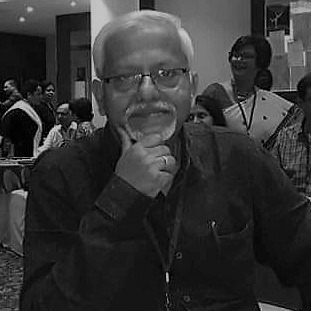
In Conversation with Arindam Roy, Founder, Publisher and Editor-in-Chief of Different Truths
Arindam Roy and Different Truths have become synonymous with publishing anything that does not fit into genres of various literary journals. The site carries opinions, humour, semi-news stories, academic papers, poetry, stories, and you name it. Roy, who completes forty years as a journalist this month, has wide experience in his profession, including in newspapers like the Times of India and the Hindustan Times. He has mapped the history of media and journalism in India with his candid responses to questions about his latest and much appreciated venture, Different Truths, which this year has been given a registered trademark. In this exclusive, he tells us about his life experiences, including starting as a writer of love letters for his friends who were less proficient in English, much in the tradition of the French character, Cyrano de Bergerac, and ending as the bureau chief of the Allahbad branch of the Times of India, the managing editor of the Citizen Journalist portal, and a founder of an unusual online webzine.
We all know you as the founding editor of Different Truths, a platform for social journalism. Can you tell us what you mean by social journalism?
When we conceived Different Truths, in September 2015, we created its vision too. We had defined Social Journalism in our page, ‘About Us’. I quote from there, Different Truths is a Social Journalism (a form of collaborative journalism) platform. Based on the tenets of Participatory Journalism, Social Journalism creates a synergy between Citizen Journalists (any lay person, who is not trained as a journalist to voice their opinions) and Professional Journalists. I feel Citizen Journalism/Journalist is a misnomer. Journalism is as much a profession as doctor, engineer, advocate, architect, or a CA, to name a few. If we cannot have Citizen Doctor/Engineer, et al., how can we have a Citizen Journalist?
Social Journalism is a media model consisting of a hybrid of professional journalism, contributor, and reader content. It is similar to open publishing platforms, like Twitter and WordPress.com, except that some or most content is also created and/or screened by professional journalists. Examples include Forbes.com, Medium, BuzzFeed, and Gawker. The model, which in some instances has generated monthly audiences in the tens of millions, has been discussed as one way for professional journalism to thrive despite a marked decline in the audience for traditional journalism.
“Social Journalism helps to strengthen and deepen Democratic Values. It upholds the best traditions of secular, non-violent, non-racist and casteless society. Different Truths upholds non-discriminatory traditions, where Special Needs people have equal opportunities. It aims at unifying the peoples from various parts of the globe to create the world without boundaries – a Global Village where Peace and Prosperity rules.
“The visionary John Lennon’s Imagine (UNICEF: World Version) is our Guiding Light, our shared Anthem at Different Truths” (we shared the video link too).
We are happy to inform you that we have had a good mix of trained journalists and non-journalists (erudite scholars, poets, teachers from universities, colleges and schools, research scholars, doctors, psychiatrists, people from the bank and insurance sectors, traders, quite a few social activists, artists, musicians, students…the list is exceedingly long. Almost anyone who wishes to write).
How old is Different Truths? What made you come up with it?
We are still young, in our sixth year. Different Truths was conceptualised in September 2015. From December 2015-January 2016, we started picking up. Initially, there were a handful of people who shared our vision. Then there was no looking back. We always have had amazing writers and poets. This trend continues.
Interestingly, our Social Journalists (SJs) were, and are, from various countries. Editorially, we are an Indo-US venture. My Co-Founder and Managing Editor, Anumita Chatterjee Roy, is based at Columbus, Ohio, the USA.
There were several factors that led to the start of Different Truths. Firstly, my wife passed away in April 2014, after a prolonged illness. Her kidneys had failed. I was her caregiver. Suddenly, I had nothing to do. No one to look after. My two children had left the nest. When I lost my wife, I found one of my Facebook friends, my kin, Anumita, stepped forward and talked to me, even if it was for a few minutes, every day. I would not be able to do so with such regularity – rain or shine.
Life sent a very dependable, trustworthy friend. She would admonish and chide me too. Reason was that I had lost my sleep and remained awake all night. I needed something to keep me busy. Turn another of my failures, sleeplessness, into success.
I knew that she and I together could launch a digital publication. Though Anumita was a little uncertain, she took a leap of faith for herself and all of us. Different Truths was born.
Secondly, as journalists, writers, and poets, most of us dream of launching a newspaper, magazine, or a TV channel. Like actors dreaming of taking on the role of directors. Before I reveal the deep personal reasons, let me tell you that after my father’s demise, I had to relocate to Allahabad. I had just married. My little sister was still in school, and my mother was shattered. My wife and I decided to return home. It was an emotional decision – perhaps this generation would not do so – and it meant that my career, which had just about taken off, would nosedive. As I look back, I realise that I was more than compensated in a different way. The Allahabad chapter of my career saw me launch several publications and supplements in newspapers. As a launcher, I had a complete overview of the publication, much like a project head.
I saw promising, quality publications gasp for survival and shut down, while not-so-good publications (including a salacious one) become a runaway success. It’s quite similar to a meritorious good child not succeeding in later life, while the street smart, neta-type (political leader-type) succeeds and shines. Interestingly, all newspapers, magazines, books, digital platforms, and films, have no magic formula of success. Each is born with its own fortune.
My experience and understanding as a launcher of publications were invaluable. Like my editor, Krishna Raj, in Economic and Political Weekly (EPW), Mumbai, used to say, “We should know what not to select before we know what to choose.” This became a lifelong mantra for me. With limited funds, digital media was the obvious choice.
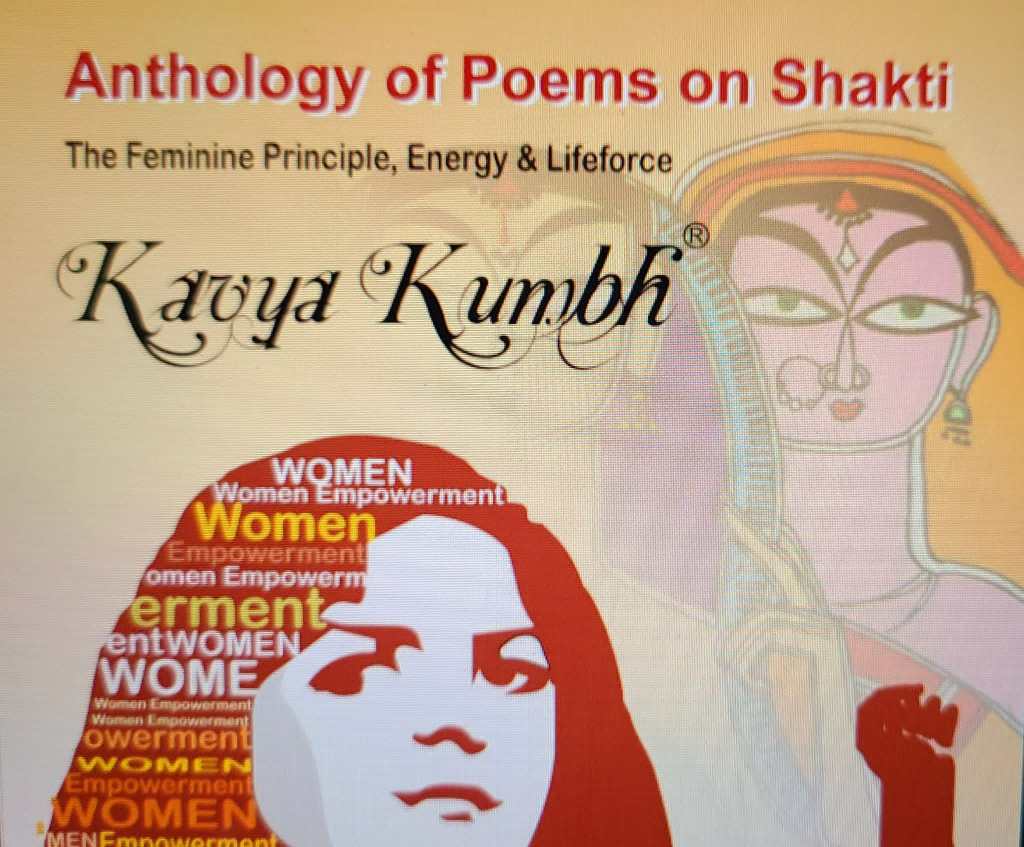
Thus, we decided that Different Truths would be an online magazine (Webzine). Now, we have two registered trademarks, Different Truths (DT) and Kavya Kumbh (KK). These trademarkregistrations were received last year, amidst the gloom and doom of the pandemic. Our extended DT family – we call them DTians – and we were thrilled. Our brands, DT and KK, have global recognition because of these trademarks.
What is it you look for from your contributors?
Like all editors, a clean copy. But that’s quite difficult considering the divergent backgrounds, cultural, educational, etc. Also, these writers have not been through the grind.
I remember you and I chatting the other day, between our works, on WhatsApp. After a thorough training, we found that we as cub journalists (writers and editors, much later) were green. A true journalist is forged in fire. Newsrooms are humbling experiences. Those – we have seen a few – who are full of themselves, have had a huge fall too. In frustration, quite a few indulged in substance abuse (alcohol, drugs, etc). Many of them were very promising. We lost so many talents. It saddens me.
All contributors need to trust us. We are hard-nosed professionals. They must give up their egos – though painful, we had to do it too. All writers, me included, should not be airheaded.
Young and not-so-young poets and writers judge themselves by Facebook likes and comments. Instant gratification is like drug abuse. It gives us an instant high. Virtual reality isn’t real. It certainly alters our perception of reality pushing us toward multiple personality disorder, if not schizophrenia.
It’s worth remembering that writing is a vulnerable process. All writers face emotional and intellectual erosion over time. Also, it’s not fair to say that grammar does not matter in a poem. It does. Free verse is exceedingly difficult. We need long practise to be able to perfect it. It’s not just a jumble of words, heaped on each other for then it becomes a glorious heap of garbage. Such poems (and prose) are instantly rejected. I recall what one of my schoolteachers used to say, “Good riddance to bad rubbish.”
Humility and eagerness to learn is most important for all contributors, no matter where they are writing.
I recall a well-known quote of APJ Abdul Kalam, “If you want to shine like a sun, first burn like a sun.”
You have a fairly popular programme called Kavya Kumbh. When did you start and why? What have been the responses to it?
It all began last year. We had decided to organise a mega poetry meet on the World Poetry Day, March 21, 2020. We had confirmed participation of around 185 poets (some with spouses and children, 223 guests) from the length and breadth of the country, from Gujarat to Sikkim, and from Kashmir to Tamil Nadu. Other than that, we had poets from five other countries. If you recall, the nationwide lockdown had begun around that time. I thanked my stars that I postponed the dates by six months around March 15 or 16.
The event was named Kavya Kumbh (KK). We decided to get a Trademark registration for KK. Thereafter, from September beginning to mid-December we had an online poetry meet in various languages. We also discussed cinema and art during the KK meet. This event strengthened our brand DT too.
All our future events, online or in person, will be held under the KK brand.
What were you doing before Different Truths?
Immediately before I started DT, I had been invited by the Banerjees, who own AH Wheeler Co. that has bookstalls in nearly 250 railway stations. AHW has been into selling books from 1877. An iconic brand, this company was started by a Frenchman, Émile Moreau. There’s an interesting story. Moreau was a bibliophile. He had books all over the house. His wife warned him that either the books or she would stay at home. He took it lightly at first. Her admonitions grew. One day, he took a table, a bedsheet, and his books to the Allahabad railway station, which had been set up in 1859, two years after the Sepoy Mutiny or India’s First War of Independence. He kept the books for travellers to pick up free. They paid instead. A business model was born. The rest is history. Later, Moreau inducted Tinkouri (TK) Banerjee and made him a co-founder of the company. After independence, he handed over AHW to Tinkouri Babu. Now, his fourth generation is running the company.
I knew all about publication launches. I had no idea about the nitty-gritties of publications’ distribution and marketing. I joined as the Head, Business Strategy and Corporate Communications of AHW, on March 1, 2014. Two years later, in 2016, I left AHW. During this time, its swanky bookshop was under my wings. I got to read all the books months before these hit the stands. It was a lovely experience. Meanwhile, DT was growing by then. It needed my attention. My stint at AHW gave me first-hand experience in distribution and marketing of publications.
Before that I was engaged in journalism, working with various publishing houses. I was asked to lead an online magazine at Gurgaon as its Managing Editor (2007 to 2009). Under my wings, it grew phenomenally. I was heading the entire editorial functions of the fifth largest Citizen Journalist portal and was responsible for bureau operations in various cities of the country with return on investment accountability. I boosted content volume by 967%, over the previous year with significant improvement in quality of that portal. I led and inspired a team of reporters and editorial desk. Enriched, I returned home, once again, now to look after my ailing wife.
Around this time, I took a sabbatical and co-authored a novel, Rivers Run Back, with my American co-writer, Joyce Yarrow (more of it later).
Meanwhile, from 2001 onwards, I was involved with several Coffee Table Books (CTBs). The first was for an Italian publisher, Jaca Books, based at Milan. Other than journalism, it opened a new channel of co-authoring and planning CTBs.
Oft and on, I was called as a guest faculty at several Mass Comm colleges, some of these were Symbiosis Institute of Mass Communications, Pune, GB Pant Institute of Social Sciences, Allahabad, Photojournalism department of Allahabad University, Jaipuria Institute of Mass Communication, Lucknow, Amity, Lucknow, Bhavan’s Journalism Department, Allahabad, etc. (though not in this order).
I was penning poems in between too. This was more for me. I have not been careful with my poems and have lost most that were written during school days till now. I remember that after my intermediate boards, I began participating in Yuvavani, reading poems, and earning my pocket money.
My father was against poetry writing and reading. He saw it as a waste of time. But I saw a glint of joy in his eyes and that of my Jetha (father’s elder brother), when they heard me recite on the radio. He melted when I bought fish for home with my first earning of Rs 140/- (Rs 35/- per week). I also gave my mother Rs 40/- in the year 1977. My father was happy that poetry could help me buy fish. It gained acceptance at home. He was also against my becoming a journalist. But after I joined EPW, things changed. During one of his visits to Mumbai, he hugged me and said, “Forgive me, I was wrong. Remember, it’s not just a job. It’s a mission.” I touched his feet. Our eyes had pools of tears.
I am happy that I followed his advice, even if it meant suffering for my wife and children. Thankfully, they understood and stood with me, through thick and thin.
You have been a journalist for a number of years. How many? Where all have you worked?
This month, on June 4, 1981, I began my career. Today, I completed 40 years as a scribe. It’s an incredibly special day for me, Mitali. It has been a long journey. Full of highs and lows. As I look back, I find that two small magazines, immensely respected, laid the foundation stone of my career. These were Himmat (Courage in English, headed by Rajmohan Gandhi, grandson of Mahatma Gandhi and C. Rajagopalachari) and Economic and Political Weekly or EPW (headed by the illustrious editor, Krishna Raj). At both these places, I did everything from proofreading to subediting to writing. It taught me that no work was small. I lived value journalism here. It went amiss later in life, with many other publishing houses, big and small. I also had a stint with Associated Press before I was asked to join The Times of India at Allahabad once again. I led the East UP edition, as the bureau chief.
How is mainstream journalism different from running a webzine?
It’s as different as chalk and cheese. Mainstream journalism needs a huge setup. It’s capital intensive. Also, it depends on advertisement revenue. When the advertisers pay the salaries of all journalists, they call the shots. Before I talk about webzine, I must add that I was at the transition of journalistic values. There was a time when the owners/managers thought twice before talking to an editor. They sought appointments from his personal assistant and would ask if he/she was in a good mood to talk. The chairman of a big media house, I was told, would ask the editor of that newspaper if he could join him for a cup of coffee. And if he weren’t free, he could check later.
In the mid-80s, four or five years after I began my career, there was a tug-o-war. The advertisement director/manager (depending on the size of the media house) was the kamau putra or the successful son, who earned the most. The circulation department made some money that perhaps paid for the newsprint and ink. He was to emerge as the mejda (the second eldest brother), but the editors and their teams were the ones that created costs by spending money. Though they might have given the house/brand a strong image, they were marginalised. A major media house said that they were there to fill the news-holes in the dummy – the space left in the page after the advertisement department sent the page-dummy showing advertisement placements. By the 1990s, editorial departments around the country had lost much ground. It was grabbed by the two earning sons of the family. Since they earned most, they got the creamy layer of the milk.
Sadly, most editors compromised. Those who did not toe the line had to leave, nursing their wounds. This meant that more and more editors agreed to play the second or the third fiddle.
In editorial meetings, one could hear that we are a newspaper, not an advertisement paper. Soon, free yellow pages emerged. These had just advertisements and perhaps a couple of rehashed stories that were written by the content writers. Somewhere in the 1990s, Advertorials began appearing. If the advertiser was ready to pay, an editorial write-up with high sales pitch was allowed. This shattered the editors and the editorial department of media houses. They had to sit and lick their wounds. The advertisement department(s) grabbed the last mile – writing – from them too.
Meanwhile, the corporate egos of media houses were to take a huge beating in the next decade, at the turn of the millennium. New media or the webzines were emerging. The advertisers were no longer sure how much of their money resulted in actual footfalls. Now, the new mantra in the various webzines were pay per click (PPC). The circulation department was soon to be replaced by the Search Engine Optimisation (SEO) teams. Now, they too had to work in tandem with the editorial department. The webzine editors soon learnt what were keywords, which news was trending. The medium and big webzines metamorphosed soon. Meanwhile, the webzine editor had learnt a few invaluable lessons. He was more like a commando. He was emerging as the news guerrilla. He was the product manager, and once again the blue-eyed boy of the team. He was responsible for the company’s return on investment. It was more like the return of the Prodigal Son for the webzine editors.
Several media houses were in the doldrums. Medium and small media houses who were blind to the new media or the webzines were pushed into penury or extinction. Big media houses were forced to incorporate the new media and integrate. They not only survived, but they also thrived.
An emerging trend that needs study is what will happen after the pandemic. Ad revenues have totally dried up. There’s no business. No buying-spending. Big media houses are seeking donations or subscriptions, something that webzines like Guardians and few others were doing, earlier.
Once again, content is the king.
Other than the TV channel, new media is the fastest, with their huge armies of citizen and social journalists. Webzines are here to stay. It’s now a 21st century reality. There is space for big, medium, and small players (like us) in the world wide web. Newer social media tools are being integrated too.
It’s exciting and exhilarating to witness so many changes, from hot metal (lino or mono typesetting) to offset printing and then to become paperless in the new media. Our lives had epic ramifications – at least for some of us, who began our careers in the 1980s or 90s.
Do you write? Tell us about your writing — especially the experience you had with bringing out books with the Times group.
Writing is my oxygen. I have been writing since my college days. First, it was nesha (addiction), then it became pesha (career). It helped me earn my pocket money. My father didn’t have to provide me with a monthly dole.
There were weird demands. Two of my friends, in the railway colony, where I spent my formative years, decided to woo two girls. Now, they were Hindi medium students, while these two girls were ‘convent educated’. Love letters had to be written in English. I became their letter writer. When these girls agreed to date these guys, they found to their dismay they couldn’t even speak proper English. One of them had seen me with her friend. She made him confess the truth. Later, all of us had a huge laugh.
There were others who wanted me to word the invitation cards for their sister, bhabi’s (sister-in-law’s) sister and so forth. There were demands for shraddha (funeral peace prayers) and sacred thread ceremony functions too. These grew. Then I decided to stop writing invitation card content. Kins and friends in business wanted me to word letters for them too. The list is endless.
I helped launch several small publishing houses. I became their free ghost writers too. This too had to stop.
Meanwhile, in 1987, I decided to do copywriting for an upcoming advertisement agency. They paid well. I attended client meetings and led sales pitches too. I still do it. But I ensure that I am paid in advance.
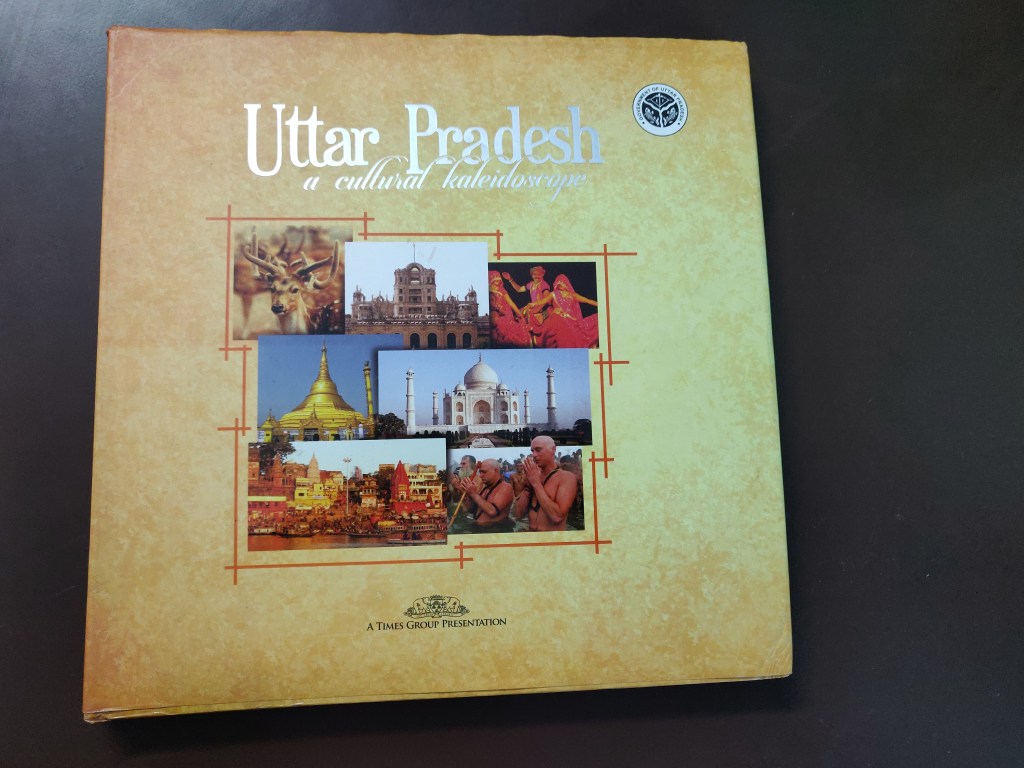
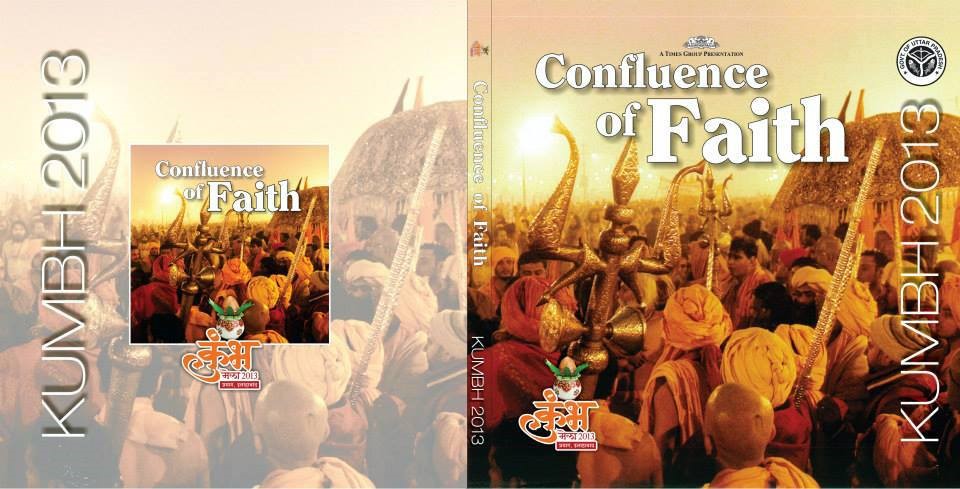
As I said earlier, I was contacted by an Italian publishing house in 2001. The Internet was new then. I was an early bird. I got a good deal. This book was read by my bosses and friends. When TOI was doing a Coffee Table Book (CTB project for the Information Directorate, on Kumbh) my bosses and friends remembered my Italian book and felt that I could do it. That’s how I got involved in the projects. My stories were interview-based, involved legwork, and contacting people. My friends in the Information Directorate insisted that I write the sarkari (government) version too. Of the 10 articles in the CTB for Kumbh, I wrote five stories (later two were merged into one) and I had four stories in it. Again, when the TOI was bringing out a CTB on Uttar Pradesh, I was given the lion’s share. Out of the nine chapters, I wrote three (one-third of the book). These were: Art & Craft: Art makes us human; Folk Traditions and Festivals: Songs and dances as life discourse, and Classical Music and Gharanas: Melodious tunes from the land of harmony.
There were many other projects, where CTBs and other books needed my inputs. I wrote and wrote.
You co- authored a novel. Tell us about that. What was your experience in co- authoring because writing is an individual experience? How do you coordinate?
I became a novelist rather accidentally. I have many writers and poets on my Facebook. Often, we writers talk and share what’s the work in progress. Joyce Yarrow, an American mystery writer, is a good friend. She was telling me on Skype chat (WhatsApp, Telegram, etc were not there then) that she had planned her next book’s location in Cuba. I mildly suggested that after this book, why don’t you come to India. She could weave rich materials and history into her book. Suddenly, she was all ears. Over the next month, I kept on telling her about India. I spoke of Tagore, Nazrul, Vivekananda, Premchand and many others.
One evening, Joyce suggested that I co-author a novel with her. I developed cold feet. I had written on facts mostly, except for a few short stories. But a novel, no way! Somewhere along the line, I agreed, though unsure. Over the next three years, we talked on Skype, phone, video chats on weekends, from about 8pm to 10pm, my time. Both of us were amazed that the entire story plot was bottled in me. I did the scaffolding of the novel, while she created its brick-and-mortar structure. We shared notes. Since there was a huge gap in our writing styles, she wrote the texts mostly, with agreements, disagreements, fights, and laughter.
It was a great learning experience. Our novel was launched at the American Centre, New Delhi, in January 2015. My Delhi-based school buddies had come to cheer me, other than my classmate Dr Sunjoy Joshi, who is heading the Observer Research Foundation. My son and nephew had attended the launch programme, other than my cousin and his wife. One person who would have been incredibly happy was my wife, Ruma. She left us nine months before the event.
Between editing and writing, which is a more preferred task?
Writing is far more fulfilling than editing. I often laugh and say that editors are like safai karmacharis (cleaning crews). We are here to dust, mop and shine works that are not upto the mark. It’s a thankless job. However, on a more serious note, editors create writers – like directors create actors – and that is a huge joy. My editors made me. It’s payback time for me, I think.
What is the future of Different Truths? What do you see as your own future?
As a Founder, Publisher, and Editor-in-Chief of Different Truths, with my Co-Founder and Managing Editor, Anumita Chatterjee Roy, we can shape the present of the webzine. We can look back in glee at the past too. But it’s impossible to say what the future holds. This uncertainty helps us put in our best. It makes us challenge ourselves too.
As I am writing today (June 4), we have 5,418 posts in Different Truths. It has taken us almost six years to achieve this. We published 17 online anthologies so far. We have published several thematic issues and are still counting.
We are the only webzine that creates its own visuals. Anumita does a wonderful job. I remember you and most writers, columnists and poets appreciate her creative work.
We two at the core form the nucleus, while the rest of the Editorial Team may be likened to the electrons of the smallest unit, the atom of the webzine.
In March 2019, we were awarded the prestigious Double Cross Gold Medal. In fact, Different Truths was chosen by an illustrious person, Knt. Sir Silvano Bortolazzi, whose name was proposed eight times for the Nobel Prize, “proposed in six occasions as candidate to the Nobel Prize in Literature and proposed in two occasions as candidate to the Nobel Peace Prize.”
Prominent writers wish to publish with us. This is a good sign for the future. As long we are honest and committed and we continue to allow all kinds of political opinions, leftist, rightist, or centrist to find space in our webzine, we shall continue to be non-partisan and democratic. We do not allow bigotry and jingoism.
No subject is taboo in Different Truths. To quote from ‘About Us’ again, we had stated, “At Different Truths (differenttruths.com), we intend to speak about issues that are kept in wraps. We wish to unravel the truth, no matter how unsavoury or bitter. We wish to challenge the taboos. We wish to be heard over the din and noise of the traditional media, most of which, we all know, has collapsed under ugly money-power. When journalists are fair, the houses are not. All media houses have their ‘Holy Cows’, areas that cannot be ever touched.”
As I look back on my 40th work anniversary today (I walked into Himmat’s office at Arun Chambers, Tardeo, Mumbai, on June 4, 1981), I am happy that we have been able to keep the promise we made to ourselves and the world, in September 2015.
Last but not the least, we two as captains are as good as our team (writers and poets). At the end of the day, they make or mar us. If we learn from our past and focus on our present, the future shall take care of itself.
I enjoyed responding to your perceptive questions. Thanks a lot.
Thanks Arindam.
The Core team of Different Truths: Arindam Roy & Anumita Chatterjee Roy
(This is an online interview conducted by Mitali Chakravarty.)
.
PLEASE NOTE: ARTICLES CAN ONLY BE REPRODUCED IN OTHER SITES WITH DUE ACKNOWLEDGEMENT TO BORDERLESS JOURNAL
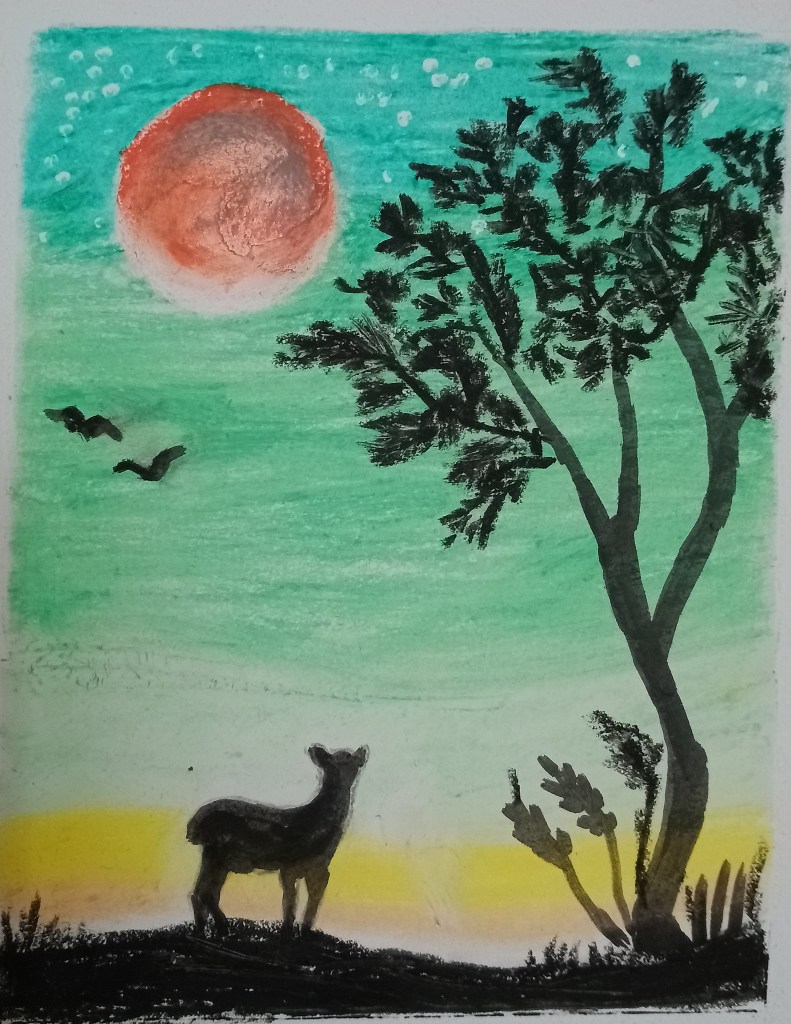
Written in 1910, Amar Sonar Horin Chai ( I want the Golden Deer) is a popular Rabindra Sangeet that is often performed on stage. Seemingly simple, it explores the poet’s yearning for the intangible and ends with the sense of euphoria generated by his quest for the impalpable.
Sohana Manzoor’s interpretation in pastel & ink of ‘Amar Sonar Horin Chai’
The Golden Deer

Regardless of what you say,I want the golden deer.
Enchanting,nimble footed,I want that golden deer.
He runs startled,eludes our gaze,and cannot be tied.
If he comes within our reach,he escapes puzzling our vision.
Chasing the elusive one who continues to evade capture
Through fields and forests,I lose myself.
Things that you can buy in bazaars are stored in homes.
Why do I look for that which cannot be bought?
I lost what I had while yearning for the intangible.
Do you think I am grieving for my lost treasures?
I am content to live with a smile devoid of sorrow,
Disappearing in my mind amidst meadows and woods.
Environment and man — are they separate or is man a part of nature? Different writers have interpreted nature and its forces in different ways over a period of time, in glory, in storm and at battle. Explore some of our selections on nature on World Environment Day… Enjoy our oeuvre.
Rabindranath Tagore’sEkti Khudro Puraton Golpo (One Small Ancient Tale) from his collection Golpo Guchcho ( literally, a bunch of stories) has been translated by Nishat Atiya. Click hereto read.
Bhaskar Parichha gives us a glimpse of the life of Wangari Muta Maathai founder of the Green Belt Movement, which has — through networks of rural women — has planted over 30 million trees. Click here to read.
As cyclone Amphan fireballed and ripped through Kolkata, Nishi Pulugurtha gives a first hand account of how she survived the fear and the terror of the situation. Click here to read.
Born in united Bengal, long before the Partition, Kazi Nazrul Islam (1899-1976) was known as the Bidrohi Kobi, or “rebel poet”. Nazrul is now regarded as the national poet of Bangladesh though he continues a revered name in the Indian subcontinent. His birth anniversary is observed on 25th May in Bangladesh and on 25th or 26th May in Tripura, India. In addition to his prose and poetry, Nazrul wrote about 4000 songs. He was charged with sedition by the British for his fiery writing and jailed repeatedly.
We celebrate his anniversary with powerful translations of his prose and poetry. May his works help us move towards a better and more enlightened, borderless world as envisioned by him.
As a tribute to the 209th anniversary of Edward Lear, Rhys Hughes writes of his famous poem, ‘Owl and the Pussycat’, and writes a funny ending for it rooted in the modern day. Click here to read.
A compelling flash fiction by Suyasha Singh hovering around food and a mother’s love. Click here to read.
The Literary Fictionist
In A Lunch Hour Crisis, Sunil Sharma raises humanitarian concerns that though raised in a pandemic-free world, have become more relevant and concerning given our current predicament. Click here to read.
Anasuya Bhar explores the various lives given to a publication through the different edited versions, translations and films, using Tagore as a case study and the work done to provide these online. Click here to read.
Prithvijeet Sinha uses Gaman (Departure), a Hindi movie around the pain of migrant workers, as a case study to highlight his contention that lyrics and songs convey much in Indian films. Click here to read.
Bhaskar’s Corner
In Manoj Das – The Master Storyteller, Bhaskar Parichha pays a tribute to one of the greatest storytellers from the state of Odisha, India, Manoj Das( 1934-2021). Click here to read.
Bhaskar Parichha reviews Raising a Humanist by Manisha Pathak-Shelat‘s and Kiran Vinod Bhatia. Click here to read.
Interviews
Communication scholars and authors, Manisha Pathak-Shelat and Kiran Vinod Bhatia, discuss how to bring up children in these troubled times, based on their book, Raising a Humanist, which has just been released. Click here to read.
Sonya J Nair of Samyukta Poetry talks about the Samyukta Research Foundation and its affiliates and its festival, Anantha. Click here to read.











 Borderless