THE BISCUIT TIN

Let us in,
Oh, let us in,
sing the mice to the biscuit tin.

Let me out,
Oh, let me out,
shouts a thing that lives within.

     And
     the mice
     change their minds.

In the
biscuit tin
the monster was dozing
and while dreaming
he cuddled his prehensile toes
with his trunk of a nose.
Imagine that!

     Now he’s awake
     and hungry for cake
     but who has cake in a biscuit tin?
     Not him, not him!
     He is dreadfully thin.

That’s
the sad thing
we sometimes forget
when talking of mice and monsters
— they get hungry too.


QUESTIONS AND THEIR ANSWERS

What?
   When?
      Where?

She asked me,
and in order to reply
with accuracy and efficiency
I cunningly
replaced her
Double Yous with Teas.
     Do you see?

     That!
        Then!
           There!


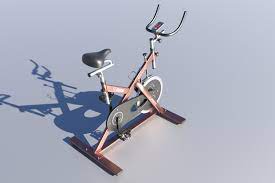
THE GYM BIKE

I pedal on the gym bike every day
but I go nowhere
out of my way — I stay right there
and always obey
the laws of physics and geography.

I pedal on the gym bike every night
and the moonlight
licks my brow — but why and how
it likes my taste
is beyond my powers of deduction.

I pedal on the gym bike all my life
and even my wife
hates the suction — of hard saddles
that hold me fast
because they will outlast my stamina.

I pedal on the gym bike every second
and the wall clocks
swooping in flocks — have given up
counting the miles
that remain until I reach myself again.
Rhys Hughes has lived in many countries. He graduated as an engineer but currently works as a tutor of mathematics. Since his first book was published in 1995 he has had fifty other books published and his work has been translated into ten languages.
.
PLEASE NOTE: ARTICLES CAN ONLY BE REPRODUCED IN OTHER SITES WITH DUE ACKNOWLEDGEMENT TO BORDERLESS JOURNAL
Title: Permacrisis: A Plan to Fix a Fractured World
Authors: Gordon Brown, Mohamed El-Erian, Michael Spence, Reid Lidow
Publisher: Simon & Schuster UK
A nation or region’s success depends on three things: growth, economic management, and governance. The three dimensions are interconnected and affect each other. Growing an economy is a fundamental part of economic development. Factors like productivity, technological innovation, and sector expansion are all part of it. Infrastructure, education, and research and development are key to sustainable growth. Strong growth can create jobs, raise incomes, and improve living standards.
Governments and institutions take policies and decisions to maintain the economy’s stability and effectiveness. Setting fiscal policies, regulating financial markets, and overseeing trade and investment are tasks involved. The goal of effective economic management is to promote stability, increase competitiveness, and grow the economy. For macroeconomic stability and progress, it takes inflation, budget deficits, and exchange rates into account.
Countries and regions are governed by rules and structures. It includes political institutions, legal systems, and decision-making processes. By promoting transparency, accountability, and participation, sound governance ensures power is exercised fairly and justly. Decisions are made keeping in view society’s most beneficial interests, and citizens’ rights are protected. Maintaining stability, attracting investment, and promoting economic development requires strong governance.
Growth, economic management, and governance reinforce each other. Sustainable economic growth requires effective economic management, ensuring resources are allocated efficiently and policies support it. Effective governance promotes stability and attracts foreign investment through efficient economic management. A well-functioning governance system ensures that economic growth benefits are distributed equitably. After the recent pandemic, economists are worried about a prolonged crisis. Could we be experiencing a permacrisis? It is likely that the current state of the world will lead to anxiety, and that is what this book tells us in splendid detail.
Permacrisis: A Plan to Fix a Fractured World by Gordon Brown, Reid Low, Mohamed A. El-Erian and Michael Spence looks at the economic downturn the world is struggling through right now.
After holding the office of Chancellor of the Exchequer for over a decade, Gordon Brown became Prime Minister. During the 2009 London G20 summit, he mobilised global leaders to walk the world back from the brink of a second Great Depression. He is currently serving as the UN Special Envoy for Global Education, spearheading efforts to ensure quality, inclusive education for all children. He is also a Global Health Finance Ambassador for the World Health Organization. Brown holds a PhD in history from Edinburgh University.
Mohamed A. El-Erian is President of Queens’ College Cambridge. As Chief Economic Advisor at Allianz, he formerly served as Co-Chief Investment Officer and Chief Executive of PIMCO. Besides columnising for Bloomberg Opinion, he’s also a Financial Times contributor. He is a Senior Global Fellow at the Lauder Institute and Rene M. Kern Practice Professor at Wharton School. Before joining Harvard Management Company, he was a managing director at Solomon Smith Barney/Citigroup. His books When Markets Collide and The Only Game in Town were New York Times bestsellers.
Michael Spence is Emeritus Professor of Management at Stanford University. He is a Senior Fellow at Stanford’s Hoover Institution, and a Council on Foreign Relations Distinguished Visiting Fellow. He is an adjunct professor at Bocconi University and an honorary fellow at Magdalen College. He authored The Future of Economic Growth in a Multispeed World. He was Dean of the Stanford Business School from 1990 to 1999, and Dean of the Harvard Faculty of Arts and Sciences from 1984 to 1990. His awards include the John Kenneth Galbraith Prize for teaching excellence and the John Bates Clark Medal. He won the Nobel Prize in Economic Sciences for his work in information economics in 2001.
Reid Lidow served as Los Angeles Mayor’s Executive Officer. Reid worked on Gordon Brown’s campaigns before. During his undergraduate studies at USC, Reid double majored in International Relations and Political Science. He received a Gates Cambridge Scholarship and an MPhil in Development Studies from Queens’ College, Cambridge.
As some of the most highly respected and experienced thinkers of our time, these friends found that their pandemic zooms increasingly focused on a cascade of crises: sputtering growth, surging inflation, poor policy responses, an escalating climate emergency, increasing inequality, a rise in nationalism, and a decline in international cooperation. They shared their fears and frustrations with each other. The more they talked, the more they realised that, despite past mistakes that set the world on this bumpy path, there is a better path to a brighter future. Their varied perspectives contributed to their pursuit of a common goal: attainable solutions to the world’s fractures. Those thoughts are reflected in this book.
According to the authors, our current permacrisis is a result of broken approaches to growth, economic management, and governance. Even though these approaches are flawed, they can be repaired. A provocative, inspiring plan to change the world is the need of the hour. The book illustrates how we can prevent crises and improve the future for the benefit of the many and the few. According to the book, problems that remain unresolved for a prolonged period of time will only worsen; this is what happens in a permacrisis, which is why we must act quickly.
This instructive book provides a sensible plan of reform that can be used to create a world that is fairer and more equitable.
.
Bhaskar Parichha is a journalist and author of Unbiased, No Strings Attached: Writings on Odisha and Biju Patnaik – A Political Biography. He lives in Bhubaneswar and writes bilingually. Besides writing for newspapers, he also reviews books on various media platforms.
.
PLEASE NOTE: ARTICLES CAN ONLY BE REPRODUCED IN OTHER SITES WITH DUE ACKNOWLEDGEMENT TO BORDERLESS JOURNAL
UNTITLED

(i)

the bird keeps coming back
to the tree that is dying

why is it so hard
to leave what you once called home?


(ii)

how many ghazals died
trying to teach you to love?

quite a few—
some were from kashmir
some were from gaza
some were from karachi
some were from delhi

yet you chose to repeat
the words dipped in hatred
again and again
every night
Sutputra Radheyeis a young poet from India. He has published two poetry collections — Worshipping Bodies(Notion Press) and Inqalaab on the Walls (Delhi Poetry Slam). His works are reflective of the society he lives in and tries to capture the marginalised side of the story.
.
PLEASE NOTE: ARTICLES CAN ONLY BE REPRODUCED IN OTHER SITES WITH DUE ACKNOWLEDGEMENT TO BORDERLESS JOURNAL
Exodus of 1971 refugees, out of East Pakistan, the name for Bangladesh between 1947 & 1971Rome, Piazza
She is wondering how to enter the story, if she were to write it. The story she has been circumambulating in the last few days, ever since the encounter at the Bar in her piazza.
Was it possible to enter any story directly, as if through a front door? It occurs to Naureen that there might be as many doors and windows to a tale, as there actually were in any house. Her own, for example, here in a suburb of Rome, as also in all those houses she had inhabited in her childhood and growing years, all over undivided Pakistan before 1971.
In West Pakistan, there was the red brick colonial house in Multan of the late fifties, the modern bungalow in Nazimabad colony in Karachi of the early sixties, or in East Pakistan, the pink and grey two-storey house next to a boys’ school in Dhaka Cantonment, when the city was still written as Dacca, and the school was owned by the powerful Adamjees of West Pakistan and not a college yet, and the momentous seventies had not started. East Pakistan was not Bangladesh yet, and still yoked to its bullying Western half.
Naureen brushes off her thoughts about the past and returns to the story nagging her, which was not about houses. But wasn’t every story like a house? The house of an amnesiac who enters it as if it were an unfamiliar space, till certain things made him realise that this might be a place he knew well: a piece of furniture, a smell, a view, adding up to a sensation of déjà vu.
Or it could be an oddly familiar face. Or a voice, husky and wounded, whispering, even laughing, hiding its unspeakable pain.
*
A week ago, Naureen adjusted her mask and entered the Bar in the piazza near her house.
“Un caffè Americano, a tavolo.” She ordered her coffee at the counter and went outside to sit under the striped awning. The August heat, like clockwork, had turned after the middle of the month and it was cool in the shade. She opened her laptop but her eyes scanned the streets of her neighbourhood. Things were almost normal now, more people were out and about, wearing masks. Since the lockdown in Rome in March, her university had shut physically, but till June, Naureen had taught on-line her classes of English and Bengali to her Italian students. Now, finally, she was free.
A writer friend in Dhaka, editing an anthology dedicated to the fiftieth anniversary of Bangladesh’s independence had requested her to translate into English a Bengali story submission, and Naureen had been happy to return to the world of fiction.
The story, based on facts, the editor friend mentioned in his email, concerned the experience during the war of liberation in 1971 of a teenage girl abducted from a high school in a district town by collaborators and brought to a military camp. A rape camp. A harrowing, yet ultimately redeeming story. How could such a cruel fate end in redemption? Naureen started to read.
She had barely finished reading the first page of the story when she heard a voice across the street from the Bar.
“Apu[1]!” Naureen turned around. On the pavement, under the Nespole fruit tree stood Sadia with a pram. She looked plump since the birth of her baby. The last time she had seen her young compatriot was the year before, when Sadia had regretfully announced that due to her pregnancy, she could not continue the lessons of Italian and English that she loved taking with Naureen. Those two hours once a week were something even Nareen had enjoyed. Then came Covid. So, they had not seen each other for a long time, even though they lived in the same zone, different neighbourhoods.
Standing beside Sadia was another Bengali woman, in shalwar-kameez. Despite the mask, and her head loosely covered in a scarf, Naureen could see she was an older person, Naureen’s age, or a bit more. Possibly in her late sixties. Sadia waved with genuine delight at Naureen and whispered to her companion, who took off her mask and nodded in Naureen’s direction.
The woman looked strangely familiar. Where had she seen her? Naureen knit her brows, before she produced a polite smile. Meanwhile, Sadia left the pram with the other lady and crossed over. She walked up to Naureen’s table and beamed.
“Apu, how have you been? You never came to see my baby.”
“I know, Sadia. But with this Corona virus situation…” Naureen rose saying, “But let me see the baby now.”
“Oh! Stay where you are, Apu. Let them walk over. I’ll introduce you to my mother.” She signalled and the mother ambled over pushing the pram. Naureen cooed appropriately and forced a fifty euro note into Sadia’s reluctant hands.
“It’s for the baby,” Naureen said.
“Your blessings would have been enough, Apu,” Sadia protested.
The lady kept a smiling but dignified distance. They exchanged formalities, and the mother said: “My daughter has mentioned you often. How special you are, your home…”
Naureen kept looking at her, not listening to her words but absorbing that husky, bruised voice. “When did you come from Dhaka? Didn’t you have problems with the visa, and with quarantine?” Naureen asked.
“Oh! I don’t live in Bangladesh. I live in London. I have a small tailoring shop there in a Bengali neighbourhood. Brick Lane. I came to Rome early this year, before the corona problem started. I am now stuck here. But happily, of course, with the baby….”
Naureen was only half listening.
Somewhere, through a cloudy window she peeked into another era. Dacca, 1972, the year after Bangladesh’s tumultuous birth. Naureen and her young aunt Fahmida, a doctor and social activist, had gone to the Dhanmandi Rehabilitation Centre to interview some of the rescued rape victims….
The baby was getting cranky. Sadia was saying “Apu, you have to come over to my flat and have tea with us one day.”
“I will,” Naureen said, then turned slowly to the mother. “Is your name by any chance, Shopna?”
Sadia laughed, “No, her name is Shamima Akhtar Begum, Shumi.”
The lady turned placid eyes to Naureen, a glint of recognition surfacing. They locked eyes for a second. She said, “Sadia, you can’t just ask your teacher to drop by. Invite her for a meal.”
Sadia joined her effusively. Naureen said, “You should bring your mother to my place, too. But I will come over for tea very soon.”
After they left, Naureen sat over her coffee, her laptop, and the world of stories waiting to be uncovered. She was thinking, after fifty years, everything becomes fiction: our past, our lives, our dreams, our struggles and pains, our joys and triumphs. It all transforms into story.
Story. History. His-story. Her-story. Everyone’s story. All we could do was to preserve it by narrating and transmitting it to each other.
*
Why the hell was she talking so much? The bitch. Spawn of bloody Hindus, or sister of some ‘Mukti’ for sure. Traitors! Bastards all
“Shut the hell up!” He didn’t want to hear her voice, especially her pleading, broken Urdu. Nor look at those limpid, fraught eyes. Already it was diluting his rage, his fire.
No. He had been told while being posted to Jessore, these Bengalis needed to be a taught a lesson. . . His slap knocked her down, her head hitting the floor.
“Oof! Allah!” She cried out, and instead of terror she looked up at him with wild, angry eyes, as if she would jump up to his throat, kick and slap him back. Just the way his younger sister, Laali, would as a kid. Lalarukh, far away in Quetta.
Instinctively, he was on his knee. “Oh! God, I’m sorry.”
In a flash the expression in the girl’s eyes changed from anger back to fear. Her cracked lips trembled and so did her hand as it lifted to wipe a trickle of blood from her forehead.
But before he could pull her up, they froze on the floor listening to heavy footsteps coming up the corridor outside. The boots stopped at the door next to their room. The door handle rattled as voices jeered.
‘Oye yaar! Let us in. Why is the door locked?”
“How many do you have there? Come on, give us a share.” There were thuds, sounds of laughter interjected with the sharp notes of women’s screams and wails.
He pulled her up. She was shaking and clung to him. He held her for an instant then moved her away and said, “Listen, see that door at the back. It leads out. Just go.”
She looked at him blankly.
He repeated, “Go!”
“Go where?”
He shrugged, “Kaheen bhi. . . wherever. Just leave. Now.”
She turned her face away. “Yes, and have a whole battalion of grizzly animals descend on me. I’d rather be protected by someone decent like you.”
“I can’t protect you and I am not decent. In war, we are all barbarians.” He sat down on a chair, face in hand. She stood before him her shoulders sagging, her dupatta pooled at her feet.
*
“And then? What happened?” Seventeen-year-old Naureen asked.
Shopna gazed unseeing outside the windows of the Dhanmondi Rehab Centre and let out a shuddering sigh.
Fahmida said. “It’s okay. Shopna, you don’t have to tell us more, if you don’t want to.”
“It’s not that.” The dark eyes were strained but tearless. Her voice was low and scratchy. “It’s just that this is not a ‘story’ but things that actually happened to me, so in my mind it’s all jumbled up. Some parts are erased, others sharp as a knife. What we saw and endured…no language has words to describe these. . .”
Shopna started to sway from side to side. “We were a dozen women, all herded like cattle in that room…. One woman was fortunate and died after being assaulted repeatedly. Her body was hauled away like a sack of rice . . .” Her voice was thin and low as a keening.
Fahmida stroked Shopna’s head. “It’s okay, dear. We don’t want you to dig into anything you don’t want to. Unless it helps you.”
Naureen wiped her eyes and whispered to her aunt, “Khala, I just can’t process what she went through! Imagine, her husband brought her, a newlywed bride, to be safe with her parents in Dacca and went to join the guerrillas, and a neighbour betrayed her!”
Shopna raised stony eyes to them and muttered, “Yes. I will never forget that morning. It started as any morning. How was I to know what destiny had in store for me by day’s end?”
*
Yet the girl knew how lucky she was not to have been herded into the other crowded rooms where they took the rest of the girls brought in military trucks. She was deemed more educated and pretty, so reserved for officers. Thus, she was in a separate room.
And she survived to narrate her story.
Early the next morning, it was still dark when the officer opened the back door and smuggled her out to the compound outside. She hid behind a drum while he went and got a jeep. He backed to where she was. She scrambled in and lay low at the back. There was only one sentry at the check post at that hour, who saluted and then they were out.
She stayed hidden till he stopped the jeep. It was near a road edged with paddy fields. This was the road going out of the cantonment. He asked her to sit up. She peeked out and saw in the distance two figures: old men, farmers, watching them from the field. Nearer to them, across the road and beside a ditch stood a little boy.
“O Ma! Military!” She heard him say as he ran into the grove of thatched houses. She hid her face in her hands. He observed her reaction and understood. It would not be safe for either of them. He drove further off to a more isolated spot, took his jeep down the earth track and stopped under a tree. He let her out. She barely had time to utter her gratitude before he turned the jeep sharply around, said, “‘Forgive me.” and drove off.
*
Teenaged Naureen let out her breath. She felt she had aged since she entered the Rehab Centre that morning.
Fahmida whispered, “I wonder what happened to him.”
Shopna was far away, silent. And within the silence, each moved further into the untold story.
*
A month later the girl was in her uncle’s village home. It was a safe zone, far away from Jessore, near a Mukti Bahini training camp. Some freedom fighters including her brother and cousins had come to stash arms. She was in the kitchen boiling rice and dal for a quick khichuri for the men when she heard shouts. Then grunts, groans and sounds of jostling and kicking came from the courtyard. Her brother and his group of freedom fighters had captured a Pakistani soldier.
They dragged him to the inner courtyard and were beating him with the butt of a rifle. One of the men held up his head by his forelock. She glimpsed his terrorized, bewildered eyes in his bloodied face. In an instant, she ran outside leaving the pot simmering on the fire.
“Stop. Oh! Please stop.” She screamed and dashed between the attackers and the prone body. “Let him go.” She shouted, beating at the others.
“What?” Her brother motioned the others to stop.
“Don’t touch him. Please! He… saved my life. A month ago, in Jessore. . . before I came here.” She sank to her knees and started to weep. The soldier’s left eye was puffed, a side of his face bloated and bruised. He looked at her blankly.
The beating had stopped. “What the hell do you mean?” her brother shouted.
The girl wiped her tears and said, “Bhaiyya[2]. You have not been in touch with our mother, and when I came here, I only told you that I was with my friend Mubina at her aunt’s house outside Jessore and had come here directly to be safe. That’s true, and I told Uncle to tell Amma that also. But there was one day and night, earlier in Jessore town, when Amma was desperately searching for me since I did not return from school.” Her lips trembled. “Bhaiyya! I was abducted and taken to a military camp by someone. . .”
Her brother yelled, “Which haramjada bastard did this…? I’ll rip out his. . .”
“Bhaiyya! Listen. Nothing happened to me. It was the new chowkidar of the school. He said that Amma was seriously ill and had asked me to come home quickly. He whisked me away in a three-wheeler. With his beard and prayer cap, I trusted him Bhaiyya!” Instead of tears, her eyes are aflame with loathing.
She continued steadily, “Luckily, I was spared, because this soldier saved my honour. He helped me escape. I recognised him.” The brother, still breathing heavily kept his rifle pointed at the soldier but told the others they needed to discuss. The others turned away, all shouting and gesticulating, and motioned the brother to follow. “Lies!” One of them spat on the soldier’s boots before he left. They stood not too far away, keeping an eye on the soldier. When they came back, they told the girl that they had decided to tie his hands and feet, blindfold him and set him adrift on a boat.
“He will die,” she cried.
“Oh! Don’t you worry. Every village, every riverbank is crawling with collaborators. Some bloody razakar[3] will find him and help him get back to his camp. It’s only important that we obliterate our tracks.”
While the freedom fighters discussed the proceedings among themselves, the Pakistani soldier turned to whisper to the girl in Urdu. ‘I don’t know why you saved my life. I can never repay you for your humanity.”
She put a warning finger to her lips and muttered. “This is what I owe someone.”
He looked at her baffled. “You said I saved your life. I don’t understand. But God bless you, my sister.”
The men came back with a bundle of rope and a thin, chequered gamchha[4]. Before they dragged him away, he turned to the girl and said, “Khuda hafez[5].”
“You too. God be with you. . . and with him,” she whispered.
*
Naureen opened the windows of her study room wide to get some air to dispel the August heat and sat down at her desk computer to look at her translation so far. The rawness, the immediacy in the Bengali narrative was not coming through in English. It was sounding trite. The fault was hers. She could not improve it, because another story was fidgeting within her. She wished she could write that: Shopna’s untold story that Naureen could not even begin to imagine.
Still, she was wondering how she could enter that tale, if she were to write the story. Not through doors or windows, but possibly by burrowing through like animals, tunnelling underground, and re-imagining the trench of captivity. The grave-like penumbra, the women not knowing if it was night or day, summer or winter. A dozen half-naked ravaged females with unseeing eyes lying like corpses, wishing they were properly dead and buried, and not awaiting the shame of light, of discovery, the world outside.
Naureen got up. She needed to talk to Sadia’s mother. Not to Shamima Akhter Begum, Shumi, but to Shopna.
*
Naureen calls Sadia for directions. Her flat is near the Viale dei Caduti per la Resistenza — “The Street of Those Who Fell during the Resistance.” — the Italian struggle against the enemies during the Second World War. Naureen finds these long street names both musical and moving. How painful must have been the path of those who fell during any struggle, whether men or women. But in Italy, the “Fallen” had been elevated and preserved in public memory, and they had shady avenues dedicated to them, lined with pine trees and flowering oleander bushes.
In 1971, the struggle for freedom was fought not just by men; countless women had made sacrifices. Remembering and honouring them was of fundamental importance. Naureen feels excited that today, this peaceful street named for the spirit of resistance was leading her to Shopna. For her Italian students of Bengali, she could translate that name as “she who dreams.” But how would she tell the story of dreams mutating into nightmares?
*
Sadia’s flat is on the third floor of a well-maintained, middle-class apartment block between a supermercato[6] and a shady children’s park.
Naureen is welcomed by Sadia and ushered directly into the main bedroom.
“Apu, the room at the front, we have rented to two Bengali bachelors who work in a restaurant nearby. We hardly see them.”
The bedroom Naureen enters is well lit and airy. Next to the neatly made-up bed is a two-seater sofa facing a TV on a laminated bureau. Once Naureen is settled on the sofa, Sadia goes to the kitchen to make tea. Naureen watches Sadia’s mother put the baby in her cot in another room.
“I keep the baby in my room,” she says coming back to sit on the bed.
Without preliminaries, Naureen says, “So, Shopna, tell me your story since we last met.”
Shopna’s head is uncovered today. She takes time to knot her loose hair into a bun. There are some grey strands. “Sister, I am no longer the person you met with your aunt that day in Dhaka, fifty years ago. That Shopna died in 1971 and was reborn since then. A cruel rebirth. Still, here I am, sitting before you, smiling.” She looks out at the view of the distant hills.
Sadia returns with a mug of milky tea. It’s sweet. Naureen only drinks black sugarless tea. But she sips it to not make a fuss.
“Have you taken your mother to the hills?”
“What’s there to see, Apu?”
“You have never been there?”
“Well, my husband is so busy all week working at the petrol station that on Sundays our only outing is to go shopping.” Sadia laughs.
“Those hills that you see in the horizon, that’s where the Pope’s summer palace is. You know, the Pope? The Vatican? Anyway, in summer he lives there, overlooking a volcanic lake . . .”
Sadia is listening gravely, trying to absorb all the information.
Naureen rushes on. “Anyway, it’s a scenic place. Go there sometime.” Naureen ends, feeling slightly foolish.
Sadia says eagerly, “Apu, please write down the name of the place. I will ask my husband to take us next week. I always learn so much from you.”
Shopna smiles. “Actually, even in London, I hardly go anywhere. Once a nephew took me on the bus and showed me the Queen’s palace. Otherwise, I only know Wembley and my area.”
They are quiet for a while. Sadia goes to check on her baby, saying, “Apu, it’s her feeding time. I hope you don’t mind. It takes a while. You two chat.”
After Sadia leaves, Shopna says, “Sadia’s father, my present husband, was a widower when I met him. He married me after my first husband abandoned me. Another day, I will tell you about my life. I had thought, the ordeal I went through with the army animals during 1971 was hell. But another fiery dozakh[7]awaited me when my husband came to see me at the Rehabilitation Centre. He and his family could not accept me. To be fair, they tried at first, but could not when they found out I was pregnant. I, too, wanted to die, but failed. I recovered from the abortion. And the day after your aunt and you came to the Rehabilitation Centre, I joined a sewing course and decided to live in a women’s hostel. I started to work as a seamstress. One day, I met Sadia’s father. He had a small business in London…”
Shopna pauses and looks towards the open window. “Some might consider Sadia’s father to be an ugly man. But I only saw a beautiful heart. He came like a fereshta, an angel who took me away. I was granted a new life.”
Naureen follows Shopna’s gaze, directed, she realizes now, not at the lofty faraway hills. Shopna, a smile like a tremor on her lips, is looking nearby, at a shard of sunlight on the open windowpanes, one of them reflecting a tiny balcony with baby clothes drying on a stand.
*
That long ago February winter morning in Dacca was not as chilly as Shopna’s eyes were, as she recounted her ordeal, in bits and pieces. The room at the back of the Dhanmandi Rehabilitation Centre was quiet at this time.
Fahmida put her hand on Shopna’s head and said, “You must allow the tears to come.”
Shopna let out a hysterical laugh. “I watched my parents being shot dead in front of me, my mother’s blood and father’s brain splattered on the verandah by the military. I was dragged away to the hellhole of the army camp. For months we women underwent torture. All my tears dried up. Forever. Even on the day we heard ‘Joy Bangla’ shouted all around us and we were released and rescued by some Bengali brothers and kind Indian officers who wrapped us in blankets, I had no tears of joy. And the day my husband sent me the message to not return home, I had no tears of sorrow.”
Suddenly Shopna burst into tears. Wild tears. She howled in fury. Her eyes were molten lava: “If only one day I could find that razakar, the neighbour who betrayed my family, led the military to our house as the family of freedom fighters, thrust me into hell fire…. and if I could avenge myself, that day I would find peace.”
“Do you know his name, where he lives?”
Shopna sighed. “Yes. But he’s not there. He escaped.”
Naureen blinked back tears and let out her breath.
Fahmida said, “I wonder what happened to him…and to other devils like him….”
Shopna was silent. And each of them burrowed into the silence of untold, unspeakable stories.
Neeman Sobhan,Italy based Bangladeshi writer, poet, columnist and translator. Till recently she taught Bengali and English at the University of Rome Publications: an anthology of columns, An Abiding City: Ruminations from Rome; fiction collection: Piazza Bangladesh; Poetry: Calligraphy of Wet Leaves. Armando Curcio Editore is publishing her stories in Italian. This short story was first published in When the Mango Tree Blossomed, edited by Niaz Zaman, for the 50th anniversary of Bangladesh.
.
PLEASE NOTE: ARTICLES CAN ONLY BE REPRODUCED IN OTHER SITES WITH DUE ACKNOWLEDGEMENT TO BORDERLESS JOURNAL
Wildfires, how they rage
as if pronouncing the unholy trail of human irony and hate.
Waters of the Mediterranean,
how they toss and turn,
to render children's lives ashen and subsumed in colourless urns.

State of the world,
torched by a disrobed tendril in the snow
and a single drop of blood above fields meant to be plowed;

Washed asunder by demolished idols and the scarred face of Art,
a son pleads to the mother
to be taken to another part.
Graffiti bombarded walls and measured inches of slam poems,
these confront the enemies and agents of bad omens.

State of the world,
sealed in the infected mouths of bunkers,
voices of agony down South where Sunday masses are alighted by a handful of flickers.

Wild is the wind,
that old messenger of incidences,
a time to rise above courtesies, obituaries and condolences.

*

Ceasefires aloft
Taking a hold on the prized message of sisterhoods,
capes, veils, raiment, all given to the smog for an imminent selfhood.

Wild is the wind that carries the current of rivers,
a poet's jilted heart in the rear end of heated discussions and a civilisation's tremors.
Blow, blow ye wild wind,
blowing upon the fate of the nation,
impaired by speeches of a midnight hour, promises and ancient consolations.
Prithvijeet Sinha has prolific published credits that encompass poetry, musings on the city, cinema, anthologies, journals of national and international repertoire, as well as a blog, An Awadh Boy’s Panorama, from which these poems have been republished. His life-force resides in writing, in the art of self-expression.
.
PLEASE NOTE: ARTICLES CAN ONLY BE REPRODUCED IN OTHER SITES WITH DUE ACKNOWLEDGEMENT TO BORDERLESS JOURNAL.
It may seem perverse to submit an article advocating the benefits of borders to a journal entitled Borderless. I hasten to explain that I agree with the guiding principle of this publication – that the human spirit should be encouraged to soar, transcending cultural limitations and national boundaries. But I’m also reminded of the observation made by the American poet Robert Frost that high fences make good neighbours.
Borders! It’s one of those words that has developed an almost completely negative connotation in recent years, having taken on the emotive sense of exclusion and unfairness. A second example of this phenomenon is the term patriotism, which now is denigrated for similar reasons. Borders and patriotism refer to values and beliefs valorized in the past that are currently under vigorous attack. Their stock has plunged dramatically in this modern globalised society.
It’s no wonder. We inhabit the age of EDI – equality, diversity, and inclusion. Few voices are raised to question its tenets. Most people seem, for example, unreservedly to believe in multiculturalism as an undisputed good, and love of one’s own country has become a questionable – often dismissed as a deplorable – sentiment.
The present disdain for borders and patriotism is unsurprising. We are witnessing the mass migration of people from one part of the world to others on a scale unseen since the post-1945 refugee crisis, when an estimated 175 million people were on the move, in part because of the defeat of the Axis powers but also because of new civil wars. Nowadays, the US, the UK and Europe are proving particularly attractive destinations for individuals fleeing countries troubled by violence, corruption, poverty, religious persecution, and social discrimination. I would like here to explain why I believe in the benefits of borders while acknowledging their potential demerits.
I think the propensity to erect borders is an essentially human trait, coexistent with human existence. The world’s first walls originated with its first cities – places like Jericho in the Bible, constructed twelve thousand years ago – where Joshua waged his famous battle to bring them down. The ancient cities had walls for defensive purposes. Walls intended to divide countries came much later, with the first instance originating in Mesopotamia in 2000 BC.
David Frye observes in his book Walls: A History of Civilization in Blood and Brick that the idea of constructing barriers to keep people out is as ancient as human civilisation. It is only the people excluded that has changed. In the past, it was invading hordes of armed warriors. Now barriers are erected to control immigration, to keep out terrorists, and to halt the flow of illegal drugs.
In Frye’s opinion, borders originated as a means of creating a safe space where civilization could develop and flourish. Walls gave people the security to sit and think. Frye links the building of the Great Wall of China in the late third century B.C. with the creation of the ancient Chinese state. In Britain, Hadrian’s Wall was constructed around 112 A.D. by the Romans to keep out the ‘barbaric’ tribes in the north while they ‘civilized’ the inhabitants further south.
Borders seem to be coming back into vogue. Donald Trump’s vow to expand and reinforce the Mexico-United States barrier was a crucial component of his successful 2016 presidential campaign platform. But in January 2021, the newly elected president Joe Biden halted construction of what had become known as ‘Trump’s Wall’. Since that date, the southern border of the States has been swamped with illegal migrants, and in July 2022 Biden backtracked, announcing a plan to fill in four gaps in the barrier in Arizona that had seen some of the busiest illegal crossings. Some might argue it’s too little too late. In July 2022, there were reports of four thousand Mexican family encounters at the border; a year later, that number had quadrupled. And that’s only Mexican immigrants. Economic and political turmoil in such countries as Venezuela, Haiti, Ecuador, and Columbia has seen large numbers of people trying to escape to the States: their near neighbor where they seek not only safety but a place where they can aspire and thrive.
Similarly, the EU is in the process of having to reconsider what it once identified as one of its guiding principles: the unrestricted movement of people (in particular, workers) within its twenty-eight EU member states. Countries such as Austria and Denmark have significant percentages of their populations who are opposed to this policy. It has been argued that citizens in richer member states are more likely to have negative views. Until the 2000s, only one percent of EU citizens lived in a country other than the country of their birth. That situation has changed dramatically in recent years with the EU’s enlargement to central and eastern Europe. Now intra-EU migration involves millions of EU nationals who are, in general, their countries’ best and brightest – their most highly educated or highly skilled workers – moving from poorer to richer EU member states. What some EU nationals see as an opportunity, others regard as a threat.
Borders not only keep people out but also keep people in. That is one of their least attractive features. The barbed wire that was the first manifestation of the structure that came to be known as the Berlin Wall appeared almost overnight in August 1961. But this wall had an unusual purpose. It was erected to prevent immigration from East Germany to West Germany when the economy of the former was on the verge of collapse because of the many people fleeing to the west. The Berlin Wall staunched that flow of emigration, leading President Kennedy to observe that ‘A wall is a hell of a lot better than a war’.
Arguably the Korean Demilitarized Zone constructed after 1953, which is 250 kilometers long and five kilometers wide, separating the north and south of what was once a single country, has similarly acted as a deterrent to armed conflict. It has been described as a ‘comfortable wall’ that ensures an ‘uncomfortable peace’. For the North Korean government, it acts as a barrier to invasion from the far more prosperous and less repressive government of South Korea. But it has also trapped millions of people in a state that increasingly resembles a huge prison camp. North Koreans are among the poorest people in the world as well as the least economically free. It is estimated that a tenth of the population died during a famine that lasted from 1995 to 1998. While a thousand escape the country every year, many are imprisoned, tortured, and even killed while making the attempt. But they are willing to brave the danger, reluctant to remain in a country where they are systematically denied any civil, religious, or political rights.
Borders are not limited to the demarcation of cities and countries. Physical structures indicating property limits are a fact of everyday life for people throughout the world. In my native America, fences are a prominent feature, indicating boundaries for houses and fields. In Japan, where I lived for many years, the traditional family compound – including farmhouse and storehouse and courtyard – is enclosed within clay walls. In the corner of northwest England where I am currently residing, the countryside of rolling green hills is crisscrossed by dry stone walls and hedges. Hedges in Britain have their origins in the Bronze Age (2500-700 BC), when they were used to manage cattle and to keep them separate from crops. There is speculation that some hedges of sufficient age, density and size may even have once served as military defenses. But while their first function was to act as barriers, they now serve an important role in the environment, as the preserve of insects and wildlife, including sixty species of nesting birds.
A house itself represents a kind of delimitation: a declaration of private space as opposed even to the yard or garden, which are semi-public. Americans tend to be house-proud, their dwellings often boasting large picture windows that afford a view to passers-by of the carefully decorated front room. Japanese, on the other hand, are sometimes ashamed of inhabiting a cramped small house sometimes separated only by a matter of inches from their neighbours’ homes on either side, and they tend to use opaque rather than clear windows to preserve their privacy. Even the big traditional Japanese farmhouse is somehow secretive – bearded in heavy shrubbery, stooping under the weight of a heavy tiled roof. Of course, there are many types of houses in Britain, but I happen to live in one of the most common – a terraced house with a tiny garden out front and a cement yard at the back. My bay window looking out onto the street has its lower half shrouded in a thin net curtain. When I stand nearby, I can look out at my domain – my little plot of earth densely planted with bushes, flowers, and shrubs.
Living in the UK, I’m often reminded of the saying ‘An Englishman’s house is his castle’. The typical British home has an emphasis on the cozy and comfortable, and while few still have coal fires, many retain the old fireplaces as a decorative feature. Alas, nowadays, many British people pave over their little front gardens to use the space for parking. But traveling by train affords wonderful views of long strips of narrow gardens backing on to the tracks, and I sometimes think their owners are like public benefactors, entertaining us with the sight of their patios and pergolas, their beds of flowers and rose trellises as we speed to our destinations.
The observant reader may have noticed that I have begun this short essay on borders by examining those surrounding countries and cities, and then continuing with an ever-narrowing perspective. I would like to conclude by looking at the barriers we put up between ourselves and others.
As I noted at the beginning of this piece, the American poet Robert Frost wrote a poem eulogising high fences for ensuring good relations with our neighbors. Because the States is a relatively new country – and one of considerable size – many Americans can enjoy the luxury of living in houses surrounded by a good deal of land. Driving through any suburb you can see large expanses of grassy lawn separating the house, often a ranch-style dwelling, from the road. In that sense, Frost’s high fences aren’t needed. Unlike the Japanese, crammed into close quarters with each other, or Europeans, fond of renting flats, Americans are used to having their own space. The pioneer spirit lingers on with a focus on rugged individualism.
This can be a curse as well as a blessing. There have been shocking instances in recent years of abducted American women and children spending years as captives in houses so remote or so barricaded against the outside world that their kidnappers could act with near impunity.
Such a situation is unimaginable in Japan. Many Japanese, and especially those in Japan’s cities, live in what they call ‘mansions’ – huge buildings with apartments the inhabitants own rather than rent. Few secrets can be kept in such an environment. In towns and rural areas, the strong emphasis on community activities means that there is constant interaction between households.
While many Americans like to preserve a physical distance from others, the Japanese have developed ways to preserve their privacy in public places as a sort of psychic skill. During my long residence in Japan, I often marveled at how the Japanese can make a virtue of necessity, and this is a case in point. On packed trains, the Japanese self-isolate by reading or dozing or using their phones. In dense crowds in cities, they manage to retain personal space by skillfully skirting each other, scarcely touching, as they walk. Whenever I find myself in one of the huge subway stations in Tokyo or Osaka, I occasionally pause to marvel at what looks like a carefully choreographed dance. Throngs of well-dressed people silently rush past me. They are dignified, intent on their own business, and no confusion or chaos is perceptible. Despite the closest proximity imaginable to each other, they somehow manage to preserve their own personal borders.
The situation in the UK is between those two extremes. Despite inhabiting one of the most densely populated countries in Europe, the British can enjoy incomparable scenery preserved as so-called ‘green belt’ areas around cities as well as landscapes protected by their designation as national parks or as areas of outstanding natural beauty. Unsurprisingly, the British are great walkers. As an American, I’ve had to learn that when a friend suggests a stroll, it can easily mean a four or five-mile hike. The British can escape to the great outdoors when they feel a need to be alone.
There are those who dismiss national stereotypes as nonsense, but I’m inclined to credit them with at least a grain of truth. I think, for example, there are affinities between the Japanese and the British that are perhaps attributable to their both inhabiting island nations and being, as a result, insular. They are bad at learning other languages. They are traditionally characterised by a certain reserve – lacking, for example, the American fondness for confessing details of their private lives to complete strangers.
Borders. Patriotism. The two are connected. It is often said that those who do not learn from the mistakes of the past are doomed to repeat them. The lesson we might be tempted to draw from the bloody history of the twentieth century is that nationalism is reprehensible and that borders can lead to wars.
But I prefer to draw another moral. It can be argued that the world was plunged into two world wars because evil, opportunistic leaders like Hitler chose not to respect national borders while also twisting patriotism felt by Germans and Austrians into a perverted version of what is a normal human impulse to love one’s own country. As I write this piece, I can’t help but think of how topical it is, with the tragedy unfolding in the Middle East which concerns borders and contested land. I pray a just settlement can be reached and peace achieved as soon as possible.
Finally, I believe we all resort to a variety of measures to define ourselves. We are individuals; we are residents of a certain neighborhood; we are citizens of a particular country. I believe that it is by respecting each other’s borders – personal and public – that we can achieve the ideal of living together on this crowded globe in harmony. Public borders – such as the political boundaries of our own country – can inspire altruism by leading us to identify with an entity greater than ourselves. Private borders – those parameters for conduct and behavior we draw for ourselves, in our daily lives – can confer peace and a sense of individual self.
Wendy Jones Nakanishi has published widely on English and Japanese literature and, under her pen name of Lea O’Harra, has written four crime fiction novels available on Amazon.
PLEASE NOTE: ARTICLES CAN ONLY BE REPRODUCED IN OTHER SITES WITH DUE ACKNOWLEDGEMENT TO BORDERLESS JOURNAL
ARCHEOLOGY

There are no flowers, and birds
have sought kinder weather.
The gnarled trees,
bereft of leaves,
their limbs like leper’s arms,
seem from another planet.
Day by day,
as my hair turns grey,
I speak to myself, but I have
nothing important to say,
and what good are words?
They’re feeble tokens.
Creatures roamed this earth
for millions of years,
and not a word was ever spoken.
George Freek’s poetry has recently appeared in The Ottawa Arts Review, Acumen, The Lake, The Whimsical Poet, Triggerfish and Torrid Literature.
PLEASE NOTE: ARTICLES CAN ONLY BE REPRODUCED IN OTHER SITES WITH DUE ACKNOWLEDGEMENT TO BORDERLESS JOURNAL
Engaging with technicians from diverse domains is followed by one common experience. Be it a mason, electrician, plumber, carpenter, driver, or wall painting expert, they have all surprised me with their compulsive habit of presenting their visiting cards embossed with fancy titles and a glossy, designer look to hook potential clients even though most of them get the spellings wrong while providing the address and contact information.
They wait patiently for some minutes in the hope that I will also reciprocate by fishing out one from my wallet. I pretend to search for one in my pockets before saying I am not carrying one, though the truth is I have rarely, except once years ago, thought of getting it printed to furnish my insignificant professional credentials that can be summed up in a word or two, making the card wear an unintended minimalist look, a wasteful expenditure without any purpose.
The album of visiting cards collected from various professionals and business contacts in the past never engendered the hope of deriving any tangible benefit from investing in this communication tool for self-promotion. Now I end up tossing it away as soon as I receive one. I prefer to avoid accepting them under the pretext of contributing to a paperless, eco-friendly world, without sounding impolite to refuse a crucial piece of one’s identity in times when the search for it has become rather intense.
Printing a visiting card with scant details of identity and achievement can neither look impressive nor impress any recipient. With no scope of finding clients from the world outside my window, the entire exercise would prove futile. The tailor around the corner will never launch a campaign to promote his outlet and the grocer will not blink in favour of advertising, even if there is a real threat from the online stores delivering faster than he can. If I decide to make it elaborate, I would still have to explain my job profile. Terms like ghostwriting cannot be self-explanatory to the common man who might think I am either writing for ghosts or about ghosts or perhaps a newbie ghost indulging in writing to seek revenge or salvation.
Smitten by the competitive bug, I did once seriously ponder over making one with AD MAN written in bold. I dropped the idea as this would shed no light on my specific role, making others slot me as a flex banner supplier who also paints walls and plasters the walls of the city with film and clinic posters. It would have necessitated the disclosure of my exact role in the realm of advertising to present a clear picture of the work I did. As it appeared a cumbersome process, it was wiser to refrain from flexing the creative muscle to score brownie points from an audience most unlikely to recognise the ordinariness of this trivial pursuit deemed as art.
Skipping the tag of copywriting meant resorting to the identity of a writer, which did not go beyond the confines of a hobby. Many consider themselves writers but they do not call themselves writers as they have better designations to flaunt for social esteem. Employing nothing but the word writer means there is nothing else in the name of my pursuit to survive, as most people refuse to wake up to the possibility of writing becoming a full-time engagement that pays your bills.
The uncontrollable urge to possess a visiting card made me pay a visit to the local printer who wanted the full content of the card. I insisted on highlighting the phrase writer-cum-copywriter, much like the sofa-cum-bed expression that made him understand the duality with ease. He was honest to say he had never made a card for this category of people even though he knew there existed many people from this background. It was a fresh task for him and he introduced the idea of using stars to highlight the celebrity angle even though there was nothing starry in it. I showed him some samples to accustom him with neatness and he copied the same pattern and font and offered me a pack of one hundred pieces without any printing error.
I was excited to share my professional identity with the world around. I wanted to give it to the people I had received it from. I located several such folks, eager to gauge the reaction of the recipients. A few dropped it casually in their pocket without trying to read it while some cast a fleeting glance before putting it aside. Some struggled to read and make sense and then gave it up without asking for clarity or its relevance. A select few responded with astonishment to know writers also brandish visiting cards. It was a consolation that none of the recipients dropped it on the pavement even though I am sure some would have trashed it at home or fed it to their pets as a chewing exercise.
Within a month I had finished half the pack and the range of reactions stopped being any different. That’s when I decided to hoard the rest for better use later – for some high-profile people. When I did come across some such folks, I did not gather the courage to share it with them. As a result, the cards sat on my writing desk, only to remind me of what I had wanted – and failed – to achieve.
I had shared it with spice dealer turned promoter and he tested me by asking me to write a tagline for his housing project that was not selling fast enough, without any promise of making it a payable freelance assignment. Out of respect for the gentleman, I wrote some catchy lines and he accepted them for his dream project with a cold thank-you, with the hope that his venture would be sold out soon. I never sought any input regarding the sales figure but the fact that he made it the brand tagline meant it was effective for the growth of his real estate business. It has been quite a few years since this episode and the cards still languish with me. I am no longer excited to reciprocate by offering mine when florists, gardeners, drivers, stall vendors, gas cleaners, and milkmen offer me their visiting cards. I am not saddled with the burden of furnishing mine to assert and boost my identity that is less than relevant to the vast majority of people engaged in more profitable pursuits. I seek solace from the fact that going cardless is the next big thing in the AI-powered world that has marginalised the prestige and glamour of copywriting today.
Devraj Singh Kalsiworks as a senior copywriter in Kolkata. His short stories and essays have been published in Deccan Herald, Tehelka, Kitaab, Earthen Lamp Journal, Assam Tribune, and The Statesman. Pal Motors is his first novel.
PLEASE NOTE: ARTICLES CAN ONLY BE REPRODUCED IN OTHER SITES WITH DUE ACKNOWLEDGEMENT TO BORDERLESS JOURNAL
Groundhog. Groundhog Day is celebrated on February 2nd. If the groundhogs leave the den where they hibernated, the weather is supposed to move towards spring. This observance has its roots in ancient Celtic culture.
GROUNDHOG DAY

It’s Groundhog Day.
The groundhog is somewhere
burrowed deep in the ground.
Either the groundhog
doesn’t know what day it is
or he doesn’t care.
But, then again,
Christ doesn’t show up
on Christmas either.
Just your father
and his new wife
with some toys.
It’s the one time of the year,
you see his shadow.


TWILIGHT

day flies off
like cardinals
and gold-finches

night
settles
on the branches
like crows

mice
scamper nervously
across the forest floor

all the birds
are owls


WORKING MY WAY THROUGH THE DICTIONARY,
	I AM NOW AT Q

Some words
have tens,
if not hundreds,
of synonyms.
Others,
hardly any at all.
That is why I’ve never
written a poem about a quark.
That word,
for want of an alternative,
would appear on every second line.
Even this poem
has to repeat the word quark
just to get its point across.
So let this be my quark poem
and leave it at that.
John Grey is an Australian poet, US resident, recently published in New World Writing, Santa Fe Literary Review, and Lost Pilots. His latest books, Between Two Fires, Covert and Memory Outside The Head are available through Amazon. He has upcoming poetry in the Seventh Quarry, La Presa and CaliforniaQuarterly.
.
.
PLEASE NOTE: ARTICLES CAN ONLY BE REPRODUCED IN OTHER SITES WITH DUE ACKNOWLEDGEMENT TO BORDERLESS JOURNAL
Most of us know that Humpty Dumpty was a large sentient egg who liked to sit on walls despite his unstable shape. He fell off and was broken and that is all that is certain about his life. Various apocryphal stories have become associated with him since his accident. Some people insist he was a philosopher as well as an egg. Others claim he invented a new emotion quite unlike any other emotion in the history of the world, but they are unable to describe what it might feel like. One professor has insisted that he was not an egg but the hull of an alien spacecraft from a distant star or a time machine from the future.
My aim today is not to add to this unhappy catalogue of fictions. I have no tales to tell about the kinds of antics he performed, nor can I offer insights into his character, beliefs or aspirations. Instead, I wish to ponder something that is talked about too seldom. If Humpty Dumpty was an egg, what thing would have hatched out of him? Had his shell not been shattered by an external force, we may assume it would have been broken by an inner one, for the ovoid stage of his existence could only be brief and something within must have emerged to escort his identity further along the path of natural development.
No forensic evidence was collected in the wake of his death and our speculations remain purely notional. Yet I think it is possible to construct a plausible scenario using inductive logic alone. First, we must attempt to establish what kind of egg he was, reptilian, amphibian or avian. One clue is his propensity for sitting on the tops of walls. It is true that lizards are accomplished wall climbers but they tend to cling to the sides rather than dominate the summits. Amphibians have no interest in walls that are not made of water and while they might congregate at waterfall tops they are disinclined to balance on narrow brick ledges.
There is always the possibility that he was the egg of some organism hitherto unknown on the surface of our world, that he might have come from outer space, from subterranean realms or an alternative dimension. But there is no need to multiply entities beyond necessity and without evidence to point us in that direction, it is safer to continue to assume that he was the egg of a phylum familiar to our zoologists. Personally, I favour the avian origin as the most realistic. Birds are constantly perching on our walls and sometimes they fall off too, when icy winds howl or rascals in the neighbourhood acquire new catapults.
Most of us are familiar with impetuosity and impatience. We might be reckless individuals ourselves or have friends and relations who embody the blurred spirits of haste and risk. Humpty was eager to become the bird he was destined to be, whatever kind it was, so keen in fact that he acted prematurely. Instead of remaining in the nest, wherever that was located, he left it and engaged in activities that were too old for him. He perched on walls, yes indeed, but perching high safely is the prerogative of those with wings. He was an egg and probably ignorant of the laws of physics. His fall was almost a foregone conclusion.
Now it is appropriate to turn our attention to the kind of bird he would have become if circumstances had been different. He was a large egg, one sizeable enough to hold audible conversations with human interlocutors[1], so we may immediately dismiss the vast majority of our feathered friends as candidates. This leaves us with the ostrich, the rhea, the moa, and that extraordinary bird from the island of Madagascar, Aepyornis maximus, so enormous that it inspired the fable of the roc, the bird that swooped down to seize elephants in its talons. No sentient examples of these birds’ eggs have been found, however, which is a pity.
All those birds are based in remote countries, and we are compelled to wonder how an individual egg might cross the oceans that separate these species’ homelands from our own, for it was in England that Humpty had his crisis and those birds are flightless. The ostrich and rhea are too small anyway, and the others went extinct before Humpty existed. The more we consider the matter, the less likely it appears that he was the egg of a bird known to science. Thus, we draw the conclusion that he was the egg of an undiscovered bird. What might the bird have been like? Because there are no clues there is no reliable answer to this.
But there is one solution that has an elegant absurdity about it and for that reason alone I am inclined to favour it. Some years ago, I happened to be strolling through the city of Cologne. I stopped in order to check the time on my wristwatch, for I am one of those unfortunate fellows who are unable to read numbers and dials while on the move. As I lifted my wrist to my face, a dull but loud creaking above my head made me fear that an object was about to fall on me. I looked up. It was a cuckoo clock fixed to the exterior wall of an old clock shop, one of the largest cuckoo clocks in the world. And it was striking the hour.
The hatch doors were opening, ponderously and painfully, and when they were fully agape the monstrous cuckoo came out. It emerged with a great deal of mechanical effort on an extendable trellis that sagged at its furthest reach. Then the cuckoo widened its beak and after an unsettling pause gave forth a cry of astonishingly dismal cadence. It repeated this sound three times to indicate that the local time was three o’clock in the afternoon and then, as exhausted as a senescent gran, it withdrew into its sanctuary, the hatch doors slamming behind it and the whirring of internal cogs ceasing as abruptly as they had begun.
I was astonished and affronted. I felt an outrage had been committed against my consciousness, that this clock was an insult to public decency, and I found myself wishing some other bird occupied the clock instead of an unmusical cuckoo. And it occurred to me that a different bird had once done so. Certainly, it must. We all know the cuckoo’s life cycle. It hatches in a nest not its own and destroys the other eggs in order to be the solitary recipient of all the attention from the bereaved parents. If cuckoos occupy clocks, then it logically follows that some other bird once lived in them. A bird of magic. But probably not a phoenix.
What bird lived in the clock before the cuckoo? This question is the key to understanding Humpty Dumpty’s true identity. That is what I now believe, at any rate. Somewhere in this peculiar world of ours the decayed remains of a cuckoo clock may be found, a cuckoo clock vaster by many orders of magnitude than the one I saw in Cologne. The bird that was its original occupant was the one who laid Humpty Dumpty and eggs similar to him. A cuckoo invaded the nest and left an egg that hatched first and rolled out the others. Humpty Dumpty did not break on that occasion. The start of his life was a rehearsal for his death.
[1] See Alice Through the Looking Glass for more details.
Rhys Hughes has lived in many countries. He graduated as an engineer but currently works as a tutor of mathematics. Since his first book was published in 1995 he has had fifty other books published and his work has been translated into ten languages.
.
PLEASE NOTE: ARTICLES CAN ONLY BE REPRODUCED IN OTHER SITES WITH DUE ACKNOWLEDGEMENT TO BORDERLESS JOURNAL




 Borderless