Categories
Poetry

A Beach Novel with a Difference…

In Conversation with Suzanne Kamata about Cinnamon Beach, published by Wyatt Mackenzie Publishing, and a brief introduction to her new novel.

Cinnamon beach by Suzanne Kamata seems to be ostensibly a normal romantic novel but there is an aspect that makes it unique. It glues all colours of humanity together. Almost all the families in her narrative are of mixed heritage or multiracial. She has stepped beyond the veneer of race and nationality to highlight that all humanity has the same needs— for love, acceptance and kindness, irrespective of colour and creed, a gentle reminder in a world that is moving towards polarisation in terms of constructs made by human laws.

Set against the backdrop of the Cinnamon Beach, the narrative shuttles through two countries that she has called home — Japan and USA. There are autobiographical elements woven into the narrative but perhaps, they halt in becoming lived experiences. The protagonist, upcoming writer, Olivia Hamada, an American married to a Japanese, has lost both her job and finds her marriage in doldrums when she visits her sister-in-law, Parisa. Parisa is a renowned fashion designer, daughter of an immigrant Indian and has lost her husband, Ted, Olivia’s elder brother. It is a poignant story with Olivia and her deaf daughter, Sophie, falling in love with a star, Devon, and his son, Dante respectively — both persons of colour. Devon’s ancestors were brought in from Africa. So how mixed are the races – Sophie is half Japanese-half American and Dante is part African-part American!

The narrative start simply and gains nuances as it progresses. There are comments and conversations that introduce twists and turns to explore attitudes and prejudices.

At a point Kamata tells us: “She’d heard, several years ago, of a revolt at a liberal college cafeteria in protest of its serving sushi. And there was that dust-up over a reality TV star using the name ‘kimono’ for her new line of shapewear. Perhaps she had been wrong to ever go to Japan in the first place. But she had done it and she had gone and written a collection of short stories heavily inspired by events in her real life, and now, here she was.” The bias against Japan that led to the destruction of Hiroshima and Nagasaki are hinted at conversationally – world events that conspired more than eighty years ago. Why do such biases still exist today when we have moved forward so much technologically?

When Olivia asks Devon why he never liked to talk race or indulge in activism, he tells her, “It’s just that I would rather build bridges than burn them.”

And he explains further, “Sometimes taking a stand on issues creates more division.”

Religious observances seem to be unboxed too with Buddhist, Hindu and Christian customs intermingled. All festivals become a celebration of love and acceptance. Her world is idyllic when it comes to interactions between the lead characters. Living in a city like Singapore, that does not seem an impossibility as many are of mixed origins. 

One would hope that the whole world will eventually learn that all these differences are only the colours of the rainbow, as shown in Kamata’s novel. The novel ends on a note of hope — hope for a new beginning and for love and for a multiracial relationship.  

Kamata’s style is fluid. The situations and events are so much a part of the lived reality that you can almost feel and see the characters come to life. Anyone can enjoy the novel, whether as a light read or to find the nuances that explore the need for the redefinition of societal norms. With her smooth and untroubled storytelling, Kamata leaves it to the reader to decide what they want to find in her storytelling. Nothing is coerced or made incomprehensible.

With a number of novels, short stories and poetry collections under her belt, as an award-winning storyteller, Kamata guides us through her world skilfully leaving us with a feeling of having made new friends and gained deeper insight into myriad colours of humanity. In this interview, she talks about her writing, her novel and beyond.

Tell us when you started writing? And how?

I have been writing since I was a child. I loved reading, so perhaps it was natural that I would start to make up my own stories. I got a lot of encouragement from my teachers and parents, which inspired me to continue.

How many novels have you written in all? And which has been your favourite?

I have written seven, including young adult novels and one for middle grade readers. At the moment, Cinnamon Beach is my favourite, maybe because it’s shiny and new.

You do stories for children too and poetry. Tell us a bit about those.

I subscribed to a magazine called Ladybug for my children when they were young. I decided to try writing a story and submitting it to the magazine, and it was accepted. Other stories, inspired by my children, followed. For example, my son requested a baseball story. My middle grade novel, Pop Flies, Robo-pets and Other Disasters is the result of that.

What is your favourite genre to read and to write?

I prefer to read and write realistic fiction. The age level doesn’t really matter. I personally read everything from picture books to middle grade novels to adult novels.

How did Cinnamon Beach come about? How long did it take you to write the novel?

This was my pandemic book. I wrote most of it within a year, which is unusual for me. It usually takes me about four years to finish something. But I had a lot of free time during the pandemic, when I was alone in my office, and I wrote. I was kind of obsessed with what was happening in the United States, where things were much, much worse than where I live in Japan. I actually made a visit to the US at the height of COVID-19 because my father broke his hip. So, my thoughts were turned toward South Carolina, where my parents and sister-in-law live. Also, I had been thinking about writing a multicultural beach novel for some time. I enjoy reading novels set at the beach, but they usually feature only white people. My family is very diverse, so when we go to the beach together there is a very interesting mix of cultures. I wanted the book to reflect that.

 What kind of research went into it?

As I mention above, I did visit South Carolina during the pandemic. I also talked about it with my sister-in-law, who is Indian American. She gave me some ideas and commented on the final draft. Other than that, I went for a lot of walks on a nearby beach here in Japan.

In Cinnamon Beach, you have woven in autobiographical elements. Tell us how much of it is from your lived experiences.

A lot of it starts with something true and then leaps into “what if”? I did lose my brother, but not during the pandemic. He died in 2019, and I attended his funeral, but what if he had died a year later, when travel restrictions were in place? Also, I did have a work experience similar to Olivia’s. I brought my story to a newspaper, but I found a new job before the story was published, and I asked that it not appear in print after all. But what if I had allowed it to be published? My daughter is deaf and she uses an app to communicate with non-Japanese users. As far as I know, she doesn’t have a secret boyfriend, but what if she did?

You have written of nepotism in a Japanese University. Is that based on your experiences, facts or is it fiction?

Olivia’s experiences at a Japanese university are based on mine. People often get jobs through connections in Japan.

Having been married to a Japanese for a number of decades, what are the cultural differences? How do you bridge them? Is that woven into your narrative?

There are so many! There are a lot of little ones, such as my husband’s expectation for homemade soup with every meal (which I find troublesome to prepare), and my expectation for some sort of celebration on my birthday (which is rarely met). And there are many greater differences. For example, I feel that people don’t take gender harassment as seriously in Japan as they do in my native country, or that they are unaware of what it means. Also, Americans are very forthcoming about mental health issues, whereas it seems more secret and shameful to talk about them in Japan. I don’t know that my husband and I have necessarily bridged our cultural differences, but I have accepted that we think differently about many things. Olivia is divorced, so she and her Japanese husband did not bridge them very well.

Are mixed marriages more common in Japan or America? Please elaborate.

Mixed marriages are much more common in the United States than in Japan. Marriages between Japanese men and Western women are quite rare. According to Diane Nagatomo’s Identity, Gender, and Teaching English in Japan, in 2013, less than 2 percent of the 21,488 marriages registered in Japan between a Japanese and foreign national were between Japanese men and American women. I doubt that those numbers have changed much.

Do such families — with Western, Japanese, Indian and black, exist outside your fiction? Please elaborate.

Certainly. The ethnic mix of the family in Cinnamon Beach is based on that of my own family. As another example, Nikki Haley, the former governor of South Carolina, is an Indian American married to a white man. Their daughter married a black man. Many children of my Western friends who are married to Japanese have partners who are of other cultures (neither Japanese, nor Western). I think Third Culture Kids tend to be very open to people from other cultures.

 What books, stories, music impact your writing and how?

In the case of Cinnamon Beach, having read beach novels by authors such as Elin Hilderbrand, Dorothea Benton Frank, Mary Alice Monroe, Patti Callahan Henry, Kristy Woodson Harvey and Sunny Hostin made me want to write my own beach novel. I don’t know that music influences my writing, because I write in silence, but it was fun to come up with a playlist of songs that related to the book.

Having said that, I love music and I have known people in bands. The music world is fascinating to me, and I have created musician or music-adjacent characters in other books as well. The character Devon was inspired by the Black American  Country and Western singer Darius Rucker. I knew him a bit in college, because he and his then-band sometimes practiced in the house next to mine. 

What are your future plans? What other books can we look forward to from you soon?

Next up in a short story collection, River of Dolls and Other Stories, which will be published in November by Penguin Random House SEA. And I also have an essay collection (mostly travel narratives) in the works. Will keep you posted!

Thank you for giving us a lovely novel and your time.

(The online interview has been conducted through emails and the review written by Mitali Chakravarty.)

Click here to read an excerpt from Cinnamon Beach

PLEASE NOTE: ARTICLES CAN ONLY BE REPRODUCED IN OTHER SITES WITH DUE ACKNOWLEDGEMENT TO BORDERLESS JOURNAL. 

Click here to access the Borderless anthology, Monalisa No Longer Smiles

Click here to access Monalisa No Longer Smiles on Kindle Amazon Internation
Categories
Nazrul Translations

Nazrul’s Lines for Tagore

Ghumaite Dao Shranto Robi Re (Let Robi Sleep in Peace) was written by Nazrul in 1941 for Tagore, when he died. It has been translated from Bengali by Professor Fakrul Alam

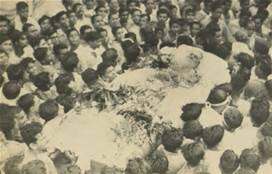
Tagore takes his leave on August 7, 1941. Photo from Public Domain
Let the spent Robi sleep on.
Please, please don’t try to wake him up.
Let not the one who spread light all his life
Be awakened; don’t disturb his sleep.
Let the one who gave light and delighted thousands,
And has now collapsed at mother earth’s bosom,
Be ritually smeared with sandal paste on his forehead;
Don’t redden his face by weeping incessantly!
Even at the risk of straining yourself, stretch out your palms
To accept the power and the strength he has given you.
The departed Sun and Supreme One will enable us to succeed
Let the poet sleep on!
The departed Sun’s glow will still light up our interiors.
So, from within yourself pay him homage every day.
Don’t make him weep by shedding continuous tears!

A recording of the first performance of Nazrul’s lyrics in Bengali

Born in united Bengal, long before the Partition, Kazi Nazrul Islam (1899-1976) was known as the  Bidrohi Kobi, or “rebel poet”. Nazrul is now regarded as the national poet of Bangladesh though he continues a revered name in the Indian subcontinent. In addition to his prose and poetry, Nazrul wrote about 4000 songs.

.

Fakrul Alam is an academic, translator and writer from Bangladesh. He has translated works of Jibonananda Das and Rabindranath Tagore into English and is the recipient of Bangla Academy Literary Award (2012) for translation and SAARC Literary Award (2012).

.

PLEASE NOTE: ARTICLES CAN ONLY BE REPRODUCED IN OTHER SITES WITH DUE ACKNOWLEDGEMENT TO BORDERLESS JOURNAL

Click here to access the Borderless anthology, Monalisa No Longer Smiles

Click here to access Monalisa No Longer Smiles on Amazon International

Categories
Tagore Translations

I Cling to This Life…Rabindranath on Death

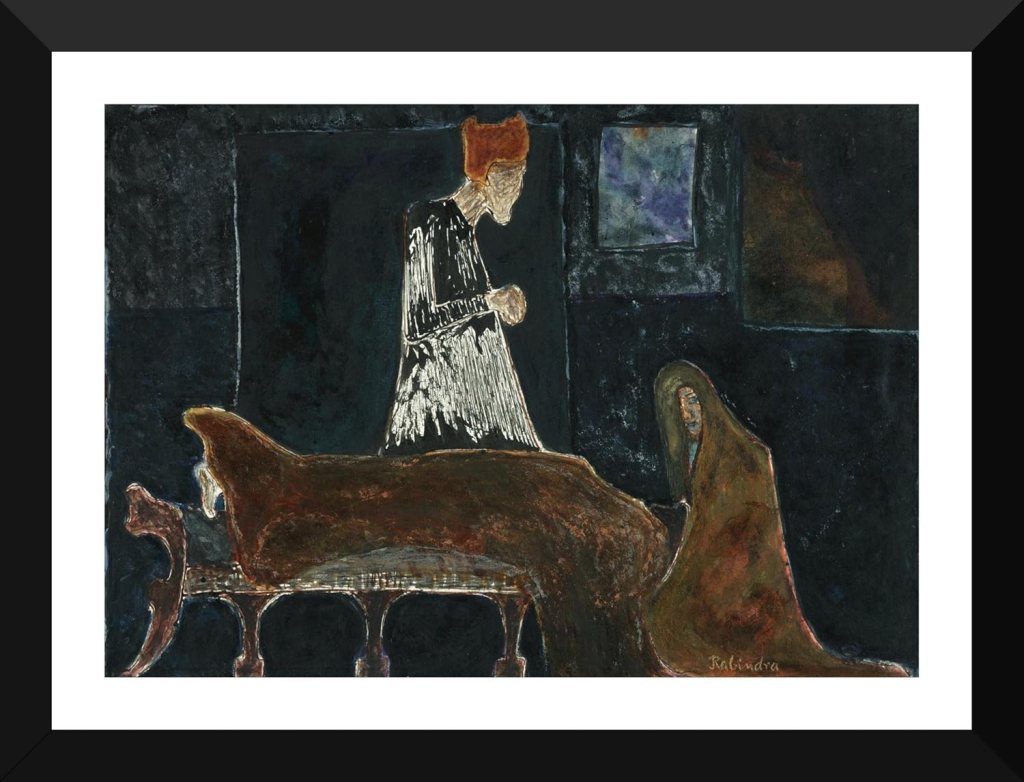
Written and published in 1901, Mrityu (Death) was a part of Rabindranath Tagore’s collection called Naibedya (Offering).

Death Scene painted by Tagore (1861-1941). From Public Domain
DEATH 

Death is a stranger to me.
Today, I shiver in apprehension.
I cling to this life with all my might,
With tears in my eyes, I wait to bid
This world goodbye.
O ignorant, why did you grow
So attached to this life when
The cycle of life and death was
Known to you? The dawn of death
Is like reacquainting with a stranger.
I love this life so much that I am
Convinced I will love death equally.
A child torn from one breast wails but is comforted
Within moments of being held at the other breast.

This poem has been translated by Mitali Chakravarty with editorial input by Sohana Manzoor 

.

PLEASE NOTE: ARTICLES CAN ONLY BE REPRODUCED IN OTHER SITES WITH DUE ACKNOWLEDGEMENT TO BORDERLESS JOURNAL

Click here to access the Borderless anthology, Monalisa No Longer Smiles

Click here to access Monalisa No Longer Smiles on Kindle Amazon International

Categories
Essay

The Myriad Hues of Tagore by Aruna Chakravarti

As the author of Jorasanko and Daughters of Jorasanko, which map the life of the greatest visionaries of the world, Aruna Chakravarti gives us a brief summation of the genius of Rabindranath Tagore.

Rabindranath Tagore was born in 1861 in the throes of the Bengal Renaissance. A unique movement which took place during the latter half of the nineteenth century, it saw the germination and the slow stirring into life of a social and religious consciousness and the emergence of a middle class that idealised British rule and used its support to usher in considerable social change. The revolutionising of values and the social, political and literary awakening that followed gradually came to encompass the whole of India.

The Bengal Renaissance, like its European counterpart, swung precariously for a while, between two worlds. One old, decrepit and dying by degrees — the other struggling to be born. A host of great personalities emerged during this time; household names to this day.

All were protagonists engaged in battle. Some to keep alive and perpetuate the old; some to hasten its death and bring about the birth of the new. Needless to say, it was the latter who prevailed. Bengal saw an upsurge of activity, the like of which had never been seen before, in fields as diverse from each other as politics and religion to literature and the performing arts. In this, Bengal’s close contact with the British served as a catalyst.

Yet the same movement, in its latter years, saw the first stirrings of resentment against British domination. India’s acceptance of English education and her faith in the scientific discoveries of the West was countered by a new revivalism. An assertion of political independence and the growth of a nationalist consciousness. A need for introspection became the call of the hour. Rabindranath was among the first to articulate this need. In an essay, entitled Byadhi-o-pratikar[1]written in the early years of the twentieth century Rabindranath expressed his doubts regarding the changed Indian psyche wrought by the West. Reflecting on the French Revolution, the efforts to abolish slavery and the upsurge of literary activity in Europe he wrote: “Western civilisation seemed to proclaim an inclusiveness for all humanity irrespective of race and colour. We were spell bound by Europe. We contrasted the generosity of that civilisation with the narrow mindedness of our own and applauded the West.” He goes on to say, however, that the scales had fallen from the nation’s eyes. The supposedly Western ideal had failed Indians. European education and adoption of its values hadn’t helped them to achieve equality with the white race.

Thus, the movement came full circle. Rabindranath had not been part of it from its inception. Yet, if one were to look for and identify a single persona in whom the entire Bengal Renaissance may be said to be epitomised, it would, without doubt, be the persona of Rabindranath Tagore.

Poet, playwright, novelist, painter, composer, educationist, nationalist and internationalist, Rabindranath was not only a myriad minded genius but a Renaissance Man in the truest sense of the word. In fact, the dawn or awakening of Rabindranath’s creative inspiration is synonymous with the awakening of a whole nation.

The cultural identity of India and the place in it of religion, caste, class and gender which much of Rabindranath’s prose and poetry explores, continue to retain their relevance even today, a hundred years later, in a post-colonial time frame. His novels offer masterly insights and analyses of the complexities of Indian life with its teeming contradictions; its rootedness in tradition as well its ability to assimilate and accommodate change.

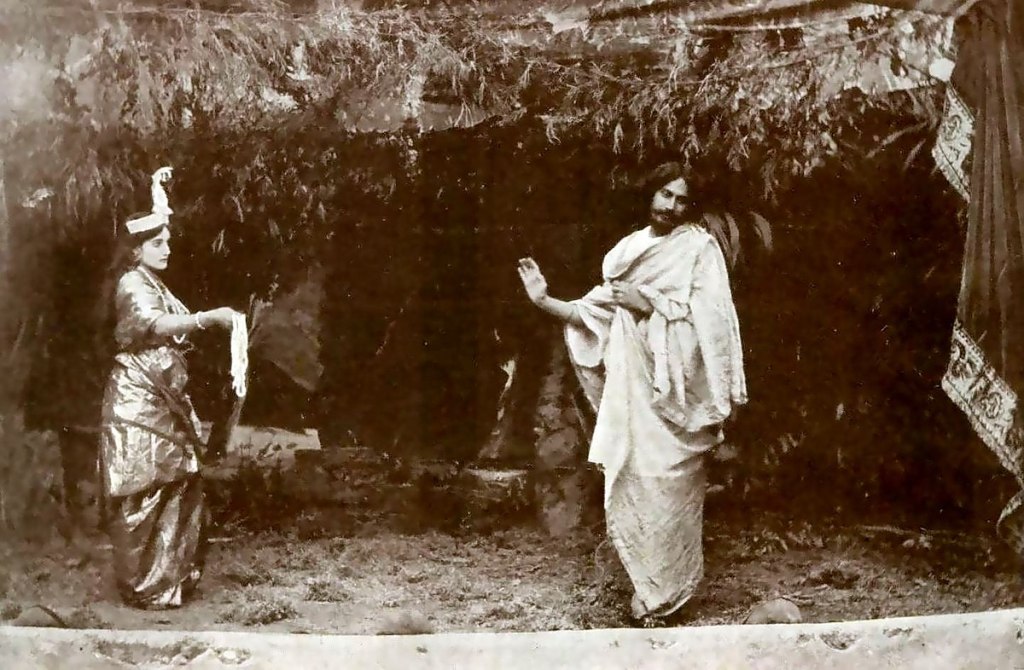
Rabindranath Tagore and Pratibha Devi (his neice) performing in his dance-drama, Valmiki-Pratibha (The Genius of Valmiki) 1881. Photo from Public Domain

Rabindranath, however, is best known as a poet. His poetry, drawn from ancient cultural memory as well as the immediate present, is in a class of its own. For there is a third dimension to it. He not only wrote of what he saw and remembered but what he saw only in his mind — a world that lay a vast space away from reality. ” There are two kinds of reality in the world,” Rabindranath said[2] of his paintings. “One of them is true; the other truer.” He could have said this of his poetry too. The real and surreal quality of his images in the vast span of his poems and lyrics; their indefinable nuances and evocative power are comparable to the works of the great Impressionists.

Interestingly, Rabindranath arrived at the canvas through his poetry. The calligraphic erasures and corrections with which he embellished many of his poems became sketches of a special kind. “I try to make my corrections dance,” he said[3] once, “connect them in a rhythmic relationship and transform accumulation into adornment.”

Later, in the last thirteen years of his life he threw himself into frenzied bouts of painting leaving behind more than two thousand and five hundred art works. Strange, haunting faces with eyes that look deep into one’s soul; surreal landscapes the like of which were never seen this side of the horizon; trees and flowers painted in violent colours that erupt from the artist’s palette in volcanic bursts — his paintings, as an artist once said, reflect “emotions recollected more in turmoil than in tranquillity.”

Yet, though famed the world over for his poetry and painting, it is as a music maker that Rabindranath has stayed entrenched in the hearts of his own people. His songs, loved and sung by generations of Bengalis, range in theme from celebrations of nature and yearning for freedom to love of God and Man. They convey the poet’s profound philosophy of life, his deep faith in humanity and his sensitive exploration of the Universe, often touching on the quest of the unattainable. Rabindranath once said that, though he could not predict how future generations would receive the rest of his work, he was confident that his songs would live. The increasing popularity of Rabindra Sangeet, both in India and abroad, bears ample testimony to the fact that his prophecy was based on a certainty born out of self-knowledge. Vast and varied though his genius was — music was its mainspring. He wrote of his songs: “I feel as if music wells up from within some unconscious depth of my mind; that is why it has a certain completeness.”

Photo from Public Domain

[1] The Disease and its Cure, 190

[2] Quoted from Tagore’s Galpa Salpa (Conversations) by Soumendranath Bandopadhyay in Expressionism and Rabindranath

[3] Quoted in An Artist in Life by Niharranjan Ray

Aruna Chakravarti has been the principal of a prestigious women’s college of Delhi University for ten years. She is also a well-known academic, creative writer and translator with fourteen published books on record. Her novels JorasankoDaughters of JorasankoThe InheritorsSuralakshmi Villa have sold widely and received rave reviews. The Mendicant Prince and her short story collection, Through a Looking Glass, are her most recent books. She has also received awards such as the Vaitalik Award, Sahitya Akademi Award and Sarat Puraskar for her translations.

.

PLEASE NOTE: ARTICLES CAN ONLY BE REPRODUCED IN OTHER SITES WITH DUE ACKNOWLEDGEMENT TO BORDERLESS JOURNAL

Click here to access the Borderless anthology, Monalisa No Longer Smiles

Click here to access Monalisa No Longer Smiles on Kindle Amazon International

Categories
Tagore Translations

Where Old Flowers Shed, New Flowers Blossom…

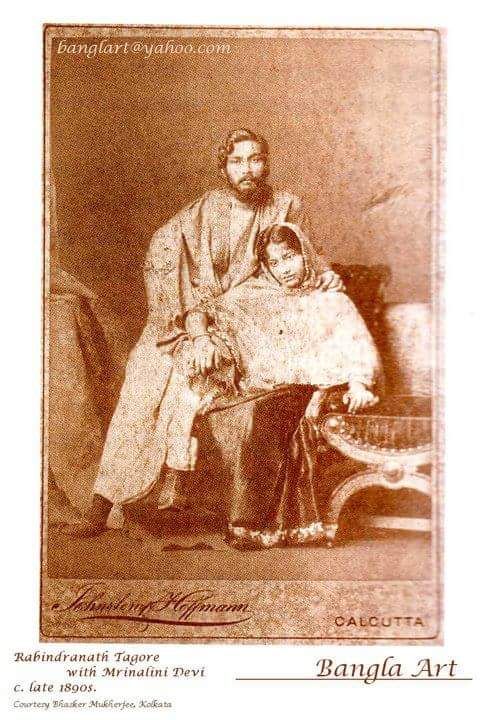
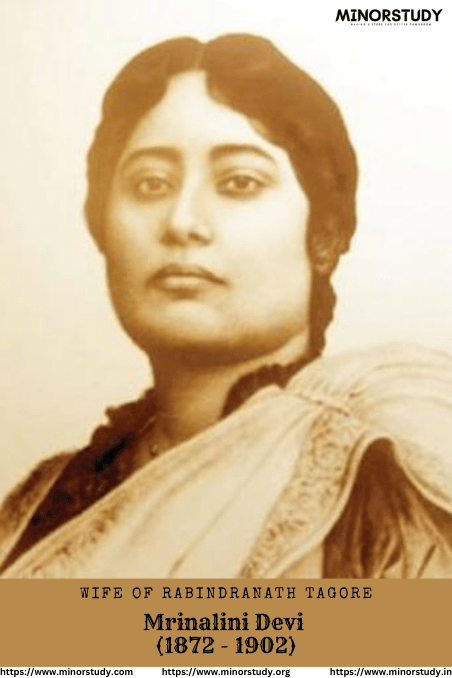
Acche Dukho, Acche Mritu (Sorrow Exists, Death Exists) was written by Tagore when his wife, Mrinalini Devi, died in 1902. His lyrics have been translated by Professor Fakrul Alam.

Sorrow exists, death too; partings scald as well
And yet peace, and yet delight, arise eternally.
Life goes on; the sun, moon and stars keep smiling!
Spring comes to gardens singing varied tunes.
Waves scatter and fling themselves up again.
Where old flowers shed, new flowers blossom.
Overall, there’s no decay, no lasting misery,
And in such fullness the mind seeks solace
A rendition of Tagore’s song by the legendary Debabrata Biswas (1911-1980)

Fakrul Alam is an academic, translator and writer from Bangladesh. He has translated works of Jibanananda Das and Rabindranath Tagore into English and is the recipient of Bangla Academy Literary Award (2012) for translation and SAARC Literary Award (2012).This translation was first published in Fakrul Alam’s Gitabitan: Selected Song-Lyrics of Rabindranath Tagore, 2023.

PLEASE NOTE: ARTICLES CAN ONLY BE REPRODUCED IN OTHER SITES WITH DUE ACKNOWLEDGEMENT TO BORDERLESS JOURNAL

Click here to access the Borderless anthology, Monalisa No Longer Smiles

Click here to access Monalisa No Longer Smiles on Amazon International

Categories
Poetry

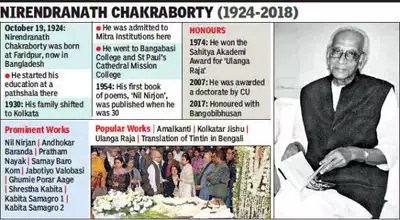
Amalkanti by Nirendranath Chakraborty

Translated from Bengali by Debali Mookerjea-Leonard

Nirendranath Chakraborty (1924 – 2018) was born in united Bengal. A poet, translator and novelist, he was awarded the Sahitya Akademi Award for his poem based on the Emperor’s New Clothes in 1974, voicing the need to reacquaint with the innocence of childhood. The same year he was also awarded the Ananda Puraskar. Nirendranth Chakraborty translated Hergé’s comics into Bengali. Calcutta University bestowed on him an honorary Doctor of Literature degree. Amalkanti is one of his well-known poems, again critiquing societal trends.

AMALKANTI*

Amalkanti is my friend,
We had been at school together.
He came late to class every day, lessons unprepared.
When asked verb-declensions,
He gazed at the window in such amazement,
That we felt sorry for him.

Some of us aspired to be teachers, some, doctors, others, lawyers.
Amalkanti didn’t want any of that.
He aspired to be sunshine.
The blushing sunshine after the rains, in the late-afternoon of cawing crows,
Sunshine that lingers on the leaves of the rose-apple and bell fruit
Like a momentary smile.

Some of us became teachers, some, doctors, others, lawyers.
Amalkanti couldn’t become sunshine.
Today, he works in a dark printing press.
And he visits me from time to time;
Drinks a cup of tea, chats a little, then he says, “I’ll be off.”
I see him to the door.

The one among us who is a teacher today,
Could easily have been a doctor,
The one who aspired to be a doctor,
Would have also done well as a lawyer.
Somehow, we all got our wishes, all except Amalkanti.
Amalkanti couldn’t become sunshine.
Musing and musing, musing and musing
Upon the sun’s unflawed radiance,
He had once aspired to become sunshine.

*(lit. “unflawed radiance”; also used as a name)
A Bengali recitation of Amalakanti by Shamshuzzoha, a poem by Nirendranth Chakraborty.

Debali Mookerjea-Leonard is the Roop Distinguished Professor of English at James Madison University. Together with research and teaching, she also translates Bengali poetry and fiction. Debali has the permission to publish this translation.

.

PLEASE NOTE: ARTICLES CAN ONLY BE REPRODUCED IN OTHER SITES WITH DUE ACKNOWLEDGEMENT TO BORDERLESS JOURNAL

Click here to access the Borderless anthology, Monalisa No Longer Smiles

Click here to access Monalisa No Longer Smiles on Amazon International

Categories
Stories

In the Shadows…

By Paul Mirabile

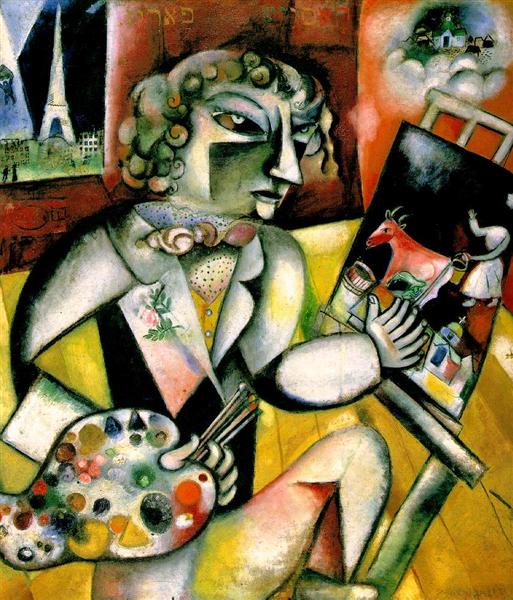
A Self-Portrait with Seven Fingers by Marc Chagall (1887-1985). From Public Domain

Tommy ordered a second pint of beer at the counter. The bar buzzed with the usual crowd, and a few groups of tourists, mostly from northern Europe, were beering it up as they did at home. Tommy had had a long day preparing breakfast and clearing the rooms at the Hotel Van Acker, Jan Willem Brouwersstraat, 14. Afterwards, he accompanied three Spanish tourists to the ‘high’ spots of Amsterdam: Anne Frank’s house, Vondel Park, the Rijks and Stedelijk museums, Rembrandthuis, Madame Tussauds, completing his tour at the ‘hot’ spot for all such tourists — the red light district. There he left the Spaniards, tired of having dragged them about the town while straining to understand their Spanish.

How long had he been at it ? Four … five years ? Who knows. Something in his mind had snapped. Oftentimes he suffered from bouts of amnesia or blackouts, a succession of synapse that triggered in him extreme panic, even paranoia. He felt an elbow nudge him lightly in the ribs: “ All right, mate?” asked a middle-aged man with long, blond, silken hair and ultramarine blue eyes.

Tommy eyed the man suspiciously. He had managed to squeeze himself in at the counter as imperceptibly as a ghost. “Yes, I’m all right. Why?”

“Oh, I just saw you staring into space as if you were in great thought or pain.” Tommy smiled leerily.

“No pain, just thinking small thoughts.” The other smiled. His teeth were very white. He reached over, took a few pinches of tobacco from a drinker’s pouch with unabashed effrontery and rolled himself a cigarette.

“Do you do that often?” Tommy enquired lamely.

“What?” the other asked puffing away dreamily.

“Pinch tobacco from people’s pouches.”

“Of course I do, it’s been my custom for ages,” answered the tobacco pincher with a whimsical gleam in his eyes. “What are you doing in Amsterdam, working I suppose?”

Tommy straightened up. “I work at the Hotel Van Acker doing odd jobs for the owner.”

“Ah, yes, Van Acker … Where they found that murdered dwarf.”

“He wasn’t murdered. He died of a heart attack.”

“The police never found the key to his room. That is strange. To die of a heart attack in a hotel room without the key.”

“So what?”

“Sounds a bit shadowy to me. But that’s all in the past. And who cares anyway, right ? What’s your name?”

“Tommy.”

“From?”

Tommy hesitated: “From Luton.”

“Luton?”

“It’s in Bedsfordshire.”

The pincher of tobacco nodded, rolling himself another cigarette. “I’ve seen you handing out leaflets or pamphlets in the streets.”

“That’s possible.”

“How’s the salary at Van Acker’s?”

“I get on. Van Acker gives me my meals and I sleep in the cellar room under the stairway.”

There was a very long silence — a silence so long that Tommy began to grow nervous. Finally, the man said: “Listen, I might have a job for you Tommy that will earn you enough money to live like a prince anywhere in the world for the rest of your life. One night ! Only one night, and you’ll become as rich as Crassus.”

“Who’s Crassus?” asked Tommy mistrustfully. The other laughed.

“The richest man in the Roman Empire. You see, my proposition deals with paintings; I’m an art collector.”

“Pictures? I like pictures. I take all my hotel tourists to the art museums.”

“Perfect. Here’s my address. Come by any time after eight at night. By the way, my name is Gustav.”

“Gustav … Gustav what?”

“Gustav Beekhot. I hope to see you soon, Tommy. Tot ziens[1]!” Gustav slapped Tommy on the shoulder and left the crowded bar, weaving through the mass of throbbing, bulky bodies like a shadow amidst a darkening, nameless stretch of land …

Five days later, after having wrestled with his thoughts, Tommy leaned his bicycle at the gate of a plank which led to Gustav’s house-boat on the Ruysdaelkade Canal. It was quite an impressive barge. He knocked at the door. Gustav, eyes a watery blue, opened the door and wished his visitor a hearty welcome ‘aboard’. “Just in time for dinner,” he said flippantly. When Tommy stepped in he couldn’t believe his eyes: they swept over a long ‘hold’ full of paintings of all sizes and colours, some hanging off the walls, others on easels, and still others scattered on the uncarpeted ‘bottom deck’, unfinished.

“You might open a museum here,” he suggested, strolling from painting to painting. “I like to look at pictures. When I accompany people to the Rijks or to the Rembrandthuis I always take my time to examine the pictures. The tourists just look at the title and at the name of the painter.”

“Yes, very few people really examine a painting.” Gustav placed two bowls of rice, shredded carrots and two pints of Heineken beer on a hackney table. “I for one prefer to paint them, buy or sell them, although I do often go to the museums for inspiration.”

“You sell your own pictures, then?” Gustav chuckled.

He gave Tommy a conspiratorial wink: “No, who would ever buy a Gustav Beekhot ? To tell you the truth I sell the ones I steal or have stolen from museums or from private collectors.” Tommy, who had sat down at the table dropped his fork. He stared at Gustav in disbelief. All that had been said with absolute aplomb. “Yes, Tommy my lad, sometimes I do buy them from contemporary Scandinavian painters living in poverty, but I prefer to steal them … It’s cheaper!”

“But … but how can you steal a picture from a museum?” questioned Tommy in alarm.

“It’s quite simple. It’s a question of know-how. Thievery is an art, my dear lad. And if you are willing, you will learn this art easily, and by doing so, earn a half a million dollars!”

Tommy jumped up. “No, please, let us eat, and I shall spell out all the niceties to you. There’s really nothing to it: a wiry, loose-limbed body like yours, will-power and the common sense to keep your mouth shut. And I do believe you possess all those aforesaid qualities. Am I correct?” Tommy remained voiceless. “Of course you possess them. But you doubt my word. Others too doubted, and today are living like kings in Tahiti, the Seychelles or in some Central American country.”

“A half a million dollars?” Tommy managed to stammer, sitting down slowly as Gustav glided between his paintings in a breezy, phantasmal gait to procure a bottle of Jenever in his kitchenette at the ‘prow’.

“Yes, Tommy. One night. One night only.” Tommy peered out the ‘porthole’, it had begun to drizzle. He watched as the drops gently fell upon the unruffled canal waters; they fell gently, rocking his host’s barge dreamily. He suddenly felt a seizure coming on. He strained to control it, the house-boat rocking … rocking so gently, like the drops of drizzle. Something snapped in his head; he shook it out. Gustav ate his rice and carrots as if he noticed nothing of the crisis that his visitor, and future accomplice, was suffering. He was smiling that engaging smile.

“What do I have to do?” came Tommy’s belated reply in spite of himself. He had asked that without being fully conscious of actually asking it.

Gustav stopped eating, sized him up, then thrust his taunt face forward. It had a ghostly white appearance to it: “Crawl through a very very narrow tunnel about two hundred metres long behind the Zadelhoff Café to the storage room of the Stedelijk museum. In that storage room you will find a painting by Marc Chagall, A Self-Portrait with Seven Fingers, which will be waiting for you to cut out of its frame with a razor blade. The nightwatchman has already put the painting exactly where you will pop up from the storage room hole.”

Gustav stood, went to a broken, plastic shelf over his wash-basin and picked up a razor-blade. “Look, this is how it should be done.” And the art dealer began to cut out a painting from its frame.  Tommy gasped. The other laughed. “Don’t worry, it’s one of my worst chefs-d’oeuvre …” Gustave then rolled up the canvas and placed it into a plastic cylinder. “There you have it my boy,” he beamed. “Sling the cylinder over your shoulder, drop down into the hole and crawl back through the tunnel where I shall be waiting for you.”

“But this tunnel … I can’t see …” Gustav put up a hand.

“The tunnel was dug during the second world war and used either to store ammunition by the local militia or as an escape route for Jews and communists.”

“How do you know all this?” Tommy asked incredulously.

“I studied history, and have many friends who deal in these particular matters.” There was a shrewd, impish twinkle in his host’s eyes.

Tommy seemed a bit sceptical about the whole operation. Gustav’s eyes were all alit, the glow of which stabbed at his distrustful heart. Gustav noted his guest’s wavering emotions. “My buyer will be in Amsterdam in five days,” he proceeded in a haunting undertone. “He’s arriving from Tampa, Florida and will be paying me one million three hundred thousand dollars for the painting. You will receive five-hundred thousand.”

He went to a drawer. “Here, this bank card will permit you to withdraw your share of the profits in any bank machine in the world. It’s a Swiss Banker’s card. But under no circumstances must you withdraw more than two thousand a day; bank administrators may become suspicious.”

“Where’s my bank?”

“That I cannot tell you,” Gustav answered sharply. “I suspect that you are mistrustful of me?” he chaffed.

“No, I’m not, but still …”

“No buts. The card is perfectly valid once the money has been deposited. And it will be after your mission has been completed. But I warn you Tommy, you must leave Amsterdam immediately before the museum authorities realise that the Chagall has been stolen. My buyer will leave on a morning flight back to Florida.”

At that moment Gustav poured out two glasses of Jenever, raised his and cried — ‘Godverdomme’ [2]! And with that coarse shout they both gulped down the divine nectar. Tommy felt a mounting tension in his chest, throat and jaw. Had he made a pact with a man whom he hardly knew ? He left at midnight, benumbed, as if he were a bit tight.

For two days Tommy struggled to control his taut emotions. To weigh the consequences of this incredible proposition. He could become immensely rich after a few hours of mental and physical toil, yet something irked him. It all seemed so unreal! He walked the streets of Amsterdam in the late afternoons, flicking matches into the air one after the other, watching the lit sticks glide gently to the street where the last lingering sparks sizzled out. He repeated aloud, “Tahiti, the Seychelles … I wonder where they are?” over and over again. He would take out the bank card and study it carefully. “It looks real to me,” he assured himself, albeit nervously.

On the fourth afternoon they met for tea at the Zadelhoff Café, after which Gustav took Tommy behind the café and showed him the sewer lid which led to the tunnel. Then they strolled over to the Stedelijk Museum, and whilst promenading through the halls of paintings Gustave cautiously pointed out the storage room where the Chagall had been stored for a future exhibition at another museum. All that day Tommy had admired the art collector’s professionalism and precision in elucidating the details of this very risky, but lucrative operation.

“Will-power, nerve and stamina, my lad,” Gustav kept repeating until he told Tommy to meet him that very night behind the Zadelhoff Café at one o’clock sharp. The buyer had booked a morning flight back to Florida. “One night ! Only one night, my friend. Don’t let us down … “ Tommy clenched his fists. He suddenly felt a surge of unwonted force, a force he had experienced many years ago before his unexpected arrival in Amsterdam. Gustav slapped him on the shoulder and glided away like a phantom in the reddening twilight …

A far away church-tower bell struck the hour of one. And so it happened, happened like a dream …

Gustav cut a spectral figure outlined against an ill-lit, moonless night as he waited impatiently for his accomplice. At that moment Tommy arrived, a trifle late. They both set immediately to work to open the heavy sewer lid. Once pried open, Tommy climbed down the rusty rungs, a torch in hand, the plastic cylinder slung over his shoulder. “The rats! The rats!” he called, looking up, his lithe body trembling.

“Rats ? The rats will scramble away when you train your torch-light on them,” Gustav shouted down in a weird, stilted voice. “Don’t talk nonsense ; just move on …”

And he slid the sewer lid over the hole. Tommy stopped. Darkness engulfed him. The boy panicked. — All alone! All alone! — he lisped to himself in fear. He nevertheless carried on down into the damp darkness training the light along the broken stone walls dripping with age. There, the opening of the tunnel! It was true. There was the tunnel … But so narrow … so terribly narrow …

Poor Tommy was hardly able to push himself into  the opening. He began to cry. He felt he had been buried alive in a toolless coffin. All alone! All alone! “Mummy!” escaped from his dry, chapped lips. Yet Tommy crawled on and on. The thought of a half million dollars flooded his inflamed brain. The brave boy elbowed a painstaking trail over root and rock, his torch-light cutting out a thin stream of blissful light that disappeared into a dark Nothingness. A Nothingness that frightened him, reminded him of vague scenes in some other life that he had once led, a former life of battling and crying out in a moonless, raging darkness …

His head struck stone. Yes, it was stone! The gallant Tommy had reached the museum storage hole. He straightened up with difficulty, touched the cold walls; a ladder had been provided for the Second World War escapees.

“The rest will be child’s play,” he whispered in an echoless vacuum. Up he clambered excitedly. The hole seemed endlessly deep. Was that possible ? Ah, the floor tile … Finally. He pushed it open as easy as that. “Child’s play,” he sniggered as if speaking  to Gustav.

Tommy pulled himself out into a deep, deep darkness. A darkness he had never experienced before. He searched for the razor-blade in his trouser pocket, trained his torch …

A merciless neon light suddenly blinded him, absorbing all the darkness, save that which still lay heavy and hauntingly in his head. Four policemen stood pointing at him, laughing and laughing. A very stoutish, well-dressed man stepped out from the policemen and grabbed the boy by the scruff of the neck. “So this is the little twit that has been hiding out like a rat!” the man chidded in broken English. “Hiding in the storage pit, hey? Think you’d slip away from us? What on earth are you doing in here you scamp, playing hide and seek?” Tommy said nothing. Baffled, he had lost all contact with reality. “Deaf and dumb, hey? Let’s see.” One of the police officers struck the boy across the face.

“Please don’t,” he whimpered.

“There you are, he can speak after all, and with a British accent, too,” pursued the well-dressed man who happened to be the museum director. “So, why are you hiding here ? What are you doing in that pit? Look at the mess you’ve made.” Indeed, the storage hole was filled with empty cracker and potato chip bags that Tommy had been eating. “Were you drinking water from the lavatory tap ? Look at this floor, there’s water all over it.” He poked Tommy in the chest.

“I was sent to steal a picture … Marc Chagall …”

“Steal a painting ? A Marc Chagall ? How were you to get it out of the museum ? Are you masquerading as Honest Jack[3] ?” This was asked with biting irony.

“Through the tunnel back to the Zadelhoff café.”

“Oh, I see … a tunnel to the Zadelhoff café.” He turned to the policemen: “Is there a tunnel to the Zadelhoff café.” All the policemen laughed and laughed, pointing at the sulking boy whose filthy, ill-smelling clothes struck a grotesque contrast with the museum director’s well-tailored suit.

“And with a razor-blade cut it out of its frame,” Tommy hurriedly added.

“Where’s the razor-blade?” one of the policemen demanded, taking him by the arm. “Give it to me.” Tommy searched his pockets. He held out a safety-pin.

“No tunnel, no razor-blade,” broke in the museum director. “You’re either a liar or a raving lunatic.”

“But I crawled through it. Gustav Beekhof showed me the tunnel and told me to steal the picture when he invited me to his house-boat,” Tommy pleaded, tears flowing over the dark shadows of his wild, tired eyes.

“There is no tunnel you little liar!” screamed a policeman. “And who is this Gustav Beekhot? Where is his house-boat?”

Tommy racked his brains: “I don’t know the exact address but I can take you there.”

He was hustled out of the museum into the moonless night, bundled into a police van and off they sped through, along and over streets, canals and bridges … until …

“There, on the Ruysdaelkade Canal,” the boy shouted in triumph. “His house-boat is the second …” Tommy stared in horror: there was no house-boat ! A police officer pulled him out of the van and dragged him to the slip where the house-boat should have been docked. Tommy rubbed his red, stinging eyes : “But it was there … I …”

“Shut-up you impudent little runt!” the officer barked. “I’ll check.” He returned to the van.

A few minutes later, he returned. “There’s no house-boat registered in that slip, and we have no record of a Gustav Beekhof,” he stated stiffly, looking hard at Tommy. “You’re raving mad.” A bewildered Tommy stepped back, his thoughts running riot.

“No house-boat. No Gustav Beekhof,” fumed the police officer. “A little scamp of a thief, that’s what you are.” And he twisted Tommy’s ear until it turned beet-red. “What’s your name, boy?”

“My name ? My name is Outis,” he lisped, holding his smarting ear.

 “And your papers?”

“Papers ? I have no papers … I’m …”

“Shut-up!” the police officer stormed, turning red. He took Tommy by the shoulders and shook him so hard that his teeth chattered. All of a sudden something snapped in his brain. The boy was seized by a mounting tension which sent him spiralling into a dark nothingness that he had never before experienced — a nothingness where he drifted through a darkened, nameless stretch of land …

DOCTOR VAN DIJK’S REPORT

The patient who calls himself Outis, as recorded by the police, most probably English-born, was found hiding in the Stedelijk museum storage room for two days with, according to the patient, the intention of stealing Marc Chagall’s ‘A Self-Portrait with Seven Fingers‘, which the aforesaid patient claimed had been deposited in the room for that purpose. This claim was disclaimed by the museum director, Mister Aalbers who avowed that the painting hangs in its usual place in the museum. The patient being questioned by the police, maintained that he was put up to the supposed theft by a certain Gustav Beekhof who apparently does not exist, according to police records, nor does his place of residence: a house-boat on the Ruysdaelkade Canal. The patient was promised a half a million dollars for the theft, which, as he declared, was undertaken by crawling through a tunnel from behind the Zadelhoff Café to the museum storage room. The police confirm that this tunnel has never existed. Furthermore, when the patient showed the police his bank card with which he was to withdraw his share of the theft, it turned out to be a library card whose owner’s name and library location had been thoroughly effaced beyond deciphering.

The patient has fallen into a coma for several days now. There seems to be no doubt that he is suffering from an acute case of schizophrenia, caused perhaps by a sudden mental or physical traumatism that has created an imaginary parallel world through which the patient wanders in and out whenever jolted by an unsual event or encounter.

The patient thus will remain in our clinic under strict observation until he emerges from his unconscious state.

Chief Psychologist of the Psychotherapierpraktijk Overtoom     

Wilfrid Van Dijk, May 9th, 1975    

.

[1]  ‘Good bye’ in Dutch.

[2] ‘God damn it’ in Dutch. A rather ‘informal’ interjection when making a toast amongst close friends.

[3] The notorious English robber John Jack (1702-1724). He was hanged for his daring thefts.

.

Paul Mirabile is a retired professor of philology now living in France. He has published mostly academic works centred on philology, history, pedagogy and religion. He has also published stories of his travels throughout Asia, where he spent thirty years.

.

PLEASE NOTE: ARTICLES CAN ONLY BE REPRODUCED IN OTHER SITES WITH DUE ACKNOWLEDGEMENT TO BORDERLESS JOURNAL

Click here to access the Borderless anthology, Monalisa No Longer Smiles

Click here to access Monalisa No Longer Smiles on Kindle Amazon International

Categories
Poetry

There’s More to Life…

By George Freek

THE IMPONDERABLES 

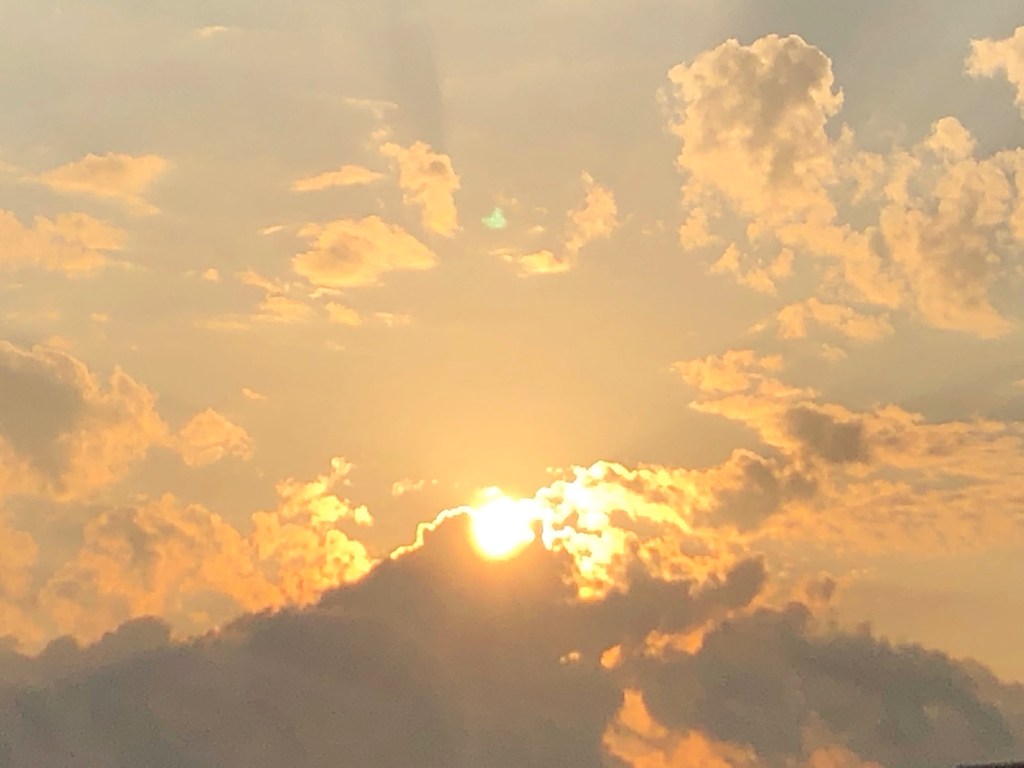
The sun moves through the sky
as if it were pulling a plough,
turning up clouds like dust.
In the moonlight the river shines
like a silver chain,
with no relation to reality.
The sudden cry of a dove
might mean a plea for love,
or a sound of grief.
Truth is deceiving,
if you don’t know
what it means.
A crow circles the sky.
His harsh screams mock me.
There’s more to life,
he says to me,
than what you choose to see.

George Freek’s poetry has recently appeared in The Ottawa Arts Review, Acumen, The Lake, The Whimsical Poet, Triggerfish and Torrid Literature.

PLEASE NOTE: ARTICLES CAN ONLY BE REPRODUCED IN OTHER SITES WITH DUE ACKNOWLEDGEMENT TO BORDERLESS JOURNAL

Click here to access the Borderless anthology, Monalisa No Longer Smiles

Click here to access Monalisa No Longer Smiles on Amazon International

Categories
Poetry

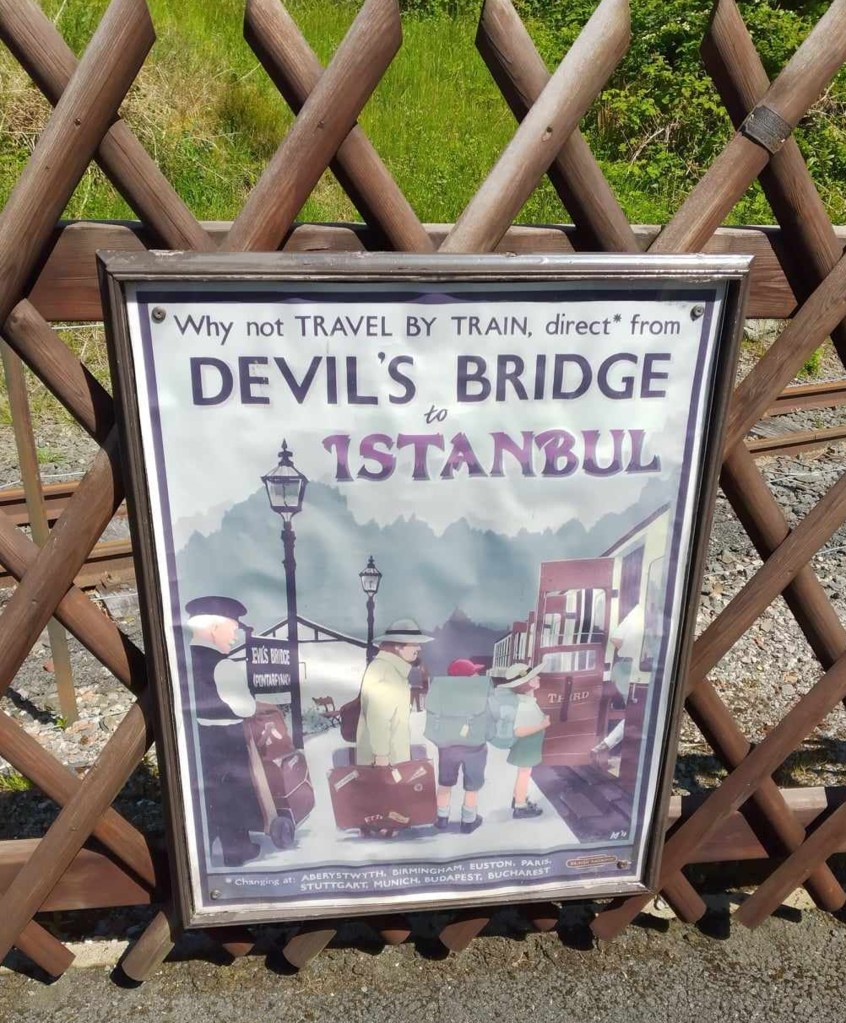
Devil’s Bridge to Istanbul

Photograph and poetry by Rhys Hughes

Why not travel by train direct
from Devil’s Bridge
to Istanbul? What makes you
so reluctant?

Is it because the journey along
the infernal ridge
strikes you as a little too risky?

And maybe the frisky insects,
the midges and mites
that bite the passengers during
the night, the driver too,
dissuade you from the exploit?

What if they bite his nose,
and he sneezes and loses control
and the train is wrecked
and spills its coals,
setting the world on fire?

Better to make the voyage
curled up tight
on a flying carpet,
fast asleep over the deeps
of the ocean,
the gentle rocking motion
more soothing
than a locomotive’s lurch.

On your magical perch
you will be safer
than a wafer in an ice cream.
I know this for certain
because I did my research,
making the trip
using the train at first,
and then in reverse
on a levitating curtain
which is almost
the same as a mystic rug.

Chug, chug, went the train,
flap, flap, went the drapes.
The latter was occasionally
harassed by seagulls,
the former attacked by apes.

But I know which I prefer:
the creatures
that have no fur.
If I really must be assailed
by beasts on the route
from Devil’s Bridge
to Istanbul, I’m not a fool.
Gulls can be placated
with bread, but apes prefer
to bite your head.

In fact my head still hurts.
But I guess it could
have been much worse:
we passed a cyclops
on the way. He was eating
a vehicle from a dish
on a tray, cursing
while slurping, and I saw
it was a hearse,
full of moaning bones
and telephones.

How horrible!
But we left him behind
soon enough
and apart from harpies,
ghosts, ghouls,
flying demon fish,
and one gigantic snake,
the rest of the
voyage was nightmarish
hardly at all.

I quaked just once
or twice or thrice
from that moment on.
I shut my eyes
for the sake of my sanity,
not out of vanity,
although my lids
have been called attractive
(and so have my toes)
by the denizens
of active volcanoes.

Yes, I can’t honestly
recommend travelling
by train direct
from Devil’s Bridge
to Istanbul.
It’s unlikely you will
survive the ordeal
without your mind
unravelling.

It’s spooky, perilous
and unwise,
the ticket inspectors
are strident
with mesmeric eyes.
The luggage racks
are never free
of spare forked tails
and tridents.

So I say:
find another way.
Please yourself
but for the sake
of your health
find another way!

Rhys Hughes has lived in many countries. He graduated as an engineer but currently works as a tutor of mathematics. Since his first book was published in 1995 he has had fifty other books published and his work has been translated into ten languages.

.

PLEASE NOTE: ARTICLES CAN ONLY BE REPRODUCED IN OTHER SITES WITH DUE ACKNOWLEDGEMENT TO BORDERLESS JOURNAL

Click here to access the Borderless anthology, Monalisa No Longer Smiles

Click here to access Monalisa No Longer Smiles on Kindle Amazon International

Categories
Poetry

Hot Dry Summers

By Lizzie Packer

In Memoriam January 2020

hot dry summers are the norm for Australians whether they understand climatology or not – hot dry summers are for beach going swimming partying skylarking drinking – families friends holidays Christmas and New Year – festive meals of prawns and beer champagne and pavlova

hot dry summers now with more frequent extreme heat for longer periods extended harsher droughts empty dams and creeks and rivers – thirsty starving stock with bony carcasses and fish floating dead from lack of oxygen in muddy river pools

in hotter drier summers vegetation is easily burnt trees explode into infernos – burning embers fly far on fire-generated winds – extreme heat rising creates fire tornados pyro cumulus clouds generate dry lightning and more fire

in this dry year their habitats in flames about eight thousand koalas died – the population decimated no-one will ever know how many they move too slowly to escape the greedy flames – a billion mammals birds and reptiles perished – trees shrubs plants and grasses – ash – Gondwana rainforest reserves surviving since the dinosaurs half now burned

this hot dry year fires started different ways mainly dry lightning strikes – once a tree falling on power lines not so much arsonists or discarded cigarettes sparks from farm equipment or bored teens wasting their lives endangering others though all above were lit

this hot dry summer three firefighters already dead others burnt so bad they lie in city hospitals’ intensive care – first responders struggle with PTSD – unknown numbers of homeowners injured burnt bereft defending homes and livelihoods – those in evacuation centres who lost everything bar clothes they wore that morning struggle to imagine their next steps

this hot dry year survivors recount the unholy roar the palpable fear the wall of flame – spot fires embers ash – exigent heat burning exposed skin – smoke searing breath – the horror of dark red sky – the gates of hell opened wide so they say that even atheists prayed to save the souls of the dead

Lizzie Packer is an experienced freelance writer, and an emerging poet. At Adelaide College of Arts, Lizzie established the online creative writing program and led it for over a decade.

.

PLEASE NOTE: ARTICLES CAN ONLY BE REPRODUCED IN OTHER SITES WITH DUE ACKNOWLEDGEMENT TO BORDERLESS JOURNAL

Click here to access the Borderless anthology, Monalisa No Longer Smiles

Click here to access Monalisa No Longer Smiles on Amazon International