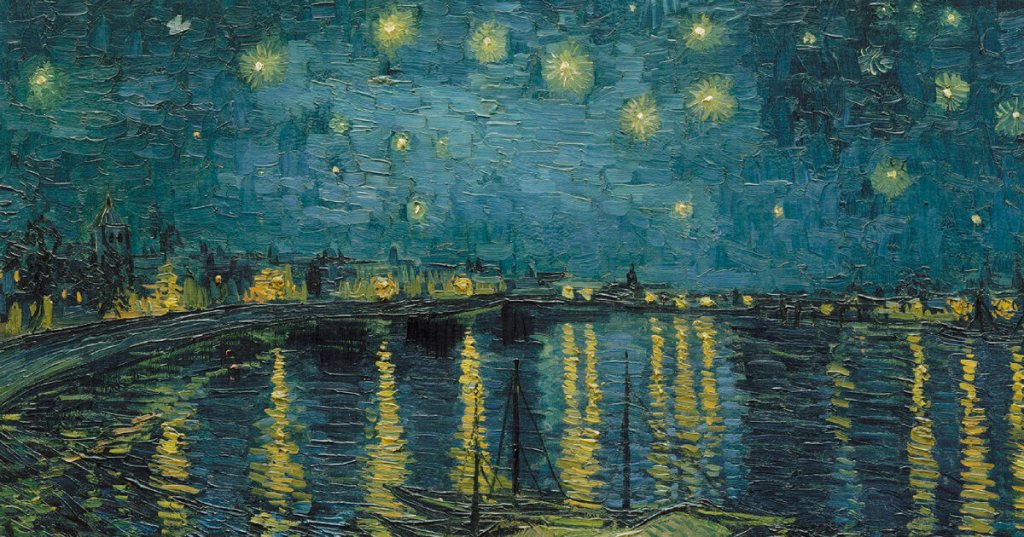
Clouds like pillows smother the moonlight, in a false embrace. Waves beat the shore, like clenched fists beating on a door that refuses to open. My thoughts are banal, but I don’t feel capable of anything more. The stars are like fireworks, as the cosmos passes over my head like an amazing circus. But I’ve seen it all before.
AT DUSK NEAR THE LAKE
The years are piling up like snow on a roof, but my hair gets thinner. The moon seems trapped like an insect in the branches of a tree. A dove beckons to his mate. But I don’t think She wanted to wait. Birds like human can be fickle. The dove abandons his tree, and life moves on, but he leaves his message for me. The woods are deep and I’m still free. What will be, will be.
George Freek’s poetry has recently appeared in The Ottawa Arts Review, Acumen, The Lake, The Whimsical Poet, Triggerfish and Torrid Literature.
PLEASE NOTE: ARTICLES CAN ONLY BE REPRODUCED IN OTHER SITES WITH DUE ACKNOWLEDGEMENT TO BORDERLESS JOURNAL
No one knew his name nor wished to know it. Only his face attracted those who came into contact with him. So it was said. A face whose huge, glowing eyes were turned both inwards and outwards, simultaneously. A face whose florid complexion, cheery and unfurrowed, bespoke a life of leisure, albeit not one of procrastination; a life of ease, but not sloth. In short, a life of early, unfought for independence.
I met my nameless stranger one fine autumn day in the Andalucian town of Granada, Spain, where he had been residing for several months, visiting the Alhambra Palace every day during those months. We had met in a small, non-distinct eatery, and he was very willing to converse with anyone who had leisure to tete a tete. We fell into lively conversation. Taken aback by his daily visits to the remarkable Palace, I enquired why he spent so many hours there.
“The Palace was built as a sign of religious, political and cultural power,” he began, munching energetically on his paella of rabbit. “But since 1492, that sign has been condemned to utter uselessness, reduced to a mere tourist attraction, however noteworthy. It has become completely useless since its mediaeval abandonment because it’s been drained of its original value.” Here he paused, I imagine, for me to intercede. I didn’t …
“You see, this is what attracts me most to the Alhambra; its utter uselessness for our world today. I do not consider mass tourism as an instrument of usefulness.” I kept silent to goad him on, for the turn of conversation piqued my curiosity. “The Alhambra epitomises all that I have spent my own life experiencing, consciously: the pleasures of uselessness.”
“Is uselessness a pleasure?” I nettled with a sunny smile.
“That depends upon whom it has been bestowed, sir. That depends for whom it has benefitted. The circumstances of my life and will to understand and decipher them, have conspired to draw me now into and outside of myself. My own self has become as useless as the objects that I set my eyes on each and every day as I saunter through the streets, gardens or palaces of wherever I happen to be. I have realised that such an absorption into social uselessness, and thus distance from social use, has constituted my raison d’être. And there lies the pleasure: this mode of existence is a project of life; a pure project of pleasurable uselessness to society and to myself.” His face, alit with integrity, bent low to attack the chorizos cooked in white wine sauce.
“When did you begin experimenting your project?” I asked, sipping my sangria.
“I would formulate it differently: When did uselessness experiment me!” he mumbled, his mouth full of chorizo. “It all began in Africa some thirty or forty years back, during my youthful days wandering through the Sahara desert en route to Timbucktoo. The Blue Men of the Sahara appeared absolutely useless to anyone or anything that we Europeans would call useful.”
“Such as?”
“Well, a roof over one’s head, a shower every hour, a steady, well-paid job, a car and such things … what we Europeans would term as useful, conditioned to adhere to the philosophy of infinite progress; to infinite social and political usefulness. All the Blue Men seemed to require were a few hours of sleep, food, water and the desire to procreate. Needs that all mankind need so as to account for our very presence on Earth. I lived in the desert for over a year, and little by little discovered that this lifestyle suited a possibility of existence, a life not of a desert-nomad mind you, but one of a useless idler, which as time went by, proved possible, be it in the cities of Europe and Asia or in their countryside towns and villages.”
“As I understand it, social success has no meaning for you at all?”
“Not at all. Success only invites humiliation or cruel jealousy, and the pursuit of wealth is a path marked by ruthlessness. I earn my living simply to eat, to dress according to the climate, to have a roof over my head when needed.”
“But a roof over one’s head could be expensive…” I intervened.
“I spend most of my nights out under the stars when the weather is warm. With the coming of winter, I seek refuge in Catholic missions, poor men’s shelters or in the numerous Salvation Army shelters. Any asylum that will not turn me down. As far as any permanent residence, I have taken up lodgings in the homes of generous people for a meagre fee, or have laboured on farms for my food and bed. Do not confuse uselessness with doing nothing. I’m no couch potato; I have done many things, but they do not fit into our social machine of imposed well-being. My life may appear negative to those who hold me in contempt, but my usefulness is as useful to mankind as it is to myself. Don’t forget what one Belgium writer once wrote: ‘It is thanks to a certain number of men who seem useless that there will always be a certain number of useful men.’”
“Who wrote that?”
“I forgot. But what difference does it make?” He wiped his mouth delicately, smacking his lips. He proceeded: “I imagine you probably believe me to be a social parasite or a social zero as Balzac once wrote, useless even as a human being. But read Friedrich Nietzsche on this point,” and he quoted: “’Thevalue of a human being does not lie in his usefulnes; for it would continue to exist even if there were nobody to whom he could be useful.’”
“Quite an imposing thought,” I acknowledged, sitting back. “But you must admit that you have been useful to the kind people who hire you on or who lodge you, even for a small fee.”
He snorted: “Perhaps. But I cannot speak on their behalf, only mine.” I noted that he wiggled out of that one quite ingeniously. His face shone with a strange light. An aura of mystery gradually covered it like a gossamer veil. The light suddenly went out.
“I’m sure your effort to separate yourself from the social body must be a terrible struggle,” I pursued without irony. “I believe that to be estranged from the social body is commensurate with being estranged from one’s own self. Am I right in assuming this?”
“Perhaps, but not from the individuals of those societies. I am not a misantrope. This being said, solitude, fasts and meditation have prepared me for outer trials and tribulations, which I believe, without vanity, to have overcome.” He began picking his teeth with a very long fingernail.
“And God?” I rebounded, eyeing him steadily. His lips broke into an artful grin.
“He has been my only Friend since the beginning, sir. And why is that? Because we have been useless to each other since our initial communion.” He stood, evidently undesirous to develop this rather paradoxical statement. I let it drop …
We slipped outside and my nameless companion suggested that we have a quick jaunt through the ‘Arab Market’ in Zacaten. Indeed, the weather was warm, that Autumn weather which I have always found so stimulating in Granada; Granada, perched high in her mountainous refuge like an eagle in her lofty nest. My strolling companion strolled into my reverie.
“Look at the sky, a bluish turquoise which reminds me so much of the domes of the mosques in Bukhara, Uzbekistan. That turquoise which solicits silence and contemplation.”
“So you’ve visited Uzbekistan?”
“More than visited, my friend. I lived there for five years studying under the spiritual guidance of the Nakishbendi Brotherhood, a Sunna movement founded by the Shah Nakishbend, and which has survived the anti-religious crusade of the Soviet Union. With those kind and learned monks I learnt the virtues and powers of silence, contemplation, discipline, simplicity and periodical talks.”
“In what language did you speak to them?” I ventured, a bit intrigued by this singular experience.
“In Uzbek, of course!” he responded dryly. “I also learned to read Arabic.”
“But are silence and talks not contradictory?”
“Not at all, sir. Clusters of roses certainly grow silently, but good soil, air and pure water are needed for their basic growth. If accompanied by a soft, melodious voice, they grow better. Roses heed to that voice as silence heeds to constructive talks. It was during the alternating passages of silence and talks that our spiritual guides opened our eyes and senses to the uselessness of worldly matters, and since then, this uselessness has become my second nature, even my first! Mind you, this discovery has nothing to do either with self-love or atomistic individualism. As I said, I have relations with people, albeit brief; and although I keep aloof from community aggregation and national gatherings, I have never spend my life gloating in an ivory tower. No sir, I live for wanderlust not social or individual hubris! The lust for wandering … And when one wanders one cannot but converge with people, learn from them. This does not necessarily mean that I derive an extraordinary pleasure from communicating with them. To tell the truth, I prefer my own company, if I may say so …”
“But you surely feel a responsibility towards others?” I pursued, more and more fascinated by this nameless chap, who by now had led me into a marvellous little garden out of whose spouting fountain splashed tinkling sprays here and there.
“Responsibility?” he chortled, as we sat down enjoying the perfumed scents of honeysuckles and roses. “Responsibility is only towards oneself. My words or gestures will be felt by others. Would you harm or humiliate your fellow man? Uselessness does not mean selfishness or egoism. In fact, it disciplines you to an awareness of others, an awareness those who whole-heartedly believe in social relevance will never come to understand for they must belong to a community, club or ideology in order to give pride and reason to their usefulness. They discredit the experience of uselessness. Don’t get me wrong, I do not live in a fantasy world like those who tout infinite progress or community spirit. These are abstract schemas for me. My Way is to strive to overcome anger, hate and jealousy within my own sphere of existence. This entails peeling away the veils that dim the lucidity of reality; my reality of being useless to the devastating machine of the useful well-being of mankind.”
“I would then conclude that your manner of living may be called cynical or indifferent?”
He was mortified by my question. “Cynical? A cynic questions then condemns derisively the circumstances that emerge before him or her; I neither question nor condemn. I simply carry on from place to place, experimenting novel circumstances, accepting them as if they had always been mine. Indifference? Well, if you mean stepping back and out of the world’s commerce, and not to take either that commerce or oneself seriously, then I am indifferent. The crisis of many individuals today is that they take themselves much too seriously, much more seriously than the seriousness of their work or vocations. And when this self-seriousness is struck down or dethroned a dreadful sense of uselessness seizes them, causing depression, or worse, suicide. My uselessness to myself and to others is more serious than myself. I am in the world but not of it!”
As we sat in silence, I gradually felt myself transported to another dimension of time and space. Scenes of my own life flashed before my eyes, lively colourful scenes and gloomy ones. I could not resolve whether this nameless fellow fascinated or revolted me. My own life had been ensnared in a web of social irresponsibility and imposed representations. I had become one of the many cogs in the slow and steady vast social wheel that turns and churns, and I sensed that mine had become worn-out and useless. I had so yearned to be of some use to society … But now? Yes, now? How could I restore my previous enthusiasm that had long been abandoned? I had to admit, though, that this man’s experiments heightened my ardour to … to do what? Was he sent to me like some mentor? He suddenly stood and bid me a good day with a whimsical smile, as though he had been reading my thoughts.
Before leaving, however, he said: “Tomorrow I shall have a walk in the gardens of the Alhambra. Please join me, I’m sure we have much to discuss. Meanwhile, let silence be your companion until that walk.” And he disappeared into the milling crowd.
Waking early the next morning, I resolved to meet my new and somewhat eccentric companion at the beginning of the long avenue that leads to the Gate of Justice. An avenue lined with sentinels of cypress and other trees, within whose morning freshness ran a warren of narrow paths.
We met at precisely eight o’clock. With a sort of fraternal benevolence, he took my arm and we strolled upwards past the Gate of Justice, the pompous palace of King Carlos the Fifth, paid our tickets and entered the palace proper, almost religiously, under the storied vaulted corridors, by the pencilled ornaments and tiled walls of arabesque blue, over the smooth, shiny marbled floors.
“Have you read Washington Irving?” he asked in a quavering voice, as if not to disturb the mediaeval palace denizens.
“Yes, a marvellous story-teller and keen observer,” I replied softly.
“You know he led a life of ridiculous usefulness until sojourning within the walls of this soporific fairyland. Gradually Irving fell under the pleasant and industrious spell of uselessness.”
I stopped walking.
“How so? That’s contradictory!”
“Is it?” he beamed, smiling that wide, wicked, whimsical smile. “Yet so it was. He learnt through daily experience that this whole palace of enchantment lies under the layers of absolute uselessness. Layers and layers of poetry, conversation, lyrical jousts and insignificant gestures which disappeared as quickly as they were conceived. Nothing! Nothing remains of that imagined uselessness. And that is precisely why he wrote his Tales of the Alhambra[1] ; it was out of the need to express his useless life within these lyrical stones.”
My sauntering companion fell silent. Only our footfalls could be heard weaving in and out of the slender colonnades, intermingling with the chanting fountains. The blue ceramic shone on the walls like a mirror reflecting the azure …
“I see your point, I think. Before dusk, at times I watch the sun glide from East to West over the Palace walls, the dark greys slipping into ochre reds, soon to be daubed, as the sun sets, by the overglow tones of chestnut, roan and dun.”
“Yes!” he whispered excitedly. “That is perfect uselessness. It serves absolutely no purpose to anyone … even to yourself. For, unlike Irving, who snapped his experiment in uselessness, succumbing to the desire of writing it down for all and sundry to share, I presume that in your case you have no urgency to express any posthumous glory?”
I shook my head thoughtfully, then asked: “You don’t feel the desire to keep a diary?”
“Write? A diary? What for — to satisfy my blotted ego seeking a useful outlet? These are vain insinuations, my good friend. No, it is quite enough to feast my sovereign eyes, to feed my independent emotions on this marvellous honeycomb frostwork and these fine, mullioned windows[2]. These artifices are as useless as the ephemeral poetry and conversations that rang euphoniously within the hallowed halls and courts. And indeed, why should we, mere strangers to this mediaeval marvel, impose an artificial usefulness to it all? Why should we break into lyrical extravagances of the budding rose or the flight of the owl? Into flights of phantasy poeticising upon the Towers above us where verses of love spilled forth their honied fragrances into a void of mute forgetfulness? None of that for me, sir. Within these courts and gardens I have come to the inevitable conclusion that my Destiny lies in perfect uselessness; namely, in my refusal to reanimate the beauty or the ugliness that has crossed my path for the past fifty years in Asia, Europe, the Americas and Africa. I decline to spoil the uselessness of beauty and ugliness, to encumber my spirit and soul by searching for a ‘proper use’ for such human emotions and achievements.”
We had walked through the remarkable Court of Lions and were now entering the gardens of Lindaraxa, Sultan Boadil’s[3] wife. We sat down inhaling the gay scents of roses, oranges and lemons.
He sniffed the air, then murmured: ”A vague of indescribable awe was creeping over me,” here hepaused, lifting his eyes upwards: ”Everything began to be affected by the working of my mind, the whispers of the wind among the citron-trees beneath my window had something sinister…” My companion had chanted this broken sentence in a sort of drawn-out litany. “Yes, something sinister, indeed,” he ruminated to himself. “That point of inspiration led Irving from absolute uselessness to the search for putting uselessness to use. I enjoy reading Irving, but will never convert a ‘something sinister’ to a million-copy, world-wide read book.”
The sun rose higher and higher coating the pink tongues of dawn with a purplish blue. I turned to him: “Still, I cannot see how we as humans can escape from being useful Beings!” He looked at me, his facial features had suddenly hardened, or perhaps it was due to the effects of the shadows off the sun-lit fruit trees.
“Does my speaking to you now fulfil an emotional need? Was our conversation a psychological issue to such a profound hoarding of uselessness?” I asked.
He laughed so loud that a few puffy-eyed guards turned their heads in our direction. “Dear fellow, you have hardly understood our morning jaunt. We are simply idling our time away as uselessly as possible, as useless as a leaf dropping from that citron-tree, as a person who labours all his life to survive, a hermit in his remote cave, a desert-dweller, a traveller without name or record. How many of those intrepid souls took refuge in monasteries of the East and there left no trace of their earthly footfalls? They experienced true uselessness …”
“Even to God towards whom they must have addressed their prayers?” I enquired. He raised a quizzical eyebrow.
“That is neither for you nor me to answer, my friend.” He stood, shook my hand and left the gardens back through the Palace halls.
I felt a bit put out by his prompt and unexpected departure. It were as if he had abandoned me to unravel that last enigmatic thought of his. A silly feeling of course, but one that clung to me like the scents of the roses, oranges and lemons. My mind slowly became dull, my body numb. Had the nameless wanderer put me under a magical spell? The redolence and balminess of the gardens added to my discomfiture. At the same time, however, I understood that idleness is not a state or a condition which I could bear or champion as he does. I rose, heavily. Enough of this palatial beguiling and futile jaunting. That man, whoever he is, taught me a sound lesson: a person is born into our world to accomplish a particular use, one that is his or hers alone. There is no doubt in my mind about this.
I dragged myself from the gardens back to my hotel in the Old Market at Zacatin, an effort that enlisted all my emotional and physical strength.
I must confess that during the following days, in spite of my firm resolution towards usefulness, I idled my time away seeking out that nameless idler, tramping from street to street, garden to garden, restaurant to restaurant. Every morning I rose early and scoured the halls, courts and gardens of the Alhambra.
He had vanished into thin air, as the saying goes …
*
A few years later back in Amsterdam, my eye caught sight of a book entitled The Denizen of theUnderworld : The Art of Uselessness. I bought it out of some urgent curiosity that I could and still not explain rationally. The first sentences read : ”I am without shame, without guilt, without bad conscious. I truly prefer my cave swimming with mermaids, dwarves labouring at the furnaces, fairies hunting out medicinal plants. Here I breathe the air of pure uselessness, shielded against the charm and seduction of use.”
The author of the book had an odd name — Vigilius de Silentio — a name that might have fitted the face of my nameless companion whom I had met so many years ago in Granada. On second thoughts, though, that name could have fitted any face.
To tell the truth, the book bored me to death …
.
[1] Washington Irving, edition Edilux, Granada, Spain.
[2] A vertical element made of wood or stone that divides a window in two. It is applied in Islamic and Armenian architecture.
[3] The last Sultan of Muslim Spain, exiled to North Africa.
Paul Mirabile is a retired professor of philology now living in France. He has published mostly academic works centred on philology, history, pedagogy and religion. He has also published stories of his travels throughout Asia, where he spent thirty years.
.
PLEASE NOTE: ARTICLES CAN ONLY BE REPRODUCED IN OTHER SITES WITH DUE ACKNOWLEDGEMENT TO BORDERLESS JOURNAL
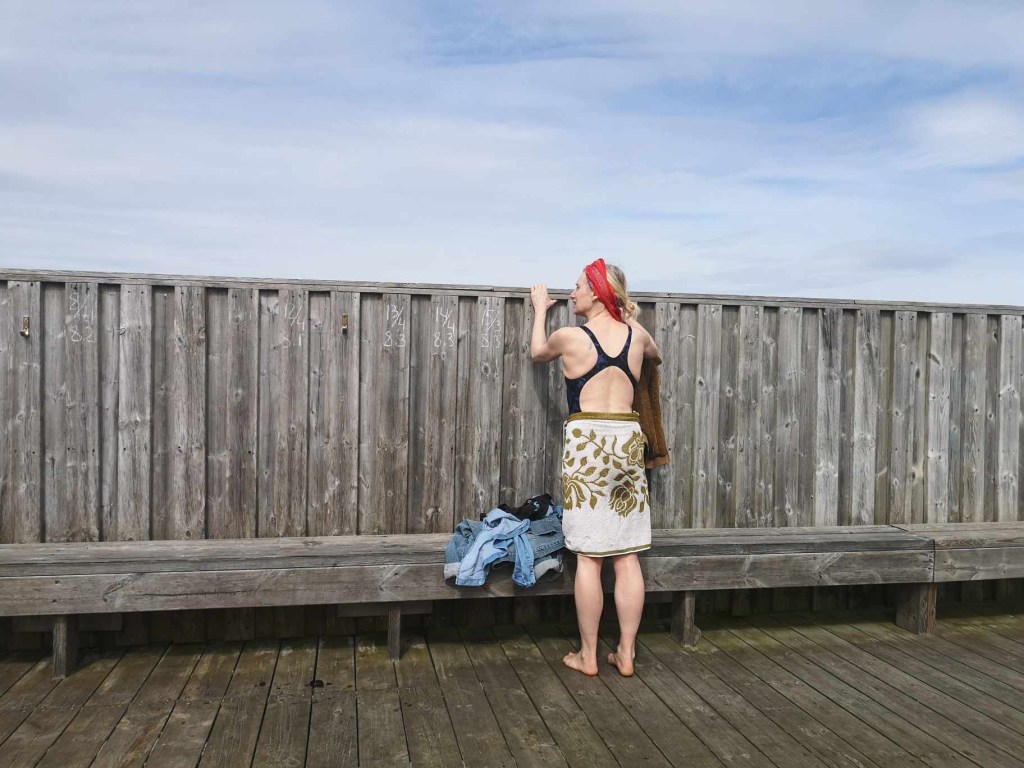
it wasn’t for the want of trying the left hand gave the right took away both clenched through the night graceless aching joints reported to another morning
the sky said welcome, anyway through floundering years a sea so capable of lashing out carried lungs, ribs and a heart that beats out of habit just as it can so needlessly cradle the weathered wood of abandoned boats going nowhere
the water said not all tides come twice a day bide, breathe, bide your nature is also to bind
Jennifer McCormack is a poet and artist based in Malmo, Sweden. She was born and educated in Glasgow, Scotland. Her work can be found in Ordkonst magazine, Amsterdam Review and New Writing Scotland, among others.
PLEASE NOTE: ARTICLES CAN ONLY BE REPRODUCED IN OTHER SITES WITH DUE ACKNOWLEDGEMENT TO BORDERLESS JOURNAL
Translators: Jerry Pinto, Pratik Kanjilal, Nirupama Dutt, Sukant Deepak
Publisher: Speaking Tiger Books
“Hindi literature, Swadesh Deepak maintained, had to be forced out of its comfort zone. The reader here is treated no less savagely,” writes Jerry Pinto in his introduction to this collection of ten stories by Swadesh Deepak, an author and playwright who was born in Rawalpindi on 6th August, 1942. After his masters in English Literature, he taught for a long time at the Gandhi Memorial National College, Ambala Cantonment. Following a period of illness from 1991 to 1997, when he had little contact with anyone other than his family and close friends, he made a momentous return to the world of letters with an autobiographical account of his illness, Maine Mandu Nahin Dekha[1], and the play Sabse Udaas Kavita[2]. He received the Sangeet Natak Akademi Award in 2004. He has a total of 15 published books to his name including short-story collections such as Tamasha, Baal Bhagwan[3]and Kisi Ek Pedh Ka Naam Lo[4]and hugely successful plays such as Court Martial and Kaal Kothri[5]. In 2006 he left home for a walk and never returned. He has been missing ever since.
These stories, deeply unsettling, challenge readers by taking them into a world where unknown forces work mysteriously, upending and affecting the lives of its characters, leaving them vulnerable at the mercy of chance happenings which rarely bring them relief. Much akin to what Thomas Hardy called as the Immanent Will — a blind and indifferent force determining the fates (and generally blighting the lives) of the privileged and the common people alike.
Whether it is the hunger for food, a ravenous longing of the starved and the deprived as portrayed in the stories ‘Hunger’ and ‘The Child God’, the mystery around the fate of a loved one in ‘For the Wind Cannot Read’, the struggle with depression in ‘Pears from Rawalpindi’ or ‘Horsemen’[, the unrequited yearning for a life of togetherness in ‘Dread and Dead End’, the author’s masterful play of the elements comes to the fore with an intensity that shakes and stuns the reader. Pinto refers to the author as the master of neo gothic,
The sunlight, the wind, the trees, the figure of a broken man, appears again and again. It seems as if it is just not the fate but also the forces of natural elements that keep rattling the course of the lives of the characters. The trees stand as guards, or sway in delight or offer a refuge, the sunlight “makes a hesitant arrival” sitting quietly or climbing the hills or sometimes streaking in the rooms, the wind is at times playful and at others vindictive. Then there are the flowers, the dead flowers of memories, whose bouquets one keeps holding, clinging to and clasping. And then there is the poetic play of words – “a pale yellow georgette afternoon in November” – bringing to life the patchy sunlight of autumn.
In the figure of broken man which appears again and again in stories, the author seems to be questioning the role that society has forced upon a man – that of a provider of the family, a role sometimes begrudgingly assumed in the stories because “no one respects a man without work, no matter how talented he is.”
In each story, the author weaves a tale that becomes a commentary — on society and its inherent evils, on relationships within a family stifled by arrogance, ignorance or circumstances and quietly working on the minds of those inhabiting it, on human greed engendered by depravity, hunger or lust, on the mysteriousness of fate whose force makes the mighty cower.
The translation, well executed, offers a closer reading experience and leaves a bilingual reader with the wish to approach the author’s works in original as well. I must make a special note on the introduction by the acclaimed writer and translator Jerry Pinto who offers a peek into the mind of Swadesh Deepak through a couple of excerpts of the author’s conversations with his psychiatrist and also with a convict brought to the hospital for evaluation. Perhaps these ideas had haunted him in the mental ward of the hospital and later seeped into his stories. Pinto in the introduction not only seeks to make sense of Deepak’s writing but also makes for a compelling reason to read his works – to read on without looking over one’s shoulders.
Rakhi Dalal is an educator by profession. When not working, she can usually be found reading books or writing about reading them. She writes at https://rakhidalal.blogspot.com/ .
.
PLEASE NOTE: ARTICLES CAN ONLY BE REPRODUCED IN OTHER SITES WITH DUE ACKNOWLEDGEMENT TO BORDERLESS JOURNAL
Shamik Banerjee resides in Assam with his parents. Some of his recent works will appear in York Literary Review, Willow Review, Thimble Lit and Modern Reformation — to name a few.
PLEASE NOTE: ARTICLES CAN ONLY BE REPRODUCED IN OTHER SITES WITH DUE ACKNOWLEDGEMENT TO BORDERLESS JOURNAL
It’s been 12 years since the day I stepped out of Navrang Opticians as a happy-but-slightly-embarrassed owner of an expensive pair of sunglasses. I remember feeling an inexplicable, capitalism-infused sense of confidence and eye-mancipation, like this pair of sunglasses was all I had needed to kickstart my post-college journey into adulthood.
But wow! 12 years! The world that I first witnessed from behind your tinted lenses has now changed beyond recognition. That’s how long you’ve been there for my eyes.
You have been my trusted companion through all my adventures in the past decade. You helped conceal the deep apprehensions in my eyes when I tried, as an unsettled young Masters’ student, to blend into the daily rhythms of life in a foreign country. You were there reassuringly embracing my face all through the 600-kilometre-long road journey when I decided to leave behind the only life I had known and move to Goa. You adapted with me, without any complaints, when you had to carry the additional weight of two face masks wrapped around you during those two horrific pandemic years. You were there alongside my amazed eyes and overwhelmed heart when I saw the mighty Pyrenees, the pristine blue sea and white-sand beaches in Andaman, and other parts of this country and the world that I never believed I’d actually see. And amid all this, you even managed to make my face look somewhat presentable at times, thanks to which I was able to get at least few decent photographs.
You have always been a safe space for me; like when you allowed foolish and outlandish hopes and dreams to float freely in the pool of my eyes as I watched a beautiful sunrise on top of a hill. And also, when my eyes needed to shed tears of disappointment and sadness as I watched a sunset on December 31st of another painfully unfulfilling year.
I am realising now that I may have taken you for granted. That you will always just be there in my backpack when I travel, on the mantel as I step out from home, or resting in my pocket or on a table in a cafe. I don’t even want to think about the day when you are damaged beyond repair or worse if I misplace you, because I don’t know what eye will do without you.
*’dhan‘ is wealth in Hindi and ‘bandhan‘ is the word for ties.
Uday Deshwal claims to have an ‘always wanted to be a writer but was diagnosed with impostor’ syndrome.
.
PLEASE NOTE: ARTICLES CAN ONLY BE REPRODUCED IN OTHER SITES WITH DUE ACKNOWLEDGEMENT TO BORDERLESS JOURNAL
First, sit comfortably on a white sofa --
no, a darker colour simply won’t do.
It must be at the home of a friend,
who is hopelessly in love with said sofa.

Second, choose an orange, very carefully --
not green and tender, or dry and shrivelled
but just the right shade of middling,
you want to know in advance it is going to be squirty.

Next, hold it in your palms, close to your heart,
shun the use of crockery or cutlery.
Real ladies peel oranges in their laps!
Make sure you wear your daintiest top
and bandhani pants that can only be dry-cleaned.

Then, look the orange in the eye.
Trust that it will never hurt you.
forget the laws of gravity, or that action
inevitably, has an equal and opposite reaction.

Now pry it open with both hands,
mustering every force.
Watch the rinds split, seeds
tear off at their core.
Watch citrus tears soar
into in the air, slo-mo
landing on --
the white sofa,
the dainty top,
the dry-clean pants
and yes, your friend's face.

Still, eat the orange anyway.
It is very likely very tasty.
The damage is already done,
and you still need your Vitamin C.

Later, forgive the orange for the mischief.
It should have been more careful, yes.
Apologise on its behalf, of course!
Turn orange-faced in embarrassment,
blame your child-like zest for life,
blame your brain for running out of juice.
Offer a piece as a peace offering
and hope that things don’t turn sour.
Supriya Javalgekar is an author, researcher and creative facilitator from Mumbai. Supriya draws upon story, theatre and art to cultivate nourishing spaces for self-exploration and dialogue. She currently lives in Amsterdam and is playing hard at improvised theatre. Discover more at www.supriyarakesh.com.
.
PLEASE NOTE: ARTICLES CAN ONLY BE REPRODUCED IN OTHER SITES WITH DUE ACKNOWLEDGEMENT TO BORDERLESS JOURNAL
In a tiny shop located within a narrow lane packed with people, sat Rakesh, in his late seventies, though he couldn’t say exactly. They didn’t keep proper records of birthdays back then. He sat staring outside as people pushed past one another, and over their heads, thick black electric cables coiled around one another and around long poles, forming a black canopy. He remained motionless, with glazed eyes.
Someone entered the shop, looked at him, and said something.
“What?” Rakesh muttered, coming out of his thoughts.
It was Nitesh, who had been running a food stall across the street for the past five months. It was called “Nitesh Snacks”.
“I came to have this watch repaired. It fell yesterday while I was going back home, and the glass broke.”
He put a watch on the counter. Rakesh picked it up and glanced thoughtfully at it. Then he nodded to himself and put it aside.
“I will give it to you tomorrow.”
Nitesh stood there hesitantly for a while, then said, “Arun ji was a very nice man. It’s a pity that he…died.”
Rakesh nodded again and said nothing. His shoulders seemed to weigh him down. His head was covered with thick grey hair, dyed bright orange with henna. He wore an oversized faded blue shirt that hung over his thin frame, and it was clear that he had forgotten to shave that morning. Nitesh looked worriedly at him. Things weren’t going well, and now that Arun ji was dead, they would likely worsen.
*
Rakesh walked into his single-floor house, which was a short distance from his watch repair shop. He remembered how he had started that shop. He had painted it himself, had the shutters fitted, and then began repairing watches. It had cost him plenty to buy that tiny room on the main street, but it paid well. People came frequently, and soon he could start selling clocks and watches. The shop was named after his late father, “Narayan Watch Repairing”. He remembered covering every shred of the wall with clocks- all colours and shapes.
He went right towards the back of the house, down a long narrow corridor, to a room that was visibly separated from all the other rooms. He sat down on the bed, thinking about when it had all started—when he became like this. It was probably when Arun died…no, that happened two days ago…it was when his wife died. Or around that time, or perhaps even before. He couldn’t think straight. He sat motionless, with a deep feverish glow in his eyes.
Someone looked into the room. It was his son with a big smile on his face. “How was work?”
Rakesh said nothing, and there was a pause. “You must miss your friend.”
Again, nothing.
“We all have to go sometime.”
This time, Rakesh just looked at him thoughtfully. His son nodded to himself and then said, “Sold any clocks today?”
When there was no reply, he added, “Well, that business is no longer as good. A few clocks, that’s all we can sell nowadays. Everyone has clocks on their smartphones. Who needs them now? That’s why we decided to shut it down. You do remember that we have only got a month left? I hope you have started wrapping everything up.”
His son had an easy smile on his face ever since he had entered the room. He looked at him for a moment before adding, “If you need any help at all while closing down, you can always call me.”
Rakesh nodded but said nothing. His son kept talking and then left after a while. Yes, he remembered now. He remembered how it had all started. It had started soon after his son got married. They began quarrelling frequently, especially Rakesh’s wife and their son. It felt like they were always in their son’s way, like they were always doing things to disrupt his life. He remembered his wife crying all night because of their son. He didn’t say anything much until she died. He did not like quarrelling. Many things displeased him, but he learned to remain quiet or use very few words. It had still not been as bad. At least, he still had some respect around the house.
Then one day, his son had seemed to turn over a new leaf. He was always there for him suddenly. He took an interest in the shop. He sat and chatted with him in the evenings over a cup of tea. Rakesh liked this change. Over several months, he came to trust his son, feeling a sense of satisfaction when he looked at him. There were disagreements, of course, but his son invariably seemed to come to his senses and apologised.
Rakesh couldn’t remember how long this harmony continued, but he did remember when it came to an end. It was a short time after he signed the documents that transferred all his property to his son. After that, things began to change. His son no longer took an interest in the shop. They barely spoke anymore. Rakesh’s health also started to deteriorate. Instead of taking more care of him, his son had a room built at the far end of the house. This room was bare except for an old wooden bed and an attached bathroom. It was in this room that Rakesh spent most of his time while he was in the house. His food was sent to the room. It always looked like leftover food from yesterday. Whenever they quarrelled, his son would always end the argument by giving the example of their old neighbour, who was sent to live in a temple by his children because he became ‘too much of a burden.’
He had lived like that for about a year now, missing his wife terribly. No one spoke to him in the house. His only solace was his shop. He eagerly spoke to the customers, absorbing himself in his work. His closest friend, Arun, was a barber whose small salon was right next to the watch repair shop. They had known each other for forty years. Every day, after closing up, they sat and chatted for about an hour. Arun was the one person he could always talk to, the one person who always shared his sorrow, and now Arun was dead. He had no one. At night, he would lie in bed, hearing laughter drift from the house. There was no outlet for his sorrow. It was bottled up inside him, and he felt that it was slowly poisoning him. His feet felt heavy, his breathing was often laborious, and he sometimes heard his wife calling out to him in the middle of the night. Was he going mad? Perhaps he was, and this month, his son’s news had been the final nail in his coffin.
His son had come bustling into the dingy room with a smile and told him that he urgently needed some money, then he had abruptly began talking about the watch shop—how it was not doing well, how people no longer cared about watches anyway, and how Rakesh was getting old and needed some rest. Then he explained that these things had prompted him to sell the shop, and they were required to clear out within two months.
There had been heated arguments between them. Rakesh had refused to speak to him for several days until one day, his son had assumed that his silence meant that the matter was settled. That there was no longer any need to discuss the issue anymore. Rakesh had become quieter than ever before. All he did was nod, as though if he was careful enough to maintain his stubborn silence, then perhaps someone out there would miss his words. Would miss them enough to make things right again. He would have a function in this world—a purpose. He would not be a burden on anyone. His son would miss speaking to him. They would once again sit in the evenings with a cup of tea and chat, not because he wanted his property, but for Rakesh’s sake. Because Rakesh would never be a burden. No one could make that happen to him.
*
Rakesh woke up and stared at the ceiling for several minutes before he realised that someone was in the room. Someone was speaking to him. He sat up and looked thoughtfully at his son. He was still too disoriented to hear him.
“You still haven’t done a thing…I can’t believe…we only have ten days left…do you realise how less time that is?” his son said.
Rakesh thought that he might be in a dream, but then he remembered that he hadn’t had a dream for years. He closed his eyes tightly and opened them again. It became clearer.
“You had two months to clear the shop. That’s more time than necessary in the first place, and today I went there in the morning to have a look, but not a thing has changed! I thought I could trust you with a simple task like this. How can I handle everything on my own? Haven’t I always taken proper care of you? But okay now, tomorrow I am coming down myself to start clearing things up. This has gone on for long enough. I know you have been handing over all the earnings from the shop to Arun’s old widow. I know that Arun was very poor, but we can’t really afford to be so generous if we are poor ourselves, can we? I tolerated all that, but you couldn’t even handle one small thing.”
Rakesh didn’t know how long his son had been speaking, but he understood what was being said. He did not reply at all and waited until his son stormed off.
He got his shirt off the hook and put it on. He stood in the middle of the room for a moment and then left the house. He walked for a long time to nowhere in particular. He had not eaten anything since the morning, but he didn’t feel hungry anyway.
He knew his son was lying. The shop had been doing just fine. His son just wanted to sell it off and get his hands on the money. Worst of all, Rakesh was powerless. Tomorrow, his son would come to start clearing up the shop, and after ten days, it would belong to someone else. He would probably spend the remainder of his days in the little cell his son had built as far away from their lives as possible, waiting for death. Waiting for time to pass.
He looked around and realised that he was near his shop. It was dusk now. In the deep orange sky, some birds were on their way home in a v-formation. How long had he walked? He felt drained, and his heart was fluttering slightly. He stared at the shop front for a while, waiting for his breathing to become normal again, but it didn’t. He then began to open the shutter, but it felt heavier than usual. By the time it was done, he was sweating profusely. Once inside, he collapsed into his chair behind the counter after locking the door from inside.
His mind was blank for a while. He was only aware of how tired his body was. Then he stared thoughtfully at each and every corner of the shop. He would leave this little space after ten days, and it would continue to exist without him. It might stand there for a hundred more years. He sometimes wished he could be a building. At least they were not a burden on anyone. They got to fulfil a certain function. He might leave, but this shop would continue to be a room. It might not be a watch repair shop, but it would still have a function. No one thought buildings were a burden. In fact, people fought with one another to get ownership. Wasn’t that what had happened to him? His son had lied and cheated to get his property, and it wasn’t even much at that.
He had thought that he would feel better after sitting down, but instead, his head had started spinning slightly. He looked at the walls. Each of them were covered with clocks from top to bottom. Normally, they would please him, the culmination of lifelong hard work. Now, looking at them, they all reminded him that time was passing. That the next day, he would have to pack each one of them. That ten days would pass soon, and after that all he would ever do would be to wait for time to pass. He could not bear the thought of packing the clocks up.
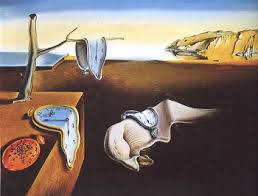
He realised that these were the last few moments of his old life, and they were passing really fast. Placing his palms on the counter, he hoisted himself out of the chair and stood for a moment, breathing hard. Then he walked over to the first clock on the wall—a bright yellow square-shaped one—and took it down from the hook. He stared at the minute hand for a while and then smashed it violently on the floor. Then he began moving faster, even though he still felt weak, but his eyes gleamed with determination. He went around smashing every clock. They all reminded him that time was flying by, leaving him behind, and for once, he wanted it to stop at the threshold of his shop. For once, he wanted to be free from the burden of the next day.
The Persistence of Memory by Salvador Dali (1904-1989). From Public Domain
Maliha Iqbal is a student and writer from Aligarh, India. Many of her short stories, write-ups, letters and poems have been published on platforms Live Wire (The Wire), Cerebration, Kitaab, Countercurrents, Freedom Review, ArmChair Journal, Counterview, Writers’ Cafeteria, Café Dissensus, Borderless Journal and Indian Periodical. She can be reached at malihaiqbal327@gmail.com.
.
PLEASE NOTE: ARTICLES CAN ONLY BE REPRODUCED IN OTHER SITES WITH DUE ACKNOWLEDGEMENT TO BORDERLESS JOURNAL
I would love to live a life
In rhyme with the wise
To help our planet renew
Its heydays of yore,
When a child could dream
Of the moon as a football
And would need to just stretch
His hands to touch the ball.

I live in accord with visions
Built with imagination.
Tied to my wishful dreams,
I like to give nuances
To my fleeting clouds of hopes
With a sketch pencil that scribbles
The rudiments of my compositions
Eager to soar.

Clouds soar when winds are nigh.
The Oceans, the Earth, and the sky sigh.
I leave footprints of my own
At a languorous pace
To embrace our progeny
On the palette of my dreams.
I leave these footprints of love
That leave no trace and sound.
Pramod Rastogi is an Emeritus Professor at the EPFL, Switzerland. He is a poet, academician, researcher, author of nine scientific books, and a former Editor-in-chief (1999-2019) of the international scientific journal “Optics and Lasers in Engineering”. He has published over hundred poems in international literary journals.
PLEASE NOTE: ARTICLES CAN ONLY BE REPRODUCED IN OTHER SITES WITH DUE ACKNOWLEDGEMENT TO BORDERLESS JOURNAL
There are good days, bad days, and then there are moderate days. What do we do on moderate days? These are days that don’t smell of cakes and candy, days that don’t bask in the glory of boisterous get-togethers, and that don’t have you running around in anxiety. They aren’t spent in hospital corridors and don’t promise hope and certainty.
Life, on most days, is a moderate one—rooted in mundanity and tied to the fabric of monotony. Routine allows us to remain distracted from issues that could consume us, provided we had the luxury of time. A great way to deal with the problems in our lives is to become so immersed in time that, when we finally come up for air, we are more concerned about breathing. Rough phases are accentuated by holidays. Your mind takes charge, playing Sisyphus, rolling up heavy boulders and then doing it all over again. There is no progress, no growth, no work happening, and yet you don’t feel relaxed because your mind is at work all the while—jumping from one thought to another, building bridges between past and future, thinking of what-ifs and what-cans, traversing distances within oneself.
We have been fed narratives on how to stay productive all our lives. Our social media platforms remind us of fancy vacations, celebrity-like dress-ups, mandatory postings on birthdays, festivals and events. So, we know the drill. We know that important days have to be documented, registered, laminated, and polished to make them even bigger. We learn how to hold ourselves together on rough days, and when we fail to do so on our own, we look around for company, securing ourselves in the den of familiarity. But what do we do about moderate days when life seems a humdrum affair, when the daily grind tastes dry and drab, when the clock ticks sound a tad bit slower, making us pine for ‘special days’?
On moderate days, we watch the world go by slowly. We sit with our cups of coffee or tea and let them brew a little longer. We indulge in small talk and greetings, building on past conversations. We catch trains, buses, and cabs as we gradually perfect the art of negotiating between the private and the public worlds. We wear our not-so-favourite clothes, which are dipped in comfort and familiarity, allowing us to blend into the larger crowd with nonchalance. We polish our to-do lists, letting them become maps to guide us in our future. We say our daily prayers and bless or curse people with equanimity. On moderate days, we let the world take us on a ride. On such days, we are mostly content with our lives. We are passive; we do not sit in the driver’s seat. Moderate days are forgettable, yet they are steeped in efforts, commitment, and drive. We do a lot, and yet nothing ‘significant’ happens.
Moderate days are for marinating—letting our lives soak in diverse hues, taking in flavour and texture, while we remain slightly detached from the end product. These are days when one would just sit laidback in chequered pajamas and unkempt hair mindlessly scrolling a social media page or sipping on the homely chai/coffee with some munchies. On days like these, we chat and gossip about anything under the sun and forget the conversations in the next instant. On moderate days, we blend, simmer, and evaporate, leaving behind traces of routine in the form of empty tea cups and several good morning greetings.
.
Priyanka Panwar is an Assistant Professor of English at Motilal Nehru College (Evening), Delhi University. When she isn’t reading or teaching, she likes to travel and observe. A movie buff and a voracious reader; on most days she dreams of coffee and mountains.
.
PLEASE NOTE: ARTICLES CAN ONLY BE REPRODUCED IN OTHER SITES WITH DUE ACKNOWLEDGEMENT TO BORDERLESS JOURNAL






 Borderless