Categories
Essay

Drinking the Forbidden Milk of Paradise…

By Meenakshi Malhotra
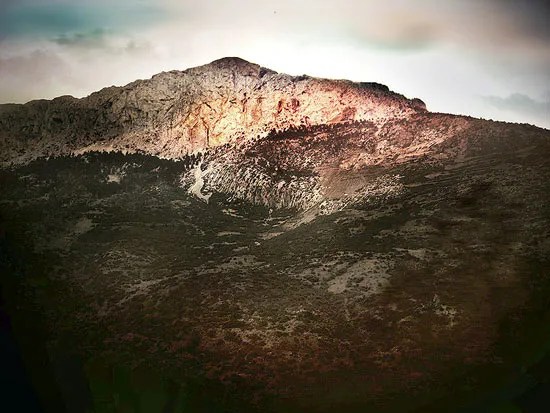
Mount Parnassus in Greece, where the muses were said to gather, was regarded as the home of poetry: From Public Domain

For the longest time, women were uncomfortable occupants of the house of poesy[1], particularly where there were existing canons of poetry established by the institutional gate-keepers and male custodians of literature. At best, they were viewed as Jane-come-latelies who sought to transgress the hitherto hallowed domains of high verse, interlopers to the hallowed heights of Parnassus who dared not “drink the milk of paradise”.

This ‘absence’ of women from the terrain of poetry is in spite of the fact that women have always written poetry, from ancient times to now. Sappho in the western tradition, was a Grecian poet from 5th-6th century BCE who was the pioneer of lyric poetry, a genre which apart from being set to music, also inaugurated the poetic ‘I’. In India, Buddhist nuns in the Mahayana and Theravadas who wrote poems known as the therigathas were early precursors of female poets. These early women poets engaged in the sometimes forbidden, sometimes lascivious charms of verse and versification. Down the ages, there were many others who joined them and kept the lamp of women’s versification lit. However, if women have always been versifiers, why has there been a  resistance and grudging admission for women to the poetic domain, which becomes a sort of “No (Wo)man’s land”? Why do women poets have only a token presence in traditional poetic anthologies?

Some reasons have been offered, not least among them being the preponderance of male poets who have often also been self-proclaimed and self-appointed guardians, legatees and arbiters of poetic tradition. Canonical poetic traditions, many claim, require a knowledge and understanding of Latin and Greek in the West while a knowledge of Sanskrit/Persian in the Asian context was deemed necessary. Thus women, who, for the most part, lacked formal education and had but small Latin and less Greek, could only hover around the margins and fringes of poetry. The situation with Sanskrit and Persian was similar and women remained mostly absent from or shadowy denizens of poetic terrains. Even if and when women were writing, they were doing so in colloquial registers and in the languages of the common people  and not in formal or decorative language, deemed essential for poetry, for the most part. Almost the first group of women writing poetry in India were Buddhist nuns who wrote in Pali, one of the many ancient languages in the ancient Indian subcontinent, which enshrined its own scholarly tradition. Sappho wrote in the Greek Aeolic dialect, which was difficult for Latin writers to translate.

Between 12th and 17th century, there was an advent  of devotional mystic poetry called “Bhakti” and “Sufi” poetry. While the poems were uttered/written in a devotional idiom, the poems and songs were often rebellious and iconoclastic, rejecting institutional religions and social norms. This poetry was rooted in personal and unmediated devotion and rejected formal languages and established societal norms. Some of this poetry was in an informal register, colloquial language and performative with a strong dramatic quality. Thus we have lines in Kannada from Akka Mahadevi (1130-1160) who rejects her earthly husband:

I love the handsome one: He has  no death decay nor form… no end no clan, no land.
Take these husbands who die, decay, and feed them to your kitchen fires.(Vachanas)

Women poets for the longest time had a crisis of identity, identification and non-belonging. They laboured under the anxiety of authorship where they felt the absence of precursors and fore-mothers and the lack of a poetic tradition to which they could belong. They were often made to feel as if they lacked genuine poetic talent or that they were transgressors against womanhood and femininity.

In Aurora Leigh (1855) by Elizabeth Barrett Browning, the eponymous title character, considers  the diverse fields of literature where women can exercise their talent and claim a space. The field of dramatic writing poses a challenge because the former demands that the woman writer be in the public eye in order to promote her plays. Further, to achieve or even aspire to the rank of Poet, Aurora must become capable of  “widening a large lap of life to hold the world-full woe”. Over the course of the long epic poem, she tries to reconcile her femininity with her artistic aspirations. In both cases, she is denied emotional fulfilment. She refuses to accept the role of an obedient wife, since it would mean foregoing the intellectual independence needed to develop as an artist, but then she must also refuse the love of a husband. In Book Five, she mentions three poets, none of whom she admires for their “popular applause”. Yet she admits that she envies them for the time they can devote to their chosen vocation and the adoring women that surround them and provide emotional support and fill their days with glory.

Another issue with women’s writing and poetry is the uncomfortable positioning of women in relation to patriarchal language or male centred language. If as Dale Spender  declares in “Man-made Language”, the masculine is asserted as the norm, where do we position women’s voices? While language is a universal medium of communication, man-made language is full of sexism and chauvinism and expresses reality from a predominantly masculine and patriarchal perspective. If language is a social system which women are persuaded or co-opted to use, how do they work within its confines to express their poetic aspirations? How do they stretch, bend, subvert language to express their own realities? Can we read techniques of irony, satire and other figurative and metaphoric strategies of defiance and subversion and an attempt to undermine from within?

Juliet Mitchell in her essay on ‘Femininity, Narrative and Psychoanalysis’ states that the woman writer/novelist must of necessity be a hysteric, straddling two opposed worlds. One world is that of male definitions and conceptions of femininity  and the other, a resistance and defiance of such conceptualising, accompanied by an attempt to undermine from within. Her defiance and resistance makes her character that of a hysteric, one who defies accepted notions and standards of femininity and is therefore considered transgressive. She troubles fixed gender categories, roles and definitions. She also disrupts and challenges the symbolic order of language, one which insists on rules of grammar and linguistic structures through the semiotic order which uses word play, repetitions and  childish rhymes, in order to express inner desires and drives. The symbolic order deals with the denotative aspects of language and the semiotic order with the affective aspect.

Women’s poetry often houses and accommodates the semiotic, seeming psychobabble that plays with and disturbs fixed notions of femininity and binary gender identities.

What are the popular themes that inform women’s poetry? Some themes are to with women’s search for authentic  self-hood and identity, their search for roots and a space of their own. As we see in Aurora Leigh, much of women’s poetry is self-conscious and self-reflexive, about the act of writing itself, the “awful daring of a moment’s surrender which an age of prudence could never retract.”(T.S.Eliot

Many contemporary women poets, across continents, have evinced a substantial  interest in exploring their poetic self  through their poems. On the one hand is the confessional poetry of Sylvia Plath and Anne Sexton, on the other the brief gnomic utterances of Emily Dickinson. Before the advent of the twentieth century, one hears of Barrett Browning, Emily Dickinson and Christina Rossetti, among many others. Names like Aphra Behn and Anne Bradstreet have been included in many syllabi, often as a token inclusion in an otherwise male centric course.

Women poets have talked about the horrors of war including rape, pillage and destruction. In their critique of war and violence, we find the forging of transnational solidarities, whether it is women’s poetry from Sri Lanka or Birangona (War heroines). 

In India the many names that come to mind are that of  Kamala Das, Eunice D’Souza, Meena Alexander, Sujata Bhatt and Sunuti Namjoshi. Women poets have employed effective means to explore the entire gamut of experience.The private  and the public domain, their process of  self-analysis; the process of poetic creativity and a probe into  poetic identities are all significant fields of exploration. For these women writers, analysing the creative process becomes much more than just a poetic theme. As they unravel the mystery of their poetic psyche in their writings, it becomes an epiphanic journey for the poets and their readers.

[1] Archaic word for poetry

Dr Meenakshi Malhotra is an Associate Professor of English Literature at Hansraj College, University of Delhi, and has been involved in teaching and curriculum development in several universities. She has edited two books on Women and Lifewriting, Representing the Self and Claiming the I, in addition  to numerous published articles on gender, literature and feminist theory.  Her most recent publication is The Gendered Body: Negotiation, Resistance, Struggle.

.

PLEASE NOTE: ARTICLES CAN ONLY BE REPRODUCED IN OTHER SITES WITH DUE ACKNOWLEDGEMENT TO BORDERLESS JOURNAL

Click here to access the Borderless anthology, Monalisa No Longer Smiles

Click here to access Monalisa No Longer Smiles on Amazon International

Categories
Poetry

Warning Archery by Rhys Hughes

Photo Courtesy: Rhys Hughes
Warning Archery, Bowmen of Gower
please keep to footpath
that orbits the tower
and have a nice bath
after your ten arrows strike the target,
wash off each frown
and glower in a sour juice of flowers.

We don’t want grimy archers
sitting at the table
if they are able to scrub off the mud
that must accumulate
on trousers and boots
when taking root in a meadow next
to a dark slimy lake
and twanging bowstrings like lutes.

The truth is that Fate
likes to make the souls of maids ache
by giving them work
they don’t need, cleaning up
after filthy archers who trample dirt
happily into rugs
and smugly blow
their noses in old flapping tapestries.

Who is hurting?
The targets that look like porcupines
or the domestic staff
toiling in the castle: are they riff-raff
to be treated so badly?
Sadly, the archers don’t care:
just for a dare
they jump on the table, dance while
still able, trample
lumpy puddings
and cakes until they are flattened to
slatternly shadows.

They regard themselves as belonging
to a privileged elite
who by divine right are always neat,
no matter how stained
their attire: I rapidly tire of the pains
the fellows inspire.
Dishevelled like wet dogs made from
old socks, they pulse
and steam from the hearth-fire’s heat
like scheming brains.

Bowmen of Gower,
grim was the day you learned the way
to strap on a quiver
and sew the sky
with arrows one after another, until a
passing raincloud
was stitched too tight for a bright sun
to break through.
What should we do? Lurk in a gloom
forever because
you decided to score points in the air?

It’s not fair on the rest of us.
We serve you cider
and ale while you laugh without fail
at jokes that wrap
anecdotes like cloaks,
keeping score and
spilling while swilling your furious
brews, until we break
the news that you fixed: these rickety
tricks of desire
have pernickety fires at their core.

The whippletree of destiny
distributes the load
unevenly on the backs of our souls
like uncertain rhymes.
Bowmen of Gower,
nobody knows how to encode
your arrows’ marrow:
bones in flight, a skeletal sight
for sword eyes.
Please choose another pastime!

Rhys Hughes has lived in many countries. He graduated as an engineer but currently works as a tutor of mathematics. Since his first book was published in 1995 he has had fifty other books published and his work has been translated into ten languages.

.

PLEASE NOTE: ARTICLES CAN ONLY BE REPRODUCED IN OTHER SITES WITH DUE ACKNOWLEDGEMENT TO BORDERLESS JOURNAL

Click here to access the Borderless anthology, Monalisa No Longer Smiles

Click here to access Monalisa No Longer Smiles on Kindle Amazon International

Categories
Stories

Why I Stopped Patronising that Cheese Maker’s Shop…

By Zoé Mahfouz

Yes, Elise, I’m talking about you. Ever since you got all those positive Google reviews, you changed. You made the cheese prices go up faster than Cynthia Erivo in Defying Gravity. Seventy euros per kilogram for a Beaufort? I might as well buy the cow itself for that price. You tried to sell us the salmon eaten by “the Queen of Denmark” as if we were attending a Bridgerton ball, right after your pathetic attempt at lumbering us with your farmer’s friend’s uncooked bread and your wild garlic cheese that ended up in the compost for the worms to enjoy.

You pretend that hygiene is your number one priority, yet you let your employees lick their fingers before packing up the cheeses right in front of the customers, just like foetuses do in their mothers’ wombs. You might as well let them lap milk off the floor, like Nicole Kidman does in Babygirl; at least that would be edgy. But let’s face it, you could never. Your lack of reasoning and problem-solving skills could be explained by the smoked cheese currently replacing your cerebral cortex.

You got your feelings hurt when my mother told you we also bought cheese at Laurent Dubois’s shop, a cheese master who won Best Craftsman of France, yet you align your prices with his, even though you’re a nobody with a growth on her forehead and a little cheese shop in one of France’s poorest suburbs. And don’t give me that talk about gentrification already. You and I both know the only reason you planted your shop here is that you couldn’t afford to be in Paris itself…which would also explain why you hired your 70-year-old mom to work with you in the back of the shop, instead of paying her a proper countryside retreat like a decent human being; unless, of course, you find a way to milk her too.

But sure, keep making us pay for it by selling us expired goat’s milk cheese, because we deserve to be poisoned with food for your bad life choices. “But we have loads of bills to pay!” And we don’t? Your cheese store stinks so much that if Lily-Rose Depp decided to hide from Nosferatu there, she’d still be alive.

But hey, don’t lose hope! Maybe you could throw your cheeses in the River Seine to spread a bit more E. coli for the open water swimmers at the next Paris Olympics?

From Public Domain

Zoé Mahfouz is an award-winning actress, screenwriter and content creator. Her own writings have been featured in 20+ literary magazines and best-of anthologies across the globe. Her short screenplays and TV pilots have been recognised in Film Festivals worldwide.

.

PLEASE NOTE: ARTICLES CAN ONLY BE REPRODUCED IN OTHER SITES WITH DUE ACKNOWLEDGEMENT TO BORDERLESS JOURNAL

Click here to access the Borderless anthology, Monalisa No Longer Smiles

Click here to access Monalisa No Longer Smiles on Amazon International

Categories
Notes from Japan

Haiku for Rwandan Girls

Narratives and Photography by Suzanne Kamata

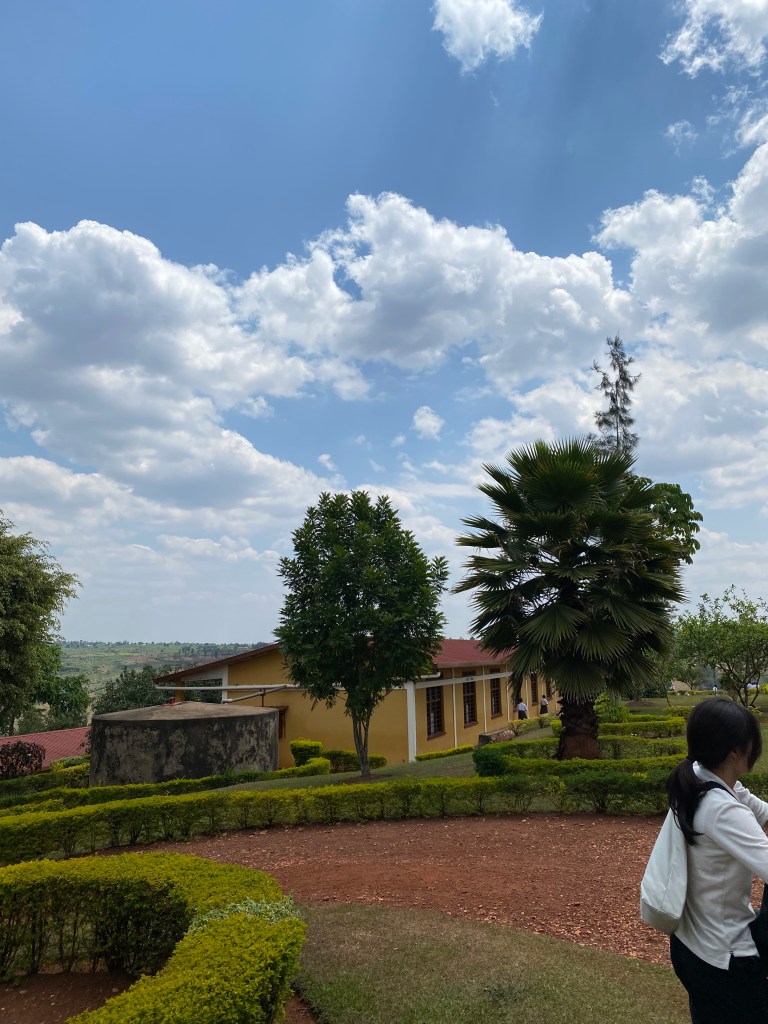
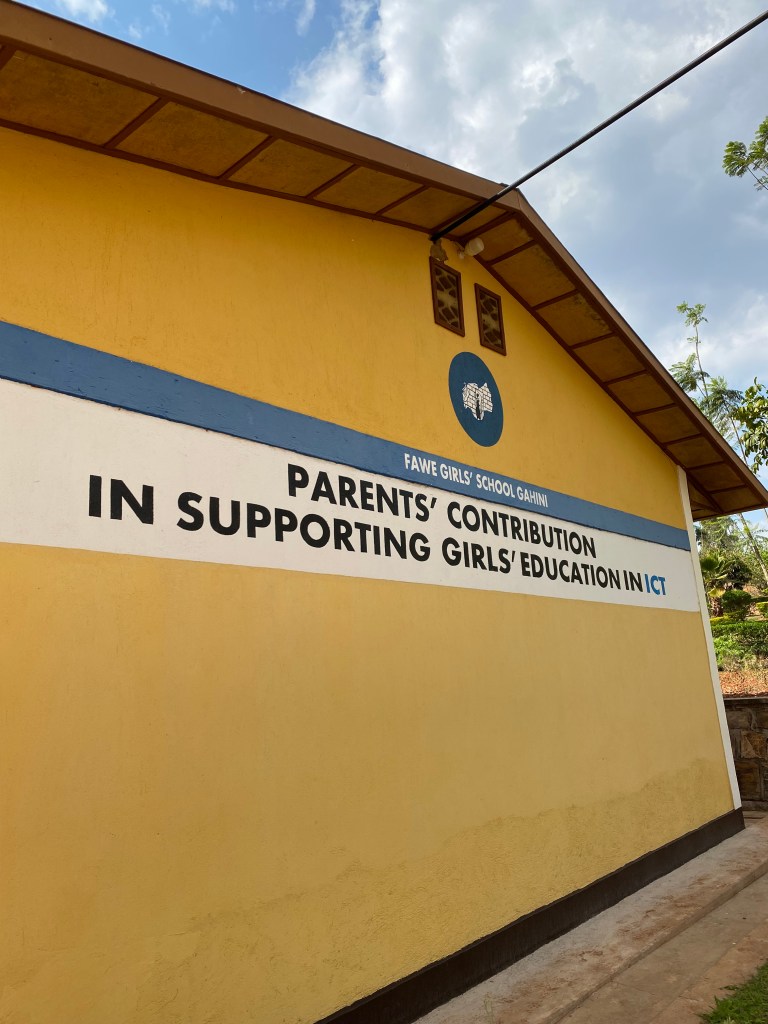
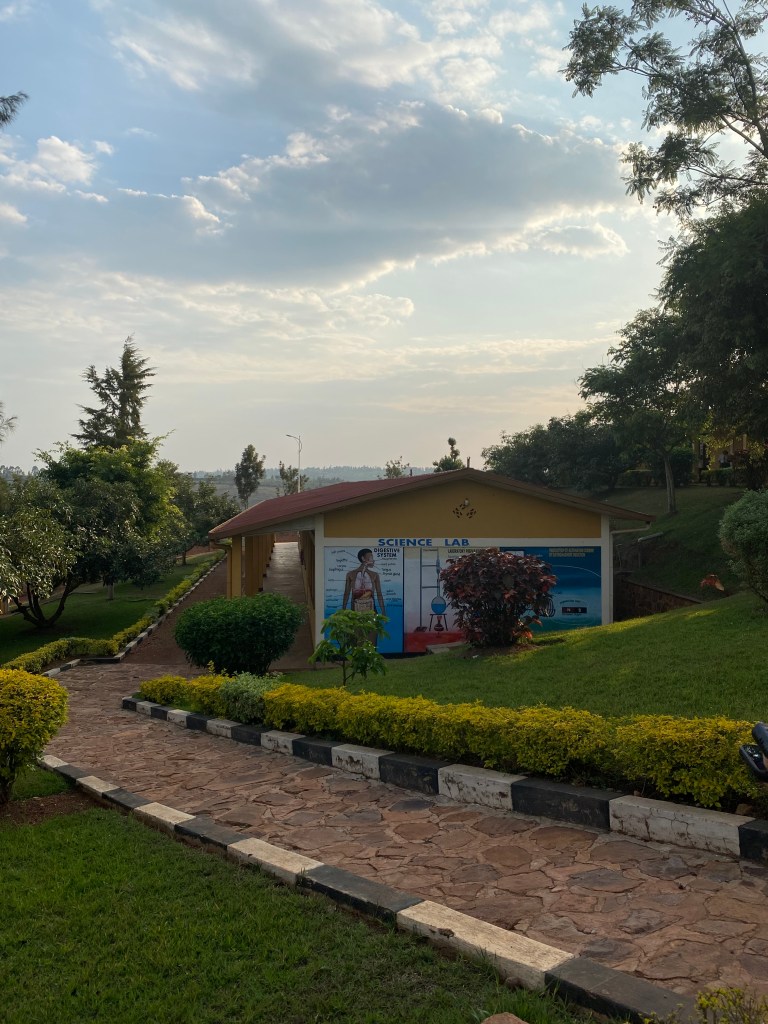
FAWE Girls’ School Gahini is in the Kayonza District of Rwanda, up a bumpy red-soiled road, on a hill overlooking acres of green. Various kinds of trees and shrubbery decorate the campus, which is made up of several small buildings painted yellow and roofed in red connected by walkways. Some are painted with murals or words extolling the importance of education. The outer wall of the Science Lab, for example, features a detailed diagram of the digestive system.

A male teacher in a white lab coat comes out to greet my three Japanese traveling companions and I as we alight from the air-conditioned Prado. Our driver Eugene, hired for this week by my colleague Satoshi, remains behind.

We have traveled here from Naruto, on the Japanese island of Shikoku, where two of us are professors and two, graduate students at a small teacher’s college, for a one-week research trip. Satoshi is going to conduct a survey on metacognition in solving math problems. This is part of an ongoing project for which he has visited Rwanda several times already. Last year, when he was about to embark on his trip, I mentioned that I had always wanted to go to Africa. Without hesitation, he said, “Let’s go!”

Of course, it was impossible for me to join him on such short notice, but he checked in with me periodically, telling me the dates of his next trip. I assured him that I was still eager to accompany him. For years I had included my dream of visiting Africa in my first day self-introduction to incoming students. Here was my chance.

I am not a math professor. I have an MFA in creative writing, but I have few chances to teach Japanese students how to write poems and short stories. Mainly, I teach English conversation, and academic writing courses. In the one class I devote to non-academic writing, an elective, I am lucky if even one undergraduate enrolls. Last year, the class included a visiting teacher from the Philippines and a graduate student, both of whom were auditing the class. Even the aspiring English teachers at our university mostly hate reading and writing. If it isn’t manga in Japanese, forget it! I keep a variety of popular novels in my office and press them into students’ hands when they ask me how they can improve their TOEIC[1] scores, but I feel victorious if even one student a year comes back for more.

During the trip, we would be visiting schools, and I would have the chance to conduct a few lessons. We would be visiting a private girls’ boarding school on the second day.

“You can do whatever you want,” Satoshi assured me.

Mostly, what I knew of Rwanda was from media reports about the 1994 genocide in which over a million Rwandans from the Tutsi ethnic group were killed by fellow Rwandans who identified as Hutu. I’d seen movies about the genocide, such as Hotel Rwanda, which the director of one of the memorials we visited would declare “a scam,” and read several books by the acclaimed Rwandan writer, Scholastique Mukasonga, who lost 37 family members in the massacre.

I boned up on education in Rwanda and found that as in some other African nations, such as Kenya, the country didn’t have much of a reading culture, although efforts are afoot to change that. In the epilogue to her poetry collection, Requiem, Rwanda, Laura Apol writes that in April 2009, at the International Symposium on the Genocide against Tutsi, the prime minister spoke of “the historical and literary necessity of having survivors not only tell their stories, but for the sake of history and art, write their stories as well.” Apol conducted writing workshops through a writing-for-healing project to help survivors and perpetrators process their grief and trauma. She’d helped Rwandans develop their writing over a week. I only had 30-40 minutes. Maybe I could get them to write a haiku.

Although there is still occasional violence by so-called Hutus against Tutsis (now simply Rwandans, according to their documents), the atrocities — which made up the genocide — occurred thirty years ago. The girls that I would be meeting hadn’t been born yet. I didn’t want to dwell on that sad historical event. I wanted to encourage Rwandan joy.

I prepared a PowerPoint presentation on haiku with photos, choosing examples that I thought would appeal to teenaged girls — a poem about eating ice cream, another about meeting a boy with “pirate eyes” on a beach, a poem featuring robots and a rainbow. I also included a sad haiku about violence against children in the United States, wanting to give them permission to write about tragedy, if they really wanted to.

I was hoping that they would write distinctly African poems, maybe featuring the gorillas that lived in the Western region, or the trees bearing mangoes, bananas, and avocadoes that seemed to grow everywhere. Perhaps they would write about the many people I saw bringing yellow plastic jerry cans to the river to gather water for daily use, the vendors of kitenge cloth in the markets, or the women who balanced loads upon their heads, or tended the fields with their hoes. They might write about the goat that they had sold to pay for their education, or the wild animals they’d seen on safari in Akagera National Park. But maybe all these things were cliches of Africa. I would not suggest these topics, would not insist that they reinforce my stereotypes.

On the day of the school visit, we are introduced to the smiling head teacher, a tall man who tells me that he has written both haiku and waka, the traditional five-lined Japanese poem. He seems bemused by our presence at his school. Nevertheless, he is affable and game to have us try to teach some girls something about Japan.

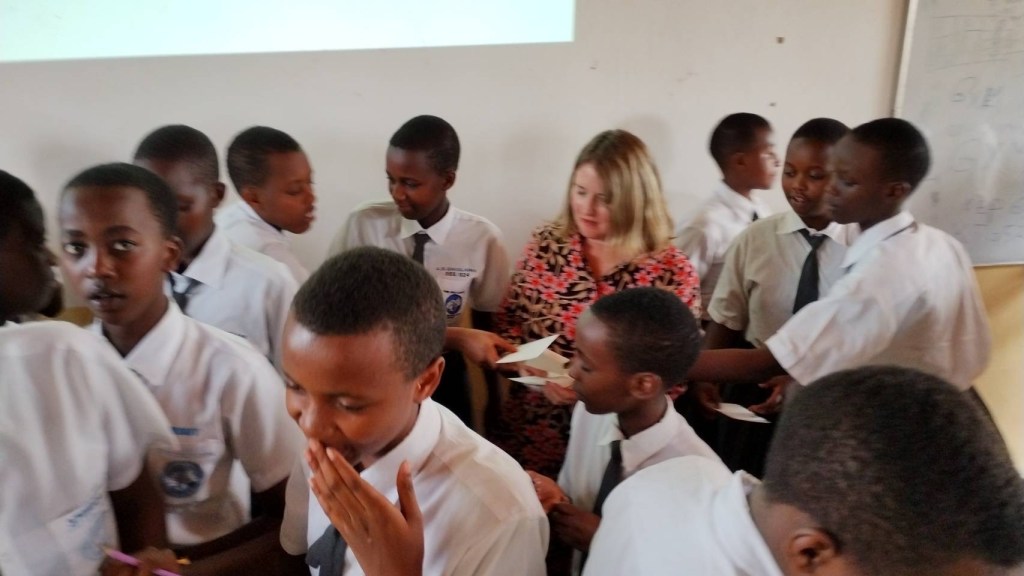
We are led to a dimly-lit classroom with four long tables. Laptops for each student’s use are on the tables connected to a power source. The English teacher, another man in a lab coat, sets up a projector, and I hand over my USB drive.

The girls file in, sit down, and automatically open the laptops. Their hair is shorn, and they are wearing white short-sleeved shirts, pleated gray skirts, and matching neckties. To get things started, Satoshi introduces our group and asks a few what they want to be in the future.

“Surgeon,” says one.

“Banker,” says another.

I remember how, when I had first arrived in bubble-era Japan as an assistant high school English teacher, the female students had replied “A good wife and mother.”

Okay. So these girls are good at English, and they are ambitious.

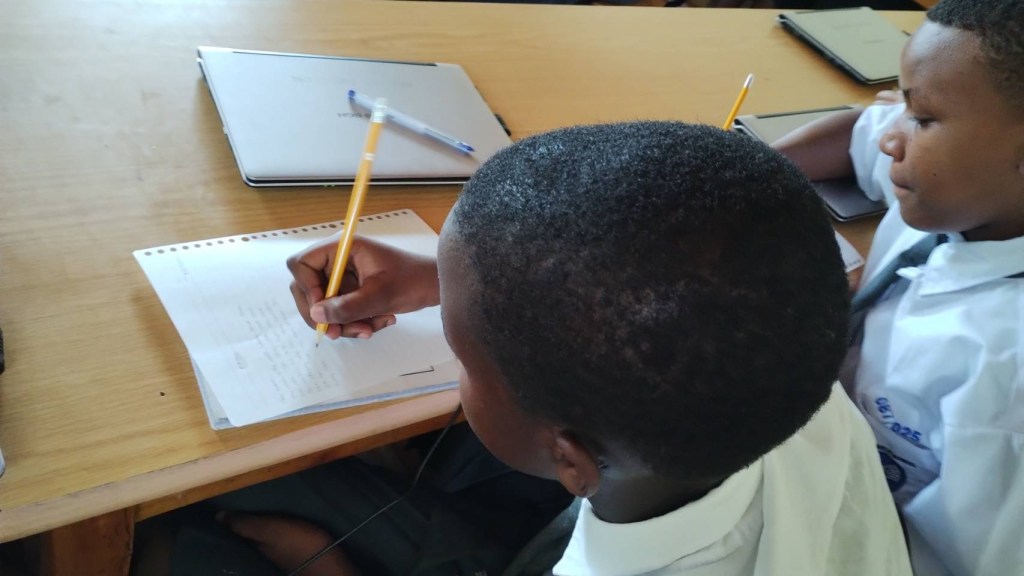
“Please close your laptops,” I say. I personally prefer to write poetry by hand, and I am always worried about students using generative AI, so I have brought pink and lavender pencils, which I bought at Daiso and sharpened back in Japan, and loose leaf lined paper.

I introduce myself briefly, explaining that I am an American, but I married a Japanese man, and have now lived in Japan for over thirty years. I also tell them that I am a writer, and I have brought some books by myself and others which I will donate to their library.

“A haiku,” I tell them, “is a short Japanese poem, usually consisting of 17 syllables, and including a kigo, or seasonal word.”

Their forty or so faces are turned toward me, but I can’t tell if they are engaging. When I ask if any of them have ever written poetry, four raise their hands. When I ask if they have ever written haiku, or even heard of it, the hands stay down. I go through my PowerPoint, noting their interest in a poem about Girls’ Day in Japan, on which families with daughters display ornate dolls representing the emperor, empress, and court.

“And now it’s your turn,” I tell them when I reach the last slide. “Let’s try to write a haiku.”

I ask them to think of an event, or a moment, and write whatever related words come into their heads over the next five minutes. They begin to scribble. When the timer on my phone goes off, I remind them that it’s okay to ignore the five-seven-five syllable rule, and that they don’t have to stick to seasonal topics. I tell them that if they are having trouble, they can use a poem from the PowerPoint as a template.

While they ponder and write, I wander along the rows, looking over their shoulders. I’m pleased to see that some have taken my suggestion to model their poem by one by Masaoka Shiki, about eating and drinking with friends on an autumn evening. But pizza? Ice cream? I’m a little disappointed that they didn’t use a more African dish, like brochettes, and banana beer. Then again, that is just my stereotype. Rwandans eat pizza, too.

Instead of writing a haiku, one girl writes a longer poem, which is clearly about the genocide. I realize that even though I want to encourage them to move on, to look to the future, to laugh and dance and celebrate, the trauma caused by the slaughter persists, hanging like a cloud over the country. Their parents probably lived through it, and there are reminders everywhere. Everyone has a story. Our driver tells me later that his father, sister, and brother were murdered. Rwandan students visit genocide memorials on school excursions as part of their education, just as Japanese students visit Hiroshima and Nagasaki. Peace education is deemed very important here, and, during this time of division, I can’t help thinking that it would be good in my own country as well.

At the end of the lesson, I tell them that what they have created belongs to them. I want them to keep their poems, but I also want to read them. I ask them to copy their haiku onto another piece of paper and give it to me.

“I hope you will keep writing haiku,” I tell them, my grandiose idea of promoting Rwandan literature in mind. I tell them of where they can send their poems for publication to an international audience. We pose for a group photo.

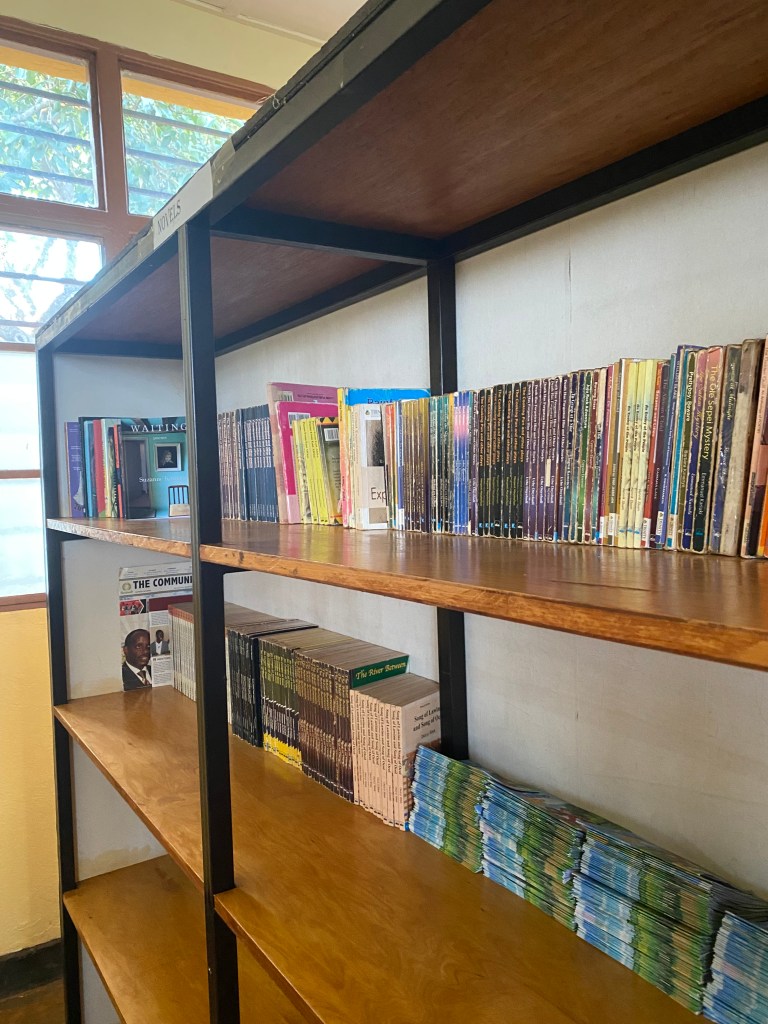
Later, I bring my books to the library.

“Bonjour,” says the nun librarian, who must have been schooled when French was the official medium of education.

I had not realised that this was a Catholic institution. I hope that no one takes offence that one of the books I am donating, which has been banned in some places in the United States, is about a Muslim girl. In another, a novel by a contemporary Zimbabwean writer, a teenaged girl confesses to having had premarital sex. A character is one of my own novels is a gay figure skater.

The nun accepts the books graciously and tells some tag-along students to place them on the fiction shelf. I stand back, noting that the ones already there are old and worn. Perhaps they do most of their reading online? In any case, there are no young adult novels for girls, nothing published in the past few years, and I know how expensive imported books are.

“I hope you will read them,” I say, thinking of my students back in Japan who hate to read.

“We will,” the girls promise.

I imagine a single girl, coming upon these novels and greedily devouring them one after another, perhaps seeking out more, and then beginning to write her own stories. I imagine coming across a novel in a bookstore written by a girl who grew up in Kayonza, who attended the FAWE Girls’ School Gahini. I imagine reading that book and posting about in on Instagram. And then I try to let go of my expectations, and say “murakoze,“ which means “thank you” in Kinyarwanda, and “goodbye.”

Hamburgers and fries
Speakers blare Billie Eilish
--lunch in Kigali

A Haiku by Suzanne Kamata

[1] The Test of English for International Communication

Suzanne Kamata was born and raised in Grand Haven, Michigan. She now lives in Japan with her husband and two children. Her short stories, essays, articles and book reviews have appeared in over 100 publications. Her work has been nominated for the Pushcart Prize five times, and received a Special Mention in 2006. She is also a two-time winner of the All Nippon Airways/Wingspan Fiction Contest, winner of the Paris Book Festival, and winner of a SCBWI Magazine Merit Award.

PLEASE NOTE: ARTICLES CAN ONLY BE REPRODUCED IN OTHER SITES WITH DUE ACKNOWLEDGEMENT TO BORDERLESS JOURNAL

Click here to access the Borderless anthology, Monalisa No Longer Smiles

Click here to access Monalisa No Longer Smiles on Amazon International

Categories
Poetry

Green by Mark Wyatt

Mark Wyatt
                GREEN

Mine is a diminishing language. Once universal, so
healthy and happy, I sang in the forests, had many
specialised terms for aspects of leaf that flutter
or cry in the tiniest wind. I gave oxygen, and not
botany classes, which come late to save ecosystems
now. I do my best to instruct, offering pot-plants
as semi-colons that help you to rest in your homes
but where is the weight of my vocabulary? I'm ever
shrinking, slinking away in Brazil, decapitated by
acid in Northern Germany. I am almost a leprechaun
trying to explain how an emerald isle is different
in feel to planet Uranus. Your mythology gone, how
will you cope with dryads in Greece or the outlaws
of Sherwood Forest, which exists only in verdigris
I wish my world was a young girl sick of chlorosis
as conservationists offer fruit, mowers brush hair

Mark Wyatt lives in the UK after teaching in South and South-East Asia and the Middle East. His pattern poems have appeared in or are forthcoming from Ambit, Full Bleed, Greyhound Journal, Hyperbolic Review, Ink Sweat and TearsOsmosis, P.E.N. New Poetry II (Arts Council/Quartet), Sontag Mag, Typo, and elsewhere.

.

PLEASE NOTE: ARTICLES CAN ONLY BE REPRODUCED IN OTHER SITES WITH DUE ACKNOWLEDGEMENT TO BORDERLESS JOURNAL

Click here to access the Borderless anthology, Monalisa No Longer Smiles

Click here to access Monalisa No Longer Smiles on Kindle Amazon International

Categories
Review

Little, Lhasa, Shangrila and More in the Heart of India

Books Reviewed by Somdatta Mandal

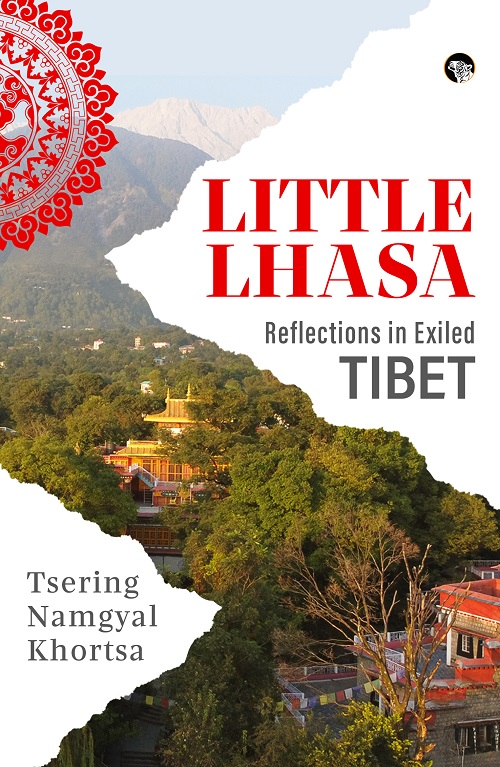
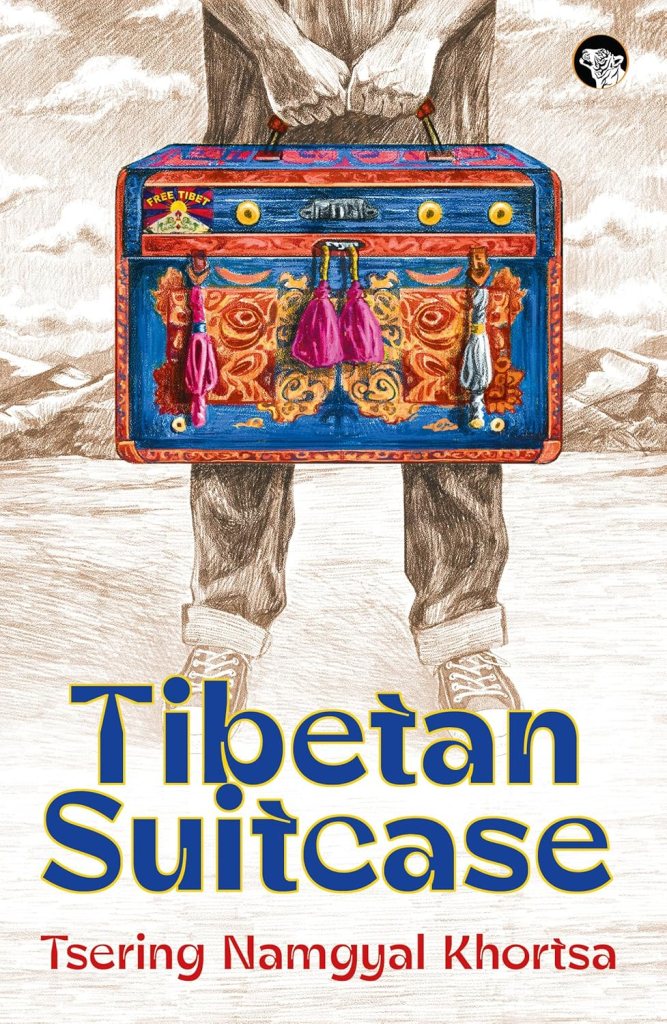
Titles: Little Lhasa: Reflections in Exiled Tibet and Tibetan Suitcase

Author: Tsering Namgyal Khortsa

Publisher: Speaking Tiger Books

Following the forced escape of His Holiness the Dalai Lama in March 1959, thousands of Tibetans were forced to flee Tibet, and it was these refugees who formed the early exiled community. The refugee community now stands at a figure of around 130,000, with Tibetans spread across numerous settlements in India, Nepal and Bhutan, and thousands more displaced all around the world. The Tibetan government in exile is based in Dharamsala, India. It is called the Central Tibetan Administration (CTA) and was founded in 1959 by the 14th Dalai Lama. In the 1980s, a second wave of Tibetans fled due to political repression. The CTA advocates for human rights, self-determination, and the preservation of religion and culture for Tibetans. The CTA has a parliament, judiciary, and executive branch and its principles include truth, non-violence, and genuine democracy. The Dalai Lama has said that the exile administration would be dissolved as soon as freedom is restored in Tibet.

After over seventy years of being in exile, a whole generation of Tibetans have come of age in a land far from home. With the Dalai Lama and other great masters as their spiritual guides, they have grown up cut off from their homeland. Their experiences have been unique, as they have, despite globalization, kept alive their religion and culture. In Little Lhasa: Reflections in Exiled Tibet, Tsering Namgyal Khortsa writes comprehensively about the different aspects of their life today. Comprising of ten essays and six interviews, this volume becomes an eye-opener on the multifarious aspects of the present situation of Tibetans at large. Beginning with different writers writing about Tibet and exile in the very first essay titled ‘Little Lhasa’, the next one ‘Shangrila Online’ tells us about the role of social media, internet cafes and how technology in remote Dharamsala often enables one to participate in other people’s experiences in real time. The writer describes in detail how such lifestyle changes in contemporary times have enabled the creation of a “virtual Tibet”. In the next essay ‘Buddha’s Children’, Khortsa describes the young generation of exiled children in India and how their religious identity has triumphed over all other identities. We are also told about the different kinds of foreigners who come to India to take religious courses, and the writer wonders whether they go home feeling merely inspired by their visit to India and their meetings with Tibetan masters or whether such exposure and experience actually triggers a paradigm shift in the way they view the world.  

In the next essay we are told how Tibetans lead demonstrations in Dharamsala and other parts of India every year, especially the one held on March 10th  that commemorates the anniversary of the failed uprising against Chinese invasion. ‘Movies and Meditation’ mentions a film festival in Dharamsala which reveals how recent Tibetan films highlight a growing and vibrant filmmaking community within the Tibetan diaspora, but Khortsa laments the paucity of full-length films about Tibetans in exile and the issues they confront, namely patriotism, individualism, and reconciliation of personal fulfilment with the Tibetan cause. The titles of the three following essays, ‘Dharma Talk’, ‘The Lure of India’ and ‘The Monk at Manali’ are self-explanatory. The last essay of this section ‘Nation of Stories’ tells us about writers who write and publish in the English language, and though diverse in terms of their education, upbringing, background and geographical location, one common condition that they all share is the collective trauma of the Chinese occupation of Tibet, which is invariably a leitmotif in Tibetan literature.

Part Two consists of six interviews, each one different in perspective than the other, and they must be mentioned here to understand the kaleidoscopic nature of the people involved in the Tibetan cause. Thus, we have conversations with Lisa Gray as ‘A Western Buddhist’, Ananda Nand Agnihotri as ‘An Indian Tibetan Buddhist,’ Ngawang Woeber, ‘An Ex-Political Prisoner’, Nyima Dhondup, ‘A Swiss Tibetan’, Tenzing Sonam, ‘A Tibetan Writer and Filmmaker’ and Tenphun, ‘The Tibetan Poet’. All in all, Little Lhasa becomes a valuable record of the life of a people who refuse to bow down or forget, and even while adapting to a rapidly changing world, continue to nurture their roots.

II

After the non-fiction, Tsering Namgyal Khortsa comes up with a brilliant piece of fiction and read together, each text complements the other beautifully. In the ‘Editor’s Note’ at the very beginning of the novel Tibetan Suitcase, Tsering Namgyal Khortsa tells us that while he was working as a business journalist in Hong Kong he once ran into Dawa Tashi, an old acquaintance and an aspiring novelist from Dharamsala, India who was working as a meditation teacher and was quite busy with his job. He had a suitcase full of letters and documents and wanted him to turn the contents of the suitcase into a book. After going through the collection, Khortsa discovered that the contents of the suitcase, if organized with care and discipline, could indeed make for an epistolary novel. So, he declares that except for correcting a few typos here and there and add note and datelines to the letters, he had not done anything. He also categorically states, “None of the letters are mine, except some entries that I wrote, making the book partly fictionalized.” He also wanted to leave room for readers to imagine (or ‘feel’ for themselves) what is not mentioned in the book, in deference to the Tibetan culture of reticence and taciturnity, rather than turning himself into an all-knowing chatterbox.

Tibetan Suitcase is a remarkable novel about the peripatetic Tibetan community in exile. It is divided into six parts, beginning roughly from 1995 to 2000. It opens in Hong Kong where a tycoon Peter Wong opens a meditation centre and employs Dawa Tashi, our protagonist as a meditation teacher and a guru, though he is not really trained to be a lama. Dawa Tashi is an India-born Tibetan. His parents fled Tibet when the Chinese invaded, and Dawa has grown up in the quiet, verdant Indian Himalayas. When Dawa applies to a well-known university in America (Appleton University in Wisconsin) to pursue a course in creative writing, his hitherto ordinary life changes dramatically. At the university he befriends, and falls in love with, Iris Pennington, an unusual American student who is studying Buddhist literature. He also comes in contact with Khenchen Sangpo, a renowned scholar of Buddhism and a reincarnated Rinpoche himself. Circumstances lead Dawa back to India too soon, but the connections he makes take his life into many new directions. Some, with Iris and Khenchen, take him deeper into the mystical and mysterious world of Buddhist scholarship. Other journeys take him back to his roots, making him question his life’s directions.

Apart from the interesting incidents and characters we meet in the first four parts of the novel, Part Five is an exceptionally engrossing to read. Beginning with the reportage in the Fall Issue of the journal Meridian, which is edited by Brent Rinehart, we are told that on his seventy-ninth birthday Khenchen decided that he had to go back to Tibet to see his native land. Having gained a quick residency status in the United States, and possessing an American passport, Khenchen still had many relatives in Tibet, some of them quite alive and well, despite the Chinese occupation. He travels to Lhasa in 1996 and goes for a trip to Lake Manasarovar but things take a different turn when he is arrested by the Chinese authority because he was apparently “endangering national security”. What follows are different press releases from the US Statement Department, reports from the International Association of Tibetan Studies in London, address by the President of Appleton University and as Iris writes to Dawa, she never expected herself to be so politically involved and “did not realize Tibet was such a political subject”. It was ironic that one of the world’s most spiritual places was one of its most burning political issues. Tibet might be a small place, but it has a reasonably big space in the collective consciousness of the world. Of course, Khenchen Sangpo is ultimately released and without disclosing the actual ending of the novel, which in a circular fashion ends in Hong Kong from where it began, many loose ends are tied up and life came to a full circle for everybody, especially for Iris Pennington who finally managed to find her roots.

Both the non-fiction and the fiction book by Tsering Namgyal Khortsa prove to be eye-openers for all readers who have very little knowledge about the sorrow and plight of the uprooted Tibetans who live in exile and many of whom do not even have a country to call their own. Based in Dehradun, India at present, Khortsa’s narratives are so powerful that it has aptly prompted Speaking Tiger Books to reprint the updated versions of both the books in 2024 and one can call it a yeoman service to readers both serious and casual. A must read.

.

Somdatta Mandal, critic and translator, is a former Professor of English at Visva-Bharati, Santiniketan, India.

.

PLEASE NOTE: ARTICLES CAN ONLY BE REPRODUCED IN OTHER SITES WITH DUE ACKNOWLEDGEMENT TO BORDERLESS JOURNAL

Click here to access the Borderless anthology, Monalisa No Longer Smiles

Click here to access Monalisa No Longer Smiles on Amazon International
Categories
Poetry of Jibananda Das

Jibananada’s Poetry on War & Humanity

A translation of three Bengali poems of Jibananda Das by Professor Fakrul Alam

Painting by Sohana Manzoor
THE GREAT WAR IS OVER 

The Great War is over
And yet there is left its vast gloom
Our skies, light and society’s soul have been overcast
One has to intuit whatever light there is every day
The sky is dark; society vacuous; Existence
Disgraced; love dead; blood flowing fountain-like;
Knowledge becoming the bearer of an immense load of corpses
And of its own self as well!


GAFUR

“Gafur” I called out to him silently, and yet—
What sticks to my ears—wordless outbursts
Aren’t really artificial—incongruous—frosty –
“Where have your oxen wandered ?”
“They died a long time ago!”
It’s as if someone had lost a twin brother,
Or as if Hanifa was no more—didn’t seem to be
Anything anywhere anymore.
Gafur’s mouth returned to its normal shape silently,
As if a vast expanse of land had been walled off!


A NOBODY WALKS…

A nobody wanted to walk down the path as always.
How then could those closest to him get lost forever,
And disappear in some underground World?

Jibananada Das (1899-1954) was a Bengali writer, who now is named as one of the greats. In his lifetime, he wrote beautiful poetry, novels, essays and more. He believed: “Poetry and life are two different outpouring of the same thing; life as we usually conceive it contains what we normally accept as reality, but the spectacle of this incoherent and disorderly life can satisfy neither the poet’s talent nor the reader’s imagination … poetry does not contain a complete reconstruction of what we call reality; we have entered a new world.”

.

Fakrul Alam is an academic, translator and writer from Bangladesh. He has translated works of Jibanananda Das and Rabindranath Tagore into English and is the recipient of Bangla Academy Literary Award (2012) for translation and SAARC Literary Award (2012).

.

PLEASE NOTE: ARTICLES CAN ONLY BE REPRODUCED IN OTHER SITES WITH DUE ACKNOWLEDGEMENT TO BORDERLESS JOURNAL

Click here to access the Borderless anthology, Monalisa No Longer Smiles

Click here to access Monalisa No Longer Smiles on Amazon International
Categories
Stories

Eyes of Inti

By Swati Basu Das

This happened far, far away from the home of the Incas; in a kingdom where Sindbad was born…

When the afternoon sun rays briskly melted into the sea and the sandy beach bathed in its glittering waves, a boy in his teens, sporting a mullet haircut, lounged in one of the decorative corners of an elite semi-outdoor eatery. He sat, busy scratching his legs with one hand and handling his phone with the other. The itchiness disturbed him. He failed to repel a menacing minuscule creature that lurked under the table. He spoke less. His eyes glued to the screen. The scowl he wore on his forehead highlighted his teenage disposition. His sombreness confirmed his teenage manifestations.

His family sat in awe to appraise the affluent ambience of the Peruvian-themed restaurant by the shore of the Arabian Sea.  An enormous vintage carved wood chandelier hung from the ceiling. It sprinkled dust of subtle golden light on the faces ogling up to adore it. Bonsai trees, creepers, elaborate Inca statues, and artefacts artfully contributed to the extravaganza. The crisp December draft made the semi-outdoor setting perfect for an exotic lunch. “Cheer up young man! The December heat has lulled the desert heat, what makes you frown?” a middle aged man, presumably his father interrupted his attention a little more.

“Welcome to the paradise!” A swanky waiter attended the guests in his customary white shirt, black pants and black waistcoat. He stood coated with a half-bistro apron around his waist and a pleasant smile. His generous hands served inviting prawn crackers and tempting avocado guacamole. “I would like to have Eyes of Inti[1],” the boy ordered a drink with a quick smile. “Great choice!” he hurried in and returned with the beverage. “Should you prefer sitting indoors? I must ask you this because some guests complained of mosquitoes two days back. Mosquitoes get nasty on you. It shouldn’t spoil your experience with us.” His teeth shone like pearls as he grinned.

 “Oh, they still didn’t trouble us. We prefer sticking to this table. It’s lovely out here,” the boisterous voice of the man answered. 

While methodically placed the cutlery on the table, the waiter continued. “No one fancies an attack from the monsters with their dangling moustache at lunchtime. They hum until they get tired of singing. When you become heedless, they sit on your bare skin to suck your blood with their straw-like weapon. Did you ever crush them between your palms to witness the lifeline in your palm raise a toast to your success with a daub of blood?” he chuckled at the boy and graciously served a glass of mocktail infusion with a smouldering orange hue popping out. “Eyes of Inti for you. It tastes like the nectar of immortality. While you enjoy the Peruvian meal, Inti shall keep a watch on those little devils.”

The banter amused him. Moving away from his phone, he began scrolling through the menu. “One Pargo a la Trufa and Inca’s Rage for me, please,” The red snapper ceviche with loads of truffle made his stomach growl for food. “So, these devils with dangling moustaches and trenchant weapons own free passes to Paradise? Or, perhaps Inti was too distracted. The wrath of Inti’s nemesis — I mean the mosquitoes – waned Inca’s rage?” the boy smiled.

“Ahh! I’m not quite sure,” the waiter chortled with a bland look. A simper smile lingered on the boy’s face.

Inti. From Public Domain

[1] Ancient Inca sun god

Swati Basu Das is a journalist based in Oman. Her columns and features on culture, and travel are published in newspapers and magazines. She relishes music, escapades, coffee and John Keats. 

PLEASE NOTE: ARTICLES CAN ONLY BE REPRODUCED IN OTHER SITES WITH DUE ACKNOWLEDGEMENT TO BORDERLESS JOURNAL

Click here to access the Borderless anthology, Monalisa No Longer Smiles

Click here to access Monalisa No Longer Smiles on Amazon International
Categories
Musings of a Copywriter

All Creatures Great and Small…  

By Devraj Singh Kalsi

From Public Domain

The white cat cuddles up on the furry brown mat right outside the entrance door. After I lock the gate leading to the granite steps, it slips in through the iron grille, assured that this seat will ensure comfortable sleep at night. So long as it makes no noise to disturb me, this arrangement works fine. Sometimes when I wake up early, I forget to peep out through the glass window to check whether it is still there. My sudden opening of the door hits her legs and she quickly vacates the spot, turning back to stare and warn that my inhospitable disruption would draw a bloody scratch.

It is true she would have slept longer if I had not arrived on the scene. The feline is entitled to jump to the conclusion that I am the culprit who did not show a sensitive side by tendering an apology through expression. Making an effort to introspect mirrored how miserable I felt when I was groggy with sleep – head buried under the pillow – especially if a domineering member of the family pulled me out of the cosy comforter and rebuked me for being lethargic. My humble submissions for another fifteen minutes of restful sleep were always rejected like salary hike requests. Drawing this parallel provided the solace that I still had a  functional ability to regenerate the tender side.

To make amends, I woke up late or delayed opening the door, allowing the cat the opportunity to snooze for a longer duration. Any kind of clatter inside the house could disturb her sleep so I took extra precautions to maintain peace in the kitchen. I chided myself for not being courteous enough to offer a bowl of milk to welcome the guest. These were clear indications that my sensitive side was kicking in!  

The decline of the sensitive side usually gets overlooked in the rush to cope with daily commitments. When something awful and unexpected occurs, the journey to explore within and measure the decline begins all of a sudden. One tends to becomes extra vigilant, checks repeatedly the extent of damage and how to recover the lost ground. The natural ability to be sensitive and the efforts to restore it calls for consistent efforts that strengthen bonds with nature and its allies.

The other day I woke up late as I binge-watched a lot. It slipped out of my mind that the pigeons were waiting to be fed. When I reached the garden, most of them had taken flight. There were still a few of them hopping around. As I served foodgrains, there was a scramble to peck at it. They settled down to polish off whatever their eyes could find and then proceeded to spread their wings in the air. After their exit, smaller birds like sparrows descended from the branches of a guava tree to have their fill. The squirrels on the garage roof availed the hollow pipe to come down with alacrity, to search for remnants. I thought I should arrange something for them, probably nuts. It was a mere idea without any urge to act immediately. Some minutes later, I came inside to proceed with other chores but I kept thinking about the pigeons – about the ones who could not wait and those who stayed there.  

The loss of patience was natural as the pigeons knew I was never so late. Instead of wasting time, they flew away to other options to have their fill. I could relate to this practical behaviour as I myself do not like being kept waiting to be served tea or coffee at home or in a café and have often shown the tendency to leave. Somewhere deep inside I relished the thought that those who waited for my arrival were close to me and shared a strong bond that I became aware of through this episode.

The packet of peanuts was torn, and it slipped out of my hands when I tried to fill them in a glass jar. A handful of nuts fell on the tiled floor. I gathered those nuts and opened the kitchen window to offer it to the squirrels still lounging in the garden. Perhaps the universe had communicated my thoughts to them. Within minutes, the squirrels vanished with the booty. Though it is widely believed that the food reaches for whom it is meant, it shows gross insensitivity when food is wasted or thrown away. How can it possibly be acceptable that some human beings are destined to scavenge for food in garbage bins?

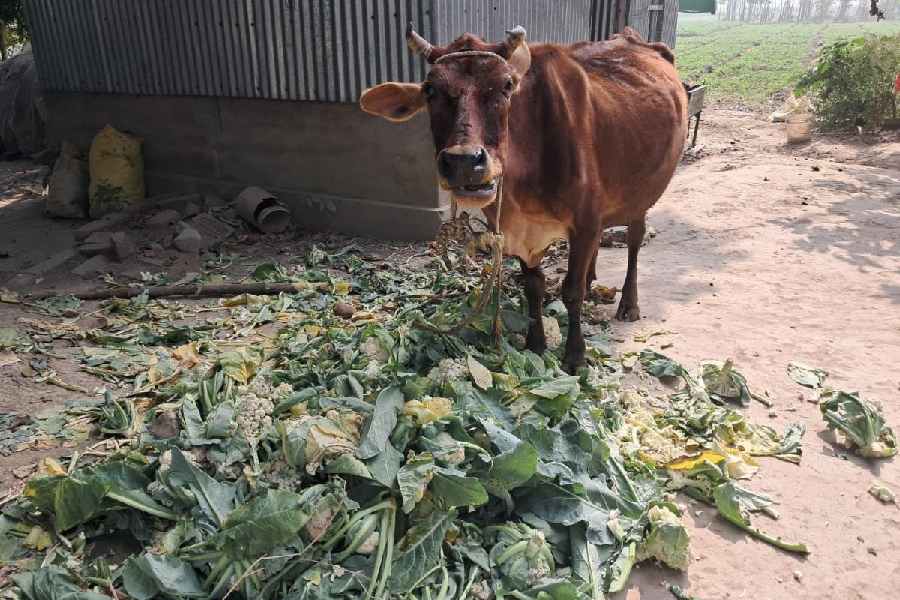
Some mornings are special as the sight of a herd of cows grazing on the grass outside the main gate motivates me to offer them greens such as cauliflower and cabbage leaves. Their mastication draws the attention of stray dogs who feel my act of preferential treatment cannot be overlooked.  Their collective barking peaks, reminding me that I must offer them something as well. Serving biscuits is the easiest way to calm them. When I give them something to eat, their anger subsides.

Feeling left out is painful as I can recollect how miserable and low I felt when I was not considered fit for the school cricket team despite being a good player. The stray dogs tamed their resistance and allowed the cows to graze without any confrontation, following them like escorts. The sight of two different species bonding so well became an inspiration, making me wonder how I can emulate this example and make my house an abode for multiple creatures to co-exist and care for each other without any fear of competition.

I am not a regular when it comes to feeding the cows crossing my house. But I have noticed some of them slowing down their pace in front of my gate, anticipating something to be served to them. Now I intend to add breadcrumbs or chapatis or anything they like to eat, making it a regular practice to place something for them. Being quite punctual like pigeons, their arrival signals they have memorised my address and they take a break to stop and chew here. The neighbour has shown the competitive spirit to become sensitive by placing a tumbler full of water for all animals. Cows eat from my home and then proceed to quench their thirst next door. I should celebrate such healthy competition as the neighbour is playing a positive role to find his space in the connected world by becoming useful to other species.  

Recently, I bought a bird feeder and decided to put it up in the garden, with the support of bamboo poles. Before summer sets in, the bird feeder should be installed. A little bit of digging of the soil is required and this tiresome activity slows me down. I made a resolution to hire someone to do the job if it proved too cumbersome for me. Although I am aware it’s getting delayed, I am not making any effort to complete it.

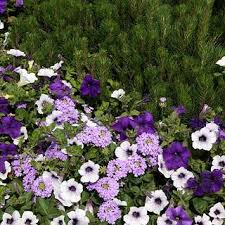
When I finally went to the garden on a Sunday afternoon, I saw dried-up, hardened soil and felt disappointed. Watering plants should be a priority. The petunias made my windows look beautiful, with the purple and white blooms. I was busy clicking photos and sharing them  for likes but I was not ready to accept that these plants needed more attention to bloom better and for longer. I had seen them growing in other places during this season, in other bungalows, boulevards, and other cottages. I needed to be modest in accepting the fact that I had not shown a highly sensitive side when it came to nurturing them with love. If I could dedicate fifteen minutes every day, to water them early in the day, I would have shown better signs of care.

Nowadays, I am happy just watering them – whenever I find the time. There is a palpable loss of my sensitive side as I consider it is sufficient to water plants without thinking too much about fixing a timeline. I need to remember how quickly I reach out for a glass of water whenever I am thirsty. But in case of plants, I have concluded that watering them is enough – delaying it does not generate any smidgen of guilt.

The truth is that plants also need water regularly and performing this task early in the day is better. Before I consume the first glass of water, I must ensure the plants have quenched their thirst. I should stop comparing myself with those who do not water plants. I should not feel I am doing the plants any favour. When the plants grow healthy here, they create a positive environment for the residents to lead happier lives. Instead of taking pride in providing any noble service, I should change my mindset and think that there are hundreds of more ways to strengthen the sensitive side. These are some smalls steps as the awakening grows deeper. Knowing the depth of love knows no end. Similarly, the depth of sensitivity is never fully known. All we can do is keep growing sensitive to make this world a better place for all creatures. 

From Public Domain

Devraj Singh Kalsi works as a senior copywriter in Kolkata. His short stories and essays have been published in Deccan Herald, Tehelka, Kitaab, Earthen Lamp Journal, Assam Tribune, and The Statesman. Pal Motors is his first novel.  


PLEASE NOTE: ARTICLES CAN ONLY BE REPRODUCED IN OTHER SITES WITH DUE ACKNOWLEDGEMENT TO BORDERLESS JOURNAL

Click here to access the Borderless anthology, Monalisa No Longer Smiles

Click here to access Monalisa No Longer Smiles on Kindle Amazon International

Categories
Excerpt

The Great Himalayan Ascents

Title: The Great Himalayan Ascents

Author: Frank S Smythe

Publisher: Speaking Tiger Books

The Himalaya

TWO HUNDRED YEARS ago mountains were regarded as useless and terrible masses of inert matter where dragons had their lairs and the spirits of the damned lay in wait to claim the unwary. But as man emerged from the superstitions and materialisms of the Middle Ages he began to realise that mountains were beautiful and their summits worthy of attainment. The nineteenth century saw the conquest of the Alps. Unknown difficulties and dangers had to be faced by the pioneers of mountaineering. Disasters occurred, lives were lost, and mountaineering thrown into disrepute. The mountaineer was not dismayed. He knew that beauty was his for the seeking; he rejoiced in a newfound comradeship and in the acquirement and exercise of a new craft.

The great alpine summits fell one by one; traditions were established; a technique was evolved; a literature was born. The ripples of alpine mountaineering radiated outwards, bearing with them mountaineers to other ranges: the Caucasus, the Rockies, the Andes, the New Zealand Alps. On their highest peaks the skill acquired in the Alps was sufficient to ensure success. But there remained one great range that defied invasion of its strongholds – the Himalaya. There, the technique acquired in the Alps was not sufficient. Height alone was a physical deterrent, and coupled to height was steepness and danger. Expeditions had to be organised to reach even the foot of the great peaks; time and money had to be found. Yet, despite these disadvantages, Himalayan mountaineering and exploration progressed steadily. Pioneers such as the Schlagintweit Brothers, Sir Joseph Hooker, The Duke of the Abruzzi, Mr W.W. Graham, Lord Conway, Sir Francis Younghusband, Mr D.W. Freshfield, Doctor T.G. Longstaff, Doctor A.M. Kellas, General Bruce, Mr C.F. Meade, Doctor and Mrs Bullock Workman, Messrs. Rubenson and Monrad Aas, and many other pre-war pioneers opened up a region unsurpassed for its beauty and grandeur, and by their experiences pointed the way to the highest summits.

Many people refer to the Himalaya as though their limitations in scenery and climate were similar to those of the Alps. The tourist who gazes upon Kangchenjunga, 28,226 feet, from Darjeeling returns home saying that he has seen the Himalaya. So he has, but how much of two thousand miles of mountains stretching from the Pamirs to the borders of Indo-China, and beyond these limits, in terms of mountains? A lifetime might be spent wandering about the Himalaya, yet the knowledge acquired would embrace but an infinitesimal portion of that vast labyrinth of peaks, valleys and plateaux scrawled across the map of Asia.

In climate alone there is an extraordinary variety. From hot steamy tropical valleys, filled with luxuriant vegetation, it is but a few horizontal miles to zero temperatures and the highest snows in the world. Between these two extremes is an immense range of climate, the common despot of which is a fierce sun. Added to the complexities of climate due to height alone is the added complexity of seasonal weather fluctuations, due directly or indirectly to the influence of the monsoons and weather conditions emanating from the plateaux of Central Asia.

Racial characteristics are as diversified as the climate. From the people of Hunza and Chitral to the Sherpas and Bhotias of Northern Nepal, the almost extinct Lepchas of Sikkim and the wild races of Bhutan, the Himalaya can show many different types, for they form a natural frontier between India and Tibet, and a pudding-bowl wherein is stirred a mixture of Mongolian and Indian blood.

Politically, only a comparatively small portion of the Himalaya is accessible to the mountaineer and explorer. Democracy is unknown in Tibet and Nepal, and both these countries have closed their frontiers to Europeans and resolutely set themselves against infiltration of European thought and ideas. Some of the finest peaks of the Himalaya lie within the borders of Nepal, including the southern side of Everest, 29,140 feet, Dhaulagiri, 26,795 feet, Gosainthan (Shisha Pangma), 26,305 feet, and many other great peaks. In addition there are other districts where the mountaineer is not always welcomed, owing to political and other objections. The three most interesting districts accessible to mountaineers and explorers are the Karakorams, the Kumaun and Garhwal Himalaya and the Sikkim Himalaya, including the eastern side of Kangchenjunga, and it is in these three districts that the most notable mountaineering expeditions have been carried out, with the  exception of Everest (now barred politically) and the northern side of Nanga Parba (forbidden territory to expeditions at present). Each of these districts is magnificent in its own way. In the Karakoram there is no glacier to rival in grandeur the Baltoro, and no peaks surpassing in ferocity the terrific ice- armoured spires dominated by K2 (Mount Godwin Austin), 28,187 feet. From the Kumaun Himalaya rises Nanda Devi, 25,645 feet; the highest peak entirely within the confines of the British Empire, a mountain so difficult to approach that no one has yet succeeded in treading the glaciers at the foot of it, whilst Kamet, 25,447 feet, dominates the ranges of Northern Garhwal. In Sikkim, Kangchenjunga boasts the most wonderful snow and ice scenery in the Himalaya, owing to its exposure to the moisture-laden airs of the monsoon. It has defeated three determined attempts to climb it, in 1929, 1930 and 1931 by mountaineers well versed in the technique of high-altitude mountaineering. The highest point reached was 26,000 feet, by the gallant Bavarian expedition in 1931 and that only after incredible difficulty.*

Geologically, the Himalaya are a young mountain range, due to an uplift of the ancient seabed covering Central Asia. This uplift took place so slowly that rivers such as the Indus and the Brahmaputra, which have their sources to the north of the Himalaya, have been able to carve their way through the range as it rose. This is the only explanation that can account for the deep valleys cutting through from Tibet to India.

.

(Extracted from The Great Himalayan Ascents by Frank S. Smythe. Published by Speaking Tiger Books, 2025.)

About the Book

Frank S. Smythe (1900-1949) was one of the greatest mountaineers of the twentieth century, and a celebrated memoirist and adventure writer. This collection brings together three accounts of Smythe’s most thrilling ascents in the Himalayas—The Kangchenjunga Adventure, Kamet Conquered and Camp Six.

The Kangchenjunga Adventure narrates in detail the 1930 expedition to climb the third-highest mountain in the world: how Smythe, as part of an international team of mountaineers, attempts to reach the summit of Kangchenjunga, before a deadly avalanche—which kills one of the Sherpas— forces them to change course and scale the Jonsong Peak instead. In Kamet Conquered, Smythe makes a successful bid at ascending Mount Kamet in 1931, which was at that time still unscaled. On their way back, Smythe and his team chance upon the spectacular and colourful Bhyundar Valley, which they christen the ‘Valley of Flowers’, and which is now a National Park. Camp Six recounts a gripping adventure on the world’s highest mountain—the 1933 Everest Expedition, in which Smythe, climbing alone, ascends to a point higher than any human had reached before. Made without ropes or oxygen to support him, and in terrible snow conditions, the climb is regarded as one of the greatest endeavours in the history of mountaineering.

This majestic omnibus edition offers a fascinating window into early mountain climbing and Himalayan exploration. It is also a rare treat for every lover of fine, entertaining writing.

About the Author

Frank Sydney Smythe was a British mountaineer, botanist and adventurer. Smythe, who began his mountaineering career in the Alps, joined the international Kangchenjunga expedition of 1930 which ended in failure. In 1936, he led the expedition which successfully ascended Mount Kamet, then the highest peak ever to have been climbed. Subsequently, in the 1930s, Smythe was thrice part of teams which attempted to climb Mount Everest. An accomplished photographer and a prolific writer, Smythe wrote twenty-seven books in all, the best known among which are The Kangchenjunga Adventure, Kamet Conquered and Adventures of a Mountaineer. Smythe died in 1949.

.

PLEASE NOTE: ARTICLES CAN ONLY BE REPRODUCED IN OTHER SITES WITH DUE ACKNOWLEDGEMENT TO BORDERLESS JOURNAL