Categories
Musings

Just Passing Through

By Farouk Gulsara

During my early days of cycling, as I trained during the early hours before dawn, my greatest fear was not the darkness. Beyond fearing fear itself, the next thing that frightened me was the possibility of a head-to-head encounter with a pack of stray dogs that throng the country roads leading up to Genting Peres, the border between the districts of Hulu Langat in Selangor and Jelebu in Negeri Sembilan. 

The dogs are not from the wild. Some of these ‘man’s best friends’ served as guard dogs for the numerous orchards and homes of indigenous dwellers along the valley. A few packs of dogs must have been abandoned by their owners for various reasons. In Malaysia, a peculiar tradition during the Lunar New Year is to adopt animals based on the celestial animals associated with that year. Dogs, rabbits, and pet roosters are highly sought after until the excitement of the new year diminishes. Afterwards, people often look for ways to discard their pets. Where do you think they end up? Here, at the edge of civilisation. Fortunately, tigers and dragons, which are also animals in the Chinese calendar, cannot be kept as pets for obvious reasons. Imagine abandoning these creatures into the wild after the flavour of the month!

Over time, we occasionally hear of dogs attacking cyclists or cyclists falling off their bikes after being harassed by these canine creatures. The interesting thing about these wild animals is their need for vigilance. Creatures of the wild generally live by the rule of survival. They base their behaviour on constant vigilance. In a universe where ‘might is right’ and the law of the jungle dictates that the winner takes all, a misjudgment could be their last. Their default behaviour is to establish dominance in any given situation. If the opponent appears uncertain, frightened, or even runs away, the animals will try to assert dominance. Conversely, if they seem disinterested or exude confidence, the wild animals will likely just slither away. It is all about exerting dominance, marking territory, and size—these really matter. 

Imagine a child who, after being frightened by the appearance of a stray animal, immediately reacts with fear and runs away. This kind of submissiveness can be easily detected by predators. It is 101 in their survival toolkit. Next comes the attack. The more one bows, the more he will be smacked down. This is the law of the jungle before Earth became civilised, but is it relevant still?

We like to believe that civilisation ushers in less violence. A civil society is meant to resolve conflicts through negotiation and arbitration. The higher one climbs the ladder of education, the less one resorts to swords and machetes to prove one’s point. At least, that is the belief we have been taught. 

We were also told that we are not the sole owners of the planet. We share it with other beings, both human and non-human, to pass it on to the next generation in the pristine condition in which we received it. Every being deserves its place in the Sun.

Someone from my secondary school WhatsApp group recently sent a gruesome video of a toddler being mauled by a stray dog on a busy street. It is unfair to speculate about the events that led to the incident, but suffice it to say, rabies is quite rare in the community, and the dog was quickly captured and probably put down. 

The whole fiasco brought to mind the recent ruling of India’s Supreme Court on stray dogs[1]. After a six-year-old girl died from rabies following an attack by a stray dog in Delhi, society recognised the seriousness of the stray dog problem in India. There are about 15 million stray dogs in that country [2]. The Supreme Court decreed that all strays should be removed from the streets and be vaccinated, neutered, and placed in shelters permanently. 

What followed was a farcical display of comedy. Animal activists were furious, accusing others of cruelty for confining animals in cages. The highest courts reversed their decision and allowed the dogs to be returned as strays after sterilisation and immunisation, as if that would reduce dog attacks. Perhaps if the gonads are removed, they would be less aggressive. 

Many talk shows and YouTubers appeared in the media, debating the issue and trying to find common ground. Some activists may have lost perspective, forgetting that human lives are involved. They personify the stray animals, attributing more importance to them than to children, and prioritise animal rights and freedom. Some animal enthusiasts even link animal aggression to human behaviour. In my books, children and human lives may take precedence over animals. Some conspiracy theorists went so far as to say that PETA [3]and animal sympathisers are foreign agents to discredit India and maintain the Indian demand for rabies vaccines. 

The rising sales of pepper sprays only confirm that we should be more wary of fellow humans than other beings[4]. The increasing avenues for ladies (and men) to call for help in case of domestic or sexual assaults do not speak well of our ‘civil’ society. The ongoing stories about horrific crimes further serve as evidence of these crimes[5]. Leaders whom we elected democratically to protect us are determined to turn the world upside down, aligning with the military-industrial complex. They seek to wage war, not to promote peace. They play the fiddle while their capital goes aflame. They indulge in cakes when the common man has no bread.

We may convince ourselves that we, as a society, have become less violent. As a hunter-gatherer, our lifetime chance of a violent death was close to 15%[6]. In modern times, however, despite years of introspection, aggression still occurs. A growing concern is violence against oneself in the form of suicide, war and genocide against others due to differing ideologies, homicide for self-interest, and killing other animals for recreation. And we call ourselves cultured. Animals only kill for food, territory and mates for the continuity of the species. We do it for recreation during the hunting season, and for a psychopath, it gives him power, control, grandiosity and ecstasy with no remorse[7]. (6)

(P.S. Like how a mafia would walk into the neighbourhood and receive a cursory nod from the town folks, the pack of stray dogs and I have established a working relationship. They do their thing of barking and exerting authority, whilst I simply pass through unceremoniously. It is an understanding between a wandering dog and a cycling dog!)
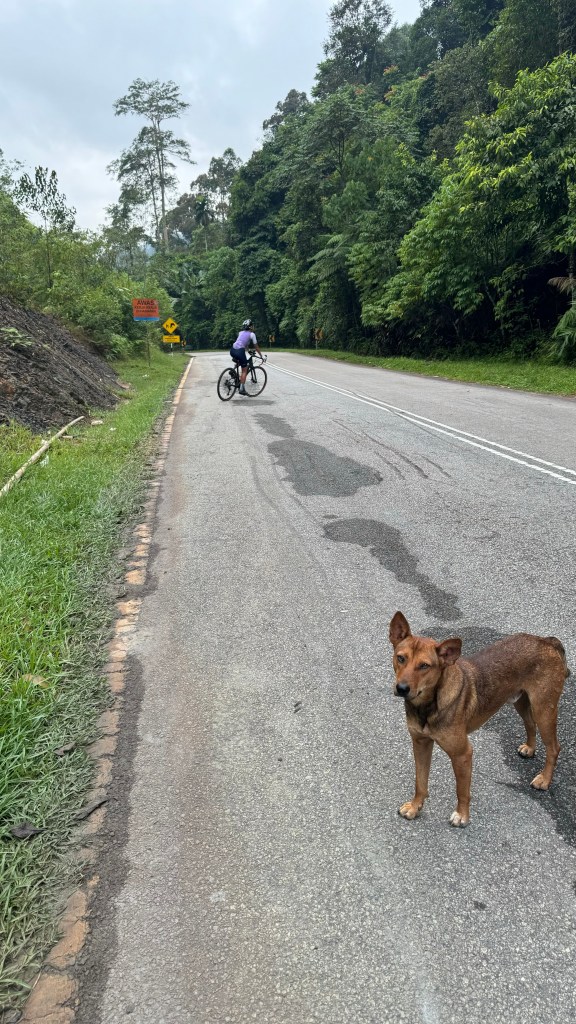
Photo Courtesy: Farouk Gulsara

[1]  https://www.bbc.com/news/articles/c5yejnze4p1o

[2] ). https://visionias.in/blog/current-affairs/stray-dogs-management-in-india-balancing-public-safety-with-animal-welfare#:~:

[3] People for Ethical Treatment of Animals

[4] https://timesofindia.indiatimes.com/city/chennai/woman-partner-get-life-in-jail-for-killing-her-kids/articleshow/122888742.cms

[5]  https://www.bbc.com/news/world-us-canada-46269794

[6]  https://cliospsyche.org/articles/fuchsman-k-2014-the-complexities-of-being-civilized-clios-psyche-214-256-264

[7] https://leb.fbi.gov/articles/featured-articles/psychopathy-an-important-forensic-concept-for-the-21st-century#:

Farouk Gulsara is a daytime healer and a writer by night. After developing his left side of his brain almost half his lifetime, this johnny-come-lately decided to stimulate the non-dominant part of his remaining half. An author of two non-fiction books, Inside the twisted mind of Rifle Range Boy and Real Lessons from Reel Life, he writes regularly in his blog, Rifle Range Boy.

Disclaimer: The opinions expressed are solely that of the author and not that of Borderless Journal.

PLEASE NOTE: ARTICLES CAN ONLY BE REPRODUCED IN OTHER SITES WITH DUE ACKNOWLEDGEMENT TO BORDERLESS JOURNAL

Click here to access the Borderless anthology, Monalisa No Longer Smiles

Click here to access Monalisa No Longer Smiles on Kindle Amazon International
Categories
Poetry

Put your Glad-Rags On by Jenny Middleton

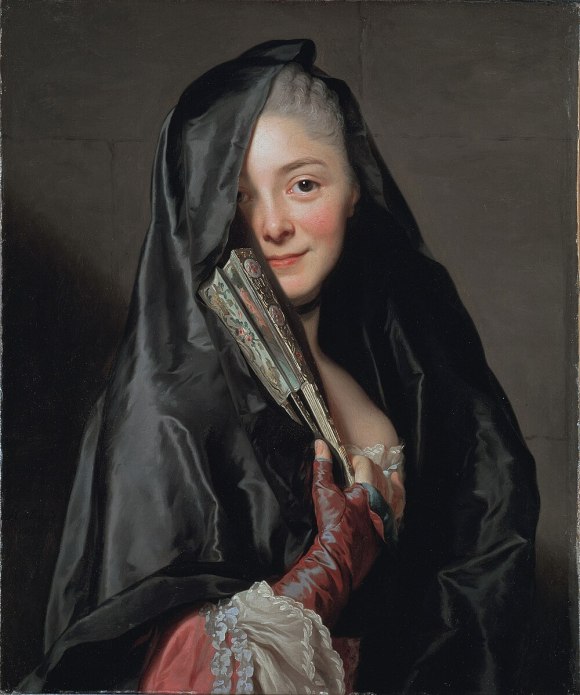
Painting by Alexander Roslin  (1718–1793)
PUT YOUR GLAD-RAGS ON

Wear your mother’s black velvet stole
like an unruined autumn day
sung of in poems — make them real.
Wear your mother’s black velvet stole—
It’s your turn, your spell to extoll
to ward away work’s drudgery
wear your mother’s black velvet stole
like an unruined autumn day.

Jenny Middleton is a working mum and writes whenever she can amid the fun and chaos of family life. Her poetry is published in several printed anthologies, magazines and online poetry sites.  Jenny lives in London with her husband, two children and two very lovely, crazy cats.  You can read more of her poems at her website  https://www.jmiddletonpoems.com.

.

PLEASE NOTE: ARTICLES CAN ONLY BE REPRODUCED IN OTHER SITES WITH DUE ACKNOWLEDGEMENT TO BORDERLESS JOURNAL

Click here to access the Borderless anthology, Monalisa No Longer Smiles

Click here to access Monalisa No Longer Smiles on Kindle Amazon International
Categories
Review

A Woman of No Consequence

Book Review by Bhaskar Parichha

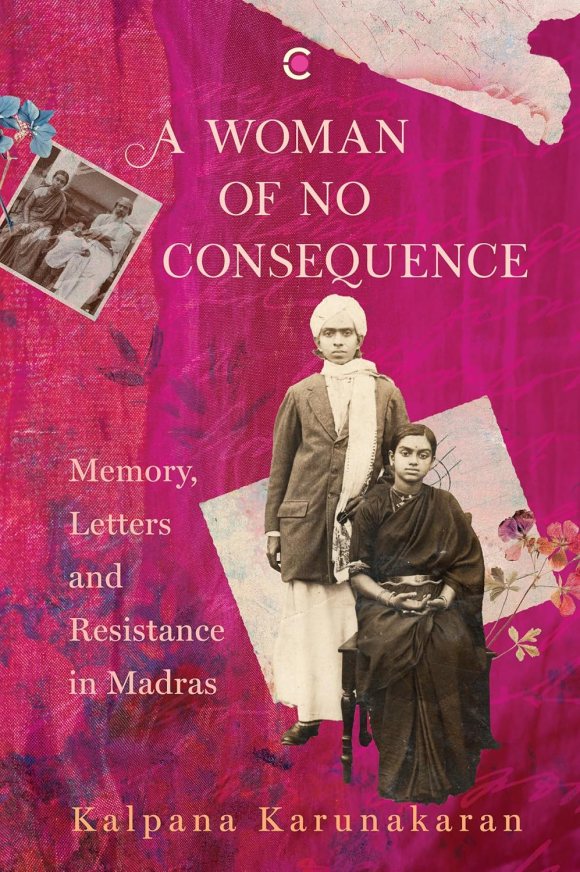
Title: A Woman of No Consequence: Memory, Letters and Resistance in Madras

Author: Kalpana Karunakaran

Publisher: Westland/Context

When a historical account of a housewife’s quest for intellectual growth and her quiet defiance of twentieth-century orthodoxies in Madras comes alive through words and memory, it has every reason to be celebrated. A Woman of No Consequence: Memory, Letters and Resistance in Madras by Kalpana Karunakaran is a remarkable work precisely for that reason—an intimate, yet deeply analytical, exploration of the life of the author’s maternal grandmother, Pankajam (1911–2007).

Kalpana Karunakaran, Associate Professor in the Humanities and Social Sciences Department at IIT Madras, is known for her research on gender, poverty, microcredit, women’s work in the informal sector, and solidarity-based collective action. In this book, she brings both her academic depth and personal tenderness to bear on the telling of one woman’s extraordinary life.

Karunakaran achieves something rare: she captures the singularity of an exceptional woman while situating her firmly within the complex social universe of Tamil Brahmin orthodoxy. She shows how the “utterly ordinary” life of a “woman of no consequence,” as Pankajam once described herself, was in truth far from ordinary.

Drawing upon letters, semi-autobiographical short stories, and a lifetime of writing—from Pankajam’s first autobiographical fragment in 1949 to her final reflections in 1995—the book offers a riveting portrait of a woman’s inner world. Through heartbreak and endurance, yearning and creativity, Pankajam emerges as a housewife with a philosopher’s mind and an artist’s courage, whose friendships and intellectual pursuits transcended cultural and geographic boundaries.

In her foreword, Karunakaran reflects on Pankajam’s motivation to write: “A humble housewife tied to mundane work may have a story or two worth telling,” Pankajam writes, “and I write to show that my soul has ever been trying to soar up and break the bondage of the flesh.”

It is here that the book finds its deepest resonance. Pankajam understood that women—forever consigned to their bodies—were denied a life of the mind. Yet she wrote as a way of freeing herself, of realising a soul not enslaved by gender or domesticity. Her faith offered a language of liberation, but her writing offered the means to enact it in the here and now.

Set against the vast canvas of twentieth-century India, Pankajam’s story unfolds amid momentous change: the World Wars, the freedom movement, the Japanese bombing of Madras in 1943, and the dawn of Independence. Through her eyes, we see a young mother building a home and nurturing her children while also fashioning herself as a progressive patriot in a nation-in-the-making.

In its essence, this is as much a social history as it is a biography. Pankajam’s writings provide a unique window into the domestic, cultural, and intellectual world of an era often missing from mainstream histories.

 In one of her later Tamil essays—written, perhaps, in the 1960s—she muses that history only records “governments, kings, wars, and conflicts,” not the “people’s everyday lives.” She wrote, therefore, so that her grandchildren might know her not merely as a loving grandmother but as a witness to history, a woman who lived fully and thought deeply.

Through Pankajam’s voice and Karunakaran’s scholarship, A Woman of No Consequence restores dignity to what is often dismissed as ordinary. It chronicles the spiritual and intellectual evolution of a woman who sought transcendence within the rhythms of domestic life, turning the everyday into a site of resistance and renewal.

Ultimately, this book is not only about one woman’s life but also about the birth of a nation as seen through its daughters—restless, self-aware women who compelled both home and nation to confront their own contradictions.

A Woman of No Consequence is a moving, layered, and profound testament to women’s inner lives, and to the quiet power of writing as an act of freedom.

.

Bhaskar Parichha is a journalist and author of Cyclones in Odisha: Landfall, Wreckage and ResilienceUnbiasedNo Strings Attached: Writings on Odisha and Biju Patnaik – A Political Biography. He lives in Bhubaneswar and writes bilingually. Besides writing for newspapers, he also reviews books on various media platforms.

PLEASE NOTE: ARTICLES CAN ONLY BE REPRODUCED IN OTHER SITES WITH DUE ACKNOWLEDGEMENT TO BORDERLESS JOURNAL

Click here to access the Borderless anthology, Monalisa No Longer Smiles

Click here to access Monalisa No Longer Smiles on Amazon International

Categories
Poetry

Two Poems by Stephen Druce

A CATASTROPHIC HABITAT


Nothing works in
my small flat -
it's a catastrophic
habitat,

the key to the flat
won't turn in the door,
the sign says three but
it's really number four,

the letterbox opening's
a millimetre wide -
the doorbell rings
but only outside,

security was fitted
with the burglar proof -
so the thieves broke in
through the leaking roof,

a fire broke out and
the smoke alarm failed,
the wall fell down when
I pulled the curtain rail,

the power cuts are frequent
so I'm often in the dark,
the cat can't meow and
the dog can't bark,

the stereo is broken and
the bathroom mirror cracked,
no signal on the wi-fi --
the extractor wont extract,

the microwave blew --
there's a hole in the bin,
the ceiling fell through and
the goldfish can't swim,

the fridge won't close and
the cupboards don't fit --
like my wrong-sized clothes
and the washing line split,

the rocking chair snapped
and I landed on my head,
I bounced into the bedroom
and I broke the waterbed,

the toaster burns the bread
when the settings on low --
the cork's stuck in the bottle
and the plants won't grow,

the vacuum cleaner won't suck --
the light bulbs have popped,
the superglue has never stuck
and all the clocks have stopped,

they undercut the window panes --
they all have two inch gaps,
the gas pipe burst -- I must be cursed --
the building just collapsed.


THEY'LL NEVER KNOW
THE WAY WE FEEL


They'll never know
the way we feel.

they'll know our names
and what we earn --
our capital gains --
our tax return,
and what we're worth --
our height and weight,
our place of birth --
the time and date,
our number flat --
our fixed abode,
our habitat --
our postal code,
our social links --
our network friends,
the way we think --
how much we spend,
our DNA --
the streets we go,
our resume --
the bills we owe,
our hidden scars --
our blood relation,
where we are --
our information,
star sign -- if
our passport's real --
but they'll never know
the way we feel.
From Public Domain

Stephen Philip Druce is based in Shrewsbury UK. He is published in the USA, India, the UK and Canada. He’s written for theatre plays in London and BBC 4 Extra. 

Contact: Instagram – @StephenPhilipDruce

.

PLEASE NOTE: ARTICLES CAN ONLY BE REPRODUCED IN OTHER SITES WITH DUE ACKNOWLEDGEMENT TO BORDERLESS JOURNAL

Click here to access the Borderless anthology, Monalisa No Longer Smiles

Click here to access Monalisa No Longer Smiles on Amazon International

Categories
Musings of a Copywriter

Karmic Backlog

By Devraj Singh Kalsi

From Public Domain

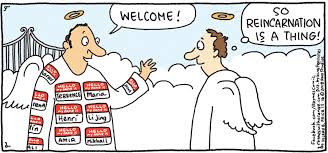
Recently I came to know my past. Not the past of this lifetime but the cumulative past of several lives prior to this birth. I have always been curious to know whether I was a human being earlier or whether I was a bird or an animal.

In case I had been a bird, whether I was something cute like a parrot or a peacock. Or a high-flying eagle or vulture? In case I was an animal, whether I was something domestic like a cat or a dog? Did I bite someone to give him rabies and cause his untimely death? Or was I predatory like the ferocious tiger or crocodile in any one of my previous births?

Although I would have loved to hear I was a donkey, a horse or a deer, in this exact order of preference, the clarity that came my way settled all doubts and confirmed I was a human being in all my previous births — a really old soul that did all sorts of wicked things like abusing power and exploiting people for personal aggrandisement. But God had always been kind to send me back as a human being to atone for my sins, which I never did. This is precisely why I have been rendered a victim to pay for all the misdeeds in this lifetime, with no sympathisers to relieve my emotions. Something like a past life regression therapy session sounds quite an exciting idea but once the dirty secrets are exposed and you get to know the huge backlog of cardinal sins blocking your path to divinity, you come to terms with the bitter truth that you are solely responsible for everything that is not right in your present life and nobody else deserves an iota of blame for the current mess.

I was told I should clear the heavy backlog and aim for salvation. Frankly speaking, I have never ventured beyond the stage of salivation and here I was asked to mend my ways and attain salvation. Why should I do that when I find this world so attractive and the Lord so forgiving that He keeps sending me back in one human form after another? I love returning again and again to this world also known as a playground. Despite my overloaded dustbin of sins, I must be doing something really good and impressive that compels God to give me another chance to stage a comeback. Why don’t these card readers focus on that aspect and stop becoming my misfortune tellers?

I am perfectly fine with my emergence as a villain and there is absolutely nothing that I can do to undo the past. I can make the best possible use of the present and set things right. Before that I must know what exactly I did in my last birth at least. I was told I was a commander of an invading army marching in with the sole intent of pillaging. That’s horrible, to say the least. Did I slaughter people with my sword or put them in a gas chamber? The information I could ferret out was limited. But it was still adequate to suggest I was a conqueror of foreign lands and added one territory after territory. It was shameful indeed. I looked up in the mirror to see if I had any facial resemblance to the notorious invaders from the previous centuries. To be honest, I did look like one, but the fact that he did not enter this part of the world made me feel somewhat relieved.

For some weeks, I grew a beard and the resemblance grew further, making some of my friends cast suspicious looks and draw nasty parallels. How do I reveal to them that even if the name they were guessing is not correct, I was indeed an invader on horseback! In the contemporary democratic setup, this sounds horrific but it was a glorious achievement back in those days. The way the empires were built and expanded and controlled. What was right and justified then seems so inhuman a few centuries later. But the brutality of the past just to gain geographical heft cannot be held right. Surely, in the eyes of God I was a sinner even though I did it for growing an empire. I have been dumped in this part of the world where simple, innocent people were tortured. I have been made to suffer endlessly in silence as an act of retribution. To get a taste what I delivered to others. Fair enough.

For a while I was thrilled to hear that I was an invader, a plunderer, a marauder. Imagine the immense power I wielded then, and make a contrast with this moribund life where I do not enjoy any power at all. More powerless than a clerk or a peon, and always at the mercy of corporate bosses whose permissions and approvals have made my life a living hell.

Now I come across people who show me their power – as much as they can, wherever they can. I get threatened, abused and thrashed by powerful people inside their homes, inside the holy places by powerful committees and organisers. I have to take it all lying down and treat this ill-treatment without retaliation as it would lead to further misconduct and multiply my sins.

I need to forget I deserve any form of respect anywhere because I did not respect people in my previous births. I need to forget I have any power or I can gain any kind of power because I am that old, withered soul that will start misbehaving and misusing power if I sniff it again. I have been destined to stay away from all shades of power and authority – and quite rightly so. I have been condemned to spend the entire life facing its misuse. If I crib or complain that the people are not doing things right, I will lose the battle forever. That’s what I have been told and warned. I have to tolerate everything that comes my way and write off the bad debts of the previous lives. Only then I will manage to come back in human form and enjoy this material world once again. The irresistible greed to be granted another chance to enter this beautiful world seems to prevail over me. I find one lifetime of sacrifices is not quite a heavy price to pay for my past misdemeanours.  

As I was still battling with the startling disclosures from the distant, murky past, some prophecies inflicted deeper wounds. I was told I was destined to die at the hands of women, not one but two, one old and one young, both related to the same family. This was also linked to my past life since I had massacred a family and the matriarch of that family was an embittered soul planted in my life by the divine. I was informed she had already entered my life quite effortlessly through an alliance of sorts. Although she is very good at the moment, she will spring a nasty surprise that will devastate me in the coming three years.

The burden of the past was not off my chest and now the astrologer’s prediction has made me nervous. A sure sign of madness if I start seeing my killer in every lady in my life, right from the domestic help to the employer who is also a lady. On my further insistence, two alphabets were revealed. I was asked to be careful about women with names starting with these alphabets: K and V. But there were more than two women with names starting those alphabets. It was all so confusing and devastating.

Hey, wait! Could it also be a woman doctor in the hospital who will packs my departure bags on the operating table? Well, there are thousands of ways of dying a shameful, painful death and I can go on listing hundreds of possible ways and end up damaging my frayed nerves. I should forget it all and prepare myself to meet my end, my nemesis. Just like a woman who brought me into this world, another woman is destined to take me away from this world. No big deal!

Through some dark practices and evil spells, the vengeful lady will take me to the hills and something scary will happen all of a sudden there, resulting in my untimely, unplanned death. It means the lady and her accomplice will play a stellar role, but not a direct role like holding a gun at me or bumping me off near a blind curve or pushing me from a cliff after a selfie shot. Since I played a direct role in the devastation of that family in my last avatar, I should be ready to take the worst direct hit. As per the reported forecast, these women will not turn into cold-blooded killers and they will regret the fatal outcome since they themselves carry no sinister plan of that kind – driven by the singular motive to make me sign some will. The story spirals out of control and takes an unexpected turn. They will be held indirectly responsible for my passing away from this world. As a result, they will not bear a heavy karmic baggage for my death either. Which means God is a clever player who takes no blame and leaves the final judgment on our own deeds and misdeeds.

I am filled with negativity now, and I don’t think I will survive with this last burden. Something will blow up inside my brain so I must stop thinking about the past and the future and simply focus on the present. Isn’t that what great sages and thinkers have been saying all along? But why is it that the past and the future are more attractive than the present? Since I have been assured that I have three more years to perform good deeds, I must concentrate on that. At least a thousand good deeds should save me well in the years ahead – and in the afterlife.

I do not have the complete details of the potential women killers so I should stop worrying and forget their gameplan. Before I could firm up my mind with this template, women relatives proposed the idea of a visit to the hillside. I was shocked my doomsday could be coming earlier than scheduled! Or was it that God is finally trying to be kind and help me know my killers in advance? Those alphabets matched perfectly with the forecast and those two women relatives comprised my inner circle. It was shocking to know these well-behaved, sophisticated ladies would me lead to my death. Should I reveal to them that they will kill me some day? Would they believe me? Were they thinking along  those lines? Would they be surprised to know how I read their minds? Or would they call me mad? I chose to rest this issue and scaled down my interactions with them. Perhaps in the coming years I would do something to offend them. These scorned women will gang up and bump me off. Well, by rejecting their proposed trip, I had already vexed them. They could sense I was avoiding them and they wanted to know the reason for my refusal.

One lady treated me like a son and I could not visualise her being the mastermind. One fine day, the lady arrived and suggested she wanted me to write a book on her failed marriage. Maybe, I should duck this proposal by citing my incompetence to write a book. Being aware of my dabbling in creative pursuits, she claimed to be a regular reader of my morose prose. I thought switching to gifting on happy occasions and festivals would foster bonhomie. I had no idea of what would transpire in the coming years that would enrage her so much. Therefore, the best option was to snap ties and remain aloof. The fear of her seeking umbrage made me reconsider this move. I said I write short pieces and I do not have the potential to write a book at the moment. In the years ahead, if I felt confident about the project, then I would like to give it a shot.

I consulted therapy experts to guide me through this crisis but they seemed clueless in this regard. They had no knowledge to help reduce anxiety and stress in a person who is forewarned of his imminent death. All they could suggest was meditation and it meant connecting with the same divine power that had signed my death note. I chose to spend maximum time doing good deeds – feeding birds and animals featured on the top of my list. Creating a buffer stock of good deeds would make me a deserving candidate for royalty in my next birth. But the downside was I would most probably indulge in exploitation of subordinates and assert my power and resourcefulness – repeating the same cycle once again. Hence it was equally risky to be super good.

Hey come on, commit some mild mischief in this lifetime to become ineligible for rebirth as royalty. Being an ordinary human being wandering in anonymity, despite being a habitual, small-scale sinner, is a far better deal than hogging the limelight as a leading monster without a parallel.

Devraj Singh Kalsi works as a senior copywriter in Kolkata. His short stories and essays have been published in Deccan Herald, Tehelka, Kitaab, Earthen Lamp Journal, Assam Tribune, and The Statesman. Pal Motors is his first novel.  

PLEASE NOTE: ARTICLES CAN ONLY BE REPRODUCED IN OTHER SITES WITH DUE ACKNOWLEDGEMENT TO BORDERLESS JOURNAL

Click here to access the Borderless anthology, Monalisa No Longer Smiles

Click here to access Monalisa No Longer Smiles on Kindle Amazon International

Categories
Poetry

Cycle by John Valentine

John Valentine: Photography by Parker Stewart
-For Matsuo Bashō


DRINKING


Poet, who will you intoxicate?
Drinking deeply

from your well, its whispering
water, we dip

a cup. Everything echoes
the holy Ōm.

Coming

and going.


Listen.


BLOSSOMS


When Buddha lifted the lotus
blossom

and preached his silent sermon,
it was better

to show things than to say them.
And you,

will you travel long with an empty
pouch of poetry?

How can you hold the moon with
words?

Be patient. Throw away everything
that clings.

Cherry blossoms glisten as they open
and fall.


PEARLS

You see a thousand faces
in the mirror.

Is there one that isn’t you?
See how pearls

hold each other’s hands, how
together

there’s a singular shine. How
many moons

in the journey of the Harvest Moon?


STUDYING ZEN


No one studies Zen. Nothing’s
there

but the last blackbird of Autumn
on a leafless

bough. Who asked you to be a
scholar?

Even the book of the wind is only
for schools.

The old masters left behind their
baggage.

Roaming like wild geese, they
carried nothing, nothing

at all.

John Valentine is a retired teacher living in Savannah, GA.

.

PLEASE NOTE: ARTICLES CAN ONLY BE REPRODUCED IN OTHER SITES WITH DUE ACKNOWLEDGEMENT TO BORDERLESS JOURNAL

Click here to access the Borderless anthology, Monalisa No Longer Smiles

Click here to access Monalisa No Longer Smiles on Kindle Amazon International
Categories
Stories

The Headstone

Story by Sharaf Shad, translated from Balochi by Fazal Baloch

From Public Domain

One afternoon, I had just returned home from the hospital and was waiting for my wife to bring me lunch when I heard the sound of a motorbike stopping outside. Then echoed the sound of hurried footsteps on the porch, followed by someone asking my wife, “Is the doctor home?”

It was Ali’s voice. I recognised it instantly. A moment later, the door swung open, and Ali, short and heavyset, entered the room.

“Doctor, come with me, please. My wife isn’t feeling well; she needs to be examined.”

“I was just about to eat…”

“You can eat there,” he interrupted, grabbing my doctor’s bag and heading out to his motorbike. Since he was my friend, I didn’t argue and silently followed him.

On the way, Ali explained that his wife was in labour. As we arrived, I examined her and, after consulting with the midwife, gave her an injection. I waited in the guest room. A short while later, his wife gave birth. Just then, the door opened, and Ali came in, his face glowing with joy.

“Sir, I’ve been blessed with a son.”

“Congratulations!”

“Thank you.” His voice was sweet with happiness. I wrote a prescription for the patient and sent Ali to the medical store to get the medicines. He dropped me off at home afterward. As we arrived, Ali reached into his pocket, but I stopped his hand with a smile.

“No, doctor, that won’t do,” he insisted.

“Come on, let it go. Just take us on a picnic sometime,” I said.

“Don’t worry about picnics. You will have plenty of them,” Ali said with a laugh, heading out of the room, still beaming with joy.

*

A few years later, one night, Ali was in intense pain and I was woken up in the middle of the night. When I arrived, he was groaning in agony. His son stood by his bedside, looking at him with wide, worried eyes. I comforted him and treated Ali. After a while, he drifted off to sleep. As I stood to leave, Ali’s son asked me with curiosity:

“Doctor, will my father be okay?”

“Yes, don’t worry. He’ll be just fine,” I reassured him, gently patting his cheek before heading out.

The next day, Ali came to see me on his motorbike and paid my consultation fee. His son was with him. I took some of the money and slipped it into the boy’s pocket.

“Are you doing well?” I asked him.

He didn’t reply, but Ali spoke up. “After seeing you treat me last night, he says he wants to be a doctor when he grows up.”

I burst out laughing and looked at the boy, who blushed and hid behind his father. “May God fulfill all his wishes!”

Ameen,” Ali said, and they both bid me farewell.

*

A few years later, Ali brought his son, Sabzal, to the hospital. The boy wasn’t feeling well; he had fever. Ali looked worried. After examining the boy and before writing down the medicines, I asked him:

“What grade are you in now?”

“Third,” he replied.

“If I write your name here, can you read it?”

“Yes!” he said proudly, puffing out his chest.

I wrote on the prescription: “Dr. Sabzal Baloch” and then added the list of medicines.

Happiness lit up both the father’s and son’s faces. They left, smiling.

One morning, as I was getting ready to head to the hospital, Ali arrived in a hurry.

“Doctor, please come quickly! My son is having trouble breathing.” When I got there, I gave him some medicines, but when his condition didn’t improve, I told Ali: “There aren’t the right facilities here. You need to take your son to the city hospital.”

Ali booked a vehicle and rushed his son to the city. A day or two later, the news came that Ali’s son had passed away in the hospital. Ali returned home empty-handed, and I was deeply saddened. The sudden death of young Sabzal cast a shadow of grief over our small hamlet for a few days. But eventually, the routines of daily life washed away that sorrow, and life moved on as usual.

One day, I saw Ali riding his motorbike somewhere. As soon as he saw me, he stopped. After greeting him, I pointed to an object wrapped in old newspapers resting in his lap.

“What’s this?”

“It’s a headstone, sir,” Ali replied. His once cheerful face turned somber. “It’s for Sabzal’s grave.”

With a sad expression, Ali began unwrapping the newspapers. He turned the headstone towards me, and I read:

Name: Dr. Sabzal Baloch
Age: 7 years and 6 months

I looked at Ali. Two silent teardrops rolled down his cheeks and rested on his face.

Sharaf Shad is simultaneously a short story writer, poet, translator, and critic. The richness of narrative is one of the defining features of his short stories. Death and identity crises are recurring themes in his works. A collection of his short stories, titled “Safara Dambortagen Rahan” (Journeying Down the Weary Roads), was published by the Institute of Balochistan, Gwadar, in 2020.

Fazal Baloch is a Balochi writer and translator. He has translated many Balochi poems and short stories into English. His translations have been featured in Pakistani Literature published by Pakistan Academy of Letters and in the form of books and anthologies. 

PLEASE NOTE: ARTICLES CAN ONLY BE REPRODUCED IN OTHER SITES WITH DUE ACKNOWLEDGEMENT TO BORDERLESS JOURNAL

Click here to access the Borderless anthology, Monalisa No Longer Smiles

Click here to access Monalisa No Longer Smiles on Amazon International

Categories
Poetry

The Mirror

ByMaria Alam

"You're so beautiful?"
No, I’m not. At least, not the way I see myself.
Scrolling through my own pictures on social media I don't find myself lacking grace, always.

On screen, I can almost believe I’m fine.
In reality, I can’t.

They say beauty comes from within.
And I am kind,
So why doesn’t that kindness ever shine through me?

They say beauty is all about your heart.
Then is it a scam?
A colorful fabrication of a socially validated lie by which all our lives have been painted?

They say, feel confident,
embrace your flaws,
own your scars,
then you’ll be beautiful.
But is that really true?

Is it really possible for anyone to feel beautiful
when all they see are scars, acne, self-doubt,
insecurities and fear stitched into their face, their eyes, their thoughts,
woven into the core of their very being?

So, whose fault is it?
Theirs?
Or is it the society that carved rigid standards into us,
teaching us to feel never beautiful enough?

If I don’t feel beautiful, is it really me who’s broken,
or the mirror I’ve been given?

Maria Alam is an undergrad student, currently pursuing her Bachelor’s in English and Cultural Studies at University of Liberal Arts Bangladesh [ULAB].

.

PLEASE NOTE: ARTICLES CAN ONLY BE REPRODUCED IN OTHER SITES WITH DUE ACKNOWLEDGEMENT TO BORDERLESS JOURNAL

Click here to access the Borderless anthology, Monalisa No Longer Smiles

Click here to access Monalisa No Longer Smiles on Kindle Amazon International
Categories
Review

Heart Lamp by Banu Mushtaq

Book Review by Somdatta Mandal

Title: Heart Lamp: Selected Stories

Author: Banu Mushtaq

Translated from Kannada by Deepa Bhasthi

Publisher: Penguin Random House India

After Geetanjali Shree’s Tomb of Sand, the first novel to receive the International Man Booker Prize in 2022 for a work of fiction written in an Indian language and translated into English, history repeated itself once again when this year in 2025, Banu Mushtaq’s book of selected short stories Heart Lamp, written originally in Kannada and translated into English by Deepa Bhasthi, was recipient of the same coveted prize. It proved that translating from Indian bhasha languages to compete worldwide with other canonical literatures has gained maturity to impress the jury who finally evaluate the prize.

In the twelve stories of Heart Lamp, published originally in Kannada between 1990 and 2023, Banu Mushtaq exquisitely captures the everyday lives of women and girls in Muslim communities in southern India. As a journalist and lawyer, most of the stories are women-centric and in all of them she tirelessly champions women’s rights and protests all forms of caste and religious oppression. As a believer in the highly influential literary movement in Kannada during the 1970s and ‘80s – the Bandaya Sahitya tradition – that started as an act of protest against the hegemony of upper caste and mostly male-led writing that was then being published and celebrated, Banu Mushtaq’s literary career therefore gave importance to dissent, rebellion, protest, resistance to authority, revolution and its adjacent areas at par with the movement that urged women, Dalits and other social and religious minorities to tell stories from their own lived experiences.

The author goes on to highlight several harmful social practices that are still prevalent in the Muslim community and even supported by law, which impede girls including women of all ages, from having freedom to make positive choices, thus hampering them from realizing their full potential. In story after story, the deeply patriarchal structure of Muslim society is depicted in such a manner that it is not only applicable to the Muslims living in villages and town in south India but can be applicable elsewhere too. She shows how child marriage is still in practice and mentions the suffering and trauma women experience because of legally sanctioned polygamy which causes social and financial insecurity and hardship for women and their offspring. The curse of teen talaq[1]and the practice of issuing multiple fatwas[2] which are deliberately aimed at constricting women are urgently in need of being addressed legally.

In the very first story, ‘Stone Slabs for Shaista Mahal’, we find Iftikar’s too much effusive declarations of love for his wife Shaista vanish into thin air immediately after her death and he soon marries a young girl leaving all his children to be looked after by his eldest daughter. The ‘Fire Rain’ has mutawalli[3] Usman Saheb heading the community and making hundreds of decisions for others, but when her sister comes begging he refuses to give her the legitimate share of his ancestral house. Whereas the ‘Black Cobras’ has the mutawalli saheb refuse to help a woman whose husband has deserted her for giving birth to three daughters and provide any support for her youngest sick daughter who dies without any treatment. The story ends with a focus on female revolt when his own wife decides to go and have an operation to stop childbirth. In an interesting story ‘A Decision of the Heart’ the author narrates the plight of a man called Yusuf who is unable to balance the love between his wife and his mother and finally decides to arrange a nikah for his mother Mehaboob Bi.

One story that delves deep into Muslim customs that we generally are not aware of, is entitled ‘Red Lungi’. It tells us about a mass circumcision programme at the mosque for the poor where a young boy Arif undergoes the procedure and is cured in due course. His plight is then contrasted with Samad, the son of a rich man who remains weak and unfit despite the elaborate festivities for his circumcision and the gifts.

The titular story ‘Heart Lamp’ centres around Mehrun who is left to fend for herself as her husband falls for another woman. When she goes to her parents’ house for support, her brothers send her back. Leaving the responsibility of her children upon her eldest daughter Salma, she attempts to burn herself to death. The scene where her daughter begs her to stop and so finally, she aborts her suicide attempt, is extremely moving. The depiction of rural Karnataka comes out very clearly in ‘Soft Whispers’. The story narrates in detail the childhood antics of an eight-year-old girl visting her grandparent’s house in Mabenahalli village. Her young playmate, Abid, who would join her to play tricks, turns into the supervisor of a dargah[4]. When he comes to invite her to join the festival, he keeps his head lowered and does not even meet her eye.

Despite mentioning serious social issues pertaining to the average middle and lower-middle class Muslim families, Mushtaq’s stories are laced with a sense of wry humour and pathos. For instance, in ‘High-Heeled Shoes’, Niaz Khan envies his sister-in-law who comes from Saudi Arabia wearing gorgeous high-heeleded shoes and, in the end, manages to buy a pair for his pregnant wife Arifa which does not fit her at all. The difficulty in walking with those shoes on, and the interaction she has with her unborn child in her womb takes this story to a different level altogether. ‘A Taste of Heaven’ has Bi Dadi, who turns into stone after her ja-namaz [5]is soiled, gaining solace by drinking Pepsi and thinking it to be aab-e-kausar, the nectar from heaven, and starts living in a delusory world of her own in the company of her long-lost husband. In ‘The Arabic Teacher and Gobi Manchuri’, the young Maulvi Hazrat’s penchant for eating “gobi manchuri[6]” is the comic fulcrum on which the story turns. Again, Shazia’s desperate attempts in ‘The Shroud’ to locally procure a kafan[7] and sprinkle it with the holy zamzam water from Mecca after having callously forgotten to bring one for poor Yaseen Bua from her Hajj pilgrimage, makes her grief and being conscience-stricken rather ludicrous.  

In the 2025 International Booker Acceptance Speech Mushtaq said: “This book is my love letter to the idea that no story is ‘local’ – that a tale born under a banyan tree in my village can cast shadows as this stage tonight…. [It] was born from the belief that no story is ever ‘small’ – that in the tapestry of human experience, every thread holds the weight of the whole.”

Her observation power is indeed very strong. Muslim women have been victims of deprivation and discrimination in various matters owing to a dearth in education and awareness. To bring a change in the family, a change in mentality is very crucial. The last story of this collection, ‘Be A Woman Once, Oh Lord!’ is a typical tale of male chauvinism, where deprived a dowry, a man throws out his sick wife and children to get married again.

A woman must construct her own identity besides being someone’s daughter, somebody’s wife or someone’s mother. Only education and self-dependence can establish a woman as a human being beyond her religious and family identities. But as her translator rightly points out, it would be a disservice to reduce Mushtaq’s work to her religious identity, for stories transcend the confines of a faith and its cultural traditions. So, she should not be seen as writing only about a certain kind of woman belonging to a certain community, that women everywhere face similar, if not the exact same problems, and those are the issues that she writes about.

Before concluding, a few words need to be written about the translator and the translation too. In the Translator’s Note, titled ‘Against Italics’, Deepa Bhashti reiterates that the “translation of a text is never merely an act of replacing words in one language with equivalent words in another: every language, with its idioms and speech conventions, brings with it a lot of cultural knowledge that often needs translating too.” She mentions that she was very deliberate in her choice to not use italics for the Kannada, Urdu and Arabic words that remain untranslated in English. She believes that italics serve to not only distract visually, but more importantly, they announce words as imported from another language, exoticizing them and keeping them alien to English. She also mentions that there are no footnotes used at all.  

In her separate International Booker Prize Acceptance Speech, Bhasthi also tells us how through the work they could bring out what would otherwise be unread, uncelebrated texts to a new and very different sets of readers. She stated how the story of the world was really a history of erasures. It was “characterized by the effacement of women’s triumphs and the furtive rubbing away from collective memory of how women and those on the many margins of this world live and love.” Therefore, the stories in this collection are recommended for reading not by reducing Mushtaq’s work to her religious identity, but by transcending the confines of a faith and its cultural traditions.

[1] It’s an Islamic practice in which a Muslim man could divorce his wife by uttering the word “talaq” (divorce) three times.

[2] An Islamic law

[3] Manager of a Muslim charity organization

[4] Tomb or shrine of a Muslim saint

[5] A Muslim prayer mat

[6] Manchurian cauliflower

[7] Shroud

Somdatta Mandal, critic and translator, is a former Professor of English at Visva-Bharati, Santiniketan.

PLEASE NOTE: ARTICLES CAN ONLY BE REPRODUCED IN OTHER SITES WITH DUE ACKNOWLEDGEMENT TO BORDERLESS JOURNAL

Click here to access the Borderless anthology, Monalisa No Longer Smiles

Click here to access Monalisa No Longer Smiles on Amazon International

Categories
Poetry

Poetry by Laila Brahmbhatt

From Public Domain

IN THE MOOD FOR LOVE 

Let’s exchange
our souls
like lovers trading glances.
We trace the lost walls
of our breath
in search of one another,
cursed by having loved.
Our hearts vanish,
proof that we were in love.

Laila Brahmbhatt, a Kashmiri/Jharkhand-rooted writer and Senior Immigration Consultant in New York, has published haiku and haibun in several international journals, including Cold Moon Journal and Failed Haiku.

.

PLEASE NOTE: ARTICLES CAN ONLY BE REPRODUCED IN OTHER SITES WITH DUE ACKNOWLEDGEMENT TO BORDERLESS JOURNAL

Click here to access the Borderless anthology, Monalisa No Longer Smiles

Click here to access Monalisa No Longer Smiles on Kindle Amazon International