Lord of the forest, Home of birds, Host of leaves, Strong soldier, Elder and wiser, You have lived centuries. And still noble, Strong roots, Gentle arms That even naked, In the coldest winters Remain beautiful; Air producer, Silent life, Please remain strong, Because I want to use My words To celebrate you for A thousand years more.
OCEAN
The blue of ocean Comes in many tones, The blue that is captured By artists and painters Is different from the blue Where millions of creatures Live. It is changing And we are killing it, But we can stop. We can make it happen, By reducing our trash And use less devices, Saving energy and plastic
Adriana Rocha was born in Bolivia. She is a psychologist who has been writing for five years and has been published in three languages: English, Spanish and Portuguese. She believes in the healing power of art, and she has found in it, both a way of expression and reflection.
.
PLEASE NOTE: ARTICLES CAN ONLY BE REPRODUCED IN OTHER SITES WITH DUE ACKNOWLEDGEMENT TO BORDERLESS JOURNAL
In 1974, the modest, starless Hotel du Commerce, at 14, Rue[1] Sainte Geneviève, in Paris became my home for over six months, and its owner, Madame Marie, my adopted mother.
A young, aspiring journalist, I was sent to Paris by the editor of a worthless monthly magazine in Palermo, Sicily, to write an article on the monuments of Paris. I took up my long residence at the Hotel du Commerce for two reasons: it was very cheap — that is, ten francs a day — and conveniently located in the centre of the city, only a ten minute walk to the Notre-Dame Cathedral. Madame Marie, ninety kilos of joy and laughter, rented me a room on the fifth floor (without a lift) with two other residents: Caban across from me and Paco at the end of the corridor. The rooms had neither attached toilets – there was one for each floor — nor showers (none). Like all residents and tourists, we washed from the washbasin in our rooms. My little window looked out on to the red-tiled rooftop of a Russian bookshop.
To tell the truth I never wrote that article on the monuments of Paris. What a boring subject! On the other hand, my stay at Madame Marie’s hotel afforded me enough material to write a book — a sketch of her and her residents, their trades, joys and sorrows … their uncelebrated destinies. My editor would have probably sacked me for this ‘breach of contract’, but as luck would have it, his magazine went out of business before my return to Palermo.
I shall never know why Madame Marie took such a liking to me. Everyday, she would invite me for coffee and a chat. We would even watch television in the evenings in her sitting-room which separated the tiny kitchen from the reception. From there she kept an alert eye on the comings and goings of everyone. She was a jolly old woman, and this, despite the loss of her husband at an early age, and the terrible events that occurred in her hotel during the Algerian war in the fifties and sixties[2]. She was indeed fat, but quick-witted with plenty of pluck. She had rolls of flesh rumbling under her eye-catching flower-dotted red robe.
“You know, I was a young girl during the Second World War. I hid some French Resistance fighters in my parents’ house in the Alps. The Germans who hunted down the French fighters couldn’t scare me with their rifles and threats. I sent them packing whenever they pounded at our door!” she would repeat proudly when I was alone with her. When her husband died, she was left on her own to manage the hotel, and in the 50’s that was no asset. Deserters, police informers, merciless OAS members[3] and their equally ruthless adversaries, the FNL[4] all came and went causing rows, arrests, even murders. The plucky Madame Marie handled it all with her sang-froid and flair for compromise.
“My sixth-sense got me through that lot,” she would laugh, her jowls shaking. By the 1970’s, however, things had calmed down in Paris. The lodgers were mostly Japanese and American tourists with a sprinkling of North Europeans. No more brawls, police raids or murders. Madame Marie spoke no foreign language but she understood everything that she needed to understand. She had hired an old woman to clean the rooms. The sprightly widow had learned how to say in English, after having knocked on the lodger’s door at eight in the morning: “You stay or you go?” It was enough to get her point across.
Madame Marie disliked the police. She flared at their scent even before they stepped through the front door in incognito on the trail of someone except on one occasion. I shall let her narrate that exceptional episode: “How that flic[5] fooled me I’ll never forget. Dressed like a hippy, long hair, a torn knapsack, he took a room in the courtyard. He spent two weeks here and never said a word. He got in no later than eight o’clock at night. I thought he played the guitar on the metro[6] for money. Then one day, dozens of police stormed through the front door into the courtyard. I was in the sitting-room and rushed out the back door of the kitchen to see what all the hullabaloo was about. The door of one of my clients was wide open, a young bloke who used to play the guitar on the metro; he had been handcuffed by the ‘hippy’ and was being walked out. I couldn’t believe it. It was like a film. When everything settled down, a police officer came over to me and politely explained that my lodger was a notorious drug-dealer and had been under surveillance for weeks by the ‘hippy’. He apologised for the inconvenience and paid the rent for both the dealer (who hadn’t paid me) and the hippy-policeman.” Madame Marie sighed. “He’s the only flic who ever fooled me.” And she laughed her usual jolly laugh.
She got up to make some more coffee for at that moment Caban and Bebert came in for a chat, both a bit tipsy from their usual drinking bouts before, during and after work. Then Bebette made her appearance, the prostitute to whom Madame Marie ‘lent’ one of the courtyard rooms every now and then to exercise her profession. Madame Marie had no moral qualms about such professions. Everyone had to earn a living … Close behind sailed in an elderly woman whose name I no longer recall. Madame Marie considered the woman to be her best friend. She would sit in front of the television and shout insults at the politicians whom she disliked, much to the displeasure of the others, especially Bebert, who would shower her with mocking abuse. When things got too rowdy Madame Marie would shout them all down or threaten to turn them out if they didn’t settle down.
Madame Marie was at times brusque but fair. She liked Caban, the former butcher and now factory worker hailing from southern France, shy and lonely, drunk by mid-morning. He had been living in Hotel du Commerce since the late sixties. She was fond too, of Bebert, the chimney-sweep, a small, taciturn, melancholic chap straight out of Dicken’s David Copperfield, drunk before ten in the morning. He constantly coughed. His clothes were impregnated with soot and cigarette smoke. Bebert hardly spoke at the table, smoking like a chimney, drinking his coffee whilst Caban smiled and winced at the others’ ridiculous jokes and jibes. Day after day and night after night that sitting-room typified for me – and for the others, I suppose — a sanctuary of friendship and convivial exchange. Oftentimes, I read myself into a page of Balzac’s novel Le Père Goriot [7].
The other two residents rarely joined at that cheery table. One of them, Bolot, stayed in a room in the courtyard. He was a former German soldier who joined the French Foreign Legion after his capture during World War II. The other was called Paco, a Republican Spaniard, who escaped Franco’s persecutions after the Spanish Civil War[8].
I got to know them all, save Bebert. We had no time to get really acquainted. “Poor Bebert,” Madame Marie would sigh. One evening as we sat watching a film Bebert knocked at her kitchen door, then staggered in towards us, blood streaming from his mouth, drenching his night-shirt. His face was ghost white. He kept murmuring, “Madame Marie … Madame Marie,” through clenched, blood-filled teeth. The chimney-sweep appeared lost in a daze. Madame Marie quickly took him by the shoulders, laid him on the sofa then trotted off to get the police. They arrived quickly (the station was two doors away). An ambulance shortly followed. Bebert was placed carefully on a stretcher and carried out.
We never saw Bebert again nor had any news of him. Madame Marie presumed that he had died of a haemorrhage from too much smoking, drinking and chimney soot. She had his room cleaned and fumigated. His belongings amounted to a pair of torn slippers, two shirts and trousers and two used razor blades. On the other hand, she gasped at the hundreds of empty packs of cigarettes. Bebert’s world had been compressed into a nebulous routine of cigarette and alcohol fumes and chimney soot. A bleak, Dickensian world to say the least.
Poor Bebert. He had been living at Hotel du Commerce for eleven years. A fellow without a family, friends … known to no one. He practiced a trade that was gradually dying out. No one ever asked for him at the reception — never a phone call. He was the unknown toiler whose burial stone carries no name because he had no money for a headstone. He was probably buried in the fosse commune[9].
Caban, whom I knew much better than Bebert, fared no better. His salary flowed away upon the torrent of fumes of cigarettes and drink, or as Madame Marie put it coarsely: “He pissed it all against a wall!” Too much gambling, too. So his wife left him, after that, his sixteen-year-old daughter. They were never to be heard from again. Caban was soft-spoken, very shy. Quite frankly, I never saw Caban sober, except at six in the morning before catching the bus to work at the wine-bottling factory. He had asked the foreman, Mister Tomas, to have me hired on for the summer since many of the workers had gone off on holiday. In the café whilst waiting for the morning bus, he began his inglorious day with coffee and a few shots of cognac. He continued his indulging all through the working day on the first floor of the factory where he drank the last dregs of wine from the bottles that were to be washed. By five o’clock he was completely sloshed! Mister Tomas kept him on out of pity. Besides, Caban was inoffensive. Madame Marie even told me he had saved a girl from drowning in the Seine River in Paris. But let Madame Marie tell this very true tale: “He was walking along the banks of the Seine after work when he heard the screams and splashings below him. Caban was a strong swimmer at that time, so he took off his shoes, dived in and grabbed the girl in the water. In a few minutes he had brought her back to the banks safe and sound where a crowd of people had gathered, applauding him. The young girl cried and cried but was unhurt. And you know, her father was the owner of the France-Soir daily newspaper. So, to thank Caban, he gave him a certain sum of money and offered him the France-Soir freeeveryday for the rest of his life. All he had to do was give his name at the news-stands.”
“Does Caban read the France-Soir? I never see him reading a newspaper,” I asked naively.
She laughed. “No, Caban never reads. He never had much instruction.”
I became quite friendly with Caban since we worked together at the factory, although he would constantly upbraid me for not joining him in his ritualised morning concoction. I insisted that I never drink. He would snicker and shrug his bony shoulders. “All men drink!” he slurred. That of course was a subject of conjecture which, and this goes without saying, I never pursued with him.
One day whilst I translated for Madame Marie at the reception, I mentioned that I hadn’t seen Caban for more than a week. Neither had she. Mister Tomas had telephoned, too. Caban never missed a day at work … never. She told me to go upstairs and knock at his door. Which I did for several minutes. Silence. When I returned without news of him she immediately dawdled out to the police station. She was back in no time with two policemen. I accompanied them upstairs. They pounded at the door then kicked it open. There knelt Caban over his bed, his face black as coal. The stench in his room made us gag. I hurried down to tell Madame Marie. And as we stood in the reception, the ambulance arrived and four men, escorted by the police, placed Caban’s frail, limp body into a plastic bag and dragged it down the steps, one by one : thump … thump … thump … Madame Marie started to cry. I covered my ears …
Poor Caban had been dead for over a week, due no doubt to a blood clot of the brain. Madame Marie never forgot those thumps on the flight of stairs. Nothing was said of his death in the newspapers, even in the tabloids. Like Bebert, he succumbed to a companionless death, without flowers or prayers. Without sorrow or tears … He too was probably buried in a fosse commune. He had no bank account. The police found six Francs in his pocket … Six more than in Bebert’s …
Paco, the Spanish refugee, had been living in Hotel du Commerce for seven years. His lack of good French isolated him from the Paris scene, so he took refuge in the clusters of Hispanic scenes that peppered the Parisian streets, especially the taverns where flamenco music could be heard on Rue Moufftard, only a fifteen-minute walk from our hotel.
Since I speak Spanish quite well, I had on many occasions accompanied Paco to these musical haunts of his, where the paella was copious, the sangria flowed like water, the music, if not excellent, loud enough to forget one’s trials and tribulations of the day. Above all, it was cheap …
Paco drank heavily, rum and coke or sangria, but never behaved uncivilly. His deep, black eyes bore into mine whenever he spoke of his luckless past: “My older brother was killed in the war against Franco. I escaped via the Pyrenees leaving behind my parents. Since 1940, I’ve been living in France, working in factories or in the fields. And you know, I still don’t have my French papers. I have no identity! I can’t go back to Spain because of Franco[10], so I must stay here unloading lorries at the Halle Market or washing dishes in grotty gargotes[11].” Paco clapped to the sound of tapping feet and to the rhythmic chords of a furious guitar. “Every now and then I repair the toilets at the hotel which are constantly clogged up.” He snapped his fingers, ordered tapas[12], spoke to his friends in the language of his parents.
The fiery Spaniard would introduce me to his Spanish artist friends, all of them sullen, sad figures whose love of Spain had evaporated into hazy fumes of sangria, nostalgia, gaudy flamenco music, tasteless tapas and brief love affairs. As to Paco, he appeared to be a loner, an ill-starred chap lost in a huge city of lost souls, of crowds so busy that their business took no heed of such a shadowy figure, fugitive and fleeting, drifting from tapas to tapas, sangria to sangria.
Paco hated Paris, but it proved the only place for a stateless refugee to avoid police roundups. For Paco, Hotel du Commerce symbolised a haven for marginals, the homeless and stateless. “Madame Marie is my guardian angel,” he would croak. “My very fat guardian angel” as he clapped and stamped to the riotous music. “The police will never find me … never!” he boasted raising his glass to Madame Marie’s health.
He was wrong. One hot September week, Paco couldn’t be found in the hotel. Madame Marie suspected foul play. Two days later the police arrived, informing her that a certain Paco Fuentes had been apprehended without papers. He had been extradited to his country of origin. His belongings? He had none, like Bebert and Caban. The little he did possess were thrown into a bag and out into a rubbish bin. Poor Paco — would he ever find his parents?
On my many jaunts through Spain, after Franco’s death, I tried to locate Paco Fuentes, but it was like finding a needle in a haystack as the expression goes. Here, however, I must thank the excellent Spaniard, for it was he who introduced me to the world of flamenco.
Bolot kept very much to himself. Unlike the other residents he never drank nor smoked. You didn’t want to muck about with Bolot — a massive fellow, indeed. But then again who would muck about with a former French Foreign Legion soldier?
Yet, Bolot’s aloofness and reserved demeanour attracted many people to him. He had that sort of winning smile, and since he spoke very good French, albeit with a heavy German accent, he befriended those who came into contact with him. Moreover, he shared a passion for stamp-collecting. That was Bolot’s raison d’être[13]! His collection had become very well known to both specialists and amateurs. I would accompany him to the Flea Market on Sundays and there he would trade stamps with the best of stamp-collectors. Stamps from the Soviet Union, China, India, Cuba, several African states, Turkey and Libya. Bolot didn’t need the money, his pension as a soldier was comfortable enough. He simply enjoyed the thrills.
One day as we strolled back to the metro as he towered above me, Bolot acknowledged his good luck: “I volunteered for the army at seventeen, an enthusiastic patriot. Was captured by the French after two days of combat and given a choice: prison or the Foreign Legion. I chose the second, changed my nationality and name.”
“What was your German name?” He smiled but left the question unanswered.
“So I fought for the French. A traitor to my homeland. Call me what you like, I couldn’t sit out the war in a prison for years and years. You know, I never went back to Germany. When I quit the Legion I received my pension and came straight to Paris, the City of Lights.”
“To do what?”
“To sell stamps!” Bolot laughed. “No, I worked as a mechanic in factories until retiring.”
I got to know Bolot as well as Caban since all three of us worked at the same wine-bottling factory in the summer of 1974. He left earlier than me because of a fight between him and an obnoxious individual who abhorred Germans, even though Bolot had acquired French nationality long ago. Bolot refused to fight him, despite the other’s punches, which the former Legionnaire dodged or blocked with considerable ease. If Bolot had really fought, he would have killed him. Mister Tomas broke up the squabble, sacked the young rowdy on the spot and apologised to Bolot. Bolot exercised the noble art of self-restraint.
When I left for grape-picking at the end of September, then on to Italy and Sicily, it was Bolot who helped me repair the broken spokes of my bicycle. Outside Hotel du Commerce, Madame Marie and Bolot wished me the best of luck, inviting me back whenever it suited me. There would always be a spare room for me she insisted. I cycled out of Paris in the direction of Burgundy. I had spent six months at Hotel du Commerce …
After a month of grape-picking I returned to Palermo only to discover that the magazine had failed due to lack of interest … and funds. Relieved, I went to Madrid to begin a career as a flamenco guitarist. Time passed quickly. Or as Madame Marie would philosophically say: “It’s not time that passes but us!” Exhausted from so much playing in studios and taverns, I decided to take a break and travel to France and visit Hotel du Commerce.
It was under new ownership. The manager, an Italian, informed me that Madame Marie had died years ago from dementia after a spell in a nursing home. How everything had changed: the reception room had been refurbished and Madame Marie’s Balzacian sitting-room had become a dining-room for guests. The once starless hotel had become a three-star hotel.
I stayed two nights and paid sixty euros a night! In the seventies, I paid the equivalent of one and a half euros! True, all the rooms had been painted in bright, cheery colours, fitted out with toilets and showers. But sixty euros? Besides, I like a hotel that is lived in, not just slept in …
With the death of Madame Marie, a whole era had come to a close. Hotel du Commerce had decidedly conformed to the standards of kitsch. There were no more residents, only tourists. All the single rooms on the fifth floor had become large rooms suitable for modern travelling couples. Gone were the days and nights round Madame Marie’s convivial table, her coffees and conversation. Those colourful figures who had imprinted their existence there, whose joys and sorrows had been shared by Madame Marie and myself, no longer painted those refurbished walls simply because the epoch ignored the very existence of such figures.
Indeed, who during those two nights reminisced the glittering epoch of Madame Marie’s Hotel duCommerce? Who even imagined her singular story and those of her likeable, touching residents? No one. No one, perhaps, except me, who vouched to safeguard those memories. Memories of the anonymous whose faces will never be seen on photos, nor names ever printed in books.
Paul Mirabile is a retired professor of philology now living in France. He has published mostly academic works centred on philology, history, pedagogy and religion. He has also published stories of his travels throughout Asia, where he spent thirty years.
.
PLEASE NOTE: ARTICLES CAN ONLY BE REPRODUCED IN OTHER SITES WITH DUE ACKNOWLEDGEMENT TO BORDERLESS JOURNAL
Ratnottama Sengupta in conversation with Sohini Roychowdhury, who uses dancing to build bridges across cultures
“Meet my daughter Sohini,” Uma Di was introducing the dancer who then lived in Madrid. And my first response was, “Why isn’t she in the movies?!”
Sohini Roy Chowdhury. Courtesy: Sohini Roy Chowdhury
Tall, fair, lissome, agile, Sohini Roychowdhury is the stuff beauty queens and show stoppers are made of. That wasn’t surprising: after all, Uma Roychowdhury herself is the picture of perfection in aesthetics.
It didn’t take me long to realise that, much like the well regarded sculptor’s bronzes, her daughter too was made of enduring stuff. One day she was teaching Bharatanatyam to French, Spanish, and Italian enthusiasts. The next day she was lecturing on mythology in New York. One day she was dancing to ‘Jai Ho![1]’ for the director of the Oscar winning Hollywood movie[2]. Another day she was delineating Durga in an Anthropology Museum…
None of these saw her run out of breath. Nor does she, ever, run out of time. When she’s not holding her fingers in a dance mudra, she is holding a metaphoric pen. This month she unveiled her second book, Dance of Goddess Kali. Yes, she has rings on her fingers and bells on her toes — and wherever she goes, there’s dance on the cards!
Here is what she had to say when I spoke to her:
The Dance of Kali follows Dancing with the Gods. How are the two books different?
Dancing With the Gods and The Dance of Kali are two distinct works, each focusing on different aspects of my artistic and spiritual journey.
Conceived by Monideepa Mukherjee and Sutapa Sengupta, featuring photos from Sohinimoksha
Dancing With the Godsis a pictorial, coffee-table book stemming from my journey as a classical Indian dancer with a multinational dance troupe. Its vivid visuals showcase my onstage performances and behind-the-scenes moments. These are highlights of my career as a dancer, both solo and with Sohinimoksha World Dance and Communications[3].
This visually captivating book focuses on imagery and aesthetics. It offers glimpses into my artistic expression through dance, celebrates my journey around the world, and highlights my life-mantra of connecting civilisations through my craft. This tracing of Sohinimoksha’s journey is for a broader audience: Indian dance enthusiasts, art lovers, and individuals interested in my achievements. The aim is to inspire through visually compelling storytelling.
In contrast, The Dance of Kali is a treatise on the ethos of Goddess Kali and Shaktism. It delves into the deeper spiritual and philosophical aspects associated with the goddess, exploring Kali’s symbolism, mythology, and significance within the context of Shaktism, a Hindu tradition of worshiping the divine feminine energy. The tone of this work is contemplative, as it delves into the profound symbolism and the spiritual aspects associated with the Goddess. It incorporates scholarly research, analysis, and interpretations from various perspectives. Hopefully it offers readers a deeper understanding of Kali’s significance in Hindu spirituality.
May I point out here that The Dance of Kali is not a religious book. It is for readers with a specific interest in Hindu mythology, spirituality, or the myths and legends around the resident Goddess of Kolkata. Those seeking a deeper understanding of Kali’s symbolism and philosophical underpinnings within the context of Shaktism, will find this book dispels disrespectful misrepresentations and unfounded Western misconceptions surrounding the images of Kali as a demonic goddess.
To sum up: both the books reflect different facets of my artistic and spiritual journey. However, they differ significantly in their subject matter, focus, tone, and intended audience. One celebrates my achievements as a dancer through captivating visuals. The other is an academic tome exploring the profound symbolism and spirituality associated with Goddess Kali.
What prompted you, an international dancer, to pick such a rooted in mythology subject?
I have always had a personal affinity with or inclination towards Goddess Kali. Many artistes draw inspiration from their own beliefs, experiences, and cultural backgrounds when choosing subjects for their work. I am no different. For me the depiction of the Goddess is an opportunity for artistic exploration. Kali, with her complex symbolism and multifaceted persona, offers rich material for creative interpretation through the arts, be it dance, literature or visual arts.
This book also celebrates India’s rich mythological heritage and the way it connects to other ancient cultures, in Mesopotamia, Egypt, Spain and France. Kali, with her global soul sisters Ishtar or Sara La Kali, holds significant cultural and religious importance, not just in Hinduism, but other cultures as well, particularly within the contexts of worshipping Mother Goddesses. I delve into Kali’s mythology and symbolism to honour this aspect of Indian life, and its universal resonance.
Yes, Goddess Kali is rooted in Indian mythology. But the themes she embodies — feminine power, transformation, and liberation —transcend cultural boundaries. I hope this book will serve to explore universal themes of empowerment and spirituality. It also aims to provide a deeper understanding of Hindu mythology, and the symbolism associated with the Dark Goddess. Effectively I seek to promote intercultural dialogue and foster greater appreciation for diverse religious traditions. Most significantly, I hope to dispel the uneducated interpretations of Kali as a horrific, savage, demonic goddess. How often she is typecast as a symbol of evil — in popular Western films, books and even as Halloween costumes for disrespectful celebrities like Heidi Klum!
I have witnessed your performance as Durga in an anthropology museum in Madrid. I have noted your commitment to meaningful, even profound themes in your endeavours. What has been your grooming in dance?
I started dancing at a young age under renowned Bharatanatyam Guru, Thankamany Kutty. Later I learnt from Kalamandalam Venkitt in Kolkata. I received rigorous training in Bharatanatyam, the dance that originated in the temples of Tamil Nadu. My dedication to classical art led me to delve deep into its nuances. I mastered intricate footwork, expressions, and storytelling techniques. Over the years, I refined my technique and expression through consistent practice and performance and came to embody the essence of Bharatanatyam.
Your father was a renowned sitarist living in Germany. Your mother is a reputed sculptor of Kolkata. Why did you, an only child, not take to any of these streams of creative expression?
Indeed I was born into a family of accomplished artists. My father, Pandit Subroto Roychowdhury was a renowned sitarist, and my mother, Uma Roychowdhury, is a reputed sculptor. But I chose a different path for myself.
As an only child, I was exposed to various forms of creative expression. But my passion for dance was ignited after watching a riveting performance by Yamini Krishnamurthy when I was about four years old. While I deeply respect my family’s artistic legacy, I followed my own calling and embarked on a journey to carve my niche in the world of dance.
What are the values you have imbibed from them individually?
My father’s sitar schools in Germany have produced hundreds of students — including distinguished sitar players. From him I imbibed a profound appreciation for music and rhythm. I learned discipline, dedication, and the importance of perseverance in mastering an art form. From my sculptor mother I inherited a keen love for aesthetics and eye for details. I learned the importance of expressing emotions and stories through visual and performing arts.
Together these values have steered me towards excellence and innovation in my journey as a dancer and communicator.
Mixed genre performance by Sohini Roychowdhury. Courtesy: Sohini Roy Chowdhury
You have lived in Moscow and Madrid. You are guest professor in far-flung Universities, in America and Columbia. You have danced Bharatanatyam and you have danced to Jai ho! at the premiere of Slumdog Millionaire. What have you gained through your international exposure?
My international exposure has enriched me both personally and professionally. Living in cultural environments as diverse as Moscow and Madrid have broadened my perspectives and deepened my understanding of global arts and communication.
More than 2000 students have ‘graduated’ through my two dance schools in Spain — Casa Asia and Sohinimoksha Artes de la India. In Moscow, more than 80 Russian students performed with me on stage at the Embassy of India and Nehru Centre at the end of their course. As a guest professor in universities across Europe, USA and Latin America, teaching dance, Natyashastra [theory of dance] and Indology, I have not only shared my expertise — I have learnt from students, artistes and scholars from different backgrounds.
Through my performances of Bharatanatyam, and collaborations with international artists, have bridged cultural divides. My dancing to Jai Ho! at the European premiere of Slumdog Millionaire showcased the universal appeal of Indian dance and music. It highlighted its ability to connect with people across borders. Today I can confidently claim to have promoted cross-cultural exchange globally.
Coming from an aristocratic, old Calcutta background, what merit do you see in Bollywood dancing?
Despite coming from an aristocratic background rooted in old Calcutta, I recognise the merit in Bollywood dancing which has become a global phenomenon. Not surprising. For, characterised by vibrant energy, expressive movements, and fusion of multiple dance styles — from Salsa to Tango, Twist to ChaChaCha – Bollywood dancing holds mass appeal. It serves as a platform for artists to showcase their talents to diverse audiences and has contributed to the popularization of Indian culture worldwide. It is rooted in traditional Indian dance forms, yet embraces modern influences. And it reflects the evolving tastes of contemporary audiences.
Since the 1960s, Bollywood has drawn inspiration from various musical traditions across the world. This imparted its films a rich tapestry of global influences. This fusion of world music and dance enriched the aesthetic of Bollywood — and in turn contributed to its cultural significance and global appeal.
In the 1960s, Indian cinema underwent a transformation with the emergence of filmmakers like Guru Dutt and Raj Kapoor, who infused their films with elements of Western music and dance. The most iconic example of this is seen in the song Mera joota hai Japani [my shoes are Japanese] from Shree 420 (1955): here Raj Kapoor’s character sings about wearing Japanese shoes, English pantaloons, and Russian caps — all of which symbolised the growing influence of the West in post-colonial India. And yet, as the song stresses, at core these films are Hindustani — Indian.
Throughout the ’60s, ’70s and ’80s, the industry witnessed the rise of dance and music directors who played a pivotal role in incorporating world music and dance forms into Hindi cinema. Composers like OP Nayyar, Shankar Jaikishan, SD Burman, C Ramachandran, Kalyanji Anandji, RD Burman, Laxmikant-Pyarelal, and Bappi Lahiri experimented with disparate musical styles. These ranged from rock-n-roll, rumba, flamenco to disco, reggae and jazz. This infused their compositions with international flavours.
Similarly, choreographers Sohanlal, PL Raj, Herman Benjamin, Suresh Bhatt, Saroj Khan, Chinni and Rekha Prakash, Shiamak Davar, Farah Khan, Remo D’Souza, Terence Lewis, Vaibhavi Merchant, and Prabhu Deva have blended Indian classical dance with Western styles. This has created the unique dance style that is now identified as Bollywood dancing. It has homogenised movements from hip-hop to salsa and contemporary dance.
Soon stars like Shammi Kapoor, Helen, Asha Parekh, Hema Malini, Rishi Kapoor, Mithun Chakraborty, Jeetendra, Govinda, Hrithik Roshan, Madhuri Dixit, and Sridevi became synonymous with Bollywood’s larger-than-life dance numbers. For, it showcased their versatility and flair for different dance steps. Embracing the twist and turn era of the ’60s to the disco craze of ’70s and the hip-hop-inspired moves of the 2000s, Bollywood stars captivated audiences with their energy and charisma.
Along with Western influences, Bollywood also drew from traditional Indian dances. Its choreography incorporated elements of Bharatanatyam, Kathak, and Odissi. Dance sequences like Dola Re Dola from Devdas (2002) and Pinga from Bajirao Mastani (2015) exemplify the fusion of classical and contemporary dances, blending intricate footwork with dynamic movements and expressions.
In recent years, Bollywood has continued to evolve, reflecting the changing tastes and preferences of global audiences. Directors, like Sanjay Leela Bhansali and Farah Khan, have pushed the boundaries of traditional filmmaking, creating visually stunning spectacles that showcase the diversity of world music and dance. Stars like Priyanka Chopra, Deepika Padukone, and Ranveer Singh have embraced this eclectic mix of styles, bringing their own unique interpretations to the screen.
Spanish, Bulgarian and other European dancers from my own troupe, Sohinimoksha World Dance, have performed specially choreographed fusion dance items set to popular Bollywood tracks. Kristina Veselinova danced toMere Dholnafrom Bhool Bhulaiya; Violeta Perez and Lola Martin to Senorita! from Zindagi Na Milegi Dobara and Maria Sanz on Padmavat’s Ghoomer on stages across India and the world. So I readily acknowledge the significance of Bollywood dance in preserving India’s cultural heritage while adapting to changing times.
Would you say our films are taking our dance traditions to votaries abroad? Just as Indian musicians of the 1960s had taken our ragas to the West?
In the 1960s, Ravi Shankar, Ali Akbar Khan and other maestros played a crucial role in initiating the West in the rich notes of Indian classical music — and that had enriched the global cultural landscape. My own father, Pandit Subroto Roychowdhury, spent more than 40 years in Germany and other European countries, spreading and popularising Indian classical music through concerts and classes. Today Indian films, particularly Bollywood, are carrying forward this legacy. They are showcasing the wealth that is Indian dance — often fused with world dance influences. Just as our musicians shared the wealth of ragas with the West, Bollywood films are spreading the infectious exuberance of Indian dance to enthusiasts around the globe. This is fostering cultural exchange on an international scale. Small wonder that Bollywood is now acknowledged as India’s most potent soft power.
What, in your opinion, is needed to make GenNext learn from our past traditions?
If we want GenNext to learn from our past traditions, we must provide them with comprehensive exposure to our rich cultural heritage. For this, we must integrate our arts and cultural practices into educational curricula. We must foster appreciation through interactive experiences — workshops, performances, cultural events. Additionally we must leverage modern technologies and platforms to disseminate information. Let’s make traditional arts more accessible and engaging for the young. Let’s cultivate mentorship programs and intergenerational exchanges. For, we must bridge the gap between past traditions and contemporary lifestyles, to ensure their relevance and continuity for the generations to come.
Sohini I have seen you at close quarters, as a mother, wife, daughter, and daughter-in-law even as you criss-cross the world for your dance. How do you still find time to write, which is such a demanding, reflective expression?
I am fortunate to be able to balance my roles as a mother, wife, daughter, daughter-in-law, and a performing artiste. My experience as much as my dedication to my craft honed my time-management skills. Despite crisscrossing the world for performances, lecture tours, and other professional commitments, I carve out time to write, for I recognise its significance as a reflective form of expression.
To effectively manage my time, I set priorities, create schedules, and maximize productivity during the available windows of time. I designate specific periods for writing, be it early mornings, late evenings, or during travel downtime. I try to integrate writing into my daily routine, seizing moments of inspiration and reflection to jot down ideas or draft passages.
My passion for writing is a driving force — it motivates me to make time for it amidst my busy schedule. Writing provides a creative outlet for introspection, and intellectual exploration. It complements my artistic endeavours and enriches my personal and professional growth.
I am grateful for the support I receive from the network of my family, friends, and collaborators. They play a crucial role in facilitating my writing pursuits. My latest book, The Dance of Kali, was co-written with my son Rishi Dasgupta, an Economics MSc from the University of St Andrews, UK.
However, at the end of the day, that I find time to write amidst my multifaceted life, reflects my passion for engaging in reflective expression. Because? It contributes to my holistic development as an artist and an individual.
[1] A song from the 2008 Bollywood movie, Slumdog Millionaire
[3] A dance troop started by Sohini Roychowdhury with presence in Madrid, Berlin and Kolkata
.
Ratnottama Sengupta, formerly Arts Editor of The Times of India, teaches mass communication and film appreciation, curates film festivals and art exhibitions, and translates and write books. She has been a member of CBFC, served on the National Film Awards jury and has herself won a National Award.
.
PLEASE NOTE: ARTICLES CAN ONLY BE REPRODUCED IN OTHER SITES WITH DUE ACKNOWLEDGEMENT TO BORDERLESS JOURNAL
Are you going to bloom in the rain tonight? I hear your footsteps in the darkness, I smell your scent on the budding seeds, and wonder whether you are among the stars.
This life can only be lived due to your existence. I feel like I am losing myself more than usual. After losing everything I cared about, I considered migrating to a different country.
Regrets have shattered some of my aspirations, and I miss giving my all to love someone like you. Why does tonight’s rain sound so sad? I've cried for ages, and you haven't flowered yet.
Thousands of breaths push me towards your sweet lips. Allow our sorrows to touch the drenched grass in the park, and follow the moonlight to find me waiting with a rainbow umbrella…
TWO FINGERS CROSSED
I'm wondering if my depression stems from my past or what I'll become in the future. Is it because I speak your language with an accent? I'm sorry, but my accent represents who I am.
I wish I could erase children's memories of everyday genocide with a pencil and eraser. My phone isn't charging. My cousin is wearing my face mask. I lie dead in my blood-soaked bath.
Does the moonlight still brighten your melancholy heart? What arouses your emotions? Can you dream about kissing me the way you usually do? Who wouldn't love a walk under the twinkling stars?
I miss the way you hold my frigid hands behind my back, with at least two fingers crossed. When I inhale your breath, I trust my senses completely. Your amazing voice is the music that brings me joy.
PACK OF CIGARETTES AND LIQUOR
I'd swap my rusty flesh and chilly blood for a pack of smokes and a drink.
I am willing to sacrifice my emotions and peace for a pack of smokes and alcohol.
I'm willing to surrender my citizenship and foreign passport for smokes and whisky.
I am willing to compromise my values and ethics for a pack of smokes and alcohol.
I'd swap my wounded heart and warm hands for a pack of smokes and a drink.
I'd swap my youthful smile and tears for a pack of smokes and a drink.
I'm willing to exchange my healthy organs and memories for smokes and whisky.
I'd exchange my imprecise accent and colourless fantasies for a pack of smokes and a bottle of vodka.
I will never give up my past and hometown for a coffin which I tried to steal before my sentence by hanging with death.
Ahmad Al-Khatat was born in Baghdad, Iraq. His work has appeared in print and online journals globally. He has poems translated into several languages such as Farsi, Chinese, Spanish, Albanian, Romanian. He has published some poetry chapbooks, and a collection of short stories.
.
PLEASE NOTE: ARTICLES CAN ONLY BE REPRODUCED IN OTHER SITES WITH DUE ACKNOWLEDGEMENT TO BORDERLESS JOURNAL
The wind blowing across the Long Island Sound chilled his bones. The day was cloudless and the sky blue, but the sun lacked warmth. New York. Dr Ram Bahadur had called the big apple home for over three decades. Winters were cold and snowy. There were cold snaps and the dreaded northeaster brought snow and freezing temperatures. Summers could be surprisingly warm. February in New York was the depth of winter.
Long Island was blanketed in snow. He had spent the morning clearing snow from the driveway of his home. The suburb of Woodbury was quiet and peaceful. The trees had lost their foliage and were waiting for the warmth of spring to put on a new coat of green. He had a large house with floor to ceiling picture windows. The house was two storied with an attic. There were two bedrooms on the ground and three on the first floor. He had done well in life and was now prosperous.
He still recalled his first days in the big apple. He had just come to the United States from Nepal after completing his postgraduation in Internal Medicine. The first years were tough. He had some seniors doing their residency in New York city. The state of New York offered the largest number of residencies in the country. He did his residency again in internal medicine and then a fellowship in endocrinology.
All his training was completed in New York. He worked for over two decades in large hospital systems. But, for the last five years he started his own private practice. Compared to most other countries medicine in the States paid well. Private practice was certainly lucrative, though the cost of living in New York was high.
He did sometimes think about his home country of Nepal. The Kathmandu valley was still a beautiful place. His visits were few and far in between. Unplanned urbanisation had made the valley dusty and dirty. Winters in Kathmandu were cold but milder compared to New York. The Institute of Medicine (IOM) was the first medical school established in the country. The original intention was to create doctors for rural Nepal. The selection was tough and competitive. He still remembered his joy on learning that he had been selected for the medical course. During the closing decades of the twentieth century Nepal was in turmoil. The insurgency was ongoing, and blockades were the order of the day. Violence was rife and a lot of blood was spilled.
Most doctors from IOM migrated in search of greener pastures. The others mostly practiced in the valley, the historic heartland of the country. Ram was originally from Gorkha, in the centre of the country but his family had migrated to the capital when he was a few years old. His father was a civil servant while his mother was a housewife. Civil servants did not make much and money was always in short supply. His father was a man of principle and never accepted bribes or tolerated corruption. He still remembered the argument he had with his father when he put forward the plan to migrate to the United States (US) to pursue his residency.
His parents had both passed away and his siblings were also settled in North America. He rarely visited Nepal these days. The insurgency was followed by the overthrow of the monarchy and then a new constitution was promulgated. A federal structure was set up and while this did have benefits, the expenditures also increased. Each state had to set up an entirely new administrative machinery. He married an American academician who taught Spanish literature at the City University of New York. His wife’s family hailed from the country of Colombia.
New York had a substantial Hispanic population these days. He was now fluent in several languages: Nepali, his mother tongue; English, Spanish and Hindi. He also understood Newari, the language of the Newars, the original inhabitants of the Kathmandu valley. He did think on and off about his motherland. Many Nepali doctors left the country. Working conditions were hard and the pay was poor. To advance, you required political patronage. The frequent changes in government required you to be on good terms with several political parties.
He still missed the food of his childhood. New York was a very cosmopolitan place. There were several Indian restaurants and even a few Nepali ones. He was very fond of bara (a spiced lentil patty) and chatamari (Newari pizza), traditional Newari foods. These had earlier not been available in New York. Luckily for him, two years ago a Newari restaurant had opened in Queens. He was also particular to Thakali food. The Thakalis were an ethnic group who lived in the Kali Gandaki valley north of Pokhara. He particularly fancied green dal, sukuti (dried meat), kanchemba (buckwheat fries) and achar (pickle). Anil was a decent cook and had learned to cook a decent Nepali thali[1]and dhido (thick paste usually made from buckwheat or corn). He also made tasty momos (filled dumplings that are either steamed or fried) and these were much in demand among his companions.
Ram loved the professional opportunities that his adopted homeland provided. He had become a US citizen. Working in the US was more rewarding though the paperwork associated with medical care had steadily increased. Many of his batchmates and seniors lived and worked in New York state and across the state border in New Jersey.
Many of them did miss their homeland and had a vague feeling of guilt for not contributing their share to their original homeland. A few of them were working on a proposal of developing a hospital at the outskirts of Mahendranagar in the far west of Nepal. The Sudurpashchim province had a great need for quality medical care. The details were still being worked out. There were about twenty IOM graduates involved and they decided on an initial contribution of a million dollars each. Despite inflation twenty million dollars was still a substantial sum in Nepal.
This group of friends collaborated on different social projects. They were also active in promoting a more liberal America where each citizen and resident had access to quality healthcare. The hospital would be their first project outside the US. A strong community outreach component was also emphasised in their project.
The US had made him wealthy. He was a proud American. However, he also owed a deep debt to his home country for educating him and creating a doctor. Now was the time for him to repay that debt, not wholly or in full measure but substantially to the best of his abilities!
[1] Plate made of a few courses, completing the meal
.
Dr. P Ravi Shankar is a faculty member at the IMU Centre for Education (ICE), International Medical University, Kuala Lumpur, Malaysia. He enjoys traveling and is a creative writer and photographer.
.
PLEASE NOTE: ARTICLES CAN ONLY BE REPRODUCED IN OTHER SITES WITH DUE ACKNOWLEDGEMENT TO BORDERLESS JOURNAL
It was the year 2020. When most of the world was lacking connection and normalcy, I had the privilege of being in Sri Lanka, an island that I had referred to as ‘home’ but hadn’t truly been my home since I left at the age of eighteen. Being here gave me connection with a sugary coat of ‘normalcy’. I had my affectionate family, who made lockdowns entertaining with the purchase of a ping pong table, the nightly binge of true crime documentaries and the occasional games night, including a terrible decision to play ‘Cards Against Humanity’. I had a relationship with my boyfriend in all the physical sense of the word after two years of long-distance phone calls. I had my friends who were all a 15-minute drive away. I had a flexible job where I could interact with smart and passionate coworkers, something I ignorantly thought I wouldn’t find in Sri Lanka. Add to that, countless long weekends and public holidays, mostly spent in the beach towns down south, a region brimming with excellent food options, tasty cocktail bars and magnificent sea swims – truly this was an island that brought comfort, safety and security.
But I wanted more.
This romanticised version of the pandemic years spent in Sri Lanka, while all true, evoked such strong feelings of being lost, purposeless, and devoid of self-worth. This most comfortable of comfort zones made me feel completely out of sorts and yearning for something different. Long, sleepless nights of overthinking, questioning and wondering, “What on earth am I doing here?” Did I spend four years in an exceedingly difficult academic environment and four years working in the most ambitious, individualistic, enlightening city to land up here? Did my parents really spend thousands of dollars on American college tuition for me to end up back home feeling like a failure?
The initial move back home in May 2020 was going to be temporary. I was placed on furlough from my job in London and I believed it was best to wait it out back home. I thought that once the pandemic was all well and done, which would obviously be in a few months, I’d return to London, like nothing had changed.
As I fell in deeper with the aesthetically pleasing confines of beautiful beaches in Trincomalee, the delicious home-cooked meals, the hugs from my parents, the kisses from my boyfriend, the cuddles with my little nieces and nephews, and the long weekend trips with friends, it would be an outright lie to say I wasn’t relieved when the furlough continued and ultimately, ended with the expiration of my work visa. That seemed to seal the decision. I had no way back to the United Kingdom. Sri Lanka was to be my home now.
Looking back at that time, it was like being given this Trojan horse of a cozy, tender, warm embrace, disguising claws that pierced slowly, leaking poison and disillusionment. The surrounding Indian Ocean was as confining as it was endless, as isolating as it was welcoming, as suffocating as it was refreshing.
*
Scrolling through social media, I compared myself to others. And no, it wasn’t the mindless glazing-of-the-eyes watching Tik Tok or Reels but the reading-every-post-with-anxiety on LinkedIn. I compared myself to my friends in New York City, progressively moving up the ladder with impressive promotions and new six figure salaries. I compared myself to my best friends, living their lives independently, powering through their work passionately. I compared myself to peers in my graduating class who seemed to be smashing it in whatever life path they were on. And I felt thoroughly sorry for myself.
While pleased to be working with smart individuals at my WFH startup job in Sri Lanka, the lack of growth and opportunity for professional development made me itch. There were too many moments in the middle of workdays, where I laid sprawled across my bed, staring up at the fan and berating myself down a black hole. I switched between two toxic mindsets, one telling myself that I was no longer worthy of doing exciting, cutting-edge, fulfilling work and the other questioning why I couldn’t be content with all the positives that I had around me? Why did I always want more? Why did I always have this “grass will be greener” frame of mind? Why couldn’t I just ‘be’? This second mindset would set in when I heard my mum’s call to come for her home-cooked lunch of rice and curry. Wasn’t I begging for all these luxuries when I was living abroad?
While work was a huge factor contributing to my discontent, lifestyle was a secondary, significant reason. Disclaimer, disclaimer, disclaimer that everyone has different priorities and are in different stages of life and I spent a lot of time (over)thinking about my priorities. I wanted new experiences. I wanted to be pushed outside my comfort zone to do things that terrified my introverted self. I wanted to work remotely from a Greek island. I wanted to pick up Spanish again and stay in Barcelona for the summer. I wanted to take a creative writing course in Paris. I wanted to hop on a flight and visit my best friend in Munich, where she was living on a farm. I wanted the luxury of having a multiple-year multiple-entry Schengen visa which would be stamped every few months. I wanted a different passport. I wanted to go for an innumerable amount of plays, whether they were in small, 30-seater spaces with no set design or in beautiful, historic theatres where the lead actor is naked almost the entire run time (for artistic purposes apparently). I wanted to watch Jodie Comer in Prima Facie. I wanted to laugh hysterically at a live interview with the legendary Phoebe Waller-Bridge. I wanted to listen to the beautiful minds of Konkona Sen Sharma, Nandita Das and Aparna Sen discussing the perils of censorship in their films in India; watch a match at Wimbledon; find a way to go to the Berlinnale Film Festival. Enjoy the Edinburgh Fringe Festival.
I wanted to do so many things.
Could I find these things while living in Sri Lanka? I convinced myself that I couldn’t.
*
Recently, at my one-year work anniversary in my current job, my manager thoughtfully said, “Thank you for always striving for excellence.” While very kind words, they made me understand something I perhaps always knew about myself, without ever being explicitly told. Always striving for excellence even as a type-A young person, pushing for excellent grades, in order to go to an excellent college in the United States, and ultimately, secure an excellent job. (I’m exhausted just typing out this sentence.) And after being extremely fortunate to work with intelligent and supportive people and have challenging, exciting projects, my own benchmark for excellence kept rising.
I wanted to really enjoy my work but also be challenged by it. I wanted to learn from diverse, brilliant colleagues. I wanted to learn new technical skills. I wanted to have workshops with Product teams on developing new AI functionalities and how best to position them in the marketplace. I wanted to brainstorm with the Content team on how to best partner with a certain Tamil British-Indian actress and not feel like the token voice of diversity. I wanted the promotion and the salary bump and the senior title and the recognition and the reputation. And if not now, then it was in the five-year plan. I can say that this is what New York City does to you, but that would be a lie. It’s me. Hi. I’m the problem, it’s me.
All this ambition drove me straight into a brick wall, dissolving my confidence in my own capabilities. I blamed Sri Lanka. I blamed a whole country for making me feel like this.
Soon, the island was facing its worst economic crisis since independence and to watch the destruction of possibility, willpower and any minute form of political stability in real time was heartbreaking. I won’t even attempt to put into words the plight of Sri Lankans who lost almost everything, unable to access the most basic essentials of fuel, electricity, cooking oil, milk powder and medicines. By early 2022, ‘home’, an island that had nurtured me, that gave me the most special roots, that offered me safety and security, was broken. In my siloed social bubble of international school kids, foreign-educated graduates and Colombo’s upper-middle class families, I desperately wanted to get out. And so did thousands of others who did not want to waste their potential in a nation that was falling apart at the seams.
After years of only regarding Sri Lanka with fondness, I found that bitterness, resentment, and animosity towards my island nation magnified to a point where I couldn’t even hold a conversation with friends who could leave but were choosing to stay. Give me a work permit, give me a Western passport, give me a student visa, give me anything that will allow me to leave this place.
A family meeting was called when my black mood permeated through the home, along with wine, cheese, and a whiteboard to discuss my future plans — the pleasures of coming from a business family — efficient but with alcohol. My family, the ever-loving, supportive, encouraging guiding lights in my life, told me point-black, “You need to leave.” In an atypical South Asian, fashion, they said, “Do what makes you happy. Get a job or do your Masters. Travel everywhere.” My sweet parents, knowing that they would once again be empty nesters with my brother and me elsewhere, knowing that they fully enjoyed having the house full again, also recognised that their kids would be their happiest selves outside of Sri Lanka.
To have diametrically opposing emotions about the right path forward is confusing to say the very least. If I chose to remain in Sri Lanka, it would have been because three people lived there. My parents were not getting any younger and more substantially, we treasured each other. My partner and I were finally living in the same city after years of distance and savouring every moment of togetherness. And to have all three people only having words of encouragement further deepened the guilt.
But I wanted to be selfish. I didn’t want to stay because I’m a patriotic citizen contributing to the brain drain. I didn’t want to stay because I’m a good daughter or girlfriend. I wanted to leverage my resources, my experiences and most importantly, my LinkedIn, to do the impossible. A broken island meant I had to put together the pieces. For myself.
To leave or not to leave? And to which part of the world? To return back to the country where I have the privilege of residency but do I want to live in the land of mass shootings and a work-till-you-die mentality? Or to pursue an entry into the U.K. through a student visa by doing an unwanted MBA? Or to strive for the most idealistic, unrealistic scenario — a job in London?
But in that snug, tightly wrapped, a-little-too-hot Anokhi[1] blanket of a comfort zone, the decision was always clear. Maybe one day, I’ll make my peace with my ‘home’. Maybe one day, my blood won’t boil with frustration when I’m on Sri Lankan soil for more than a fortnight. Maybe one day, I will feel the affection again. Maybe one day.
Fast forward two years to the present day, sitting in my cozy flat in London, having just spent a few electrifying weeks in Greece, riding on a high from a successful partnership with a certain tech juggernaut, and preparing for next week’s launch of a new AI product, I appreciate my new ‘home’. It might not be the island I once thought I would spend the rest of my life in, and it’s a little colder and gloomier than the tropics. But the possibilities are endless once again, my dreams are daring once again, and life is feeling full once again
Nitya Amalean is an emerging writer and storyteller. She was born and nurtured in Sri Lanka, college-educated in the United States and currently, lives in London where she works for an audio media company.
.
PLEASE NOTE: ARTICLES CAN ONLY BE REPRODUCED IN OTHER SITES WITH DUE ACKNOWLEDGEMENT TO BORDERLESS JOURNAL.
The city of Lima, Peru was founded by the Spanish conquistador, Francisco Pizzaro in 1535. Spanish scouts sent out by him reported the place had ample water, fertile lands, sea access, and fair weather influencing the decision to settle there. Now, the city is in the agricultural region known by the locals as Limaq. It was once the most important city in the Viceroyalty of Peru that ruled over a large part of South America. Today over one-third of Peru’s population resides in the greater Lima area. The moisture-laden winds from the ocean result in fog throughout most of the year. The cold Humboldt current keeps the Pacific Ocean temperatures low. The coastal region of Peru known as the Costa is a dry desert and rainfall is scarce. The combination of very little rain with a thick fog fascinates both residents and visitors. Most mornings were foggy during my stay in Lima.
Lima serves as the entry point to Peru and during your trips around the country, you can enter and leave Lima multiple times like I did. During one of my visits, I stayed with Cesar, a pharmacist with the Ministry of Health, on the 15th floor of a modern apartment complex overlooking the Pacific Ocean, in Magdalena del Mar, with a beautiful view of the Pacific.
Magdalena del Mar is fast becoming a trendy neighbourhood has an immaculate Heart of Mary Church, an ornate beautifully designed church in pink stone. Roman Catholicism with its emphasis on ceremonies, ornamentation, and ostentatious displays shares many similarities with the religions of the East. One afternoon after lunch, I visited the long stretch of beach which I admired from the fifteenth-floor window. I had to cross the Circuito de Playas, the six-lane highway that links several spots along the coast in Lima.
Heart of Mary ChurchArt Museum
The city of Lima is famous for its museums. The Museum of Art in Lima is wonderful. Located in downtown Peru at the Parque de la Exposicion (Park of the Exposition), the museum houses one of the best collections of Peruvian art from pre-Columbian times to the modern day. The artworks are mostly grouped according to the period of their creation. Different cultures like the Moche, Nazca, Chimu, Chancay, Ica, and the Incas are represented. After the Spanish conquest, local artists and artisans concentrated on religious Catholic art. Modern Peruvian secular art began in the nineteenth century. I read with great interest the struggle between two schools/visions on how this art should grow and develop. One school wanted a cosmopolitan art like that developing in Europe while the other school wanted Peruvian artists to concentrate on traditional Peruvian topics like Inca buildings, town planning, Peruvian plateaus and mountains, and the Peruvian Indian.
Holiday makers in Plaza de Armas.
The Plaza de San Martin is one of the most representative public spaces in the capital. It was declared a UNESCO World Heritage site in 1988 and is connected to the Plaza de Armas by the Jiron de la Union. The plaza pays homage to the liberator of Peru, Jose San Martin (1778-1850). The plaza was built in 1921 in honor of the 100th anniversary of Peruvian independence. The buildings lining the plaza date from 1910 to the 1940s.
Exhibits of Gold
In the 1960s, Miguel Mujica Gallo used his private collection, gathered throughout his life, to open the “Gold Museum of Peru and Weapons of the World”. The museum has over 7000 gold, silver, and copper objects. Gold and silver had a religious importance in pre-Columbian Peru. Gold represented the Sun while silver represented the Moon. The collection is valued at over 10 million US dollars. The other major section represents the weapons of the world. I found it ironic that humanity expended so much effort and resources on devising better and better ways of killing each other. There is a Japanese room at the museum highlighting the close ties between Japan and Peru. Many Peruvians of Japanese and Chinese descent are still able to read in their native languages while at the same time being fluent in Spanish.
On my last day in Peru, I decided to use the public bus to visit the ruins of Pachacamac which is located outside the capital in the city of Lurin. Pachacamac was a major religious site for the different cultures of Peru. As new cultures became dominant, they added their constructions to the holy site. The site was first settled in 200 AD and is named after the earth-maker God, Pacha Kamac. some museums in Peru there are concessions for teachers which I feel is a very good idea. School children visit museums accompanied by their teachers and museum guides to develop a good understanding of their culture.
Pachacamac MuseumQuipu, recording devices made from Camelid hair
Unfortunately, Pachacamac was too near the capital Lima to escape the attention of the rapacious Spaniards. The conquistadores were mainly driven by their limitless appetite for gold and a narrow bigoted religious view which regarded Roman Catholicism as the only true religion and other religions as heretic practices to be destroyed. They caused much damage to Pachacamac.
Pachacamac
The wind started blowing and a flurry of dust pervaded the air. The Sun Temple is the major building. There were separate locations for religious buildings, administrative buildings, and residential buildings and there were also granaries.
View from the Sun Temple
The Incas and the pre-Inca cultures practiced human sacrifice. Enemies were ritually sacrificed but young virgin girls were also sacrificed. These mamacuna (Virgins for the Sun), had important status. They wove textiles for priests, and brewed corn beer which was used in Inca festivals. The women were sacrificed in the highest ritual; they were strangled with cotton garrote. They were wrapped in fine cloth and buried in stone tombs. Each was surrounded by offerings from the highlands of Peru, such as coca, quinoa, and cayenne peppers.
Peruvian coffee like Peruvian food turned out to be a hidden treasure. Smooth without bitterness or harshness, the coffee can be drunk black without milk. Peru is also home to ‘poop coffee’. Dung coffee is made by having an animal (usually a civet) eat coffee cherries. The natural digestion process reduces bitterness. When they poop out the beans, they’re gathered, thoroughly washed, and typically take on flavors of the animal’s diet. Peruvians use the uber-adorable coatis, which are like tiny raccoons. They are fed the best-of-the-best Arabica beans and nature takes over from there!
Twined with the flavour of Peru is a beautiful legend which needs to be told to highlight their colours. In the good old days, a widowed mother, Pacha, worked day and night to feed her three sons. The sons were lazy and survived on the food provided by their mother. One evening while returning home the mother tripped on a stone and was injured. She was bedridden and became dependent on her sons. The sons were too lazy to work their farm and stole from the villagers and eventually started selling their farm part by part. They lied to their mother about their plentiful harvests. One day, the mother went to the farm to see the harvest but was beaten by the villagers who mistook her for a thief. Learning about this, the sons got angry and turned themselves into hail, frost, and furious wind devastating the villagers’ farms and houses. Since that day when the elders gather at night to tell stories, they talk about the hail, the frost, the wind, and how they ruin the fields from time to time, and they continue to blame the men of the village for having mistreated the mother (mother earth / Pachamama)!
I enjoyed my days in the city of kings. The weather was good, the accommodation was great, the food was excellent, great architecture and art greeted one everywhere, getting around was not too difficult and the cost was reasonable. What more can a man want? I plan to return one day in the near future.
Peruvian camelids
Dr. P Ravi Shankar is a faculty member at the IMU Centre for Education (ICE), International Medical University, Kuala Lumpur, Malaysia. He enjoys traveling and is a creative writer and photographer.
.
PLEASE NOTE: ARTICLES CAN ONLY BE REPRODUCED IN OTHER SITES WITH DUE ACKNOWLEDGEMENT TO BORDERLESS JOURNAL
I suppose it is politically incorrect to say that I was somewhat under the influence of the movie, Out of Africa (1985), which featured European expatriates living the colonial life on a coffee plantation, or that my do-gooder impulse had been activated by other films such as Cry Freedom (1987) with Biko in it. I had decided that after I graduated from college, I would join the Peace Corps as a volunteer.
I had wanted to be a writer since I was a little girl growing up in Michigan. I have especially always wanted to write fiction. However, by the time I became a student of English literature in college, I realised that it would be difficult to make a living as a novelist. My plan upon graduation was to travel the world through teaching English as a foreign language. In this way, I would accumulate life experiences which would become fodder for my stories and novels.
Earlier, as a junior, I had spent a semester in Avignon, France, on foreign study, somewhat following in the footsteps of my older brother, who’d spent a year in Germany while we were in high school. I’d been inspired by his letters telling of his adventures abroad, sleeping on Spanish beaches, skiing down Austrian slopes. When he came back home, I saw how living abroad could transform a person. I wanted that for myself.
The interview for the Peace Corps was gruelling – a four-hour grilling, sometimes quite personal. They asked me if I had a boyfriend. I winced, because I had recently broken up with someone I thought I wanted to marry. “No,” I said. They told me that the most common reason for leaving a Peace Corps posting early was a boyfriend or girlfriend back home.
In the meantime, my brother, who’d majored in business, and who was concerned that I would be working for free, sent me a newspaper clipping about something called the JET Program, a fledging one-year scheme for “native speakers of English” to work as assistant language teachers in Japanese public schools. The position came with a salary that was decent at the time. I applied to that, too, as a back-up, in case the Peace Corps didn’t want me.
To be sure, I had an interest in Japan. At t the time, its economy was thriving and Japanese companies were buying up iconic American buildings. It seemed as if Japan was about to take over the world, and that it would behoove me to know something about the country. Also, I had taken a course in Asian history, and developed an interest in Heian Court poetry. I loved the idea of a country where people had communicated by passing poems to one another. And I was intrigued by the futuristic images depicted in the movie, Blade Runner (1982) the kitschy aspects rendered in Jay McInerney’s novel, Ransom (1985).
Anyway, I was accepted into the Peace Corps and told that I would be sent to Cameroon. After some consideration, I decided that I would go to Japan for one year, and then enter into a two-and-half stint in the Peace Corps. But then once I arrived in Japan, I found that I wanted to stay a little bit longer. Just one more year. There was still so much to learn, so much to explore. I hadn’t yet climbed Mt. Fuji! I hadn’t been to Okinawa! I renewed my contract. In my second year, I fell in love with a Japanese high school teacher. And, yes, dear reader, I married him. I stayed in Japan and started a family. I have never been to Africa.
As I write this, I have been living in Japan for well over half of my life. From time to time, I wonder how my life might have turned out differently if I had gone to Cameroon as originally planned. Would I be working for an NGO in Africa? Or what if I had gone back to the United States after one or two years? Would I be living somewhere in suburbia, working nine to five at a company?
However, I also often consider what Japan has given me. Living outside my country has opened my mind, and has given me countless opportunities, including fodder for the stories that I write. And thanks to my writing, I am now employed at a small university where we have many students from around the world. I continue to nourish my heart and mind by reading literature and watching films from and about other cultures.
I find that we are not so different after all.
.
Suzanne Kamatawas born and raised in Grand Haven, Michigan. She now lives in Japan with her husband and two children. Her short stories, essays, articles and book reviews have appeared in over 100 publications. Her work has been nominated for the Pushcart Prize five times, and received a Special Mention in 2006. She is also a two-time winner of the All Nippon Airways/Wingspan Fiction Contest, winner of the Paris Book Festival, and winner of a SCBWI Magazine Merit Award.
PLEASE NOTE: ARTICLES CAN ONLY BE REPRODUCED IN OTHER SITES WITH DUE ACKNOWLEDGEMENT TO BORDERLESS JOURNAL
In the contemporary world, with its multiple environmental crises, conflicts, and violence, persisting poverty, and social exclusion, the question about the role of arts in general, and of literature specifically, must inevitably arise. Do they have any positive role other than entertainment and distraction, or are they merely the icing on a rapidly decaying and disintegrating cake?
Without naming the problem in exactly this way, much of Chittaranjan Das’s work was devoted to implicitly answering this question, for he clearly recognised that a merely functionalist approach to trying to identify the role of the arts in society would be totally inadequate and theoretically shallow. Rather, to answer the question more fully, we should ask what constitutes a society’s self-understanding, its modes of self-representation, and its internal hermeneutics, and how, methodologically speaking, we can gain access to this deep cultural grammar of a society. Das’s original professional career was as a rural sociologist and teacher of the subject in Agra and elsewhere. As a sociologist he would have been aware that such questions arise not only in the sociology of the arts, but equally in relation to such intractable subjects as religion, suicide, and the emotions.[1]
The year 2023 is the centennial birth anniversary[2] of the thinker, educationist, critic, pioneer of Odia non-fiction writing and one of the finest translators, Professor Chittaranjan Das. Chittabhai — as he was known throughout Odisha — was the most prolific writer, with numerous diaries, essays, reviews, autobiographies, memoirs, columns, textbooks, and monographs.
Many eminent writers were born in Bagalpur village in Jagatsinghpur district. Chittaranjan Das was one of them. He was the third child of five brothers and three sisters. He attended Punang School after schooling in his native village. Afterwards, he attended Ranihat Minor School and Ravenshaw Collegiate School. In 1941, he passed the matriculation examination and enrolled at Ravenshaw College, Cuttack, for higher education. However, he became involved in the independence movement. His inspiration came from Manmohan Mishra[3].
During his Ravenshaw student days, he was an active member of the Communist Party of India. In 1942, he joined the Quit India Movement and was imprisoned. During his jail term, Das acquired many skills, including learning languages, particularly French. In 1945, he was released from prison and attended Santiniketan. During his academic career, he was exposed to a wide variety of intellectuals, thinkers, and writers. He was deeply influenced by their works.
His studies in psychology, sociology, and cultural anthropology continued in Europe and abroad in the years that followed. He was trained in clinical psychology at the Vienna School established by Sigmund Freud. It was here that he met philosopher Martin Buber. He continued his studies at Santiniketan and later at Copenhagen University, Denmark.
He returned to Odisha in 1954 and joined the Jibana Bidyalaya, a school inspired by Gandhi’s ideals on education, established by Nabakrushna Choudhury and Malati Devi. Later on, he became the headmaster of this institution. He left after four years and took a teaching assignment near Agra.
Sri Aurobindo’s philosophy drew Das to the revered sage’s teachings. Upon returning to Odisha, he taught at the Institute of Integral Education in Bhubaneswar, based on Sri Aurobindo’s values. This was in 1973. While he did not stay for long, he remained associated with this movement until his death in 2011.
Das considered the whole world to be his home. He was proficient in a wide range of languages, including Hindi, Urdu, Bengali, Assamese, Sanskrit, Danish, Finnish, French, Spanish, and English. His vast studies covered many areas of social and human sciences like philosophy, psychology, religious studies, and linguistics as well as school studies. His knowledge is reflected in 250 books he wrote or translated into Odia.
He was a regular contributor to newspapers and his columns appeared in major Odia dailies like Dharitri, Pragativadi, Sambad, Samaja and more. These short pieces have been compiled into books that give insight into his views on contemporary issues. His first writing was an article in a school magazine. The article ‘Socrates’ appeared in 1937 in the Ravenshaw Collegiate magazine, Sikshabandhu.
Das travelled widely around the world. During his travels, he closely examined the social, cultural, and political life of the countries he visited. He wrote books describing his impressions. He has translated many books into Odia from countries he visited. His translation work is vast. His understanding of the topic and the translation of the books make for a pleasant reading experience.
He was an excellent diary writer. These captured his feelings about many incidents. The autobiographical diary entries have been published as Rohitara Daeri[4], a series of over 20 volumes. His love for the mother tongue was unparalleled. Despite excellent command of more than a dozen languages, including German, Danish and Finnish, as well as Sanskrit, Pali, Urdu and Bengali, he wrote mostly in his mother tongue, Odia.
His contribution to Odia literature was huge because he translated the works of many prominent writers — Bengali writer Ashapurna Devi, polymath Albert Schweitzer, French novelist François Mauriac, British-Indian anthropologist Verrier Elwin, Danish poet Karl Adolph Gjellerup, French writer Antoine de Saint-Exupéry, Lebanese-American poet and writer Kahlil Gibran, Russian poet Boris Pasternak, former President of India Sarvepalli Radhakrishnan and the iconic Mahatma Gandhi. Sri Aurobindo’s principal philosophic work, a theory of spiritual evolution culminating in the transformation of man from a mental into a supramental being and the advent of a divine life upon earth, Life Divine, is Chittranjan Das’s significant work.
Many awards have come his way. In 1960, for his essay ‘Jeevana Vidyalaya’[5], he was awarded by the Odisha Sahitya Akademi. He was given the Sarala Award in 1989 for his essay ‘Odisha O Odia’. He was conferred with the Sahitya Akademi Award in 1998 for his book Biswaku Gabakhya[6]. He bagged more accolades from Prajatantra Prachar Samiti, Gangadhar Rath Foundation, Utkal Sahitya Samaj and Gokarnika.
Chittaranjan Das’s works incorporate both creative experimentation and a transformative philosophy. He has worked in education, literature, cultural creativity and artistic criticism. During his lifetime, he was instrumental in the growth and development of numerous social action and development groups. Throughout his writings, he discussed self-development, social change, and mankind’s evolution. His Odia autobiography Mitrasya Chakhusa[7]is an extraordinary work in the genre.
A scholar of eminence, literary commentator and author of numerous books in Odia and English, he was known as ‘Socrates of Odisha.’
.
[1] John Clammer (The Essays of Chittaranjan Das on Literature, Culture, and Society/Ed. Ananta Kumar Giri and Ivan Marquez)
Bhaskar Parichha is a journalist and author of Unbiased, No Strings Attached: Writings on Odisha and Biju Patnaik – A Political Biography. He lives in Bhubaneswar and writes bilingually. Besides writing for newspapers, he also reviews books on various media platforms.
.
PLEASE NOTE: ARTICLES CAN ONLY BE REPRODUCED IN OTHER SITES WITH DUE ACKNOWLEDGEMENT TO BORDERLESS JOURNAL
The plane was descending steadily. We were approaching an island. The sandy coastline and the hotels were now visible on the left. I was seated in the last row and luckily had the entire row to myself. The sand was white, and the waters of the Caribbean Sea were a deep turquoise blue. I was fascinated by the depth and translucence of the colours. A few boats and yachts were seen, cutting through the waters and we landed shortly.
Aruba, a small island located just off the coast of Venezuela is a part of the Netherlands. The island is a major destination for sun worshippers from North America. During the cold winter months, they do their surya namaskars (saluting the Sun exercise) in Aruba and other sunny places. The island is small at around 32 kilometres by 10 kilometres. The soil is sandy and there are no rivers. The island was considered useless by the Spaniards who termed it islas inutiles[1]. The origin of the name Aruba is debated. The most accepted version is that the name may have been derived from Caquetio Indian, Oruba meaning well situated. The island is mostly flat and there are four main settlements. Oranjestad is the capital and the biggest city. San Nicholas is the entertainment hub, and Paradera and Santa Cruz are located more inland. Noord and Savaneta are the other settlements. The legal population is around 140, 000 though there may be several thousand undocumented immigrants.
Tourism has become a major source of revenue for the island like other islands and countries in the Caribbean. The island is well known in North America and the Netherlands and advertises itself as ‘One Happy Island’. During the pre-COVID days, the island used to receive nearly one million tourists yearly. Aruba is distant from South Asia; the most convenient connections are through Amsterdam and the United States (US). The island is well connected to the Eastern US and there is a US Immigration pre-clearance facility at the airport.
I was living in the capital, Oranjestad (orange city — named after the royal Dutch family, House of Orange),working at the Xavier University School of Medicine and my old friend from Nepal, Dr Dubey, was the Dean of Basic Sciences. I stayed near the school in a place called Paradijs.
Trade winds constantly blow across the island bringing down the temperature and keeping things tolerable. Walking in the housing colonies in Aruba can be a challenge. Most houses have aggressive dogs who seem to think their areas of influence extends right to the middle of the road. A house near mine had three dogs who always gave me a tough time.
Rains are not common in Aruba. Clouds gather but are blown away to the mainland of Latin America. Aruba is not built for rain. The streets flood and the college also used to get flooded after a downpour. I enjoyed walking along the seashore.
Once you leave the houses behind, the dogs are absent. A linear park runs from the airport to the cruise ship terminal. The path is paved with red stones and lined with divi-divi trees.
Divi treesSeaside
There is also exercise equipment installed at the surfside beach. The view of the sea is great and the sunsets on the island are spectacular. Divi-divi trees are common on the island and always point in a south-westerly direction due to the strong trade winds. Watching the planes land and take off at the airport is fascinating. KLM Royal Dutch Airlines flies the Airbus A330 which is the largest plane flying to the island.
The carnival is a major celebration in Aruba and started as a series of street celebrations in 1954. The month of February is full of different carnival events. I attended a night parade one year and the event was spectacular. The sun can be hot and this needs to be factored in while watching the parades in the daytime.
San Nicolas has an oil refinery and is the fun side of the island. It also has a more Caribbean feel, and the cost of living is lower than Oranjestad. The oil refinery was once the largest in the Western hemisphere and was the target of German U-boats during WW II. There is a beautiful beach (Baby Beach) near the refinery.
Aruba has a Jekyll and Hyde personality. The Caribbean side facing Latin America has spectacular beaches and calm, turquoise waters. The Atlantic side is a different matter. The coast is rocky and splintered and the waters of the Atlantic Ocean crash with brute force.
Bushirabana GoldminesNatural Bridges
There is a gold mine and a natural bridge on the north and a large windmill farm. Semi-domestic goats graze in the arid landscape. I liked going to the wild side and watching the brute force of nature. The Arikok National Park occupies nearly a third of the island and has the highest peak, Yamanota (about 250 m), and spectacular cacti. It also has a cunucu, a traditional Aruban house. A Cunucu has thick walls that are whitewashed with small windows to stay cool in the heat.
Rainwater is collected for daily use. Today the water needs are met by desalinating sea water. The plant is located near Savaneta on the highway to San Nicolas. Water and electricity supply is stable, and disruptions are rare.
Most people have cars while the blue Arubuses provide public transportation. The bus frequency is low. Hooiberg is a mountain that rises steeply from the surrounding plains and climbing to the top provides excellent views of Oranjestad, the harbour, and the surrounding countryside.
The area around Noord is the tourist heartland and the lemon-yellow California lighthouse is located here. The lighthouse is named after the steamship, California, which sank near these waters in 1891. The downtown area of Oranjestad has Wilhelmina Park, Fort Zoutman, and the Willem III tower. The fort was built in 1798 by African slaves. There is also a historical museum nearby providing an excellent overview of the island’s history and geology. The Alto Vista chapel has a spectacular view of the surroundings and was originally built in 1750 by the Spanish missionary, Domingo Antonio Silvestre.
California lighthouseAlto Vista Chapel
Aruba may be the most Latinised of the Caribbean islands. There is also a strong Dutch influence. Dutch and Papiamento are widely spoken. Papiamento is a Portuguese-based creole language. English and Spanish are also widely understood.
A lagoon
Aruba grows high-quality aloe vera and Aruba Aloe founded in 1890 is the world’s oldest aloe factory. Aruba has plenty of beaches, Druif beach, Eagle beach, Palm beach, Malmok beach, and others. The island has invested in equipment to maintain the beaches. Turtles lay their eggs in the white sand and hatchlings clumsily move back to the ocean. The natural pool or conchi is located on the north side. Butterfly farm, Philips’s animal garden, and the Donkey sanctuary provide shelter to the fauna. You can volunteer at the donkey sanctuary. In Aruba, many families camp out on the beach during Easter. My landlord and his family used to camp on the surfside beach near the airport.
Aruba has high human development indicators. Healthcare is provided by the government through a corporation financed by taxes. Alcohol is widely consumed but I did not see drunken fights or disorderliness during my time on the island. Drivers need to be careful on Friday nights when parties get going. This arrow-shaped island with a variety of cultures and influences is geographically sheltered from the worst hurricanes with the balmy weather, caressing winds caressing, and inviting waters. The people are friendly. The moniker ‘One Happy Island’ may be well deserved!
Dr. P Ravi Shankar is a faculty member at the IMU Centre for Education (ICE), International Medical University, Kuala Lumpur, Malaysia. He enjoys traveling and is a creative writer and photographer.
.
PLEASE NOTE: ARTICLES CAN ONLY BE REPRODUCED IN OTHER SITES WITH DUE ACKNOWLEDGEMENT TO BORDERLESS JOURNAL

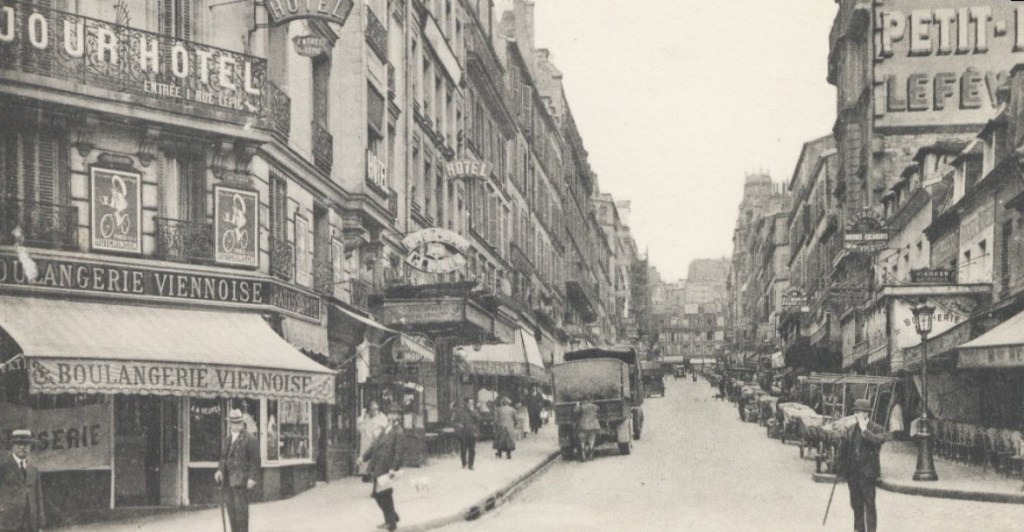



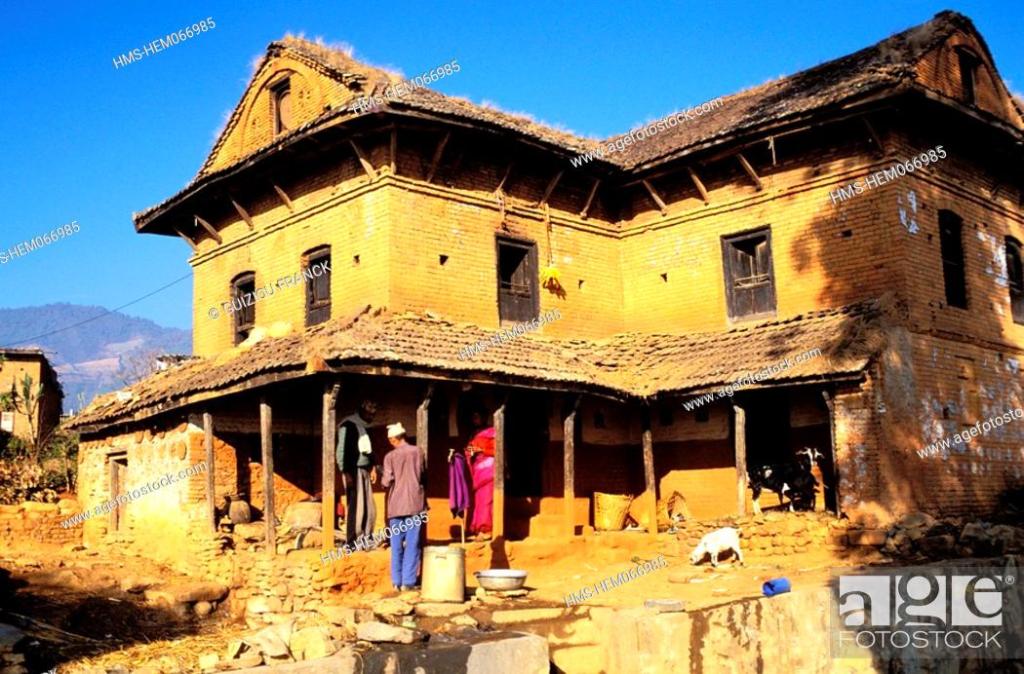






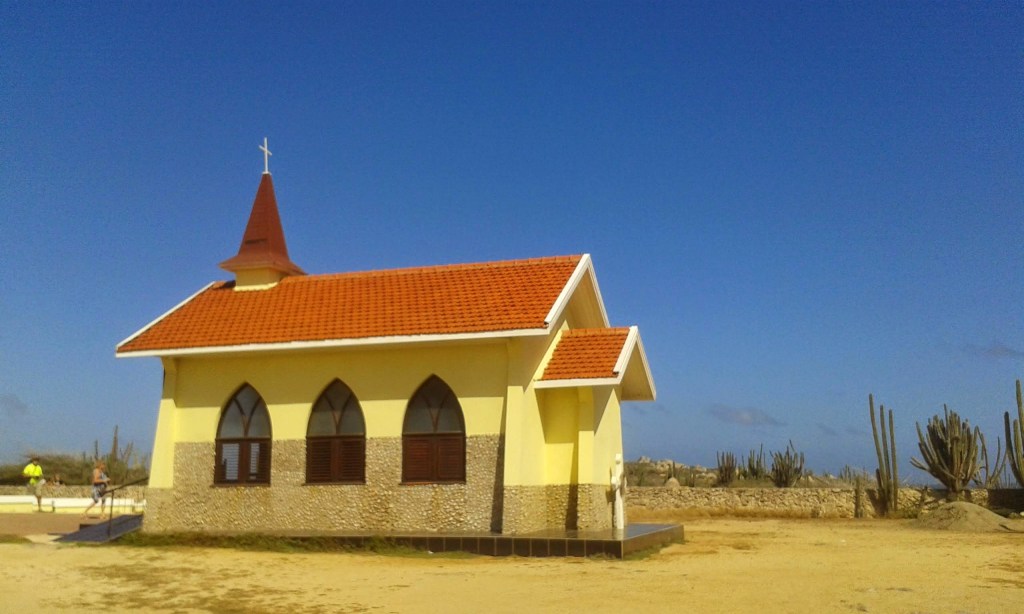


 Borderless