Categories
Editorial

Finding Godot?

Discard all prayers,
Meditation, hymns and rituals.
Why do you hide behind
Closed doors of temples?
....
There is no God in this house.

He has gone to visit the
Farmers who plough the hard ground,
The workers who break rocks ...


— Tagore, Dhoola Mandir or Temple of Dust (1910)

Love is a many splendoured thing and takes many forms — that stretches beyond bodily chemistry to a need to love all humankind. There is the love for one’s parents, family, practices one believes in and most of all nurtured among those who write, a love for words. For some, like Tagore, words became akin to breathing. He wrote from a young age. Eventually, an urge to bridge social gaps led him to write poetry that bleeds from the heart for the wellbeing of all humanity.  Tagore told a group of writers, musicians, and artists, who were visiting Sriniketan in 1936: “The picture of the helpless village which I saw each day as I sailed past on the river has remained with me and so I have come to make the great initiation here. It is not the work for one, it must involve all. I have invited you today not to discuss my literature nor listen to my poetry. I want you to see for yourself where our society’s real work lies. That is the reason why I am pointing to it over and over again. My reward will be if you can feel for yourself the value of this work.”

And it was perhaps to express this great love of humanity that he had written earlier in his life a poem called Dhoola Mandir that urges us to rise beyond our differences of faith and find love in serving humankind. In this month, which celebrates love with Valentine’s Day, we have a translation of this poem that is born of his love for all people, Dhoola Mandir.  Another poet who writes of his love for humanity and questions religion is Nazrul, two of whose poems have been translated by Niaz Zaman. Exploring love between a parent and children is poetry by Masood Khan translated from Bengali by Fakrul Alam. From the distant frontiers of Balochistan, we have a poem by Atta Shad, translated from Balochi by Fazal Baloch, for a fair lady — this time it is admiration. Ihlwha Choi translates poetry from Korean to express his love for a borderless world through the flight of sparrows.

Love has been taken up in poetry by Michael Burch. Borne of love is a concern for the world around us. We have powerful poetry by Maithreyi Karnoor that expresses her concern for humanity with a dash of irony or is it sarcasm? Luis Cuauhtémoc Berriozábal expresses his admiration for the poetry of Italian Poet Antonia Pozzi (1912-1938) in poetry. We have poems by Stuart McFarlane, Pramod Rastogi, Afrida Lubaba Khan, George Freek, Saranyan BV, Ryan Quinn Flanagan and many more. Rhys Hughes brings humour into poetry and voices out in his column taking on the persona of two cities he had lived in recently. There is truth and poignancy in the voices of the cities.

Suzanne Kamata writes a light-hearted yet meaningful column on the recent Taylor Swift concert in Tokyo.  Aditi Yadav takes up the Japanese book on which was based a movie that won the 2024 Golden Globe Best Animated Feature Film Award. Sohana Manzoor journeys to London as Devraj Singh Kalsi with tongue in cheek humour comments on extracurriculars that have so become a necessity for youngsters to get to the right schools. Snigdha Agrawal gives us a slice of nostalgia while recounting the story of a Santhali lady and Keith Lyons expresses his love for peace as he writes in memory of a man who cycled for peace.

Ratnottama Sengupta also travels down the memory lane to recall her encounters with film maker Mrinal Sen as he interacted with her father, Nabendu Ghosh. She has translated an excerpt from his autobiography to highlight his interactions with Ghosh. The other excerpt is from Upamanyu Chatterjee’s latest novel, Lorenzo Searches for the Meaning of Life.

In reviews, Somdatta Mandal has explored Tahira Naqvi’s The History Teacher of Lahore: A Novel. Srijato’s A House of Rain and Snow, translated from Bengali by Maharghya Chakraborty, has been discussed by Basudhara Roy and Bhaskar Parichha has reviewed Toby Walsh’s Faking It: Artificial Intelligence in a Human World. News and Documentary Emmy Award winner (1996) Ruchira Gupta’s daring novel born of her work among human traffickers, I Kick and I Fly, has been brought to our notice by Sengupta and she converses about the book and beyond with this socially conscious activist, filmmaker and writer. Another humanist, a doctor who served by bridging gaps between patients from underprivileged backgrounds, Dr Ratna Magotra, also conversed about her autobiography, Whispers of the HeartNot Just a Surgeon: An Autobiography , where she charts her journey which led her to find solutions to take cardiac care to those who did not have the money to afford it,

We have fiction this time from Neeman Sobhan reflecting on how far people will go for the love of their mother tongue to highlight the movement that started on 21st February in 1952 and created Bangladesh in 1971. Our stories are from around the world — Paul Mirabile from France, Ravi Shankar from Malaysia, Sobhan from Bangladesh and Ravi Prakash and Apurba Biswas from India — weaving local flavours and immigrant narratives. Most poignant of all the stories is a real-life narrative under the ‘Songs of Freedom’ series by a young girl, Jyoti Kaur, translated from Hindustani by Lourdes M Supriya. These stories are brought to us in coordination with pandies’ and Shaktishalini, a women’s organisation to enable the abused. Sanjay Kumar, the founder of pandies’ and the author of a most poignant book about healing suffering of children through theatre, Performing, Teaching and Writing Theatre: Exploring Play, writes, “‘Songs of Freedom’ bring stories from women — certainly not victims, not even survivors but fighters against the patriarchal status quo with support from the organisation Shaktishalini.”

While looking forward in hope of finding a world coloured with love and kindness under the blue dome, I would like to thank our fabulous team who always support Borderless Journal with their wonderful work. A huge thanks to all of you from the bottom of my heart. I thank all the writers who make our issues come alive with their creations and readers who savour it to make it worth our while to bring out more issues. I would urge our readers to visit our contents’ page as we have more than mentioned here.

Enjoy our February fare.

Mitali Chakravarty

borderlessjournal.com

Click here to access the content’s page for the February 2024 Issue.

.

READ THE LATEST UPDATES ON THE FIRST BORDERLESS ANTHOLOGY, MONALISA NO LONGER SMILES, BY CLICKING ON THIS LINK.

Categories
Slices from Life

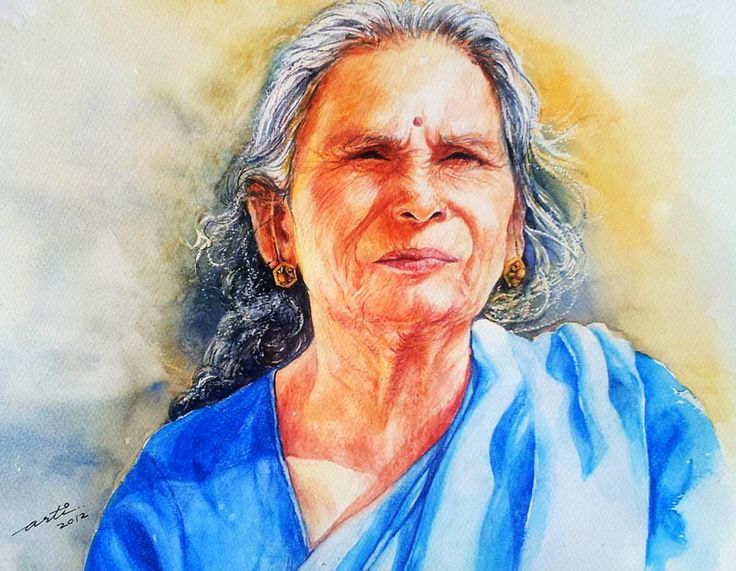
Suga Didi

By Snigdha Agrawal

A Santhali woman

She stood somewhere at 5 feet 8 inches.  Of athletic build.  Swarthy skin. A face full of punch holes; ravages of smallpox during childhood.  Her disarming smile more than made up for the lack of a flawless complexion.  The girls were told she was being employed as their Ayah, with strict instructions to address her as ‘Didi[1]’.  The Ayah affix after her name, was a ‘no’, ‘no’ in a Bengali household.  So, it was Suga Didi right from day one. The rest of the elite living in the cosmopolitan community frowned upon such bourgeois sentiments.

Suga lived in a Santhal village, on a river bluff, surrounded by dense Sal Forest. Inaccessible by road and cut off from civilisation. The only Santhal village in the area, close to the gated community, offering employment opportunities to the tribals. Not that they were keen on leaving the village to work in the steel and brick factories. Suga was the one-off amongst them venturing out from her cloistered society.  She arrived for the interview, hair oiled, drawn back from her face tied into a chignon, and dressed in a cotton saree with a red border, way above her ankles. The blouse was missing. Her attire would surely be viewed as improper in the elitist community.    She spoke in the Santhal dialect, with words common to Bengali and Hindi.  Amenable to change, she did not resist the suggestion of wearing a blouse, nor letting down the saree border to her ankles, when reporting for work.  Agreed happily to the working hours from 6.30 am to 4.30 pm, five days a week.  During school vacations, morning reporting was pushed back to 8.30 am. 

The decision to employ Suga was borne out of necessity. With four growing girls, aged between fourteen and four, or thereabouts, it was becoming increasingly difficult for their mother to handle all the chores.  Plaiting their hair, getting them dressed for school, ironing uniforms, and accompanying them to the school Bus stand, were some of the many activities entrusted to her.  Add to that, the role of a luggage carrier.  With four school bags, piled on her head, and four tiffin baskets weighed down with filled water bottles, hand-held, she shepherded the girls safely, morning and evening.  It wasn’t an easy walk. There were open drains to cross.  Heavily loaded truck movement posed a serious problem as well. She guarded them like her own. Taking care of the girls when they got home from school was also included. Occasionally, when the mood was right, she shared ancient tribal folklore, sometimes breaking into a song. 

The eldest of the four had read stories of tribal practices.  Witchcraft.  Human sacrifice.  Eating wild animals.  Men and women drinking ‘mahua’ toddy. Suga was questioned on the validity of all this to which, she neither denied nor confirmed.  Tribal secrets were not for the ears of the civilized. But she couldn’t ward off the pestering from the girls for long.  And went on to narrate the story of the Santhal deity, Bonga, visiting their village on a moonless night, in the guise of a king cobra to drive away the bad spirits living on the edge of the forest, responsible for killing the cattle.  Quietly slithering on the muddy terrain, the twelve-feet reptile, held the spirits captive, performing a wild dance with its raised hood.  And then struck.  The spirits screamed and fled, never to return. The village headsman invited the cobra for dinner, sharing toddy and barbequed lizards.  That was not the end of the story.  Suga concluded that the snake dissatisfied with the host, gobbled his head from neck upwards.  The girls held onto each other shocked out of their wits.  A bizarre ending.  Doubts were raised as to whether the story was real or imaginary, made up by Suga Didi.  Many such stories found their way into the older one’s scrapbook.  Later found in the steel trunk, along with old photos, discovered by the younger two. 

When Birbhadra the cook took leave to visit home, Suga filled in, helping out with cutting, and clipping the meat and fish.  All the preparatory work for cooking the meals.  Prepared by the lady of the house.  The girls were curious to know what Suga cooked at home. Her stock answer was hot, spicy, and unpalatable.  Their persistent pleading to cook a tribal dish at some point bore fruit. Reluctantly, she agreed to treat the household with a recipe, made from goat innards. The butcher supplying meat was duly informed to send the liver, fat, spleen, heart and intestines.  “Eww, gross!”  But not so, when the dish arrived on the dining table.  Blood red with a film of fat floating on the top, garnished with freshly chopped coriander leaves.  In no time it was polished off.  Delicious!  Delicious! All exclaimed.  Suga was on cloud nine that day.  They named the dish “Chagol Pagol Curry[2]”.  Suga’s signature dish.

It was the spring of 1959.  By then, the older girls had left for boarding school.  Younger ones then six, were pretty much able to ready themselves for school on their own. Suga’s workload had halved.  For most of her free time, she took upon herself the role of gardener, attending to the vegetable garden, and advising the gardener on how best to get good yields from her experience of growing vegetables in the village.  The smell of ‘bidi[3]’ wafting into the porch, meant the two were sharing a smoke.    

And then for over a week during that summer, she had not reported for work. Alarm bells rang in the household.  Had she fallen ill?  Had she died of cobra poisoning?  Had she been thrown out from the village for violating the rules?  Worst still, was she a victim of human sacrifice?  Concerns that kept the family awake.  No one knew her address, except that she belonged to the Santhal village on the river bluff, inaccessible to non-tribals.  A security guard from the factory was sent to find out if the headsman could be summoned to the river, under the ruse of gifting him Scotch whiskey.  Didn’t work.   No one responded to the call, announced with a handheld loudspeaker.  Several attempts were made to no avail.  Rumours mills were churning out stories of her having eloped with the cook, Birbhadra, though it made no logical sense.  Happily married with a dozen or so kids living in Begusarai, he could least afford a second wife.  Though coincidentally, Birbhadra left employment around the time Suga was out of the radar.     

It was decided there was no further need to employ a nanny aka ‘didi’ for the girls. Suga was the first and the last.  Irreplaceable.   She remains an enigma to date.

.

[1] Elder sister

[2] Crazy goat curry

[3] A type of cheap cigarette made of unprocessed tobacco wrapped in leaves

Snigdha Agrawal (nee Banerjee) is a published author of four books and a regular contributor to anthologies.  A septuagenarian, she writes in all genres of poetry, prose, short stories and travelogues.

PLEASE NOTE: ARTICLES CAN ONLY BE REPRODUCED IN OTHER SITES WITH DUE ACKNOWLEDGEMENT TO BORDERLESS JOURNAL

Click here to access the Borderless anthology, Monalisa No Longer Smiles

Click here to access Monalisa No Longer Smiles on Kindle Amazon International

Categories
Contents

Borderless, January 2023

Painting by Sohana Manzoor

Editorial

Will Monalisa Smile Again? … Click here to read.

Translations

Nazrul’s Ring Bells of Victory has been translated from Bengali by Professor Fakrul Alam. Click here to read.

Nobody in the Sky by S Ramarishnan, has translated from Tamil by R Sathish. Click here to read.

The Bike Thief by Ihlwha Choi has been translated from Korean by the poet himself. Click here to read.

Tagore’s Banshi or Flute has been translated by Mitali Chakravarty from Bengali.Click here to read.

Poetry

Click on the names to read

Jared Carter, Ranu Uniyal, Rhys Hughes, Saranyan BV, Scott Thomas Outlar, Priyanka Panwar, Ron Pickett, Ananya Sarkar, K.S. Subramaniam, George Freek, Snigdha Agrawal, Jenny Middleton, Asad Latif, Michael R Burch

Poets, Poetry & Rhys Hughes

In I Went to Kerala, Rhys Hughes treads a humorous path. Click here to read.

Conversation

In Conversation with Abhay K, a poet turned diplomat, translator and a polyglot, converses of how beauty inspired him to turn poet and translating Kalidasa and other poets taught him technique. Click here to read.

Musings/Slices from Life

What do Freddy Mercury, Rishi Sunak & Mississipi Masala have in Common?

Farouk Gulsara muses on the human race. Click here to read.

Ghosh & Company

Ratnottama Sengupta relives the past. Click here to read.

Sails, Whales, and Whimsical Winds

Meredith Stephens continues on her sailing adventures in New South Wales and spots some sporting whales. Click here to read.

Tsunami 2004: After 18 years

Sarpreet Kaur travels back to take a relook at the tsunami in 2004 from Andaman and Nicobar Islands. Click here to read.

‘I am in a New York state of mind’

Ravi Shankar shares his travel adventures in the city. Click here to read.

Half a World Away from Home

Mike Smith introspects on his travels to New Zealand. Click here to read.

Musings of a Copywriter

In Back to the Past, Devraj Singh Kalsi muses on the need to relive nostalgia. Click here to read.

Notes from Japan

In The Year of the Tiger Papa, Suzanne Kamata gives us a glimpse of Japan’s education system with a touch of humour. Click here to read.

Essays

A Solitary Pursuit: The Art of Suhas Roy

Ratnottama Sengupta journeys with the signature art of Suhas Roy as it transformed in theme, style, and medium. Click here to read.

New Perspectives on Cinema & Mental Health

Between 1990 and 2017 one in seven people in India suffered from mental illness. However, the depiction of this in cinema has been poor and sensationalist contends Shantanu Ray Chaudhuri. Click here to read.

The Observant Immigrant

In The Immigrant’s Dilemma, Candice Louisa Daquin explores immigrants and the great American Dream. Click here to read.

Stories

The Book Truck

Salini Vineeth writes a story set in the future. Click here to read.

The Scholar

Chaturvedi Divi explores academia. Click here to read.

Little Billy

Paul Mirabile renders the poignant tale of a little boy. Click here to read.

Book Excerpts

An excerpt from Sanjay Kumar’s Performing, Teaching and Writing Theatre: Exploring Play. Click here to read.

An excerpt from Abhay K’s Monsoon: A Poem of Love & Longing. Click here to read.

Book Reviews

Somdatta Mandal reviews Priya Hajela’s Ladies Tailor: A novel. Click here to read.

Rakhi Dalal reviews Shrinivas Vaidya’s A Handful of Sesame, translated from Kannada by Maithreyi Karnoor. Click here to read.

Gracy Samjetsabam reviews K.A. Abbas’s Sone Chandi Ke Buth: Writings on Cinema, translated and edited by Syeda Hameed and Sukhpreet Kahlon. Click here to read.

Bhaskar Parichha reviews MA Sreenivasan’s Of the Raj, Maharajas and Me. Click here to read.

.

Click here to access the Borderless anthology, Monalisa No Longer Smiles

Categories
Poetry

Our Forever Love

By Snigdha Agrawal

NAYSAYERS

Give me a sheet of ripstop nylon paper
I'll fashion it into a kite
with our names stickered
Fly it from rooftops
Announcing to the world
our forever love

I know frowns of disapproval
will appear
Minds building up a fever
"How dare she!
  How brazen of her!
  How shameless!
  She has broken all norms
  Flaunting the name of her lover
  Get her...get her…locked up forever
  She should abide by what her parents
  choose for her!"

Says the naysayers.

Do I care?
None whatsoever!
I'm a free spirit
Cannot be coerced
Will never bend
Shout out to them
"Clean out the antiquity
  from your mind
  create space for
  new age light
  Of course, you will choose to remain blind!"

Snigdha Agrawal (nee Banerjee) is a spontaneous writer.  She writes in all genres of poetry, prose, short stories, Tripadvisor reviewer and travelogues. She has authored two books of poems and a book of short stories for children. 

PLEASE NOTE: ARTICLES CAN ONLY BE REPRODUCED IN OTHER SITES WITH DUE ACKNOWLEDGEMENT TO BORDERLESS JOURNAL. 

Click here to access the Borderless anthology, Monalisa No Longer Smiles