The story of Hawakal Publishers, based on a face-to-face tête-à-tête, and an online conversation with founder Bitan Chakrabortywith his responses in Bengali translated by Kiriti Sengupta. Clickhere to read.
The Great War is over
And yet there is left its vast gloom.
Our skies, light and society’s soul have been overcast…

'The Great War is Over' by Jibanananda Das (1899-1954), translated from Bengali by Professor Fakrul Alam.
Jibanananda Das wrote the above lines in the last century and yet great wars rage even now. As the world struggles to breathe looking for a beam of hope to drag itself out of the darkness induced by natural calamities, accidents, terror attacks and wars that seem to rage endlessly, are we moving towards the dystopian scenario created by George Orwell in 1984, which would be around the same time as Jibanananda Das’s ‘The Great War is Over’?
Describing such a scenario, Ahmed Rayees writes a moving piece from the Kashmiri village of Sheeri, the last refuge of the displaced refugees who were bombarded after peace was declared in their refuge during the clash across Indo-Pak borders. He contends: “People walked back not to homes, but to ruins. Entire communities had been reduced to ash and rubble. Crops were destroyed, livestock gone, schools turned into shelters or craters. How do you rebuild a life when all that remains is dust?”
People could be asking the same questions without finding answers in Gaza or Ukraine, where the cities are reduced to rubble. While we look for a ray of sunshine, amidst the rubble, Farouk Gulsara muses on hope that has its roots in eternity. Vela Noble wanders on nostalgic beaches in Adelaide. And Meredith Stephens travels to the Australian outback. Devraj Singh Kalsi brings in lighter notes writing of driving lessons while Suzanne Kamata creeps back to darker recesses musing on likely ‘criminals’ and crimes in her neighbourhood.
Lopamudra Nayak writes on social media and its impact while Bhaskar Parichha writes of trends that could be brought into Odia literature. What he writes could apply well to all regional literature, where they lose their individual colouring to paint dystopian realities of the present world. Does modernising make us lose our ethnic identity and how important is that? These are questions that sprung to the mind reading his essay. As if in an attempt to hold on to the past ethos, Prithvijeet Sinha wafts around old ruins in Lucknow and sees a cemetery for colonial soldiers and concludes: “Everybody has formidable stakes, and the dead don’t preach the gospel of victory or sombre defeat.”
We have mainly poetry in translation this time. Snehaprava Das has brought to us Soubhagyabanta Maharana’s poems from Odia and Ihlwha Choi has translated his own poem from Korean. Sangita Swechcha’s poem in Nepali has been rendered to English by Saudamini Chalise. From Bengali, other that Jibanananda Das’s poems translated by Professor Fakrul Alam, we have Tagore’s pensive and beautiful poem, Sonar Tori (the golden boat). Yet another Bengali poet, one who died young and yet left his mark, Sukanta Bhattacharya (1926-1947), has been translated by Kiriti Sengupta. Sengupta has also translated the responses of Bitan Chakravarty in a candid conversation about his dream child — the Hawakal Publishers. We also have a feature on this based on a face-to-face conversation, giving the story of how this publishing house grew out of an idea. Now, they publish poetry traditionally, without costs to the poet. Their range of authors are spread across continents.
Our fiction again returns to the darkness of war. Young Leishilembi Terem has given a story set in conflict-ridden Manipur from where she has emerged safely — a story that reiterates the senselessness of violence and politics. While Jeena R. Papaadi writes of modern human relationships that end without commitment, Naramsetti Umamaheswararao relates a value-based story in a small hamlet of southern India.
We have more content. Do pause by our contents page and take a look.
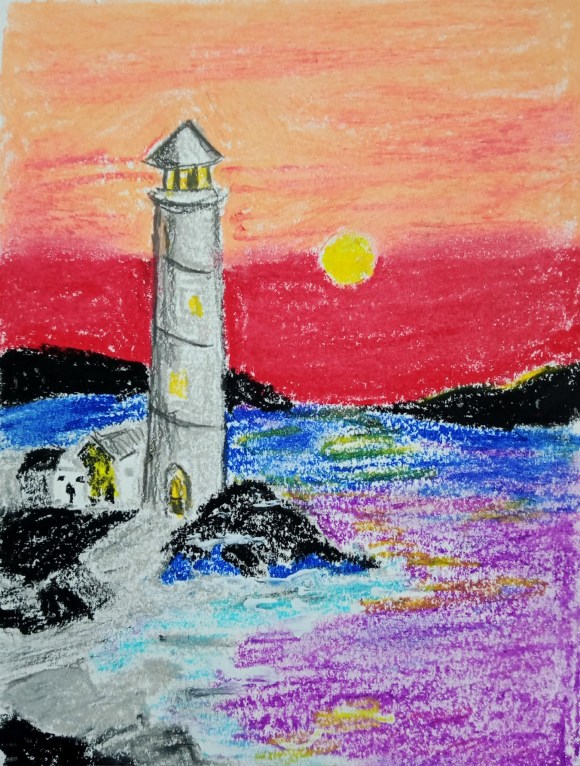
Huge thanks to all our contributors without who this issue would not have materialised. Heartfelt thanks to the team at Borderless for their support, especially Sohana Manzoor for her iconic artwork that has almost become a signature statement for Borderless.
Let’s hope that next month brings better news for the whole world.
(This is in loving memory of my friend, Ethan Henkholen Doungel and my cousin, Nungsibi Sangdonjam, both of whom lost their lives to this conflict.)
The mist in those Imphal mornings clung to the world like a mother’s embrace, pooling in the hollows where night lingered longest. I can still feel it swirling around our bare ankles — mine pale as rice flour, Lalen’s golden like sun-warmed honey — as we raced through the dewy grass toward the river. Our bags would tangle in our haste as we stumbled over roots still drunk with midnight’s shadows. The damp hemp of our bags smelt of earth and childhood.
We’d arrive breathless at the water’s edge just as the first monsoon drops began to fall. Lalen would throw his head back, his laughter skipping across the river’s skin like the kingfishers we loved to chase, his tongue catching raindrops with the solemn concentration of a temple priest receiving blessings. I’d giggle until my stomach ached, until the cold water found its way down my collar in tickling rivulets that made me shriek. I remember how it fell in fat, warm drops as Lalen and I raced through the fields, our school bags abandoned by the roadside. We would catch fireflies as they buzzed over us…. We were fifteen that May of 2023, old enough to understand the tensions simmering around us, young enough to believe it wouldn’t touch us.
Our families were woven together. Every Sunday, Lalen’s father would arrive at our household carrying jars of wild honey, his laughter booming through our courtyard. My mother would press a steaming cup of tea into his hands while scolding him for leaving mud tracks on her freshly swept floors. Both our dads would sit on the porch sharing a single bottle of Yu (wine), and hamei (rice cakes). Their voices blending as they argued about football and nothing at all.
“To start off another season,” Ipa[1]would say, his eyes crinkling at the corners as he was cheering on for Northeast United, in the new ISL season kicking off.
“To the fools who can’t hold their liquor,”Lalen’s father would counter, making them both laugh until their shoulders shook.
As I was lost in these thoughts… a voice from behind broke the silence!
“Heyy, wait!”Lalen’s voice floated through the downpour as he slipped in the mud. I turned just in the nick of time just to see him crash into me, sending us both tumbling into the flooded field. The water was warm as blood against our skin.
That was the same evening, our fathers sat on the porch watching the news reports with grim faces. Two communities — the Kukis and Meiteis began protesting against each other. The first roadblocks appearing along the highways. Still, back home our father’s still shared their usual bottle of rice wine, their friendship stubborn as ever.
“Things will calm down,” Ipa said, his voice steady.
“This is all politics,” Lalen’s father agreed.
They were wrong.
By June, the valley smelled of burning. No one knows who attacked whom first. Maybe it was the Kuki villages in the hills — we’d wake to columns of smoke staining the morning sky. Then the retaliatory attacks began in Meitei neighbourhoods. The day they burned our school, Lalen and I stood on the ridge watching the flames consume the building of our school.
This was also the night, when our fathers had perhaps argued for the first time. The voices were loud:
“They’re burning our churches!” Lalen’s father shouted, his usual warmth gone.
“And your people are attacking our temples!” Ipa countered.
“They killed my neighbour last night,”Lalen whispered. His hands were shaking. “Said he was storing weapons.”
“My cousin disappeared at the protest yesterday,” I admitted.
We didn’t say anything besides this. The space between us had become a minefield.
The next morning, Lalen wasn’t waiting by our gate. His bicycle sat unused in their yard, its tires going flat with each passing day. People say his family moved back to Churachandpur. I did not think much of it then, but yes, I did miss him a lot.
But none of that mattered when the monsters came on August 3rd. This date I will never ever forget the date — Ima’s[2] birthday. She’d just pulled her pineapple cake from the oven, the sweet coconut scent wrapping around us like one of her hugs. Then the air turned sharp with kerosene.
Through our kitchen window, shadows moved wrong. Not the dancing light of lamps, but torch flames licking at night. Men — no, not men, shapes with black masks where faces should be. Their boots kicked over Ima’s potted marigolds as they came.
“Run to the back!” Ipa shouted as bullets zoomed through the window and exploded.
I remember the exact shade of orange the flames consumed my mother’s best silk phanek[3]. The sound Ipa made when the bullet found him — not a scream, just a soft “oh” of surprise. I ran until my lungs burned, until the screams faded behind me, until I collapsed in a drainage ditch with the taste of mud and blood in my mouth.
The Assam Rifles Refugee Camp at Moirang was a nightmare of flapping plastic tarps and wailing children. At night, I’d lie awake listening to the old women whispering about which family had been wiped out that day. When the news came about Lalen’s village, I didn’t cry. They said the militants had locked the doors before setting the houses ablaze. They said you could hear the screams from three kilometers away.
I turned sixteen in a makeshift tent, eating stale rice with fingers that still smelled of smoke. I wondered where Lalen would be now…
The day I saw him again was April 2024. Nearly more than a year since we’d last spoken. I was digging through the ruins of the market, searching for anything salvageable, when I felt eyes on me.
He stood between two gutted shops, taller than I remembered, his features hardened by hunger from what I could tell. Then something caught my eyes, and I could not believe it. The Kuki national army (KNA) armband on his sleeve was frayed at the edges. KNA is a prescribed terrorist outfit by the Government of India, and I never expected my best friend to wear their uniform… He is around the same age as me… The rifle in his hands looked too heavy, yet he carried it like an extension of himself.
“Wait … you…?” He called out and took my name. However, this time, my name sounded foreign in his mouth now, stripped of all the friendly warmth.
The jar of turmeric in my hands slipped, shattering at our feet. The yellow powder bloomed between us like a poisonous flower. “You’re alive.”
His knuckles whitened on the rifle. “No thanks to your people.”
The air smelled of rotting fruit and something worse beneath. A body, probably. There were always bodies now.
“They weren’t my people,” I whispered. “The men who killed my parents — your people killed my family. You are wearing the uniform of the people who killed Ipa and Ima…” I flinched as I could not express myself.
“Does it matter? What about what you all have done” His voice cracked. “Your cousin was in the mob that burned my sister alive. I saw his face.”
The words punched through me. I hadn’t known.
The rifle trembled as he raised it. I saw the exact moment his finger found the trigger — the way his breath hitched, the way his eyes flickered to the scar on my left wrist from when we’d both fallen out of the mango tree.
“I should,” he whispered. “For sis… For my parents.”
I didn’t close my eyes. “Then do it.” After all, what’s the point of living, when I do not have my family or even now my friend with me?
The seconds stretched. A drop of sweat traced the new scar along his temple. The rifle had slipped from his now trembling fingers like that of a dying man’s last breath hitting the dirt. The metallic clang as it fell, echoed through the ruined marketplace and the rubble of what was left, bouncing off bullet-riddled walls in a way that made my stomach twist.
His hand moved toward his pocket and my body had already reacted before my mind could catch up — a full-body flinch that sent pain shooting through my half-healed ribs. Every instinct screamed that he was reaching for another weapon, that this was some cruel trick. After everything we’d seen, after all the betrayals, how could I believe otherwise? But what he pulled out wasn’t a weapon.
A scrap of blue cloth, frayed at the edges. The Kangla emblem I’d clumsily stitched back in third grade — the symbol of kangleipak[4] — still visible beneath the stains of gunpowder and blood.
My breath caught. That stupid handkerchief. The one I’d given him when he scraped his knee falling off his bicycle. The one he’d pretended to lose when the boys teased him for keeping a girl’s gift.
“Don’t…” My voice cracked. “After everything… why would you still have this?”
His fingers trembled around the fabric. When he spoke, his words were barely audible over the distant gunfire.
“Because it was the last thing that ever smelled like home… And most importantly it reminded me of you…”
Then his other hand moved- too fast, too practiced-and suddenly I was staring down the barrel of his pistol. The standard-issue 9mm that people say were smuggled from Myanmar. The same weapon that had executed twelve Meitei civilians just last month.
I didn’t scream. The girl who would have screamed died the night I watched my parents being killed helplessly.
The shot never came.
Instead, the pistol’s muzzle tilted-just slightly-toward his own temple. His eyes locked onto mine one final time, and in them I saw the boy who used to share his tiffin with me under the Bonsum tree.
The explosion of gunpowder was deafening.
The shot echoed through the ruined market as Lalen collapsed. I caught him without thinking, his blood immediately warm against my chest. His lips moved against my ear, forming words lost to the ringing in my ears.
When the light left his eyes, I realised I was rocking him like a child. The handkerchief lay between us, with crimson everywhere.
The fireflies had never returned to Imphal valley after that. The monsoons still come, but the rain tastes different now — metallic, like blood. Some nights I swear I can hear our fathers laughing on some distant porch, their voices carried by a wind that no longer blows here.
What does it take to make a child point a gun to his best friend's head?
What does it take for neighbours to douse each other in gasoline?
What does it take for a land to forget how to love its own?
Most importantly, where is my country? Did everyone forget Manipur existed?

This is Manipur.
This is what happens when hate wins.
These are the children we sacrificed.
Till then its silence, just pure silence.
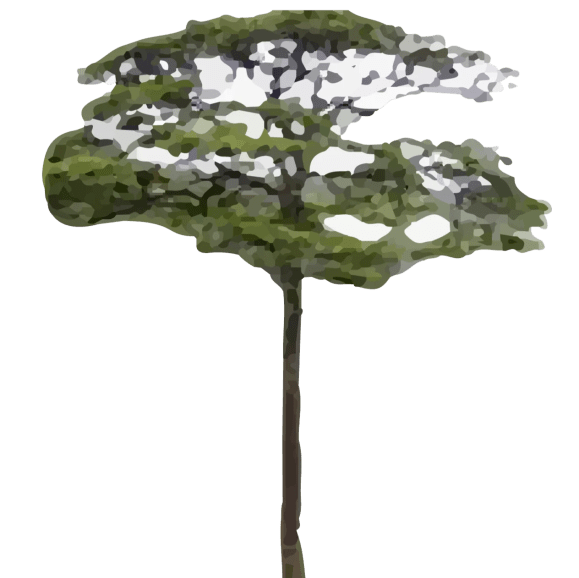
Bonsum tree, the state tree of Manipur. From Public Domain.
This is a work of fiction, but the horrors it describes are all too real. The violence in Manipur has torn apart communities that once lived as neighbours, friends, and family. What was unthinkable years ago has become commonplace- children recruited into militancy, villages burned to the ground, and lifelong bonds shattered within just months.
I did not write this story to take sides or point fingers at who is to blame. War has no heroes- only victims. The Kuki and Meitei people have both suffered unimaginable loss. Friends have become enemies, and children have been robbed of their futures. I wrote this therefore, not to sensationalise, but to mourn. Most importantly I hope that this would force us to confront what happens when hatred is allowed to fester. To remember that behind every headline from Manipur, there are real people-mothers, fathers, children-whose lives have been destroyed.
Leishilembi Terem is a student from Manipur with a quiet love for growing things– whether nurturing plants in her garden or stories in her notebook. When she isn’t studying plant biology or digging her hands into soil, she writes about the world she sees: the fragile beauty of her homeland, Kangleipak, the political storms that shake it, and the ordinary people caught between.
.
PLEASE NOTE: ARTICLES CAN ONLY BE REPRODUCED IN OTHER SITES WITH DUE ACKNOWLEDGEMENT TO BORDERLESS JOURNAL.

 Borderless