Categories
Contents

Borderless, February 2026

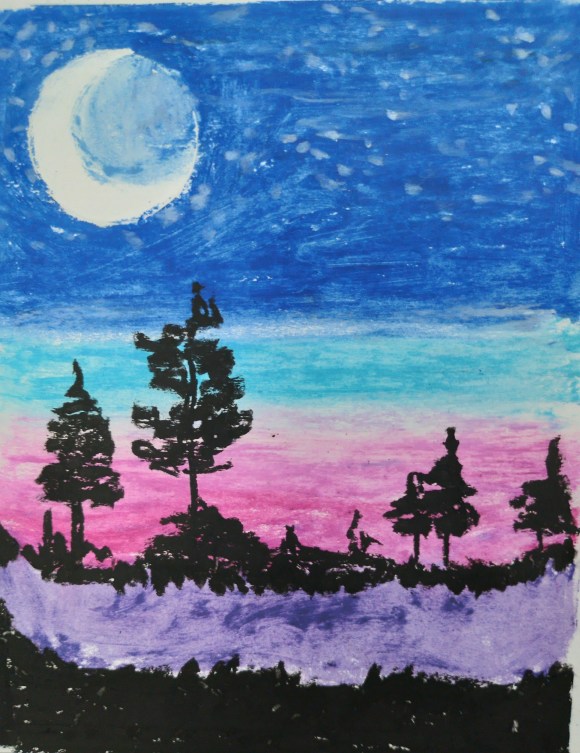
Art by Sohana Manzoor

Editorial

What Do We Yearn for?… Click here to read.

Translations

Nazrul’s Ashlo Jokhon Phuler Phalgun (When Flowers Bloom Spring) has been translated from Bengali to English by Professor Fakrul Alam. Click here to read.

An Elegy for the Merchant of Hope by Atta Shad has been translated from Balochi by Fazal Baloch. Click here to read.

Four of his own Malay poems have been translated by Isa Kamari. Click here to read.

Two of her own Persian poems have been written and translated by Akram Yazdani. Click here to read.

The Beaten Rooster, a short story by Hamiruddin Middya, has been translated from Bengali by V Ramaswamy. Click here to read.

Tagore’s Shishur Jibon (The Child’s Life) has been translated from Bengali by Mitali Chakravarty. Click here to read.

Poetry

Click on the names to read the poems

Allan Lake, Goutam Roy, Chris Ringrose, Alpana, Lynn White, C.Mikal Oness, Shamim Akhtar, Luis Cuauhtémoc Berriozábal, Snehaprava Das, Jim Bellamy, Manahil Tahir, John Swain, Mohul Bhowmick, Ryan Quinn Flanagan, SR Inciardi

Poets, Poetry & Rhys Hughes

In The Clumsy Giant, Rhys Hughes shares a funny poem about a gaint who keeps stubbing his toes! Click here to read.

Musings/Slice from Life

From the Land of a Thousand Temples

Farouk Gulsara shares attitudes towards linguistic heritage. Click here to read.

A Tangle of Clothes Hangers

Mario Fenech explores the idea of time. Click here to read.

Dreaming in Pondicherry

Mohul Bhowmick muses in Pondicherry. Click here to read.

Champagne Sailing

Meredith Stephens narrated a yatch race between Sydney and Hobart with photographs by Alan Noble. Click here to read.

In the Company of Words

Gower Bhat shares a heartfelt account of a bibliophile. Click here to read.

Musings of a Copywriter

In Horoscope or Horrorscope, Devraj Singh Kalsi reflects on predictions made at his birth. Click here to read.

Essays

The Chickpea That Logged More Mileage Than You

Ravi Varmman K Kanniappan gives an interesting account of the chickpeas journey through time and space, woven with a bit of irony. Click here to read.

Memories: Where Culture Meets Biology

Amir Zadnemat writes of how memory is impacted by both science and humanities. Click here to read.

The Restoration of Silence

Andriy Nivchuk brings to us repetitious realities that occur through histories. Click here to read.

Aeons of Art

In If Variety is the Spice of Life…, Ratnottama Sengupta introduces upcoming contemporary artists. Click here to read.

Stories

The Onion

JK Miller brings to us the story of a child in Khan Yunis. Click here to read.

Santa in the Autorickshaw

Snigdha Agrawal takes us to meet a syncretic spirit with a heartwarming but light touch. Click here to read.

Disillusioned

Sayan Sarkar shares a story of friendship and disillusionment. Click here to read.

Decluttering

Vela Noble shares a spooky fantasy. Click here to read.

The Value of Money

Naramsetti Umamaheswararao writes a story that reiterates family values. Click here to read.

Book Excerpts

An excerpt from Arupa Kalita Patangia’s Moonlight Saga, translated from Assamese by Ranjita Biswas. Click here to read.

An excerpt from Natalie Turner’s The Red Silk Dress. Click here to read.

Interview

Keith Lyons in conversation with Natalie Turner, author of The Red Silk Dress. Clickhere to read.

Book Reviews

Somdatta Mandal reviews Sanjoy Hazarika’s River Traveller: Journeys on the TSANGO-BRAHMAPUTRA from Tibet to the Bay of Bengal. Click here to read.

Rakhi Dalal reviews Sujit Saraf’s Every Room Has a View — A Novel. Click here to read.

Anindita Basak reviews Taslima Nasrin’s Burning Roses in my Garden, translated from Bengali by Jesse Waters. Click here to read.

Bhaskar Parichha reviews Kailash Satyarthi’s Karuna: The Power of Compassion. Click here to read.

.

Click here to access the Borderless anthology, Monalisa No Longer Smiles

Click here to access Monalisa No Longer Smiles on Amazon International

Categories
Slices from Life

Champagne Sailing

Narrative by Meredith Stephens: Photographs by Alan Noble

Sydney Skyline

We are not champagne sailors. The only time Alex and I drink champagne aboard a boat is to celebrate the end of a voyage of hundreds of nautical miles. Our sailing expeditions are characterised by breakages, deprivations and isolation. Sometimes the seas are so rough that I cannot move around the boat, let alone change clothes. I can only bathe once a week, and that consists of a dip in the ocean at anchor.

Our meals often consist of fish we have caught and cooked, unless we consume them immediately as sashimi. A single fish might last us days, served in various guises. Other meals are prepared from lentils or canned foods. In contrast to land trips, I usually lose a kilogram or two when at sea. I prefer not to use the term ‘yacht’, because people imagine us sunning ourselves on the deck while sipping champagne. Instead, I use the term ‘sailboat’. I do confess to a tad of reverse snobbery in the deprivations I endure and look down on those I describe as ‘champagne sailors’. But was that about to change?

We had been invited aboard the luxury observer vessel known as The Jackson to watch the start of the annual Sydney to Hobart Yacht Race on Boxing Day. After Christmas lunch, we headed to Adelaide Airport to catch our ninety-minute flight to Sydney. Upon arrival at our hotel, we caught the lift to our room. The lift doors opened on the third floor to let two brothers in, aged around 10 and 12. They met our gaze.

“Would you like us to sing you a Christmas carol?” the younger one asked.

The older one looked a bit embarrassed, but I thought asking strangers to join in singing a carol in a lift on Christmas Day was a nice, if not brave gesture, so I nodded enthusiastically. The younger one started singing ‘We wish you a merry Christmas’, and facing us, moved his hands in the manner of a choir conductor. I joined in. Then the boys noticed that they had arrived at their floor and stopped singing.

“See ya!” said the older one, as they exited.

We continued to the seventh floor and deposited our bags. The light was fading, so we decided to head back outside to take a stroll around the harbour. We returned to the lift. Once we reached the fifth floor the doors opened and the two boys entered again. Three other guests were standing behind us.

“More carols?” asked Alex.

They nodded and smiled. “Yes!”

They launched into another familiar carol, and again I joined in. The tall guest behind me gave a kindly chuckle. Then they reached the third floor, bade us farewell, and exited. We continued to the ground floor and made a tour of Darling Harbour in the remaining light. It had been a wonderful Christmas Day, and what better way to end it than the act of goodwill in being serenaded by children in a hotel lift.

The next day was the yacht race, which has been held annually since 1945 and is one of the world’s great ocean races. The sailors would be competing in a gruelling and treacherous race of 128 boats covering 628 nautical miles (1,200 km), south down the Tasman Sea, across Bass Strait, to Hobart in the south of Tasmania. This race is one of the highlights of Boxing Day and a television staple.

Start of Sydney to Hobart race

We walked to the appointed wharf and noticed a long queue waiting to board. Upon being noticed by our hosts, we were directed to a shorter queue and were ushered up the stairs to the top deck, limited to fewer than sixty people. A ribbon with ‘The Jackson’ written on it was affixed to our wrists. We were greeted by a waiter holding a tray proffering a range of drinks. Alex picked up two glasses of champagne and handed one to me. Was this the beginning of my new career as a champagne sailor?

The Jackson soon departed and we headed out to the deck to view the boats lining up for the race. Even though it was summer the cold penetrated my body and my hands shook. I was determined to brave the cold in order to hold my place to view the start of the race. The lady next to me made some commentary.

“That’s the start line,” she said, pointing to two yellow buoys. The start lines are staggered depending on the the size of the boats to help prevent collisions. It’s a southerly, so that should help.”

I nodded, feigning comprehension. I was not yet a competent enough sailor to pick up the wind direction so quickly. The cannon sounded on the deck below, and a plume of smoke rose. The yachts set off. Soon they had overtaken our observation vessel and most of the guests moved back inside the boat to watch the race on a large screen. Alex and I and a few other hardy souls remained on the outside deck to savour the unique setting of Sydney Harbour. Waiters braved the cold regularly to top up our champagne and offer us canapes. We accepted each time, although I eventually slowed down and shared a glass of champagne with Alex. Had we become the dreaded champagne sailors?

The yachts sailed through the heads until most of them disappeared from view. The Jackson turned around and headed back to King Street Wharf. We remained outside on the deck in the cold, making the most of every minute because Sydney Harbour is so far from home, and we may never have this opportunity again.

I stubbornly refuse to accept the title of champagne sailor though. We are temporarily boatless (which is another story) but once we resume sailing again later this year, we hope to return to the days of self-reliance on the boat and sourcing our meals from the ocean. Maybe not too much deprivation though, because we will continue to uncork a bottle of champagne, as is our tradition, after completing a major ocean passage of several hundred nautical miles.

Sydney to Hobart race

.

Meredith Stephens is an applied linguist from South Australia. Her recent work has appeared in Syncopation Literary Journal, Continue the Voice, Micking Owl Roost blog, The Font – A Literary Journal for Language Teachers, and Mind, Brain & Education Think Tank. In 2024, her story Safari was chosen as the Editor’s Choice for the June edition of All Your Stories.

PLEASE NOTE: ARTICLES CAN ONLY BE REPRODUCED IN OTHER SITES WITH DUE ACKNOWLEDGEMENT TO BORDERLESS JOURNAL

Click here to access the Borderless anthology, Monalisa No Longer Smiles

Click here to access Monalisa No Longer Smiles on Amazon International

Categories
Stories

Grandmother’s Guests

By Priyanjana Pramanik

My dida, my maternal grandmother, is perpetually dissatisfied. It is better to die young, my mother often says, than to live to ninety and be like her. For as long as I can remember, she has not smiled. Her face has twisted into a permanent grimace at the torments that each passing day on earth brings.

“After a certain age,” she sighs as she sips her morning tea, “living itself becomes a sin.”

When I was younger, these pronouncements would worry me, and I’d consider my mother’s laughter the height of callousness. With time, I’ve changed my tune.

“Have you considered dying?” I ask her conversationally in response. “I can make arrangements.”

She harrumphs at me and tells me that when she does die, I’ll be sorry. I reply that she’ll outlive her daughter, not to mention me. I hear my mother, who has just entered the dining room, mutter that death will be a sweet release.

“What did you say?” Dida demands, cupping an ear in one hand. “I’ve told you not to mumble, Mishti, no one can understand a word you say.”

Mishti vanishes again. Dida, thankfully, has been overcome by a fit of coughing and has already forgotten what we were talking about.

The cough had appeared approximately one week ago, the day after Dida’s ninetieth birthday, and she is sure that is it, her time has come. After tea each morning, she opens the drawer to her bedside table and takes out an aluminium case that houses several dozen strips of medicines. She inspects each one carefully. Then, it is time to call Ujjal.

Ujjal is our neighbour – and a medical doctor besides. Dida likes to catch him before he leaves for the hospital.

“Hello Ujjal?” she bellows into her mobile phone. “No, I feel terrible – this cough will be the end of me. Is it allergic, do you think? Should I take the Levocetirizine and Montelukast combined tablet? No? How about some Paracetamol? No, you’re right, sometimes home remedies are the best, who needs these newfangled medications? You’re right, Ujjal, what a good boy you are. What a blessing it is to have you so close by. If not for you… I have no one, you know. Nobody to take care of me, or care whether I live or die.”

After this conversation, she chews on some dried clove, that tried and tested home remedy, and then takes a nap. Ujjal calls up my mother and pleads with her to hide Dida’s medicine stash – my mother replies wearily that she would if she could.

After her nap, it is time for Dida to call up various relatives and let them know that she is not being taken care of. Their commiserations, stories of their own aches and pains, and reassurances that she if comes to visit, they will keep her in the lap of luxury, has her happily occupied until lunchtime.

“I won’t eat anything,” she announces when she emerges from her room for lunch. “I have no appetite because of this sickness.”

Ma made goat curry,” I tell her. This is considered. Then – “I suppose I can force myself to have a few bites,” she concedes grudgingly. “Otherwise, I’m just wasting away.”

She eats three helpings with gusto, pausing to point out that the curry could do with a little more salt and two more minutes in the pressure cooker, but is otherwise not too bad. My mother drops a courtesy and is heading back to the kitchen when Dida makes her announcement.

“Mousumi and her husband are coming to visit me this evening,” she says with some satisfaction. “At least my sister’s children love me, even if my own daughter… No, I can’t even say it.”

She remains in good spirits all afternoon, only half-heartedly telling me that I don’t love her. After lunch, she shoos my mother out of the kitchen and does all the dishes. Then, she changes the sheets on her bed. Finally, she changes from her usual nightgown into a white saree with blue border. Now that all the props have been arranged, it is time to set the scene.

Carefully, she arranges herself on the bed and lets out an experimental cough.

“Is there anyone there?” she calls in a weak but carrying voice. “Could someone at least fetch me a glass of water?”

“Coming, Dida,” I call, heading to the kitchen and coming back with a bottle and glass.

She drinks deeply and hands it back to me before another fit of coughing overtakes her.

“I think my temperature is rising,” she says sadly. “This is what will kill me. And no one to switch the fan off, even!”

I turn off the ceiling fan and beat a hasty retreat.

My mother’s cousin Mousumi, or Mou for short, and her husband Somnath ring the doorbell at five p.m. sharp. I let them in and take them to Dida’s room, where the old lady is in bed, as I have left her – but hadn’t I left the lights on? She is silent – she does not move or say a word as we enter the room, and a moment of disquiet steals over me.

At that moment, she tosses her head and moans weakly.

“Oh, Mani!” cries Mou, rushing to her side. “I’m here, Mani. Tell me what I can do for you.”

“Mou, my dear sister’s child,” comes my grandmother’s frail voice in the darkness. “How good of you to come all this way to see your poor old aunt… I fear it may be for the last time.”

She moves to sit up, ignoring her niece’s protests.

“I’ll make you some tea,” she announces in a quavering voice.

“No, no Mani!” Mou says, aghast. “How can you be made to do these things in your condition! Mishti will make you tea, of course. And we’ll have some too, just to keep you company.”

My mother, as always, is amused by the old lady’s antics. As she and I bring in a tea tray loaded with snacks, including fresh samosas from our local sweet shop, we hear Mou earnestly reasoning with Dida.

“You must come stay with us,” Mou Mashi is saying. “We will make sure you’re comfortable – you won’t have to lift a finger.”

“I couldn’t possibly,” replies Dida tremulously. “It would be such an imposition. How could I ask so much of my only niece?”

“No, no, ask anything you want of me! We just moved to a new apartment – it has a brand-new elevator, and a clinic with a doctor available 24/7, and all the comforts you can imagine! And I’ll make all your favourite foods…you look so thin, Mani, it just breaks my heart to look at you.”

“How wonderful that sounds… No one lets me eat anything nice anymore,” Dida says sadly. “It’s all watery dal and plain rice and boiled papayas.”

Mou made appropriately soothing noises.

“I’m here for you, Mani,” she says, holding Dida’s hand. “I’m going to take good care of you.”

The visit is cut short because Mou needs to let her driver off for the night, but she leaves Dida with several more promises of a visit soon-to-be-planned. Before she departs, though, she has some stern words for my mother.

“If you can’t take proper care of a frail old lady,” she fumes. “At least have the decency to put her in a good care home!”

And on that parting note, she and her husband get into their car and drive off.

“Do you think they’ll take Dida away?” I ask my mother after they are out of sight.

“Wouldn’t that be nice,” Ma replies. “The old lady would never agree to leave!”

“What’s that?” calls Dida from her room, with her unerring sixth sense for whenever she is the subject of discussion. Her voice has entirely returned to normal.

“Nothing, Dida,” I tell her, going in to switch on the mosquito repellent and administer her eyedrops. “So, when are you going to stay with Auntie Mou?”

“Uff, now I’ll have to visit her for politeness’ sake,” the old lady says, sounding disgruntled. “Isn’t she so tiring? Turned out just like my sister, she has. Won’t let me lift a finger, indeed! She makes me sound completely helpless!”

And on that note, she bites into her third samosa with gusto.

Priyanjana Pramanik is a doctoral student of geography and writer of fiction and popular science articles, splitting their time between Kolkata, India, and Hobart, Australia, and a parent to seven cats.

.

PLEASE NOTE: ARTICLES CAN ONLY BE REPRODUCED IN OTHER SITES WITH DUE ACKNOWLEDGEMENT TO BORDERLESS JOURNAL

Click here to access the Borderless anthology, Monalisa No Longer Smiles

Click here to access Monalisa No Longer Smiles on Kindle Amazon International