A Homage to Yuan Zhen’s Grief of Separation*
Shall I compare an ocean's vastness to
the width of the greatest river? The
evening sky pales to the azure of the summit.
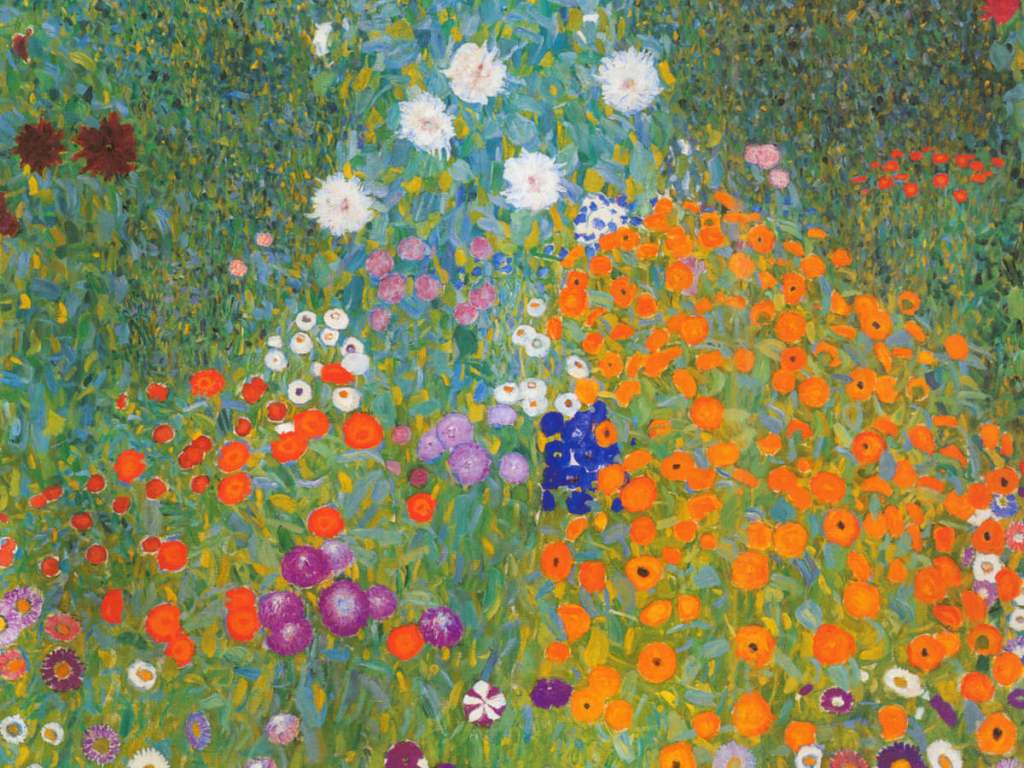
The time I wandered through a familiar flower field --
I can’t be bothered to look back, partly due
to Fate’s weaving hands, partly due to you.
Smoking under the
bleak wintery overcast
memories of your
bright summery laugh dissipates
into a fleeting mist.
Forlorn, I’m a shadow by the hills
of a spire-filled dream.
And with a gentle flick, I cast
the hanging memories of your sojourn
into the wind.
*The first two paras are a liberal translation of Yuan Zhen's "Grief of Separation".
Yuan Zhen was a Tang dynasty poet, lived from 779 to 831 in Luoyang, China
Rex Tan is a journalist by trade and a poet at heart. As a Malaysian, he is fluent in English, Mandarin, and Malay, yet he calls none his first language.
PLEASE NOTE: ARTICLES CAN ONLY BE REPRODUCED IN OTHER SITES WITH DUE ACKNOWLEDGEMENT TO BORDERLESS JOURNAL
Makoto Shinkai is a giant in the world of anime. His animated movie Kimi no Nawa (Your Name) garnered worldwide critical acclaim and commercial success. He is often hailed as the ‘next Miyazaki’ in the world of animation. His first work as a director was a five-minute long monochrome Japanese animation movie titled Kanojo to Kanojo no Neko (She and her cat) released in 1999 which won grand prize the DoGA CG Animation Contest in 2000. In 2013, Shinkai along with Nagakawa wrote a novel under the same name, whose English translation, She and Her Cat, was released in 2022.
The novel narrates four interwoven sub-plots involving four females and their feline companions. Shinkai weaves a rich tapestry which plays out like a movie capturing a wide spectrum of colours, sounds and emotions. The cats appear more caring and observant about their humans, while the latter often seem indifferent or distant. Nevertheless, they give each other support and much needed warmth of life.
The novels starts on a rainy day in spring, when Miyu happens to find an orphaned kitten in a carton. A chance encounter or a fated one, either way, they discover each other on a depressing spring day with dripping skies. Notwithstanding the crestfallen hearts and morose weather, the blossom of a soulful bond springs to life.
There is a cryptic hint of shared melancholy as the kitten remarks “… her hair and my fur were heavy from the rain.” It’s like one sad heart recognising the other and finding inexplicable comfort and sense of belonging as it feels, “I was now her cat.”
Miyu names him Chobi. The novels voices alternately between felines and humans, as we get to see their respective worlds in the narration.
Chobi is a restless fur ball as he skips about in animated action to catch Miyu’s attention; and watches her all day long as she cooks, sings, washes laundry, wears makeup, and so on. He is happy in a warm, cozy world where he is cared for. He thinks of Miyu as his ‘grown-up girlfriend’. In contrast, the owner doesn’t think of it as any life changing experience. But subconsciously, she begins to change, without a trace of conscious awareness.
While Chobi goes around the neighbourhood, he makes friends with other animals. He shares an endearing relationship with an old dog named Jon. Jon has the demeanour of a stately guardian. His encouragement uplifts Chobi’s spirit making him feel a part of the world. He has interesting tales to shares about life, cosmos and philosophy. Chobi opens his heart to Jon wishing to ‘fill the gap’ in Miyu’s heart.
Chobi also befriends a white chirpy cat. She discovers an ‘awesome’ human named Reina who doesn’t shoo her away as a stray cat. Instead, she feeds her and names her Mimi. Reina studies art at the technical college where Miyu is an administrative officer. Mimi notices how passionate Reina is about painting and sketching and how ‘weird’ she smells –- of paints, spices, alcohol, perfume and tobacco. Despite being talented she is struggling to find her footing in the world of growp-ups.
Mimi brings back memories of the cat she owned during high school. While the adults around the adolescent Reina were critical of her talent, her feline companion gazed at her paintings with fascination. The cat’s innocent gesture had the warmth of sunshine in the winter of her troubles. Reina has a resilient personality. As Mimi was an abandoned frail kitten, she finds strength in Reina’s optimism, independence and self-confidence. There is a mutual bond that serves to fill the vacuum inside them.
The story saunters along the neighbourhood detailing various encounters between humans and animals.
Cookie, Mimi’s kitten gets adopted by Aoi’s family. Aoi is a chronically sad girl because she carries an emotional scar in her heart. Cookie notices that permanent sadness around her and wants her to get better. As they live together, the little feral companion, thaws the frigidness inside her.
The non-human characters often give deep insights into the human world… “no human is always strong, but then no human is weak forever, either.”
Kuro, a fat old cat isn’t scared of his own death, but worried that his owner Shino would have a tough time after he departs, as he says, “humans are really frightened of death…not just of their won deaths, but of those of us dogs and cats too.” While Jon, the dog, claims he’d become eternal when he dies.
The book begins with on a wet spring and winds its way through the sound of summer cicadas and the winter snow, through life and death, to reach a bright scenery of cheerful cherry blossoms.
Shinkai paints a multi-layered world through the eyes of humans, cats and dogs, which comes alive in Takemori’s lucid translation. It is a heartwarming and uplifting read that moves like a ‘slice-of-life’ anime and reminds you of reasons to be grateful for this life as Chobi concludes, “I love this world…with absolute clarity”.
.
Aditi Yadav is a public servant from India. She is also a South Asia Speaks fellow (2023). Her works have appeared in Rain Taxi Review of books, Mint Lounge Magazine, EKL review, Usawa Literary Review, Gulmohur Quarterly, Narrow Road Journal, Borderless Journal and the Remnant Archive.
PLEASE NOTE: ARTICLES CAN ONLY BE REPRODUCED IN OTHER SITES WITH DUE ACKNOWLEDGEMENT TO BORDERLESS JOURNAL
CELEBRATION
This morning there is a celebration in the prettiest world.
A tiny bird starts singing and then swings over the lake.
Imagine lifting the water jug and finding it empty
in the monsoon; it’s only dry winds blowing all seasons.
Fairy lights dance on the yellow grass, the avian world
knows there is less rain, roots die deep within.
Somewhere at the corner of the sky, grey clouds build up
and now other birds join singing in the curtains of leaves.
How important it is to stay together, looking at everything,
then fly away drawing a great circle over and above!
They whistle and show how happy they are in unison,
their small ecstatic faces shine under the moist sky.
The trees, the oak leaves on the water’s edge and
those yellow reeds clap as the birds’ rest on the pine top.
RESISTANCE
You can’t tell a nest from a tangle of jasmines,
can’t tell a snake shedding its skin.
At times rocks meet, strike, roll together
to the first obstacle or the end of the slope.
You can’t tell hands from ivy choking in a fence.
beyond the split windows of the room,
can’t recognise a man who lives in my very own clothes,
my mirror notes only the geranium and growing pains.
You take steps to the place where you begin to vanish
until you go back and wait under the shadow,
like an inheritance, like land surfacing
a morning halved by grey and white clouds.
Some space to breathe, but just enough --
I must find myself in the wind’s swelling lung.
WONDROUS THING
Perhaps they are mother and daughter
still together from last year’s final clutch.
I keep waiting for one of them to start a nest
out in the marshy woods, the great blue
robin rookery is in full swing --
building four nests in the still leafless sycamore
each in full view of the bold eagles.
The forest is cooler and shadier than my yard.
Spring ephemerals are just emerging --
little strands of stalkless flowers
and pepper root toothwort that I look for.
Happy still to see that spring
seems a bit slower to arrive at the woods.
In their eyes, it remains a wondrous thing.
Gopal Lahiri is a bilingual poet, critic, editor, writer and translator with 29 books published, including eight solo/jointly edited books. His poetry and prose in Bengali and English are published across various anthologies globally. His poems has been translated into 16 languages.
.
PLEASE NOTE: ARTICLES CAN ONLY BE REPRODUCED IN OTHER SITES WITH DUE ACKNOWLEDGEMENT TO BORDERLESS JOURNAL.
Can anyone say for sure, when Japan and Kerala or, for that matter, Japanese and Malayalam languages, came into contact for the first time? No, it is all buried in the chronicles of yore! This is so, in spite of the legendary Bodhidharma travelling from somewhere in the South-West part of India (Kerala?) to China on its way to Japan in AD 520, albeit still disputed!
With the arrival of the Portuguese in Southern Japan from Cochin(?) during AD 1543, there was obviously a possibility of Malayalee priests or laymen including ‘horse trainers’ and cooks, reaching Japan along with Portuguese navigators. But records of such visits are yet to be made public, being either in Portuguese, Chinese or Japanese archives.
However, according to Takako Mulloor, a daughter-in-law from Japan living in Kerala for the past half a century, such obscurities need not always be the case. She remembers the story of four Japanese youths who happened to visit Quilon and from there to North Kerala, sometime during the reign of Ōtomo Sōrin (1530-1587).
Sorin was one of the few feudal lords of Japan (Daimyo), to embrace Catholicism under the influence of Portuguese missionaries. Originally known as ‘Fujiwara-no-Yoshishige’, he was very powerful at the time, ruling most of Japan. Apparently, he thought it apt to ascertain the ‘truth’ behind the new religion that was spreading fast in his domain. Thus, he is said to have deputed four Japanese youths to Rome and Europe – a new world — to meet the Holy Pope and report back to him.
These youths, after completing their mission successfully, landed in Quilon, on their return voyage. Quilon was a flourishing port of that period. Due to some unknown reasons, they proceeded further north towards Cochin by local crafts, called ‘Kettuvalloms’. Unfortunately, one of them caught malaria and died somewhere on the way and was buried.
According to personal communication from Takako, such records are available with the NHK ( Nippon Hōsō Kyōkai) Brodcasting Corporation of Japan. She remembered that a TV team from NHK had visited Kerala sometime in 1979-80, to make a documentary on these youths and to locate the grave of the one who had lost his life. Takako was their interpreter on this mission, being fluent in Malayalam, Japanese and English.
While I was in Japan from 1965 to 1969, very little information was available in Kerala about Japan. Prior to leaving India, except for some writings by the renowned author MT Vasudevan Nair, the knowledge of Japanese language or culture was scanty.
On joining Osaka University of Foreign Languages (Ōsaka Gaidai), I was fascinated by the general manners of people in and out of the university. They were always kind, polite and willing to help especially students and others from abroad.
Despite having an advanced ‘Language Laboratory’ and excellent faculty, my language proficiency was mostly strengthened by the people on the street or in the villages of the Osaka suburbs. From the very beginning, I was also struck with an inexplicable quality in their language, with its unaccented delivery and melodious intonations that always reminded me nostalgically, of Malayalam!
Amazingly, both these languages were similar in several respects such as the order of alphabets, vowels and structure of sentences that usually didn’t end in a consonant.
We foreign students had to learn some special topics namely ‘Things Japanese’ that included Flower arrangement (Ikebana); Japanese theatre traditions Kabuki, Bunraku and the oral Rakugo and so on. In general, most of them including folk arts, proverbs, and day to day practices, reminded me of the village life in Kerala.
For instance, ‘banishing’ evil spirits from home was just the same as practiced in villages here. Above all, I could also recognise a few Japanese words more or less similar in meaning and pronunciation, synonymous with Malayalam!
That was when the idea of a Japanese-Malayalam Dictionary germinated in me. But, back in Tokyo University after completing six months’ language course, my attention was mainly focused on research, to earn a doctorate. Still, I was able to hone my Japanese speaking skills by constant interaction with the local people who were always enthusiastic about teaching foreigners, their language.
During the second year in Tokyo, unexpectedly one day, the Indian Embassy in Tokyo called me to enquire if I could teach a few senior Japanese government officials, Malayalam.
Didactic skill being not my forte with Malayalam, my first response was a polite ‘no’, despite the attractive remuneration offered. But the potential pupils would not be dissuaded. Thus started my part-time job as ‘Malayalam Teacher’, in Tokyo. Nearly three years of teaching came to an end on my completing my doctoral research, so as to return home.
Contacts with my erstwhile students were soon reduced to almost nil. One exception was an exchange of communication with a Shyoichi Itoh, who retained his interest in Malayalam as also Kerala. Occasionally, he used to write to me in Malayalam to my great delight, for comments and correction. He had also written some articles on Kerala in Japanese journals, on topics of interest to Japanese readers, based on his experience.
The unique Writers’ Co-operative of Kerala (SPCS) was one of such topics covered. Similarly, at my request and as suggested by the editor M T Vasudevan Nair, he wrote an article for the Malayalam weekly, Mathrubhoomi, focusing on the ritual suicide of the famous Japanese writer Yukio Mishima, in 1970. He had also written a guide book for Japanese students interested in learning Malayalam entitled ‘Malayalam for Beginners’.
Subsequently in 1974, Itoh made a surprise visit to me in Poona where I was working at the time. In fact, he came with the happy news of joining The Tokyo University of Foreign Studies (TUFS) as Professor and Head of the Department of Malayalam. That was a deserving recognition of his dedication to the study of Malayalam. His Malayalam for Beginners is still in use in the University and elsewhere.
My last meeting with Prof. Itoh was during early 1982, when he visited my official residence in Tokyo, with his dear daughter. At that time, I was on a government of India assignment (1981-’85), renewing old contacts as well.
Sadly, Prof. Itoh passed away rather prematurely, in 1998.
After taking superannuation from my employer — an international organisation at that time – at the beginning of the current millennium, I settled down in Cochin, India. Still, the dictionary dream was alive and efforts for bringing Japanese and Malayalam closer, was always a passion!
During the early nineties, despite being immersed in professional activities, I had undertaken the translation of Nobel Laureate Yasunari Kawabata’s [1]novel, Yama no Oto or ‘Sound of the Mountain’ (1971) directly from Japanese to Malayalam as Malayute Shabdam.
Published by Current Books (Trissur) in 1994, the translation was well received by Malayalee readers, resulting in more editions. Considering the fact that such translations are usually based on the English version due to language constrains, my work, directly from the original Japanese, is thought to be the first of its kind, in Malayalam.
However, the dictionary project could not be taken up immediately even after retirement, due to personal preoccupations. Ultimately, work on this long-awaited project was started in 2002, two years after retirement, in right earnest.
An old dictionary of Japanese-English-Japanese format, brought along from my ‘student’ days in Osaka was used as the first reference source. Published in 1950 by the Obunsha Company of Tokyo, it was the only one available for me at that juncture.
Following untiring work, the first draft was ready in two years. It was prepared in the Japanese-English-Malayalam format covering some 2000 foolscap pages and nearly a hundred thousand head-words. The meaning of each word and phrase was given in English and Malayalam with Japanese pronunciation in Malayalam fonts. The entire manuscript was compiled in long hand, without using a typewriter or computer!
Thereafter, attempts to get a competent publisher in Kerala was futile mainly due to the non-availability of Japanese fonts for printing. As a final solution, it was felt necessary to obtain fonts from Japan. However, the impasse was broken finally when my old friend and great historian Prof (Dr.) M.G.S. Narayanan introduced Toshie Awaya, a faculty member of the TUFS, as a conduit for assistance from that university.
While discussing various possibilities with Awaya, it was a pleasant surprise to know that late Prof. Itoh, my ‘old student’, used to be her Malayalam Professor!
Subsequently, on visiting Japan with my wife, a meeting was arranged with the late Indologist and renowned historian, Prof. Noboru Karashima, whom I knew during Tokyo University days. He was living in Kamakura, and Awaye took us to his very impressive residence for discussion.
On that occasion, as he suggested, it was decided we meet Prof. Jun Takashima and Prof. Makoto Minegishi engaged in dictionary-related research, in TUFS. They were attached to the Institute of Languages and Cultures of Asia and Africa (ILCAA). Established in 1964 within TUFS, this institute was engaged in promoting academic exchanges between Japan and other Asian-African nations, having been recognised as competent to carry out that task.
The two Professors during a meeting that ensued in the Institute, were amazed to see the sample manuscript of the dictionary that was shown to them. Firstly, use of ‘long hand’ instead of typing or computer printing, seemed out of this world to them.
Another fact, of more importance, was that the dictionary used as reference source material was outdated. It was pointed out that in view of the fast-evolving nature of languages with the addition of new words incessantly, the earlier work had become redundant.
While agreeing to discard the manuscript, we decided to start afresh using a latest dictionary as source to digitalise the new version with the help of a software developed by Prof. Takashima! It was also agreed that the manuscript thus produced with my data would be arranged in a ‘camera-ready’ copy at the ILCAA, that could be suitably published in Kerala.
After several exchanges of visits from India to Japan and Japan to India followed by umpteen number of corrections and revisions, the promised ‘final’ product was ready by the end of 2018.
Then, it was a matter of finding a qualified publisher. The Kerala State Institute of Languages, Thiruvananthapuram, that readily agreed, was found to be the most appropriate one to accomplish that task, in an excellent manner.
The formal release of the beautifully printed and bound Japanese-Malayalam Dictionary of some 1500 pages was formally carried out in the presence of the ILCAA Professors, by Kerala State Cultural Minister A.K. Balan. Hideki Asari, Minister and Dy. Chief of Mission, Japanese Embassy, New Delhi and several other dignitaries were present on the occasion in Thiruvananthapuram on March 8, 2019.
With such a happy finale of a hard work put in during some sixteen years of my post-retirement years, the dictionary may represent a milestone in the annals of Japanese-Malayalam affinities.
During the half a century that elapsed from the time of my first landing in Japan and the release of the dictionary, major changes are manifested in the ethos of Japan-Kerala interactions. Exchange of visits by artists, academics, writers and common people, resulted in the publication of several travelogues, translations, studies, and so forth enabling people of these two parts of the world to come closer, as I dreamt in the 1960s.
Several literary works from Japanese were translated into Malayalam by eminent writers from Kerala including M.K. Menon (Vilasini), K. Kunhikrishnan and others! General studies were also published about Japan, in Malayalam. An in-depth study of Kerala-Japan cultural relations is available in the remarkable book, ‘The Throne of Chrysanthemums’ by the gifted writer and artist, K. Asok Kumar.
In addition to such developments, many professionals from Kerala are now finding gainful employment in Japan, something unheard of a few years back.
In conclusion, it has to be emphasised that the age-old affinity between Japanese and Malayalam needs to be studied afresh by our linguists and historians, in the light of significant evidence emerging from various new studies.
When Rev.(Dr.) Robert Caldwell (1814-1891) postulated the theory of possible origin of Japanese and Tamil languages from the same root, there was no mention of Malayalam, in particular. So also Japanese professors – Akira Fujiwara (1981) and Susumu Ohno (2007) — who revived that hypothesis recently, were also not referring to the Malayalam connection.
Meanwhile, some of our erudite linguists such as Prof. Naduvattom Gopala Krishnan, were able to prove the ancient origin of Malayalam, from the same root as modern Tamil, proving eligibility of both these languages to be included in the ‘Classical Languages’ category, already accepted officially.
According to Prof Gopala Krishnan, the very fact that some ‘Malayalam only’ words were identified in ‘Sangam Literature’ of 300 BCE- 300 ACE, reaffirms its classical position. Even epigraphical evidence from the Edakkal Caves of Wayanad (Malabar), that go back to 6000 BCE, are said to be supportive of ancient origin of Malayalam, together with Tamil.
As such, there is an urgent need for a relook into our perspective of the gamut of Japanese-Malayalam affinities!
[1] Yasunari Kawabata (1899-1972) was the first Japanese to win a Nobel prize in 1968
Dr. KPP Nambiar, formerly a Consultant/Technocrat at the UN Food and Agriculture Organisation, is the author of many scientific papers and books, including a 1500-page Japanese-Malayalam dictionary.
PLEASE NOTE: ARTICLES CAN ONLY BE REPRODUCED IN OTHER SITES WITH DUE ACKNOWLEDGEMENT TO BORDERLESS JOURNAL.
Mubarak Qazi (24 December 1955 – 16 September 2023). Photo courtesy: Kamanchar Baloch
Fellow traveler! “Moons and seasons” have changed.
The eyes and the gaze are now trailed to elsewhere.
You too forget the roar of muskets and bullets,
Of our sorrow and happiness, the reasons have changed.
Speak of the sun,
Of the moon.
Speak of light,
Of life.
Cast away the gun!
Fiddle pain, pluck soulful strings.
Stop rhyming songs, extolling the curse of war.
Don’t raise the fire of envy and hatred anymore.
I long for love, its love I’m so desperate for.
Speak of wine,
Of wineglass.
Speak of pain,
Of colors.
Cast away the gun!
Remind me of soft-treading maidens,
And of sweet and dainty betel nuts.
Nobody’s pain is ever healed by fire and steel.
Remind me of those fair and pretty damsels.
Speak of flowers,
Of lips.
Speak of love,
Of intimate moments.
Cast away the gun!
Mubarak Qazi(1955-2023), is one of the most prolific and popular of modern Balochi poets. He is credited with making poetry a vocation for the masses in a lucid vocabulary. In other words, Qazi is lile the conscience of the people — one who addresses them in a language they can easily comprehend and decipher. Instead of maintaining a subtle or vague approach, he conveyed his sentiments in simple and unembellished language. He has published ten anthologies of poetry. The translated poem is taken from the second edition of his first anthology published by Drad Publication Gwadar in 2007.
Fazal Baloch is a Balochi writer and translator. He has translated many Balochi poems and short stories into English. His translations have been featured in Pakistani Literature published by Pakistan Academy of Letters and in the form of books and anthologies.
.
PLEASE NOTE: ARTICLES CAN ONLY BE REPRODUCED IN OTHER SITES WITH DUE ACKNOWLEDGEMENT TO BORDERLESS JOURNAL
An introduction and a conversation with Isa Kamari, a celebrated Singaporean writer
Isa Kamari
Isa Kamari is a well-known face in the Singapore literary community. He has won numerous awards — the Anugerah Sastera Mastera, the SEA Write Award and the Singapore Cultural Medallion, the Anugerah Tun Seri Lanang. He has been part of university curriculums and has written for the television. With 11 novels, nine of which have been translated from Malay to English — and some into more languages like Arabic, Mandarin, Urdu and Turkish, French, Russian Spanish — three poetry books, plays and one novella written in English by him, one can well see him as a leading voice in literature on this island that seems to have grown into a gateway for all Asia.
Kamari’s writings dip into his own culture to integrate with the larger world. The most remarkable thing about his works, for me has been the way in which he has brought the history of Singapore from the Malay perspective into novels and made it available for all readers. The most memorable of these actually gives the history of the time around which the Treaty of Singapore was signed between the British and the indigenous ruler in 1819, handing over the port to Raffles, the treaty that was crucial to the founding of modern Singapore. The novel is named after the year of the treaty.
Other novels like Song of the Wind , Rawa and Tweet — all bring into perspective how the local Orang Seletar integrated into the skyscrapers of Singapore. We can see in his writings how the indigenous moved to be integrated into a larger whole of a multi-racial, multi-religious accepting modern city. One of his novels, One Earth (1999), is like an interim almost, set during the Japanese occupation in Singapore. The narrative dwells on the intermingling of races in the island historically. Kiswah and Intercession are novels that cry out for reforms on the religious front.
He also has novels that delve into individual journeys to glance into the maladies of the modern-day world. Whether it is faith, or career, he brings into focus the need to heal. Recently, Kamari has brought out a book of short stories, Maladies of the Soul, to focus on just this. His fifteen short stories centre around the issue mentioned in the title. In the first ten stories, he writes of old age, of mental stress, of compromises made to achieve success, of anxieties just as the title suggests. These are internal conflicts of people in a country where most have enough to eat, a house to live in and access to education for their offsprings. Then in the last five stories, he moves towards not just showcasing such maladies but also resolving, using narratives that are almost surrealistic, or poetic. They are not happy but reflective with the ability to make one think, look for a resolution. They are discomfiting narratives.
One of the last stories is given from the perspective of a silkworm — a powerful comment on the need for freedom to survive. Another has the iconic Singapore Merlion emote to an extent. The writing escapes the flaw of being didactic by its sheer inventiveness. One is reminded that this is a book by an author from a city-state which has resolved problems like poverty to a large extent. That the journey was arduous and full of struggle can be seen in Kamari’s earlier novels. But now, that people have enough to eat and live by, he takes the next step that is necessary. His stories demand not just being familiar with the issues they faced in the past, but also suggest a movement towards resolving the social problems that in a developed country can warp individuals to make them non-functional and make the society lose its suppleness to adapt and progress.
One of the stories like his earlier novel, The Tower, reflects the climb of a careerist, an architect, up a tower he has built, while recalling the compromises made. The interesting thing is the conclusions have a similar impact. And then, there is yet another story that is almost Kafkaesque in its execution, where a man turns into a bull — a comment on stock trading or people’s obsession with money and to compete?
The book needs to be read sequentially to get the full impact of his message. For, he is a writer with a message, a message that hopes to heal the world by integrating the spiritual with modernisation. In this conversation, he discusses his new book and his journey as a writer.
What makes you write? What moves you to write? Why do you write?
I need to be disturbed by events, issues and thoughts before thinking of writing anything. I would then ponder and research on the topics at hand. Only when I have my own tentative resolution of the conflicting elements, I would begin to write. Most often, my views and positions will change as I write further. In that sense writing is a form of discovery and therapy for me.
Tweet in Spanish
Do you see yourself as a bi-lingual writer or a Malay writer experimenting in English? You had written your novella, Tweet, in English. Later it was translated to more languages. How many languages have you been translated into? Do you feel the translations convey your text well into the other language?
Culturally, I think in Malay. English is a language of instruction for me. When I attempt to translate my Malay works into English, the writing sounds and feels Malay. Tweet is a result of a challenge I imposed upon myself to write creatively in English. The result is not bad. Tweet has been translated into Malay, Arabic, Russian, French, Spanish, Azerbaijan and Korean. I wouldn’t know how well the novella has been translated because I do not know those languages. I trust the translators whom I choose carefully.
Throne and Tweet in RussianTweet in French
The stories of Maladies of the Soul first appeared in Malay. Now in English. Did you translate them yourself, being a bi-lingual writer? Tell us your experience as a translator of the stories. Did you come across any hurdles while switching the language? What would you say is the difference in the Malay and English renditions?
Yes, I translated all the stories in the book. I had to overcome my own fear that the stories might end up too Malay in expression and feel. But I told myself to be true to my own voice and not be inhibited by language structure and convention. I would not know exactly the difference between the two renditions. I was just interested to tell the stories.
Is this your first venture into a full-length short story book? Tell us how novels and short stories vary as a genres in your work. How do you use the different genre to convey? Is there a difference in your premise while doing either?
I have produced just one collection of short stories. In each of the short stories, I had to be focussed on expressing concepts and philosophies on a single problem of the human condition. In my novels the concepts and philosophies are varied, expanded, more complex and layered but yet interrelated and weaved around dynamic human experiences facing common predicaments or challenges of an era.
One of the things I noticed about the book was that the stories would convey your premise better if read in order. Is that intentionally done or is it a random occurrence?
The short stories can be weaved into a novel. There is a central spine, which is my observation and philosophy of life which bind them all. The intrinsic sequence or order is not intentional, but perhaps it is the psychological thread and latent articulation of the storyteller.
Some of the stories seem to have echoes in your novels, like Kiswah and Intercession, both of which deal with crises in faith. Did your earlier novels have a direct bearing on your short stories?
I used to transform my poems into short stories, and from those write novels. The genres are just tools for me to express my thoughts and feelings. I use whatever works. I have even experimented on weaving short stories and poems in a novel. I wanted to create prose that are poetic, and poems that are capable of conveying a narrative. My latest novel, The Throne, is a result of this experiment.
Some of your stories touch on the metaphorical, especially the last five. Some of the earlier ones describe unusual or even the absurd situations we face in life. As a conglomerate, they explore darker areas of the human psyche, unlike your novels which were in certain senses more hopeful, especially Tweet. What has changed to bring the darker shades into your writing? Please elaborate.
The stories in Maladies of the Soul have a common theme of alienation in various facets and dimensions of life. As such the expected feeling after reading them is that of gloom and hopelessness. That is intentional as a revelation of the deeper and hidden fallacy of modern life that appears organised and bright on the surface. I wanted my readers to be shaken or at least moved to ponder and reflect on our current, shallow and fractured human condition. There is a better life if we were to look the other way and be more mindful and caring of each other and our environment.
I still recall a phrase from your novel, The Tower, “Festivities celebrating loneliness”. Would you say your short stories have moved towards that?
Exactly.
Why did you choose short stories over giving us a longer narrative like a novel?
It is like giving my readers bite sizes of my exploration and philosophy of life. I leave it to the readers to weave the stories into a whole, and reflect upon their own experiences, thoughts and feelings, perhaps in a more integrated and holistic manner.
What are the influences on your writing?
Life itself. Like I mentioned earlier I do not write in a vacuum. I engage life in my writing as a way of validating my ever-changing existence. I want my life and writing to be authentic and significant. Hopefully, meaningful to others too.
What can your readers look forward from you next?
I have just completed a draft of a novel in Malay, Firasat. As in all my novels, I offer a window towards healing by embracing a rejuvenated Malay philosophy called firasat which is an intuitive, integrated, balanced, lucid, harmonious and holistic way of life.
Thank youfor sharing your time and your writings with us.
(The online interview has been conducted by emails by Mitali Chakravarty)
PLEASE NOTE: ARTICLES CAN ONLY BE REPRODUCED IN OTHER SITES WITH DUE ACKNOWLEDGEMENT TO BORDERLESS JOURNAL.
I am intrigued by the whole process of translation, a most remarkable alchemy of words and meanings, and when it comes to the translation of poetry, I find the operation especially bewildering and beguiling. But this is not the place for me to discuss my views on the mechanics of the subject, for in fact I have no such views. I am not a translator. I merely wish to explain that the following poem is the result of a minor experiment I have been planning for a long time, a variant of the ‘Chinese Whispers’ game, performed using an automatic translation program. A poem is written, a poem using fairly obvious imagery, and then the translation game begins. The poem is translated from English into another language, in this case Albanian, then from Albanian into another language, Arabic in fact, and from Arabic into Basque, and so on. Eventually the poem exists in Zulu, and from there it is translated back into English.
Possibly it will no longer sound like a real poem at this stage. But it can be easily adjusted, turned into something resembling a new poem, and presented as a continuation of the original poem. The final poetic work will consist of the original stanza followed by the manipulated stanza. If they enhance each other, so much the better, but if not, nothing much has been lost.
The Transformation
The transformation is lengthy
but painless,
it does not drain us. The way
ahead is clear
as far as the glowing horizon
where the moon
has promised to rise. The eyes
of the night
stare intensely in preparation
for blinking
thanks to the white eyelid of
a belated moon
and we grow wise when at last
it arrives, saying
that the stars belong in sleep
and so they do and so
do we and finally
the change
occurs
rest
ful
ly.
This poem was automatically translated between all the following languages:
English – Albanian – Arabic – Basque – Bengali – Czech – Dutch – French – German – Greek – Hindi -Indonesian – Korean – Latin – Macedonian – Maltese – Nepali – Persian – Portuguese – Romanian – Sanskrit – Slovak – Swahili – Thai – Turkish – Urdu – Vietnamese – Welsh – Zulu – English
And the result, after a very small manual adjustment, is:
After a long time
I’m still crying,
a street name outside of us.
This is obvious at first:
bright horizon.
Where is the moon?
And so ends the contract.
Dinner?
I can’t wait to get ready.
This is not a rumour
of white hair
or months.
Finally we bring you a sage.
They started talking,
you are sleeping,
and so
I continue to do so.
Be careful,
what’s up is silence,
targeted
from where?
Rhys Hughes has lived in many countries. He graduated as an engineer but currently works as a tutor of mathematics. Since his first book was published in 1995 he has had fifty other books published and his work has been translated into ten languages.
.
PLEASE NOTE: ARTICLES CAN ONLY BE REPRODUCED IN OTHER SITES WITH DUE ACKNOWLEDGEMENT TO BORDERLESS JOURNAL
Title: The Greatest Indian Stories Ever Told: Fifty Masterpieces from the Nineteenth Century to the Present
Editor: Arunava Sinha
Publisher: Aleph Book Company
The Indian subcontinent has had a long tradition of storytelling that is referred to as ‘contes’ or tales, by the French. ‘Kathasaritsagar‘ by Somdev in Sanskrit compiled in the 11th century CE is a great example of this. Flavourful folk tales can also be found in renditions after the 11th Century CE — like the ‘Singhasan Battisi’[1].
Various Indian languages soon adopted this genre, gaining popularity throughout the country. Over the past 150 years, hundreds of memorable and popular stories have been written in more than 20 different languages. There are many ways in which they have become cultural cornerstones. Even those who do not read books often quote from a Premchand story or refer to a Tagore character in conversation. There are more people who know about our recent history as a result of Manto’s stories than any other history book published.
The Greatest Indian Stories Ever Told: Fifty Masterpieces from the Nineteenth Century to the Present edited by Arunava Sinha, is a welcome addition to the genre.As an English translator, Sinha specialises in translating Bengali fiction and non-fiction from Bangladesh and India into English, including classic, contemporary, and modern works. More than seventy of his translations have been published so far in India, UK, and USA. He has twice won India’s top translation prize, the Crossword Award for translated books. He teaches at Ashoka University, where he is also the co-director of the Ashoka Centre for Translation.
This anthology contains stories that draw inspiration from a wide range of Indian regional dialects, languages, literature, and cultures, and includes early masters of the form, contemporary stars, and brilliant writers who came of age during the twenty-first century.
Among these authors are some of the most revered in Indian literature and have, between them, won almost every major literary award, including the Nobel Prize for Literature, the Jnanpith Award, the Sahitya Akademi Award as well as numerous other honours at the state, national, and international level.
There is a plethora of literary delights in this collection, from Tagore’s evocative prose to Amrita Pritam’s emotional depth, from Ruskin Bond’s enchanting stories to Mahasweta Devi’s thought-provoking stories. It is a treasure trove of narratives translated to or written in English. If all these weaving the colours of the diversities in India are to be savoured across all the Indian states with diverse languages, they need to be in English. Collections of some of the best literary short fiction written by Indian writers began to emerge in the country at the end of the nineteenth century. And now in the twenty first century, the trend has been retained by this collection.
A must-have for any Indian literature enthusiast, The Greatest Indian Stories Ever Told provides a literary journey that explores space and time, which makes it a precious collector’s item that will become a valuable over time. Anyone who is interested in India’s rich cultural heritage as well as the rich tapestry of Indian storytelling should definitely read this anthology in order to gain some insight into the country’s rich cultural heritage. It promises to be an exciting and enticing literary feast, leaving readers awe-struck and enriched by the depth and beauty of Indian storytelling whether you are familiar with these eminent authors or are new to them, regardless of whether you know their work or not.
.
[1] Collection of ancient Indian folk tales; Literally, 32 tales of the throne, compiled after the 11th century CE
.
PLEASE NOTE: ARTICLES CAN ONLY BE REPRODUCED IN OTHER SITES WITH DUE ACKNOWLEDGEMENT TO BORDERLESS JOURNAL
WAKEFUL STAYS THE DOOR
Fear—a lustrous ring
gleams in a moment
and fades in the next.
The wind sweeps through
the streets and alleys.
When silence clings to one’s feet,
voices echo into existence.
After all, how long,
how long can dogs bark?
The moment, the heart regresses,
eyes make a retreat.
Just a while before they withdraw,
a shred of cloud appears beside the moon
and veils the ring.
Dreams hold the
whole world in a pledge.
Wakeful just stays the door.
Night waits for the moment
when the maidservant drifts to sleep.
From collar to sleeves
down to the edge of the lap,
whispers of her robe float in the wind.
But who would hear that?
Mountains fly like birds,
but who would see them?
Lamps go down into the graves of eyes
and whispers entwine around the hands.
Onlookers who bear witness cease to exist.
Without any aim or purpose,
Wage or greed,
Words or vow,
wakeful stays the door.
Munir Momin is a contemporary Balochi poet widely cherished for his sublime art of poetry. Meticulously crafted images, linguistic finesse and profound aesthetic sense have earned him a distinguished place in Balochi literature. His poetry speaks through images, more than words. Momin’s poetry flows far beyond the reach of any ideology or socio-political movement. Nevertheless, he is not ignorant of the stark realities of life. The immenseness of his imagination and his mastery over the language rescues his poetry from becoming the part of any mundane narrative. So far Munir has published seven collections of his poetry and an anthology of short stories. His poetry has been translated into Urdu, English and Persian. He also edits a literary journal called Gidár.
Fazal Baloch is a Balochi writer and translator. He has translated many Balochi poems and short stories into English. His translations have been featured in Pakistani Literature published by Pakistan Academy of Letters and in the form of books and anthologies.
.
PLEASE NOTE: ARTICLES CAN ONLY BE REPRODUCED IN OTHER SITES WITH DUE ACKNOWLEDGEMENT TO BORDERLESS JOURNAL
Recently, a realisation dawned – it has been over a year since I have watched an adaptation of a Jane Austen novel as a film or television series. My earliest memories of watching them go back to 1995, when the BBC’s version of Pride and Prejudice was released – I would watch the DVDs, or episodes on YouTube, with some enthusiasm. Over the years, I didn’t lose a chance to watch others: Sense and Sensibility, (film), Emma (BBC television series) Pride and Prejudice (film) and so many others. Looking at the comments on YouTube, it was evident that the Jane Austen adaptation fandom was large, and on a global scale. The seamless way in which the adaptations were consumed in so many Indian homes, including mine, puzzled me. I was familiar with the novels, as I had been a student of English literature in postcolonial departments in India, but that could not be true of so many others.
I fretted about the fact that my literary moorings were not so much in my own mother-tongues, but in English. Middle-class India was forgetting its own languages. English has crept in slowly, unnoticed. We could of course, think like Chinua Achebe, the Nigerian novelist, for whom writing about our own cultural contexts, our histories, landscapes, and memories in English, changes the texture of that language, and diminishes its colonizing weight. It is also the attitude, conscious or unconscious, of so many Indian writers in English. Curiously not many Indian producers have picked up on the idea of serializing the novels of these writers – either in English or in an Indian translation – which should be easy to do. It was the BBC that first produced an Indian novel – Vikram Seth’s novel, A Suitable Boy as a television series (for a global audience).
The Kenyan writer Ngugi wa Thiong’o has a much more radical perspective than Achebe – that it is not enough for people in previously colonised cultures to write in English, nor to claim it as their own. The very process by which English was acquired was violent and repressive. “(So) wherever you look at modern colonialism, the acquisition of the language of the coloniser was based on the death of the languages of the colonised. So it is a war zone.” Unless previously colonised cultures begin to train to think in their mother tongues again, he says, we will never really be able to shake off the mantle of colonisation.
This is a compelling, if daunting prospect – the work of decolonizing our minds perhaps begins within the education system which, in India, shows little inclination to change – it continues to lie in the shadows of the Anglo-American system, as it has for centuries. I draw comfort from Achebe’s attitude to English, which is the reality of many Indians. I don’t have to give up on Austen. But how do we rescue ourselves, and Austen? A critical and self-aware engagement with Austen – both the novels and the adaptations – seems to be a good place to begin. Reading Austen is arduous for those not born into English: I could hear my mother tongues tiptoe away as I read her. Reading is a solitary activity that connects us with the worlds of others, through the imagination. Watching an adaptation, on the other hand, can be solitary, or not. The visual text communicates through the senses rather than the imagination, although it does not mean it is not involved here.
It was not difficult to identify signs of England’s colonial links in either Austen’s novels, or the adaptations. Distant colonies such as the Caribbean and India were mentioned not infrequently in the novels: much of the income of the vast estates owned by the gentry was obtained from the colonies. Watching BBC’s Pride and Prejudice – and not for the first time – I spotted the tea, drunk in fine cups, the cigars that the men smoked, the cotton print dresses that women wore. I mentioned to a friend that some of the fabrics looked like the double-shaded handloom weaves from Andhra Pradesh, or Tamil Nadu. She agreed. Sometimes, the dresses also had paisley designs – these hugely popular prints were adaptations of Mughal mango motifs on textile. We, the global audience, need to train our gaze to the material roots of the English imagination, and be critical of it, rather than unreflectively consume its creations. Scenes of opulent country manors would appear repeatedly in many of the adaptations, and it was hard not to notice a kind of nostalgia for the glories of Empire. So much of the popularity of the adaptations seemed to be the result of clever packaging of Regency era settings and countryside.
Even as the lavish settings seemed to engulf Austen’s ingenious stories at times, a great deal of effort went into modernizing them. When Colin Firth came striding out of the lake in dripping wet shirt in 1995, the scene seemed to set the tone for other serials and films to become more inventive – as long as it created a stir. Almost every adaptation slipped in new scenes to suit their own narrative. They brought about a kind of visual cohesiveness to the series or films. Informal and relaxed body language, and facial expressions, and the manner in which emotions were expressed were adopted – rather than the stiff, stylized ways of the past. What we watched on screen was a hybrid text. I had no problem with this, unlike many die-hard Jane-ites the world over, who are perhaps purists at heart. Modern informality is, after all, a sign that the boundaries of class have become less rigid.
When Austen’s world in the novel became too distant, and removed from my own, I would turn to the adaptations. They became relatable on screen. Besides, the adaptations were open to emotional expressiveness, where in the novels, emotions are sub-textual: I have lost count of the number of times I watched Elizabeth Bennett’s (Jennifer Ehle) fiery rejection of Darcy (Colin Firth) in Pride and Prejudice (1995, mini-series) or Elinor Dashwood (Emma Thomson) fall in love with Edward Ferras (Hugh Grant) in Sense and Sensibility (1995, film).
One of the main features of modernisation is the highlighting of the romantic plot. Love, is of course, central to Austen’s concerns, but on screen, it is difficult to see the larger moral order of which it was a part. Often, the biggest obstacle on the individual’s path to win over the object of their love is a moral flaw within themselves. Instead of Austen’s ironic, witty voice showing us the complexities of the individual, and of their interactions with society, we have to rely a lot on dialogue, and the point of view of the main character. Rather than the multiple layers of narrative in a novel, we have a linear effect in an adaptation. Everything is propelled towards a rather sentimental ‘happily ever after,’ which is not necessarily the point of a Jane Austen novel.
We do not – perhaps cannot – get to know the thoughts of Elizabeth Bennett or Elinor Dashwood on screen, independently of others. If emotions were more readily expressed on screen, we also had to contend with the loss of inner worlds, which a reader has access to. Action is all-important in an adaptation. The expression of physicality was thought to be enough to drive it, making up for our inability to know anything else. This seems to be the view of Andrew Davies, one of the most prolific adapters of Austen to the television screen. According to him, sexuality was already a major driver of the novels – his only task was to flesh it out. “Don’t be afraid (to represent) physicality… these are young people full of hormones and they are bursting with energy,” he says, when asked for pointers on adaptation.
In the novels, we also see how a character is separated from, or unable to communicate with the object of their love, until a morally satisfying solution is found. In Pride and Prejudice, Mr. Wickham’s true character had to be exposed, and Elizabeth could overcome her pride, and could accept that Mr. Darcy was right. In Emma, the eponymous heroine had much to learn in order to fully grow up: to be more self-aware and free from vanity, and realize she loved Mr. Knightley. Austen’s dislike of melodrama and writing that was overly invested in emotion is well-known. And so, it seems logical to think that she would not have liked mere ‘feel-good’ romanticism in the productions of her writings.
Morality as a force was more vivid on the page rather than the screen. It was arguably, an imaginatively constructed entity that was contemporaneous with the white man’s burden of colonization. Austen’s depictions of the world she lived in make her a ‘quintessentially English’ writer that is difficult for others to understand. But over the years, I learnt to understand her from my vantage point in post coloniality – the world is constituted of multiple identities and historical contexts, and being curious and open about others is a reasonable way of engaging with my own existential and sociological identities.
Austen was an insider to her world – she deferred to the fact that women were very dependent on male approval and protection in order to survive. Most of the women in her novels were teenagers when they began their rounds of courtship, and often subjected to severe scrutiny by the world at large. But her women also used wit and rationality to make themselves seen and heard. Elizabeth Bennett (Pride and Prejudice) and Emma Woodhouse, (Emma) for example, challenged the existing model of the ‘superior,’ rational man.
Within the psychological worlds of men and women, Austen sought to describe the play of feeling, will and reason. Post-feminist critiques of Austen have been critical of her acceptance of these opposites and their implied gendered roles. Many adaptations exist, such as Lost in Austen, Pride and Prejudice Zombies, that satirize and parody Austen to a degree that ‘faithful’ adaptations do not aspire to. The comparisons and defenses could go on.
After years of reading Austen, my sympathies have recently begun to shift, imperceptibly – from the ‘wild and rational’ women of Austen’s novels, as Mary Wollestonecraft might have described them, to the quiet and introspective ones – more precisely, to Anne of Persuasion. Austen’s final novel seems to have achieved an introspective appeal that the other novels lacked. Anne’s deeply reflective and melancholic acceptance of her situation – a single woman stranded amidst a family that often exploited her situation – is the culmination of all of Austen’s literary prowess, and she herself seems to be on new ground as she explored Anne’s silences. A little into the novel, when she meets Captain Wentworth after eight years, there is some halting dialogue, as Anne comes to terms with her lost love, perhaps for the millionth time. Through these silences and halting dialogues, Austen seems to be testing the waters of what it means to be deeply self-aware. I’ve also read the dialogues to be a way in which words could be used to establish equality between them. It is through friendship that an egalitarianism of sorts is reached, that grows only gradually in strength.
The 2007 film adaptation of Persuasion portrayed the silences and the hesitant relationship between Anne and Wentworth admirably. It is difficult to portray interior worlds effectively on screen, and Sally Hawkins played the brooding, inconsolable Anne sensitively, particularly in the early scenes. Rupert Penry-Jones was striking as the embittered Captain Wentworth, seeking love elsewhere. The tension in their silences was palpably thick.
The letter Wentworth writes to Anne — “I am half-agony, half hope” — is a study in vulnerability: he is the flawed man who has to let go of his own stubborn refusal to acknowledge his feelings. The letter also indicates the difficulty of speech between them; writing is his only recourse. Men’s points of view are rarely presented in the novels. The adaptations turned this around – nearly all of the men have moments of vulnerability. This is a major breakthrough in modernization. Women all over the globe suddenly came upon visible evidence formen’s struggles with their feelings. This single factor alone, may be the reason for the huge popularity of the adaptations – men suddenly, were human and relatable.
When I learnt in 2022 of Netflix’s release of a new version of Persuasion, I began to watch it excitedly. But only a few moments in, I was sorely disappointed. The character of Anne (played by Dakota Johnson) was nothing like Austen’s – she was talkative and answered back. The key shortcoming of the film was the loss of Anne’s interior world. When Anne and Wentworth (played by Cosmo Jarvis) meet, in the film, they engage in banter, from their very first meeting. Nothing much is left unsaid. The absence of speech between Anne and Wentworth, which gives rise to one of the main tensions of the novel, and the earlier adaptation, is completely missing. They have finished saying a lot to each other in the very beginning. We cannot help wishing they hadn’t. Many of the characters were changed beyond recognition, and the sense of many scenes changed.
We know, early on, what the end is going to be. Austen plays words out in the final letter not coldly, but without a trace of extra emotion — that Wentworth’s maudlin show of tears were not for her. Perhaps, that was the final straw that drove me away from the film. I have not gone back to watching a film or adaptation after that. Something within me had died.
References
Language is a ‘war zone’: Conversation with Ngugi wa Thiong’o, The Nation, Rohit Inani, March 9, 2018
Adapting Emma for the 21st century: An Emma no one will like; Laurie Kaplan, Jane Austen Society of North America (JASNA) V.30, no.1, (Winter 2009)
How to adapt Jane Austen to the screen, with Andrew Davies: Guardian Culture, YouTube, 2018
.
Deepa Onkar has degrees in English Literature from the Universities of Madras and Hyderabad, India. She was a teacher at Krishnamurti schools in Bangalore and Chennai, India, and a journalist at The Hindu. Her articles and poems have appeared in The Hindu, Punch magazine, The Bombay Literary Magazine, and The Lake, among others.
.
PLEASE NOTE: ARTICLES CAN ONLY BE REPRODUCED IN OTHER SITES WITH DUE ACKNOWLEDGEMENT TO BORDERLESS JOURNAL