Categories
Contents

Borderless, December 2025

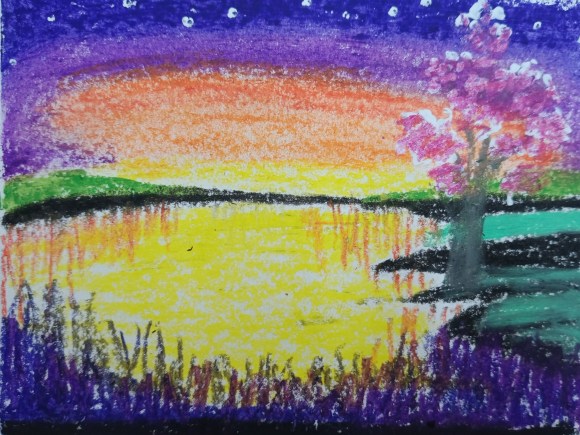
Art by Sohana Manzoor

Editorial

‘I wondered should I go or should I stay…’ …Click here to read.

Translations

Nazrul’s Shoore O Baneer Mala Diye (With a Garland of Tunes and Lyrics) has been translated from Bengali by Professor Fakrul Alam. Click here to read.

Four of his own Malay poems have been translated by Isa Kamari. Click here to read.

Five poems by Satrughna Pandab have been translated to English from Odia by Snehaprava Das. Click here to read.

A Lump Stuck in the Throat, a short story by Nasir Rahim Sohrabi translated from Balochi by Fazal Baloch. Click here to read.

Tagore’s Jatri (Passenger) has been translated from Bengali by Mitali Chakravarty. Click here to read.

Conversation

Keith Lyons in conversation with Harry Ricketts, mentor, poet, essayist and more. Click here to read.

Poetry

Click on the names to read the poems

Harry Ricketts, Luis Cuauhtémoc Berriozábal, Laila Brahmbhatt, John Grey, Saba Zahoor, Diane Webster, Gautham Pradeep, Daniel Gene Barlekamp, Annwesa Abhipsa Pani, Cal Freeman, Smitha Vishwanath,John Swain, Nziku Ann, Anne Whitehouse, Tulip Chowdhury, Ryan Quinn Flangan, Ramzi Albert Rihani, Rhys Hughes

Poets, Poetry & Rhys Hughes

In Said the Spook, Rhys Hughes gives a strange tale around Christmas. Click here to read.

Musings/ Slices from Life

Your call is important to us?

Farouk Gulsara writes of how AI has replaced human interactions in customer service. Click here to read.

Honeymoon Homecoming

Meredith Stephens visits her old haunts in Japan. Click here to read.

Cracking Exams

Gower Bhat discusses the advent of coaching schools in Kashmir for competitive exams for University exams, which seem to be replacing real schools. Click here to read.

The Rule of Maximum Tolerance?

Jun A. Alindogan writes of Filipino norms. Click here to read.

How Two Worlds Intersect

Mohul Bhowmick muses on the diversity and syncretism in Bombay or Mumbai. Click here to read.

Musings of a Copywriter

In The Monitoring Spirit, Devraj Singh Kalsi writes of spooky encounters. Click here to read.

Notes from Japan

In One Thousand Year Story in the Middle of Shikoku, Suzanne Kamata takes us on a train ride through Japan. Click here to read.

Essays

250 Years of Jane Austen: A Tribute

Meenakshi Malhotra pays a tribute to the writer. Click here to read.

Anadi: A Continuum in Art

Ratnottama Sengupta writes of an exhibition curated by her. Click here to read.

Sangam Literature: Timeless Chronicles of an Ancient Civilisation

Ravi Varmman K Kanniappan explores the rich literary heritage of Tamil Nadu. Click here to read.

A Brickfields Christmas Tale

Malachi Edwin Vethamani recounts the flavours of past Christmases in a Malaysian Kampung. Click here to read.

Bhaskar’s Corner

In The Riverine Journey of Bibhuti Patnaik, Bhaskar Parichha pays a tribute to the octegenarian writer. Click here to read.

Stories

Evergreen

Sayan Sarkar gives a climate friendly and fun narrative. Click here to read.

The Crying Man

Marc Rosenberg weaves a narrative around childhood. Click here to read.

How Madhu was Cured of Laziness

Naramsetti Umamaheswararao gives a fable set in Southern India. Click here to read.

Book Excerpts

Excerpt from Ghosted: Delhi’s Haunted Monuments by Eric Chopra. Click here to read.

Excerpt from Leonie’e Leap by Marzia Pasini. Click here to read.

Book Reviews

Rakhi Dalal reviews Anuradha Kumar’s Love and Crime in the Time of Plague. Click here to read.

Andreas Giesbert reviews Ariel Slick’s The Devil Take the Blues: A Southern Gothic Novel. Click here to read.

Gazala Khan reviews Ranu Uniyal’s This Could Be a Love Poem for You. Click here to read.

Bhaskar Parichha reviews Indira Das’s Last Song before Home, translated from Bengali by Bina Biswas. Click here to read.

.

Click here to access the Borderless anthology, Monalisa No Longer Smiles

Click here to access Monalisa No Longer Smiles on Amazon International

Categories
Editorial

‘I wondered should I go or should I stay…’

I flow and fly
with the wind further
still; through time
and newborn worlds…

--‘Limits’ by Luis Cuauhtémoc Berriozábal

In winters, birds migrate. They face no barriers. The sun also shines across fences without any hindrance. Long ago, the late Nirendranath Chakraborty (1924-2018) wrote about a boy, Amalkanti, who wanted to be sunshine. The real world held him back and he became a worker in a dark printing press. Dreams sometimes can come to nought for humanity has enough walls to keep out those who they feel do not ‘belong’ to their way of life or thought. Some even war, kill and violate to secure an exclusive existence. Despite the perpetuation of these fences, people are now forced to emigrate not only to find shelter from the violences of wars but also to find a refuge from climate disasters. These people — the refuge seekers— are referred to as refugees[1]. And yet, there are a few who find it in themselves to waft to new worlds, create with their ideas and redefine norms… for no reason except that they feel a sense of belonging to a culture to which they were not born. These people are often referred to as migrants.

At the close of this year, Keith Lyons brings us one such persona who has found a firm footing in New Zealand. Setting new trends and inspiring others is a writer called Harry Ricketts[2]. He has even shared a poem from his latest collection, Bonfires on the Ice. Ricketts’ poem moves from the personal to the universal as does the poetry of another migrant, Luis Cuauhtémoc Berriozábal, aspiring to a new, more accepting world. While Tulip Chowdhury — who also moved across oceans — prays for peace in a war torn, weather-worn world:

I plant new seeds of dreams
for a peaceful world of tomorrow.

--‘Hopes and Dreams’ by Tulip Chowdhury

We have more poems this month that while showcasing the vibrancy of thoughts bind with the commonality of felt emotions on a variety of issues from Laila Brahmbhatt, John Grey, Saba Zahoor, Diane Webster, Gautham Pradeep, Daniel Gene Barlekamp, Annwesa Abhipsa Pani, Cal Freeman, Smitha Vishwanath, John Swain, Nziku Ann and Anne Whitehouse. Ramzi Albert Rihani makes us sit up by inverting norms while Ryan Quinn Flangan with his distinctive style raises larger questions on the need for attitudinal changes while talking of car parks. Rhys Hughes sprinkles ‘Hughesque’ humour into poetry with traffic jams as he does with his funny spooky narrative around Christmas.

Fiction in this issue reverberates across the world with Marc Rosenberg bringing us a poignant telling centred around childhood, innocence and abuse. Sayan Sarkar gives a witty, captivating, climate-friendly narrative centred around trees. Naramsetti Umamaheswararao weaves a fable set in Southern India.

A story by Nasir Rahim Sohrabi from the dusty landscapes of Balochistan has found its way into our translations too with Fazal Baloch rendering it into English from Balochi. Isa Kamari translates his own Malay poems which echo themes of his powerful novels, A Song of the Wind (2007) and Tweet(2017), both centred around the making of Singapore. Snehaprava Das introduces Odia poems by Satrughna Pandab in English. While Professor Fakrul Alam renders one of Nazrul’s best-loved songs from Bengali to English, Tagore’s translated poem Jatri (Passenger) welcomes prospectives onboard a boat —almost an anti-thesis of his earlier poem ‘Sonar Tori’ (The Golden Boat) where the ferry woman rows off robbing her client.

In reviews, we also have a poetry collection, This Could Be a Love Poem for You by Ranu Uniyal discussed by Gazala Khan. Bhaskar Parichha introduces a book that dwells on aging and mental health issues, Indira Das’s Last Song before Home, translated from Bengali by Bina Biswas. Rakhi Dalal has reviewed Anuradha Kumar’s Love and Crime in the Time of Plague:A Bombay Mystery, a historical mystery novel set in the Bombay of yore, a sequel to her earlier The Kidnapping of Mark Twain. Andreas Giesbert has woven in supernatural lore into this section by introducing Ariel Slick’s The Devil Take the Blues: A Southern Gothic Novel. In our excerpts too, we have ghostly lore with an extract from Ghosted: Delhi’s Haunted Monuments by Eric Chopra. The other excerpt is from Marzia Pasini’s Leonie’s Leap, a YA novel showcasing resilience.

We have plenty of non-fiction this time starting with a tribute to Jane Austen (1775-1817) by Meenakshi Malhotra. Austen turns 250 this year and continues relevant with remakes in not only films but also reimagined with books around her novels — especially Pride and Prejudice (which has even a zombie version). Bhaskar Parichha pays a tribute to writer Bibhuti Patnaik. Ravi Varmman K Kanniappan explores ancient Sangam Literature from Tamil Nadu and Ratnottama Sengupta revisits an art exhibition that draws bridges across time… an exploration she herself curated.

Suzanne Kamata takes us on a train journey through historical Japan and Meredith Stephens finds joy in visiting friends and living in a two-hundred-year-old house from the Edo period[3]. Mohul Bhowmick introduces a syncretic and cosmopolitan Bombay (now Mumbai). Gower Bhat gives his opinion on examination systems in Kashmir, which echoes issues faced across the world while Jun A. Alindogan raises concerns over Filipino norms.

Farouk Gulsara — with his dry humour — critiques the growing dependence on artificial intelligence (or the lack of it). Devraj Singh Kalsi again shares a spooky adventure in a funny vein while Malachi Edwin Vethamani woos us with syncretic colours of Christmas during his childhood in Brickfields, Malaysia — a narrative woven with his own poems and nostalgia.

We have a spray of colours from across almost all the continents in our pages this time. A bumper issue again — for which all of the contributors have our heartfelt thanks. Huge thanks to our fabulous team who pitch in to make a vibrant issue for all of us. A special thanks to Sohana Manzoor for the fabulous artwork. And as our readers continue to grow in numbers by leap and bounds, I would want to thank you all for visiting our content! Introduce your friends too if you like what you find and do remember to pause by this issue’s contents page.

Wish all of you happy reading through the holiday season!

Best wishes,

Mitali Chakravarty

borderlessjournal.com

CLICK HERE TO ACCESS THE CONTENTS FOR THE DECEMBER 2025 ISSUE.

[1] UNHCR Refugees

[2] Harry Ricketts born and educated in  England moved to New Zealand.

[3] Edo period in Japan (1603-1868)

.

READ THE LATEST UPDATES ON THE FIRST BORDERLESS ANTHOLOGY, MONALISA NO LONGER SMILES, BY CLICKING ON THIS LINK.

Categories
Poetry

Poetry by Daniel Gene Barlekamp

Daniel Gene Barlekamp
TWO QUESTIONS AND AN ANSWER


i

“Which cloud is God on?”
the boy asks.

“I don’t know,”
his mother says,
fiddling with the radio.

Outside the window,
a cemetery rolls by.

ii

“What happens when you die?”
the boy asks.

“The worms eat you,”
his mother says.

His father joins in,
singing:
“The worms crawl in,
the worms crawl out…”

Inside the boy’s chest
blooms a fear
that wasn’t there
before.


DOWNTOWN, FUNERAL HOME, 6PM

There’s a wake tonight.
About now the few mourners
will be dusting off the black dresses and navy suits
they save for these occasions,
wondering how quickly they’ll be able to leave
without being rude.
Meanwhile, I’m digging through a shoe box
looking for a photo to prop
on the easel
by the coffin.

Nothing jumps out.

He had no Golden 50th,
no Viking Cruise,
no banquet with veal parm and chardonnay.
So I’ll stand around with my hands in my pockets
and watch the headlights of the passing cars
pierce the lace curtains,
unsure whether to smile or look sad
while the guests mingle in drab clusters
trying not to glance toward the front of the room
as they edge their way to the door
and out into the night
where they’ll sigh with relief, order pizzas,
and drive home to binge Netflix.


CAVERNOUS GLOOM

water echoes—
quiet corridors
of cavernous gloom


EARLY BIRD

I used to stay up late
looking for grit, for neon, for blood
until you brought me to the hour
when the water is at its bluest,
taught me the difference
between the flicker and the woodpecker,
showed me
how the leaves are greenest on a cloudy day,
and now I look for the light
as it leaches into a lifeless sky,
taking your hand
and welcoming the lessons of the day.


AFTER THE PARTY

For me, the real party starts after everyone has gone,
after we’ve washed down the pizza and sheet cake with cheap decaf
and hauled out the black bag of paper plates, hats, and napkins into the February night
and finally settled in the quiet dark of your room
to listen to Johnny Cash
and admire the blinking lights of Boston in the distance
and promise each other to visit a lighthouse
once the spring sun melts the icy crust of Maine,
a promise that keeps me warm as you charge into your third year with blind joy
and wisdom far greater than mine.

Daniel Gene Barlekamp writes poetry, fiction, and audio drama for adults and young readers. He lives with his wife and son in Massachusetts, where he practices immigration law. Website: https://dgbarlekamp.com/.

.

PLEASE NOTE: ARTICLES CAN ONLY BE REPRODUCED IN OTHER SITES WITH DUE ACKNOWLEDGEMENT TO BORDERLESS JOURNAL

Click here to access the Borderless anthology, Monalisa No Longer Smiles

Click here to access Monalisa No Longer Smiles on Kindle Amazon International