Categories
Review

Little, Lhasa, Shangrila and More in the Heart of India

Books Reviewed by Somdatta Mandal
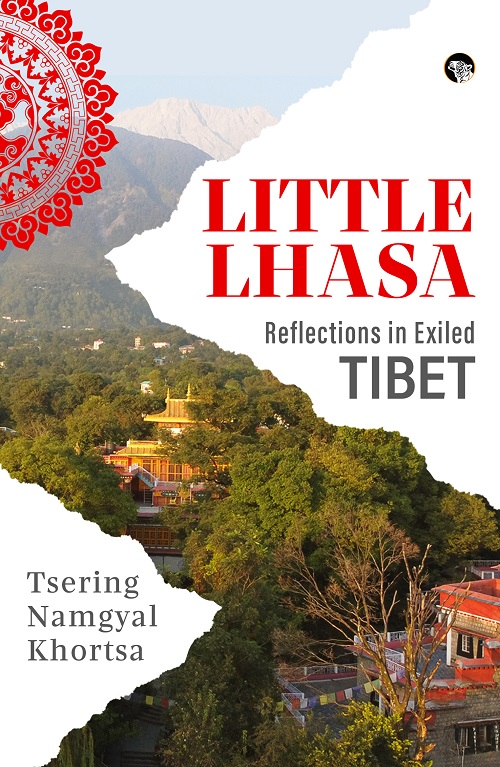
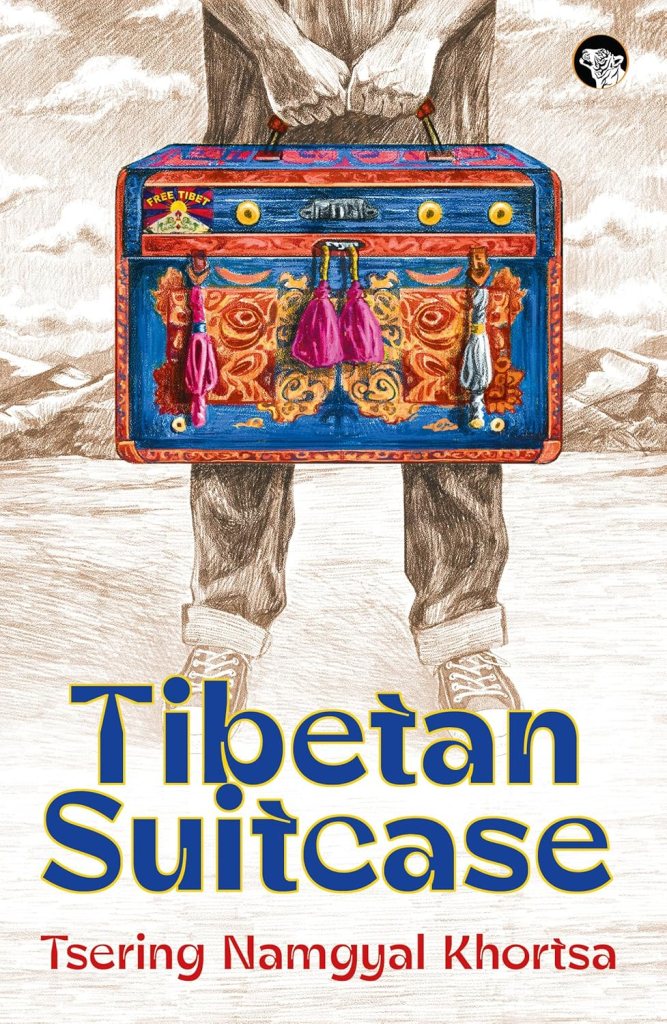
Titles: Little Lhasa: Reflections in Exiled Tibet and Tibetan Suitcase

Author: Tsering Namgyal Khortsa

Publisher: Speaking Tiger Books

Following the forced escape of His Holiness the Dalai Lama in March 1959, thousands of Tibetans were forced to flee Tibet, and it was these refugees who formed the early exiled community. The refugee community now stands at a figure of around 130,000, with Tibetans spread across numerous settlements in India, Nepal and Bhutan, and thousands more displaced all around the world. The Tibetan government in exile is based in Dharamsala, India. It is called the Central Tibetan Administration (CTA) and was founded in 1959 by the 14th Dalai Lama. In the 1980s, a second wave of Tibetans fled due to political repression. The CTA advocates for human rights, self-determination, and the preservation of religion and culture for Tibetans. The CTA has a parliament, judiciary, and executive branch and its principles include truth, non-violence, and genuine democracy. The Dalai Lama has said that the exile administration would be dissolved as soon as freedom is restored in Tibet.

After over seventy years of being in exile, a whole generation of Tibetans have come of age in a land far from home. With the Dalai Lama and other great masters as their spiritual guides, they have grown up cut off from their homeland. Their experiences have been unique, as they have, despite globalization, kept alive their religion and culture. In Little Lhasa: Reflections in Exiled Tibet, Tsering Namgyal Khortsa writes comprehensively about the different aspects of their life today. Comprising of ten essays and six interviews, this volume becomes an eye-opener on the multifarious aspects of the present situation of Tibetans at large. Beginning with different writers writing about Tibet and exile in the very first essay titled ‘Little Lhasa’, the next one ‘Shangrila Online’ tells us about the role of social media, internet cafes and how technology in remote Dharamsala often enables one to participate in other people’s experiences in real time. The writer describes in detail how such lifestyle changes in contemporary times have enabled the creation of a “virtual Tibet”. In the next essay ‘Buddha’s Children’, Khortsa describes the young generation of exiled children in India and how their religious identity has triumphed over all other identities. We are also told about the different kinds of foreigners who come to India to take religious courses, and the writer wonders whether they go home feeling merely inspired by their visit to India and their meetings with Tibetan masters or whether such exposure and experience actually triggers a paradigm shift in the way they view the world.  

In the next essay we are told how Tibetans lead demonstrations in Dharamsala and other parts of India every year, especially the one held on March 10th  that commemorates the anniversary of the failed uprising against Chinese invasion. ‘Movies and Meditation’ mentions a film festival in Dharamsala which reveals how recent Tibetan films highlight a growing and vibrant filmmaking community within the Tibetan diaspora, but Khortsa laments the paucity of full-length films about Tibetans in exile and the issues they confront, namely patriotism, individualism, and reconciliation of personal fulfilment with the Tibetan cause. The titles of the three following essays, ‘Dharma Talk’, ‘The Lure of India’ and ‘The Monk at Manali’ are self-explanatory. The last essay of this section ‘Nation of Stories’ tells us about writers who write and publish in the English language, and though diverse in terms of their education, upbringing, background and geographical location, one common condition that they all share is the collective trauma of the Chinese occupation of Tibet, which is invariably a leitmotif in Tibetan literature.

Part Two consists of six interviews, each one different in perspective than the other, and they must be mentioned here to understand the kaleidoscopic nature of the people involved in the Tibetan cause. Thus, we have conversations with Lisa Gray as ‘A Western Buddhist’, Ananda Nand Agnihotri as ‘An Indian Tibetan Buddhist,’ Ngawang Woeber, ‘An Ex-Political Prisoner’, Nyima Dhondup, ‘A Swiss Tibetan’, Tenzing Sonam, ‘A Tibetan Writer and Filmmaker’ and Tenphun, ‘The Tibetan Poet’. All in all, Little Lhasa becomes a valuable record of the life of a people who refuse to bow down or forget, and even while adapting to a rapidly changing world, continue to nurture their roots.

II

After the non-fiction, Tsering Namgyal Khortsa comes up with a brilliant piece of fiction and read together, each text complements the other beautifully. In the ‘Editor’s Note’ at the very beginning of the novel Tibetan Suitcase, Tsering Namgyal Khortsa tells us that while he was working as a business journalist in Hong Kong he once ran into Dawa Tashi, an old acquaintance and an aspiring novelist from Dharamsala, India who was working as a meditation teacher and was quite busy with his job. He had a suitcase full of letters and documents and wanted him to turn the contents of the suitcase into a book. After going through the collection, Khortsa discovered that the contents of the suitcase, if organized with care and discipline, could indeed make for an epistolary novel. So, he declares that except for correcting a few typos here and there and add note and datelines to the letters, he had not done anything. He also categorically states, “None of the letters are mine, except some entries that I wrote, making the book partly fictionalized.” He also wanted to leave room for readers to imagine (or ‘feel’ for themselves) what is not mentioned in the book, in deference to the Tibetan culture of reticence and taciturnity, rather than turning himself into an all-knowing chatterbox.

Tibetan Suitcase is a remarkable novel about the peripatetic Tibetan community in exile. It is divided into six parts, beginning roughly from 1995 to 2000. It opens in Hong Kong where a tycoon Peter Wong opens a meditation centre and employs Dawa Tashi, our protagonist as a meditation teacher and a guru, though he is not really trained to be a lama. Dawa Tashi is an India-born Tibetan. His parents fled Tibet when the Chinese invaded, and Dawa has grown up in the quiet, verdant Indian Himalayas. When Dawa applies to a well-known university in America (Appleton University in Wisconsin) to pursue a course in creative writing, his hitherto ordinary life changes dramatically. At the university he befriends, and falls in love with, Iris Pennington, an unusual American student who is studying Buddhist literature. He also comes in contact with Khenchen Sangpo, a renowned scholar of Buddhism and a reincarnated Rinpoche himself. Circumstances lead Dawa back to India too soon, but the connections he makes take his life into many new directions. Some, with Iris and Khenchen, take him deeper into the mystical and mysterious world of Buddhist scholarship. Other journeys take him back to his roots, making him question his life’s directions.

Apart from the interesting incidents and characters we meet in the first four parts of the novel, Part Five is an exceptionally engrossing to read. Beginning with the reportage in the Fall Issue of the journal Meridian, which is edited by Brent Rinehart, we are told that on his seventy-ninth birthday Khenchen decided that he had to go back to Tibet to see his native land. Having gained a quick residency status in the United States, and possessing an American passport, Khenchen still had many relatives in Tibet, some of them quite alive and well, despite the Chinese occupation. He travels to Lhasa in 1996 and goes for a trip to Lake Manasarovar but things take a different turn when he is arrested by the Chinese authority because he was apparently “endangering national security”. What follows are different press releases from the US Statement Department, reports from the International Association of Tibetan Studies in London, address by the President of Appleton University and as Iris writes to Dawa, she never expected herself to be so politically involved and “did not realize Tibet was such a political subject”. It was ironic that one of the world’s most spiritual places was one of its most burning political issues. Tibet might be a small place, but it has a reasonably big space in the collective consciousness of the world. Of course, Khenchen Sangpo is ultimately released and without disclosing the actual ending of the novel, which in a circular fashion ends in Hong Kong from where it began, many loose ends are tied up and life came to a full circle for everybody, especially for Iris Pennington who finally managed to find her roots.

Both the non-fiction and the fiction book by Tsering Namgyal Khortsa prove to be eye-openers for all readers who have very little knowledge about the sorrow and plight of the uprooted Tibetans who live in exile and many of whom do not even have a country to call their own. Based in Dehradun, India at present, Khortsa’s narratives are so powerful that it has aptly prompted Speaking Tiger Books to reprint the updated versions of both the books in 2024 and one can call it a yeoman service to readers both serious and casual. A must read.

.

Somdatta Mandal, critic and translator, is a former Professor of English at Visva-Bharati, Santiniketan, India.

.

PLEASE NOTE: ARTICLES CAN ONLY BE REPRODUCED IN OTHER SITES WITH DUE ACKNOWLEDGEMENT TO BORDERLESS JOURNAL

Click here to access the Borderless anthology, Monalisa No Longer Smiles

Click here to access Monalisa No Longer Smiles on Amazon International
Categories
Review

Mapping Raghu Rai: A Photo Journalist’s Journey

Book Review by Malashri Lal

Title: Raghu Rai: Waiting for the Divine

Author: Rachna Singh

Publisher: Hawakal Publishers

“My story should remain simple, step by step, click by click.”   -- Raghu Rai

Rachna Singh, notebook and recorder tucked in her bag, pen in hand, first meets Raghu Rai in his picturesque home nestled in the Mehrauli forest of New Delhi, a landscape with occasional medieval structures peeping through the trees. Away from a concrete encrusted city, Rachna, a patient biographer, knows that the legendary photographer whose images shaped the visual progress of a nation, has his own deep stories.  But will he reveal them? She pries the tales open by carving pathways through Raghu Rai’s photos— and a remarkable book about the person behind the camera is captured by a literary image-maker, in this sensitive, tender, and insightful biography. Rai permeates  a series of chapters that play intricate games with memory because every frame in the camera is connected to myriad threads of experience.

Since the book is sub-titled “Waiting for the Divine”, I naturally look for references to Mother Teresa and the Dalai Lama to discover how the transcendent power of Raghu Rai’s photos of these two personages emerged. Entry into sacred precincts is never easy, and a camera in hand signals a definite obstacle. However, at the Sisters of Charity in Kolkata the photographer is permitted to follow the Mother unobtrusively. Yet, when a curtain flutters to reveal angel-like nuns and Rai dives to the floor to catch the best angle and the right light, even the Mother’s equanimity breaks and she is aghast! From such “shadowing” emerges the divine photograph titled “Mother Teresa in Prayer” with every crease in the luminous face catching the glow, an expression transporting her to realms beyond ordinary comprehension.

If Raghu Rai’s association with Mother Teresa is marked by reverence, his link with His Holiness the Dalai Lama is marked by friendship—one that extends to warm handshakes and brotherly embrace, informal conversations and a conviction about universal compassion. Says Rai, “His Holiness is an uninhibited, wonderfully loving man. How gracious of him to say he is my friend.” Again, it is the camera lens that reveals remarkable facets of the Dalai Lama– his childlike smile as also the sombre spiritual leader of a people in exile. Rachna Singh recounts an almost surreal story of a protective stone gifted to Rai by His Holiness that saw him survive a severe heart condition of ninety percent blockage while still chasing images of a crowded procession!

This takes me back to Rachna Singh’s intention, “My book is not a third-person memoir nor a chronological recounting of Raghu Rai’s life. Instead, it unfolds through candid conversations, inviting the readers into an intimate dialogue.” The reader’s response being part of her textual strategy, I too could add my account of the mystical energy felt in the presence of the Dalai Lama. The book’s attraction lies in this fluidity of the biographer, her subject and the reader being part of the evolving discussion of the deep philosophical pool from which photos are created. The trajectory of Raghu Rai’s life is well known—the photo journalist with The Statesman and India Today; his famous photo essays in the international magazines Time, Life, The New Yorker and numerous others, the award of a Padma Shri, his eminent friends and compeers, but Rachna Singh’s book probes Rai’s mind, his consciousness, his search and his beliefs. Therefore, it offers gems of information through anecdotes and the atmospherics of events, and some delectable quotations in Punjabi and English.

I turn here to Raghu Rai’s series on the Bhopal gas leak of 1984. “The black and white picture of a dead child, eyes open, staring sightlessly into space, lying in the rubble with a hand gently caressing the ravaged face in farewell,” describes Rachna, calling Rai a ‘Braveheart’ who painted a “searing picture of the tragedy.” The conversation is strangely matter of fact as though both the biographer and her subject are numbed by the enormity of that night of terror. Did Rai fear for his health or safety in the toxic air? The answer is “No” because the human pain around was greater than the instinct for self-preservation. All the journalists visited the mass cremations, the hospitals, the dead and the dying as though it was a “job”, Rai being practical enough to say, “You cannot let your spirit turn soggy with emotion.” Those of us who read of such tragedies and see photos in newspapers while sipping our morning tea should admire the intrepid people providing the raw material from ground zero.

Another memorable series was on Bangladesh refugees after the 1971 war—emaciated women and men often carrying sick children in baskets. Rai had been in the frontlines of the war and had once been surrounded by a hostile mob. Rachna is on tenterhooks as he narrates the details but he declared “I was more excited than scared … there was actually no time to feel scared.” At one time he even smiles and says, “It was a lot of fun.” Which brings me to probe the extraordinary grit and strength of photo journalists or reporters from war zones. Where does compassion and newsworthiness meet? Is image more important than the decimated human body? What lasting imprint does such witnessing leave?

Perhaps the answer lies in Raghu Rai’s quest for the Divine—beyond image, outside time. He was born in pre-partition India, in the village of Jhang that is now in Pakistan. He speaks haltingly of the childhood terrors—homes in flames, of escape in the pre-dawn—Rachna notes the tremor in his voice and the reluctance to recall those years. Yet she astutely links Rai’s portrayals of hurt and human sorrow, his sensitivity yet distancing from those early experiences. Finally, it’s been a holistic calm. Rai is quoted: “Photography has been my entire life—it has, in fact become my religion, a faith to which I have dedicated myself completely. My craft led me toward a meditative path that gave me insights to life and the divine.” And that quest bridges the beatific and the aesthetics in this most commendable book.

Malashri Lal, writer and academic, with twenty four  books, retired as Professor, English Department,  University of Delhi. Publications include Tagore and the Feminine, and The Law of the Threshold: Women Writers in Indian English. Co-edited with Namita Gokhale is the ‘goddess trilogy’, and also Betrayed by Hope: A Play on the Life of Michael Madhusudan Dutt  which received the Kalinga Fiction Award.  Lal’s poems Mandalas of Time has recently been translated into Hindi as Mandal Dhwani. She is currently Convener, English Advisory Board of the Sahitya Akademi. Honours include the prestigious ‘Maharani Gayatri Devi Award for Women’s Excellence’.

PLEASE NOTE: ARTICLES CAN ONLY BE REPRODUCED IN OTHER SITES WITH DUE ACKNOWLEDGEMENT TO BORDERLESS JOURNAL

Click here to access the Borderless anthology, Monalisa No Longer Smiles

Click here to access Monalisa No Longer Smiles on Kindle Amazon International

Categories
Poetry

Poetry by Jason Ryberg

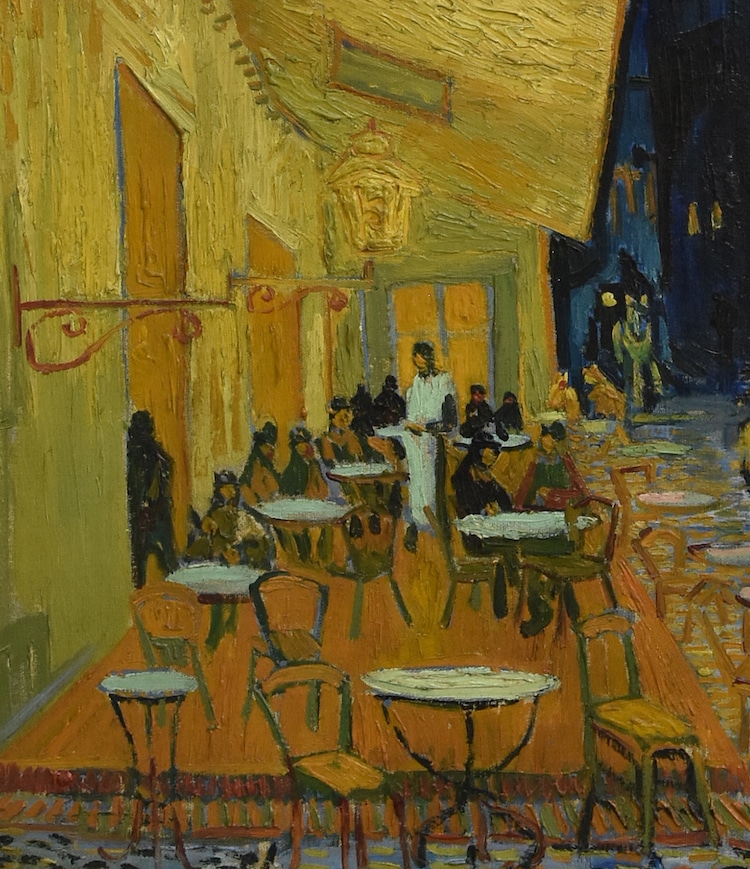
Cafe Terrace by Vincent Van Gogh (1853-1890) From Public Domain
MAKING THE ROUNDS 


You
can
see the
pink street lights
coming on at that
exact point where late afternoon
makes the exchange with early evening and you can
still smell the White Magnolias in the night wind
as it sweeps the sky clean of any last
clouds, and the streets are all deserted now except for
cats and crows and the odd patrol
car out making their
rounds. And some-
where
not
too
far
from here,
someone is
playing the cello.


ON-HOLD

Eight hours on-hold with
Public Assistance would make
the Dalai Lama
madder than a rattlesnake
caught in a hot clothes dryer.


NEVER GET OUT OF THE GODDAMN BOAT!
(Sleight Return)

It’s a wet, grey morning in mid-December, here in South
Central Missouri (the less fashionable foot-hills of the
Ozarks as it’s known by some), not exactly pouring, but
a fairly constant and consistent plip, plip, plipping, and not
exactly warm, but an unseasonably tropical 50-some-odd
degrees (almost balmy, you might say, for this time of year,
anyway) and I have only just woken from a strange surrealist
montage of dreams, broken by the sudden subterranean
trainyard rumble of thunder (though there haven’t been any
trains in these parts for decades); dreams of deer roaming
and snuffling, freely, through the sleeping streets of Kansas
City, Missouri, dreams of star charts on my inner eye- lids,
milk-white phantom dreams, blue-black storm dreams where-
in, every night, I go up the snaking circuit cable of the river,
and every night I get out of the boat and walk deep into the
sweating jungle to confront what must be my inner nemesis,
only to be stalked and devoured, again and again, by the
brightly burning tiger’s fearful symmetry.

Jason Ryberg is the author of eighteen books of poetry, six screenplays, a few short stories, a box full of folders, notebooks and scraps of paper that could one day be (loosely) construed as a novel, and, a couple of angry letters to various magazine and newspaper editors. He is currently an artist-in-residence at both The Prospero Institute of Disquieted P/o/e/t/i/c/s and the Osage Arts Community, and is an editor and designer at Spartan Books. His latest collection of poems is Kicking Up the Dust, Calling Down the Lightning (Grindstone Press, 2023). He lives part-time in Kansas City, MO with a rooster named Little Red and a Billy-goat named Giuseppe and part-time somewhere in the Ozarks, near the Gasconade River, where there are also many strange and wonderful woodland critters. 

PLEASE NOTE: ARTICLES CAN ONLY BE REPRODUCED IN OTHER SITES WITH DUE ACKNOWLEDGEMENT TO BORDERLESS JOURNAL. 

Click here to access the Borderless anthology, Monalisa No Longer Smiles

Click here to access Monalisa No Longer Smiles on Kindle Amazon International

Categories
Conversation

Roads Less Travelled

If he had stayed in his first job as a bank clerk, perhaps Tomaž Serafi would never have discovered new worlds beyond the borders of the small central European country he grew up in. But he ventured out to find both ancient wisdom and inner truths. He talks to an old friend Keith Lyons.

In Mahayana Buddhism, there is a term ‘Bodhisattva’ for those who reach the threshold of enlightenment, but choose instead to remain behind delaying personal liberation, to dedicate themselves to the benefit of others. To me, Tomaž Serafi is like a compassionate Bodhisattva, gently opening doors for others, and encouraging them to go through. 

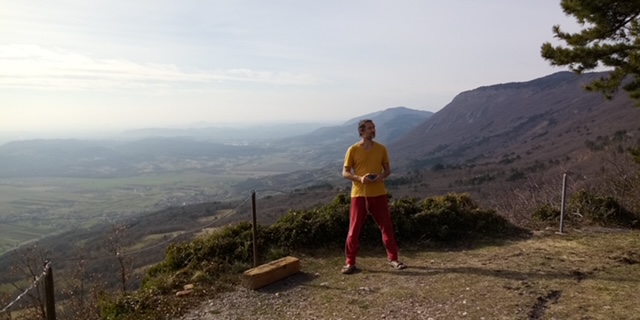
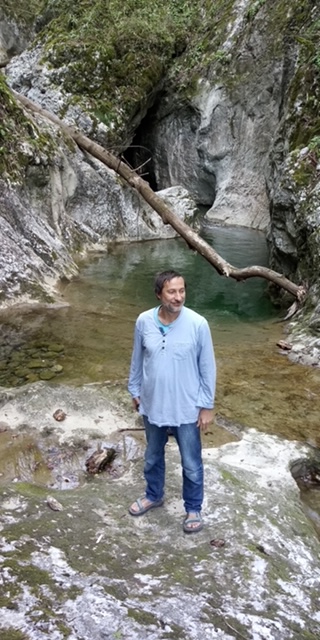
But then, what do I know? I first met Tomaž more than 20 years ago, connected by a woman we loved. But when I recently scanned a map of Europe, one of the first things that came to mind was that in a modest apartment overlooking the Ljubljanica River near the heart of Slovenia’s capital, Tomaž was doing his thing, living his life to the fullest, letting his light shine. 

He doesn’t just feature in my own personal geography or spiritual map of the world. Over the last two decades when travelling in Asia or Australasia I’ve come across people from Ljubljana, and on too many occasions, it turns out they also know Tomaž. 

What can you tell us about where you live, in Ljubljana?

Ljubljana is located in the heart of Europe, nestled between Italy, Austria, Hungary, Croatia, and the Adriatic Sea. Slovenia’s capital city is neither large nor small, with a population of 300,000. It’s a delightful place to reside, featuring a vibrant community of young people, and hosting numerous cultural events.

Ljubljana. Courtesy: Creative Commons

I live in the city centre, right alongside the picturesque green river known as the Ljubljanica. From my window, I enjoy a spectacular view of Ljubljana’s castle perched atop a hill and the flowing river. If I wish to take a stroll in nature, there’s a forest just a 3-minute walk from my house in one direction and 15 minutes in the other. Even in the city centre, there are plenty of trees and green spaces.

Ljubljana is a hidden gem in Europe, and not many people know about its story. What can you say about the country and its people?

When I was born in 1962 Slovenia was a part of Yugoslavia, which was a non-aligned country, not affiliated with either the capitalist Western bloc or the communist Eastern bloc. Yugoslavia was a socialist country, somewhere between communism and capitalism. It was wealthier than communist countries but not as affluent as capitalist ones. Back then, we didn’t have much, but there were no truly impoverished people. Nobody was starving, and nobody was wealthy. 

Today, we have a significant number of very wealthy individuals alongside many who are extremely poor, struggling with hunger and homelessness. Presently, life in Slovenia is not significantly different from that in other European countries.

What was it like for you growing up in the 1960s and 1970s in Slovenia?

Back then, we didn’t have cell phones and computers, so we spent most of our time outdoors playing with friends. We played games like hide and seek and competed to see who could run the fastest, jump the highest, climb the highest tree, and so on. When I was a child, I either played outside with friends or read books. 

Where did reading books take you?

Books became my passion from the moment I learned how to read. Through books, I learned about other places on Earth and different cultures. I especially adored books about Native Americans. I read all of Karl May’s  books [1]– Apache chief Winnetou was my number one hero.

So your interest in the whole wide world came from books?

Yes, my love of books furthered my fascination with other cultures. I’ve always been an avid reader. When I recognised that our own culture was not faring well, that it was troubled and leading us toward a precipice, I became curious about other cultures, especially indigenous ones. I began to delve into literature about Native American, Aboriginal, Celtic, and other cultures, exploring their spirituality and beliefs.

What put you on a path of exploring spirituality?

When I was 15, I fell off a rock wall in a canyon while I was climbing, plummeting 15 meters to the ground. I lay there, unable to move, and had to be rescued and taken to the hospital. Fortunately, it turned out that nothing was broken, but that incident profoundly changed my life. I began to contemplate the concepts of life and death. Death came close, examined me, and decided to spare me for a while longer. 

Since that moment, I haven’t been afraid of death anymore. I also started pondering the meaning of life, which became the most significant question for me: What is the meaning of life? That question guided me towards spirituality and spiritual growth. Ever since, spirituality has been the most vital aspect of my life, (alongside, of course, the elements of sex, drugs, and rock and roll).

How were your first experiences venturing overseas?

My first journey took place when I was 15 years old, and I hitchhiked through Europe. I passed through Italy, and in Genoa, I attempted to buy marijuana. I gave money to a guy who entered a house but never returned. It was only then that I realised he had exited through another entrance at the back of the house.

Later in the Côte d’Azur, I purchased LSD, only to discover that I had received plain candy instead. In Nice, I was robbed by a group of 14-year-old Algerians. While hitchhiking on the highway outside of Paris, a large truck deliberately ran over my backpack, scattering all my belongings on the road. Moments later, the police arrived and informed me that hitchhiking on the highway was prohibited. When I showed them what had happened to my backpack, they simply shrugged and drove away.

In Brittany, a kind couple invited me to sleep in their house because it was raining, and I had intended to sleep outside in my sleeping bag. In Paris, a young man around 20-years-old invited me to stay in his apartment, but as we shared the same bed, he tried to put his hand into my underwear. 

From these experiences, I learned that I couldn’t trust everyone and that I needed to be cautious. I also discovered that some people are incredibly generous and trustworthy. Most importantly, I learned that I am the master of my life, and it’s best to rely on myself. I also realized that the world is vast, and not every place is the same as my small Slovenia. I encountered people of various nationalities and skin colours, broadening my horizons. I understood that a person’s nationality doesn’t matter; fundamentally, we are all the same. In every country, there are both good and not-so-nice people. But regardless of where they are, everyone shares the same desire: to find happiness.

Has your style of travel changed over time from those first adventures in Europe?

When I was younger, I was restless and eager to explore as many places as possible, often staying in one place for no more than a day or two. However, as time went on, I came to realise that the longer I remain in one location, the more fulfilling it becomes. I grow more peaceful and content, and it’s only then that I can truly savour and fully immerse myself in the experiences.

I also came to understand that the slower I travel, the more profoundly I connect with the landscapes I traverse. When I travel by car, it feels like I’m merely watching the scenery on a television screen. Travelling by bicycle is a much richer experience. Walking on foot is even better, as I absorb every step of the journey. Travelling by public transport has its own appeal. On a bus, I can keenly observe the locals, their personalities, and their customs, which offers a splendid perspective on the places I visit.

What has been a really memorable travel experience for you?

One of the most memorable places that I visited in Ghana was a village called Sonyon. I was travelling by bicycle, and wherever I went, I would tell the people that I wasn’t a tourist but a pilgrim who had come to bestow blessings upon them. You can only reach this village on foot or by bicycle. Later, I learned that it’s a spiritual village where people from all over come to heal or achieve specific goals. They perform offerings, and then conduct certain ceremonies, and they say it has a powerful effect. 

The houses in this village are single-story, made of mud, and have flat roofs. They are built close together, so in the evening, the villagers go up to the roofs, where it’s cooler due to a gentle breeze, and they walk around the village from house to house, like on a promenade. They even sleep there sometimes. I lay on the roof, and children came up and started touching me because they were curious about my white skin. I lay on my stomach, patted my back, and said, “You can touch me here,” and they began to stroke and massage me. It was a fantastic feeling, like being caressed and massaged by five or six children! 

And how about when travelling in my home country, New Zealand?

One of the most memorable experiences during my first trip to New Zealand’s North Island was while stopping for a short break near a magnificent coastline while hitchhiking. I wanted to stay there for a while. So, I headed towards the coast, found a suitable spot, and set up camp. I spent quite a few days there. I was truly enjoying myself. I remained naked throughout the experience, frequently leaping into the water, singing loudly, dancing, and engaging in meditation, among other activities. 

Then I was walking for a long time and eventually, I ran out of water and food. With my last bit of strength, I managed to reach the top of a hill. According to the information in my book, I should have soon come across the first settlement along the way. However, the path had disappeared. Tall grass had grown all around me. I climbed onto a rock and saw a belt of forest nearby, with a path beyond it. I headed towards the forest. Wild boars ran past me. The forest was so overgrown that it took me an hour to reach a path about a hundred meters away. I was dirty and scratched, my clothes were torn, and I was hungry and thirsty. It was Christmas Eve.

Soon, I heard human voices and saw a holiday trailer. People were having a picnic. I asked them if I was heading in the right direction towards the main road. They confirmed it and said, “Wait a minute. Are you thirsty, or hungry? Have a beer. It’s Christmas Eve.” I stayed with them. Soon, Māori friends joined them. We sat around the fire, ate and drank, talked, an elderly Māori woman shared stories of their spirituality and sang their songs, and I sang some of ours. I couldn’t have asked for a better Christmas gift.

Let’s go back to your earlier existence. What happened for you to give up a career working in a bank?

It all began with Illusions (1989) by Richard Bach. I was still employed at a bank when I came across this book – and it had a profound impact on me. It meant so much to me that I made a personal commitment to translate it, despite having no prior experience in translation. And so, I translated it. Subsequently, I submitted my translation to all the publishers in Slovenia, but unfortunately, none of them were interested (back then, the book didn’t align with the socialist Yugoslavia prevailing system). Undeterred, I took matters into my own hands. I photocopied 200 copies of my translation and sold them independently. With the proceeds from those sales, I was able to print an additional 500 copies. To my surprise, I found that I was earning more from these efforts than I would have if a publishing house had purchased my translation.

This realization led me to make a life-altering decision—I left my job at the bank and embarked on a journey of translating and publishing other books that I believed had the power to touch people’s hearts and were of great importance. Authors such as Kahlil Gibran, J.R.R. Tolkien, the Dalai Lama, Louise Hay, William Bloom, Paul Solomon, Dan Millman, and Lobsang Rampa were just a few of the writers whose works I translated and shared with the Slovenian audience.

What do you think is the purpose of your life?

When I was going through a very difficult period in my life and couldn’t sleep one night, I went to the balcony and suddenly heard a voice loudly asking me, “Tomaž, why are you here, why did you come to this world?” Suddenly, it dawned on me, and I replied, “I came here to be happy!” The voice replied, “That’s right, Tomaž. Now, take a look at yourself. Are you happy?”

That’s when I decided to be happy. Once I made that decision, I stuck to it, and I truly was happy.

Later, many years later, I realised that I didn’t just come to be happy. I discovered that I’m even happier and more fulfilled when I make someone else happy. Gradually, I realised that my mission is to help others. I help them in various ways. At one point, I helped by translating and publishing books that benefited them. Later, I assisted them with counselling at the New Age Information Centre, which I founded. Now, I help them with therapeutic massages, with conscious and loving touch.

So what’s your superpower?

My superpower is undoubtedly my touch. However, this transforms into true power only when I am fully aware of it and fill it with love. In fact, my superpower is the awareness that everything is one, that all that exists, the entire universe, and all the things and beings that fill it, both material and immaterial, are actually one vast super being or God.

What things do you do most days to keep you balanced?

For a long time now, I’ve had a morning routine that fulfils me and makes mornings the most beautiful part of my day. When I wake up, I first express gratitude for the night and greet the new day that lies ahead, even before I open my eyes. Then I engage in exercise. I limber up all my joints, perform tantric exercises, breathing exercises, practice yoga, tai chi, and chi gong. 

Afterwards, I sit down to meditate and spend some time in silence. Only then am I prepared for the day’s responsibilities. Similarly, in the evening, when I close my eyes, I give thanks for the day I’ve lived and bid goodnight to the night that approaches. 

How do you think you’ve made an impact on the lives of others?

When I was publishing books, I received a lot of feedback from my customers which made my heart sing. Some were praising my translations, and some were thankful that I decided to publish such beautiful and meaningful books. 

I receive even more grateful feedback from the people I massage. One client commented “I was led to the place where everything just is and exists.” And, Frida, gave me this wonderful endorsement, “For a moment you caught me in timelessness that lasted and lasted. My body was dancing under your loving hands and melted with your grace. Thank you for this magical experience. Your love for the work you are doing and for the people can be felt and it is healing.”

Recently I received this feedback, with the person saying “This was not an ordinary massage. Tomaž’s gentle presence made me feel safe, so I entrusted him with my process.” Another wrote “Tomaž, your creation is truly something special. You’ve given the world a wonderful gift, and I thank you for it.” I’m grateful to people like Medeja who thank me by saying “As if a flock of angels, completely devoted and determined angels, guided me through all possible processes — fears, pains, freedom, love, and beauty — and brought me to their home, where it is so beautiful and pleasant that there are no words to replace this feeling.”

What are the most important things you’ve learned?

I’ve learned that the most important thing for me is to live my soul.

I’ve also learned that no one is more important than another, that there is no good or bad, and that life isnot serious; rather, everything is like dust in the wind of the Universe, or as I like to say, “chickenshit.”

The most fulfilling action one can take is to help others because it brings genuine joy. As socialbeings, our connections with others are the most crucial aspects of life, far surpassing thesignificance of material possessions.

If you have a message or advice for others, what would it be?

Don’t worry; life is not so serious. Follow your heart and live your soul. Be yourself; you don’t have to be somebody else, you don’t have to pretend to be somebody else. Everything is changing; nothing is permanent; everything will end or transform. Live fully, live, and be aware of every moment of your life. That’s why we are here: to live our life fully, to experience everything from joy to sadness, from anger to love, from despair to fulfilment. And to be aware of all of this.

website: singingheart.weebly.com
Email: tomaz.serafi@gmail.com

[1] Karl May( 1842-1912) German author. Winnetou was a novel by him.

Keith Lyons (keithlyons.net) is an award-winning writer and creative writing mentor originally from New Zealand who has spent a quarter of his existence living and working in Asia including southwest China, Myanmar and Bali. His Venn diagram of happiness features the aroma of freshly-roasted coffee, the negative ions of the natural world including moving water, and connecting with others in meaningful ways. A Contributing Editor on Borderless journal’s Editorial Board, his work has appeared in Borderless since its early days, and his writing featured in the anthology Monalisa No Longer Smiles.

PLEASE NOTE: ARTICLES CAN ONLY BE REPRODUCED IN OTHER SITES WITH DUE ACKNOWLEDGEMENT TO BORDERLESS JOURNAL. 

Click here to access the Borderless anthology, Monalisa No Longer Smiles

Click here to access Monalisa No Longer Smiles on Kindle Amazon International

Categories
Review

Of the Raj, Maharajas and Me

Book Review by Bhaskar Parichha


Title: Of the Raj, Maharajas and Me

Author: MA Sreenivasan

Publisher: Speaking Tiger Books

This is a delightful book for two reasons: One, it is a reminiscence of a civil service official with the princely state of Mysore and Gwalior, and later with the government of British India. Secondly, the stream of language and the lucidness with which the author has penned his recollections is remarkable. What is more, it reflects on the administrative practices of the former princely states of India.

M.A. Sreenivasan (1897-1998) lived through almost the entire 20th century and was among the very few people who witnessed at close quarters the enormous changes that took place in India during this period. Born in Madras, he belonged to a family that traced his subsequent generations of Pradhans (ministers) of successive kings of Mysore for 150 years. Sreenivasan joined the Mysore Civil Service in 1918 and, after a varied career both with the Mysore Government and the Government of British India. He became a Pradhan of the Maharaja of Mysore in 1943. In 1947, he was invited by the Maharaja of Gwalior to become the Dewan of that State. During that momentous year, he was a member of the Constituent Assembly of India and in regular touch with many of the leading figures (including Mountbatten) involved in the transfer of power from British to Indian hands.

Much more than an autobiography, the book is a rare portrait of India during and immediately after the British Raj. The princely States of India have been neglected by scholars, many of whom have tended to be unfairly critical. There is much in this book on the effectiveness of administration in two major princely States. It redresses the balance and makes the book a valuable document on the subject. Further, Sreenivasan provides sharp insights into the negotiations that led to the end of the Raj, and into the new polity that emerged after Independence. 

Writes Sreenivasan about Louis Mountbatten: “I had seen and talked to Mountbatten at lunch parties in Viceroy’s House and meetings of the Chamber of Princes. Tall of stature, with an enviable reputation as Supreme Commander of the Allied Forces during the War, he impressed everyone with his fine personality and pleasing manner. Standing on the dais that day, wearing his bright, white naval uniform, festooned with medals and decorations, he addressed the gathering as Crown Representative of His Majesty, the King of Great Britain, his cousin, and spoke of the King’s concern for the Princes of India with whom the Crown’s long-standing associations and obligations were soon to come to an end.”

Elsewhere in the book he writes about Sir CP Ramaswamy Iyer: “He was a remarkable man. Endowed with a fine personality and a keen intellect, he was learned and brilliant, an eloquent speaker, and a brave and dynamic administrator. In his early years, he was a much sought-after lawyer and one of the first, most ardent, champions of Home Rule for India. CP, as he was called by friends, was among the leaders and statesmen whose views were sought by successive British missions. He did not, however, take part in the Constituent Assembly or its committees. I knew he had plans of making Travancore an independent maritime State. I had always held him in esteem as a distinguished elder statesman and called on him at Travancore House in New Delhi, asking him why he had not agreed to the accession of Travancore.”

Write Shashi Tharoor in the foreword: “This book is simultaneously an exploration of the region’s glorious past and present and a memorable personal history, tracing Sreenivasan’s life and career, which was as challenging as it was deeply interesting. From the ups and downs of local politics to navigating the bureaucracy of nascent independent India, not to mention moving forays into Sreenivasan’s home life particularly relating to his beloved and constantly supportive wife, Chingu, there is little that is not covered. The reader follows the author through his myriad journeys, from Mysore to New York and London, to the Chambal Valley and beyond.”

The last few chapters of the book are notable. Whether it is the merger of the princely states or Prime Minister Nehru, Sardar Patel and the two Nobel laurates- CV Raman and Dalai Lama – Sreenivasan’s chronicles make for an absorbing read.

In the epilogue, he writes: “The years have witnessed revolutionary changes in India. There has been impressive progress in many directions and many remarkable achievements. The scourge of smallpox and plague has been eradicated. The shame of human beings carrying night soil has ended in many cities and towns. Infant mortality has been reduced, and life expectancy enhanced.

“The production of food grains and other needed crops has vastly increased. Thanks to generous foreign aid and increased revenues, huge dams and reservoirs have been built. Hydro-and thermal power generating stations installed. An industrial revolution has taken place. Thousands of mills and factories turn out myriads of products, from cotton cloth and silk to telephones, television sets, computers, locomotives, motorcars, and aeroplanes. Transport and communication have also been revolutionized. Scores of universities, hundreds of engineering and medical colleges and research institutions have been started and equipped. India can boast of having perhaps the largest surplus of scientists and technologists in the world for export. But progress has not come with both hands full. With great gains have come great losses. An irreparable loss is the grievous vivisection of India.”

This captivating life story will be of particular interest to students and scholars of modern Indian history as well as the general reader.

Bhaskar Parichha is a journalist and author of UnbiasedNo Strings Attached: Writings on Odisha and Biju Patnaik – A Political Biography. He lives in Bhubaneswar and writes bilingually. Besides writing for newspapers, he also reviews books on various media platforms.

.

PLEASE NOTE: ARTICLES CAN ONLY BE REPRODUCED IN OTHER SITES WITH DUE ACKNOWLEDGEMENT TO BORDERLESS JOURNAL

Click here to access the Borderless anthology, Monalisa No Longer Smiles

Categories
Stories

The Tree of Life

A flash fiction by Parnil Yodha

Tashi was padding barefoot with his goat. The sparkling light of the progenitor of life shone on his bald skull. His maroon kasaya robe seemed like the perfect camouflage for him amidst the flaming red grove of Royal Poinciana. He observed a bumble-bee perched on a tricoloured — white, purple and yellow– flower of a wild pansy, lapping its sweet nectar, while being as clueless as the bacteria (the sole life form that inhabited the Earth for the first two billion years) that spawned the tree of life. Rapt in the splendour of that spectacle, Tashi lost control of his grip; his brown threngwa (rosary) comprising one hundred and eight beads slipped from his fingers and plopped down in a muddy puddle. His goat also yanked its leash free from his grasp.

The goat scurried off to a tree that had low hanging boughs full of green chewy leaves. Tashi lay on his back, his head reclining on his arms, in the shade of a tree whose leaves were dappled sunlight — a gas burner facilitating cooking, photo-synthetically speaking – while the goat kept pouncing at its green food. As he lay abstractedly, a rueful yearning for his homeland Tibet arrested his mind.

Tashi used to be yet another shepherd boy with a small herd of Changthangi (Pashmina) goats residing in a village of Tibet, when he came to know about His Holiness Dalai Lama leading the cause of Tibetan people in India. His parents would talk about His Holiness in whispers, wary of the Chinese officials and spies. Tashi had made up his mind to flee. But his ailing grandmother was too attached to him.

Chetu, I love you more than my life,’ his grandmother would say.

So, it was only after his grandmother had passed away that he fled to Lhasa. He joined the caravan of the refugees who were going to India via Nepal. A hundred people including children were led by two guides to Nepal from Lhasa on foot. They walked at night and hid behind the rock-mountains during the day. It was chilly; all they had was a gray sky overhead and the snow-capped mountains around. The harsh wind would bite them without mercy.  One night was so chilly that Tashi thought he would die!

Nevertheless, they would doze off during respite-breaks at night, due to exhaustion. The travellers would lie alone shivering at times, whereas snuggle up to each other to share body heat at other times. The travellers would sometimes quarrel over petty issues with one another, like who would occupy the best spot to rest first. The guides would desperately try to mediate. After about one month of endless walking, the caravan reached the Tibetan Reception Centre in Nepal, from where it was led to Dharamshala, India after the grant of the necessary clearance.

Shortly, Tashi’s eyelids got top heavy and dropped shut like, the magnetic door of a refrigerator. He saw a majestic, semi-arid expanse with steep-sided mountain ranges and two-horned, densely furred Tibetan yaks. A bright yet balmy white light dazzled his eyes. He shrouded his eyes partly with the back of his right hand, and began to peep through the gap between his fingers, looking for the source of the light. He raised his foot to walk towards the light, but as he raised his foot, he felt something tugging at it: a sleek, jet black snake had coiled itself around his leg, like a metallic foot cuff. While he grappled to free his leg, he saw his grandmother’s face – a childlike smile on a sallow face. He yanked his leg free. Soon, everything went black.

When the darkness dissipated, Tashi saw himself sailing in the air, stiff as a log. When he edged closer, he saw a pocket-clock dangling around his neck with its hands moving anticlockwise. With a jolt, his stiff self started up like a car engine, and was soon trundling in reverse gear. As this mid-air journey proceeded, his body began transforming itself into an antelope, then a golden retriever, then a Banyan tree, then a fern and in the end, he became as minuscule as an atom. He ground to a halt. He looked around; it was an eerie landscape, rather a moonscape, with whitish-grey pumice plains and dark greyish-black basalt rocks. There was no sign of life yet. Far ahead, he saw a towering volcano, throwing up sizzling lava and darkening the sky above it, too ready to cool its lava down into crystals by dropping the slimy mass into the lake below formed from a melted glacier.

A rumbling thunder roused Tashi from his marvelled slumber. Tashi scrambled to his feet, got hold of his goat’s leash and ambled backed to the monastery. Tashi was seventy now, and would die soon, he thought, without even setting a foot again on the land of his forefathers. And why, only because some of us cannot fathom the truth of our existence: that the long, long voyage that all our genes travelled to reach where we are today was, a joint enterprise and not a separate one. Then again, he knew that a monk was supposed to be devoid of all desires; so he immediately wiped off the wistful moist from his eyes.

At the monastery, Tashi tethered the goat to a bamboo pole and held the teats of the goat between his thumb and forefinger and massaged the udders downwards. He squirted the milk out into a steel bucket and took a gulp. The energy from the sun – the source of all life — that had flowed to the tree, then, in turn, to the goat had reached the man like a message, the message of interdependence and compassion. He sat bolt upright in dhyana, closed his eyes and accepted all the things that were beyond his control. He breathed in, breathed out, breathed in, and then never breathed out again.

Parnil Yodha is a law graduate and aspiring writer and poet based in New Delhi (India). Her works have been published in literary magazines like Indian periodical and Indus Women Writing.

.

PLEASE NOTE: ARTICLES CAN ONLY BE REPRODUCED IN OTHER SITES WITH DUE ACKNOWLEDGEMENT TO BORDERLESS JOURNAL

Categories
Review

Tales of conflict along the MacMahon Line

Book review by Bhaskar Parichha

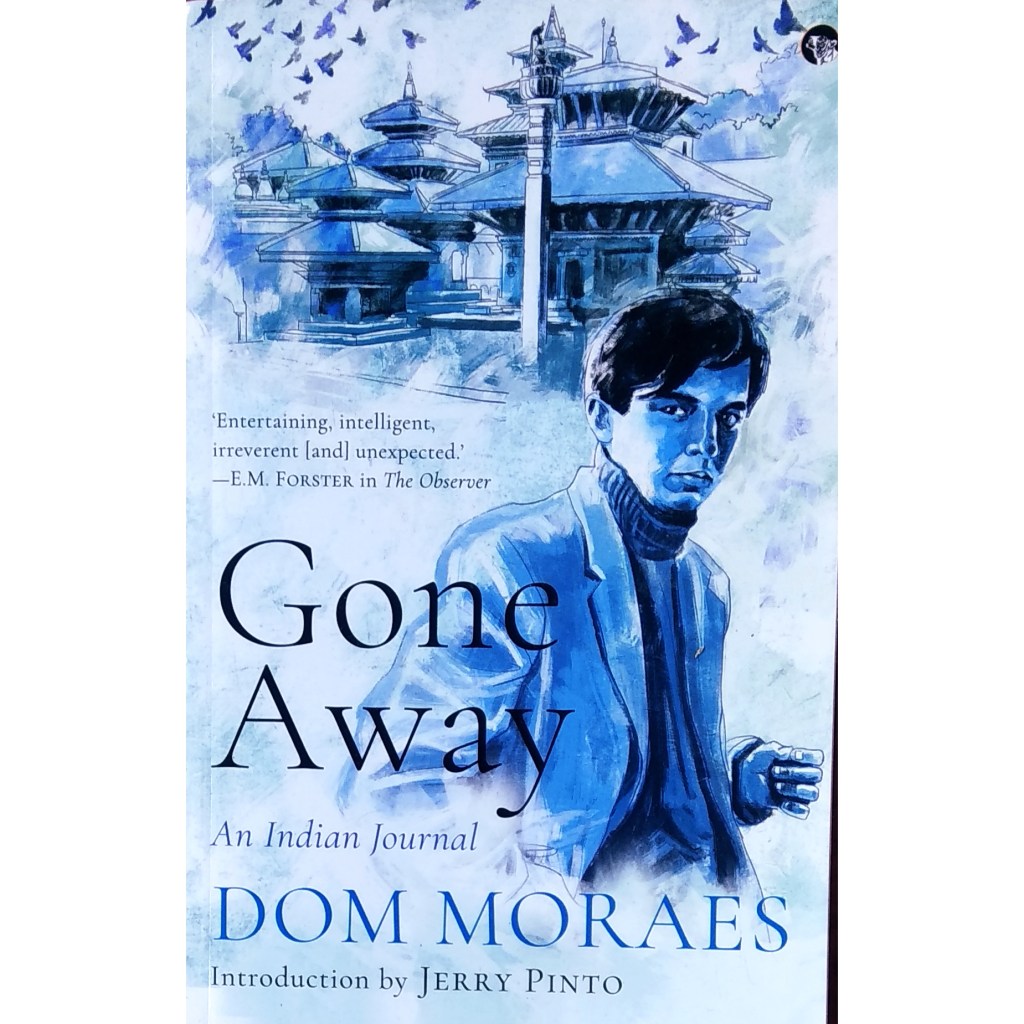
Title: Gone Away — An Indian Journal

Author: Dom Moraes

Publisher: Speaking Tiger, 2020

When a travelogue resurfaces sixty years after it was first printed, that ought to be meaningful. “Gone Away – An Indian Journal” by Dom Moraes was originally published in the UK by William Heinemann. Republished as a paperback edition by Speaking Tiger Books (New Delhi) in 2020, the travelogue carries the same magic for the reader as it was then.

Dom Moraes, a poet, novelist and columnist, is perceived to be a foundational figure in Indian English Literature who published thirty books in his lifetime. In 1958, at the age of twenty, he won the prestigious Hawthornden Prize for poetry. Winner of the Sahitya Akademi Award for English in 1994, Moraes passed away in 2004.

Son of the Editor of the Times of India, Dom had grown up in well-off and generous circumstances. After traveling with his father through Australia to New Zealand and Malaya to the borders of Red China, he watched and wrote poetry. Moraes met Stephen Spender in India, showed him his poems and had some published in “Encounter.” The combined efforts of Spender and his father had gained him admission to Jesus College, Oxford.

Reads the blurb: “One of the most unconventional travelogues ever written, Gone Away covers three months of Dom Moraes’ life spent in the subcontinent at the time of the Chinese incursions on the Tibetan border in 1959. In that short time, a remarkable number of memorable things happened to him, some of them the sort of fantastic situations that could only enmesh a poet, perhaps only a young poet – a visit to a speak-easy in Bombay; an interview with Nehru and an hour spent closeted with the Dalai Lama in Delhi; and a meeting with the great Nepalese poet, Devkota, whom he found already laid out to die by the side of the holy river Basumati.”

After a short stay in Calcutta, where he tried, with limited success, to investigate the lives of prostitutes, he went up to Sikkim, the north-eastern border state into which no visiting writer had been allowed for almost a year. Having made his way by jeep right up to the frontier, he ran into a Chinese detachment and was shot at, but escaped to safety.


Full of comicality, felicity of phrase and oddity of behavior, Gone Away communicates the special excitement of the traveler on every page. Example: Unforgettably funny is the account of the Sikkimese soccer match played in an impenetrable mist and involving the loss of several footballs kicked over an adjoining cliff. Though wit and impertinence prevail through the pages, this is a book which catches and holds the mood of modern India and illuminates as much as it amuses.

This is both a political and a personal voyage of discovery, told simply. Moraes’ travelogue is also significant because it gives us the poet’s eye view: providing details from the Indian cityscape and draws our attention to the zeitgeist of the early decades after Independence.

This memoir is a delightful read and is both modest and polished. Moraes’ account of India’s friction with China and India’s relationship with Nepal at the end of 1950s is convincing, especially in the context of the new tensions on the borders. Recording public disquiet over China’s infractions in 1959, Moraes mentions that General Thimayya had asked that the Indian troops on the NEFA border should be supplied with automatic weapons, as they were inadequately armed in case of Chinese attacks. Krishna Menon is said to have refused the request. Then came Longju, when inadequately equipped and outnumbered Indians were put to flight by the Chinese. Indian foot soldiers, caught in the cross locks of war, continue to be ill equipped, even to date.

There are many more accounts in the book of Dom Moraes meeting prominent diplomats, politicians, writers and artists such as Malcolm MacDonald, Jayaprakash Narayan, Han Suyin, M F Hussain, Nirad Chaudhuri, Kishen Khanna, Buddhadeva Bose, Jamini Roy and many more. Moraes also managed to reach Sikkim when the Chinese were closing in on the border. There is so much of the subcontinent’s socio-cultural history to exude. The historical incidents and famous people are easily recalled from textbooks but reading this firsthand experience is something exceptional.

Moraes travels continue to Calcutta, Gangtok and Sikkim, where the Chinese army’s presence is strongly indicated and the Indian state does not provide enough information. Reporting a readable narrative about independent India’s first decade, Moraes’ love for India anticipates his eventual homecoming.

He captures the occasion with candour, his narrative provides a perspective that tells the whole truth, with little sentimentality or precision, and is peppered with humor that is situational and occasionally self-deprecatory.

With an introduction by Jerry Pinto, “Gone Away” is part of the trilogy of autobiographies written by Moraes. It is a fabulous testimony to India and many of its rarities.

.

Bhaskar Parichha is a journalist and author of No Strings Attached: Writings on Odisha and Biju Patnaik – A Political Biography. He lives in Bhubaneswar and writes bilingually. Besides writing for newspapers, he also reviews books on various media platforms.

.

.

PLEASE NOTE: ARTICLES CAN ONLY BE REPRODUCED IN OTHER SITES WITH DUE ACKNOWLEDGEMENT TO BORDERLESS JOURNAL

Categories
Interview

In Conversation with Santosh Bakaya

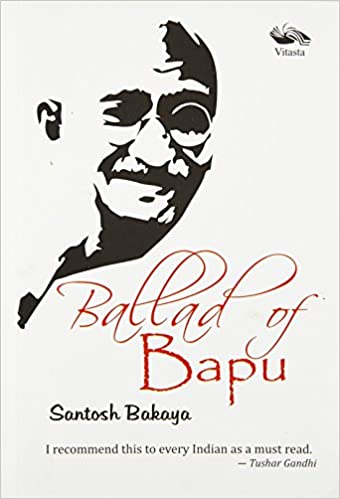
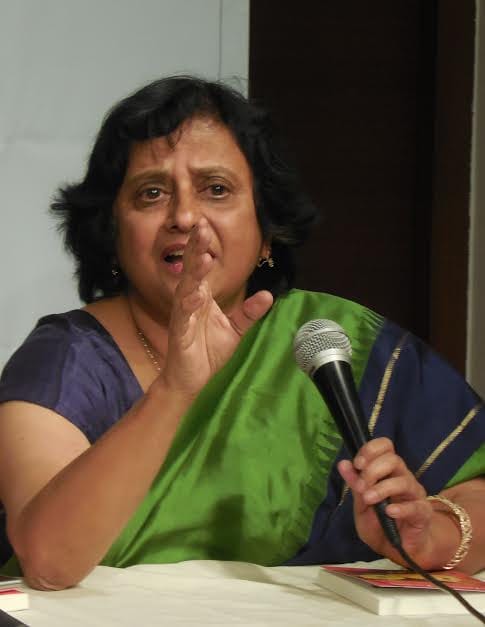
She is vivacious with what she describes as a “whacky” sense of humour and a passion for Gandhi. She has written a ballad on Bapu. You have guessed who she is – Santosh Bakaya. The thing that most impressed me about her was the way her students responded to her – students who are leading lives away from her academic umbrella even to this date. A strong influencer, who helps mould younger minds, she writes books to change her student’s lives and is a writer in her own right. Bakaya is not only an academic but a  poet, essayist, novelist, biographer, editor, TEDx  Speaker, and creative-writing mentor. She has been internationally acclaimed for her poetic biography of Mahatma Gandhi, (Ballad of Bapu). Her Ted Talk on The Myth of Writer’s Block, is very popular in creative writing Circles. 

She has published multiple books of poetry, a novella, essays and biographies. A winner of multiple awards, her long, narrative poem, Oh Hark! which earlier figured in her book, The Significant Anthology, is now a book with illustrations by Avijit Sarkar.

Bakaya has given Borderless an extensive interview on her perception of Gandhi and Gandhism and its relevance in the current crisis filled world, punctuated with snippets of interesting vignettes from her teaching career, confirming well her characteristic of being a strong influencer in her students’ lives. Let us explore her principled, courageous and humorous outlook with her own words.

You have written a whole book and more on Gandhi. What developed your interest in Gandhi?

Gandhi, nay Bapu, was very much a part of my growing up years.  My dad, (a very popular professor of English, in Rajasthan University, Jaipur), when faced by a dilemma, would invariably ask himself, what would Bapu have done in such a situation, and would go on to do what he thought Bapu would have done in that circumstance.

He never asked us to read books on Gandhi, but ignited our interest in this enigmatic man, who seemed to have an answer to everything. Was he a magician, we youngsters wondered! He would get books on Gandhi from the university library, and they would be lying at strategic points in our house; we would quietly start reading, imbibing and asking questions.

Later, it was while taking an MPhil class in the year 2012 that there was a heated discussion in the class on Bapu and his relevance. In a class of twenty students, there was just one girl who was defending the values of Bapu, the others were going all out to denigrate him.

“How much have you read on Gandhi? Can you give me the names of five books about Gandhi that you have read? Have you read his My Experiments with Truth?”

Then one student, who prided himself on being a poet, chipped in, “Madam, why don’t you write a poetic biography of Gandhi? Poetry will appeal more to us.”

This challenge hit me hard, (I am always on the lookout for challenges), but this appeared too difficult a task. Nonetheless, I took the challenge, and began by writing a few verses on the aa-bb-a rhyme scheme and got addicted, so much so that I went on to complete 300 pages of poetry on Gandhi, which was later published by Vitasta Publishers, Delhi, and is now a bestseller, critically acclaimed.   

Gandhi was an ordinary man not without his fears, whims, apprehensions, a boy who was afraid of ghosts, robbers, multiplication tables, who rose above these fears to emerge as a moral icon, gaining an extraordinary status to be revered all over the world.

You wrote another book on Martin Luther King as he was influenced by Gandhi. Can you tell us what led to this book?

This book also was the result of another remark of another of my MPhil students.

Before that, while I was researching for my PhD thesis on Robert Nozick at the American Centre, Delhi. I came across the autobiography of King (edited by Clayborne Carson), I was completely fascinated by his life story and read all the books that I possibly could at the Centre — ignoring Nozick in the bargain. At that point of time, I thought maybe I’ll do my post-doctoral research on Martin Luther King, Jr. some day.

Later it was during another of my Conflict Studies’ lecture that one of my students (not a belligerent one this time) asked me to write a book on King. So that got me thinking and the book happened. It is a year since the book has been published, once again, by Vitasta Publishers, Delhi, (it has one full chapter on his India Connection) and I am happy readers have good words to say about it.

You are a fabulous teacher. Do you think your books made an impact in the way you wanted? Or was it more what you said?

I don’t know if I am a fabulous teacher, but yes, I know I am a very passionate teacher.

Yes, I think so. Let me cite an example. The MPhil student who had nudged  me into writing a poetic biography of Mahatma Gandhi, and who was a great critic of Gandhi, on my insistence, read many books on Gandhi and right now, this critic of Gandhi has become a supporter of Gandhi and has become a lecturer in Political Science, specialising in Gandhian studies.

I was delighted when readers wrote saying that my book impacted them in a positive manner and since it was a poetic biography, they kept going back to it. In fact, Ballad of Bapu received more love than I had anticipated, so much so that I have given a number of talks on the book and conducted many workshops in many educational institutions followed by very fruitful and intellectually stimulating discussions.  

Do you think Gandhi is pertinent in the current world? Why?

Gandhi can never be irrelevant in the world. Gandhi and Gandhism are for all times. He stood for truth and non-violence and truth and non-violence can never be irrelevant.  Martin Luther King Jr. had followed his principles, time and again reiterating, that it was Gandhi who had inspired them during the Montgomery Bus Boycott and even later.

Gandhi was an ordinary man not without his fears, whims, idiosyncrasies and apprehensions, a boy who was afraid of ghosts, robbers, multiplication tables, and who rose above these fears to emerge as a moral icon, gaining an extraordinary status to be revered all over the world.

His values of Truth and Non-violence can never lose their relevance in this topsy-turvy, highly materialistic, self-centred and consumerist world. How can we ignore his supreme humanism, his overpowering love for everyone — even his enemies?

The Dalai Lama very rightly says, “He implemented the very noble philosophy of ahimsa in modern politics and he succeeded. This is a very great thing.” While the other ancient philosophers merely preached the philosophical aspects of Truth and Non-violence, his very life was a series of experiments with truth. He was a man forever evolving, trying to better himself in every way.  Beleaguered humanity desperately needs to rededicate itself to the eternal values of nonviolence, truth, world peace and altruism otherwise, things will continue to be bleak.  

What values of Gandhi do you think are the ones that are most relevant?

Truth, non-violence, love and compassion are values that will always be needed in this bleak world. An eye for an eye, will make the whole world blind, as he so powerfully believed. Why crave for this blindness and hurtle down an abyss?

Such peace revolutionaries like Nelson Mandela, Dalai Lama, Desmond Tutu, and Martin Luther King Jr. wouldn’t have been inspired by Gandhi had his values not been so precious. “If humanity is to progress, Gandhi is inescapable. He lived, thought, and acted, inspired by the vision of humanity evolving toward a world of peace and harmony. We may ignore him at our own risk,” Dr. Martin Luther King Jr had so eloquently said, reiterating time and again that Gandhi taught him his operational technique of fighting for civil rights.

Barack Obama, who holds Gandhi in great esteem had said:“I have always looked to Mahatma Gandhi as an inspiration because he embodies the kind of transformational change that can be made when ordinary people come together to do extraordinary things.”

The co- founder of Apple, Steve Jobs, maintained that Gandhi “showed us the way out of the destructive side of the human nature. Gandhi demonstrated that we can force change and justice through moral acts of aggression, instead of physical acts of aggression. Never has our species needed this wisdom more.”

So, we need the Gandhian wisdom and perception of love, truth, peace, moral acts of aggression and forgiveness, otherwise there is nothing but a grave new dystopian world staring at us.  

Has reading and writing on Gandhi impacted your life?

Yes, it definitely has. In fact, the first Gandhian that I came across was my father. My grandmother was aghast when one day the sweeper had not come, he picked up the broom and cleaned all the toilets in the house. And another day he made him have tea and breakfast with us. My granny was once again indignant, but later many interactions later, she also started subscribing to his point of view and was almost embarrassed of her earlier behaviour and developed a deep love for the underprivileged.

My father’s library was a bibliophilic treasure and I read all the books on Gandhi, later I got books from the school library too. As a collegian, I read many books on Gandhi and they had a great impact on me.

Let me cite an incident from my career. It was my first year as a college lecturer in a post-graduate government college for boys, which was known for its notorious elements. Straight from the university, I was brimming with idealism and Gandhian ideals and fired with an ardent desire to change the world (still am!). During an invigilation, I found a hulk of a boy brazenly cheating, while the senior co-invigilator looked the other way. I dashed towards him and was appalled to find a big knife stuck to his desk. I quickly pulled out the chits from under his answer sheets and raced towards the Principal’s office, his threats following me with a full- throated stridence. Tumko dekh loonga. Mera Career barbaad ker diya [I will teach you a lesson, you spoilt my career].

Later, that evening, I met him at the railway station. He was going to Mathura and I, to Delhi for the weekend. He didn’t recognise me, but I did. I walked up to him and said, you had said, that you would see me – “See me, I am right here. Do you want to beat me up? Come do it?” Dumfounded, he looked at the chit of a girl standing before him, and when he realized who I was, he fell at my feet, apologizing profusely. He now says, that was the turning point in his life.

At the risk of sounding pompous, let me say, that it has become my second nature not to nurse grudges, and I try to spread as much love around me, as possible. Yes, Gandhi and Gandhism have impacted me in a big way.

Do you think Gandhi can impact the younger generation?

Gandhi can definitely impact the younger generation if he is presented to them in a very interesting manner, through role-playing, skits, workshops etc. His values of truth and non-violence transcend all geographical boundaries and time.  Bapu had fought for human rights in South Africa, achieving unprecedented success. He was indeed “a powerful current of fresh air –like a beam of light” as Nehru described him. We need this beam of light, this powerful current of fresh air as never before.

We should not forget that he was an ordinary man who rose above his ordinariness by sheer moral force, even calling off the Non-Cooperation Movement at the height of its popularity, because the violence that was unleashed at Chauri Chaura, on 4 February 1922 (a village in Gorakhpur District of Uttar Pradesh), was not in conformity with his ideology of non-violence, and he did penance for what he saw as his culpability in the bloodshed.  Only a man with great moral fibre could have taken such a decision, fully aware of the criticism that would follow in its wake. Such incidents as these, need to be presented to the youngsters in a proper manner, so that their minds are cleaned of prejudices and misconceptions.

For Gandhi, cleanliness was very important, and who can deny the importance of cleanliness? There was a time when the iconic film Lagey Raho Munna Bhai had created a revolution in young mindsets, I myself being a witness to many such heart-warming scenes. When a parent who had come to drop his daughter to college, aimed tobacco spittle in the college premises, a boy picked up the broom lying nearby and swept it away, to the intense chagrin of the daughter, and the father, realizing his mistake, apologized profusely.

But things are changing fast, so are young mindsets, a sort of skepticism is setting in, so we need to present Gandhi to the younger generation with a conviction which is more robust than before.

Should we be propagating his ideals? If so, what would be the most effective way of doing so?

Of course, Gandhi’s ideals need to be propagated especially in these dark, despairing ages when the forces of fascism are wreaking havoc throughout the world. “Be the change you want to see around you,” Bapu had said, so we should try to be that change, wherever we feel the need for change. Preachy pedagogy can only boomerang, so we should make his principles a way of life, so that the youngsters learn from them. We need to change ourselves first, if we want to spread his principles.
Gandhi had said, “Power is of two kinds. One is obtained by the fear of punishment and the other by acts of love. Power based on love is a thousand times more effective and permanent than the one derived from fear of punishment.” (Young India, January 8, 1925).

To many naysayers, this might smack of naiveté, but no one can deny the fact that love and positivity are the weapons in our hands, which should be amply used to positivize the negative forces around.

As an academic, should Gandhi’s autobiography, My Experiments with Truth, be introduced as part of the school curriculum in India? Do you think that would have a good impact on young minds?

From my experience as an academic, I can say this very confidently that students prefer to crinkle their noses at course books. My Experiments with Truth as part of the syllabus is indeed a great idea as a symbolic gesture venerating the great soul, but what I sincerely feel is that it is the need of the hour to devise such courses where My Experiments with Truth is part of supplementary reading. I believe, students should read it out of curiosity and not out of compulsion. Understanding the essence of Gandhian philosophy should not be forced on young minds. Yes, short-term courses and interestingly designed workshops can go a long way in inculcating the Gandhian spirit in youngsters.

Let me make myself clearer.  Some years back, I was very happy to see youngsters at the Delhi Book Fair flocking to buy My Experiments with Truth.  When asked the reason, they told me they were buying the book because in their first year of under-graduation, it was prescribed as a reference book for a course they were undergoing which, was meant for students of all disciplines. It is heartening to know that My Experiments with Truth continues to be a bestseller. Both the supporters and the detractors, own copies of it.

What do you see as the future of Gandhism in India?

With Gandhi’s assassins being glorified with impunity, and his ideals given lip service to, only during particular days, Gandhism’s future looks bleak. But it is the responsibility of all the right-thinking individuals to pick up cudgels on behalf of this moral icon and disentangle him from the clutches of the naysayers and detractors.
At a time when Gandhi’s killers are being venerated, Gandhi and what he stood for, needs to be revived. Martin Luther King Jr. had been influenced in his crusade for civil rights and non- violence by Bapu; he visited India in 1959, calling his visit a pilgrimage. During his visit he remarked that the spirit of Gandhi was very much alive in India, but alas, we are slowly forgetting the saint in beggar’s garb.
Youngsters have no qualms about heaping venom at Gandhi, forwarding fake WhatsApp messages denigrating him. As I mentioned earlier and I repeat: we should not forget that he was an ordinary man who rose above his ordinariness by sheer moral force, as illustrated in his calling off the Non-Cooperation Movement at the height of its popularity, because the violence that was unleashed at Chauri Chaura, on 4 February 1922. This did exhibit his immense moral fibre.

Who can deny the importance of truth, forgiveness and non-violence in this age of crass materialism and consumerism! Gandhi had said, “Be the change you want to see in the world”, so we have to bring about the revolution within ourselves and change the world for the better, otherwise the world is doomed.  In this context, allow me to quote Martin Luther King Jr, “Over the bleached bones and jumbled residue of numerous civilizations are written the pathetic words, ‘Too Late’”. Why should we wait for it to be ‘Too Late’?

As a teacher I have had the opportunity of interacting both with the millennials and the Generation Z and notice a world of difference between their mindsets.

 I know of many youngsters who are running organizations, the mission of which is to create a more equitable and inclusive society.
I had a very fruitful discussion with a young NRI nephew who was in India six months back and the essence of what he said boiled down to this, “The world is fighting the evils of discrimination, race, gender, and we cannot forget that Gandhi was a pioneering force in this direction.  More and more people should come forward to run programmes which are consistent with his constructive programmes.” He heads one such programme which is very popular.

Then there are some from the hypercognitive Generation z who vociferously argue, “How can the oppressors rid themselves of the guilt of what the guilty have perpetrated in the past — how can they justify their oppression? We need to be proactive — and need to follow Malcom X and Not King or Gandhi.  No more candlelight marches, no more offering of roses to our oppressors! We need to hurl stone for stone. You got your jobs in golden platters, our generation has no jobs, no economic security, no health security, we are surrounded by environmental hazards of all sorts, and we need to do something.”

Well, we cannot save ourselves from the guilt of the devastation that we have wrecked on the young generation but in these crosscurrents of hatred and enmity, it is humanity which is suffering, and needs to be resurrected. No matter what rampant negativities we are surrounded by, I staunchly believe, that the tenets of Gandhism will have to rise from their ashes and come to the rescue of a doddering, staggering humanity. Otherwise we are doomed.

Thanks a ton for this great opportunity, Borderless journal and Mitali Chakravarty.  It was an honor answering these questions.

Thank you for giving us your valuable time, Santosh Bakaya.

This online interview was conducted by Mitali Chakravarty.


PLEASE NOTE: 
ARTICLES CAN ONLY BE REPRODUCED IN OTHER SITES WITH DUE ACKNOWLEDGEMENT TO BORDERLESS JOURNAL.

.

Disclaimer: The opinions expressed are solely that of the interviewee.