Categories
climate change

‘Climate change matters to me, and it should matter to you too’

Zeeshan Nasir writes of a region whose carbon footprint is next to zero, yet it suffers some of the worst climate-related disasters…
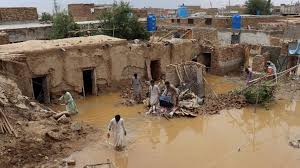
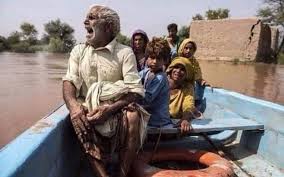
The perennial consequence of climate change is affecting the lives of people all over the world, particularly in the remote and underprivileged parts of Balochistan.

Noora Ali, 14, was oblivious to the temperature shifts because she had grown up in Turbat, a city in the centre of CPEC (China-Pakistan Economic Corridor). They had frequent floods during the monsoon season and blazing heatwaves during summers, with temperatures rising above 51 centigrade. Compared to other cities in Balochistan, Turbat experiences hot summers and typical winters. As a result, the majority of wealthy families in the city travel to Gwadar, Quetta, or Karachi during the sweltering summers and return to Turbat during the winters. The Water and Power Development Authority (WAPDA) moved Noora’s father, who works there, to the neighbouring Gwadar in 2022.

In the February of 2022, the sea seemed calm while boats of the fishermen busily dotted the waters of the Padi Zir (Gwadar’s West Bay). It was a typical Thursday morning when rain started pouring down. The rain was so intense that the sea became wild and uncontrollable. The roads were washed away, bridges collapsed, with streets being inundated with flood water and the port city became completely disconnected with the rest of the country. Back in Turbat, her ancestral hometown was also submerged under flood water.

Noora had also heard from her school fellows that Gwadar and Turbat had never experienced such heavy and intense rainfall before. She knew and felt that the temperature of her native city was rising and that Gwadar beneath flood water didn’t seem normal.  “This is due to climate change.” Her elder brother told her. At the age of 14, typical children in Balochistan have no idea what climate change and global warming are but they are already feeling it impacts.

Like Noora, thousands of children in South Asia, particularly Pakistan, Bangladesh, Nepal, India and Afghanistan are at the risk of climate related disasters, as per the UNICEF 2021 Children’s Climate Risk Index. The report further reiterates that children in these countries have vigorously been exposed to devastating air pollution and aggressive heatwaves, with 6 million children confronting implacable floods that lashed across these countries in the July of 2024.

On the 11th and 22nd November 2024, over 20 youths urged the world leaders to come up with plans to mitigate the impacts of climate change on children at the 2024 United Nations Climate Change Conference (COP 29) held in Baku, Azerbaijan. Among those 20 resolute children was the 14 years old, Zunaira Qayyum Baloch representing the 241.5 million children and women of Pakistan. 

Dressed in her traditional Balochi attire, with a radiant smile in her face and resolute in her commitment, Zunaira Qayyum Baloch, startled everyone. Hailing from the far-flung district of Hub in the Southwest of the Pakistan’s Balochistan, Ms. Baloch went to represent the children of a country whose carbon footprint is next to zero, yet it suffers some of the worst climate-related disasters. Her message to world leaders was clear: step up and combat climate-induced inequalities, particularly those affecting women and children.

She had always remained conscious about the changing climate in her city, observing the floods of 2022 that had wreaked havoc in Hub Chowki, initiating awareness programmes and youth advocacy guide training in her home city to advocate for girls right to education and climate change.

“After my father passed away, my mother became the sole breadwinner. She helped us get an education and met all our requirements.” Zunaira explains. “During the catastrophic rains of 2022, an incident changed my perspective on climate change.  Rainwater had accumulated in the roof of our home and streets were flooded with water. The destruction was so overwhelming that I realised that such events were no longer rare but increasing constantly. “

During the COP29, Ms Baloch expressed her concerns with the experts how Pakistan, particularly Balochistan has been detrimentally affected by climate disasters like frequented floods, heatwaves, hurricanes and droughts. Lamenting that climate change was a child-rights crisis, she told the world how the changes in the climate had jeopardised the lives of millions of women and children throughout the world.

Asking the world leaders to join determined children like her to combat climate change, she addressed them in the COP29: “Climate change matters to me, and it should matter to you too.”

Stark Reality of the Past

Bibi Dureen, 80, is a testimony to how climate is continuously transforming. She hails from the outskirts of the Kech district in a town called Nasirabad.

“The seasons are changing.” She says with her voice laced with sorrow. “The heatwaves have become more aggressive, and floods are common. It all started around 1998 in Turbat. Then in 2007, a devastating flood destroyed our homes, date palm trees, livestock –and worst of all, it took lives.” She pauses, her wrinkled hands trembling.

As she talks to me in front of her thatched cottage, through which sunlight is streaming in, tears well up in her eyes as she recalls a painful childhood memory, “I was young at that time. It was a pitch-black night, and the rain was pouring down mercilessly when a man came shouting that the flood water had reached the fields.” She exclaims with grief. “My mother, desperate to save what little we had, sent her only son, my sixteen-year-old brother, Habib, our family’s only breadwinner, to find the only cow we had in the fields.  Neither the cow nor Habib returned. Later some men found his dead body in the jungle.”

In June 2007, when the Cyclone Yemyin hit the coast of Balochistan, it wrought unprecedented damage to the province, particularly Turbat, Pasni and Ormara and rendered 50,000 homeless within 24 hours, including children. According to reports 800,000 were affected and 24 went missing.

The 2022 floods had a devastating impact across Pakistan, with the province of Balochistan being one of the hardest hit. With 528 children dying nationwide, 336 people died in Balochistan, including children as per the reports of the Provincial Disaster Management Authority (PDMA).

Tragedy struck again in 2024 when torrential rains engulfed 32 districts of Balochistan, particularly, the port city of Gwadar and Kech district. The PDMA put the death toll of children dying due to the flood at 55 out of the total of 170, with 16 others injured.

The Double Crisis Facing Girls

Regions in Balochistan, such as Naseerabad, Jaffarabad, Sohbatpur, Nokundi, Sibi and Turbat have seen severe heatwaves in the past few decades. On May, 2017, the Mercury rose to a record breaking of 53.5 centigrade in Turbat, making the district to be the hottest place of the year after Mitribah, Kuwait. During heatwaves, cases of fainting and health-related illness among residents, particularly children are rarely uncommon. According to a 2023 report by the Pakistan Meteorological Department, Balochistan has seen a 1.8°C rise in average temperature over the past three decades, leading to longer and harsher heatwaves.

Dr Sammi Parvaz, a gynaecologist at the university hospital in Turbat, tells that rising temperatures in the district not only contribute to higher dropout rates among school-girls but their menstrual cycle is also affected.

 “According to the recent research of the National Institute of Health (NIH) , menstruation– a biological process that occurs in females when they reach puberty — is severely affected in countries which are vulnerable to climate change and Pakistan is one them.” She explains. “The menstruation in girl children living in extreme heat, such as, in Turbat and Karachi, becomes very intense, painful and with cramps.”

Dr Sammi further elaborates that this phenomenon is linked to the increased release of cortisol and oestrogen, the hormones which regulate the female reproductive cycle. “Girl children exposed to harsher environments such as severe heat or cold, experience hormonal imbalances leading to irregular periods and severe menstrual cramps. The hospitals in Turbat are frequented by patients suffering from intense cramps or irregular periods.”

Hygiene becomes another pressing issue during floods, especially for young girls. Research published by the International Journal of Environmental Research and Public Health states that floodwater contains lead, polychlorinated biphenyls (PCBs) and other chemicals which are the cause for irregular periods.

During floods thousands of girl children struggle to manage their periods amidst the chaos of the disaster and remain without period products.  For instance, after the 2022 floods, 650,000 pregnant women and girl children in Pakistan were without essential maternal care, with a significant proportion from Balochistan.

Admist all this chaos climate activist like Zunaira Qayyum Baloch raise awareness while women like Maryam Jamali work directly on the ground to ensure that every women has ration in her house and access to menstruation products during catastrophes.

 Madat Balochistan [1]— a non-profit organisation — has supported more than 31,000 people across 34 districts in Sindh and Balochistan. With its major work concentrated in and around Quetta, Dera Bugti, Jaffarabad, Jhal Magsi, Sohbatpur, and Khuzdar, they are a women-led organisation fundamentally prioritising women and young girls in their work because even on the frontlines, they are bearing most of the cost of climate change, according to its co-founder, Maryam Jamali.

 “Our conversations on climate change vulnerability often treat everyone as ‘equal’ in terms of impact, when that is far from the truth. Vulnerability is a multi-dimensional concept and in a country like Pakistan where most of the women and girls are pushed to the margins of society in every way possible — we cannot just overlook their struggles.” Maryam Jamali tells.

“Take the 2022 floods, for example — the most recent catastrophes etched in our memories. Women and girls were responsible for most of the labour when it came to evacuating to safer places. As soon as they did, their needs when it came to menstruation or pregnancy care were completely ignored by aid agencies as they sent out packages or set up medical camps. Most of our work at Madat was compensating for things like this. We worked with midwives to ensure that women, who could not stand in lines for ration, received it regardless or women who did not want to interact with male doctors didn’t have to. In our housing projects, we prioritise women especially those who don’t have a patriarch in the household because that severely limits their access to resources for rehabilitation.”

Floods, heatwaves and other natural calamities are gender neutral. However,  female children are more likely to be affected by them. According to the UN Assistant Secretary-General Asako Okai that when disaster strikes, women and children are 14 times more likely to die than men. In Pakistan, 80% of people displaced by climate disasters are women and children.

 In patriarchal societies in Pakistan, women and female children are the primary caregivers of the family and they are the sole persons to grow crop, do house chores, fetch firewood and water. With little to no potable water nearby, girls have to travel far to help their parents, further exacerbating their vulnerability.

These household responsibilities create an educational gap. Girls are taken out of schools in Balochistan during floods. With Pakistan’s lowest girl literacy rate at just 27 per cent, the International Rescue Committee (IRC) reported that the province of Sindh and Balochistan have seen greater educational disruptions due to heatwaves and floods, with the 2022 flood causing more educational institutions closure than the combined two-year COVID-19 pandemic.

Extreme heatwaves and recurrent flooding in Balochistan have further compounded this gap. For instance, the 2022 flood damaged or destroyed 7,439 schools in the province, affecting the education of over 386,600 students and 17,660 teachers and staff members. Reports also mention that most of the government school were used as flood shelters in the province. In the 2024 floods, 464 schools were again damaged.

The destruction of educational infrastructure has forced many children out of school, contributing to the province’s high out-of-school rate.

Monsoon Brides during Floods

 Though floodwater is no longer accumulating in the Mulla Band Ward of Gwadar district in Balochistan, the damage it has wrought will stay with the people for a long time for many years. For Gul Naz[2],16, the loss has been devastating.She was only 16 years at the time when flood water entered their home in 2022. Her father, being a fisherman, struggled to make ends meet, as the sea was completely closed for fishing, cutting off the family’s only source of income.

“I was in the Jannat Market and when I returned home, I was told by my mother that my marriage has been fixed to a man twice my age in exchange for money.” She discloses that her parents were given Rs.50,000 ($178.50) which is a whooping sum for a poor family, who survive on around one dollar a day.

“I have two kids now and I am a child raising a child.”

The sadness in Gul Naz’s voice is palpable and she isn’t alone in her predicament. During floods and emergency situations, families in Balochistan resort to any desperate means for survival. The first and most obvious way is to give their daughters away in marriage for financial relief — a practice that usually surges during the monsoon season, hence, the name monsoon brides.

In the Sindh province of Pakistan, where this trend is more prevalent, there has been a spike in the number of monsoon brides during the last flash floods of 2022. In the Khan Mohammad Mallah Village, Dadu district, approximately 45 were married off in that year, according to the NGO organisation, Sujag Sansar[3], which works to reduce child marriages in the region.

Pakistan stands at the sixth position in the world when it comes to marrying children below eighteen. While there has been a reduction in child marriages in Pakistan in recent years, UNICEF warns that extreme weather patterns put the girl child at risk.

Madat Balochistan has also been on the forefront in the reduction of child marriages in Balochistan, “It’s not intuitive to think of girls’ education or loan relief or housing provision as measures to build climate change resilience, but in our contexts, these are the very things that drive vulnerability to climate change.” Says the Maryam Jamali. “We have been working on supporting farmers with loan relief so that young girls aren’t married off to compensate for the financial burden of loans after a lost harvest. We are also working on initiatives for sustainable livelihoods for women as well as ensuring that young girls in all the communities we work in have access to education despite geographic or financial limitations.”

Jamali thinks that gender inequality is one of the biggest aspects here which makes it absolutely necessary for a region like Balochistan, where physical vulnerability and socio-economic vulnerability is high, to have young girls at the decision-making table.

“Activists like Zunaira can ensure that when we come up with solutions for climate change, we contextualize them through a gender lens and make sure that this does not become another instance of taking away women’s agency but becomes an opportunity to involve them in climate change policy decision-making.” Jamali contends. “It is rewarding to see the girls we support do great things. One of our girls from Musakhel is studying at Cadet College Quetta, the first in her family to be able to pursue education beyond 8th grade.”

The Way Forward

“Extreme weather can fuel conflict and be a threat multiplier,” says Siraj Gul, a lawyer at the Balochistan High Court, Quetta, citing the recent research published in the journal Alternatives: Global, Local, Political. He stresses that the decades long running insurgency in Balochistan stems from human rights violations, inequality and government negligence. “Climate related catastrophes further destabilise the region’s development. For instance, there was a surge in the number of protests during the 2022 floods in Gwadar, Lasbela and Turbat, reflecting the deep frustration and despair of the people.” According to Mr. Gul if children like Zunaira are given a platform to speak and work for Balochistan, they are not merely advocating for the environment, they are working for a more peaceful and tranquil region.

A climate resilient infrastructure and child-oriented disaster relief have become a must in climate-torn regions like Balochistan.

[1] Help Balochistan

[2]Her name has been changed to retain her privacy

[3] Awake World

Zeeshan Nasir is a Turbat-based writer and currently pursuing his MBBS Degree from the Makran Medical college, Turbat. He tweets on X @zeeshannasir972. He has contributed to Daily Dawn, Countercurrents, Pakistan Today, The Diplomat and others. A different version of this essay has been published earlier in Countercurrents and Pakistan Today.

.

PLEASE NOTE: ARTICLES CAN ONLY BE REPRODUCED IN OTHER SITES WITH DUE ACKNOWLEDGEMENT TO BORDERLESS JOURNAL

Click here to access the Borderless anthology, Monalisa No Longer Smiles

Click here to access Monalisa No Longer Smiles on Amazon International
Categories
Conversation

From Ukraine to America: A story of Resilience

Lara Geyla converses about her memoir, Camels from Kyzylkum, and her journey as an immigrant.

A migrant’s journey is never easy – it’s rife with adjustments and changes. Adapting to a country that is totally different from the one in which an immigrant is born, requires adjustments of various kinds, including learning new languages. Migrants also need to find acceptance and friends in the country they move to as did Lara Geyla, when she migrated out of a crumbling USSR to America, pausing by the way of Austria and Italy. She recorded her journey in Camels from Kyzylkum: A Memoir of my Life Journey.

Kyzylkum is a desert located in Uzbekistan. Geyla lived and worked in the desert for twenty years. She learnt that the camels were the hardiest of creatures. Her life’s journey like that of any other immigrant, had been hard. So, at the start of her memoir, she tells us: “I am a camel from Kyzylkum, too. Like a camel, I have adapted and found ways to help myself survive in the desert. As a camel stores his energy in its hump as part of its legendary ability to travel hundreds of miles without food and water, I stored the energy of my spirit to help me stay strong as I crossed continents alone, with two suitcases and $140 in my pocket in my search for a better life.”

Perhaps, this is a resilience that each migrant needs to unearth to settle into a country of their choosing, or sometimes thrust on them due to external factors like war and climate change. Through her memoir, we get glimpses of different parts of the world as she inched her way closer to the country she sought. People helped her along. At one point, when she arrived at the wrong destination for an interview with the American embassy that was crucial to her move to the country of her choice, an Italian taxi driver drove her at breakneck speed to the right address, where after a few questions, she was given the permission to emigrate.

This was in the 1990s. After moving to America, she helped more of her family to move to the country which gave her refuge. She found acceptance in a firm as a programmer/ analyst in Maryland. She lives now in her new home in Florida with her new family and friends and basks in their acceptance and love. In this exclusive, she talks to us of her journey.

Tell us what made you write Camel from Kyzylkum?

I had wanted to write my life story for a long time, as I believed my life journey was filled with incredible places and events. However, while I was working, I never had the time to focus on writing. Even then, I knew that if I ever wrote a book, it would be titled Camel from Kyzylkum. I finally wrote my story during the COVID 19 pandemic in 2020–21, when we were confined to our home.

Where in the Soviet Union did you grow up? What was your childhood like? Tell us about your schooling and a child’s life in the Soviet Union? How was it different from what we find in other countries?

I was born into a Jewish family in Vinnitsa, a city in southwestern Ukraine, not far from the capital, Kiev. At the time, Ukraine was part of the Soviet Union. Life wasn’t easy for those born into Jewish families in the Soviet Union; being Jewish was considered a nationality, not a religion. In fact, during my time there, we lived under the slogan: “Religion is poison for the people.” Religion was heavily suppressed, and atheism was strongly promoted during my time there. Although I grew up much like other children—playing the same games and attending the same schools—I was aware from a young age that there was a stigma attached to being Jewish. I felt different but didn’t understand why. After 1948, anti-semitism in the Soviet Union reached new heights, particularly during the anti-cosmopolitan campaign, when numerous Yiddish poets, writers, painters, and sculptors were arrested or killed. During my time there, antisemitism was consistently supported by the Soviet state and used as a tool to consolidate power.

When I was about 12 years old, my parents divorced, and my mother and I moved to Belarus to live with my grandmother. We all shared the same apartment. Soon after, I was sent to a boarding school, which I hated but had no choice and stayed there until I graduated. I’ve written about all of this in my book.

How was life different from what we find in other countries? That likely depends on the country you compare it to. Despite the many challenges and negative aspects of life in the Soviet Union, one notable advantage was the education system. It was of quite high quality, mandatory, and free.

You moved with your husband to the desert of Kyzylkum. What was it like living in the desert? In tents?

For the first three years, our young family lived in a small settlement belonging to a geological expedition. It really was in the middle of nowhere. The nearest civilized city, Navoi, was 200 kilometers (124 miles) away. Our settlement, simply called Geological Party #10, and it consisted of about two dozen barracks under the blistering sun, set in a barren landscape devoid of vegetation and offering hostile living conditions for humans, plants, and animals alike. The summers were extremely hot. The winters were harsh. At night, the wind became a growling, tumbling mix of sand and snow. I lay awake for hours, listening to the eerie howling outside. It was one of those winds that frayed nerves, made your hair stand on end, and left your skin crawling.

After three years, we moved to Muruntau, a slightly larger geological settlement, but we still lived in barracks. From there, we relocated to Zarafshan, a city in the heart of the Kyzylkum Desert of Uzbekistan, where we finally got our first apartment.

I have written extensively about our life in Zarafshan in my memoir, Camel from Kyzylkum. However, you might find it interesting to read an article by a Canadian reporter who accidentally stumbled upon Zarafshan while exploring Google Earth. He wrote and published the piece online in 2011, In Zarafshan.

What work were you doing there? What jobs did you do in the USSR? Did you go back to university there?

I earned my degree from a geological college in Kiev and worked as a geophysicist in the Kyzylkum Desert, focusing on gold and uranium deposits. Geophysics involves using surface methods and specialised equipment to measure the physical properties of the Earth’s subsurface and identify anomalies. These measurements help to make interpretations about a geological site, detect and infer the presence and location of ore minerals. Geophysical data is then integrated with surface geological observations to develop a comprehensive understanding of a region’s geological structure and history.

My job required me to work in various environments, including the open fields of the desert, open-pit and underground mines, as well as in the office. In fact, the Muruntau gold deposit in the Kyzylkum Desert, where I once worked, was and still is being mined as the world’s largest open-pit gold mine.

You have told us you were part Ukrainian and part Jewish? Judaism is faith — not a geography. So, were both your parents Ukrainian?

I was born into a Jewish family in Ukraine, which was part of the Soviet Union at the time. Both of my parents were Jewish and born in the Soviet Union. In my time there, Judaism was not considered a faith but rather a nationality. Nationality was stated in one’s passport. Synagogues were closed, and like most other Jewish families in the Soviet Union, our did not follow Jewish religious or spiritual practices. Instead, we celebrated all Soviet holidays. However, I do remember my father’s family gathering for Hanukkah and giving us, little kids, gifts and money. My husband, however, was Ukrainian, which made our daughter part Ukrainian and part Jewish.

Were you there during glasnost? Did things improve for you after the Perestroika and Glasnost? Please elaborate. How long did you stay after the dissolution of the USSR within your country of birth?

I would like to answer to this question with excerpt from my memoir Camel from Kyzylkum:

“Glasnost was understood as the movement in the USSR towards greater openness and dialogue. In the period from 1987-1991, Glasnost became synonymous with “publicity,” “openness,” and it reflected a commitment by the Gorbachev administration to allow Soviet citizens to publicly discuss the problems and potential solutions of their system.

I still lived in Zarafshan and took an active part in Perestroika and Glasnost—I was not afraid to express my opinions or attend meetings. I truly believed that we could change life for the better. One day I came to work only to find out that agents from the KGB had searched my office. KGB stands for Komitet Gosudarstvennoy Bezopasnosti, which translates to “Committee for State Security” in English.

At the time of Perestroika and Glasnost, books that previously had been available only through the underground distribution in the Soviet Union became legal, and excerpts were printed in many publications. I read a lot, and these books opened my eyes to the bloody recent history of our country—from the 1918 Revolution to the present day, on to all of the misleading, hidden truth, hypocrisies of our government, and the Soviet system as a whole. I realised that all of the concepts and ideas that they had taught us from early childhood were mendacious.”

I left the Soviet Union in October 1989, and as punishment, my citizenship was revoked. The Soviet Union ultimately collapsed on December 26, 1991, by which time I was already living in the United States.

Why did you want to move out of the Soviet Union? Can you give us the timeframe in which you moved out in terms of Glasnost and other events?

The Glasnost period in the Soviet Union was from 1987 to 1991. I left in 1989.

The late 1980s were years of exodus from the Soviet Union. Gorbachev opened the door of the “iron curtain” and everyone who could escape was leaving. I moved from Zarafshan, Uzbekistan, to Gomel, Belarus, in 1988. At that time, every single day platforms at the Gomel railroad station were full of people: families who were lucky to get exit visas, and relatives and friends who came to say their last goodbyes to them.

There was a code word: “to leave.” If you whispered it with a mysterious gravitas, there would be no need to ask further questions.

When I was asked if I would consider leaving, I said “yes” with no hesitation. I did not know what leaving would entail, but I started to go through the process as everyone else did. I apprised the family members, but there was no need or time to have long discussions—it was a once-in-a-lifetime chance, and the “iron curtain” could be down again at any time. We all knew how challenging and frightening immigration could be, but we had a hope that after all of the suffering, we could build a better life.

How is it you were on the list for visas and others were not given the privilege? Who were the people given the right to leave the Soviet Union?

Under Soviet law, no person could leave the country without the government’s permission, granted through an exit visa. This regulation applied not only to Soviet citizens but also to foreigners, including diplomatic personnel. Emigration policies varied over time and were always challenging to navigate.

In the 1970s, Jewish people in the USSR, often referred to as “refuseniks,” staged hunger strikes to protest the Soviet government’s refusal to grant them permission to emigrate to Israel. These protests highlighted the severe restrictions on their right to leave the country and garnered international attention, becoming a pivotal part of the movement advocating for Soviet Jewry, an international human rights campaign for Soviet Jews.

In the late 1980s and early 1990s, liberalised emigration policies allowed many Soviet Jews to leave, with more than half of the Jewish population emigrating, primarily to Israel, the United States, Germany, Canada, and Australia. However, it wasn’t only Jewish individuals departing; anyone who could endure the convoluted emigration process took the opportunity to leave. As a punishment, those who emigrated had their citizenship revoked.

The Hebrew Immigrant Aid Society (HIAS) played a vital role in assisting people leaving the Soviet Union, supporting them on their journeys to new destinations. HIAS continues to advocate for the protection of refugees and ensures displaced individuals are treated with the dignity they deserve.

For me, navigating the bureaucratic barriers of Soviet emigration policies in the late 1980s was extremely difficult, but my Jewish heritage worked to my advantage. After overcoming numerous hurdles, I left the Soviet Union at the end of October 1989. I had two suitcases, $140 in my pocket, and no certainty about my final destination. With my Soviet citizenship revoked, I became a “citizen of the World”.


Why did you choose to move to the USA over all other countries?

When I left the Soviet Union at the end of October 1989, I knew my point of departure but not necessarily my destination. The only identity document I had was an exit visa from the USSR and the train ticket to Vienna, Austria. I held no citizenship in any country and knew very little about immigration laws or processes. My ultimate goal was to reach America because I believed that the United States was the land of opportunity like no other country. During my interview in Austria, I was given the option to select a country I wanted to go to, and I chose the United States.

Other than language, did you have to study further to get a job in the US? How is working in the US different from working in the USSR?

Yes, I wore many hats and attended various schools before landing my professional job in the USA. First, I had to learn English. My journey began with earning a certificate as a nurse assistant. Next, I attended school to become a medical assistant, followed by completing a two-year program and passing the exam to become an X-ray technician. I worked in that role until I later completed a course for computer programming.

My first job in the US, however, was clearing tables at Burger King. I worked as a waitress, cleaned people’s houses, worked in department stores, and babysat young children. I did whatever it took to survive and was never afraid of hard work.

Working in the US was vastly different from working in the USSR, mainly because of the many barriers I faced: learning a new language, navigating cultural differences, adapting to unfamiliar social norms, and constantly acquiring new skills. Despite the challenges, I succeeded. Now, I’m happily retired, enjoying life in a beautiful community in Southwest Florida.

Have you ever returned to Russia after you migrated? How did you find it, especially as the Soviet Union broke up into so many countries?

My husband and I traveled to Ukraine in 2010, by which time it was an independent country. This was after the Orange Revolution1, a series of protests primarily in Kiev in response to election fraud. The revolution, which unfolded between late November 2004 and January 2005, brought significant political upheaval. Viktor Yushchenko was elected president on December 26, 2004, after weeks of turmoil that thrust the country into chaos.

As the informal leader of the Ukrainian opposition coalition, Yushchenko was one of two main candidates in the 2004 presidential election, the other being Prime Minister Viktor Yanukovych. During the campaign, Yushchenko survived an assassination attempt when he was poisoned with dioxin, leaving him disfigured. Despite this, he persevered and emerged victorious in the re-run election.

When we visited Ukraine in July 2010, the memory of the Orange Revolution was still fresh. We explored many cities, stayed with my childhood friend in Vinnitsia, and visited relatives in Yalta, Crimea. Crimea, sadly, was annexed from Ukraine by Russia in 2014.

The changes in Ukraine since my time living there were noticeable, but some things remained the same. We especially enjoyed our time in Yalta—a vibrant city filled with cheerful faces, where people celebrated life at this beautiful Black Sea resort.

In June 2018, during a cruise around the Baltic countries, we spent a day in St. Petersburg, Russia. The city and its museums are undeniably remarkable, as they always have been. However, the rude customs control at the port, long lines at the museums, being rushed through the exhibits, and other all-too-familiar experiences immediately brought back unpleasant memories from the past. After this brief visit, I have no desire to ever return to this country.

So, are you writing more books?

I’m considering it. However, finding the time to focus has been challenging. Between our extensive travels, my photography and video projects, marketing my memoir, and other everyday activities, my schedule hasn’t left much room for writing another book.

Thanks for giving us your time.

Click here to read an excerpt from Camels from Kyzylkum

(This online interview has been conducted by Mitali Chakravarty.)

PLEASE NOTE: ARTICLES CAN ONLY BE REPRODUCED IN OTHER SITES WITH DUE ACKNOWLEDGEMENT TO BORDERLESS JOURNAL. 

Disclaimer: The opinions expressed are solely that of the interviewee and not of the Borderless Journal.

Click here to access the Borderless anthology, Monalisa No Longer Smiles

Click here to access Monalisa No Longer Smiles on Kindle Amazon International

  1. Orange Revolution took place in Ukraine between November 2004 to January 2005, primarily a response to the Presidential elections ↩︎
Categories
Interview

 Magical Journey of Worlds and Words with Lya Badgley

Keith Lyons in conversation with Lya Badgley

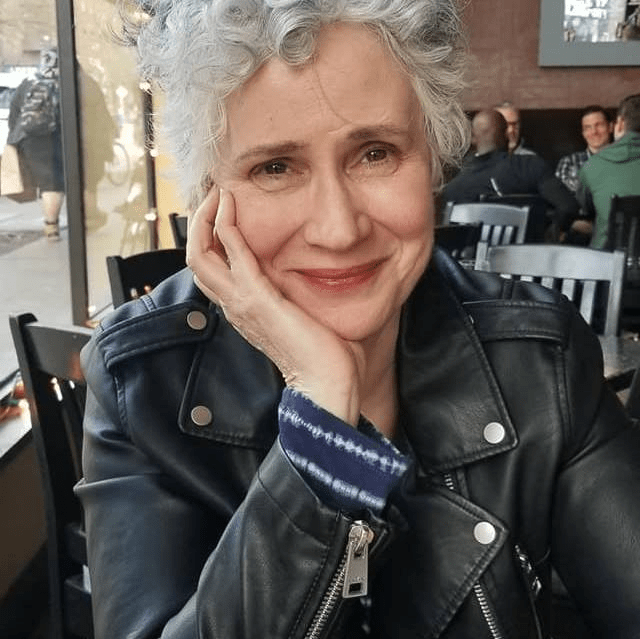
Lya Badgley

Lya Badgley’s life reads like an exotic adventure book you can’t put down, but she writes plot-driven suspense about women overcoming life-changing odds, against a backdrop of global conflict. In this interview, she shares her views about creativity, courage, persistence and resilience.

Youve had an interesting life – how often do people say that to you? How do you tell the story of your life in a short elevator pitch?

I’ve been very lucky to have had choices – many do not. That said, being born in Myanmar to Montana parents, was a good start. From Seattle’s arts scene to documenting war crimes in Cambodia and opening a restaurant in Yangon, my life experiences fuel my creativity. I’ve been a mother, a former city council member, and an environmental activist and now write novels drawing deeply from my lived experiences.

So, you were born in Yangon, Myanmar. How did your parents from the Rocky Mountains come to be in Burma? What are your first memories from there?

My parents discovered the wider world when my father was stationed in northern Japan during the Korean War. They fell in love with Asia, and he went on to dedicate his life to academia, earning a doctorate in political science. They first arrived in Burma (Myanmar) in the late 1950s. One of my earliest memories is coming home from kindergarten in up-country Burma and telling my mother that all the children spoke English in class. Astonished, she accompanied me to school the next day, only to find that the children were speaking Burmese. I had simply assumed it was English. To this day, I love languages.

What kind of environment did your parents create which encouraged your creativity?

My mother was a true artist, always encouraging me to find beauty in everything around me. My father sparked a deep curiosity about the world, especially about the lives of everyday people. Our dinner table conversations were always lively, full of challenges and excitement, fueling my imagination and intellect. I was never allowed to leave the table without sharing something interesting and eating all my vegetables.

In 1987 what changed your life? How does Multiple Sclerosis affect you today?

In 1987, I developed a persistent headache that wouldn’t go away. Within two weeks, I lost vision in one eye. The diagnosis of Multiple Sclerosis came swiftly. I’ll never forget the mix of terror and wonder as I looked at the pointillistic MRI image of my brain, and the doctor casually said, “Yep, see those spots? That’s definitely MS,” as if he were ordering lunch. Strangely, that diagnosis liberated me—after all, what’s the worst that could happen? Now, as I age, the disease may slow my body, but it hasn’t dimmed my spark.

In what ways has being a musician/poet/writer/artist been a struggle and challenge? Do you think that is part of process and it in turn fosters innovation?

The struggles of being an artist—whether overcoming rejection, creative blocks, or balancing art with daily life—are definitely part of the journey. But there’s also magic in that process. There’s something almost alchemical about wrestling with a challenge and, through that tension, creating something entirely new. It’s in those moments of uncertainty that the most unexpected ideas emerge, as if they’re waiting for the right spark. The struggle doesn’t just foster creativity—it transforms it, turning obstacles into opportunities. And the joy comes from watching that magic unfold, as your vision takes on a life of its own.

When did you return to Southeast Asia, and how did you come to work as a videographer on a clandestine expedition interviewing Burmese insurgents, and later helping document the genocide cases in Cambodia?

The short answer is — a boyfriend! In the early ’90s, I returned to Southeast Asia, driven by a deep connection to the region and feeling uncertain about what to do next after a failed marriage. Through a friend I met during Burmese language studies, I stumbled upon an unexpected opportunity to work as a videographer on a covert mission, documenting interviews with Burmese insurgents. That intense experience then led to my role in Cambodia, where I worked with Cornell University’s Archival Project. There, I helped microfilm documents from the Tuol Sleng Museum of Genocide, preserving crucial evidence that would later hold war criminals accountable. Both experiences were life-changing and cemented my passion for telling these vital stories.

You were among the few foreigners to open businesses in Burma in the 1990s. What hurdles were there to opening the 50th Street Bar & Grill Restaurant in Yangon, Myanmar? How was Burma at that time?

Opening the 50th Street Bar & Grill in Yangon in the mid ’90s was a real adventure, and I take great pride in being part of the first foreign-owned project of its kind at that time. Myanmar was just emerging from decades of isolation, with very few foreigners and even fewer foreign businesses. Navigating the bureaucracy was incredibly challenging — layers of red tape, and we often had to rely on outdated laws from the British colonial era just to get things moving. It took persistence, creative problem-solving, and a lot of patience. I had the advantage of understanding the culture and speaking a bit of the language, and I never worked through a proxy. I handled even the most mundane tasks myself—like sitting for hours in a stifling hot bank, waiting to meet the manager, who was hiding in the bathroom to avoid me!

Basic infrastructure issues like inconsistent electricity and unreliable suppliers were ongoing challenges. But despite all the hurdles, Yangon had a special energy then. The people were incredibly warm and resilient, and there was a palpable sense that the country was on the cusp of major change, even though it remained under military rule. Looking back, I’m proud to have been part of something so groundbreaking during such a unique moment in Myanmar’s history. It’s heartbreaking to see the return of darker times.

When did you first start writing and what has kept you writing? 

In the ’80s, I began writing song lyrics for my music, which eventually evolved into poetry. It turned out I had more to say, and my word count steadily grew from there. I write because I have no choice; it’s an essential part of who I am.

Your first novel, The Foreigners Confession, out in 2022, in the middle of the Covid-19 pandemic, weaves together one persons story and a countrys painful history. How do you integrate in the legacy of the past, a personal journey, a war-torn country and the themes of loss and regret?

In The Foreigners Confession, I explore the interconnectedness of personal stories and a nation’s history. I like using conflict zones as backdrops for my protagonist’s inner turmoil. These settings highlight the psychological landscape shaped by war and trauma, reflecting the chaos within the character. I’m fascinated by the notion that evil exists in each of us, and under the right circumstances, we’re all capable of bad things. This theme resonates throughout the narrative, as the characters grapple with their moral choices amidst the turmoil surrounding them. As Tom Waits[1] beautifully puts it, “I like beautiful melodies telling me terrible things” — that juxtaposition is central to my writing, illustrating how beauty and darkness can coexist and inform our understanding of the human experience.

When it comes to writing are you a planner or a pantser? Whats your process for writing, particularly when you want to bring in the setting, the history of a place, and authenticity?

I’m a pantser all the way! Just saying the word “spreadsheet” makes me break into a sweat. I wish I could create meticulous diagrams and beautiful whiteboards filled with colorful, fluttering sticky notes, but that just isn’t my style. For me, the story unfolds as I write. I refer to myself as a discovery writer. It’s a slow and sometimes tedious process but discovering what I didn’t know was going to happen is truly amazing. I draw from my personal experiences to provide authenticity.

Does writing suspense/mystery help make a novel more compelling because it has to be well-crafted and cleverly constructed?

I write the story buzzing in my brain and then try to determine the genre.

What do you think about the power and potential of a novel to reach readers in a different way, for example as a vehicle to give insight into the situation in Cambodia or Myanmar, the wider/deeper issues (like geopolitics/colonialism), and the present reflecting a troubled past?

Yes, yes, yes! Novels have the potential to foster empathy and understanding, challenging readers to confront uncomfortable truths. Can we humans please stop being so stupid? It’s doubtful, but we can only hope.

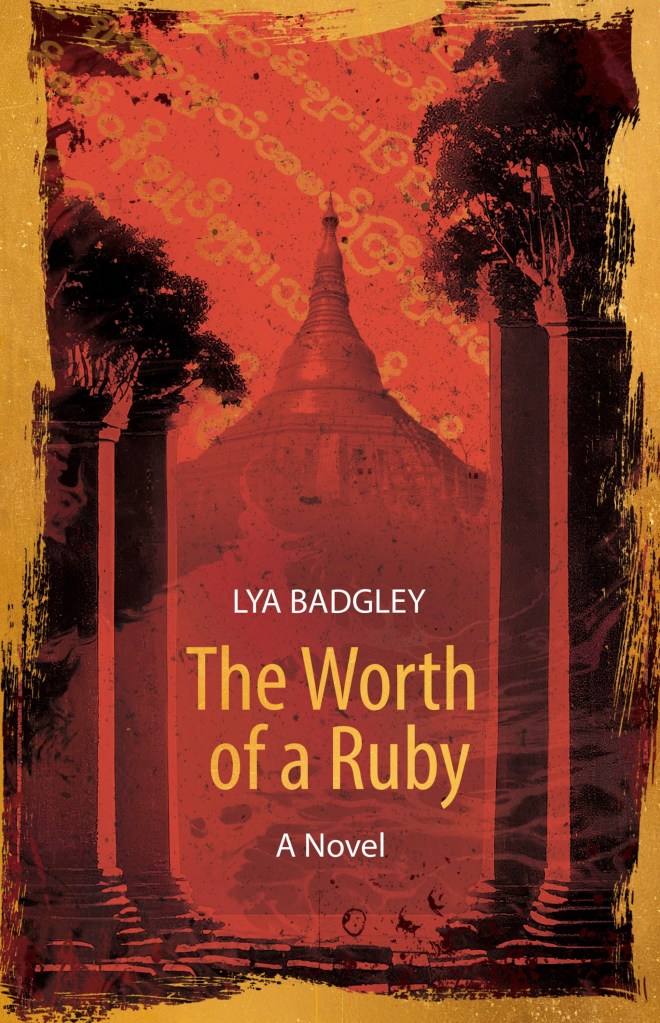
Last year your second novel, The Worth of a Ruby, was launched, and youve recently been in Myanmar. Whats been your impression of the place in 2024, still suffering under the coup and with not such good prospects as in the 2010s? Could you ever go back there to live?

Sitting in the Inya Lake Hotel in Yangon as I write this, I can see that the people here carry a veil over their eyes that I don’t recall from my previous visits. Nevertheless, the cyclical nature of oppression has persisted here for a long time. My husband and I would move back in a heartbeat if there were opportunities and adequate healthcare for my situation. This country remains a part of my identity, and I dream of a future where I can return to help contribute to its recovery.

Your current/recent visit to SE Asia has taken you to what places? What have been the most memorable experiences?

I’m in Yangon until mid-October and will then spend a few days in Singapore, slogging my books to the shops there. As always, the most memorable experiences are renewing the deep connections with the people I care about.

Both your books feature people/countries having to confront their past/dark side. How do you think a novel can help navigate through the complexities and nuances of situations, or at least show that nothing is as black and white as first thought?

That’s a complex question, and any answer can only touch the surface. Both of my novels explore people and countries grappling with their pasts and confronting their darker sides, but the truth is, no single story can fully capture the complexity of these situations. What a novel can do, however, is open a window into the nuances and shades of gray that exist beneath the surface. By diving into characters’ personal struggles and the layered histories of their countries, readers can begin to see that nothing is as black and white as it might seem. A novel helps illuminate the hidden motivations, moral ambiguities, and emotional complexities that are often overlooked, offering a more profound understanding of the tangled web of human experience.

Your work-in-progress novel is set in Bosnia. What themes will that explore?

The themes in my work-in-progress novel set in Bosnia will continue to explore the complexities of personal and national histories, much like my previous work. However, this time I’m weaving in elements of magic realism, drawing inspiration from the Sarajevo Haggadah and Balkan folktales. These mystical elements will add a new layer to the narrative, deepening the exploration of identity, memory, and the ways in which the past haunts the present. The use of folklore will allow me to delve into the region’s rich cultural traditions while keeping the focus on the enduring human themes of loss, resilience, and transformation.

Where is homefor you now? How do you think living in other countries has influenced your outlook and personality?

I am wildly curious, and home is the room I’m sitting in. Though we pay a mortgage on our condo in Snohomish, home has always been more about where I am in the moment than a fixed place. Living in different countries has profoundly shaped my outlook and personality. It’s given me a deep appreciation for diverse perspectives and a sense of adaptability. I’ve learned that people’s values and struggles can be both uniquely local and universally human. Experiencing different cultures has also sparked my curiosity and influenced the way I approach storytelling, allowing me to blend personal and global themes into my work.

What do you think are your points of difference/advantages that you bring to your writing?

One of the key differences I bring to my writing is my unique upbringing. Growing up in Myanmar with parents who encouraged both critical thinking and creativity gave me an early appreciation for the complexities of the world. I’ve lived in many countries and experienced firsthand the way cultures can both clash and blend, and that depth of perspective is something I try to infuse into my stories. Navigating a chronic disease like multiple sclerosis has also shaped my writing. It’s taught me resilience, patience, and how to find beauty in challenging situations. I think these experiences allow me to write characters and narratives that explore the shades of gray in life—the areas where pain, perseverance, and hope intersect.

Why do you think that a high proportion of expats/students/backpackers/digital nomads are from the Pacific Northwest and find themselves living and working in Southeast Asia? (I know three people from Snohomish who live in Asia).

It’s an interesting phenomenon, and I think the Pacific Northwest has some unique qualities that make it a breeding ground for wanderers. Growing up on the edge of the continent, facing west, there’s always been a sense of curiosity about what’s beyond the horizon. The region’s creative spirit—fueled by its music scene, constant rain, endless coffee, and a long history of innovation with computers and tech—fosters a mindset that’s open to exploration and new ideas. People from the PNW are used to thinking outside the box, and there’s a certain resilience that comes from enduring gray skies. This drive for adventure and discovery seems to naturally extend to places like Southeast Asia, where expats, students, backpackers, and digital nomads can experience a different pace of life while still tapping into their creative or entrepreneurial sides. Though, it blows my mind that you know three people from my little town of Snohomish living in Asia!

For aspiring writers and creatives, and for readers of Borderless, whats your advice?

My advice for aspiring writers, creatives, and readers of Borderless is simple: always take the step, go through the door you don’t know. The unknown is where growth, creativity, and discovery happen. Don’t be afraid to embrace uncertainty and take risks in your work and life. Whether it’s starting a new project, exploring a different idea, or venturing into unfamiliar territory, those leaps often lead to the most rewarding experiences. Stay curious, keep pushing boundaries, and trust that the act of creating—no matter how daunting—will always teach you something new.

Where can readers find you?

Email: lyabadgley@comcast.net

Mobile: 360 348 7059

110 Cedar Ave, Unit 302, Snohomish WA 98290

www.lyabadgley.com

www.facebook.com/lyabadgleyauthor

www.instagram.com/lyabadgleyauthor

Youtube: www.youtube.com/@lyabadgleyauthor 

.

[1] American musician

Keith Lyons (keithlyons.net) is an award-winning writer and creative writing mentor originally from New Zealand who has spent a quarter of his existence living and working in Asia including southwest China, Myanmar and Bali. His Venn diagram of happiness features the aroma of freshly-roasted coffee, the negative ions of the natural world including moving water, and connecting with others in meaningful ways. A Contributing Editor on Borderless journal’s Editorial Board, his work has appeared in Borderless since its early days, and his writing featured in the anthology Monalisa No Longer Smiles.

.

PLEASE NOTE: ARTICLES CAN ONLY BE REPRODUCED IN OTHER SITES WITH DUE ACKNOWLEDGEMENT TO BORDERLESS JOURNAL. 

Click here to access the Borderless anthology, Monalisa No Longer Smiles

Click here to access Monalisa No Longer Smiles on Kindle Amazon International

Categories
The Observant Immigrant

Sometimes Less is More…

By Candice Louisa Daquin

When you read sci-fi novels and they have most of the world living in small sections of the planet, in endless skyscrapers, the future can feel a little dystopian. As practical as living in close proximity is, some of us yearn to be away from the maddening crowd. As our world swells in number (7.753 billion as of 2020, projected to reach 9.8 billion in 2050, and 11.2 billion in 2100 according to UN statistics) is it feasible to live off the grid any more? Is it becoming more difficult not to be part of the mainstream?

During a time of illness, I watched a strange TV show Alaskan Bush People, I would not usually entertain. It was a wilderness show about a family who chose to live off-the-grid. I watched it the way we view any reality TV, with disbelief and morbid curiosity. However, with time, I began to get involved. I admired that these eccentric people — even if some of it was spoofed for the camera — could live in this way. They valued being able to live off the land. I began to wonder if we put too much onus on city-urban-dwelling to the detriment of other life-styles. If we judged those who lived more basically, assuming we were sophisticated. If the grid failed in some way, if electricity or the internet failed, or a giant EMP burst took everything out, we’d need those lost-skills, we’d value those kinds of people more. Maybe we should know that now, before it does, and not get caught up on judging people on how large their house is, or what car they drive. After all, we’re rapidly hurtling toward a future where ‘big’ is going to be problematic and finding alternatives will be prized.

When I moved from a large city to a smaller one, I felt completely cut off from what I termed the trappings of city living, such as the ballet, theatre, good book stores, interesting alternative restaurants. It took me some time to adjust and settle into a slower life with less options. Part of me never stopped missing the variety of a large city, its diverse heart. But I did appreciate the calm that came with a slower pace of life. Sometimes less is more. Moreover, when I met people from big cities, I noticed how their identities were hinged on their experiences of ‘culture’ and how judgmental they were about what counted and what did not. Even the use of words like ‘native’ or ‘naïve’ artist, seemed patronising and racist. Who said one culture or city had more value over another? When did we start respecting the business man over the farmer? When our very existence depends upon the latter? It’s a little like what happened during Covid-19. We realised the value of nurses and front-line-workers a little late in the day.

There are many reasons people crave moving from larger communities to smaller ones. The most obvious is retirement. You may live in a large city but it’s expensive and fast-paced and when you retire it is possible you need different things. You may swap the city for the beach, mountains or lakes. You may find a retirement community has more to offer at that juncture in your life, you may want to have a horse farm or live in another country with more sun. The retiring Baby Boomer generation has caused a massive uptick in house prices throughout desirable parts of America, as they take their affluence to other areas and bring their expectations with it. “Baby boomers held an average wealth of $629,683 in their 50s, equivalent to $704,158 in today’s value. Worse off is Generation X who, on average, owned $396,293 when they started reaching their 50s,” Boomers may be the last ‘affluent’ generation in America to have this mobility and generational wealth. It has changed the landscape of America in terms of house prices.

Take for example a town: New Braunfels was a sleepy little town with nothing to recommend it. Boring but by a river, with an outlet mall nearby. New Braunfels is currently growing at a rate of 5.96% annually and its population has increased by 76.03% since the most recent census, which recorded a population of 57,740 in 2010. It had nothing much to recommend it. Retirees began to move in because it was affordable, had year-round good weather, you could get a lot more for your money than if you chose the more traditional retiree communities in Florida and Arizona. This incoming wave perpetuated another; an exodus of large companies from expensive states like California, wishing to re-settle in cheaper ones. They brought jobs and housing. Before you knew it, this little town was one of the fastest growing towns in America, which is baffling given it has very little to recommend it. But like anything, exodus isn’t always based upon seeking the best, but seeking the most practical, which in some ways it was. More baffling; Texas is home to seven of the 15 fastest-growing cities, which when you compare the beauty of other states, seems non-sensical, but speaks to consumers need for less expensive, warmer states, seemingly at any cost.

However, some smaller communities exist by choice before retirement. Historically there have been reasons people have chosen to live separately. Not long ago, the majority of the world was rural and historically that historically the case. But in the last 100 years, this has drastically changed with more opting for urban living. Religious difference and cultural practice are among the most common reasons people have chosen to live apart. In the 1960s and 1970s ‘fringe’ groups and sub-culture became more familiar among the main-stream. Perhaps because in the 1950’s the idea of being a ‘teenager’ really took off and emancipated young people into being more diverse and following their own interests over their parents. This led to more sub-cultures popping up. That said, is it really such a recent phenomenon?

Alexander the Great was only eighteen when he ravaged a quarter of the planet with his conquests. Other famous historical conquests were at the hands of what we’d deem today, very young people. So younger people have always sought to strike out on their own and forge their identities. The suffragettes in the 1930s, the Zazou in France in WW2, Jazz Age of the 1920’s, the Fin de siècle amongst artists from 1880 onwards … the list is endless. Existentialists, LGBTQ, Nudists, Dadaists, counterculture in the 1960’s, there are so many explosions, one would be forgiven for thinking there is no mainstream, but in reality, these groups have always been the minority and often fleeting.

Youth and age aren’t the sole determinants for such sub-cultures to evolve. People seem divided into those who seek homogenisation and those who seek diversity. For some it may not be a choice, such as LGBTQ or those on the spectrum or isolated communities that were ‘discovered’. But for others, it’s a deliberate attempt to dislocate from the mainstream to express their individual perspectives.  Of those isolated communities and uncontacted people, it is hard to establish how many would have wished to become mainstream and how much choice they had in the matter. Some indigenous peoples are in voluntary isolation, and do not require ‘saving’ as per the modern cultural assumption. Some indigenous groups live on national grounds, such as the Brazilian Vale do Javariin and those who inhabit the North Sentinel Island in India.

I have visited Quaker, Shaker Mennonite and Amish communities as they have fascinating insights on how to live outside the mainstream. Some do without electricity, others have seemingly flexible prescriptions where their ‘young’ can leave the community once adult and spend time in the outside world before choosing whether to return or not, this is known as ‘rumspringa’. This seemed risky as many could seek the excitement of the unknown, but ironically more return to the community. It reinforces the idea that small communities have staying power, which large communities may dismiss.

There are groups of youth, doing one thing, middle-aged, doing another and a whole spectrum of interests in-between. I find this particularly interesting when you go to a fair or show, and suddenly thousands of people all interested in the same thing turn out. It makes you wonder, where have they been hiding? I have experienced this at rock concerts, medieval and renaissance fairs, comic con, tattoo exposes and vampire balls. I attended out of interest but as an outsider. Watching people who are committed to their passions, get together in fantastic outfits, is a fast insight into how many sub-groups exist. Perhaps all of us have within our main-group, sub-genre groups of interest.

Back in the day we called these cults, clans, cliques and (other) but most of those terms have become insulting to future generations, that saw the impact of labeling. After one of the first American mass murders committed at a school (Columbine), the two shooters were described as ‘Goths’ and consequently, many who dressed in Goth style, were attacked. Sadly the Goth movement had nothing to do with violence but this is what happens when we assume people different from us, must have negative attributes; “Qualitative results reveal that students themselves highlight the importance of exposure to diverse others, family upbringing, the media, and several other key factors as important considerations in how they treat other people; this suggests a multitude of ways that people create their beliefs.” The same happens in America with the church of Satan which does worship the fallen angel, Lucifer, as an alternative God-head, but does not condone or sanction many of the ‘evil’ practices associated with Satanism. It isn’t hard to understand why there would be misunderstanding with such extremes but what of less extreme smaller communities?

The Mormon church not only owns Utah but much of other states too. It is one of the richest religions based out of America and has a huge recruitment reach worldwide. When Mitt Romney, an elder in the Mormon church of America, ran for President, one of the reasons he lost was due to a fear of Mormonism. The ‘other’ aspect to their faith, set them apart from the more mainstream Christianity. However, this is shifting as more politicians of Muslim and Hindu faith are becoming key figures, the fear of ‘other’ is lessening. One could argue some fear of ‘other’ isn’t a bad thing, but it’s the extent to which we react to it, that matters. I may not approve of Mormonism, I may think it’s a phony made-up version of Christianity (The Book of Mormon talks of the history of two tribes of Israel—the fair-skinned, ‘virtuous’ Nephites and the dark-skinned, ‘conniving’ Lamanites. Much of its ‘story’ is a direct retelling of The Bible, unoriginally claiming the same events occurred in North America as in Israel. To me, it seemed like racism dressed up as scriptures). Mormonism has been said to act like a pyramid scheme, but should I be prejudiced against someone on the basis of their being Mormon alone? No. We can be cautious or disagree with a religion without being prejudiced against it. On the other hand, shouldn’t we be conscientious of trying to maintain truth, which means if something perturbs us, like the church of Satan or Mormonism, bringing that to light for others to make an informed choice? Perhaps with faith there is no room for choice, it is a matter of faith, and none of us can persuade another to change their perspective. This might be why wars are so often about faith.

Currently throughout America there are many sects and groups who thrive in relative obscurity and are untouched by the mainstream. Whilst group polarisation clearly exists, the famous stories of cults throughout the world committing mass suicide like the Branch Davidians, or fighting against authorities, isn’t as common place now, but that doesn’t mean they’re not out there. Social media has made it easier to be underground and thrive but people always find ways. Whether those communities can come together, depends upon how incompatible they are. Near where I live there is a conservative Jewish community where only conservative Jews live. They chose to live separately because of a high number of hate crimes throughout America, where Jews continue to be the #1 most attacked group.

Other groups have become more comfortable co-existing. Twenty years ago, you would not have seen as much diversity as today. In my neighborhood, there are people of every culture and skin colour — Sikhs, Jews, LGBTQ, single parents, tattooed bikers, affluent conservatives, communists. It has been interesting to see how they are able to come together over a mutual interest and get along. When it’s a special event like Halloween, everyone let their children free to trick or treat. They do not avoid certain houses like they once did. There is an acceptance that we have more in common than we have differences and even if we vote differently, look differently, believe differently, we can put some of that aside for a common good.

Just recently I was asked how I could tolerate someone who was say, a Trumpster. It got me thinking that there must be a cut-off in terms of what we do tolerate. For example, if someone were a racist, a Nazi, a pedophile, I would not wish to be in touch with them or live next door to them. But both my neighbors voted for Trump, and I didn’t vote for Trump, but that isn’t enough of an ideological divide for us to not run in the same circle. Interesting they are both Hispanic and there was this idea Trumpsters were Anglo which isn’t always the case. It is those perpetuated stereotypes that cause the most harm. We can get past differences in ideology but most of us have sticking points such as extreme hate, prejudice or harm to children that would be unrecoverable differences. This is how society polices itself to some extent and legitimizes blame. If we didn’t then racism would be more acceptable, but the nuance is sometimes subtle.

The media has a powerful influence on people and can be responsible for promoting a stereotype of a particular group or enhancing scapegoating behavior. People let loose on social media and are uninhibited in their vitriol. This can create more divisions between us. It is difficult to police prejudice because it involves opinion, which may not always show itself in ways that are unlawful. But when we consider communities; communities can thrive with difference, without becoming contentious. Perhaps because our wish to be united is greater than our wish for division. Secularism is misrepresented often. Although when you drive through parts of the American South as a person of colour, you could be forgiven for thinking ‘secular people’ can be hateful, because there are towns where you will definitely not be welcome. Some groups may not outright say they don’t accept others (people of colour for example) but they will actively encourage segregation through their secularity. This may be unavoidable as much as it is racist, but how can we really change that? Would it work to demand racists accept people of colour as next door neighbours? Would it be good for the people of colour to be part of that experiment?

Another concern is a subject brought up by famed linguist, Professor Anvita Abbi, in relation to bringing distant or smaller cultures into the mainstream and their impact. Dr. Abbi received her Ph.D. from Cornell University, USA and began teaching Linguistics at Kansas State University, where she says, she “realised that a large number of Indian languages especially those spoken by the marginalized communities are under-researched.” This led to Abbi wishing to “unearth the vast knowledge base buried in the linguistic structure of Great Andamanese before it is lost to the world.” In the process, as she recorded in her book, Voices from the Lost Horizon, she realised this language was “a moribund language of the only surviving pre-Neolithic tribe, the remnants of the first migration out of Africa 70,000 years ago.” Awareness of the Great Andamanese, resulted in invariable negatives; “Outsider-contact has brought diseases, subjugation, sexual assault, and ultimately decimation of the tribal culture, tribal life, and tribal language.” But what has been learned from this outside culture, is invaluable. Sadly as Dr. Abbi says; “Jarawas maintained the isolation and now they regret the interaction with us.” Which if we consider other ‘first contact’ scenarios, seems a universal response.

‘Mainstreaming’ is a colonial model, which can suppress the indigenous dignity of people in favour of assimilation. But assimilation isn’t the same as ‘fitting in’ because often, the qualities of incoming cultures are derided by this colonial model, leaving those incoming, feeing disrespected and alienated. In America, Mexicans are considered ‘less than’ other immigrants (Asian predominantly) because they may have lower education rates. This breeds a division between immigrants that undermines those least appreciated by the host-country. With Asians set to overtake Hispanics in America, this has been at the forefront of race-relations and considerations lately, with some tensions building up as for a long time it was anticipated America would become Hispanic. When Donald Trump was President, he actively encouraged immigration from certain countries over others, because he believed those countries had more valuable people. This sounds an awful lot like the argument for eugenics and, at its core, it shares a lot with racists who believe certain groups have more potential than others.

When Abbi was asked what the ideal way for Great Andamanese integration to occur where language and cultures were not eroded but blended with the mainstream, she said in her experience,“[t]he idea of mainstreaming and merging these tribes into our civilisation is nothing but usurping their rights to their land, forest, water, and way of life. ‘Development’ may kill these tribes. These tribes have amalgamated their life with nature so well that they are aware of secrets of life.  Any kind of interference will disturb this harmony.” Perhaps we can learn from the poor, exploitative outcomes of assimilation between developed communities versus those they perceive as less developed. The fault of perceiving difference as ‘less than’ is not appreciating the dignity and abilities of those cultures. Linguistically, socially, they may have many advanced ideas over mainstream culture, but are relegated to ‘less than’ in xenophobic or colonialist thought.

Take the Native Americans of America as one example. They believed the earth was for everyone and no one group should own the earth. They are often considered one of the first cultures to be environmentalists because of their acute awareness of balance and the need to give back to the land rather than rape it. When colonialists came to America, they didn’t respect that and demanded ownership of shared lands, as well as working the land sometimes to death. Slavery and mistreatment of land have that in common, the need to conquer, own and a capitalist model of growth. Those under the yoke of such tyranny do not thrive, only the ruling minority do. In this sense, it is not far removed from fiefdoms and seems to be a penchant of humans given the opportunity. But what happens when we visit cultures where a more egalitarian approach is mainstream? Less oppression and greed in favour of sharing?

It could be argued this is why capitalist model countries like America still fear Communism and Socialism. They recognise this alternative model would undermine the oppressive aspects of Capitalism. Whilst no one ethos appears to work without serious flaws and hypocrisy, we’d probably do better to work together, blending aspects of all, than continue a ‘cold war’ about our differences. When you look at the recent antagonisms between countries, it become apparent, war solves nothing, and the wealth which could be poured into helping countries, are being squandered on military posturing and grandstanding. Until larger communities respect the dignities of smaller groups, we cannot expect this to change. On the other hand, can we afford to give up that military grandstanding if other large countries insist on becoming the conquerors we once were? How can we unite together without becoming vulnerable?

Studies have shown that integration helps overcome prejudice and racism. When people have LGBTQ children, they are more likely to become accepting of LGBTQ and racists become less racist, when people of colour move into their neighbourhoods. This suggests some of the hate is more ignorance and fear although that doesn’t justify it. But should the minority have to stomach that hate to find acceptance for their progeny? Maybe they always have. If we consider the years it has taken some minorities to become more mainstream, it has always been through personal sacrifices. Even Martin Luther King Jr’s murder galvanised more social and racial change in America. Such tragedies create martyrs, harbingers of change, but at what cost? Should it take such extremes as assassinations and mass shootings to wrought change? It seems human nature only understands things when they’re extreme. A case in point is the environment and the long duration where campaigners have warned we’re dooming future generations but business interests were put first.

How with so much division even on subjects that can be proven, such a climate change, can we hope to lay down our differences and come together? Perhaps the best we can hope for, is if enough of us try to embrace difference instead of letting our xenophobic tendencies frighten us, we will do a better job.

Immigration in America is considered a ‘problem’, but it can equally be a solution if we redefine things. Immigration is the bedrock of how America came into existence — from the Native Americans who came across the Barring Strait and made a deserted land, home, to the European conquerors who stole it but equally populated it from diverse cultures. As much as we have fought and hurt one another, we have needed each other.

Each epoch in people’s lives, shifts what matters to that particular generation, and perhaps it is the fear of being obsolete or an inability to get onboard with new ideas (or a fear that old ideas will be ignored) that causes inter-generational strife. But again, if we balance and appreciate the diverse perspective, we all have something to offer, we are stronger together than apart. If we humble ourselves and remember to learn from those cultures that may not have had as much attention given them, but held great wisdom, we may learn alternate ways of cooperating and thriving. If harmony is the goal for most of us, we need to vote and avoid dictators taking that freedom away.

Candice Louisa Daquin is a Psychotherapist and Editor, having worked in Europe, Canada and the USA. Daquins own work is also published widely, she has written five books of poetry, the last published by Finishing Line Press called Pinch the Lock. Her website is www thefeatheredsleep.com

.

PLEASE NOTE: ARTICLES CAN ONLY BE REPRODUCED IN OTHER SITES WITH DUE ACKNOWLEDGEMENT TO BORDERLESS JOURNAL.

Categories
The Observant Immigrant

Can We Create a Better World by Just Wishing for it?

By Candice Louisa Daquin

The wish to laugh and shrug off differences that create unhappiness and wars is a universal one. The majority of us want to avoid unhappiness at any cost. There is however, a downside to trying to avoid unhappiness by being too open about unhappiness. When we begin to pathologize everything as a disorder, we may inadvertently neglect our ability to generate better mental health.

Before mental illness was discussed en mass, it was private and considered shameful. This had obvious detrimental effects on those suffering, but one could also argue there was a benefit to not making everything so extremely public. Like with any argument, there are pros and cons to how far we publicize mental health. The extreme of ignoring it, didn’t work. But does the extreme of talking about it to death, really help people as much as we think?

In the second half of the 20th century, owing in part to a neglect of, and a need for; improved mental health care, societies began to shift from encouraging suppression of emotion to a recognition of psychological distress and its impact. Institutes and then the de-institutionalisation movement, became ways of coping with people who struggled to function in society. But these people didn’t choose to be unhappy. Whilst it’s obvious this shift to publishing mental health instead of hiding it, has been highly beneficial in some regards; we should also consider its far reaching ramifications.

“(Historically) Many cultures have viewed mental illness as a form of religious punishment or demonic possession. In ancient Egyptian, Indian, Greek, and Roman writings, mental illness was categorised as a religious or personal problem. In the 5th century B.C., Hippocrates was a pioneer in treating mentally ill people with techniques not rooted in religion or superstition; instead, he focused on changing a mentally ill patient’s environment or occupation or administering certain substances as medications. During the Middle Ages, the mentally ill were believed to be possessed or in need of religion. Negative attitudes towards mental illness persisted into the 18th century in the United States, leading to stigmatisation of mental illness, and unhygienic (and often degrading) confinement of mentally ill individuals,” states an article on this issue.

By publicising everything, in reaction to the days when mental health was viewed with more stigma, we have not improved suicide statistics or mental illness numbers like we’d logically assume. When something is freed of stigma and shame, more people admit to suffering from mental illness than ever before, which will make it seem like more people have mental illness, when it could simply be that they are more willing to admit to having it. On the other hand, there is an observed phenomena of things becoming socially contagious.

How can we be sure we’re not increasing mental health numbers by making it so acceptable to be mentally ill? By over-emphasising it on social media? Publicising the struggle to avoid stigma, is positive, but the degree to which we discuss mental illness may be so open, as to increase numbers or over-diagnose people. For example, everyone gets sad sometimes, that doesn’t mean everyone suffers from clinical depression. Everyone gets anxious sometimes but that doesn’t mean everyone suffers from anxiety. The distinction is: Is it a disorder or a feeling? Do clinicians spend enough time considering this when they give patients a life-long diagnosis? And what is the effect of such a diagnosis?

When psychiatrists diagnose mass numbers of people, especially easily influenced teenagers, with serious life-changing mental illnesses, that immediately means the reported numbers swell. Who is to say they would be that large if diagnosis weren’t so open ended? Nebulous? Open to outside influence? Or even, the pressure of pharmaceutical companies and desperate doctors wanting quick fixes? What of parents who don’t know how to handle their rebellious teen? Is that mental illness or just life? If they demand treatment and the teen is labeled mentally ill, do they fulfil that prophecy? And if they hadn’t been diagnosed, would their reaction and outcome be different?

Our innate ability to laugh and shrug things off, comes from the challenges in life that were so terrible we had no choice if we wanted to go forward. If we remove those challenges, are we teaching our kids how to cope with hard things or wrapping them in cotton wool and medicating them? When a family of ten children ended up with eight routinely dying, how else could families cope with such tragedy but to have that coping mechanism of laughter and the ability to shrug off despair and horror? It did not mean anyone was less caring, or feeling, but that sensitivity had to be weighed against our ability to endure. We could argue we endure less pain now than ever before, as we are less likely to lose a great number of people we know, die due to disease and famine and other historical reasons for early death. Many will never even see the body of a dead relative, so how can they process that loss?

The modern world brings with it, its own attendant risks and stressors. People growing up in 1850 may not have had to worry in the same way, about looking young to keep a job, or trying to ‘do it all.’ On the other hand, they might have had to worry about not having a society that helped them if they lost a job, or how to stop their families from starving or their village from being raided. They had fewer social cushions in that sense and more of a risky day-to-day. This was starkly true when we compare the recent pandemic outbreak with say the plagues of earlier centuries. People died in the street and were left to rot, whereas now, even as we struggled and many died, we had a modicum of order. For all our terrors with Covid 19, it could have been far, far worse and has been. I say this from a position of privilege where I lived in a society that had access to medical care, and I’m fully aware many still do not, but nevertheless if we directly compare the experience of the Black Death with Covid-19, we can see tangible improvement in what those suffering, could access.

This means whether we believe it or not, appreciate it or not, we have over-all an improved quality of life than even 50 years ago. At the same time, we may have swapped some deficits for others. It may seem a minor consolation for the myriad of modern-day woes, but we are better off than our grandparents who were called ‘The Silent Generation’. They grew up learning to not speak of their struggles but cope with them silently. These days we have outlets. And in other ways, we are more alone, it is a strange mixture of progress and back-tracking. Some would argue our grandparents had a simpler, healthier life. But if average life expectancy is anything to go by, we are growing older because for the majority, our access to medical care and over-all nutrition, are improved. On the other hand, more grow old but sick-old, which is not perhaps, something to aspire to.

When we consider how badly many eat, and in truth, we do ourselves no favour when so many of us are obese and suffering from diseases of modern living such as lack of exercise, heavy drinking, lack of sleep and eating fast-food. It might be most accurate to say we have swapped some deficits such as dying due to curable diseases, and dying from malnutrition or lack of access to care and antibiotics, with modern deficits like increasing cancer rates and increasing auto immune disorders, all of which are increasing with the swell of the modern world and its life-style.

What it comes down to is this; through the wars of the past, people stood next to each other in trenches whilst their friends were blown to pieces or died in agony. They had PTSD[1] then, they suffered from depression and anxiety, but they also had no choice but to carry on. For some, the only way out was suicide or AWOL[2], while for many, they stuffed their feelings down and didn’t speak of it. Clinicians thought this way of coping caused illness and it led along with other reasons, to an improved mental health system.

But, now, in 2022, you might be forgiven for thinking EVERYTHING was a disease, and EVERYONE suffered from something, and you might find yourself wondering if some of this perceived increase was the direct result of going from one extreme to the other. Initially, nobody was mentally ill. Nowadays, who isn’t? Is this a better model?

Having worked with mentally ill people for years as a psychotherapist, I can attest that mental illness is a reality for many. I knew it was before I ever worked in the field, and it was one reason I chose that field. I wanted to help others because I saw viscerally what happened to those who did not receive help. Despite this I came to see the value of sometimes putting aside all the labels and diagnosis and medications and treatments and trying to just get on with the process of living. If we tell someone they are mentally ill and medicate them and coddle them and tell them they don’t need to try because they are so sick, then it doesn’t give them much motivation to see what else they can do.

True, for many, they are too sick to do anything but survive and that in of itself is a big achievement. So, when we talk about the need to motivate ourselves beyond labels, we’re talking about those who we’d call high functioning. People who may suffer from depression, or anxiety, but are very able to do a lot of things despite that. Does medication and therapy and labeling them, really help them make the most of their lives? Is putting them on disability for years without reviewing if things could or have changed, help? Can they learn something from our ancestors who had to just laugh and get on with it, no matter how tough things got?

It may seem a very old-fashioned approach to consider ‘toughing it out’ and having come to America and seen how much onus they put on toughing it out, I have mixed feelings about the value of doing so. The idea of being tough enough means there is always the reverse (not being tough enough) and that feels judgmental. Being judgmental, I think, has no place in recovery.

What does have a place in recovery, is doing the best you can and not letting labels define or defeat you. In this sense, I see a lot of commonalities with those struggling today and those who struggled 150 years ago. Maybe we can all learn from them and combine that with some modern prescriptivism that give us more chance to laugh and thrive, rather than fall under the yoke of a diagnosis and its self-fulfilling prophecy?

I have had many clients who felt their diagnosis disincentivized them from any other course of action than being a patient. The medication route alone is fraught with ignorance. For so long SSRIs[3] and other anti-depressants were heralded as lifesavers for depressed people, but what proof existed for this aside the hope a cure had been found? Years later studies showed only 30% of people seemed to respond to anti-depressants versus placebo.

Then second and third generation drugs were created, all the while charging exorbitant prices, and patients routinely took 2/3/4 medications for one ‘illness.’ Aside the expense and physical toll taking that much medication can do, there was a mental cost. Patients felt over-medicated, but not happier, not ‘better.’ By tputing their faith in drugs, they lost their faith in other ways of getting ‘better’ and some spiraled downward. The reality is we are all different and we process life differently. Some of us are more forward-focused, others, through imitation, genes or experience, may not be. It isn’t a deficit or illness, it’s a personality, that can change somewhat but should also be understood as the diversity of how humans cope.

Treatment Resistant Depression became the new diagnosis when modern medication failed, and new drugs were considered in tangent with current drugs, but this led to people taking more drugs, for longer periods of time, often with little improvement. How much of this is due to a negligent approach to treatment that only saw drugs as the answer? Meanwhile therapy was cut-back or became prohibitively expensive, cutting off other options for treatment. It’s logical that therapy can help avoid feeling isolated, but when the system prefers to medicate than provide therapy, there are so many taking medicines for years, that were only meant as stopgaps.

Should the media or your general physician, be the one telling you what drugs you should be taking, if at all? Preying on the desperation families  by the introduction of for-profit medication, muddies the waters further.  The disparity of information means no one source can be trusted, especially as information is ever-changing. More recently a study showed that anti-depressants may not work at all it was commonly held clinical depression was caused by a chemical imbalance and studies show correcting that imbalance does not improve depression as was once thought.

This shows us that psychiatry still has a long way to go, and when they claim things as facts, they rarely are. It contends we should not blindly trust what has become a profit led industry, where many of its practitioners see patients for a short time but somehow still diagnose them with serious mental disorders. Surely, we should consider equally, the importance of conservative diagnoses and recognise that normal variants are not necessarily disorders. In many cases, it may be that under diagnosing rather than over-diagnosing could work better.

For example, I know of many (too many) patients who told me they were diagnosed with bipolar disorder, before the age of 21 by a regular non-mental health doctor, or by a psychiatrist. Their subsequent mistrust of the system is understandable with that experience. How can someone tell you that you have bipolar disorder at 17 years of age, from a 20-minute conversation?

Even the diagnostic criteria for bipolar 1 or 2 in the DSM (Psychiatric Diagnostic and Statistical Manual), is flawed, because it’s too generalised and only highly trained professionals would be able to understand the nuance. Most are not that trained and therefore take at face value, when a diagnostic tool says someone has bipolar if they experience an episode of mania. But firstly, are they defining mania correctly? Is the patient describing mania correctly or being led? Were there mitigating factors?

If you diagnose a child with a serious mental disorder and medicate them, how can you be sure their brains aren’t affected by taking that strong medication before they have reached full development? How can you be sure they are not becoming what they are told they are? Too often, people spend years under the cloud of medication, only to emerge and realize that what was a discrete episode of depression, was medicated for decades, robbing them of the ability to recover? Doesn’t a label make it likely that some will feel helpless?

Moreover, how much power does a label have on our sub-conscious? If we are told, we are (will not be able to do something, why would we even try? If we believe we are depressed, are we less or more likely to fight against it? Isn’t some fighting a good thing? Likewise, diagnosing older people with a disease like Bipolar (a disease that occurs after puberty), shows the mistakes of the psychiatric world. How can a 70-year-old man ‘suddenly’ be Bipolar unless he has a brain-tumour or otherwise? Dementia is often misdiagnosed as Bipolar because badly trained doctors seek answers for aberrant behavior, without considering the whole story, such as how can someone of 70 develop a disease that affects those around the age of 18? Sure, some can slip through the gaps, but often, it’s the frustration of the family or doctor colouring the diagnosis. Such life-long labels should not be given lightly.

What if we treat mental illness depending upon its severity, in a different way? Consider the value of improving real-world ways of copying despite it, instead of relying on medications that were only ever meant as a stop gap and not developed to be taken for years on end? Nor over-medicating without due cause. Nor medicating young people based on very loose diagnostic expectations. Or assuming everyone who says they feel depressed or anxious, is clinically depressed or anxious, or that medication is their only solution?

Organisations that take vulnerable teens who often have co-morbid diagnosis of drug-or-alcohol abuse alongside mental illness, into the wilds, seem to be a real-world way of encouraging those young people to find coping mechanisms outside of addiction and reliance upon medication. Equally, when a young person (or anyone really) is productively employed in something they feel has meaning, this is one way anxiety and depression can improve.

We’ve seen this with Covid-19 and the necessary isolation of so many school children. Whilst it was unavoidable, the rates of depression spiked, in part because studies show people need interaction with each other. This is why online learning has a poorer outcome than classroom learning, this is why older people are less at risk of dementia if they socialise. We are social animals, we feed off each other and we empower each other. Finding your place in the world is always in relation to others to some extent.

We may never avoid war completely or our human tendency for strife, but we also have a powerful other side that urges people to do good, to help each other, to laugh and shrug off the differences that divide us. What good does’ division ever do? Unhappiness is unavoidable at times, but sometimes it’s a choice. We can choose to recognise something is hard and actively pursue ways of improving it. We can struggle through and feel good about the struggle and the effort we put in. if we take that all away and don’t encourage people to try, we give them no way out. Sometimes there is no way out of suffering or mental illness, but often we cannot know that unless we have tried.

Many years ago, people valued older people because they were considered wise and able to impart valuable life lessons to impetuous youth. Nowadays, the elderly are not respected and are often siphoned off into homes before their time, because people find them an inconvenience. There is a theory that humans became grandparents because grandparents were an intrinsic part of the family make-up. This explained why humans were among the only mammals to live long after menopause. Most animals die shortly after menopause, nature believing once your reproductive years are behind you, you have no value. But humans were distinct because they live long after menopause. The grandparent theory supports this by demonstrating the value of grandparents, and we can learn a lot from what nature already knows. It is never too late to have value, it is never too late to learn and grow, and it is never too late to laugh and come together, setting differences aside.

Those who achieve that, may well be happier and live healthier lives, as laughter is shown to be a great anti-ager as well as an improvement on our overall mental and physical health. Of course, what we can learn from the extremism found in the cult of positivity, illustrates there must be balance and we cannot expect to be happy all the time or unaffected by tragedy when it occurs. But staying there, and not attempting to move beyond it, to reclaim ourselves and our futures, seems to be a way to avoid going down that dark tunnel of no return.

Experience shows, we are what we think. We don’t have to be positive 24/7. To some extent any extreme sets us up for burnout and puts too much pressure on us to be ‘up’ all the time, when it’s natural to have down times. But striving for happiness, or contentment, or just finding ways to shrug off the smaller things and come together, those are things most of us wish for. So, it does no harm to direct our energies accordingly and prioritise our ability to cope. Perhaps our differences are less important sometimes, than what we have in common, and what we can do to make this world a more livable place.


[1] Post-traumatic Stress Disorder

[2] Absent without Official Leave

[3] Selective Serotonin Reuptake Inhibitors

Candice Louisa Daquin is a Psychotherapist and Editor, having worked in Europe, Canada and the USA. Daquins own work is also published widely, she has written five books of poetry, the last published by Finishing Line Press called Pinch the Lock. Her website is www thefeatheredsleep.com

.

PLEASE NOTE: ARTICLES CAN ONLY BE REPRODUCED IN OTHER SITES WITH DUE ACKNOWLEDGEMENT TO BORDERLESS JOURNAL.

Categories
Review

A Manmade Humanitarian Crisis

Meenakshi Malhotra visits Harsh Mander’s Locking down the Poor contextualising it against the current scenario

Title: Locking down the Poor: The Pandemic and India’s Moral Centre

Author: Harsh Mander

Publisher: Speaking Tiger Books

Harsh Mander’s Locking down the Poor: The Pandemic and India’s Moral Centre is a moving and poignant account of a crisis that he views as preventable. He gives us a detailed account of the havoc wreaked by the sudden announcement of a nation-wide lockdown in March. In early 2020, the first cases of Covid-19 infection were confirmed in India, and on 24 March the country’s prime minister announced a nationwide lockdown, giving the population of over 1.3 billion just four hours’ notice. It became obvious within a matter of days that India had plunged into a major humanitarian crisis.

In this stringent and harsh critique, Mander, a social activist, demonstrates how grave this crisis has been, and why it has had a lasting impact, from which the economy is still reeling. The author further shows us that this impact  is the direct consequence of public policy choices that the governance made, particularly of imposing the world’s longest and most stringent lockdown, with the smallest relief package. The underprivileged were abandoned even as their livelihoods were destroyed and the blue collared work force were pushed to the brink of starvation.

Mander brings us voices of out-of-work daily-wage and informal workers, the homeless and the destitute, all overwhelmed by hunger and dread. From the highways and overcrowded quarantine centres, he brings us stories of migrant workers who walked hundreds of kilometres to their villages or were prevented from doing so and detained. His book can be seen as an expose that lays bare the callous disregard for basic needs during an emergency closure of a country where tens of crores continue to live in congested shanties or single rooms, on pavements with no toilets and no running water and no possibility of physical distancing, even though more than seven decades have passed after independence.

While the pandemic was a world-wise crisis which forced nations and countries to take emergency   measures, Mander contends that the response within the country was a betrayal of the common people, the starving millions of India who live on the edge of hunger and poverty. Their increased precariousness, the author believes, was a result not only of a natural but a man-made, humanitarian crisis. It was the result, he says, of a short-sighted governance operating with a middle-class bias, who just refused to take into cognisance the ironies of pronouncements like “wash your hands” “stay home, stay safe”.

The author’s concerns here can be framed in the larger context of his anxiety and fears about the erosion of democratic politics in India. Speaking with the authority of an ombudsman wielding a blunderbuss, Mander backs his account with facts and statistics, observation and detailed reporting. Carrying out relief work in the unauthorised urban slums of Delhi, he sees the desperate situation of the people who are more threatened by hunger than the pandemic. That the government turned a blind eye to the omnipresent reality of hunger and poverty, was appalling to the author. Further, the alarming rise of domestic violence during the pandemic has also exposed the domestic space as a precarious location for many women in India and elsewhere. This fact has been well documented across a range of platforms and though this is not a primary concern in Locking Down the Poor.

The book concerns itself with hunger, the uncertain fate of migrants, daily wage labourers, the deepening class divides and many other issues of relevance. Mander points out the neglect of food security and the dismantling of informal labour rights, the wilful blindness of the courts and the state machinery which forced people into the space of their ‘homes’ regardless of the distress or human cost which has been colossal and disastrous. Commenting on the impact of the lockdown on the upper classes, Mander comments, “For the rich and middle classes, the lockdown was disorienting and a nuisance, but largely seen as necessary.” However, in the absence of safety nets, it was the poor who had to bear the brunt of the devastation that followed.

Thus, he writes that while the “appallingly planned lockdown offered zero protection to the poor, it placed the burden of the most destructive costs on their shoulders.” He also quotes journalist Ipsita Chakravarty who wrote in stark terms that “with the nationwide lockdown, the government drew a cordon around the bodies it wished to protect…pulling up the drawbridges to guard the chosen-those who could afford to stay in. On the bodies of those outside this charmed circle, the lockdown wrought havoc.”

Looking at the crisis of the first lockdown in 2020, after a gap when some time has elapsed, we realise that much of his critique holds true even now. The lack of foresight and proper planning became evident in the second wave as well, given the colossal tragedy of humongous proportions that unfolded in front of us and made all of us — rich, poor, middle -class citizens — mute victims and witnesses. A very comprehensive account of the impact on India of the Covid crisis, Locking down the Poor is also a chronicle of our times, of brutal exclusions that we practice unthinkingly on a daily basis. The book is in a sense as the blurb says a “ledger of our accountability at a time when the poor of India have been brought to despair and abjection by a callous state and an uncaring, unequal society”.

 Dr Meenakshi Malhotra is Associate Professor of English Literature at Hansraj College, University of Delhi, and has been involved in teaching and curriculum development in several universities. She has edited two books on Women and Lifewriting, Representing the Self and Claiming the I, in addition  to numerous published articles on gender, literature and feminist theory.       

.

PLEASE NOTE: ARTICLES CAN ONLY BE REPRODUCED IN OTHER SITES WITH DUE ACKNOWLEDGEMENT TO BORDERLESS JOURNAL

Categories
The Observant Immigrant

A Post-Pandemic Future …?

By Candice Louisa Daquin

Courtesy: Creative Commons

Having been a reluctant fan of apocalyptic fiction since I read George Orwell’s Nineteen Eighty-four (1949), I had studied virology when the AIDS pandemic struck and read a great number of virus-related books on infectious diseases. Despite this preparedness and the knowledge that it was not a case of IF, but WHEN, the next virus would strike, I think I speak for most of us when I say we were still all unprepared for Covid-19.

What the pandemic has taught us thus far is immeasurable and I believe it will last several generations, or I hope so. That said, it’s our human nature to want to move on. Not because we don’t care, but part of being alive is putting trauma and suffering behind us and ensuring those who survive, truly survive, which means living. Is that insensitive or just the nature of the beast? It can be insensitive, especially to the millions who have lost loved ones, but it’s also how humans generally operate.

Is it possible to move on and live a full life irrespective of this global tragedy without losing our compassion and responsibility to stop this from ever happening again?

The reality is; it will happen again, and for many of us, in our lifetime. What we can do is be better prepared and all that this entails.

What are the steps being taken to move toward the new post pandemic future? What are we doing differently? And why?

The pandemic divided us, it physically kept us apart. Some who were well versed in social skills and true extroverts, struggled when they emerged from the worst of the pandemic. They found it hard to do the things they used to be so skilled at. From lack of practice. I recall sitting at lunch with a friend who used to be the life-and-soul of any social event. She struggled for, as she put it; ‘her words’. Having become so used to speaking less and not being face-to-face, she said it felt ‘overwhelming’, ‘strange’ and she looked forward to going home.

That is a habit we must break. The comfort of the living room and the immediate family is intoxicating. We can rapidly get used to living in a smaller-seemingly safer, changed world where we see less people, go out less, and become accustomed to an intimate circle. For some of us this was always our life, and maybe not as challenging — a shift as it was for those who previously socialised a great deal.

In a way the pandemic was harder on the extrovert than the introvert. Because while introverts aren’t averse to socialising, they can find it exhausting; whereas extroverts gain energy from it. When you put an extrovert in a forced setting without social opportunity, they may struggle more than someone used to their own company.

But it’s not as simple as extrovert and introverts. Many of us are a little of both, depending on the situation. I can go out with a big group one day. But on other days I want to be alone. Few of us are extremes. Most are like ‘ambiverts’ a combination of extroverts and introverts.

For those who do thrive on socialising, the pandemic was particularly challenging, but there are many ways to be affected, not least the tension and anxiety all of us picked up on or directly experienced.

Fortunately, technology became our best friend as we Zoomed more and met via video chats throughout the world. It opened up an international stage more than we’ve ever experienced and gave children a new normal in terms of how they learned online. Learning solely online had deleterious effects on underperformers. This ‘unfinished learning’ [1] particularly impacted youth who might have already been struggling in the educational system.

Having taught Critical Thinking online for years, I genuinely believe online learning cannot replace in-class learning. There are huge draws to learning from the comfort of home, especially for adult learners who do so after work [2]. “In comparisons of online and in-person classes, however, online classes aren’t as effective as in-person classes for most students. Only a little research has assessed the effects of online lessons for elementary and high school students, and even less has used the ‘gold standard’ method of comparing the results for students assigned randomly to online or in-person courses.” [3]The amount of information retained is drastically smaller and the social engagement of a classroom has benefits that are hard to quantify but necessary for social development. When you rob children of the opportunity to socialize with each other you isolate them at a crucial stage in their development.

Some kids with learning disabilities[4] are particularly affected by this, as are those who come from unsafe or impoverished backgrounds, where they may not have equal access to technology or reliable internet. They may not have parents who can help them if they are stuck or be able to work from home or have access to lunch. All those necessary elements to the education system were lost in our need to stay home and protect each other. A generation of children will always remember this time as a result.

On the other hand, they have mastered technology in a way that few older generations can boast of, and they are conversant in all the myriad ways of communicating with a wide range of technologies and devices. They are adaptable, versatile and fearless when it comes to tackling the rigors of online learning. For some who dislike social settings, it may also be a vast improvement[5].

Women left the workforce in droves [6]when the pandemic hit, with 2 million less in the work-force. The inverse of this was men began to return to work having been dropping in numbers whilst women rose. The Pew Research Center found “What accounts for the larger labor force withdrawals among less-educated women than men during the pandemic? It is complex but there seems to be a consensus that it partly reflects how women are overrepresented in certain health care, food preparation and personal service occupations that were sharply curtailed at the start of the pandemic. Although women overall are more likely than men to be able to work remotely, they are disproportionately employed in occupations that require them to work on-site and in close proximity to others.” Jobs men traditionally do like physical labor, were in high demand, whilst many jobs traditionally filled by women, were shut down, often not returning[7].

We can be glad our restaurants are open again; we’re opening borders, we’re flying abroad, we’re living again. But let’s also spare a moment to think of those who lost so much it’s almost impossible to conceive. Covid was the third leading cause of death in America during the height of the pandemic, how did this many deaths become normal? Covid killed an estimated 13% of people over 80. Aside the tragedy of a generation of elderly dying[8] and the loss of grandparents, and parents for so many, we’ve also seen younger people dying from a virus, which has shaken the belief younger people have that they are impervious to viruses similar to the flu, what effect with this have on their sense of safety going forward?

And what of the health consequences of those who technically survived bout of the pademic but developed ‘slow Covid’ or worse, the side-effects and lingering legacy of being seriously ill with the virus?[9] How many lung transplants will occur? How will ‘long haulers’ cope with lingering serious effects? What of those who live in countries where this isn’t an option? How many chronic illnesses will continue for decades as a result of this pandemic? It’s not enough to point to those who have died but also include those who survived but at such a high cost.

Financially we have collectively poured money into research, vaccines, countermeasures and prevention, but where has that money actually come from? And can we feasibly borrow that much money from our coffers without a reckoning? Economist Anton Korinek, an associate professor with a joint appointment in the University of Virginia’s Department of Economics and the Darden School of Business thinks: “People sometimes frame the policy response to COVID-19 as a trade-off between lives and livelihoods, and they ask whether it’s worth killing our economy to save people’s lives. But what they forget is that people won’t go back to a normal life and consumer demand won’t really recover if the virus is spreading through our country and killing people.” But the result of these hard choices and repeat closures, is they now predict an impending worldwide recession of global proportions, which had already been mounting prior to the pandemic, but promises to be far greater in its aftermath. I don’t think we’ve even begun to see the fall out; it begins with massive inflation but that’s just the start[10].

History tells us when we go through challenging times and survive, ‘the near miss experience’ as it’s known as, we want to live more than ever before[11], but economically this will not be possible for so many who are robbed of their financial security because of inflation, redundancy, underemployment and post-covid illness. We should be mindful that none of us are all right if many of us are still suffering and if we can support those who struggle, this battle with covid should have taught us all that we should care more about each other.

Perhaps these are the steps we can take to move toward a new post-pandemic future, where we consider ways, we may be better prepared for an invariable future of emerging viruses. We can try to find ways to avoid spilling into areas with high disease potential. “According to a group of UN biodiversity experts, around 1.7 million unidentified viruses circulate in animal populations, of which 540,000 to 850,000 have the capacity to infect humans.” So, we can avoid wet markets, and sloppy scientific research, both of which are vectors for the spread of viruses. We can pay more emerging virus hunters [12] to seek out those emerging viruses and begin work on treatments before they devastate countries. We can be borderless in our unanimous approach to equity for all, especially access to healthcare.

In America, we learned we were far from unassailable. In a New York Times article about Covid Deaths, the authors wrote: “For all the encouragement that American health leaders drew from other countries’ success in withstanding the Omicron surge, the outcomes in the U.S. have been markedly different. Hospital admissions in the U.S. swelled to much higher rates than in Western Europe, leaving some states struggling to provide care. Americans are now dying from Covid at nearly double the daily rate of Britons and four times the rate of Germans.” Nothing can diminish that fatal statistic or rectify the unnecessary deaths[13]. Our healthcare system, considered superior, proved to be full of holes. Without some type of socialised healthcare our costs and resources are too high and scarce. We don’t value the front-line workers like nurses, porters, assistants and care staff and we do not pay them for the risks they take, and whilst we do pay doctors good wages, we have severe shortages of knowledge and progress. Finding out we didn’t have enough ventilators, masks for medical staff, PCP equipment and beyond, exposed the shame of putting profit over people. [14]

It is no surprise then that the UK and USA were among the top offenders in the rise and spread of the pandemic and their death rates exposed this. No one ethnic group appears to be at greater risker of dying from the virus based on ethnicity alone, but Hispanic, Black, and native Americans or AIAN people are about twice as likely to die from COVID-19 as their White counterparts and that Hispanic and AIAN people are at one and a half times greater risk of COVID-19 infection than White people[15]. This is caused by social reasons (inequality) not ethnicity, as can be proven by Africa and some AIAN countries having some of the lowest Covid mortality rates. In the article ‘Racism not Genetics’ in Scientific American, the authors point out “the genes that influence skin colour are distributed independently of genes that influence the risk for any particular disease. Given the heterogeneity of groups we call “black” or “white,” treating those categories as proxies for genetic variation almost always leads us astray.”[16]

Even if there are increased susceptibilities related to blood type[17] and age (More than 81% of COVID-19 deaths occur in people over age 65. The number of deaths among people over age 65 is 97 times higher than the number of deaths among people ages 18-29 years). The real risk is how healthy the population is and whether they have safe access to healthcare[18]. Both America and the UK failed because they put profit above people and have large populations of sickly people[19]. Going forward this needs to change, which means redesigning what we prioritise. People need to have access to healthcare and make lifestyle changes that will reduce their risks which they cannot do if they cannot afford to see a doctor or in the case of the UK find it hard to see a doctor because of long wait times and reduced staffing. It’s not as simple as socializing healthcare as the UK proved, this alone doesn’t save lives, what saves lives is considering the larger picture.

But politicians gain from older populations dying, consider what happened in Brazil when the President denied the danger of Covid and for a time Brazil had the highest Covid mortality[20]. This is the harsh truism rarely mentioned: It benefits those in control of a society to lose the most fragile members who will suck up precious resources, much like a form of eugenics, it behooves them to let it happen and there are many examples[21]. For a politician who is looking for ways to reduce healthcare costs, what is better than some of the potentially most expensive ‘customers’ dying? This happened in France where number of elderly people died one Summer, shockingly little was said at the time, but all signs pointed to a collective signal of relief from those in power who benefited from less older people making claim on an already taxed medical system[22].

When Italy [23]and Spain [24] and Brazil [25] became epicenters of Covid 19 deaths, they did so because of ill preparedness and it’s a cautionary tale to witness which countries succumbed to the ravages of covid 19 repeatedly, versus those who learned from them. What we have learned is more, not less, needs to be done and if a country keeps its borders open including air-travel and business-travel, then as much as they hope to save their economy, they do so at the expense of their most vulnerable. For some countries this was a conscious choice (economy over lives) whereas for others it was poor communication and slow response times. For some a lack of money, for others a desire to gain at any cost. All this speaks of the tapestry that is the pandemic’s aftermath (and truly, is it really vanquished?)[26].

I’d love to say a new post pandemic future looks rosy, but the only way that happens is if we learn from our mistakes, which history tells us, we rarely do. The most important thing is empathy, when we saw others take their masks off and simply not care if the vulnerable died, we saw how bad we as humans can fall. But we also saw how wonderful humans can be, including the infinite sacrifice and compassion of thousands who sought to help strangers. If there is a way, we can reward the good and not the bad, if we can get our priorities right and stop paying sports figures astronomical sums but perhaps emphasise on compassion, kindness, and diligence, we can all grow together.

I was particularly moved by youth who in the turmoil of the pandemic created inventions or systems to help others[27]. Believing youth are our future, and thus, our hope, it gives me great faith in the future when I see those too young to vote, care for strangers and seek to do their part. We should always encourage this as we should encourage a continued dialogue into how we can create an international rapid response to emerging diseases. It is not if, but when, and now all of us should know this and have no excuse for putting our heads in the sand again. Yes, it hurts to think of it, yes, we’d rather go off and have fun, but what fun is it if we are only postponing the inevitable return of a lethal virus? Part of being responsible for our planet and each other, is not avoiding the harsh truths; of environmental changes and devastation, global poverty, continued inequality and elitism, and of course, the increasing risk of deadly diseases.

We have within us all, the power to effect change. The steps we should take to move toward a post pandemic future must necessarily include keeping our eyes open and not taking the easy road. Sure, governments don’t want to spend the money on research, science, virus hunters, predictions. And preparedness, but I challenge anyone to say this isn’t exactly what they need to do. It is necessary we keep this in mind when we vote and protest. We should be marching about this as much as any other cause, because it affects us all and equally, brings us all together with one cause.

Thinking in terms of one world, we are less divided than ever before and whilst we were separated, I think we also found ways to come together if we choose to. I say, we should. Because, together globally, we learn more than we ever would divided. With the offensive by Russia on Ukraine, we see the lunacy of war, the futility, the devastation and waste. Instead of pouring millions into wars and keeping the rich, rich at the cost of the poor and overworked, we should consider how we can all rise out of the mire and evolve towards a better future. But in order to achieve this we cannot be complacent, and we cannot let our guard down.


[1] https://www.mckinsey.com/industries/education/our-insights/covid-19-and-education-the-lingering-effects-of-unfinished-learning

[2] https://www.forbes.com/sites/dereknewton/2021/03/31/the-worst-of-times-for-online-education/?sh=401d57623a5a

[3] https://www.edweek.org/technology/opinion-how-effective-is-online-learning-what-the-research-does-and-doesnt-tell-us/2020/03

[4] https://www.washingtonpost.com/education/2021/05/20/students-disabilities-virtual-learning-failure/

[5] https://penntoday.upenn.edu/news/how-technology-making-education-more-accessible

[6] https://www.shrm.org/resourcesandtools/hr-topics/behavioral-competencies/global-and-cultural-effectiveness/pages/over-1-million-fewer-women-in-labor-force.aspx

[7] https://www.pewresearch.org/fact-tank/2022/01/14/some-gender-disparities-widened-in-the-u-s-workforce-during-the-pandemic/

[8] https://www.statista.com/statistics/1191568/reported-deaths-from-covid-by-age-us/

[9] https://www.hopkinsmedicine.org/health/conditions-and-diseases/coronavirus/covid-long-haulers-long-term-effects-of-covid19

[10] https://news.virginia.edu/content/economist-societal-costs-covid-19-outweigh-individual-costs

[11] https://www.psychologytoday.com/us/blog/understanding-grief/201803/aftereffects-the-near-death-experience

[12] https://www.france24.com/en/africa/20201218-gabon-s-virus-hunters-in-search-of-the-next-covid-19

[13] https://www.nytimes.com/interactive/2022/02/01/science/covid-deaths-united-states.html

[14] https://www.theguardian.com/us-news/2022/feb/06/us-covid-death-rate-vaccines

[15] https://www.cdc.gov/coronavirus/2019-ncov/community/health-equity/race-ethnicity.html

[16] https://blogs.scientificamerican.com/voices/racism-not-genetics-explains-why-black-americans-are-dying-of-covid-19/

[17] https://www.ncbi.nlm.nih.gov/pmc/articles/PMC8286549/

[18] https://www.bbc.com/news/world-us-canada-52245690

[19] https://theconversation.com/why-has-the-uks-covid-death-toll-been-so-high-inequality-may-have-played-a-role-156331

[20] https://www.thelancet.com/journals/lancet/article/PIIS0140-6736(21)00529-8/fulltext

[21] https://foreignpolicy.com/2021/03/18/china-covid-19-killed-health-care-workers-worldwide/

[22] https://www.nbcnews.com/news/world/hong-kong-covid-outbreak-rcna20033

[23] https://www.france24.com/en/tv-shows/revisited/20210528-covid-19-in-europe-codogno-the-italian-town-where-it-all-began

[24] https://www.nytimes.com/2020/03/13/world/europe/spain-coronavirus-emergency.html

[25] https://www.scielo.br/j/rsbmt/a/8FzbQZY57WRTwYL9MnBKBQp/?lang=en

[26] https://www.nature.com/articles/d41586-021-03003-6

[27] https://circle.tufts.edu/latest-research/deeply-affected-pandemic-youth-are-committed-helping-others

.

Candice Louisa Daquin is a Psychotherapist and Editor, having worked in Europe, Canada and the USA. Daquins own work is also published widely, she has written five books of poetry, the last published by Finishing Line Press called Pinch the Lock. Her website is www thefeatheredsleep.com

.

PLEASE NOTE: ARTICLES CAN ONLY BE REPRODUCED IN OTHER SITES WITH DUE ACKNOWLEDGEMENT TO BORDERLESS JOURNAL.

Categories
Musings

Cycling for my Life

What can be more scary and life-threatening than the risk of getting Covid-19? Keith Lyons finds how his daily joy has menacing dangers

Cycling in New Zealand. Photo shared by Keith Lyons

“When the spirits are low, when the day appears dark, when work becomes monotonous, when hope hardly seems worth having, just mount a bicycle and go out for a spin down the road, without thought on anything but the ride you are taking.”

Arthur Conan Doyle

While out cycling recently with a friend on a weekend ride, I was reminded that the Covid-19 pandemic has been raging waning and morphing for the last two years. With Covid cases set to peak this week in my part of the world, optimistically we hope that we’ll be in a post-pandemic world by the time 2023 starts.

Many of us are wishing for a return to normal, to the good old days of 2019. But we know deep down that while enterprise and everyday life may resume again, there is no return to normal. We can’t turn back the clock. My parents in a retirement village and rest home are still shielded to ensure the virus doesn’t spread. I have people I’m close to who have died from Covid. On both hands I can count how many friends and acquaintances continue to live despite the pandemic.

Looking back on the last two- and a-bit years, one of the good things to come out of it was that I bought a bike and got into cycling. The first bicycle I found abandoned during my lockdown walks. The second one, an e-bike, I bought in mid-2020, and last year got its mountain-bike sibling, With public transport more inconvenient as well as slightly hazardous, biking would seem to be an ideal solution for commuting and recreation. I do like the freedom it gives me, though as I found out yesterday, cycling in the rain loses its romantic notions when your every item of clothing is sodden.

Cycling has been a great vehicle of joy for me, not just for the quick run to the greengrocer, or an outing to a beach, a cafe or the hills. So today when I met a buddy for an easy ride beside a meandering river to the sea, I couldn’t but feel happy to be freewheeling along, appreciating the clarity of the river, the trees turning into autumn colours, the pleasantness of it all.

However, for me, the joy of cycling has a flip side. Even in a flat city like the one I live in, which seems so well suited to cycling. Even with its network of cycle lanes and dedicated cycle paths. I’ll be honest with you, cycling scares me like nothing else in my life. What terrifies me is the vulnerability I feel when on my bike in traffic. I feel small, insignificant and sometimes invisible.

Cars, buses and trucks speed by at 50-80km/hr within touching distance away. Not only are they travelling three or fours times faster than me, but they also weigh 15 or so times my weight. If a driver is inattentive or distracted (for example, on the phone), and I get hit or clipped or rammed by a vehicle, I know that I will unlikely be able to walk away from the crash.

My rational mind fights with my fearfulness. After all, studies show that cycling is more likely to extend your life than to shorten it — physical inactivity contributes to 1-in-8 deaths. And cyclists can fall off bikes by themselves with no other vehicles around. Yet almost every time I venture out on my bike, I have a near-miss. It could be a motorist running a red light, making a turn cutting me off, opening a car door without checking, or exiting a driveway too fast.

It is not just cyclists who are vulnerable. Walkers, children, the elderly, and motorcyclists are all neglected in transport planning, where motorised vehicles are given priority over other users who aren’t shielded or protected from impact. Recent research estimates that an adult pedestrian has around 20% of dying if struck by a car at 60km/hr. The odds are worse if it is a truck. Have you ever heard of a cyclist crashing into a motorised vehicle and causing damage or injury? Probably not.

Yet, for health and fitness, for reducing emissions and for the good of the planet, getting on your bike is good for your being, your body and the world. I cycle cautiously, wishing that my fellow road users are exercising the same alertness and consideration.

Keith Lyons (keithlyons.net) is an award-winning writer, author and creative writing mentor, who gave up learning to play bagpipes in a Scottish pipe band to focus on after-dark tabs of dark chocolate, early morning slow-lane swimming, and the perfect cup of masala chai tea. Find him@KeithLyonsNZ or blogging at Wandering in the World (http://wanderingintheworld.com).

Click here to read an excerpt from the anthology.

PLEASE NOTE: ARTICLES CAN ONLY BE REPRODUCED IN OTHER SITES WITH DUE ACKNOWLEDGEMENT TO BORDERLESS JOURNAL

Categories
Interview

In Conversation with Jessica Mudditt

Keith Lyons interviews Jessica Mudditt, who spent four years in Myanmar and wrote a book about it

Jessica Mudditt holding her book. Photo sourced from author

Australian author and journalist Jessica Mudditt studied and worked in the UK, but it is the seven years she spent in Bangladesh and Myanmar which seems to have made the most significant impact on her professional career and personal life. Mainly covering business, technology and lifestyle, her articles have appeared in The Economist, BBC, The Telegraph, The Guardian, CNN, GQ and Marie Claire. 

She lived and worked in Myanmar’s former capital Yangon in the mid-2010s, and after returning to Australia, Our Home in Myanmar – Four Years in Yangon (Hembury Press, May 2021) was published with an Epilogue placing the book’s focus in the context of the military coup which stole back power in February this year following democratic elections. 

From Sydney, Jessica reflected on her time in Myanmar, and the recent events which have curtailed hopes for democracy, freedom and economic growth. 

Looking back on what happened this year, does it make your time in Myanmar seem more special?

In a way, it makes even my most happy and carefree memories bittersweet. When I was reading back over the book as part of the editing process, some of the situations I described became quite poignant, knowing what I know in hindsight. For example, after the 2015 elections, it was Senior General Min Aung Hlaing who was the first to come out and say that as the commander-in-chief, he would respect the election results and the will of the people in voting for Aung San Suu Kyi’s party. Five years later, it was he who staged this terrible coup and is holding the entire country hostage. What changed for him, I wonder, between then and now? It was like he tried the shoe on one day and decided that it didn’t fit.

If you were still in Myanmar at the time of the coup, would you get out or stay given the dangerous time for journalists right now?

I would leave. It is simply too unsafe. There are no newspapers left to write for at any rate, other than The Global New Light of Myanmar. Mizzima and Irrawaddy and others have been stripped of their operating licenses and as such, are illegal entities. If you go on The Myanmar Times website, it turns black, and then a pop-up notice announces that the newspaper has been suspended for three months. That was six months ago. There are very, very few foreign journalists left inside the country. Of course, every expat was heartbroken to leave and many have expressed that they feel guilty about the people they have left behind. Everyone is in an impossible situation right now.  

You added to the book from 2015 with updates on where some of the key players are now: The Myanmar Times co-founder Ross Dunkley was pardoned after the coup and is now back in Australia, have you had any contact with him, and if so, how do you feel about how it all panned out for him?

When Ross got a 13-year sentence in 2019 on drugs charges, I worried that he may not survive such a long period in prison. He is not a young man anymore. However, Ross turned out to be a cat with nine lives. He was released shortly after the coup (he joked in an interview that he is the only person to have benefitted from the coup). What astounded me was that despite everything he has been through in Myanmar, he expressed a wish to return there. I suppose it is his home, after all the years he has spent there. But even so! I sent him a message on Facebook just saying I was glad and relieved for him. However, I don’t think he has logged onto it since his release. 

Photos of jailed former advisor to Aung San Suu Kyi, Sean Turnell, being vaccinated were released recently; are you concerned about his fate and also that of journalist Danny Fenster from Frontier who is also in Insein?

I feel sick when I think about them. I don’t know Danny personally, but Sean was a source for a few stories, and I met him in Sydney. I have so much respect for him, and he was always so kind and helpful. I am friends with his wife, Ha Vu, on Facebook, and her anguished posts are deeply upsetting. Yesterday was her birthday and she wrote that it was the first time in a decade that her husband hadn’t been able to wish her a happy birthday. She knew it would upset him. Sean has done nothing wrong – nor has Danny, of course – and I just wish that the military would let them go – along with the other 6,000 innocent people they have arrested.

Do you think you were lucky to have been in the country during its opening up and transformation?

I was incredibly lucky. The pace of change was so fast that I often had the sensation that I was watching history unfold in front of me. That may never happen again in my life. The liberalisation of the media was incredible. As a freelance journalist, when I had an idea for a story, I would google the topic to see what had been previously written. There were many instances when there was virtually nothing at all because it had never been possible to write of such topics under the draconian censorship laws (most of these laws were lifted not long after I arrived). I wrote the first stories on Myanmar’s human hair trade, cobras being found inside peoples’   homes in Yangon, children with cancer and elderly care. Journalism was challenging in Myanmar because there was a dearth of reliable data and finding sources could be tricky, as people were not always willing to speak as they still mistrusted the military (with good reason, it turned out). But it was also rewarding because it gave people the chance to tell their stories for the first time, and to provide information to readers that had perhaps not been in the public domain before. 

What do you think attracted others from overseas to witness, take part or benefit from the changes?

One of the reasons I loved living in Yangon was because the ex-pat community was very interesting. At a party, for example, I could walk up to someone and ask, “What brought you to Myanmar?” or “What are you doing in Myanmar” and the answer would just about always be fascinating. Myanmar is a beautiful country with wonderful people, but it isn’t an easy place to live and many of the things associated with the ‘good life’ are unavailable. I think that if you moved to Myanmar, you wanted something different out of life, or to do things in a different way. 

I’m pretty sure that there were a host of motivations though, and I’m sure that a few were motivated partially by greed. Myanmar was an untapped market with a large population, although spending power is comparatively low. There were also few laws regulating business dealings, so it was a bit of a wild west and that attracted a few shandy operators. But I think, for the most part, people’s intentions were good. They were there because they wanted to make a difference as well as to witness something really historic, in a political sense.

As a woman in Myanmar how safe did you feel, and do you think that helped or hindered your work?

I felt safe in Myanmar, as it has some of the lowest crime rates in Asia. I remember reading in Lonely Planet that muggings and pickpocketing are rare, and that if you accidentally drop money on the ground in a big city like Yangon, it’s more likely that someone will come chasing after you to return it. That actually happened to me. I would sit at a beer station in the evening with my bag slung behind my chair or on the ground or whatnot, and I never gave it a second thought. I wouldn’t do that in Sydney.

Sexual harassment is nowhere near as prevalent as it is in places such as India. In saying that, I am referring to sexual harassment against expat women. There were frequent reports of Burmese women being groped on crowded buses, for example.

Someone in Yangon told me last week that even though the current situation is desperate, and millions of people are starving and displaced, there is a huge amount of cooperation among the people, who help each other in any way they can. Sadly, we all know that the criminals in Myanmar are the military. The reams of razor wire that sit atop six-foot fences around people’s homes are there not because there are a lot of burglaries, but because the military comes for people in the night. They were doing it for decades before I arrived, and they are doing it again now. 

What misconceptions about Myanmar do you think are held outside the country?

I’m not sure if it’s a misconception, but Myanmar’s political history is so complex that it can be difficult for people to get their head around it, and difficult to explain. The first thing most people say to me when the subject of Myanmar comes up is “What is the deal with Aung San Suu Kyi? I thought she was a good person – why did she fall from grace?” Or they will say they have heard of the terrible situation with the Rohingya, but they don’t understand how the genocide came about, or why they are still living in refugee camps. Most people outside Myanmar assume that Buddhism is a religion of peace, so they don’t understand why so much violence has taken place, or that Buddhism can turn militant and be infected with extreme nationalism. 

Were you more surprised about the frosty reception you got from fellow ex-pats at your first newspaper job, or the treatment you got working for a newspaper once considered a mouthpiece for the military and government?

I was more surprised by the frosty reception I got at The Myanmar Times. I was wildly excited to be working there and went through a lot of difficulties to get my first visa (I brush over it in the book, but Sherpa and I initially applied from Bangladesh and were denied visas, so in the end we had to apply from Thailand). My colleagues at newspapers in Bangladesh had always been fantastically friendly, so it just never crossed my mind that my expat colleagues in Myanmar wouldn’t be friendly. My expectations were way too high, but I was pretty crushed, I have to say. Over time though, things improved, and I ended up with a terrific group of friends at work. We had a lot of fun nights out too. 

My colleagues at The Global New Light of Myanmar were really kind and wonderful. I learnt so much about Myanmar from them, both on the job and during the casual conversations we’d have while smoking cigarettes or drinking whisky together after work. Myanmar people are so kind –so it wasn’t my colleagues’ kindness that surprised me. It was how strongly opposed to the military they were. I had not expected them to be staunch supporters of Aung San Suu Kyi, or even to themselves be former political prisoners. Many worked at the state-run newspaper because it was one of the few opportunities to use English in a professional context. To me, it showed just how pervasive the desire is for democracy and human rights among the people of Myanmar.

When did you get the idea for writing a book about your time in Myanmar?

I got the idea after I returned from Myanmar to Australia. Funnily enough, while I was living in Myanmar, I had been writing a book about Bangladesh. When I got back to Australia, I had no luck getting a publishing deal for the memoir on Bangladesh, so I decided to put it aside and start one on Myanmar. I started it in 2018 and finished it in April 2021. I’m glad that I decided to do that, because it would be hard to write the same book knowing that a coup would take place after I left. I am sure I would write it differently — with less optimism. As I mention in the epilogue, I thought I was simply writing about the ‘new Myanmar’ and that many books would follow in the same vein. I had no idea that I was inadvertently writing a history book.

In light of the events of 2021 with the military coup and Covid, do you see any hope for Myanmar, or is it a failed state?

There has possibly never been a darker time in Myanmar’s history, with the twin crises of COVID-19 and the military takeover to endure. But I don’t believe that this is how the story ends for Myanmar. It is evident that the people are unwilling to give up their democratic freedoms and human rights – I get the sense that they will fight until there is no one left standing. 

However, the country is on the brink of becoming a failed state, if it isn’t already, and the suffering has already been immense. I know from my time in Myanmar that building back after half a century of dictatorship and a mismanaged economy was already difficult enough – I worry about how much this puts the country back on the path to progress. I take a long-term view of things though, and I believe that democracy will be restored, and the military will be booted out of all aspects of civilian life, including their 25% quota of parliamentary seats. I have no idea when this may occur, but I do believe that it will.

Click here to read an excerpt of Our Home In Myanmar.

Click here to read the review of the book.

Keith Lyons (keithlyons.net) is an award-winning writer, author and creative writing mentor, who gave up learning to play bagpipes in a Scottish pipe band to focus on after-dark tabs of dark chocolate, early morning slow-lane swimming, and the perfect cup of masala chai tea. Find him@KeithLyonsNZ or blogging at Wandering in the World (http://wanderingintheworld.com).

.

PLEASE NOTE: ARTICLES CAN ONLY BE REPRODUCED IN OTHER SITES WITH DUE ACKNOWLEDGEMENT TO BORDERLESS JOURNAL

Categories
Review

Where Buddhist Monks’ Voices Ring

Book review by Keith Lyons

Title: Our Home in Myanmar – Four years in Yangon

Author: Jessica Mudditt

Publisher: Hembury Press, May 2021

Our Home in Myanmar – Four years in Yangon by Jessica Mudditt is a thought-provoking memoir about a foreigner’s experience as a journalist and outsider in Myanmar, a country emerging from decades of military rule and international isolation.

Australian Jessica Mudditt arrives in the former Burmese capital of Yangon in 2012 with her Bangladeshi husband Sherpa just as the nation is moving towards greater democracy and opening up to the world after decades of oppression, dictatorships, civil wars, and economic sanctions.

Newly arrived Mudditt discerns a fresh optimism and hope for transformation in Yangon as she negotiates the culture shocks and cultural quirks of enigmatic Myanmar (also known as Burma). Yet there are few happy endings in ‘Our Home in Myanmar’, just some sobering realities.

While their outward quest is to find a place to call home (and secure visas to legally work), the couple’s inner journey is about trying to understand the complexities and contradictions of a largely Buddhist country where monks are among the most vocal protestors — and the daughter of the independence leader and founder of the armed forces had been under house arrest for 15 years.

Covering a speech by Aung San Suu Kyi is just one of the assignments Jessica undertakes; her role as a journalist for various publications and organisations gives her access to the newsmakers as well as those seldom featured in the media. But for every door that opens, another one slams shut. Nevertheless, the reader gets a window into the machinations, superstitions, and craziness of the military regime in what appeared to be its decline. Spoiler alert: in light of current events, it turned out to be a false spring.

She gets a frosty reception from the old-hand expat editors at the major English language newspaper co-owned by an Australian maverick media mogul, but later one of the most emotional high points comes in 2015 when Suu Kyi’s National League for Democracy (NLD) gets a landslide victory while Mudditt worked as the first foreign editor at the newspaper considered the propaganda mouthpiece of the junta.

This underlying theme contrasting expectations and realities gives the book momentum, as do the challenges and hurdles for a naïve foreign journalist struggling to comprehend the strange yet fascinating aspects of Burmese life and governance during this turbulent time. While many visiting media have fawned over Aung San Suu Kyi, she finds the NLD leader lacking charisma, in contrast to the vibrant President Barack Obama who champions Myanmar’s freedoms during a landmark visit.

The book weaves personal narratives with political backstories and cultural backgrounders. The author’s vulnerability and bravery make it a riveting read, with the reader drawn into the risky plight of the writer as well as the precarious situation of her host country. With a clear empathetic voice, attention to detail, and well-crafted chapters, Mudditt, who has written for The Telegraph, Marie Claire, GQ, and CNN, reveals she is not just a good storyteller but has something to say. She survives sudden earthquakes, dilapidated hospitals, and tropical turbulence, often finding solace in cigarettes, alcohol, and her Sherpa. She is a social butterfly with the cool expats who have arrived in Yangon, but her work for the UN and the British Embassy shatters the dream that Myanmar has broken free of its backwardness and nastiness. Amid the moments of despair and farce, thankfully there are dashes of absurdity and humour.

The author left Myanmar in 2016 amid a rise in Buddhist nationalism, but an ‘Epilogue’ has been added to highlight the unexpected but not unsurprising military coup earlier this year. The book concludes with a ‘where are they now’ update on some of the key people depicted in its pages.

Perhaps without realising it, Mudditt has chronicled a significant period in Myanmar’s modern history. Our Home in Myanmar is a good introduction to Myanmar, as it sheds light on the intriguing former British colony, its rocky road towards freedom and democracy.  The author was fortunate to be in Myanmar during a small window of opportunity.

With Myanmar’s military leader Min Aung Hlaing declaring himself prime minister at the start of this month, but promising to hold elections by 2023, Myanmar remains out-of-bounds for any outsiders. By the middle of August 2021 as much as half of Myanmar’s 55 million population could have Covid-19, experts reckon.

Burma-watchers will find it nostalgic and insightful, while democracy-watchers and those concerned about press freedoms, will find information and substance. Intrepid travellers to the Land of Golden Pagodas will find the book provides a fresh perspective on modern Myanmar, a troubled country facing a difficult uncertain future. Given Myanmar’s strategic buffer location between superpowers China and India, the former British colony will continue to play a significant role in the region’s development, direction and alliances. That’s why anyone with an interest in South Asia and South-east Asia should read this perceptive and illuminating book.

(Click here to read an excerpt of the book.)

Keith Lyons (keithlyons.net) is an award-winning writer, author and creative writing mentor, who gave up learning to play bagpipes in a Scottish pipe band to focus on after-dark tabs of dark chocolate, early morning slow-lane swimming, and the perfect cup of masala chai tea. Find him@KeithLyonsNZ or blogging at Wandering in the World (http://wanderingintheworld.com).

.

PLEASE NOTE: ARTICLES CAN ONLY BE REPRODUCED IN OTHER SITES WITH DUE ACKNOWLEDGEMENT TO BORDERLESS JOURNAL