April and May have been strange months — celebrations withered to anxieties. As the pandemic took on demonic proportions in its second wave, devastating millions with death and darkness, paralysing with the fear of losing friends and relatives or ones’ own life, festivities gave way to mourning. April this time truly seemed like the cruellest month as expressed by TS Eliot in the start of the Wasteland, turning our joyous thoughts on healing to a devastating reality of swirling smoke of pyres and graves that continue to throng certain parts of the world. However, mankind needs hope like the Earth needs rain, hope to survive. Great literature and writing inspire to give just that.
This month is also the birth month of three greats who were able to generate that kind of hope with their work: Rabindranath Tagore, Edward Lear and Kazi Nazrul Islam. We launched our new Tagore section on May 7th with Aruna Chakravarti’s translations of the maestro, Songs of Tagore. Do visit us at Tagore & Us to read them and more. We plan to keep adding to this section on a regular basis. This time we have Bengal Academy Award winner Fakrul Alam’s translations of six seasonal songs of Tagore, a translation from Borderless of a poem by the maestro that is not quite accepted as Rabindra Sangeet as the tune was given by the eminent musician Pankaj Mullick. An essay by Dr Anasuya Bhar highlights different lives given to Tagore’s writing by his own rewrites, translations, and films – an interesting perspective. We also carry tributes to Tagore in verse from Ilwha Choi of Korea, Mike Smith of UK, Himadri Lahiri and Sunil Sharma from the poet’s own homeland.
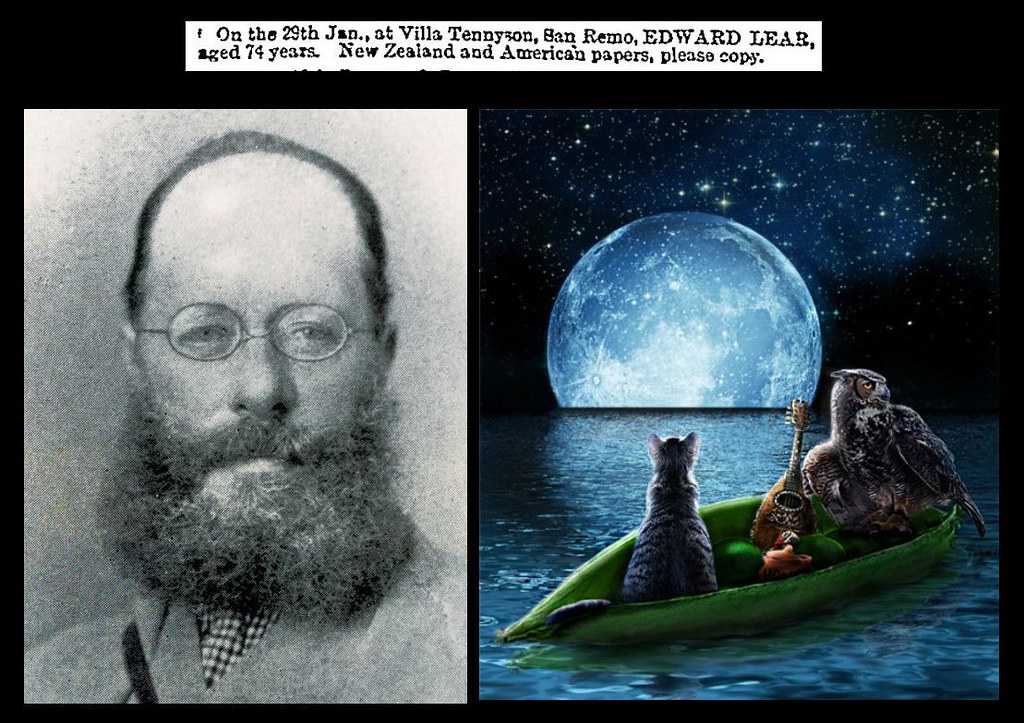
We celebrated Edward Lear’s birthday with some limericks and Rhys Hughes essay placing the two century old writer’s poetry in the present context and a hilarious conclusion to the sequel of Lear’s famous ‘The Owl and the Pussycat’. Upcoming is the birth anniversary of the rebel poet from Bengal, Nazrul. Sohana Manzoor translated a powerful essay and Shahriyer Hossain Shetu, a poem by this legendary writer who believed in syncretic lore and married a Hindu woman. Now the national poet of Bangladesh, Nazrul even wrote of Hindu Gods in many of his songs and essays – a lore that yearns for revival in the current day where politicians have fragmented the world by building more walls, using the names of religion, race, economics, caste and culture.
We have a poem from Pakistan by eminent poet Akbar Barakzai translated by Fazal Baloch using the lore of Samuel Becket’s Godot and yet another translation from Malayalam by Aditya Shankar of Sujith Kumar’s poem. Our poetry section is exciting with an exquisite poem from Jared Carter on a yeti, resting on the ephemerality of its presence; a funny one from Rhys Hughes and a diversity of poets from many countries, including Bangladesh. We also started a new column called Nature’s Musings which will combine poetry or prose with photographs by award-winning photographer Michael Wilkes and Penny Wilkes, who joins us now as a writer-in-residence.
In stories, we carry a COVID narrative by a real doctor, Shobha Nandavar, based in Bangalore and interestingly another about a doctor, the first women to adopt the medical profession in Bengal. Sunil Sharma in his narrative has highlighted a crisis in humanism. There are many more stories which would make for an interesting read. In musings, other than Devraj Singh Kalsi’s witty take on countries without Nobel Laureates, we have a Canadian writer’s perception of death rituals in Japan. Sybil Pretious has shared with us her strange adventures within China this time. Don’t miss the backpacking granny!
The May issue has a wide range of essays and musings ranging from Candice Louisa Daquin’s write up on the need to trust instincts to Keith Lyon’s residency in the Antarctica with interesting photographs. He writes that you could wear shorts in summers! Bhaskar’s Corner pays a tribute to the Padmashree Odia writer who passed away last month of old age, Manoj Das.
Our interviews this time are more on practical issues than literary – with the two authors of Raising a Humanist and with someone who supported our Tagore section by inviting us to talk on it in an online festival called Anantha, Sonya Nair. A friend and an academic with decidedly avant garde outlook, she is part of the twenty-year-old peer-reviewed Samyukta Journal that homes many academics. Pause by and have a read to see how they serve.
I would want to give heartfelt thanks to Nidhi Mishra and Archana Mohan for hosting Ms Sara’s Selections from Bookosmia this time as they help many battle the pandemic with hope, especially young children growing up in a world inhibited with masks and social distancing. I would also like to thank all the writers and my whole team for rising above the darkness by helping us get together this issue for our readers who I hope do find solace in our pages. And thank you readers for being with us through our journey.
There is a lot more in our pages than I have written. Do take a peek at this month’s issue and enjoy.
Edward Lear with a painting of his famous poem, Owl & the Pussycat. Courtesy: Creative Commons
Greetings!
Other than hosting the World Laughter Day, this month also houses the birth anniversary of at least three great writers. On May 7th, 1861, was born the first Asian Nobel Laureate, Rabindranath Tagore. Do you know he even wrote a book to teach young children Bengali with rhymes and poems for young children? Then, on May 12th, 1812, Edward Lear was born in England. He painted, drew, wrote funny poems and popularised limericks. You might have read Owl and the Pussycat by him. May 25th, 1899, was the birthdate of Kazi Nazrul Islam. He was a Muslim who married a Hindu and wrote for harmony intermingling the lore of both these religions. With three famous poets born in May, it is perhaps time we stepped into poetry here. Let us begin. And here is the fantastic Ms Sara. So what do we have this time?
This time we have a strange mix! Penguins and rainbows and much more… Let us start with poetry.
Poetry
Eight-year-old Harshika Khanna, from Kolkata pens an enticing poem about edible rainbows! What flavour would you want?
If I could taste the colours of the rainbowBy Harshika Khanna
If I could taste the colours of the rainbow…
I think that the violet would taste like mouth-watering grapes,
Indigo, like tiny sparkly blueberries,
Blue, like a fresh drink of blue lagoon,
Green, like the pretty pastel in shade matcha,
Yellow, like dreamy butterscotch,
Orange, like the delicious delight of freshly pressed orange juice.
Nine-year-old Vedika Sriram from Bangalore had tea for the first time and she loved it so much, she wrote a poem about it! Isn’t that Tea-rriffic!
The First time I had teaBy Vedika Sriram
The First time I had tea it was just amazing,
It was super hot and very pleasing.
It made me ask my mom for more tea,
Which meant for me to plea and plea.
She made tea every day just for me,
So that I could be happy.
I just loved tea like anything,
And for me it was everything.
So there I was, the tea lover of the world
In happiness, I swirled and twirled.
Full five-and-a-half-year-old Wrishik Ghosh from Kolkata loves to write poems. And his favourite subject is his dad!
My Dad, My HeroBy Wrishik Ghosh
My dad is my friend,
He is always there at my end.
He spoils me a lot,
By giving lots of toys.
He is the best in the world,
His heart is made of gold.
Dad, I love you, you are my hero,
And you love me too.
Stories
Now we have these imaginative stories. Eight-year-old Prathmesh Chokhani, a Bookosmian from Kolkata makes us laugh with a funny story about a sweet teacher who forgets the way to school!
The Teacher Who Forgot The Way To School
By Prathmesh Chokani
There was once a teacher named Priya. She loved to teach children and was very kind hearted. The children loved her classes. She was very punctual at school. But she had one problem-her terrible sense of direction!
Even though she went to school everyday she still needed a map to reach there.
One day, she had to be early at school. She woke up early in the morning, took a map, wore her prettiest dress and started walking to school.
She was holding the map. Then suddenly, a breeze came and the map flew out of Priya’s hand. She began to chase the map. But before she could, a dog caught it and ate it. Then she said to the dog in an angry voice “Eh! naughty dog,” and began advising the dog as if it was one of her naughty students in class.
Though the map was lost, she knew where the school was. But then by mistake, she stepped on the dog’s tail. Then the dog began chasing and barking at Priya.
Finally, the dog stopped chasing her and left her alone. She was now, completely muddled and had lost her way.
Then she remembered, she had her phone. She tried switching it on, but it had run out of charge. As usual, she had forgotten to charge the phone!
Now she had no option, but to ask someone for directions. She asked a person the direction and he said. “Take the right then you will reach a by-lane, then go straight and then you’ll reach the school.”
She walked and walked until she reached. She went inside the classroom and wished her students a good morning, but it was too late as it was dismissal time!
Priya joined the students as they all laughed at the incident. She may not have had a good sense of direction but she was the best at keeping the class in good spirits!
Penguins! Do you like penguins? Nine-year-old Aashritha Surya Prakash from Bangalore writes a cute little piece about a baby penguin’s sweet and happy life. Let’s get on to our happy feet too!
The happy life of a baby penguin
By Ashrita Surya Prakash
Crack! Crack! Wow what a beautiful place!
I just came out of my plain, white and warm shell into a magical place full of colours! Haaa! What a warm place! But why am I in between the legs of this person? Why do I like it here? Ohh this is my dad! But, but where is my mom? The one who laid my white, warm egg? Well now, I am a bit hungry.
Now…wow! What a nice surprise! There comes my mom! She got me some yummy fish and squid! I love it! Thank you mom! Now, after that yummy meal, I will go and meet my friends.
We played all day, my friends and I, and I am tired now, but I loved it! Tomorrow, my mom says I have to go to penguin school. There, we will learn how to fish, swim and ride on our belly down the hills full of snow!
I am so excited!
Today I went to school! It was awesome! My new teacher is great! She is very kind.
In recess, we learnt how to slide on our belly! It was very fun! I am going out to practice now, so bye!
Nine-year-old V Avyukkt from Hyderabad writes a powerful story about handling bullies.
Learning To Face My Bullies
By V Avyukt
I am a zebra named Jack and I had three friends named Jane, Alex and Phillips. They always used to bully and tease me as I did not know how to walk on a tightrope like them.
After some days, I felt sad and suddenly a zebra was walking by. I asked his name. He said his name was Zebby. Zebby said, “I saw your friends bullying you.”
I told him it was because I can’t walk on a tightrope.
“I know tightrope, I can teach you,” he said.
Zebby tied both the ends of rope to sticks. I was not able to do it at first but I kept practicing for some days, weeks and months.
One fine morning, my heart was beating with hope. I decided to try it. I took my first step and continued walking on the rope without looking down.
Finally, I reached the end! I thanked Zebby and I told him it’s time to show the three bullies. To my surprise, he said it’s not over yet. Zebby said it was now time to learn to walk a tightrope over a fire. I was nervous but I trusted Zebby.
I closed my eyes took a deep breath and took my first step. Nothing happened so I reached the end and opened my eyes. I had done it! I looked at Zebby who was so proud of me.
I thanked him and decided to show the bullies what I could but to my surprise, Zebby said not to. He said I knew that I could walk on a tightrope over a fire and that’s all mattered.
I got over my fear of bullies and found a new best friend!
Essays
And just as we learn to tackle bullies, we learn never to give up. Twelve-year-old Kavya Mehta from Mumbai writes an inspiring essay about not giving up despite the hurdles that come your way.
An Expert Was Once A Beginner
By Kavya Mehta
Do you think that every expert was born skilled or were they a beginner at first and had to go the extra mile to achieve their ambition? Learning is life. To achieve something, we have to burn the candle at both ends. Giving up is the path towards deterioration.
If every beginner gave up when things got tough, there would be no expert. Every time we hit a roadblock, we cannot simply throw up our hands and say, “I Quit,” you would never get past that. When you know you have failed, you would understand where you made a mistake. You can only learn, never feel discouraged by your failures and also never stop learning. Try to learn from the mistakes and be the best you can be.
If you want to succeed, never draw any conclusion from those who have achieved. They are not lucky. They may make success look easy, but no one knows how much hard work has gone into making them reach this position. Everyone starts as a beginner and takes that first step, and only by moving forward can they reach that expert level.
Late. Dhirubhai Ambani was one of the biggest examples. Dhirubhai Ambani-the son of a poor village teacher achieved his ambition by his confidence and passion. He faced numerous failures, but by his efforts and hope he started a business and thereafter gained huge success.
Ambani suffered through many hurdles in his life but he never gave up and fought tooth and nail. Following that, today his company is among the world’s best. This shows us that whether you are rich or poor you will get many obstacles as you move towards success and you have to choose the correct path without limiting yourself.
To push yourself to the next level, you need to put in the extra effort. With proper dedication, persistence, consistency, we learn to do our best. The same is the case with reaching your goal. It is not that difficult, and anyone can do it with a will to learn and implement.
Therefore, just believe in yourself and you can do the impossible.
So, before you give up always remember,
‘An expert in anything was once a beginner!’
Eight-year-old Vedant Garg from Noida pens a heartwarming essay about a little hamster who found his home with him.
My New Pet Hamster
By Vedant Garg
It was a sunny morning when I was walking in the park. While returning home, I saw a small hamster pecking on pieces of apple that were littered on the grass.
The hamster was lonely but was contentedly enjoying his meal. He was stout-bodied, with a tail shorter than his body, tiny furry ears, and wide feet. He had very soft and silky fur.
I took the little hamster in my hands and carried him home. I was going to keep it as a pet. The little thing struggled to get out of my grip. I petted him and kept walking.
When I reached home, I rushed in and exclaimed, “Mom, Dad, see what I have got with me!”
My parents came to the living room where I had been playing with the hamster who had now fallen asleep. When they saw him, they shrieked in fear. I told them that there was nothing to worry about, it was just an ordinary hamster. But that didn’t comfort them at all. They got brooms and tried to shoo him away. I blocked their way and promised them that I would keep the hamster away from them. They agreed and stormed off.
From the very first day, I started to call the hamster Fluffy. Fluffy was very happy staying with us now. For him, it was a new dreamy life. But I was still facing some problems with him. He kept running around the house and aggravated my parents. Feeding him was very difficult too as he never wanted to eat anything, and I had to force him to eat to keep him healthy. I still had to keep him away from my parents though.
Whenever my parents would come, he would pretend to sleep but I knew that he had found a true friend in me and an affectionate house to stay.
In his hearts of hearts, Fluffy liked troubling my parents as much as I did.
I had found my companion too.
This beautiful essay by eight-year-old Jia Kataria from Kolkata, succinctly lays out the extraordinary bond we share with our mothers.
My Mother, My Best Friend
By Jia Kataria
My mother is my best friend, with whom I share all my secrets. Like a true friend she is always there with me in good and bad times.
She makes sure there is always a smile on my face and I am always free of all troubles.
She pampers me with good food, toys, dresses and a lot of love.
My mother’s presence always makes me happy and in her absence I feel very lonely.
I hope this bond blooms with every passing year.
And with that we wind up our young persons’ section for the month of May, which heralds the start of summer in the Northern hemisphere and winter in Southern. Have you even thought that while you sweat it out people in Australia would be wearing sweaters!
Greetings fromBorderless Journalfor all Asian New Years!Click here to read our message along with the video and a translation of a Tagore song written to greet the new year, with lyrics that not only inspire but ask the fledgling to heal mankind from deadly diseases.
Rabindranath Tagore’s Ekti Khudro Puraton Golpo (One Small Ancient Tale) from his collection Golpo Guchcho ( literally, a bunch of stories) has been translated by Nishat Atiya. Click here to read.
Sohana Manzoor shares the Bengali New Year celebrations in Bangladesh with colourful photographs and interesting history and traditions that mingle beyond the borders. Click here to read.
Ratnottama Sengupta, a well-known senior journalist and film critic lives through her past to make an interesting discovery at the end of recapping about the silk route. Click here to read and find out more.
Mike Smith drifts into nostalgia about mid-twentieth century while exploring a box of old postcards. What are the stories they tell? Click here to read.
Over 150 Authors and Artists from five continents have written on mental illness in an anthology called Through the Looking Glass. Candice Louisa Daquin, a psychotherapist and writer and editor, tells us why this is important for healing. Click here to read.
Meenakshi Malhotra explores the role of masculinity in Nationalism prescribed by Tagore, his niece Sarala Debi, Gandhi and Colonials. Click here to read.
Sohana Manzoor explores the social relevance of a dance drama by Tagore, Natir puja. We carry this to commemorate Tagore’s birth anniversary. Click here to read
Bhaskar Parichha reviews Reconciling Differencesby Rudolf C Heredia, a book that explores hate and violence. Click here to read.
Nivedita Sen reviews Nomad’s Landby Paro Anand, a fiction set among migrant children of a culture borne of displaced Rohingyas, Syrian refugees, Tibetans and more. Click here to read
We wish all our readers and writers fabulous varieties of new year celebrations across Asia! We also complete one year and waft towards a new beginning. We have had some alterations as you know over the last few months — new faces on our board and writers in residence. Now, in addition to hosting writers from across all borders and ages, we have decided to also become an online forum for translated Tagore songs and writings. This will be launched on Tagore’s Birth Anniversary — 7th May. We hope that the transcreations in this section will take the treasures of the great writer and philosopher closer to the non-Bengali speaking populations from all over the world. We will try to retain the spirit of his poetry and attempt to recreate the impact of the Bengali verses for everyone who can read in English. We have already started with transcreations of about half-a-dozen of his songs. Do take a look and tell us what you think.
To celebrate our diverse new years, we have a musing by Sohana Manzoor. Did you know that Pohela Baishakh or the Bengali New Year is a national holiday in Bangladesh and is observed on the 14th of April each year?
A new year bodes a new beginning, a new sunrise and a new day — a new bunch of experiences. That is why our theme this time was new beginnings. What did we have in the beginning? Dylan Thomas tells us —
In the beginning was the word, the word
That from the solid bases of the light
Abstracted all the letters of the void;
And from the cloudy bases of the breath
The word flowed up, translating to the heart
First characters of birth and death.
On that theme of words, we have a fabulous poem by Balochi writer, Akbar Barakzai, who created a furore by turning down an award from the Pakistan Academy of Letters last year. His poem has been translated by Fazal Baloch. That is just one of the treasures. This time to celebrate this bouquet of new years across Asia, we have a bumper issue which includes, interviews with the 2020 Sahitya Akademi winner, Arundhathi Subramaniam, and academic-cum-writer Sumana Roy. Both poets have been kind enough to share a poem each with us. Arundhathi’s poem is inspiring and Sumana’s is a moving one about a tree, a tree that made history. We have powerful poetry from a number of other writers, Pushcart winner Jared Carter, Michael Burch, Sekhar Banerjee, Vatsala Radhakeesoon, Ihlwa Choi and of course our inimitable Rhys Hughes. Rhys has also started a column for us in which he will talk of poets, poetry and whatever else he chooses (within the confines of our magazine’s needs, of course). Our focus this year will shift even more towards quality of content.
In translations, other than Tagore songs and Baloch’s translations, we have Aditya Shankar’s translation of Malayalam writer, Shylan. A short story by Tagore from his famous collection Golpo Guchcho has been translated by Nishat Atya. To celebrate Tagore’s anniversary, we have essays by Meenakshi Malhotra and Sohana Manzoor too. Interestingly Sohana Manzoor’s essay has Tagore’s vision of Buddha — and Sumana Roy gave us a poem on the Bodhi tree, a tree under which the Buddha meditated his way to salvation! Looking at the sad situation in Myanmar, we definitely have a need for reviving Buddhism, a theme that has been touched on by well-known film critic, journalist and translator Ratnottama Sengupta, in her ponderings on the Silk Route. Branching off from the journey across Asia towards Europe and moving up north to Siberia is a narrative from our spunky back packing granny, Sybil Pretious. She writes of her travels all the way to Lake Baikal!
Devraj Singh Kalsi suffered personal loss and has given us a poignant in memoriam on his mother. Mike Smith takes us on a memorable nostalgic journey with postcards from the past with stories that want to make you weep. There is more on memorabilia with a photo-essay by Nishi Pulugurtha and a photo-poem by Penny Wilkes (have you ever adventured with one of these?). Sunil Sharma tried out a playlet! The other exciting and new thing is Bhaskar Parichha has started a witty column with us. We are calling it Bhaskar’s Corner! I won’t tell you what about but do take a peek!
Books reviewed are Paro Anand’s Nomad’s Land by Nivedita Sen — a book on migrants, a theme which is there in the piece on silk route too; Rudolf C Heredia’s Reconciling Differenceby Bhaskar Parichha and Candice Louisa Daquin has reviewed a book on cancer, The First Cellby Azra Raza. Our book excerpt is from a book on parenting,Raising a Humanist: Conscious Parenting in an Increasingly Fragmented World by Manisha Pathak-Shelat and Kiran Vinod Bhatia. An interesting read in a world of changing values. Our young person’s section run by Bookosmia owe a huge thanks to the untiring efforts of Nidhi Mishra and Archana Mohan. Thank you both. Thanks to the whole team for your immense support.
I have as usual not covered all the content in my note. I leave you to unfold the surprises! Much thanks to all our writers and readers for continuing to be with us!
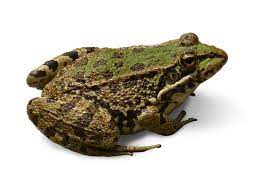
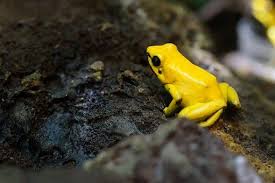
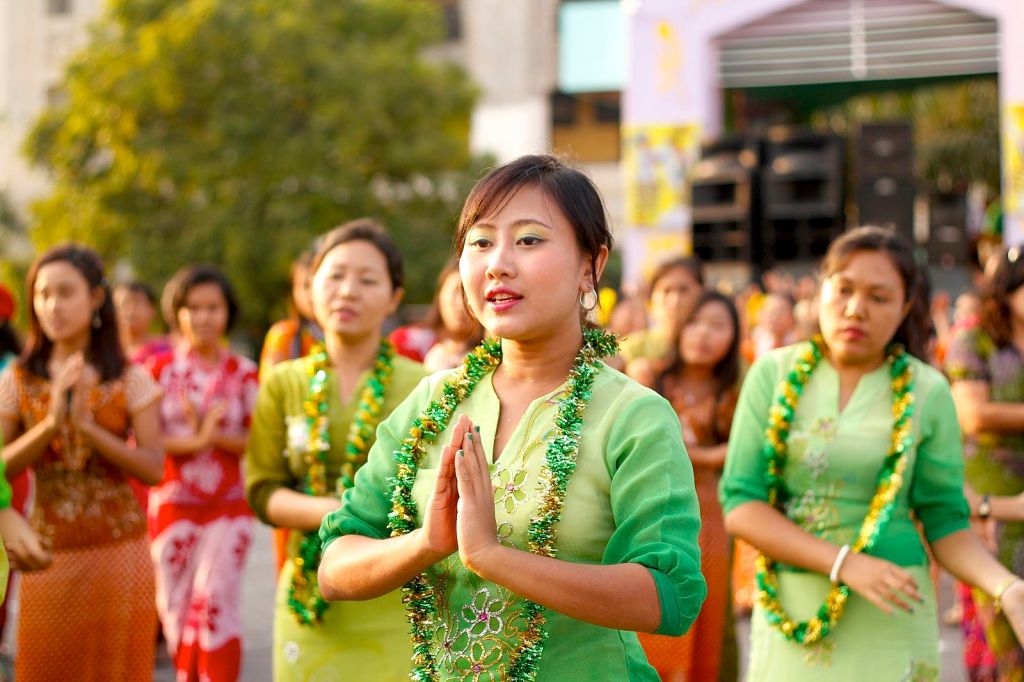
April is a time when summer or spring comes knocking at your door in the Northern Hemisphere and in the Southern, winter starts to peep with autumn doing a somersault. In India, we welcome our traditional new years along with many other countries like Nepal, Myanmar, Thailand, Sri Lanka and Bangladesh. New Years have so many names just like a frog has varied names in different languages: qingwa in Mandarin, kb in Thai, bang in Bengali, mendak in Hindi and we could go on and on. The reason we talk of frogs is because some even observe April as the National Frog Month. You can read all about it by clicking here.
But frog stories aside, we would like to wish you all a fabulous new year this April, a traditional new year. Here we always celebrate with the glamorous Ms Sara. So, Ms Sara what do we have this time?
We have a fabulous collection of poetry, stories and essays about so many things that happened between March and April!
Poetry
In keeping with the theme of frogs and variety is a rainbow. And here is a young man who talks of tasting one! Seven-year-old Savvya Gupta talks of the flavours.
Taste The Colours Of The RainbowBy Savvya Gupta
I tasted the colours of the rainbow.
Red told me to be slow,
Blue gave me a taste of the sky,
Indigo was very shy.
Yellow was very dear,
Green colour did not fear,
Orange told me to be sweet.
But Violet didn’t want me to eat!
Thirteen-year-old Nazera Sheikh from Dahod, Gujarat misses the rains and the hot snacks that are perfect for the weather and she has put it all in a poem!
Missing The Rains And The Hot SnacksBy Nazera Sheikh
Raindrops falling down
All around.
From high up in the sky
Touching the ground and saying bye.
Missing the rains and the hot snacks,
There is water everywhere
Some say it isn’t fair.
Children come out with their boats
And wear their raincoats,
Throw water on each other
Whether they are friends or neighbours.
Missing the rains and the hot snacks.
Mothers trying new cooking hacks,
We all love eating hot snacks!
Rain rain come again!
How nice! Eleven-year-old Dhriti Keni from Chennai dreams big and wants to follow it to the end.
Following My Big DreamsBy Dhriti Keni
You are the driver of your destiny
Passengers none
Dreams are held deep inside us
Better to fail by faith
Then not do anything by fear
You are a shining star
High in the sky
Glowing like a legend
Following My Big Dreams
Wishes come true
If you work hard
And believe in yourself
Following My Big Dreams
Try and Try
Until your dreams come true
You may fall down
But you have to get up
Show courage and faith
Stories
Aha! Now we start with stories. Nine-year-old Ishani Ghosh, a Bookosmian from Kolkata writes a heartwarming tale of two girls who meet a homeless girl and help her find what she was looking for.
Making An Unexpected New Friend
By Ishani Ghosh
It was new year’s day of 2019.
I woke up, brushed my teeth and went downstairs for breakfast. My parents then surprised me by telling me that my best friend was coming over to celebrate the New Year’s day with us.
When she came over, we had lunch and then after some time, we went to the park. We went on the swings and then to the sandpit.
My parents then took us for a ride on a beautiful white horse called Milky. I went first and had just got off the horse when I noticed a little girl standing near the horse.
She was wearing ragged, torn clothes and was very skinny. My friend got off too. I showed her the girl. She told me that it looked like the girl wanted to ride the horse too but had no money to do so. We both told my parents about the girl.
We asked the people giving rides on the horse and found out that she was poor, homeless and had no parents. We were terribly sorry for her when I got an idea. I told my friend first and then my parents. I suggested that we talk to my aunt Nora and arrange for the girl to move to her house. My aunt was very lonely. She lived all alone in her house and came to visit us often.
My parents thought it was a great idea and talked to my aunt about it. She was delighted and so was the little girl when we asked her.
We found out that her name was Judy and she immediately said that she would love to live with my aunt.
Now she is living happily with my aunt and is also one of my close friends.
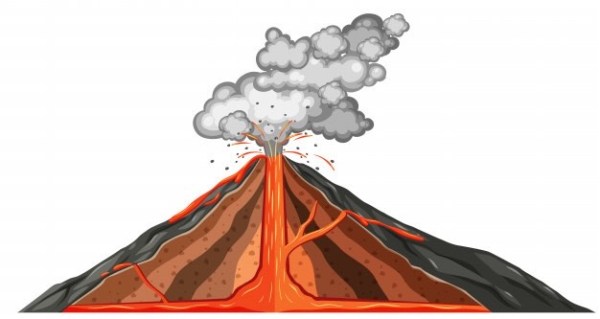
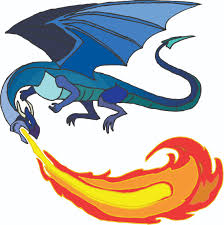
Twelve-year-old P.N. Hitaesh from Chennai imagines a scenario where naughty little dragons play near a volcano.
Adventures Of The Dragon Family
By P.N. Hitaesh
Once there lived a family of dragons named Draco, Mushu and Drogan. Draco was the father, Mushu was the mother and Drogan was their son.
One day, Drogan went to play in the forest with his friends. All dragons were warned not to play near the dangerous volcano but Drogan and his friends were curious so they went there.
As they went there, the volcano erupted! The dragons ran to safety but Drogan, unfortunately, got stuck in a place where his father’s enemy lived.
When Drogan was not home, Mushu and Draco searched but he was not to be seen anywhere. Then Draco’s enemy came and said “Your son is with me. You need to fight with me and my group if you want him back.”
The fight started in the evening and it was a hard fought one. Finally, Draco and Mushu won the fight and Drogan came home.
Ten-year-old Annaya Aggarwal from Delhi tells us a lovely story of three sisters and how the shy sister, Star, finally learnt to express and communicate better.
The Day Star Overcame Her Shyness
By Annaya Aggarwal
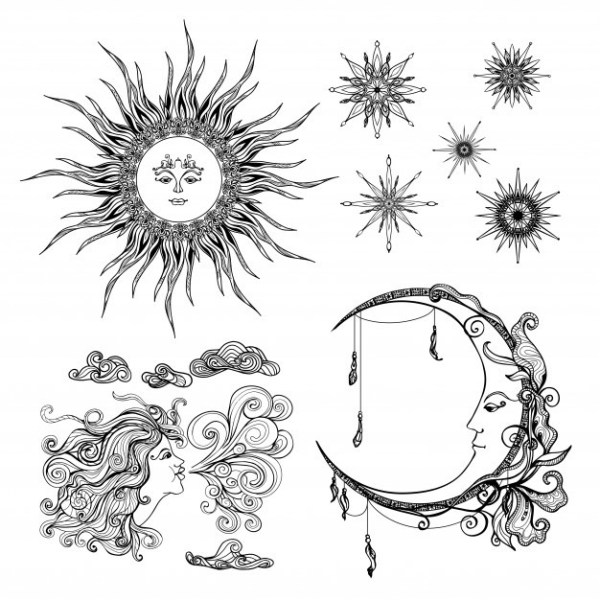
Once there were three sisters – Sun, Moon and Star.
Sun and moon were snobbish but popular in their kingdom. Star was shy but kind-hearted and a lovely girl but she wasn’t popular among her people as she hardly spoke.
One day, they got an invite for high tea from their aunt and uncle (Lightning and Thunder). They had never met them and were very excited.
So, when the day came, they got dressed and went in a beautiful carriage to the party. At the party, they were having so much fun that they lost track of time and were late for their dinner with their mother.
At home, their mother Galaxy was getting worried. Soon, she heard the sound of the carriage outside the palace and heaved a sigh of relief.
Mother galaxy thought that her kids would be as hungry as her. So, she asked them to set the dining table but Sun and Moon didn’t care much about their mother’s feelings. They went to sleep but Star saw tears in her mother’s eyes.
She joined her mother at the dinner table and told her all about the party. Her mother was very happy. Star realised that talking about what you feel is not so hard after all!
After that day, Star gained confidence and started helping her mother with work. She made an effort to speak to everyone and soon, she became the town’s favorite princess.
Essays
Time to think of travel? Well, once the world is rid of the pandemic, maybe we can visit this safari park called Kabini.
Let us for the time being find out about what eleven-year-old Yohaan Marda from Kohlapur, saw during his safari.
Meeting A Tiger And Sloth Bear At Kabini Safari
By Yohaan Marda
I was six when we saw this magnificent sloth bear with her cubs. We actually had stopped to see a Brahminy kite. But the sloth bear turned up out of nowhere!
It was an amazing moment and the first time ever that I had seen a sloth bear. Seeing the sloth bear with her cubs was very rare because sloth bears are shy animals and tend not to bring their cubs out so much. As we were seeing the sloth bear, the guide yelled “Tiger! Tiger!”
We all looked around and there she was! We were all very excited. Then as soon as the tiger saw the sloth bear she went charging towards the sloth bear.
This trip to Kabini was a family trip and about 55 of us went. Kabini is a wildlife sanctuary in Karnataka, about 200 kms from Bangalore. It is an amazing place for nature lovers with activities like safari, trekking, boating and plenty of animals and birds to see. We did not expect much when we booked the safari but we were lucky to see these majestic animals. At the time I thought seeing a sloth bear is not a big deal. I thought it was a common animal but how wrong was I!
And now let us move on to the festivals we celebrated in March and early April. First let’s talk of Holi… which was a bit muted for nine-year-old Aarshiya Agarwal from Kolkata because of the pandemic.
An Organic Holi With My Loved Ones
By Aarshiya Agarwal
Holi is a festival of colours.Holi is celebrated because of the death of Holika, Hiranyakashyapu’s evil sister.
She was killed by her nephew, Bhakt Prahlad. Every year according to the Hindu calendar, it is celebrated but on different dates. It is usually celebrated in March in the spring season. One day before the festival, there is a puja or prayer held called Holika Dahan.
On the day of Holi, we play with water and colours. We throw water balloons and put colour on each other. We also play with water guns. After playing, when we go for our bath instead of using soap on our body, we apply a body scrub to get rid of all the colors.
We eat sweets with our friends and family. This year it is going to be my 2nd holi with my little brother. Nowadays, some people make colours which have bad chemicals. These ruin our skin and cause infections and irritations. So that’s why people have started using natural and organic colours.
I celebrated Holi with my parents, little sibling, grand and great grandparents and cousins. This year because of the coronavirus, we were not celebrate fully. I reused my old water guns because it is not safe to buy new ones from outside. I hope you all had a very happy and safe holi!
And the other festival in the time period some countries celebrate frog month, is Easter. Eight-year-old Riddhima Mishra from Kalyan, Maharashtra, tells us more about the festival with rabbits (not frogs) and chocolate eggs!
Why We Celebrate Easter
By Riddhima Mishra
Easter is a festival that is celebrated by Christians all over the world. This festival is always celebrated on Sundays between March 22 and April 25 every year. The festival is also known as Easter Sunday; or resurrection Sunday.
The word, Easter, was derived from the word “Eastra” which means goddess of springs. It celebrates the resurrection of Jesus Christ which occurred on the third day after he was crucified on the cross.
Forty days prior to Easter, Christians follow lent, which is supposed to be a period of prayer, penance and fasting. The week before Easter is known as the holy week.
Jewish Christians were the first who celebrated Easter around the middle of the second century in Jerusalem. Churches are specially decorated on Easter day. On this day, prayers are done for the welfare of the whole world in the church. Along with this, candles are lit in the church and at the same time candles are lit in homes.
Chocolate-filled eggs or brightly painted eggs with sweets inside (Easter eggs) are common gifts exchanged on Easter. Churches and homes are decorated with white lilies also known as Easter lilies.
The symbol of Easter is ‘the Easter bunny’ depicted as a rabbit bringing Easter eggs. The day also witnesses lavish feasts and a variety of traditional dishes being cooked and served.
Hope all of you had a happy Easter!
And with that we come to the end of the Bookosmian adventures. Hope you all have a fantastic month. Here is wishing all of you a wonderful start to all your new years in April!
This song by Tagore welcoming the new year, Esho He Baishakh, is especially relevant because it talks of the New Year wiping away diseases that weaken and kill humanity. Here is a translation of the lyrics and renditions by popular contemporary voices and a video of a dance performance to this song.
Come O Boisakh!(A translation of Tagore's Esho He Boisakh, Esho, Esho, 1927)
Hail O boisakh! Welcome.
Blow away deadly diseases with your ascetic breath.
May the debris from the old year disappear.
Let go of old memories, let go of old melodies.
May sorrows and tears evaporate.
Wipe away slanders, wipe away infirmities.
May the Earth be purified by fire.
Wither obsessive unhealthy passions.
Summon a storm with a conch call to
Transfigure the misty webs woven by Maya*.
*Maya is an illusory play of divine intervention.
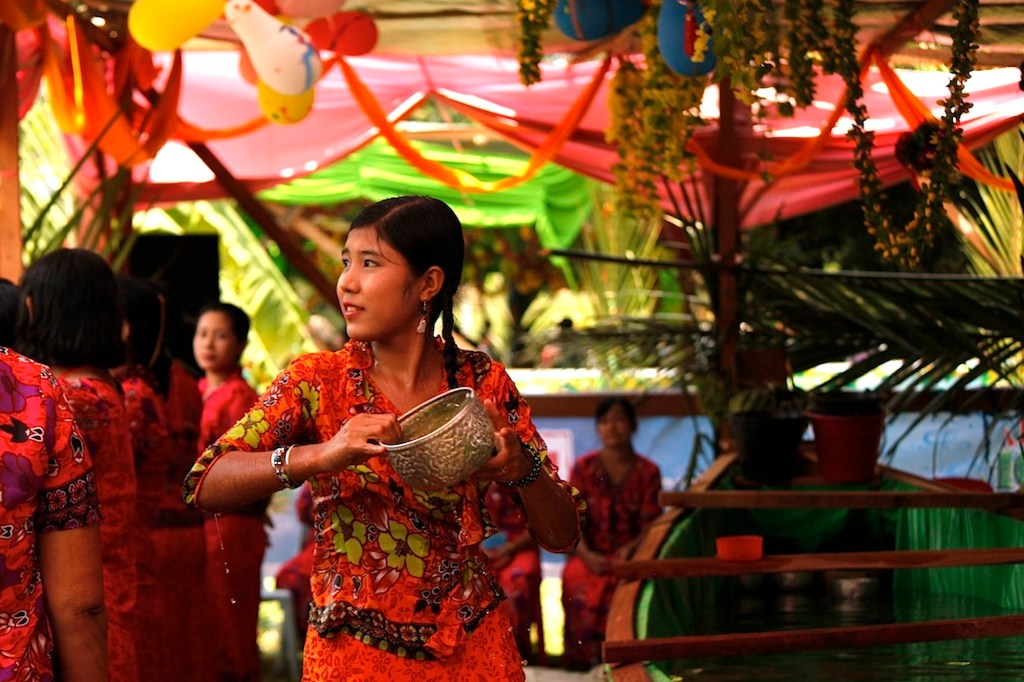
New Year arrives in some parts of Asia every April, around 13th to 15th. India celebrates new year under various names and with many different traditions – such as Ugadiin Karnataka, Vishu in Kerala, Baisakhi among Sikhs and many more. Nepal observes Nava Varsha. Thailand celebrates Songkran, which is a bit like Holi in India as it involves water play and a bit like the Thingyan, the Myanmar New Year. Sri Lanka calls their festival Avurudu, which seems to have customs close to the Tamilian new year Puthandu or that of Karnataka. Bangladesh livens up with a national festival, called Pohela Boisakh, which is a bit different from the Polia Boisakh celebrations in the Eastern parts of India.
A huge thank-you to all our contributors and readers across the world.
Borderless Journal has contributors from all the marked areas in the world map.
Borderless Journalwas launched on March 14th, 2020, exactly one year ago, with eight published pieces from four countries. Today, we celebrate our journal’s year-old existence with more than six hundred publications online from 31 countries across the world. All this would not have been possible without the commitment of some very gifted writers. So, we have made a couple of additions to our ‘About Us’ — Writers in Residence and the Children’s Section Facilitator. We did this to express our gratitude to these excellent writers and the Children’s Section Facilitator, Archana Mohan of Bookosmia, for contributing pro bono to Borderless, selflessly and generously with words that enriched our journal. We plan to continue pro bono with goodwill as our only profit, giving our readers free, unpaid, advertisement-free access to excellent works.
In this first year, not only has our content grown but we have moved forward in our attempt to be a repository of quality writing in the virtual world. Translations of greats like Saratchandra Chatterjee, Tarashankar Bandopadhyay, Rabindranath Tagore, Bijan Najdi, Syad Zahoor Shah Hashmi and Nabendu Ghosh nestle along with writings by the moderns. We have published works by winners of the Sahitya Akademi award and the Pushcart along with that of novices. Our oldest contributor was born in 1924 and the youngest, in our young persons’ selections, was four years old.
Values and issues taken up by writers across time have often been similar. At Borderless, we look for writing that breaks borders, not so much of techniques but of issues that affect our civilisation. We want to create a flood of positive values that will deluge the world’s negatives, help to usher in an era of development, tolerance, love and peace. We are often told that this is unrealistic. But when have ideals and utopias ever been based on realism? And yet they changed the world over a period of time. We would not have the wheel or the fire if cave dwellers had not imagined them. Borderless hopes to walk untrodden paths. Our journal also aspires to respond to the calls made by youngsters for a better Earth, to explore and store samples of human excellence for posterity, and to support attempts to improve the future of our species.
As a part of our celebrations, we are also announcing two books, constructed with selected content from Borderless. Bookosmia is bringing out a book from the children’s section, thanks to both Nidhi Mishra and Archana Mohan. For our adult contributors and readers, we are also announcing a second book stocked with some of the gems we have collected over the year. We are in conversation with a publisher. Once that is finalised, we will announce the book on social media.
This month, we had given the theme of ‘as mad as a March hare’ and aliens were invited to contribute. That resulted in some fantastic poetry from Rhys Hughes and Vatsala Radhakeesoon and also from one of our Contributing Editors, Michael R. Burch. Rhys has given us a funny story poem about an alien who tickles our sensibilities. Our poetry section only improves with Michael’s touch. We have poetry again from Pushcart winner Jared Carter, Tom Merrill, Ihlwa Choi, and new writers like Vijayalakshmi Harish and Shraddha Arora.
We carry a translation of a well-known poet from Nepal, Krishna Bajgai. Aditya Shankar translated a Malayalam poem about violence against women by young Krispin George. It is a powerful poem and an excellent translation that sets the tone for the month hosting the International Women’s Day. That the protest is voiced by men is also significant, especially in a world where margins need to blend into a single united shout against all injustices. While the poem critiques a crime, the translated prose shows how despite violations and oppressions, humankind have progressed.
A short story by Tagore’s sister, Swarnakumari Devi (1855-1932), one of the first female editors of the Tagore family journal and one of the earliest progressive women of the nineteenth century, has been translated by Chaitali Sengupta. Juxtaposed to the story by Swarnakumari Devi which was perceived as an act of defiance against the voicelessness imposed on women in a patriarchal set up, we have an unusual reflection translated by the noted filmmaker and journalist, Ratnottama Sengupta. Written in Bengali by Sandhya Sinha (1928-2016) the piece, while being an in-depth analysis of Arabian Nights, is an emphasis on how women progressed within the century to become independent, intellectual, thinking entities beyond the bounds set on them by outmoded norms. Thus, while the prose showcases how much women have progressed, the poetry contribution by young Krispin George and Aditya Shankar reflects how men and women are now united in their struggle for justice. We have indeed come far from the biases inherent in Rudyard Kipling’s poem, ‘Mandalay’, which was written after Swarnakumari Devi had already started writing and working against such divisive mindsets. Historically, we have moved forward.
A literary essay by Mike Smith tries to explore a new paradigm. He ponders if a short fiction by the first émigré Nobel Laureate from Russia, Ivan Bunin, could have been a precursor to flash fiction. We have experimented with a photo essay by Penny and Michael Wilkes. Some lovely photographs of the sea can also be found in the slice of life sent to us from Australia by Meredith Stephens. In Travels with the Backpacking Granny, Sybil Pretious takes the readers to the slopes of the Kiliminjaro with her 63-year-old self. Devraj Singh Kalsi in Musings of the Copywriter gives us his perception of creativity and madness – which you might say go hand-in-hand when you think of Vincent Van Gogh cutting off his ear and F Scott Fitzgerald who along with his wife, Zelda, suffered from depression. Kalsi gives the subject a satirical twist to explore if insanity can be substituted as medals of honour by a writer instead of ‘bits of metal’ that subscribe to more conventional concepts of fame and sanity. It is a fun read!
One of my favourite essays is by Debraj Mookerjee, who has shown how when West meets East, greatness blooms. He takes on giants like Tagore, Tolstoy, Emerson and many more. Reflecting the thoughts of one of these giants mentioned in the essay, is a book on the socio-political thoughts of Tagore where the author, Bidyut Sarkar, who is also the Vice Chancellor of Vishva-Bharati University and an erudite scholar, states: “Tagore stayed away from the hurly-burly of national politics. Despite sharing the nationalistic condemnation of the colonizer, Tagore never allowed this restrictive vision to cloud his concern for human emancipation.” Bhaskar Parichha has done an excellent review of the book.
Sutputra Radheye’s poetry collection from the Delhi Slam has been reviewed by Rakhi Dalal and Suzanne Kamata’s Indigo Girlhas been reviewed by Gracy Samjetsabam. Indigo Girl is a novel that breaks cultural borders and norms to find love through a part-Japanese-part-American’s journey, with lessons learnt from a survivor of the Tohoku Tsunami in March 2011, where more than 15,500 died, a disaster that also led to the Fukushima nuclear plant melt down. The economic losses were estimated at $235 billion and people continue to be impacted by the decade-old disaster to this date. Indigo Girl, thus, is a celebration of mankind’s survival against multiple odds. It builds bridges across differences and disasters, a story of hope and friendships, values cherished in a borderless world.
We have an interesting excerpt from a book I really enjoyed, a collection of short stories that challenge man-made constructs, A Sense of Timeand Other Stories. The author whom we interviewed, Anuradha Kumar, has 31 books with publishers like Hachette India to her credit, plus two Commonwealth awards and more. The other interview also stretches geographical bounds drawn by politicians. An American translator who lives in Thailand and translates from Japanese to English, Avery Fischer Udagawa, speaks to about her journey. Finding literature and bridging borders with translations is a recurrent theme in Borderless.
A number of stories that again look for the unusual can be found in this issue. I would like to mention an interesting one from Jessie Michael of Malaysia exploring blind beliefs, ‘Orang Minyak or The Ghost‘, while Sunil Sharma gives us a story that I will let you explore yourself. Sara’s Selections, showcasing a selection of writing from Bookosmia, adds to our oeuvre.
As usual, I have mentioned a few but not all of our content, which remains tempting.
I hope all of you will continue to enhance our writing and publishing experience by patronising our site and reading us regularly. Please do share our posts with your friends and family. We continue a family-friendly journal.
Again, a huge thanks and warm congratulations to the Borderless team and to all our fabulous contributors. We value each one of your pieces. Thank you.
To all our readers, welcome to our world and thanks for being with us and inspiring us to aspire for more. We have readership from more than 130 countries across the world.
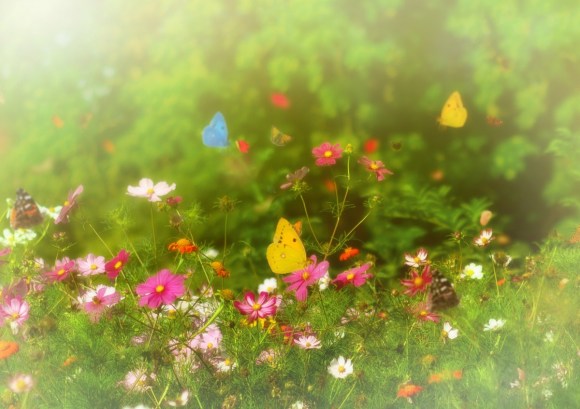
Mad as a March hare… everytime March springs into action, flowers turn the season into a rainbow of wonderful colours. And I start to think of imagine a little white rabbit running with a clock for a tea party in Mughal Gardens (next to the Indian President’s home) or in the sprawling lawns of the White House, where lives the American President. Where do you think the white rabbit came from? All the way from Lewis Caroll’s creation, Alice’s wonderland. If you have not read the book, do so now — it is a lot of fun! The idiom was popularised by the Alice’s Adventures in Wonderland in 1865. Incase, you want to check out a free copy of the book, click here to read.
The Mad Hatter’s tea party in Alice in Wonderland
But, that is enough about March hare madness. We cannot keep Ms Sara waiting any more. With a hop, skip and jump, we hand the stage over to Ms Sara… Thank you for your patience Ms Sara — we are now ready to visit your wonderland.
No issues. I have been munching on this packet of popcorns… from the Mad Hatter’s tea party. Now, did they have popcorn on the menu? Maybe, I will click on the link and check out. It is always nice to re-read a classic like Alice in Wonderland. But, let us start on our adventure in the Bookosmian wonderland with poetry.
Poetry
Eight-year-old Saanvi Baheti from Bangalore brings to us a delightful S poem on the inviting salty waters of the sea.
The Salty Sea
by Saanvi Baheti
The salty sea slaps the shore,
I can see the seagulls soar.
I can see, sand slipping through my hand,
The sun was shining for a short span.

I went swaying slowly in the sea
Splishing, splashing, Silly me!
The sun was shining stupendously,
Oh! How I love the salty sea.
Nine-year-old Shifa Zahra Touseef from Lucknow imagines what would happen if a book could talk…
The Book On The Hook
by Shifa Zahra Touseef
I am a book

Clinging on a long hook.

I can talk.

I can say Quack, Quack.

Happily, I fly over a shack.

Now, I am starting to think

That work was done in a wink,

Was great and fast,

When humans disappeared at last.


I did, I combed furry whiskers of the blue ant

And styled the long, pink hair of an elephant.

I scrubbed the dirt off the feet

Of a grumpy lump of concrete,

While no one fed the old tiny whale

Her favorite piece of yummy little kail.


The squeamish whining of the snail

Attracted a noisy yet

Beamish chorus of dinosaur-whales.

Those frowning faces of whales

Couldn’t stop drooling on the shale.


A foosh-foot named Brango

Missed his beloved yellow flamingo.

The yellow one chorped-chirped

Until sad Brango burped.

The burp was loved by Mr. Moon

The parrot, the talking riddle, and the raccoon.

Now, the foosh-footed one fled

In the forest covered with green bread.


This is lovely, said the ‘Quack Quack’ book

Now, resting under the sun with a coloured look.
Seven-year-old Navitha S from Mysore pens a lovely little poem about her favourite place at home, her garden.
My Precious Garden
by Navitha S
My favourite place is my garden,

Where there are flowers and plants and breeze.


I feel very happy when I go there,

The wind gives me joy and peace.


Wherever I sit in the garden, I feel the breeze.

The garden is the most beautiful thing in my house.


I feel that my garden is precious

It is a colourful thing which I like the most.


I sit and have my meal in the garden


It is very cool.
Let us move on to Essays. And here we have one on returning to school after the lockdown.
Essays
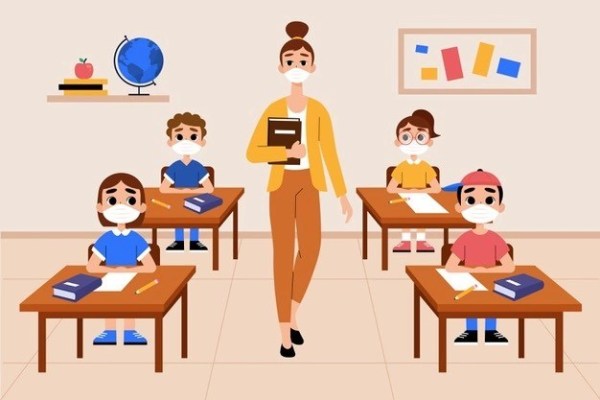
Sandya B Rajan, a 14-year-old Bookosmian from Chennai went back to school after 11 months and shares what that was like.
Back To School during Coronavirus
by Sandya P Rajan
Due to the coronavirus pandemic, schools were closed but learning continued with classes conducted online.
After nearly eleven months, the school reopened for classes (grades) 9,10,11, and 12. After hearing the news I was very excited but sad too.
Reopening of school meant waking up early in the morning and missing the comfort of home. But I was so excited to be in school with all of my friends. No more comfortable clothes, gadgets, and online quizzes. But we could interact with the teacher and get our doubts clarified in person.
The day before school, I packed my bag, bought sanitizer and an extra mask, and got ready for school. I went to bed very early that day. I woke up and got ready for school. My parents dropped me at school. I usually go by van to school, but due to the pandemic, my parents are dropping me to school.
The temperature was checked at the school gate. Only twenty students were allowed to sit in a classroom. So the class was split into two. We had classes. We got our doubts clarified. There were a lot of safety precautions followed in my school which made me feel safe and secure inside the campus.
After coming to school, I had to sanitize my bag and other belongings, which was an extra task I would have to do regularly. Even though it wasn’t a normal school day, it was a new experience for me. Let us hope for the best in the upcoming days.
Konark is a town in Odisha where there is a famed temple of the Sun and a dance festival takes place there every year. Ten-year-old Divyanshi Das from Bangalore takes us to Konark.
Odisha : A Mix Of Heritage And Natural Beauty
by Divyanshi Das
Odisha is a truly impressive and spectacular place, famous for its heritage sites, unpolluted beaches, pilgrimage and more.
Odisha provides a lot of sightseeing opportunities which attracts many tourists every year. So, let me introduce you to two astounding festivals from the state.The first is the sand art festival of Konark usually held from 1st to 5th December at Chandrabhaga beach, Konark, Puri.
Sand art is the art of making sculptures using sand. The artists who participate are expected to follow certain rules. They can only use the beach sand, water and hand tools. No machinery tools are allowed.
Artist are supposed to start their work on the first day (morning) and they need to be ready with their sculptures by the evening when the festival is inaugurated and opened. The festival lasts five days so the artists have to make a new sculpture every day. Artists have to keep in mind that their sculpture should not hurt the religious sentiment of the people in any way.
The second festival I want to tell you about is the Konark Dance festival . Have you heard of the Sun Temple at Konark? It is a world heritage site and the site for the dance festivals. Some of the best dancers of the country come to perform here. The aim of the festival is to promote Indian classical dances.
Hope you liked reading about the festivals. Do visit the wonderful state of Odisha!
Wow! Two essays that show that this year might be better than last year. In any case, the future is always better than the past. Isn’t it? Here is Jessica Rachel who dreams of one and it is a story by her.
Stories
Nine-year-old Jessica Rachel from Chennai had a vivid dream about a happier and better world and has an important message of how we can make our dreams come true.
I Dream Of A Better Tomorrow
by Jessica Rachel
Every day was the same. I went to school, I studied and came home and slept and the pattern repeated. Wherever I went, there was hardly any greenery and a lot of pollution. I saw people were homeless and their kids had a lack of education.
Then one day, Covid-19 came along and affected the whole world. Those who were poor had no money to even get basic necessities for themselves.
We were instructed to sit at home and many people lost their jobs. The government tried to help those people. Some children could afford to attend online classes but not everyone was privileged.
One day I was thinking about this as I was falling asleep.
I had a lucid dream and found out that I could change the world however I want.
So, I first planted lots of trees. I planted seeds in every garden and empty spaces. I planted about 10,000 trillion seedlings around the world. Then I tackled the pollution from factories by enhancing the flora around them.
Then I channelled the lakes and rivers around the world and connected them to every home in this world. Now everyone could have fresh water to drink every day.
Then I went to the lands that were barren and built a playground using soil and water. I dug a deep hole and made a slide and filled the bottom with fresh water]. I kept some floats nearby. Next, I went to another barren land and filled it with snow. I created a snow playground.
I woke up and realised that this was all a dream. But I knew that it is not impossible to make this dream a reality.
We can make this come true by working together towards a beautiful environment. Until and unless we work together, we can never make our dreams come true.
Now, nine-year-old Nandini Maheshwari from Delhi brings us a story about a monkey that learnt to conquer its fear thanks to a wise old Orangutan.
The Day Muchilal The Monkey Learnt To Jump
By Nandini Maheshwari
Muchilal was a very handsome monkey. He had a big moustache. He wore a colorful turban. He was very polite and friendly. But he had a problem. He was afraid to jump. He used to think he would fall down if he tried to jump. Many mean monkeys in the tribe teased Muchilal a lot for being afraid.
He decided to go to the old wise orangutan to learn how to jump. The orangutan told him to fast for one day and Muchilal did so. He didn’t eat anything, not even his favorite bananas. He was starving badly.
Then the old wise orangutan hung some bananas on a very high branch of a tree. As soon as the fast got over, Muchilal was eager to munch something to satisfy his hunger.
The orangutan told Muchilal that now that his fast has got over, he can eat his favourite food – bananas. But to eat them he has to jump over the highest branch.
Initially, Muchilal was nervous but he was so hungry that he jumped to the highest branch with a big leap. Muchilal gulped the bananas and he also realized that he could finally jump.
This is how he overcame his fear.
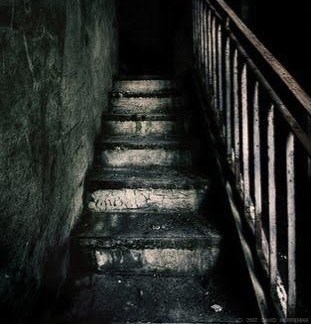
What happens if you have to walk up dark stairs at midnight after watching a horror movie? Another story about conquering fears by twelve-year-old Nethrra S from Salem.
A spooky walk up the stairs
By Nethrra S
It was 11 pm on a rainy night. I was about to go to bed after watching a horror movie when my mother told me to go and close the terrace door. I was shocked!
In my house, to reach the terrace we have to climb two floors. I didn’t want to be alone since the horror movie was still in my head but I said ‘okay’ to my mother. I switched on the light to the stairs but unfortunately, the power failed.
I got a torch but there was no battery in it. I thought of taking a mobile phone but my mother was on call, my father was busy doing something with his phone.
I felt scared despite having agreed. I silently went to the stairs and stepped on it frightened.
I started to climb when I suddenly heard thunder as it was raining. I stepped on to climb to the second floor when I heard someone shouting my name loudly. This frightened me more. I started to chant religious mantras as they say ghosts are scared of Gods.
Suddenly, I heard my favourite song and wondered who was playing that when there was no power?
Finally, I reached upstairs and closed the terrace door. I took a deep breath and ran downstairs fast.
As I reached down, my mother said that she was calling me aloud and it was my sister who played my favourite song on her phone. My father asked me how I had climbed up in the pitch dark. I didn’t respond but I was glad there were no ghosts up the stairs!
A little girl gets lost in a cave. How does she manage to get out? Read this story of kindness and courage by seven-year-old Iksha Kalwal from Pune.
Finding A Treasure At The End Of The Rainbow
By Iksha Kalwal
One beautiful morning, Olivia went out for a walk. While keenly observing a stick insect, she fell into a cave. She was trying to walk slowly to find a way out. She was scared in that dark cave, anxious not knowing how she was going to get back home. Olivia remembered that her parents always said to be calm in this kind of situation and look for something to help her find a way out.
She saw a thin ray of light reflecting on her. Olivia ran towards it and bumped into a pot. She saw a small plant with a face asking for water. She quickly took out her water bottle and watered the plant. It smiled at her like a flower in the spring.
The plant asked her, “Will you please take me out of this filthy cave?” Olivia replied, “I will.” Olivia took the plant with her and found an exit to the cave.
After walking for a while, she saw a beautiful palace. A lonely bird was sitting at the window and humming a song. That hummingbird happily flew and sat on Olivia’s shoulder. Now Olivia had two friends as she continued walking to find a way home.
They saw footprints and followed them. “That might be the way!” said the plant. As they walked following the footprints, the bird sat on an arrow sign.
“Great, my friend!” exclaimed Olivia. They followed the arrow sign and reached a hut. Curious, they went inside the hut and found a puppy with an injured leg. The three friends quickly agreed to take care of him. Olivia took out her water bottle and gave water to the puppy.
Olivia, the plant, the bird, and the puppy, set back out to find home and finally reached a riverside. Olivia could see her village far away across the river! They saw a man sailing a boat, and he offered to help them cross the river.
As they crossed the river, Olivia reflected upon her journey, grateful for the friends she made along the way and was delighted that she found the treasure – her village – at the end of the rainbow!
I hope you enjoyed the visit to Bookosmian wonderland because I am off to read now … and figure out if they had popcorn at the tea party in Alice’s adventures! See you in Borderless again next month.Bye!
Avik Chanda converses about his best selling book on Dara Shukoh and its current relevance. Click here to read.
Stories
The Literary Fictionist
In Forgeries, Don Quixote & Epistemes, Sunil Sharma unravels the mystique of the Spanish ingénue, the man who fights windmills and has claimed much much literary attention post Quichotte. Click here to read.
A story of 1950s indiscipline related by Brindley Hallam Dennis with a soupçon of humour. Click here to read.
Musings/ Slices from Life
Musings of a Copywriter
In Lessons from Partition, Devraj Singh Kalsi explores how Partition impacts not only countries but families. Click here to read.
Adventures of a Backpacking Granny
In Homestay at St Petersburg, Sybil Pretious travels take her to St Petersburg where she tells the story of a woman she meets, a survivor from the 900 day Siege of Russia. Click here to read.
A discussion by Candice Louisa Daquin based on reading Candace Owens’ book Blackout: How Black America Can Make Its Second Escape from the Democrat Plantation. Click here to read.
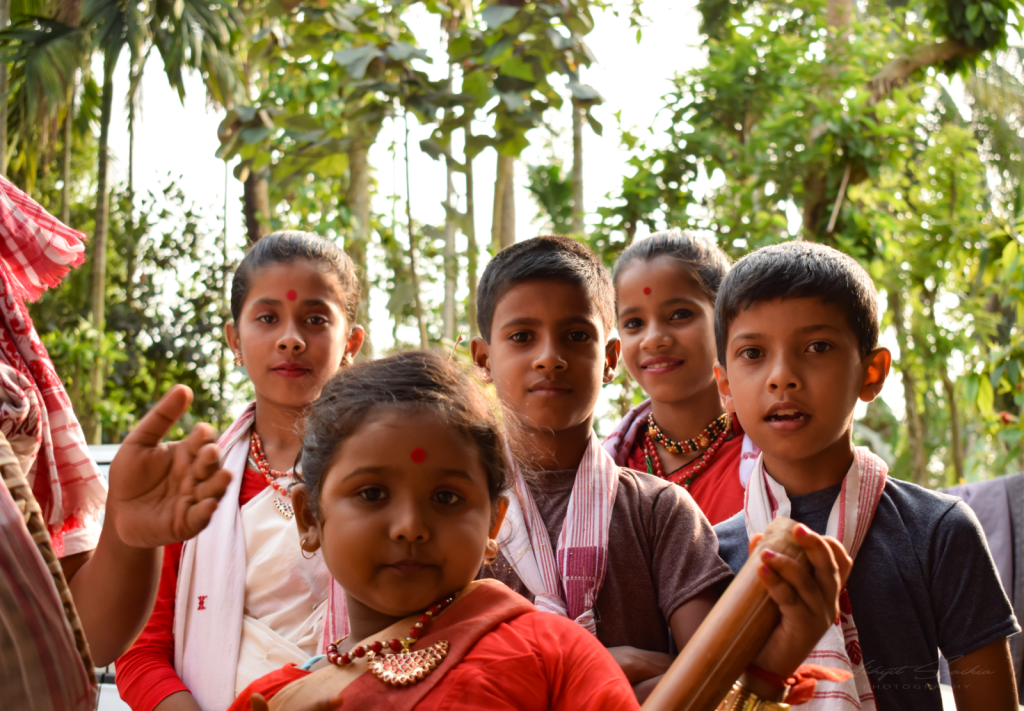
These are fragments of memories from her childhood by Pronoti Baglary. With them, she tries to recap the flavours of an Assamese village. Click here to read more.
Krittika Mehta journeys through Erich Segal towards self discovery. “The world was dipped in swirling, glittering celebrations with friends, family and unknown to embrace a new year…” Click here to read more.
Michelle Hanley takes us on a magical adventure of culinary delights made by her grandmother. “It may just be that last bit of cake refilling the pan over and over again…” Click here to read more.
Ratnottama Sengupta, eminent journalist and daughter of Bengali writer Nabendu Ghosh, has been a force behind translating Bengali literature and bringing it to the doorstep of those who do not know the language. In this exclusive, she discusses how translations impact the world of literature. Click here to read.
Happiness and humour! Is that an unrealistic goal to achieve in this life? Moving away from the contentiousness of fame, of argument, of who achieves how much more and how much faster, we might be able to uncover a world sheathed in happy smiles. Is it only the pandemic spreading gloom?
The fear of dying or suffering does create a shroud of gloom that often interrupts our social interactions. The unreasonableness of fear draws us away from reality. Hans Rosling, a Swedish physician who called himself a possibilist, says: “There’s no room for facts when our minds are occupied by fear.” Fear or depression is the opposite of humour and happiness. The ability to think clearly and laugh at situations leaves us when we are fearful. Fear also leads to depression and the feeling of being oppressed. Humour is perhaps the only antidote to laugh away our fears and depression, to combat darkness and bring back smiles, hope and happiness. We have laughter clubs. Laughter binds all its members in happiness. And that is why we try to host plenty of it in Borderless Journal.
Embedded in the musings, fiction and poetry sections, we have humour, pathos, poignancy and laughter. Rhys Hughes with his tongue-in-cheek poetry, musings by Will Neussle and a short flash fiction by Brindley Hallam Dennis make us laugh outright as do some of the wonderful pieces written by youngsters in ‘Sara’s Selections’ hosted by Bookosmia, thanks to Nidhi Mishra and Archana Mohan. Michael Burch has also given us humour, happiness and poignancy in his collection of poems in memory of his mother.
We have introduced a new column that creates bridges across the world with not just facts but compassion and comprehension of the suffering and bravery of mankind by a woman who has traversed through diverse cultures all her life, Sybil Pretious. In this episode of ‘Adventures of the Backpacking Granny’, she explores the impact of Perestroika while in St Petersburg (Russia). Devraj Singh Kalsi has also given us an unusual piece talking about the impact of Partition on the family structure within the subcontinent. These two musings, while resting on major political events that changed the world for many of us, reflect different perspectives and are handled in vastly different ways by both the writers.
Reflecting on binaries, is a story from the imagined township of Ghumi, a series that Nabanita Sengupta has been publishing with us for more than six months now. Sohana Manzoor has given us a poignant story with a surprise ending from Bangladesh on the theme of witch-hunting, previously reflected upon in one of Aruna Chakravarti’s translations of Tarashankar’s famous story, ‘Daini’ (The Witch). Sunil Sharma has given us another interesting cross-cultural narrative based on his interpretation of Don Quixote and has also provided us a poem. We have a lovely collection of poetry this time, thanks to Michael Burch, who has helped with the editing and selection of poems. Vatsala Radhakeesoon has shared both her painting and a poem based on the painting with us – both vibrant and unusual works.
We have, for the first time a writer from Iran and translations from Persian to English by Davood Jalili of his works. A poem and an essay by Iranian poet Bijan Najdi give us a glimpse of their stories and perspectives. Jalili has also translated Devaki Jain’s interview to Persian to publish in the Arzhang, the online journal where the previously translated Aruna Chakravarti’s interview had found a home. We are very grateful to him for giving wider exposure to the content of Borderless as we are to Binu Mathews of Countercurrents for sharing our content in his popular site. Jalili with his translations to English brings in new perspectives into our fold as do Aditya Shankar with his translation from Malayalam poetry and Fazal Baloch with his translation of a Balochi folk tale.
The other major translation we have is that of a Nabendu Ghosh story by his late son, Dipankar Ghosh. ‘The Saviours’ had been translated previously by Bhashabi Fraser in a collection of Partition stories and was seen as representative of that era. However, as a literary paper from Universidad de Cádiz indicates, the story steps beyond the Partition to another relevant issue that continues to plague India — the divide created by wealth, caste and education, the absolute obtuseness of the affluent to the suffering of the less privileged, an issue that continues to shame as we reel from the pandemic.
There is an in-depth book review of a translation of Satyajit Ray’s grandfather, Upendrakishore Ray Chowdhury, by academic Nivedita Sen. Immortalised by the grandson in an award winning film, Goopy Gyne Bagha Byne, the story has been recently translated to English from Bengali and published under the title of The Adventures of Goopy the Singer and Bagha the Drummer.
An essay on translations by eminent journalist Ratnottama Sengupta, who has been bringing out works of Bengali writers in English and Hindi, explains the need for building these bridges across time and cultures. Candice Louisa Daquin’s essay on the Kali Project, which resulted in an anthology of poems on feminist issues in India initiated by an American concern, attempts to transcend borders as does the interview with Suzanne Kamata, an award-winning writer based out of Japan but born and brought up in the USA.
Candice Daquin has also given us another powerful reflection on the core values of mankind. This theme of an exploration of humane values has been reiterated in our interview with Avik Chanda, the author of the best-selling history of Dara Shukoh.
Do visit and take a look at our oeuvre, which far exceeds what has been mentioned in this little note. We value both our contributors and readers. Please feel free to comment and make suggestions so that we can serve you better.
Have a lovely month, looking forward to spring and newness!





































































 Borderless