Categories
Contents

Borderless, September 2025

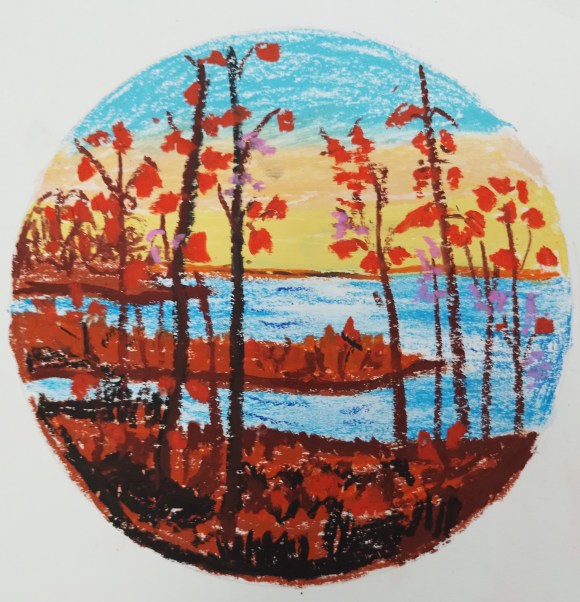
Art by Sohana Manzoor

Editorial

Seasons Out of Time Click here to read

Translations

Nazrul’s Karar Oi Louho Kopat (Those Iron Shackles of Prison) has been translated from Bengali by Professor Fakrul Alam. Click here to read.

Five poems by Ashwini Mishra have been translated from Odia by Snehprava Das. Click here to read.

The Dragonfly, a poem by Ihlwha Choi,  has been translated from Korean by the poet himself. Click here to read.

Tagore’s Aaj Shororter Aloy (Today, in the Autumnal Light) has been translated from Bengali by Mitali Chakravarty. Click here to read.

Poetry

Click on the names to read the poems

Ryan Quinn Flanagan, Onkar Sharma, Ron Pickett, Arshi, Joseph K Wells, Shamim Akhtar, Stephen House, Mian Ali, John Grey, Juliet F Lalzarzoliani, Joseph C.Obgonna, Jim Bellamy, Soumyadwip Chakraborty, Richard Stimac, Sanzida Alam, Jim Murdoch, Rhys Hughes

Poets, Poetry & Rhys Hughes

In Soaring with Icarus, Rhys Hughes shares a serious poems. Click here to read.

Musings/ Slices from Life

Parenting Tips from a Quintessential Nerd

Farouk Gulsara relooks at our golden years and stretches it to parenting tips. Click here to read.

Instrumental in Solving the Crime

Meredith Stephens takes us to a crime scene with a light touch. Click here to read.

What’s in a Name?

Jun A Alindogan writes about the complex evolution of names in Phillippines. Click here to read.

Bibapur Mansion: A Vintage Charmer

Prithvijeet Sinha takes us for a tour of Lucknow’s famed vintage buildings. Click here to read.

Musings of a Copywriter

In Demolition Drives… for Awards?, Devraj Singh Kalsi muses on literary awards. Click here to read.

Notes from Japan

In Contending with a Complicated History, Suzanne Kamata writes of her trip to US from Japan. Click here to read.

Essays

The Bauls of Bengal

Aruna Chakravarti writes of wandering minstrels called bauls and the impact they had on Tagore. Click here to read.

The Literary Club of 18th Century London

Professor Fakrul Alam writes on literary club traditions of Dhaka, Kolkata and an old one from London. Click here to read.

Stories

Looking for Evans

Rashida Murphy writes a light-hearted story about a faux pas. Click here to read.

Exorcising Mother

Fiona Sinclair narrates a story bordering on spooky. Click here to read.

The Storm

Anandita Dey wanders down strange alleys of the mind. Click here to read.

The Fog of Forgotten Gardens

Erin Jamieson writes from a caregivers perspective. Click here to read

The Anger of a Good Man

Naramsetti Umamaheswararao makes up a new fable. Click here to read.

Feature

A review of Jaladhar Sen’s The Travels of a Sadhu in the Himalayas, translated from Bengali by Somdatta Mandal, and an online interview with the translator. Click here to read.

Book Excerpts

An excerpt from Jaladhar Sen’s The Travels of a Sadhu in the Himalayas, translated from Bengali by Somdatta Mandal. Click here to read.

An excerpt from Prithvijeet Sinha’s debut collection of poems, A Verdant Heart. Click here to read.

Book Reviews

Somdatta Mandal reviews Aruna Chakravarti’s selected and translated, Rising From the Dust: Dalit Stories from Bengal. Click here to read.

Rakhi Dalal reviews Mohua Chinappa’s Thorns in My Quilt: Letters from a Daughter to her Father. Click here to read.

Pradip Mondal reviews Kiriti Sengupta’s Selected Poems. Click here to read.

Bhaskar Parichha reviews Kalyani Ramnath’s Boats in a Storm: Law, Migration, and Decolonization in South and Southeast Asia, 1942–1962. Click here to read.

.

Click here to access the Borderless anthology, Monalisa No Longer Smiles

Click here to access Monalisa No Longer Smiles on Amazon International
Categories
Editorial

Seasons Out of Time

Today, as I gaze in this autumnal light,
I feel I am viewing life anew.

— Tagore's Aaj Shororter Aloy (Today, in the Autumnal Light)
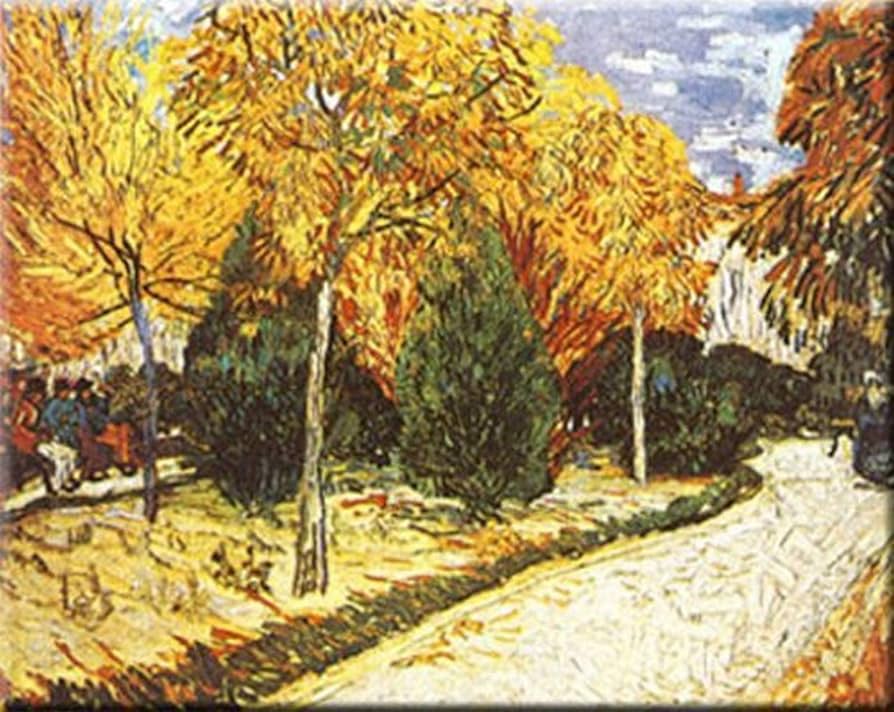
Autumn Garden by Vincent Van Gogh (1853-1890). From Public Domain

September heralds the start of year-end festivities around the world. It’s autumn in one part and spring in another – both seasons that herald change. While our planet celebrates changes, dichotomies, opposites and inclusively gazes with wonder at the endless universe in all its splendour, do we? Festivals are times of good cheer and fun with our loved ones. And yet, a large part of the world seems to be in disarray with manmade disasters wrought by our own species on its own home planet. Despite the sufferings experienced by victims of climate and war-related calamities, the majority will continue to observe rituals out of habit while subscribing to exclusivity and shun change in any form. Occasionally, there are those who break all rules to create a new norm.

One such group of people are the bauls or mendicants from Bengal. Aruna Chakravarti has shared an essay about these people who have created a syncretic lore with music and nature, defying the borders that divide humanity into exclusive groups. As if to complement this syncretic flow, we have Professor Fakrul Alam’s piece on a human construct, literary clubs spanning different cultures spread over centuries – no less an area in which we find norms redefined for, the literary, often, are the harbingers of change.

Weaving in stories from around the world, our non-fiction section offers parenting tips ( or are these really nerdy meanderings?) from Farouk Gulsara who looks inclusively at all life forms — big and small, including humans. Meredith Stephens brings us a sobering narrative with a light touch from the Southern Hemisphere. Prithvijeet Sinha takes us to explore an ancient monument of Lucknow and Jun A. Alindogan tells us “what’s in a name” in Philippines — it’s quite complex really  — it reads almost as complicated as a Japanese addresses explained in her column by Suzanne Kamata. In this issue, she takes us through the complexities of history in South Carolina, while Devraj Singh Kalsi analyses literary awards with a dollop of irony!

Humour is brought into poetry by Rhys Hughes, though his column houses more serious poems. Joseph C.Obgonna has an interesting take on his hat — if you please. We have poetry on climate by Onkar Sharma. Verses as usual mean variety on our pages. In this issue, we have a poem (an ekphrastic, if we were given to labelling) by Ryan Quinn Flanagan on a painting, by Ron Pickett on aging and on a variety of issues by Arshi, Joseph K Wells, Shamim Akhtar, Stephen House, Mian Ali, John Grey, Jim Murdoch, Juliet F Lalzarzoliani, Jim Bellamy, Soumyadwip Chakraborty, Richard Stimac and Sanzida Alam. We have translations of poetry. Ihlwha Choi has self-translated his poem on a dragonfly from Korean. Snehprava Das has brought to us another Odia poet, Ashwini Mishra. Tagore’s Aaj Shororter Aloy (Today, in the Autumnal Light) has been translated from Bengali. Though the poem starts lightly with the poet bathed in autumnal light, it dwells on ‘eternal truths’ while Nazrul’s Karar Oi Louho Kopat (Those Iron Shackles of Prison), transcreated by Professor Alam, reiterates breaking gates that exclude and highlight differences. In the same spirit as that of the bauls, Nazrul’s works ask for inclusivity as do those of Tagore.

We have more poetry in book excerpts with Sinha’s debut collection of poems, A Verdant Heart, and in reviews with veteran poet Kiriti Sengupta’s Selected Poems, reviewed by academic Pradip Mondal. Rakhi Dalal has written on Mohua Chinappa’s Thorns in my Quilt: Letters from a father to a Daughter. while Bhaskar Parichha has discussed Kalyani Ramnath’s Boats in a Storm: Law, Migration, and Decolonization in South and Southeast Asia, 1942–1962, a book that explores beyond the boundaries that politicians draw for humanity. The pièce de résistance in this section is Somdatta Mandal’s exploration of Aruna Chakravarti’s selected and translated, Rising from the Dust: Dalit Stories from Bengal. The book stands out not just for the translation but also with the selection which showcases an attempt to create bridges that transcend linguistic and cultural barriers.

Mandal, herself, has a brilliant translation featured in this issue. We have a review of her book, an interview with her, and an excerpt from the translation of Jaladhar Sen’s The Travels of a Sadhu in the Himalayas. Written and first published in the Tagore family journal, Bharati, the narrative is an outstanding cultural bridge which even translates Bengali humour for an Anglophone readership. That Sen had a strictly secular perspective in the nineteenth century when blind devotion was often a norm is showcased in Mandal’s translation as well as the stupendous descriptions of the Himalayas that haunt with elegant simplicity. 

Our fiction this month seems largely focussed on women’s stories from around the world. While Fiona Sinclair and Erin Jamieson reflect on mother-daughter relationships, Anandita Dey looks into a woman’s dilemma as she tries to adjust to the accepted norm of an ‘arranged’ marriage. Rashida Murphy explores deep rooted social biases that create issues faced by a woman with a light touch. Naramsetti Umamaheswararao brings in variety with a fable – a story that reflects human traits transcending gender disparity.

The September issue would not have been possible without contributions of words and photographs by many of you. Huge thanks to all of you, to the fabulous team and to Sohana Manzoor, whose art has become synonymous with our journal. And our heartfelt thanks to our wonderful readers, without who the effort of putting together this journal would be pointless. Thank you all.

Looking forward to happier times.

Mitali Chakravarty

borderlessjournal.com

.

CLICK HERE TO ACCESS THE CONTENTS FOR THE SEPTEMBER 2025 ISSUE

.

READ THE LATEST UPDATES ON THE FIRST BORDERLESS ANTHOLOGY, MONALISA NO LONGER SMILES, BY CLICKING ON THIS LINK.

Categories
Stories

The Storm

By Anandita Dey

The storm outside the room and one inside me were not different. Both were creating havoc. The one outside was wrecking, breaking trees and thatched huts. The other was breaking me into pieces, and I knew, I would never be able to return to my original state.

I lay on an unknown bed, with an unknown person. His left hand held my waist tightly. I could feel his heavy breath on my neck. I could barely move. I wanted to get up and run away from this, into the storm outside, to silence the storm inside me. I looked at the wall clock on the wall in front of me. It was half past five in the morning. I freed myself from the strong grasp of his hand and got up from the bed. I felt dizzy from lack of sleep. I opened the windows, and the heavy rain drenched me in a few minutes. The strong breeze made me shiver.

It’s been a few months now since I’ve been with him. He seems to be a nice person. Sometimes when I pretend to be asleep in the morning, he prepares breakfast for me and leaves it on the bedside table. Sometimes when I don’t prepare dinner, he orders food from outside. He never complains of anything. One day I had high fever. He skipped his work and stayed all day with me, feeding me with food and medicines.

We first met a year ago. My parents arranged a meeting with his family, and they came to our house. He’s the only child of his parents. His father’s a retired police officer and his mother a high school teacher. He’s an entrepreneur. We met a few times after that, all of which were vague meetings. I don’t remember where we met, what were the things we discussed. And after a few months, I was sent to his home. He doesn’t stay with his parents. We live in a small apartment, few kilometers away from my parents’ home. I am now officially his wife and he, my husband. He’s the kind of man every girl desires. He’s good looking, intelligent, caring and everything. But I already had my perfect man in my life.

My perfect man may not be very intelligent, but he knows how to make me smile. He is the most handsome man I have ever seen in my life. He is so charming that anyone would fall for him, but he chose me. He loves me as if I’m the most precious thing he has. And when he touches me, caresses me, kisses me and holds me in his arms, I feel like I’m the most precious thing in this world. He says I’m his muse. He writes poems about me. Some nights, when we lie down together, he recites those poems to me in his enchanting voice.

My train of thoughts stopped when my husband tapped me on my back. He closed the windows and asked me to get ready. He said we were going somewhere. I obediently got ready and prepared breakfast for us. We had our breakfast in silence and left for the ‘somewhere’. As we reach there, the place seemed to be familiar to me. I had been here before, but I could hardly recall. Few moments later we met a lady. She called herself Dr. Sunitha Swamy. She was beautiful with an appealing personality. She asked me a few questions about myself and my hallucinations. I didn’t know what she was talking about. And then she spoke to my husband. She said I had created an imaginary person in my mind who I thought was real and that’s why I was not able to accept my marriage or my husband. She said few medications and therapies could help me get rid of this.

Three months passed since we first visited the hospital. Dr. Sunitha said I was fine after taking medications and therapies. My husband’s no longer an unknown person to me. I never skip preparing breakfasts or dinners for him. His hands no longer feel like a tight grasp. And we make love too. But on days when no one is around, I go back to my man — the man whom I have loved ever since and whose embrace still makes me feel that I’m the most precious thing in the world.

.

Anandita Dey is a research scholar from Guwahati who enjoys experimenting with words as much as science. A lifelong book lover, she expresses her thoughts through poetry and fiction. Her writings have appeared in newspapers and online platforms, and she dreams of publishing her book someday.

.

PLEASE NOTE: ARTICLES CAN ONLY BE REPRODUCED IN OTHER SITES WITH DUE ACKNOWLEDGEMENT TO BORDERLESS JOURNAL

Click here to access the Borderless anthology, Monalisa No Longer Smiles

Click here to access Monalisa No Longer Smiles on Amazon International