Originally written and published in Kannada as Halla Bantu Halla by Shrinivas Vaidya, this book won the Karnataka Sahitya Academy Award in 2004 and Central Sahitya Akademi Award in 2008. The author of many critically acclaimed literary collections, Vaidya is also the recipient of Karnataka Rajyotsava Award.
The English translation A Handful of Sesame by Maithreyi Karnoor was shortlisted for the Lucien Stryk Asian Translation Prize. Karnoor is the recipient of the Charles Wallace India Trust Fellowship for creative writing and translation. She has also won the Kuvempu Bhasha Bharati prize for translation.
Written with the backdrop of India’s struggle for independence, spanning a time period of almost a hundred years from the mutiny of 1857 to Mahatma Gandhi’s assassination, this book chronicles the life of a Hindu Brahmin family over a century in a town called Navalgund in Karnataka. It is the narrative of a family, whose seed originated in Kanpur in Northern India but which took roots in the small Southern Indian town of Navalgund during a period of political upheaval and then made it a home for generations to come. This story, as Tabish Khair notes in the foreword, thus also becomes a story of internal migration, recording the adoption and assimilation of cultural and religious practices in everyday living. More than that, it offers us a window into the socio-cultural mores of a family affected and shaped by changing times.
Vasudevaachar is the son of Kamalanabh-panth of Kanpur who marries the daughter of a Brahmin from Navalgund and stays back during the chaotic times brought about after the suppression of 1857 mutiny. Like his father, he practiced medicine and takes on the responsibility of the entire household after Kamalanabh’s demise. The narrative deals with a detailed account of the struggles of running of the household with regular events like birth, death, marriages and so on in the big joint family with Vasudevaachar at the centre even as various occurrences like natural calamities, fight for freedom, world war and political turmoil keep altering the contours of their daily life.
Vaidya essentially creates a Brahmin household, suffusing the narrative with a rich language, idioms and slangs and vivid description of rituals, food and daily practices which are rendered in a delightful manner to the non-native reader through a fine translation by Maithreyi Karnoor. It palpitates with both rhyme and rhythm, of language and everydayness, concocting a gripping tale that captivates imagination.
The major characters that inhabit the world of A Handful of Sesame are diverse and non uni-dimensional. They evolve with the progressing narrative, forging the complex web of relationships within a large family that change as the time moves. Vaidya’s skilful portrayal brings forth the nuances in their interactions and connections which tie them as a family.
Vasanna or Vasudevaachar, the head of the family, a religious and orthodox Brahmin is shown to be burdened by perpetual looming financial burdens of the family. Tulsakka, his wife, is a quiet yet determined woman. Ambakka, sister of Vasanna, is a shaven widow who lives with them. Impatient and irritable, she however assumes bigger role in caring for the newborns of the family. Venkanna, younger brother of Vasanna and a widower too, instead of marrying again keeps a relationship with a Muslim woman. A firm and resolute man, he shares the financial burden of his brother. Rukkuma, an orphan adopted by Panth family and belonging to a lower caste, lives as a house-help while Narayana, another orphan adopted by the family and son of a distant relative lives with them too.
As the world around them keeps changing, family dynamics change too. When English schools open up in Dharwad, the young sons of the family are sent for an education there. With opening of newer avenues for livelihood, the next generation keeps moving onto newer and bigger places, adopting new ways of life but remaining connected with their roots.
Struggle for freedom, which remains a constant in the background, is employed to portray the rising collective consciousness across the nation which influenced the lives of ordinary people. We are offered glimpses into how the events like Salt Satyagraha or Congress meetings had an effect on the routine life of people of a small town like Navalgund. The author also offers a peek into the larger social construct surrounding the Panth family, which though fragmented by caste and religion, lived in harmony with each other. An orthodox Brahmin like Vasanna goes to a dargah to offer sugar to ward off evil eye. In the present context, this might appear contradictory to the very definition of an orthodox, but it simply means that a rigidness in following one’s own rituals did not translate to a dislike of others’ and the minds were more open to accepting the customs believed to bring a greater good.
Such times did exist. How wonderful it would be able to have access to more such works written in regional languages — works which open up bridges to the past of distant lands, connecting to our present, making the present improbable possible and bridging the divide; works which bring to us the account of lived lives of a people separated only by language. Perhaps this is why it becomes important that these works be made available to varied readers through translation.
For an English reader, Maithreyi Karnoor’s perceptive translation presents a view of the ‘most underrepresented region in Kannada literature’, thereby offering us not only the linguistic nuances neglected by mainstream Kannada but also a compassionate insight into the regional life which is critical for a better understanding of the period.
Rakhi Dalal is an educator by profession. When not working, she can usually be found reading books or writing about reading them. She writes at https://rakhidalal.blogspot.com/ .
.
PLEASE NOTE: ARTICLES CAN ONLY BE REPRODUCED IN OTHER SITES WITH DUE ACKNOWLEDGEMENT TO BORDERLESS JOURNAL.
Editors and Translators: Syeda Hameed and Sukhpreet Kahlon
Publisher: Penguin Vintage
Khwaja Ahmed Abbas’s[1]Sone Chandi Ke Buth:[2]Writings on Cinema (2022), edited and translated by Syed Hameed and Sukhpreet Kahlon is truly, “an insider’s view of the ‘Sitaron Ki Duniya’[3]”.
The book is a constellation of Bollywood stories about moviemaking, film personalities, incidents, and fateful moments straight from the horse’s mouth. The book is divided into four sections – Funn Aur Funkaar[4], Kahaaniyaan[5], Articles, and Bombay ChronicleArticles. Abbas was often addressed as the “Human Dynamo” by his closest friends for his spontaneity and dexterity in churning out forms of expression such as short stories, novels, dramas, and films, which manifested whenever he pronounced, “Mujhe Kuch Kehna Hai”[6]. He embodies a different time and sensibility, making the man and his work a treasure from the bygone days. Professor and scholar Ira Bhaskar aptly describes, “K. A. Abbas represents a crucial figure of the Indian modern who believed that critics and artists had a responsibility towards society.”
K.A. Abbas, who was adept in Urdu, Hindi and English made the most of his multilingual skills to contribute thousands of articles on popular media including the longest-running weekly column, 46 years as a contributor in Blitz, writing for the Bombay Chronicle, 40 movies, short stories, and 74 books in 73 years. Sone Chandi ke Buth (2022) is Abbas’s last book on filmi duniya, the world of movies. The book throws a glimpse into Abbas’s journey from the young and aspiring journalist who wrote paltry salaried publicity blurbs to a scriptwriter, filmmaker and film critic of great repute who made a tradition of his own offering “love” for the art and to everyone who lovingly called him “KAA”. Bollywood’s Big B, the Mahanayak[7], the megastar fondly admires Abbas’s “unrelenting spirit” and recalls, “K. A. Abbas gave me my first film, Saat Hindustani. I call him Mamujan.”
Syeda Hameed and Sukhpreet Kahlon labelled Sone Chandi ke Buth (2022) as “adhbudh[8]”, for the book is a testimony of the contribution of the man and his craftmanship. Coming from a family of poets and writers, Abbas walked along with the stars of the industries in its golden and the silver eras and yet was a man who could make jokes of himself, give sincere criticism on the quality of an artist’s work or the movie, speak of Bollywood as a unifying factor of pluralism in India, and suggest the importance of understanding truth for a greater cause. Intelligently and humorously, the book opens a window to fascinating instances and anecdotes of his life experiences and his encounters with the people who made history in the world of movies in India via Bollywood that were crucial to the industry or the personalities. With each turn of the pages, the narrative unravels interesting stories and junctures like how in writing about V Shantaram, whom he calls “Sadabahar” or evergreen, he goes on to describe his “crashing” into the world of film and becoming a film critic through film publicity, how his editor’s advice at the Bombay Chronicle opened his wings of liberty to be critical but to do it prudently.
Drawing a fine veil between the reel life and the real life of the people with whom he manoeuvred in the film industry, the book “revealed more than concealed” the human aspects of greatness and flaws of each amidst their roles as heroes, villains or side characters in the movies. The book is filled with incredible stories of towering Bollywood personalities through Abbas’s eyes. Revelations in the section “Funn and Funkaar” captivatingly describe why he referred to V Shantaram as “The Evergreen Filmmaker”, Prithviraj Kapoor as “The Shahenshah[9]”, Raj Kapoor as “An extraordinary Karmayogi[10]”, Dilip Kumar as “Loss of a national treasure”, Meena Kumari as “The Muse of Ghazals”, Balraj Shani as “The People’s Artist”, Amitabh Bachchan as “Himmatwala[11]”, Sahir Ludhianvi as “The Lover and the Beloved”, Rajinder Singh Bedi as “The Guru”, and Satyajit Ray as “Mahapurush[12]”. The section “Kahaaniyan” sheds light on the ironies of the glamour and glitz in the film industry and on special days on the movie sets.
The section on “Articles” presents his thoughts on the relationship of filmmaking with business and its impact on society. Each article is a critical discussion of aspects of a good film, and he strongly opposes scripts that succumb to commercial sensibilities and powerfully voices the need for for “a good story” that “lies at the heart of a good film”. The section “Bombay Chronicles articles” compiles some of the finest articles of his passionate and flourishing days at the Bombay Chronicle in the 1930s as a film journalist. The articles in the concluding section continue to bring forth memorable facets of the world of films in India of the man and his times, and at the same time keep the spirit of enquiry burning in all movie enthusiasts and scholars to reflect on how much has changed over the years. Sone Chandi ke Buth brings into play Abbas, the man, the artiste and his style to showcase what a perfect blend of the head and the heart can do in film making.
If you are looking for a must-have book on Bollywood, filmmaking and movie criticism, then Sone Chandi ke Buth offers you an ample amount of it and more. Timeless memories of photos of the movies: Awara[13] (1951), written by him; Anhonee[14] (1952), a film he made on Nargis’s request; Rahi[15] (1953), a movie based on Mulk Raj Anand’s Two Leaves and a Bud starring Dev Anand and Nalini and Jaywant; Munna (1954), the first songless film of Indian cinema under the Naya Sansar banner; Pardesi[16](1957), the first Indo-Soviet production in a collaborative work of the Naya Sansar banner and Mosfilm Studio; Char Dil Char Rahein[17](1959), Abbas’s first multi-starrer movie; Chaar Shehar Ek Kahani[18] (1968), Abbas’s best-known political documentary; Saat Hindustani[19](1969), a movie on comradeship; and also, personal photos of Abbas’s self, with his family and on film sets, enhances the aesthetic of the book.
The book has a phenomenally exciting set of stories about the famous and the lesser known faces of the movie industry in India, as people with ordinary life and circumstances amid their successes and failures. The translators and editors — his niece, Padmashri Syeda Hameed, an activist, educationist, writer and a former member of the Planning Commission of India, and Sukhpreet Kahlon, a researcher on cinema studies at the School of Arts and Aesthetics, Jawaharlal Nehru University — need to be thanked for collating these wonderful writings that touch our hearts while forging new bonds and links through the medium of films.
Gracy Samjetsabam is a freelance writer and copy editor. Her interest is in Indian English Writings, Comparative Literature, Gender Studies, Culture Studies, and World Literature.
.
PLEASE NOTE: ARTICLES CAN ONLY BE REPRODUCED IN OTHER SITES WITH DUE ACKNOWLEDGEMENT TO BORDERLESS JOURNAL
A conversation with Nirmal Kanti Bhattacharya, the translator of Samaresh Bose’s In Search of the Pitcher of Nectar, brought out by Niyogi Books.
In 2017, the Kumbh Mela (the festival of the sacred pitcher) was declared an Intangible Cultural Heritage. A Times of India report read: “The committee noted that as the largest harmonious conclave in the world, Kumbha Mela stands for values like magnanimity and patience that are very beneficial for the modern humanity. Moreover, the concept of Kumbha Mela goes well with the current international human rights tools because the festival welcomes people from all corners of the world without any differentiation.”
Five years down the line, Niyogi Books brought out a translation of Samaresh Bose’s[1]In Search of a Pitcher of Nectar, an epic travelogue translated from Bengali by Nirmal Kanti Bhattacharjee on the festival at the confluence of the three rivers, Ganga, Saraswati and Jamuna — in Allahabad. An eminent acknowledged writer, whose stories won not just literary acclaim like the Sahitya Akademi award but were translated to prize winning films, Bose’s solo voice stands alone in the translated version — as that of Kalkut, one of the pseudonyms he assumed.
In the early part of the book, Bose gives the reason for his journey into this crowded event which even in the middle of the pandemic (2021) had 3.5 million visitors: “Observing this great variety of humankind on the move is a thirst that is not easily quenched.” Bose’s exploration came long before the pandemic as his book was published in 1954. Then a Bengali film was made on it in 1982.
The writer claimed to have set out to look into the heart of the nation: “I would dive deep into that heart of India. I would identify my own face in this strange mirror of India. That face is my mind. My religion.” And he discovers, “the poor India was there like a faded cloth by the side of a muslin chunni.” While peeling layers of poverty and ‘respectability’, he introduces us to a bevy of characters which include not just Godmen, but also women, who evolved from wifehood to prostitution to godwomen, to young girls forced to marry polygamous octogenarians, to people in quest of lost family members, to men in search of the intangible — and all united together for a dip in the holy ‘sangam[2]’ of three rivers, the ultimate panacea for all ailments and ills for believers. That the author is not part of the believing crowds, but a sympathetic, humane commentator is obvious from his conversations with various people and his actions, which defy boundaries drawn by the respectable god minding devotees thronging the festival. He uses the event to pinpoint the flaws of socially accepted norms and to find compassion for the less fortunate. He laces his narrative with love and compassion for humanity.
The title itself both in Bengali and English conveys the quest for nectar or the divine amrita of immortality which led to a festival that washes away sins with a dip at the confluence. Legend has it that the gods and the rakshasas worked together to draw out the ambrosial drink at this sangam and then, the gods cheated and consumed all of it, judging the other party as too evil to be handed eternal life in a cup. The unbreachable walls had started and perhaps continue even to this date.
The real origin of the festival as Bose contended remains disputed like that of many other cultural lores, though people do continue to quest for miracles in the waters that were supposed to have thrown up the ambrosia. The narrative implies the educated and schooled rarely participated in this event. There is a mention of the prime minister at the festival, but that would be as a dignitary, and not as part of the crowd.
The crowd in its urgency to take a dip at the holy hour, results in a stampede and many deaths. It is a sad and philosophical ending which clearly takes us back to the questions raised at the start of the narrative. “If lakhs of people are blinded by faith, then why not search for the reason? What is that celestial blinker which can blind lakhs of eyes?”
While questioning faith, the narrative exposes the gaps in society with compassion — even between the educated and uneducated that has become a severe point of contention as more fissures into society and creating more boundaries. At the end of the book, one wonders have things really changed from the 1950s when Bose wrote the book to the current experience where the UNESCO, a modern-day construct and belief, has dubbed this festival as a juncture where all humanity congregates? Do they? To enlighten us on this issue, we conversed with the eminent translator of this powerful book, Nirmal Kanti Bhattacharjee.
Nirmal Kanti Bhattacharjee
What led you to translate Samaresh Bose’s In Search of a Pitcher of Nectar?
Samaresh Bose was a celebrated novelist. Th social relevance of his novels can never be over-emphasised. But when he started writing travelogues under the pseudo-name Kalkut, he invented a new creative trajectory. Amrita Kumbher Sandhaney, Kothay Pabo Tarey[4]are all classics in Bengali literature. I have been reading and rereading Amrita Kumbher Sandhaney for decades and always felt it should be presented on a national and international platform. Hence, when time and opportunity arose, I took up the translation work and the result in In Search of the Pitcher of Nectar.
There was a Bengali film (Amrita Kumbher Sandhaney, 1982) made with the story of this book. Did you use this as a resource too for your translation? What do you think of the film? Did it capture the book well?
Yes, I have watched the film when it was released. I don’t remember the details now, but the impression remains that it was a reasonably well-made film. But I don’t think it has acted as a resource for my translation work. On the contrary whenever I tried to think of Shyama, the sophisticated face of Aparna Sen[5] would appear in my vision.
In 2017, UN declared the Kumbh-mela as an intangible cultural heritage. And yet, here Samaresh Bose mentioned a stampede within the Mela that killed many people. Do you think things have changed since he wrote this travelogue?
Definitely. Now, the Kumbh-mela is an extremely well-organised event. The way in which the administration handles the flow of lakhs of people is something to be seen to be believed. Even Harvard University researchers had undertaken a study to analyse how an ephemeral city comes up with all the civic, municipal and medical facilities for a temporary period of time. The stampede that Bose mentions are things of the past.
Have you ever been to a Kumbh-mela? Is it as he describes?
Yes, once; obviously inspired by the reading of the book. It was in early 70’s. I found it tallying with Bose’s description to a large extent. It was a lifetime experience for me, because I also went with an open mind, an agnostic as I am.
What in this book strikes you the most?
Two things struck me most in the book. One, unlike all other visitors, Bose’s was not a pilgrimage. He did not even take a dip at any of the auspicious dates and moments. He was in quest of understanding man’s urge for piety. It was as if an atheist’s search for the godhead. Secondly, the technique of writing was a unique blend of travelogue and fiction. His character sketches are something unparalleled in the history of travel writing anywhere in the world. I hope I am entitled to give this opinion, having a modest exposure to the world literature.
You are a felicitated translator. When you translate from Bengali to English, what strikes you as the biggest hurdle? And how do you get over it?
The biggest hurdle in translating from Bengali into English is the problem of culture specific transfer. Here one is not translating from an Indian language into another. Here translation is not just linguistic transfer, but culture transfer also. One has to be very careful where to valorise the source language and where to make some sacrifice for attaining compatibility to the idiom of the target language. I guess I have learnt to strike a balance between the two.
You have translated the Bengali portions fully in this book but not always the Sanskrit or Hindi? Why not?
The Sanskrit and Hindi portions in the text are very well-known quotes from Tulsidas and other celebrated poets. I thought they would communicate even without translation. More importantly, they are all in rhymed couplet or quartet. If the rhyming is done away with, their linguistic impact will drastically reduce. And maintaining a semblance of rhyming in English was beyond me. So, I left them as they were. The case of the Bengali quotes is totally different. There I could confidently take some liberty and attain the desired impact.
Do you think a translation is better if it is closer to the text or if it captures the spirit of the piece and conveys it to the readers, though it departs from the text as in Edward Fitzgerald’s translation of Omar Khayyam’s Rubaiyat?
It depends on the motive of the translator. Gayatri Chakravarty Spivak in her celebrated essay ‘Politics of Translation’ suggested that we should approach the text with love and empathy. If that is achieved, the translator remains as close to the text as possible; and yet he/she can take occasional liberty to capture the spirit of the original. But if the motive is to sanitise the text to cater to a particular reading community, as Tagore wrongly did or civilise the text from the point of view of master-slave attitude, as Fitzgerald did, then it is wrong. We now know how much of Tagore or Khayyam is lost in these English versions.
You have translated major writers from Bengal like Mahasweta Devi, Sunil Gangopadhyay, Sirshendu Mukhopadhyay and Samaresh Bose. Which has been your favourite author to translate and why?
Well, all the authors I translated so far are my favourite authors. I can not translate unless it is so. I greatly enjoy Sirshendu Mukhopadhyay’s young adult stories, Sunil Gangopadhyay’s romantic novels, Samaresh Bose’s dexterity in narration and characterisation, Mahasweta Devi’s socially conscious works. I have translated two novels of Tagore also for their universal appeal and extremely thought-provoking themes.
After translating this many novels, are you planning one of your own?
Oh no, I am not a creative person. I hopelessly lack imagination.
Do you have any advice for upcoming translators?
Well, I don’t feel entitled to give advice to anyone, I can only say that a wannabe translator should live with a book for some time before venturing into translation. You should not take up any translation work unless the book resonates with you or speaks to you, so to say.
Thank you for bringing the book to non-Bengali readers and also your time.
[3] Translates to ‘ On the Golden Peak’, part of Kalkut Rachna Samagra (Kalkut’s collected writings), published in 1957 and made into a Bengali film in 1970
[4] Translates to ‘Where will I find Him?’, published as a part of his collected writings in 1957
[5] Aparna Sen, the legendary actress from Bengal, acted as a character in this film
(The book has been reviewed and the interview conducted online by emails by Mitali Chakravarty)
PLEASE NOTE: ARTICLES CAN ONLY BE REPRODUCED IN OTHER SITES WITH DUE ACKNOWLEDGEMENT TO BORDERLESS JOURNAL
Title: Flaming Forest, Wounded Valley: Stories from Bastar and Kashmir
Author: Freny Manecksha
Publisher: Speaking Tiger Books
People who have never lived in or around conflict riddled zones, have a scant notion of how the politics of a nation impact survival in such places. In the name of curtailing extremism, the punitive measures adopted, achieve little more than turning daily living into a nightmare. How would one feel if the forces employed by a state, supposedly to safeguard the common people, barge into their homes unannounced at any time whether day or night and leave them terrified? Or, if a group of civilian people are fired at by the forces while sitting in their fields discussing as routine a thing as celebration of a festival?
In a country like India where the mainstream media turns a blind eye and sometimes help propagate a biased and false narrative, it takes courage of a few who, despite looming threats, try to bring in stories from such places, stories that tell of the oppression of common people both at the hands of extremists and the state.
Flaming Forest, Wounded Valley by Freny Manecksha is one such attempt towards bringing out truth from two militarized zones of the country – Bastar and Kashmir. Manecksha is an independent journalist from Mumbai. She has worked with Blitz, The Times of India, Mid-Day and Indian Express. She has travelled and written extensively from Kashmir and Chhattisgarh. She is the author of Behold, I Shine: Narratives of Kashmir’s Women and Children.
In documenting the accounts from these restive places, Manecksha draws parallels between the everyday struggle of people to live in their villages or homes, the distrust for the forces or police system because of the brutalities suffered, the hesitation to file reports because justice is seldom achieved, the state narratives which usually demonstrate scant regard for the people and their right to live with dignity, the impunity with which their lives and their bodies, especially those of women, are disregarded and desecrated.
In case of Kashmir, “the Armed Forces Special Powers Act (AFSPA) gives blanket immunity to the security forces against crimes like unlawful detentions, torture and custodial killings.” As a result, they can force enter a home at any time for a raid and search the entire house while deploying a member as a ‘human shield’. This makes the concept of home as a safe and inviolate space alien for the people because anything can happen at any time.
Neither home nor outside is safe. Whereas in Bastar, public institutions like schools become places for interrogation and torture, in troubled towns of Kashmir, the hospitals becomes places for identifying and arresting protestors. Shot with guns or pellet guns, the bodies become spaces trampled by coercion and ruined or silenced by violence. Their stories of suffering and pain find echo in a poet’s words:
“At an avant-garde cafe in uptown Pune
the reserved tables celebrate
a teenager’s birthday in cosmopolitan English
My nearly dead phone flares up with a call from home
My mother laments in frayed Kashmiri:
I am happy you aren’t at home, two other boys
Were shot dead today.”
The reports from these fractured lands are harrowing and forces one to delve into the motives and repercussions of State’s militarisation policy which, instead of maintaining peace, has brought unrest to people’s lives. Whether it is through Ikhwanis[1] in Kashmir or Salwa Judam[2]in Chhattisgarh, the state, irrespective of the Government at Centre, has tried to constrain people through violence. In the name of national interest, their lives have been dispossessed of the merit to normality. At stake as ‘collateral damage’, a term used by state or forces as matter of fact, has just not been their lives but also the dignity in death. The struggle, whether of the Adivasis of Bastar or of people from Kashmir, has been to reclaim their everyday life, their land and their homes.
These stories, however, are also those of resilience. The book celebrates the idea that even in the face of tortures and abuse, collective grief transforms into collective sharing which make people stand together and claim their rights to live. Manecksha writes with empathy and tenderness. Her reportage reflects the efforts that are put in collecting these narratives. It is a book as critical as it is relevant to our times.
[2] Militia employed to crack down on counterinsurgents
Rakhi Dalal is an educator by profession. When not working, she can usually be found reading books or writing about reading them. She writes at https://rakhidalal.blogspot.com/ .
.
PLEASE NOTE: ARTICLES CAN ONLY BE REPRODUCED IN OTHER SITES WITH DUE ACKNOWLEDGEMENT TO BORDERLESS JOURNAL.
Title: How I Became a Writer: An Autobiography of a Dalit
Author: Manoranjan Byapari
Translator: Anurima Chanda
Publisher: SAGE Publications India and Samya under Samya SAGE Select imprint
The autobiography, as a literary genre, has a compound and far-reaching relevance. Among the many ways that it engages in a productive conversation with the world, is its staunch social impact. When and why does a person set out to write his or her life’s story? The answers to this could be numerous. Central, however, to each of them would be the perception of a threat to one’s experienced or imagined identity, the attempt to seize empowerment through the act of narration, and the identification of one’s individuality as having a widely referential social base that could encapsulate some meaning for humanity at large.
In the teeming, diverse and thoroughly spectacular life of writer, Manoranjan Byapari, an impulse towards all the three can be found. An unlettered rickshaw puller-turned indefatigable and award-winning fiction writer, and currently a member of the Legislative Assembly of West Bengal (Balagarh constituency) and the Chairperson of the Dalit Sahitya Akademi, West Bengal, Manoranjan Byapari’s How I Became a Writer: An Autobiography of a Dalit is the translation of the sequel to his Itibritte Chandal Jivan (Interrogating My Chandal Life) published in 2017 and winner of The Hindu Prize 2018 for non-fiction.
“I keenly believed that even though a life might be trivial, inferior or disgusting, there was something to learn from it which could come handy later. […] People who scavenged through dustbins would know that sometimes one might also find delicacies in the garbage,” writes the author (in the context of a particularly obnoxious character in the book), articulating a practical and philosophic doctrine that is hard to beat. If taken as a metaphor for his own life’s tireless trials, these words throw light on Byapari’s literary treatment of every little or mean episode in his life with sincerity, stubbornness and sagacity.
The sequel How I Became a Writereffectively takes off from where the first book ends – Byapari’s return to Calcutta from Dandakaranya and his taking up the job of a cook at the residential Helen Keller School for the Deaf and the Blind. Spanning a journey of around two decades, the book documents the arduous, painstaking, courageous and unrelinquishable labour of nurturing the ambition to write amidst the innumerable hazards-big and small-that threaten a Dalit’s dignified existence in India.
Comprising a series of thirty-four vignettes, the book is divided into two parts – ‘School Shenanigans’ and ‘The Right to Write’. The former section offers a close look at Byapari’s work-life – his workplace, duties, associates, and the systemic social inequities that are intended to steadily impoverish and dehumanize those who inhabit the lowest rungs of the class and caste hierarchies. The latter section focuses almost exclusively on his creative life, his intense literary and activist aspirations, and his relentless growth as a writer in the face of every obstacle to body, mind and spirit. The two sections, however, speak very intimately to one another with the result that they effectively build up one seamless narrative whole, animated, in each of its fibres, by “jijibisha” – the indomitable will to live that has characterised Byapari’s intellectual journey throughout.
In her ‘Foreword’ to the book, Sipra Mukherjee, the translator of Interrogating My Chandal Life, draws attention to the remarkable “non-marginality” of Byapari’s writing that, in the first part of his autobiography, exhibits and establishes itself in his choice of both language and geo-political space of creative exploration. In How I Became a Writer, Byapari’s marginal viewpoint on the history, narratives and psychology of the mainstream impresses further. His knowledge of the world is clearly staggering, his perception sharp, and his intuitive wisdom is matchless in its perspicacity. Alert, critical, and thoroughly versed in his Marxist epistemology, he understands the social dialogue of money and power and that of rights and denial, with deftness and insight. Most importantly, he is constantly aware of being not merely an individual but a representative of a social group – the proletariat who must attempt, by all means, to speak truth to power:
“Muttering furiously, she asked, ‘Royda asked you to make tea and you refused. Is that right?’
“I answered in the affirmative without an iota of tremor in my voice. I did what a representative of the working class would do had it been within the world of one of my own stories. The way Bordi, like one of the overlords, had called me forth to show off her positional power in front of her people, I too, was eager to show her that I was a knowledgeable and brave representative of my class of people.”
Throughout Byapari’s language, there is a quiet and determined authority intended to radically subvert the dense and intricate mainstream texts of injustice and victimization. One of his potent subversive tools is certainly his robust and well-toned satire, the other being his close reading of mythological material, folk tales, and indigenous wisdom located in anecdotes and proverbs. Bringing this local ontology and epistemology to bear on the mainstream knowledge involves a constant interrogation of the latter’s chosen socio-political and cultural texts, thus constituting a bottom-up view on social theory and praxis.
Glowing vividly in these pages is also Byapari’s unvanquished faith in literature as a means of social reform. He reiterates here, often, the necessity to take up the pen as a tool of protest, as a means of emancipation from indignity, and as the only method of scripting oneself into social discourse – “Somebody had said that a writer does not write with a pen, but with the spine.” But the act of writing which is often made to appear autonomous and independent of social interference, may not come as easily to everyone. To someone like himself, as Byapari insists, literacy itself has been a gift and the act of reading and writing, a liberation from his otherwise “insignificant, ugly and hateful life”.
In a society where writing has often been valorised as a private intellectual activity, Byapari strongly points out how privacy is, in itself, a privilege. Contrary to the fashionable notion of the writer as entitled to a ‘writing space’ both physically and temporally, Byapari’s autobiography projects him as accomplishing his writing in the oddest of spaces and hours, under the most threatening of conditions, and with the sole will to keep the fire in his soul alive. Both cathartic and revolutionary, his creative life becomes a valuable agency for him to wield his self-esteem against life’s diminishing forces.
But to be able to write and to, even, write well is not enough. To carve a niche for oneself in the writerly world, and to be heard and responded to is an enormous challenge in itself. There is, firstly, the significant handicap of financial investment in publishing a book; secondly, the apathy of prejudiced and non-discerning readers towards writers of the lower caste; and thirdly the entire nexus of publishers, marketing, reviewers and awards to negotiate with. To someone like Byapari, handicapped severely by both his caste and class, literary recognition has been very slow and unforthcoming.
It has, however, happened over the years, for as Byapari believes, in the world of literature, the way upward lies only through dedication, toil, perseverance, and the presence of an empathetic and like-minded literary community. But though the writer remains inordinately grateful for where he has arrived, there is also, at times in the book, a serious questioning of the practical outcome of meaningful literature in the world. Does it make a difference? Does it help transform the conscience of society? Does it lead to material improvement in a poor writer’s life circumstances? Byapari remains distinctly conscious of having been transformed from a writing person to a literary subject under the harsh glare of literary festivals, media and academics but his greatest fear of failure revolves around the possibility that his writing may have failed to make a dent on the world’s harsh indifference:
“Why did I even write? Would I be able to change this bloodsucking societal system standing atop the rotting thousand-year-old foundation with my pen alone? Would I be able to stop the inhumane religious brutality of the priestly class in the name of caste? The child lying on the footpath, who had curled up in the bitter cold, could I bring him a blanket? That child crying in his mother’s arms in hunger, would I be able to make him sit in front of a plate full of warm freshly made rice?
“I could not! I could not!”
However, as in the case of every true artist, Manoranjan Byapari’s love for writing triumphs over all misgivings. How I Became a Writer is a glowing celebration of his tribulations, grit, antagonisms, friendships and the generous support of many noble souls that helped pave his way to artistic maturity and fame.
For those who cannot read the book in Bengali, this translation by Anurima Chanda, an academic and translator, arrives as a coveted gift. Organic, fluid, and maintaining the right balance between linguistic and semantic authenticity, this animated rendering of Byapari’s life introduces readers of English to a writer who remains etched in memory as much for his lyricism and humour as for his sheer honesty and brilliantly satirical social criticism.
.
Basudhara Roy teaches English at Karim City College affiliated to Kolhan University, Chaibasa. Drawn to gender and ecological studies, her four published books include a monograph and three poetry collections. Her recent works are available at Outlook India, The Dhaka Tribune, EPW, Madras Courier and Live Wire among others.
Title: The Shaping of Modern Calcutta: The Lottery Committee Years, 1817 – 1830
Author: Ranabir Ray Chaudhury
Publisher: Niyogi Books
If you ask any layman about the city of Calcutta (now rechristened as Kolkata) you will get three major pieces of information — namely, it was founded by Job Charnock in 1690; it was the seat of East India Company and capital of British India till 1911; and that it was divided roughly into two sections — the white English town at the centre and towards the south and the native town in the north. Beyond that, very few people have the idea of how the city developed spatially and how several major arterial roads, tanks and squares were built systematically during the beginning of the nineteenth century and this is where The Shaping of Modern Calcutta: The Lottery Committee Years, 1817 – 1830 by Ranabir Ray Chaudhury gives us plenty of information about the gradual development of Calcutta. This was undertaken by raising money through sale of lottery tickets and implemented by the creation of a Lottery Committee which functioned specifically for thirteen years from October 1817 to 1830.
Under the system then prevalent, the surplus lottery funds remained with the Bank of Bengal which would continue to be involved in the sale of tickets and the payment of prizes but would have nothing to do with other payments. The three senior members of the committee were John Eliot, Charles Trower and Henry Wood who had already looked after the construction of the square and tank at Baparitala (Wellington Square) and the new road being built from Dharamtala Road to Bowbazar. Later officials like Henry Shakespear and Barwell, G. Gordon and A. Colvin were inducted, and featuring in various sub-committees, they were also deeply engaged in the city’s development work.
In 1830, for all practical purposes, the functions of the committee relating to the improvement of the city ceased effectively. Though the beneficial impact of the committee’s work affected everyone, native and European alike, and there was nothing remotely furtive about it, yet the Directors of the East India Company in London were not happy with what was happening in distant Calcutta on the city-development front, choosing to view the evolving picture in a different light. Keeping in mind the virtues of economy in expenditure, the Company wrote to its Government of Bengal that whenever there was any activity relating to general and public utility, some part of the charges ought to be borne by the inhabitants. Further, the Lottery Committee was handling large sums of money and perhaps there was the Company’s deep-seated skepticism about the sensibility of such expenditure in general and a tendency to conclude that the money was not being spent efficiently. The work done by the committee was phenomenal because the projects conceived and implemented by it still cast a long shadow on life in modern Calcutta.
It becomes very clear that the city of Calcutta gained immensely from the development work carried out by the Lottery Committee since October 1817. The Strand Road had spruced up the eastern bank of the River Hooghly beyond recognition; the western side of Tank Square (today’s BBD Bagh) down to the Maidan till the West Bengal Legislative Assembly, had been given its modern shape with its grid of streets; pucka drains had been built and upgraded all over the city; the major north-south arterial road extending from Park Street in the south to Shyambazar in the north with four squares along it had been constructed; Free School Street had been made; the entire area south of Park Street up to Circular Road had been transformed into ‘virgin’ land ready to be settled in by the genteel (for the most part, sahib) population of Calcutta; and the modernisation of the Garden Reach area, reaching up to Khidirpur in the north, had been begun.
Among other things, the Lottery Committee built the major arterial roads in the northern and central parts of the city, which in time determined the layout of the contiguous residential areas. Dalhousie Square and the entire ground between Park Street and Circular Road were developed by the committee. Previously, a large part of the ground south of Park Street was low-lying and marshy, generating pestilence all around. Bustee clusters were located here probably because of the availability of Gangajal from Tolly’s Nullah (the Adi Ganga) through the existing network of drains, the river being some way off to the west.
The story of the making of Strand Road is narrated in detail, as with increasing economic activity and population pressure, it would provide the inhabitants with easier access to the river, both for recreation and commerce. The Lottery Committee was also responsible for putting up the first brick-and-mortar decorative balustrade which still adorns the Chowringhee area and Red Road. Thus, in its 13 years of effective functioning (till 1830), the committee had been successful in providing the critical push necessary to transform Calcutta from the topographical shape it had inherited since the years immediately following the landing of Job Charnock at Sutanati in August 1690 into one which, in a manner of speaking, would make the city ready to be launched into the 20th century and beyond.
The interest in reading the book persists throughout because apart from the maps, figures, numbers, statistics, and other logistic details, we get a lot of information of the different hindrances the Lottery Committee faced while implementing their projects. Human nature has not really changed much and so we read about people at that time who flouted the rules to line their own pockets and for whom profiteering was the norm.
The basic premise here is that human nature being what it is, there are some aspects of life and behaviour which are universal in their reach, both temporally and spatially. Another very interesting area of study is how the officials encountered the problem of encroachment, the process of land acquisition and the demand for compensation by native plot holders. The committee was aware of matters affecting the native sentiment and there are instances of how they altered the alignment of a major road to suit the convenience of the natives. Even then in some instances tiffs and legal hassles with local residents in North Calcutta were also recorded. Apart from private property rights, religious considerations too played an important role in the decision-making process of the committee.
Before concluding it is worthwhile mentioning a few lines about the author of this volume. During his quarter-century with The Statesman in Calcutta (1970-94), principally as a leader writer, Ranabir Ray Choudhury became interested in the past of a great city which the East India Company had selected as the nerve centre for its operations in the Indian subcontinent and further to the east, extending to Singapore and beyond. In time, this growing interest led to three compilations – Glimpses of Old Calcutta 1835-1850 (1978), Calcutta a Hundred Years Ago 1880-1890 (1987), and Early Calcutta Advertisements 1875-1925 (1992). He next wrote The Lord Sahib’s House, Sites of Power: Government Houses of Calcutta 1690-1911 (2010). A City in the Making, Aspects of Calcutta’s Early Growth (2016).
This volume under review is his sixth book and thematically is a sequel to the last one. That work ended with the formation of the Lottery Committee in 1817: this book takes up the story from there. From a connoisseur of the city, we get details of its development to a point that a lot of unknown facts are provided to the reader which the author garnered from documents and archival material available at the West Bengal State Archives.
Though he is not a historian, trained or otherwise, the author mentions in the ‘Introduction’ how he faced the constant struggle to avoid getting enmeshed in detail and to refocus attention on the broad current of policy and the effects of its implementation. Attention to the specific problems faced in the day-to-day execution of projects also does help to throw light on the precise nature of hurdles encountered at the grassroots level. The book is therefore highly recommended for scholars of history, architecture, town planning and every layman reader who is interested in Kolkata – a city which has been defined in multifarious ways as a city of joy, a city of palaces, a dead city, and so on.
.
Somdatta Mandal, an academic, critic and translator, is a former Professor of English at Visva-Bharati, Santiniketan, India.
PLEASE NOTE: ARTICLES CAN ONLY BE REPRODUCED IN OTHER SITES WITH DUE ACKNOWLEDGEMENT TO BORDERLESS JOURNAL
Title: In Search of the Divine: Living Histories of Sufism in India
Author: Rana Safvi
Publisher: Hachette India
Sufism was a liberal reform movement within Islam. It had its origin in Persia and spread into India in the 11th century. Most of the Sufis (mystics) were persons of deep devotion who disliked the display of wealth and degeneration of morals following the establishment of the Islamic empire.
The word ‘Sufi’ is derived from ‘suf’, which means wool in Arabic. It also means ‘purity’.Sufism or mysticism emerged in the 8th century, The early known Sufis were Rabia al-Adawiya, Al-Junaid, and Bayazid Bastami. It was a well-developed movement by the end of the 11th century. Al Hujwiri is regarded as the oldest Sufi in the sub-continent. By the 12th century, the Sufis were organized in Silsilahs.
In Search of the Divine: Living Histories of Sufism in India by Rana Safvi is by far the most comprehensive history of this belief system. As a scholarly book, it does more than just explain Sufism. The book elucidates how the practice is influential and yet possesses a quiet dignity. The general perception of Sufism for those uninitiated is perhaps reduced to paintings and images of saints, in cascading gowns steeped in reverence for the Almighty. The images, while powerful are deeply reductive. Like with most other things, Sufism has been reduced to images, motifs, and symbols of faith.
Says the blurb: ‘Sufism, called the mystical dimension of Islam, is known for its inclusive nature, as well as its ethics of love and compassion, its devotional music, art, and architecture. In India’s syncretic culture, Sufism developed a distinct character, and harmoniously embraced the Bhakti traditions of North India.’
A renowned writer, scholar, and translator, Rana Safvi is a passionate believer in India’s unique civilisational legacy and pluralistic culture which she documents through her writings. Author of nine books on the culture, history, and monuments of India, her A Folk Tale and Other Stories: Lesser-Known Monuments of India is a commendable book.
Safvi writes, “As numerous mystics came and settled in the subcontinent, they drew from local Hindu influences and developed a unique form of Sufism here. There was a great and constant refertilisation of ideas. With their understanding, acceptance, and integration of local customs and influences, they carved their own unique space in the hearts of locals of every faith, class, and caste. They could speak the local language, and dialects and as tales of their Karamat (miracles) grew, so did their followers.”
She delves into the fascinating roots of Sufism, with its emphasis on ihsan, iman, and akhlaq[1], and the impact it continues to have on people from all communities. Safvi relies not only on textual sources but also on her visits to dargahs across the country, and the conversations she has with devotees and pirs alike.
Safvi says dargahs aren’t spaces meant to accommodate the Muslim community alone. Sufi saints insisted on religious harmony. In the 18th chapter of the book titled Celebrating with the Saint, she quotes an oral account of tolerance and acceptance.
“Some Muslims were once passing through an area where Holi was being celebrated. Perhaps as a shararat (mischief), perhaps unwittingly, the Muslims got Holi colors on their clothes. This led to a flight among Hindus and Muslims. The news reached the darbar (court) of Hazrat Nizamuddin Auliya. The Muslims complained that they had been defiled.
“How would they offer namaz now?’ said Fareed Bhai.
“Hazrat Nizamuddin Auliya told them: my people, all colors come from Allah. Which color is that that does not come from Allah?
“Then Hazrat Nizamuddin Auliya told Hazrat Amir Khusrau to capture this in a couplet. And Hazrat Khusrau wrote the (following) lyric:
Aaj rang hai ri
Mere khwaja ke ghar rang hai ri, aaj rang hai[2].”
The book suggests in intense detail the sacred atmosphere she encountered: the reverent crowds, the strains of qawwali, and the fragrance of incense, as well as highlights the undeniable yet often forgotten contributions of women in Sufism. The wide-ranging study is contemporary and also a tribute to the rich and textured past.
The book doesn’t just explain Sufism to the lay reader, it coagulates the affinity shared between Sufism and Islam. Safvi’s book lends dignity to the millions of worshippers who otherwise inhabit an Islam-loathing world.
Apart from a historical account, the books deal with the oral narratives, the status of women, and the Prophet’s family who laid the foundation for faith as Muslims know it. The elegant study emphasises the power of faith, not just in a universal capacity but also as a personal one. Along with the book meant for review, Safvi writes in a note, “This book has been a deeply enriching experience for me.”
Safvi’s work does not make the case that Sufism is independent of Islam. She says it was a myth solidified by western academics. She clarifies that a lot of Sufi followers do consider Prophet Muhammad to have spearheaded the practice. The connection with Islam is unmissable and yet it took on the shades of other faiths in praxis.
Her exploration isn’t in any way, a means to legitimise Sufism. Safvi is humble enough to recognise that she doesn’t need to do that. If anything, her writing is to shed light on values of peace, austerity, and benevolence which often miss the eye’s mark when religion is discussed in a politically charged world.
Rana Safvi’s In Search of the Divine is dignified, powerful, engrossing. Weaving together facts and popular legends, ancient histories and living traditions, this unique treatise running into more than four hundred pages examines core Sufi beliefs and uncovers why they might offer hope for the future.
[1] Spiritual excellence, faith, act of goodness or virtue
[2] At my Khwaja’s home, there is jubilant colour Today there is jubilant colour
Bhaskar Parichha is a journalist and author of Unbiased, No Strings Attached: Writings on Odisha and Biju Patnaik – A Political Biography. He lives in Bhubaneswar and writes bilingually. Besides writing for newspapers, he also reviews books on various media platforms.
.
PLEASE NOTE: ARTICLES CAN ONLY BE REPRODUCED IN OTHER SITES WITH DUE ACKNOWLEDGEMENT TO BORDERLESS JOURNAL
Singapore moved from being a little island to a trading port to an affluent glamorous city that bridges the East and the West. Spanning the spirit of the wide expanse of this movement within a century are some iconic writers. One of them is Suchen Christine Lim, an award-winning author who writes narratives embedded in history, lined with hope and love — two values that need to be nurtured in today’s war-torn world.
Dearest Intimate is her most recent novel that shuttles against the backdrop of Japanese invasion of not just China but of what was then Malaya and modern-day Singapore. The story revolves between the worlds of Chan Kam Foong and her granddaughter, Xiu Yin. A passion for Cantonese opera that spans across generations weaves all the threads together into a single multi-layered rich tapestry of life. That life is never about a single strand or a single facet is brought into play by her intricate craftsmanship.
Suchen has taken seven years to complete this novel creating a story that immerses the reader in different time periods. The time periods are congealed with a variety of techniques of narration. Both, the first-person narrative — the voice of Xiu Yin — and the third person — the diary which unravels her grandmother’s story — are seamlessly knit into a whole. Though to me, the diary is perhaps more compelling with its historic setting and its interludes of amazing passionate poetry, like these lines:
“Though hills and mountains, rivers and plains separate us,
nothing can separate our thoughts and dreams.
Though a thousand li separate our bodies, no mountains nor
rivers, not even the Four Mighty Oceans can separate our heart.”
As the book progresses, it unfolds Xiu Yin’s journey towards rediscovering her strength and love. She rises from the ashes of an abusive marriage which is in sharp contrast to the marriage of her grandmother, Kam Foong, arranged by the family in a traditional Chinese village in the early part of the twentieth century. That victimisation and abuse see no borders of education and can be born of a sense of frustration and an over-competitive outlook is skilfully reflected in the marriage of Xiu Yin, whose husband is from an educated Westernised Catholic background. She had been brought up on traditional lores among Chinese opera artists. Interesting observations on gender issues and local concerns — like the housing policies in Singapore — are wound into the narrative.
To me, one of the most enduring qualities of Suchen’s novels are that they deal with the common man against a historical backdrop. In an earlier interview, she had said: “I wanted to see the past from the perspective of coolies, the illiterate, who have largely been left out of history books. And yet without them, who would pick up the nightsoil?” In this novel too, she has dealt with the common man — farmers and opera singers only the historic setting and their responses have changes because of changed circumstances. We live, feel, emote with the common people before, during and after the second World War to the modern twenty first century Singapore. The author’s skilful characterisation enlivens her creations. The cruelty of Japanese invaders during 1940s is highlighted in the suffering of the people and their abuse. Published around the same time as Sumantra Bose’s Netaji Subhas Chandra Bose’s Life, Struggle and Politics, which shows how the Indian leader thrown out of Congress took support from the Axis powers (German and Japanese), it gives a contrasting perspective. Though this is fiction, Singapore history does corroborate that the Japanese invaders were extremely brutal in their outlook, even among the colonials. Suchen’s reiteration of their cruelty is heart rending.
She has through her characters reiterated on the need of art not just to express but to make people laugh, give them hope and cheer them in dark times. This is an interesting theme which in itself makes one wonder if it is a comment on the perspectives of writers depicting unmitigated darkness. We find this strand of hope in great fiction from the last century — like JRR Tolkien’s Lord of the Rings series or Margaret Mitchell’s Gone with the Wind. They all end with hope as do Suchen’s works.
Suchen’s oeuvre very often encompasses the story of migrants as it has done here. And the interesting progression in this novel is the migrants’ complete acceptance of their new homelands — Singapore and Malaysia. In an earlier interview, Suchen had said, “A man can rise and go beyond borders but the land that he leaves will always be in his bones and heart.” And some of her protagonists had headed back to China. But in this novel, one is left wondering if the characters from China have not transcended their national frontiers to embrace the Cantonese opera, declared an intangible cultural heritage, like Durga Puja, by UNESCO. Art and love have overridden all kinds of borders — and perhaps, that is why the name of the novel Dearest Intimate, which is used by Kam Foong for her love and for Xiu Yin by her beloved justifies the title. At the end, it is a heartfelt love story between humans and even between humanity and an art form that evolved to embrace the common man. Like all good books — it touches hearts across all borders with its message of love and acceptance as do Suchen’s other novels. To discuss, her world view and her novel, we had a brief conversation with Suchen —
What made you write this novel, Dearest Intimate? What led you to it?
I had a strange dream while I was on the Writers Immersion and Cultural Exchange (WrICE) residency in the ancient city of Hoi An in Vietnam. I dreamt of a pale orange pillow embroidered with two mandarin ducks and two rows of Chinese characters. When I woke up, I wrote down the two sentences in English, which eventually became the opening paragraph of this novel. So, you can say it was an unexpected gift from the universe that led me to write this novel.
In your earlier novels like A Bit of Earth the protagonist always felt for part of their homelands. However, in Dearest Intimate, the protagonists dwelt on the theme of love and Cantonese opera, not so much on homeland. Has your world view changed since your first novel? How and why?
Published in 1984Published in 2001
Well, I don’t think there is a quick easy answer to the how and why of change in worldview. The time gap between the publication of my first novel, Rice Bowl, and the latest, Dearest Intimate, is more than 30 years. Over that span of time my novels had examined issues of political /historical import, race and identity, moving from the past to the contemporaneous. Over the course of 30 years, it is natural for an author’s ideas and obsessions to change. I would be very worried if I do not change, or my characters and themes do not change. For example, my sudden interest in the pipa led to the writing of The River’s Song, which in turn led me to Chinese music and Hong Kong Cantonese opera and the learning of Cantonese.
Tell us about why you took up the Cantonese opera in a major way in this novel?
It was the strange gift of a dream of two mandarin ducks embroidered on a pillowcase, which reminded me of the Cantonese operas I used to watch as a child with my grandmother and mother. Such pillowcases with embroidered mandarin ducks were symbols of love and fidelity and were sewn by young women in love in Chinese operas. Cantonese opera was a part of my childhood that was largely forgotten till this dream. Looking back, I think in writing Dearest Intimate I was reclaiming that forgotten part of my childhood.
Why did the novel take seven years to write? What kind of research went into the novel?
Partly because the research was such fun. I wasn’t concerned about deadlines. I had already flung away deadlines the moment I resigned from the Ministry of Education years ago. And I must admit I was fortunate that I didn’t have to write to fill my rice bowl. My research obsession began after I had watched a Hong Kong Cantonese opera troupe perform at the Kreta Ayer People’s Theatre, and later, other operas at the Esplanade during Moon Festival. Curious about the actors’ training, I went to the National Archives and listened to the many interviews with old opera actors and actresses of local Chinese opera troupes. Every year, I flew to Hong Kong to watch one or two Cantonese operas, and once I even met Chan Poh Chee and Bak Suet Xin, the icons of Hong Kong’s Cantonese opera. When I started writing the novel I would watch one Cantonese opera on YouTube every afternoon, even re-watching a few favourites. Unhappy that I could not understand the literary Cantonese used in the operas I joined a Cantonese class in Chinatown to deepen my understanding of Cantonese.
Why did the novel take seven years to write? Well, one of the reasons is my troublesome health. I had several health issues to deal with. Very boring chronic issues which, naturally, gobbled up my time and distracted my attention. The most serious of these troublesomes was a minor stroke that affected my movement and speech for some months.
You have written many children’s stories, a play, short stories, non-fictions and novels. What is your favourite form of storytelling and why?
The novel. It is humanity’s greatest literary invention. Within the novel, raw messy lived experience is transformed into coherent narrative.
All your novels have a sense of hope and seem to reach out with the message of love and acceptance. Why is it you feel reiterating this is important?
I am glad you think my novels have a sense of hope. Hope is often the reason we live another day. Hope is what helps us to endure, to wait. To write, to make art is an act of hope.
What in your opinion is the purpose of art? You have repeatedly mentioned in your novel that people will respond better to hope or laughter in opera in dark times. Would you say this also applies to writing? Do you think people in dark times prefer books that give hope? Please elaborate.
I will quote Master Wu in the novel: “Play our music! Tell our stories! Sing our songs! Write our histories! Preserve our humanity! That is what the arts are for. Never, never for one moment forget who we are …” in the age of robotics, story-generating AI and Twittering twitterati.
Do you have any advice or message for budding writers?
Suffering is good for the writer. It will deepen lived experience and expand the heart’s empathy.
Thank you for your wonderful answers and for giving us the time.
Published in 2014Published in 1992More books by Suchen Christine Lim
(The book has been reviewed and the interview conducted online by emails by Mitali Chakravarty)
An exhaustive essay by Shantanu Ray Chaudhuri, one of the best film critics from India, an editor and writer along with an interview with the writers of the book, The Ultimate Biography, on the film legend and genius called Kishore Kumar
Kishore Kumar
Introducing the Genius of Kishore Kumar
Singer, composer, lyricist, director, writer, actor — Kishore Kumar was all this and more. Apart from Satyajit Ray, I can think of no other person in cinema whose talents ranged across so many departments. As a playback singer, he had no parallels – not Mohammad Rafi, not Hemant Kumar, no one came close. As an actor, he was almost surreal in comedies like Half Ticket and Chalti Ka Naam Gaadi[1]. It is only because we do not view comedy as an artform at par with tragedy and melodrama that his contribution as an actor has not been acknowledged. As a director and writer, he balanced the almost surreal Badhti Ka Naam Dadhi[2] with the minimalist Door Wadiyon Mein Kahin[3]. It is immensely sad that he did not have more films and songs to his credit as a composer and lyricist.
Take a look at these dialogues —
Kya dekh rahe ho, Prashant?
(What are you seeing Prashant)
Uss raaste ko jo duur pahariyon ke beech kho gaya.
(I lost myself in that distant road among the hills)
Haan, musafir aur raaste ka gehra sambandh hai. Shayad uss raaste ko dekh kar tum apni naye safar ke shuruwat ke barey me soch rahe hogay.
(Yes, the traveller and the road has a deep relationship. Perhaps seeing that road, you are thinking of a new start for yourself)
Jindegi ek safar hai, Joseph sahab, aur uss raaste ka koi anth nahin. Har purani raah ek nayi raah ko janam deti hai aur manzilon ke silsile kabhi khatam nehi hote. Sirf uska saath denewale musafir badal jatein hai.
(Life is a journey, Joseph sahab, and that way has no ending. A new path is born of old roads and the stories never end. Only the traveller changes.)
Theek kaha tumney, Prashant. Saath denewala musafir hamesha badal jatey hain. Magar na jane kyon log phir bhi jazbaati ho jatein hai. Darasal zindagi ka maqsad hai zindagi ka saath nibhana, par tum in raston ka saath nibhakar chaltey ho. Aisa kyon?
(You are right, Prashant. The travelling companions always change. But people for some unknown reason become emotional. Actually, the goal of life is to be with life, but you walk along the paths. Why?)
Unhi raaston mein hi toh zindagi hai, Joseph sahab … kahin khushi, kahin ansoo, kahin dukh, kahin hahakar, kahin itni bhook aur lachari ki insaan par zindagi bhari hain, aur kahin itni khushiyan ki aadmi sambhal hi nahin sambhalta. Hamein in sab ka saath nibhatey chalna hai … uss anjaney andekhe path par … jiska koi anth nahin…
(Those paths is where you find your life, Joseph Sahab… Our Life is full of happiness, tears, sorrows, despair, sometimes it is full so much hunger and desperation that life becomes a burden and sometimes there is so much happiness that it spills over. That unknown, untrod path knows no end.)
So entrenched is his reputation as a comic star that it might come as a surprise that this exchange above was scripted, directed and acted by Kishore Kumar in one of his most atypical roles.
In the wake of his madcap antics in Chalti Ka Naam Gaadi (1958) and Jhumroo (1961), and the sustained lunacy of Half Ticket (1962, where he plays Vijaychand vald Lalchand vald Dhyanchand vald Hukumchand alias the child Munna, as also his own mother, in a performance that has no parallel in Hindi cinema), Door Gagan Ki Chhaon Mein[5](1964) was probably what audiences and critics of the era might have least expected from Kishore Kumar.
Why only audiences and critics? As film folklore has it, even elder brother Ashok Kumar was sceptical of his ability to deliver the emotion required for serious songs. Composer Chitragupt had reportedly composed the beautiful ‘Itni badi yeh duniya’[6](Toofan Mein Pyar Kahan[7],1966) only with Kishore Kumar in mind and even recorded it. Only to have the star of the film, Ashok Kumar, on whom the song was to be picturized, veto it. Ashok Kumar felt that his younger sibling did not have it in him to give the song the pathos it required and that only Mohammed Rafi could do it justice. The song was recorded again, this time by Rafi who did a brilliant job.
And yet in his directorial ventures, Kishore Kumar time and again presented a facet of himself that other filmmakers never tapped and no other producer had the vision to explore. Which is why each of these films had the singer multitasking as producer, director, actor, writer and composer.
Door Gagan Ki Chhaon Mein
Based on the 1958 Western The Proud Rebel, starring Alan Ladd, Door Gagan Ki Chhaon Mein is the story of a soldier, Shankar (Kishore Kumar), who returns from a war to find that his wife and father have perished in a fire that has destroyed his house. The trauma has robbed his ten-year-old son Ramu (Amit Kumar in his maiden film appearance) of his voice. Shankar sets out on a quest to treat his son and restore his voice. On the way, they are waylaid by a villainous Thakur (Raj Mehra) and his thuggish sons (played by Iftikhar and Sajjan). They are rescued by the kind-hearted Meera (Bengali superstar Supriya Devi), who shelters them and becomes a surrogate mother to Ramu.
It is unlike any film that Kishore Kumar had starred in (barring probably Hrishikesh Mukherjee’s Musafir[8]). And though the inspiration may have been James Edward Grant’s story directed by Michael Curtiz, it is the influence of Satyajit Ray that is apparent in the making. The singer-director had reportedly watched Ray’s Pather Panchali[9] thirteen times before embarking on his directorial debut. The setting is rural (barring one sequence set in the city) and the director gives us a close look at the landscape, the ramshackle hutments, the swaying fields, the water rippling in the ponds, even the dog that follows Ramu every step of the way.
The film is of course now part of Hindi film legend because of its songs. Kishore Kumar himself wrote that ultimate father-son anthem ‘Aa chal ke tujhe’, a sequence that in the bonding between the two recalls the final sequences of Ray’s Apur Sansar[10]. Shailendra penned the other classics, including Koi lauta de meray[11]and Jin raaton ki bhor nahin hai[12]and two Asha Bhosle gems. But it is in the way that Kishore Kumar eschews all trappings of his comic persona to capture the little moments around the characters that the film stands out in the midst of the fluffy entertainers that characterised the era. Interestingly enough, Iftikhar, who plays the main villain, also designed and painted the film’s title cards.
The film was critically well-received, with even the impossible-to-please Baburao Patel of Filmindia calling it a film that “just misses out on being a classic”. Though not a big commercial success, the film did well enough, and Kishore Kumar had the last laugh vis-à-vis another film at the time which was expected to be a blockbuster. As Kishore Kumar narrated in his now-cult interview with Pritish Nandy, “It started with an audience of 10 people in Alankar. I know because I was in the hall myself … Even its release was peculiar. Subhodh Mukherjee, the brother of my brother-in-law, had booked Alankar for 8 weeks for his film April Fool[13], which everyone knew was going to be a blockbuster. My film, everyone was sure, was going to be a thundering flop. So, he offered to give me a week of his booking. Take the first week, he said flamboyantly, and I’ll manage within seven. After all, the movie can’t run beyond a week. It can’t run beyond two days, I reassured him. When 10 people came for the first show, he tried to console me. Don’t worry, he said, it happens at times. But who was worried? Then, the word spread. Like wildfire. And within a few days, the hall began to fill. It ran for all 8 weeks at Alankar, house full! Subodh Mukherjee kept screaming at me but how could I let go the hall? After 8 weeks when the booking ran out, the movie shifted to Super, where it ran for another 21 weeks! That’s the anatomy of a hit of mine. How does one explain it? … Can Subodh Mukherjee, whose April Fool went on to become a thundering flop?”
With Door Ka Rahi (1971), Kishore Kumar goes a step further with his character. Hindi cinema seldom has a drifter as the protagonist. As a people, we do not take to characters who do not have a definite goal in life – in the world of Hindi films that either means pursuing the girl you love or avenging the death of your family and loved ones. Prashant (Kishore Kumar) is unlike any hero in Hindi cinema. He does not have a love interest. He has no family of his own. He refuses to settle down at one place. Prashant reminds me of Larry Darrell, the protagonist of Somerset Maugham’s Razor Edge[15].
The film opens with a sequence of an old man trudging his way through the snow before collapsing. As he breathes his last, he reminisces about his life and the many people he has known and whose lives he has touched. There’s Karuna who wants to set up home with him, there’s a group of orphans he takes care of, there’s his friend Vimal (Abhi Bhattacharya) and his family that includes his wife and her brother Jeetu (Amit Kumar) who are being exploited by their local zamindar and moneylender. In the final episode of the film, he comes across a widow Monica (Tanuja) and her father-in-law Joseph (Ashok Kumar). He reminds them of George, Joseph’s son and Monica’s husband. Even as Joseph proposes that he stay back and make a life with Monica, Prashant has to take a decision on the larger calling that beckons him.
If one thought that Door Gagan Ki Chhaon Mein would be a hard act to follow musically, Door Ka Rahi goes one better with what are possibly the finest philosophical numbers in any Hindi film ever. No other Hindi film in my view has songs that so evocatively capture the essence of a film. If Shailendra’s ‘Chalti chali jaaye[16]’, rendered by Hemanta Kumar in a splendid baritone, echoes the eternal journey that is life, Irshad’s words in ‘Panthi hoon main’, ‘Khushi do ghadi ki’ and the ephemeral ‘Beqarar dil tu gaaye ja’ evoke a spirit that few lyricists in Hindi cinema have managed. There’s also Manna Dey’s ‘Ek din aur gaya’ and the Kishore songlet ‘Mujhe kho jaane do’.
Door Wadiyon Mein Kahin
While Door Gagan Ki Chhaon Mein and Door Ka Rahi marked a break from the standard film fare of the times and Kishore Kumar’s image as an actor, Door Wadiyon Mein Kahin (1980) demonstrated his penchant for experimentation – one that earned the filmmaker plaudits from none other than Satyajit Ray himself.
He not only did away with songs – in itself a huge creative decision given his stature as a singer – he decided to shun music altogether in the film. Thus, you have that rare Hindi film that does not have a background score. Instead, there is a remarkable array of natural sounds filling in – the crunch of feet on snow, the rustle of leaves, the soughing of the breeze, and silences which accentuate the bleak and forlorn ambience of the film.
The film begins with an extreme close-up of a pair of eyes watching a bird in flight against the vast expanse of the sky, accompanied by the azaan[17] on the soundtrack. The camera pulls back to reveal a man holding on to the bars of a prison window. Aslam (Kishore Kumar) is serving a term in this jail set in the middle of inhospitable mountainous terrain. He talks to the warden (Raza Murad – who is nameless in the film and is always addressed as ‘Inspector Sahab’) about how suffocating imprisonment can be for a man, and how envious he is of birds. At the first opportunity he gets, Aslam makes a run for it with his prison mate Ghulam Ali.
While Ghulam Ali dies during the escape, Aslam finds himself in a farm inhabited by a mother-daughter duo, Olivia (Bindu, in quite a turn with her grating voice, in one of her rare starring roles) and Jennifer (Shyamalee). His presence sets off a chain of events involving the women, both of whom take a fancy to this man from nowhere. Interestingly, if in Door Ka Rahi, Prashant is a free spirit refusing to be tied down to one place or any human attachment, in Door Wadiyon Mein Kahin, Aslam seeks to break free but fails. The escape from the prison only leads him to another one in the form of Olivia and Jennifer’s house. As he tells the inspector at the end, the world, life itself, is a prison. The only difference with his erstwhile prison is in scale. And the only escape lies in death.
The last of these atypical films that he directed was his final outing too – Mamta Ki Chhaon Mein (1989). Unfortunately, Kishore Kumar passed away while the film was in production and it was Amit Kumar who completed it. Unlike the others in this list, Mamta Ki Chhaon Mein is not a very distinguished piece of filmmaking with a dated story celebrating the greatness of motherhood that belongs more to the hoary 1950s. It is surprising that Kishore, who broke away from established mores in the other films, zeroed in on this hackneyed theme for his swansong, which looks more like a love-letter to wife, Leena Chandavarkar.
The film tells the story of Gauri (Leena Chandavarkar) who brings up her son Niranjan (Amit Kumar) single-handedly. She nurses a secret about Niranjan’s father which forms the crux of the film. Niranjan grows up with the question about his father haunting him all his life. He travels to the nearby town for his higher studies, and it is here that he comes in contact with a man (Raj Babbar) who claims to know Gauri and gives Niranjan an unsavoury take on her past. Niranjan confronts his mother, but she refuses to divulge her secret, leading to the two falling out. The rest of the film deals with the story of Gauri’s past and Niranjan’s realization that he has been unfair to his mother.
It’s a poor film in every respect but it’s impossible not to feel nostalgic about a film that recreates one of Kishore’s cult crazy songs, ‘Allah Allah … Bhagwan bhagwan’ (Hum Do Daku[19], 1967). Or one that has what is probably Kishore’s last playback for Rajesh Khanna (who has a cameo in the film), aptly titled ‘Mera geet adhoora hai’[20]. It was reported in the media at the time that the director had wanted Amitabh Bachchan in the role. However, the star was not forthcoming and that affected the relationship between the two. Kishore in fact hinted at this in an interview at the time and named Manmohan Desai as the one responsible for the rift between him and the star whose voice he was.
Then there is the music of course. A standout album, this has some of Kishore’s most lovingly crafted songs. He himself sings two gems while Amit Kumar has four numbers which count among his best, including ‘Main ik panchhi matwala re’ [21](which he had earlier rendered in Door Ka Rahi) and the life-affirming ‘Beeti jaaye’ [22](the mukhda[23] of which harks back to the antara[24] of one of his hits from Jhumroo, ‘Ge ge ge geli jara Timbuktoo’[25]. The composer in Kishore Kumar could not have asked for a better album to bid adieu.
The Call of the Distant Horizon
There are certain aspects that one finds in common across these films. An old man looking back on life. A loner as the protagonist – a man with a love for the road as well as the road less taken. A man with a unique philosophy of life. Time and again in these films you have the protagonist articulating that he does not know who he is, nor where he comes from or is bound for. As the character in Door Ka Rahi says – door ko apne qareeb bula leta hoon aur khud ko apne se door kar leta hoon (I embrace that which is faraway while I distance myself from me). There’s a lingering sense of the fleeting nature of life, a longing for a lost past. These lines from the film that Kishore hums hold true for almost all the protagonists across these films:
There’s an affinity for birds and the freedom they epitomize, for animals roaming in the wilderness, and for people at the margins, for example, the madman who befriends Ramu in Door Gagan Ki Chhaon Mein. And a genuine feel for harmony. It says something that the protagonist in Door Wadiyon Mein Kahin is a Muslim (the climax has a beautifully understated sequence where Aslam offers namaz while the police officer waits to arrest him) while Christians are pivotal characters in two of these films.
None of these films is set in a city. The cinematography (Aloke Dasgupta in the first two and Nando Bhattacharya in the rest) captures the everyday sight and sound of the countryside. There’s a song in a bullock cart in each of these films (barring Door Wadiyon Mein Kahin) which articulate a philosophy of life and that of the film – Door Ka Rahi and Mamta Ki Chhaon Mein begin with such a song. There’s a feel for the topography that is very ‘Western’ in its look. Parts of Door Ka Rahi evoke Shane[27]as the man rides from one destination to the next (Shane was probably a favourite of the singer as his unfinished film Neela Aasmaan[28]has a song, ‘Akela hoon main is jahan mein[29]’, inspired by Shane’s theme). Door Gagan Ki Chhaon Mein is of course based on a Western and Kishore invokes the look of the original at many places. Door Wadiyon Mein Kahin stands out for some breath-taking shots of the barren snowy terrain against which the drama plays out.
These film of Kishore Kumar may not have been great commercial successes. And his craft as a filmmaker may not secure him a rank among the best. There is however no denying his desire to go out on a limb and give us films that leave you with something to reflect on. He was seemingly unperturbed by the fact that the films wouldn’t run. As he told Pritish Nandy, “I tell my distributors to avoid my films. I warn them at the very outset that the film might run for a week at the most … Where will you find a producer-director who warns you not to touch his film because even he can’t understand what he has made.”
And yet he made them. Why? “Because,” as he said, “the spirit moves me. I feel I have something to say.”
On the evidence of these films, despite their flaws, the spirit behind them has the power to move the viewer too.
Book Review of The Ultimate Biography
Given the range of his contribution and the eccentricities that defined his personal life, a biography of Kishore Kumar that adequately covers his life and times is a tall ask. Anirudha Bhattacharjee and Parthiv Dhar’s exhaustive biography of the legend, audaciously titled The Ultimate Biography, pulls it off – well, almost.
For one, it is a pleasure to come across a biography of a legend like Kishore Kumar that does not seem like an armchair hack job (refer to, say, Aseem Chhabra’s book on Shashi Kapoor, Yaseer Usman’s on Guru Dutt, Rajeev Vijaykar’s atrocious ones on Laxmikant-Pyarelal and Dharmendra and the many banalities that go for biographies these days). At close to 600 pages, this one is a painstakingly researched tome. And it does not even talk about his repertoire as a singer in that great a detail. As co-author Anirudha Bhattacharjee tells me, “If I were to make a selection of even a hundred of his songs – an impossible task – and talk about them, this book would have gone beyond 2000 pages.”
Despite that, what the book covers by way of the trajectory of Kishore’s life is commendable. The authors have gone to great lengths to get first-person accounts, supplementing that with a great eye for trivia and other obscure facts. They incorporate all of this in bite-sized chapters, most of them three to four pages long, so that the reading never gets tedious. It also gives the book that essential quality in an era of short attention spans: you can open to any page and start reading. Though it does come at the cost of a detailed analysis of any one aspect.
And it is a delight to have such detailed indexes – a general one and a song index – in a book. Most publishers have abandoned the index to cut costs.
If I say the authors ‘almost’ pull it off, it is because the language leaves something to be desired. It could have done with a more rigorous copy-edit. The book gets off to an unfortunate start with the preface whose first paragraph had me scratching my head. And the inelegancies continue to haunt the careful, close reader off and on, with erroneous words, wrong sentence construction, often the syntax at odds. The authors seem to get carried away with the information they have to share, and some passages are a trifle overblown.
One would also have loved to see the authors playing it a little less safe, assessing Kishore Kumar vis-à-vis his contemporaries, or providing a more comprehensive reading of his directorial ventures. Or for that matter talking of what accounts for his popularity in the years after his death. During my growing years, I distinctly remember reading about him being dismissed offhand – Naushad’s comments are part of cinematic folklore (he in fact left the jury when it was decided to honour Kishore with the Tansen Samman). I grew up with people who swore by Rafi and Manna Dey, Naushad and Madan Mohan. And Kishore, despite his popularity, was someone who always came off second best in these conversations. Something shifted in the last thirty years. It would have been fascinating to understand what did. In response to my question on this, Parthiv Dhar says, “Nothing changed. Naushad was an aberration.” He goes on to mention the crowds at Kishore’s funeral. Which is not the issue here. Something in the way we consume music has led to a Kishore and RD [30] fandom like it probably never existed during their lifetimes. Why is it that with the opening of the airwaves, so to say, Kishore and RD have ruled almost all channels broadcasting music? None of their contemporaries – not Rafi, not Laxmikant-Pyarelal, definitely not Naushad or Mukesh – have enjoyed the kind of revival they have.
The authors do not leave anything out – but the text often tends to become a chronological litany of facts. Fascinating, no doubt. And invaluable. But I could never shrug off the feeling that a book that has so much history and offers such delights, with authors who know the subject so well and don’t stint on research, should have been a little more.
Interview
Tell us something about the process of writing the book. Given that all the dramatis personae are long gone, how difficult was it to put information together.
Parthiv Dhar: Anirudha-da and I go a long way. In fact, around 2004-05, we started a campaign for the Bharat Ratna for Kishore Kumar, and did quite a fair bit of work. Probably it was at that time that writing a book on Kishore Kumar crossed our minds. I remember, we were clueless on the structure of the book owing to the multidimensional persona that Kishore was. My visit to Khandwa in 2010 and Anirudha-da’s book on R.D. Burman (with Balaji Vittal) winning the national award provided the much-needed impetus. Graduating to Kishore was a natural progression.
The visit to Khandwa made me realise that it would be a crime not to write a book on him, given the paucity of knowledge. Kishore himself did not help matters much by being extremely economical with the press. The Khandwa and Indore visits brought me close to his friends and their families, his caretaker at the Ganguly House, his college professors who went out of their way in sharing with us breath-taking anecdotes and documents. Fittingly, the book is dedicated to Khandwa. Apart from that we had a fantastic time at Bhagalpur, interacting with his relatives like Ratna-di, daughter of his cousin Arun Kumar, getting a treasure trove of unknown events related to his maternal side. Meeting his secretary Abdul was also a high point in the making of the book.
The decision to structure the narrative by ragas and their times: dawn, afternoon, evening. You slot Aradhana[31] in the evening. I found that interesting.
Anirudha Bhattacharjee: The structure with ragas developed organically given the enormous amount of material we had. The first draft was over a 1000 pages long. Giving it the structure enabled us to get clarity. As for Aradhana appearing under an evening raga … Madhubala passed away in 1969. That was probably a setback. His mother too passed away after a year. Kishore’s tenure as a hero had almost come to an end. He was forty. If we go back in time, K.L. Saigal passed away at the age of forty-two. Critics were urging Lata to stop singing in the late 1960s. She withdrew from the Filmfare awards after 1969. Hence, we equated the time with the evening of their lives. And extrapolated it to Kishore Kumar’s as well. Kishore had great strength of character and turned the tide … but that’s another story.
Would you say that Kishore was the one true maverick genius of Hindi cinema, maybe even Indian cinema? The only other person who comes to mind is Satyajit Ray.
Parthiv Dhar: Kishore Kumar was a phenomenon, the likes of whom you rarely encounter. He was perhaps the only person in showbiz whose reel and real lives were mirror images of each other. Precisely why there was no reason for him to ‘act’. You never knew whether he was acting on screen or being his own self. That held true even for his real life. His ratio of hits to total songs composed must be one of the highest in the world. He tried everything that the camera and the studios offered but unfortunately there were occupational hazards that clipped his wings. Had some of his unreleased songs and movies seen the light of day, he would have been unassailable. That he did all these only by pure observations and without any formal training made him a genius. As Rama Varma told us in a chat, he had the ability to identify shortcomings in a particular guitar string in the midst of a session without even looking at the guitar or the guitarist. Genius would be too small a word for him. However, we have not assumed much in the book and left the readers to judge for themselves.
What in your view is his greatest contribution to the art of playback singing in India? The one thing that sets him apart from all the rest.
Parthiv Dhar: Definitely the fact that he made singing appear so easy that emulation became an everyday affair. The clones would, of course, realise that the songs were after all not everybody’s cup of tea. But everyone would attempt a Kishore song. The very fact that he was an actor made him think like one when he would playback. Also, he was perhaps the only one to develop his texture and baritone with infrastructural progress each decade after independence. This led to him being probably the only one to realize that tragic songs need to make the audience cry, not the singer.
Anirudha Bhattacharjee: All our male singers except Bhupinder and too some extent Yesudas have been tenors. Maybe the timber has varied, but they are tenors, nevertheless. In my opinion, K.L. Saigal, Kishore Kumar and Pankaj Mullick were tenors who had a unique quality in their voice: ‘dhaar’ and ‘bhaar’ (sharpness and weight). This they used to great advantage. For other singers, it was a case of either/or. Hence, Kishore could playback for Dev Anand using his ‘dhaar’ (Hum hain rahi pyaar ke[32]), complement it with some ‘bhaar’ and ‘mizaaz[33]’ when he sang for Rajesh Khanna (Kuch toh log kahenge[34]), and use his ‘bhaar’ when he sang for Amitabh Bachchan (O saathi re[35]). He also had a strong swarranth[36], which gave the songs resonance. Plus, his flux density was unique. Even with such a heavy voice, it would remain steady when negotiating long notes, something very difficult to achieve. I know from experience as I sing.
He sang Saigal’s ‘Dil jalta hai’ [37]in reverse, set the Malthusian theory to tune, introduced scatting, yodelling, nonsense/gibberish words (bam chik chik) to music in India … where would you place these innovations in his output? Do you think his comic genius came in the way of him being taken seriously as a singer for the longest time?
Parthiv Dhar: He was born to innovate, and his childhood is testimony to that. Lateral thinking and he went hand in hand. Domesticating jackals, singing in reverse, giving nicknames to almost every friend, composer … the list is endless. How he handled the goof-up in Baap re Baap[38]is a terrific example of his innovation. Similarly, making a wardrobe malfunction in Badhti Ka Naam Dadhi the reason for executing anything and everything as a director’s prerogative could be another.
However, it is probably not true that his comic persona had anything to do with his singing. He started his career with several serious songs while simultaneously making people laugh in his movies. He gained recognition as a serious actor courtesy his roles in Bandi[39] and Naukri and was known as a sufficiently good actor. He sang for all the top music directors till as late as 1958. That he had a long gap after that could be attributed to his preoccupation with Madhubala’s health.
Let’s talk about him as an actor … would you agree that as a comic he had no parallels in India? It is only because comedy is not regarded as a genuine art form in India that there has been little recognition of him as an actor.
Parthiv Dhar: A very difficult question and not proper to say that he had no parallels. It should not be forgotten that he was a hero in almost 99 per cent of his films, a fact renowned actors would be proud of. While reviewing Bandi, critics had placed him above his more famous brother (in those days). As mentioned earlier, he did not enact comedy, it was in his DNA although by nature he was an equally serious person. His comedy was a mix of slapstick, mimicry, antics. Very few would enact comic role as a hero for the entire length of time without appearing stale. Kishore Kumar had that quality.
Where would you rank him as a filmmaker? Do you think he tended to overcompensate for his madcap image with his own films which were ‘serious’? Door Wadiyon Mein Kahin is a rather daring experimentation, even if the execution is amateurish. Even Ray commended its sound design. Your comments.
Anirudha Bhattacharjee: As a filmmaker, he was a lateral thinker. He tried unique subjects. But the issue is that he got entangled in too many activities at the same time and could never devote himself properly to making films. Had he concentrated only on filmmaking, he might have made some great films. Door Gagan Ki Chhaon Mein and Door Wadiyon Mein Kahin could have been classics.
You devote an entire chapter to Laxmikant Pyarelal. His songs with LP are not spoken of as much. You correct that, though you focus on their early collaborations…
Anirudha Bhattacharjee: We focused on Mr X in Bombay[40], Sreemaan Funtoosh[41]and Hum Sab Ustaad Hain[42] primarily because these films gave him the dimension of a singer first and a hero later. Till then Kishore was viewed as an actor who also used to sing. People forgot Mr X in Bombay (it was a bad film) but remembered ‘Mere mehboob qayamat hogi’[43]. Ditto for SreemaanFuntoosh and Hum Sab Ustaad hain. Most did not even see these films. But ‘Yeh dard bhara afsana[44]’ and ‘Ajnabee tum jaane pehchane se lagte ho’[45] became classics. So, on one side, Kishore emerged as a singer, while the actor gradually faded into the background. LP had a key role in this transformation.
(Originally published in The Telegraph, Kolkata)
Shantanu Ray Chaudhuriis a film buff, editor, publisher, film critic and writer. Books commissioned and edited by him have won the National Award for Best Book on Cinema twice and the inaugural MAMI (Mumbai Academy of Moving Images) Award for Best Writing on Cinema. In 2017, he was named Editor of the Year by the apex publishing body, Publishing Next. He has contributed to a number of magazines and websites like The Daily Eye, Cinemaazi, Film Companion, The Wire, Outlook, The Taj, and others. He is the author of two books: Whims – A Book of Poems (published by Writers Workshop) and Icons from Bollywood (published by Penguin/Puffin).
[1] 1958 movie produced by Kishore Kumar, also the lead actor.
[2] 1974 movie directed by Kishore Kumar, also the lead actor.
[3] In the Distant Valleys, 1980 film directed by Kishore Kumar, also the lead actor.
Let me loose myself from the sight of the world
Where no one can find me:
No voices reach me, no tears be shed for me,
No straw, no inklings trace my thoughts.
Drape my body in a white shroud.
Even spirits should lose sight of me --
My being should only waft in the breeze…
Shantanu Ray Chaudhuriis a film buff, editor, publisher, film critic and writer. Books commissioned and edited by him have won the National Award for Best Book on Cinema twice and the inaugural MAMI (Mumbai Academy of Moving Images) Award for Best Writing on Cinema. In 2017, he was named Editor of the Year by the apex publishing body, Publishing Next. He has contributed to a number of magazines and websites like The Daily Eye, Cinemaazi, Film Companion, The Wire, Outlook, The Taj, and others. He is the author of two books: Whims – A Book of Poems(published by Writers Workshop) and Icons from Bollywood (published by Penguin/Puffin).
Aruna Chakravarti is a formidable storyteller. Her collection of short stories Through a Looking Glass reflects images from different periods of time and walks of life. Recounted with a compelling realism, these are characters from daily life, primarily women, that Chakravarti might have encountered or read about. She draws out in each, the woman’s inner cry of anguish and despair.
A keen observer of life, with an ability to discern the complex nuances in human relationships, Chakravarti’sstories are riveting. They reveal the continuing vulnerability of women even as they find their inner strength and voice to overcome age old prejudice and gender stereotype.
Chakravarti began her literary career as a translator into English from Bengali, first of Tagore’s song poems and then select writings of giants of Bengali literature like Sarat Chandra Chattopadhyay which earned her the Sahitya Akademi award and much recognition. In the process, she absorbed the vocabulary, cultural nuances and colloquialism of Bengal’s rural life so thoroughly that in her own works of fiction such as Inheritors or Suralakshmi Villa her descriptive imagery of rural Bengal, conversation among villagers and depiction of poverty in village life acquire a rare authenticity remarkable for an author who has never lived in Bengal.
Her hugely successful translation of Sunil Gangopadhyay in First Light and Those Days introduced Chakravarti to a new genre of literature where narratives of famous personalities in a historical time frame are woven together in a rich tapestry of storytelling. Aruna ventured into historical fiction with her Jorasanko and more recently with Mendicant Prince. In all her writings, the woman’s voice remains paramount to the extent that in her Daughters of Jorasanko the key figure of Rabindranath Tagore remains conspicuously absent as with an author’s imagination she pieces together the little known details in the lives of the women of the Jorasanko household.
Through a Looking Glass is an attractive and compact production containing nine short stories. ‘Mobile Mataji’, added from Chakravarti’s previous collection, describes superstition ridden rural Bengal where barren couples turn to a spurious god woman rather than seek medical advice. Cases of sexual treachery and forcible impregnation still figure in newspaper reports and Aruna’s story chillingly conveys the grim reality of woman’s vulnerability. The contrast between the inner strength of widow ‘Satwant chachi[1]’, who stoically raises her children and then experiences a sense of liberation once they are out of her hands is contrasted sharply with the weakness of her landlord who on his wife’s sudden death realises rather pathetically that he cannot live another moment without a woman. Incest within close families born from sexual inadequacies within marriages, which are never talked about or addressed, figures in several of these stories. However, her punchline in many of these stories is how after years of suffering in silence women can reinvent themselves and resist their destinies.
The characters in Aruna’s stories are drawn from diverse backgrounds and timelines battling their own conundrums and prejudices. In ‘Second Sight’, the Scottish missionary in Srirampur Bengal spreads the inclusive teachings of Christ and yet is ironically unable to accept his brown skinned native convert socially in marriage. The hapless plight of the Anglo Indians searching for an identity of their own is showcased powerfully. ‘Crooked House’, “a tall narrow house with two chimneys standing high on a hill beside the sea”, is the tale of a family in Goa at the turn of the century narrated by a girl who worked there. It is a tale of lovely women, ballad evenings with sailormen, sex, romance, marriage and family jealousy ending in violence, displacement and poverty. The story ‘From an Upstairs Window’ reads like a play where a woman’s plunge to her fall, is seen from different points of view – of the suffering wife, the jealous husband, the lover, and the helpless mother-in-law. In the end the wife recovers from her fall which leaves her an invalid for life, the lover moves on to another life, the mother-in-law is remorseful but the possessive husband is smug in the realisation that his wife can now be his alone.
Many of Chakravarti’s stories are in the form of flashbacks from imagined encounters after decades with protagonists known early in life sparking off an exploration into the past. The storyteller is inevitably a distanced observer whose life has taken a different path although curiosity to unravel family mysteries trapped in the innocence of childhood draws the author’s pen to write vignettes with empathy.
The author has an easy, flowing prose style with graphic description of the settings in which she places her stories. Her pictorial portrayal of characters helps to paint their image firmly in the minds of her readers. Take for instance her description of Mandeep in her story ‘Satwant Chachi’ (p 41):
“Words fail me when I try to describe Mandy. I’ve tried and tried but nothing I say can capture it all. She was a tall girl, very thin, with a long face as keen and eager as a greyhound’s. An amazingly attractive face! What was most striking about it was its mobility. It was as though her features hadn’t been set in a mould but left to ripple and flow at will. Her mouth looked full and smooth one moment and like crushed velvet the next. Her eyebrows danced as she laughed and talked; her nostrils quivered – the tiny diamond in one winking wickedly. Her long shining plait, with the pink and green pompom at its end, flailed up and down her tall, narrow back with every toss of her head, and the earrings that came down, almost to her shoulders, rang like wind chimes. Even her bindi flashed and sparkled on her shining brown forehead as though it had a life and will of its own.”
Reba Som is an author and academic. She was the recipient of the prestigious Jawaharlal Nehru Fellowship in 2000–02 and the founder director of the Rabindranath Tagore Centre, ICCR, Kolkata, from 2008 to 2013. Her publications include Gandhi, Bose, Nehru and the Making of the Modern Indian Mind (Penguin 2004), Rabindranath Tagore: The Singer and His Song (Penguin, 2009) and Margot: Sister Nivedita of Vivekananda (Penguin Random House, 2017). She is also a trained singer of Rabindrasangeet and Nazrul Geeti.

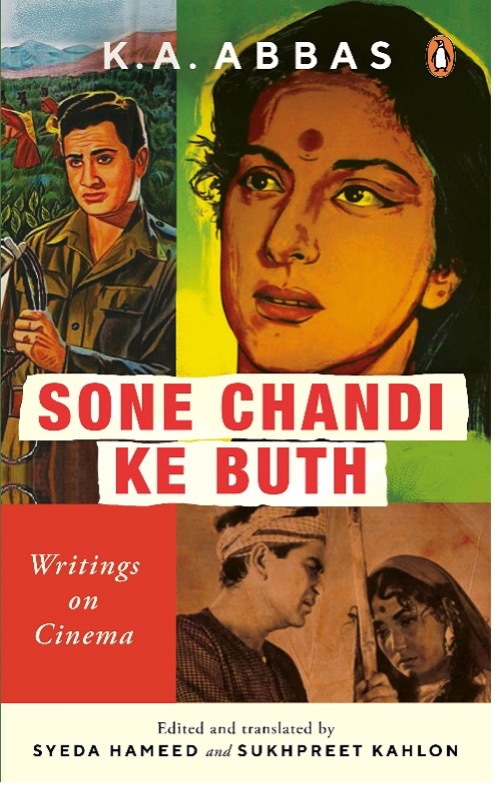


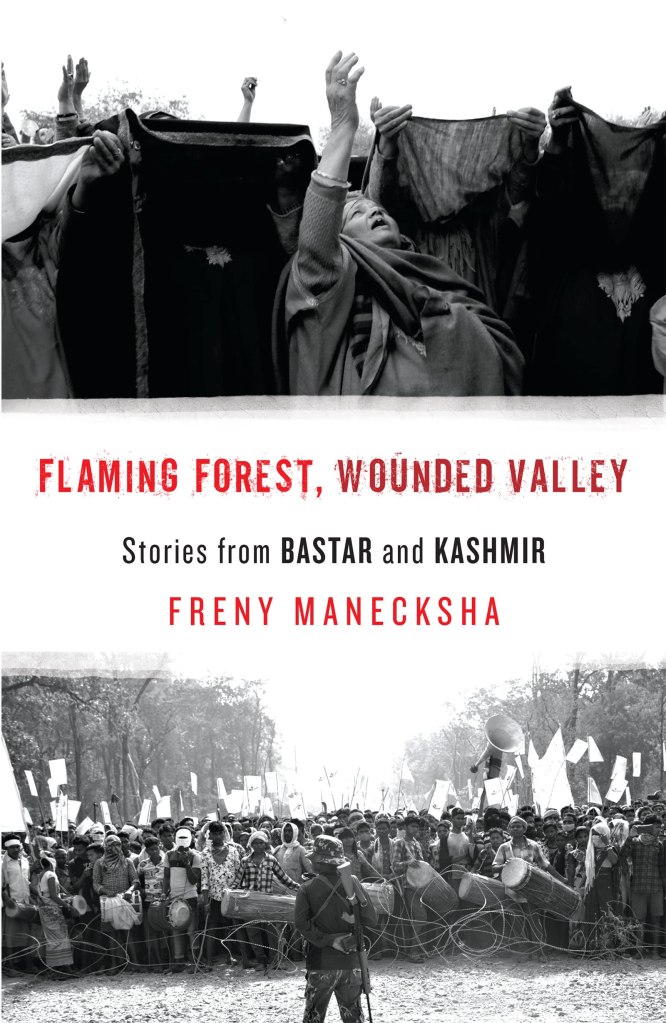
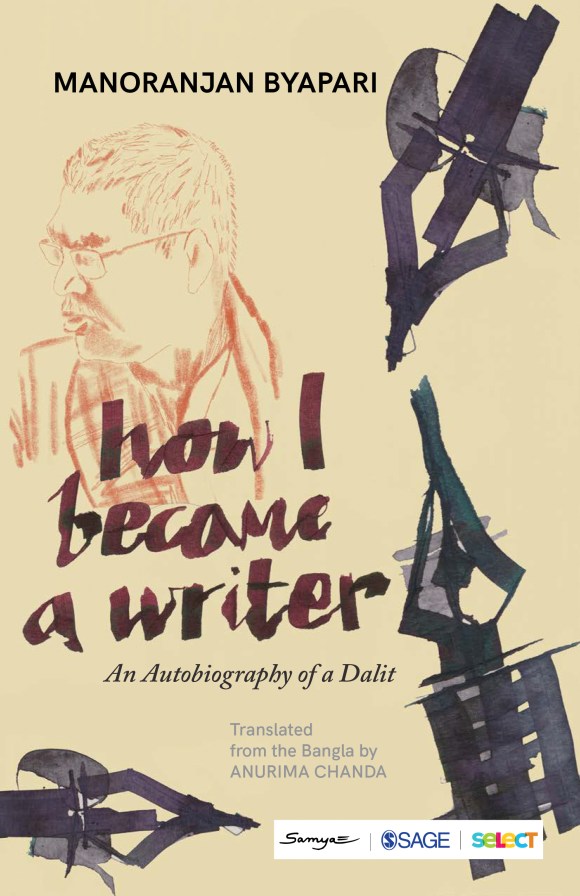
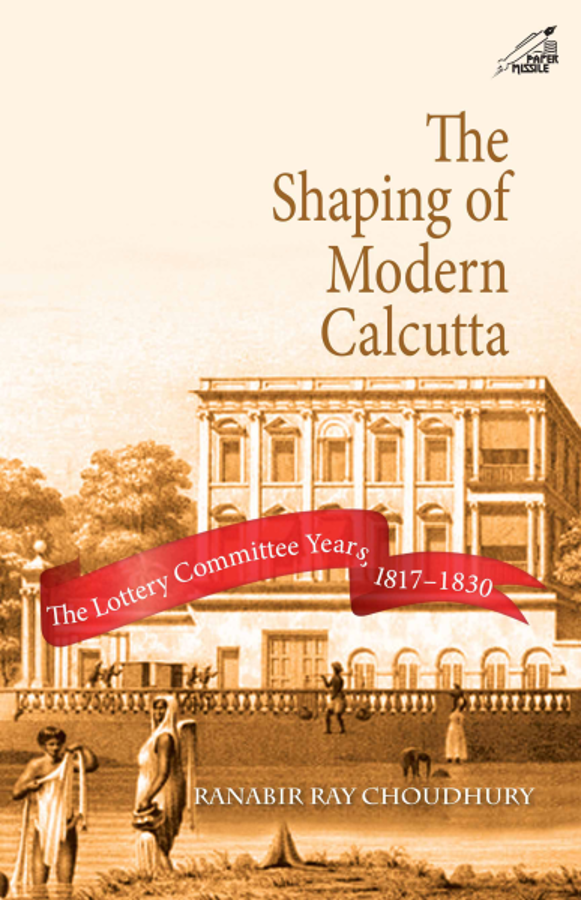
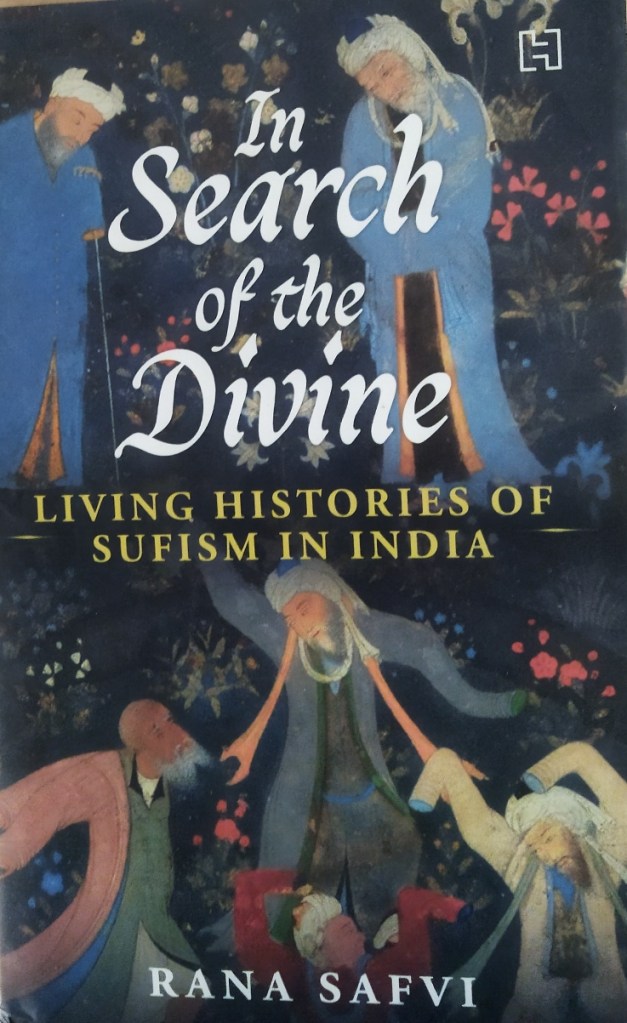




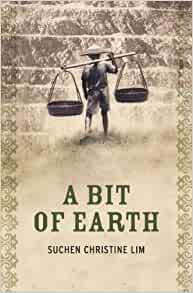


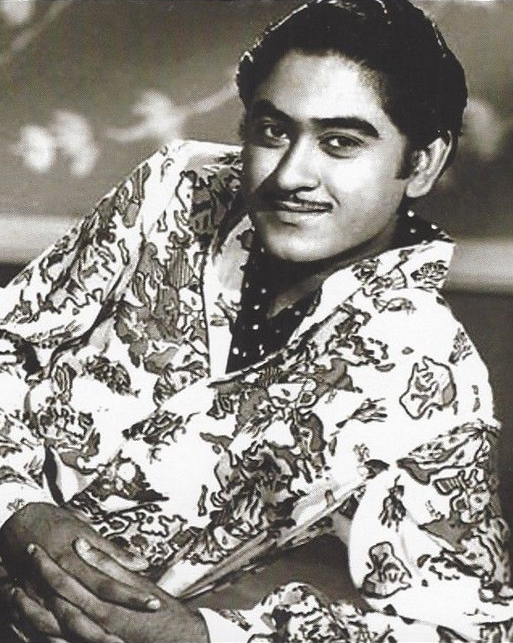

 Borderless