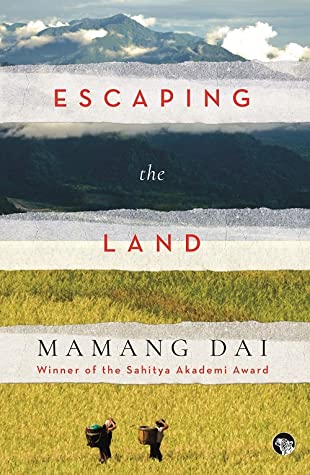
Escaping the Land (2021) by Mamang Dai is a gripping saga of turbulent times in Arunachal Pradesh from the North East Frontier Agency (NEFA) days to the present times. Padmashri and Sahitya Akademi Awardee, Mamang Dai, is an anglophone poet and novelist from Arunachal Pradesh.
In Escaping the Land, Mamang Dai weaves the history, myth and politics of Arunachal Pradesh across time. Maying, the narrator returns to her homeland from Delhi to do a project on the land of her birth and its people. Dai uses Maying to recount the story, blending fiction and history from when the state was governed as the NEFA[1] to becoming the twenty-fourth state of India as Arunachal Pradesh in 1987.
Maying meets Lutor, the ageing veteran politician and the son of a shaman, who is loved by the people and has had a long and successful career in politics since the formation of the state, to share “the story of a long ago when everything had been different and full of possibilities”. As she runs through the flow of time from the past to the present, Maying ruminates over Lutor’s idea of the “original obsession” that all of us are born with and the power of “dreams” and “instinct”. As the story begins, Maying picks up an old journal marked NEFA notebook and shuffles through the old piece of memorabilia to reflect, “The lives of people in every village and district had changed since the time this piece of fern had been so carefully pressed in between the thin pages of the book”.
Dai divides the book into five sections. The story opens with the view of a traditional house that stands on a hill with thick bamboo thickets and mountainous region. The author talks of the essence of dates and calendars in the lives of the people of a close-knit community in a remote part of the state, where tradition and family mattered. Time is an overarching theme in the novel. “Time had a method”, where everything happened in stages and history was written as it came. Dai’s novel recounts changes in time and history in the place and culture of the people of the state with emphasis on Pasighat, which was also her hometown.
Dai’s story interestingly accommodates an avalanche of landmark incidents in the history of the north-eastern state of India including battles against oppression starting from 1911, the Achingmori incident (1953), the India-China War (1962), the liberation of Bangladesh (1971) and its impact on the state, the passing of the infamous Bill for Control of Organised Crime Act (APOCO), and also, on migration and infiltration of outsiders. References to attending boarding school in Shillong, going to Delhi for higher education, or taking long hours of ferrying across the tumultuous tributaries of the Brahmaputra river that flow in the region for a sarkari[2] job, Dai reflects through the fiction the sea of change experienced in the lives of men and women in terms of education and perceptions of security in moving in or out of their homes.
Experiences of the horrors and violence in the face of insurgency, militancy and atrocities in the times of war that the people faced are vividly incorporated in some sections of the story. In times of uncertainty in the story, dreams and reality collide in a delirious mix of magic and mystery. Dai fuses myth as a consolation to the harsh realities of history. A mystic rain man heralds that change and loss of solitude cannot be halted. Though it is often reiterated that “We are safe in the hills” speedy changes in time made Lutor and his close friends rethink the credibility of this remark. Dai explodes beautiful metaphors that are specific to the culture, cross-cultural references to the exchange of people and culture from outside India, other parts of India and of the neighbouring states of Assam, Nagaland, and Manipur.
In the shifting times, money and greed have engulfed traits of love and loyalty for one’s land and people. Time moved to stages of no return from how it was in the mythical time of the ancient civilization of the Kojum-Koja[3]of the land, to when politics seemed to overtake every move in the place. The story highlights the sentiments of the people in the midst of the politics of inclusion and exclusion in the periphery.
As candidate for the office of Chief Minister, Lutor promises of development, “caught between a feeling of great humiliation and a pitying love for his homeland” but lost to his corrupt and crooked political rival Tanik, who had more money and men. Varied interesting characters add flavour to the story. With the non-retreating timber trade, where greedy traders, politicians, local middlemen and forest mafia no longer care to uproot the whole of the virgin forest in the state, the ecology at stake is echoed in the corruption portrayed in the story. Lutor in a dire strait between the memory of a lost time acknowledges that times have changed but continued to believe and live in anticipation of a pan-Arunachal unity and hopeful idea of home.
Dai through Lutor’s nostalgia for a peaceful land and longing for a homeland devoid of greed and corruption, implicates that love can heal and restore the state to a humane land as it had been in the past. Time brought changes and the world infringed by investing more money into the state. While business boomed, Lutor, as the title suggest, looked outward to escape from the land not as one defeated but with a hope to explore newer possibilities so that he could return with a better tomorrow.
In the engrossing historical novel, Escaping the land (2021), Dai works on a huge canvas to lyrically voice a tale of time, geography and changes that leads to a cohesion with the larger world.
[1] The North-East Frontier Agency (NEFA), originally known as the North-East Frontier Tracts (NEFT), was one of the political divisions during the Raj
[3] Kojum-Koja was supposed to be an ancient civilisation that established villages, part of the ancient tribal lore.
.
Gracy Samjetsabam teaches English Literature and Communication Skills at Manipal Institute of Technology, MAHE, Manipal. She is also a freelance writer and copy editor. Her interest is in Indian English Writings, Comparative Literature, Gender Studies, Culture Studies, and World Literature.
.
PLEASE NOTE: ARTICLES CAN ONLY BE REPRODUCED IN OTHER SITES WITH DUE ACKNOWLEDGEMENT TO BORDERLESS JOURNAL
THAT GROWS INSIDE

There used to be a room of my own.
When days hung like photographs on the walls
that fit inside me like allegories in your poems,
bringing many sunsets to rise
from my mother's leftover knitting yarn.

It was a room without a face,
a place where time was a misnomer.
I lived there between living and unliving
and went on to travel barefoot
to unveil the hunger of a road.

Like silence grows in the attic,
the air now is drenched with smell of burnt grasses
as it lies abandoned like a ragged cloth
on the side of a highway.
With each passing day I see it fall,
from everything that was inside me
and with every bit of my life and living.
Oindri Sengupta is an assistant teacher of English at a Govt School in West Bengal. She had been published in journals like The Lake, Istanbul Literary Review, Chiron Review, Outlook India, Plato’s Caves Online, Abridged. Her debut collection of poetry is After the Fall of a Cloud. Her poetry has also been adapted into a play.
.
PLEASE NOTE: ARTICLES CAN ONLY BE REPRODUCED IN OTHER SITES WITH DUE ACKNOWLEDGEMENT TO BORDERLESS JOURNAL
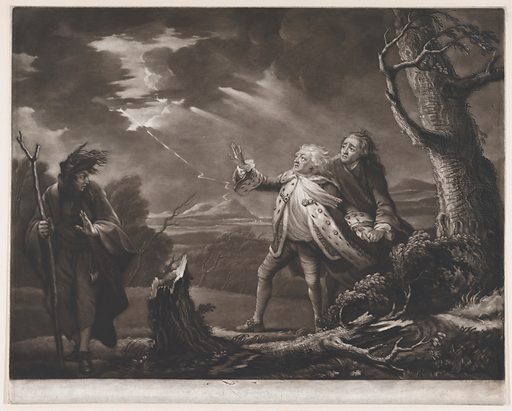
A Kathakali dancerDavid Garrick as King Lear (Shakespeare, King Lear, Act 3, Scene 1) (1761). Courtesy: Creative Commons
With guttural grunts as from an alpha male on a testosterone high, King Lear in the opening scene strutted and swaggered as the drums and cymbals emphasised his every gesture and expression, in an act of supreme braggadocio. His fool’s theatrical gestures of servility only enhanced King Lear’s demonstration of his character and of his mindset, which wonderfully set the stage for his actions and eventual downfall.
This was long ago in another time, in 2018 when the performance finally came home to India. It was being staged in Trivandrum, Kerala, finally. Interesting and controversial, this opera had done its rounds in Europe, including the Globe Theatre in the 1970s, and had now come home to the land that had given birth to the dance form.
I was watching an unusual intercultural presentation of Shakespeare’s King Lear, choreographed by French dancer Annette Leday and adapted for the occasion by Australian playwright David McRuvie. It was being presented through the medium of Kathakali, the classical dance of Kerala. The production seemed to have run the gauntlet of risks such intercultural attempts are prone to. Besides much appreciation, the word ‘baffling’ had been used to describe it in the UK, and it was reported that informed Kathakali enthusiasts were left unmoved, for it seemed to be neither here nor there. But for me it was a worthwhile experience, and I feel that if a viewer were to approach this opera without preconceived expectations, his would enjoy it better.
Annette Leday, a Kathakali dancer herself, has choreographed this opera with aplomb. David McRuvie has made the play suitable for Kathakali by drastically thinning the text and retaining only the story of King Lear and his daughters. Much would have been lost here, but its suitability for this performance cannot be denied. The role of King Lear is performed well by the Kathakali exponent Peesappilly Rajiv and the endearing fool brilliantly portrayed by Manoj Kumar.
A young tradition in comparison to other Kerala dance forms, Kathakali has retained a greater degree of innovation and improvisation, and this malleability has been tapped well by Annette. Kathakali performances traditionally draw their subject from Hindu mythology, and portray archetypal characters and situations. And King Lear’s story of kingship, inheritance, family disputes and dowry are all themes that an Indian audience would understand.
The elaborate costumes and face makeup are typical to characters portrayed. And thus Goneril and Regan are presented with the black faces of demons, the radiant goodness of Cordelia is conveyed through minukku (shining) face makeup, and King Lear wears the garb of the anti hero. But it is when the opera starts that one realises Kathakali’s gift for sheer theatre. As the rippling drums and cymbals enliven the dance, the chanting tells the story, emotions flow from structured facial expressions and demonstrative gestures, and meaning flows from hand gestures called mudras. It is a very structured art form, but with a wonderful ability to convey — through lively choreography and vibrant rhythmic percussion music — archetypal human situations and emotions.
Whatever the purists may say, this performance was hugely enjoyable and made unique with the intermingling of different cultural lores.
.
P.G.Thomas, hailing from Kerala, India; has been intrigued by the changing phases of his land, its people and their way of life. He draws on a lifetime of actual experience to write about it.
PLEASE NOTE: ARTICLES CAN ONLY BE REPRODUCED IN OTHER SITES WITH DUE ACKNOWLEDGEMENT TO BORDERLESS JOURNAL
Crowds crossing borders defined by colonials in 1947. Courtesy: Creative Commons
At the stroke of midnight, on 14th-15th August, 1947, the colonials handed the Indian subcontinent back to the indigenous population — but they did not leave it as they had found it. They made changes: some reforms and alterations, like the introduction of railways helped the subcontinent move towards a better future once the plundering of raw materials and the transport of British mill cloth halted. However, the major change which continues to create conflicts in the sub-continent to date was the Partition on the basis of religions. This was initiated by the colonial policy of divide and rule, which came into play post the revolt of 1857 and is often perpetrated still by the local inheritors of the colonies. Was it justified and does the packaging by the colonials have to be given credence so that the progeny of the ruled keep othering and thinking of differences?
To help you find answers, we bring to you writings about the days of the Raj like Aruna Chakravarti’s The Mendicant Prince, where the colonials try to deprive a state of its rightful ruler to fill their own coffers, and Premchand’s Pus ki Raat (A Frigid Winter Night) that reflects the sorry state of peasantry under the Raj. Prince or pauper — both suffered. Voices that pleaded for secularism, like that of Nazrul, Tagore or Gandhi remained unheard by those who drew the lines of division. Bhaskar Parichha tells us in his review: “On his way to Noakhali and in the face of the large-scale massacre, to the question ‘Will Partition Change Us Forever?’ Mahatma Gandhi replied: ‘I have seen more of history than anyone of you, and I tell you that I have known Hindu boys who called Muslims ‘uncle’. Hindus and Muslims used to participate in each other’s festivals and other auspicious occasions.’”
And perhaps this is borne out from the life of Zohra Sehgal, a legendary dancer as reflected by the essay written by Ratnottama Sengupta, based on Ritu Menon’sZohra: A Biography in Four Actsand her own interactions with the aging performer. Along with these, we have the voices from the present like that of G Venkatesh who finds that the borders may not be what the indigenous population had wanted and Aysha Baqir’s narrative reflecting on the darker aspects of life in the sub-continent.
Aruna Chakravarti unfolds through the life of a prince in pre-independence era in her latest novel,The Mendicant Prince, based on the prince of Bhawal controversy in the first part of the last century. Click here to read.
Ratnottama Sengupta gives a glimpse of the life of Zohra Sehgal, based on the book Zohra: A Biography in Four Acts by Ritu Menon, and her own personal interactions with the aging Zohra Sehgal. Click here to read.
In Istanbul, G Venkatesh stops over at the airport to make a friend from the other side of the divide. Click here to read.
In I am Not the End, Aysha Baqir takes on the persona of a computer to unleash a poignant and chilling story based on the darker side of modern living. Click hereto read.
Bhaskar Parichha reviews Rakesh Batabyal’s Building a Free India, dynamic speeches by freedom fighters of the last century. Click here to read.
Near the Indo-Pak border Near the India-Bangladesh borderCourtesy: Creative Commons
ARISE, ARISE, O PATRIOT!

Arise, arise O patriot
India wants you — O endearing hero
Above funeral pyres and prison-shackle free, O hero arise
Shelter us, O one worth commemorating eternally!
Saintly one, arise in a haven of pollen dust
Let your booming message ring across the heavens
And let your mantra of self-sacrifice reverberate
India cries out in boundless grief
Arise from your everlasting sleeplessness
Stirring beyond death, bring ambrosia to our souls


HELMSMAN ATTENTION!

Travelers, take care, in thick darkness you must traverse
Rugged mountains, dreary deserts, and turbulent oceans.

The boat rocks, the waves swell, the sail are torn apart,
The sailor veers off course, who’ll take over, who has the guts?
Who has the gumption and can dare — the future summons!
Through this storm, you must steer, and row your craft home!

The night is dark, sentinels of the motherland, be on guard!
The pent-up desires of countless years hurl you forward!

Stirred by pain the neglected heart must now play its part.
Bring all along, make them your own, give everyone his start!

Hapless nations drown, ignorant of the art of survival,
Helmsman — redeem this day your pledge to free the motherland!
Who dares call out, “Are you Hindus or Muslims?”
Helmsman — claim the drowning as the same mother’s offspring!

There is panic in the pass, travelers take fright, the sky quakes
The ones in the rear are full of fear and wary of what lies ahead.
Helmsman — halfway down the path can you forsake them?
Let them squabble, you must carry on, and bear your burden!

Helmsman! Ahead of you lies the battlefield of Palashey*,
Where Clive’s sword crimsoned with the blood of Bangalis.
Nearby in the Ganges India’s sun set, seemingly forever.
Surely that sun will rise soaked in blood once again.

Those who sang songs of life’s victory even on the scaffold
Have come unnoticed to see us sacrifice ourselves in turn.
This day our nation must pass the test of redemption
Now is the time—the boat rocks, the sea swells, helmsman attention!


*Battle of Plassey, 1757
'Helmsman Attention!' was first Published in Daily Star, 2006
Born in united Bengal, long before the Partition, Kazi Nazrul Islam(1899-1976) was known as the Bidrohi Kobi, or “rebel poet”. Nazrul is now regarded as the national poet of Bangladesh though he continues a revered name in the Indian subcontinent. In addition to his prose and poetry, Nazrul wrote about 4000 songs.
First published in 1915 in Sabuj Patra, ‘Hobe Joye (Victory will be ours)’, has been translated as ‘Song of Hope’
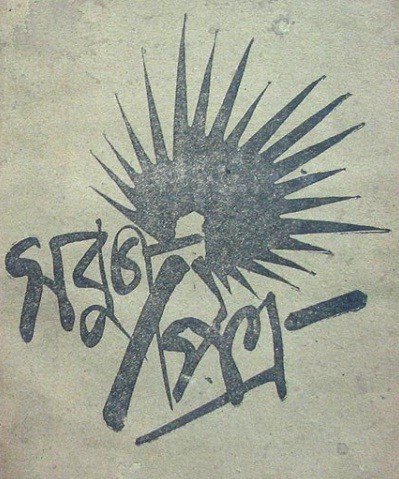
Sabuj Patra was a magazine in which Tagore published often. This is the logo designed by the eminent artist Nandalal Bose who was a close associate of Tagore. The lettering in Bengali gives the name of the journal, which translated means, Green Leaves.
SONG OF HOPE

Victory will be ours, victory will be ours, victory will be ours,
O valiant, O fearless!
Life will conquer — eternal life, the song of joy will triumph.
Love will win over anger. The enlightened will prevail.
This dusk too shall pass, shall fritter away.
O valiant, O fearless!
Awake, open your eyes, may your weariness fade away.
Let the light of hope illuminate a fresh dawn.
The song in the original Bengali had been rendered by the legendary Pankaj Mullick(1905-1978), who was impacted by Tagore and even gave the music for Diner Sheshe, Ghumer Deshe (translated as ‘The Last Boat’).
This has been translated by Mitali Chakravarty with editorial backing from Sohana Manzoor and Anasuya Bhar.
.
PLEASE NOTE: ARTICLES CAN ONLY BE REPRODUCED IN OTHER SITES WITH DUE ACKNOWLEDGEMENT TO BORDERLESS JOURNAL
Inside the ancient haveli[1]a young girl, the great granddaughter of a Mughal nobleman forced into Her Majesty’s Service, moved slowly as if she sensed my presence.
The city had fed on the foam-white sprays of the surging Himalayan waters, and swelled from the invasions and intermarriages between the Persians, the Arabs, and the Mongols. By the time the British arrived, a fortress of thick walls hid a maze of winding lanes jammed with narrow red-brick, stone, wood-worked havelis and long, deep stalls of silks, spices, silver, gold, and gems. Time pushed forward relentlessly, tides receded, wars were fought and lost, and the river shrunk and shrivelled into grey, brown sludge promising revenge. The shaded streets of the bazaars darkened and despair closed in like a swarm of locusts. The dwellers with means and motives, packed their belongings, and struck out towards concrete and glass housing schemes. Some tottered and fumbled like drunkards, unsure whether to venture out or hide within.
Every day, except Sunday, the girl woke up early for the call to prayers. She scrubbed, washed, cleansed, and dressed for her last prayer of the day. She ignored the rubbery slice of white bread and the blob of blood-red jelly on the dusty breakfast table, pocketed her mother’s medicine prescription and slipped out of the door with a backpack and a day bag. Hidden under the burqa, she walked swiftly and left the winding lanes behind in minutes. A grey car with tinted windows waited for her at the deserted crossing. She sat in the car and pulled out her phone. When she connected, I tapped into her.
Half an hour later the car stopped. The girl squinted at the tall glass tower that caught molten fire from the morning sun. She stuffed the burqa in her backpack before alighting. She wore a smart black and white suit, something she had picked out from one of the swanky mirrored shops in the mall. When she snapped a selfie, I saw and saved it. Whatever was online, was mine.
The girl had made herself up to please. Her round hazel eyes, set off by a dark liner, glinted under the bronze shadow. Her lips were pale but glossy. Her thick straight hair brushed her shoulders. She had cleared the six-month training with the highest score. No one could tell she wasn’t a bank executive.
She climbed up the wide marble stairs and the glass door with a metal latch sprang open. She cleared the security designed to recognise her thumbprint. There was no room for breach, not in this business. She entered the massive foyer adorned with wall mirrors and glossy planters, turned left, and pressed the button down to the basement. In a few minutes, she strode down a passageway and opened another door. The dim lights and murky matting matched the nature of the business, but she would have worked here for free to hide from the changing moods and madness of the city.
The room was mostly empty except for a few men behind the glass cabin who never left the office. She made her way to her workspace. It was bare. She had no mugs, photographs, or other belongings. The less people knew about her the better. The only equipment that sat on her desk consisted of one dark screen and the worn out keyboard. She pulled up her chair and pressed the button.
I sprang up, awake and alert. She fed in her details and hit enter. A vibe. A buzz. The girl jumped back feeling a current, something alive that pulsed and circled her. I smiled when she frowned. She felt me. I wanted her to feel my power. Within seconds her work order popped up, generated every morning at 6 AM for the morning shift and 6 PM for the evening shift. She had a busy day. She had to cover three areas, one park, one school, and the sabzi mandi, the wholesale vegetable market. The numbers rose and the lines of poor grew every day, and some even bribed to jump the cue. Who wanted to work when there was an easier way to make more money?
Her boss, Mr. K Shah, boasted of the brainwave he had while attending a six-week training on social entrepreneurship at a global leadership institute. Before sending him on the course, his father had urged him to make a difference to his constituency, his ancestral lands, and to uphold the honour of his ancestors, the revered Sufis who had travelled from Iran to the Subcontinent.
Karim Saab quickly grasped that there was opportunity in the chaos that fed upon millions of poor in his country. He discovered a win-win. For him, for his company, and the poor. In that order. He had asked himself three questions. How much money did the country make? How much of it was lost on the streets? How much could he get back?
He had returned to his country and funded an algorithm and business to do exactly that. He housed the business in the basement of the company he owned, and rumours ran that he made more money in the basement than in the bank. The business harnessed the poor across the city and then set them out on the streets. It ran upon a network of the drivers and guards belonging to the few hundred of the flagrantly wealthy and upon the millions of beggars, runaways, and ragpickers. The business model was built on detailed, precise communication and organisation in which the company excelled. The poor were happy to get a fixed income each day — three times higher than the national minimum wage. The calculations made sense even as the economy crashed, and the terror escalated. Even on the darkest days the numbers made sense. The more the people lost, the more they feared, and the more they gave.
The girl’s mind ran over the calculations. Fifty some beggars in one area per shift, add two shifts per day and then multiply it by over two hundred and fifty areas in the fast expanding city and the numbers swelled to a grand total of twenty-five thousand beggars per shift. With the average earning per beggar per shift coming to over two hundred rupees even on a bad day the total company revenue rocketed to over five million rupees per day. The costs were minimal.
There were problems. Sometimes, the children went missing. Part of running the business, shrugged Karim Saab. There were many more to take their place. The girl pushed back her chair and glanced around the empty, endless rows. In another few minutes they would be full. There were three rooms in total, one for each business. The model spared no one, not even the very young. There were rumours of a project up for a bid. Karim Saab said they had to keep innovating otherwise others would catch up. So now they focused on street children. The city that once exported cotton, silk, and gems, now sold something else.
Aysha Baqir founded a pioneering not for profit economic development organization, Kaarvan Crafts Foundation, with a mission to alleviate poverty by providing business and marketing training to girls and women in low-income communities. and has authored a novel based on her experiences called Beyond the Fields.
PLEASE NOTE: ARTICLES CAN ONLY BE REPRODUCED IN OTHER SITES WITH DUE ACKNOWLEDGEMENT TO BORDERLESS JOURNAL.
The Schengen visa did not help much, being as it was on one of the pages of an Indian passport. I was told I could not get an on-the-spot transit visa to walk out of the airport and see the city of Istanbul, formerly Constantinople, which was one upon a time Byzantium, which in turn was known as Nova Roma when the Romans ruled it. Well, that meant spending 24 hours at the Kemal Ataturk airport – waiting for the Turkish Airlines flight to Oslo the next day in the morning. Memories of Tom Hanks in Terminal flashed past the mind’s inner eye.
Coffee and vegetable burger later, I sat down to test if a free wireless connection was available in the precincts of the airport. It was, and I could check my e-mail; not just that, I could also thereby shoot across some crosswords’ designs that I do for a magazine. Great way to spend time, I thought. Time was, is and will always be money! My focus on the laptop screen was disturbed when a man walked past on my left, proferred his right hand and asked “Indian?”
“Yes,” said I, accepting the handshake.
“Pakistani, Shakeel,” he responded and sat down on the chair next to mine and immediately asked me if he could use my laptop for 5 minutes. I had heard about instances of threat mails being sent from cyber cafes or from laptops or desktops of totally-innocent, unsuspecting friends or acquaintances. Wariness did creep in instantly, but then I decided that I would not leap before looking… looking at the screen as he was accessing his mail. I did not wish to play into the hands of the ‘enemy’ as a noble do-gooder. There would have been nothing more disconcerting than that!
He spent more than 5 minutes and an edgy yours sincerely had to butt in with, ‘Boss, I have some urgent work to do; if you have finished.’ When I got back ‘possession’, I vowed to work on till the battery ran out, designed a crossword in the process, and then on the pretext of my fear of using unsecured wireless networks for too long, strapped the laptop back in my backpack.
After a long silence, I devised a means of dissociating myself from his company. “Okay then, I think I will just take a walk around the airport. It was nice meeting you.” I held out my hand.
He looked up and said, “I guess I shall also join you. What will I do sitting here all alone?”
I wanted to say, “That is none of my concern.” I did not. I would be saddled with Shakeel for the next 24 hours!
From my side, the ice was not broken. Hence, when he quizzed in Punjabi about what I did for a living, where I worked and how much I earned, I was a bit startled. I recalled being in the situation of the protagonist (played by amnesiac Aamir Khan) in the film Ghajini and wanted to say exactly what he says when a woman tries to get very informal with him – “I do not think I have known you so well as to be obliged to answer those questions.”
I brushed aside the questions however and decided to be as wary as wary could be. Shakeel, it turned out, had been living in Austria for seven years, managing a restaurant with his uncle. He had missed his Austrian flight in the morning, as the Emirates flight which got him into Istanbul from Dubai was delayed by 15 minutes. He had now asked his agent to rebook a seat for him on the flight to Austria next morning.
Shakeel talked of Indo-Pak business partnerships in Europe and lamented at the tension that has gripped the relations between these two neighbouring countries. I had the book, Wings of Fire with me. He pointed at Dr APJ Abdul Kalaam’s picture on the cover and commented that he is a very competent individual and wondered why he could not continue for a second term as President. During the conversation, mostly one-sided, he also said that people in India and Pakistan are more engrossed in producing babies while the rest of the world is pulling up its bootstraps and progressing fast. This statement, coming from a Muslim, took me aback a bit.
I treated him to Turkish coffee, after which he excused himself to go to the in-airport mosque, requesting me to mind his bags. “Risky undertaking,” I thought. What if…
He returned after a while though, and I scolded myself for having succumbed to paranoia and subsequent suspicion.
At around 6.30 pm, Shakeel insisted it was time for dinner and wanted to repay me for the coffee I had treated him to, by buying me dinner. I told him to carry on and said that it would be too early for me to dine. He looked at me and said, “Okay then, we will dine whenever you want to.” This was surprisingly very heartwarming and as we had known each other for just about 12 hours or so, seemed a bit too unreal. Such acts are the prerogatives of brothers and good friends.
As the day petered to a close, we decided not to sleep-starve ourselves anymore. Shakeel, still unsure of whether or not his agent would be able to confirm his booking on the next morning to Austria, dozed off and slept soundly. They say that anyone who can sleep without burdens or worries on his mind, has a clean and pure conscience. I, with a confirmed ticket, could not sleep for more than four hours – unclean and impure conscience? I was up at 5.00 am, and at 7.30 am when I headed to board my Turkish Airlines flight to Oslo, Shakeel was still sleeping! I did not want to wake him.
Once in Norway, I sent him an e-mail. At the time of writing, it has been quite a while since I did that, and there has been no response, Maybe, he will not respond. Maybe, he is a good person who was upset with my not having the courtesy to bid him a proper ‘Khuda Hafeez’. I would never know.
Strange lessons learnt at the Kemal Ataturk Airport.
.
G Venkatesh (50) is a Chennai-born, Mumbai-bred ‘global citizen’ who currently serves as Associate Professor at Karlstad University in Sweden. He has published 4 volumes of poetry and 4 e-textbooks, inter alia.
.
PLEASE NOTE: ARTICLES CAN ONLY BE REPRODUCED IN OTHER SITES WITH DUE ACKNOWLEDGEMENT TO BORDERLESS JOURNAL
“Under this Flag there is no prince and there is no peasant, there is no rich and there is no poor… Whether we be Hindus or Muslims, Christians, Jains, Sikhs or Zoroastrians and others, our Mother India has one undivided heart and one indivisible spirit.” — Sarojini Naidu, poet and political activist, on the resolution on the national flag in the Constituent Assembly, 22 July 1947
The immutability of prodigious speeches and their magnifying impact on people can’t be underestimated. The prize of a great speech comes from pure wisdom that originates from indulgence. These words from Naidu’s speech can work as magic anytime one reads them.
Building A Free India – Defining Speeches of Our Independence Movement that Shaped the Nation by Rakesh Batabyal is just the book you needed to read as India celebrates her 75th year of its independence. It is a thought-provoking assemblage of solicitous speeches delivered by some of the most prominent Indian personalities.
Many of these men and women have made invaluable contributions to India’s coming together as a nation of people and are the pride and honour of the sub-continent. These are people who impacted the lives around them. Their words were the gems that had the power to evoke courage and emotion in countless people and inspire them to make history.
Rakesh Batabyal teaches history, theory, and philosophy of media at the Centre for Media Studies, Jawaharlal Nehru University. His The Penguin Book of Modern Indian Speeches is widely accepted as an important work in the genre. He is working on a book on the history of nationalism in India.
Says the blurb: “The new public sphere that emerged in nineteenth- and early-twentieth-century India was a space that enabled magnificent public oratory, particularly that which mounted a challenge to colonial rule. From social and political platforms like the Indian National Congress, in the courts of law, or inside legislative bodies, leaders of the freedom struggle gave eloquent and clear-eyed articulations of not only the social, economic, and political problems that faced India and their possible solutions but also the kind of sovereign nation we must collectively aspire to be. India’s democratic ethos was a product of these foundational ideas of the freedom movement.”
Building a Free India brings together these landmark speeches delivered over roughly a century by the leading lights of the national movement—from Dadabhai Naoroji, Surendranath Banerjee, Bhikaiji Cama, Lajpat Rai, and Tilak, to Gandhi, Nehru, Ambedkar, Bose, Sarojini Naidu, and Maulana Azad—as well as a range of lesser-known but equally remarkable figures.
Writes Batabyal in the book: “As the movement progressed—from the economic critique of colonial rule by the early nationalists to the unequivocal demand for Purna Swaraj[1] and the immense moral authority of the Mahatma Gandhi-led resistance—the notion of an equal society that ensured dignity to all—irrespective of caste, class, gender or religion—came to occupy a central place in it. By the time the Constituent Assembly met in December 1946, not just civil rights, but the particular rights of women, of minorities, of the Depressed Classes, and the Adivasis were being articulated and demanded, not as favours but as a matter of course.” As the editor of this volume writes in his brilliant introduction, the effect of the speeches delivered by the leaders of our national movement was to focus “political action towards scripting an ennobling nationalism that would give us a just and equal society”.
A couple of speeches in the book are captivating. This one by India’s philosopher-President Dr Sarvepalli Radhakrishnan on India’s history and legends reads: “Our pledge tells us that this ancient land shall attain her rightful and honored place. We take pride in the antiquity of this land for it is a land which has seen nearly four or five millenniums of history. It has passed through many vicissitudes and at the moment it stands, still responding to the thrill of the same great ideal. Civilization is a thing of the spirit; it is not something external, solid, and mechanical. It is the dream in the people’s hearts. It is the inward aspiration of the people’s souls. It is the imaginative interpretation of human life and the perception of the mystery of human existence. That is what civilization actually stands for.
‘We should bear in mind these great ideals which have been transmitted to us across the ages. In this great time of our history, we should bear ourselves humbly before God, brace ourselves for this supreme task that is confronting us and conduct ourselves in a manner that is worthy of the ageless spirit of India. If we do so, I have no doubt that; the future of this land will be as great as its once glorious past.’
Painstakingly divided into six chapters, each section in the 300-plus page veers around freedom and that itself makes the collection unique. What’s more Batabyal provides a context to every single discourse.
On his way to Noakhali and in the face of the large-scale massacre, to the question ‘Will Partition Change Us Forever?’ Mahatma Gandhi replied: “I have seen more of history than anyone of you, and I tell you that I have known Hindu boys who called Muslims ‘uncle’. Hindus and Muslims used to participate in each other’s festivals and other auspicious occasions. You want to force me to leave this place but you should know that I have never submitted to force. It is contrary to my nature. You can obstruct my work, even kill me. I won’t invoke the help of the police. You can prevent me from leaving this house, but what is the use of your dubbing me an enemy of the Hindus? I will not accept the label. To make me quit, you have to convince me that I have made a mistake in coming here.”
This and many such defining speeches make the collection truly exceptional. The book is not only a priceless history of India’s freedom movement but also of the ideas of universal equality, dignity, and justice that are—and must always remain—at the root of any democracy. The assortment of some sixty communicative moments of oratory would provide the reader with a fresh perspective and evoke feelings of patriotism, motivation, and infinite stimulus.
Bhaskar Parichha is a journalist and author of Unbiased, No Strings Attached: Writings on Odisha and Biju Patnaik – A Political Biography. He lives in Bhubaneswar and writes bilingually. Besides writing for newspapers, he also reviews books on various media platforms.
.
PLEASE NOTE: ARTICLES CAN ONLY BE REPRODUCED IN OTHER SITES WITH DUE ACKNOWLEDGEMENT TO BORDERLESS JOURNAL
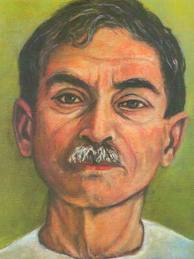
Premchand is the pen name adopted by the Indian writer, Dhanpat Rai Srivastava (31 July 1880- 8 October 1936). He was a pioneer of modern Hindi-Urdu literature which focused upon contemporary social issues including caste, the treatment of women, day labour and other socio-political concerns. He remains one of the most heralded writers in South Asia. His oeuvre includes more than a dozen novels, about 300 short stories, numerous essays as well as translation of foreign literary works into Hindi.
Pus Ki Raat or Frigid Winter Night
(1)
Halku came home and told his wife, “Sahna has arrived. Get those rupees you’ve saved up and hand them over to him. We need to rid ourselves of this noose around our necks one way or another.”
His wife, Munni, was sweeping. She turned her head and responded, “We have just three rupees. If I give it to him, how will we get the blanket? How will you spend these freezing nights in the field? Tell him we’ll give him the money upon harvest. Not now.”
Halku stood there in silence for some time. He kept thinking that the coldest month of winter was already here. Without a blanket he wouldn’t be able to tolerate sleeping in the field. But Sahna wouldn’t accept this. He would hurl threats at him. As he thought this through, he hauled his heavy body — which belied the silliness of his name[1] which suggested he was slender — over to his wife. He grovelled, “Come one. Hand it over. Let’s be rid of this noose. We’ll come up with some other way to get the blanket.”
Munni stepped away from him. With arched brows, she retorted, “This was our other plan. Just tell me what your plan is. Who is going to give us a blanket for free? Who knows how much more money is left to be paid or how we are going to pay it? Why don’t you give up farming? You’re working yourself to death. If there is any yield, then you’ll pay off the loan. Come on, it’s over. We were born to pay off this debt. Let’s just avoid this kind of farming. I won’t give him the money. I won’t.”
Halku repined, “So what kind of abuses will I have to endure?”
Munni shot back, “Why should you suffer them? Is he a king?” But even as she said this, her taut eyebrows relaxed. There was a heart-wrenching truth in his words. She looked at him tenderly and withdrew the rupees from the niche in the wall. She brought them to Halku and placed them in his hand and said, “Stop share cropping. We can eat from our day labours in peace. We won’t have to deal with anyone’s bullying. It’s a good crop. Bring it in through hard work then chuck it…and the browbeating because of it.”
Halku took the money and headed outside towards Sahna. It took all the courage he could muster to give him the money. He had managed to save these rupees one by one for the blanket but today they would vanish. With each and every step, the weight of his debt was squashing his soul.
(2)
It was a dark night of Pus, the coldest month of winter. Even the stars in the sky seemed to quiver. Halku sat on a bamboo cot at the edge of field, shivering with his old, coarse sheet wrapped about him. Beneath his cot was his companion dog, Jabra, who was curled up tightly and shuddering from the cold. Neither of them could sleep a wink.
Halku curled his knees to his neck and said “Jabra, it is so damned cold. I told you to stay home where you can lay upon the pile of husks. Why did you come here? Now, you’ll have to suffer the cold! What can I do? You thought I was coming here to eat halva puri[2]!” Jabra ran to him. “Now go and wail to your grandmother.” Jabra, wagged his tail, took a long yawn then laid still. Maybe he thought that his whines were disturbing his master’s slumber.
Halku stretched out a hand to caress Jabra’s cold back and told him “From tomorrow, don’t come with me, otherwise you’ll freeze. God only knows from where this freezing west wind is bringing this frigid cold. I’m going to get up and fill my chillum in hopes of somehow passing this night. I’ve smoked eight already! These are the joys of farming! There are some fortunate beings whom the cold doesn’t even consider harassing because it knows it will be vanquished! They have thick quilts, comforters and blankets that are so warm that they can tolerate the cold. This is the nature of fate. Some of us work ourselves to the bone while others enjoy themselves.”
Halku got up and took a cinder from the pit and filled his chillum. Jabra also got up. Taking a drag on the chillum, Halku asked Jabra, “Want to smoke the chillum? It doesn’t make the cold go away but it does soothe the mind a bit.”
Jabru looked towards him, his eyes overflowing with love. Halku said, “Just put up with this cold tonight. From tomorrow, I’ll spread out the husks here. You can curl up in the husks and it won’t feel so cold.”
Jabra put his front paws on Halku’s knees and brought his snout near his face. Halku could feel his warm breath. After taking a drag of his chillum, he laid down. He was determined that come what may, he would sleep. But within a minute, his body was shivering once more. Sometimes he laid on this side, sometimes on that side. The cold sat oppressively on his chest like an invisible enemy.
When there was no way to sleep, he gently lifted Jabra, patted his head, and put him to sleep in his lap. A terrible stench came from the dog’s body but from embracing him in his lap, Halku felt a contentment which he hadn’t felt here for months. Jabra must have thought this was heaven. Halku’s soul was so pure that he had not the slightest aversion towards the dog. He never would have hugged a close companion or brother so eagerly. He no longer resented his poverty, which was the reason for his predicament. No. This extraordinary friendship had opened all of the doors of his soul and he was beeming from head to toe.
Suddenly, Jabra heard an animal. This special intimacy imbued him with a new verve that made him immune to the shocks of the frosty air. He jumped up and with a pounce bolted outside and began to bark. Halku called him several times with kissing noises, but he did not come. Without catching his quarry, he kept running around everywhere and barking. Even if he’d come for a moment, he’d run off again. Duty surged in his heart as if it were desire.
(3)
Another hour passed. The cold winds invigorated the night. Halku got up. He drew both knees to his chest and burrowed his head in the crevice, but this did little to mitigate the cold. It felt as if ice water was coursing through his veins. He looked off into the horizon and wondered how much of this terrible night remained. The Big Dipper hadn’t even climbed halfway into the sky. It will be morning only when it fully ascends. More than one fourth of the night remained.
There was a mango grove a mere tip of a bullet away from Halku’s field. It was early autumn. The leaves began to pile up in the grove. Halku thought, “If I can muster the strength to go and get some leaves to burn, it will give off good heat. If someone sees me gathering these leaves at night, they will think I’m a ghost. Who knows, there could be some animal lurking over there. But I can’t just keep sitting here in this cold. He passed through the pigeon pea field and plucked some plants to make a broom. He then walked to the grove with the smouldering cow chip in his hand. When Jabra saw him coming, he came along too and began wagging his tail.
Halku explained, “We don’t need to stay here. Let’s collect the leaves in the garden and warm up. Once we warm up, we come back and sleep again. The night is still long.”
Jabra whined in agreement and headed off in the direction of the grove.
The grove was pitch dark and, in the blackness, the ruthless wind crushed the leaves then blew them away. Drops of dew dripped from the trees.
Suddenly a gust of wind came in, carrying the scent of henna blossoms.
Halku said “What a lovely fragrance, Jabru. Can you smell it too?
Jabra was gnawing upon a bone he found lying on the ground.
Halku put the smoldering cow chip on the ground and began gathering the leaves around it.
Within a short while, he had gathered a large heap of leaves. His hands were chilled to the bone. His bare feet felt numb. Yet he was able to create a mountain of leaves. With this bonfire, he would turn this cold into ashes.
A short time later, there was a campfire. The blaze grew so high that it began to singe the leaves of the tree above it. In that capricious light, the magnificent trees of the grove seemed as if they had gathered all of the unfathomable darkness upon their heads. The light of the fire seemed to quiver and heave like an unsteady boat moving through that infinite ocean of blackness.
Halku sat in front of the bonfire warming himself. He removed the sheet and tucked it into his armpit. He stretched out his legs as if he were challenging the cold to do whatever it could. Having subdued the seemingly limitless power of the cold, he could not hide his pride of this conquest.
He asked Jabru, “Jabbar are you still feeling chilly?”
Jabbar whined as if to say, “How could I still feel chilly?”
“Had this solution occurred to me earlier, we wouldn’t have had to put up with so much cold.”
Jabbar wagged his tail.
“Good. Come. Let’s leap over this flame and see who can do it without getting burned. Son, if you get burned, I will not get you medicine!”
Jabbar looked at that fire in terror!
Don’t tell Munni about this in the morning. If she catches wind of this, she’ll give me hell.
Then he leapt over the blaze without injury. The flames grazed his feet, but it was no big deal.
Jabra circled around the fire and stood near him.
“Hey! Come on! That’s not fair. You have to jump over it.” Halku said and again bounded over the flames.
(4)
All the leaves had burned. Once again, darkness spread across the orchard. Some embers smouldered beneath the ashes which would begin to burn brightly when a breeze would arouse them only to be extinguished a moment later.
Halku again wrapped the sheet about himself and, sitting near the hot ashes, began humming a song. The heat entered his body, but as the cold intensified, he began to feel lethargic.
Jabra barked loudly and ran towards the field. Halku wondered whether a herd of animals had entered the field. Maybe it was a herd of nilgai[3]. The sounds of their running and jumping could be clearly heard. It seemed as if they were eating the crop as the sounds of their chewing were audible.
He reassured himself, “No. No animals could come into the field with Jabra around. He’d tear them apart. I must be out of my mind as now I don’t hear a thing. Clearly, I was mistaken.”
He loudly yelled “Jabra! Jabra!”
Jabra kept on barking but did not come near him.
Once again, he heard the sound of his field being ravaged. He could no longer tell himself otherwise. But the thought of moving from his seat seemed so difficult. He got up with a jerk. But going into the fields and running after the animals in this cold was unthinkable. He didn’t budge.
He called out loudly “You rascals! Damned rascals!”
Jabra again barked loudly. Animals were ravishing the field. The crop was ready. And what a good crop it was but these damned animals are destroying it.
Halku readied his resolve, got up and took a step. Then suddenly a frightfully cold, biting wind came. It felt like the sting of a scorpion. He returned and again sat near the fading bonfire and began to warm his frigid body by stirring up the ashes.
Jabra had barked himself hoarse. The nilgais were clearing out the field while Halku kept on sitting placidly by the warm embers. Languor clutched him.
He wrapped himself in his sheet and fell asleep near the warm embers.
He awoke in the morning after the sunshine has spread out in all directions. As he woke up, he heard Munni’s voice. “Are you going to sleep all day today? You came over here to laze about while over there our entire crop was being ruined.”
Halku got up and said, “Are you coming from the field?”
Munni said “Yes. The entire crop has been wiped out. Who else sleeps like this? Why didn’t you use the hut you built there?”
Halku, concocting an excuse, explained, “I was here trying to save myself from freezing to death and you are worried about the crop. Only I know how horrible it was!”
Both walked to the edge of the field. The entire crop had been flattened and Jabra was lying under the hut lethargically.
Both were surveying the field. There was sadness on Munni’s face, but Halku was ebullient.
Munni apprehensively opined “Now we’ll have to pay off the tax through day labour.”
Halku replied with joy on his face, “At least I don’t have to sleep here at night in this cold.”
[3] Nilgai is the largest Asian antelope in Asia and is ubiquitous in north India.
C. Christine Fair is a professor in Georgetown University’s Security Studies Program. Her books include In Their Own Words: Understanding the Lashkar-e-Tayyaba (OUP 2019); Fighting to the End: The Pakistan Army’s Way of War (OUP, 2014); and Cuisines of the Axis of Evil and Other Irritating States (Globe Pequot, 2008). Her translations of Hindi, Urdu and Punjabi stories have appeared in the Bombay Literary Magazine, Bombay Review, Muse India, Kitaab, The Punch Magazine, and Borderless Journal. She reads, writes and speaks Punjabi, Hindi, and Urdu.
.
PLEASE NOTE: ARTICLES CAN ONLY BE REPRODUCED IN OTHER SITES WITH DUE ACKNOWLEDGEMENT TO BORDERLESS JOURNAL







 Borderless