Categories
Stories

The Heart of Aarti

By Priyatham Swamy

“Do you think my son will really make cartoons one day, Amma?” Aarti asked, leaning on the kitchen counter. Her face was tired but animated, her eyes filled with the kind of hope that could withstand storms. “He’s obsessed with Pikachu. Says he’ll create something even better!”

My mother, chopping onions at the time, paused. “And what do you say to him?”

“I tell him to focus on his homework first,” Aarti replied, laughing, the sound carrying the weight of her exhaustion and her joy.

That was Aarti—equal parts pragmatic and dreamer.

Aarti entered our lives quietly, one morning in June. It was the start of another humid monsoon, and I remember her standing at the door, wiping rain from her forehead, sari sticking to her frame. My mother had been looking for help around the house, and a neighbour sent Aarti our way. She was in her early thirties, with a bright, almost childlike smile that seemed at odds with the world-weary shadows under her eyes.

She wasn’t the kind of maid who kept her head down and avoided conversation. She had a way of speaking as though she were a longtime friend, not an employee. My mother, who was in her mid-fifties and naturally reserved, found herself talking to Aarti more than she did to some of her relatives.

Between chores, I often found them on the balcony, sipping tea, their laughter filling the space between them. It was an unlikely friendship, but one that felt natural.

My mother always ensured that Aarti had enough food, even extra servings. Aarti laughed it off, saying she had a big appetite and always finished everything she was given. She relished the food, always making sure to appreciate even the smallest gestures. We all ate from the same vessels, sharing the same meals without reservation. It was a simple act that, to me, symbolized the ease of their bond.

She’d sit on the kitchen floor, her back against the wall, and sip slowly, the steam clouding her face. It was during one of these moments that she spoke of Nepal, of fields terraced along the mountains, of her father’s small paddy field.

One rainy afternoon, as thunder rolled faintly in the distance, she told my mother a story from her childhood in Nepal. “I was four,” she began, her voice distant, as if she were looking through a window into a world she no longer inhabited. “There was a carnival near our village. My father had saved up for weeks to take us. It seemed so magical at the time—bright colours, laughter, everything perfect.”

She paused and smiled, the kind of smile that belongs to a person who has lived through too much. “That day, I thought we were rich. My father and mother seemed so tall, so strong.”

She laughed softly, more at herself than the memory. “It was only later, when we lost the fields and came to Chennai, that I understood. We weren’t rich, Amma. My father just wanted me to feel like we were. He gave me one perfect day.”

Aarti had two children—a boy and a girl—and she poured her soul into raising them. They were confident and outspoken. “She’s given them a rare gift,” she told me once. “A sense of self-worth. They don’t feel inferior to anyone, they walk into a room like they own it.”

Aarti’s children, despite everything, carried themselves with a quiet self-assurance that was hard to miss. They didn’t slink away in shyness or look down at their shoes when spoken to. Instead, they met people’s gazes with a steady resolve that belied their modest upbringing.

For her children, she was a fortress, shielding them from the storm of her struggles.

Her pride in her children was boundless. Her son wanted to be a cartoonist, her daughter a doctor. She had no doubt they would achieve these dreams, even if the path was steep.

One evening, as my mother and Aarti stood on the balcony watching the rain, she revealed a part of herself she rarely showed. “I was engaged once before Vikas,” she said softly. My mother, who had been watching the rain, turned to her.

“I was only fifteen,” Aarti continued. “He was just like me—talked a lot, dreamed a lot. Mad fellow. He wanted to become an actor. Said he’d be in all the TV serials one day.” She laughed, but there was no joy in it. “I believed him, Amma. He painted such a beautiful life for us. I loved him.”

“What happened?” my mother asked.

“On the day of the wedding, he ran away,” she said, her voice breaking for the first time. “Just disappeared. I still don’t know why. Maybe he got scared. Maybe he didn’t love me the way I loved him.”

After the failed wedding, Aarti’s life took a different turn. Her father moved the family to Chennai, fleeing debt and the cruelty of bad harvests. He found work in a sawmill, and they lived in a cramped room with thin walls that let in too much noise and too little light. The move was jarring—exchanging the cool air of the hills for the oppressive heat of the city, the quiet of village life for the chaos of urban sprawl.

After her father passed away in an accident, her mother remarried, and they moved to Hyderabad.  Aarti found herself in a new household with stepsiblings she adored. “They were kind,” she said once, “but I always felt something missing. A father figure, maybe.”

Her marriage to Vikas came a few years later. He was much older, a quiet man who had lost his job as a school peon. Their life together was neither loving nor hostile; it was functional. When Vikas lost his job, Aarti stepped into the role of breadwinner, working tirelessly to give her children the life she never had.

“Vikas isn’t abusive,” Aarti said once, shrugging. “He wasn’t unkind, but he never really saw me either. He is distant.”

It was her children who gave her life meaning. Aarti celebrated her children’s birthdays with a joy that felt almost contagious. She would save up for months to buy them small gifts—a toy car, a new set of crayons—and make simple but hearty meals for them. “We had a feast last night, bhayya[1],” she’d report cheerfully. “I made chicken biryani!”

 “We may not have much,” she often told her children, “But you are no less than anyone else.”

But life had a cruel way of catching up. Her body began to betray her. Years of standing for hours, washing utensils, and working in damp conditions left her legs covered in sores. She ignored them at first, brushing off the pain, but the wounds worsened. Then came the coughing, relentless and deep. Tuberculosis, the doctor said.

Vikas, who had always been distant, stepped in to cook and care for the children. But it was Aarti’s absence from our home that hit us hardest.

One afternoon, after a brief hospital admission, Aarti’s daughter came to our house. She was teary-eyed, and I knew something was wrong.

“Ma’am, my mother won’t be coming to work anymore,” she said. “She’s too sick. We’re moving to another locality.”

My mother’s heart sank. “What happened to her?”

“She’s just… sick. Her health has been bad for a while, and now… it’s worse.” The girl’s voice trailed off, and she left without saying another word.

My mother didn’t say much after that. She went about her chores in silence, but I noticed how often she paused, her hands lingering over the vegetables she chopped or the clothes she folded. It was as if a piece of her routine, her life, had gone missing.

Years passed. My sister moved to the US, married, and had a son. My mother visited her there, her excitement about becoming a grandmother filling our calls. I moved to another city for work, and though life pulled us in different directions, we sometimes found ourselves talking about Aarti.

“Do you think her son ever became a cartoonist?” I asked my mother once.

“I hope so,” she replied.

“She deserved more,” my mother said one day, her voice quiet.

“Maybe,” I replied. “But she always tried to make sure her children wouldn’t have to stay the same.”

And so, life continued, as it always does. But the memory of Aarti—her strength, her dreams, and the way she had woven herself into our lives—remained. Aarti wasn’t extraordinary in the way the world measures greatness, but in her quiet, unassuming way, left a mark on us all.

[1] Brother, used as a term of respect for her employer’s son.

Priyatham Swamy is an emerging writer exploring complex human relationships and societal narratives. He works in India’s rural and agriculture domain and is passionate about literature and human connection.   

PLEASE NOTE: ARTICLES CAN ONLY BE REPRODUCED IN OTHER SITES WITH DUE ACKNOWLEDGEMENT TO BORDERLESS JOURNAL

Click here to access the Borderless anthology, Monalisa No Longer Smiles

Click here to access Monalisa No Longer Smiles on Amazon International
Categories
Poetry

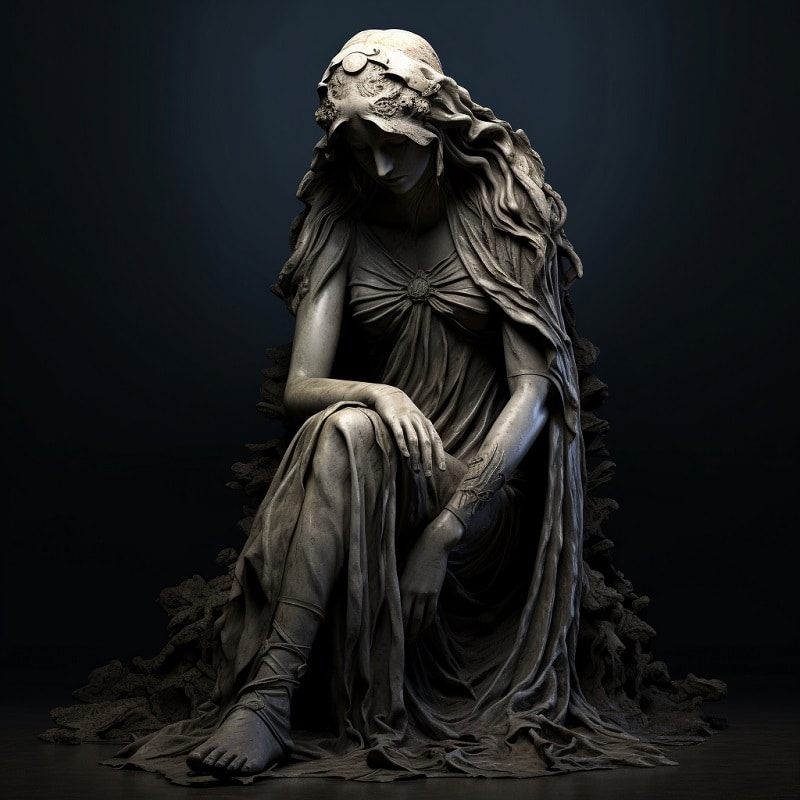
Oizys

By Vidya Hariharan

Oizys: The Greek Goddess of Misery: From Public Domain
Yesterday I saw a fool
Give up her love
for she lacked the courage
to stand up and fight
for all that she deserved.
Yesterday this fool stood by
And let the world
Rob her of joy,
Helpless and hopeless
She made her own bed
Of guilt, shame and regret.
Yesterday she failed to care
Enough to move ahead
In life, whiled away her time
In pointless pastimes.
Yesterday she hid again,
From challenges and promises.
Afraid to seize and wrest
Opportunities life presented.
Today it is too late,
All the yesterdays have passed,
Tomorrow may or may not,
Give her another chance.
As she lies there, staring
Sightlessly at the transparent
Tube, snaking from her arm,
The regrets come crowding in
And ask, “Why didn’t you live life?”

Vidya Hariharan is an avid reader and traveller. Her poems and prose narratives can be found in Setu, Contemporary Haibun Online, Under the Basho, Glomag, Poetry Super Highway, Poem Hunter and Pan haiku review.

.

PLEASE NOTE: ARTICLES CAN ONLY BE REPRODUCED IN OTHER SITES WITH DUE ACKNOWLEDGEMENT TO BORDERLESS JOURNAL

Click here to access the Borderless anthology, Monalisa No Longer Smiles

Click here to access Monalisa No Longer Smiles on Kindle Amazon International

Categories
Review

A Blur of a Woman

Book Review by Malashri Lal

Title: A Blur of a Woman

Author: Basudhara Roy

Publisher: Red River

The feminine mystique has defied every attempt to capture its attributes. If clusters of stories surround a goddess, dilemmas are embedded in them. If the pavement-dwelling mother with children clinging to her skirt images economic deprivation, there are stories hidden in her grey-flecked eyes. Basudhara Roy recognises this amorphous, protean aspect of the feminine and titles her collection A Blur of a Woman, poetically declaring; “she owns the place/and the little magic she has earned…she will use it someday to unbuild herself/disappear dissolve/ become a blur”.

This collection is a subtle attack on patriarchy as it encompasses the history and socio-cultural conditions that have moulded women into being mercurial yet tangible, pliant as well as resistive, buoyant but also vulnerable. As the poems flow in a drumroll of many contexts, vignettes of the journey are captured, symbolically strong and offering a plethora of layered meanings. The lines encourage a dialogic exchange whether with the poet, or with one’s own half-acknowledged self that is suddenly confronted by Medusa’s mirror.

The first two sections begin with poems titled ‘Duhkha’ and ‘Soka’[1], directing us towards the Buddhist principle of inevitable mutability and the need for acceptance.

I have seen hearts shut and bolt doors
from within, their windows walled while
on love the mold of ingratitude thrives

With such adaptations, the contemporary takes precedence over the philosophical teachings, and the identification with thwarted expectations, social discord, betrayal and helpless sorrow is almost immediate. If solace is to be found it is now individual—and, in this instance, by  turning to the gnarled trunks of trees where tears have watered the serrated bark. Speaking of the imagistic density of Roy’s phrases, this kind of interlinking through poetic shorthand is perceived in much of her narrativisation. The ‘betrayal’ that causes sorrow and also the maturity of recovery is a process resonant through the history of women’s writing. ‘Soka: A Triptych’ strings this further through contemplating the elegiac notes of death and mourning—yet birth and death are twins: “If life alone can be seen/all this emptiness must surely be death.”

A sizeable section of the book charts a trajectory of feminist fables, gleaning references from Rabindranath Tagore, Jayadev’s Geet Govinda, Philomela’s story, Virgo’s distress, and others. In Roy’s hands, irony becomes a viable and effective tool of social critique as in the poem

‘In Which Bimala Agrees to an Interview for a Special Issue of Post-Text Feminism’. Tagore’s popular novel Ghare Baire/ The Home and the World presents Bimala as the conventional woman who is persuaded to discover the turmoil of the world outside the threshold. Basudhara devises an imaginary conversation, some of which is quoted:

Where, then, would you locate yourself?
Here. Now.
Come on! I am hardly lost
and need no GPS of theory to find myself!

Such a startling reinvention of a canonical text subverts many assumptions with sharp, clear strokes: the jargon of literary theory, the leap into digital alignments, the confidence of the liberated woman, and the time travel that feminism has enabled.                     

My other favourite piece is about ‘Lalita’, a sakhi or friend  of the beauteous Radha who is always the heroine in the traditional tale. In Lalita’s version of the mysterious raas leela where Krishna is perceived by each woman as her partner, she is jubilant about her societal escape and physical abandon;

limbs supple like vines we danced,
thrilled to be
where love was recklessly returned.

This may be the right time to refer to the Author’s Note which is titled ‘I Write from the Body’ and seems to carry forward the feminist discourse of theorists such as Hélène Cixous who invented the term écriture feminine, or Julia Kristevawho perceived the  chora as a specially maternal zone.  According to Roy, “In the earth-bed of this woman’s life that I live, poetry runs as a river, its plenitude being both a lesson and an antidote to the prosaic borders of my world.” In which case, “Blur” is the right metaphor for attempting to break the boundaries through word-play and subversive themes expanded in poems  such ‘Aid to Forgetting’, ‘Praise for the Subaltern’, ‘Dis/enfranchised’—and several other poems  are expressions of resistance to the bastions of control. Philomela’s severed tongue has again learned to speak– but it’s a new language of assertion and intertextuality.

The semiotic breakthrough in Roy’s poems is accompanied by stylist experiments too, the Ghazal section being one such. The transcreated  use of the Urdu structure allows for couplets on a variety of subjects—for example, the seasons in the manner of the Baramasa (songs of the twelve months) with a twist that the woman is no longer the bereft, perpetually waiting figure uttering  her woes to the firmament. She says confidently now: 

You etch every constellation on your  palm
Yet secrets line the arcane of the body

In all, A Blur of a Woman, offers  poems for the intellect and the heart which are  indivisible aspects of a woman’s existence. That she  is mercurial  and evasive is once again a reminder of a fascinating mystery that has prevailed over time — and perhaps its more exciting to keep it that way.

[1] Both Dukha and Soka are forms of grief

Malashri Lal, writer and academic, with twenty one books, retired as Professor, English Department,  University of Delhi. Publications include Tagore and the Feminine, and the ‘goddess trilogy’ (co-edited with Namita Gokhale) In Search of SitaFinding Radha, and Treasures of LakshmiBetrayed by Hope: A Play on the Life of Michael Madhusudan Dutt  received the Kalinga Fiction Award.  Lal’s poems Mandalas of Time has recently been translated into Hindi as Mandal Dhwani. She is   currently Convener, English Advisory Board of the Sahitya Akademi.

.

PLEASE NOTE: ARTICLES CAN ONLY BE REPRODUCED IN OTHER SITES WITH DUE ACKNOWLEDGEMENT TO BORDERLESS JOURNAL

Click here to access the Borderless anthology, Monalisa No Longer Smiles

Click here to access Monalisa No Longer Smiles on Kindle Amazon International

Categories
Poetry

Shakespearian Musings by Kirpal Singh

King Lear, Act I, Scene I (Cordelia’s Farewell) The Metropolitan Museum of Art. Pianting by  Edwin Austin Abbey (1852-1911) From Public Domain.
DESPERATE LEAR 

against all winds that blow
and all the rains that pour,
Old Lear still sought home
as we all do sooner or later—

home is where the heart is—
cardiac surgeons locate hearts
but the homes seem elusive
lost perhaps among the veins
and the pulse beats which sound
okay to all intents.

thus to be without home
ported lustlessness;
perhaps for some despair
too close for comfort
too close to acknowledge,

And so I roam without a home.
return to the heart,
the heart of all things,
and I realise and learn,
my heart is here with me.
inside and pretty safe,
despite some odd beats
hardening who knows what,

home is where the heart
returns after all the wandering
finally settling all debts
owed by the stomach
in desperate circumstances,

Old Lear challenged the gods
but the duel was one-sided
no one wanted him
as he wrestled Nature
desperately needing Cordelia,

sometimes our Cordelias die
before they’re properly born-

I know for my Cordelia died
before she could be born--

she still struggles to learn
knowing its totally futile.

after all only in rare miracles
do we resurrect from the dead,

farewell, my sometime girl,
perhaps we shall meet
somewhere in our dreams
and realise all was a nightmare!


POOR HAMLET

Poor Hamlet
forgot poor Cordelia
in another realm
also where deceit,
cunning and corruption
ruined innocence, purity
and brought hell to bear.

these poor players
whose destinies pry
and fathom deep sores,
some known only alone,
challenge our premises,
contentment, pride, joy
and much else besides—

but who are we to probe
and pry and wonder?
think and cry and ponder
when it's the same
yonder and everywhere?

in my stillness, my friend
you who smile all the time
and beguile love
will never know anguish
nor the Joy of being
humanly correspondent
despite all hints and
references, nor in the
byways of escape
and neither in the grasp
of knowing and suffering
will you understand, know
and appreciate
value and truncated joy.

in the end, nothing much
matters more than smug
satisfactions of owning
even in this simple way,

forgiveness can be all!
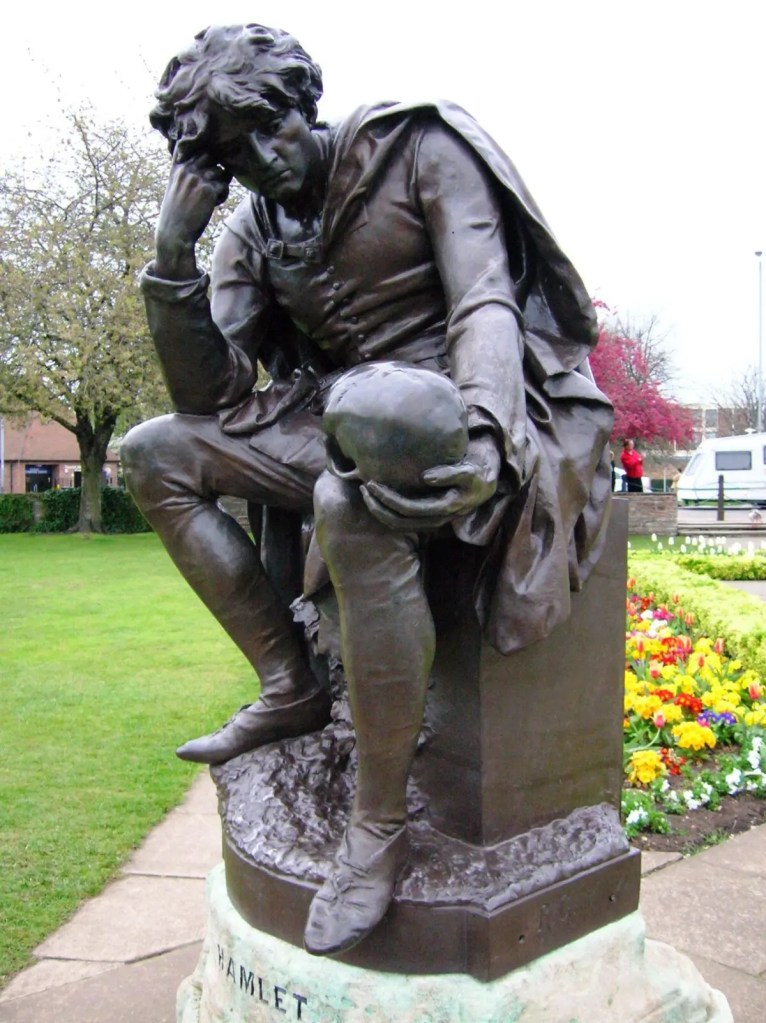
Hamlet. From Public Domain.

Kirpal Singh is a poet and a literary critic from Singapore. An internationally recognised scholar,  Singh has won research awards and grants from local and foreign universities. He was one of the founding members of the Centre for Research in New Literatures, Flinders University, Australia in 1977; the first Asian director for the Commonwealth Writers’ Prize in 1993 and 1994, and chairman of the Singapore Writers’ Festival in the 1990s. He retired the Director of the Wee Kim Wee Centre.

PLEASE NOTE: ARTICLES CAN ONLY BE REPRODUCED IN OTHER SITES WITH DUE ACKNOWLEDGEMENT TO BORDERLESS JOURNAL

Click here to access the Borderless anthology, Monalisa No Longer Smiles

Click here to access Monalisa No Longer Smiles on Kindle Amazon International

Categories
Notes from Japan

Weekend in Futaba at the Japan Writers Conference

Narrative and photographs by Suzanne Kamata 

Many years ago, when my children were small and I was working on my first-to-be-published novel Losing Kei, I joined an online writing group made up of members of the Association of Foreign Wives of Japanese. Since I live off the beaten track, on the island of Shikoku, this group was a godsend for me. Not only was I able to connect with non-Japanese women raising biracial kids in a supposedly homogenous country, but I could also connect with others writing in English. 

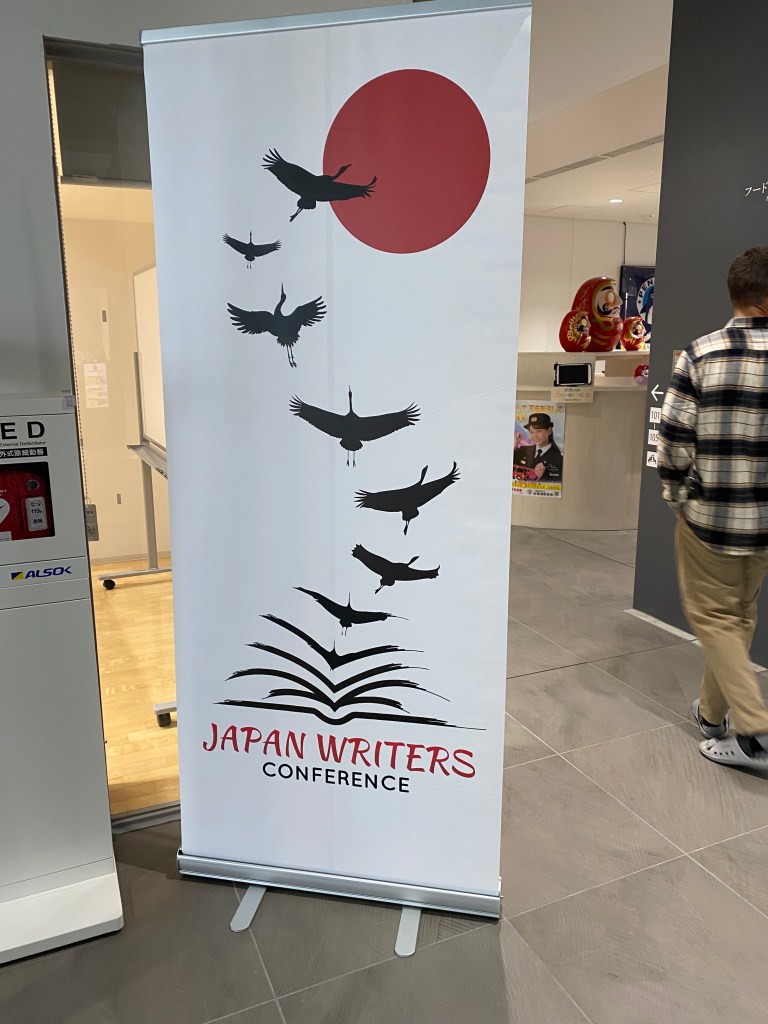
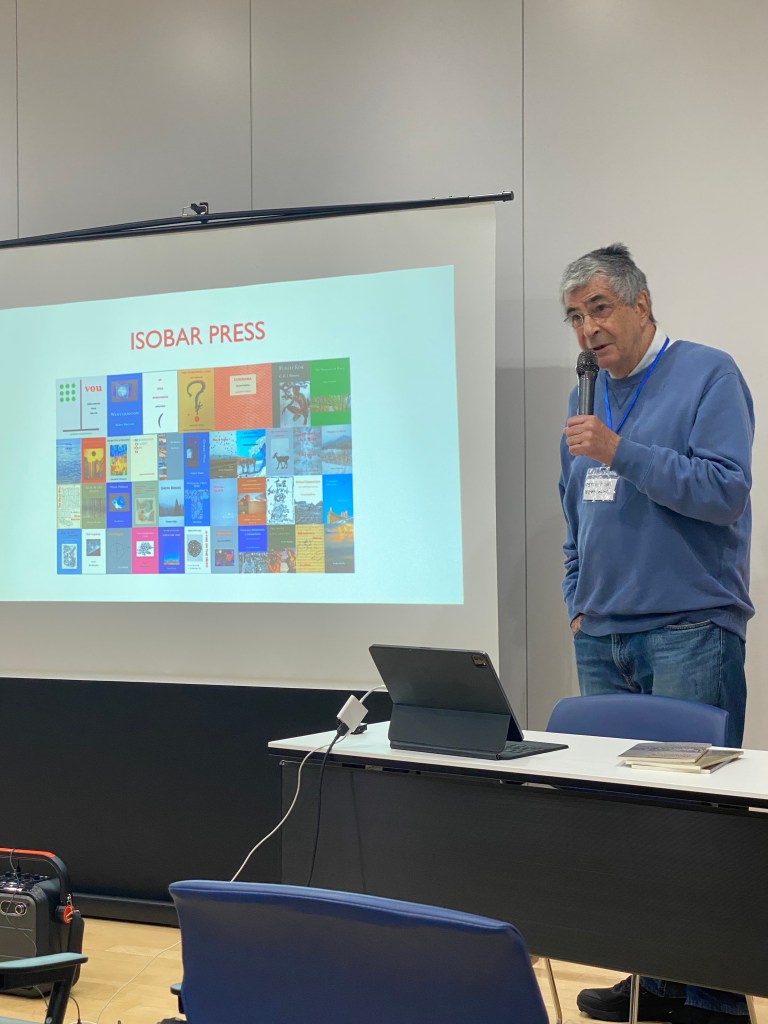
I ultimately finished my novel. I was not the only member of this group who went on to publish books. In addition to writing and publishing, another wonderful thing that came out of this now defunct virtual community was the Japan Writers Conference, which was first held in 2008. One of the members, poet and writer Jane Joritz-Nakagawa, whose most recent book is the searing LUNA (Isobar Press, 2024), proposed a grassroot gathering of writers in Japan. There would be no keynote speaker, no fees for participants, and no payments for presenters. We would just get together and share our writing and our expertise. 

Another member, Diane Hawley Nagatomo, who recently published her second novel, Finding Naomi (Black Rose Writing, 2024) after an illustrious career in academia, volunteered to host the initial conference at her university. Chanoyu University, in Tokyo, is famously the institution attached to the kindergarten attended by the Japanese royal family. It was also the site of the first Japan Writers Conference. 

Since then, the conference has been held at various universities and colleges around the country, including in Okinawa, Hokkaido, Kyoto, Iwate, and at Tokushima University, hosted by me in 2016. Over the years, many notable speakers have appeared, such as Vikas Swarup, whose novel Q & A became the film Slumdog Millionaire, popular American mystery writer Naomi Hirahara, and Eric Selland, poet and translator of The New York Times bestseller The Guest Cat by Takashi Hiraide. The list goes on and on. 

This past year, the conference was held not at a university, but at the Futaba Business Incubation and Community Centre. 

When I told my husband that I was going to Futaba, he looked it up on a map. 

“That’s in the exclusionary zone,” he said, somewhat alarmed. 

Indeed, the conference would be held on the coast in Fukushima Prefecture, not too far from the site of the nuclear power plant which was hit by a tsunami in 2011. For years, there have been concerns about radiation, however the area is staging a comeback. The host of this year’s conference would be the Futaba Area Tourism Research Association, an organisation committed to “promoting tourism and land operations, inviting people to rediscover the charms of Fukushima’s coastal areas. The company’s mission is to bring people worldwide to this unique place that has recovered from a nuclear disaster.” 

“I don’t think they would hold the conference there if it wasn’t safe,” I told him.  

The JWC website reported that although the town had been evacuated after the 2011 Great East Japan Earthquake and the meltdown at the Fukushima Daiichi Nuclear Power Station, evacuation orders had been lifted for about 10% of the town on August 30, 2022.  Decontamination efforts are still underway. New homes are being built, new businesses are emerging, and the annual festival Daruma-Ichi resumed in 2023. The areas hosting the JWC had been deemed safe, “with radiation levels regularly monitored and within acceptable limits.” I reserved a room at the on-site ARM Hotel and went ahead with my plans. 

Getting to Futaba from my home in Tokushima took all day. I got up before the sun and took a bus, a plane, then a succession of trains. As I got closer to my destination, I noted the absence of buildings along the coast. I tried to imagine the houses that might have been there before the grasses had gone wild. Later, the appearance of earth-moving equipment suggested future development.   

From the nearly deserted train station, I took a bus, and then lugged my suitcase to the hotel’s registration desk. There was nothing around besides the convention center and the hotel. I saw a very tall breakwater, blocking my view of the ocean. I felt as if I were on the edge of the world. 

The evening before the conference began, I had dinner at the hotel restaurant, where I met up with some writers I had gotten to know at past conferences. Ordinarily, we might have moved on to a bar to continue our literary discussions, but after the restaurant closed at eight, there was nowhere else to go. There was some talk of going to the beach. A few of us went out into the night and sat on the seawall, sipping Scotch from paper cups, and talking under the stars. At one point, we contemplated the waves below, all those who were washed out to sea and remained missing. 

The conference began the following morning. I was amazed that, in spite of the effort that it had taken to get there, presenters had come from all over the world – a Syrian poet who was based in Canada, a poet from Great Britain, a Japanese writer and translator who lived in Germany, a Tunisian writer and motivational speaker who’d flown in from UAE. 

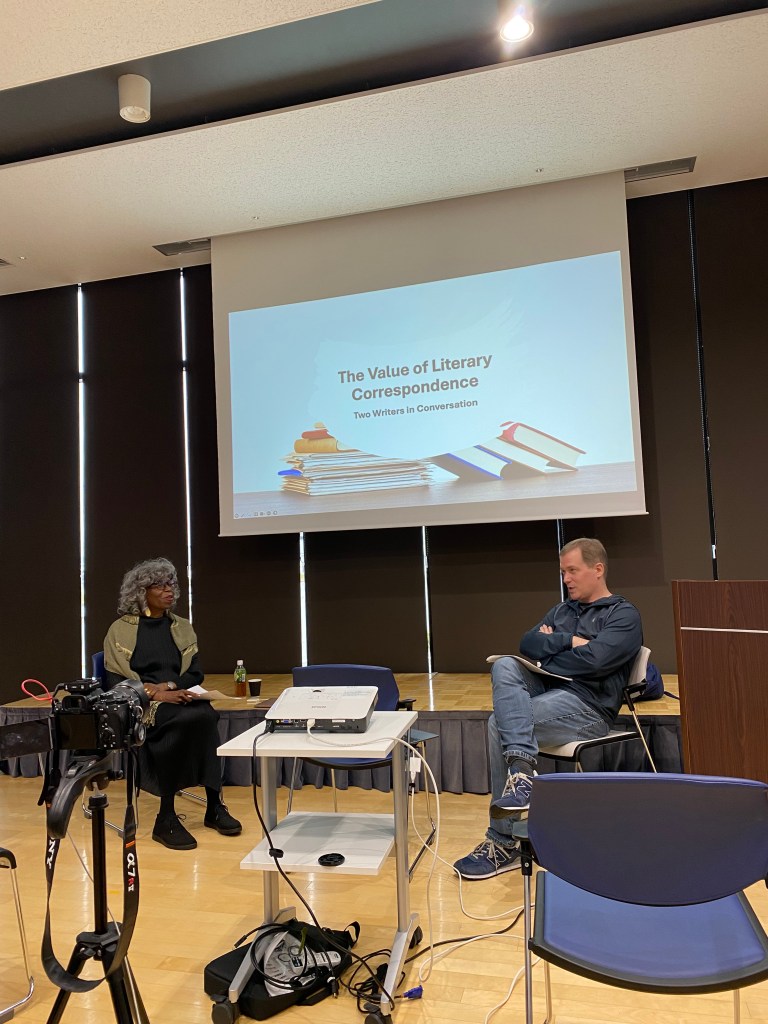
I gave a presentation on writing for language learners and shared my haiku in another session. Others presented on a variety of topics including literary correspondence, storytelling and tourism, climate fiction, and writing the zuihitsu[1]. In between sessions, I caught up with old friends and met new ones. On Saturday night, there was a banquet with bentos featuring delicacies such as smoked duck, mushroom rice, and salad with Hokkigai clams. 

In retrospect, it was especially meaningful to attend the conference in Futaba, and to feel that we were able to play some small part in the rejuvenation of the area. It was also exciting to interact with writers who came from so far away. Although it’s still very much a grassroots event, it has become truly international. 

(To find out about the next Japan Writers Conference and sign up for the mailing list, go to https://japanwritersconference.org/

[1] A loose collection of personal essays

Suzanne Kamata was born and raised in Grand Haven, Michigan. She now lives in Japan with her husband and two children. Her short stories, essays, articles and book reviews have appeared in over 100 publications. Her work has been nominated for the Pushcart Prize five times, and received a Special Mention in 2006. She is also a two-time winner of the All Nippon Airways/Wingspan Fiction Contest, winner of the Paris Book Festival, and winner of a SCBWI Magazine Merit Award.

PLEASE NOTE: ARTICLES CAN ONLY BE REPRODUCED IN OTHER SITES WITH DUE ACKNOWLEDGEMENT TO BORDERLESS JOURNAL

Click here to access the Borderless anthology, Monalisa No Longer Smiles

Click here to access Monalisa No Longer Smiles on Amazon International

Categories
Poetry

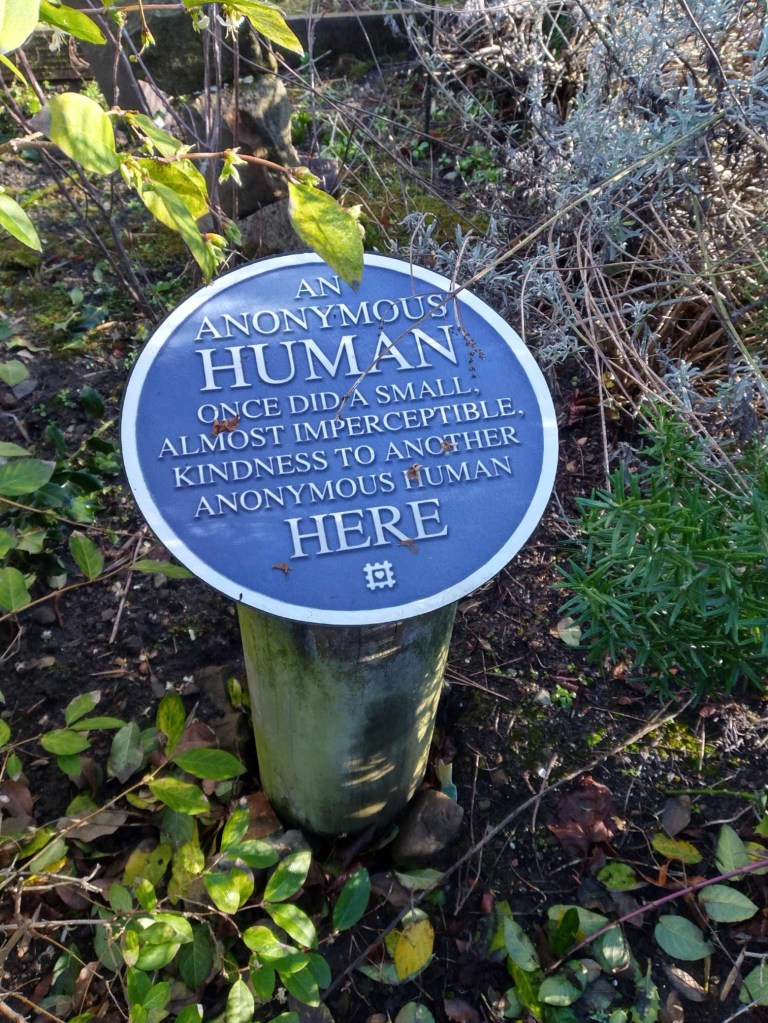
An Anonymous Human

Poetry and Photography By Rhys Hughes

An anonymous human once did
a small, almost imperceptible,
kindness to another anonymous
human here. But it isn’t clear
what that microscopic kindness
was. All the details are missing
and no amount of listening to
the wind kissing my ears will
give me any significant clues.

Maybe it was to make a dream
come true? Some modest scheme
such as a desire to swim in cream
or perhaps the wish to read maps
upside down without a frown?

I don’t know but now I’m thinking
about those times when I did a little
kindness for someone too. Let me
give you just one domestic example:

She asked me to do the washing up and I did.
I don’t want her to think I take but never give.
So, I did the plates, the cutlery, pots and pans,
and every cooking utensil piled up in the sink,
but my fingers got stuck in the holes of a sieve.

Not convinced of my nobility? Then
I ought to choose some other incident
that will prove my sincerity and ability
when it comes to minor moral actions.
Are you ready for my confession? It
teaches a valuable lesson, yes it does.

After the fiasco with the sieve
I bought her a pair of slippers
made from a new type of fabric
as black as a frogman’s flippers
and when I enquired what she
thought of them the following
day, this is what she had to say:

“My slippers are equally good
at both walking and wallowing,
and so silky and smooth they
glide like the valiant cheeks
of a greased rump on a slide.
A wider rump than mine by far,
my rump is of a reasonable size
and has no excess of friction.
This is not a fiction. Hurrah!”

By which I surmise she liked the surprise
even though I never saw her wear them,
but it’s the thought that counts. Therefore
I must have an abacus somewhere inside
my skull, preventing me from being dull.

And at night I help her fall asleep
by disguising myself as an intruder
who isn’t a creep, a mythic figure
from old fairytales, and she smiles
as I try to croon a soothing refrain:

“Sandman, when it rains
do your grains get sticky?
It must be awfully tricky
to sprinkle sticky grains
into the eyes of sleepers?
And have you seen my
new bed? It’s in the shape
of a hippopotamus head.”

Well, that’s all the evidence I possess
to address the issue of whether I am
the very best or even just a runner-up
at doing small, almost imperceptible,
kindnesses. Maybe you can outdo me,
brewing coffee or tea for grizzly bears
in the depths of a beverage-less forest,
or climbing ladders to rescue adders
stuck up trees, and by ‘adders’ I don’t
mean snakes but men with abacuses
instead of brains, or do you prefer to
shovel snow to clear those lanes that
seem to grow across the hillsides in
spring like tendrils, a peculiar thing?

In the meantime I am bedridden
and that is why I remain hidden
from society, as if I’m anonymous
and consequently synonymous
with that kind human, the subject
of this poem. Why do you say ho
hum? Do you doubt my anecdotes?

Nobody knows how I managed
to get thimbles stuck on my toes
overnight. I rose one morning
to sniff a rose with my long nose
but found I could no longer walk.

How do I feel about this? Just
sew-sew, I guess. I have no need
to talk about it further. Be kind
even if you don’t have an abacus
for a mind. That’s all. Farewell.

Rhys Hughes has lived in many countries. He graduated as an engineer but currently works as a tutor of mathematics. Since his first book was published in 1995 he has had fifty other books published and his work has been translated into ten languages.

.

PLEASE NOTE: ARTICLES CAN ONLY BE REPRODUCED IN OTHER SITES WITH DUE ACKNOWLEDGEMENT TO BORDERLESS JOURNAL

Click here to access the Borderless anthology, Monalisa No Longer Smiles

Click here to access Monalisa No Longer Smiles on Kindle Amazon International

Categories
Musings of a Copywriter

Banking  Ideas?

By Devraj Singh Kalsi

Opening a bank account is a simple procedure that takes a complex turn for writers once they reveal their profession. The bank executive eyeing a rich customer loses interest in serving a writer who is expected to struggle with the maintenance of minimum balance in his savings account. Almost on the verge of suggesting he should opt for a piggy bank instead, the executive dumps his papers, making him wait for longer than expected even though there is no serpentine queue inside the bank. The writer collects his original documents and proceeds to the sitting area, hoping that the executive will be merciful and serve him without further delay. He tries to establish contact, but the executive rolls his eyes and looks at the computer screen, pretending to be busy with some urgent online task despite the server failure notice tagged above his terminal.

The sitting area has other customers facing a similar fate. The writer finds it a blessing to be surrounded by other clients. He takes keen interest in observing their mannerisms and speech. He overhears their conversations and tries to remember the important bits and pieces that he can later use as dialogues in his forthcoming novel. One interesting line or a phrase that catches his imagination gets noted in his diary.

He begins to love his waiting time and feels comfortable with such inordinate delays so long as he gets fodder for his prose. He gets richer during the waiting period though the bank has no idea how this happens. When he is finally summoned to the counter to deposit his earnings, he looks happy instead of showing signs of irritation. The executive sports a fake apologetic smile and proceeds to make the entry while he chalks out the plan for another visit to the bank branch – even if the task is just updating his passbook. He needs an excuse to enter the bank where he finds so many clients discussing financial and personal matters. His greed to enrich himself with varied, interesting human insights makes him a regular customer who continues to be warmly greeted by the security guard irrespective of his financial position.

The next visit to the bank is slated in the same week. He comes in with a request for partial withdrawal of the deposited amount, making the teller wonder why he has to waste a cheque for this instead of swiping his debit card. He stands in the queue, flanked by other customers, and he strikes conversation with a fellow customer who smells fragrant and suddenly fishes out a bundle of currency notes to deposit. Seeing such a hefty amount of money that exceeds his annual income, the writer becomes aware of his own impoverished state and collapses in his mind. He tries to look the other way as he does inside a public lavatory and keeps a safe distance from the customer who loses interest in carrying on with the silly chat on weather and politics as he inches closer to the cash counter.

Perhaps the writer deserves this assault on his financial status to return to the materialistically insane world. He makes a quick promise to himself, closing his eyes and pledging to churn out a best-seller that would give him royalty of a much bigger amount. The special visit makes him strongly motivated and inspired. He is determined to mint money through writing even though most of the writers the world over have failed to do so for centuries. He aims to become part of the minority of globally successful authors with royalty earnings ensuring a royal lifestyle. If a writer can create the best life for a character, he is also entitled to dream of a similar fortune for himself. The writer who topples characters from cliffs or offers them a lifeline gives himself some space to hang on, bounce back, and break the silence of critics. He knows it takes no time for the naysayers to start crowning an emerging author as the bravest, newest, and shiniest literary star who breaks norms to push the boundaries of creativity churning out a best-seller that keeps selling like hot cakes the world over.

When the bank refuses to serve him with interest but charges interest on any dues, there is not much he can do to show how aggrieved he feels as an ordinary customer. He goes home and creates a wily character with shady features of the presiding banker. He has no fear of getting caught as he knows the banker is not likely to trace or read the story published in a faraway land. He goes ahead with adding villainous shades to the character created with borrowed inputs resembling the banker. The way he fobs off pesky customers – and his scrunched-up forehead with flawed skin – finds space in fiction.

The next time the writer walks in for another trivial chore, he has no idea of what is in store for him. He is pleasantly surprised to find a new woman executive who is courteous, polite, and dignified in her professional conduct. As he walks in early in the morning, the lady offers him a seat in front of her desk and proceeds to address his concerns and carry out the tedious job of printing the passbook even though there is just one entry on the last page. He reads the updated book and then reads her face that still looks eager to offer assistance. He submits the requisition for another cheque book even though there are many leaves unused in his current one.

Such hospitable treatment makes the writer an admirer of the woman executive, and he opts to glorify her grace in his next story by making her a strong character trying her best to change the world of banking. He makes her wield ample strength and positions her as a saviour even though she herself has no idea of being so headstrong. Keeping a writer happy delivers a lot as the lady executive soon understands. He ensures that the story reaches her. He forwards her the published link. He does not gather the courage to ask whether she has read it or not. It would appear he seeks attention from his contacts. But he keeps appearing in front of her in case she remembers she has to offer feedback on the link forwarded to her number. The brief fascination – and interaction – with her comes to a sudden end as she is transferred to another department behind a cubicle far away from the customer service zone.

The sound of note counting machine begins to irritate the writer. He is reminded of the typewriter days. Just to hear the sound of counting notes he buys the machine and keeps counting the same cash again and again. Inside the bank, the same process is repeated only when the machine stops reading at ninety-nine instead of reaching one hundred. He thinks the domestic machine lacks adequate practice and hides errors in the counting process. It becomes his duty to check multiple times and ensure error-free counting even though his writing tends to carry errors he cannot detect. The cacophony has to hit him hard so that he remembers it while writing. It should hammer him all the time, making him determined to write that elusive best-seller at the earliest.

The solitary bundle of his few thousand rupees is dumped carelessly by the teller who has no idea of how much hard work has been put in to ensure this money flows into the writer’s account. Bored of the simple job of deposits and withdrawals, the writer turns ambitious as he approaches the investment counter, deciding to make a systematic investment plan. When he opts for the package with the minimum amount, the fund manager looks with bulging eyes, almost a scornful glance that seems to suggest he is wasting his valuable time.

The writer seems determined to begin his financial journey as an investor – and he firmly states his decision to proceed with it. This gives a little boost to his waning confidence as he signs a cheque for investment after several years. He chooses banking with a leading private sector bank to get better banking services, oblivious that the customer profile matters more in this regard. Those struggling to maintain the threshold limit of minimum balance should not show the temerity to enter the bank meant for the privileged few. Deep inside, the writer is convinced that he will have a reversal of fortune. He knows the bank that is least interested to have him as a customer would felicitate him some day as the most valuable customer who they feel proud and honoured to serve. They will turn loyal readers of his novels and seek his autograph and photograph.

He visualises a turnaround in his financial fortunes through writing even though he is aware that only a few novelists the world over ever make the cut. He remembers the discriminatory scene inside the bank where a rich customer is offered coffee, juice, and cookies while no such warm gesture comes his way – not even a glass of water. He pursues with the dream of turning the tables, reposing full faith in the eternal truth that fortune always favours the brave. The transactional relationship with the bank serves a reminder of how the world operates along the lines of profit and loss even if it is deeply regrettable. He hopes that his repeated debits and credits would make him eligible for a free credit card at least – in case the crunch becomes too hard to bear. In case his dream remains a pipe dream.

The series of snubs steel the writer’s resolve to earn plaudits. He sits at the desk and whenever he feels low and dispirited, he goes straight to the bank to seek a booster dose. The cold welcome is the perfect shot that works like magic. The sight of rich customers and their privileged treatment sets his imagination wild. He keeps adding zeroes in the slip and tears it apart before tears well up. He hopes to create phenomenal income through writing and plans to launch his book inside the same bank or have it as a key sponsor. With such an intense relationship brewing in his mind, he is convinced that his manifestation is sure to translate into reality. He walks in with his book and hopes the staff would recognise him as a learned person. But they ignore him as they are more interested in the cheque book or passbook. At this juncture, he is left with no option but to withdraw all his money and close his account to embalm his bruised ego.

Months and years pass and yet there is no boost in royalty – or loyalty to a bank. He writes well but does not sell well. The best seller remains a distant dream. He switches to another domain, hoping some producer would buy his flop stories and turn them into a web of hit series. Changing the banking partner does not change his fortune. The same plight ensures his flight from another bank – despite the trench coat and dark shades. The wide inequality between his balance and appearance is read by the cashier. Another dream of opening his account with an MNC[1] bank once he becomes a globally read author takes root.

The fact that he slogs despite his previous output comprising four novels and five collections of stories means the writer is alive and forever hopeful that his next tome would rewrite his financial standing. Even though nothing of that sort happens, he is glad to have produced such an enormous body of work that has found few takers. If he is still banking on hope and visiting some bank to feel charged to write, he is following the right track. Rejection works as a stimulant for the writer who faces the maximum number of rejections in life has nothing more to lose. All he needs is a bank as a companion where he makes regular trips to get insulted, to uplift his sagging morale, to mingle with the rich and tell their refreshing tales of deceit, crookedness, and betrayal with a sensitive pen. 

[1] Multi National Corporation

Devraj Singh Kalsi works as a senior copywriter in Kolkata. His short stories and essays have been published in Deccan Herald, Tehelka, Kitaab, Earthen Lamp Journal, Assam Tribune, and The Statesman. Pal Motors is his first novel.  


PLEASE NOTE: ARTICLES CAN ONLY BE REPRODUCED IN OTHER SITES WITH DUE ACKNOWLEDGEMENT TO BORDERLESS JOURNAL

Click here to access the Borderless anthology, Monalisa No Longer Smiles

Click here to access Monalisa No Longer Smiles on Kindle Amazon International

Categories
Poetry

My Father’s Jacket

Poetry and translation from Korean by Ihlwha Choi

From Public Domain
The father, who is nearing the end of his life in this world,
gave me his winter jacket.
A black jacket he once wore with style,
on which thick snowflakes piled on cold shoulders,
a jacket that warmed itself by the stove in a soup restaurant.

A jacket with mismatched buttons,
worn through a life marked by crooked paths,
Unable to rest peacefully at the center of the universe,
tossing and turning like a migratory bird that had lost its way,
wandering through unfamiliar lands,
spending sleepless nights in the cold.
So that I may spend my winters warmly,
so that I may button my life neatly and live upright,
my father handed me his jacket,
like an offering of regret.
In the early winter that chills the heart again and again,
wearing my father’s outdated winter jacket,
I briefly trace the worn path of his difficult life.

Ihlwha Choi is a South Korean poet. He has published multiple poetry collections, such as Until the Time When Our Love will Flourish, The Color of Time, His Song and The Last Rehearsal.

.

PLEASE NOTE: ARTICLES CAN ONLY BE REPRODUCED IN OTHER SITES WITH DUE ACKNOWLEDGEMENT TO BORDERLESS JOURNAL. 

Click here to access the Borderless anthology, Monalisa No Longer Smiles

Click here to access Monalisa No Longer Smiles on Kindle Amazon International

Categories
Stories

Anand’s Wisdom

By Naramsetti Umamaheswararao

In the town of Kalyanapuram, there lived a wealthy man named Raghav. He had a daughter of marriageable age and was seeking a suitable groom for her.

Once, while Raghav was traveling to a nearby village called Bangaru Palem to explore a possible marriage alliance, he met Anand on the way. Anand introduced himself, saying he was from Machavaram village, well-educated, settled in business, and unmarried.

Raghav thought that Anand might make a good son-in-law, but he decided to test his intelligence and character before making a decision.

As they were traveling, the heat of the sun intensified, and Raghav felt thirsty. He asked a passerby, “Is there a well or a pond nearby?” The man pointed to a pond and said, “You can quench your thirst at that pond.”

Anand asked the man, “Is the pond water poisonous or life-giving?” The man replied, “I don’t know.” Raghav went ahead and drank the water from the pond. He thought to himself, “What a strange question Anand asked! Is he a fool?”

After some distance, two more travelers joined them. One was a farmer, and the other was a moneylender. The farmer was going to a neighbouring village to buy cattle, and the moneylender was on his way to collect old debts.

Anand asked the farmer, “Are you a provider of food or just greedy?” The farmer remained silent, unsure of how to respond. Then, Anand turned to the moneylender and asked, “Do you care for people’s well-being or just focus on squeezing them dry?” The moneylender also remained silent. Raghav now firmly believed Anand was indeed a madman and thought, “There’s no way I can accept him as my son-in-law.”

Even though Raghav continued walking with Anand, he kept his distance, disliking the way Anand spoke. The other two travelers also found Anand’s words odd and wanted to get rid of him as soon as possible.

A little further into the journey, it was noon, and the group felt hungry. They sat under a tree, unpacked their food, and began to eat. But Anand’s attention was drawn to a nearby bush. “It’s not safe to sit here. Let’s move away immediately,” Anand warned.

The other three ignored him and said, “We will eat here. If you don’t like it, go wherever you wish.” But Anand insisted, “I’m saying this for your safety. I sense a dangerous snake nearby. If we don’t leave quickly, it could be a threat.”

Raghav mocked him, “Did the snake come and tell you this in a dream? Or do you have some magical powers?”

Anand pointed to a snake’s skin near the bush and said, “Look at that freshly shed snakeskin. It’s about fourteen feet long and thick, which indicates the size of the snake. It must be nearby. I’m warning you based on this evidence.”

As soon as Anand finished speaking, the farmer screamed, “Look! There it is! The snake is coming toward us, just as Anand said.” In no time, all four ran far away to a safe place and had their meal.

Raghav ’s opinion about Anand began to change. He realised Anand wasn’t mad after all. However, Raghav was still curious why Anand had asked those strange questions earlier.

He asked Anand, “You seem to be a wise man. Why did you ask if the pond water was life-giving or poisonous?”

Anand replied, “Even if the water looks clean, it could be filled with dirt or dangerous creatures like crocodiles, which would make it deadly. On the other hand, water from a safe, clean source sustains life, making it like nectar. That’s why I asked.”

Next, Raghav asked, “Why did you ask the farmer if he was a provider of food or just greedy?”

Anand explained, “A farmer who grows food crops feeds others, so, he’s a provider of food. But if he only grows cash crops for profit, he is driven by greed. That’s why I asked.”

Hearing this, the farmer proudly declared, “I am certainly a provider of food!”

Then Raghav asked, “What was the meaning behind your question to the moneylender—whether he cared for people or just squeezed them dry?”

Anand replied, “There are two kinds of moneylenders. Those who consider the financial situation of the borrower and give them time to repay with understanding — they care for people. But those who are ruthless and demand repayment no matter what, are only focused on taking money and are like a burden on people’s backs. That’s why I asked.”

The moneylender, realising the wisdom in Anand’s words, said, “I am definitely the kind who cares for people!”

With all his doubts cleared, Raghav invited Anand to his home and expressed his desire to make him his son-in-law.

Naramsetti Umamaheswararao has written more than a thousand stories, songs, and novels for children over 42 years. he has published 32 books. His novel, Anandalokam, received the Central Sahitya Akademi Award for children’s literature. He has received numerous awards and honours, including the Andhra Pradesh Government’s Distinguished Telugu Language Award and the Pratibha Award from Potti Sreeramulu Telugu University. He established the Naramshetty Children’s Literature Foundation and has been actively promoting children’s literature as its president.

.

PLEASE NOTE: ARTICLES CAN ONLY BE REPRODUCED IN OTHER SITES WITH DUE ACKNOWLEDGEMENT TO BORDERLESS JOURNAL

Click here to access the Borderless anthology, Monalisa No Longer Smiles

Click here to access Monalisa No Longer Smiles on Amazon International

Categories
Poetry

My Grandfather’s Hills

Poem by Michael R Burch

From Public Domain
My grandfather lies at the foot of an oak
far from the beaten path,
and never before has a spirit so free
lain fettered in sleep.

But although he lies and walks no more,
I see his eyes in the setting of the sun
and I hear his voice when the sap runs,
for these are an old man's hills.

Don't tell me the government "owns" them,
for the government didn't live them
and breathe them and know them—
only he did.

Don't tell me the government "regulates" them,
when seventy years
of his sweat and his blood and his tears
flow through the waters of these hills
to nourish the trees ...

No, these
are an old man's hills.

No one knew them as he did—
every hole where the woodchucks hid,
every nest where the blue jays lived—
and nobody loved them
as much as he loved them.

Only he cared when the flood waters killed
the tiny buds and the blades of grass
that grew beyond the fields.

And only he cared when the last bear died,
caught killing livestock.
"The oldest bear ever lived,"
he'd brag, "and the smartest."
Though we'd often hear it trip and crash
against the trash cans.

These are an old man's hills,
and they will never be the same
without his loving hand
gently transplanting shrubs and trees
that otherwise would have died
in the rocky, shopworn land.

Yes, these are an old man's hills,
and his eyes were the blue of the autumn skies
he knew so well even after he went blind.

"There's a few wispy clouds to the west today,
fadin' away, ain't they, boy?"
he'd ask me, and of course he was right.
"Sure are, 'pa," I'd reply, and a smile would crease his face
and a warmth would pour out of his soul,
for he loved his hills.

Don't say that someday
the wind and the rain
will weather away
his mark from the land—
the well that he dug
and the wall that he built
and the fields that he planted
with his two callused hands.

A memory cannot wither away
when it’s reborn in the songs of the raucous jays
and heard within the laughing waters
of the sea's silver daughters.

An old man lives within these hills, although he walks no more;
I have often heard his voice within the winter's stormy snore;
and I’ve seen his eyes flash, sometimes, in the bluest summer sky;
and I’ve heard his knowing laughter in my newborn baby's cry.

Michael R. Burch’s poems have been published by hundreds of literary journals, taught in high schools and colleges, translated into fourteen languages, incorporated into three plays and two operas, and set to music by seventeen composers.

PLEASE NOTE: ARTICLES CAN ONLY BE REPRODUCED IN OTHER SITES WITH DUE ACKNOWLEDGEMENT TO BORDERLESS JOURNAL

Click here to access the Borderless anthology, Monalisa No Longer Smiles

Click here to access Monalisa No Longer Smiles on Kindle Amazon International