This happened far, far away from the home of the Incas; in a kingdom where Sindbad was born…
When the afternoon sun rays briskly melted into the sea and the sandy beach bathed in its glittering waves, a boy in his teens, sporting a mullet haircut, lounged in one of the decorative corners of an elite semi-outdoor eatery. He sat, busy scratching his legs with one hand and handling his phone with the other. The itchiness disturbed him. He failed to repel a menacing minuscule creature that lurked under the table. He spoke less. His eyes glued to the screen. The scowl he wore on his forehead highlighted his teenage disposition. His sombreness confirmed his teenage manifestations.
His family sat in awe to appraise the affluent ambience of the Peruvian-themed restaurant by the shore of the Arabian Sea. An enormous vintage carved wood chandelier hung from the ceiling. It sprinkled dust of subtle golden light on the faces ogling up to adore it. Bonsai trees, creepers, elaborate Inca statues, and artefacts artfully contributed to the extravaganza. The crisp December draft made the semi-outdoor setting perfect for an exotic lunch. “Cheer up young man! The December heat has lulled the desert heat, what makes you frown?” a middle aged man, presumably his father interrupted his attention a little more.
“Welcome to the paradise!” A swanky waiter attended the guests in his customary white shirt, black pants and black waistcoat. He stood coated with a half-bistro apron around his waist and a pleasant smile. His generous hands served inviting prawn crackers and tempting avocado guacamole. “I would like to have Eyes of Inti[1],” the boy ordered a drink with a quick smile. “Great choice!” he hurried in and returned with the beverage. “Should you prefer sitting indoors? I must ask you this because some guests complained of mosquitoes two days back. Mosquitoes get nasty on you. It shouldn’t spoil your experience with us.” His teeth shone like pearls as he grinned.
“Oh, they still didn’t trouble us. We prefer sticking to this table. It’s lovely out here,” the boisterous voice of the man answered.
While methodically placed the cutlery on the table, the waiter continued. “No one fancies an attack from the monsters with their dangling moustache at lunchtime. They hum until they get tired of singing. When you become heedless, they sit on your bare skin to suck your blood with their straw-like weapon. Did you ever crush them between your palms to witness the lifeline in your palm raise a toast to your success with a daub of blood?” he chuckled at the boy and graciously served a glass of mocktail infusion with a smouldering orange hue popping out. “Eyes of Inti for you. It tastes like the nectar of immortality. While you enjoy the Peruvian meal, Inti shall keep a watch on those little devils.”
The banter amused him. Moving away from his phone, he began scrolling through the menu. “One Pargo a la Trufa and Inca’s Rage for me, please,” The red snapper ceviche with loads of truffle made his stomach growl for food. “So, these devils with dangling moustaches and trenchant weapons own free passes to Paradise? Or, perhaps Inti was too distracted. The wrath of Inti’s nemesis — I mean the mosquitoes – waned Inca’s rage?” the boy smiled.
“Ahh! I’m not quite sure,” the waiter chortled with a bland look. A simper smile lingered on the boy’s face.
Swati Basu Das is a journalist based in Oman. Her columns and features on culture, and travel are published in newspapers and magazines. She relishes music, escapades, coffee and John Keats.
PLEASE NOTE: ARTICLES CAN ONLY BE REPRODUCED IN OTHER SITES WITH DUE ACKNOWLEDGEMENT TO BORDERLESS JOURNAL
The white cat cuddles up on the furry brown mat right outside the entrance door. After I lock the gate leading to the granite steps, it slips in through the iron grille, assured that this seat will ensure comfortable sleep at night. So long as it makes no noise to disturb me, this arrangement works fine. Sometimes when I wake up early, I forget to peep out through the glass window to check whether it is still there. My sudden opening of the door hits her legs and she quickly vacates the spot, turning back to stare and warn that my inhospitable disruption would draw a bloody scratch.
It is true she would have slept longer if I had not arrived on the scene. The feline is entitled to jump to the conclusion that I am the culprit who did not show a sensitive side by tendering an apology through expression. Making an effort to introspect mirrored how miserable I felt when I was groggy with sleep – head buried under the pillow – especially if a domineering member of the family pulled me out of the cosy comforter and rebuked me for being lethargic. My humble submissions for another fifteen minutes of restful sleep were always rejected like salary hike requests. Drawing this parallel provided the solace that I still had a functional ability to regenerate the tender side.
To make amends, I woke up late or delayed opening the door, allowing the cat the opportunity to snooze for a longer duration. Any kind of clatter inside the house could disturb her sleep so I took extra precautions to maintain peace in the kitchen. I chided myself for not being courteous enough to offer a bowl of milk to welcome the guest. These were clear indications that my sensitive side was kicking in!
The decline of the sensitive side usually gets overlooked in the rush to cope with daily commitments. When something awful and unexpected occurs, the journey to explore within and measure the decline begins all of a sudden. One tends to becomes extra vigilant, checks repeatedly the extent of damage and how to recover the lost ground. The natural ability to be sensitive and the efforts to restore it calls for consistent efforts that strengthen bonds with nature and its allies.
The other day I woke up late as I binge-watched a lot. It slipped out of my mind that the pigeons were waiting to be fed. When I reached the garden, most of them had taken flight. There were still a few of them hopping around. As I served foodgrains, there was a scramble to peck at it. They settled down to polish off whatever their eyes could find and then proceeded to spread their wings in the air. After their exit, smaller birds like sparrows descended from the branches of a guava tree to have their fill. The squirrels on the garage roof availed the hollow pipe to come down with alacrity, to search for remnants. I thought I should arrange something for them, probably nuts. It was a mere idea without any urge to act immediately. Some minutes later, I came inside to proceed with other chores but I kept thinking about the pigeons – about the ones who could not wait and those who stayed there.
The loss of patience was natural as the pigeons knew I was never so late. Instead of wasting time, they flew away to other options to have their fill. I could relate to this practical behaviour as I myself do not like being kept waiting to be served tea or coffee at home or in a café and have often shown the tendency to leave. Somewhere deep inside I relished the thought that those who waited for my arrival were close to me and shared a strong bond that I became aware of through this episode.
The packet of peanuts was torn, and it slipped out of my hands when I tried to fill them in a glass jar. A handful of nuts fell on the tiled floor. I gathered those nuts and opened the kitchen window to offer it to the squirrels still lounging in the garden. Perhaps the universe had communicated my thoughts to them. Within minutes, the squirrels vanished with the booty. Though it is widely believed that the food reaches for whom it is meant, it shows gross insensitivity when food is wasted or thrown away. How can it possibly be acceptable that some human beings are destined to scavenge for food in garbage bins?
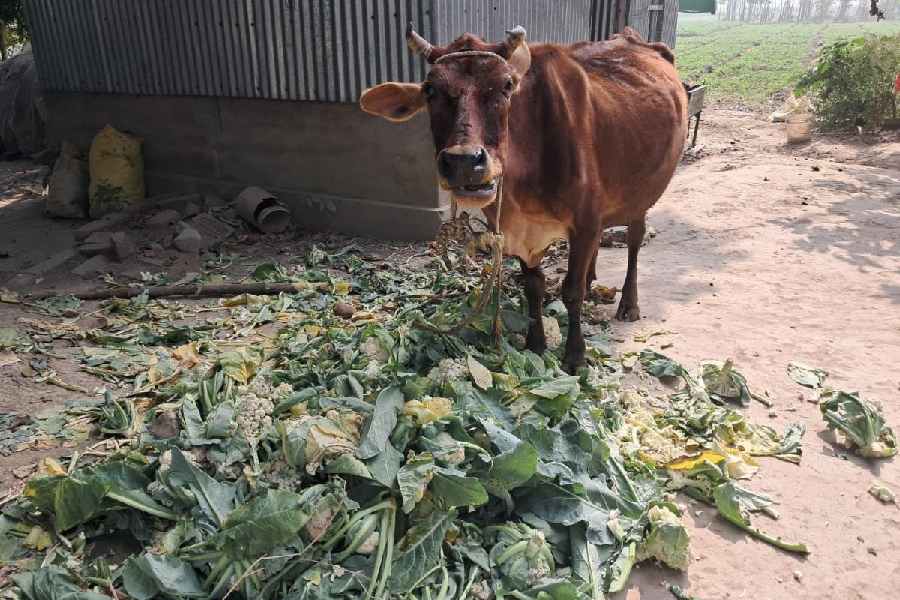
Some mornings are special as the sight of a herd of cows grazing on the grass outside the main gate motivates me to offer them greens such as cauliflower and cabbage leaves. Their mastication draws the attention of stray dogs who feel my act of preferential treatment cannot be overlooked. Their collective barking peaks, reminding me that I must offer them something as well. Serving biscuits is the easiest way to calm them. When I give them something to eat, their anger subsides.
Feeling left out is painful as I can recollect how miserable and low I felt when I was not considered fit for the school cricket team despite being a good player. The stray dogs tamed their resistance and allowed the cows to graze without any confrontation, following them like escorts. The sight of two different species bonding so well became an inspiration, making me wonder how I can emulate this example and make my house an abode for multiple creatures to co-exist and care for each other without any fear of competition.
I am not a regular when it comes to feeding the cows crossing my house. But I have noticed some of them slowing down their pace in front of my gate, anticipating something to be served to them. Now I intend to add breadcrumbs or chapatis or anything they like to eat, making it a regular practice to place something for them. Being quite punctual like pigeons, their arrival signals they have memorised my address and they take a break to stop and chew here. The neighbour has shown the competitive spirit to become sensitive by placing a tumbler full of water for all animals. Cows eat from my home and then proceed to quench their thirst next door. I should celebrate such healthy competition as the neighbour is playing a positive role to find his space in the connected world by becoming useful to other species.
Recently, I bought a bird feeder and decided to put it up in the garden, with the support of bamboo poles. Before summer sets in, the bird feeder should be installed. A little bit of digging of the soil is required and this tiresome activity slows me down. I made a resolution to hire someone to do the job if it proved too cumbersome for me. Although I am aware it’s getting delayed, I am not making any effort to complete it.
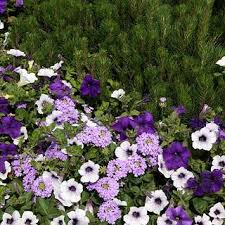
When I finally went to the garden on a Sunday afternoon, I saw dried-up, hardened soil and felt disappointed. Watering plants should be a priority. The petunias made my windows look beautiful, with the purple and white blooms. I was busy clicking photos and sharing them for likes but I was not ready to accept that these plants needed more attention to bloom better and for longer. I had seen them growing in other places during this season, in other bungalows, boulevards, and other cottages. I needed to be modest in accepting the fact that I had not shown a highly sensitive side when it came to nurturing them with love. If I could dedicate fifteen minutes every day, to water them early in the day, I would have shown better signs of care.
Nowadays, I am happy just watering them – whenever I find the time. There is a palpable loss of my sensitive side as I consider it is sufficient to water plants without thinking too much about fixing a timeline. I need to remember how quickly I reach out for a glass of water whenever I am thirsty. But in case of plants, I have concluded that watering them is enough – delaying it does not generate any smidgen of guilt.
The truth is that plants also need water regularly and performing this task early in the day is better. Before I consume the first glass of water, I must ensure the plants have quenched their thirst. I should stop comparing myself with those who do not water plants. I should not feel I am doing the plants any favour. When the plants grow healthy here, they create a positive environment for the residents to lead happier lives. Instead of taking pride in providing any noble service, I should change my mindset and think that there are hundreds of more ways to strengthen the sensitive side. These are some smalls steps as the awakening grows deeper. Knowing the depth of love knows no end. Similarly, the depth of sensitivity is never fully known. All we can do is keep growing sensitive to make this world a better place for all creatures.
From Public Domain
Devraj Singh Kalsiworks as a senior copywriter in Kolkata. His short stories and essays have been published in Deccan Herald, Tehelka, Kitaab, Earthen Lamp Journal, Assam Tribune, and The Statesman. Pal Motors is his first novel.
PLEASE NOTE: ARTICLES CAN ONLY BE REPRODUCED IN OTHER SITES WITH DUE ACKNOWLEDGEMENT TO BORDERLESS JOURNAL
TWO HUNDRED YEARS ago mountains were regarded as useless and terrible masses of inert matter where dragons had their lairs and the spirits of the damned lay in wait to claim the unwary. But as man emerged from the superstitions and materialisms of the Middle Ages he began to realise that mountains were beautiful and their summits worthy of attainment. The nineteenth century saw the conquest of the Alps. Unknown difficulties and dangers had to be faced by the pioneers of mountaineering. Disasters occurred, lives were lost, and mountaineering thrown into disrepute. The mountaineer was not dismayed. He knew that beauty was his for the seeking; he rejoiced in a newfound comradeship and in the acquirement and exercise of a new craft.
The great alpine summits fell one by one; traditions were established; a technique was evolved; a literature was born. The ripples of alpine mountaineering radiated outwards, bearing with them mountaineers to other ranges: the Caucasus, the Rockies, the Andes, the New Zealand Alps. On their highest peaks the skill acquired in the Alps was sufficient to ensure success. But there remained one great range that defied invasion of its strongholds – the Himalaya. There, the technique acquired in the Alps was not sufficient. Height alone was a physical deterrent, and coupled to height was steepness and danger. Expeditions had to be organised to reach even the foot of the great peaks; time and money had to be found. Yet, despite these disadvantages, Himalayan mountaineering and exploration progressed steadily. Pioneers such as the Schlagintweit Brothers, Sir Joseph Hooker, The Duke of the Abruzzi, Mr W.W. Graham, Lord Conway, Sir Francis Younghusband, Mr D.W. Freshfield, Doctor T.G. Longstaff, Doctor A.M. Kellas, General Bruce, Mr C.F. Meade, Doctor and Mrs Bullock Workman, Messrs. Rubenson and Monrad Aas, and many other pre-war pioneers opened up a region unsurpassed for its beauty and grandeur, and by their experiences pointed the way to the highest summits.
Many people refer to the Himalaya as though their limitations in scenery and climate were similar to those of the Alps. The tourist who gazes upon Kangchenjunga, 28,226 feet, from Darjeeling returns home saying that he has seen the Himalaya. So he has, but how much of two thousand miles of mountains stretching from the Pamirs to the borders of Indo-China, and beyond these limits, in terms of mountains? A lifetime might be spent wandering about the Himalaya, yet the knowledge acquired would embrace but an infinitesimal portion of that vast labyrinth of peaks, valleys and plateaux scrawled across the map of Asia.
In climate alone there is an extraordinary variety. From hot steamy tropical valleys, filled with luxuriant vegetation, it is but a few horizontal miles to zero temperatures and the highest snows in the world. Between these two extremes is an immense range of climate, the common despot of which is a fierce sun. Added to the complexities of climate due to height alone is the added complexity of seasonal weather fluctuations, due directly or indirectly to the influence of the monsoons and weather conditions emanating from the plateaux of Central Asia.
Racial characteristics are as diversified as the climate. From the people of Hunza and Chitral to the Sherpas and Bhotias of Northern Nepal, the almost extinct Lepchas of Sikkim and the wild races of Bhutan, the Himalaya can show many different types, for they form a natural frontier between India and Tibet, and a pudding-bowl wherein is stirred a mixture of Mongolian and Indian blood.
Politically, only a comparatively small portion of the Himalaya is accessible to the mountaineer and explorer. Democracy is unknown in Tibet and Nepal, and both these countries have closed their frontiers to Europeans and resolutely set themselves against infiltration of European thought and ideas. Some of the finest peaks of the Himalaya lie within the borders of Nepal, including the southern side of Everest, 29,140 feet, Dhaulagiri, 26,795 feet, Gosainthan (Shisha Pangma), 26,305 feet, and many other great peaks. In addition there are other districts where the mountaineer is not always welcomed, owing to political and other objections. The three most interesting districts accessible to mountaineers and explorers are the Karakorams, the Kumaun and Garhwal Himalaya and the Sikkim Himalaya, including the eastern side of Kangchenjunga, and it is in these three districts that the most notable mountaineering expeditions have been carried out, with the exception of Everest (now barred politically) and the northern side of Nanga Parba (forbidden territory to expeditions at present). Each of these districts is magnificent in its own way. In the Karakoram there is no glacier to rival in grandeur the Baltoro, and no peaks surpassing in ferocity the terrific ice- armoured spires dominated by K2 (Mount Godwin Austin), 28,187 feet. From the Kumaun Himalaya rises Nanda Devi, 25,645 feet; the highest peak entirely within the confines of the British Empire, a mountain so difficult to approach that no one has yet succeeded in treading the glaciers at the foot of it, whilst Kamet, 25,447 feet, dominates the ranges of Northern Garhwal. In Sikkim, Kangchenjunga boasts the most wonderful snow and ice scenery in the Himalaya, owing to its exposure to the moisture-laden airs of the monsoon. It has defeated three determined attempts to climb it, in 1929, 1930 and 1931 by mountaineers well versed in the technique of high-altitude mountaineering. The highest point reached was 26,000 feet, by the gallant Bavarian expedition in 1931 and that only after incredible difficulty.*
Geologically, the Himalaya are a young mountain range, due to an uplift of the ancient seabed covering Central Asia. This uplift took place so slowly that rivers such as the Indus and the Brahmaputra, which have their sources to the north of the Himalaya, have been able to carve their way through the range as it rose. This is the only explanation that can account for the deep valleys cutting through from Tibet to India.
.
(Extracted from The Great Himalayan Ascents by Frank S. Smythe. Published by Speaking Tiger Books, 2025.)
About the Book
Frank S. Smythe (1900-1949) was one of the greatest mountaineers of the twentieth century, and a celebrated memoirist and adventure writer. This collection brings together three accounts of Smythe’s most thrilling ascents in the Himalayas—The Kangchenjunga Adventure, Kamet Conquered and Camp Six.
The Kangchenjunga Adventure narrates in detail the 1930 expedition to climb the third-highest mountain in the world: how Smythe, as part of an international team of mountaineers, attempts to reach the summit of Kangchenjunga, before a deadly avalanche—which kills one of the Sherpas— forces them to change course and scale the Jonsong Peak instead. In Kamet Conquered, Smythe makes a successful bid at ascending Mount Kamet in 1931, which was at that time still unscaled. On their way back, Smythe and his team chance upon the spectacular and colourful Bhyundar Valley, which they christen the ‘Valley of Flowers’, and which is now a National Park. Camp Six recounts a gripping adventure on the world’s highest mountain—the 1933 Everest Expedition, in which Smythe, climbing alone, ascends to a point higher than any human had reached before. Made without ropes or oxygen to support him, and in terrible snow conditions, the climb is regarded as one of the greatest endeavours in the history of mountaineering.
This majestic omnibus edition offers a fascinating window into early mountain climbing and Himalayan exploration. It is also a rare treat for every lover of fine, entertaining writing.
About the Author
Frank Sydney Smythe was a British mountaineer, botanist and adventurer. Smythe, who began his mountaineering career in the Alps, joined the international Kangchenjunga expedition of 1930 which ended in failure. In 1936, he led the expedition which successfully ascended Mount Kamet, then the highest peak ever to have been climbed. Subsequently, in the 1930s, Smythe was thrice part of teams which attempted to climb Mount Everest. An accomplished photographer and a prolific writer, Smythe wrote twenty-seven books in all, the best known among which are The Kangchenjunga Adventure, Kamet Conquered and Adventures of a Mountaineer. Smythe died in 1949.
.
PLEASE NOTE: ARTICLES CAN ONLY BE REPRODUCED IN OTHER SITES WITH DUE ACKNOWLEDGEMENT TO BORDERLESS JOURNAL
Lord of the forest, Home of birds, Host of leaves, Strong soldier, Elder and wiser, You have lived centuries. And still noble, Strong roots, Gentle arms That even naked, In the coldest winters Remain beautiful; Air producer, Silent life, Please remain strong, Because I want to use My words To celebrate you for A thousand years more.
OCEAN
The blue of ocean Comes in many tones, The blue that is captured By artists and painters Is different from the blue Where millions of creatures Live. It is changing And we are killing it, But we can stop. We can make it happen, By reducing our trash And use less devices, Saving energy and plastic
Adriana Rocha was born in Bolivia. She is a psychologist who has been writing for five years and has been published in three languages: English, Spanish and Portuguese. She believes in the healing power of art, and she has found in it, both a way of expression and reflection.
.
PLEASE NOTE: ARTICLES CAN ONLY BE REPRODUCED IN OTHER SITES WITH DUE ACKNOWLEDGEMENT TO BORDERLESS JOURNAL
The three youngsters: Rachel, fourteen, her fifteen year old brother, Victor, both born in Edinburgh but raised in Moffat, Scotland, and Kenneth, sixteen, born in Moffat, were inseparable. After school or on week-ends they would explore all the surrounding forests and burr-filled heathers around their town. Victor, good at maps, chartered every trail twisting through, over and around the wooded hollows and hillsides of rowan, hazel, holly and hawthorn sloping up or down the cloven banks of the Annan River. Kenneth and Rachel, excellent artists, sketched all the cawing rooks, starlings and wild owls they espied perched in trees; all the weird insects they avoided crushing during their jaunts. Victor, also a fine artist, drew stags, wild boar, snakes and turtles which he observed at the foot of leafless trees or upon snow-packed hill-tops. They were quite an adventurous trio to say the least, unafraid of steep gorges or the trackless stretches of marshy woodlands.
Our tale opens on a warm spring day; a tale of artistic ardour, ingenious artifice, and especially childhood passions …
The entrance of the cave lay hidden behind a tangle of thorny bramble, thistle and snapdragons. Rachel was the first to discover it when from its mouth a swarm of swallows suddenly darted out, frightened no doubt by her approaching footsteps. Rachel advanced slowly, pushing aside thorny, arching thickets. She halted wide-eyed, staring at a narrow passage that slipped gently downwards deep into darkness.
“Kenneth … Victor, quick I’ve fund[1] a cave!” the excited girl cried, craning forward at its threshold. The boys, sleepy-eyed because they had been up with the larks, trudged towards the resounding shouts of their fellow explorer. They broke through the bramble and bush, joining Rachel at the mouth of the cave.
“Don’t go in,” warned Kenneth. “We have no torches and it may be a bear’s den.” Rachel, who had stepped into the passage, shuddered.
“Stop scaring her,” Victor snapped. “Da[2] said that a bear hasn’t been seen in this area since the 1920s.”
Kenneth raised his chin haughtily: “Perhaps … still, we need light to explore it.”
“Listen, tomorrow we’ll come back with torches, pokes[3], bits[4] and paper to make a map of it,” Rachel suggested sagely.
“A map of what?” asked her brother, poking his head into the cavernous umbers.
“Of our cave, laddie, what do you think? It may be full of treasure?”
“Gold … diamonds … rubies …?” asked Kenneth with sarcasm, giggling under his breath.
“Aye! Aladdin’s cavern,” echoed Victor quite seriously. “Let’s get back and make all the preparations.” The three jubilant explorers did exactly that after having zig-zagged through the patches of fabled forest and heather fields that girted their town.
They spent that evening readying their equipment: sandwiches stuffed into knapsacks, boots, torches, pocket-knives, pencils, paper and rope, if needed. Nothing was to be said about the cave to their parents. It was their secret, and their secret alone …
It was in the wee hours of a Saturday morning after a speedy breakfast that they penetrated the mouth of the cave, heedful of anything alive, wary of anything dead. Not once did they have to stoop. Training their torches on the walls, the youngsters at first walked down a long, narrow gallery whose walls glistened smooth like obsidian, yet brittle to the touch. Then the gallery suddenly widened into a huge chamber.
“It’s like a kirk[5],” whispered Kennth, almost with reverence.
“How do you mean?” whispered Victor in turn.
“Well … look, we’re standing in the nave, and there, further back is the apse.”
Victor stared in awe. The chamber indeed bulged out in colossal dimensions; it did have a church-like configuration.
“Here … Here!” Rachel gesticulated in a hushed voice as if not to disturb anything … or anyone ! “It’s a well.” She stepped back. Victor and Kennth rushed over, stopping at the edge of a huge opening in the rocky floor. Kenneth picked up a pebble and tossed it down. Down and down and down it floated: soundlessly …
The children stared at one another somewhat put off. They walked cautiously back into the ‘kirk’ chamber.
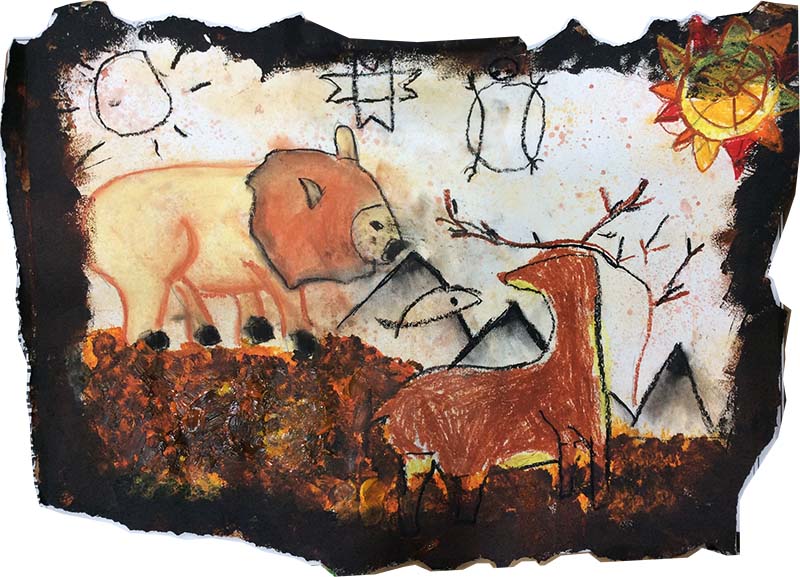
Rachel stopped, scanning the walls: “I have an idea, laddies.” She paused to create a suspenseful sensation, a whimsical smile highlighting her bright, round eyes. “Why don’t we decorate the walls of the cave with animals … or hunters just like the cavemen artists did in their caves ? I’m first in my class in art and so is Kenneth. Victor, too, paints marvellously well.” The two boys eyed her curiously.
“But why would we want to do that?” Kenneth enquired superciliously, although intrigued by Rachel’s idea, for indeed Kenneth had proven himself the best artist at their school.
Rachel trained her torch on the walls then argued: “First, to practice our painting, right ? Then … then … to play a joke on everyone in town about their origins.” Rachel’s eyes glowed with mischievousness.
“What do you mean play a joke on everyone in town?” It was now Victor who sized up his sister suspiciously.
“We could tell everyone that we ‘fund‘ cave paintings and have our pictures in the dailies.” Rachel was absolutely radiate with rapture.
Kenneth laughed. Victor appeared to warm to the idea, albeit prudently. He paced the cavern floor, scanning the smooth, dry walls. He spun on his heels and faced an adamant Kenneth, who scrutinized both with a cool aloofness: “Aye! What a bloody good idea! It’ll be our project, a real artistic project; and who gives a damn if people are fooled or not. Don’t you see Kenneth, it’ll be a brilliant chance to paint what we want to paint.”
Kenneth passed his hand carefully along the cave walls, his finger-tips tracing imaginary designs. He chuckled: “Brilliant idea, Rachel,” he admitted. “Aye, a stroke of inspiration! We can ground and sift our own pigments with the forest and riverside plants and minerals just like the cavemen did. The rock isn’t granite, look, it just chips away when you scratch it. First we’ll engrave the pictures then paint them. It’ll fill the cave with a magical lustre, a true primitive or prehistoric aura.”
“We could steam vegetables and use the juice to paint,” added Victor, growing more inflamed.
“We could even mix the paintings with hot wax for a more aged effect,” Rachel suggested.
“Nae! That’s how the Greeks painted. That technique is called encaustic. We want a caveman’s artistic technique and touch,” Kenneth checked her.
“But won’t we be going against the law?” Victor asked in a subdued tone.
“Don’t be a dafty, of course not!” Rachel reprimanded him. “It’s our cave. We fund it, didn’t we ? We’re only decorating it.”
“Aye. But to play a trick on adults,” he continued lamely.
“A little trick won’t have us tossed into gaol, laddie,” reminded Kenneth. “It’s a swell idea, and we can really explore our painting techniques and colour schemes.”
And so in the depths of that cave, unknown to the rest of the world, the youngsters’ project, or should I say, scheme, had been sealed.
Hence, the cave became their point of reference, their realm of eternal childhood, more intimate than either school or home, their retreat of borderless imagination. Day after day on those barren walls within the dry darkness of their grotto-world, their imagination, so fertile because bubbling over with youthful turbulence, brought to life animal figures, first hewn with small chisels then painted with fingers (especially thumbs), or with sticks, brushed over with clumps of grass. No paint-brush was ever used. Their painting techniques remained those of prehistoric cave-artists.
Kenneth, well versed in rock painting from his school art classes and own research, chose the designs and advised Victor and Rachel how to apply the pigments. Each chose a section of the cavern to exercise his or her talents: Victor began to draw several cattle heads in the kirk with umbers that he ground and sifted from clay, boiled acorns, with their cups, and boiled mushrooms. It conferred to his cattle grey, tawny tones; tones that seemed to afford a glow of warmth to the cold walls.
Kenneth took charge of the western nave of the kirk, animating its walls with a big black cow, two galloping horses and two bison, all in charcoal black with a fringe of madder pigment. The plant had been gathered at the Annan riverside, then ground and sifted into a deep, crimson red.
As to Rachel, she applied her talent on the eastern nave wall with a two-metre long frieze of deer heads. Rachel also took charge of making a small fire to boil the plants and vegetables, whose steamed-juice transformed the plants or vegetables into liquid pigments. She poured the liquid into small glass containers and let them sit for one night before application.
“We’re like the cavemen who discovered fire,” Rachel said cheerfully as she steamed the plants and vegetables she had gleaned either from the forest or ‘borrowed’ from her mother’s kitchen.
“Not so, lassie. It was light that discovered fire, the cavemen merely rendered it physical,” corrected Kenneth smugly. Rachel shrugged her shoulders …
With his customary pedantry, Kenneth advised: “Don’t forget mates, painting doesn’t reproduce what is visible, but restores or renders what no one has ever seen.”
Rachel and Victor ignored him, chuckling to themselves.
They worked diligently in rhythm with the stillness of the cave, their imaginations soaring to the height and breadth of their lithic horizon. For they were careful not to surpass those limits, not to crowd the walls with too many figures. The roaming animals needed space to breathe and the young artists provided them with that vital space: horses trot … cows graze … deer gambol. Kenneth, after having examined a hunter armed with a bow in a book of cave paintings, added this figure to his zoological repertoire. The hunter had let fly an arrow and followed its flight towards something unknown. Kenneth had his arrow fly towards one of his elks. The posture of the hunter having released his arrow from a taunt bow was crudely traced then coloured in rusty ochre. It would be the only human representation of the grotto paintings.
All the paintings had been previously drawn on a flat surface of paper by Victor. Rachel arranged the positions of their depictions and the boys made mental notes of them before undertaking the actual wall representation. Kenneth had reminded Rachel and Victor that the intention of the artist was not to copy what they see but to express it, and that their undertaking should not seek a tawdry or fantastic effect, but a simple one, for simplicity is essential to true art. If they really hoped to convince the townsfolk of the millennial authenticity of their pictures, then this artistic canon had to be respected scrupulously.
Gradually the cave walls burst out into a magical menagerie: Victor’s two-horned aurochs, painted in umber came to life and Rachel’s deer-head frieze boldly gambolled out of the rock in striking shades of madder red. Rachel, applying a prehistoric technique, blew the madder pigment on to the wall through a straw, then smeared it roughly with her thumb or a feather.
The volume of their art thickened with vegetal and mineral glints as the volume of the walls, too, thickened with a phantasmagoria creatures depicted in a style they thought of as from stone ages.
Sometimes, the youngsters would dance and sing round the fire, recite poetry, or even compose a few verses of their own in joyful wantonness. “Our cave is the setting of an unfolding story, laddies,” Rachel giggled.
This pictural setting was indeed the fruit of their childhood imagination … and talent.
The day finally arrived when the cave-artists put the final touches to their masterpiece, an œuvre of considerable talent, even genius, given the lack of adult counsel and absence of light in the cave. For they had laboured as the prehistoric artist had laboured: by torch light (theirs, of course, electric!), and from the flames of their little fire’s chiaroscuro dancing upon the walls.
This being said, to divulge the discovery of the cave and its pictural contents would be a bit dodgy. They chose to wait several weeks to reflect on how they would announce their discovery. Kenneth, meanwhile, every now and then tossed dust on the pictures to harden and ‘age’ them. They lost their glint but the umbers seemed to strike the eye more prominently. They left nothing in the cave that would jeopardise their scheme. The ashes of their fire were swept into the well or used to tinge some of the figures in a rough, taupe grey.
Finally, on a clammy late Saturday morning, Rachel and Victor stormed into their parents’ home out of breath :
“Maw! Da! Come quick,” exclaimed Rachel red in the face. “We fund a cave.”
“Aye, a real deep cave full of animal pictures,” seconded Victor, sweating from the brow, either from exhaustion or fear. “You have to come to see for yourselves,” he insisted. “The cave’s not far off, near the riverside.”
Their mother and father, not very eager to tear themselves away from their armchair reading, nevertheless let their panting children drag them to the mouth of the cave. Once there, they all entered, the parents a bit warily. Victor, at the head of the expedition, led them down into the cave, scanning the walls with his torchlight which exposed several paintings. His father, unversed in cave-paintings, had, however, studied art at university in Edinburgh. The paintings intrigued him. His wife stood dumbfounded before such a vast array of art work.
“What striking pictures!” she exclaimed, staring wide-eyed in admiration as her husband illumined one section of the wall after another. Bedazzled by such parental compliments, Rachel felt an ardent urge to thank them. She checked herself. Victor remained quiet.
“Aye!” uttered their father reflectively. “This is certainly not a chambered cairn tomb. I’ll contact specialists immediately. Meanwhile, you two (indicating his children) get the school authorities to photograph the cave and the paintings. Even if they’re not authentic, they do make for a good story in the local papers until the police find the culprits who contrived this whole thing.”
“What do you mean not authentic?” asked Victor timorously.
“Well, you know, there have been art counterfeiters over the ages, but it takes time before the experts uncover their ingenious device.”
“What happens to them?” Rachel dared ask, eyeing Victor sullenly.
“They’re tossed into gaol where they rightly belong!” concluded their father, puckering his lips. Rachel winced at the word gaol …
When their parents had returned home, Rachel and Victor made a bee-line for Kenneth’s house, where they informed him of their parents’ reaction, especially the tossing into gaol.
Kenneth chuckled out of the corner of his mouth: “Keech[6] ! Minors aren’t thrown into gaol, goonies[7]. Nae, you know what they say: ‘Fools look to tomorrow. Wise men use tonight.’” Neither Rachel nor her brother really understood that point, but it did have a pleasant ring to their ears.
The following weeks were hectic ones for the youngsters both at home and at school. Pupils bombarded them with questions whilst at home the telephone never stopped ringing. All the thorny bramble, thistle and snapdragons had been cut away from the mouth of the cave allowing photographers to take pictures and journalists to examine the figures for themselves. Soon travellers from afar reached the cave to feast their eyes on these wonderful works of prehistoric art. During that feverish time no one dreamed that they had been drawn by our three adventurers …
Secretly the adventurers were delighted. And for good reason: they had their pictures taken in front of the cave by professional photographers, and had been interviewed not only by local reporters, but reporters sent from Edinburgh, Glasglow and even London. Experts had been contacted, seven to be exact, two of whom from London.
Kenneth brooded over the outcome. He sensed that the arrival of the experts bode ill-tidings. He knew they wouldn’t go to gaol, but, would they query of the age of the pigments however primitive their mixtures, their application and original whereabouts? Would they suspect foul play simply because, besides carved stone balls, prehistoric art work had never been discovered in Scotland? These men had very technical means to detect the precise date of pigments and their wall application …
All seven arrived together. Together they entered the cave brandishing large, powerful torches and miners’ helmets. Huge crowds had gathered for the occasion: photographers, journalists and even local writers swarmed throughout the surrounding hilly forests. Kenneth sat on a rock, his chin cupped in his hands. He felt miserable. Victor, wringing his hands frantically, paced back and forth near the riverside until his footfalls had traced a path. Rachel bit the ends of her hair nervously, casting furtive glances towards the thickening crowd. Dozens of people had been congratulating them on their find all morning.
“Would they congratulate us as much if they learned we were the artists?” snickered Victor sarcastically.
“Aye, I wonder,” Rachel responded drily.
“Bloody hell, why make things worse!” Kenneth snorted stiffly, staring at the backs of the crowd in front of the cave. “The whole thing was zany[8] to begin with. Those professors will be on to us, I’m sure.” All the three bowed their heads resigned to their fate in silent expectation.
The seven filed out of the cave with wry smiles difficult to decipher. A strange composition indeed: severe or cryptic … sharp or ironic … gruff or awe-inspired! No one appeared to be able to interpret those ambivalent smiles, especially our three young artists, who had by then stomped up the humpy hillside towards the murmuring crowd. Everyone present eyed the children in nervous anticipation as if they held the key to unlock those facial mysteries. Alas none had …
The experts pushed through the crowd and reached the standing children. One of them with a pointy beard and a sweet smile asked them very politely to lead them to the home of their parents where they would like to speak to them in private. Kenneth’s father ran up and immediately agreed to offer his home for their conference. Besides, it was the closest. He led the way through the fabled forest and over the heather fields. Arriving at the door, the pointy bearded expert informed Kenneth’s father that their conference was be held without parental intrusion. Had the father any choice ? Apparently not, for the front door of his humble home was shut quietly in his astonished face …
Now whatever took place behind the shut door of that humble home the ever-present narrator is, alas, at a loss to relate. For hours and hours and hours seemed to pass, and having reached the number of words permitted in this tale, it behoves him to abandon his readers to imagine the outcome … or the verdict themselves …
Paul Mirabile is a retired professor of philology now living in France. He has published mostly academic works centred on philology, history, pedagogy and religion. He has also published stories of his travels throughout Asia, where he spent thirty years.
.
PLEASE NOTE: ARTICLES CAN ONLY BE REPRODUCED IN OTHER SITES WITH DUE ACKNOWLEDGEMENT TO BORDERLESS JOURNAL
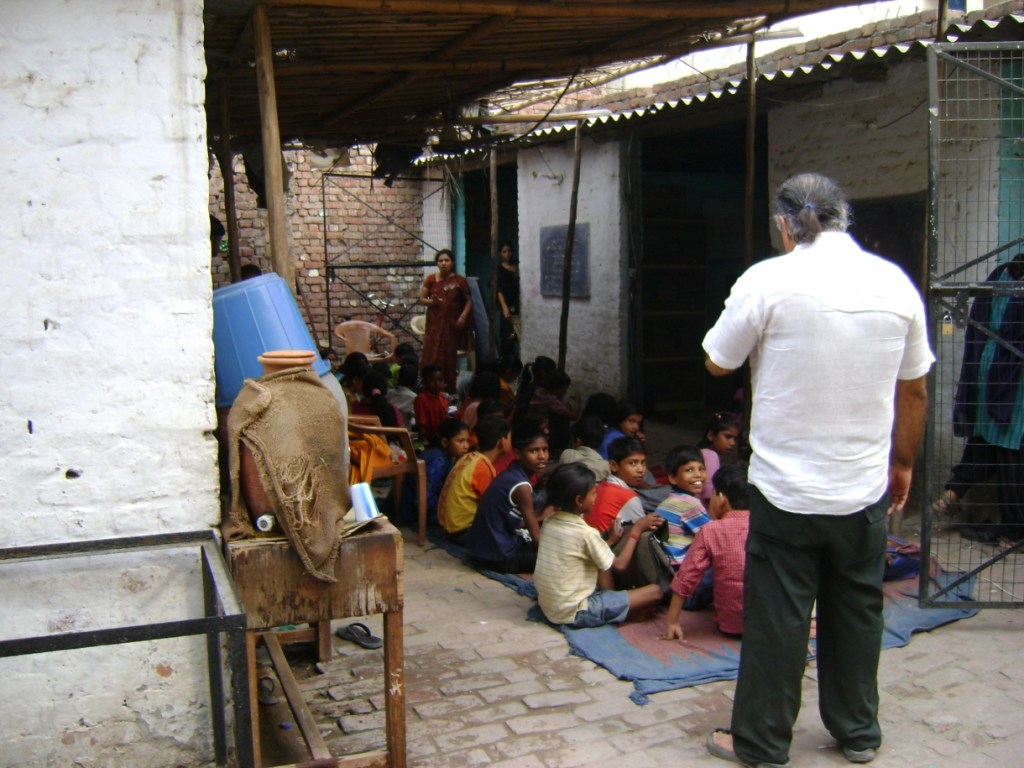
Here is a Hindustani poem by Tanvir from the Nithari village, where pandies’ conducted workshops to help traumatised and deprived youngsters. It has been translated to English by Lourdes M Supriya.
The late Sanjay Kumar (1961-2025), founder of pandies’, creating a story collective at a workshop being conducted for the children at Nithari. Photo provided by the late Sanjay Kumar
Tanvir was first introduced to pandies’ theatre in 2012 as a student at their theatre workshop in Saksham School, Nithari village. After finishing his studies, Tanvir continued to volunteer at the Saksham School till 2019 as a teacher.
How we wish you were here...
This party would have brought more cheer.
A sight so dear --
Could you imagine, friends,
His sense of peace and no fear?
How we wish you were here...
This party, this eve, would have more cheer...

The breeze would seem perfumed with myrrh.
Our best moments were with you right here.
No broken heart, no wounds are as severe --
How we wish you were here...
This party, this eve, would have more cheer...

Even the moon and the stars would appear
Among the thousand dreams gathered here
To hear a single speech by you.
Oh! A scene so sincere--
One more happy day with you here...
How we wish you were here...
This party, this eve, would have more cheer...

It’s only been a few days...
How much can we weep?
The pain is immense Sanjay Sir--
Come back, we cannot walk alone on a road this steep.
Missing your laughter, your voice, and all your ways,
How do we carry on without you? How can we be joyous?
How we wish you were here...
This party, this eve, would have more cheer...
Lourdes M Surpiya is a filmmaker, editor, and theatre practitioner who has been associated with pandies’ theatre since 2015.
.
PLEASE NOTE: ARTICLES CAN ONLY BE REPRODUCED IN OTHER SITES WITH DUE ACKNOWLEDGEMENT TO BORDERLESS JOURNAL
Professor Fakrul Alam writes of libraries affected by corporate needs… With this essay, we hope to launch a discussion on libraries as we knew themand the current trends…
From Public Domain
Dhaka, 2003
Where have all those libraries gone?
Back in the ‘70s, in-between classes, adda[1], and sports, I used to spend most of my time in the USIS[2], British Council, or Dhaka University libraries. I would go to USIS for its collection of magazines and fiction, and to the Dhaka University Library for almost everything else. Despite the dust, the load shedding, the noise, the frequent closures of the university and the missing pages within the books, it was a splendid place for both adda and study. Some of my friends and acquaintances lamented that somehow, I had lost interest in “fielding” and had turned into a bookworm, but every book that I read made me thirst for more treasures of English literature. And then there was the British Council Library.
Perhaps memory always rose-tints the past, but it seems to me now that it was the friendliest part of the city then. The lush green lawn and the open spaces that surrounded the library, the access to stacks and stacks of books, the periodicals that you could leaf through, anything from the latest cricket news to reviews of books, the abundantly stocked reference section that was a source of special delight for me, the rows after rows of books that you could explore—here was God’s plenty! The Dhaka University Library had no doubt a much richer collection, but inside the British Council Library you could occasionally experience the bibliophile’s ultimate thrill: leafing through yellowing pages of a fairly old book, only to set it aside for another one; or merely reading surreptitiously through a page or two, secure in the knowledge that not all books are to be swallowed, chewed, and digested, that at least a few are to be tasted, and that was what the British Council Library was for! I would take a book or a periodical on a lazy day, sit down in one of the chairs, and then dream away, secure in the feeling that “there is no Frigate like a Book/ To take us lands away/ Nor any Coursers like a Page/ Of prancing Poetry.”
Everything about the British Council of this period seemed to be inviting. You got to know the staff after a few visits and they were all very friendly. I was still a student when I was on a “first-name basis” with the expatriate assistant representatives and librarians. In the middle of the decade, though only a lecturer at Dhaka University, I could claim the Librarian, Graham Rowbotham, to be a dear friend. In retrospect and especially compared to the library decor and staff now, everybody and everything associated with the library seemed to be amateurish in a way that was endearing and conducive to aimless browsing and long hours of lounging. Book of verse or criticism in hand, I loved spending my mornings here, although “thou” would be a few desks away, and to be glanced furtively in an essentially one-way traffic!
New books kept coming fairly regularly and were ordered by people of catholic tastes and wide-ranging interests. But most importantly, membership was cheap. I can’t remember what the membership fees were, but it must have been ridiculously low since even in those cash-strapped days I never seemed to have been bothered about renewing my membership from year to year. And yet you didn’t have to be a member to go in and browse, although I always preferred to be one so that I could always have books to take away and read at home.
Returning to Bangladesh after six years in Canada, I found the British Council of the ’80s not that different from the inviting, relaxed place I knew in the ’70s, although by now incoming books had slowed down to a trickle. Towards the end of the decade, I think, the library added a video section, but, on the whole, the Council seemed to be cutting back on everything. I had also heard that the library was going to be restructured; apparently, the “Iron Lady” was bent on making the British Council less of a burden on the British economy and more of a self-sustaining, income-generating unit.
But the full effect of the restructuring of the British Council into a self-sustaining, charitable organisation was obvious only by the middle of the ’90s. The Thatcherite assault on the arts, a heightened British concern with security after the Gulf War, and unrest in Dhaka University all must have played their parts, for in 1995 the British Council decided that they would leave the campus for the security of the Sheraton Annex.
The first casualty of what was surely an ill-conceived decision, like USIS’s move to Banani was the British Council’s wonderful collection of books. Row after row of books were given away for free. Indiscriminately. Thoughtlessly. Even some reference books and bound periodicals were distributed gratis since it was felt the Sheraton British Council would have very little space.
Thankfully, the British Council abandoned its move to the Sheraton, but the Fuller Road library never recovered from the book-giving spree. Instead, the library was redesigned to give it a contemporary feel on the outside as well as the inside, security was beefed up, and everything about the library redone to give it a “new”, packaged look.
A cyber centre was installed to make you feel that the ambience was au courant, and impressive graphics-brightened the walls. But what is a library without stacks and stacks of books? The British Council was always the repository of the best in British culture, but this one seemed to be as anaemic as the foreign policy of present-day Britain and nowhere representative of the nation’s past cultural glory. Indeed, where were the Booker Prize winners, the Nobel laureates, the Poetry Book Society choices, London Magazine, Granta, The New Left Review, The London Review of Books? Where were the bibliographies, the reference books that you could use to track an idea or pursue a stray thought to an ever-widening world, so that even within the confines of a library you “felt like some watcher of the skies/ when a new planet swims into his ken?”
The British Council has leased the best piece of property in town from the University of Dhaka. And what does it offer the university’s students? Forced to generate revenues for its upkeep, it had become, as my dear friend put it so memorably, the New East India Company, making money any which way it is able to. Thus, the Council was now more bent on offering exorbitantly-priced language courses and all sorts of examination services, trading on its Englishness and cashing in on the dismal state of our educational system set back by excesses of linguistic nationalism, than on stocking books that represented the best in British culture and that could be made available to the largest group of people. Library fees are ridiculously high—which middle class family can afford to make its children members at Tk 1,300 a year? And entry to the library itself is restricted—you have to be a member to browse! In fact, everything about the present British Council Library reinforces the feeling that it serves almost exclusively two groups of people: the upper class of Dhaka and people desperate about going to Britain for higher studies!
Significantly, the British Council Library now has remade itself as the Library and Information Services. What services? I stopped becoming a member in 1998 when I realised that the membership fees, which I could barely afford even then (the current fees are Tk 650 a year!), were entitling me to diminishing returns every year since the books and most of the periodicals I wanted to read were not there. The year I quit my membership after I had requested the library to procure a book on Burke and India for a research project but, despite repeated reminders to the librarian, that book never came (and I thought that they would listen to a professor of English literature at Dhaka University). The reference section was no longer stocking current bibliographies and sources of information about the world of books.
When I decided to write this piece, I thought in all fairness I should spend some time checking out the Library’s current state before I started critiquing its current library policy. To my dismay, I found that things had gone from bad to worse in the last few years. What services? There is now left only one shelf of literature books and another one devoted to reference items. The library looks pretty, and everything is neatly arranged but why does it remind me of the artificial, vacuous smile of the catwalk beauty? No doubt in line with modern concepts of interior design the library has more space than ever before, but all I see in it is emptiness! Yes, it is smartly done and for the smart people, but where is the world of knowledge in all this?
As my colleague pointed out to me in a note, “What services? How can the young come and request books they don’t know about? Knowledge comes from browsing the shelves, from looking at books and authors you have never seen before, and then you pick it up and read a new author, and perhaps you find a lifelong favourite and your mental landscape changes and that’s what a library’s function is, to widen, to broaden, to expose minds to superior stuff, not provide some crap ‘services’, some videos, some paper hangings, and then have the gall to call it ‘progress’ or ‘keeping up with the times’ or whatever!”
I should add that I have no real problem with the British Council cashing in on the O and A level market and IELTS[3] examinations, but I can’t figure out why it can’t plow back more of its surely substantial profits into establishing a proper library instead of the Fuller Road scam that now calls itself one. Let it charge the people who can afford its outrageously-priced language courses all it wants to, but why can’t it lower library fees so that anybody who wants to can use the library facilities, can browse and read in the library without having to pay anything? I am aware that the British Council is a registered charity and believe that it is supposed to spend its gains here, but can’t it become a leaner operation so that it can beef up its library services? Shouldn’t charity begin at home?
Our libraries have become shadows and shells of their former selves, and it is time we started to ask ourselves a very simple question: what exactly is a good library? And don’t we owe our children and ourselves at least one library?
(Adapted from the essay, ‘The British Council Library: The New East India Company?’ Published on November 8, 2003 in Daily Star)
Tomorrow we will see
When my solitude barks
And dances, the gift I’ll give,
To my awaited self.

It’ll be a small bouquet
Of tears stitched with a string,
Wrapped in the world’s eye.

Without your insisting, we will
See the house in which,
Next to memory’s sparrows,
Someday I will die.

Today, inside me the pigeons
Are dying, and I wonder
Who will gather their bones,
For the ultimate doomsday?

Between today’s dying
And tomorrow’s death we will
Watch the grand comedy,
On life’s psychiatric screen.

We will hear the laughter
To claim the evanescent tragedy,
And bury our unblinking,
Eyes in our hands.
Dr. Owais Farooq is an aspiring writer from Kashmir currently based in Delhi. He has done his PhD on the poems of Agha Shahid Ali from the University of Delhi.
PLEASE NOTE: ARTICLES CAN ONLY BE REPRODUCED IN OTHER SITES WITH DUE ACKNOWLEDGEMENT TO BORDERLESS JOURNAL
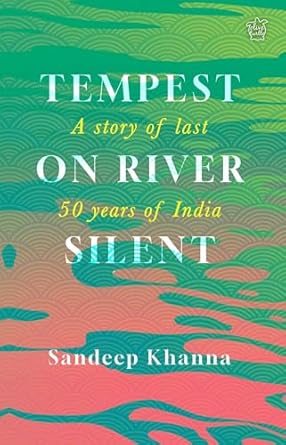
Title: Tempest on River Silent: A Story of Last 50 Years of India
Author: Sandeep Khanna
Publisher: Niyogi Books
From sipping Campa-Cola to buying only half a loaf of bread from TV serials like Hum Log[1]to the phenomenon of Tendulkar[2], Tempest on River Silent – A story of Last 50 Years of India, takes you on a nostalgic and exhilarating journey through India’s transformative decades.
Sandeep Khanna, a graduate of the Faculty of Management Studies and Shri Ram College of Commerce at the University of Delhi, conceived the idea for this novel during his extensive travels. His trips allowed him to explore the captivating socio-cultural diversity of India and the world while also recognising the commonalities that unite humanity.
Devavratt and his companions embark on a remarkable journey through the swiftly evolving landscape of their native land, a journey that encapsulates the essence of a nation in transition. Their story begins in the vibrant hallways of schools and colleges during the 1970s and 1980s, a time marked by youthful idealism and a burgeoning sense of identity. In these formative years, the group, full of dreams and ambitions, navigate the complexities of education, friendships, and the socio-political climate of India. The classrooms buzz with discussions about the future as they grapple with the ideals of nationalism and cultural pride, often inspired by the rich tapestry of their heritage.
As they move into the 21st century, the energetic corporate workplaces becomes the backdrop for their evolving aspirations. The transition from the academic environment to the corporate world is both exhilarating and daunting. Devavratt and his friends find themselves at the intersection of tradition and modernity, where the values instilled in them during their school days clash with the fast-paced demands of contemporary life. The corporate landscape is rife with opportunities, yet it also presents challenges that test their resolve and redefine their understanding of success.
Throughout their journey, the characters engage in sincere discussions and lively debates that reflect the socio-economic transformations sweeping across India. They explore the impact of globalization, the rise of technology, and the shifting dynamics of class and privilege. These conversations are not merely academic; they are deeply personal, as each character grapples with their place in this changing world. The weight of their aspirations is often lightened by light-hearted antics and fond reunions, moments that remind them of the bonds forged in their youth and the importance of friendship amidst the chaos of adult life.
As they navigate the complexities of love and relationships, the characters also delve into themes of spirituality and self-discovery. The pressures of the corporate world often lead them to seek solace in their cultural roots, prompting reflections on what it means to be truly fulfilled. Through their experiences, they learn that success is not solely defined by professional achievements but also by the depth of their connections with one another and their commitment to their values.
In this rich narrative tapestry, Devavratt and his companions embody the spirit of a generation that is both proud of its heritage and eager to embrace the future. Their journey is a microcosm of India’s evolution, a story of resilience, hope, and the enduring power of friendship in the face of change.
Khanna writes in the preface: “Tempest on the River Silent is a story of India as I have seen since the 1970s till present day. Overlaid on this factual story of India is a fictional account of a few imaginary characters, some of whom are portrayed as my friends. The third thread of the book is the spiritual lessons that I draw from the socio-economic changes in India and the tumultuous journey of my ‘friends’. Perhaps the word ‘spiritual’ is too big for me to use; it would be more appropriate to describe them as lessons of life that I have tried to unravel alongside the growth of a nation and the life stories of my ‘friends. The three threads hang off each other, and I narrate the book in the first person. Thus, the book is both a story of India and a story from India’s last 50 years.”
[2] Sachin Tendulker, Indian Cricketeer and Parliamentarian
Bhaskar Parichha is a journalist and author of Cyclones in Odisha: Landfall, Wreckage and Resilience, Unbiased, No Strings Attached: Writings on Odisha and Biju Patnaik – A Political Biography. He lives in Bhubaneswar and writes bilingually. Besides writing for newspapers, he also reviews books on various media platforms.
.
PLEASE NOTE: ARTICLES CAN ONLY BE REPRODUCED IN OTHER SITES WITH DUE ACKNOWLEDGEMENT TO BORDERLESS JOURNAL
One pulls at the arm of the slots and waits for luck.
It is much the same after a fine gully washer,
following Mother Superior's pigtails home;
young love starting out: unrequited and misunderstood.
That early schoolyard of cursed land and red rovers,
expeditious tetherball hands in opposition:
Come reed or root, the storm-belly sings!
What an appeasing lightness I find,
by just a simple swift yank of the lamp chain.
Ryan Quinn Flanagan is a Canadian-born author residing in Elliot Lake, Ontario, Canada with his wife and many bears that rifle through his garbage. His work can be found both in print and online in such places as: Evergreen Review, The New York Quarterly, Borderless Journal, GloMag, Red Fez, and Lothlorien Poetry Journal.
.
PLEASE NOTE: ARTICLES CAN ONLY BE REPRODUCED IN OTHER SITES WITH DUE ACKNOWLEDGEMENT TO BORDERLESS JOURNAL






 Borderless