Categories
Poetry

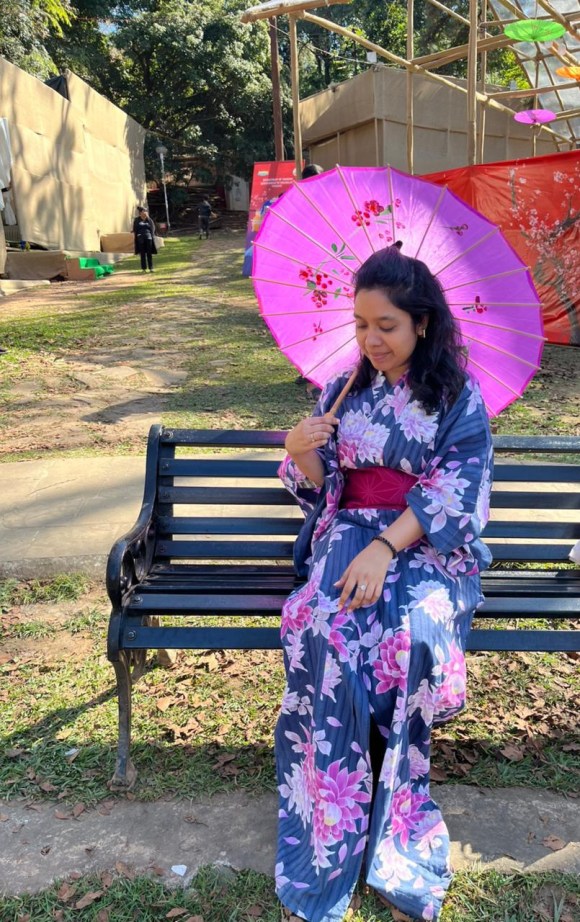
The Mirror

ByMaria Alam

"You're so beautiful?"
No, I’m not. At least, not the way I see myself.
Scrolling through my own pictures on social media I don't find myself lacking grace, always.

On screen, I can almost believe I’m fine.
In reality, I can’t.

They say beauty comes from within.
And I am kind,
So why doesn’t that kindness ever shine through me?

They say beauty is all about your heart.
Then is it a scam?
A colorful fabrication of a socially validated lie by which all our lives have been painted?

They say, feel confident,
embrace your flaws,
own your scars,
then you’ll be beautiful.
But is that really true?

Is it really possible for anyone to feel beautiful
when all they see are scars, acne, self-doubt,
insecurities and fear stitched into their face, their eyes, their thoughts,
woven into the core of their very being?

So, whose fault is it?
Theirs?
Or is it the society that carved rigid standards into us,
teaching us to feel never beautiful enough?

If I don’t feel beautiful, is it really me who’s broken,
or the mirror I’ve been given?

Maria Alam is an undergrad student, currently pursuing her Bachelor’s in English and Cultural Studies at University of Liberal Arts Bangladesh [ULAB].

.

PLEASE NOTE: ARTICLES CAN ONLY BE REPRODUCED IN OTHER SITES WITH DUE ACKNOWLEDGEMENT TO BORDERLESS JOURNAL

Click here to access the Borderless anthology, Monalisa No Longer Smiles

Click here to access Monalisa No Longer Smiles on Kindle Amazon International
Categories
Review

Heart Lamp by Banu Mushtaq

Book Review by Somdatta Mandal

Title: Heart Lamp: Selected Stories

Author: Banu Mushtaq

Translated from Kannada by Deepa Bhasthi

Publisher: Penguin Random House India

After Geetanjali Shree’s Tomb of Sand, the first novel to receive the International Man Booker Prize in 2022 for a work of fiction written in an Indian language and translated into English, history repeated itself once again when this year in 2025, Banu Mushtaq’s book of selected short stories Heart Lamp, written originally in Kannada and translated into English by Deepa Bhasthi, was recipient of the same coveted prize. It proved that translating from Indian bhasha languages to compete worldwide with other canonical literatures has gained maturity to impress the jury who finally evaluate the prize.

In the twelve stories of Heart Lamp, published originally in Kannada between 1990 and 2023, Banu Mushtaq exquisitely captures the everyday lives of women and girls in Muslim communities in southern India. As a journalist and lawyer, most of the stories are women-centric and in all of them she tirelessly champions women’s rights and protests all forms of caste and religious oppression. As a believer in the highly influential literary movement in Kannada during the 1970s and ‘80s – the Bandaya Sahitya tradition – that started as an act of protest against the hegemony of upper caste and mostly male-led writing that was then being published and celebrated, Banu Mushtaq’s literary career therefore gave importance to dissent, rebellion, protest, resistance to authority, revolution and its adjacent areas at par with the movement that urged women, Dalits and other social and religious minorities to tell stories from their own lived experiences.

The author goes on to highlight several harmful social practices that are still prevalent in the Muslim community and even supported by law, which impede girls including women of all ages, from having freedom to make positive choices, thus hampering them from realizing their full potential. In story after story, the deeply patriarchal structure of Muslim society is depicted in such a manner that it is not only applicable to the Muslims living in villages and town in south India but can be applicable elsewhere too. She shows how child marriage is still in practice and mentions the suffering and trauma women experience because of legally sanctioned polygamy which causes social and financial insecurity and hardship for women and their offspring. The curse of teen talaq[1]and the practice of issuing multiple fatwas[2] which are deliberately aimed at constricting women are urgently in need of being addressed legally.

In the very first story, ‘Stone Slabs for Shaista Mahal’, we find Iftikar’s too much effusive declarations of love for his wife Shaista vanish into thin air immediately after her death and he soon marries a young girl leaving all his children to be looked after by his eldest daughter. The ‘Fire Rain’ has mutawalli[3] Usman Saheb heading the community and making hundreds of decisions for others, but when her sister comes begging he refuses to give her the legitimate share of his ancestral house. Whereas the ‘Black Cobras’ has the mutawalli saheb refuse to help a woman whose husband has deserted her for giving birth to three daughters and provide any support for her youngest sick daughter who dies without any treatment. The story ends with a focus on female revolt when his own wife decides to go and have an operation to stop childbirth. In an interesting story ‘A Decision of the Heart’ the author narrates the plight of a man called Yusuf who is unable to balance the love between his wife and his mother and finally decides to arrange a nikah for his mother Mehaboob Bi.

One story that delves deep into Muslim customs that we generally are not aware of, is entitled ‘Red Lungi’. It tells us about a mass circumcision programme at the mosque for the poor where a young boy Arif undergoes the procedure and is cured in due course. His plight is then contrasted with Samad, the son of a rich man who remains weak and unfit despite the elaborate festivities for his circumcision and the gifts.

The titular story ‘Heart Lamp’ centres around Mehrun who is left to fend for herself as her husband falls for another woman. When she goes to her parents’ house for support, her brothers send her back. Leaving the responsibility of her children upon her eldest daughter Salma, she attempts to burn herself to death. The scene where her daughter begs her to stop and so finally, she aborts her suicide attempt, is extremely moving. The depiction of rural Karnataka comes out very clearly in ‘Soft Whispers’. The story narrates in detail the childhood antics of an eight-year-old girl visting her grandparent’s house in Mabenahalli village. Her young playmate, Abid, who would join her to play tricks, turns into the supervisor of a dargah[4]. When he comes to invite her to join the festival, he keeps his head lowered and does not even meet her eye.

Despite mentioning serious social issues pertaining to the average middle and lower-middle class Muslim families, Mushtaq’s stories are laced with a sense of wry humour and pathos. For instance, in ‘High-Heeled Shoes’, Niaz Khan envies his sister-in-law who comes from Saudi Arabia wearing gorgeous high-heeleded shoes and, in the end, manages to buy a pair for his pregnant wife Arifa which does not fit her at all. The difficulty in walking with those shoes on, and the interaction she has with her unborn child in her womb takes this story to a different level altogether. ‘A Taste of Heaven’ has Bi Dadi, who turns into stone after her ja-namaz [5]is soiled, gaining solace by drinking Pepsi and thinking it to be aab-e-kausar, the nectar from heaven, and starts living in a delusory world of her own in the company of her long-lost husband. In ‘The Arabic Teacher and Gobi Manchuri’, the young Maulvi Hazrat’s penchant for eating “gobi manchuri[6]” is the comic fulcrum on which the story turns. Again, Shazia’s desperate attempts in ‘The Shroud’ to locally procure a kafan[7] and sprinkle it with the holy zamzam water from Mecca after having callously forgotten to bring one for poor Yaseen Bua from her Hajj pilgrimage, makes her grief and being conscience-stricken rather ludicrous.  

In the 2025 International Booker Acceptance Speech Mushtaq said: “This book is my love letter to the idea that no story is ‘local’ – that a tale born under a banyan tree in my village can cast shadows as this stage tonight…. [It] was born from the belief that no story is ever ‘small’ – that in the tapestry of human experience, every thread holds the weight of the whole.”

Her observation power is indeed very strong. Muslim women have been victims of deprivation and discrimination in various matters owing to a dearth in education and awareness. To bring a change in the family, a change in mentality is very crucial. The last story of this collection, ‘Be A Woman Once, Oh Lord!’ is a typical tale of male chauvinism, where deprived a dowry, a man throws out his sick wife and children to get married again.

A woman must construct her own identity besides being someone’s daughter, somebody’s wife or someone’s mother. Only education and self-dependence can establish a woman as a human being beyond her religious and family identities. But as her translator rightly points out, it would be a disservice to reduce Mushtaq’s work to her religious identity, for stories transcend the confines of a faith and its cultural traditions. So, she should not be seen as writing only about a certain kind of woman belonging to a certain community, that women everywhere face similar, if not the exact same problems, and those are the issues that she writes about.

Before concluding, a few words need to be written about the translator and the translation too. In the Translator’s Note, titled ‘Against Italics’, Deepa Bhashti reiterates that the “translation of a text is never merely an act of replacing words in one language with equivalent words in another: every language, with its idioms and speech conventions, brings with it a lot of cultural knowledge that often needs translating too.” She mentions that she was very deliberate in her choice to not use italics for the Kannada, Urdu and Arabic words that remain untranslated in English. She believes that italics serve to not only distract visually, but more importantly, they announce words as imported from another language, exoticizing them and keeping them alien to English. She also mentions that there are no footnotes used at all.  

In her separate International Booker Prize Acceptance Speech, Bhasthi also tells us how through the work they could bring out what would otherwise be unread, uncelebrated texts to a new and very different sets of readers. She stated how the story of the world was really a history of erasures. It was “characterized by the effacement of women’s triumphs and the furtive rubbing away from collective memory of how women and those on the many margins of this world live and love.” Therefore, the stories in this collection are recommended for reading not by reducing Mushtaq’s work to her religious identity, but by transcending the confines of a faith and its cultural traditions.

[1] It’s an Islamic practice in which a Muslim man could divorce his wife by uttering the word “talaq” (divorce) three times.

[2] An Islamic law

[3] Manager of a Muslim charity organization

[4] Tomb or shrine of a Muslim saint

[5] A Muslim prayer mat

[6] Manchurian cauliflower

[7] Shroud

Somdatta Mandal, critic and translator, is a former Professor of English at Visva-Bharati, Santiniketan.

PLEASE NOTE: ARTICLES CAN ONLY BE REPRODUCED IN OTHER SITES WITH DUE ACKNOWLEDGEMENT TO BORDERLESS JOURNAL

Click here to access the Borderless anthology, Monalisa No Longer Smiles

Click here to access Monalisa No Longer Smiles on Amazon International

Categories
Poetry

Poetry by Laila Brahmbhatt

From Public Domain

IN THE MOOD FOR LOVE 

Let’s exchange
our souls
like lovers trading glances.
We trace the lost walls
of our breath
in search of one another,
cursed by having loved.
Our hearts vanish,
proof that we were in love.

Laila Brahmbhatt, a Kashmiri/Jharkhand-rooted writer and Senior Immigration Consultant in New York, has published haiku and haibun in several international journals, including Cold Moon Journal and Failed Haiku.

.

PLEASE NOTE: ARTICLES CAN ONLY BE REPRODUCED IN OTHER SITES WITH DUE ACKNOWLEDGEMENT TO BORDERLESS JOURNAL

Click here to access the Borderless anthology, Monalisa No Longer Smiles

Click here to access Monalisa No Longer Smiles on Kindle Amazon International
Categories
Poets, Poetry & Rhys Hughes

Night in Karnataka: A Play by Rhys Hughes

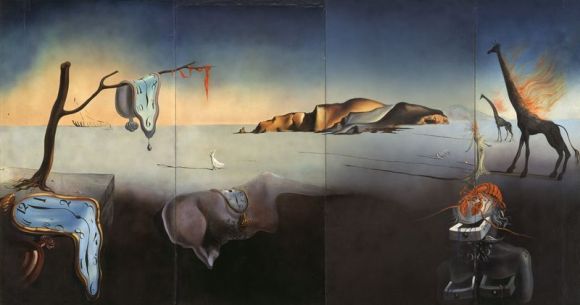
Photo provided by Rhys Hughes: From public domain
NIGHT IN KARNATAKA

Night in Karnataka. And the chapatti-flat pointy faced chap taking a nap on the lap of the cool breeze, spearlike chin piercing the caps of his hard knees, finally wakes...

My nap was nipped in the bed…
I mean bud, he said.

And he yawns in an hour long before dawn. Soon she will return and he will sing:

Yours were
the tamarind tipped mammaries
from which I sipped
with my lips
without pause.

Already he can hear her footsteps as she walks along the path next to the river. O! night in balmy Karnataka! Mango fandango and guava palaver. She croons the following:

I will strip you down and kiss you
all over. And tickle you with my
sweet tongue on the sides of your
ribs.
Then I’ll pluck one of your
ribs and make a woman. A rib-cage
ready-made maid.

HE: She can cook for us?
SHE: Yes, but you must pay her well.
HE: With what? I am penniless and feckless, a freckle-cheeked pointy faced chap, brow-beaten and lacking grace, who clearly hasn’t eaten for several days.
SHE: I have brought you a coconut. We will eat it together inside the hut. A rhyme will fill us up until then, will it not?

(She dances alluringly)

Coconut husk or husky voice.
We have no choice
but to enjoy the coconut milk
of human kindness.

HE: There is no tool to open it.
SHE: Crack it with your chin, O pointy faced chap! Thwack it once or twice or even thrice and don’t be such a fool.
HE: I know that a man in love is like a glove without a hand. I am that glove and I need a hand with the gift that you bring. To crack a nut as big as that requires more than a simple chin. It would damage my heavenly head and to be well fed I am not inclined to sin. I am feckless but clearly not reckless. That shell would be hell for my infernal chin.

And then she says:

Wary of shells
you are. I wear
tinkling bells on
my ankles. Can
you hear them from
afar? O! pointy
faced chap you
should clap your
hands and tap your
heels to keep the
fine timing of this
rhyme, to keep the
sublime rhythm
of this auspicious,
meretricious, quite
delicious song.

HE: I will clap and tap as I am bid.

(An hour or two goes by)

From his rib she makes a maid but he is afraid something will go wrong. And it does. The maid has no desire to work like a slave. She plucks one of his other ribs and makes a man before they can stop her. The maid and the new man sing an amorous duet before eloping:

Robbed of ribs he rubs
his chest. We must
confess that we
would take
any part
of his
body that was required for
us to
achieve
our desire.
A ready made
maid and her bony
beau. Off we go to set
up house together…

(No matter the weather, they flee.)

HE: They are eloping on a horse. There are no horses here. I don’t understand!
SHE: O! pointy faced chap. The coconut halves are hooves and this proves that nothing but nothing is an obstacle to true love.
He: Nothing but nothing? Now then. What is this second nothing of which you speak? Tell me quickly and kiss my cheek.
SHE: Pay attention then! Pay it with any amount of rupees you please. Pay with the coin-like reflections of stars on your knees.

O!
That is
the nothing
of the void that
we must avoid for as
long as we can. We squeak
when we contemplate
it, for it’s a void
that sits on
the chair
of our souls. Be bold! Forget
the ways of the old, we have
each other. Closer than sister
and brother, you and I. Never
before in history has a pointy
faced chap quite as daft been
so truly adored….

And they embrace each other and she sinks more deeply into his chest than usual, for he is missing two ribs. Dawn has broken but love has been mended. And there will be other nights when they will sing the simple refrain:

O! night in Karnataka!

Rhys Hughes has lived in many countries. He graduated as an engineer but currently works as a tutor of mathematics. Since his first book was published in 1995 he has had fifty other books published and his work has been translated into ten languages.

.

PLEASE NOTE: ARTICLES CAN ONLY BE REPRODUCED IN OTHER SITES WITH DUE ACKNOWLEDGEMENT TO BORDERLESS JOURNAL

Click here to access the Borderless anthology, Monalisa No Longer Smiles

Click here to access Monalisa No Longer Smiles on Kindle Amazon International

Categories
Poetry

Your Light will Break

       By John Swain

YOUR LIGHT WILL BREAK 

Then your light will break
the amber hive
upon the tree
across the path
of sky in the flowering vines,
you remain in awakening,
powdered stones shimmer
honeyed to drink
through the beaming water,
light fires around the oil jar,
I tense a canvas sheet
to refuge
the mystery of your solitude,
we unfurl the shelter door,
we watch the burnt sky turn back
into the infinite sun.
From Public Domain

John Swain lives in Le Perreux-sur-Marne, France.  His most recent chapbook, The Daymark, was published by the Origami Poems Project.

PLEASE NOTE: ARTICLES CAN ONLY BE REPRODUCED IN OTHER SITES WITH DUE ACKNOWLEDGEMENT TO BORDERLESS JOURNAL

Click here to access the Borderless anthology, Monalisa No Longer Smiles

Click here to access Monalisa No Longer Smiles on Amazon International

Categories
Notes from Japan

DIY Dining in Japan

By Suzanne Kamata

“Do you want to go out to eat?” my Japanese husband asks.

“Sure,” I say. After all, I’m feeling tired from a long day at work. It’ll be nice to relax while someone other than me deals with meal preparation.

We get into the car. “So what kind of restaurant shall we go to?”

I put in a vote for a nearby Indian restaurant. Or the pork cutlet place. Or the Taiwanese restaurant, or even Sushiro, where small plates are delivered by conveyor belt. But my husband wants to go to Yaki-Niku King, an all-you-can-eat grilled meat restaurant, where you have to eat a lot to get your money’s worth, and you have to cook the food yourself.

When we arrive at the restaurant, we are ushered to a grill and the server cranks up the heat. My husband grabs the tablet and orders the first round of meat. A few minutes later, a robot delivers a plate of raw cow tongues. I sigh, take up my chopsticks, and lay them on the grill.

During my North American childhood, family dinners out were a treat, especially for my mother. If we were eating in a restaurant, she – and the rest of us – didn’t have to cook or clean up. Back in the kitchen, professionals prepared our meals, another person brought them to us, and we left without tidying up after ourselves. Forgive me for my entitlement, but that was the busboy’s job.

Dining out in Japan is a slightly different experience. As the primary cook in our family, I was always slightly dismayed when, on the rare occasions we ate out, my family chose DIY dining. Although I enjoy dishes such as okonomiyaki and shabu shabu – the savory pancakes filled with vegetables, meat, and cheese, and the thinly sliced beef dipped into boiling broth – we could not sit back and bask in the attentions of the wait staff. We had to cook the meal ourselves.

For my husband and kids, who didn’t spend a lot of time in the kitchen, this might have been fun. I’m sure it was also educational. Now that our kids live on their own, they can cook for themselves.

From a culinary perspective, preparing our food as we ate insured that our meal hadn’t been microwaved or sitting under a heat lamp for ten minutes. Everything was freshly prepared. The first time I went to this kind of Japanese restaurant, I, too, thought it was fun, but sometimes I don’t want to worry about whether or not my food is sufficiently fried – or overcooked.

Nevertheless, as the robot brings us plate after plate of meat, I duly add it to the grill. At one point, my husband accidentally cranks up the heat too much, and flames shoot up at the center of the table. Nevertheless, not wanting to waste, we divvy up the charred morsels and dig in. When our stomachs are full, we stack plate upon plate, arrange the glasses neatly, and wipe the table, just as I now do even after eating out in America.

Suzanne Kamata was born and raised in Grand Haven, Michigan. She now lives in Japan with her husband and two children. Her short stories, essays, articles and book reviews have appeared in over 100 publications. Her work has been nominated for the Pushcart Prize five times, and received a Special Mention in 2006. She is also a two-time winner of the All Nippon Airways/Wingspan Fiction Contest, winner of the Paris Book Festival, and winner of a SCBWI Magazine Merit Award.

PLEASE NOTE: ARTICLES CAN ONLY BE REPRODUCED IN OTHER SITES WITH DUE ACKNOWLEDGEMENT TO BORDERLESS JOURNAL

Click here to access the Borderless anthology, Monalisa No Longer Smiles

Click here to access Monalisa No Longer Smiles on Amazon International

Categories
Poetry

When Oceans take to Dry & More …

By Jim Bellamy

Wood block by Michael Wolgemut (1434 – 1519).
WHEN OCEANS TAKE TO DRY


When oceans take to dry whatever the madman's rib,
Through the hollows of time, where shadows pose,
We shall levitate across the Rose, so glib.

The stars, they flicker, on this darkling crib,
As night's embrace cloaks the world's woes,
When oceans take to dry whatever the madman's rib.

Beneath the moon's pale gaze, we'll imbibe the fib,
Of a world turned upside down, where chaos grows,
We shall levitate across the Rose, so glib.

The madman laughs, his mind a twisted ad-lib,
While the sea's heart beats, slow and morose,
When oceans take to dry whatever the madman's rib.

In this dance macabre, no need to transcribe,
The silent whispers of ghosts in throes,
We shall levitate across the Rose, so glib.

So let the waters rise, no need to bribe,
The fates that spin the end's close,
When oceans take to dry whatever the madman's rib,
We shall levitate across the Rose, so glib.


FOR WHEN THE ACRID MOONSTONES GROAN ACROSS GAS


For when the acrid moonstones groan across gas,
In twilight's veil, the sirens wipe away.
Beneath the stars, where shadows dare not pass.

The madcap dance, where spirits raise their glass,
To toast the dark, where light has lost its sway.
For when the acrid moonstones groan across gas.

The night's embrace, a chilling, cold morass,
Where echoes of the lost in silence pray.
Beneath the stars, where shadows dare not pass.

The moon's pale gaze, on fields of withered grass,
A serenade for souls led far astray.
For when the acrid moonstones groan across gas.

In dreams we find the gates of alabaster brass,
Where time's cruel hand can never hold its sway.
Beneath the stars, where shadows dare not pass.

Jim Bellamy was born in a storm in 1972. He studied hard and sat entrance exams for Oxford University. Jim has a fine frenzy for poetry and has written in excess of 22,000 poems. Jim adores the art of poetry. He lives for prosody.

.

PLEASE NOTE: ARTICLES CAN ONLY BE REPRODUCED IN OTHER SITES WITH DUE ACKNOWLEDGEMENT TO BORDERLESS JOURNAL

Click here to access the Borderless anthology, Monalisa No Longer Smiles

Click here to access Monalisa No Longer Smiles on Amazon International

Categories
Review

Contours of Him

Book Review by Meenakshi Malhotra

Title: Contours of Him: Poems

Edited and Introduced by Malachi Edwin Vethamani

Publisher: Hawakal Publishers

Contours of Him: Poems has been edited and introduced by Malachi Edwin Vethamani, a Malyasian academic of repute. The book has a rich assemblage of poetical voices — from both men and women — representing the contours and nuances of the many aspects and shades of masculinity. The poems explore the male body as a symbol of identity, art, and humanity, delving into themes of masculinity, strength, vulnerability, and beauty. It also examines the male body and psyche as the site of hurt and wounding. The book features poems that scrutinise the male form revealing or concealing it to explore these themes.

The focus on corporeality or the somatic coexists with the psychological in many poems in the anthology. Childhood innocence and curiosity coexist and yield to what could  be viewed as growing pains or  the challenges of maturation and understanding. There are several poems on the father-son theme, with poems  that express homage to the father. Christina Yin’s prose poem ‘To My Father’ and Gopal Lahiri’s ‘My Ideal Man’ are cases in point. Sudeep Sen in the poem, ‘Baba/Father’, captures the enormous vacuum left by the loss of the father as Sen completes the elaborate death rituals as the eldest son of his dead father, performed as per brahminical  prescriptions. In a gnomic and nuanced vein, Vethamani , the editor of the anthology, gives his take on father-son  intimacies. 

This book examines the contours of the male body and psyche at different stages of life and could be viewed as a psycho-somatic exploration of masculinity across diverse cultures. It also explores the strength and fragility of the male physique, occasionally dipping into cultural repertoires of  male archetypes, human and divine. At the same time, it acknowledges societal expectations from men and their concomitant cultural insecurities, particularly regarding their identity and the search for acceptance.

A common motif in many of the poems is about the unwitting and unwillingly borne burden and baggage of masculinity. The protagonists/personae of many of these poems seem to be conscious that masculinity is but a performance, involving the display of muscles and embodying a certain swag. Yet this definition of and  expectation from men within patriarchies, can be a cage and  straitjacket which binds, restricts and confines the human being. If patriarchies bind women, men are not exempt from it either. It is this theme that resonates(among others) in Angshuman Kar’s poem called ‘Tears’: “When mountains cry, rivers are born/From a woman’s tears, pearls have always been born/And when mothers cry, dormant volcanoes awaken…No one in the world knows/why a strong man cries/or why, when he does/he looks so sacred and beautiful.” 

The predominant focus, however, is on corporeality that has led to the exploration of its many aspects of the  body in the poems. The many facets locates the male body along a spectrum of materiality, vulnerability, relationality and the transcendental possibilities of the body. In recent years, there have been a plethora of poems by women discussing corporeality in multiple registers, exploring female subjectivity, desire and sexuality. Focus on the psychosomatic aspects of the gendered body has led to numerous explorations and analyses of femininity, on being/becoming women, on trans-identities. Many poems have been written on the human-divine aspect of the female body. Kamala Das and others (including Pakistani women poets) have written evocatively about the transgressive desires and  the many hungers of the female body .

Voices from the global south recording the voices of men was perhaps the need of the moment. The anthology includes a few poems on masculinity as a construct, especially focusing on the male body through various lenses — vulnerability, performance, shame, violence, and transformation. These poems offer a critical lens rather than idealising masculinity, exposing its social constructions and internal contradictions. They also highlight the relational nature of masculinity which are often traditionally embedded within family structures in South Asia. There are glimpses of guilt in Arthur Neong’s poem, “At this juncture of age, I feel like a teenager again,” where the persona/speaker seems keen to shed and slough off the burdens of masculinity and be in an escapist mode. He writes “At times I go to my wife for a little reprieve/Yet eyes open, think of ways to cheat”. Some of the poems read like love poems, like David C.E. Tneh’s poem, ‘Crossings’, that memorialises his dead friend. Tneh writes: “between the shared spaces and/ private moments come a synergy of collective memories/that I have  of you.”

 A writer writing on the  female body once referred to it as  a story discussed by men. Similarly, the anthology at hand discusses the contours of male corporeality and affect. The anxieties of masculinity, of literally not measuring up, pepper these poems and forms one of the vital themes of this anthology. Occasionally, a kind of narcissism creeps in, often giving way to musing or self-introspection. After voicing the common masculine concerns(and anxieties) of corporeal self-consciousness, the poet Kiriti Sengupta declares:

“I don’t look at veiled people anymore. 
It is either my age or my hormones.
I now look beyond the flesh, bone and keratin.”

In the last revelatory line, there is a movement towards transcendence: “I have been told /the finer body dwells undressed.”

In a different context but similar vein, Sandeep Kumar Mishra in ‘The Canvas of Form’ writes, “The naked body, stripped of all pretence,/Breathes honesty, raw beauty, fragile strength.” The profundity of the closing lines is inescapable: “The body, bared, is neither shame nor pride/But speaks of histories, of fears ,of love. It tells  of burdens carried, joys embraced/And in its stillness, whispers human truth.”

Much canonical poetry, including that of the famed  icon of modernist poetry, T.S.Eliot, writing a century ago, display a preoccupation with masculine anxieties in his iconic ‘The Love Song of Alfred J Prufrock’. The effete personae/protagonist , immortalised in the eponymous poem, Felix Cheong writes of ‘Middling Age’ that it’s “So unbecoming to have become so old? You’d sooner wear the ends of your frailty rolled”, lines echoing   T.S.Eliot’s The Love Song of Alfred J Prufock, “I will wear the bottoms of my trousers rolled.”

From Justin Baldoni’s Man Enough to Shyam Selvadurai’s Funny Boy, there are many coming of age stories  in our cultural landscape-on book lists and bestseller lists. While the sociology of sex and gender has long been a part of sociology and social psychology, the growth and development of a field of knowledge –gender studies– in the last four decades or so, has thrown into relief the fact that if femininity is a construct, so is masculinity.

Meenakshi Malhotra is Professor of English Literature at Hansraj College, University of Delhi, and has been involved in teaching and curriculum development in several universities. She has edited two books on Women and Lifewriting, Representing the Self and Claiming the I, in addition  to numerous published articles on gender, literature and feminist theory.  Her most recent publication is The Gendered Body: Negotiation, Resistance, Struggle.

.

PLEASE NOTE: ARTICLES CAN ONLY BE REPRODUCED IN OTHER SITES WITH DUE ACKNOWLEDGEMENT TO BORDERLESS JOURNAL

Click here to access the Borderless anthology, Monalisa No Longer Smiles

Click here to access Monalisa No Longer Smiles on Amazon International

Categories
Poetry

A Sip of a Fermented Hope

By Ahmad Al-Khatat

Karen Warner Fine Arts: From Public Domain
A SIP OF FERMENTED HOPE

I wish my mental health were a language
that the world could understand and respect.
I investigate the clouds and the lake up north,
I feel I, somehow, belong between them.

On the other side of the world, I see myself
in the sobbing misplaced children from countries
like my own, where we question our humanity
as if we are the only ones alive while others live joyfully.

My parents were always against my way
of drinking liquor until I end up drunk and aggressive.
Who cares about me anymore? I only hold a sip
of a fermented hope, where I dance and sing alone.

If she ever comes back, tell her he’s not interested
to walk with her or to give her what she wishes.
My depression has conquered me. Congratulations, sorrows!
I am now the man banned from falling in love again.

I cannot say I did not miss staring at women near me.
I cannot say I did not feel some healing in my wounds.
I cannot say I did not enjoy speaking to a woman like you.
I wish to know that I am truly yours, but if not,

let me fall asleep with a bullet…

Ahmad Al-Khatat is an Iraqi Canadian poet and writer. His poetry has been translated into other languages and his work has been published in print and online magazines abroad. He resides in Montreal.

PLEASE NOTE: ARTICLES CAN ONLY BE REPRODUCED IN OTHER SITES WITH DUE ACKNOWLEDGEMENT TO BORDERLESS JOURNAL

Click here to access the Borderless anthology, Monalisa No Longer Smiles

Click here to access Monalisa No Longer Smiles on Kindle Amazon International
Categories
Stories

The Wise Words of the Sun

By Naramsetti Umamaheswararao

Once upon a time, the Rain God and the Wind God had an argument.

“I am greater than you,” said the Rain God.

“No, I am greater,” replied the Wind God.

To decide who was truly greater, they made a deal: “Whoever can trouble the people of Earth more, will be the greatest,” they agreed.

The next day, the Rain God started the round. It started with light showers but soon turned into heavy rain. It rained non-stop for an entire week! Crops were drowned. Farmers cried over their year-long hard work being washed away. Poor people’s small huts were destroyed. Some people died under collapsing walls. Animals were washed away in floods. Birds shivered in the cold. Rivers and lakes overflowed. Roads were flooded.

For seven days, the Sun didn’t shine, and people were very worried.

They prayed to the Rain God, “Please stop the rain!”

Hearing their cries, the Rain God finally stopped.

He proudly asked the Wind God, “Now do you agree I am the greatest?”

The Wind God replied, “Wait till you see my power. Then we’ll talk.”

Suddenly, the Wind God blew with all his strength.

Dust flew everywhere. Nothing was visible.

Roofs of huts flew away. People and animals were picked up and thrown down by the strong wind. Trees broke and fell. Even cattle tied in the yard broke their ropes and ran away. People were terrified. They prayed, “Wind God, please calm down!”

Hearing this, the Wind God smiled and stopped.

He told the Rain God proudly, “Look! People couldn’t handle even one day of my power. If I continued, imagine what would’ve happened.”

The Rain God was about to agree when suddenly they heard a voice: “No, you are both wrong!”

Surprised, they looked around. It was the Sun God speaking from the sky.

The Wind God asked, “Are you saying I’m not the greatest?”

The Sun said, “What’s so great about scaring people? If I shine too bright all day, even I can make people suffer. But that’s not our purpose. We exist to help people, not to trouble them.”

The Rain God said, “We just wanted to know who is greater.”

The Sun replied, “If you want to know that, ask Indra or the sages—not the people. You made people cry and suffer. Is that fair?”

Both gods asked, “Then what should we do?”

The Sun said, “Rain God, bring rain when it’s needed—during the rainy season or when the water level is low. Then people will worship you with love and gratitude. Wind God, blow cool breeze during summer. In winter, be gentle. During rains, guide the clouds to where rain is needed. Then people will respect and pray to you. Look at Mother Earth. She gives and serves without asking anything in return. Be like her. Don’t make people suffer just to prove who is better.”

The Rain God and Wind God nodded.

“You are right, Sun God. We agree. We will never make that mistake again.”

And with that, they left peacefully.

From Public Domain

Naramsetti Umamaheswararao has written more than a thousand stories, songs, and novels for children over 42 years. he has published 32 books. His novel, Anandalokam, received the Central Sahitya Akademi Award for children’s literature. He has received numerous awards and honours, including the Andhra Pradesh Government’s Distinguished Telugu Language Award and the Pratibha Award from Potti Sreeramulu Telugu University. He established the Naramshetty Children’s Literature Foundation and has been actively promoting children’s literature as its president.

.

PLEASE NOTE: ARTICLES CAN ONLY BE REPRODUCED IN OTHER SITES WITH DUE ACKNOWLEDGEMENT TO BORDERLESS JOURNAL

Click here to access the Borderless anthology, Monalisa No Longer Smiles

Click here to access Monalisa No Longer Smiles on Amazon International