Title: Journey to the End of the Empire: In China Along the Edge of Tibet
Author: Scott Ezell
Publisher: Speaking TigerBooks
This is one of the rare travelogues written by a gifted writer. The topic Scott Ezell covers is equally intriguing- China and Tibet. In about two hundred eighty pages, he takes readers on a tour of the most contentious part of China. Journey to the End of the Empire: In China Along the Edge of Tibet is an essential read.
American musician and poet Scott Ezell has a background in Asia and indigenous cultures. Between 1992 and 2004, he lived in Taiwan and traveled extensively in China, India, and Japan. He has been working on a project since 2009 that documents the impacts of centralised state power, civil conflict, and destructive resource extraction in the China-Southeast Asia border region. A Far Corner is an account of his experiences living and working with an indigenous artist community in Taiwan over a period of three years.
Says the blurb: “On foot, by rattling truck and local bus, by jeep and motorcycle, American poet and musician Scott Ezell explores the Tibetan borderlands in the twenty-first century Chinese empire. The journey starts in Dali, in the foothills of the Himalaya in southwestern China, and extends north a thousand miles through towns and villages along the edge of Tibet, finally arriving at Kekexili, the highest plateau in the world, and crossing the Kunlun Mountains. Ezell takes us through landscapes of blond and gold barley fields, alpine meadows ablaze with wildflowers, silver-blue rivers beneath ‘clouds like burning aluminium’, and snow peaks ‘cracking and shattering into jagged resplendence against the sky’.”
Along the way, Ezell speaks Mandarin with farmers, shopkeepers, lamas, nomads, and police officers. Throughout Ezell’s account, there is also outrage, as he observes the rise of militarization, surveillance, destructive resource extraction, and the destruction of entire river ecosystems by massive dams over the course of many years and numerous trips.
Writes Ezell in the introduction: “In September 2004 I set out on a journey along the edge of Tibet. Starting from the foothills of the Himalayas in southwest China, I traveled north into further, higher landscapes by local bus, hitchhiking, and a motorcycle I bought along the way. I speak Mandarin, which allowed me to communicate all down the road with villagers, Buddhist lamas, nomads with chunks of bone braided in their hair, and police at security checkpoints. After six weeks and 1,200 miles, I reached Kekexili, a wilderness reserve 17,000 feet above sea level. From there I crossed the Kunlun Mountains and descended to Golmud, a city at the crossroads of Tibet, China proper, and Xinjiang. That journey is the basis for the narrative.
“Over the next fifteen years I returned a dozen times to Tibet and southwest China. I witnessed transformations so shocking that I felt I was taking blows to my own bones. Massive dam systems killed rivers and displaced communities, mountains were raked apart to provide gravel for construction projects, and the region was increasingly militarized and surveilled as China tilted toward its grim police state superpower status.”
Ezell strikes a sympathetic note when he says : “Today China holds one million Uyghurs in concentration camps in Xinjiang, democratic freedoms have been smashed in Hong Kong, human rights lawyers are held in black jails, and the government openly surveils its population. But the systematic oppressions of ‘empire’ are not unique to China. The seizure of land and genocide against indigenous peoples in the United States and elsewhere, the legacy of slavery and the present-day wage-slavery of the global economy, and the colonization of Tibet as a means of territorial expansion and resource extraction these are all variations of centralized authority exerting power over minority, marginalized, and disenfranchised peoples.”
The book evokes the majesty of Tibetan landscapes, the unique dignity of the Tibetan people, and the sensory extremity of navigating nearly pre-industrial communities at the edge of the map, while also encompassing the erosion of cultures and ecosystems. Journey to the End of the Empire is both a love song and a protest against environmental destruction, centralised national narratives and marginalised minorities.
.
Bhaskar Parichha is a journalist and author of Unbiased, No Strings Attached: Writings on Odisha and Biju Patnaik – A Political Biography. He lives in Bhubaneswar and writes bilingually. Besides writing for newspapers, he also reviews books on various media platforms.
.
PLEASE NOTE: ARTICLES CAN ONLY BE REPRODUCED IN OTHER SITES WITH DUE ACKNOWLEDGEMENT TO BORDERLESS JOURNAL
Translations bridge borders, bring diverse cultures to our doorstep. But here is a translation of a man, who congealed diversity into his very being — Syed Mujtaba Ali (1904-1974), a student of Tagore, who lived by his convictions and wit. Like his guru, Mujtaba Ali, was a well-travelled polyglot, who till a few years ago was popular only among Bengali readers with his wide plethora of literary gems that can never be boxed into genres precisely. People were wary of translating his witty but touching renditions of various aspects of life, including travel and history from a refreshing perspective, till Nazes Afroz, a former BBC editor, took it up. His debut translation Mujtaba Ali’s Deshe Bideshe as In a Land Far from Home: A Bengali in Afghanistan in 2015 was outstanding enough to be nominated for the Crossword Prize. Recently, he has translated another book by Mujtaba Ali, Tales of a Voyager (Joley Dangay[1]), a book that takes us back a hundred years in time — a travelogue about a sea voyage to Egypt and travel within.
This narrative almost evokes a flavour of Egypt as depicted by Agatha Christie’s Death on the Nile (1937) or The Mummy (film, set in 1932), simply because it is set around the same time period. Afroz in his introduction sets the date of Mujtaba Ali’s travels translated here between 1935 and 1939. The book was published in 1955. This book is a treasure not only because it gives a slice of historic perspective but also weaves together diverse cultures with syncretism.
Mujtaba Ali has two young travel companions, Percy and Paul, who despite being British (one of them is on the way to study in Oxford) seem to have a fair knowledge of Indian lore and there is the inimitable Abul Asfia Noor Uddin Muhammad Abdul Karim Siddiqi, who almost misses a train while trying to argue about the discrepancies shown in the time between his Swiss watch and the clock at Cairo. The description is sprinkled with tongue-in-cheek humour.
The voyage starts at Sri Lanka and sails through the Arabian Sea to Africa, where the ship pauses at Djibouti. Here, Mujtaba Ali expands his entourage with the addition of the long-named Abul Asfia, well-described in the blurb as a man who “carried toffees, a gold cigarette case, and other sundry items in his capacious overcoat pocket and who had the answer to all problems though he barely spoke a word ever.” Afroz himself has given an excellent introduction to the writer and the book — almost in the style of Mujtaba Ali himself. This is a necessary addition as it highlights Mujtaba Ali’s perspectives and gives his background to contextualise the relevance of this translation.
Mujtaba Ali’s style is poetic and humorous. It demystifies erudition and touches the heart simultaneously. His ability to laugh at himself is inimitable. He tells us a story about how the giraffe from Africa was introduced to China by a king from Bengal. At the end, he and his companions reflect about the tallness of this tale!
Mujtaba Ali contends: “‘…One of my friends is learning Chinese in order to read Buddhist scriptures in that language. Possibly you know that many of our ancient scriptures were destroyed with the decline of Buddhism in India. But they are still available in Chinese translations. My friend came across this story while searching for Buddhist scriptures. He had it translated and published in Bengali with the copy of the painting in a newspaper. Or else Bengalis would never have known of this because there is no mention of it in our history books or documents in the archives in Bengal.’”
The irony is not lost that Buddha is of Indian origin and yet an Indian has to learn Chinese to read the scriptures. The narrative continues with more dialogues:
“Percy said, ‘But sir, it didn’t sound like history. It [the giraffe’s story] exceeds fiction.’
“I [Mujtaba Ali] replied, ‘Why, brother? There is the saying in your language, ‘Truth is stranger than fiction.’
“And my personal opinion was that if the narrative of an event could not rouse interest in someone more than fiction, then that event had no historical value. Or I would say that the narrator was not a true historian. In our land, most of our historians are such dry bores.”
As Mujtaba Ali’s renditions are colourful – is he a ‘true historian’ by his own definition? Such narratives dot the travelogue, generating curiosity about major issues in a light vein and linking ancient cultures with the commonality of human needs, creating bridges, taking us to another time, finding parallels and making learned, hard concepts comprehensible by the simplicity of his observations.
Similarly, he says of the rose: “The Mughal-Pathan era of India ended a long time ago, but can we say for how long the roses brought by them will continue to give us fragrance?”
Some of his renditions are poetic and beautiful. Mujtaba Ali watches the sunrise by the pyramids and describes it: “Streaks of light were gradually lighting up the liquid darkness. The white parting in the middle of black hair was becoming visible. There was a light daubing of vermillion on that.”
Borrowing from diverse cultures, Mujtaba Ali skilfully weaves the commonality of cultures, customs and countries into his narrative under the umbrella of humanity. Afroz with his journalistic background and a traveller himself, is perhaps the best person to translate this narrative of another traveller from the past. The depth of erudition simplified with humour has been well captured in this translation too. In this interview, Afroz discusses more about the author, his new translation and the relevance of the book in the present context.
Nazes Afroz
You have translated two books by Mujtaba Ali. Is he essentially an essayist? Were there many essayists and travel writers at that point, especially from within Bengal? Where would you place him as a writer in the annals of Bengali literature?
I don’t think that ‘essentially an essayist’ is the right description of Mujtaba Ali. Of course he wrote many essays but his repertoire included novels, short stories, funny anecdotal pieces based on his experiences (in Bangla they are called romyorochona) and stories from his travels, his encounters with extremely interesting people across the globe. He was deeply interested in culinary experiences. So he wrote a lot about food habits, multitude of cuisine and also gave recipes. Hence, it is difficult to box him into one genre of writing. With the publication of his first book, Deshe Bideshe, (serialised in 1948 in Bangla literary magazine Desh and as a book in 1949) he instantly occupied a significant place in Bengali literature.
Syed Mujtaba Ali
His Bangla prose, steeped in effortless and seamless multilingual and multicultural references, swept the discerning readers of Bangla literature off their feet. It was not only the prose that he created but the breadth and depth of subjects his pen touched was unparalleled. No author in Bangla language has been able to write on such a wide range of topics till date.
Coming to the other part of the question about travel writers and essayist in Bengal in early part of the twentieth century: the short answer is, yes there were many. Travel writing has been an important genre in Bangla literature. Bengalis had been travelling – for pilgrimage, for rest and recuperation following illnesses, or just for pleasure since the middle of the nineteenth century, which was the time of Bengal renaissance. Writers who undertook such journeys, wrote about their travels too. So Mujtaba Ali is no exception in that regard. He followed in the footsteps of his predecessors and also his peers.
You have called the book ‘Tales’ of the Voyager — would you say that some of the stories are like tall tales here — perhaps tales to convey an idea or a thought which in itself would be larger than history in explaining the truth of a civilisation, like the tale of the giraffe? Would you see this as a comment on the gap between popular and documented narratives in history and on the different interpretations of history?
Ali was an excellent raconteur. He was also gifted with an almost eidetic memory. This allowed him to learn a dozen languages – some with native proficiency. He was a voracious reader too. So, not only did he read tomes on history and philosophy in many languages across cultures but also he gathered fascinating tales from many corners of the world as he loved storytelling. Whenever opportunities came, he masterfully wove those stories into his writing. Thus the tale of the giraffe’s journey from Africa to China via Bengal found its way in this book as he was narrating stories from the east coast of Africa. There is another thing that makes Ali’s writing attractive. He weaves in fascinating quirky funny stories while discussing something apparently dense and dry. I have not come across many writers who have done that. I don’t know whether to name it as his comment on bridging the gap between popular and documented history. There’s no evidence to prove that he was trying to achieve that as he never mentioned it. We could only conclude that it was a style that he invented and mastered in an effort to engage with his readers.
A writer that came to mind while reading this book of Mujtaba Ali is, one who is really more entertaining than accurate –Marco Polo. We know he lived five centuries before Mujtaba Ali. Mujtaba Ali of course is erudite, a scholar, but he seems to have a similar fire within him, a wanderlust. Do you think he would have been impacted by the writings of Marco Polo? Was wanderlust not a very typical phenomenon that was part of the culture that had evolved in Bengal post the Tagorean renaissance? Did Mujtaba Ali also travel for wanderlust?
Reading Ali’s books, one may think that he had wanderlust in the true sense. It will be correct to assume that he was fidgety; he refused to settle down; he moved jobs; he moved cities and even continents. But to be truly smitten by wanderlust, one has to enjoy the travel, which wasn’t possibly the case for Ali. His son told me that even though he travelled extensively, Ali didn’t enjoy travelling much. There had been many, of his time, who were really smitten by wanderlust — like Rahul Sankrityayan (1893-1963, walked to Tibet twice and wrote only in Hindi), Bimal Mukherjee (1903-1996, a true globetrotter who cycled to London from Kolkata), Umaprasad Mukhopadhyay (1902-1997, who crisscrossed the Himalayas from one end to another), Probodh Kumar Sanyal (1905-1983, his travelogues of the Himalayas), Premankur Atorthi (1890-1964, author of Mahasthobir Jatok) — to name a few. While these authors were inherently bohemian and were drawn towards travelling only for the sake of it, Ali was more of an unsettled soul who travelled with a particular purpose and wrote about his experiences as he had picked up fascinating stories and observed connections between cultures. Because he loved to tell stories and also because he was infused with the idea of internationalism that he inculcated from Tagore, there was no way he could escape but narrating the stories and cultural experienced from his travels.
Tales of a Voyager takes us on a sea voyage to Egypt. Did you travel to Egypt while translating the book? Would you say that the Egypt of those times still resonates in the present day — especially after the 2011 uprising?
Even before his one night stopover in Cairo that he narrated in Tales of a Voyager, Ali had previous experience of Cairo where he spent a year as a post-doctoral scholar in 1933-34 at the Al-Azhar University. So there are many short pieces on Cairo and Egypt by him in his other books. He raved about the café-culture of Cairo and came to the conclusion that Egyptians surpassed the Bengali in terms of adda—hours of the purposeless sessions of chitchat and chinwag. I have been to Cairo at least half a dozen times and realised how acute his observation was. I witnessed in person why Ali mentioned that this was a city that never slept. The cafes and shops were open all night and the streets were full of people with families including children until well past midnight.
Late night, a cafe in Cairo. Photo Courtesy: Nazes Afroz
As expected, the political landscape that you mention in the question, would be completely different between Ali’s time in the 1930s and in 2010 when I started visiting Cairo. When Ali first went to Cairo in 1933, Cairo had just gained full independence from the forty years of British occupation (not as an annexed state but more of a protectorate). So there are some references of the political figures like Sa’ad Zaghloul Pasha[2] in his various writings but the main focus was on its cultures.
When I started travelling to Cairo from 2010, I witnessed some similarities in the cultural traits as elaborated by Ali. But politically by then, Egypt had moved far from where it was in the 1930. It had become an architect of the Non-Aligned Movement in the 1950s. It was the most prosperous country in North Africa and an important leader among the Arab nations. But it was also reeling under the oppression of one party rule and the youth were bubbling to break away from that. This is something we witnessed unfolding from 2011.
What were the challenges you faced while translating this book? Was it easier to handle as it was the second book by the same author?
The main challenge of translating Mujtaba Ali is transposing his unique language steeped in multi-lingual references into English. Also to get his oblique sense of wit and puns from Bangla into another language, which at times, may not have the right words for them. Translating the second book of the same author doesn’t make it easier as the challenges I just mentioned remain for every book.
Tell us what spurs you on to continue translating Mujtaba Ali. Please elaborate.
Syed Mujtaba Ali’s writing had a huge influence on me from my young age. His writing shaped my worldview, planted the seeds of curiosity about many societies, taught me how to make friends in distant lands and start making connections between cultures. So what I’m today is largely due to his writing. As an avid reader of his texts, I felt that it was my duty to introduce him to a wider readership. That’s the motivation of my taking up the translation of Ali. It is also a tribute to a writer who had such an impact on me.
In your introduction you have written of Mujtaba Ali and his writing. What had he written to be put on the Pakistani watchlist in 1950s?
He had penned an essay opposing the imposition of Urdu as Pakistan’s national language on the Bengalis who were in majority in the newly created East Pakistan. He even predicted how the Bengalis would rebel against such a policy, which came true in 1952 in the form of the Language Movement. He wrote this when he was the principal of a government college in Bogura. So he drew wrath of the Pakistani leaders and an arrest warrant was issued against him. That was the time when he left Pakistan and returned to India in 1949.
There also the other difficult personal situation. His wife (married in 1951) who was from Dhaka and was working in the education ministry, continued to live in East Pakistan with their two sons while he lived in India working for the Indian Government. So Pakistanis always thought he was an Indian spy while he was under suspicion in India that he was on the side of Pakistan!
Did Mujtaba Ali participate in the political upheaval between Pakistan and Bangladesh? Please elaborate if possible.
Ali was hugely affected in 1971 because of his personal situation as I just mentioned. I don’t know how deeply he was involved with the liberation war in Bangladesh but he wrote a novel, Tulonaheena (his last novel), against that backdrop – based in Kolkata, Shillong and Agartala and told through the story of a lover couple – Shipra and Kirti. So it is likely that he was involved in some capacity with the war efforts.
Tulonaheen( Incomparable), Syed Mujtaba Ali’s last novel Gurudeb and Santiniketan by Syed Mujtaba AliMore books by Syed Mujtaba Ali
Mujtaba Ali studied in Santiniketan — that would have been in the early days of the university. Would he have been influenced by Tagore himself and the other luminaries who were in Santiniketan at that time? Can you tell us how? And did that impact his work and outlook?
The simple answer is: it was huge. Tagore was the polar star for Mujtaba Ali, which he acknowledged every now and then in his writing. This experience also decided his life’s journey. He imbibed humanism and internationalism as a direct student of Tagore in Santiniketan. He also developed deep apathy towards all sorts of bigotry. So it was not surprising that he would find it very difficult to accept a country that was created on the basis of religion.
Do you find him relevant in the present-day context? Is your writing influenced or inspired by his style?
I feel that his relevance will never fade. His ability to create cultural connection from different corners of the world will continue to fascinate readers for generations. Yes, in this globalised world when information from around the world are at our finger tips with the click of a button but one also needs to learn how to look at those information beyond mere facts and go deep underneath to make a sense. Apart from being fun and entertaining read, I feel his writing is one such training tool to learn how to make cultural connections. This way, if one wants, one can truly become a global citizen.
As for me, my outlook towards the world is massively influenced by Ali’s writing but not my writing style. It’s simply because I’m not a polyglot like him! I’ll not be able to come anywhere close to his style even if I try.
Well, that is for the reader to judge I guess! You have books on Afghanistan. But you do travel with your camera often. Will you write of your own travels at some point — like Mujtaba Ali but in English?
I have only one book on Afghanistan – a cultural guide book that I co-authored with an Afghan friend. I was working on my own book on Afghanistan, which would have capture one decade of Afghan history and interspersed with my own direct experiences of the country between 2002 and 2015. But the research got stalled for lack of funding. I hope to revive it at some point. And, yes I would like to do my own writing from my travels. That’s there in the wish list.
What are your future plans as a journalist, writer and photographer?
Travel more, see the world more, make more friends and photograph more!
Thanks a lot for giving us your time and the wonderful translation.
[1] Literal translation from Bengali, In Water and On Land
[2] 1857-1957, Egyptian revolutionary and statesman
An Indian newspaper published an article about adults who still read Tintin and I realised that although I would have liked to be interviewed for that article, my qualifications were inadequate, for there is no ‘still’ in my particular case. I only began reading the comic when I was grown up. In fact, I only read it properly in the past few years, and I am more than half a century old. True, I did read one or two of his adventures when I was young, but I read them half-heartedly, I don’t know why, instead of with unalloyed delight, as they ought to be read. Possibly they were too elaborate for me back then.
Yes, Tintin is elaborate, but this doesn’t mean it isn’t simple. Yet it has the kind of simplicity that seems complex to the very young reader. There are plots and subplots, conspiracies and clues, and all of this is perhaps a bit much for the mind of a child more familiar with the primitive antics of Dennis the Menace or The Bash Street Kids from The Beano. Each of Tintin’s exploits seemed beyond reasonable length to me, too adult and requiring a heavy investment of my time and intelligence. I speak, naturally enough, only from a personal perspective. In some households, Tintin was read by minds younger than mine, understood and enjoyed too. I was clearly a late developer.
Thanks to a remarkable bookshop in Bangalore, I have been able to obtain the comic books in omnibus editions and catch up with what I missed out on. It intrigued me to learn that the elements I had regarded as impossibly modern in my youth are now quaintly dated. Tintin’s adventures are not hugely dissimilar in tone and setting to the adventure stories of John Buchan1 and they even put me in mind of Somerset Maugham2 at his most sensational, with their heavy reliance on seaplanes and tramp steamers and open-topped automobiles. The pacing is as fast as The Thirty-Nine Steps or Greenmantle, the atmosphere as exotic-colonial as The Moon and Sixpence or The Narrow Corner. There are differences too, of course, but the differences are less surprising.
The pacing is incredibly fast and Tintin blunders his way into scrapes and pickles almost as if destiny has chosen him for the role of spanner in the cogs of the workings of villains, which in a way it has (if we regard Hergé as Fate). He is highly competent most of the time, but can also be inefficient and even inept, often hampered as well as helped by his dog, Snowy. But no quantity or quality of hampering can keep him down for long, he is deft at seizing the opportunities of coincidence that extreme contrivance throws his way. He is fully the equal of any ancient hero from legend or mythology.
And he is mentally strong: no amount of trauma, no near-death incidents or hair-breadth escapes affect him psychologically. He falls out of an aeroplane, an assassination attempt by a dastardly pilot, and his parachute malfunctions. A flat character on a flat page is about to be flattened on the flat ground, but no, he has the singular good fortune to land in a hayrick being transported on a cart. There are no broken bones and no gasping for breath. He picks himself up, dusts off a few straws, resumes his mission with perfect aplomb. One might even say he is inhuman in his attitude to danger. A touch of psychopathy, perhaps? But he is a friend of goodness, an enemy of criminality.
He is also weirdly tolerant of the pompous ineffectiveness of all the sundry supporting characters who populate his existence. Thomson and Thompson, the detectives who never get it right but always take credit for cases solved in their vicinity, provide comic relief, which justifies itself, but even a cursory analysis of their deeds raises a few awkward questions. How on earth are they entrusted continually with missions requiring the utmost delicacy, tact and cunning? They are negative factors in the field of detection, hindrances rather than boons, a pair of slim buffoons (we normally regard buffoons as portly) with a strange sartorial taste and peculiar speech patterns, dramatically underperforming sleuths who are prone to take what they are told at face value. They are worse than useless; they are beneficial to the continuance of evil.
It was a long time before I was able to tell them apart but now, I know they are doubles rather than twins, and that the one with the drooping moustache is Thompson and the one with the flaring moustache is Thomson. In the original French, they were Dupont and Dupond, which is a little less confusing but not much. Tintin ought to have nothing to do with them, but he is always delighted to see them and treats them as highly competent and valuable colleagues. This is a symptom of his own occasional incompetence. But this has nothing to do with India and so we must regretfully forget them.
Tintin travels to India on several occasions. In Egypt, he daringly escapes a firing squad, requisitions an aeroplane, a 1929 de Hallivand DH-80 Puss Moth, one of the highest performing aircraft of its time, with a 130 hp (97 kW) Gipsy Major engine (this aircraft is also notable for being the first to cross the Atlantic from east to west, in 1932) and he courageously, some might say foolishly, sets off for India. Unlike the pilot Nevill Vintcent3, who flew the exact same aircraft from Britain to Sri Lanka (Ceylon, as it once was) without crashing, Tintin runs out of fuel and comes down in the jungle.
Although extremely absurd, the idea of piloting such a plane so far isn’t as implausible as it might appear. We should remember Maurice Wilson4, that very noble but eccentric mystic who planned to climb Mount Everest solo in 1934, forty-six years before Reinhold Messner5 managed the feat, and of course it was inevitable that he would fail, for all the odds were against him. Despite his lack of flying experience, he purchased a de Havilland DH.60 Moth, a more rickety aircraft than the one Tintin used, and flew it from Britain to India in a series of hops. It was a lunatic thing to attempt and yet he succeeded. His failure was on the mountainside, not in the air. Therefore, we have established that Tintin really could have flown to India from Egypt.
Tintin, after his crash landing, meets elephants in the jungle and he wishes to solicit their aid but he doesn’t know their language. He decides to learn it and improvises a trumpet in order to do so, carving the instrument from a block of wood with a penknife, an amazing feat of carpentry (but in Land of the Soviets he creates a new propeller in a similar manner). Now he can fluently talk to all elephants in their own tongue, for elephants apparently speak in a kind of jazz. It is good to have such magnificent animals on your side. One elephant is worth a dozen human friends when it comes to strength and endurance. And they will never forget a service rendered. That, as far as I’m aware, was Tintin’s first visit to India, but he had another a little later.
Tintin in Tibet, often regarded as his finest adventure, finds Tintin visiting Delhi in the company of Captain Haddock, that boisterous, drunken, bumbling, loquacious master mariner who frequently makes matters worse rather than better. They admire the Qutab Minar, as I did, awestruck, when I was in Delhi. I have since learned that the Qutab Minar was based on a tower in Afghanistan, the Minaret of Jam, which must be the most marvellous name ever devised for a tower. I imagine it is made from apricots and strawberries and I lick my lips as I contemplate it. But this has nothing to do with Tintin, who after leaving Delhi travels to Kathmandu and then overland into the mountains. He meets a Yeti and scares it off with the flash of his camera.
The Tintin comics always had a very substantial fanbase in India and letters from Indian readers often were mailed to Hergé. It is therefore unfortunate that a Tintin adventure set entirely in India doesn’t exist. Personally, I would be happy to see one set in Goa. In the 1990s, a nameless artist designed a series of t-shirts bearing images that are parodies of the Tintin book covers with the title “Tintin in Goa” on them. They show the intrepid reporter doing nothing intrepid at all, simply lounging about the beach or going for a joy ride on a motorcycle. Even a comic character as psychologically resolute as Tintin needs a holiday once in a while. What better place for a relaxing stay?
John Buchan ((1875–1940), Scottish peer, writer and editor ↩︎
Neville Vintcent (!902-1942), South African aviator ↩︎
Maurice Wilson (1898-1934), British soldier, mystic and aviator, who died trying to climb Mt Everest solo ↩︎
First mountaineer to ascend Mt Everest solo, without oxygen in 1970 ↩︎
Rhys Hughes has lived in many countries. He graduated as an engineer but currently works as a tutor of mathematics. Since his first book was published in 1995 he has had fifty other books published and his work has been translated into ten languages.
.
PLEASE NOTE: ARTICLES CAN ONLY BE REPRODUCED IN OTHER SITES WITH DUE ACKNOWLEDGEMENT TO BORDERLESS JOURNAL
Pokhara, Nepal is one of the few places in the world where towering snow-clad mountains are easily seen from a subtropical setting. The town is at a height of around 900 meters and within a span of around 40 kilometres, the land rises to the summit of Annapurna at over 8000 meters. The view of colourful poinsettias and bougainvillea against the blue sky and the white peaks creates a picture postcard setting. The soft limestone rocks are easily eroded by powerful glacial-fed rivers creating deep gorges. The hills surrounding Pokhara have many charming villages and one can also follow the river valleys to the Annapurna Sanctuary (a pasture situated between the Annapurna peaks) and to the land of Mustang.
RhodedendronsMustang
I was at Kalopani in Mustang. The morning was bright and sunny, but the air was still chilly. The dining room was heated, and many tourists were having their breakfast before continuing their treks. The Nilgiri Himals (snow-covered mountains in Nepali) were clear in the bright morning sunshine. We were waiting for our pooris to arrive.
My friend and I were hiking up toward the Thakali (the major ethnic group in this area) settlements of Tukuche and Marpha. The dining room was big, and the glass windows had spectacular views of the pine forests. We were at the Pine Forest Lodge in the twin settlements of Lete and Kalopani. The settlement continues for over thirty minutes on both sides of the trail. The lodge is big by trekking lodge standards and has sixteen rooms. Run by the Dhawlagiri Technical school, this facility is often used to train tourism students. The manager informed us that the number of tourists they can accept every day is limited due to an agreement with similar businesses in the area. Now, it also offers free wi-fi services. When we visited in the early 2000s, cellular and internet services were still in the future.
Our pooris finally arrived. They were fluffy and brownish red. A potato and peas gravy accompanied the pooris. The dish was thick and spicy. The small hill potatoes were tasty.
The lodge constructed of stone can be cold during the nights, but comforters are provided to guests. I always had pleasant stays at this lodge. I never had the opportunity to meet trainee students as usually they started their sessions only after nine in the morning. By that hour, we were already out on the trail.
The Village of Kagbeni with the Kali Gandaki River
The Tibetan shrine with the five foot statue of Buddha in the background
The Red House Lodge in Kagbeni is a bewildering warren of rooms and passages. Kagbeni is on the way to the holy shrine of Muktinath and hikers without the expensive permit to Upper Mustang can watch the trail meandering through the Kali Gandaki River and the barren brown hills. The Red House Lodge is an iconic establishment and several stories and blogs have been written about it. The lodge is a traditional, red-coloured Tibetan house and was started by Pema Doma in 1997 when the region was opened to tourists. She developed a beautiful friendship with an Australian lady, Sydney Schuler. The small house that served as the lodge did not have a name and she then decided to install a signboard inscribed with ‘Red House Lodge’. There are Tibetan religious texts and a Tibetan shrine with a five feet statue of the Buddha at the centre. Firewood and provisions dry in the harsh sun on the flat roof and there is a large pole with prayer flags flapping in the wind.
From the roof, you can gaze at the dreamy landscapes of upper Mustang and watch the constantly changing play of light on the barren hills. By mid-morning strong winds roar from the Tibetan plateau. Tibetans use both the wind and water to carry their prayers far and wide. The lodge was used to store rations by the Khampa resistance fighters, who struggled against cultural hegemony in the mid-twentieth century. Kham in eastern Tibet was one of the three traditional provinces and the Khampas (the inhabitants) have a reputation as tough fighters. They eventually migrated to Nepal along with other refugees and waged armed resistance to free Tibet till they were eventually disarmed by the Nepalese army in the 1970s. Kesang in the Mustang region was one of the main centres of the Khampa resistance. The food at the lodge in Kesang is excellent and it is a good place to rest either on your way up to or down from Muktinath. The sense of history is strong in this lodge as a comfortable familiarity with the past blends into the present.
Ghandruk is a large Gurung village near Pokhara and the headquarters of the Annapurna Conservation Area Project (ACAP). Gurungs are an ethnic group dominant in the hills around Pokhara. Along with other ethnicities they constitute the famous Gurkhas known for their courage and valour. Gurungs are believed to have originated in Tibet and practice a mixture of animistic, Hindu, and Buddhist religious practices. They live on the southern slopes of the Himalayas in central Nepal and call themselves Tamu. Many serve in the Nepalese, Indian, British and other armies and police forces and have seen action in several conflicts.
Due to the civil war, many Gurungs migrated from their villages to settle in Pokhara. Ghandruk (also called Ghandrung) is the second largest Gurung village in Nepal after Siklis. The village sprawls over a hillside with terraced fields. From the road head at Nayapul (new bridge), Ghandruk is a four-to-five-hour trek initially along the riverbank and then through well-maintained stone staircases. The Himalaya Lodge (a Kerr and Downey resort) is located right at the top of the village. This lodge lets out rooms to independent trekkers if not occupied by those who have reserved their rooms through Kerr and Downey.
Kerr & Downy ResortAl Fresco dining
The lodge has spectacular views of the Annapurna Himals. The dining room is decorated in the Gurung style. The food at the lodge served in traditional copper utensils is excellent. The freshly plucked green leafy vegetables and the radish pickle are tasty. The rooms are well-appointed with attached bathrooms. You sleep between freshly laundered white sheets. The lodge provides guests with slippers and down jackets for their use during their stay. There are tables and comfortable chairs placed in the stone-paved courtyard for al fresco dining and you can watch the clouds gather and eventually cloak the Himals. Butterflies and birds flit among the flowers. The lodge also has different handicrafts for sale. I was first introduced to the singing bowl or the Himalayan bowl here. The traditional bowls were originally made of a variety of metals including mercury, lead, silver, iron, gold, and copper. I found it fascinating that by moving a wooden stick around the bowl a rich harmonious note could be produced.
Ghorepani at around 2800 m is famous for the views of the Annapurna and Dhaulagiri Himals. The viewing of sunrise at Poon Hill is a highlight of the trek. I usually stay at the Snow View lodge located close to Poon Hill. The lodge is made of wood and has an excellent solar hot shower. They have a single room with a window providing excellent views. The cast-iron stove in the dining room is warm and the food is excellent. Ghorepani is a long day’s climb on steep stone staircases from Nayapul and Birethanti. Climbing to Poon hill from the lodges using flashlights in the predawn darkness is a unique experience. Ghorepani was a watering hole for horses till it was discovered by tourists. The settlement has several lodges both down in the main village and higher up at Deurali (the pass). The rhododendrons during spring bloom in various shades of red and pink. The cornbread baked at Snow View lodge is excellent and is my breakfast of choice.
Poon HillDhaulagiri from Poon Hill
The last few years have been hard on the trekking lodges. First, there was the devastating earthquake of 2015 which damaged the infrastructure, and then the global shutdown due to the coronavirus pandemic. The lodge owners are resilient and resourceful. The lodges offer comfortable alternatives to staying in cold tents and also contribute to the local economy. Now, as the world is beginning to open its doors again to tourism and travel, I look forward to returning to the magic of the Himalayas and revisiting these wonderful lodges.
Sunset on Annapurna
Dr. P Ravi Shankar is a faculty member at the IMU Centre for Education (ICE), International Medical University, Kuala Lumpur, Malaysia. He enjoys traveling and is a creative writer and photographer.
.
PLEASE NOTE: ARTICLES CAN ONLY BE REPRODUCED IN OTHER SITES WITH DUE ACKNOWLEDGEMENT TO BORDERLESS JOURNAL
Tashi was padding barefoot with his goat. The sparkling light of the progenitor of life shone on his bald skull. His maroon kasaya robe seemed like the perfect camouflage for him amidst the flaming red grove of Royal Poinciana. He observed a bumble-bee perched on a tricoloured — white, purple and yellow– flower of a wild pansy, lapping its sweet nectar, while being as clueless as the bacteria (the sole life form that inhabited the Earth for the first two billion years) that spawned the tree of life. Rapt in the splendour of that spectacle, Tashi lost control of his grip; his brown threngwa (rosary) comprising one hundred and eight beads slipped from his fingers and plopped down in a muddy puddle. His goat also yanked its leash free from his grasp.
The goat scurried off to a tree that had low hanging boughs full of green chewy leaves. Tashi lay on his back, his head reclining on his arms, in the shade of a tree whose leaves were dappled sunlight — a gas burner facilitating cooking, photo-synthetically speaking – while the goat kept pouncing at its green food. As he lay abstractedly, a rueful yearning for his homeland Tibet arrested his mind.
Tashi used to be yet another shepherd boy with a small herd of Changthangi (Pashmina) goats residing in a village of Tibet, when he came to know about His Holiness Dalai Lama leading the cause of Tibetan people in India. His parents would talk about His Holiness in whispers, wary of the Chinese officials and spies. Tashi had made up his mind to flee. But his ailing grandmother was too attached to him.
‘Chetu, I love you more than my life,’ his grandmother would say.
So, it was only after his grandmother had passed away that he fled to Lhasa. He joined the caravan of the refugees who were going to India via Nepal. A hundred people including children were led by two guides to Nepal from Lhasa on foot. They walked at night and hid behind the rock-mountains during the day. It was chilly; all they had was a gray sky overhead and the snow-capped mountains around. The harsh wind would bite them without mercy. One night was so chilly that Tashi thought he would die!
Nevertheless, they would doze off during respite-breaks at night, due to exhaustion. The travellers would lie alone shivering at times, whereas snuggle up to each other to share body heat at other times. The travellers would sometimes quarrel over petty issues with one another, like who would occupy the best spot to rest first. The guides would desperately try to mediate. After about one month of endless walking, the caravan reached the Tibetan Reception Centre in Nepal, from where it was led to Dharamshala, India after the grant of the necessary clearance.
Shortly, Tashi’s eyelids got top heavy and dropped shut like, the magnetic door of a refrigerator. He saw a majestic, semi-arid expanse with steep-sided mountain ranges and two-horned, densely furred Tibetan yaks. A bright yet balmy white light dazzled his eyes. He shrouded his eyes partly with the back of his right hand, and began to peep through the gap between his fingers, looking for the source of the light. He raised his foot to walk towards the light, but as he raised his foot, he felt something tugging at it: a sleek, jet black snake had coiled itself around his leg, like a metallic foot cuff. While he grappled to free his leg, he saw his grandmother’s face – a childlike smile on a sallow face. He yanked his leg free. Soon, everything went black.
When the darkness dissipated, Tashi saw himself sailing in the air, stiff as a log. When he edged closer, he saw a pocket-clock dangling around his neck with its hands moving anticlockwise. With a jolt, his stiff self started up like a car engine, and was soon trundling in reverse gear. As this mid-air journey proceeded, his body began transforming itself into an antelope, then a golden retriever, then a Banyan tree, then a fern and in the end, he became as minuscule as an atom. He ground to a halt. He looked around; it was an eerie landscape, rather a moonscape, with whitish-grey pumice plains and dark greyish-black basalt rocks. There was no sign of life yet. Far ahead, he saw a towering volcano, throwing up sizzling lava and darkening the sky above it, too ready to cool its lava down into crystals by dropping the slimy mass into the lake below formed from a melted glacier.
A rumbling thunder roused Tashi from his marvelled slumber. Tashi scrambled to his feet, got hold of his goat’s leash and ambled backed to the monastery. Tashi was seventy now, and would die soon, he thought, without even setting a foot again on the land of his forefathers. And why, only because some of us cannot fathom the truth of our existence: that the long, long voyage that all our genes travelled to reach where we are today was, a joint enterprise and not a separate one. Then again, he knew that a monk was supposed to be devoid of all desires; so he immediately wiped off the wistful moist from his eyes.
At the monastery, Tashi tethered the goat to a bamboo pole and held the teats of the goat between his thumb and forefinger and massaged the udders downwards. He squirted the milk out into a steel bucket and took a gulp. The energy from the sun – the source of all life — that had flowed to the tree, then, in turn, to the goat had reached the man like a message, the message of interdependence and compassion. He sat bolt upright in dhyana, closed his eyes and accepted all the things that were beyond his control. He breathed in, breathed out, breathed in, and then never breathed out again.
Parnil Yodha is a law graduate and aspiring writer and poet based in New Delhi (India). Her works have been published in literary magazines like Indian periodical and Indus Women Writing.
.
PLEASE NOTE: ARTICLES CAN ONLY BE REPRODUCED IN OTHER SITES WITH DUE ACKNOWLEDGEMENT TO BORDERLESS JOURNAL
Goutam Ghose is a well-known award-winning film director, scriptwriter and even actor. He has been the only Indian to have received the Vittorio Di Sica Award from Italy in 1997 and was awarded the Knighthood of the Star of the Italian Solidarity in July 2006. Ghose has won fifteen National Awards, besides Filmfare Awards and a number of international awards like Silver Balloon, Nantes Film Festival, UNESCO Award at Venice, Golden Semurg at Tashkent, Fipresci Award and Red Cross Award at Verna Film Festival.
But did you know he has also authored a number of books? Just as he bridges borders with his poetic films that touch the human heart with a range of emotions, he does the same with his books. He takes up burning issues with artistry, never inciting with rage or hatred but conveying by his skill with the camera and words. He has created a world without borders with his transcontinental outlook and approach.
His reaction to the Ram Janmabhoomi riots was Moner Manush(2010), a film based on Lalon Fakir’s life, knitting together the best in Muslim and Hindu traditions instead of filming the clashes and the violence. Published in English as The Quest (2013), the book is a powerful dramatisation with pictures from the film. The book, like the film, is also an emotional lesson in humanism. Based on Sunil Gangopadhyay’s novel on Lalon Fakir’s life, the film is beautiful. But the book allowed me to mull over the words, which have been translated by Sankar Sen. It is a book that needs to be read when casteism and religious divides take precedence over humanitarian values. By bringing these songs into translation to readers unfamiliar with Bengali, both Ghose and Sen have opened a world of love and tolerance to new readers, who will hopefully find the time to mull over the wisdom of these songs.
‘What was your caste when you came here,
What caste did you take on arrival, dear,
What would be your caste when it’s time to go --
Ponder and tell me if you know.’

-- Translated by Sankar Sen, from The Quest
His other book that traverses the silk route and journeys through China, Beyond the Himalayas(2019), transcends boundaries and fills the reader with a sense of exhilaration. It is based on his documentary of the same name. Both these recordings of their journey along the silk route are worth viewing and reading. They show humans are the same across all borders. The book, interspersed with lovely pictures of the landscape and mature writing pauses on history at the right junctures. The narration is poetic in both the book and the documentary.
Though Ghose claims that these texts and photographs capture memories of the film, both his books transported me to a different time and space. I saw the films after reading the books, but both were energising, emotionally charged and entertaining. The journey takes one through different parts of the world and gives a new perspective to a 4000-year-old route. Initiated and organised by Major Hari SinghAhluwalia and Deng Xiaoping’s son, the travels in Beyond the Himalayas took me across borders to areas I have never visited and now, I hope to visit post pandemic. Both the book and the film acquainted me with cultures that excite. And The Quest reinforced the belief, through the depiction of Lalon’s life, that humanism exists despite the degradations of history. That riots can be calmed with the soothing notes of Lalon’s lyrics, rich in wisdom, would be a win for the human spirit.
Like all great artistes, Ghose speaks in beautiful poetic sentences about concepts that touch the human heart and imagination. In this exclusive, he speaks not just about his film-books, but about the real journey and issues he is facing through the pandemic, including the delay of his film with an Italian male lead and his new short film on the current times, Covid-worn and waiting…
You are a very well-known film director, cinematographer, and music director. You have directed award winning Bollywood and Tollywood movies. Normally books come before films but from two of these films, you have made books. Why did you go in for making books of the films?
I have loved books since my childhood. The shape and form of it, the touch and smell of a book fascinate me. They will never die even if we read on the screen rather than by turning pages of a physical object. A certain sense of the sacred has surrounded books from civilisations’ inception. In cinema, be it fiction or non-fiction, we write a script at the pre-production stage. A film-book is all about times gone by — a book of memories, of both cyclic and linear time. My producer from Bangladesh, Habibur Rehman Khan, had liked the idea of film books and had published three wonderful books on Padma Nodir Majhi(Boatman of the Padma River, filmed in 1993), Moner Manush (filmed in 2010 ) and Shankhachil (Unbound, filmed in 2016) in Bengali. Niyogi books of India has published a beautiful pictorial English version of Moner Manush as The Quest and also Beyond the Himalayas, my journey along the Silk Road. Another lovely film book is Pratikshan’s bilingual centenary tribute to Bismillah Khan (Bismillah in Banaras the film Goutam Ghosh made, 2017).
Is dubbing or subtitling the film not an easier option than doing a film-book?
Well, dubbing or subtitling is for watching a language film, but a film book is meant for reading. It becomes a part of your book collections. I have some wonderful film books published from Europe and United States.
Moner Manush is based on Lalon Fakir’s life and on the novel by Sunil Gangopadhyay. Why did you feel there was a need for a separate book after you made a very powerful film on it?
Lalon Fakir is an eternal savant. Scholars have been doing research on Lalon’s life and philosophy since long. It is heard that Lalon was an illiterate man. But going through the words of his songs and the implied significance, it seems as if he was an erudite scholar tutored in an age-old system of education. His faith was not guided by any particular religion, rather it could be said to be comprised of the mysticism of Sufi and the love and forgiveness of Vaishnavism and the liberalism of the tantric sect of Buddhism. My film on Lalon fakir is research on this great man aswell. The Bengali film book contains important articles by scholars besides the script, reviews and memoirs.
Do you feel that the message of Moner Manush is relevant in a world beset by not just divides but even a pandemic? Is there something we can learn from the story?
Yes, of course the message of Moner Manush is even more relevant in today’s intolerant world, a world of greed and opportunism. The pandemic has victimised the togetherness of the human race but how can we survive without empathy? I don’t know how good the film is, but Moner Manush will serve as a gospel to those who revere humanity.
Lalon says as his own introduction “I am a human.” How important is that for humankind to see themselves as humans over titles of caste, profession, and economics?
The baul (minstrels in Bengal) community had renounced all recognised institutions of religion and revolted against long established rites, customs and faiths. Breaking down the barriers of the narrow confines of communal faith, they had found a large expanse under the sky which had served as a bountiful meeting place of many religions. Under that open sky, Lalon had found the truth in Humanism.
Lalon dreamt of a borderless world. Do you think adopting his outlook can change the outlook of nations which draw borders between the species? Do you think it is implementable at a personal, national or international level?
I think all mystics believe in borderless space of Earth where all centennial beings live in peace and harmony. But the wheel of time had moved in the direction of Divide and Rule. John Lennon’s Imagine has become the iconic song on the dream of a borderless world. It may have been a failed dream, but I confess it might have been one I shared growing up in India and will cherish till the last breath of my life. Let it be a dream and a wonderful utopia.
Beyond The Himalayas was first a documentary film. How long was it and when was it screened? How many episodes is the film?
Beyond the Himalayas was made as a documentary film during our expedition through the Silk Road in 1994. The final edited version is four-and-a-half hour long. It was shown in Discovery Channel in five parts in the late nineties. A shorter version was screened in BBC as well. The Indian national TV had screened a Hindi version of all five episodes.
The book seems to cover lesser than the documentary. Is that true or do the visuals/ music just seem to impact us more? Why did you leave out Pakistan?
Well watching the film with arresting visuals and absorbing the soundtracks of the trail is a linear viewing of our journey along the fabled Silk Road. It is very, very exciting indeed. But the film is also a journey back in time with many references and anecdotes from history. For instance, while showing the travel through the deadly Taklamakan desert, I referred to Sven Hedin’s(1865-1952) expedition of the region. I quote: ‘The first European to map this desolate region was the Swedish explorer, Sven Hedin. His first expedition in 1895 was very nearly his last. The local guide supplied enough water for four days in the desert instead of ten requested. When the caravan lost its way, the guide was the first to die. The others became insane with thirst, drinking anything — even Sheep’s blood and camel’s urine. By the fifth day, the men, camels and other livestocks were all dead except for Sven Hedin and one other man. Hedin writes in Through Asia, “If I was doomed to die in the sand, I wanted to be properly attired. I wanted my burial clothes to be both white and clean.” But fate was on its side. Spying the dark green side of an oasis, he dragged himself to safety. “I stood on the brink of a pool with fresh cool water, beautiful water. I drank, drank, drank time after time. Every blood vessel and tissue of my body sucked up the life-giving liquid like a sponge.”’
Here the film-book helps the readers. One can refer back to the time past and time present more deeply to understand time as a metaphor of history.
How many days were you on the road? What was the experience like?
We were out for almost ten weeks covering a distance of 14,000 kms. The journey was fascinating for the entire team. There can be no journey more enchanting than the route we took. The collective trove of memories has made the Silk Road so memorable. We had to negotiate extreme weather conditions in Central Asia and Tibet. In a single day, we experienced two extremes. While negotiating the desert, temperatures rose to 48 degrees Celsius, and by nightfall when we pitched camp at Tianshan mountains, the temperature fell to 2 degrees. The situation is almost like the scenes of Satyajit Ray’s Goopy Gyne Bagha Byne — desert to snow in the blink of an eye.
Did you travel through the part of the route Marco Polo used? Did you find it much different from what you had imagined?
Well, the travels of Marco Polo described the wonders of the silk road, cities far greater than his own and a world more significant than anything imagined by the insular backward Europe of the thirteenth century. But he was a late traveller. The silk road was one of the greatest trade routes in history and men had already been travelling along for 4,000 years. Before sea routes were discovered in the fifteenth century, this trans-Asian highway was the sole link between the East and the West. It ran from Xian in China to all the way to the Mediterranean. There were many tributaries to the mighty river, not least of which were caravan routes across the Himalayan mountain range between India and Central Asia. We could not follow the planned route through Pakistan and Afghanistan to Central Asia via Khyber Pass because of the civil war. The government of India did not want us to take such risks. All the members of the expedition, including the jeeps and equipment, were flown from Delhi to Uzbekistan on 18th May, 1994.
With the silk route being revived, do you think this film has significance?
Xuanzang took back over 600 Sanskrit text. Courtesy: Creative Commons
Yes, the film is still significant because it carries the memories of time. We were the first group of travellers after many, many years to cross three new republics after the collapse of Soviet Union and a vast territory of China. Now, the route is open to tourists, and I was told that many travel packages are available all along the mighty river and its tributaries. I would like to revisit the cauldron once again to understand how those multi-ethnic republics have survived the onslaught of modern times with its regional rivalries, new mafias, and consumerist pressures. I wish the new silk route trade brings peace and harmony in this intolerant world. Travellers today can choose from many trails as we did during our expedition. My favourite was Xuanzang’s (602-664 AD) trail. I quote from my book. “At 27, he set out his pilgrimage until he was 43. Unconvinced by the translations available in China, he sought the true teachings of Buddha in the holy lands of India. He walked alone into the great unknown, crossing the world’s greatest deserts and its highest mountain ranges. He faced death many times and his courage and equanimity impressed kings, bandits and barbarians alike. He lectured at monasteries and debated with learned monks and by the time he reached his destination, his reputation as a great sage had already preceded him. Xuan Zhang was not the only Chinese pilgrim to visit the homeland of Buddhism, but he was the most important. Like a death star that keeps releasing energy for thousands of years, he continues to be a valuable source of knowledge and inspiration.”
You are making a new film I believe rooted in the present pandemic. What is it about? Will you be making that too into a book?
My 2019 film Rahagir or Wayfarer, starring Adil Hussain, Tillotama Som, Neeraj Kabir, had travelled to many festivals and received awards and appreciations but unfortunately, we could not release it in public theatres due to the pandemic. Another multilingual film is also stuck for obvious reasons. I could finish the Italian shoot in January 2020, but the Indian shoot did not happen till date. It is so frustrating.
Meanwhile, I have finished a short film Memories of Time on pandemic days. It is about a happy, cultured couple living in the heart of Kolkata. Like everyone else, they are caught in the claustrophobia of the pandemic and the consequent lockdown. The film travels back and forth in time as they try to navigate through these hard times and search for fresh air and sanity. The film is an exploration of their fears, realisation and going back to nature. It’s from my own experience — how I have navigated 2020 and moving through the course of this pandemic. I think one can really publish a film-book because it has so many elements, the fear of people and the inhuman approach of the human race and then the migrant labours — their terrible conditions, the psychological problem of people confined inside their home and the most importantly, the problem of the children. They are confined as if in a prison. They can’t go to school. They can’t really meet their friends. I think this could be a very, very interesting material for a film-book.
Keith Lyons writes of Tendol Gyalzur, a COVID 19 victim, a refugee and an orphan who found new lives for many other orphans with love and an ability to connect.
Tendol Gyalzur: “My religion is wiping children’s noses.”
This story is about how one person found joy and happiness, not in accumulating material possessions or going viral on social media, but in finding her purpose through doing service, and making a difference to many, many lives.
Yet it might have turned out differently for Tendol Gyalzur. Her parents and brother were killed as they fled Tibet. As an orphaned refugee she was adopted in Europe. She had every reason to be bitter, every reason to hold a grudge, every reason to hate. It took great courage for her to return to her childhood homeland which had been invaded by China. It took huge sacrifice for her to work with those occupiers who’d orphaned her. And it took a deep love for her to admit that sworn enemies were actually capable of love.
I first met Tendol nearly 20 years ago while I was travelling in the Tibetan borderlands of north-west Yunnan province, in a place which later changed its name to Shangrila in a shrewd move to attract tourists in search of the fictional place of James Hilton’s Lost Horizon (1933). In Zhongdian, a predominantly-Tibetan town which sits at a literally breath-taking 3,300m above sea level, the owner of my guesthouse drew me a rough hand-drawn map on a blank back page of Lonely Planet China showing the route from the Old Town to the ‘Gū’ér yuàn’ (solitary nursery).
I made my way through the rough cobblestone lane maze of the Old Town, past steamy yak hotpot restaurants and karaoke bars where red-robed monks drank beers and barley spirits, to the much-larger New Town with its wide boulevards, guarded bank buildings and muddy construction sites.
After turning right at a new 4-star hotel, skirting alongside a placid lake, and halting just before the town’s new traffic-light junction, I spotted a sign for the orphanage. The arrows took me behind a primary school into a residential area, and up to a walled compound. I knocked on the gate metal door, a couple of guard dogs inside started barking, and eventually, the door was opened by someone in a cook’s apron and sporting the trademark Tibetan alpine rosy cheeks. “Welcome,” she said, and I presented my offering of a bag of warm winter hats, scarves and gloves. “Come in, and I will get Tendol.”
I’ve watched enough television and late-night charity ads in my life to assume that any orphanage will have poor, sad, bedraggled kids confined in drab quarters, but I was not expecting the light, spacious and clean courtyard, with a basketball court and stable with horses. Bright Tibetan motifs of the sun and moon and swirly cloud patterns decorated the trim of buildings, while in small gardens orange and yellow flowers reached for the clear blue skies above.
From one of the buildings out came a woman who, after stopping to tie up the shoelaces of a small child and send them off to play with a hug, introduced herself to me as Tendol. She ushered me into a small reception area where I was given tea, and after explaining about her work, she showed me around the facility, which had spartan but well-maintained tidy dormitories, classrooms for after-school study, and a cosy kitchen.
I was surprised not just at the uplifting environment and its positive vibe, but also at just how content the dozens of children seemed. As a deliberate policy, two aspects of the orphanage’s operation were aimed at mainstreaming and protecting the children. Rather than become a closed institution like most other orphanages in China, the children went to school at the nearby school next to the orphanage, so they could integrate with their peers. To give greater security and remove the fear of being further displaced, Tendol committed to keeping all the children in her care safe from being put up for adoption.
It was one big family, and the children regarded each other as brothers and sister, with the house-parents and Tendol and her husband Losang referred to as parents, aunty or uncle. While most of the children were Tibetan, some were from seven other ethnic minorities including Naxi, Yi, Lisu, and Han Chinese. With orphans found abandoned on the street, or having lost parents, she said how Children’s Charity Tendol Gyalzur doesn’t discriminate on the ethnic origin, the colour of skin, or religion. “Instead we accept those who are most in need of our help and protection.”
While most Tibetans practice Tibetan Buddhism, Tendol was brought up in Europe with Christian values, but her mission was never religious and the orphanages were non-denominational. In an interview she once said her work was practical and pragmatic rather than religious, “My religion is wiping children’s noses.”
“I am the happiest person on Earth,” Tendol would often tell me when I visited her bringing donated clothes and food, or guests. “Really, I am the happiest person,” she would declare, wrinkles appearing around her deep dark twinkling eyes as she smiled, while outside youngsters playing tag, improvised soccer and hopscotch shrieked and chortled. “You can write that down.”
I did take note of her genuine proclamation and was curious to learn about her story, not just of her tangible ‘bricks and mortar’ achievements, but also of her personal transformation which made her in my books more saintly and less dogmatic than the likes of Mother Teresa (now known as Saint Teresa of Calcutta).
So how did an exiled orphan return from Switzerland to establish orphanages and nomadic schools across Tibetan areas during the last three decades? That journey, going full circle, from being an orphan herself to caring for hundreds of orphans, is Tendol’s story. The short answer is that was obviously very hard work, requiring dedication, perseverance, and boundless love. Tendol was supported by her family, especially her husband Losang Gyalzur and two sons, as well as donors throughout the world.
Given Tendol’s tough, turbulent childhood as an exile, refugee and orphan, you might expect her to hold a grudge against those who orphaned her. Yet she was possibly the kindest-hearted person you might ever meet.
I wanted to know about her life and struggles, and how she overcame the obstacles. When I stayed in Shangrila for 18 months, and later lived in the nearby town of Lijiang for a dozen years, I came to appreciate the difficulties for outsiders to live and work in China. For me and many other foreigners, the cost of visas and frequent visa-runs were higher than the actual cost of living.
Every year or so, someone I knew would be fined and deported. Several Tibetan-focused NGOs operating in Lhasa were kicked out, re-establishing in Yunnan, only to face more scrutiny and barriers. Tendol no doubt had to make some compromises in her work, but her continued ‘licence to operate’ seemed to come from her outstanding reputation, key connections and ultimately, from her record of success: she provided a social service for those most in need.
Tendol fled Tibet in 1959 during the suppression of the uprising against Chinese rule, escaping across the Himalayas with her parents and brother. Along the way, during the treacherous journey, her parents and brother died, and at one stage the group of refugees she travelled with left her behind in a remote village. She realised her plight, and ran after the caravan, making it through Bhutan to India, where she was placed in a refugee camp. She didn’t know the names of her parents or brother, nor did she know the date or year of her birth. Her age was only estimated based on the number of baby teeth.
The events of 1959 left tens of thousands dead and saw over 80,000 Tibetans, including the 14th Dalai Lama, flee to India. Tendol was transferred to an orphanage in Dharamsala run by the Dalai Lama’s sister and was chosen to be part of a group of a dozen children to go to Europe in 1963. Before departing to Munich, the Dalai Lama spoke to the children, hoping that one day they would be able to return to help rebuild Tibet and spread happiness, as ‘flowers that would later bloom in Tibet’.
She was adopted by a young German couple, both doctors, and grew up near Konstanz. As well as suffering culture shock and racial abuse for the darker colour of her skin, her less traumatic early memories include being invited to lunch with the mayor of Munich only to be served a bland meal of hominy grits, and being sick from eating too much chocolate at Easter.
In Germany, she met her husband, Losang, a fellow Tibetan refugee who had fled to Switzerland in 1972. They moved to near Zurich in Switzerland (the country with one of the largest populations of Tibetans) and started a family.
When her sons were still young, and when Tendol was 36 years old, she returned to Tibet for the first time in 1990, this time bearing the distinctive bright red Swiss passport with its bold white cross. While other visitors in the capital Lhasa were marvelling at the enchanting Tibetan Buddhist architecture and magnificent high-altitude scenery, she came across two dishevelled children rummaging through trash. She took them to a nearby place to eat, but at first, the manager refused to let them in.
“It was then, for the first time in my life, I realised that the only thing I wanted to do was fight for the rights of these abandoned children,” she said. “I know there are orphans all over the world, but I am Tibetan, and I wanted to help the orphans of Tibet.”
When she described her vision of establishing an orphanage in Tibet to her family and friends back in Switzerland and Germany, many argued it was an impossible dream. After all, she was just a surgical nurse, with little money, up against seemingly insurmountable obstacles to set up a private institution in bureaucratic and xenophobic Communist China.
Haunted by the images of the scavenging Tibetan street-children, which triggered her own memories of being an orphan, she took out her savings and some of her husband’s pension, sought donations and loans from family and friends, and secured some financial support from the Tibet Development Fund. Within three years of that pivotal moment in Lhasa, she returned in 1993 to open Tibet’s first private orphanage at Toelung just outside Lhasa. It started with just six children.
She opened a second orphanage in her husband’s hometown of Shangri-la in 1997, and five years later established a centre in western Sichuan for the children of nomadic herders.
Back in Europe, particularly in Switzerland, Germany, Austria and France, she gained more support from those inspired by her work. After dividing her time between both worlds she eventually moved to Shangri-la, spending time at the two other facilities and returning to Europe to report on progress and fundraise.
Although the authorities appreciated her work, and would often find or refer children to her care, the local government didn’t provide much in the way of resources. I remember one time Tendol showing me a large screen television gifted to the orphanage by officials, and lamenting the lack of government support for her humanitarian work. In later years, the government was more supportive, offering to fund teachers’ salaries and helping with clothing, food, housing and transportation. Chinese have been among the sponsors and volunteers, though the vast majority of the funds to maintain the operation have always come from abroad.
While some children’s charities gain sympathy and support by showing emotive images of deprived downtrodden children, Tendol didn’t rely on this tactic to attract donors. Instead, the charity showed the children doing activities, playing, and having fun, with some before and after photos showing the transformative for some of the orphans found abandoned on the streets.
Her husband joined her in Shangrila, and one of her sons, who had been a professional ice hockey player in Switzerland, relocated to establish a craft brewery, one of the highest in the world, which also employs adult orphans as part of a training and apprenticeship scheme. Songtsen’s two restaurants also give skills to youngsters in the tourism-oriented economy.
As the children in the orphanage grew older, some went on to tertiary study, vocational training and jobs. One of the former orphans from her Lhasa home became house parent in Shangrila. Tendol once confessed to me the challenges of seeing the children grow into adults. “It was a big change for me, from looking after them as children, to seeing them start careers, get married and have families.”
She hoped that in the family-atmosphere of the homes the children would not only strengthen their identity and independence but also live and work peacefully together. Each child had daily and weekly duties including keeping the premises clean, with teenagers, often seen hanging out laundry, helping the cooks prepare meals or playing for younger residents.
Volunteers were enlisted to help teach the Tibetan language, which was in danger of dying out, and as well as completing homework the residents were given lessons in Tibetan and English. When I lived in Shangrila I often visited, bringing other travellers to play with the kids. Teachers would devise fun games, musicians would teach new songs, and a juggler would entertain the children. When a new performance hall was completed, the interaction could take place indoors, with the children sometimes welcoming visitors with traditional songs and dances. The openness of the orphanage and its standing in the community meant you were as likely to see Tibetan monks or government officials come to study the innovative model as you were overseas sponsor groups or student volunteers.
After Songtsen joined his parents in 2008, an additional grassland property gave the children more space to run around in. The father of the orphanage, Losang, was an accomplished horseman, and a number of the children learned the skills of Tibetan horse riding, with several winning prizes at Shangri-la’s annual horse-riding festival.
Later when I moved to Lijiang, four hour’s drive away, I would still visit, sometimes taking small groups and families. If Tendol was in town and not away at the other orphanages or back in Europe, she was more often than not in a meeting or doing necessary paperwork. But she always made time, getting up from her desk to give me a big hug, sometimes lapsing into German (she admitted to mistaking me for a German-speaker as this was her main working language in liaising with sponsors and donors).
She was proud of all of her children. Around the walls of her office, certificates and prizes awarded her children joined photographs of her Swiss family and birth sons. Tendol had a big family that went beyond her own and her homes. She was also quick to point out that her endeavours weren’t just a one-way exchange, saying she’d learned a lot from the children, and that others might learn how to live in peace from them.
She said at the start she saw the Chinese as enemies. Her children would throw stones at any Chinese. But she was able to turn those enemies into friends and allies, and Chinese have been among those supporting her work.
As she passed retirement age, and Losang turned 70, they gradually closed the orphanages, with the remaining children now under the care of well-run government orphanages, and the couple returned to Switzerland. The Shangri-La Brewery and Soyala restaurant still remain in Shangrila.
Last year Tendol’s achievements were outlined in the German-language book Children of Tibet: The Unbelievable Story of Tendol Gyalzur, published in Switzerland. Publishers Woerterseh would like to release an English translation.
However, the last chapter of Tendol’s life of service in helping 300 children came earlier this month, when she succumbed to coronavirus, and died in Switzerland. The New York Times was one of the media offering a tribute to her life, in its new ‘Those We’ve Lost’ section highlighting the lives of those who have died from COVID-19. In Shangrila, one media outlet praised her inspirational life overcoming many obstacles, poetically declaring, “Love is boundless, and able to turn dry lands into a lush pasture.”
.
Keith Lyons (keithlyons.net) is an award-winning writer, author and creative writing mentor, with a background in psychology and social sciences. He has been published in newspapers, magazines, websites and journals around the world, and his work was nominated for the Pushcart prize. Keith was featured as one of the top 10 travel journalists in Roy Stevenson’s ‘Rock Star Travel Writers’ (2018). He has undertaken writer residencies in Antarctica and on an isolated Australian island, and in 2020 plans to finally work out how to add posts to his site Wandering in the World (http://wanderingintheworld.com).
.
PLEASE NOTE: ARTICLES CAN ONLY BE REPRODUCED IN OTHER SITES WITH DUE ACKNOWLEDGEMENT TO BORDERLESS JOURNAL.
Some of my best friends on Facebook aren’t my friends anymore
It was the post on Facebook, in the early days, before, you know, before it got really serious. “Does anyone know of anyone actually getting this virus?” The question behind the question was something like ‘this is all fake news, all made up, this is not real’. In the comments section, her FB friends and followers were quick to respond. No. No. Don’t know. No. No. Don’t know anyone. As if to confirm suspicions. So, the poster followed up. Wasn’t it interesting that no one of her hundreds, perhaps thousands of friends, had themselves or knew of anyone with the virus?
When I checked later that week, the denial and dismissal hit some bumps. People, from around the globe, added comments to the list. Yes, they knew of someone who had it. Yes, one of their friends got COVID. Yes, I have it.
So that conspiracy theory in the making was quashed. I selected first unfollow, then unfriend. And thought about blocking or reporting.
But like the arcade game Whac-A-Mole, more so-called Friends were re-posting ‘alternative news’, or penning their own takes on the virus. Sure, we are in a democracy. Sure, information is distributed. Sure, we can be critical of official sources. But when a friend posts, all in upper case, “THIS IS ALL CRAP” I am tempted to turn off the shouting. Because this is a sign that someone has been contaminated, just like in the horror-comedy Shaun of the Dead. Ironically, it is their shouting about all the unnecessary fear and overblown panic that suggests that they themselves are afraid and panicking and have chosen to find comfort in the thin veneer of insight that comes with conspiracy theories. Just that you can’t call them conspiracy theories. Non-mainstream views sounds nicer. Alternative news perhaps.
I’m told not to believe public health officials, political leaders, epidemiologists or scientists. Because, somehow, without educational qualifications, just with a little time using Google and YouTube, my friend is now privy to the real truth, and I am just a mere witless sheep, so naive, so unable to see that this virus hoax is actually a black swan event being used by the powerful elites and clandestine organisations to bring about compulsory micro-chipping, GPS tracking and vaccinations. Or is it really a white swan event, and we could have seen it coming?
So, who will achieve world domination through the pandemic and the recession to follow? The coronavirus itself, isn’t that its goal, aided and abetted by human carriers? All of this is a tad confusing. There’s an invisible virus which is wreaking havoc, it has almost closed down many nations and brought a halt to human activity. We can hear the birds singing, the water is clearer, the air is breathable again, and filled with smells and fragrances. It is an unexpected benefit of lockdown. In such a short amount of time, the Earth has started to heal. We’ve seen how a new world might look, with the kindness of neighbours, a sense of community, time to pause, linger, reflect.
There’s a psychological test, where you imagine yourself in a white room, with no way out. What do you do? Your answer is supposed to indicate your attitude towards death, specifically your own death. In a way, the lockdown has been like a mini-psychology test, to see how we do behave. Are we productive and organised, with full routines and self-care and connecting with others? Or instead, do we mope around, eat too much, binge on Netflix or entertainment as a means of escape, rather than use this time to sort out some things in our lives? Funny how a few months ago many of us were complaining we don’t have enough time with our families or that we are putting off doing things because we are too busy. Yet when the opportunity to spend quality time together or the freedom to do that home decorating task finally arrives, instead we find ourselves wanting to kill those we live with, lamenting over our lack of progress on those rainy day errands, or getting into a cycle of avoidance, regret, and guilt.
In these turbulent times, many things have been put on hold. Not just haircuts, or holidays. But many things have carried on too, though in ways that are not so familiar to us.
The first of my friends to get COVID-19 was in Canada, though she wasn’t able to be tested to confirm her case. One of my best friend’s mother died at the start of the lockdown, not from the virus, but from the kind of natural causes that sees you go out in your late nineties. Travel restrictions and prohibitions on gatherings meant a small service was held via video link.
A comedian and actor from my childhood, Tim Brooke-Taylor, died from COVID-19, on the other side of the world, but because he’d been in the living room when I was young, it seemed like it was close. Then, just a few days ago, a friend calls from China, bearing sad news. One of my friends, a Tibetan in her sixties who founded orphanages and schools across Tibet, had died in Switzerland. The cause of death, I check and re-check the translation on the article in the newspaper: the virus. Tendol was the kindest, big-hearted, loving person I have ever met. She was literally mother to over 300, having welcomed street children, abandoned waifs and orphans into her homes.
As the COVID-19 pandemic spreads, it seems to have separated out those countries that have acted quickly from those who haven’t, or those lacking resources. The daily updates of confirmed cases, patients in hospital, and deaths seems to be too much like the Olympic medal table. We check on how we are doing, how others are doing, how we are doing in relation to our rivals. Self-proclaimed experts ponder exponential curves and possible projections, politicians casually dismiss that it might hurt tens of thousands of people, but they are standing in the way of economic growth.
I would like to go on Facebook and tell others about my friend Tendol, who more than once told me she was ‘the happiest person on Earth’. I would like to let others know that this pandemic is human, not mathematical. I would like others to know people matter more than money, that you can re-start an economy but you can’t bring someone back to life, that if you let go of selfishness and greed you may find your love extends beyond yourself, your family, even your country.
I would like to say this to all my Facebook friends, though the ones I’d really like to reach are now quarantined, unfollowed, unfriended.
Keith Lyons (keithlyons.net) is an award-winning writer, author and creative writing mentor, with a background in psychology and social sciences. He has been published in newspapers, magazines, websites and journals around the world, and his work was nominated for the Pushcart prize. Keith was featured as one of the top 10 travel journalists in Roy Stevenson’s ‘Rock Star Travel Writers’ (2018). He has undertaken writer residencies in Antarctica and on an isolated Australian island, and in 2020 plans to finally work out how to add posts to his site Wandering in the World (http://wanderingintheworld.com).


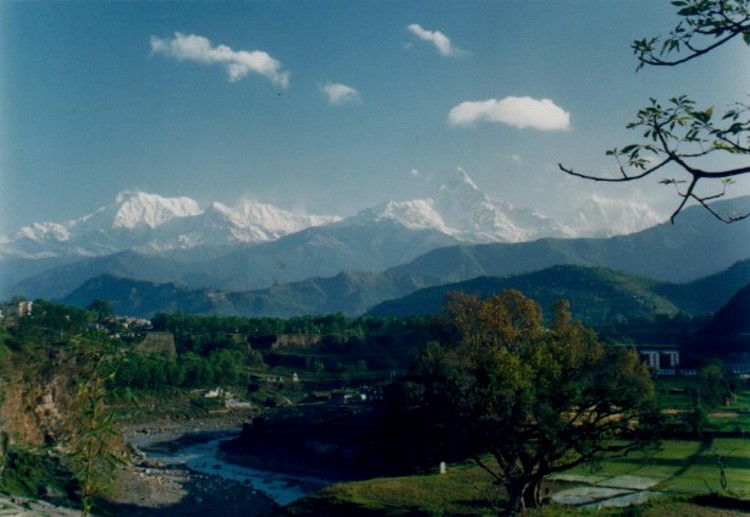

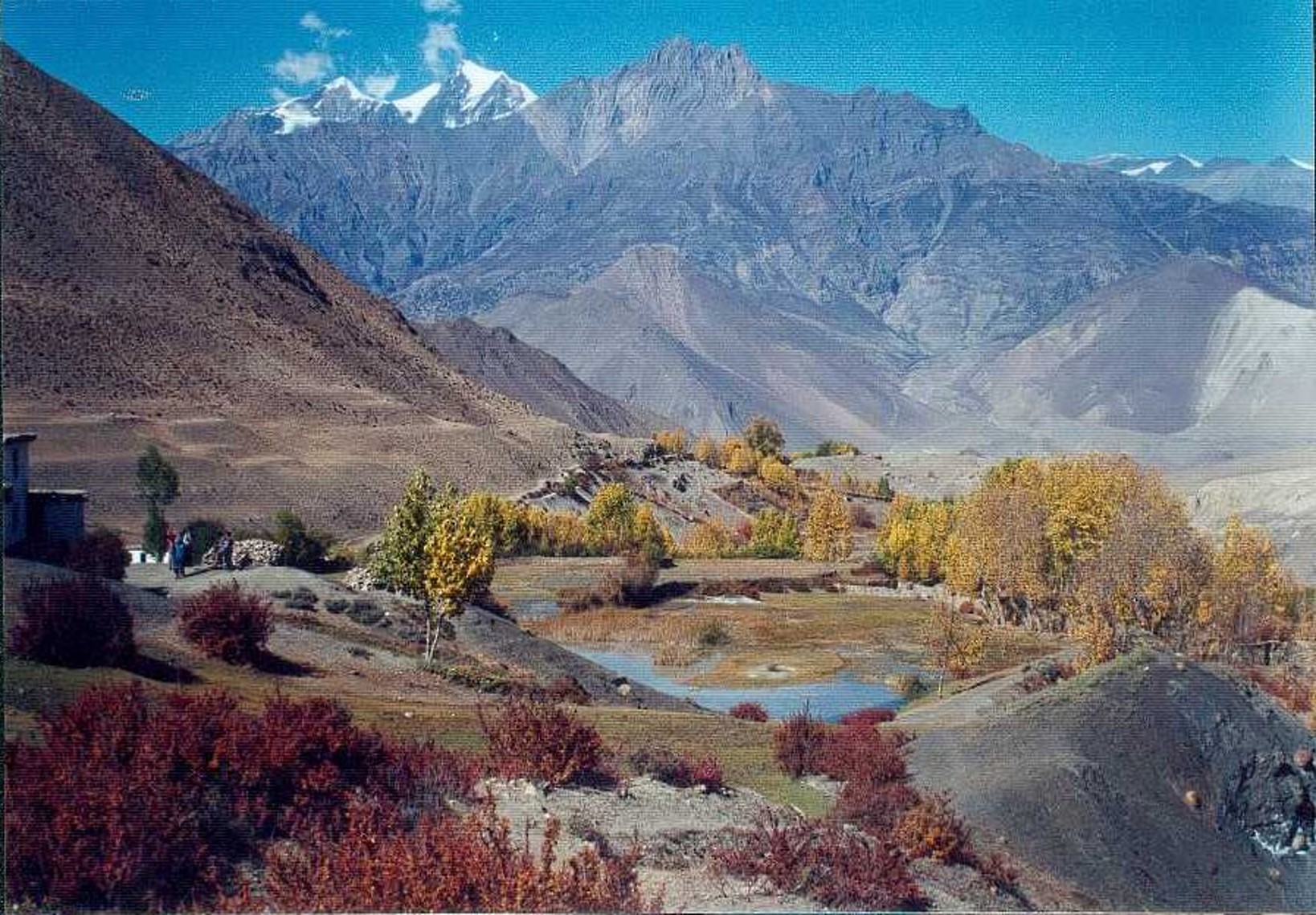
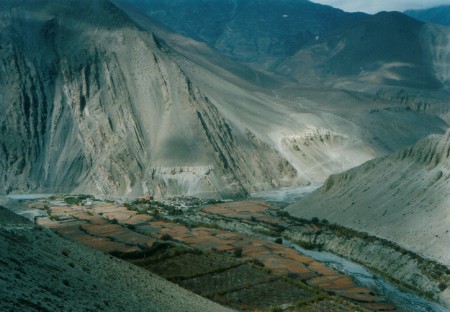

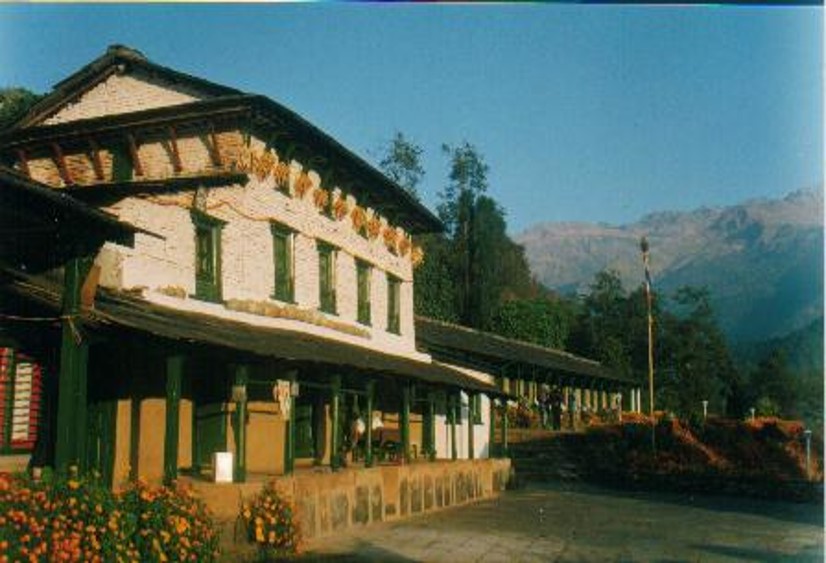
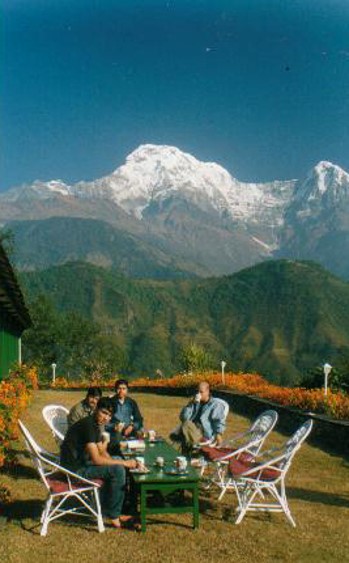
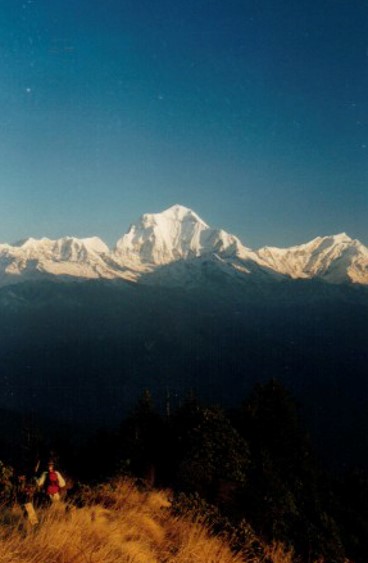




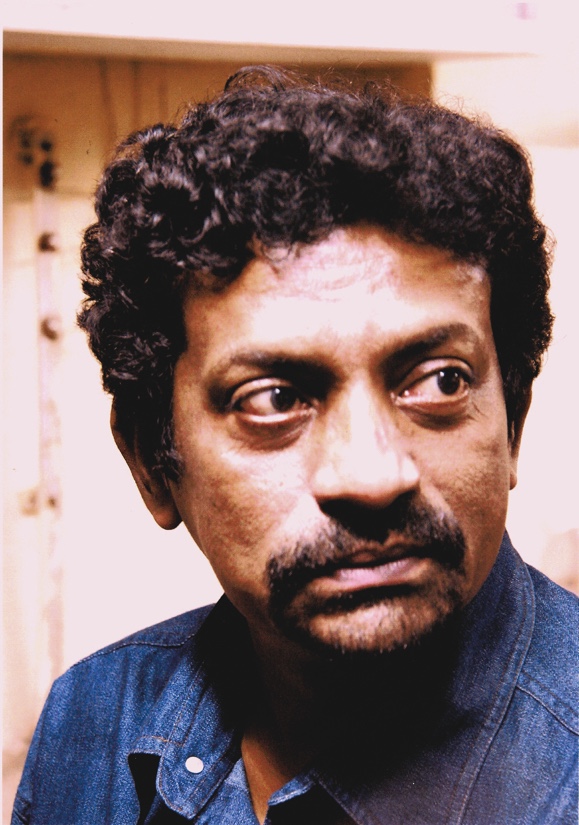
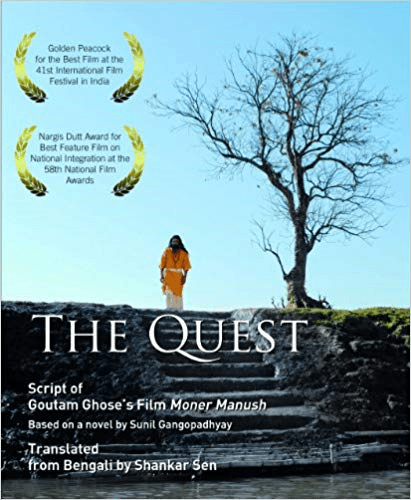


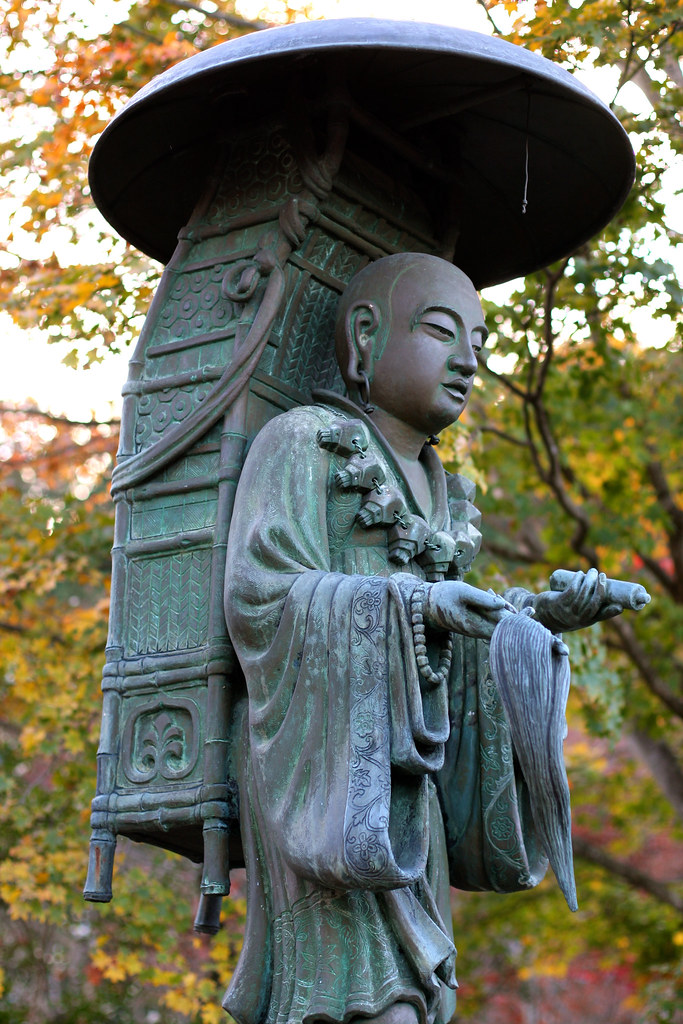
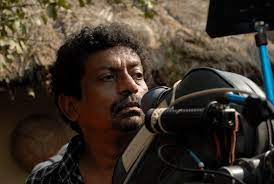

 Borderless