Centuries ago, April was associated with spring induced travel… just as pilgrims set out on a journey in Chaucer’s Canterbury Tales. Some of the journeys, like to Mecca, become a part of religious lore. And some just add to the joie de vivre of festivities during different festivals that punctuate much of Asia during this time — Pohela Boisakh (Bengali), Songkran (Thai), Navavarsha (Nepali), Ugadi (Indian), Vaisakhi (Indian), Aluth Avurudda (Sri Lankan) and many more.
A hundred years ago, in April 1924, Tagore had also set out to journey across the oceans to China — a trip which, perhaps, led to the setting up of Cheena Bhavan in Vishwa Bharati. Recently, Professor Uma Dasgupta in a presentation stated that Tagore’s Nobel prize winning Gitanjali, and also a collection called The Crescent Moon (1913), had been translated to Chinese in 1923 itself… He was renowned within China even before he ventured there. His work had been critically acclaimed in literary journals within the country. That arts connect in an attempt to override divides drawn by politics is well embodied in Tagore’s work as an NGO and as a writer. He drew from all cultures, Western and Eastern, to try and get the best together to serve humankind, closing gaps borne of human constructs. This spirit throbbed in his work and his words. Both towered beyond politics or any divisive constructs and wept with the pain of human suffering.
This issue features translations of Tagore’s writings from his childhood — both done by professor Somdatta Mandal — his first trip with his father to the Himalayas and his first experience of snow in Brighton. We have a transcreation of some of his lyrics by Ratnottama Sengupta. The translation of his birthday poem to himself — Pochishe Boisakh(his date of birth in the Bengali calendar) along with more renditions in English of Korean poetry by Ihlwha Choi and Manzur Bismil’s powerful poetry from Balochi by Fazal Baloch, add richness to our oeuvre. Bismil’s poetry is an ode to the people — a paean to their struggle. It would seem from all the translations that if poets and writers had their way, the world would be filled with love and kindness.
Yet, the world still thunders with wars, with divides — perhaps, there will come a time when soldiers will down their weapons and embrace with love for, they do not fight for themselves but for causes borne of artificial human divides. It is difficult to greet people on any festival or new year, knowing there are parts of the world where people cannot celebrate for they have no food, no water, no electricity, no homes and no lives… for many have died for a cause that has been created not by them as individuals but by those who are guided solely by their hankering for power and money, which are again human constructs. Beyond these constructs there is a reality that grows out of acceptance and love, the power that creates humanity, the Earth and the skies…
Humour is brought into non-fiction by Devraj Singh Kalsi’s narrative about being haunted by an ancient British ghost in Kolkata! Suzanne Kamata adds to the lightness while dwelling on modelling for photographs in the Japanese way. Ravi Shankar plunges into the history of photography while musing on black and white photographs from the past.
Tagore again seeps into non-fiction with Professor Fakrul Alam and Asad Latif telling us what the visionary means to the Bengali psyche. Starting with precursors of Tagore, like Michael Madhusudan Dutt, and post-him, Sarojini Naidu, Mandal has shared an essay on Bengaliness in contemporary poetry written by those born to the culture. Jared Carter has given discussed ‘the lyric temper’ in poetry — a wonderful empathetic recap of what it takes to write poetry. Exploring perspectives of multiple greats, like Yeats, Keats, George Santyana, Fitzgerald, Carter states, “Genuine lyricism comes only after the self has been quieted.”
Sengupta has conversed with a dance choreographer, Sudershan Chakravorty, who has been composing to create an awareness about the dilemmas faced by migrants. An autobiographical narrative in Hindustani from Ilma Khan, translated by Janees, shows the resilience of the human spirit against oppressive social norms. Our fiction has stories from Lakshmi Kannan and Shevlin Sebastian urging us to take a relook at social norms that install biases and hatred, while Paul Mirabile journeys into the realm of fantasy with his strange story about a boy obsessed with pyromania.
“It is an ironical reflection on our times that a prolific and much awarded Indian writer– perhaps deserving of the Nobel prize — should be excised from the university syllabus of a central university. This move has, perhaps paradoxically, elicited even more interest in Mahasweta Devi’s work and has also consolidated her reputation as a mascot, a symbol of resistance to state violence. A timely intervention, this volume proves yet again that a great writer, in responding to local, regional, environmental ethical concerns sensitively, transcends his/her immediate context to acquire global and universal significance.”
There is more content than I mention here. Do pause by our current issue to take a look.
I would hugely like to thank the Borderless team for their unceasing support, and especially Sohana Manzoor, also for her fantastic art. Heartfelt thanks to all our wonderful writers and our readers. We exist because you all are — ubuntu.
Hope you have a wonderful month. Here’s wishing you all wonderful new years and festivals in March-April — Easter, Eid and the new years that stretch across Asian cultures.
Looking forward and hoping for peace and goodwill.
It is clear that English is employed here not as a language on loan, but as the rich, spluttering resource of the marrow and the bloodstream.-- Arundhathi Subramaniam.
At the outset, let me make a candid statement. I am a very prosaic person, someone who in her long teaching career and academic writing as well as translation, has never ventured to write poetry myself. I might seem like the odd woman out, but somehow, I have been closely following the recent trends in which Indian Poetry in English has been rapidly spreading its wings and with new volumes being published every other day, it is now a force to be reckoned with.
Tomb of Henry Louis Vivian Derozio at the South Park Street Cemetery, Kolkata.
Recapitulating literary history briefly, it is well known that Indian English Poetry (or often called Anglophone poetry in India) is the oldest form of Indian English literature. Beginning roughly from 1850 to 1900, it went through the ‘imitative’ phase when Indian poets were primarily ‘romantic’ and tried to imitate the British masters. Beginning with Derozio[1], many poets of the time — namely Rabindranath Tagore, Sri Aurobindo, Sarojini Naidu, Michael Madhusudan Dutt, Toru Dutt — were also Bengalis by birth. The poetry written between 1900 to 1947 belonged to the ‘assimilative’ period and often questions were asked why the poets didn’t write in their ‘own’ languages. Post-independence poetry was primarily experimental, and when we come to contemporary Indian English poetry, we find it becoming wholly urban and middle-class. The poets are realistic and intellectually critical in the expression of their individualised experience. They go in for precision at all levels and do not stick to one genre but experiment with multiple poetic forms.
Interestingly, I realised that a whole host of Indian English poets writing at present (some have several volumes of poetry published already, whereas others have just given birth to one or two), but coincidentally many of them happen to be Bengalis — Bashabi Fraser, Sudeep Sen, Kiriti Sengupta, Sanjukta Dasgupta, Mitali Chakravarty, Angshuman Kar, Shyamasri Maji, Basudhara Roy,Radha Chakravarty, and others. It is not a complete list at all, and what makes this study more interesting is that except for a couple of them, all these poets come from an English literature background. It is also not a coincidence that most of them teach English as their profession. So, whether it be personal lyrics, free verse, memories, experiences, observations, or even translation, the English muse therefore gives them the impetus to experiment with all forms, and at the same time helps them to move away from themes like nationalism, nature, Indian culture, love etc. that dominated Indian English Poetry in earlier times.
Bashabi Fraser receiving her CBE (2021 The Queen’s New Year Honours) from Prince Charles, now King Charles III.
Bashabi Fraser is an Indian-born Bengali and a Scottish academic, editor, translator, and writer. She is a Professor Emerita of English and Creative Writing at Edinburgh Napier University. Fraser’s work traverse continents in bridge-building literary projects. She was appointed a Commander of the Order of the British Empire (CBE) in the 2021 New Year Honours for services to education, culture and cultural integration in Scotland, in particular for her projects linking Scotland and India. Among her several volumes of poetry the Bengal and Bengali connection comes out in volumes like From the Ganga to the Tay: a poetic conversation between the Ganges and the Tay (2009), Letters to My Mother and Other Mothers (2015), My Mum’s Sari (2019), and Lakshmi’s Footprints and Paisely Patterns: Perspectives on Scoto-Indian Literary and Cultural Interrelations (2023). Fraser has worked extensively on a project about the Bengal Partition and the angst resulting from this divide expresses itself in the following poem.
This Border
Can shadow lines on the earth’s surface divide language and literature, rituals and customs, rivers…and memories?

There was a time when you and I
Chased the same butterfly
Climbed the same stolid trees
With the fearless expertise
That children take for granted
Before their faith is daunted
Do you remember how we balanced a wheel
Down dusty paths with childish zeal
Do you remember the ripples that shivered
As we ducked and dived in our river
Do you remember what we shared
Of love and meals, and all we dared
Together – without fears
Because we were one
In all those years
Before we knew that butterflies
Were free to share our separate skies
That they could cross with graceful ease
To alight on stationary trees
On either side of this strange line
That separates yours from mine
For whose existence we rely
Entirely on our inward eye
This border by whose callous side
Our inert wheel lies stultified
This border that cuts like a knife
Through the waters of our life
Slicing fluid rivers with
The absurdity of a new myth
That denies centuries
Of friendships and families
This border that now decrees
One shared past with two histories
This border that now decides
The sky between us as two skies
This border born of blood spilt free
Makes you my friend, my enemy.
Another well-established poet is Sudeep Sen who studied in New Delhi and in the United States and is a global citizen, so to say. Sudeep’s literary output is enormous and some of the titles of his volumes of poetry have subtle references to Indianness and Bengaliness embedded in them as well. Mention may be made of volumes like Leaning Against the Lamp-Post (1983), The Man in the Hut (1986), Kali in Ottava Rima (1992), Postmarked India: New & Selected Poems (1997), and several others. Though he might not do it consciously, his Bengaliness remains embedded in his psyche.
Kiriti Sengupta who has been awarded the Rabindranath Tagore Literary Prize (2018) for his contribution to literature, is a poet, editor, translator, and publisher. What is more significant is that along with Bitan Chakraborty, he mans the publishing house Hawakal, which has already carved a niche for itself as the largest publisher of Indian Poetry in English. Several poets mentioned in this essay have seen their creations see the light of the day through Hawakal Publishers and they have done yeomen service in this regard. As an established poet, Sengupta has several volumes of poetry to his credit. His collection from 2019, called Rituals, is very different from the work readers usually read in that there is a narrative thread in many poems that is not there simply to tell a story but to ultimately present a meditation on an aspect of life and the modern world that they haven’t considered before. “Fleeing the house and leaving the doors ajar. Is it perversion or fallacy?”
In an earlier volume entitled Solitary Stillness (2018), Sengupta does not give away the traits that have pervaded his poetry, he has not forgotten his Bengali roots, and has once again drawn his poetry on the canvas of the time that has been rooted in Calcutta. As he elaborates upon this point in his professional website, here, he makes a reference to Lapierre, and indeed, the ‘city of joy’ tag sounds fake just as we read that particular poem, which is so natural, that it almost appears to have been spoken by a resident of a city, one who is not a poet. According to him, that person who complains about water logging or that person for whom any tag of romanticism about the city is bourgeois, it is nothing but a label that’s needed to promote consumerism.
Mitali Chakravarty, the indefatigable editor of Borderless Journal, wrote to me saying that she is happy I feel she belongs to Bengal, “I call myself a Bengali and a human”. Though a non-resident Bengali, her perception of her own work and Bengali cultural identity is clearly revealed in a poem published in The Daily Star (Bangladesh)[2].
Confused

I am mixed up – cannot help
English and Bengali under my belt

I can read a bit of Hindi
Cannot understand much of French
A little Chinese …low class, they said…
I am mixed up – cannot help
English and Bengali under my belt

I grew up thinking I will find a way
But now pidgin is all that I can say
I write in English – the language borrowed from the West
The language that taught us or brought us unrest
The language that through The Raj spread
Importing Nationalism in its tread
I am mixed-up – cannot help
English and Bengali under my belt

But my life is that of the non-English
A probashi Bengali at best

People say I am not typical, not quite the right type
A mixed-up Bengali – I said
Culture is something I dread at every tread
Because what Culture I have is mine
- Not of a Race, a Country or Religion –
Human Being is the only race to which I belong

Help protect my home, the Earth – its every drop, its every stone

In a world of 7.7 billion, can I be alone?
I am mixed up – cannot help
English and Bengali under my belt
Though she has been writing poetry for a long time, Mitali’s first poetry collection, Flight of the Angsana Oriole: Poemswas published by Hawakal only in October 2023. In the ‘Introduction’ to this volume, she states that her random collection of poems “are sometimes of the past” as she knew it and “sometimes of the present. And sometimes in quest of a future or a dream that she hopes will go to create a more hopeful future than the world presents to us currently.” The poems in this volume are personal; some talk of her journey through life, the world as she sees it, some even influenced by her travels across the world. She further states: “Inherent in each line is not just the influence of my experiences in many countries but the nurturing I had in India, where I was born, educated and spent the first two decades of my earthly existence.” So, poems like ‘Death of Lalon’, ‘Shivratri’, ‘Kali Rise’, ‘Shraddha‘ [last respects] and a few others do convey the subconscious Bengaliness embedded in her psyche, irrespective of where she physically resides now.
Radha Chakravarty, a prolific writer and translator, Former Professor of Comparative Literature and Translation Studies at Ambedkar University, Delhi, has recently joined the bandwagon of Indian Poetry in English with her debut collection of poems Subliminal published by Hawakal Publishers in 2023. In a detailed interview given to Mitali Chakravarty for the March issue of Borderless Journal[3], she tells us about her aims and ambitions as a poet and how most of the poems in Subliminal are independent compositions, not planned for pre-conceived anthology.
My poetry actually delves beneath surfaces to tease out the hidden stories and submerged realities that drive our lives. And very often, those concealed
truths are startlingly different from outward appearances. I think much of my poetry derives its energy from the tensions between our illusory outer lives and the realities that lurk within.
Many of Radha Chakravarty’s poems express the feeling of Bengaliness in different perspectives. We read about the typically soft quilt called kantha in Bengali in the poem ‘Designs in Kantha‘ thus:
Sewn into soft, worn layers,
forgotten fabric of grandmother tales –
patterns of the past,
secret memories, hidden designs,
intriguing patterns in silk strands
dyed in delicate dreamy shades—
embroidered storylines
in exquisite, dainty kantha-stitch.
When Mitali Chakravarty asks her why she writes in English though it isn’t her mother tongue, she answers:
Having grown up outside Bengal, I have no formal training in Bengali. I was taught advanced Bengali at home by my grandfather and acquired my deep love for the language through my wide exposure to books, music, and performances in Bengali, from a very early age. I was educated in an English medium school. At University too, I studied English Literature. Hence, like many others who have grown up in Indian cities, I am habituated to writing in English. I translate from Bengali, but write and publish in English, the language of my education and professional experience. Bengali belongs more to my personal, more intimate domain, less to my field of public interactions….
Both Bengali and English are integral to my consciousness, and I guess this bilingual sensibility often surfaces in my poetry. In many poems, such as ‘The Casket of Secret Stories,’ ‘The Homecoming’ or ‘In Search of Shantiniketan’, Bengali words come in naturally because of the cultural matrix in which such poems are embedded.
Of course, the poet also mentions that all her poetry is not steeped in Bengali. In fact, in most of her poems, Bengali expressions don’t feature at all, because the subjects have a much wider range of reference. As a globe trotter, Radha has written about different places and journeys between places.
Another debut book of poems that Hawakal Publishers brought to light in December 2023 entitled Forgive Me, Dear Papa and other poems is written by Shyamasri Maji, an Assistant Professor of English teaching at Durgapur Women’s College, West Bengal. Dedicating this collection of poems to her “incurably romantic self,” Maji feels that “being ‘romantic’ in this context is being imaginative, reflective, puerile, rebellious and emotional.” The poems are a mixed bag, belonging to different thematic issues. Some focus on a woman’s radical views on the gender hierarchies in our society, in some nature plays the role of mediator between the narrator and the world, the idea of loss of love, which is closely linked with thoughts of death, while a few poems also represent an interpersonal dialogue between the self and the other. Some of Maji’s poems focus on the role of memory whereas some are experimental in the sense that they portray a woman’s comprehension of a man’s thoughts. Stressing upon the fluidity of identities, she shows how love, pain, pandemic, separation and grief affect all human beings irrespective of an individual’s gender and sexual orientation.
Six books of published poems and twenty-five years of creative journey has been a consistent exploration by the poet Sanjukta Dasgupta as she tries to find the path of freedom from among the misleading mesmeric mazes that threaten and stifle both sense and sensibility. As a woman poet with a strong feminist stance, Dasgupta admits in an online interview given to Basudhara Roy[4]:
Though I read Bangla poetry since my schooldays, I wrote my poems in English. It was an unconscious choice. Much later I learnt that I should have been embarrassed about writing in English rather than in my home language, my mother tongue Bangla. The poems written in English kept on being born on the page with embarrassing regularity.
Writing poetry is an irrepressible urge for me. It is, in a way, far more intense than the biological labour pain. This labour pain of creativity leaves me restless till the words are born on the page. But the creative process allows endless revisions; a biological production is largely about acceptance, neither revision nor deletion are considered ethical practices. In the case of poetry, it is not about choice, it is a compulsion which is intense and gratifying and multiple revisions often lead to the emergence of the perfect product.
The title of Dasgupta’s poetry book Lakshmi Unbound (Chitrangi, 2017) is very significant. Lakshmi being an intrinsic part of the fabric of Bengali culture, the radicality and dissidence of the idea of ‘Alakshmi[6]’ will require no explanation to a Bengali reader.
She thinks the core agenda in Lakshmi Unbound is a defiant, determined search for freedom. So, it is not just deconstruction, it is an endeavour to call attention to the need to destabilize the deep-rooted stereotypes that have controlled the minds and mobility of women. In Sita’s Sisters (Hawakal, 2019), she crafts a revisionist feminist mythology by taking up familiar figures like Sita, Lakshmi, Kali, Mira and attempts to free these mythic figures from their claustrophobic space so that they can be re-invented in sync with the contemporary times.
Residing in Jamshedpur, in the state of Jharkhand, Basudhara Roy is an established poet and has several books and publications to her credit. In her own website, is stated: “Committed to an undying affair with words, Basudhara finds in poetry an epistemological and existential skylight. She writes because she feels she must test words on her tongue, pulse, moods, agitation, abstraction and satire. She is convinced that words can change the world and hence, she works at them in her own culinary way – washing, peeling, grating, pounding, baking, sautéing, kneading, roasting, often flaming them for what they might yield.”
The following poem from Stitching a Home (Red River, 2021) considers the eternal problem of a woman that plagues women writers a lot.
The Right Kind of Woman

The right kind of woman will
inspire affection, regard, trust.
Not promiscuity, never lust.

Bred by a mother equally right,
she knows to avert her eyes to
innuendoes, telling smiles.

In crowded buses, shops, streets,
she knows to shut tight, bud-like,
relinquish space, circumscribe limbs.

Above all, she knows the prudence
of holding her tongue, of choosing
silence’s worth over wordy rebellion.

Schooled to surrender in dark
rooms, she knows, unasked, to
feign desire, moan, stifle, sigh on cue.

On her forehead, she had a
third eye to emit fire, take sides,
rake storms. Last night, its lid rusted

with disuse fell out, and the right kind
of woman laughed herself to death
over all she had left undone, unsaid.
“Writing poetry is an isolation exercise” says Angshuman Kar, an established Bengali poet who by profession is also an English Professor at a university in West Bengal. His book of poems Wound is the Shelter (Hawakal, June 2023) is unique and different from the other volumes discussed here because the poems are all translated by the poet himself from his original Bengali poems. In the ‘Introduction’, Kar tells us that authors who translate themselves often seem to be unhappy about the task of translating their own works. The Marathi poet Arun Kolkatkar likens it to incest, — “like making love to your own daughters.” Critics of translation studies have both supported and criticised self-translation. Those who support it argue that the author knows their work the best and hence s/he is the best translator of their own work. Those who oppose self-translation argue that the author-translator takes too much liberty while translating his/her own work; thus, the translation hardly remains faithful to the original. In such a situation Kar says, “Without being critical, I must say that I love self-translation. I enjoy translating my own work, I love committing incest. It makes me a better poet…. As a self-translator, I find incest healthy. It makes me a better poet – il miglior fabbro.“
Coming to the individual poems in Wound is the Shelter, it need not be reiterated that most of them portray universal feelings but at the same time are seeped in Bengali culture as well. In “My Poems” Kar talks about Jungle Mahal, the three districts of West Bengal that are full of jungles; in “World,” he writes about blooms of a sal tree and shiuli flowers; in “Memory Card” he talks about a bus ride to reach his maternal uncle’s house in Bankura from where he went to the studio to take a family photograph — “Grandma in the middle/On either side we – three brothers, two sisters and a cousin”. In “Father” he mentions how his father’s bereavement fades with time and how his portrait adorns the wooden throne in which gods and goddesses are kept and he stands with Kali, Shiva and Durga. In “Neelkantha” he refers to Shiva; in “Park” he states how man forgets grief when he comes to a park, “That is why in a city as sad and lonely as Kolkata the number of parks is always high.” The five-part poem “Tiger” is also very powerful, “there is a tiger inside every human being” he states. Kar also mentions about the mask of a demon of Chhou dance of Purulia, the aal path in paddy fields, the Chandi mandap[7] of a small village, the man called Bhagaban Das who labours in a factory, and the man called Shubhasis Babu who rents him cars, whose voice he hears but has not seen him. Thus, even in his transcreated poems, Kar’s Bengaliness expresses itself overtly.
It is not possible to analyse the poems of each of the Bengali poets that I have mentioned above within the purview of this single essay, and so I have just selected a few of them (especially the poets who have one or two volumes to their credit at present). As mentioned earlier, though Bengali by birth, all the poets rendering their emotions in English, do often consciously or unconsciously express multicultural elements, Bengali cultural nuances, and idiomatic force in their poems. As the trend for providing glossary is passe now, much is left to the readers’ imagination, but still certain occasional Bengali words and phrases make their poems even more appealing.
After sharing my random thoughts about Indian Poetry in English in general and selectively mentioning a few Indian English poets who also happen to be Bengali and often unconsciously exude a sort of Bengaliness in some of their poems, without attempting to sound rather parochial, I wholeheartedly wish to see more volumes of their poetry being published in future. I conclude by quoting a very salient observation made by Arundhathi Subramaniam who is not wholly optimistic about the situation, but believes that despite hurdles in publishing, the voices of Indian poets writing in English would be heard [8]:
Despite the clunky discourse that continues to hover around it, however, Indian poetry in English endures, even flourishes, seventy years after Independence. Publishers may be few and far between, the royalties meagre, the critical climate thick with indifference or theoretical bluster, and the poets themselves bewildered by disputes over their identity, even their existence. But poetry, in its mysteriously resilient fashion, continues to be written, shared and discussed (if sometimes with more passion than discernment). … I am not ecstatic about the state of Indian poetry in English. (But then I am not ecstatic about poetry; only, at times, about poems.) What I do know is that Indian poetry in English is alive. And like all things alive, it engages, it annoys, it provokes, it excites. On several occasions, it has given me the jolt of wonder for which I turn to poetry in the first place.
Considering the slightly mellow tone in Subramaniam’s observation, I personally feel Indian English Poetry has become a significant force in the literary arena at present and will grow stronger with time. Seasoned poets who have several volumes of poetry published already, as well as the fresher ones whose debut volumes promise a lot more to come in future, can all look forward to seeing their ‘spontaneous overflow of powerful emotions’ in print and carry on the legacy of Indian Poetry in English to newer heights. And sure enough, the sub-genre of Bengali Indian English poetry can be researched in greater details in future.
.
[1] Henry Louis Vivian Derozio (1809–1831), poet and assistant headmaster of Hindu College, Calcutta, a radical thinker and started the Young Bengal Movement.
A conversation with VR Devika, author of Muthulakshmi Reddy: A Trailblazer in Surgery and Women’s Rights, Niyogi Books.
“Education, Freedom and Responsibility bring out the best from the individual and race. This will apply to all men and women irrespective of caste, creed or colour.”
—Dr Muthulakshmi Reddy, Muthulakshmi Reddy:A Trailblazer in Surgery and Women’s Rights
Muthulakshmi Reddy: A Trailblazer in Surgery and Women’s Rights by VR Devika is a biography of a woman who shouted out to demand reforms among devdasis ( women who had been ‘married’ to lifelong service of a deity or a temple) and prostitutes in the nineteenth-twentieth century. The biographer, V R Devika, is a storyteller, educationist and Gandhi scholar.
Muthulakshmi Reddy (1886-1968) was born to a devdasi mother and transcended the system that had deteriorated from when a devadasi was considered ‘auspicious’ as she would never be widowed or married, and she could maintain her status quo, the book informs, adding a historic perspective to this ‘norm’. By Reddy’s times, these women had been reduced to become mistresses to rich men. In ancient times, before malpractices set in, a princess is said to have opted to become a devdasi. The decline started in the sixteenth century when devdasis were transferred from temple to temple.
The narrative is simple and straightforward but what stands out is the value of the content, the strength of the woman who could speak up boldly and demand reforms — even have some of them instituted. She spoke out for reforms with searing words. The author quotes from many of her speeches.
“Muthulakshmi used strong language to explain her position on the Devadasi question. ‘Of all the laws, rules and regulations which down the centuries have helped to place women in a position of inferiority, none has been so very powerful in creating in the minds of men and people a sentiment of scorn and contempt for women as the degrading idea of the double standard of morals.’
“She thundered, ‘From this double standard that has sprung that worst attack on women’s dignity, that safety valve theory that a certain number of women should exist, should sacrifice their self-respect, their honour, their comforts, their health and happiness to satisfy the lust of the other sex. At the present day, the continuance of such a doctrine and of the laws which are founded on it, is a shameful anachronism unworthy of our civilisation. Both in the past and in the present, women have disproved their inferiority, and how then can we at the present day tolerate or connive at a system which transforms a woman of whichever caste or class she may be, into a mere chattel, a piece of tainted merchandise? The inequity of the system is too deep for me to give expression, and further under that inhuman and unjust system the innocent children of a certain caste or community are trained to become proficient in all the arts of solicitation that they become captives to vice.’”
That men and women perpetrate social norms to justify the existence of the so-called ‘world’s oldest profession’ is well brought out in the book. That women forced into the sex trade are not doing this out of choice is conveyed with conviction. Names of Reddy’s associates include Sarojini Naidu (1879-1949) and the well-known singer whose mother was a devdasi too, MS Subbulakshmi (1930-1997).
Reddy was one of the first female medical graduates[1] in India, the first woman[2] to enter an Indian Legislature and the first woman in the world to preside over a Legislative Assembly. A recipient of the Padmabhushan and more accolades, she, as a doctor founded the Addyar Cancer Institute in 1952 after her sister was caught with cancer, and, as a humanitarian, started the Avvai Home in 1931 for those rescued from brothels and streets. Her spirit is well captured by the author when she writes:
“In 1942, during the World War II, soldiers of the British Royal Airforce camping in tents on the banks of Adyar river had made some derogatory remarks about the girls and harassed them. Muthulakshmi stood vigil all night with a stick in her hand and dared any soldier to come near the Home. She even went up the ranks to the commander’s house near Fort St. George to complain to him about the conduct of the soldiers and curb their behaviour.”
VR Devika has extensively shown that Reddy was a force to be reckoned with but she has not given way completely to adulation. She has objectively shown how Reddy over ruled her son’s choices for the well-being of her own institutions. It brought to mind Gandhi’s attitude towards his own family. An established cultural activist, VR Devika has been associated with the inception of Chennai’s Dakshinachitra Heritage Museum and Tamil Nadu INTACH[3], has been visiting the Avvai Home and in this exclusive she tells us the story of how the book came about and why she visited this home and its impact on her.
VR Devika. Photo provided by Niyogi Books
Tell us why you felt that Muthulakshmi Reddy’s story needed to be told. What was the readership you had in mind when you wrote the biography?
The dance scholarship [donors] consisting of mainly outsiders who had a hypothesis, got a good grant, employed interpreters and cherry picked to denigrate her in a fashion that took dance academic world by storm after the 1980s. I had also bought into them when I began to learn Bharathanatyam. But when I joined INTACH Tamilnadu and Madras Craft Foundation in 1985 after having been a schoolteacher since 1974, I began a project of English language as a skilling programme and theatre as empowerment for Avvai Home. That is when I began to get the other side of the story that was really fascinating. I kept thinking I must reach this story out. Dr.V.Shanta, chairman of Cancer institute, said I must write her [Muthulakshmi Reddy’s] biography and I decided to work on it after she passed away. I had young people who were studying English but had no access to English other than their textbooks as the target audience but I am a story teller and I just began to tell the story in simple way as I always do.
You tell us in the authorial note that you went on ‘work’ to the Avvai home. Tell us about the home. Why were you there?
Geetha Dharmarajan and I lived near Avvai Home. I had no idea about the history of the home etc. But I knew very poor girls studied there. Geetha had spoken to them and I went along but Geetha relocated to New Delhi and started Katha[4] and I stayed on helping Avvai Home in many different ways. I have written a full story of Avvai Home in the book. It was volunteer work. Rajalakshmi of Avvai Home requested me to help them on a production on Dr.Muthulakshmi Reddy. I interviewed Sarojini Varadappan, Dr.Shanta, and several others to write the script for the production. I am now on their school advisory committee.
For me, the most interesting aspect was how Muthulakshmi Reddy made the transition from being born a devadasi to empowering herself enough to outlaw the custom. Did her parents ever marry?
No there was no way they could marry as a girl born in the system was barred from ritualistic marriage according to Hindu custom. She was his companion.
Your narrative is direct and eulogistic of great names and associations of/ developed by Muthulakshmi Reddy and the lady herself. The personal is largely left out, except to emphasise her achievements. Why?
I cannot [describe that] as I never met her. I had to sketch a portrait from her writings, her achievements and her son’s writing.
Would you regard the devdasi system as a social ill that has been erased or is it an ongoing battle?
There is no social evil that has been erased completely. Nostalgists for devdasi system denigrate her [Reddy]. But there is the social evil of discrimination against Dalits still, but should Ambedkar be blamed for giving a legal handle for those who wanted to come out and achieve something of their own despite the caste hierarchy? Those who benefited from the abolition of dedication are in thousands while those who bemoan the loss of culture in the way they want it are in hundreds.
The devdasi system is a generic system in a number of states in India. Did Reddy’s reforms benefit all the states? Was the Avvai Home open to all devdasis or only from her state?
Avvai Home never claimed to be only for devdasis but for girls who needed protection and access to education. No reform benefits everyone. Her law was for the Madras Presidency of the time which consisted of parts of Andhra, Orissa and Karnataka too as part of it.
Muthulakshmi Reddy started a number of things, including the second oldest cancer hospital in India. But all these were reactions borne of personal experiences. Do you think if she had been born into a regular family, and her sister would not have had cancer, would she have striven for these institutions too?
I can’t answer a hypothetical question. How do we know what she would have done?
What was the driving force behind the reforms instituted by Muthulakshmi Reddy?
Her own indomitable will and the stubborn streak that sought to get it done and get others who would help her come in whole heartedly.
Would you justify the “emotional blackmail” on her son to fulfil her own dream by giving up his own? Do you think that it is right of a parent to impose their will in this way?
I am not justifying it. It happened that way. Just telling the story. She did not force her elder son who went into Electrical Engineering. Her second son never resented the “emotional blackmail” He went along whole heartedly.
What for you was the most endearing quality of Dr Reddy?
I have many who worked with her telling me she was very kind, but she was also a tyrant and would not bend. Her own indomitable will and the stubborn streak that sought to get it done and get others who would help her come in whole heartedly. She was a mother (Amma) was the unanimous opinion.
[3] Indian National Trust for Art and Cultural Heritage
[4]Katha is a non-profit and non-governmental organisation that has established itself in the field of community development, child welfare, education and literature.
(This review and interview is by Mitali Chakravarty.)
.
PLEASE NOTE: ARTICLES CAN ONLY BE REPRODUCED IN OTHER SITES WITH DUE ACKNOWLEDGEMENT TO BORDERLESS JOURNAL
“Under this Flag there is no prince and there is no peasant, there is no rich and there is no poor… Whether we be Hindus or Muslims, Christians, Jains, Sikhs or Zoroastrians and others, our Mother India has one undivided heart and one indivisible spirit.” — Sarojini Naidu, poet and political activist, on the resolution on the national flag in the Constituent Assembly, 22 July 1947
The immutability of prodigious speeches and their magnifying impact on people can’t be underestimated. The prize of a great speech comes from pure wisdom that originates from indulgence. These words from Naidu’s speech can work as magic anytime one reads them.
Building A Free India – Defining Speeches of Our Independence Movement that Shaped the Nation by Rakesh Batabyal is just the book you needed to read as India celebrates her 75th year of its independence. It is a thought-provoking assemblage of solicitous speeches delivered by some of the most prominent Indian personalities.
Many of these men and women have made invaluable contributions to India’s coming together as a nation of people and are the pride and honour of the sub-continent. These are people who impacted the lives around them. Their words were the gems that had the power to evoke courage and emotion in countless people and inspire them to make history.
Rakesh Batabyal teaches history, theory, and philosophy of media at the Centre for Media Studies, Jawaharlal Nehru University. His The Penguin Book of Modern Indian Speeches is widely accepted as an important work in the genre. He is working on a book on the history of nationalism in India.
Says the blurb: “The new public sphere that emerged in nineteenth- and early-twentieth-century India was a space that enabled magnificent public oratory, particularly that which mounted a challenge to colonial rule. From social and political platforms like the Indian National Congress, in the courts of law, or inside legislative bodies, leaders of the freedom struggle gave eloquent and clear-eyed articulations of not only the social, economic, and political problems that faced India and their possible solutions but also the kind of sovereign nation we must collectively aspire to be. India’s democratic ethos was a product of these foundational ideas of the freedom movement.”
Building a Free India brings together these landmark speeches delivered over roughly a century by the leading lights of the national movement—from Dadabhai Naoroji, Surendranath Banerjee, Bhikaiji Cama, Lajpat Rai, and Tilak, to Gandhi, Nehru, Ambedkar, Bose, Sarojini Naidu, and Maulana Azad—as well as a range of lesser-known but equally remarkable figures.
Writes Batabyal in the book: “As the movement progressed—from the economic critique of colonial rule by the early nationalists to the unequivocal demand for Purna Swaraj[1] and the immense moral authority of the Mahatma Gandhi-led resistance—the notion of an equal society that ensured dignity to all—irrespective of caste, class, gender or religion—came to occupy a central place in it. By the time the Constituent Assembly met in December 1946, not just civil rights, but the particular rights of women, of minorities, of the Depressed Classes, and the Adivasis were being articulated and demanded, not as favours but as a matter of course.” As the editor of this volume writes in his brilliant introduction, the effect of the speeches delivered by the leaders of our national movement was to focus “political action towards scripting an ennobling nationalism that would give us a just and equal society”.
A couple of speeches in the book are captivating. This one by India’s philosopher-President Dr Sarvepalli Radhakrishnan on India’s history and legends reads: “Our pledge tells us that this ancient land shall attain her rightful and honored place. We take pride in the antiquity of this land for it is a land which has seen nearly four or five millenniums of history. It has passed through many vicissitudes and at the moment it stands, still responding to the thrill of the same great ideal. Civilization is a thing of the spirit; it is not something external, solid, and mechanical. It is the dream in the people’s hearts. It is the inward aspiration of the people’s souls. It is the imaginative interpretation of human life and the perception of the mystery of human existence. That is what civilization actually stands for.
‘We should bear in mind these great ideals which have been transmitted to us across the ages. In this great time of our history, we should bear ourselves humbly before God, brace ourselves for this supreme task that is confronting us and conduct ourselves in a manner that is worthy of the ageless spirit of India. If we do so, I have no doubt that; the future of this land will be as great as its once glorious past.’
Painstakingly divided into six chapters, each section in the 300-plus page veers around freedom and that itself makes the collection unique. What’s more Batabyal provides a context to every single discourse.
On his way to Noakhali and in the face of the large-scale massacre, to the question ‘Will Partition Change Us Forever?’ Mahatma Gandhi replied: “I have seen more of history than anyone of you, and I tell you that I have known Hindu boys who called Muslims ‘uncle’. Hindus and Muslims used to participate in each other’s festivals and other auspicious occasions. You want to force me to leave this place but you should know that I have never submitted to force. It is contrary to my nature. You can obstruct my work, even kill me. I won’t invoke the help of the police. You can prevent me from leaving this house, but what is the use of your dubbing me an enemy of the Hindus? I will not accept the label. To make me quit, you have to convince me that I have made a mistake in coming here.”
This and many such defining speeches make the collection truly exceptional. The book is not only a priceless history of India’s freedom movement but also of the ideas of universal equality, dignity, and justice that are—and must always remain—at the root of any democracy. The assortment of some sixty communicative moments of oratory would provide the reader with a fresh perspective and evoke feelings of patriotism, motivation, and infinite stimulus.
Bhaskar Parichha is a journalist and author of Unbiased, No Strings Attached: Writings on Odisha and Biju Patnaik – A Political Biography. He lives in Bhubaneswar and writes bilingually. Besides writing for newspapers, he also reviews books on various media platforms.
.
PLEASE NOTE: ARTICLES CAN ONLY BE REPRODUCED IN OTHER SITES WITH DUE ACKNOWLEDGEMENT TO BORDERLESS JOURNAL
Santosh Bakaya interviews Tushar Gandhi, the great grandson of Bapu, after paying a brief tribute to the Mahatma
Gandhi (1869-1948) was assassinated on January 30th 1948. This was one of the last photos of him – sometime in 1947 when both, Gandhi and Nehru, apparently were appalled and concerned about the carnage resulting from the separation of India and Pakistan. This photo was published in Newsweek, Aug. 4, 1997. Courtesy: Creative Commons
Before I begin the interview, I would like to pay a small tribute to the great Bapu, the unarmed fighter, the environmentalist, the vibrant economic philosopher, who talked of Swadeshi and self- dependence long before the modern world is slowly waking up to its benefits, who emphasized a people -centered economy rather than a technology centred one, where we find individuals stripped off their dignity, becoming insignificant cogs in the machine. The plight of the migrant labourers during the current pandemic is branded on our collective consciousness, all because of a flawed-topsy- turvy model of development. Only if we had heeded Bapu’s call of making the villages self- sufficient and self- reliant.
Right from the time he refused to ‘cheat’ to correct the spelling of kettle in a class test during the visit of the school inspector, to the time he abruptly called off the Non-cooperation movement, due to violence at Chauri Chaura, well-aware of the repercussions that would follow, he shunned mendacity and violence. Belying his physical fragility, he managed to emerge as a strong moral icon. In a world torn asunder by war and violence, he succeeded in teaching many a world leader lessons in the powerful weapon of non- violence and truth, pitting soul force against brute force. The vulnerable Mohan, full of complexes, foibles, fears and phobias, a boy who was afraid of snakes, ghosts, multiplication tables, metamorphosed into the valiant, venerable Mahatma, [a sobriquet he did not feel comfortable with]. Under the seemingly frail façade, was a man who could flex his moral muscles and shake a comatose nation out of its languor. This unarmed warrior, went on to exemplify self- introspection, self -analysis, self- mastery, and a humongous moral power. Denigrated as the half-naked fakir by Winston Churchill, he was the very epitome of minimalism, but well- clothed in the raiment of love, compassion, fearlessness and forgiveness.
During the Dandi March, women from all sections of society- women who had never been part of public gatherings, women who had not stepped out of the four walls of the house, unlettered village women, poured out on the streets because he had very intelligently linked salt, a common kitchen ingredient to an uncommon call for freedom. Kamladevi Chattopadhyay valiantly stalked into the High Court premises, and while a stunned magistrate gaped, hurled a question at him whether he would like to buy “the salt of freedom”, she had prepared. Songs of freedom rang in the streets, women metamorphosed into human shields blocking the paths of policemen, facing lathi blows and even landing in jails. What do you call such a man – an intelligent strategist? Quixotic? Charismatic? A maverick? Was this not a coup of sorts?
Bapu’s strategy paid off and the Indians realized that throwing off the foreign yoke was not difficult, if heads are held high and spines, straightened. Gurudev Tagore told the Manchester Guardian of 17 May, 1930, “Europe has completely lost her former moral prestige in Asia.” Louis Fischer wrote in the chapter, ‘Drama at the Seashore’, in his biography of Gandhi, The Life of Mahatma Gandhi, “The British beat the Indians with batons and rifle butts. The Indians neither cringed, nor complained, nor retreated. That made England powerless and India invincible”– all because of a seemingly weak, five-foot five man, who sent quivers down the rulers’ backs by a handful of salt.
Tushar Gandhi with his book
In this interview with his great grandson, Tushar Gandhi , author of a book called Let’s Kill Gandhi(2007), chronicling the last days of his great grandfather, we hear more on Bapu and Gandhi-ism in the current world.
It is with a feeling of immense awe for the descendant of a great moral icon that I am here with my questions for you, Tusharji. If you remember, this is not the first time I am talking to you. It was in the year 2015 that I not just met you, but presented you my poetic biography of Bapu, Ballad of Bapu, for which you had graciously written the foreword. I remember being awe-struck by your unassuming demeanour coupled with a self-derogatory sense of humour, which your great-grandfather was also known to have had. Please tell us something about yourself, which we don’t know already.
I am an ordinary, simple person of limited abilities who is very lucky to be born a descendant of very illustrious ancestors. Life has taught me that greatness is not an inheritable quality it must be earned. I remember when a celebrity TV presenter Richard Quest was doing a series for CNN called ‘Quest for Greatness‘, he shot the concluding episode at Sabarmati Ashram and invited me to talk to him. His precept was whether places associated with greatness were the source of that greatness. He talked about the greatness of Bapu and about how the place attracted so many leaders of the world to visit it and be inspired by the place and the legacy of the person with whom the place was associated. He asked me if the fountain of greatness was at Sabarmati Ashram and was that the reason leaders visited it to partake of that greatness. My answer was yes, absolutely, sometimes the place inspires great actions and sometimes the aura of the great person associated with the place lingers on to inspire future generations. That draws them to the place.
Tushar Gandhi with his father at Hriday Kunj Sabarmati Ashram
Yes, that is absolutely right. The lingering aura of a particular place cannot be shrugged off, and if it is a place associated with our beloved Bapu, it will always keep inspiring people. The fragrance that I inhaled on my visit to the Sabarmati Ashram, is something I can never forget. Its aura and extraordinary energy seems to cling to ordinary visitors.
Richard’s concluding question for the show was directed at me, he asked, “There is no doubt that Gandhi was great. Scientists believe that our nature and what we become is also hot-wired in one’s DNA, genes. Did Gandhi have the greatness gene? As his direct descendant have you, Tushar inherited that greatness gene?”
My answer was immediate and short, I told Richard, “Greatness cannot be inherited, it has to be earned.”
I am overweight, the result of an indulgent lifestyle. I am lazy, when you sent me these questions my first question was how long would you be willing to wait for my responses! I haven’t, as yet developed the courage to be absolutely truthful. I succumb to anger and passion. I am enslaved by the sense of taste, to delicious food. I am unable to reduce my requirements in life. I know Bapu would have disapproved of me.
So, I live within my limitations, aware of my short comings.
No one is perfect. We all have our fads, foibles, idiosyncrasies and shortcomings. Yes, I remember, seeing some pictures, of your early teens, in one of which you are even holding on to your pet dog. What were your dreams then? Were you awareof your monumental legacy? Were you curious to know more and more about your great grandfather?
Yes, Zendy was more of a brother than a pet. I loved him, poor chap was a bit of a cripple, he had very limited abilities in his hind legs and so he would drag himself around or we carried him around. As a child I was inspired by my mother’s brother. He was a pilot in the Indian Air Force. So, from very early childhood I wanted to become a pilot. As I grew older, I wanted to join the Indian Air Force and become a fighter pilot. I even sat for the NDA entrance exam, unfortunately I could not qualify and so abandoned those plans. But my desire to become a pilot was obsessive and so I never considered doing anything else and when that dream crumbled, I was left adrift, not knowing what to do. Finally at my father’s suggestion I joined the Printing Institute to do a diploma in printing, I qualified as a printer, but my heart was never in that work and so after several halfhearted attempts, I gave it up as a career.
I don’t have any recollection of a moment or age in my life when I became aware of the legacy I had inherited. I feel I was always aware of the greatness of my ancestor, as I grew older, and my understanding increased the awareness about the greatness of Ba (Kasturba, Gandhi’s wife)and Bapu and my grandparents has grown and along with it my pride in the legacy they have bequeathed to me and with it the awareness of my limitations too.
I never had to request my elders about information about Bapu, I remember as a child my bedtime stories as told by my grandmother or by her sisters and cousins were almost always about their recollections of Ba and Bapu. As a child sometimes I would get fed up and throw a tantrum demanding to be told stories of kings and princes, fairies and princesses. But all I got were stories of Ashram experiences and anecdotes with Ba and Bapu. As I grew older, and my abilities of understanding evolved, I realised and understood the profound lessons those stories taught and the reason why my elders insisted on instilling those stories into my psyche.
My study of the ideals and the methods of Bapu continues. That is a lifelong never-ending quest.
We would love to know about your early life — your idols and heroes. Was Bapu also one of them? Are you also known for your candid, straightforward, hard-hitting words like your great- granddad?
My childhood, like me was very ordinary and unremarkable. I was a very average student someone who would have been diagnosed as being dyslexic, I am still spelling-challenged in all the languages I can write. If it wasn’t for the word processor software with their built-in spell checks I would never have been accepted as a writer, let alone a published author.
Were you a mischievous boy in school?
I was known to be a mischief maker and spent a record amount of time in detention. But it turned out to be a boon. In detention we were made to sit on a bench outside our principal’s office. The door of his curtain-less office always remained open, so he kept an eagle eye on all the benched ones.
The rule was that after we told him why we were on the detention bench, we had to go to the library, get a book and read it while sitting on the bench. I was so often on the bench that I got hooked to reading to such an extent that our school librarian when asked, why he was spending more than what was budgeted for library purchase, complained to our principal about how he had to keep buying new books because I had read all the books in the library.
This is hilarious! Your punishments turned you into a bibliophile!
The reading addiction grew so much that by my teenage years I was black listed by four libraries in our neighbourhood, because I had read through their collections of books!
In my childhood, shopkeepers used to keep paper bags made from pages of magazines and newspapers. I remember back home after the purchases had been put away, I would open up the bags and read whatever was printed on them, even though it was incomplete. My obsession with reading continues even today, now on laptops and smart phones, but I still prefer to read stuff printed on paper.
I had many idols during my childhood many still are, my ancestors, naturally. Revolutionaries too. Heroes from the folklore and history, sports icons, armed forces legends and martyrs. Those associates of my great grandfather I was fortunate to meet, Pandit Jawaharlal Nehru, C. Rajagopalachary, Maniben Patel, Khan Abdul Gaffar Khan, once and several others. They all left an indelible impression on my mind.
Since I am well- aware of my limitations I am not as honestly outspoken or frank as Bapu, but I am not known to mince words. Brash, is how I am more often described. But, as we live in a world of increasing hypocrisy, I have realized the need for plain speaking, so I too am becoming more and more outspoken.
To suit myself I have reinterpreted Bapu’s favourite three Monkeys from ancient Japanese and Buddhist lore who were actually four, Mizaru, who covers his eyes and sees no evil, Kikazaru who covers his ears and hears no evil, Iwazaru who covers his mouth and speaks no evil and the obscure fourth Sezaru who covers his lower abdomen and does no evil.
In today’s times I have reinterpreted them, feeling that they more appropriately convey the message: “Don’t shut your eyes and block out evil acts or crimes. Don’t close your ears so as not to hear a cry for help or to the bitter truth. Don’t shut your mouth and remain silent while evil is done, and hate is preached around you. And don’t remain indifferent against injustice, act against it decisively.”
I strongly believe Bapu would have adopted the fourth monkey too and reinterpreted all of them. It is no longer the time for polite and diplomatic talk, we need strong but honest words, not necessarily angry ones and most importantly, actions.
Very rightly said. In his very first public speech, on 4 February 1916, at the inaugural ceremony of Banaras Hindu University, because of his forthright words, Annie Besant had to plead, “Sit down Gandhi”, when he had ridiculed the highly bejeweled princes who were glibly talking about poverty. “Our salvation can only come through the farmer”. Don’t you think these words of Gandhi resonate today with a renewed vigour?
Yes, Bapu did fall foul of the organisers at the foundation stone laying ceremony of the Banaras Hindu University where he was invited to speak, as the hero of South Africa. When he criticised the bejeweled and pompously attired princes and the elite gathered there, Annie Besant who presided over the function, requested him to stop on several occasions.
When he started talking about swaraj (self-rule), the dignitaries on the dais staged a walk out and Ms. Besant called the meeting to a halt, but the student body gathered, insisted on listening to Bapu and trooped out of the venue and held an impromptu meeting on the open ground where Bapu continued his very ‘hard hitting’ and what was then dismissed as, impertinent ravings.
Yes, the students had applauded his candid utterances, saying Hear Hear! much to the discomfiture of the organizers and the princes.
The students were very fascinated by Bapu’s thoughts. It was after this that Bapu forayed into the Champaran Satyagraha, registering a decisive triumph over the colonial power, and gradually taking hold of the reins of the freedom movement.
There is a lot of dissatisfaction and frustration in our country and much that needs to be set right. To begin the process, we need a leader with Bapu’s ability of calling a spade a spade and yet not speaking in an offensive, insulting manner. India today suffers from a very dangerous epidemic of hate, it mustn’t and can’t be countered by counter hate. We must revert to Bapu’s method, honest, truthful words, yet not the language of hate and abuse.
India is witnessing an ongoing protest by farmers from northern states now almost a year old, there is discontent and despair in the entire farm sector, but it is being compromised by a general apathy towards their plight, today it is the farmers, tomorrow it will be another group of us, we must wake up and fight together, united.
Indeed, we need to yank away our comatose stupor, before it is too late. Bapu is said to have had a great sense of humour. Do you recall having heard any incident of Bapu which had tickled your funny bone immensely, as a child?
Bapu is reported to have said that ‘If it wasn’t for his sense of humour he would have gone mad.’ and also that ‘ If he did not have a sense of humour, the ability to enjoy the funny side of everything he would have been driven to despair and committed suicide.’ This is how much Bapu appreciated and valued humour. His humor used to be laced with sarcasm. When an American journalist asked Bapu what he thought about Western Civilisation, Bapu replied “It is a good idea!”
Yes, that witticism by Bapu never fails to bring a smile to my lips.
I recall a personal anecdote told by my grandmother. This happened in Sevagram, Wardha. Bapu received a request from a group of women village sevaks (workers), who wished to greet him on his birthday and spend 2nd October at the Ashram. Bapu welcomed them but said that he was a poor man and so they would have to bring their own meals and not burden the Ashram.
On 2nd October, they came to the Ashram early morning and participated in the activities of the Ashram. At lunch time when everyone at the ashram assembled at the dining hall, Kasturba noticed that the visitors were sitting under a tree, opening the cloth bundles they were carrying. She called my father and asked him why the visitors were not eating along with all the other residents of the Ashram? My father told her of the condition Bapu had laid down to permit the visitors to spend the day at the ashram.
Sabarmati Ashram, Ahmedabad, Gujarat, where Gandhi evolved his ideology within India. Courtesy: Creative Commons
When Ba heard the story, she was very angry, she told my father to call the visitors to assemble in her kutir (hut), she would cook a meal and feed the guests. Unlike her husband, she refused to forget her dharma (duty) as a host. Ba hurriedly cooked Khichadi and fed them. This defiance of his order by Ba was reported to Bapu, everyone expected him to get annoyed and reprimand her. But he smiled, quipping, ‘At one time the British Queen listens to me, but my words hold no authority over Ba.’
A typical Bapu witticism! We have mutated into rodents, running the rodent derby in helter-skelter haste. How would Bapu have reacted to this rodent derby? Would he still have continued to walk alone – taking long strides towards self- discovery, advising\ rebuking people along the way?
Bapu would have warned us about our devolution into rodents. But he would not have just warned us about the evil, danger and unsuitability of our way of life, he would have presented humankind with an evolving alternative way of life and lived it himself. Walking alone was second nature to Bapu, he was so far ahead of his times that he had no option but walk alone, not intimidated by the unknown. Having said that, his belief in the omnipresence of God was so deeply entrenched that he never considered himself to ever be alone.
Please tell us something about yourself as a student, were you obedient and disciplined? How did your peers and teachers treat you? Did you have a rebellious streak in you?
I was a very average student. In our times we were expected to be obedient, and we too believed that we should be obedient, so I also obeyed my elders and teachers. I was only nominally disciplined, there was a rebellious streak in me, muted most of the time, but it did manifest itself from time to time.
Please tell us something about Bapu’s walking habits. He shunned physical classes in school, but later did a lot of physical labour, becoming a very agile walker. “The modern generation is delicate, weak and much pampered.” He said during the Dandi March and walking less than twelve miles a day, he considered, “child’s play”. How did he become such a sturdy walker?
Bapu acquired the habit of walking far and fast in South Africa. He used to compete with his friend Herman Kallenbach to see who walked the longer distance and who was faster than the other. This became a daily lifelong habit and when at the age of 61 he lead the Dandi March, others much younger than him had to run to keep pace with him. There is a very iconic photograph of a child holding on to Bapu’s walking stick and seemingly pulling Bapu along.
Yes, I have seen that iconic photograph.
The child is Bapu’s grandson Kanha, who lived with him when Bapu was briefly staying at Juhu in Bombay. Every evening Bapu would insist that Kanha accompany him on his walks on the beach. Kanha walked very slowly, so, to make him walk faster, Bapu used to push him ahead of him with his walking stick. Over the years some dexterous photo retouching artists touched up the photo to appear as if the child was pulling Bapu along. Bapu had a very long stride which also added to his speed of walking.
Bapu was a staunch supporter of women empowerment, but in the Dandi March, if I am not mistaken, among the 78 handpicked volunteers, who accompaniedBapu on the 240-mile march which lasted 24 days [12 March to 6 April 1930], only a few women joined the retinue from the Sabarmati Ashram to Dandi, other women only joined him later. Did this issue not become a bone of contention among the women?I recall having read that powerful women like Kamladevi Chattopadhyay, Sarojini Naidu and Perin Captain (the granddaughter of Dada Bhai Naoroji) were displeased that they were not part of the handpicked retinue, strongly venting their ire, saying that they would not be satisfied merely by picketing shops. But yes, I remember Sarojini Naidu becoming a part of the March during the last stretch to Dandi, and raising a fistful of salt on 6 April,1930, and saying, “Hail Deliverer”.
There was a reason why Bapu refused to allow women to accompany him on the Dandi March. His objective was to provoke the Colonial Government to deal harshly with him. Threats were also made against the Satyagrahis, news was leaked that the Government would unleash a regiment of Pathan Sepoys to beat them and disrupt the march, not even sparing Bapu. Sardar Patel was arrested a week before the March was to begin and locked up in Sabarmati Prison. This was a warning to Bapu. Bapu wanted such harsh responses. He knew that if women accompanied him the Colonial Government would claim that Gandhi had taken women along as protection.
Gandhi leading the Dandi March, 1930. Courtesy: Creative Commons
He knew that the ‘gentlemanly’ colonial government would not harm women and so he had insulated himself from reprisals by hiding behind a protective shield of women. So Bapu decided that women would not accompany the marchers, hence they were not allowed to accompany him and his handpicked companions on the March from Sabarmati to Dandi.
There was a lot of discontent among the leading women Satyagrahis of that time, and they protested against Bapu, but they obeyed him too.
After he picked up salt at Dandi and broke the law on 6th April 1930 they demanded that now they must be allowed an equal opportunity to participate in Satyagraha in the front lines of Satyagrahis. Sarojini Naidu and Mithuben Petiet welcomed Bapu at Dandi. Eventually a Women’s Conference was held at Dandi and addressing the attendees, Bapu ordered the women to participate in the Satyagraha from then on.
Bapu used symbols very powerfully. Symbols such as minimal clothes, charkha(spinning wheel), salt, khadi were very effectively used by him for mass mobilisation. We would like to know something from you about his strategic use of symbols.
Bapu was a master communicator throughout his campaigns, first in South Africa and later in India, he utilised the power of symbolism to a great advantage. Bapu’s use of symbols and gestures was unlike the very artificial and dramatic use of symbolism, by the ‘leaders’ of today. He used them in a much more honest, sincere and believable manner. After deciding to embrace poverty when he was one of the most prosperous Indian lawyers in South Africa, Bapu chose to live simply to identify with the poor Indians he was leading and living amongst at the Phoenix Settlement. Yet he continued to wear the western attire of a gentleman.
It was only towards the end of his struggle in South Africa after a few Satyagrahis died during the Satyagraha and as a result of the brutal incarceration they were subjected to, that Bapu discarded the western attire and appeared in public dressed as what was then contemptuously described as the dress of a ‘Coolie’. When he arrived in India in 1915, he had started dressing in an elaborate costume of a Kathiyavadi gent. The dress of his home region in India.
In Champaran and before that during his year and half long travels to discover India, Bapu came face to face with the abject poverty of its populace and it was then that he began dressing less. Finally, it was when he saw the farmers of Madurai toiling in the fields, dressed merely in a brief loin cloth, that he discarded the kurti that he wore and adopted the attire of a mere loincloth to identify with the people he wanted to lead.
Yes, that is what riled Winston Churchill and he commented adversely on his attire.
Yes, it was this that bugged Winston Churchill and when Bapu visited Buckingham Palace to have tea with the royalty dressed similarly, Churchill called him ‘the half-naked Faqeer’. When Bapu was questioned by a reporter as to whether he would be dressed as he always did if he was invited to meet the Emperor he had replied that if he dressed up in any other manner he would be dishonest and disrespectful towards the Emperor.
The charkha to him was not just a symbol but a tool for the rejuvenation of India’s traditional crafts and village industries, he used it as a symbol of his idea of the ideal ‘industrial’ revolution in India’s villages he wished to usher in.
Salt was one of his most brilliant and evocative symbolisms, which he turned into a symbol of the British oppression of the masses of India. Their suffering and their aspirations for freedom, dignity and existence. It caught the fancy of the people of India and the attention of the entire humanity.
It goes without saying that through the powerful use of symbols and symbolic language, he was able to drive many a point home. Could you throw some light on his relationship with Kasturba? Both were married at the age of thirteen, and both grew together, and all of us know that Ba’s death devastated him completely. Obviously, with his obstinate ways, he was definitely not an easy man to carry along with. Yet, she was the moral strength behind him.
Ba was Bapu’s anchor. Throughout his evolution he has acknowledged her as his teacher of several important lessons, one of them being Passive Resistance.
Ba had the unenviable task of living with him as he transformed and surviving each of his catharsis. She not only survived but carried the family with her- immediate family initially, her growing sons and then the extended ashram family as she learnt to accept all of them and started feeling responsible for them.
Initially tumultuous, at times it was difficult to believe that their relationship would survive. But what Bapu wrote to the Viceroy and Lady Wavell replying to their message of condolences on Ba’s death, illustrates the depth of their relationship, showing how much Bapu relied on Ba. I quote:
‘I send you and Lady Wavell my thanks for your kind condolences on the death of my wife. Though for her sake I have welcomed her death as bringing freedom from living agony, I feel the loss more than I thought I should.
‘We were a couple outside the ordinary. It was in 1906 that after mutual consent and after unconscious trials we definitely adopted self-restrain as a rule of life. To my great joy this knit us together as never before. We ceased to be two different entities. Without me wishing it, she chose to lose herself in me. The result was she became truly my better half. She was a woman always of very strong will which, in our early days, I used to mistake for obstinacy. But that strong will enabled her to become quite unwittingly my teacher in the art and practice of nonviolent non-co-operation.’
One does not require to say any more.
Do you not find it a daunting task to carry forward the legacy of Bapu?
It is daunting but I have always lived within my limitations, and I don’t bother to live up to the expectations of others, this has made it easier to live with such a ‘heavy’ legacy. I have always considered the legacy I have inherited as a boon and so I have never felt it a burden.
It was Martin Luther King Jr who had said, “Gandhi was perhaps the first person in history to lift the love ethic of Jesus above mere interaction between individuals to a powerful and effective social force on a large scale”, which is indeed the truth. There is no denying the fact that it is a dystopian world that we are living in, where all are caught between the harsh tones of hatred and the insidious currents of revenge and rancor. How can non-violence again be revived as an effective social force?
Even in the past, we have lived in the age of hate, prejudice and strife; family relationships too have become fragile due to this but it’s not entirely a new phenomenon. When Bapu arrived in India, one of the first things he realised was the disunity between Hindus and Muslims due to distrust and hostility. He concluded that to effectively fight the colonial power he had to unite the two religious groups, and he set about working diligently towards it by igniting the passion for freedom in every heart.
He achieved his objective, but the glue was tenuous, and as independence became a reality, it rapidly deteriorated and the traditional distrust and hostility resurfaced. Hate and violence took center stage in 1946. Bapu realised that he had lost his dream in his hour of triumph. In 1946-47 and the first month of 1948 , insanity prevailed in India and the newly-created Pakistan.
It was only Bapu’s murder which shocked Indians and restored sanity for the time being. That sanity lasted for the first fifty years of its existence because of compassionate leadership and the memory of the sacrifice of Bapu. But then opportunist ‘leaders’ stepped into the forefront and unleashed a campaign of untruths and communal hate. The venom has now permeated to our cells and altered our very DNA, and we see its manifestation in every aspect of our existence. Unfortunately, now there is no Gandhi to jolt us back to sanity by sacrificing himself. Even if one was to emerge, I don’t think we collectively deserve such a deliverer.
Yes, we indeed need Bapu to remerge, and pull us back to sanity. Tell me, can walks for peace change mindsets? What triggered the idea of the re-enactment of the Dandi March? I remember, it was the year 2005, the 75th anniversary of the March I was in my MPhil class, and the news of the reenactment of Dandi March was very much in the air, and my students were hurling questions after questions at me – most of them laced with cynicism. Can you tell us something about your experience during these marches? I remember seeing pics of the March where one man was dressed like Bapu. How did this image of Gandhi impact the people?
My reenactment of the Dandi March in 2005, in its 75th anniversary year, was a personal challenge and a token gesture of response to the violence of 2002 the state had endured. That is why I went out of my way to invite the participation of a group of Pakhtoon Khudai Khidmatgaar, descendants of the legacy of Khan Abdul Gaffar Khan. It was a privilege to walk alongside the almost 100 Red Shirts from Pukhtoon Khwa in Pakistan and watch the people of Gujarat warmly embrace them and invite them into their homes.
The personal challenge was that three of my ancestors had walked the entire route in 1930: my great grandfather, Bapu, my grandfather, Manilal and my uncle, Kantilal. It always felt challenging to me. I wanted to test if I had it in me to walk the distance. I was always the proverbial ‘Couch Potato’, so, it was an intimidating task. After putting it off several times, I decided to take the plunge. None who knew me, believed I would complete the journey. On several occasions during the March, I wanted to give up mid-stride, the agony too excruciating. Then I visualized walking with Bapu, imagining his walking stick pushing me along and it gave me the strength to complete the walk-first that day’s walk and then the entire 241 miles.
There were several people who dressed as Bapu during the March, but one had a remarkable resemblance to Bapu, and it was very inspiring, walking the entire distance, barefeet!
That was indeed a commendable feat. Gurudev Tagore, who was deeply revered by Bapu, happened to be in the vicinity of Sabarmati Ashram on 18 January, 1930, and paid him a visit. When asked what plans he had for his country in 1930, Bapu remarked, “I am furiously thinking night and day, and I do not see any light coming out of the surrounding darkness.” But then the Inner Voice spoke to him, and light came in the form of the iniquities of the Salt Tax, and he decided to embark on the path of Civil Disobedience. What exactly was the nature of this Inner voice, for him?
For Bapu his inner voice was his conscience keeper. He acquired the ability to hear it after much effort. Once he began hearing the ‘still faint voice’ it became his search light, it guided him, showed him the direction and illuminated his objective.
Bapu was not against technology as such, but he was staunchly convinced that our education system bred mediocrity. What would he say about the education system of today?
Bapu had rejected the western education system outright as unsuitable for Indian needs. He believed it till his end, begging with his sons in South Africa and then in his Ashrams in South Africa and India he developed a new system of basic education that he believed would cater to the varied needs of India. It was based on the principle of Enlightening the mind, Awakening theheart and Empowering the hands. He named his model of Basic Education Buniyadi Talim and then Naee Talim.
True to his brutally honest utterances, he would have termed the education system in India today as a curse on India and Indians and would have crusaded to destroy it completely, at the same time, offering a more suitable sustainable alternative.
We are witnessing that our basic education model has completely failed and only churns out substandard students, worth next to nothing. Same is the case with the higher University education system. Upon graduation, students realise that their ‘qualifications’ are worthless, they are not able to get jobs which their parents were able to secure upon graduation. Even with professional degrees, it is the same. Engineers acquire a degree in Management even after specialising in a field of engineering, even after a masters. Doctors study for super specialisation after specializing to enhance their earning ability. Education from being a medium of enlightenment has been reduced to merely being a means of earning. That is the resounding failure of education system the world over, but starkly so in India.
Yes, it is indeed pathetic. If you happen to meet him again, what would your first question to him be? Any niggling doubt that you would want to clarify?
If I were to have an opportunity to meet Bapu now, my question to him, even though I know what his answer would be is, “Bapu, how may I seek revenge for your murder?” My biggest regret is that I did not get to learn from him and so the rest of the time I would sit patiently and absorb whatever he thought I needed to learn. I would not waste my time in asking questions.
In this era of Instant gratification, truth and honesty have become outdated. How would Bapu react to the WhatsApp forwards, short cuts, cutting corners, passing the buck and the inhumane behaviour of the human beings that have become so much a part of the present socio- political- psychological ethos?
Bapu would have rejected it all and made a bonfire of all of it.
Do you think Bapu was a disillusioned man in the last days of his life? On 14\ 15 August 1947 midnight, when the thrilling words of Nehru’s epochal “Tryst with Destiny” speech rang through a free India, sheathed in a celebratory fervor, a frail but morally strong man, lay on a frayed mat in Beliaghata in Calcutta praying, fasting and relentlessly spinning, considering the partition ‘a spiritual tragedy’, ruing the vacuity of such a freedom, but still not losing faith in humanity. Mulling over many things– if he had erred somewhere, maybe he could set it right, somehow? What do you think were the issues that were going on in his mind that day?
The last years of his life were tragic for Bapu, as he had faced betrayal, he felt abandoned, cast away by those he had trusted. He saw the true nature of his people, his countrymen and women, whom he had assumed he had transformed. But his personal grief would have been enhanced because for all the things he saw going wrong with his people and in the nation, he had helped liberate, he would have blamed some weakness of his own character some flaw in his actions and he would have been harsh on himself. That was the greatest agony he had to endure.
On the first Independence Day, he pondered over his anxieties but continued to work to set things right and guide his people back on the right path and to do penance for everything wrong, that he blamed himself for.
After India won freedom, in a message to the cabinet of ministers of West Bengal, he wrote, “From today, you have to wear the crown of thorns. Strive ceaselessly to cultivate truth and non-violence. Be humble. Be forbearing… Do not let yourself be entrapped by its pomp and pageantry. Remember, you are in office to serve poor in India’s villages.” Humility is needed like never before. Is the India that we see today the India of his dreams? Are the poor in India’s villages being served?
India became Independent on August 15, 1947. But it never achieved ‘Purna Swaraj’ that Bapu had aspired for, 75 years later it still hasn’t.
I quote Bapu to show what he believed ‘Purna Swaraj’ was. In 1925, in the issue of Young India of 29th January he wrote. ‘Real Swaraj will come not by the acquisition –of authority by the few but by the acquisition of the capacity by all to resist authority when it is abused. In other words, Swaraj is to be obtained by educating the masses to a sense of their capacity to regulate and control authority.’
Then again writing in the April 16, 1931 issue of Young India, Bapu said, ‘ Let there be no mistake what Purna Swaraj means. It is full economic freedom for all the toiling millions it means no unholy alliance with any interest for their exploitation. Any alliance must mean their deliverance.’
One does not need to illustrate how far India has diverged from Bapu’s concept of Purna Swaraj for his people. Today those he commanded to become servants of the people have become their Overlords.
Martin Luther King Jr. had pointed out, “He lived, thought and acted, inspired by the vision of humanity evolving toward a world of peace and harmony. We may ignore Gandhi at our own risk.” Ever thought of recreating a New India based on Bapu’s principles, with you heading it?
I am not capable of the task. I have admitted my short comings right in the beginning and once again let me remind you ‘Greatness cannot be inherited it has to be earned’.
It was an absolute honour interacting with you and getting to know a lot more about you and Bapu. Immensely grateful for this enriching and enlightening discussion. Thanks for your precious time.
The pleasure and privilege are mine. Thank you.
.
Dr. Santosh Bakaya is an academician, poet, essayist, novelist, biographer, Ted Speaker and creative writing mentor. She has been critically acclaimed for her poetic biography of Mahatma Gandhi [Ballad of Bapu]. She has more than ten books to her credit , her latest books are a biography of Martin Luther King Jr. (Only in Darkness can you see the Stars) and Songs of Belligerence (poetry). She runs a very popular column Morning meanderings in Learning And Creativity.com.
.
PLEASE NOTE: ARTICLES CAN ONLY BE REPRODUCED IN OTHER SITES WITH DUE ACKNOWLEDGEMENT TO BORDERLESS JOURNAL




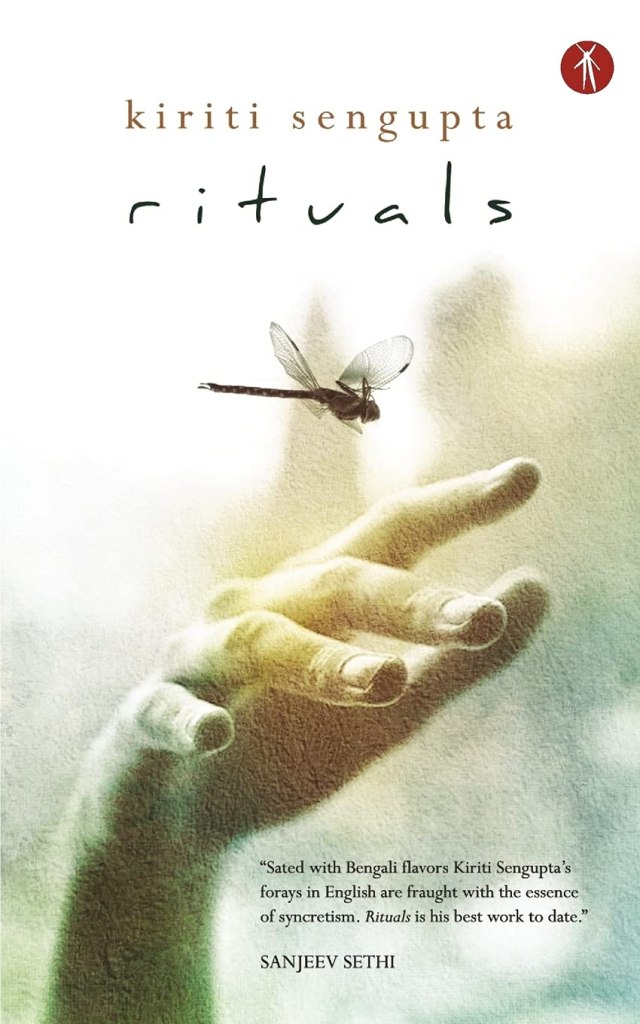


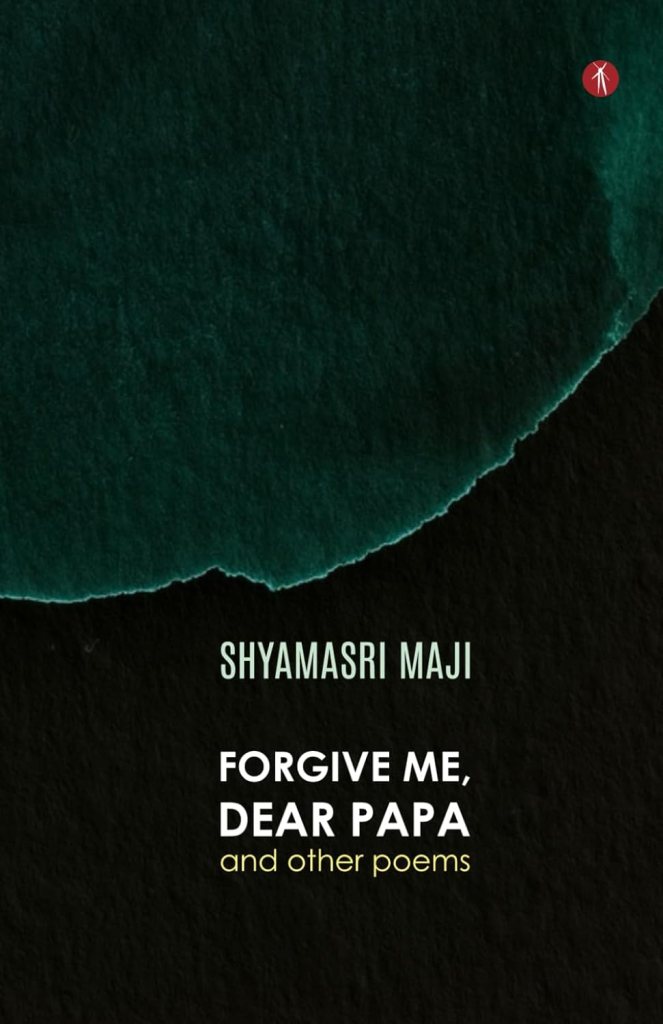

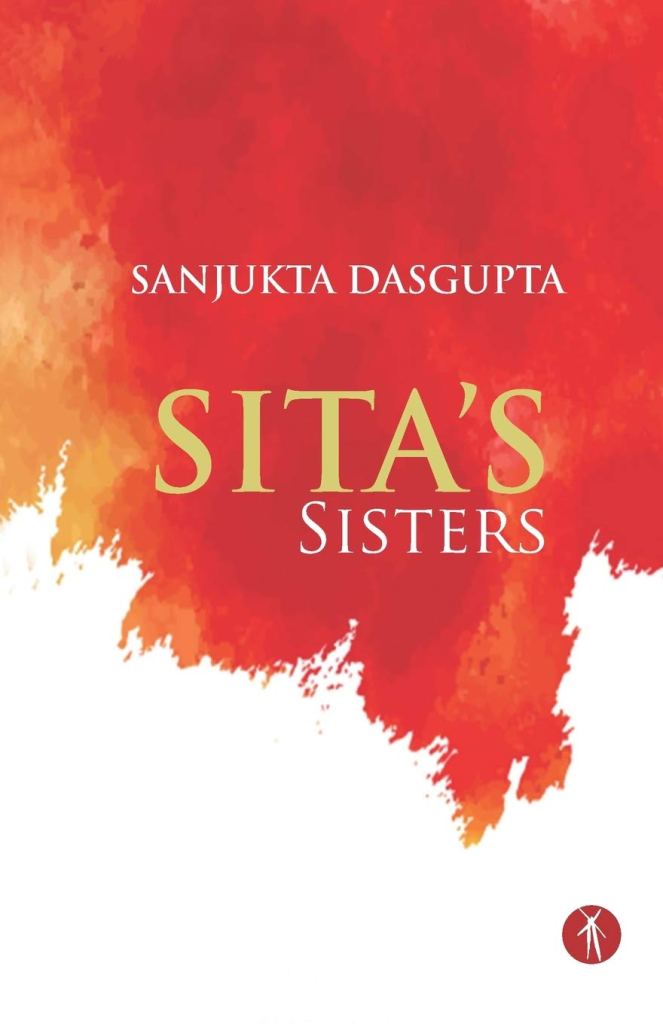


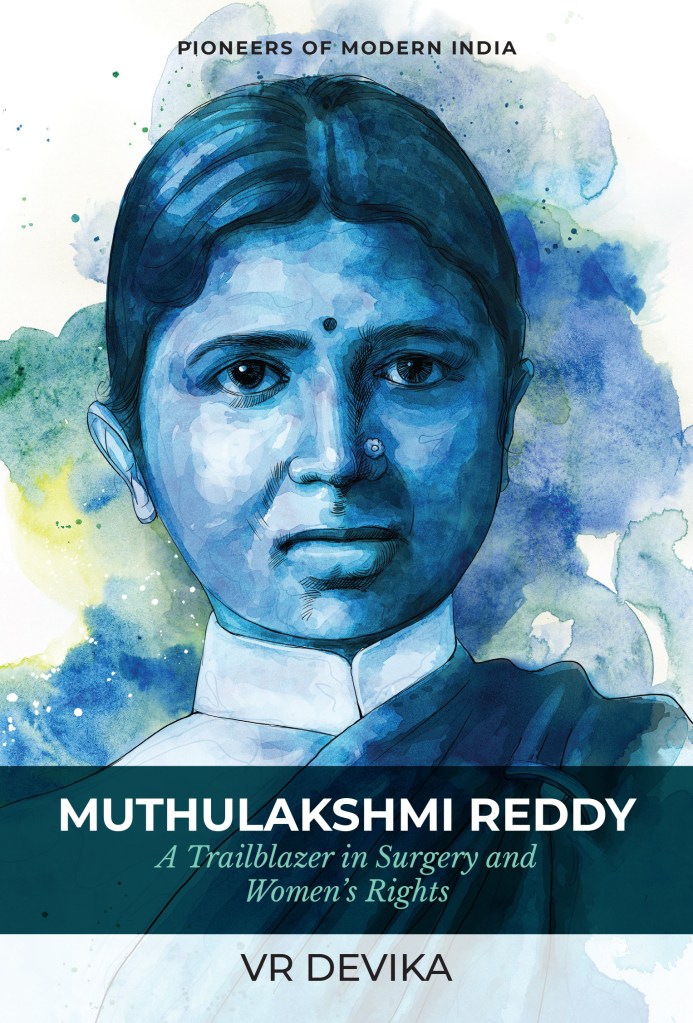
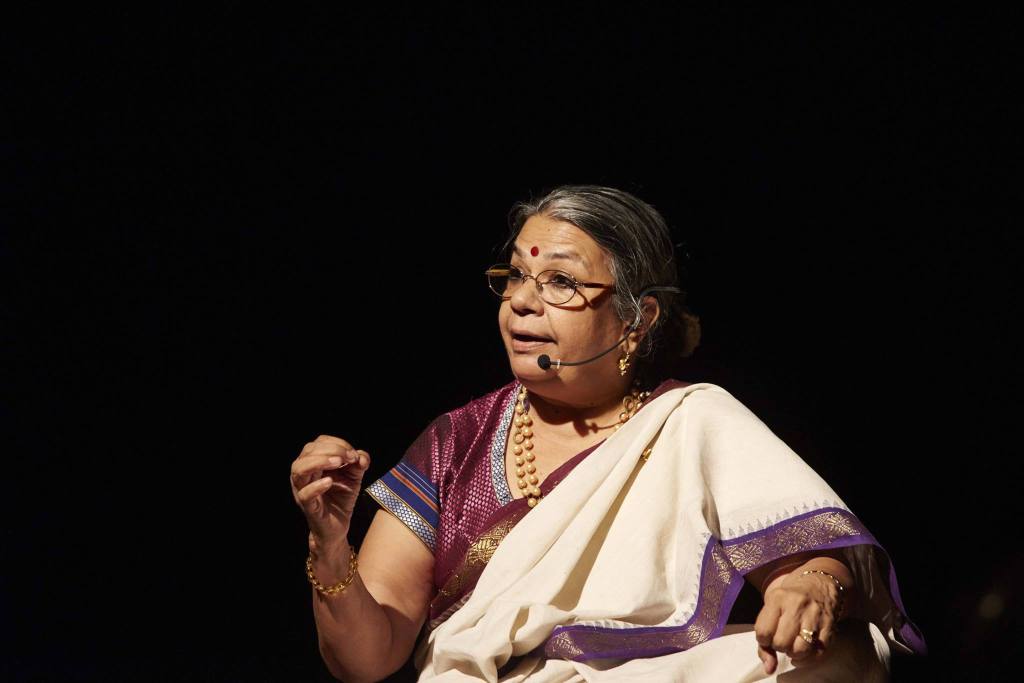


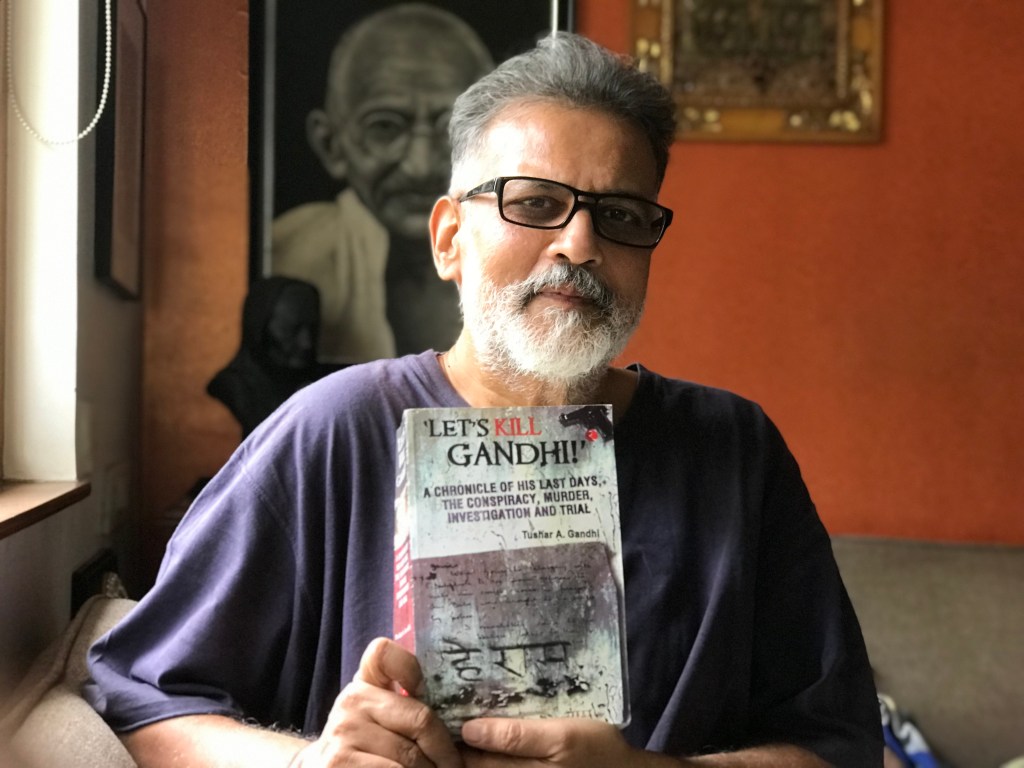
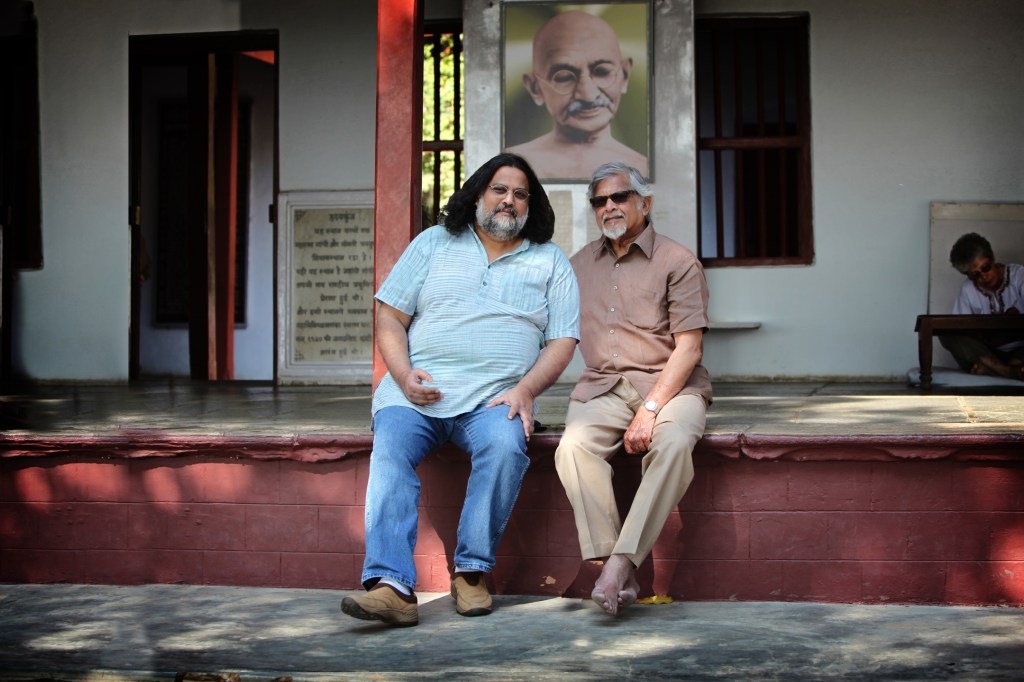
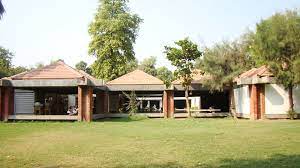
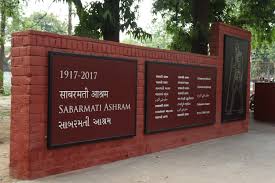

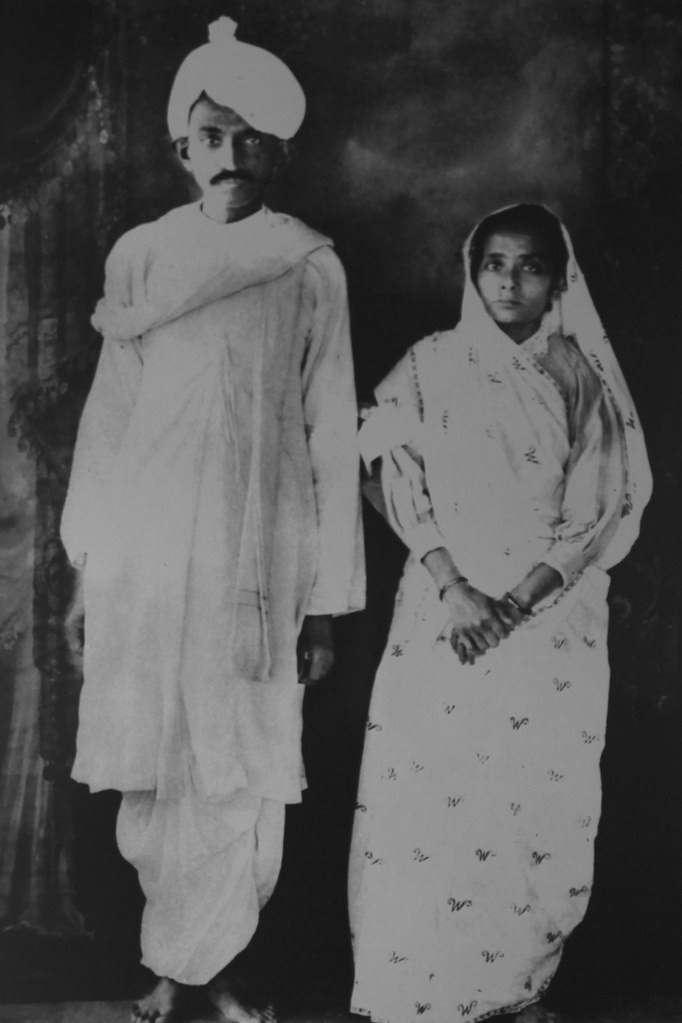

 Borderless