Categories
Essay

Still to Moving Images

As a curator, Ratnottama Sengupta writes about the long trajectory of films by artists, beginning with Husain’s Berlinale winner, down to the intrepid band she screened at the just concluded 30th Kolkata International Film Festival

When Maqbool Fida Husain won the Golden Bear in the 17th edition of the Berlin Film Festival, the year was 1967. I, in my pre-teen years, knew little about painting. But growing up in a family of filmmakers I was already conversant with the art of looking through the camera. So I was disoriented that the film critics of the time were baffled by what had impressed the international jury.

Royalty, tigers, ruins, hawks, school children, anklets, on the river bank – all these images moving only to music, not a word uttered. The jury at Berlinale were astounded by the richness of the artist’s idiom that had breathed life into a Rajasthan that is rich in architecture as it is in painting, in costume as in music. 

This dawned on me years later, when I curated the exhibition, 3 Dimensions, forthe All India Fine Arts and Crafts Society in New Delhi. It featured paintings, sculpture and graphic art or drawings by artists from Husain, Satish Gujral, Ghulam Mohammad Sheikh, Jatin Das to Sanjay Bhattacharya, Paresh Maity, Mimi Radhakrishnan, Shadab Hussain, among others. 

A unique feature of this exhibition was that all the participating artists had interest in another expression of art. So every evening of that week had seen a Ram Kumar and Mimi read their short stories; a Narendra Pal Singh and Jatin Das read their poems; a Sanjay Bhattacharya render Tagore songs of and a Shruti Gupta Chandra perform Kathak. Ratnabali Kant had staged a Performance Art in the presence of Prime Minister V P Singh who had inaugurated the week-long exhibition by reading his poems. And, on the closing day, I had screened Through a Painter’s EyesThat’s when it dawned on me: it was the originality of vision captured by the 7-minute short film had won over Berlin as also Melbourne and our very own National Awards too. 

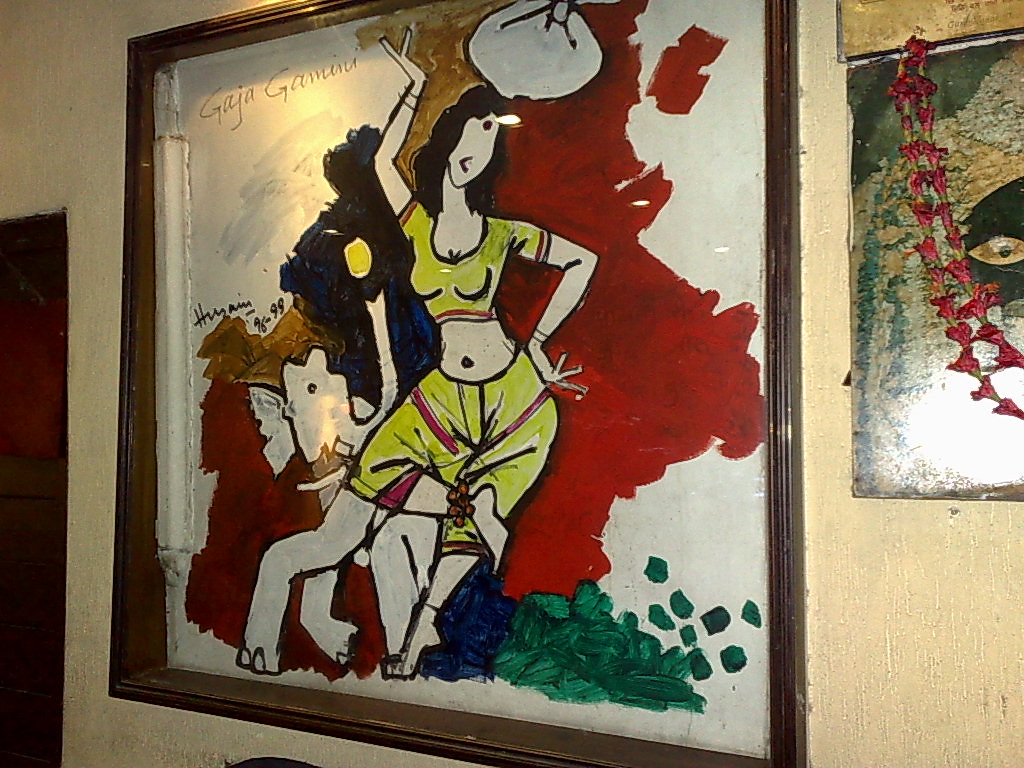
Subsequently Husain, who had started out from the tenements of Bombay by painting oversized hoardings of Hindi films on the sleeping tramlines at the dead of night, had at the ripe age of 84 made Gaja Gamini (2000) with stars such as Madhuri Dixit, and Minaxi — A Tale of Three Cities (2004) with Tabu and Naseeruddin Shah. Ironically these films baffled the critics just as much as the earlier short film had. However the dazzling visuals of vibrant figures and colourful structuring of the (non)-narrative had found acceptance in the Marche du Film section of Cannes 2004.

*

I have since then tried to fathom what drives artists who are skilled at painting with oil or watercolour, or sculpting wood or stone, metal or clay, or creating graphic images on paper or linoleum, to wield the megaphone. Now, instead of holding the camera or editing the celluloid strips with their hands, they use their mind, their mind’s eyes, their creative imagination.

Some other contemporaries of Husain too had, after attaining glory in the plastic arts, turned to experimenting with the new, ever evolving, ever contemporary art form — cinema. In 1970, Tyeb Mehta, who had briefly worked as an editor, made Koodal, meaning  ‘Meeting Ground’ on the Bandra station of Mumbai’s Western Railway. The synthesis of images of humans and animals had won him the Filmfare Critics Award.

Cartoonist Abu — born Attupurathu Mathew Abraham — was a journalist and author who had worked for Punch, Tribune and The Observer in London before returning to work with The Indian Express. He was given a special award by the British Film Institute for the short animation No Ark, clearly a cryptic message deriving from the Biblical tale of Noah’s Ark.

Equally engrossing is the story of Syzygy, also produced by Films Division, and directed by Akbar Padamsee.  This  16-minute short, premiered at a UNESCO screening in Paris 1969, had no narrative, no sound, or even colour. It only had lines evoking shapes typically used to refer to the alignment of celestial bodies. Only one man had stayed back till the end of the screening — and he had said to Padamsee, “Most people could not understand your film — it’s a masterpiece.” 

Reportedly that man had gone on to become the programming director at Cinematheque Francaise – world’s largest film archive. That’s where Indian filmmaker found Ashim Ahluwalia found a copy of Events in a Cloud Chamber, Padamsee’s second film that was sent for screening at the Delhi Art Expo — never to be returned to the artist. The lost-in-transit film has now been professionally reinterpreted by Ahluwalia.

NB: All these films were supported by filmmaking bodies, and though often baffled, cineastes realised theirs was a new way of seeing the visual expression that goes under the arching umbrella of cinema.

*

This desire to understand, adapt, and get under the skin of a modern medium had driven Tagore, a century ago from today, to paint expressionistic forms and also to film Natir Pujo (1931). And today we find a band of artists from Delhi, Mumbai, Kerala and Baroda making films that bridge disciplines from landscape and abstraction to mimetic movement and drama.

What are the notable features of these films that are mostly made on video? They too have little need for dialogue. Instead, their sight is supported by music of natural sound. If the objects they capture through the lens are arresting forms, vacant spaces can be just as inviting. When they have humans as their protagonists, they are keen to capture body language rather than drama. Colourful palette is not a foregone conclusion – monochromes and black and white can be more poignant. Because? Their visuals are but vehicles for commenting on social reality and for communicating philosophic content. 

Legends or veterans, seasoned or sprouting, this intrepid band of adventurers includes Vivan Sundaram, Ranbir Kaleka, Gopi Gajwani, Rameshwar Broota, Bharti Kapadia, Babu Eshwar Prasad, Gigi Scaria, Protul Dash, and Sanjay Roy. They are a continuum of the spirit of experimentation that had driven Husain and Tyeb, Abu Abraham and Akbar Padamsee.

Films by Artists at KIFF*

1 *Disclaimer* 2016/ 9:40 min
By *Gigi Scaria* focuses on the sleight of hands by a magician
2 *On the Road* 2021/ 5:7 min
By *Babu Eshwar Prasad* is a nostalgic look at road movies that are part documentary, part adventure.
3 *Sabash Beta* 3 min
By *Rameshwar Broota* with Vasundhara Tewari applauds the galloping of a fleighty horse.
4 *Leaves Like Hands of Flame* 2010/ 5:34 min
By *Veer Munshi* likens the fallen chinar leaves to the autumn in the lives of uprooted Kashmiris.
5 *L for…* 2019/ 13:14 min
By *Bharti Kapadia* plays with the sight and - surprisingly - the sound of the alphabet.
6 *Fruits Ripen and Rot* 2022/ 4:21 min
By *Sanjay Roy* is a surrealistic look at the divergent responses to food that is central to everyman's existence.
7 *How Far…?* 2023/ 12:37 min
By *Ranveer Kaleka* is an elegy, a dirge, mourning the losses wrought to Planet Earth by human destruction such as war.
8 *Burning Angel* 2024/ 4:37 min
By *Pratul Dash* is an abstract story of the same destruction.
9 *Turning 2008/ 11 min
By Vivan Sundaram is a silent, colourful comment on the waste created by consumerist civilization.
10 *Time* 1974/13 min
By *Gopi Gajwani* is a riveting tale of how relative a minute is to one in mourning, one waiting, and for one in love.


*Kolkata International Film Festival

.

Ratnottama Sengupta, formerly Arts Editor of  The Times of India, teaches mass communication and film appreciation, curates film festivals and art exhibitions, and translates and write books. She has been a member of CBFC, served on the National Film Awards jury and has herself won a National Award. 

.

PLEASE NOTE: ARTICLES CAN ONLY BE REPRODUCED IN OTHER SITES WITH DUE ACKNOWLEDGEMENT TO BORDERLESS JOURNAL

Click here to access the Borderless anthology, Monalisa No Longer Smiles

Click here to access Monalisa No Longer Smiles on Amazon International

Categories
Stories

A Penguin’s Story

By Sreelekha Chatterjee

Along with a colony of huddling youngsters—at the threshold of adolescence—I gather at the edge of a giant ice cliff, from where the sea below appears like a distant dream. A prolonged weakening, retreat of the ice shelf has suddenly realised into the shape of water, as if its very existence has vanished into thin air. The occasional sprawling of luxuriant colonisation—a bulk of freshness in shades of jade—seems out of place in the otherwise stark white carpet all around. As always, a frontbencher, I station myself at the farthest point on the extremity. Behind me, the onlookers crane their necks to get a better glimpse of the liquesced pale-blue water.

As I am always draped in black and white, I notice the blue-grey hue near my throat when I eat. My siblings have additional golden-yellow ear patches. The wandering, winged creatures in the sky generate an indomitable desire in me. I wish I could fly. I galumph, leaning towards one side, a waddling gait with a lazy swag. My perspectives immobilise in the turbulent, sweeping wind chills.

Stranded on this towering cliff together with fellow earthlings, I gaze at the sky and contemplate the changes. Smitten by uneasy, unprecedented anxiety, without the comfort of the abundance of krill[1], till I decide it’s now or never. Unless we proceed, we will forever remain dependent on our parents. Though I am very close to my parents, I do not wish to be a continued burden to them.

Turning around, I look at my fellow beings for the last time. Their ocean eyes are like static travellers, their noses filled with unrelenting salty tears.

I take the colossal leap of faith, plummeting down like forever, holding my breath, and splashing straight into the icy water below. The biting, piercing hostile water smacks hard at my face in its embrace, as I feel its bitter presence in my shuddering bones. I resurface almost instantly, my heaving chest breathing in the tranquil air—my mind suddenly resorts to flight.

I swim with short strokes, flapping my preternatural wings, traversing the wild sea in style like a fish in known territory. The tiny spectators above remain quiet, admiring the victory ahead of the giant trepidation. A momentary eloquent sound of silence, followed by jubilant cheer. The celebration begins as one by one my mates plunge into the sea unhindered. Initial discomfort, followed by floating in the alien water—our very first step towards filling our bellies with krill, fresh fish and squid. The accomplishment that once bordered insuperability now rests parallel with peace.   

From Public Domain

[1] Krill is growing scarce due to climate change. https://www.cbc.ca/news/canada/saskatchewan/penguin-diets-climate-change-1.5383720

Sreelekha Chatterjee lives in New Delhi. Her short stories have been widely published in various national, international magazines, journals, and have been included in numerous print and online anthologies.

George Freek’s poetry has recently appeared in The Ottawa Arts Review, Acumen, The Lake, The Whimsical Poet, Triggerfish and Torrid Literature.

PLEASE NOTE: ARTICLES CAN ONLY BE REPRODUCED IN OTHER SITES WITH DUE ACKNOWLEDGEMENT TO BORDERLESS JOURNAL

Click here to access the Borderless anthology, Monalisa No Longer Smiles

Click here to access Monalisa No Longer Smiles on Amazon International

Categories
Slices from Life

Meeting the Artist

By Kiriti Sengupta


I wanted to see him for a considerable period, of course, for a purpose. I wished to offer him a few of my poetry books—not because I had read a whole bunch of his poems and considered him a great poet, but because alongside my poems, my books featured paintings and illustrations by a few talented artists from Calcutta. I wanted his remarks on the artwork, for the person in this context was the Padma Bhushan awardee Jatin Das, an Indian artist who rightfully deserved to be portrayed as a legend.

Jatin Das and Kiriti Sengupta meet for the first time. Photo provided by Kiriti Sengupta

I first met Jatin Das at the India Habitat Centre for an event organised by Oxford Bookstore on April 29, 2024. Honestly, I had no clue I would meet him there. Post-event, I introduced myself and offered him my new book, Oneness. “Ah, you are a poet. What do you do for a living?”—Das was eager to know. “I deal with books; I represent an independent press named Hawakal,” I answered. “Do you have a business card?” Das inquired, but I didn’t have one.

I need to be equipped with a visiting card. I’m severely laid back when presenting myself, even for “business”. I’m yet to learn where my inhibition stems from. I’m not otherwise lethargic.

Nevertheless, as I intended to leave, I humbly told Das, “Sir, Paritosh Sen was my great-uncle—my Dad’s youngest uncle.” His eyes glittered; he gently pressed my cheeks and embraced me in his arms. Das was visibly surprised. “But Paritosh-da was taller than you. Do you live in Calcutta?” I quickly responded to his last question for that evening, “I currently live in Delhi. It’s been three years.” Das shared his card, “Drop by my studio; call me when you want to.”

“I will,” I promised and introduced my wife (Bhaswati) and son (Aishikk) to him before I left the party. My son had a semester break at his college in Chennai. He had come to Delhi with his mother as we had planned a trip to Mussoorie. We headed to the hill station the next day, and on our way, I got a call from an unknown number. I was stunned as I found Jatin Das on the other side. He affirmed, “Your book is nicely done. I asked my staff to find you on the Internet.” After knowing that we were out for a vacation, Das asked, “When will you return? Do visit my studio when you come back to Delhi.” Receiving a surprise call from someone like Jatin Das was the least expected because he didn’t have my number. 

Photograph of Bitan Chakraborty and Kiriti taken by Jatin Das. Photo provided by Kiriti Sengupta

“Fold your hands when you greet someone to say Namaskar. You may not utter the word, but the right gesture is important. You are a Bengali, come on,” Jatin Das firmly put forward his directions as I met him again on May 6, 2024, at his studio in Delhi. I was accompanied by Bitan Chakraborty, who followed Das’s instructions as he introduced us to the studio members. There was a visitors’ book where I put down our names and other details. Das looked at us with a hint of bewilderment, “Ah, you guys don identical shirts and trousers? This is amazing. I feel energised seeing you. Let me click a photo; I must do it. Stand together.” 

Das isn’t tech-savvy. He categorically refuses to become one. “I am 83,” he proudly mentions his age. However, getting clicked by an artist of his stature is rare, especially his warm compliments for dressing up in similar clothes were overwhelming. 

What followed was a guided tour inside his large atelier, packed with his paintings, sketches, books, souvenirs, pots and vessels, numerous folders, paper documents, poems written in loose pages, hats, and other items of art and aesthetics.

Painting by Jatin Das

Every nook and corner of the studio brightly declared the presence of an agile artist who declined to halt his sojourn with art and creativity. Meanwhile, Das had another visitor. While wrapping up his conversations with her, he wanted us to introduce ourselves to the lady. As we exchanged pleasantries, Das pointed at my conduct, “Please stand up when you greet someone. I maintain the same stance even if someone as young as twenty comes to meet me.” Another lesson learned.

As I offered him three of my books, Das urged, “Sign them for me.” I was hesitant. I needed to be more confident; signing my books never comforted me. He skimmed through the books and paused at Shimmer Spring, an all-colour, square-back coffee table book I edited in 2020. He inquired, “Who’s the artist?”

“Pintu Biswas,” I informed him.

“I don’t know about him. He must be young, but it’s fine work, I can tell you,” Das remarked as he carefully probed Shimmer Spring.

We were offered water before a boy in his studio served tea in transparent glass cups. “Finish the water first,” Das directed us. He also warned me to check on my sugar intake as I added two teaspoonfuls of white sugar to the cup of tea. He checked on the water again, “Finish your glasses.” As we savoured the aromatic tea, we discussed several matters like poetry, publishing, Indian publishers, his acquaintance with Dom Moraes, Hawakal’s journey, Das’s first book of poems, which was published by Writers’ Workshop (Calcutta) in 1972, JD Centre of Art (JDCA, Bhubaneshwar) among other things.

We had a challenging two-hour-long intriguing session with the artist. Before leaving his studio, we bowed before him to pay our obeisance. “People don’t offer Pranam anymore,” quipped Das. While returning home, I asked Bitan, “Was it really important to empty the glass of water?” His face glowed when Bitan said, “Drinking a glass of water wasn’t a big deal; it’s an alert. Maybe he wanted to convey his concern about the wastage of water.” Jatin Das—the artist and his intrinsic consciousness dawned on us.  

Painting by Jatin Das

Kiriti Sengupta, has authored fourteen books of poetry and prose; two books of translation; and edited nine anthologies. Sengupta lives in New Delhi.

PLEASE NOTE: ARTICLES CAN ONLY BE REPRODUCED IN OTHER SITES WITH DUE ACKNOWLEDGEMENT TO BORDERLESS JOURNAL

Click here to access the Borderless anthology, Monalisa No Longer Smiles

Click here to access Monalisa No Longer Smiles on Kindle Amazon International

Categories
Excerpt

Cinnamon Beach

Title: Cinnamon Beach

Author: Suzanne Kamata

Publisher: Wyatt-Mackenzie Publishing

Olivia

Olivia had cruised along I-26 from the capital to the coast of South Carolina more times than she could count, but this time was different. Back in the day, she had ridden shotgun in a girlfriend’s convertible, with a passel of other co-eds in the back, on their way to spring break and beer and boys at the beach. Or, another time, it had been in her yellow VW Beetle, on the way to see the do-gooder surfer guy she thought she couldn’t live without, the one who spent the summer at Myrtle Beach and took her to that place where they tossed their clam shells onto a sawdust-covered floor. Then there was that excursion to Hilton Head Island with Masahiro, before they got married, the one where he freaked out when he saw an alligator sunbathing on the golf course green.

Later, she’d driven to Charleston for an academic conference where she’d presented her paper on Aiken-born writer Gamel Woolsey. And then there had been that trip to promote her own short story collection – her first ever book tour! When their kids were small, they’d met up at the Isle of Palms with her brother Ted and his wife Parisa and their daughter and two sets of grandparents — the good old days. Olivia felt an arrow pierce her heart. This time, it was just Olivia and her two teenagers in a rental car. A minivan. She wasn’t used to driving such a big car. In Japan, she drove what they called a toaster-shaped Kei car, which was small enough to navigate the narrow roads in their neighborhood.

         “Why don’t you drive faster?” Yuto asked from the back seat. He’d been more or less silent for the first hour of the trip, busy filming roadside novelties with his smartphone, which he’d later post on Instagram or Snapchat or TikTok or whatever – she couldn’t keep up.

         “Why?” Oliva asked, irritated. She looked into her rearview mirror, and saw his head, topped by a baseball cap, hovering over his phone. He’d bought a SIM card before leaving Tokushima. For all she knew, he was chatting with his friends back home.

         “Because everybody’s passing you,” he said.

         As if to prove his point, a massive semi whooshed past them, followed by three more cars, all made in Japan. She glanced at the speedometer and confirmed that she was, indeed, driving the speed limit.

Olivia had read somewhere that early in the pandemic, the highways were so tantalizingly devoid of traffic that many drivers could not resist pressing down on the gas pedal. The highway patrol had raked in the bucks from the speeding tickets they’d issued, back when just about every other business was gasping for breath. But Olivia was used to driving slowly. Also, to be honest, she wasn’t in a hurry to get where they were going. To be completely honest, she was struggling with the desire to turn the car around and go back to Columbia.

         She looked in the rearview mirror again to check on Sophie. As expected, she was engrossed in her manga, oblivious to the scraps of blown-out tires and English-language billboards on the side of the road urging her to repent. Her hearing aids were in her lap.

“Anyone need to stop?” she asked. “Looks like there’s a service station up ahead.”

She thought she heard a murmur of agreement, and she wanted to use the restroom anyway, and take a moment before hurtling on into this dreaded not-a-vacation, so she eased onto the next exit ramp.

Once the car was parked, she leaned over the back seat and tapped Sophie’s knee. She signed “bathroom?” – one hand making a “W. C’ like an OK sign with an open O. Olivia was sure that it was an obscene gesture in some European country – Italy, maybe – just as the Japanese sign for “older brother” meant “fuck you” in America.

Sophie nodded and pushed the thick manga off of her lap. They went in together, Olivia waiting outside the bathroom while her daughter went in first. When she came out, Olivia handed her a couple of crumpled dollar bills. “Buy a snack or a drink,” she signed.

Inside the bathroom, she stood in front of the mirror, far enough back to take in at least half of herself. Her shalwar kameez with the Parisa! label stitched in back was not as wrinkled as she’d expected. This one, in a Palmetto print with a nod to the South Carolina state tree, had a touch of polyester. She was wearing it as kind of conciliatory gesture toward her sister-in-law, the eponymous Parisa!

A few years back, Parisa had come up with the idea of marketing the traditional tunic and pants combo of Southeast Asian women to ladies who lunch in the South. Instead of stitching them up into the usual jewel-toned silks and cottons of her parents’ India, she chose Liberty of London florals, playful prints, and alternative materials, such as paper. The “pajama pant suits” had taken off locally, and then nationally, after a few significant influencers had posted photos of themselves dressed in Parisa! on their social media. The outfits were classic, flattering to just about every body type, and they were super comfortable. Now, Parisa’s fan base included female politicians, writers, and talk show hosts. Parisa! had become a household name.

Olivia smoothed down the front of her tunic with the palms of her hands, then swiped at the smudges of mascara under her eyes with a pinky. There was a dent between her eyebrows. If only she had been injected with Botox! If only she were ten years younger! She sighed, turned away from the mirror, finished her business and went back to the car.

Yuto and Sophie were already in the back seat, buckled up and ready to go. Sophie had popped open a can of Diet Coke.

“What’d you get?” Olivia asked.

Yuto held up a bag of fried pork rinds. “Want some?”

“Uh, no thanks.” Sure, Olivia had lived in the South, but she’d never become quite that Southern.

Parisa

Parisa had just finished making the last bed when she heard the crunch of tires on gravel. She spent a few extra seconds smoothing the coverlet, stalling, before moving to look out the window.

         Normally, when the family gathered at the beach house, they would go to the linen closet themselves, get the sheets, and make their own beds. They had their favorites. The kids liked the ones with faded cartoon characters, which reminded them of being innocent and carefree, of those days before the anxiety of zits and dating and final exams. Olivia went for the sheets with the highest thread count, which were probably nicer than the ones on her bed in Japan. Parisa didn’t think they could afford such sheets, even if her husband was a professional golfer. It had been a while since he had won any tournaments, and she seemed to remember that he’d lost one of his endorsements. And in Japan, didn’t they sleep on mats or something? Parisa had seen Olivia petting the bed after she’d finished making it, as if she enjoyed the silky smoothness. But this time, Parisa made the beds for them. It wasn’t a normal time. Parisa wondered if life would ever feel normal again.

         As if sensing her mood, Chester padded into the room and nudged her with his snout. The golden retriever shed something awful in the warmer months, and he left a patch of fur on her maroon USC T-shirt. She plucked at the dog hair, her fingers grazing the Gamecocks emblem. She’d worn the shirt on purpose to remind her of how they had all met, she and Ted and Olivia.

         They’d all been students at the University of South Carolina in Columbia. She and Olivia had been in the same class, but they had not met until Ted introduced them. Ted had been a year ahead. They had worked together at a swanky restaurant, one where the staff had been trained in table settings and wine pairings. In between bussing tables, Ted had told Parisa about the bistro that he planned to open himself someday, and she’d told him about her dream of becoming a fashion designer. Once they’d started to get serious, she’d brought him home to meet her parents, who had immigrated from New Delhi back in the 1960s – and her older brothers, who’d been born in Greer, South Carolina, just as she had, but who had been raised to be good Indian boys.

         She remembered how her parents had met them at the door, and how, after stepping inside, Ted had gotten down on his hands and knees and touched their feet in greeting. Apparently, he had seen someone do this in a movie or something. Parisa had been both embarrassed for him, and deeply moved by his effort. She had remained standing, twisting her hands together. Her mother, who had dressed in a peacock-blue sari for the occasion, had taken it all in stride, as her due. Her father had chuckled and ordered him to his feet.

         They’d led him into the living room where her brothers, Arun and Anil, sat waiting in armchairs. The Indian-style swing, which hung from the ceiling, and which Arun usually preferred, was empty. When they got up to shake his hand, Parisa was momentarily worried that Ted would try out a “namaste” on them, but he didn’t. He shook their hands, as he would those of any American, and when invited, sat down on the sofa. And then they’d all grilled him mercilessly. Where was he born? What did his parents do? What was he studying? What did he aspire to do in the future? Where did he want to live after graduation? And so on.

         The Hispanic housekeeper had brought out a silver tray of chai and Indian sweets – laddoos and barfi – which Ted had dutifully consumed. He had raved about them, not realizing that Parisa’s mother had bought them at the Asian market. She spent as little time in the kitchen as possible.

         Once they were back in the car, about to drive back to campus, Ted took a deep breath and slowly exhaled. “Wow,” he said. “That was grueling.”

         She’d worried that it had all been too much for him, but a week or so later, he’d taken her to meet his parents, who’d moved down to South Carolina from Michigan. They had been kind and welcoming, a bit more subdued than her own parents. Ted’s mother had served meatloaf with mashed potatoes, and peach pie for dessert. Although they had asked one or two questions about her parents’ backgrounds and jobs, they hadn’t pried.

It had taken a bit longer for Ted to introduce her to his sister.

      “She’s kind of…different,” he’d said, more than once. “I worry about her sometimes.” A cloud seemed to form over him every time her name came up. He’d frown and lower his voice as he itemized his concerns: She didn’t have any sort of career plan for after graduation. She liked to write poetry, and she sometimes consulted tarot cards. Also, her taste in men left a lot to be desired. She tended to go out with guys who had earrings and wore eyeliner. Often, they played in bands. One had been arrested for drug possession. Luckily, these romances never lasted long.

         “When am I going to meet your her?” Parisa had asked more than once, even as she harbored her own reservations. What if Olivia didn’t like her? What if she didn’t like Olivia? What would that mean for their future together?

         “Yeah, soon,” Ted always said, but the occasion never seemed to arrive.

         One Friday evening, when they were both off of work, he invited her over to his apartment for dinner for the first time. He was planning a feast, he told her. She wondered if this was it, if he would propose.

         Parisa dressed up in a black linen sundress. Her shapely legs were a toasty brown, so she didn’t bother with hose. She showed up on Ted’s doorstep with a bottle of wine. He was wearing an apron over his blue button-down Oxford shirt and khakis, which was cute. He leaned in and kissed her, and she caught a whiff of Polo. With one hand, he took the wine, murmuring appreciatively, and with the other at her back, ushered her into the living room/dining area.

         The apartment, which he shared with two other guys, was neat and tidy, so unlike a typical college guy’s domain. Healthy green plants flourished in the corners of the room, and an aquarium gurgled pleasantly. The guppies and black mollies always swam in clear water, so it was obvious that someone – Ted – regularly changed it. There were no stray socks or empty beer cans or empty pizza boxes anywhere in sight. No old newspapers, no cockroaches scuttling about. The air was redolent with sizzling steaks and butter-fried garlic. A colorful salad in a teak bowl already sat at the center of the table, which was covered in damask. Candles stood sentinel on either side of the bowl, ready to be lit. Cloth napkins tucked into pewter rings were settled beside each earthenware plate.

         “Are you hungry?” he asked, a hopeful lilt in his voice.

         “Famished.” Seeing how much effort he had put into the evening, she’d already decided that she would praise the food no matter what. She would eat every morsel. But she could already tell that it would be delicious.

         He uncorked and poured the wine. She sat down at the table and spread her napkin over her lap. He brought out the perfectly seared steaks, the stuffed mushrooms, and steamed broccoli. Once everything was just so, he took his place across from her. They toasted and clinked their wine glasses together, took sips.

         “Yum!” she said, lifting her fork. She had just taken her first bite when the phone rang.

         A flicker of annoyance passed over Ted’s face. He ignored the call at first, but then the answering machine beeped, and they heard a tremulous voice. “Ted? Are you there? I need your help.”

         He sighed gustily, and pushed back from the table. “Sorry, it’s my sister. Better see what she wants.”

         Parisa continued eating, chewing quietly so that she could listen to Ted’s half of the conversation.

         “What? How did that happen? No, never mind, don’t tell me. Where are you? Okay, sit tight. Stay in the store, where there are people around. I’ll be there soon.”

         He hung up the phone, squared his shoulders, and turned back to the table. “I’m so sorry. My sister ran out of gas in a bad part of town. I have to go help her.”

         Parisa surveyed the table. She knew that Ted had spent a lot of money and time on this dinner, and if they left the table now, it would be wasted. That’s when she understood how much Ted truly cared about his sister, what a good, kind brother he was. What a good, kind, caring man.

         “Do you mind if I go with you?” She could finally meet the mysterious Olivia.

         He hesitated for a moment, then shrugged. “Not at all.”

         Ted grabbed a jerry can which he just happened to have on hand. She remembered that he had been a boy scout, and that their mantra was “be prepared.” They drove out to the edge of town, where Parisa had once gone with a sorority sister to deliver Meals-on-Wheels. Parisa wondered briefly if Olivia had gone out there to buy drugs, then quickly quashed the thought. There were many reasons why she might have ventured into the area. Maybe she had gotten lost.

         Ted’s jaw was tensed on the mostly silent ride. Finally, they pulled into a convenience store parking lot. The windows were covered with grills. Almost as soon as Ted had killed the engine, the door opened and a waifish young woman with black hair, done in a bob, pale skin, and fire engine red lips came rushing out. In the harsh light, Parisa could see that her eyes were surrounded in kohl. She looked like a goth Snow White. She was wearing a black leather jacket over a tight leopard print dress, and her legs were covered in fishnet hose. With her black Doc Martens, she seemed as different from Parisa’s sorority sisters, with their curling-ironed blonde hair and Lily Pulitzer pants, as a girl could get.

         The rear car door opened, and Olivia slid in, dragging the back of her hand under her nose. Parisa then saw that it was not kohl surrounding her eyes, but smeared mascara. Clearly, she had been crying.

         “Are you okay?” Ted asked. “Did someone hurt you?”

         “Only my heart,” she said with a sniffle.

         Ted looked over at Parisa and rolled his eyes. “Boyfriend,” he mouthed.

         “Hi,” Parisa said, leaning over the seat. “I’m Parisa.”

         “Ted’s girlfriend,” Olivia said. “Yeah, I’ve heard a lot about you. Good things. Nice to finally meet you.” She smiled, and Parisa smiled back. She knew right away that they would be friends.

About the Book:

Cinnamon Beach is a multicultural tragicomedy, told from three female perspectives, in which an American writer living in Japan returns to South Carolina to scatter the ashes of her brother while trying to maintain the “perfect-family” facade she created from afar and support her Indian American sister-in-law who wants a future which might upset everyone. Sparks fly at an impromptu book-signing when the author reconnects with her college friend, now a famous African American country music star, and her daughter who is deaf finds ways to communicate with a secret first-love. The book will be published worldwide by Wyatt-Mackenzie Publishing on August 6, 2024. It is now available for preorder.

About the Author:

Suzanne Kamata was born and raised in Grand Haven, Michigan, and later moved to South Carolina where she graduated from the University of South Carolina. She is the author of the award-winning short story collection, The Beautiful One Has Come and four previous novels – Losing Kei (Leapfrog Press, 2008), which has been translated into Russian; Gadget Girl: The Art of Being Invisible (GemmaMedia, 2013) winner of multiple awards including the APALA Honor Award and the Paris Book Festival Grand Prize; Screaming Divas(Simon & Schuster, 2014) which was named to the ALA Rainbow List; and The Baseball Widow (Wyatt-MacKenzie,2021), IPPY Gold Winner and 2022 NYC Big Book Award Winner. She has also received awards from the Sustainable Arts Foundation, the Independent Publisher’s Association, SCBWI, and Half the World Global Literati Awards. Additionally, she has edited three well-received anthologies, and her essays have appeared in Real Simple, Brain, Child, literarymama.com and many others. She has an MFA from the University of British Columbia, and teaches English at Naruto University of Education in Japan. She lives in Tokushima Prefecture with her husband and cats.

Categories
Stories

Monsoon Arc


By K. S. Subramanian

There was a time when monsoon was known to be either parsimonious to Chennai or simply indifferent. 

In the sixties and seventies, water scarcity was a byword in every household.  The city evolved from independent houses to matchbox apartments extending its periphery to suburbs and beyond in the name of burgeoning real estate, but water scarcity continued a mole on the elbow.

Like in all commercial activity where promises mean more than performance, real estate developers too promised enough water supply to ensure bookings and until the housing was handed over. Few years after the handing over, the old complaints returned and the problem revolved around deepening or digging more bore wells manipulating the cross currents of water flow…….in the process digging their own grave.

In due course bore wells became economical with water, not costs.

They were not to be blamed strictly either because it was in the nature of demand and supply. Essentially it meant, rather sounded the missive, that planning was all fine on paper but when it came to reality, commercial exigencies and lobbies took over.  It became then a case of passing the buck.

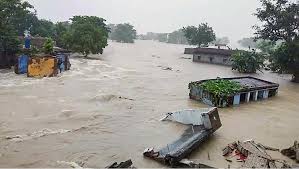
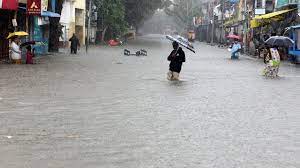
The city had long since graduated from the parsimony of monsoon. Now it was regular, buoyant and often uncomfortably bounteous. So much so that parked cars in the stilt space of apartments went for a swim in roaring waters that stretched to a height of 5 to 10 ft in some places.

One of the inmates from her window of the first-floor apartment saw her car transported to God knows where and screamed knowing full well she was helpless……could not get down into the vast sheet of water that left no sign of anything — let alone the road. And she hoped to find her car when the water level receded.

Just the night before, Ganesan, a young software engineer holding a senior position in a prestigious IT firm, had boarded the train to Srivaikuntam, a holy town close to Tirunelveli where Lord Vishnu held court. A devout believer and practitioner of sacraments that drilled into him the belief that men could succeed and achieve on the merits of brain and diligence but there was always a pervading force that guided him, he had prayed before boarding the train to Tiruchendur.

Four days back, the forecast of a formidable downpour had unnerved him but he wanted to see his parents after a gap of two years. They looked forward to it as much as he did. He was loath to cancel or put off the trip on the prevarications of nature. It could be sunny if the low depression changed its course at the last minute and veered away…not that he wished ill for his brethren in the neighbourhood.

So he took a chance, went ahead with the trip and saw the Tiruchendur Express chug slowly out of Chennai Egmore.

The weather was murky, stubbornly ominous.  He shrugged his shoulders, smiled.

“It’s all in the game. Let us leave it to the on High!”

*

On the way the starless sky got darker still. Dark clouds raged viciously to pour with the chilling owl-like howl of the wind. It was December and the cold wind hitting the windowpane of the train chugging in a monotony of extreme caution, made Ganesan’s arms shudder. He could see nothing in the dark and barely could imagine the procession of dense vegetation and fields obviously drenched in the downpour.

He put on his sweater, but it proved to be no protective cloak and so he had to put on more. “God! It’s frightening… hope I reach my place in one piece.” His thoughts were as intimidating as the weather outside.

Thankfully the lights were on. All the shutters were down in the coach except his, where the glass pane was tightly secured. The biting cold penetrated the inside of the coach though there was balancing warmth due to radiation of body heat.

An elderly man, in his early sixties, was travelling with his wife. There were several families busy chatting about their kin or the functions to attend in Tiruchendur, including the celebrated Murugan temple, though inwardly their minds were filled with queasy churnings.

“Where are you bound, sir?” asked the elderly man with hesitation. Ganesan smiled though he could smell the palpable concern in his voice.

“Vaikuntam sir….to be with parents. I am visiting them after two years.”

The old man returned the smile. “I am a resident of Tiruchendur, have got land and a rice mill there. My daughter is in Chennai. We came on a holiday to be with our granddaughter.”

There were two families in front in the three tier AC[1] coach. Both the families had taken their dinner early in the evening as they were too wary of railway catering. The elderly man, who introduced himself as Muthuraman, was not finicky enough to insist on home made food and shun rail service and had, therefore, ordered. So did Ganesan.

As they dug into the dinner, Muthuraman broke the silence, aware that the inclement weather could make anyone off colour. Silence made it worse, of course.

“Sir!  You must be in touch with parents. They would be worried. The cyclone had hit close to the Chennai coast a few weeks back but now it is pure monsoon fury. The earlier one affected Chennai badly and a lot of them are yet to come out of the trauma. I am worried about the open drains, small dams and culverts and lakes in southern part of the state which are all vulnerable.”

Ganesan, listening to him in rapt attention, said, “I know. A place like Vaikuntam cannot face up to persistent rain for a few hours, let alone the whole day or days. We own land very close to our home and the paddy will be submerged. My father told me just now he is bracing up to some severe loss of crop and money this year.  We have been facing it regularly.  A curse in what is otherwise a holy and fertile belt….”

Muthuraman’s wife nodded with lines of worry in her face. “What else could we do other than pray to Perumal?”

Muthuraman spat out in disillusionment.  “In cities, they lay roads which cannot stand a day’s rain, metro rail and residential skyscrapers where a guy in the balcony is no proof against a bust of breeze. I know of a lady who lived on the 14th floor and wanted to enjoy the scene. She opened the door and stood close to it when the gust of wind, slammed the door on her face knocking her over. She fell into coma and died soon after. I mean…a city is unable to cope with the pressures of money and commercial lobbies which have their way. So, the less said about a rural town the better.”

“God! It is horrible to hear. Such occurrences are hard to believe,” said Ganesan. “Migration in search of a job across the country is inevitable and it adds to the pressure. You need to have a footing somewhere and if all things go well settle down there. You need to build a roof unless you are lucky enough to get back to where you belong.”

Just then, the train had halted at Villupuram for more than 45 minutes before easing into motion. The passengers were blissfully unaware of it, having been preoccupied in their own uncertain world.

“We didn’t even know we were tagged here for this long,” said an exasperated Muthuraman. Ganesan, who was equally chagrined, didn’t reply.

*

Most of the stations en route wore a deserted look except for the idle tea stalls, The passengers too, especially senior citizens, didn’t venture out even for a hot sip of tea apprehending wet and possibly slippery platforms. Inevitably the train ran late by an hour considering possible presence of water or even flooding of the track. Thankfully, signals were in place though the menacing purr of the dark outside continued with the trundle of the train. 

“Are we closer to Kumbakonam?” enquired Muthuraman.

“We are, possibly will reach in a few minutes,” said Ganesan. “But the persisting rain worries me, sir. In some places ahead of us the track would be flooded, and it could delay us longer.”

“If the train drops us at our destinations, I will be more than happy, in fact thank God for it. It will be a blessing,” said one of the members of a family in front.

None of them however had any assurance that they would be blessed in some way.

*

Ganesan slept fitfully as he was accustomed to during train travel at night. “Cool, undisturbed sleep is a luxury,” he thought. Most of the passengers in the coach appeared to have slept well perhaps as a relief from the ordeal of the weather.

He looked at his watch and saw it as 6.30 a.m. He pulled up the shutters to see how the weather was and it was dull, wet and pouring. The train had stopped and he had no way of knowing the duration of the halt. He knew the train should have reached Srivaikundam by now but the stretching flooded farm fields on either side with sparse houses indicated that it was off schedule. There was no evidence of roads or pathways — had there been any.

“Srivaikundam is just a km away sir,” said a passenger who was bound for Tiruchendur.  “The train got an alert and has halted. Seems the ballasts are off. I hope it will start moving again.”

Ganesan gave a sigh of near relief though he was not sure whether the train would move. He could see a sheet of water submerging the fields though the track appeared to be navigable. He could not help blurting out his concern though.

“The scene is scary sir. We can neither get down nor remain in the train.”

Muthuraman, who had got up, was slightly sullen, looking clearly unwell. “Mr. Ganesan, I am glad you are close to your destination….we are still 30 km away.” His wife looked crestfallen, at the end of her tether.

“He is a heart patient. I am only concerned about him.” To Ganesan’s relief the train creaked, began to move. It trundled at a snail’s pace and reached Srivaikundam.

But his relief was only palpable and short lived as the message came through that any further movement was risk bound and foolhardy. One of the railway staffers came to the coach to inform them that the train might remain there for some time before the weather eased or the flooded tracks were restored to usable.

The train had already been delayed by more than 90 minutes. Ganesan was embraced by his father who had managed to come to the railway station in his car driving through flooded roads in the town in meditative hermitlike composure and caution.

Ganesan found someone tugging at his shirt and turned back to find Muthuraman”s wife apprehensive and scared.

“Son! He seems to have symptoms of cardiac attack. I don’t know what to do….”

Ganesan’s father rushed into the coach while Ganesan ran into the railway staff room to look for instant health care.

A stretcher was brought to take Muthuraman and rush him to the nearest hospital. Thankfully Ganesan knew of a specialist hospital close to the station and took him there, having forgotten to even speak to his fretful mother about what had held him and his father back. He knew his mother would continue to worry but there was no time to even ring her up.

“We must know first this man is all right or is recovering,” he muttered. His father took care to let his mother know that an emergency (not related to their family) had occurred and it had held them up at the station.

Ganesan also came to know that the train would not proceed further and that the passengers were holed up there.

A crisis had come home to roost.    

*

All the passengers shackled to Srivaikuntam for no fault of their own put it to a matter of a few hours but it seemed to stretch before the shadows of the night crept in. There was no let up in the rain and the southern belt was not equipped to handle nature’s unmitigated fury.

Thankfully the cafeteria run by a local rose to their needs and gave them breakfast but the railway catering service was not prepared for this eventuality. About 500 odd passengers, including the geriatric, needed round the clock vigil and sustenance though some were near breakdown amid symptoms of vomiting and diarrhea.  

Ganesan and his father were faced with a task not of their own choosing and of the magnitude of a mountain to climb. They could not let it go either. The roads in the town were clogged with knee-deep or waist level sheet of water, hindering their drive to do their best.

“It is a test of our nerve, my boy! We have not spent all our lives to creep back into our shell and watch them suffer, possibly die. It was your good fortune you reached along with others but the rest of them are braving it out. We have to show we are not heartless, nor do we rely on external agencies for help. There is no time for it. Rather we help ourselves.”

Ganesan, who had learnt forbearance in his stint in IT firm and not given to wasteful emotions, nodded and raised his thumb to his father.

His father used his decades old connections in the town, comprising hoteliers, vegetable and fruit vendors, nursing staff to help the distraught. 

The message from the railways was distressful and alarmingly ominous. “Sorry ladies and gentlemen. It will take a day or two. The track restoration is on in full blast and the signal system is in place. Please, please bear with us.”

*

The railway station was abuzz for the next prolonged hours with supplies of food, medicines and equipment being rushed to the respective coaches where the need was greater. It pertained to those who had symptoms of sudden dehydration, stomach disturbance, diarrhea and fatigue and stress related syndromes.

Ganesan and his father were on their feet all the time coordinating whatever they could with local connections of suppliers who rose to the occassion. Commerce took the back seat relatively to an extent.

Muthuraman showed signs of recovery a few hours later in the evening having gone through a CPR and defibrillation by the railway staff as was done in the event of unforeseen emergencies. His wife spoke to her daughter in Chennai who was almost ill with perplexity and worry since they left the city.

The news that the train had halted at Srivaikuntam and might not leave for a couple of days was less painful than one of father’s cardiac arrest which left the family in tatters. She could only hope her worst fears would not come true.  

Muthuraman opened his eyes, took note of his wife’s presence before locking his hands in gratitude with Ganesan.

“No sir…this is no time for thanking me and my father. You must thank all the locals who rose as an army to support and bring relief to so many who are stranded in the train still because they are unable to move out. We have arranged a big hall where most of them could be fed in turns. I am amazed sir… unable to believe it. But I have learnt a world of things from this experience. That alone matters sir.”

His father laid a reassuring hand on Muthuraman’s shoulder. “They are still at work. Possibly the train may leave tomorrow morning. I hear the track has been restored. If you wish you can return in the train itself or you can have somebody from Tiruchendur to take you in a car.”

Muthuraman’s wife said “It will take three days as per medical opinion to discharge him. We will ask our cousin to take us home in a car.”

“We will take care of you till you leave for home,” smiled Ganesan.

He took leave of the couple as one of the hotelier’s employees came up to him. “Sir! We have the next consignment of water cans ready for the station. Care to join us?”

“Of course,” said Ganesan and hopped into the front seat of the van.

A cool breeze blew across the vast fields from a distance. The weather had improved beyond expectation two days after the train came to a halt at the station, looking sunny, soothingly warm and reassuring after the terrible onslaught of the monsoon the day they left Chennai.

Suddenly, nature seemed to have recovered from its surge of fury and had become benign and benevolent. But anything could have happened in the passing hours when the fury was in full swing and the aftermath would have been horrible to imagine, much less experience.

But what gave him succor and regeneration was the unstinted display of human kindness and concern in times of adversity. The whole village worked as an army to guard, nurse and redeem the afflicted from the depths of despondency.

“There is always a light in the tunnel” thought Ganesan with a smile. “If I had any cynicism about the milk of human kindness it is gone.”

[1] Airconditioned

K.S.Subramanian, a retired Senior Asst. Editor from The Hindu, has published two volumes of poetry titled Ragpickers and Treading on Gnarled Sand through the Writers Workshop, Kolkata, India.   His poem “Dreams” won the cash award in Asian Age, a daily published from New Delhi. His essays and blogs can be found under his name in http://www.boloji.com.

.

PLEASE NOTE: ARTICLES CAN ONLY BE REPRODUCED IN OTHER SITES WITH DUE ACKNOWLEDGEMENT TO BORDERLESS JOURNAL

Click here to access the Borderless anthology, Monalisa No Longer Smiles

Click here to access Monalisa No Longer Smiles on Kindle Amazon International

Categories
Poetry

Sparrows

Poetry and translation from Korean by Ihlwha Choi

The sparrow I saw under the roof of a border checkpoint

crossing from the USA to Canada,
heading to the Mahatma Gandhi Memorial in New Delhi,
coming out with a bottle of drink from an alleyway
encountered a sparrow in front of a small shop.

Both the sparrows – the one seen at the border checkpoint
and the other in front of the small shop,
belong to the same species as those
that live under the eaves of my hometown houses.
Next to the KBS* New York correspondent’s mike,
the sparrow hopping on the street, nibbling on crumbs,
and the sparrow living in a salt warehouse in Sorae*, Incheon,
are both sparrows from the same species.

Like a quiet Korean restaurant sign by the road on the way to Las Vegas,
or like the little six-year-old Korean-American kid I met
at a small snack bar in an LA alleyway,
lonely yet welcoming fellow countrymen sparrows from afar.

*KBS: Korea Broadcasting System
*Sorae: small creek in Incheon City, Korea

Ihlwha Choi is a South Korean poet. He has published multiple poetry collections, such as Until the Time When Our Love will Flourish, The Color of Time, His Song and The Last Rehearsal.

.

PLEASE NOTE: ARTICLES CAN ONLY BE REPRODUCED IN OTHER SITES WITH DUE ACKNOWLEDGEMENT TO BORDERLESS JOURNAL. 

Click here to access the Borderless anthology, Monalisa No Longer Smiles

Click here to access Monalisa No Longer Smiles on Kindle Amazon International

Categories
Poetry

A Song of Life

By Sushant Thapa

A fakir sings of life,
In abandon,
He plays his string instrument.

Who said you can't
Pluck a smile and
Garden millions of them?

Writing the pain
And erasing it is
Like the ocean
Washing the shore.

The dew of dawn glistens
After night closes its purdah*.

Autumn's bare fate
Is spring's blooming reason.

Seasons follow one another;
Life sets and shines
Like seasonal sunshine.

Life can bloom,
While you appreciate
Waiting on a bench,

Under the reddish
Rhododendrons
That decorate and
Light up the landscape.

The seashells long to be collected!


*Curtain

Sushant Thapa writes poetry, book reviews and flash fiction. He has an M.A. in English from JNU, New Delhi. He is a lecturer of English and Business Communication in Biratnagar, Nepal. 

.

PLEASE NOTE: ARTICLES CAN ONLY BE REPRODUCED IN OTHER SITES WITH DUE ACKNOWLEDGEMENT TO BORDERLESS JOURNAL

Click here to access the Borderless anthology, Monalisa No Longer Smiles

Click here to access Monalisa No Longer Smiles on Kindle Amazon International

Categories
Review

How Suffering Unites across Borders

Book review by Rakhi Dalal

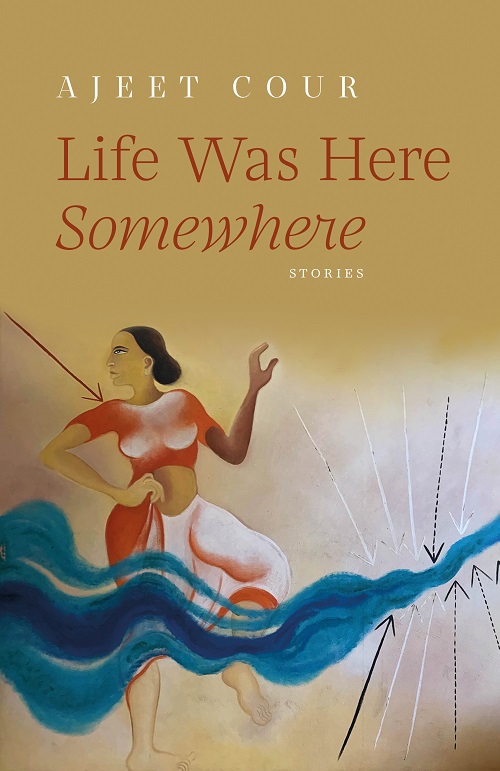
Title: Life Was Here Somewhere

Author: Ajeet Cour

Translators: Ajeet Cour and Minoo Minocha

Publisher: Speaking Tiger Books

India’s independence in 1947 came with its own set of political as well as social uncertainties and challenges. For the people displaced from their native places, it was a struggle to find a home in unknown places amidst strangers, a firm footing to hold. The stories in this collection by Ajeet Cour, a profound and powerful voice in Punjabi Literature, offer observation of everyday lives of common people in the wake of Partition and during the early years of settling of migrants in Delhi and Punjab. But more than accounts of struggle for their livelihoods, these are stories of interpersonal relationships, of pain, anguish, betrayal and heartbreaks.

Ajeet Cour was born in 1934 in Lahore and migrated to Delhi in 1947 after the Partition. She began writing short stories as a teenager and today is the author of twenty-two books which include novels, novellas, short stories, biographical sketches and translations. In 1986, she was awarded the Sahitya Akademi Award for her autobiography. In 2006, she was awarded the Padma Shri for her writing and her contributions in the field of social upliftment. She is the Founder President of the Indian Council for Poverty Alleviation, and has been President, Foundation of SAARC Writers and Literature. In 1977, Ajeet Cour also founded the Academy of Fine Arts and Literature, a non-commercial institution in New Delhi for the promotion of the arts, literature, theatre, music and dance.

This book is a collection of fourteen short stories translated from Punjabi to English by Ajeet Cour and Minoo Minocha. In her note at the beginning of this collection, the author says:

“I write because I am a witness to the horrors of daily life, day-to-day existence of people living next door, or in Punjab or Kashmir or Assam, or in Bosnia or Chechnya or Rawanda, or anywhere else in the world, feeling my destiny entwined with theirs, living in fear, dying like flies. And I can’t look the other way. I write because I believe that those who remain silent become a part of the dark conspiracy.”

The stories comprising this collection are accounts of everyday horrors faced by common people, of the brunt of estranged and conflicted relationships bore by people even as they grappled to find and hold onto a ground in life after the suffering endured during partition. Most of these stories are women centered and carry a first person narrator. The story ‘Walking a Tightrope’ is that of a woman torn between her husband and an irresponsible son disowned by his father. The author offers a nuanced glimpse into before/after the partition in a big household. She employs the image of kitchen to demonstrate a married woman’s domain as well as her confines in a patriarchal household. ‘Death Among Strangers’ is a story of a grief stricken daughter who could not take care well for her father post Partition due to the apathy of her husband. Both stories use death as the pivot which jostles the main women characters out of their pre-determined roles of mother and wife respectively. 

In some of the stories, characters navigate through the ‘babudom’ of Indian Bureaucracy. Trying to find ways to get their problems addressed, they often surrender to the system which becomes increasingly inaccessible to them. Often, the characters are irritated by the system which makes them invisible and works only at the behest of those in power. The title of such a story ‘Clerk Maharaja’, otherwise an oxymoron, denotes the high esteem accorded to a regular class government employee who carries enormous power when it comes to the movement of files from one desk to the other.

In the titular story ‘Life Was Here Somewhere’, a helpless and disgruntled narrator declares the whole country as a heap of garbage no one is interested in cleaning, and those running the country as visceral creatures feasting on the stinking pile.

The story ‘The Kettle is Whispering’ explores kinship between a single and a widowed woman whereas the story ‘Unsought Passion’ explores the ugliness of unwarranted attention. Both stories take us to the corridors of working women hostels in the early years of Delhi post independence, presenting a window to the dynamics of interactions and disagreements.

In a couple of stories the horror of terrorism is explored where the loved ones are either targeted by extremists or by the forces fighting extremism. These stories focus upon the suffering families, their anxieties and pain as they try to make sense of their loss. In ‘Dead-End’ a young woman tries to save a young wounded extremist even though she is apprehensive that he might have killed her brother.

Ajeet Cour poignantly portrays the internal and interpersonal conflicts as faced by ordinary people in the course of their everyday lives in the stories of this collection. Her writing resonates with their pain, her words capture their mindscapes bearing witness to horrifying bestiality humans are capable of and continue to exhibit in their dealings with their fellow human beings. 

Rakhi Dalal is an educator by profession. When not working, she can usually be found reading books or writing about reading them. She writes at https://rakhidalal.blogspot.com/ .

.

PLEASE NOTE: ARTICLES CAN ONLY BE REPRODUCED IN OTHER SITES WITH DUE ACKNOWLEDGEMENT TO BORDERLESS JOURNAL

Click here to access the Borderless anthology, Monalisa No Longer Smiles

Click here to access Monalisa No Longer Smiles on Amazon International

Categories
Excerpt

Whispers of the Heart

Title: Whispers of the Heart – Not Just A Surgeon: An Autobiography

Author: Dr Ratna Magotra

Publisher: Konark Publishers

A noteworthy incident occurred at Northcote Nursing Home that garnered attention in my favour. Dr L.H. Hiranandani (widely known as LH), was an acclaimed head and neck surgeon. He was known internationally for his expertise in performing radical neck resections and for the remarkable speed with which he conducted surgeries. He wielded significant influence in both medical and social circles, and routinely performed surgeries on his private patients at Northcote.

One day, a highly distinguished lawyer from Madras (Chennai) underwent a neck cancer operation at Northcote, with me assisting LH during the procedure. As was his practice, LH completed the surgery swiftly and left for his clinic. Meanwhile, the patient had been transferred to his private room, while I was tending to my remaining duties on the floor. As part of my routine, I made rounds to check on the patients who had undergone surgery.

Upon entering the lawyer’s room, I was taken aback by the sight of him struggling to breathe. His hand felt cold and clammy, and his pulse was feeble. Although he remained conscious, he appeared extremely restless even as I tried to reassure him. It became evident that he was choking, and I realised that unless something was done, his life would slip away. Unfortunately, I was uncertain about the specific course of action needed to save him. While the nurse had attempted suction and increased the oxygen supply through a face mask, these measures appeared ineffective. The patient’s breathing grew shallower, and his lips and nails began to turn blue. It became increasingly obvious to me that blood clots were obstructing his airway, and simply increasing oxygen flow would not suffice. Private patients received distinct treatment compared to those in public hospitals. In this setting, resident doctors were not authorised to make decisions independently and were required to follow the consultant’s instructions.

Unfortunately, I couldn’t afford the delay involved in contacting the consultant, as the process would have entailed routing the call through the telephone exchange, involving operators at both ends and resulting in a significant loss of valuable time.

I recalled reading about tracheostomy (creating an opening in the windpipe) during my undergraduate studies, though I had never witnessed the procedure being done (ENT surgeons usually performed tracheostomies). Acting on instinct and without hesitation, I reached for a scalpel from the emergency tray and made a decisive incision in the middle of the patient’s neck. There were substantial blood clots surrounding and compressing the trachea. As soon as this pressure was released, there was a dramatic transformation in the patient’s condition, and his breathing improved considerably. I carefully removed the blood clots both from within and around the trachea using suction before inserting a tracheostomy tube. To my immense relief, there was significant improvement, and the patient’s lips and nails regained their natural colour. He was soon breathing comfortably, and so was I. Assured of his well-being, I promptly requested blood from the blood bank and decided it was time to inform LH, the operating surgeon.

The patient had stabilised, narrowly escaping from the clutches of death. Now, I had to confront the repercussions of my actions because I had essentially performed a minor operation without obtaining permission from the consultant. Additionally, I had neither informed the patient’s family about the procedure, nor had I obtained their written consent. The list of mistakes was growing longer, and LH’s reputation in the city was significant enough to potentially impact my future prospects in Bombay.

In the midst of this emotional turmoil, I made a call to LH. His clinic was situated near the Regal Theatre, in close proximity to Northcote. He arrived swiftly at the hospital. LH was known for his predilection for taking the stairs rather than the elevator, and I could distinctly hear his brisk footsteps and booming voice as he inquired, ‘What happened? Who did this?’ I, as the sole resident doctor and with no alibi, not that any was necessary, stood there, anxious and unsure of what would transpire next.

When LH entered the room, the lawyer, now fully conscious and aware of the ordeal he had gone through, managed a weak smile. I expected LH to explode, and I stood there with a numb mind, waiting for the inevitable. To my astonishment, LH rushed towards me and, to my surprise and that of others, nurses and hospital personnel gathered there, embraced me in his characteristic, effusive manner. He repeatedly and profusely thanked me for displaying presence of mind during the crisis, which could have cost the lawyer his life. He appreciated that his patient had been saved. Overwhelmed with relief, I could have collapsed, but there was still work to be done.

The patient was swiftly transported to the OR, where we located and ligated the bleeding vessel responsible for the incident. We also revised and secured the tracheostomy, this time by a qualified ENT surgeon, LH himself. Subsequently, the patient was shifted to his room. As he was leaving, LH discreetly handed me an envelope in my hands containing crisp currency notes. Sentimental as I was, I left the envelope and its contents untouched for several years. I knew that two lives had been saved that day!

Word of the incident spread quickly to Nair Hospital, where LH held an honorary professorship in ENT surgery. Several consultants from Nair Hospital, who regularly operated at Northcote, inundated me with congratulations. I had every reason to be pleased. The incident had generated immense goodwill.

(This excerpt from Dr Ratna Magotra’s ‘Whispers of the Heart – Not Just A Surgeon: An Autobiography’ has been published with permission from Konark Publishers, New Delhi)

About the Book

This book provides a captivating glimpse into the journey of a cardiac surgeon, illuminating the story of a small-town girl who, as an outsider, struggled to get a foothold in an intensely competitive field. Her eventual triumph serves as a poignant representation of an earlier generation of Indians post-Independence, showcasing their resilience through both triumphs and tribulations.

Throughout the narrative, the author shares her personal philosophy on the practice of medicine and addresses the evolving landscape of societal norms, encouraging readers to pause and reflect. While she doesn’t make exceptions for being a female cardiac surgeon in a predominantly male speciality, her narrative serves as a powerful source of motivation for women aspiring to break barriers in any field.

This book also sheds light on the transformation of healthcare in contemporary India, with the author playing a significant role in its development. Additionally, it delves into facets of her life beyond the medical realm, including her enriching travels and impactful social activism.

About the Author

After completing her MBBS at Lady Hardinge Medical College in New Delhi, Dr Ratna Magotra pursued Master’s degrees in general surgery and cardiothoracic surgery from Bombay University (now known as University of Mumbai) while working at BYL Nair Hospital in the city. She further honed her skills through training at Guy’s Hospital in the UK and the Texas Heart Institute in Houston, USA.

Dr Magotra’s illustrious career led her to become a professor and head of the Cardiovascular and Thoracic Surgery Department at the prestigious GS Medical College and King Edward Memorial Hospital in Mumbai. Despite her demanding role, she remained committed to issues beyond medicine, both as a department head and as a practising paediatric cardiac surgeon. Her outstanding contributions to the field have earned her numerous accolades, including the Lifetime Achievement Award from the Indian Association of Cardiovascular-Thoracic Surgeons in 2017, a testament to her exceptional expertise.

PLEASE NOTE: ARTICLES CAN ONLY BE REPRODUCED IN OTHER SITES WITH DUE ACKNOWLEDGEMENT TO BORDERLESS JOURNAL

Categories
Essay

Chandigarh: A City with Spaces

By Ravi Shankar

I was apprehensive. I had spent time in New Delhi when I was very young. But after that, I had never travelled to the north of India. I was traveling by chair car on the Rajdhani Express to Delhi and from there, by bus to Chandigarh. Sleeping on a chair is difficult though the coach offers enough legroom, and the seats are wide. The time was December, and the weather would be cold. The bus journey to Chandigarh from New Delhi took a long time. I was moving through the flat plains of Haryana with fields on both sides of the road. The sun set early during winter in the north. By 5 pm, it was beginning to get dark. The sun had truly set by the time I reached Chandigarh.

The cold was a de novo experience. Using a quilt was something new though later I began the appreciate the gentle warmth provided using the body’s own heat. Coming from the claustrophobic confines of Mumbai, the wide-open spaces of Chandigarh were a welcome change. Some of the traffic circled the roundabouts that were larger in this city than apartment complexes in Mumbai. Space, space, and plenty of space was my first impression of the city.

Chandigarh is believed to have been named after the Goddess Chandi whose temple is located near the city. Garh means a fort. This was India’s first planned city. Various teams of architects had been commissioned and the Swiss-French artist, Le Corbusier was the last in the series. Le Corbusier designed several buildings in Chandigarh including the secretariat, the high court, and the Palace of Assembly. He created an open-hand sculpture like he had done in the other cities designed by him. He designed many structures at the Postgraduate Institute of Medical Education and Research (PGIMER) where I was a resident doctor. His influence was also seen in Panjab University across the road in Sector 14. One of the challenges with a sprawling low-density design was services were located far away and you required a vehicle to access services and go to different areas. In high-density areas like Mumbai, you can just step down to access shops and services. This was in the days before online ordering and e-commerce platforms.

The city is divided into sectors. I settled in the Old Doctor’s Hostel or ODH in Sector 12, where the institute was located. I eventually shifted to the D block of ODH, the newest to be constructed. This had the benefit of a wash basin within the room reducing your trips to the shared restrooms. The research blocks and the college canteens had the trademarks of Le Corbusier’s design. He was fond of using primary colours like blue, yellow, and red as evidenced in the bright hues of the doors and windows of the hostel. The original structure was good but was constructed in the 1960s. By the late 1990s, living standards had improved and the rooms began to feel inadequate. He was also fond of using curves in his buildings and each room had a curve and there was a specially made wooden table to fit into the curve. Most of these had been destroyed over the years. The hostel rooms were single occupancy. This was especially important for the residents in clinical departments as it allowed them to rest after long hours of duty.

Sector 17 was the main commercial hub of the town and had several high-end restaurants and shops. People were fashionably dressed though the cold weather during winter required a lot of clothing. Winter mornings could get very foggy. In those days air pollution levels were still low and winters were generally pleasant. The food was good — ranging from aloo parathas (Indian flatbread stuffed with a spicy potato mix), gobi parathas (made with a stuffing of cauliflower), mooli parathas (Indian flatbread stuffed with a spicy radish mix), tandoori chicken (chicken grilled in a clay oven called the tandoor), tikkis (a small cutlet made of potatoes, chickpeas and different spices), chole bhature (a type of chana masala and puris) and samosas (triangular fried pastry with a savoury filling). Punjabis love their food. The food is wholesome but may be high in saturated fats. There were several tandoori chicken restaurants and chicken was a perennial favourite. The tandoor is a great invention though it may be difficult for the person making rotis in the heat of peak summer. But tandoori rotis eaten piping hot dipped in a spicy gravy on a cold night are a pure delight.

The sector 11 market was the nearest to PGI and there were two or three dhabas (roadside eateries) serving Punjabi delicacies. There was also a more upscale restaurant serving variations of the dosa. These had been modified to north Indian tastes and this was my first introduction to chicken dosa. The taste was good, but the stuffing was very unconventional. The buses were old and had seen better days. I usually took the bus to Sector 17 and to The Tribune colony in Sector 29. Started in 1881, The Tribune is one of the oldest newspapers in North India and one of my father’s acquaintances worked at the newspaper.                 

The Panjab University had a sprawling campus just across the road at Sector 14. I loved to roam through the beautiful campus. The market at the university had shops selling delightful Punjabi samosas. These were large, the covering was crisp, and the stuffing of potatoes and chickpeas was spicy and tasty. Those days a samosa cost around one rupee and fifty paisa — light on the pocket though wages were lower those days.

The northern sectors of the city including 12 where PGI was located were the older ones and more prosperous. The Zakir Hussain Rose Garden in sector 16 was named after India’s former president and had over 1600 species of roses. I used to visit occasionally, especially during the winters when the roses were in bloom. Summers in Chandigarh are hot but less than in many other places in the plains due to the closeness to the hills.

The Rock Garden is a major attraction. The garden was begun to be built by Nek Chand in 1957. The garden was built illegally but later became world famous. It is built entirely from discarded household and industrial waste. There is also a doll’s museum inside the garden. One of my fellow residents knew Nek Chand very well and he used to play with his son when he was young. Models of rock gardens have since been built in several Indian cities.

Summers in Chandigarh are difficult. The sun is relentless. The institution timings change. Before the onset of summer, one visits the desert cooler shops to buy new grass screens for the coolers. The cooler is a great invention with a water pump and screens moistened by water through which air is drawn to cool the room. They work well but when there were power outages in summer, they stopped functioning. The onset of the monsoon in late July makes things difficult. The humidity is high, and the temperature is still above 35 degrees celsius. October to December and March to April are usually pleasant. Late December, January, and February are cold and there is a threat of western disturbances that bring rain and cold damp weather. The city has two satellite townships, one in Punjab (Mohali) and the other in Haryana (Panchkula).

Chandigarh has one of the highest human development indicators in India. I enjoyed my three years in this planned city at the foothills of the Himalayas and I look forward to a visit in the future!  

Dr. P Ravi Shankar is a faculty member at the IMU Centre for Education (ICE), International Medical University, Kuala Lumpur, Malaysia. He enjoys traveling and is a creative writer and photographer.

.

PLEASE NOTE: ARTICLES CAN ONLY BE REPRODUCED IN OTHER SITES WITH DUE ACKNOWLEDGEMENT TO BORDERLESS JOURNAL

Click here to access the Borderless anthology, Monalisa No Longer Smiles

Click here to access Monalisa No Longer Smiles on Kindle Amazon International