Book Title: Love and Crime in the Time of Plague: A Bombay Mystery
Author: Anuradha Kumar
Publisher: Speaking Tiger Books
With Love and Crime in the Time of Plague, a sequel to her first Bombay mystery novel, The Kidnapping of Mark Twain, Anuradha Kumar brings historical fiction and moral inquiry into a gripping, imaginative dialogue. Placed in 1896 Bombay during the plague, the book begins with an image of visceral dread — a rabid rat biting a dock-worker — and from that moment on, the city is portrayed as a place where anxiety, illness and suspicion trickle into every crack of public and private life. The author, while successfully evoking an image of a city under siege, also makes a reader wonder whether epidemics, when they arrive, also expose deeper social and ethical contagions long embedded in a society.
The novel reconstructs the atmosphere of late nineteenth-century Bombay. The city, the colonial bungalows, the horses, the streets and the just added bicycles to the streets. Along with unnerving coexistence with science and superstition, it comes palpably alive in the pages. The plague is handled with restraint. Hospitals and the quarantine measures take the hue of resented interventions which provoke resistance from communities that view them as assaults on religious customs and social autonomy.
At the centre of the narrative is Maya Barton, a character whose quiet determination and curiosity anchors the novel. Alongside her is Henry Baker, an American trade official who figured in Kumar’s earlier novel, The Kidnapping of Mark Twain. The prequel had introduced both characters in a different historical and emotional register, foregrounding adventure, transnational intrigue, and the unsettling proximity between colonial India and the American literary celebrity. In Love and Crime in the Time of Plague, Maya and Henry reappear, seemingly shaped by prior experience. The relationship between the two books is subtle rather than overt. The second does not really depend upon the first for comprehension. Yet, the readers familiar with The Kidnapping of Mark Twain will sense a continuity of temperament, trust, and shared ethical curiosity between the protagonists.
This continuity is substantial indeed. Where the prequel revolved around kidnapping and spectacle, Love and Crime in the Time of Plague turns inward, replacing dramatic motion with moral gravity. Maya emerges as an introspective figure, troubled by unanswered questions about her lineage and identity. Her own search reflects the wider inquiry that shapes the book — what realities lie hidden beneath official narratives, and who bears the cost of their concealment? The discovery of some mysterious sketches further draws Maya into an investigation which links private memory with public disorder.
Kumar here renders institutions as sites of ethical strain. Offices, hospitals and private societies are shown not as abstract systems but as fragile human constructs, susceptible to fear, bias, and ambition. A secret organisation which opposes plague-control measures shows the darker side of communal solidarity, revealing how traditions can be mobilised to validate coercion and violence. Where colonial authority is shown without romanticisation, scientific rationality is depicted entangled with coercion and indifference.
Stylistically, the prose is austere and restrained. The unhurried pacing permits atmosphere and character to come together steadily. Although the narrative may appear deliberately slow, but this slowness mirrors the creeping, inescapable nature of the plague itself. The revealing of conspiracies does not erase loss, nor does the waning of the epidemic reinstate moral balance. Trauma lingers, relationships are changed, and the city remains marked by what it has borne. In this sense, the novel extends the thematic concerns of The Kidnapping of Mark Twain. It moves from the excitement of historical adventure to a more sobering contemplation on accountability, memory, and subsistence.
This book is historically immersive and yet quietly unsettling. Reflecting upon how societies perform under intense pressure, and how crime often emerges not from evil but from fear and silence. It stands as a richly imagined historical mystery can be read on its own. When read alongside its prequel, it divulges the steady evolution of a fictional world—and of characters—who keep searching for truth in times when certainty itself is under threat.
Rakhi Dalal is an educator by profession. When not working, she can usually be found reading books or writing about reading them. She writes at https://rakhidalal.blogspot.com/ .
.
PLEASE NOTE: ARTICLES CAN ONLY BE REPRODUCED IN OTHER SITES WITH DUE ACKNOWLEDGEMENT TO BORDERLESS JOURNAL
In the market several ‘instantly get rich’ books are available. And of course, these are available in all languages as well. But the twist in the tale is that the author might not have followed the advice s/he dispenses through their writings. Samuel Langhorne Clemens, who is popular through his pen name as ‘Mark Twain’, is an example in context.
Every English fiction reader worth his name would have read Mark Twain’s TheAdventures of Tom Sawyer and Adventures ofHuckleberry Finn. Twain is one of those rare writers who achieved success and fame during his lifetime through his writings. He earned a substantial amount of money from his works.
Twain is also famous for quotes and predictions. He made two accurate predictions. The most popular one was about his death. Twain was born in the year 1835 CE when Halley’s Comet made its appearance. Twain wrote in 1909 CE that he was born when Halley’s comet appeared in 1835 CE and when it would appear next (i.e., in the year 1910 CE), it would be a great disappointment if they both didn’t go out together. True to his words, Twain died of heart attack shortly after Halley’s comet’s closest approach to the Sun.
Perhaps a lesser-known prediction is in Twain’s quote, “Buy land, they are not making it anymore”. Yet Twain rarely invested in land. His favourite investment was science and technology. During his lifetime, Twain is reported to have unwisely invested about US$300,000 (present-day valued at approx. US$8 million) in failed technologies. All this in a span of about 14 years which not only speaks volumes about his loss but also about Twain’s earning’s through writings. Added to this, Twain’s children’s poor health put him in financial difficulties. He is said to have even filed for bankruptcy. Nevertheless, at the time of his death, Twain owned an estate valued at US$471,000 (present-day value about US$11 million). Ironically, Twain’s family fizzled out either to disease or to alcoholism and pills.
On the other hand, a lesser-known individual who’s a contemporary of Twain, a Mr. Friedrich Trump, a German emigrant to United States of America, invested heavily in land, real estate, hotels and brothels. By 1904 CE, Trump is said to have visited his home country Germany upon insistence of his wife whence he is believed to have deposited an amount in the excess of US$600,000 into a bank.
Trump invested in land heavily in America. Owing to his German credentials, Trump maintained a low-profile during world war I. However, due to flu and secondaries, Trump died in the year 1918 CE. Trump’s wife and his son continued the real estate projects after Trump’s death. Trump’s legacy lives in the form of present-day American President Donald Trump who happens to be Friedrich’s grandson.
Note. It is not known to the present author whether Friedrich knew about Twain’s predictions.
.
Chetan Datta Poduri is a doctorate in Biotechnology. After about a decade of teaching in premier institutes across India, Chetan turned to full-time Writing. Also, presently Chetan self-finances his research. More about him at https://cdpoduri.wordpress.com/
.
PLEASE NOTE: ARTICLES CAN ONLY BE REPRODUCED IN OTHER SITES WITH DUE ACKNOWLEDGEMENT TO BORDERLESS JOURNAL
A review of Anuradha Kumar’s Wanderers, Adventurers, Missionaries: Early Americans in India (Speaking Tiger Books) and an interview with the author
Migrants and wanderers — what could be the differences between them? Perhaps, we can try to comprehend the nuances. Seemingly, wanderers flit from place to place — sometimes, assimilating bits of each of these cultures into their blood — often returning to their own point of origin. Migrants move countries and set up home in the country they opt to call home as did the family the famous Indian actor, Tom Alter (1950-2017).
Anuradha Kumar’s Wanderers, Adventurers, Missionaries: Early Americans in India captures the lives and adventures of thirty such individuals or families — including the Alter family — that opted to explore the country from which the author herself wandered into Singapore and US. Born in India, Kumar now lives in New Jersey and writes. Awarded twice by the Commonwealth Foundation for her writing, she has eight novels to her credit. Why would she do a whole range of essays on wanderers and migrants from US to India? Is this book her attempt to build bridges between diverse cultures and seemingly diverse histories?
As Kumar contends in her succinct introduction, America and India in the 1700s were similar adventures for colonisers. In the Empire Podcast, William Dalrymple and Anita Anand do point out that the British East India company was impacted in the stance it had to colonisers in the Sub-continent after their experience of the American Revolution. And America and India were both British colonies. They also were favourites of colonisers from other European cultures. Just as India was the melting pot of diverse communities from many parts of the world — even mentioned by Marco Polo (1254-1324) in The Kingdom of India — America in the post-Christopher Columbus era (1451-1546) provided a similar experience for those who looked for a future different from what they had inherited. The first one Kumar listed is Nathaniel Higginson (1652-1708), a second-generation migrant from United Kingdom, who wandered in around the same time as British administrator Job Charnock (1630-1693) who dreamt Calcutta after landing near Sutanuti[1].
Kumar has bunched a number of biographies together in each chapter, highlighting the commonality of dates and ventures. The earliest ones, including Higginson, fall under ‘Fortune Seekers From New England’. The most interesting of these is Fedrick Tudor (1783-1864), the ice trader. Kumar writes: “In Calcutta, Dwarkanath Tagore, merchant and patron of the arts (Rabindranath Tagore’s grandfather), expressed an interest to involve himself in ice shipping, but Tudor’s monopoly stayed for some decades more. Tagore was part of the committee in Calcutta along with Kurbulai Mohammad, scion of a well-established landed family in Bengal, to regulate ice supply.”
Also associated with the Tagore family, was later immigrant Gertrude Emerson Sen (1890-1982, married to Boshi Sen). She tells us, “Tagore wrote Foreword to Gertrude Emerson’s Voiceless India, set in a remote Indian village and published in 1930. Nobel Laureate Rabindranath Tagore called Emerson’s efforts, ‘authentic’.” She has moved on to quote Tagore: “The author did not choose the comfortable method of picking up information from behind lavish bureaucratic hospitality, under a revolving electric fan, and in an atmosphere of ready-made social opinions…She boldly took in on herself unaided to enter a region of our life, all but unexplored by Western tourists, which had one great advantage, in spite of its difficulties, that it offered no other path to the writer, but that of sharing the life of the people.’” Kumar writes of an Afro-American scholar, called Merze Tate who came about 1950-51 and was also fascinated by Santiniketan as were some others.
Another name that stuck out was Sam Higginbottom, who she described as “the Farmer Missionary” for he was exactly that and started an agricultural university in Allahabad. Around the same time as Tagore started Sriniketan (1922), Higginbottom was working on agricultural reforms in a different part of India. In fact, Uma Dasgupta mentions in A History of Sriniketan: Rabindranath Tagore’s Pioneering work in Rural Reconstruction that Lord Elimhurst, who helped set up the project, informed Tagore that “another Englishman” was doing work along similar lines. Though as Kumar has pointed out, Higginbottom was a British immigrant to US — an early American — and returned to Florida in 1944.
There is always the grey area where it’s difficult to tie down immigrants or wanderers to geographies. One such interesting case Kumar dwells on would be that of Nilla Cram Cook, who embraced Hinduism, becoming in-the process, ‘Nilla Nagini Devi’, as soon as she reached Kashmir with her young son, Sirius. She shuttled between Greece, America and India and embraced the arts, lived in Gandhi’s Wardha ashram and corresponding with him, went on protests and lived like a local. Her life mapped in India almost a hundred years ago, reads like that of a free spirit. At a point she was deported living in an abject state and without slippers. Kumar tells us: “Her work according to Sandra Mackey combined ‘remarkable cross-cultural experimentation’ and ‘dazzling entrepreneurship.’”
The author has written of artists, writers, salesmen, traders (there’s a founder/buyer of Tiffany’s), actors, Theosophists, linguists fascinated with Sanskrit, cyclists — one loved the Grand Trunk Road, yet another couple hated it — even a photographer and an indentured Afro-American labourer. Some are missionaries. Under ‘The Medical Missionaries: The Women’s Condition’, she has written of the founders of Vellore Hospital and the first Asian hospital for women and children. Some of them lived through the Revolt of 1857; some through India’s Independence Movement and with varied responses to the historical events they met with.
Kumar has dedicated the book to, “…all the wanderers in my family who left in search of new homes and forgot to write their stories…” Is this an attempt to record the lives of people as yet unrecorded or less recorded? For missing from her essays are famous names like Louis Fischer, Webb Miller — who were better known journalists associated with Gandhi and spent time with him. But there are names like Satyanand Stokes and Earl and Achsah Brewster, who also met Gandhi. Let’s ask the author to tell us more about her book.
Anuradha Kumar
What made you think of doing this book? How much time did you devote to it?
These initially began as essays for Scroll; short pieces about 1500-1600 words long. And the beginnings were very organic. I wrote about Edwin Lord Weeks sometime in 2015. But the later pieces, most of them, were part of a series.
I guess I am intrigued by people who cross borders, make new lives for themselves in different lands, and my editors—at Scroll and Speaking Tiger Books—were really very encouraging.
After I’d finished a series of pieces on early South Asians in America, I wanted to look at those who had made the journey in reverse, i.e., early Americans in India, and so the series came about, formally, from December 2021 onward. I began with Thomas Stevens, the adventuring cyclist and moved onto Gertrude Emerson Sen, and then the others. So, for about two years I read and looked up accounts, old newspapers, writings, everything I possibly could; I guess that must mean a considerable amount of research work. Which is always the best thing about a project like this, if I might put it that way.
What kind of research work? Did you read all the books these wanderers had written?
Yes, in effect I did. The books are really old, by which I mean, for example, Bartolomew Burges’ account of his travels in ‘Indostan’ written in the 1780s have been digitized and relatively easy to access. I found several books on Internet Archive, or via the interlibrary loan system that connects libraries in the US (public and university). I looked up old newspapers, old magazine articles – loc.gov, archive.org, newspapers.com, newspaperarchive.com, hathitrust.org and various other sites that preserve such old writings.
You do have a fiction on Mark Twain in India. But in this book, you do not have very well-known names like that of Twain. Why?
Not Twain, but I guess some of the others were well-known, many in their own lifetime. Satyanand Stokes’ name is an easily recognisable still especially in India, and equally familiar is Ida Scudder of the Vellore Medical College, and maybe a few others like Gertrude Sen, and Clara Swain too. I made a deliberate choice of selecting those who had spent a reasonable amount of time in India, at least a year (as in the case of Francis Marion Crawford, the writer, or a few months like the actor, Daniel Bandmann), and not those who were just visiting like Mark Twain or passing through. This made the whole endeavour very interesting. When one has spent some years in a foreign land, like our early Americans in India, one arguably comes to have a different, totally unique perspective. These early Americans who stayed on for a bit were more ‘accommodating’ and more perceptive about a few things, rather than supercilious and cursory.
And it helped that they left behind some written record. John Parker Boyd, the soldier who served the Nizam as well as Holkar in Indore in the early 1800s, left behind a couple of letters of complaint (when he didn’t get his promised reward from the East India Company) and even this sufficed to try and build a complete life.
How do these people thematically link up with each other? Do their lives run into each other at any point?
Yes, I placed them in categories thanks to an invaluable suggestion by Dr Ramachandra Guha, the historian. I’d emailed him and this advice helped give some shape to the book, else there would have been just chapters following each other. And their lives did overlap; several of them, especially from the 1860s onward, did work in the same field, though apart from the medical missionaries, I don’t think they ever met each other – distances were far harder to traverse then, I guess.
What is the purpose of your book? Would it have been a response to some book or event?
I was, and am, interested in people who leave the comforts of home to seek a new life elsewhere, even if only for some years. Travelling, some decades ago, was fraught with risk and uncertainty. I admire all those who did it, whether it was for the love of adventure, or a sense of mission. I wanted to get into their shoes and see how they felt and saw the world then.
Is this because you are a migrant yourself? How do you explain the dedication in your book?
I thought of my father, and his cousins, all of whom grew up in what was once undivided Bengal. Then it became East Pakistan one day and then Bangladesh. Suddenly, borders became lines they could never cross, and they found new borders everywhere, new divisions, and new homes to settle down in. They were forced to learn anew, to always look ahead, and understand the world differently.
When I read these accounts by early travellers, I sort of understood the sense of dislocation, desperation, and sheer determination my father, his cousins felt; maybe all those who leave their homes behind, unsure and uncertain, feel the same way.
You have done a number of non-fiction for children. And also, historical fiction as Aditi Kay. This is a non-fiction for adults or all age groups? Do you feel there is a difference between writing for kids and adults?
I’d think this is a book for someone who has a sense of history, of historical movements, and change, and time periods. A reader with this understanding will, I hope, appreciate this book.
About the latter half of your question, yes of course there is a difference. But a good reader enters the world the writer is creating, freely and fearlessly, and I am not sure if age decides that.
You have written both fiction and non-fiction. Which genre is more to your taste? Elaborate.
I love anything to do with history. Anything that involves research, digging into things, finding out about lives unfairly and unnecessarily forgotten. The past still speaks to us in many ways, and I like finding out these lost voices.
What is your next project? Do you have an upcoming book? Do give us a bit of a brief curtain raiser.
The second in the Maya Barton-Henry Baker series. In this one, Maya has more of a lead role than Henry. It’s set in Bombay in the winter of 1897, and the plague is making things scary and dangerous. In this time bicycles begin mysteriously vanishing… and this is only half the mystery!
There is a marble top chest that fills the small wall to the left of the front door. It’s walked by multiple times a day, but unless you do the dusting, you forget it’s there.
Standing in front of it now waiting on Dee, I realise there is a crystal lamp and three books that stand by themselves, thick like upright bricks, no bookends, makes us look well read, haven’t looked at them in years.
There’s Texas by Michener, The Complete Short Stories of Mark Twain, and The Oxford Book of American Verse. She says she’ll be a few more minutes, this is not a rare occurrence.
I take the Oxford back to the couch and let it fall open to Mnemosyne by Trumbull Stickney. There are 1132 pages, what are the odds that it opens to Trumbull Stickney. Trumbull died at thirty of a brain tumor.
He graduated Harvard in 1895, did his doctorate at the Sorbonne on the Bhagavad Gita. Had he lived longer he would have been one of the greats, his work did not have time to mature. I’m wondering what matures the work of poetry.
Certainly, sitting in this tome at the front door, aging like fine wine, tannins have smoothed the legacy of Trumbull’s goddess of memory. During the next wait, while Dee primps, I’m going to randomly open to a short story.
I lived in Texas for three long years and saw the movie with Glenn Ford, it doesn’t hold a candle to Mark Twain, and can’t touch what is now the undying remembrance, the myth of the near greatness of Trumbull Stickney.
PALM READER
Well, let’s take a look. You haven’t had to work too hard.
I haven’t dug graves or felled trees, but I’ve always worked hard.
I didn’t mean you weren’t productive, I just meant they’re smooth, not roughened, and of course, at your age, a little pruney.
Well, now that we have that out of the way, what about the future?
First the past. You don’t anymore, but you used to bite your nails and cuticles. You have an attention deficit and an inner tension. You also have a soulmate, someone who has loved you unconditionally your whole life. That doesn’t make you exclusive, but it is rare.
Right on both counts. There are children being slaughtered and neglected. It bothers me …. a lot.
It will take time away from you. You should do what you can to step away from these thoughts and this bitterness. Find a happy place as often as possible.
Are you suggesting political ignorance would make me live longer?
No, that would not make you happy, but you dwell on not being able to do anything, and you can. You can care, as you do, you can also spend more time focusing on the good around you and less on the evil. And as we both know you have the hands of a poet.
Craig Kirchner loves storytelling. He has been nominated for the Pushcart three times, and has a book of poetry, Roomful of Navels. He’s been published in Chiron Review, The Main Street Rag, Borderless and dozens of other journals.
PLEASE NOTE: ARTICLES CAN ONLY BE REPRODUCED IN OTHER SITES WITH DUE ACKNOWLEDGEMENT TO BORDERLESS JOURNAL
Title: The Kidnapping of Mark Twain: A Bombay Mystery
Author: Anuradha Kumar
Publisher: Speaking Tiger Books
At the turn of the nineteenth century, Bombay was a city bustling with economic activity. A city that stood on the verge of modernisation and rivalled cities like Paris, London and New York. A city that had much to offer to those coming in to make a living or to simply visit it for sightseeing. A city that offered home and work opportunities to people from different countries across the world. It was also during the years 1896-97 that Samuel L. Clemens, or Mark Twain as he was better known as, travelled to Bombay with his family and wrote about his experience in his travelogue, Following the Equator.
In The Kidnapping of Mark Twain, Anuradha Kumar weaves the historic facts from Twain’s book with some intriguing and riveting detective fiction and makes it a fascinating read, especially for the mystery readers. Anuradha Kumar has published more than thirty books, has won the Commonwealth awards for short stories a couple of times, written under the pseudonym of Aditi Kay, worked in the Economic and Political Weekly for almost 9 years and writes from USA now.
The book starts with Henry Baker, an American trade consul, waiting impatiently for the arrival of Mark Twain and his family to Bombay. His arrival is shadowed by the news of murder of a young girl named Casi which has also left Henry’s friend Maya Barton disturbed. Within a day of his reaching Bombay, Mark Twain suddenly vanishes from his hotel room. What follows then is a series of trailing and mystery solving that keeps the reader in thrall.
Henry, with the help of Maya and his loyal aide Abdul, takes upon himself to find the writer. With much that is happening in the city, including murder, a labour unrest, a threat of strike, Henry finds the authorities a little too preoccupied or uninterested to follow Mark’s case. Since he cannot further risk any diplomatic disagreement between the United States and Britain, he follows through even though his position offers no legal authority. What he encounters at each step leads him to more confusing scenarios but he manages to pull through despite the shocking and bizarre revelations coming in.
Kumar skilfully crafts characters who carry the most unusual of acts which keep the readers on an edge – a ‘Waghare’ thief, a stilt walking magician, a fanatic preacher and a sad Serbian musician. Along with Maya Barton who excels in impersonating appearances. All this and much more. With the help of Maya and Abdul, Henry succeeds in unravelling the mystery of Mark Twain’s disappearance. The mystery that is solved, however, is just not of Mark’s disappearance but also of Casi’s murder and truth behind fanatic Arthur Pease’s de-addiction centre.
Anuradha Kumar’s research that has gone in writing this novel shines through her depiction of the city of erstwhile Bombay – its sights and sounds as well as all the places which stand out in the making of this city. The novel hustles with everything quintessentially Victorian Bombay. Action happens in places like the Victoria Terminus, the Bombay Police Headquarters, Colaba Causeway, Elephanta Caves and the Bombay Cotton Mills. Mark Twain takes rooms at the famous Watson’s Hotel where he finds it difficult to sleep because of all the noise made by crows. Henry Baker lives at Byculla club and Maya Barton at a Colaba bungalow. Tukaram, Casi’s husband and a suspect, is the labour supervisor at the Bombay Cotton Mills. The day Mark Twain lands, he attends a party hosted by a rich Parsi businessmen where the famous nautch girls present a dance. The reader gets a grasp on the city that once was. On the other hand, the novel also stirs with the city’s underbelly where crime, opium addiction, poverty and class dynamics are at play.
It is fascinating to note that the author would make use of Mark Twain’s disappearance as mentioned in his travelogue and spin it to make a thrilling mystery. The portrayal of events is so vivid that sometimes the reading seems akin to watching an Agatha Christie in a TV series. Then there are historic events mentioned in the backdrop which gives an idea about the world politics at large. The narrative refers to Oscar Wilde’s trial and his subsequent imprisonment in England and the first protest of women’s right to vote. It brings forth the discriminatory policies that British persisted in India like labelling certain ethnic groups as criminals and makes use of the social reforms like women education underway in the Indian society. All of these, combined with the adventure that the book offers, make for a gripping tale that could have been only set in the Bombay of 1896.
Rakhi Dalal is an educator by profession. When not working, she can usually be found reading books or writing about reading them. She writes at https://rakhidalal.blogspot.com/ .
.
PLEASE NOTE: ARTICLES CAN ONLY BE REPRODUCED IN OTHER SITES WITH DUE ACKNOWLEDGEMENT TO BORDERLESS JOURNAL
Title: The Kidnapping of Mark Twain: A Bombay Mystery
Author: Anuradha Kumar
Publisher: Speaking Tiger Books
An hour passed as Henry, back in his rooms at the Byculla Club, waited for Abdul to return from the doctors’ bungalow. He had taken a message from Henry to Maya. He would not be back to have dinner with the Clemenses that evening. ‘Don’t give Maya memsahib the message in front of them,’ Henry warned, and Abdul gave him his usual long-suffering look. He really wasn’t an idiot, Henry thought to himself ruefully. ‘And if she asks more, tell her some urgent business came up.’ Henry’s face darkened, for he wouldn’t tell her about his intentions of tailing Bancroft, even accosting him. ‘And come back fast, we need to…’
Abdul looked at him expectantly, but Henry paused, pursed his lips. ‘I will tell you when you are back.’
He looked toward his desk, where his prized Colt Bisley lay in the locked second drawer. A brand-new model, with its five-inch barrel, that he had bought in London. Henry didn’t want to use it, especially on Bancroft and he hoped the other man wouldn’t make it difficult for him. Freddie Bancroft had quite a reputation, one that preceded him. He had first trained as a dentist and then worked as an insurance agent in Philadelphia before he had set out to make a magician of himself. It was an ambitious hope, and Bancroft could be impatient. The time when the
New York papers had reported unfavourably about his show, when his illusions had not worked, and his card tricks had bored much of the audience, Bancroft had thrown a tantrum, throwing his magician’s props on the seated audience. He had then burst into the offices of the New York Journal. He had accosted the editor on the late evening shift, accusing him, and the paper, of favouring the other magician Alexander Hermann, and insisted that the next day the office itself would vanish into thin air.
A portion of the office was indeed found ablaze early the next morning, but Bancroft had an alibi. There were many people who had seen him on the return train to Philadelphia. And the culprits were found to be two workers who were part of the union of newspaper workers. But Bancroft later bragged about it, that he could indeed hypnotize people to do his bidding.
He had made sure people in Bombay knew about this too, and he was determined to stage his own show at the Rippon Theatre on Grant Road. Bancroft had dropped flyers all over, had demanded advertising space for himself in the Gazette, and was also soliciting funds from the likes of Albert Sassoon, Shapoorji Bengalee, and the others, to build those elaborate sets he so wanted. But, of course, Henry, his fellow countryman, hadn’t been of much help, nor had he pulled his weight with the customs people.
Henry sighed. He was letting his jealousy get to his head. Bancroft must have added to his skills in the months he was in Bombay. For he had impressed Maya, and in a far shorter period of time, Mark Twain too, it would appear. And perhaps, Henry thought, Bancroft wanted Twain to write about him, an entire piece in the American papers about the magician’s immense popularity in the East. And now, it would appear that Bancroft may have been the last person to actually see Mark Twain, for he must have peered into his room, as he had Boehme’s, and it was likely, he did know a thing or two.
Henry looked at his notes on the table, and realized with some consternation that he had forgotten a meeting. With a man he disliked as much as he did Bancroft, but when business mattered, Henry knew he had to be quite the professional. Arthur Pease, the tireless campaigner against opium, the vices of drinking, and prostitution, had expressed an interest in the electric fans. They were needed, Pease had said, for the big meetings and assemblies he called every once in a while, in the Parsi meeting halls, and the town hall, and especially at the Reformatory Institute that was a particular favourite of his, for he always found a willing and suppliant audience here.
An hour later, Henry felt there was little point waiting for Abdul in his study. The longer he was on his own, the more he would fret over Twain and think sullenly about Bancroft. So Henry resolutely set off first for the police headquarters, and then to meet with Arthur Pease in Khetwadi, that lay a bit after Crawford Market. This was where Pease lived in a small bungalow, part of which doubled up as a healing centre for addicts.
Henry left a note for Abdul by the table near the hat stand, next to the silver embossed tray that usually held the keys, messages, and letters. Come to…, and he wrote the address. House next to Daji clinic. Crawford Market. Come as soon as you see this.
He called for a carriage, from the many standing aimlessly by the club. The coachman, a Pathan judging from his build and turban, saluted smartly as he jumped down from his seat to hold the door open. ‘The police station first,’ Henry said in a low voice, ‘and then someplace else. I will tell you later. You do have the time, I hope?’
‘Good, sahib, very good,’ the coachman said, nodding to his helper who would ride with him. The boy resting at the foot of the statue that everyone called the Standing Parsi, came running up, and the carriage shook momentarily as he jumped up behind. ‘Go fast, all right?’ Henry said, looking through the window.
The man nodded, gently tapping the pony, a young, spirited brown animal, with his whip, and then, looking over his shoulder said, ‘They are sending a lot of the police toward Sewree and Parel, the workers are angry. They really anticipate trouble, and they are stopping us from going there.’
(Extracted from The Kidnapping of Mark Twain: A Bombay Mystery by Anuradha Kumar. Published by Speaking Tiger Books, 2023)
About the Book: In 1896, Mark Twain arrives at the docks of Bombay, wife and daughter in tow, and, after attending a party in his honour, vanishes from his room at the iconic Watson’s Hotel in the dead of night.
Desperate to find the legendary writer and avoid an international incident between his country and Britain, the American Trade Consul, Henry Baker, teams up with Abdul, his trusted aide, and Maya Barton, a free-spirited Anglo- Indian with surprisingly intuitive detective skills. But they have their task cut out for them: Mark Twain’s disappearance appears to be entangled with a thriving opium trade; an intimidating, self-righteous preacher; an anxious magician who walks on stilts; a professional thief on the run; and a powerful labour leader, Tuka, whose young wife is found strangled in her bed.
Full of fascinating period detail and delightful cameos—and awash with suspense—The Kidnapping of Mark Twain is a thrilling page-turner.
About the Author: Anuradha Kumar was born in Odisha. She studied history at Delhi University and management (specializing in human resource management) at the XLRI School of Business, Jamshedpur. She has worked for the Economic and Political Weekly. She has an MFA in Writing from the Vermont College of Fine Arts (VCFA). Her stories have won awards from the Commonwealth Foundation, UK, and The Little Magazine, India. She writes regularly for Scroll.in. Her stories and essays have appeared in publications like Fiftytwo.in, The India Forum, The Missouri Review, among others. She has written for younger readers as well. This present work is her 11th novel.
PLEASE NOTE: ARTICLES CAN ONLY BE REPRODUCED IN OTHER SITES WITH DUE ACKNOWLEDGEMENT TO BORDERLESS JOURNAL
Narrative by Paul Mirabile with photographs by Françoise Mirabile.
The Treewood sculpture by Çağdaş Ercelik of Sait Faik greets the visitor at the Burgaz docks on his or her arrival.
To have sojourned on Burgaz Island was such a marvellous experience. This experience resulted from the fact that I worked twelve years in Istanbul and had rented a small flat on the island from an Armenian woman whose daughter had been a student of mine at University.
I rented the small, rooftop flat for about five or six years. Then I met one of the protagonists of my story, Abi Din Bey, a Turkish Alevite[1] who had been living on Burgaz since the 1940s in his two room wooden dwelling on the beach, opposite Yassi (Flat) Island and Sivri ( Pointed ) Island in the Marmara Sea, which he and his brother had built. He sold coffee or tea with little cakes or grilled cheese sandwiches to infrequent visitors, hikers or swimmers who happened to stumble across his home on the beachhead. That was in fact how he made his living. We got to know one another well, and soon he offered to rent me the smaller room of his lodgings whenever I arrived on the island for week-ends or for the longer holidays at a much more advantageous price than my flat in the village. I took him up on it without a second thought …
Abi Din Bey’s front gardens, peppered with shady fruit trees, under which he had placed long or square tables with benches or chairs for the occasional visitors, touched the stony beach. From those gardens one had a wide open view of the Sea of Marmara. It was truly a place of magic ! In the mornings we would take our coffee or tea in the gardens and contemplate those placid waters lapping the pebbly strand, a slight breeze coming in from the North, the sky and the sea, enamel blue. Hikers or visitors would stop in after eleven, and he would serve them cold beverages and grilled cheese toast, which he prepared in his kitchenette. I would help him on the week-ends when students arrived with their tents to stay on for a day or two on in the wooded areas.
Marmara Sea seen from Abi Din Bey’s front gardens. Pointed (Sivri) and Flat (Yassi) Islands can be seen in the background
Burgaz, the second of the four Princes’ Islands of the Sea of Marmara, known to the Greeks as Antigone, was as popular if not more than the first island Kınalada (Prōtē), the third, Heybeliada (Halki) and the largest Büyükada (Prinkēpos). Their Greek names fell out of use after the Greek-Turkish War in 1921, and following the founding of the Turkish Republic in 1923. Burgaz was a world of poetry, in rhythm wth the movements of steamers coming and going, lapping waves and rough winds … screaming seagulls, the long solitary walks up into the hilly woods and along the sandless beaches, by the evening strolls amongst the white-washed nineteenth century wooden Ottoman-era mansions of Burgaz village, whose fretted pitches mounted from the cornice to the high gabled roofs of the façade. Bougainvillaea and wisteria of bright blues, purples and whites overflowed from the cast-iron balconied façades. Neatly kept gardens hugged the quiet lanes and streets fringed with mimosas and pomegranate trees, pricked here and there with aging trees, one of which near the House of the Alevites, was said to be over six-hundred years of age.
Indeed, life on Burgaz contrasts so starkly with that of Istanbul: no vehicles, no mass movements of people rushing to and from work, no tram, metro or train ; a world of enchantment and marvels, of monasteries, churches and cathedrals, of dancing boats at the piers, of leather-faced fisherman casting nets or having tea; of forested hills, rocky cliffs, of bougainvillea sagging in great clusters and copses of cypress … of crimson sunsets dipping into the Marmara. Truly, Burgaz is ideal for the painter’s palette …
How I inhaled and exhaled those wonderful visions as I made my way down upon the winding path towards Abidin Bey’s home — splashes of roses, honeysuckles and oleanders blazing orange and crimson through the deep forest greens. And as I did, the voice of my foremost protagonist, the hero of this story, Sait Faik Abasıyanık[2], would implore me to reanimate his presence on this island paradise, to hearken to and bring forth, as if snatched up in some dreamy reminiscence of poetic éclat, that forlorn, melancholic voice:
Yes, that Sait Faik voice, elliptic, forlorn and melancholic, as if he solicited an unaffected sincere souvenir of his masterful art: the Art of Poetics … of the short-story, a palatable keepsake of his short-lived grandeur :
The wind that bears the salt to the shore,
I hear the swimming of the fish
I listen to the seaweed talking amongst themselves,
So many journeys into the past borne by that doleful voice of the solitary poet and story-teller of fishermen, wood-choppers, street vendors, birds, steamers, cafés; of motley dressed street children, long, starry nights meditating the brushing waves of the Marmara Sea along the indented coasts of Burgaz … of insular Freedom …
What exactly is insular Freedom? A land free of noisome noise; the islanders hear only the laughing seagull in flight, the chants of fishermen repairing their nets, the brays of donkeys, the wheedling of jays and the coarse hawking of merchants on market days, the neighs and snorts of work-horses, the cock-a’doodle doos of roosters at the break of dawn.
A land where the naked eye embraces gold-gilded sunrises and dragon-red sunsets at the not so distant point where the azures of the sky touch those of the briny sea.
A land of a myriad flowery perfumed fragrances, free from the toxic fumes of vehicle emission, from chemical discharge and human waste. A land of powerful telluric forces where the islanders’ footfalls tread dirt tracks, sandy or stony beachheads, soft, leafy trails; where he or she communes with the trees, the sea, tastes the salty air free of pollution. Even the taste of Burgaz coffee smacks of that island brew, a nice commingling of robust richness and timeless tincture! Freedom which releases all the senses from their ensnared urban uniformity, their artificial, conventional urbanity of foot-shuffling routine and tiresome ennui …
So I descended and descended towards Abi Din Bey’s strand home, winding steeply in zig-zag fashion, alive to that distant but clear, impelling voice:
When reading or listening to these verses I experienced a veil of despondency, a dash of fury that underscores a struggle of consciousness, of surpassing vanity as the principal motivation of solitude within an island envelope. The consciousness may be called nostalgia; that is, suffering of and from a past, familiar lieu, a stead-sickness of some remote time within the fantastic unfolding of a man’s former existences. And yet, these former existences may not be as remote as I believed. So I continued to lend an ear as I approached the beachcomber’s humble abode:
Ah, Sait, you have been my faithful road companion ; the herald of the short story, of the furtive glimpse, of the snap-shot of possible realities which have been the ardent desire of our existential Way … the Flame of Life …
Here, at long last, Abi Din Bey has come to greet me at his welcoming gate — a hearty greeting indeed. Abi Din Bey towers over me in all his nobleness; he is a descendent of the great Ali, fourth Caliph of the Sunna, first Imam of the Shia.[7] He took great pleasure and pride in showing me his genealogical tree finely printed out on vellum in triptych form as he had done in the past every time I visited him. He had it done by specialists at the Vatican for a meagre fee. He never fully explained why he had it done at the Vatican.
Noble, humble, ascetic and combative like his distant descendant, he stands erect for his advanced age (perhaps eighty), and remarkably lucid when discussing religious matters and Sufi poets. He was well versed in Ali’s conquests as well as Sait Faik Abasıyanık’s life and personality, whom he knew personally in his younger days. How many nights under a speckless sky did my friend and host narrate Saik’s life to me, abridged of course, and oftentimes modified to enfold the atmosphere of that night’s solicitude, the turbulence of the waves pounding the jutting rocks, the scrapings of the pines against the rising cliffs that arched over his diminutive home.
It was the month of May in the year 2006. The mimosas were in full bloom as we sat in his front gardens, breathing in the fresh balmy air of the calm, morning sea. The fragrance of rose attar mounted from the morning dew which clung to the garden trees like hoarfrost. The tea, too, had a fresh taste to it. Abi Din Bey looked out upon the cool blues of the late morning sky and waters :
“Sait was a rebel !” he began abruptly in his deep, coarse voice. “You know, he didn’t look to transform the world like some revolutionary, he wanted to be as useless as possible to the whims and caprices of our political and economic decision-makers, to the ideological escapades of social redeemers or misfits so as to accomplish his own destiny for the benefit of all Humanity.”
“Is that why he wrote ‘The Useless Man’?” I ventured, a lovely short story that I had translated several years back.
“Yes, for the whole of Humanity,” he continued excitedly as if not hearing my rhetorical question. “That may sound strange because he lived such a hermit’s life, a socially useless life, especially here on Burgaz. However, if you’ve noticed, and I’m sure you have noticed, he always wrote ‘on the road’ : at the docks waiting for the steamers, on the steamers, in cafés, whilst strolling about the island plunged in his world of creative imagination … even when fishing or rowing. He loved to stroll up the dirt tracks into the forested hills and visit the Greek priest on Hristo’s Hill in his chapel.
“Nothing revolutionary. No message to peddle or to plead, only the solemn and sober cheerfulness of his flamboyant and oftentimes eccentric character which he consciously or unconsciously weaved into his short stories and poetry. His voice was not the authoritative, pompous voice booming from above, but the unfettered voice of pure simplicity, describing simple gestures, simple acts, simple conversations, freed from conventional social and literary shackles. A rebel is neither serf nor master: he is absolutely free from social rank and class …”
Abi Din Bey paused to take a sip of tea. This man, too, lived an unfettered, unconventional life in his two-room cabin on the pebbly strand of Burgaz, alone, besides the occasional visitor. But he was no rebel ; his parents had long since been deceased, and since he had never married had no children. His only brother died many years ago of alcohol in middle age. And so there we sat, alone, the sun rising high on the wooded hills of the Kalpazankaya peninsula bay, Abi Din Bey spinning his own tale of Sait, a timeless reminiscence where story-telling reveals not only the pleasures of listening, of sharing, but more important still, the essence of identification with the Other of that story …
“You know, he hadn’t always lived on Burgaz; he had his schooling in Bursa, where he lodged at a boarding school for boys. His father wished him to be a merchant or a diplomat, but this lifestyle suited him not. Deep in his heart, Sait yearned to be a wandering, carefree writer who observes the details of life that wheel and whirl around him. It was in High School where he wrote his first story ‘The Silken Handkerchief‘ (Ipekli Mendil). It aroused much interest from his literature teacher who encouraged him to work harder to flesh out his ideas, rear in his galloping imagination. His father, on the other hand, disliked the route his son was taking, so he promptly sent him to Switzerland in 1931, I think, to study economics. Unstable as he was, the agitated student dropped his studies and left for France, exploring its towns and literature, especially those short stories of Maupassant, the finest of the French short-story writers, which he read in the original, as he developed a solid base in that language. Finally in 1935, he returned to Istanbul via Marseilles by ship, and there took up different employments, ignoring his father’s growing obsessions about lumber merchant opportunities. He even taught Turkish at an Armenian School for orphans …He translated, too. Since he excelled in French, he translated André Gide’s books for the literary journal Varlık (Existence). Translation served as an exercise in style and intellectual perspicacity for his own writings, which by the way, were gaining more and more attention within the small literary cliques of Istanbul.”
Abi Din Bey stopped for a moment to gather his thoughts. This was not the first time he was narrating Sait Faik’s story to me (and assuredly to others), with of course the usual modifications. I noted, however, that his memory seemed to wane and to compensate for its loses and lapses, he filled in the gaps with judgemental remarks. Oddly enough, his attitude towards Sait became more and more distant, almost academic, as if Sait’s person, long since passed, betrayed Abi Din Bey’s own anguish of passing … His relation to Sait had been casual, not intimate ; yet, there were moments when recounting the events of Sait’s life that Abi Din Bey gave the impression that he was reliving his own past, concomitantly with Sait’s ! This might have explained the urgency in his voice, often broken, the lapses and chronological errors. Did he already know that he would be expropriated in the not so distant future? I cannot say …
“He never earned a great deal of money from his stories, although they were quickly catching the eye of important literary critics and publishing firms. It was his father’s money that provided his bread, tea … and alcohol. More and more collections of his narratives poured out from his energetic pen, written in every possible place on every possible situation that he experienced. How many I cannot say or remember … I haven’t read them all …”
I interrupted to refresh his memory, “Semaver (The Sarmovar), Lüzsüz Adam (The Useless Man), Alemdağ’da Var Bir Yılan (There’s a Snake on Alemdağ), Son Kuşlar (The Last Birds), Az Şekerli (A Wee bit of Sugar), Havuz Başı (At the Poolside), Mahalle Kahvesi (The Neighbourhood Café), Şahmedan (The Pile Driver).”
“Yes! Yes, so many stories in those collections!”
“There are twenty or so in each collection,” I added quickly.
“Have you read them all?”
The question posed so bluntly caught me off guard. I shook my head : “No, perhaps twenty or thirty. I’ve only translated seven or eight of them.”
“Yes, seven or eight,” he echoed in a flat voice, gazing dreamily out to sea beyond his front garden fence. A few young people were strolling amongst the smooth rocks jutting into the sea.
“You know, Abi Din Bey, his stories are not easy to translate,” I rejoined, observing that my loquacious host remained unusually silent. “His vocabulary jumps from Ottoman word-hoards to Burgaz jargon ; from street talk to poetic solipsism. His syntax, so elliptic at times, coils like a snake on the branch of a tree on others ; to follow this coiling I had to slither like a snake.” Abi Din Bey broke into a wide grin : he enjoyed simile and metaphor. “Saik Fait’s reasoning defies Cartesian logic with his uncanny sounding rhythms and odd visual associations ; he had such an eye for details.” I pursued after Abi Din Bey had withdrawn into his cabin to procure a few cakes and returned to our table. “I’m sure I have done violence to the English language with my translations. Then again, my approach to translation has always been a Poetics one ; that is, a unique adventure by which Sait’s enonciations and utterances, his ‘style’ of writing if you like, are ‘transferred’ to my poetic expression in English. Poetics in translation is not one of language to language, but discourse to discourse …” Abi Din Bey nodded kindly in my direction. He knew nothing about translation, but had been grateful to me for having translated his deceased brother’s poems, a marginal poet amongst the plethora of Turkish poetic writers[8]. Yet, Abi Din Bey refused that I seek out a publisher for them; his brother’s tragic death would not be flaunted and besmirched publicly by the blood-thirsty horde of scandalmongers who called themselves literary critics. His poetry, whatever its worth, translated or not, would remain a ‘family affair’ … which it did … Abi Din Bey poured out some more tea, then resumed his reminiscing. He was drifting into his favourite souvenirs, those to which, I am sure, he identified himself: “Many so-called critics despised Sait. Not his stories but his way of living ! They trumped up intrigues against him, accused him of political incorrectness, of social disorder. But this man never advocated any political ideology, nor did he mingle with criminals, as some imbeciles claimed. How the mediocre can conjure up calamitous falsehoods through jealousy, malice and hate. He reacted badly to these accusations and insinuations, withdrawing from the world’s fair ; it was also then that he began to drink very heavily and lead a very unproductive life.
“His father died, and Sait, fed up with all that puerile scandal-mongering, left for Burgaz, where he inherited his mother’s lovely two-storey house near the Greek Cathedral of Saint John. A whole new existential vista opened up for him on his island retreat, far from vanity and pseudo-intellectualism. On Burgaz, he regained that the freedom of the beachcomber, that artful notion of being humane to all living creatures, confronting Nature’s formidable forces, interlacing his childhood dreams and fantasies with natural surroundings. He explored the psychic of individuals of meagre living and of strenuous trades. Sait Faik’s daily existence transpired on the pages of his stories : modest or tragic family events, streets filled with vendors or motley children, fishing expeditions, prawn catching at midnight, flocks of seagulls on the wing and shoals of fish frolicking in gay abandon. He recorded the voices that echoed off the walls of cafés filled with fisherman, spoons tinkling in their glasses, the crisp sounds of cards shuffled or dominoes tumbling. His was an unaffected world of banal circumstances acted out in harmony or disharmony with roaming wildlife, teeming vegetation or simple, working people.
“Sometimes I met him at his favourite café, which no longer exists. There we chatted and chatted for hours; I know he was using me as his first reader, narrating details of his day’s activities, and those of the islanders.
Sait Faik’s house and Gardens on Burgaz facing the façade of Saint John’s Cathedral
“You know at that time very little Turkish was spoken on Burgaz ; many of the inhabitants spoke Greek, Armenian or Jewish-Spanish. Sait savoured these foreign sounds, so exotic to his ears since he none of these languages. But he listened as if he understood them perfectly. Anyway, we would meet every now and then, stroll about or just have tea or coffee in the village. He led a simple, hermit’s life.”
“Like yours?” I put in slyly.
He turned a bit red, the limpidity of his eyes losing their usual sunset softness. He rubbed his arching nose: “Perhaps. But I never wrote a sentence or verse in my life ; that was my brother’s destiny. And please, don’t publish those poems of his that you translated,” he admonished me in a colourless voice.
I promised not to do so for the hundredth time. Abi Din Bey, relieved for the hundredth time, resumed rather pedantically: “Sait rubbed shoulders with people of whom he had ignored the very existence, whether in Bursa or in Istanbul, and by all this rubbing, however awkward or uncouth, he came to realise that his Destiny was one of Freedom, a philosophy of Life, an Art of Existence that he gradually cultivated here on Burgaz, and which blossomed out into the most beautiful bouquet of literary flowers.”
“Yes, Abi Din Bey,” I began slowly, pleased at my host’s sudden poetic élan. “A Destiny of a sovereign being who regards each and every being as equal in value. An equality of value that can be gauged not particularly by choice of theme, but rather in the glimpses of detail that strikes the ear and eye: a miaowing cat, a reduplicated adjective or noun, the howling wind or soft breeze, a bright scarf on a darkening day, a bird hopping among the trees or on the wing ; details that play not a major role in the setting of his stories but should not be regarded as mere rhetorical artifice. They produce not a ‘local atmosphere’ but generate an intensity to his oftentimes plotless narratives or actionless plots. In fact, they rhythm the levels of narrative threads that weave the dramaless narrations no matter how insignificant or banal. I have never experienced a climax or a ‘dénouement‘ in any of his stories.”
Abi Din Bey agreed, then added: “Unlike most Turkish writing, Saik’s stories are written in plain language, they carry no overweening pomposity.” (Here I refrained from objecting : Orhan Pamuk[9] does not write in any overweening, bombastic language !). “They are unburdened by bloated images. His choice of vocabulary captures the accents of Greek, Armenian, Jew and Turk of Burgaz and Istanbul at that time. You noticed, of course, that there are no proverbs in his writings, so salient in Turkish literature ?” I of course had noted. And it is true that Sait shied away from the Persian and Arabic influences in Turkish literature, still read in modern or contemporary Turkish writers. “You know why?” I did, but shrugged my shoulders ; I preferred to hear his opinion on the subject. “Because proverbs are associated now with the Ottoman aristocratic literati, the çelebi we call them, now with the folk sayings of the Anatolian Turkish villagers. Sait created a new form of writing in Turkish …”
“On the road writing or insular writing?” I chanced. He took out a handkerchief and wiped the perspiration from his large forehead. I wasn’t sure whether he subscribed to my viewpoint or simply ignored it. “Sait was not a writer who sought desperately to compose a great œuvre, but one who arranged movement by movement the myriad glimpses of human reality. There lies his universality!”
There followed a profound silence between us. The waves broke against the rocks. The pines scraped against the flat roof of his abode. The seagulls screamed. Abi Din Bey scratched the remaining white bristles on his round head then spoke in a half whisper:“He was such a mild-mannered man, so gentle, so attentive to others, never intrusive, only curious of life’s gifts to mankind.” He shook his big head sadly: “Can you imagine, the literati of Istanbul dared call him a tramp and a vagrant!”
“They were devoured by jealousy, Abi Din Bey. The majority of those critics hardly ever wrote one sentence that could rival with Sait’s whimsical seizing of gestures and conversations, his alacrity and precision in story-plot and transition. Had any one of them ever traced a vision of the world where animals commingle with humans, children with adults, elders with youngsters? Ostriches and seagulls are compared to human beings; he even compares himself to an ostrich! Had any one of them ever composed homespun characters who express their inner world of trials and tribulations without the narrator meddling in their affairs, however tragic or exuberant? Had any one of them ever experienced the insular life as a source of narrative inspiration, then externalise it, touching the sensitive notes on the scale of universality? His was the open, horizonless, borderless life, in spite of an existence as a ‘recluse’. Instead of sentences written at a desk and smelling of the oil lamp, his literary creations exude the aroma of cypress and spruce, the fragrance of the salty sea, of the fisherman’s catch and the common man’s labouring moils. The rusticity of his new life on Burgaz was in no way condescending, nor the parenthetical plunge of a dilettante.” I concluded.
“Sait never caroused with the literary lackeys and scribblers during his short life.” Abi Din Bey stated emphatically with a bit of harshness in his tone. “He told me that he had found comfort and inspiration here on Burgaz, and that we were all children of a timeless present … of a past fallen into oblivion.”
“So true,” I rejoined immediately. “The writer explores the many levels of reality which diverge and converge as silently and indiscreetly as dreams, phantasies and musings cohere with daily mundane events. Does this not mark the novelty of the modern short story, of which Sait was one of the initiators, artisans and masters ?”
“I shall not object to that!” he laughed. “He even won a prize for his stories, but I have forgotten the name.”
“The Mark Twain Prize,” I reminded him. “In 1953. I remember it because it was the year of my birth.”
“Mark Twain … an American short-story writer, I think? Yes. How tragic, he died a year later of cirrohis, like my brother … They both drank too much rakı[10]… Horrible stuff ! It has killed off many excellent Turkish poets. His doctor, the good Selahatin Hanın, warned him about his heavy drinking, but the doctor, too, would indulge in bouts of boozing with Sait! What a shame … You know, we would sometimes meet. He would chat about the events of the island, his writing, or this or that. Then he would just get up and leave, stroll slowly along the beach, stop to converse with a visitor or an islander. He was not a man who impressed you by his stature or knowledge or personality; he would just carry on a conversation whilst dreamily looking out to sea, or follow the flight of the seagulls. He never invited me to his home, although I visited it when it became a museum. What a shame …”
With those words said in a broken voice lacking in resonance, Abi Din Bey stood and with a half smile trudged languidly into his lodging to retire for an afternoon nap ; the heat was becoming unbearable. I observed him disappear into his room. I noted that his footfalls had lost that former blithe spring to them, and his hunched back seemed more and more enshrouded in a halo of solitude … of quiet resignation. I turned my attention to the sheen of the sea growing bluer and bluer, the seagulls plunging downwards to fetch their silvery prey. Tonight would be my last night on Burgaz. The next afternoon I had classes at the university …
In fact, it would be my last night spent with Abi Din Bey. For little did I know that in a few months I would begin a three-year teaching sojourn in Siberia. And when I did return to Istanbul, take the boat to Burgaz and amble down that old and winding path to my friend’s humble home nothing appeared to have changed : the steep path, the dense, leafy vegetation, the briny fragrance of the sea, the laughing seagulls. Yet upon reaching the welcoming gate it had been sealed shut by order of the municipality! The shutters of his home were closed. The tables and chairs in his garden overturned and strewn about. The plants and trees unattended … lifeless. The barefoot islander who, for some unknown reason, would pile up the stones on the beachhead every day into huge cairns here and there, strolled over and informed me that the authorities had expropriated the ‘old man’s’ property, which forced him to leave Burgaz. Apparently he died of loneliness and of a broken heart. So said the bare-footed stone cairn piler of Burgaz …
Abi Din Bey was the last descendant of the great Ali ibn Abi Talib, and the last person to have personally known Sait Faik Abasıyanık, one of the finest short story writers of the twentieth century …
Portrait of Sait Faik Abasıyanık by Sabri Erat Siyavuşgil hung in Sait’s Burgaz museum-home
[1] Alevites are a branch of Muslim Shias who settled in Anatolia Turkey during the Middle Ages.
[2] Turkish writer, 18 November 1906 – 11 May 1954
[7] Ali ibn Abi Talib was Mohammad’s son-in-law, having married Fatima, the Prophet’s only daughter.
[8] Ali Ekbar Aksu, and his collection of poems ‘Bir Göz Orda Bir Göz Burda‘ (A Glance There A Glance Here) and ‘YaArif Kul Ya BoşÇul‘ ( Ether a Wise Servant Or an Empty Moneybags).
[9] Turkish novel writer who won the Nobel Price for literature in 2006.
[10] A strong alcoholic beverage commonly referred to as arrack in English.
Paul Mirabile is a retired professor of philology now living in France. He has published mostly academic works centred on philology, history, pedagogy and religion. He has also published stories of his travels throughout Asia, where he spent thirty years.
.
PLEASE NOTE: ARTICLES CAN ONLY BE REPRODUCED IN OTHER SITES WITH DUE ACKNOWLEDGEMENT TO BORDERLESS JOURNAL
The summers of high school were eight weeks lived between a haze of pages, books borrowed and exchanged (even secreted away) with abandon.
The exchanges were facilitated with much gusto in rooms, parks, benches by the streets, friends looking over shoulders as the item in question was reverently drawn out of the bag. Some sealed the exchange verbally — “I’ll give it back to you in two weeks” — and the deed was done. Others laid out sacrosanct rules. “Don’t fold the corners. Don’t mark the pages. And for God’s sake, don’t underline anything”.
I have an elderly neighbour who keeps two copies of each book — one for reading and the other for lending. When asked why, she said, “my books are sacred”.
“Sacred” has been used as a stand-in for “religion” for so long that it’s become almost synonymous. But there’s a class of ‘sacred” that refers to things set apart with special meaning and not necessarily connected to anything religious, spiritual or metaphysical.
Sounding very much like German theologian Rudolf Otto, American psychologist JH Leuba suggested that the experience of the sacred is characterised by “an element of awe… The sacred object has a hold upon us, we stand in dynamic relation with it, and this relation is not one of equal to equal, but of superior to inferior.”
I like to observe this in others — the reverent handling of pages, the ginger grip over a paperback so the spine doesn’t crease. Much like the devout scrabble to touch the feet of statues or hold hands with holy seers, even the most upright can fall to weeping at the sight of certain books, begging to hold them in their hands. In essence, they feel what author, educator and priest, Andrew Greeley describes: “By the sacred I mean not only the other-worldly, but also the ecstatic, the transcendental, that which takes man out of himself and puts him in contact with the basic life forces of the universe.”
If you’ve said— or heard someone say —something to the effect of “I lost myself in a book”, you’ve felt this. If you’ve curled up to read a novel and felt as though there were two of you — one curled up on the couch and one hurtling through the pages — then you’ve felt this sacredness.
But like there’s more than one way to love someone, there’s more than one way to love a book. Of course, some cults and sub-cults declare the other blasphemous, but the truth is simple: one book can be revered in many ways.
The platonic lovers read books and keep them only in their hearts and minds, if at all. They don’t actively disrespect the book, but they don’t leave way-markers to say they were here, either. If one “buys books intending to read them” and “reads books only in certain situations” were a Venn diagram, platonic lovers of books would fall into that overlapped territory. They’re most likely to pack a recent bestseller in their rattan bag for a beach day or optimistically buy one at the airport bookstore but crack open only a few pages before falling asleep.
There are the preux[1] lovers, for whom form is inseparable from message. These are the ones who strive to preserve the purity of a novel assured to them by their first-hand bookseller. They carefully mark pauses with magnetic bookmarks and high-quality post-it notes aligned to the line they stopped at. Not for them the creased spines, dog-eared pages, and watermarks from dropping a V.E. Schwab[2] into the bath one tipsy night.
No, these are for the physical lovers, the ones for whom some books are as familiar as a partner’s skin. Touch breeds intimacy — marks of use are marks of love. They leave their footprint — dried flowers, bus tickets, clean leaves off the floor, demonetised currency, letters from a daughter, strands of hair — behind with the boldness of a graffiti artist in broad daylight. The book itself is but a vessel, and they prop it open with whatever’s within arm’s reach: the dog’s tail, an AirPod, or the wrapper of a Twix bar. These are the people who know what it is like to love something to pieces.
And then there are the intellectual lovers, who care to pry open layer after layer and document what they find. The most permanent way-marker— writing in books — has haters and zealots in equal proportions, and this is the class of the latter. After all, the margins — or “sophisticated information-processing space”, as mathematician-philosopher John Dee calls them — often hold more heart-stirring epiphanies than diaries can hope to match. These people might also prefer to read vandalised books over virginal ones, getting caught as much in the flow of the text as in the passions of the reader that came before them.
When I was younger, I was much like the preux booklover I describe: a young novel for a young girl. Smudges, watermarks and left-over mementoes invoked the same ‘ick’ in me that vaguely disgusting bugs did. When you’re young, it’s customary to assume ageing is something that happened to other people — I, however, extended that belief to my straight-spined, pristine novels.
Cut to now: in my late twenties, grey hairs are shooting up from my skull at an alarming rate (a hereditary disposition I give my father much grief about). My oldest books haven’t fared any better, ravaged as they are by time, bathwater, and a 2-month sea voyage from Nigeria to India in ‘06. My early-edition Harry Potter copies, in particular, are now perilously held together by duct tape and makeshift covers. (I’m yet to find Inkheart’s Silvertongue in the real world, but I continue to hope).
Over time, I became less preux and more physical, choosing secondhand books over pristine copies for the same reasons that I’d once detested them. “Where is human nature so weak as in the bookstore!” exclaimed Henry Ward Beecher[3] once, and while I can stand strong in a Crossword or an Amazon, before my favourite Church Street antiquarian store, I am weak. My excuse is that it’s a lot more exciting to be the next in line for the throne of a kingdom contained within 600 pages.
I still draw the line at marginalia, though. It feels too much like watching a movie at the cinema while Chris Hemsworth’s[4] dialogues are punctuated by boos, expletives or, if it were Mark Twain sitting beside me, vicious comments like “The Droolings of an Idiot”.
Inscriptions are yet another marker on the long-winding road of time and an invitation to re-imagine what circumstances this book has been through. These are marks that even preux lovers can’t deny because they rank highly in the eyes of a true bibliomaniac, glossing over the worst wear and tear. Even at their briefest, they tell a story, like a lovingly inscribed “To Mom” in a heartbreakingly unused novel on a used-book shelf. Indeed, a stroll through a secondhand bookstore is a study in betrayal, distance, and the melancholy effects of time. A secret taken to the grave is now out in the open for hundreds to witness.
In a Ziploc on one shelf in my library sits a battered first edition copy of Bunyan’s The Pilgrim’s Progress, passed on to me by another elderly neighbour whose home was suddenly devoid of seating space. An inscription on the flyleaf (instead of the title page where only heathens write) reads: “Berhampore, 1908”. This doesn’t hold a candle to most inscriptions out there, including Lord Byron’s 226-word note to Countess Guiccioli, which ends with, “Think of me sometimes when the Alps and the ocean divide us — but they never will, unless you wish it”. But it is a relic of our colonial history, bequeathed to me.
So it’ll remain: the small book’s journey over Hill Difficulty and the Valley of the Shadow of Death ending on this twenty-something-year-old’s shelf, cheek and jowl with other hand-me-down slices of history and mystery.
Sindhu Shivaprasad is an essayist. Her work has been (or is set to be) published in The Yorkshire Post, Kitaab, The Curator, Thrive Global, and more. When not at her day job or curating for her magazine, Ex Libris, she’s usually curled up in a patch of sunlight with a paperback and lemon tea.
.
PLEASE NOTE: ARTICLES CAN ONLY BE REPRODUCED IN OTHER SITES WITH DUE ACKNOWLEDGEMENT TO BORDERLESS JOURNAL
"Against the assault of Laughter, nothing can stand." -- Mark Twain, The Mysterious Stranger
A sketch by Edward Lear: Courtesy: Creative Commons
Imagine… if there were a world where laughter could help collapse the human construct of war! If only leaders of opposing factions could meet in a match of laughter and resolve their differences with guffaws instead of weapons that kill, maim destroy…
Imagine… if each cannon chortled with hilarity, shooting absurd images to evoke fun instead of destroying buildings, nature and fauna, the concept of war could be annihilated. To build a new world based on love and harmony, old harmful constructs need to be erased — and battles, weapons and war are exactly that. Hundred years ago, Nazrul wrote about destroying walls and differences in his famous poem ‘Rebel or Bidrohi’ to create new civilisation based on love and acceptance.
For a world we dream of building with love, peace and hope, here is a deluge of laughter from our treasure chests to help heal gloom, doom and hate, often the tools of warlords. Let us step into the realm of the fantastic where with a dash of humour the pen creates Pirate Blacktarn who sails the Lemon seas to meet strange creatures, mermaids and Gods and battles pollution with catfish! Let us laugh while we battle Gretchums, go on pony rides or drives and pay a tribute to the great Lear who created limericks. On April 1st, 2022, let us with a pinch of humour and lot of laughter thaw warmongers and wall builders by making them snigger away their grouches with the aid of the tickle imp so that battles collapse into peaceful resolutions. Let us cheer war victims and recreate a beautiful imaginary world. To that end, we have the humorous writing of Tagore to start us out on our cheerful voyage towards a beautiful world…
Prose
Humour from Rabindranath: Translated from the original Bengali by Somdatta Mandal, these are Tagore’s essays and letters laced with humour. Clickhere to read.
Surviving to Tell a Pony-tale: Devraj Singh Kalsi journeys up a hill on a pony and gives a sedately hilarious account. Click here to read.
Driving with Murad: Sohana Manzoor unfolds her experiences while learning to drive with a dash of humour. Click hereto read.
Lear And Far: Rhys Hughes on Edward Lear who wrote fabulous humorous verses to laugh away our fears and founded the popular genre of limericks. Click here to read.
Poetry
Pirate Blacktarn poems … Wander into the fantastical world of Pirate Blacktarn, terror of the Lemon seas with twelve story poems by Jay Nicholls. Click here to read.
Walking Gretchums… Saptarshi Bhattacharya takes us into a land of the fantastical… Do such creatures exist and can we battle them? Click here to read.
Animal Limericks… Michael Burch introduces the absurd in the format created by Lear. Click here to read.
The Tickle Imp… Rhys Hughes introduces us to an imp who tickles… a most powerful weapon. Click here to read.
A LAUGHING LIMERICK
(With Due Apologies to the Maker of Prufock)

Let us go there you and I...
Where laughter etches out against the sky
To a fun-tastical world of the absurd —
Fun-loving creatures, animals and birds.
Let us replace gloom with laughter. Let us do, you and I...

-- Mitali Chakravarty
Ratnottama Sengupta, eminent journalist and daughter of Bengali writer Nabendu Ghosh, has been a force behind translating Bengali literature and bringing it to the doorstep of those who do not know the language. In this exclusive, she discusses how translations impact the world of literature.
I have often been asked, “Nabendu Ghosh was a literary figure and a screenwriter. How much importance did he place on translation?” Truthfully, because he was a literary person, my father placed a lot of importance on translations which, as he once pointed out, has given us access to almost all the first books in a bevy of Indian languages.
Let me elaborate. Adi Kavi Valmiki, the harbinger poet in Sanskrit literature, composed the original – ‘mool’ – Ramayan long before the first century BC. But Krittibas Ojha’s 15th century rendition in Bengali ‘Panchali’ style is not merely a rewording of the original epic, it gives a description of Bengal’s society and culture in the Middle Ages. It also explores the concept of Bhakti which later contributed to the emergence of Vaishnavism in the Gangetic belt.
This is said to have had a profound impact on the literature of the surrounding region. In Bihar of 16th century Goswami Tulsidas heightened the Bhakti quotient as he retold Ramayan in Hindi, as Ramcharit Manas. The same happened in Orissa. Earlier it had been adapted, with plot twists and thematic adaptations, in the 12th century Tamil Ramavataram; 14th century Telugu Sri Ranganatha Ramayanam; several Kannada versions, starting in 12th century; Ramacharitam in Malayalam; into Marathi also around this time.
My father had inculcated in us this love for multiple languages when I was about ten. As we all sat around after dinner, he would read from these texts – Valmiki’s Ramayan, Tulsi’s Ramcharit Manas, The Old Testament from the Bible, Buddhist Jataka Tales, and Sri Sri Ramakrishna Kathamrita wherein Mahendra Nath Gupta recounts, word for Bengali word, the conversations and activities of the 19th century Indian mystic. Published in five volumes between 1902 and 1910, this work summing up the life philosophy of Ramkrishna Paramahans through simple anecdotes and parables, has been translated into English and Hindi.
Before that, at the young age of nine, I was also initiated into the crème de la crème of world literature – Tolstoy, Gorky, Mark Twain, and Shakespeare too – through translations into Bengali. Abridged versions of Crime and Punishment, Mother, Adventures of Tom Sawyer, Blue Bird, and Hamlet, Lear, Othello, Romeo and Juliet were published by Deb Sahitya Kutir — among other Bengali publishers — for young readers. Later in life, as a student of English Literature, I realized that our understanding of the ways and woes of our world would be so much poorer if Iliad and Odyssey had remained confined to Greek readers; if Henrik Ibsen’s A Doll’s House had not crossed the frontiers of Norway; if Don Quixote were to be read only in the Spanish that Miguel Cervantes wrote in; if The Hunchback of Notre Dame was meant only for those raised in French, or if Faust were to be played only to German viewers.
And, talking of viewers: how would the world have known about the Russian Sergei Eisenstein, the Japanese Akira Kurosawa, the Greek Theo Angelopoulos, the Italian Michelangelo Antonioni and Federico Fellini, the French Jean Luc Godard and Francois Truffaut, the Swedish Ingmar Bergman, the Polish Andrzej Wajda, the Czech Jiri Menzel, the Argentinian Fernando Solanas, the Turkish Yilmaz Guney, the Chinese Zhang Yimou, the Iranian Abbas Kiarostami, or our very own Satyajit Ray? Unthinkable, the world of cinema without subtitles in this day and age when Hollywood films come with subtitles in not just English and Hindi – the two official languages of India – but also in its umpteen regional languages to reach viewers in pockets that speak only Tamil, Telugu, Malayalam, Marathi, Bengali…
The importance of translation is best exemplified by the Song Offerings. If Rabindranath Tagore had not translated the poems of Gitanjali, Asia would have had to wait longer for its first Nobel Prize. Incidentally the central theme of this work too is devotion – and it is part of UNESCO’s collection of Representative Works. And it is my belief that no other Nobel for literature has come to India because we have not come up with any worthy translation – say, of Bibhuti Bhushan Bandopadhyay? At least, not until recent years, nor in a big way.
Also, it is my own experience that only after Me and I — translated from the Bengali original, Aami O Aami by Devottam Sengupta — was published by Hachette India that a major international publishing house got interested in translating Nabendu Ghosh into French.
*
That brings me to the frequently asked question: “Why are you translating Nabendu Ghosh rather than publishing his Bengali originals?” The answer takes me back to 1940s when Baba’s Phears Lane was translated into Urdu and published in Lahore. Clearly Nabendu Ghosh was a ‘star’ in Bengali literature then. Allow me to quote Soumitra Chatterjee, the thespian who we lost so recently and was a Master in Bengali: “I had known about Nabendu Ghosh even before I took to studying Bengali literature, since Daak Diye Jaai (The Clarion Call) was a sensation even when I was in school. His writing was not confined to urban setting and city life. He went to the villages and wrote about the man of the soil too. His characters were always flesh and blood humans.”
But the Partition of India had halved the market for books and films in Bengali, dimming the prospects of even established directors and writers who sought a new opening on the shores of the Arabian Sea. Thus, when Bimal Roy – a celluloid star after his meteoric debut with Udayer Pathey ( In the Path of Sunrise, 1943) — left for Bombay in 1950 to make a film for Bombay talkies, Nabendu Ghosh joined his unit. However, in Bombay he found that his kind of writing did not have as much of a prospect in films which were made primarily for the entertainment of an amorphous mass. So, he decided to write scripts based on other people’s stories, and his own thought-provoking stories — which he described as ‘fingers pointing at what ails society’ — he continued to write as pure literature, in Bengali, and send to publishers in Kolkata.
This oeuvre bears the distinct stamp of his outlook towards life, society, or state. As a critic wrote, “There is deep empathy for human emotions, layers of meaning that add to the depth of the spoken words, subtle symbolism, description of unbearable life paired with flight in the open sky of imagination.” But this aspect of the writer got buried under the glamour of screen writing, and even in Bengal people thought of him only as the screen writer of successful films. Small wonder, since he wrote more than eighty scripts, for directors like Bimal Roy, Guru Dutt, Hrishikesh Mukherjee, Basu Bhattacharya, Vijay Bhatt, Sultan Ahmed, Dulal Guha, Lekh Tandon, Phani Majumdar, Satyen Bose, Shakti Samanta, Sushil Mazumdar, among others. Most of them are considered classics of the Indian screen: Sujata, Bandini, Devdas, Parineeta, Aar Paar, Majhli Didi, Teesri Kasam, Chaitanya Mahaprabhu, Ganga Ki Saugandh, Khan Dost, Baadbaan, Insaan Jaag Utha, Lal Patthar …
But Baba was saddened that even his colleagues in the filmdom did not know his literary pouring as only a handful were translated into Hindi and none into English. This is what I have tried to rectify through Chuninda Kahaniyaan (2009), Me and I (2017), and That Bird Called Happiness (2017). Mistress of Melodies (2020) you could say is a part of a continuum that started with River of Flesh (2016) and comes after That Bird Called Happiness. Nabendu Ghosh would read up volumes — books, news items, dictionaries and encyclopedia — when he fleshed out his characters. Perhaps that is why they play out their lives before you, like moving images. It was no different when he was writing Song of a Sarangi/ Ekti Sarengir Sur, included in Chaand Dekhechhilo that won him the Bankim Puraskar.
But above all, the reason for putting my energy in this art is to take a part of my heritage to the world. Because, as the celebrated Bengali writer Shirshendu Mukherjee said about Nabendu Ghosh, he is a writer who deserves to be read. Allow me to finish with a quote from him as he talked about his senior’s continuing relevance, to readers of Bengali literature and outside.
“Nabendu Da’s use of language was remarkable. He starts one of his stories with the word ‘Bhabchhi / (I’m) Thinking.’ It is a single word, that is also a complete sentence, and it has been used as a para in itself. One of his stories, Khumuchis, explores the secret language used by pickpockets. Bichitra Ek Prem Gatha (A Wondrous Love) – published to mark 2550th year of the Buddha — uses a vocabulary that is devoid of any word that would not have existed before the advent of Islam.
“He had an amazing sense of the optimum in this matter — he never overdid it. Not many writers of his time were into such experiments. Nabendu Ghosh did. He stood apart from his contemporaries in this respect. A part of his mind always ticked away, thinking of how his characters would speak. This added to the readability of his novels and stories. It quickened the pace of unfolding the narrative. They were all so racy! So fast paced, so real, so full of conflict and its resolution… Exceptional is the only word to describe it.
“And this was because of his language/ vocabulary. He was always pushing the boundaries of the language. His ‘throw’ was such that it turns into an eternal emotion which continues to cast its spell.
The same focused development of a plot shorn of every trivial and expendable branch, razor sharp emotions, whirlwind passion — I feel writing itself was a passion for him. He did not write with his head alone, his heart bled for the human condition.
“And this is why he never dated. His writing is the stuff that makes a story universal, eternal. For today’s readers he is a lesson in how to write — they can master how to write a narrative that flows like a boat down a rapid stream. In terms of language, structure, characters and situation, he is a writer who would be relevant to the young readers of not only Bengal but worldwide.”
Translations of Nabendu Ghosh novels initiated by Ratnottama Sengupta in recent years
Ratnottama Sengupta, formerly Arts Editor of The Times of India, teaches mass communication and film appreciation, curates film festivals and art exhibitions, and translates and write books. She has been a member of CBFC, served on the National Film Awards jury and has herself won a National Award.
.
PLEASE NOTE: ARTICLES CAN ONLY BE REPRODUCED IN OTHER SITES WITH DUE ACKNOWLEDGEMENT TO BORDERLESS JOURNAL
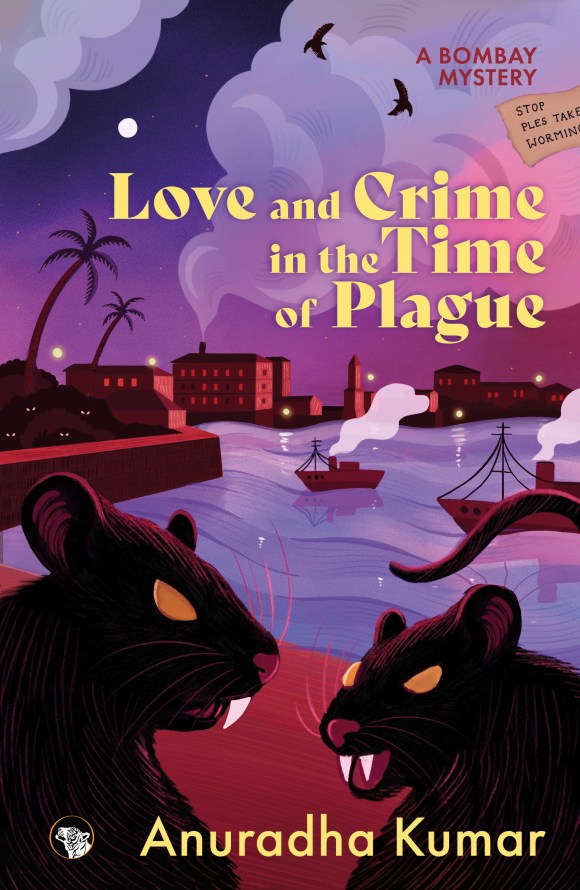
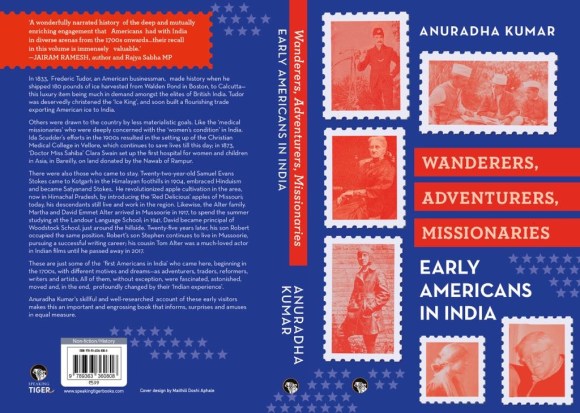

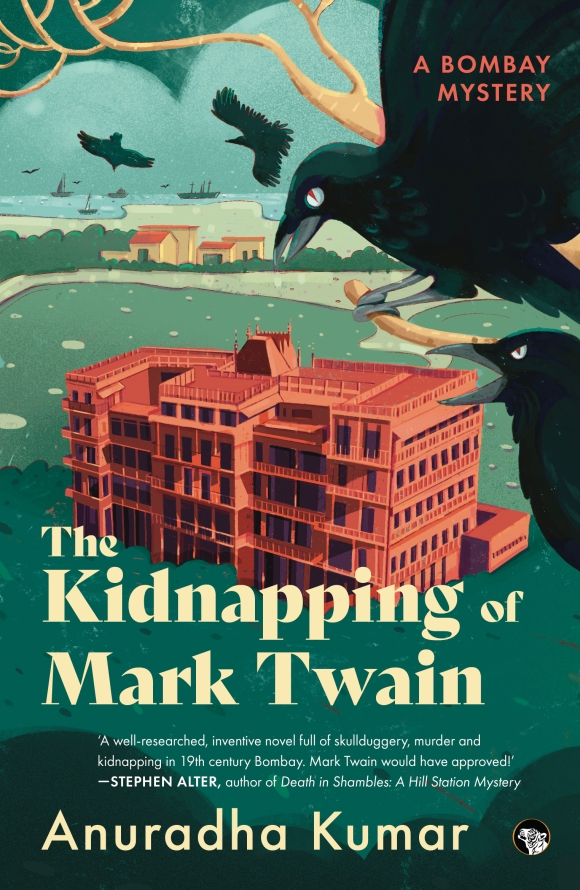
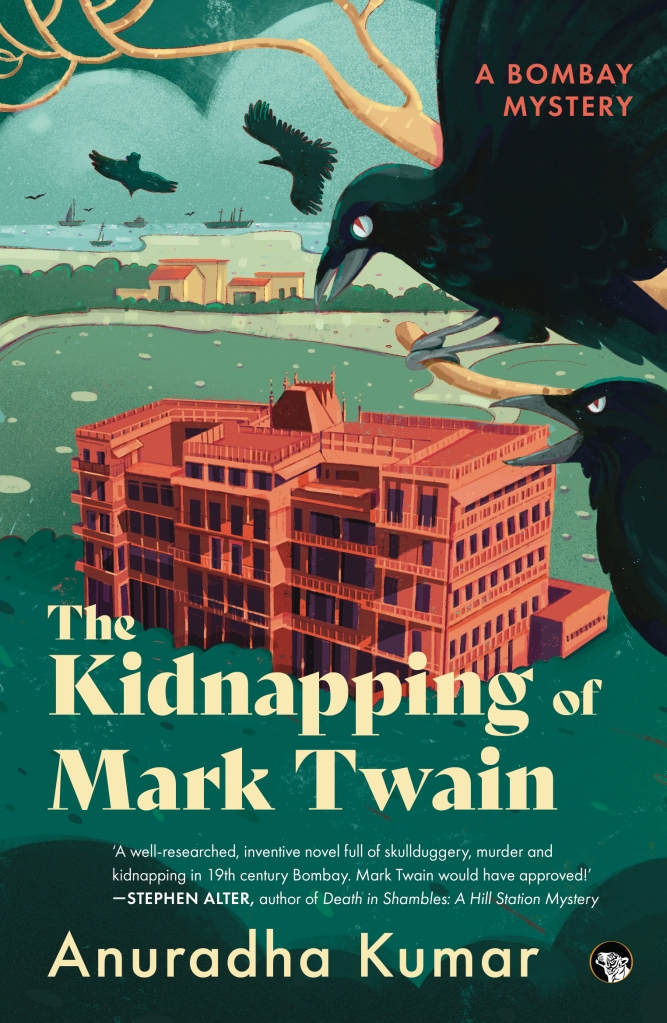




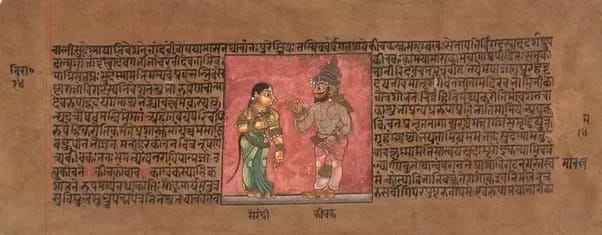
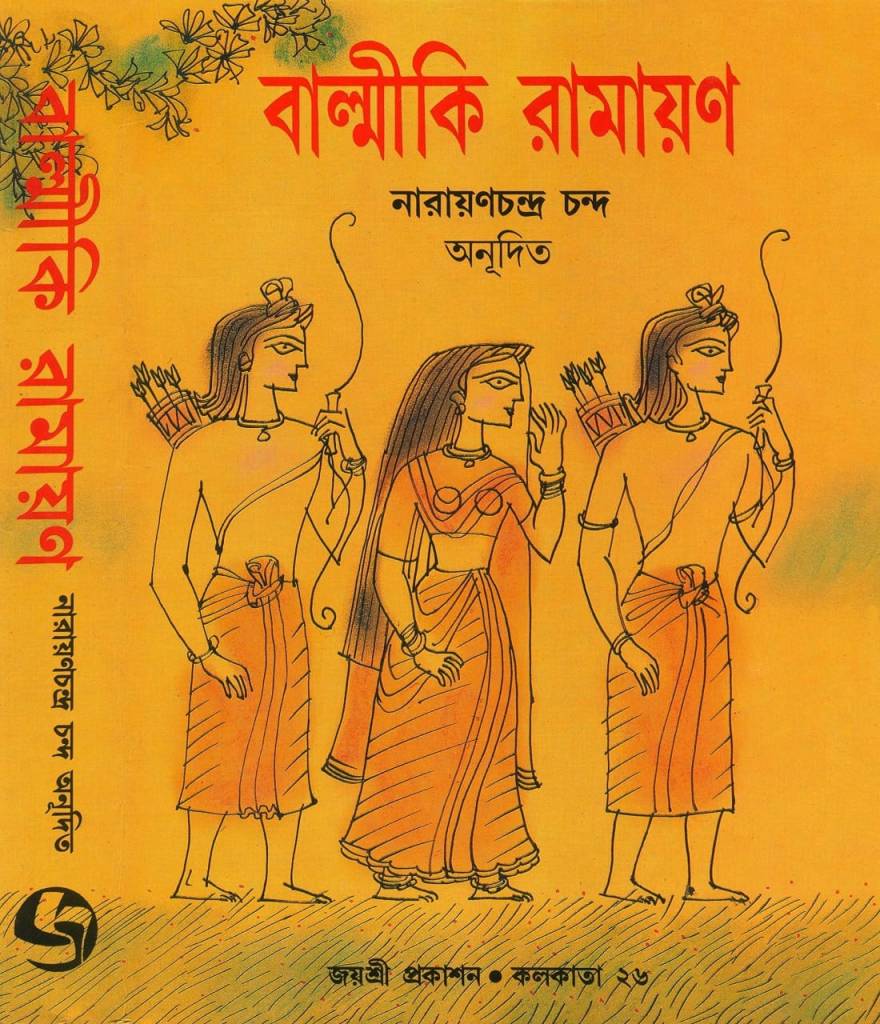
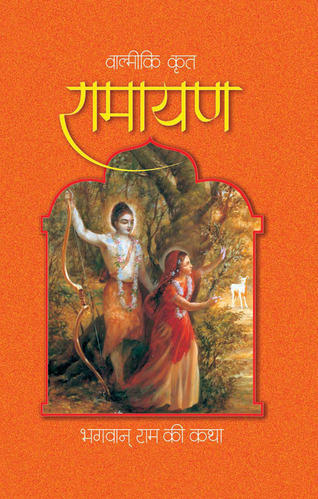
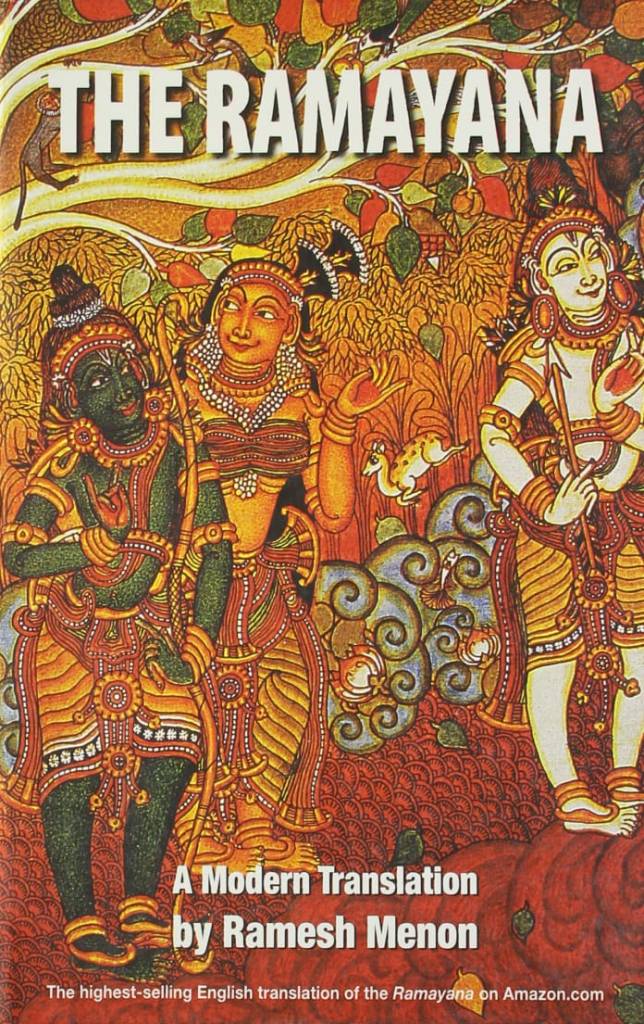
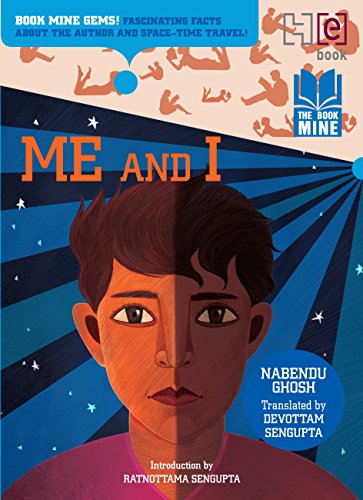
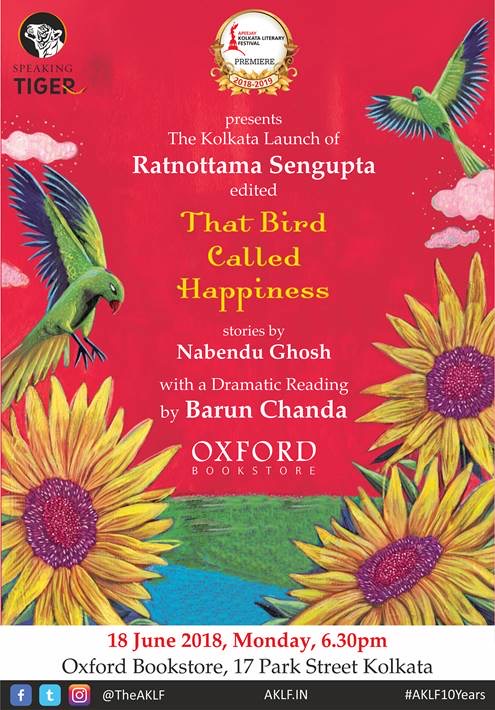
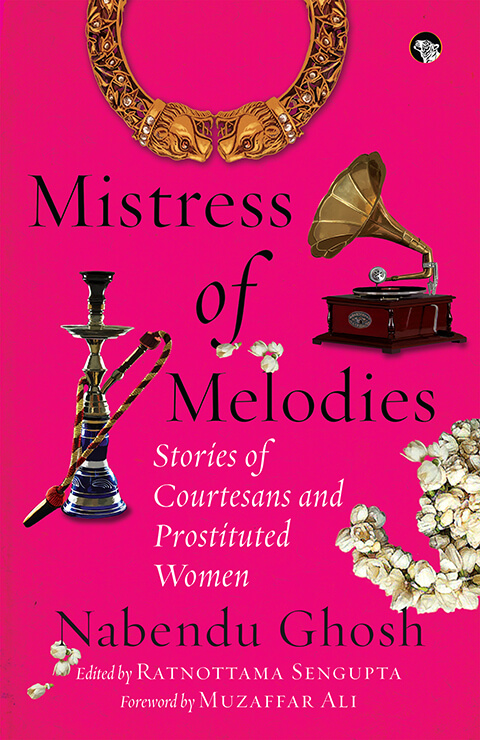
 Borderless