Categories
Tagore Translations

The King and His Subjects by Rabindranath Tagore

Raja O Praja, an essay by Tagore, has been translated from Bengali as The King and His Subjects by Professor Himadri Lahiri. It formed the lead essay in his book of the same name published in 1908.
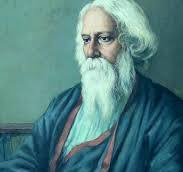
Translator’s Introduction: Rabindranath Tagore’s essay “Raja O Proja” was first published in the well-known Bengali periodical Sadhana (Sravana, 1301/1894). It is anthologised in Rabindra Rachanabali (Sulabh Sanskaran) 5th volume (Visva-Bharati, Pous 1394): pp. 727-31. Tagore unravels the nature of the relationship between the colonial masters and the subjugated subject people. Much before Edward Said, Tagore examined how the colonial masters resorted to the practice of stereotyping, a strategy that denies human qualities to the colonised and renders them inferior and uncivilised. Set against the contemporary political background, the essay provides an incisive analysis of the behaviour patterns of both the British colonial government and the subjugated Indian population. It should be considered a significant contribution to the study of colonialism.

 The King and his Subjects

When the British civilian, Radice Sahib1, insulted and persecuted a certain zamindar in Orissa by violating laws, Lieutenant-Governor MacDonnell2 subjected the offender to a one-year-punishment.

If we reflect on this incident, it should not have surprised us. In reality, however, this act of justice was incredibly startling to the general public. This explains why some naive individuals expressed their unusual delight.

Shortly afterwards, when MacDonnell Sahib was duly replaced by Elliott Sahib3, the latter freed Radice from the punishment by illegally reversing his predecessor’s order and even promoted him to a higher post. Now the same naive people have started expressing their profound sorrows.

The task is accomplished by the will of the master. Only the master knows why he [i.e. Elliott] violated the rule; we are left desperately groping in the dark. It may be that one civilian protected the prestige of another. But the decision was surely inappropriate – this incident dented MacDonnell Sahib’s prestige, and even that of the government.

In course of their conjectures, people are providing different theories; all of these may turn out to be incorrect. On the whole, it may be said that only the government knows the ins and outs of its own policies; we are merely blind puppets being controlled by these policies.

Hence, it is my opinion that driven by our delusions, we instinctively express our happiness and sadness at the moral and immoral decisions of the people at the helm of affairs. Where everything is done at the master’s will, where our good fortune or bad depends greatly on the character and whim of a particular person, there we should consider both the auspicious and the inauspicious, the moral and the immoral as merely momentary, accidental episodes. What MacDonnell Sahib did was the result of his own will, and what Elliott Sahib did was also produced by his own caprice; we are merely ruses.

Even then, we cannot help feeling distressed or shocked by the appalling events or delight at their praise. But we should always remember the specific instances that will make us happy and contribute to our people’s glory.

This can be achieved only when all the common people develop so intense a sense of conscience and alertness that we can feel the pain together in the face of insult and injustice, and also when the government absorbs into its own system an obligation to respect the conscience of the people; only then can we genuinely rejoice.

Usually, our moral conscience, our understanding of our work culture, and our apprehension of vilification all combine to guide us to the path of duties. The principles of responsibilities of our governments are largely determined by moral conscience and work culture. Their connection with the subject people’s ideology of good and evil is very weak.

It is universally known that when conscience comes into conflict with work culture, the latter sometimes prevails. During this conflict, the moral compass of those individuals not involved in the conflict can help reinforce one’s own conscience. When we will find the subject people’s criticism being appropriately reflected in the government’s activities, we will express our happiness.

In the absence of the subject people’s criticism, the sense of moral duty of the British in India imperceptibly slackens and degenerates to such a level that their moral ideals begin to radically differ in nature from those of the native British. For this reason, we find on the one hand, the Englishmen in India hate us, and on the other, they express their utmost intolerance towards their own countrymen’s opinions, as if both were alien to them.

There might be several reasons for this. One reason is that due to the remote location of their country, the British in India forget how social criticism typically motivates or impacts actions of their own countrymen. In addition to this, the Englishman’s relationship with us is primarily based on selfish interest as they do not share any emotional bond that stems from nation-based kinship. Hence, for various reasons, it becomes challenging for the British in India to maintain the same purity of selfless duties towards their subjects. Consequently, a distinct and specific code of duty begins to develop for the colonials in India – this arises from various factors such as their self-interest and pride of power, the moral conscience of the weak, subjugated nation, and the complexities involved in administering a foreign country. The English of England sometimes fail to recognise this distinct code of duty.

Certain talented Englishmen with exposure to colonial India have taken upon themselves the responsibility of effectively introducing this unique object [i.e., this new ideology of difference] in England. By virtue of their talent, they are demonstrating that this new object has its own unique appeal.

Rudyard Kipling’s name may be cited as an instance. He has exemplary power. By invoking that power, he has created in the English imagination an image of the Orient as a cattle pen. He is trying to convince the native Englishmen that the Indian government is, indeed, a circus company. He is skillfully orchestrating our actions as a performance of strange and spectacular animals of various species before the civilised world, implying once the spectators take off their steady gaze, all the animals could immediately spring upon them. The animals are to be observed with intense curiosity, they will have to be kept under control with the proper combination of fear of the whip and temptation of pieces of bone. Of course, certain doses of compassion for animals are also required. But if you raise here issues of principles, love, and civilisation, it will be difficult to keep the circus going, and it will also be dangerous for the proprietors.

The image of strong human animals being controlled solely by willpower and compelled to dance at the mere gesture of the master’s finger is likely to fascinate the English as a curious spectacle of entertainment. This generates in them an interest in the uniqueness of the human animal and also a racial pride. There is also a profound satisfaction in being able to control someone who embodies an imminent threat, and this seems delightful to the inherent nature of the English people.

On another front, the number of Anglo-Indian team members is also increasing day by day. Anglo-Indian literature too is gaining popularity. The influence of Anglo-Indians is gradually finding roots in the English soil, spreading its branches all around. In this context, it should be mentioned for the sake of justice that many Anglo-Indians, after retiring from their assignments in India, have displayed extreme benevolence towards the helpless Indians.

For all these reasons, many native English people are sceptical about whether it would be a quixotic stupidity for them to discharge to the oriental animals those duties usually reserved for themselves, whether this act of showing equality will reveal the civilised islanders’ intellectual narrowness and inexperience, and whether this would also harm animals of various species. English philosophers such as Herbert Spencer believe that it is not only inevitable that moral ideals vary according to the standard of civilisation but also necessary according to the norms of evolution.

The truth of these opinions will be judged on some other occasion. For the time being, I can only say that its (i.e., the practice of treating Indians unequally) consequences are very painful for us. Apprehending an uprising after noticing some posters on trees in the state of Bihar, opinions have been expressed in several English newspapers that a genuine union of love is never possible between Oriental and Occidental races. The former has to be subjugated forcibly by means of fear of threats. All these, it seems, are being expressed more openly these days than ever before.

Our opinion is that even if we admit that the principles of duty in freedom-loving Europe may not be suitable for application in every corner of the ever-subjugated Orient, it is indeed an unrealistic dream for them to maintain the usual rhythm of the Oriental life here for the simple reason that our king is a European. If our country were free, the monarchy that would have evolved in the natural process in this Oriental space would surely have been different in multiple aspects. It may be that, from one perspective, the king’s excessive power would have appeared greater than it is now. Similarly, from another perspective, the subjects, by limiting the king’s authority, would have channelised their own desires in various forms and through multiple avenues. Natural compatibility can be best expressed through natural means. Howsoever they may want, the English cannot achieve that (artificially) just through policy making.

Hence, the Englishmen can behave with us just in the way they do; if they willingly distort it, that will amount to misbehaviour, it will never become an Indian behaviour. They can break their own ideal, but in its stead what will they build and how? However, the English, fallen from their ever-familiar native ideal, may turn out to be big, ferocious animals. From the hints of cruelty, laced with aggression of power, that we can trace in the works of authors like Rudyard Kipling, it seems that man often wishes to jump into the primitive barbarity of wild nature of the forest by ripping through the fine, hundred-threaded strong net of civilisation. On their arrival in India, the Anglo-Indians taste the exquisite wine of power that may create this overwhelming intoxication. The natural, spontaneous embodiment of masculinity in the writings of these loveless, difficult, power-boasting talented men has a kind of extreme fascination. That is literature for the English but for us, it is indeed a recipe for death.

Secondly, the way authors in their contemporary novels represent the Orient as appearing mysterious to the Occident is largely fictitious. There are numerous intersections between us. The similarities of the heart are often overshadowed by external differences. Modern writers tend to apply colour to, and even exaggerate, the unfamiliarity of these external features to please the readers; they do not try to unearth the similarities lying deep within, neither are they capable of doing that.

The significance of making all these statements is simply this: the idea that European values are exclusively meant for Europe is gradually spreading not only in India but also in England. Indians are supposedly so different a race that the civilised values are not completely applicable to them.

Under such circumstances, if our ethical values become strong, the policy of governance cannot go off the right track. When the English are conscious of the fact that their actions are being closely watched by the entire Indian population, they will not be able to do anything by completely disregarding India.

Recently, some evidence of this is being noticed. When India witnesses some misdeeds committed by the English, she begins to call for justice in her own feeble voice, invoking civilisational and moral values. This naturally angers the colonials, but at the same time, they are forced to remain somewhat vigilant.

Even then, full results are yet to be seen. The British consider it an admission of their weakness to adhere to codes of values that exhibit respect towards us all the time and under all circumstances. They find it insulting and harmful if one of them commits a crime against us and is punished by the law. They fear that Indians will perceive it as curtailment of power.

It is impossible for us to identify the nature of thoughts of government officials. However, I feel the untimely promotion of Radice Sahib can be linked to the above policy. This suspicion is reinforced specially when such an event is found to have occurred repeatedly. The government is, as if, silently declaring, it is your audacity to expect an English official to be humiliated for harassing and insulting one of you. Even if we have to violate conventions and neglect the rules of governance to crush that audacity, it will be desirable. The English race is greater than the norms of ethics, they are beyond the jurisdiction of justice!

For the sake of truth, it has to be admitted that the government tends to keep not only the English but also its own employees a notch above the rule of justice. This has been observed in one or two contemporary incidents. In the Baladhan4 murder case, all those involved, right from the English judge to the Bengali police personnel who were openly blamed in the judgement of the High Court, have been rewarded and encouraged by the colonial Bengal government.

We are individuals outside the realm of politics, we are not familiar with its internal complexities. There might be a hidden motive behind it [the government’s decision]. The authorities may believe that the local judge in the Baladhan case did not issue an incorrect ruling – around five to seven individuals should have been hanged in some manner. They might have nurtured a biased opinion that the incident in reality happened despite the lack of concrete judicial evidence, and that only the local judge could have determined the truth which was inaccessible to the High Court judge.

We want to say that openly rewarding, instead of punishing, individuals who have been publicly condemned by the highest court of the country, who have been proven guilty in the eyes of the public, amounts to the disregard of the moral judgment of the public. Everyone’s told we do not feel the need to offer any explanation to you about our duties. The government is not bothered about whether you praise or criticise it – our government is strong enough to withstand such scrutiny!

The governor who demolishes the anguish and moral judgement of the subjects under his shoes, and drowns their feeble, insecure voices beneath the marching sounds of their feet, is indeed a strong ruler in Anglo-India!

It is unnecessary to disclose whether this highlights their power or reveals our utmost weakness. This insolent disregard of the government suggests that, in its view, the moral judgement of the Indians is not strong enough to evoke a feeling of embarrassment in them. Instead, this unapologetic recklessness seems to them as the manifestation of a genuine power over an ever-oppressed nation.

If we can really convince the agents of the government that we do not consider the violation of ethics as bravado, that injustice, however powerful it may appear, is held as equally despicable and reprehensible in our Oriental system of judgement, and that the lack of courage to dispense justice everywhere firmly and impartially is also considered by us as a sign of weakness, only then the English would be forced to respect our norms of duties. The reason is that they will be able to discover the correspondence between our ideal and their own.

When we forget the bitter lessons of our prolonged subjugation, when we decide not to consider the injustice of the powerful as the manifestation of divine will — something that must be endured in silence — when we consider attempts at the redressal of injustice, even if it fails, as our duty, and when for these reasons, we stop being averse to sacrifice ourselves and bear pains, only then the days of true happiness will bloom. At that point, the sense of justice of the British government will never be derailed by any selfish policy and eccentricity of any individual; it will stand like a resolute mountain firmly based on the foundation of the subjects’ hearts. At that time, good gestures of the government will not accidentally be showered on our bowed heads like momentary favours; we will, on the contrary, accrue them as respect. What we are getting as alms today will be received as our rights.

Questions can be raised – offering advice is easy, but what about the solution? To that, we may retort that no proper bliss can be achieved by clever strategies alone; for that we have to pay the entire price due to it. All of us must strive to our utmost potential, proper lessons should be imparted to siblings and children in every household, a strong ideal of justice needs to be established in both the family and society, and careful attention must be paid to one’s own behaviour. Like all good advice, this too is easier to hear, difficult to implement, and is indeed age-old. However, there is no new, short-cut or hidden path other than this long, open, and ancient highway.

Translator’s Notes:

1. Mr. C.A. Radice belonged to the Indian Civil Service cadre during the late nineteenth and early twentieth century.  He was posted as an Assistant Magistrate and Collector in Murshidabad in 1890 and was “vested with third class powers” (Appt. File 5C—4. Proceedings B. 1—3, Ja. 1890). He was ‘degraded’ for “prosecuting Babu Radha Shyam Nissanta Mahapatra, zaminder of pargana Balinkandi in the district of Balasore” [Judl. File J-1P—113(1-21), Proceedings 134-55, Aug. 1893].  Radice’s ‘reversion’ to 2nd grade became effective in February 1895. [(Appt., File 6C—8(3.8). Proceedings B. 716-21, Feb. 1895)]. The translator of this essay traced these pieces of information in the entry on “Radice, C.A. Mr.,  I.C.S.—” pp. 1126-1128. Kindly see: https://sadte.wb.gov.in/uploads/pdf/D12/D1224.pdf

2. Antony Patrick MacDonnell (1844–1925) joined the Indian Civil Service in 1865. He was the Lieutenant-Governor of Bengal during the period 1893-1895. MacDonnell was respected as an expert on the Indian land reformation and famine relief. “His sharp temper and unwillingness to tolerate inefficient subordinates earned him the nickname ‘the Bengal Tiger.’” Kindly see the entry on “MacDonnell, Antony Patrick” contributed by Patrick Maume, in Dictionary of Irish Biography. https://www.dib.ie/biography/macdonnell-antony-patrick-a5180.

3. Sir Charles Alfred Elliott (1835-1911) was the Lieutenant-Governor of Bengal during the period 1890-1893. Tagore’s reference to MacDonnell being replaced by Eliott is confusing because Eliott indeed preceded MacDonnell, and did not succeed him.

4. Tagore refers to an incident which is popularly known as “Baladhan Murder Case.” It took place in Baladhan Tea Garden in the Cachar district of Assam on 11 April, 1893. Several persons barged into the manager’s bungalow in the tea garden at night and killed the manager (Mr. Cockburn) and the chowkidar and seriously wounded Mr. Cockburn’s Indian paramour named Sadi. Money and other valuables were looted. Later six Manipuris and a Gurkha were arrested. They were tried by the sessions judge John Clark (and a panel of three Indian assessors) at Sylhet who sentenced four of the accused to death. Babu Kamini Kumar Chanda took up the case to Calcutta High Court which acquitted all the accused (Sanajoba 234). “On December 11, 1893, Calcutta High Court Judges Ameer Ali and H.T. Prinsep acquitted all of the prisoners on account of the many ‘irregularities’ and ‘illegalities’ committed during the police investigation and trial, as well as the lack of corroborating evidence” (Kolsky 145).

See pp.142-48  [in Chapter 4 titled “One scale of justice for the planter and another for the coolie”: law and violence on the Assam tea plantations” (pp. 142-184)] in the book Colonial Justice in British India edited by Elizabeth Kolsky (Cambridge University Press, 2010) and  p. 234 of Th. Babachandra Singh’s chapter “The Manipuris in the Politics of Assam” (pp. 213-36) included in the book Manipur, Past and Present: The Heritage and Ordeals of a Civilization, Volume 4 (Pan-Manipuris in Asia and Autochthones), edited by Naorem Sanajaoba, Mittal Publications, 2005. (Google book link: https://books.google.co.in/books?id=CzSQKVmveUC&printsec=copyright&redir_esc=y#v=onepage&q&f=false)

.

Himadri Lahiri retired as Professor of English, the University of Burdwan, West Bengal, India. He is currently teaching English at Netaji Subhas Open University, Kolkata.

PLEASE NOTE: ARTICLES CAN ONLY BE REPRODUCED IN OTHER SITES WITH DUE ACKNOWLEDGEMENT TO BORDERLESS JOURNAL

Click here to access the Borderless anthology, Monalisa No Longer Smiles

Click here to access Monalisa No Longer Smiles on Kindle Amazon International

Categories
Conversation

Peregrinations of a Diplomat’s Wife

Ratnottama Sengupta converses with Reba Som

Reba Som

“If Washington goes to Dhaka, there’s a chance that Paris might make it to Stockholm. And of course Moscow would be moved to Geneva!?”

Sounds like gibberish? But this is a piece of the speculative conversation on transfers and postings that is regular in the drawing rooms of embassies and consulates, Dr Reba Som found out on her very first posting after her marriage with Himachal Som.

Both were Presidency graduates pursuing higher careers — he in Foreign Service, she on the threshold of a doctorate. But life as the wife of an ambassador wasn’t only about glamour postings, fancy holidays and brush with celebrities. It was a mixed bag of blessings, as the woman who had grown up in Kolkata with a grounding in Tagore’s music would soon conclude. For, there were the dark clouds of life away from ageing parents and school going children; from the comfort of familiar food and mastered language; from developing your potential and crafting your own identity in the world out there.

In recent years we have read accounts of retired ambassadors and career diplomats’ experiences in diplomatic life. In her memoirs, Hop, Skip and Jump; Peregrinations of a Diplomat’s Wife, Dr Som’s is a woman’s voice, abounding in stories and observations about how the spouses keep a brave front in alien surroundings to hold up the best image of her country. In this conversation, she voices outmore about her encounters with racism, with political emergencies and exigencies. In short, about her lessons in a borderless world of multicoloured humanity.

You went to Brazil (1972), then to Denmark (1974), then Delhi (1976), Pakistan (1978), New York (1981), Dhaka (1984), then Ottawa (1991), Laos (1994), Italy (2002). Please share your gleanings from these lands.

The roller coaster ride was a saga of discovery. Travelling across expanses of the planet earth that we had seen only on the pages of geography books and atlases was a great learning experience. I gained an understanding of diverse cultures, imbibed social customs, became proficient in languages, and was exposed to exotic cuisines. At the same time I faced homesickness. Each posting entailed the challenge of uprooting oneself, finding schools for children, and reinventing oneself every time.

A large part of this life was in the years that had no mobile phones, no video calls, no social media, no internet communication. What did you thrive on?

Continents and hemispheres away from home, the only link with family and friends then was the diplomatic bag. The weekly mail service ferried across oceans by the ministry in Delhi contained letters and parcels from home. We were asked to judiciously use the weight allowed to bring spices, tea, condiments, clothing and other necessities. It became a ritual to write long letters and send them weekly by the diplomatic bag to Delhi from where they would be posted to respective destinations throughout India.

Along with letters would come bundles of magazines and newspapers. These brought us news of home from which we were truly cut off. With no television or internet or phone calls, we were in the dark about all news, be it political, social or entertainment. Every week on the bag day we waited anxiously to receive the newspapers – and the letters, which had instructions, news, recipes, advice, gossip. All of these were crucial for nurturing our souls.

One telegram from my father in 1973 carried the cryptic message: ‘Reba, solitary First class.’ These were the MA results of Calcutta University which were out after a delay of two years.

I was most taken up by the understated humour of some of your encounters in your memoir. Please recount some of them.

On our very first posting, to Brazil, not only our unaccompanied baggage but also our accompanied baggage did not arrive. Eventually when the lost luggage showed up, Himachal’s ceremonial bandhgala[1]was steeped brown — in the colour of the gur[2] my mother had lovingly packed in!

In Brazil, we found the people to be fun loving but too flamboyant. They made tall claims that their institutions were the biggest in the world. But reality often proved the claims to be hollow. Such was the Presidential bid to make the tallest flag pole in the world in Brazil’s new capital, Brasilia. A very tall flag mast was indeed built but the huge flag atop it was torn to shreds since the engineers had not factored in the wind speed at that height. Brazilians mirthfully called it the President’s erection!

And at Denmark. we were surprised by a sudden news of our posting to Mozambique. We had long realised that we were mere players on the chessboard of postings – we could be shunted off across continents at the whims of the powers that be. By the same token, a couple of phone calls by the newly arrived ambassador undid the mischief. We were happy to unpack and settle down again. The only guilt I felt was when I met the owner of Anthony Berg chocolates: I had in no time demolished the entire carton of chocolates he had sent as farewell gift!

You are among the few I know who have mothered in different continents. So how different is it to become a mother away from India?

I always felt that the best way to get to know certain nuances of a country’s cultural tradition was to have babies in them. My elder son, Vishnu was born in Copenhagen and Abhishek, the younger one, in New York — and my experiences each time couldn’t be more different.

In Copenhagen, a social democrat country, hospital visits for full term pregnant women were fixed on a certain day of the week. On the preceding day they had to collect their urine in a jerry can and present it for lab examination. I was confounded and not a little embarrassed to meet other mothers-to-be, swinging their jerry cans like designer bags without fail on the appointed day. I learnt only later that, from the urine examination doctors would note the condition of the placenta and not unnecessarily rush patients into childbirth with caesarean and surgical intervention!

In NY, on the day of my discharge, the hospital staff were highly excited because Elizabeth Taylor had come in for one of her facelifts. I could not forgive them their magnificent obsession when, along with a goodbye hamper, they wheeled in a bassinet with a different baby. On my protestation the nurse rudely shouted, “Can’t you read… the tag says Som Junior?” Shocked by the implication I said, I could not only read but also see! And it was not my child. While everyone was looking on in disbelief another nurse wheeled in my little one. The babies had their diapers changed and were put back in the wrong bassinet.

Years later, we discovered in an informal meeting with an American ambassador that Abhishek was indeed an American citizen. Because, at the time of the child’s birth Himachal was posted not to the embassy in Washington but to the consulate in New York. Only consulate children were given the privilege. This discovery, rechecked by State Department Records, gave our son the US passport. It was a windfall as Abhishek went on to graduate summa cum laude from a prestigious management school in the US and enter Wall Street as an investment banker.

I must also share another truth about birthing away from India. Before Vishnu’s birth, my parents had come to Copenhagen. When I was discharged from the hospital I received their care and being fed Ma’s cuisine was the best gift I could have. So, when phone calls came from hospital, followed by visits enquiring about my state of depression, I was totally confused. I realised how many mothers suffered from postpartum depression in a society bereft of nurturing family care.

How could you master languages as removed as Portuguese from Lao and Italian from Urdu? Is a flair for languages the key to this proficiency or the training imparted before each posting?

 I enjoy learning languages. My stint at learning French at Ramakrishna Mission Golpark stood me in good stead in grasping Portuguese in Brazil, French in Ottawa and Italian in Rome — all Latin languages. But there was also the hazard of mixing up some phrases and words, so similar yet so different! Like Bon Appetit in French and Bueno Appetito in Italian. Or Amor in Portuguese; amore in Italian and amour in French.

Sometimes though, I accidentally learnt how language travels. My mother had packed in many petticoats to match with my saris but without their cord. We went to a store that promised to hold all we need but all my sign language did not bring what I needed. “Phita is obviously not available here,” I told Himachal, preparing to leave. Suddenly the storekeeper perked up. ‘Fita, si senhora!” he said and produced bundles of cord.

In due time I found out that janala, kedara and chabi – Bengali for window, chair and keys – had travelled from India to become janela, cadeira and chavi.

What did Dhaka mean to one raised in West Bengal – per se the Ghoti-Bangal[3]divide, your roots  or the cultural side with Firoza Begum and Nazrul Geeti?

Dhaka was a great posting in so many ways. It was a hop, skip and jump away from my home town Kolkata, with the same language and culture and yet was a foreign posting with foreign allowances!

As you know, there’s a subtle cultural difference in East and West Bengal. Both speak Bengali but in East Bengal, it’s a colloquial rustic dialect while West Bengal speaks its refined cultural form. This formed the infamous ‘Ghoti-Bangal’ divide: Urban Calcuttans looked askance at their country cousins from the East.

The difference extended to the palate. East Bengalis flavoured their dishes with more chillies and West Bengalis, with a pinch of sugar. For the fish loving people, the two iconic symbols are Hilsa and Prawns, for East and West. Emotions soared high in Kolkata when the supporters of the football teams, East Bengal and Mohun Bagan, clashed, after intensely fought matches that spurred deadly arguments and bets.

Given this background, Himachal created a minor storm by announcing to his parents from Chinsurah, Hooghly in West Bengal that he would marry a girl whose parents were from Dhaka and Faridpur in East Bengal.  Ghoti-Bangal feud remained the subject of much friendly banter between Himachal and me until we were posted in Dhaka. There, in a diplomatic turnaround, Himachal played down his Ghoti background to announce that his mother’s family was from Chittagong and he was born in the principal’s bungalow in Daulatpur, Khulna, where his grandfather was posted.

To give a bit of Himachal’s family background: Dr Pramod Kumar Biswas, the first Indian doctorate in Agricultural Sciences from Hokkaido University in Japan, had settled in Dhaka as principal of the Agricultural College. His charming daughter Kana won the heart of Dr Rabindranath Som, a veterinarian who weathered the predictable Ghoti Bangal storm to win her hand in marriage. 

When my parents Jyotsnamay and Manashi Ray visited us, we couldn’t visit Patishwar in Rajshahi district, where my maternal grandfather Atul Sen had worked with Rabindranath Tagore before he was arrested for revolutionary activities with Anushilan Samiti, and exiled to Kutubdia, an isolated island in the Bay of Bengal. As a headmaster, he had given shelter to Jatirindranath Mukherji, popularly known as Bagha Jatin[4].

It was a breezy day when my octogenarian father revisited Faridpur Zilla School. The colonial bungalow had acquired a fresh coat of terracotta paint. Finding his way to the headmaster’s room, he announced with a lump in his throat that history had been rewritten, boundaries redefined and new national identities forged since 1923, the year he had matriculated.

The headmaster, delving through yellowing files, fished out the matriculation results for that year. My father’s face was that of an excited school boy impatient to show off his prowess: “Look at my maths marks! Oh yes, my English scores were a trifle lower than expected because I had a touch of fever, but look at Jasimuddin’s marks in English! Thank God, he passed it.” We looked around in hushed surprise. This isn’t The Jasimuddin, the beloved poet of Bangladesh? “But of course,” my father responded. “Jasim’s weakness in English was my strength!”

Dhaka was also personally fulfilling as my doctoral studies, which I had carried across three continents, found fruition at last! On another front, I met with success in gaining the confidence and blessings of Firoza Begum, the legendary exponent of Nazrul Geeti.

The songs of Kazi Nazrul Islam were a great favourite of my father. He often hummed those made famous by Firoza Begum. Since I had trained in Tagore songs from age five, I never aspired to master the distinctly different style of rendition. A chance encounter with the golden voice revived this desire. Firoza Begum bluntly refused. When I persisted, she wanted to hear me sing a few Tagore songs.

One morning I mounted three flights of steps, harmonium on my driver’s shoulder, to enter her flat with apprehension. At her bidding, I sang four songs of Tagore. She heard me without any comment, then she asked why I hadn’t been singing for Bangladesh television. My relief was palpable! I had passed her test.

Over the next two years, my weekly classes with her extended well beyond the music lessons to serious discussions on life itself and the meaning of religion. What began as a guru-shishya[5]relationship, transcended to deep friendship. She declined any remuneration and dearly wished that I should cut a disc. This wish of hers came true only when Debojyoti Mishra heard me and decided to record my Nazrul-songs for Times Music in 2016.

Food is perhaps the first face of culture. So please share with us some of your culinary adventures. Or should I say ‘fishy’ stories?

Adventures? I could talk about the chapli kebabs in Pakistan, or about putting samosas in Bake Sales. I could tell you about making rasgullas from powder milk. I could even tell you about our gardener in Laos who merrily collected every scorpion and caterpillar that came his way, “for snacks,” he told me. But let me focus on fish.

The very first party I hosted at home in Brazil led me to seek substitutes for Indian ingredients. Fish of course had to be on the menu, mustard fish at that. I had already learnt from the Brazilian ambassador in Delhi that surubim, being boneless, was the most suited for curries. So surubim it was for months until the day I had to go to the fishmongers – and found it was a monster of a whale!

In Pakistan, traversing the arid countryside of Sind, the train would stop at stations where fillets of pala were being shallow fried on large skillets. Savouring its delicate flavour we went into a discussion on the merits of pala versus hilsa. Both have a shiny silver body with thin bones, both swim upstream against current. The taste of hilsa steam-cooked in mustard sauce is a super delight in both Dhaka and Kolkata. There of course the discussions are on the merits of the hilsa from Padma and Ganga respectively.

In Laos I once called the plumber to ease the draining of the bathtub since the pipe had got clogged. He arrived with a live fish in a plastic bag and promptly emptied it into the pipe. It would eat through the slush as it travelled through the pipe, he assured me!

Post retirement, Himachal settled to honing his culinary skills. Cooking, which he had started in Ottawa, became his lasting hobby. He would shop for fish in C R Park or INA Market[6]. He would pore over cookbooks and plot innovative recipes. “Cooking,” he was quoted in Outlook magazine, “is art thought out with palate.” And his piece de resistance was the salmon baked whole.

Which was your most cherished, or striking, brush with celebrities in world history?

At one of the finest dinners in Copenhagen I found myself seated next to a countess. She invited me to visit her since she lived in the neighbourhood. The next day a liveried man arrived to escort us to an imposing manor house. We were welcomed with sherry and we had to select a card from a silver salver with the name of our partner for the dinner. I was escorted by a handsome young man who floored me when we exchanged names. He was the descendent of Count Leo Tolstoy!

Another memorable encounter was with a person straight out of the history books. I was strolling in a forested park outside Copenhagen. I noticed with a shock that I was looking into a glass topped coffin. The aristocratic face inside had an aquiline nose and a goatee that lent a refinement to the visage that still sported a faint smile. The starched lace collar was held in place by a jewelled button that showed impeccable taste. But the elegant hands tapered off to skeletal fingers, and the feet too had become skeletal.

The plaque at the bottom of the coffin informed us that this was James Hepburn, the Earl of Bothwell, with whom Mary, Queen of Scots had fallen in love. It was a fatal attraction since both were married. But soon her husband, Lord Darnley, the father of her son James, the future king of Scotland and England, was mysteriously burnt down in a manor, and Bothwell was granted a divorce. However, their marriage incensed Catholic Europe, so Mary gave herself up to buy the release of Bothwell, who fled to Denmark.

‘Whoever marries your mother is your father’: this dictum defines the acceptance of whatever political dispensation you are forced to live with, at home or abroad. So how did you cope with a turmoil like Emergency or antagonism in Islamabad? 

We had returned to Delhi in the midst of Emergency. We felt some relief to see trains running on time and punctuality being maintained in government offices. Corrupt officers were being hauled up and over-population being addressed. But the atmosphere was sombre and conversations hushed. The deep scar left by the Emergency saw Indira Gandhi being swept out of power the following year.

In Islamabad tension had mounted when I arrived over the imminent execution of Zulfiqar Ali Bhutto[7]. Our residence had become the favourite watering hole for Indian and international journalists who knew Himachal from his Delhi days. Animated discussions over drinks were followed by quick despatches typed out on my rickety typewriter. Unending speculations on the unfolding drama had kept us on tenterhooks. Then one morning in April 1979, the phone rang to say, “It’s done.” [8]

How did Italy change your life?

Italy was easily the best posting of my life in embassies, not only because of its rich history. There I found Italian artists painting inspired by Tagore’s lyrics, and singers like Francesca Cassio singing Alain Danielou’s translations. What made them take it on? The question led me to rediscover Tagore.

My singing of Rabindra Sangeet also found recognition in Rome. My first CD album was released there. I was in many concerts. It was so fulfilling when my translation of Tagore’s lyrics into English found appreciation. Tagore himself believed that his songs were ‘real songs’ with emotions that speak to all people. I began translation in earnest. And that led me to write Rabindranath Tagore: The Singer and his Song (Penguin 2009). The book, with my translation of 50 Tagore songs, was considered very useful to many performing artistes who could understand and represent Tagore better in their art forms.

Please tell us about growing up with Tagore.

Like many girls in Kolkata I began learning Rabindra Sangeet from the age of five. Over the years the songs grew on me. The unique lyrics conveying a gamut of emotions spoke to me when I was far away on postings abroad. I continued my practice of the music through the years and felt vindicated when I got the opportunity to perform to appreciative audiences abroad and back in India.

Why did you work on his songs rather than his poems or stories?

There’s something compelling about Tagore songs. Remember that Gitanjali, which won him the Nobel, was a collection of ‘Song Offerings.’ Songs had given Tagore the strength to ride over the tragedies that had beset his life. They not only helped him express his grief over the deaths and suicides in his family, they were also his mode of expressing his frustration over the political situation that obtained then. And he felt his songs would help others too. “You can forget me but not my songs,” he had written.

Did you ever feel the need to jazz up the songs for Western audiences?

Tagore’s songs are like the Ardhanariswar[9] – the lyrics and the music are inseparable. The copyright restrictions that prevailed after this death did not allow translations. And that was a handicap since his music cannot be appreciated without comprehending his lyrics which are an expression of his creative thoughts.

I would say his songs have near-perfect balance between evocative lyrics, matching melody and rhythmic structure. And the incredible variety of his musical oeuvre touches every emotion felt by any human soul, without jazzing up.

Tagore’s songs are the national anthem of India and Bangladesh, and have also inspired that of Sri Lanka. But will his internationalism hold up with the change of order indicated by the recent developments on the subcontinent?

Tagore was known to be anti-nationalistic. He believed no man-made divisions can keep people segregated. He did not agree with the Western concept of ‘nation,’ he was an internationalist who accepted the ideals of democracy – ‘aamra sabai raja[10], of gender equality – ‘aami naari, aami mohiyoshi[11]; indeed, in equality of humans. What he wrote in lucid Bengali suited every mood. Georges Clemenceau, who was the Prime Minister of France for a second time from 1917 to 1920, had turned to Gitanjali when he heard that World War I had broken out. Even today people can relate to what he wrote.

How did all the hop skip and jump shape the feminist within Reba Som?

The wives of Foreign Service officers are often seen as decorative extensions of their spouses. People only saw the glamour we enjoyed on postings abroad, not the heartbreaks and disappointments we battled. Despite their qualifications the wives were not allowed to work abroad. Instead they had to be perfect hostesses: clad in colourful Kanjeevarams they had to prepare mounds of samosas and gulab jamuns.

But there was little recognition, appreciation or compensation by the Ministry of External Affairs of all the hard work and struggle they put in. To settle down in different postings in rapid succession. To host representational parties where they had to conjure Indian delicacies with improvised ingredients. To raise disgruntled children on paltry allowances.

Once, as the Editor of our in-house magazine, I had floated a questionnaire to all the missions abroad asking about the changing perceptions of the Foreign Service wives. That had opened a Pandora’s Box. Eventually in response to our requests the Ministry relaxed service conditions and allowed the wives to work abroad if they had the professional qualifications and received the host country’s permission. This was a veritable coup!

My own act of rebellion was accepting the Directorship of the Tagore Centre ICCR Kolkata (2008-13) after we returned to Delhi on Himachal’s retirement. It became a challenge for me to try and get the Tagore Centre on the cultural map of Kolkata, proving to myself and my disbelieving family in Delhi that it was possible!

[1] Somewhat like a Chinese collared coat

[2] Molasses

[3] Ghoti – People from West Bengal state in India
Bangal – People from Bangladesh

[4] Bagha Jatin or Joyotinadranth Mukherjee (1879-1915) was a famous name in the Indian Independence struggle

[5] Teacher-student

[6] Markets in Delhi

[7] Zulfikar Ali Bhutto(1928-1979) was the fourth president of Pakistan and later he served as the Prime Minister too.

[8] Bhutto was executed on 4th April 1979

[9] Half man half woman

[10] We are all kings

[11] I am a woman, noble and great

Ratnottama Sengupta, formerly Arts Editor of  The Times of India, teaches mass communication and film appreciation, curates film festivals and art exhibitions, and translates and write books. She has been a member of CBFC, served on the National Film Awards jury and has herself won a National Award. 

.

PLEASE NOTE: ARTICLES CAN ONLY BE REPRODUCED IN OTHER SITES WITH DUE ACKNOWLEDGEMENT TO BORDERLESS JOURNAL

Click here to access the Borderless anthology, Monalisa No Longer Smiles

Click here to access Monalisa No Longer Smiles on Amazon International

Categories
Essay

The Comet’s Trail: Remembering Kazi Nazrul Islam

By Radha Chakravarty    


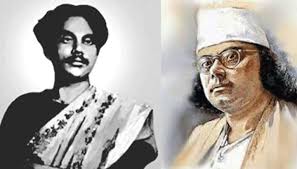
The abiding image of Kazi Nazrul Islam (1899-1976) is that of the “Rebel Poet,” who defines himself as a fiery comet streaking across the firmament, emblazoning in the sky a message of revolutionary change. Unlike Rabindranath Tagore, Nazrul was not born into social and intellectual privilege. He has been described, in fact, as “the ‘other’ of the elite Kolkata bhadralok”.[1] Born in Churulia village in the Bardhaman district of Bengal, Nazrul was the son of the head of a mosque, studied in an Islamic school, and during his youth, joined a Leto group, a travelling band of local performers. When in high school, he was recruited into the British army, and served in Karachi. Even after he returned to Bengal as a young poet who had already acquired fame and repute, he remained something of an outsider to the intellectually sophisticated world of the literati. It was from this position of an outsider that he fashioned his own image as the bidrohi or ‘Rebel poet’ who challenged the structures of the political, social, cultural and literary establishment with the sheer force of his iconoclastic writings.

Though best known as a poet, composer and revolutionary, Nazrul’s oeuvre also includes novels, essays, stories, editorials and journalistic pieces on a remarkable variety of topics. He was also a lyricist and composer, creator of the iconic genre called “Nazrulgeeti”. Nazrul’s brilliant literary career lasted from 1919 to 1942, when illness brought it to a sudden end. During this short span of time, he wrote on an amazing range of subjects, including politics, nationalism, social change, religion, communalism, education, philosophy, nature, love, aesthetics, literature and music. He saw it as his mission to arouse public awareness about pressing issues, and to jolt them out of their complacency and general apathy. Remembering Nazrul on the 48th anniversary of his death, it is daunting to think about his extraordinary legacy, but also a timely moment to reflect upon his significance for our own times.

In his political stance, Nazrul argued passionately in favour of armed struggle for total independence from colonial rule, rejecting the Gandhian path to advocate a freedom won via armed resistance. The trope of violence recurs in his writings. Yet his apparent espousal of the principle of destruction springs from a utopian dream of constructive change. “Reform can be brought about, not through evolution, but through an outright bloody revolution,” he says in the essay ‘World Literature Today’. “We shall transform the world completely, in form and substance, and remake it, from scratch. Through our endeavours, we shall produce new creation, as well as new creators”.[2]

Nazrul’s ideas on education counter the colonial pattern, advocating instead a curriculum that draws on indigenous contexts and models. He feels that the new education policy should emphasise empathy, inclusiveness and heterogeneity, with a special focus on psychological and emotional development. “It is our desire that our system of education should be such that it progressively makes our life-spirit awakened and alive,” he says in ‘A National Education’, adding: “… We would rather produce daredevils than spineless young men.” [3]

Inclusiveness and acceptance of heterogeneities are central to Nazrul’s vision. During his stint as a soldier in Karachi in his young days, he became interested in Marxist thought. The influence of this line of thinking can be felt in his emphasis on economic egalitarianism, and his passionate support of the cause of the downtrodden peasantry, particularly in his journal Langal. Following the 1926 riots in Kolkata, he expresses his anguish at the communal antagonism between Hindus and Muslims, critiquing different forms of orthodoxy in both religions. In the poem ‘Samyabadi (Egalitarian)’ [4], he declares:

I sing the song of equality—
Where all divisions vanish and barriers dissolve,
Where Hindu-Buddhist-Muslim-Christian
merge and become one …

Nazrul was also a supporter of women’s rights. In his poetry, he speaks of equality between men and women. In ‘Nari (Woman)’ he argues: “If man keeps woman captive, then in ages to come, / He will languish in a prison of his own making”.[5]

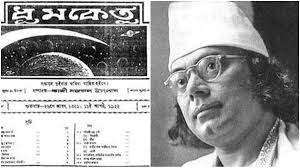
Not surprisingly, Nazrul’s fearless, unconventional attitude aroused hostility in many quarters. His bold, outspoken magazine Dhumketu enraged the British. The journal was banned, and Nazrul condemned to rigorous imprisonment. At his trial in 1923, he delivered a resounding rejoinder in his speech ‘Rajbandir Jabanbandi (Deposition of a Political Prisoner)’.  He remained a thorn in the flesh for the British administration because of his revolutionary views. Nazrul’s religious views also raised many hackles. He married Ashalata Sengupta, or Pramila, who belonged to the Brahmo Samaj. This antagonised conservative Hindus as well as orthodox Muslims.

Nazrul’s success as a writer, especially Rabindranath Tagore’s appreciation of his work, also caused jealousy among contemporary writers. For Tagore had dedicated his play Basanta to Nazrul, and also sent a telegram to him when he was in prison, exhorting him to give up his hunger strike. In 1922, Tagore had written a poem addressed to Nazrul, which appeared in successive issues of the journal Dhumketu[6]:

Come, O shining comet! Blaze
Across the darkness, with your fiery trail.
Upon the fortress-top of evil days,
Let your victory-pennant sail.
What if the forehead of the night
Bear misfortune’s sinister sign?
Awaken, with your flashing light,
All who lie comatose, supine.

Rabindranath Tagore’s recognition of Nazrul’s talent created a lot of envy in literary circles. In 1926-27, parodies of Nazrul’s poetry started appearing in Shanibarer Chithi, a journal published by the Tagore circle. It came to be rumoured that Tagore had not liked Nazrul’s use of the Persianate word khoon (blood) instead of the Sanskritised word rakta, in his composition ‘Kandari Hushiar’. This gave rise to a controversy that became known as khooner mamla (the bloody affair), which drew a strong reaction from a deeply perturbed Nazrul, in the shape of an essay ‘Boror Piriti Balir Baandh” (A Great Man’s Love is a Sandbank)’, in which he blamed Tagore’s followers for the entire misunderstanding. The situation was resolved through the mediation of friends, and relations between Tagore and Nazrul remained cordial. When Tagore died in 1941, Nazrul broadcast a moving elegy, “Robi-Hara”, on Calcutta Radio.

In some ways, Nazrul was ahead of his time. Not many people know that he was aware of environmental issues and the threat of climate change, pressing problems in our own times. In ‘The Day of Annihilation’, he writes in a prophetic vein, of global warming, dissolving ice-caps and a changing ecology, cautioning his readers that if humans exploit the planet, we will eventually be responsible for the destruction of life on earth.

In Nazrul’s life and writings, we encounter the constant pull of contraries. His consciousness was simultaneously rooted in local culture, and infused with a broad transnational spirit. He felt inspired by movements in other parts of the world, such as the Turkish Revolution, the Irish Revolution and the Russian Revolution. In the essay ‘Bartaman Viswasahitya (World Literature Today)’, we discover his awareness about literary developments across the globe. In his political writings he espouses the path of violence, but he also composes exquisitely tender love songs, devotional songs drawing on both Hindu and Muslim imagery, and songs about the beauty of nature.

Nazrul’s style is a volatile mix of colloquial, idiomatic expressions, formal Bengali, Sanskrit and Persianate vocabulary, a smattering of English, and multiple registers of language. His polyglot sensibility also surfaces in his practice as a translator. He translated Omar Khayyam and Hafez from Persian into Bengali. His translations from Arabic into Bengali include 38 verses of the Qu’ran, part of the Mirasun Nagmat (a treatise on Hindustani classical music) and some poems. He translated Whitman’s ‘O Pioneer’ from English into Bengali. He is also known for his innovative ghazals in Bengali.

In 1942, Nazrul suddenly lost his speech. His illness brought his literary life to an abrupt end. All the same, the impact of his writings continued to be felt. In the Bangladesh Liberation War of 1971, the freedom fighters adopted Nazrul’s music as a source of inspiration. He was later declared the National Poet of Bangladesh. Today, while Nazrul’s poems and songs continue to delight and inspire, the true extent of his achievement remains in shadow. It is time for a comprehensive reappraisal of this much underestimated literary genius, because his writings have so much to offer us in our present world.

[1] The Collected Short Stories of Kazi Nazrul Islam, ed. Syed Manzoorul Islam and Kaustav Chakraborty (Hyderabad: Orient Blackswan, 2024), p. xviii. Bhadralok translates to gentleman

[2] Kazi Nazrul Islam, Selected Essays, translated by Radha Chakravarty (New Delhi: Penguin Random House, 2024), p. 137.

[3]  Kazi Nazrul Islam, Selected Essays, trans. Radha Chakravarty (2024), p. 60.

[4] Translation by Radha Chakravarty

[5] Translation by Radha Chakravarty

[6] The Essential Tagore, ed. Fakrul Alam and Radha Chakravarty. Cambridge, Massachusetts: Harvard University Press, 2011, pp. 115-116; Translation mine.

Radha Chakravarty is a writer, critic, and translator. She has published 23 books, including poetry, translations of major Bengali writers, anthologies of South Asian literature, and critical writings on Tagore, translation and contemporary women’s writing. She was nominated for the Crossword Translation Award 2004.

.

PLEASE NOTE: ARTICLES CAN ONLY BE REPRODUCED IN OTHER SITES WITH DUE ACKNOWLEDGEMENT TO BORDERLESS JOURNAL

Click here to access the Borderless anthology, Monalisa No Longer Smiles

Click here to access Monalisa No Longer Smiles on Kindle Amazon International

Categories
Musings of a Copywriter

Godman Ventures Pvt. Ltd.

By Devraj Singh Kalsi

Before setting up any new business, strengths, weaknesses, opportunities, and threats must be studied in detail. If the business involves trading in the commodity called faith, it is categorised as high risk. Where the stakes are high with a fantastic margin of profit, proper assessment of how contemporary dealers operate in the thriving, burgeoning market also becomes essential. With such pearls of wisdom forming the tapestry of my entrepreneurial necklace, I am confident that the time is just right to translate the long-cherished dream of becoming a popular godman with pan-India presence and acceptance, with multiple customers, oops, devotee touch-points, to deliver maximum satisfaction.

Finding a unique proposition, however, remains elusive, and without casting a magical spell on the masses the proposed venture cannot gather traction. Stiff competition in the fast-moving consumer category – with the faux cult and occult gurus mushrooming across the country – has rendered a creative challenge to package something inimitable and refreshing for the faith buds (read taste buds). Honestly, this plan was kept in abeyance in the hope that something clutter-breaking would emerge from my oversized head blessed with a tiny amount of grey matter. The post-pandemic world presents the right opportunity to attract the vulnerable poor and middle-class people besotted with the pursuit of happiness and predictable materialistic dreams.

Setting up an organisation with crowds of devotees demands a big investment. It has to begin with purchasing a vast piece of land, preferably barren and cheap, and then turning it into a fertile ground to rake in the wealth. Approaching a bank to finance the project should deliver a positive outcome. The alternative is of course usurping a disputed land owned by farmers or an estate where the claims of ownership are being battled. Such a locale would be ideal to establish a commune. In case this fails to materialise, catching hold of a local politician to donate land for community service could do the trick. This land parcel could later be converted into a veritable godman’s cave where a substantial chunk of humanity gathers to pray and prey every day.

I am at a loss to generate catchy ideas to repackage and give a brand-new appeal. For that, I have to study other godmen who touch the key pain points first and then deliver effective solutions. They have hundreds of volunteers called sewadars who accord a warm welcome to all those who come – with stolen roses from the gardens of other people in the neighbourhood or bought dirt cheap from farmers when they start drooping. Even though I wish to exploit, it should not look like that – my aura should cover it all.

I have found one godman who calls himself a Living God and millions of devotees attend his preaching sessions just to catch a glimpse and touch the dust of his feet or his bullet-proof limousine. This smart chap wears impeccable white and promises all his devotees that he will come personally to escort them at the time of their death. This is a big idea that has sold well. Till now, only heard of religion spelling out the concept of heaven and hell where ordinary mortals have to go alone based on their actions. But this charming godman with a flowing white beard has made it super easy ostensibly with his promise of companionship on the last journey. He escorts the dead – and comes personally to receive them. Wow! Simply brilliant! Devotees feel special, privileged, and liberated. They know they will not be alone after death. This is a very attractive service that has brought him mega success.

Nobody likes to think about what happens in case the godman dies before his followers as he has special powers. They are assured there will be a Living Master to escort them at the time of death. The succession plan is active as the godman has appointed a successor to take over his intermediatory role, to have access to the vast coffers they have raised. This man will carry forward the business. At the time of death or just before the eternal sleep mode starts functioning, a note emerges from the bed or a cupboard, proclaiming the name of the savvy successor who appears smart enough to shoulder the responsibilities and also proceeds with the expansion plans on the anvil.  

The assurance of royal treatment from the godman to liberate the dead appears a gripping idea but I wonder how many days one has to devote to this onerous job. With the pan-India presence of followers, this would become a burdensome task unless there are special teams appointed to perform it. Perhaps to streamline, to make it faster, the godman keeps his helicopter ready as he has to cover long distances to reach the dead and then escort them to their final destination or push them into the next life. Since death has no holiday and no fixed hour of arrival, the logistics factor needs to be borne in mind. If juniors are entrusted with this special task, then the godman loses appeal. This is one job he should perform personally to satisfy followers who believe the gospel truth that the godman himself will accompany to escort them post death. I am impressed with this special feature and would like to add it to the bouquet of my proposed offerings to ensure this does not remain the unique proposition of solely my competitor.

As a godman, one is self-styled but one has to be sure about the slew of plans one intends to launch. If the godman is lustful, then there are daily supplies of gullible women. He needs gun-toting guards or a private army to protect his honour while he dishonours the unsuspecting folks under his hypnotic influence. He could also extend supplies to his political contacts through the charities he runs, and nobody would suspect foul play for decades. He can dupe farmers and grab their land – use it for organic farming by making his resident followers toil on the land to grow crops. The godman can package and sell at a premium price to open another revenue source for the trust nobody distrusts. He can keep threatening to acquire more agricultural land and use political contacts to get the work done in exchange for a few favours like asking millions of his followers to vote for the political party of his choice.

He can parade his strength by inviting tall leaders to the commune who come in search of a vote bank. He can add more people from powerful positions who have abused power all their life and they can be showcased to convince more followers that the powerful are also meditation addicts seeking salvation just like them. With corrupt celebrities and VIPs roaming around, the common believers are convinced that this is the best place to ensure a good departure.

When a common man sees a respected personality falling at the feet of a godman then he is reassured. So, I would need to have such a network that impresses new entrants to my cabal, signing up for salvation. I should offer some relief package to retired public servants or other debauched professionals from various fields who have taken up this spiritual path for the well-being of their impure souls. I need to have their impressive testimonials to scale up the membership drive. Though it might sound unethical but only the successful survive. I should focus on embalming bereaved hearts. Hard-hitting stories cast a spell when these are narrated with tearful eyes. An atmosphere of divinity is created with a vast amount of healing energy building up in the space left by grief.  

My search for good ideas has led me to another godman who promises the complete transfer of sins. I’d heard of forgiveness for sinners and a general acceptance of such people, but this godman says no one need bear the burden of sins throughout their life as he is ready to accept all their sins, no matter how vast, major or filthy. This has rendered him popular as the masses love the idea of living guilt-free. They can pass on their past sins with the knowledge they can continue sinning and then transfer more sins to the godman. This is what the public expects to hear from God who disappoints by saying that everyone is responsible for their own sins. Afterall, there is this one godman who is ready to bear the entire burden and with this prime promise he shows immense potential to lure believers as the direct sin transfer scheme catches the imagination of the masses.

Although we all are sinners, we do not know how to wash our sins. We go for a dip or a confession, but this godman boldly invites sinners to come and register their names and get lifetime freedom from the guilt of accumulated sins. Besides, there is no need to set forth on any pilgrimage for atonement. Seek subscription and transfer sins to the godman’s account. It is a real innovation. I would like to add this to the list of key offerings. Well, bundling up of such strengths should make an irresistible fusion.

Leading godmen offer secret mantras to practice in isolation or or smear ash on the face – some offer exclusive mumbo-jumbo to baptize in this fashion so that they do not reveal it even if all their devotees have been blessed with the same code. In contrast, my package should be such that it gives maximum comfort to the mind, body, and soul. I should not talk of conquering the ego but show multiple ways to magnify it, show them routes to reach seven to nine heavens, and gain super sensory experiences – all during one lifetime. Since I target people from all religions to give up religion and follow me as a godman, I need to evolve into a cult figure to command attention and start building the base on the foundation of their frustration with existing religions. It is quite a challenge for any godman to shake them up from deep within – shake their roots of traditional faith and turn them into blind devotees.

Even though as a godman, I could fail to get their undivided devotion, I am willing to share their belief in gods and goddesses. But when it comes to choosing a godman, I should be the first and obvious choice. Devotees need to keep my photos in their wallets or wear it in a locket. I could play with their minds and be a good psychologist, reading their desires with perfection. I should be perceived as their sole saviour. Though as a godman I could run the risk of being exposed or shot at by rivals or crazy folks, I need to have an escape route ready in case there is a stampede. I must have followers in foreign lands to help me set up my base, buy islands for me, and help me escape in case of any emergency. When I challenge God, as a godman I should not depend on his mercy.

Since godmen are getting embroiled in controversies and getting a bad perception, I should be ready to be the new avatar. Some are out of the country, and some are languishing inside prisons so there is a great scope to enter this industry. Even though they all claim innocence after committing financial and sexual frauds, their popularity wanes as their claim of being framed with dubious intentions – just as gods had to suffer agony and brickbats for the common public – does not cut much ice. I should work with the mission that believers do not need to travel beyond two miles to find my ashram. I should have my branches sprouting all around. With big expansion plans, I must begin the journey like a corporate behemoth and corrode the fundamentals of faith for my landslide profit.

As a godman, my strategy should be to convert one member of a family first and entrust him with the job of bringing others to the fold. The multiplier effect could grow the numbers. But I need to sit back and draw up at least three solid points to allure devotees. A fusion of cutting-edge ideas would make devotees assured they are all super intelligent beings for choosing me as the logical and ultimate choice.

If I can add science and logic in the mixture of faith in a clever manner, I can have the educated queue up as well.  This topping would convert rationalists into believers. Instead of trying to convert them from their religion, I should offer them the scope to continue with their choice. I should focus on the vast groups of non-believers.

My research shows the burden of modern living is reducing the number of non-believers steadily. I need scientific-tempered preachers in my fold. We could deliver sense by making sure the journey of life is showcased as the most important one. Let me toss some ideas in that direction to emerge as a godman with a halo of human, super-human qualities. If divine justice ever trod my way, I would merely have to prove gods are losing out in popularity to godmen and therefore they have united to conspire against us, thus gaining back more sympathies and following. I would be unconquerable!

Devraj Singh Kalsi works as a senior copywriter in Kolkata. His short stories and essays have been published in Deccan Herald, Tehelka, Kitaab, Earthen Lamp Journal, Assam Tribune, and The Statesman. Pal Motors is his first novel.  


PLEASE NOTE: ARTICLES CAN ONLY BE REPRODUCED IN OTHER SITES WITH DUE ACKNOWLEDGEMENT TO BORDERLESS JOURNAL

Click here to access the Borderless anthology, Monalisa No Longer Smiles

Click here to access Monalisa No Longer Smiles on Kindle Amazon International
Categories
Essay

Picked Clean

By Snigdha Agrawal

Right now, we are on the cusp between pre-monsoon and full-blown monsoon.  The commencement of cool windy breezes and the partially cloudy skies comes as a welcome relief after the asphalt-melting summer heat, experienced this year.  Just what is needed to uplift melting spirits. The mind has started recalibrating, the body readjusting, to the sudden dip in temperatures in the ‘Garden City’ of Bangalore, known for its salubrious climate right around the year.  Defined by a short, short summer with the temperature barometer rarely rising above 34°C.  December, January, and February, temperatures usually hover around 16°C to 18°C, a trend that has barely changed over the last thirty-plus years of my stay in the city.  However, over these thirty-odd years, there have been several departures concomitant to the growth and evolution of the city. 

The nomenclature “Pensioner’s Paradise”, has lost its significance with the progressive encroachment into virgin lands and lung spaces in the city getting systematically squeezed. A ‘Paradise lost’ and no hopes of it ever being regained.  Road rollers, cranes, and crawlers are seen in every neighbourhood, slowly but surely picking the city clean of all its flora, fauna and water bodies. Justifiably nothing different from the growth path in other metros across the world but its impact on the environment, has become more and more evident.  I can unequivocally say, that some of these major shifts have had a huge impact on both climate and the environment. The causative effect of overpowering greed hinged on profitability.  The then Bangalore, a far cry from the now Bangalore. I will come to that later.  


When I first relocated to Bangalore from Kolkata, a coastal city with a hot and humid climate, the sobriquet ‘air-conditioned’ City was not its only USP.  It had earned the epithet ‘Silicon Valley’ that came about with IT companies/industries shifting their operations, lock stock and barrel to this much sought-after location, ergo necessitating a shift of manpower.  The city thus, witnessed a massive exodus of techies/white-collar workers, moving in from various parts of the country to take up residence in the city.  Dominique Lapierre’s City of Joy[1] saw the greatest pullout.  Discarding the old for the new as some would think, was not so out of choice but for compelling reasons, following the shutdown of establishments, an antiquated work culture, and the government’s short-sighted policies; some of the contributing factors attributed to this attrition.

In June 1991, we moved into the city which surprised us pleasantly.  First, there was no need to run ceiling fans.  Strikingly different from Kolkata, where fans and air-conditioners did little to relieve the heat and humidity. Bangalore’s room air-conditioner vents remained tightly closed permanently, and by extension, contributed to a reduction in noise pollution.  The susurration of the breeze, floating in through the windows was like being permanently plugged into music channels on YouTube.  Therefore, it was unsurprising to that the figure for the first month’s electricity bill was a record low since the previous decade. 

Natural lighting was more than abundant without anything to block it, eliminating the need to switch on the lights till well after sunset. The view from the 6th-floor apartment balcony on Richmond Road opened into an orchard of tall palm trees, beyond which stood the Good Shepherd Convent.  Nuns walking in the coconut orchards while fingering the moving rosary beads had this effect of transporting one to a seaside setting, sans the sand and sea.  Sublime.  Often, I wondered if we had moved to a city at all! The ambience was so contrary to what one would conjure about big cities. 

By the time, we moved out of the apartment, after a stay of twelve years, the view was curtained off.  Gone were the tall trees. Felled indiscriminately.  Spidery earth movers had taken over, raising noise pollution, and piercing through the ear drums.  The heavily laden polluted air inhaled gave rise to frequent allergies. From the perspective of the locals, who resented the invasion of their paradise, parthenium was not alone to blame.  Rightly so. 

Funnily with the commencement of the academic year, my girls then twelve and eight were taken aback by the need to wear sweaters to school. “Woollens are for winter months, right Mamma?”  True that. A strange phenomenon for the newly arrived Kolkata migrants precipitated the need to unbox the woollens, with naphthalene balls inserted between folds.  Duvets and blankets intended to be unpacked during November and December got a premature release from their taped cardboard cartons.  That was Bangalore weather then. 

In a couple of years, as the girls moved from school to college, they were no longer layering during these monsoon months of June/July.  The only conclusion drawn is either they had acclimatised to the Deccan plateau weather conditions or had become self-conscious during the growing up process, or was it a clear pointer to climate change? The latter seems more plausible.  Supported by the fact that initially during the first few years, the bathroom geysers stayed plugged in for the entire day, to the subsequently reduced hours (one/two hours before shower time) stay highlighted with a bright marker on memory panels. 

With the wiping out of tree-lined avenues and vintage colonial bungalows dotting the landscape, giving way to multi-storeyed offices and high-rise apartment complexes, the city soon acquired a garish makeover plastering the natural tone of the city’s face.  Twelve years on Richmond Road, saw all this and more.  Decentralisation was on its way.  Moving out from the central district to the outlying areas, becoming inevitable.  In 2003, we moved to our new apartment in Domlur Layout, still relatively pristine, with virgin forest cover.  But not for very long.  The tentacles of greed reached out grabbing all this, in justification of better civic amenities.  In a couple of years, the inner ring road snaked its way connecting Indiranagar to Koramangala thus reducing travel time.  Hailed as the best thing for commuters, at what cost?  Filling up ponds, deforestation, levelling whole villages, and gobbling up military land as well — approvers of the city’s expansion worked tirelessly.    

Water shortage was evident here with most residential complexes having to rely on tankers for water supply.  A cost added to the already steep monthly maintenance fee paid by apartment dwellers as well as stand-alone homes. Unbudgeted.  Dipping into pockets, water shortage was rearing its ugly head in the City of Thousand Lakes, conceived and built by Kempe Gowda.  The bane of urbanisation, reportedly, of the eighty-one existing ‘live’ lakes Kempambudhi and Ulsoor dating back to the 16th century, have since shrunk in acreage. Many others have just disappeared from the landscape.

In our pursuit of green spaces and low noise pollution, we once again moved further to Whitefield, named the Electronic City, a neighbourhood in Bangalore developed explicitly for housing the electronics industry in 2017.  Greens visible.  Aha! This would be our paradise in a city turned inside out with ugly stitches showing up in the inner seams.  Alas! A short-lived dream.  The beautiful Vathur Lake, a huge water body, soon was seen foaming and frothing, spilling over to the adjacent lands as a consequence of chemical effluents pouring into the lake.  Resulting in the discolouration of water and an unbearable stench, it became imperative for lake-side dwellers to shift residence. The lavender hyacinth blooms floating on the lake surface were permanently coffined and nailed down by concrete slabs.  Roads ran over these.  Voices were raised in protest.  But who’s listening?  Construction activities continued, all in the name of development, providing job opportunities, and housing for the increased growth in population.  A city bursting at the seams.

This year summer took the worst toll, with temperatures peaking at 38.1°C on 2nd May, the hottest day in forty years.  From no air conditioners being run in 1991 to sitting whole day in air-conditioned surroundings is riling for all.  Faced with acute shortages, the city authorities clamped down on water usage, making it mandatory for apartment dwellers to install aerators on taps, to reduce the water flow. Failure to comply would invite heavy penalties, uniformly across the city.  And they were deadly serious, warning of inspectors making surprise visits to homes to ensure compliance.

Now, in a two-member household, that to retirees, that made no sense.  I confess to non-compliance and got away with it.  Resorting to ‘bucket baths’ in place of standing under the shower, was a contribution in the right direction. With the rains, this mandate has been lifted. And that brought on chuckles rewinding to childhood memories of those bitterly cold winter months and Ma’s famous line ‘no kager chaan[2]’ before our baths and, most often, being sent back to repeat baths.  Ma put up with no excuses for short-cut baths.  But the writing on the wall is loud and clear.  Heading to the apocalypse?  

For the time being, I feel privileged that the green field outside my third-floor living room balcony, a disputed property, remains untouched.  A treat for the old eyes.  For how long is anybody’s guess?  

The green field outside the window. Photograph by Snigdha Agrawal

[1] Kolkata. The City of Joy by Dominique La Pierre gave Kolkata that sobriquet

[2] Crow’s bath

Snigdha Agrawal (nee Banerjee) is a published author of four books and a regular contributor to anthologies published in India and overseas.  A septuagenarian, she writes in all genres of poetry, prose, short stories and travelogues.

PLEASE NOTE: ARTICLES CAN ONLY BE REPRODUCED IN OTHER SITES WITH DUE ACKNOWLEDGEMENT TO BORDERLESS JOURNAL

Click here to access the Borderless anthology, Monalisa No Longer Smiles

Click here to access Monalisa No Longer Smiles on Amazon International

Categories
Musings of a Copywriter

Berth of a Politician

By Devraj Singh Kalsi

During long-distance train travel, I stay anxious about my fellow passengers in the neighbouring seats. Like any other optimist, I am hopeful of finding beautiful, exciting people to make the hours fly like minutes, to ensure I do not have to pull the curtains and switch on the reading lamp. When the attraction of the window seat offering a panoramic view of the green world fades after a few hours, having engaging people occupying the opposite seats to converse with on a wide range of issues ranging from politics to films is a boon. The presence of yawning bores makes it soporific as their loud, unending phone conversations detailing domestic drudgery start getting on the nerves after a while. Unfortunately, most of my train journeys have nothing refreshing to offer. So, the sight of a young smart lady walking in with her ticket to locate the seat was a huge visual relief. But the joy was short-lived when an elderly lady with a bawling baby in her arms followed her.

Understandably, they were related and perhaps shared a mother-daughter relationship. The young lady understood they were allotted the upper berths. She requested a swap. But the greed of the window seat prevailed. I declined the switch. This bland refusal left her shocked. The elderly lady also did not pitch in with her personalised appeal as she understood that if I could say no to a beautiful young lady, my response would remain the same in her case.

Before they could climb up, a gentleman wearing a hat walked in and seeing their predicament, offered his lower berth to the young lady. Delighted that the young lady would be seated opposite, I took it as some kind of relief but sadly the young lady climbed up while the elderly lady with the child sat in front and started changing diapers. The beautiful lady and the hatted gentleman went up. The gentleman spread himself above my seat while the lady occupied the upper berth on the opposite side. I thought this would provide some opportunity to catch a glimpse of the beauty, but she was so grateful that she enjoyed conversing with the hatted gentleman regarding her difficult journey to the national capital for medical treatment. The gentleman continued to guide her even though she did not seem interested in his advice.

He showed his sensitive side by asking the railway staff to control the air-conditioning temperature as it was quite chilling at night. He made it appear he was doing it for the small child and the lady out of concern even though they had not asked for it. The elderly lady thanked him by saying her arthritic knees needed this relief. As the AC turned warmer with his intervention, the women were assured they were in the presence of a genuinely caring person whereas I was a villain who declined to help women in need and now stayed wide awake to overhear their conversation. When the young lady found my furtive glances too hot to handle, she pulled half the curtain to block my sight. Perhaps this was well-deserved for being from her perspective, uncaring.  

During the night, the hat belonging to the gentleman toppled onto my berth and awakened me. I sat up and threw it near the corner gently, hoping not to disturb his snores. In the wee hours of the morning, the hat fell again but this time his legs also dangled in front of me. Perhaps, he was getting up from his berth to probably visit the loo. He suddenly jumped down and took the hat from me, with a barely audible thank-you, and searched for his slippers underneath the seat. When he returned to the cabin, he picked up his phone and gave a wake-up call to his family and reminded them that his parcel would arrive via courier that morning, much before he reached home. They would have to receive it in his absence.

When the railway catering staff came for taking breakfast orders, the hatted gentleman was accorded great respect. They seemed to be familiar with him. During their conversation, it emerged he was a former parliamentarian who still travelled quite frequently by the same train to the national capital. When the elderly lady on the opposite sought to know his name, he revealed his full identity. I searched online. The first page gave the image of the gentleman wearing a hat, with a short biodata revealing his long, illustrious political journey spread over the decades doing social service. In a way switching the berth for the lady showcased his sensitive side and also hinted at the comfort and ease with which he could switched sides during his political innings. Had the lady and her family been a resident of his constituency, he would have definitely got their votes.

He got a grand salute for the tip he gave to the staff member after breakfast, and it reminded him of how common such genuflection had been during his heydays. I felt I should have started a conversation with him to know the state of politics today, but since he appeared to relive the past glory, it did not appear he had any connection with the present dispensation. It was not likely he was positive of a grand comeback, as he remained wedded to the glorious past, with his worn-out hat representing the outdated courteousness and etiquette long associated with the past. When the elderly lady thanked him profusely for his kindness, he folded his hands like an astute politician does in front of the public during election time and stayed modest about his generosity with a smile spread wide on his puckered face.

When it was time to disembark, he sat on one side of my berth and shuffled his dossiers, and called up an associate, asking him to fix an appointment in the second half of the day. That a former member of the House slept on my upper berth was a privilege indeed. Now I could boast about it and for that, I needed to have a selfie with him or his autograph at least.  I was sceptical since he knew I had declined to help the women he might refuse to entertain my request. My hesitation prevailed as I could not countenance a rejection in front of the ladies. So, I resisted my urge for an introduction.

When he stood up clutching his files and dragged the wheeled trolley with the other hand, I maintained a safe distance from him, scared of dashing my luggage against his legs. I was expecting there would be a few acolytes waiting with marigold garlands to receive him at the station, but I was surprised to see there was not a single person waiting for the former leader. He was a lone man pulling his burden and finding his way among the crowd. He kept walking the length of the platform with his hat almost toppling in the wind, firmly holding his set of files and the trolley with the other hand.

Devraj Singh Kalsi works as a senior copywriter in Kolkata. His short stories and essays have been published in Deccan Herald, Tehelka, Kitaab, Earthen Lamp Journal, Assam Tribune, and The Statesman. Pal Motors is his first novel.  


PLEASE NOTE: ARTICLES CAN ONLY BE REPRODUCED IN OTHER SITES WITH DUE ACKNOWLEDGEMENT TO BORDERLESS JOURNAL

Click here to access the Borderless anthology, Monalisa No Longer Smiles

Click here to access Monalisa No Longer Smiles on Kindle Amazon International
Categories
Excerpt

Deposition of a Political Prisoner: A Speech by Nazrul

Title: Kazi Nazrul Islam: Selected Essays 

Author: Kazi Nazrul Islam

Translator: Radha Chakravarty

Publisher: Penguin Random House

Deposition of a Political Prisoner (1923)

[In 1922, Kazi Nazrul Islam, the famous ‘Rebel Poet of Bengal’, aroused the wrath of the British administration for the revolutionary anti-imperialist writings published in his magazine Dhumketu (Comet), published in Kolkata. The Dhumketu office was raided by the police, Nazrul’s anthology Jugabani was banned, and on 23 November 1922, Nazrul was arrested and imprisoned in Presidency Jail. On 16 January 1923, Nazrul delivered his famous speech “Rajbandir Jabandandi” (Deposition of a Political Prisoner), at his trial. Sentenced to a year’s rigorous imprisonment, Nazrul was confined first in Alipore Jail and subsequently in Hooghly Jail. In February, Tagore dedicated his play Basanta to Nazrul, and later sent him a telegram urging him to call off his hunger strike. Nazrul never received the telegram, and was released from jail in November 1923.]

I am accused of treason. Hence, I am a prisoner of the state, as indicted by the state.

On one side stands the royal crown, and on the other, the flame of the comet. One represents the king, holding the sceptre; the other stands for the truth, holding the rod of justice. On the side of the king are the salaried employees of the state. On my side is the King of kings, Judge of all judges, true from the beginning to the end of time—the living divinity.

Nobody has appointed my judge. In the eyes of this Supreme Judge, all are equal—ruler and subject, rich and poor, the happy and the unhappy. At His throne, the ruler’s crown and the beggar’s musical instrument, the ektara, are placed at par. His laws are the laws of nyaya or justice, and dharma. That law has not been created by any victor for any conquered race, but from the true insights of global humanity. It is the law of universal truth, of omnipresent, all-pervading divinity. On the side of the king is a fragment of creation, minute as an atom; and on my side, the Creator Himself, whole and indivisible without beginning and end.

Behind the king are the insignificant, and behind me, stands the divine force of Lord Shiva himself. The one who backs the king has selfish goals; the one who supports me aims for the truth, to gain perfect bliss.

The king’s words are mere bubbles; my words, the boundless ocean. I am a poet, inspired by the Lord to reveal the hidden truth, to give form to formless Creation. Through the voice of the poet, the Lord makes himself heard. My utterance is the medium that publicly announces the truth, the utterance of the Lord. That utterance can appear as treason in the judgement of the state, but in the judgement of nyaya, that utterance is neither a rebellion against nyaya, nor against the truth. That utterance may be punishable in the king’s court, but in the light of dharma, at the court of nyaya, it is guiltless, untainted, unblemished, clear, inextinguishable, like truth itself.

The truth is self-revealing. It cannot be stopped by an angry, red-eyed royal sceptre. I am the veena, the instrument of that unceasing self-revelation, the veena that resonated as the voice of eternal truth. I am the veena in the hands of the Lord. It may break if it must, but who can break the Lord? It is an eternal truth that the truth exists, and so does the Lord—since the beginning of time, and forever. The one who obstructs the voice of truth today, who wishes to silence that voice, is also one of the minutest atoms of the Lord’s creation. It is by Lord’s signs, signals and wishes that such a person exists today, or may not exist tomorrow. There is no end to the hubris of the foolish mortal: he wants to imprison and punish his own Creator! But one day, this hubris is bound to drown in tears!

As I was saying, I am  an instrument for the revelation of truth. There may be heartless powers that imprison that instrument, or destroy it; but the One who plays that instrument, who expresses His fiery message through that veena – what power on earth can confine Him? What power on earth can destroy the vidhata, the supreme arbiter of our destinies? I am mortal, yes, but my vidhata is immortal. I will die, so will the king, for many traitors like me are dying, and so are many kings who summon up such accusations against them, but through the ages, at no point in time, and for no reason, has the manifestation of truth been suppressed – the voice of truth has never perished. Today, too, in the same way, it continues to express itself, and will continue to do so forever. This utterance of mine, stifled by authority, will be heard again, in the voice of another.  If you snatch away my flute you do not kill my music, for I can take up another flute, or create a new one, and bring the music back to life. The music does not belong to the flute, you see, it exists in my soul, and in the art of my fashioning of the flute. Hence the fault lies not with the flute, nor with the tune; the fault lies in me, the player of the flute. Likewise, for the utterance that emerges through my voice, I am not responsible. The fault lies not in me, or in my veena. It lies with the One who plays his veena through my voice. Hence, I am not the traitor against the state; the ultimate traitor is that same Lord, the player of the veena.  There exists no royal authority or second divinity who has the power to punish Him. No police force or prison has yet been created, that has the power to imprison the Lord.

The royal translator deployed by the king is simply translating the language of that utterance, not its soul. His translation projects that utterance as treason, for his aim is to satisfy the king. But my writing expresses the truth, radiance and the very spirit of life, for my aim is to offer my devotion to the Lord. For the tormented, anguished dwellers on this earth, I appear as a shower of truth, the tears that rain from the Lord’s eyes. I have not revolted against the king, but against injustice. …

[From Kazi Nazrul Islam: Selected Essays, translated by Radha Chakravarty. New Delhi: Penguin Random House, 2024.]

About the Book:
Selected Essays reveals to us the extraordinary versatility of Nazrul as an essayist. Addressing subjects as diverse as social reform, politics, communal harmony, environmental concerns, education, aesthetics, ethics, and philosophy, this rich collection showcases Nazrul’s dynamic vision and unique use of language as an instrument of change. The essays chart his evolving consciousness as a thinker, writer and activist, offering vivid glimpses of the ethos of his times, his relationships with leading figures such as Tagore and Gandhi, and his active engagement with social, political and cultural processes. These new translations bring Nazrul’s powerful voice to life, all its vibrant immediacy.

About the Author:

Kazi Nazrul Islam (1899-1976) is widely remembered as the fiery iconoclast who fought against the structures of oppression and orthodoxy. The iconic ‘rebel poet’ of Bengal and the national poet of Bangladesh, Nazrul continues to be loved for his songs and poetry. But he was also a writer of powerful short stories, novels, essays,  journalistic editorials and articles. In his literary career, which lasted from 1919 to 1942, Nazrul achieved both fame and notoriety, for his fiery, forthright, unorthodox approach to life and art.

About the Translator:

Radha Chakravarty is a writer, critic, and translator. She has published 23 books, including poetry, translations of major Bengali writers, anthologies of South Asian literature, and critical writings on Tagore, translation and contemporary women’s writing. She was nominated for the Crossword Translation Award 2004 and the Pushcart Prize 2020. 

CLICK HERE TO READ THE REVIEW

.

PLEASE NOTE: ARTICLES CAN ONLY BE REPRODUCED IN OTHER SITES WITH DUE ACKNOWLEDGEMENT TO BORDERLESS JOURNAL

Categories
Review

Nazrul and His World View

Book Review by Somdatta Mandal

Title: Selected Essays: Kazi Nazrul Islam

Author: Kazi Nazrul Islam

Translator: Radha Chakravarty

Publisher: Penguin Random House

The Bengali poet, Kazi Nazrul Islam (1899-1976), is widely remembered as the fiery iconoclast who fought against the structures of oppression and orthodoxy. The iconic bidrohi or ‘rebel poet’ of Bengal, Nazrul continues to be loved for his songs and poetry that were aimed at arousing the rebellious spirit of both Hindus and Muslims alike. But what of his prose, his journalism, and his politics? Selected Essays reveals to us the extraordinary versatility of Nazrul as a writer, thinker, and activist. Addressing subjects as diverse as social reform, politics, communal harmony, environmental concerns, education, aesthetics, ethics, and philosophy, this rich collection showcases Nazrul’s dynamic vision and unique use of language as an instrument of change. The essays chart his evolving consciousness as a thinker, writer, and activist, offering vivid glimpses of the ethos of his times, his relationships with leading figures such as Tagore and Gandhi, and his active engagement with social, political, and cultural processes.

Of the forty-one essays selected here, (three undated), the first thirteen are all written in different places all in the year 1920. That was the year Nazrul returned to Bengal after serving in Karachi during World War I as a member of the Bengal regiment of the colonial British army. Reacting to the Jallianwallah Bagh massacre he writes, “May the Dyer monument never allow us to forget Dyer’s memory” because on that occasion Hindus and Muslims embraced each other and wept together as brothers. They shared the same agony as children of the same womb. In ‘Strike’, he praises the social awareness that has swept among the ranks of the labouring class and believes that the “protest is not just a rebellion, but the death-bite of the suffering, moribund class”. When some migrants were fired upon after a clash with the armed police at a place called Kanchagarhi, he asked in ‘Who is Responsible for the Killing of Migrants?’, whether anyone can ever tolerate such injustice towards humanity, conscience, self-respect and independence and states that they are no longer going to passively accept such assaults. ‘Awakening Our Neglected Power’ contends that democracy or people’s power cannot be established in our country because of the oppression inflicted by the Bhadra[1] community.

There are several essays in which Nazrul speaks about the state of National Education, he envisages ‘A National University’, and in a very powerful piece that he wrote from Presidency Jail in Kolkata on 7 January 1923, titled ‘Deposition of a Political Prisoner’ he reveals his self-confidence:

“If anything has struck me as unjust, I have described it as injustice, described oppression as oppression, named falsehoods as falsehood. …For that endless mockery, insults, humiliation and assaults have been rained on me, from within my home and beyond. But nothing whatsoever has intimidated me into dishonouring my own truth or my own Lord. No temptation has overpowered me enough to compromise my integrity or to diminish the immense self-satisfaction gleaned through my own endeavours…. I repeat, I have no fear, no sorrow. I am the child of the elixir of immortality.”

Nazrul grew up in a traditional religious environment, yet in his writings he drew upon both Hindu and Islamic sources, and expressed a faith that transcended the limits of any single religion. In several essays, he harps on the problems of Hindu-Muslim amity and enmity and warns us about “this hideous business of purity of touch and untouchability”. He wants only humans to live in India as brothers and wants everyone to be wary of the terrible deceptions created by both the religions.

In the essay ‘Temple and Mosque‘, he states that both parties have the same leader, and his real name is Shaitan, the Devil. Written in response to the communal riots that broke out in Kolkata on 2 April 1926, he feels that those very same places of worship that ought to have been bridges between heaven and earth are instead causing harm to humanity today, and so those temples and mosques should be broken down. In another essay titled ‘Hindu-Muslim’, penned the same year, Nazrul talks about the question of an internal tail in human beings. He says, “There’s no telling what animal excitement lured the human mind to discover a substitute for tails in the beard or tiki[2]!” He further elaborates:

“Both Hindu and Muslim ways of life can be tolerated, but their faith in tikitwa and daritwa, the orthodox ways of tiki and beard, is not to be borne, for both instigate violence and killing. Tikitwa is not Hindutwa, it is perhaps punditwa, the way of the pundit! Likewise, the beard, too, is not Islamic, it is mullatwa, the way of the mullah. These two types of hair tufts, marked with religious dogma, are precisely the reason for all the conflict and hair-splitting we witness today!”

Though it is not possible to discuss all the different editorials, book reviews, and political pieces that are included in this collection, one must mention at least two essays that speak about literary issues as well. In 1932, Nazrul wrote for Patrika (subsequently reprinted in Bulbul the following year), an interesting piece titled ‘World Literature Today’. In it he states that there are two kinds of writers present in the world today and their different tendencies have assumed immense proportions.

“Ranged on both sides are great war heroes, champion charioteers of the battlefield. On one side are the dreamers, such as Noguchi, Yeats and Rabindranath, and on the other, Gorky, Johan Bojer, Bernard Shaw, Benavente and their ilk.”

But Nazrul’s ire in being ostracized comes out clearly in ‘A Great Man’s Love Is a Sandbank’ (1927), where he criticises the high-handedness of Rabindranath Tagore. He begins by telling us how he was a prisoner of state at the Alipore Central Jail when he was informed by the assistant jailor that Tagore had recognised Nazrul’s talent and dedicated his play Basanta to him. The other political prisoners present there had laughed at him not in joy but in incredulity. For him, the blessing turned into a curse. His very close friends and state prisoners also turned away from him. He realised what massive internal damage this outward gain had caused him. Busy with his political agenda, he didn’t have the time to sit and meditate as advised several times by Tagore. So Nazrul writes, “I find that the brighter my countenance shines in this glory, the darker some other famous poets’ faces seem to appear.” He mentions that he had grown accustomed to police torture but when literary personages begin to torment one, their brutality knows no bounds. “Alas, O youthful new literature!” His crime was that young people celebrated his work. He laments further,

“That Kabiguru[3], revered by both parties like the grandsire Bhisma, should assent to this plot of killing Abhimanyu, is the greatest sorrow of our times. …As for me, I have discarded that topi–pyjama—sherwani–beard look[4], only out of fear of being mocked as a ‘Mia Saheb’. But still there is no respite for me…. Now we get the feeling that the Rabindranath of today is not the same Rabindranath we have always known.”

That the trajectories and beliefs of Tagore and Nazrul went in the opposite direction is well- known. In the essay, Nazrul then further continues his complaints against Tagore. He questions whether they have been considered as his enemies, simply because they didn’t go to him frequently. Also, since the goddess of wealth blessed him, Kabiguru did not know what dire poverty the new writers had to struggle against, languishing in conditions of starvation or semi-starvation. So, he humbly requests Kabiguru not to sprinkle salt on their wounds by mocking the impoverishment that is their singular affliction, for that is one form of heartlessness that they cannot tolerate.

Of the last three essays written in 1960, namely, ‘The Science of Life’(where men “are surrounded by all sorts of travails and sufferings, and many of them cannot be alleviated”), ‘A Point to Ponder’(where the nation faces an immense problem regarding the dispute about the instructions and procedure for the worship of the mother, the Bharatmata, our Mother India) and in ‘What We Need Today’, Nazrul speaks of the necessity of a “vast tumult in India”. Making his readers aware of the vast duplicity and trickery in the name of religion, he warns that unless one avoids the baseness of being subjugated by an external power, there is no prospect of heaven for us, only the grotesqueness of hell. He wants the kalboishakhi, the wild summer storm, to “approach in all its fury, rearing his head like a hooded serpent swimming in the unchecked torrents of an ocean of blood” and sweep everything away.

Before concluding one should also make a few comments on the translation. As a veteran translator, Radha Chakravarty, has successfully managed to transcreate some very difficult Bengali idioms, cultural nuances and analogies that Nazrul used in some of his essays. As she admitted in the Introduction, “[T]ranslating Nazrul’s prose proved to be a challenge, as demanding as it was exhilarating. …The endeavour demanded experiment and creativity rather than mechanical lexical ability and involved some difficult choices…Literal translation has been avoided, with greater focus on the sense, emotion, intellectual import, rhetorical features and stylistic particularities of the Bengali source texts.” She further adds that the present translations stemmed from a desire to bring Nazrul’s essays to a contemporary audience in South Asia and the rest of the world, to draw attention to his literary achievement as well as his significance as a writer, thinker, activist, and visionary. Though a lot of research and translation projects on Nazrul has been going on in Bangladesh for quite some time (where he holds the status of National Poet), in India, especially in West Bengal, the response is still rather lukewarm. Hence this volume is strongly recommended as a collector’s item.

[1] Literally decent but here indicates the bourgeoisie.

[2] A tuft of hair at the back of a tonsured head 

[3] Tagore

[4] Cap-pyajama-longcoat – these with a beard were associated with the genteel muslim look – the look of the Mia Saheb

CLICK HERE TO READ THE EXCERPT

Somdatta Mandal, critic and translator, is a former Professor of English at Visva-Bharati, Santiniketan, India.

.

PLEASE NOTE: ARTICLES CAN ONLY BE REPRODUCED IN OTHER SITES WITH DUE ACKNOWLEDGEMENT TO BORDERLESS JOURNAL

Click here to access the Borderless anthology, Monalisa No Longer Smiles

Click here to access Monalisa No Longer Smiles on Kindle Amazon International
Categories
Essay

When the Feminist and the Revolutionary Met

By Niaz Zaman

Nazrul (1899-1976)

Roquiah Sakhawat Hossein was born in 1880, Kazi Nazrul Islam in 1899. Apart from their difference in gender, there could not have been more differences in the circumstances of their class and upbringing. Roquiah was born and brought up in an affluent Muslim family of Pairaband. Her brothers went to elite schools in Kolkata. Though she was forbidden to read and write Bangla or English as a child, her brother Ibrahim Saber helped her to learn both languages so that she could write fluently in both. Later, her husband, Sakhawat Hossein, encouraged her to read and write, both Bangla and English.

Kazi Nazrul Islam was born in an impoverished family in the village of Churulia in the district of Bardhaman in West Bengal. Nazrul’s father was the khadim or caretaker of a mosque next to his small mud hut. The death of several earlier children led to Nazrul’s being given the nickname “Dukhu Miah,” the sorrowful one, perhaps also to cast off the evil eye. Initially, Nazrul studied in a maktab, an Islamic elementary school. When Nazrul was about nine, his father passed away, and the young boy was obliged to support his family. This might have meant teaching the children at the maktab, cleaning the mosque, and participating in religious rituals which entailed reciting the Quran

Sometime in 1915, Nazrul got admitted to Searsole Raj High School, and studied there till 1917. This was the longest time he had spent in one place and in one school. However, he did not sit for the matriculation examination, but went off to join the British Indian Army which had started recruiting Bengalis.  Posted to Karachi, Nazrul started subscribing to Kolkata papers and also writing for them.

Begum Roquiah (1880-1932) with her husband, Sakhawat Hossein, in 1898

In 1898 – a year before Nazrul was born – Roqiuah Khatun was married to Sakhawat Hossein, an Urdu-speaking widower from Bhagalpur. A civil servant under the British Raj, Sakhawat Hossein, not only encouraged his wife to read and write but was so amazed at her piece of English writing that he showed it to Mr. Macpherson, Commissioner, Bhagalpur.  Mr. Macpherson commended the quality and content of the writing.  We do not know whether Roquiah sent the story herself to Indian Ladies Magazine (Madras) or whether her husband did so. Nevertheless, Roquiah’s first published writing appeared in the magazine in 1905. Three years later, her Bangla translation of the story – with some changes – was published as a small book by S. K. Lahiri and Co, Kolkata.

Sakhawat Hossein passed away on May 3, 1909, leaving a large sum to his widow to start a school. Roquiah initially started the school in Bhagalpur but was unable to continue there and moved to Kolkata. It was there that, onMarch 16, 1911, she re-started Sakhawat Memorial School at 13 Wellesley Lane. Besides persuading Muslim parents to let their daughters enrol in her school and running it, she also had to write letters explaining why certain things were being done or not being done in her school. In addition to these activities, she started writing for local Kolkata newspapers and journals.

Perhaps the earliest Bangla essay of hers that was published was “Pipasha.” This piece about Muharram was published in Nabaprabha in Falgun 1308 [1](Bangla) corresponding to mid-February to mid-March 1912.  She also wrote in other journals such as Mahila, Nabanur, Bharat Mahila, Al-Eslam, Bangiya Mussulman Sahitya Patrika, Saogat, Sadhana, Naoroz, Mohammadi, Sahityik, Sabujpatra, Muezzin, Bangalakshmi, Gulistan, and Mah-e-Nau. News about her school was published in The Mussulman under her initials, Mrs. R. S. Hossein.

During his deployment in Karachi, Nazrul subscribed to Bangla journals from Kolkata and also sent them some of his writings. His first publication was a short story “Baundeler Atmakahini” [The Autobiography of a Vagabond], which was published in Saogat in May 1919. The short stories “Hena” and “Byathar Dan” [The Gift of Sorrow] were published in Bangiya Mussalman Sahitya Patrika in November 1919 and January 1920 respectively. Roquiah’s writings too were being published in Saogat and Bangiya Mussulman Sahitya Patrika.  Though it is not known whether Nazrul and Roquiah actually met, it is impossible that they did not know about each other’s writings.

A few years ago, I asked Majeda Saber, Roquiah’s grandniece who has written considerably on her grandaunt, whether Nazrul and Roquiah had ever met. Majeda Saber did not know. However, even if they did not meet, it is quite evident that Nazrul and Roquiah did meet in print and that they shared some common ideas. Nazrul reveals a deep empathy for women in both his poetry and his fiction. The short story “Rakshushi[2],” about a woman who has killed her husband and gone to jail for her crime, is a sympathetic portrayal of a murderess in her own voice. Nazrul’s poem “Nari[3]” demands equality for women.

I sing of equality. 
In my eyes, there is no difference
Between a man and a woman.
Whatever is great and blessed in this world,
Has come equally from both, man and woman.

(Translated by Selina Hasib)

His song, “Jaago Nari Jaago” [Rise Up, Women], gives a clarion call to all women to rise.

Rise up women – rise up like the flaming fire! 
Rise up, O wife of the Sun god,
with the mark of blood on your forehead!!
...

Like the fire blazing out of a smouldering heap,
rise up – all you mothers, daughters, wives, sisters!
(Translated by Sajed Kamal)

In his epistolary novel, Bandhon Hara [4] which began to be serialized in Moslem Bharat from mid-April 1920 and was published as a book in 1927 the feelings of the women letter writers reflect Roquiah’s ideas.

The narrative of Bandhon Hara seems to focus on the soldier-protagonist Nuru. However, the letters of the women not only contribute to the narrative of the triangular love story but also reflect on the condition of Muslim women in seclusion. For example, Mahbuba writes to Sophie – her friend, who, like her, is also in love with Nuru about the claustrophobic nature of the inner quarters where women reside. It is a place where even the sun may not enter. But women are not criminals, Mahbuba says. “We are entitled to some freedom, for are we not human beings? Are we not made of flesh and blood, don’t we have feelings? Do we not possess a soul?”

After Mahbuba gets married, she writes to Shahoshika, a Brahmo teacher and a family friend,  that women are supposed to be self-sacrificing. She tells Shahoshika that she has no wish to be renowned for self-sacrifice. She would like to die but refuses to die locked up in the inner quarters. “If I have to die, I would wish to have all the doors and windows around me open wide . . .  I want to die looking straight at Mother Earth”.

In her essay “Subeh Sadek” [Dawn], published in Muezzin between mid-July-mid-August 1930, Roquiah asked women to proclaim aloud that they were human beings, not possessions. “Buk thukiya bolo ma! Amra poshu noi. Bolo bhogini! Amra asbab noi. Bolo konye! Amra jarau olonkar rupe lohar sinduke aboddha thakibar bostu noi. Sokole somoswore bolo, Amra manush. Mother, proclaim aloud, we are not animals. Proclaim, sister, we are not inanimate objects. Proclaim daughter, we are not ornaments set with precious gems to be locked up in iron trunks. Proclaim together, we are human beings.” In Aborodhbashini [The Secluded Ones], published in 1931, several years after Bandhon Hara, she described the claustrophobic, unhealthy, and often fatal conditions of extreme purdah.

Dhumketu edited by Nazrul

These similarities might simply be coincidences. However, it is clear that Nazrul thought highly of Roquiah and that she too reciprocated that feeling.  Roquiah had been contributing to several Kolkata journals.  In 1922, she contributed two pieces to the newly founded bi-weekly paper, Dhumketu[5], edited by Nazrul. The paper started publication from 26 Sravan 1329 BS/11 August 1922. A month later, a large extract from Roquiah’s essay “Pipasha”[Thirst] was published in the Muharram issue of 16 Bhadra 1329/ September 2, 1922.

Thanks to Selina Bahar Zaman[6], we have facsimiles of Dhumketu. From this valuable collection we realise that, from the very beginning, the paper not only voiced Nazrul’s anti-British views but also displayed his non-communal and non-gendered outlook. Many of the contributors to the paper included Hindu writers as well as women. There were at least ten women who wrote at least once. One of these included a ten- or eleven-year-old girl as well as a thirteen-year-old girl, the former Hindu, the latter Muslim.  Mrs. M. Rahman, to whom Nazrul dedicated his book Bisher Banshi[7], wrote several times. Roquiah – as Mrs R. S. Hossein – was published twice in Dhumketu.

We do not know whether Roquiah sent the extract from “Pipasha” herself or whether Nazrul asked her for the piece for the special issue of twenty pages. The extract published in Dhumketu reflects on the plight of Hazrat Imam Hossain and the group of warriors, women and children, who accompanied him on his tragic journey to Karbala. 

The only other piece by Roquiah to appear in Dhumketu was a poem, “Nirupam Bir” [The Dauntless Warrior], published on 5 Ashwin 1329 BS / September 22, 1922. Unlike “Pipasha”, the poem does not seem to have been published before. This time, Roquiah might herself have sent the poem to Dhumketu. She would not have had to go in person to the office of Dhumketu. With a good postal service, contributions were mailed to journals.

 “Nirupam Bir” is a remarkable poem from a woman who has been called an “Islamic Feminist.”   The 18 August issue of Dhumketu had published a photograph of Kanailal Dutt (1888-1908). Did this inspire Roquiah to write the poem?  Kanailal was a revolutionary belonging to the Jugantor Group[8]. Arrested with a number of other revolutionaries, he was imprisoned in Alipore Jail.  There, along with another revolutionary, he succeeded in assassinating Narendranth Goswami, a government approver. Kanailal was hanged on 31 August, 1908. He was the second revolutionary to be hanged by the British after Khudiram Bose – whose picture also appeared in Dhumketu.

In the poem, Roquiah eulogises Kanai as the dauntless warrior. The poem begins with the magistrate telling Kanai that he will be hanged. But Kanai – addressed here as Shyam, another name of Krishna – laughs. The one who willingly sacrifices his life does not fear hanging.  “Moriya kanai hobe omor/ Shadhyo ki bodhe tarey? By dying Kanai will become immortal. Who can slay him?” The poem ends with a strident call hailing Kanailal: “Bolo bolo ‘Bande Shyam[9].’” It is a brave poem by a woman who was the widow of a government servant, a woman who ran a school for Muslim girls and promised their parents that purdah would be observed.

There were no Muslim revolutionaries at the time – though Nazrul’s friend Muzaffar Ahmad was a communist – and in Mrityukshudha Nazrul would describe a Muslim Bolshevik and in Kuhelika[10] he would portray a Muslim revolutionary. In his two poems on Durga, “Agamoni[11]” and “Anandamoyeer Agamone”, published in the Puja issue of Dhumketu on 9 Ashwin 1329 BS /September 26, 1922, Nazrul used the legend of the goddess to call for the overthrow of the British. In his editorial in the thirteenth issue of Dhumketu, 26 Ashwin 1329 BS / October 13,1922, Nazrul called for complete independence from the British: “‘Dhumketu bharater purno swadhinata chay.[Dhumketu wants India’s complete independence]” He quoted a line from his poem “Bidrohi”: “Ami aponare chhara kori na kahare kurnish [I bow to no one but myself].” Unlike Khudiram and Kanai, Nazrul did not resort to bombs or pistols, but to soul-stirring words. Just as in some of his writings, Nazrul revealed the feminist perspectives of Roquiah; in “Nirupam Bir”, Roquiah approached the revolutionary spirit of Nazrul.

Selected Bibliography

Hossein, Roquiah Sakhawat, “Subeh Sadek.” Rokeya Rachanabali ed. Abdul Mannan Syed et al,   revised edition. Bangla Academy: 1999.

Islam, Kazi Nazrul. Unfettered (translation of Bandhon Hara).Translated by The Reading Circle Nymphea Publication: 2015.

Zaman, Selina Bahar, ed. Nazruler Dhumketu, Nazrul Institute: 2013.

[1] 1902 February

[2] Demoness

[3] Woman

[4] Without Bondage

[5] Comet

[6] Selina Bahar Zaman (1940 – 2004) Bangladeshi academician and writer

[7] The Poisoned Flute

[8] A revolutionary group started in 1906

[9] Translates to — I bow to thee, Shyam/Hail to thee, Shyam

[10] Enigma, first published as a serial in 1927

[11] Advent

Niaz Zaman is an academic, writer and translator from Bangladesh. She has published a selection of Kazi Nazrul Islam’s work in the two-volume Kazi Nazrul Islam: Selections. In 2016, she received the Bangla Academy Award for Translation. This essay was first published in In Focus, the Daily Star,  December 12, 2022.

.

PLEASE NOTE: ARTICLES CAN ONLY BE REPRODUCED IN OTHER SITES WITH DUE ACKNOWLEDGEMENT TO BORDERLESS JOURNAL

Click here to access the Borderless anthology, Monalisa No Longer Smiles

Click here to access Monalisa No Longer Smiles on Kindle Amazon International

Categories
Musings of a Copywriter

‘Is this a Dagger I see…?’

By Devraj Singh Kalsi

Although I do not think I have the potential to write a controversial book that ends up hurting or offending the sentiments of readers or non-readers in any part of the world, the recent episode of a violent attack on an internationally acclaimed author has brought about a fundamental change. Now, I spend more time pondering over novel attacks and how to protect myself and my vital organs from fundamentalists and other hardliners stepping across the line to seek revenge and make the ground beneath my feet disappear. I do not dismiss the possibility of being attacked or hounded by a crazy fellow who does not like the colour of my skin or my hair or the aquiline shape of my nose or simply finds the entire set of features not aligned with his sensibilities. As a small-time writer who cannot afford a full-time, fully armed bodyguard shadowing me wherever I go, I must find other cost-effective ways to keep my creative head safe from bullets and pellets. 

Whenever I go out for a walk during the day, I should wear a helmet even if pedestrians find it weird. I do not need to explain to them the hazardous profession I am part of, riskier even than that of a mining engineer. There are many themes and plots for stories and novels brewing in the cerebral pot, so I cannot risk a fatal hit. A broken leg can assure me of recovery, but a cracked-up skull will end my writing career before it could take flight. Some years ago, I remember being hit on my head by a super charged cricket ball that came at top speed. Just after this episode, my writing speed has suffered, and I suspect the neurological wiring suffered some irreversible damage.  

As a precautionary move, I should also put an end to my flirtatious tendencies since the possibility of being attacked by a jealous lover haunts me these days. Attending marriage ceremonies, getting close to the bride, and wasting no time to put my hands around her slender waist for a joint photograph by edging out her obese husband from the frame is a risky act indeed. As waiters keep moving around with trays loaded with forks and knives, the offended husband could pick up a sharp one and jab one at me while hurling the most abusive words I fear to use for wily characters in my prose. Having identified this area of darkness, I should throw more light on my behavioural pattern and avoid building a huge female fan following that activates life-threatening impulses in men. 

As a writer, my attempt should be to hammer harsh truths. But the sight of labourers and carpenters working with hammers and other heavy tools induces fear of another kind. Whenever I find myself close to such working class people, I feel an unexplained fear that the bitter truths have stopped flowing from my pen, and this has not gone down well with them. One of them running after me with a hammer to silence my voice, generates a fear that compels me to think of the need to get closer to the realities of life instead of being an escapist. I fail to convince them that the need to offer relief is far greater than reminding them of the depressing truths all the time.

Humour in my writing could also be the potential reason for disaster to strike me. This entertaining streak possibly offends some people who do not like a writer to be an entertainer but an eye opener. Cordoning myself from such a mindset is not easy. In the park, in the subway or in the market, such offended folks keep lurking and stalking. The scissors and blades at the barber’s shop generate a rising sense of fear as the most unlikely source of danger often shocks and silences you. The truth behind losing an eye[1] is an eye-opener in many ways and makes a lily-livered writer like me extra cautious when it relates to scribbling thoughts and ideas on the page. 

Signing book copies and then being surrounded by a guy holding a knife near the throat is a scary possibility that has made me stay away from book launches forever. Losing the scope to interact with readers to build new bonds comes with the high risk of losing my bond with life. I do not know the reason why such a thing should happen to me, but the dire consequences of such a deadly attack compels me to stay away from the limelight and keep writing in anonymity. 

My voracious appetite for humour could also provoke a person to serve me a lethal delight. The food delivery app guy who presses the doorbell and offers me a food packet with poisoned foodstuffs comes prepared to seek revenge for my attempt at making fun of food in my writing, calling it a violent act of mastication. As I imagine retribution, I should stop my writing contribution or funnel my sentiments through a different outlet. Survival of writers has always been challenging, but now it goes beyond the financial domain and includes his right to life.  

More bubbles up my mind. An acid attack or any such violent attack truncates the life of a writer. Though the writer kills characters the way he likes, he does not know his end. Sitting in a café could bring on his sudden end as a biker enters and fires at point-blank range and leaves behind a note of apology.

My crime of poking fun and being satirical might trigger the dangerous sentiment. The offended fellow for whom life is no fun finds such humour unacceptable. And the writer must meet his end for making fun of his situation, for not focusing on serious issues, for the unlisted crime of offering light reads of little or no worth or value to readers who seek literary merit in words. Not being an ideal writer could be the reason for my premature end, with dollops of humour dying along with me. 

[1] Salman Rushdie lost an eye in 2022: https://www.bbc.com/news/entertainment-arts-68739586#

Devraj Singh Kalsi works as a senior copywriter in Kolkata. His short stories and essays have been published in Deccan Herald, Tehelka, Kitaab, Earthen Lamp Journal, Assam Tribune, and The Statesman. Pal Motors is his first novel.  


PLEASE NOTE: ARTICLES CAN ONLY BE REPRODUCED IN OTHER SITES WITH DUE ACKNOWLEDGEMENT TO BORDERLESS JOURNAL

Click here to access the Borderless anthology, Monalisa No Longer Smiles

Click here to access Monalisa No Longer Smiles on Kindle Amazon International