In conversation with Isa Kamari, a celebrated writer from Singapore, with focus on his latest book, Maladies of the Soul. Click here to read.
Translations
A Hunger for Stories, a poem by Quazi Johirul Islam, has been translated by Professor Fakrul Alam. Click here to read.
A Hand Mill, a story by Ammina Srinivasaraju, has been translated from Telugu by Johny Takkedasila. Click here to read.
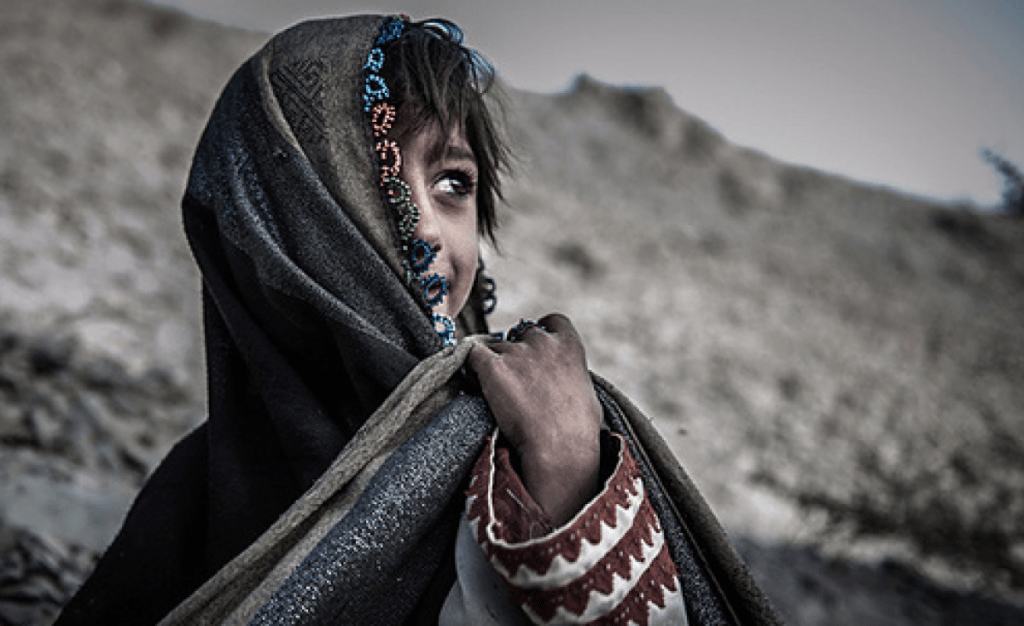
Kiyya and Sadu, a part of this long ballad on the legendary lovers from Balochistan, has been translated from Balochi by Fazal Baloch. Click hereto read.
In Tintin in India, Rhys Hughes traces the allusions to India in these iconic creations of Hergé while commenting on Tintin’s popularity in the subcontinent. Click hereto read.
Meredith Stephens shares the response of some of the Californian community to healing after the 2020 forest fires with a narrative and photographs. Click hereto read.
No, they whisper. You own nothing.
You were a visitor, time after time
climbing the hill, planting the flag, proclaiming.
We never belonged to you.
You never found us.
It was always the other way round.

‘Moment’ by Margaret Atwood
With an unmanned mission reaching the moon — that moon that was chipped off the Earth’s surface when Theia bashed into the newly evolving planet — many feel mankind is en route to finding alternate biomes and perhaps, a solution to its housing needs. Will we also call moon our ‘Homeland’ and plant flags on it as we do on Earth? Does the Earth — or the moon — really belong to our species. Do we have proprietary rights on these because of lines drawn by powerbrokers who say that the land belongs to them?
These are questions Margaret Atwood addresses in her writings which often fall into a genre called cli-fi. This is gaining in popularity as climate has become uncertain now with changes that are wringing fear in our hearts. Not all fear it. Some refuse to acknowledge it. While this is not a phenomenon that is fully understood by all of us, it’s impact is being experienced by majority of the world — harsh stormy weather, typhoons, warmer temperatures which scorch life and rising water levels that will eventually swallow lands that some regard as their homeland. Despite all these prognostications, wars continue to pollute the air as much as do human practices, including conflicts using weapons. Did ‘climbing a hill’ and ‘planting the flag’ as Atwood suggests, ever give us the rights over land, nature or climate? Do we have a right to pollute it with our lifestyle, trade or wars — all three being human constructs?
In a recent essay, Tom Engelhardt, a writer and an editor, contended, “Vladimir Putin’s greatest crime wasn’t simply against the Ukrainians, but against humanity. It was another way to ensure that the global war of terror would grow fiercer and that the Lahainas of the future would burn more intensely.” And that is true of any war… Chemical and biological weapons impacted the environment in Europe and parts of Afghanistan. Atom bombs polluted not only the cities they were dropped in, but they also wreaked such havoc so that the second generation’s well-being continues impacted by events that took place more than seven decades ago. Yet another nuclear war would destroy the Earth, our planet that is already reeling under the impact of human-induced climate change. Flooding, forest fires and global warming are just the first indications that tell us not only do we need to adapt to living in changed times but also, we need to change our lifestyles, perhaps even turn pacifist to survive in a world evolving into an altered one.
Critiquing the darker trends in our species which leads to disasters is a book by an eminent Singaporean writer, Isa Kamari, called Maladies of the Soul. He too looks for panacea in a world where the basic needs of humans have been satiated and they have moved on towards overindulgence that can lead to redundancy. In a conversation, he tells us how he hopes his writings can help towards making a more hopeful future.
This hope is echoed in the palliative poems of Sanket Mhatre from his book, A City full of Sirens, excerpted and reviewed by Basudhara Roy. Bhaskar Parichha’s review of Samragngi Roy’s The Wizard of Festival Lighting: The Incredible Story of Srid, is a tribute also from a granddaughter to her grandfather celebrating human achievements. Somdatta Mandal’s discussion of fiction based on history, Begum Hazrat Mahal: Warrior Queen of Awadhby Malathi Ramachandran not only reflects the tenacity of a woman’s courage but also explores the historicity of the events. Exploring bits of history and the past with a soupcon of humour is our book excerpt from Syed Mujtaba Ali’s Tales of a Voyager (Joley Dangay[1]), translated from Bengali by Nazes Afroz. Though the narrative of the translation is set about ninety years ago, a little after the times of Hazrat Mahal (1820 –1879), the excerpt is an brilliant introduction to the persona of Tagore’s student, Syed Mujtaba Ali (1904-1974), by a translator who describes him almost with the maestro’s unique style. Perhaps, Afroz’s writing bears these traces as he had earlier translated a legendary work by the same writer, In a Land Far from Home: A Bengali in Afghanistan. Afroz starts with a startling question: “What will you call someone who puts down his profession as ‘quitting job regularly’ while applying for his passport?”
In non-fiction, we have Devraj Singh Kalsi’s funny retelling of his adventures with a barber while Hughes‘ essay on the hugely popular Tintin makes us smile. The patriarchal past is reflected in an essay by G Venkatesh, whereas Suzanne Kamata from Japan talks of women attempting to move out of invisibility. Meredith Stephens and Candice Louisa Daquin both carry on the conversation on climate change. Stephens explores the impact of Californian forest fires with photographs and first-hand narrative. Vela Noble draws solace and strength from nature in Kangaroo Island and shares a beautiful painting with us. Madhulika Vajjhala and Saumya Dwivedi discuss concepts of home.
Two touching tributes along with a poem to recently deceased poet, Jayanta Mahapatra, add to the richness of our oeuvre. Dikshya Samantrai, a researcher on the poet, has bid a touching adieu to him stating, “his legacy will continue to inspire and resonate and Jayanta Mahapatra’s name will forever remain etched in the annals of literature, a testament to the enduring power of the poet’s voice.”
Our translations this time reflect a diverse collection of mainly poetry with one short story by Telugu writer, Ammina Srinivasaraju, translated by Johny Takkedasila. Professor Fakrul Alam has introduced us to an upcoming voice in Bengali poetry, Quazi Johirul Islam. Ihlwha Choi has translated his own poetry from Korean and brought to us a fragment of his own culture. Fazal Baloch has familiarised us with a Balochi ballad based on a love story that is well known in his region, Kiyya and Sadu. Our Tagore translation has attempted to bring to you the poet’s description of early autumn or Sharat in Bengal, a season that starts in September. Sohana Manzoor has painted the scene depicted by Tagore for all of us to visualise. Huge thanks to her for her wonderful artwork, which invariably livens our journal.
Profound thanks to the whole team at Borderless for their support and especially to Hughes and Parichha for helping us source wonderful writings… some of which have not been mentioned here. Pause by our content’s page to savour all of it. And we remain forever beholden to our wonderful contributors without who the journal would not exist and our loyal readers who make our existence relevant. Thank you all.
The love story of Kiyya and Sadu is very famous among the Baloch. An anonymous poet has versified the whole story in the form of a romantic ballad in lucid yet captivating language, this story of Kiyya, a young man from western Balochistan, and Sadu, who hailed from Makkuran. When a devastating draught hit the region, Kiyya along with his herd migrated from his hometown and camped somewhere in coastal area of Balochistan. One day by the river, he ran into a fair maiden, Sadu. He was struck by her charm so much that he fell in love with her instantly. He approached Sadu’s father and asked for his daughter’s hand in marriage. Since Kiyya was the member of an illustrious tribe, Sadu’s father accepted his marriage proposal.
A few days later, Kiyya took leave from Sadu’s father asking him that he would come back just in a few days after making necessary preparation for the marriage. However, he did not return in the stipulated time. Time went by. Neither did Kiyya showed up nor did come any message from him. In the meantime, some other men approached Sadu’s father with the desire to tie the knot with Sadu. His father was caught in a dilemma. He had given his words to Kiyya who had almost forgotten his commitment. On the other hand, age was slowly creeping upon her daughter. While, Sadu was not in favour of tying the knot with another man. She wanted to wait for Kiyya. The following poem is the description of Sadu’s message to Kiyya through an emissary bird:
SADU SAYS TO THE BIRD --

O sweet singing lively bird!
Red-eyed and pretty-winged,

When you peck from harvested fields,
Bits of spring yields.
But tiny grains of wild shrubs
Wouldn’t ever feed ye.

Come, alight onto the threshold of my hut,
Away from rest of the flock --
I'll feed you with fragrant grains,
With cardamoms and cloves.

I’ll spread them on my scarf
And water I’ll give you in a silver cup.
In the shade of my sable hair
Perch on my shoulder and chirrup.

Nestle on my lap and sleep.
Whenever you want to leave,
Just coo and forewarn me.
With civet-musk I’ll gild your beak,
With rose-petals your wings,
I’ll dispatch the clouds of mist
To sail you over.

Come and be my messenger
From Belau*, all the way to Bahau*.
Of the lay of the land, I'll give you some clues.
On the land that's called Bahau,
A long river flows through.

Like Zamzam* its water sweet and scared,
Herds of camels and calves,
Roam and graze on the verdant meadows.

A dome-shaped tree stands in grace and awe,
Like a camel’s foot appears its leaves,
Like a scorpion’s sting its spikes,
And branches like a tiger’s paw.

Illustrious men have gathered by the royal court.
In a row, sit the matchless warriors;
In the next, the common folks;
The blue-blooded Kalmatis*, in the third row.

Amongst them, there’s a man
Dressed in exquisite robes.
Handsome of the most handsome fellows,
Indeed, Kiyya is distinct
In appearance and demeanour,
His waist curved by the quiver,
By the glistening shield his shoulder.

Alight on his turban, chirping
Ever so gently whisper in his ear,
The message of Sadu I do bear
Her message and good tidings.

Kiyya! O, you the unfaithful fellow
You promised to return in ten days,
But now it has already been
Six months and a whole year.
You vowed to return but did not.


The lambs kept for the wedding feast
Have now all grown old.
Worms have devoured the flour.
Birds have pecked away the henna.
Your bride has lost all her teeth.
The bridal incense has gathered dust.
Come if you must,
Or henceforth someone else will replace you.

If you’ve fallen in love with someone else,
May death consume her!
May a headache, a deadly cough
And a slow fever claim her mother!
May no harm befall you ever!
It’s a loss alone I’m to suffer!

*Bahau: A place in Western Balochistan.
*Belau: A place in Eastern Balochistan
*Zamazam: A well located in Mecca, Saudi Arabia.
*Kalmati: Name of a Baloch tribe.
{Note from the translator: There are more than one version of this ballad with substantial difference in the text. This is an assortment of different sources primarily from Meeras, (The Heritage) (4th edition) compiled by Faquir Shad, and published by Fazul Adabi Caravan, Mand in 2016}
Fazal Baloch is a Balochi writer and translator. He has translated many Balochi poems and short stories into English. His translations have been featured in Pakistani Literature published by Pakistan Academy of Letters and in the form of books and anthologies.
.
PLEASE NOTE: ARTICLES CAN ONLY BE REPRODUCED IN OTHER SITES WITH DUE ACKNOWLEDGEMENT TO BORDERLESS JOURNAL


 Borderless