Ratnottama Sengupta writes she does not junk all the old Calendars and Diaries…
The dawn of every New Year brings with it the need for a new calendar and a couple of new diaries. So, wholesale markets in every major city on the map flourishes with these items in every shape and size. In the years of my growing up, a government organisation calendar, with only the dates and simply no illustration, was routine. Forget 12 images for as many months, even half that number was a rarity. This, even though in the previous decades Raja Ravi Varma’s [1] evocation of Saraswati, Shakuntala, Nala Damayanti or Lady with a Lemon, were coveted adornment for the walls. In certain instances, these images were individually dressed up with sequins and pearls too! Oleographs and mechanical reproductions had, by this time, won past hand paintings that once covered the mud-plastered walls with stories of Ram-Sita Vivaha[2], among others.
Calendars by Raja Ravi Varma (1848-1906). Photos provided by Ratnottama Sengupta
Since the turn of this century, which saw dealings in art skyrocket, galleries have made it a custom to bring out calendars on either a theme that’s tackled by a number of artists, or on works by one chosen artist. Simultaneously artists themselves became proactive in bringing out calendars sporting images of their own work. These are not driven so much with the need to publicise their creativity as to lend a personal touch to the annual give and take of ‘Season’s Greetings’.
I particularly cherish the textile scrolls published annually as calendar by my friend Subrata Bhowmik, one of India’s leading graphic designers. This ‘Design Guru’ has eighteen awards from the President for accomplishments in textiles, publications, advertisement, photography and craft communication. He was motivated to do these calendars in order to share what he learnt in Switzerland as also from his experience in the Calico Museum of Ahmedabad. And they spread a deep understanding of the contextual framework of design in the real world. I still cherish one such tapestry designed with Ajanta style beauties, though the year rang out seven years ago.
My friend Jayasree Burman’s desk calendar with detailed images of Laxmi Saraswati or Durga have, likewise, remained in my collection years past their expiry dates. Sohini Dhar used to regularly commemorate the memory of husband Ramlal Dhar with images of his landscape that shared pages with her own Bara Maasa, miniature style narration of the seasons. Ajay De’s limited-edition calendar published by Art and Soul gallery this January is in line with this custom.
Photos provided by Ratnottama Sengupta
The passion in Ajay’s charcoal paintings of bulls and the stamina of his stallions bring to mind the energy of Assam’s wild boars that Shyam Kanu Borthakur familiarised; the vitality of the horses Sunil Das studied in Kolkata’s stables; the vigour of Husain’s much auctioned equines; even the animation of Paris-based Shahabuddin’s abstractions. However, the amazing vibrancy of Ajay’s treatment of a black and white palette acquires a touch of magic, with a red dot here or a wash of yellow there. And when he places the charging bull against a wall dripping the salsa red of blood, I recall the vivacity of a ‘Bull Fight’ that I had a chance to witness in Southern France a quarter century ago – before its forceful evocation in Pedro Almodovar’s Talk To Her (2002).
*
Prabal Chand Boral, as his name suggests, boasts kinship with Raichand Boral, a pioneer of Indian film music in 1940s. Not surprising that Prabal oftentimes breaks into songs on the terrace of his Kolkata home. Every Durga Puja finds him dancing with earthen dhunuchi[3]. And his diurnal routine finds him painting. Sketching. Outlining. Portraits. Flowers. Supernatural creatures. Illusive figures. Capricious forms. He creates videos to involve attentive viewers. And every year, out of his own pocket he brings out a wall calendar for private collection. “An artist craves to express himself in so many ways,” he told me last year when his calendar had sported six portraits in his signature style.
Thakurmar Jhuli (1907). From Public DomainDakshina Ranjan Mitra Majumdar’s illustration. Provided by Ratnottama Sengupta
This year Prabal pays an ode to Thakurmar Jhuli (Grandma’s Satchel). Written in 1907 – year 1314 of Bengali calendar — by Dakshina Ranjan Mitra Majumdar this landmark in Bengal’s pre-Independence literature compiles stories that have been orally handed down from one generation to another in the villages and backwaters of undivided Bengal. This was in the manner of the Brothers Grimm who wrote and modified Germanic and Scandinavian tales that have been translated, like Hans Christian Andersen, into every language spoken in the world. In the process they embedded in the collective consciousness of the West lessons of virtue and resilience in the face of adversity.
Much like them Dakshina Ranjan had gone around mechanically recording the tales of Lalkamal Neelkamal, Buddhu Bhutum, Dalim Kumar and Byangoma Byangomi. When first published, Nobel Laureate Rabindranath had written the foreword because he felt that publication of these legends was a need of the hour in order to counter the sense that only the European rulers had fairies, elves and ogres, imaginary beings with magical powers, to entertain and educate their young. Educate? Yes, because the dark and scary beings, even when they did not metamorphose like the Frog Prince, were metaphors for a state where the victim, though less powerful, always overcame the tormentor. Not only children and young adults but grown-ups too liked the stories that broke down the boundaries of time and culture. They encouraged and even emboldened the readers to look for wonder in their own lives.
Prabal had long cherished the desire to reinterpret the illustrations by Dakshina Ranjan himself. He has brought this to fruition with a touch of his own imagination. The result might not be a fairy tale – read, decorative – but none can deny the originality of this calendar.
*
I have personally felt happy to write for a diary – rather, a notebook – that has been published by Nostalgia Colours, a Kolkata based gallery that holds an annual exhibition in other metros of India. A number of the 17 exhibited artists are no longer with us in existential terms. K G Subrmanian, Paritosh Sen, Suhas Roy, Sunil Das, Robin Mondal, Prakash Karmakar — they do not eat-drink-chat with us across the dining table as they once did. Or as Anjolie Ela Menon, Jogen Chowdhury, Ganesh Haloi, Subrata Gangopadhyay and Prabhakar Kolte still do. But their watercolours and gouaches, contes and temperas continue to bring us as much pleasure as when these majors of art signed off their canvases. Only our viewing now is tinged with a certain sadness at the thought that they will no longer add new dimensions to Indian contemporary art scene with their thoughts, their arguments and their palette.
This precisely is what heightens the joy of an undated notebook richly decorated with aesthetic reproductions of not six or twelve but 52 works of art.
A thing of beauty, be it a calendar, a diary or a notebook, is joy forever. Raja Ravi Varma (1848-1906) can vouch for that.
.
[1] Raja Ravi Varma, an artist from the nineteenth century who mingled Indian and European styles
Ratnottama Sengupta, formerly Arts Editor of The Times of India, teaches mass communication and film appreciation, curates film festivals and art exhibitions, and translates and write books. She has been a member of CBFC, served on the National Film Awards jury and has herself won a National Award.
.
PLEASE NOTE: ARTICLES CAN ONLY BE REPRODUCED IN OTHER SITES WITH DUE ACKNOWLEDGEMENT TO BORDERLESS JOURNAL
Those were not the days to honour bravery on the domestic front. But if an award gets constituted to recognise such acts of valour, my grandmother would emerge as a strong posthumous contender. What she did remains remarkable, audacious, and inspirational to several generations of our family and relatives who idolise her for this singular outstanding quality that pushed her into the realm of greatness.
From the balcony of the second floor of the house in the village my grandmother was dumped – and assumed dead – by the band of veteran dacoits that had entered the mansion with the ulterior motive of robbery after a tip-off from some reliable sources that all the male members had gone to the city to place bulk orders for the upcoming festive season. Her agility to oppose the intruders and block their path was a source of irritation as they suspected their flawless plan would flounder in its execution if such resistance garnered support from the other families. Before conducting their operation in peace, they chose to get rid of the disturbing element. But they forgot to get the keys of the locker almirah from her.
Unfortunately, what they felt was designed to succeed had ended in disappointment as the old lady landed on a mound of haystack, suffering injuries that threatened to break her back but not her spirit. When one of their acolytes rushed down to search for the keys, she pretended to be dead by holding her breath. They could not find the key. The truth was that she had buried the bunch of keys in the haystack as soon as she crashed on the ground.
After the dacoit left her, she composed herself, swallowed her pain, and screamed louder than before, ensuring that the lamps in the neighbourhood lit up bright out of curiosity as the word daku[1] rend the air. Soon there were flames marching ahead to attack and overpower the intruders who thought it was better to retreat instead of facing the irate mob. With village folks arriving in droves to rescue her, the dacoits fled the scene without the booty, carrying with them only the jars of mango pickle lifted from the attic.
When she heard so many voices around her, including some familiar ones, she slowly opened her eyes but could not manage to get up on her own. She was carried inside the house and the medical examination revealed a fracture of the hip. After her sons and their families returned home to discover her in this state, they regretted their decision to leave her behind. But she said it was God’s plan to save the family fortunes. Within a few months, she regained the ability to walk slowly and she narrated dramatised tales of her big fight with dacoits. It was a fine blend of reality and her imagination. She became a feted character with immense popularity in the surrounding villages on account of her encounter and survival skills.
The trail of destruction that the intruders had left behind was in the form of overturned tables and dislodged beds, with sharp tools lying scattered in their hurry to escape the mob that her shout had garnered. Her narrative went through additions and alterations, making some infer what she reminisced was tweaked due to memory loss although it was her clever ploy to retain fresh appeal. Many people suspected she would never manage to regain her full strength and firmness, but her speedy recovery confirmed her bones had suffered minimal damage.
She basked in the glory of her valour and thanked God for giving her the opportunity to showcase this side of her personality that would never have emerged if this incident had not occurred. She averred she did not worry about personal safety for a single moment and acted the way her husband would have done. Such disclosures signified she was making a gender statement of equality, that she was no less courageous than her male counterpart who had settled well into his heavenly abode some years earlier. Now it was posing a challenge for her sons and daughters to set a higher benchmark though none of them looked capable of surpassing her next level of courage.
My grandmother herself was not sure how she gathered the intrepidity to stand in front of armed goons. Like flashes of brilliance, bravery also came in sudden spurts. Standing in the courtyard of the house, the sons assured boldly that if any dacoits made another daring attempt in their presence, they would chop their heads off with swords. Their stentorian voices did not carry an iota of conviction but they tried to convince their mother that they were equally brave and prepared to face life-threatening situations without any fear.
During their entire lifetime, the next generation did not suffer any violent attack or external aggression though they themselves were engaged in petty fights and quarrels that did not make them eligible for any honour. My grandmother lived a long life and always gave the family some reason to feel inferior. Without going to the battlefield, she had fought and survived a dangerous attack. As this story was still in circulation during our childhood, we grew up hearing it repeated with great interest from none other than our grandmother. She was corrected by other members of our family for introducing changes in the narrative she had shared earlier.
Mythological tales did not catch our imagination as much as her own story. We loved to hear it retold in her voice. The element of suspense retained freshness in her narrative and we were hooked to her storytelling. Although dacoits became a rarity by the time we were growing up, and their attacks were seen only in Hindi masala films, there was a recurring dream of facing a similar crisis where a band of dacoits would hold us hostage, but we would somehow manage to escape unhurt from their clutches.
Contemporary dacoits have become multi-tasking experts with a diverse set of skills as their earlier focus on the few wealthy families in rural areas has now shifted to other profitable, prepaid criminal gigs like contract killing and shoot-outs. They prefer to work from remote locations on a freelance basis just like writers and copywriters. The middle-class families now face burglary from thieves armed with daggers wafting in their apartments like evil spirits.
Travelling by train to visit central India, crossing the Chambal Valley known as the hub of dacoits, I was expecting dacoits on horseback, galloping ahead along the railway track, to catch up with the superfast train, to latch on to the door and enter the air-conditioned coach and hold the passengers on board captive at gun-point. This would be an ideal opportunity as I would –at the right time — emerge from the toilet and catch the ‘Gabbar’ [2] of their gang from behind, snatch his weapon and point it at his tilak[3]-smeared forehead, ordering his team mates to jump off the train before I finished counting fifty. This would be the best outdo the family record of heroism. Saving the lives of fellow passengers would make me eligible for the highest bravery award for civilians.
As I sat brooding over this possibility, the train crossed the Chambal region safely and the passengers heaved a sigh of relief. That the fear of such attacks still resides in many hearts was evident as the curtains of the windows were pulled apart only after the train had crossed the danger zone. My window seat had the emergency exit and I am sure if the attack had taken place, I would have been the first one to jump out to save my life and wait for better heroic opportunities.
Dacoits have appeared as positive characters with a sad story of exploitation that compelled them to pursue this profession. They have been glorified in our films for carrying a heart of gold, not just pots of gold. As some of them became political leaders after winning elections, one is forced to take a relook and believe in the forgiving nature of the masses who elect them and give them the chance to rule and become an integral part of the mainstream. Though I must admit I have no idea of how many dacoits turned politicians have helped the nation grow as their personal rivalries and internal fights culminated in their untimely end. However, the sobering impact of such narratives makes one reflect on the entire concept of who loots and plunders at an individual level and how the colonisers looted and robbed in an organised and official manner. It should not come as a surprise if their tales of violence and exploitation get compared with those who plundered cities and states though they were entrusted with the task of protecting them.
Returning to my earlier tale, my grandmother’s framed and garlanded portrait on the wall urged me to seek her blessings. Even though it was not exactly a case of getting thrown off by pillaging dacoits, my late grandmother blessed me one day with a chance to survive a similar attack. Getting pushed down the staircase by a nefarious businessman but landing safely without sustaining head injuries due to my proven skills of tackling motion while disembarking from moving local trains as they entered the platform, I was able to retain my balance and save myself, which made me think of the miraculous escape and how I got the privilege to emerge as a hero for the current generation. Perhaps the spirit of my grandmother stood firmly behind me and saved my head from cracking up like a coconut.
This scary episode made me feel closer to my grandmother. I have contributed to the glory of the family, preserving the rich legacy by making worthy additions to it. Those who were eagerly expecting to crush my skull were surprised to see me unhurt. Full credit goes to my grandmother for supporting me invisibly – though she is not around to see me replicate her distinction. Now we share a special bond and a common fate of surviving a deadly attack and telling the tale, rising in stature and esteem after the heroic fall.
[2] An allusion to a Bollywood hit dacoit leader called Gabbar Singh from the film Sholay (1975)
[3] A mark in the centre of the forehead with vermilion or ash to show devotion to a deity.
Devraj Singh Kalsiworks as a senior copywriter in Kolkata. His short stories and essays have been published in Deccan Herald, Tehelka, Kitaab, Earthen Lamp Journal, Assam Tribune, and The Statesman. Pal Motors is his first novel.
PLEASE NOTE: ARTICLES CAN ONLY BE REPRODUCED IN OTHER SITES WITH DUE ACKNOWLEDGEMENT TO BORDERLESS JOURNAL
Nalanda University, founded in 427 CE in ancient India, is considered the world’s first residential university. It attracted 10,000 students from across Eastern and Central Asia to study medicine, logic, mathematics, and Buddhist principles. The University flourished for over seven centuries, predating the universities of Oxford and Bologna by more than 500 years. Nalanda’s enlightened approach to philosophy and religion significantly shaped Asian culture long after its decline. The Gupta Empire, though Hindu, supported Buddhism, fostering a liberal environment that allowed it to blend intellectual Buddhism with multidisciplinary academics.
Nalanda was destroyed in the 1190s by Turko-Afghan military general Bakhtiyar Khilji, who sought to extinguish the Buddhist center of knowledge. The fire set by the attackers reportedly burned for three months. Today, the excavated site is a UNESCO World Heritage site.
Numerous aspects of Nalanda continue to be enveloped in an enigma. What is the date of its establishment? Who were its founders? Which individuals engaged in study and instruction at this institution? What disciplines were available for study? What was the population of students and educators? Can Nalanda be classified as a university by contemporary standards? What factors contributed to its eventual decline? Nalanda – How It Changed The World by Abhay K. unravels these questions.
Abhay K. has authored numerous poetry collections, such as Celestial, Stray Poems, Monsoon, The Magic of Madagascar, and The Alphabets of Latin America. Additionally, he serves as the editor for several notable works, including The Book of Bihari Literature, The Bloomsbury Book of Great Indian Love Poems, Capitals, New Brazilian Poems, and The Bloomsbury Anthology of Great Indian Poems.
Writes Abhay in the introduction to the book: “There is no clear and entirely reliable interpretation of Nalanda’s past or, for that matter, the past of just about anything. Rather, there are scattered ideas that we try to string together as history, an overview stitched from snippets. And there is no single interpretation of these snippets but rather competing and conflicting interpretations. Recognizing this slippery nature of the past and its documents is part of what makes scholarship such an exciting enterprise.
“Buddhist monasteries existed all over India, Central Asia, and East Asia. However, Nalanda became a celebrated monastery in comparison to its contemporaries. What might be the reason? One of the reasons was its proximity to Rajagriha (modern Rajgir), the first capital of Magadha. Rajagriha in those days was full of political intrigue and rivalries. It became a fertile ground for the birth of the Magadha Empire. Over the centuries, Magadha was ruled by a succession of dynasties, including the Brihdratha dynasty, the Pradotya dynasty, and the Haryanka dynasty. The Haryanka dynasty was the third ruling dynasty of Magadha. It was founded by Bimbisara (c. 558-c.491 BCE). He is considered to be a contemporary of both Mahavira (599-527 BCE) and Gautama Buddha (563-483 BCE). His son Ajatashatru further consolidated it after forcefully taking over Magadha from his father and imprisoning him. He fought a war against the Vajjika League, led by the Lichhavis, and conquered the republic of Vaishali.”
Divided into eight chapters – Nalanda the capital of Magadha, the legendary sons, the rise of Nalanda Mahavihara, luminaries, foreign scholars of Nalanda, Nalandas’s contributions and its global footprint – this is an exhaustive book. The narrative chronicles the ascendance, decline, and resurgence of Nalanda Mahavihara. It delves into Nalanda’s significant contributions to various fields, including science, mathematics, philosophy, art, architecture, and poetry, supported by thorough research. Additionally, it emphasises the distinguished scholars who enhanced its unmatched status as a leading center of learning, as well as the international scholars who frequented the renowned monastery.
Concludes Abhay K: “Nalanda’s footprints to be spreading to new territories in the twenty-first century, where they have not been strong before. As our planet faces the triple threats of climate change, biodiversity loss, and environmental pollution, humanity needs to make peace, both with its inner self as well as with its fellow species, rivers and lakes, oceans, and all entities that support life on our beautiful planet. Nalanda’s timeless tradition of imparting knowledge, wisdom, and kindness can guide humanity toward overcoming hatred, anger, frustration, and greed while fostering inner and outer peace.”
The core message of the book — with numerous photographs — is that the creation of institutions named after Nalanda around the world instills in him a sense of optimism that humanity will eventually resolve all its conflicts through the esteemed Nalanda tradition of dialogue and discourse, rejecting violence and warfare permanently. In this context, the ongoing legacy and revival of Nalanda, both in India and internationally, serves as a significant beacon of hope.
Nalanda, with its expansive scope and rich historical background, offers an engaging narrative that illuminates the evolution of this ancient institution over the course of thousands of years.
Bhaskar Parichha is a journalist and author of Cyclones in Odisha: Landfall, Wreckage and Resilience, Unbiased, No Strings Attached: Writings on Odisha and Biju Patnaik – A Political Biography. He lives in Bhubaneswar and writes bilingually. Besides writing for newspapers, he also reviews books on various media platforms.
.
PLEASE NOTE: ARTICLES CAN ONLY BE REPRODUCED IN OTHER SITES WITH DUE ACKNOWLEDGEMENT TO BORDERLESS JOURNAL
Based on an interview with the Amitabh Prashar, the maker of a BBC documentary on female infanticide, Aparna Vats shares a spine-chilling narrative about crimes that were accepted in the past but are now under reform.
Aparna Vats
The Female Infanticide Protection Act was enacted in India 1870, 154 years ago. However, female infanticides continued to haunt some areas of Bihar well into 1990s. The number given out by a government of India report for 2019 is 36 in the whole year, with none reported in Bihar. A journalist called Amitabh Prashar came out with a new BBC documentary on this issue in 2024 after investigations carried out over thirty years in Bihar, called The Midwife’s Confession. Prashar, wrote in a BBC article of a 1995 report: “If the report’s estimates are accurate, more than 1,000 baby girls were being murdered every year in one district, by just 35 midwives. According to the report, Bihar at the time had more than half a million midwives. And infanticide was not limited to Bihar.”
Basing his coverage on the confession by dais or midwives, this film unveils the terrifying practise of female infanticide in Bihar. The documentary begins by screening the confession video of Dharmi Devi who stoically confesses to how many children she and her accomplice had killed and buried in the forest.
Prashar started his investigations when he read of a case of female infanticide near his village in Purnia, Kathiaar district. In the documentary, he explained how a news clip that came out in the Hindustan Times of Purnia, a village in Bihar, motivated him. It was a report of a father choking his infant daughter to death and was recorded as the first case of infanticide in the area. He had visited Bihar for the sake of the story as the father had been arrested and the mother was under societal pressure to withdraw the case. Through his interactions with a Non-Governmental Organisation (NGO) working in the area and the midwives in 1995-96, he realised that the occurrence was not an isolated case. Unmarried and a novice in this field, Parashar said he took the risk to return to Delhi and rent a camera at Rs 4500 per day to start his exploration.
He admitted getting the midwives them confess was a major struggle but an understanding of the interviewee’s personal lives helped him understand their society and circumstances better. Certain key findings were that the infants were killed by the midwives, as the families considered the girl-child a financial liability, especially for arranging dowries. The midwives were themselves struggling to arrange dowries for their own daughters.
In the documentary, Hakiya, a midwife, was the first to confess how post birth, the men of the family used to threaten the midwives with sticks and offer money to them to kill the child as the cost of care, that was primarily dowry (‘Tilak-Pratha’) for them, weighed heavier than the barbarism of this sin. Filing a police report was out of the question. The repetition of this crime had forced these women to accept this carnage. Siro Devi, a midwive who Prashar had been in touch with from 1996, confessed: “Dekhiye sir, aurat ke haath mein marna, aurat ke haath mein jeewan dena (Sir, it is in the hands of women to kill or to give birth).”
Prashar set out to uncover more. He interviewed Anila Kumari, the owner of an NGO who worked with these midwives. Bihar suffered a state of economic crisis in the 1990s when the per capita income was growing at a mere 0.12%. The sheer state of economic desolation and social oppression coerced these women to kill more than 1000 girls in a year in Kathiaar alone, claimed Prashar.
Prashar explained this story is not exhaustive in its list of injustices. Often the sole earners post-marriage, these midwives were recruited sometimes at the young age of ten. It was a customary practice passed on from generation to generation. Their remuneration was conditional to the happiness felt by the families when the child was born which was estimated as per the sex. Unsurprisingly, a girl-child rendered lesser payment.
Kumari started working with the midwives to stop the practice of female infanticide. Families trusted midwives more than doctors. The rescued children were brought to the NGO in life-threatening states and were either registered for adoption or raised by them. One of the adopted girls called Monica was put in focus in the documentary.
Prashar said in the interview that the midwives were from the backward castes and extremely poor. A deeper analysis of the inter-community relations reveal that they were themselves victimised. They also felt guilty for their actions. Rani, a midwife, who was not featured in the documentary due to time related constraints, was such a person. She was herself struggling to get her daughters married while languishing in the guilt of having killed other’s daughters. Some of the midwives were arrested. Parashar said he visited Bihar a few days prior to the release of the arrested midwives to ensure that they did not get into legal hurdles or come under societal pressure.
Mr. Parashar confessed he was but a commoner for the people and visited Purnia at least twice a year for reasons that were unrelated to the documentary. After some initial interactions, the villagers lost interest in his activities and for a documentarian, that was the best scenario. “When characters start to ignore, that is the best thing a director can think of,” he said. He self-funded his project in which shots stretched 200 hours.
The documentary starts with joggers rescuing an abandoned girl child. And then, it plunges exploring darker aspects of this attitude that sees the girl child as a burden leading not only to abandonments but also to female infanticides brought to light by the midwives. The film concludes with a heartwarming interview with the adoptive parents of the girl child rescued by the joggers and their happy eight-month-old ward.
Reference:
Aparna Vats is a student from Bangalore.
.
PLEASE NOTE: ARTICLES CAN ONLY BE REPRODUCED IN OTHER SITES WITH DUE ACKNOWLEDGEMENT TO BORDERLESS JOURNAL
Disclaimer: The opinions expressed are solely that of the author and not of Borderless Journal.
Based on Paul Gauguin’s life is a book by Somerset Maugham[1] called Moon and the Sixpence[2], a novel about a stockbroker who abandons his profession to become an artist. Gauguin[3] was a stockbroker turned artist, and Maugham was trained a physician but opted to write books and became a famed novelist. While earning a living as solely a writer has become increasingly difficult through the world unless you make it very big like JK Rowling[4], and therefore, most writers opt for being part time writers while holding full time jobs, we do have a few strange aberrations. One of them is Dr Kiriti Sengupta, who turned to publishing and poetry abandoning his profession — that of a dentist.
Kiriti Sengupta: Photo Courtesy: Bitan Chakraborty
He ran away from his home and started writing in a small, rented accommodation in 2011-2012. And now he writes, works as a director in one of India’s top upcoming publishing concerns, Hawakal, and rolls out poetry. Sengupta describes his former profession with, an underlined sense of irony, and perhaps with tongue-in-cheek humour:
I prefer patients who are edentulous. I dread
a tooth will wrangle my expertise, and I’ll fail
to make an impression.
(Rituals, 2019)

Wisdom
the third molar adds
to the surgeon’s expertise
(Oneness, 2024)
He writes about water and the environment:
Water has many colors,
smudging pebbles
along its path

(‘Spectrum’, Water has Many Colours, 2022)


Feed the earth water
she flows in abundance.
Allow the planet to breathe:
the air is her consort.
(‘Hibiscus’, Water has Many Colours, 2022)
He writes for and about women:
How many mujras dwell in a kotha ?

How many neonates hew to a bordello?

Like her admirers
God is silent.
In her sinews
hides a hint of soil
from the yard of courtesans.

*Mujras are courtesan’s song and dance performances
*Kothas are brothels
(‘When God is a Woman’, Rituals, 2019)
And yet critiques stances with a twisted questions:
You define women as Durga
or Kali. Are you a believer? Are you
being kind? You could have convinced
them to fight the evil.
Instead, when you imply the goddess,
do you illustrate
sisterhood with many limbs? Would you
like men to act as Shiva—the destroyer?

(‘Primordial Learning’, Oneness, 2024)
Underlying all of Sengupta’s poetry, is a strong sense of irony which like a veil drapes words with double entendres. While the poems are layered, he dwells on human frailties too… like procrastination with a soupçon of sarcastic humour as in ‘From Being Late in Calcutta’ (Rituals):
As soon as you mark me
I’ll talk about events
that guide me to the records
you maintain.

I’d say crowded buses invite passengers
from unscheduled halts.
I’d emphasize the number of speed-breakers on road,
and their poor performance in preventing accidents.

I’d tell you trains run late.
Signals are laggy between stations.
I won’t forget to mention how
a sudden protest
makes the train stand still for hours.

I’d discuss about the day I reported late,
owing to instantaneous suspension
of underground train services
as a man killed himself on the railway lane.

I’d ask you to remember why I came late the other day.

If you can recall,
I had indigestion despite eating at home.
I blamed farmers for sprinkling pesticides on crops.
I pointed at my salary that failed to buy organic veggies.

And then,
I’d invariably argue about maintenance and population.

I’d appreciate China, one-child policy, and their claim on
how the government prevented four hundred million births.
And how India thrives on the revenues earned
from selling nicotine and condoms.

I’ll explore other issues
the next time I reach late.
He pours out lines on stars, film stars and politicians. Sengupta responds to life with poetry, often terse, brief… sometimes with a wry sense of humour. But in the brevity, lies a depth of mystery, which you can mull and cogitate over endlessly. A flickering of spiritual beliefs and a seriousness of intent despite the apparent lightness of words create a conversation within the poems. In this exclusive, an award-winning author of more than fourteen books, Kiriti Sengupta takes us on whirlwind tour of his life, his ideas and his work.
When and how did you start writing poetry? Why did you switch professions — from a dentist to a poet-publisher? What compulsion made you turn from a lucrative to an uncertain profession? Were you sure you’d succeed? Please share your story with us.
First of all, thank you for inviting me to Borderless for a heart-to-heart, Mitali. I greatly appreciate your dedication to literature, especially quality work. Coming to your first question (a bundle of questions, actually), I don’t remember when I first wrote a poem. Coming from a dentistry background, I never imagined that I would write poems. Until then, I was well acquainted with journalistic articles, critical responses, cultural essays, and, of course, scientific papers. Poetry was out of the question. I believe in karma. Maybe I was destined to write poetry. It wasn’t a deliberate choice. It wasn’t a spontaneous stance either.
I was passing through an obnoxious personal crisis that compelled me to reconsider my career in dentistry. I was comfortably placed in a government institution, enjoying a considerably thick monthly salary. In early 2012, I decided to leave my job and spend some time with myself. However, as you can understand, it was risky, as I was the only breadwinner in my family, which consisted of my wife and son. I had no career options to pursue.
I was new to social media back then. I had the opportunity to become involved with a virtual group, Indies In Action (IIA), run by Stephen L. Wilson. They were raising funds for the victims of the devastating earthquake in Oklahoma. I contributed a few poems to the literary anthology Twist of Fate(ToF), which Steve edited. It was hugely successful, and all proceeds went to the May Tornadoes Relief Fund, managed by United Way. For the promotion of the book, I interviewed a few eminent contributors, such as Bill Lantry, Terry Lucas, Colin Dardis, Marshall G Kent Sr., Allison Bruning, Maggie Rascal, Don Martin, Linda Bonney Olin, Maria Edwards (the then President of the American Authors’ Association), Ency Bearis, among others. Honestly, they all helped me become familiar with the world of poetry.
In 2013, my first book, The Unheard I, was published. It was released simultaneously in India by Dhansere Prakashan and in the United States by Inner Child Press Limited. It was non-fiction, although it contained two chapters dedicated to poetry. In his commentary, Stuart Aken remarked, “It is a scholarly [collection] that will appeal to those with an interest in poetry, particularly spiritual poetry expressed as literature, as well as [to] those who have a leaning toward or a significant interest in Indian myth and religion.”
Even then, I had no plans to pursue writing (or publishing, for that matter) as my career. Gradually, I evolved, and here I stand today. Do I call myself successful? I’m not sure whether I have turned into a consummate writer. Since I write poetry in a niche market worldwide, it is challenging to become a “successful” poet and earn enough royalties to sustain my family. As a publisher, oh yes, Hawakal has emerged as a leading traditional press that has published several writers and poets and enjoys its presence in New Delhi, Kolkata and Nokomis (Florida).
How long have you been in the literary framework? Was it a tough journey moving from dentistry to writing? How did your family respond?
My first essay was published in 1995 in the college magazine. I remember it was written for students suffering from anxiety and family expectations. While studying dentistry at North Bengal Dental College, I joined the All-India Freelance Journalists Association (AFJA, Chennai). My senior colleague, Dr. Falguni Maji and I were commissioned by Uttarbanga Sambad to write an article on the pottery art in Matigara (Siliguri). I was a regular contributor to “The Third Law” in The Telegraph (India). Later, I regularly wrote health-related articles for Ganashakti.
As I said before, I was initiated into poetry quite late. It was a challenging move as I had no formal training, but I was immensely blessed to have a few mentors who honed my skills and taught me the basics of writing poetry.
My family suffered badly from my career-shift. They had to compromise on their living standards. The initial years of becoming a full-time writer were dreadful, to say the least. From only one wholesome meal a day to just a pack of instant noodles for the day — I have personally experienced it all. I ensured that my family didn’t starve, nor did my son lose his schooling. However, their ceaseless support enabled me to survive as a writer and publisher.
How many books have you authored/translated and how many poetry collections, and within how many years? Do you see yourself more as a poet or as a publisher/editor?
I have written fourteen books of prose and poetry, and as a translator, I have two full-length collections of poems. I have also edited nine literary anthologies, including Shimmer Spring, an all-colour, hardback coffee-table book published during the pandemic, which addresses our perceptions of light.
Honestly, I see myself as a patron of Indian arts, literature and fine arts (painting, sculpture, etc.). I’m an admirer of Indian textiles, too! I love buying drapes, be it a saree, a shawl, or a dhoti, in rich fabrics. Bitan and I have plans to start a men’s brand of drapes. We are working on it.
You claim you are a slow writer, and you isolate yourself in a ‘studio’. Tell us about your poetic process. How do you write? What inspires you to write? Are you influenced by any writers/musicians, or artists?
You know, Mitali, we have two studios in India: one in Kolkata and the other in Delhi. These ateliers are essentially stations where we work on the submissions from authors — we read, select, edit, and design the books we publish. We invite authors and readers to have a one-on-one. Readers also drop by to buy a book or two they want. You see, these studios are not meant for our writing. I say “our” because Hawakal is the collective enterprise of Bitan Chakraborty (the founder director) and me. While Bitan oversees the Bengali department, I supervise the English-language division of Hawakal.
It’s difficult to describe how I write. Anything that stirs my imagination or fancy, whether a line from a song, an incident, or a tragedy, often inspires me to pen my thoughts. I am fond of ekphrastic poems and frequently visit art exhibitions to catch a thread or two. However, it takes days or weeks to write a poem, although most of my poems are short or very short. I believe in condensing my thoughts, which is a time-consuming affair.
Your first collection of poems, Healing Waters Floating Lamps (2015), was largely spiritual, while your latest, Oneness (2024), covers multiple aspects of life that may not be purely spiritual. Some of the poems in your later works are also ironic or verge on humour. A gap of nine years and multiple publications reside between the two books. Has there been a change or a progression in your poetry through your journey? Do you feel your poetry has changed?
Healing Waters marks my debut full-length collection of poems. Prior to this, I released 4 books, including My Glass of Wine (2013), which featured autobiographical poetry. My journey as a poet has led to a noticeable evolution. Scholars are more suited to examine these transformations. Some observe that my language and craft have become significantly more refined. They argue that my recent works display a level of sophistication. Conversely, others suggest that my earlier poems felt more spontaneous and grounded. Embracing evolution is crucial; without it, my growth as a writer would stagnate.
You translate from Bengali. Tell us who all you have translated. Have the translations impacted your own poetry. Do you feel translations should be literal or more focussed on capturing the essence of the language?
As I said before, I translated two volumes of Bengali poetry into English: Sumita Nandy’s Desirous Water and Bibhas Roy Chowdhury’s Poem Continuous—Reincarnated Expressions. I am delighted that these books have received rave reviews in India and overseas. Moreover, Hawakal recently released the 10th-anniversary edition of Poem Continuous, which has garnered critical appreciation.
Other than these books, I have translated a few contemporary Bengali poets as well: Ranadeb Dasgupta, Gourob Chakraborty, Rajeswari Sarangi, to name but a few. I can confidently tell you that translating Bengali poems has hardly influenced my work.
Whether translations of poems should be literal or more focussed on capturing the essence of the original is debatable. However, it is even more critical to ensure that the translated piece qualifies as poetry in the first place. If the piece does not read like a poem, regardless of the sincerity of the translator, the labour of translating the original work goes into vain. Every language comes with its own nuances. So, the translator should possess an excellent understanding of both the source and target languages.
Hawakal is regarded as one of the most important publishing houses for poetry in India. When and how did you join Hawakal as the director of the English section? How did you meet Bitan? Could you tell us about the journey?
Thank you for your kind comments on Hawakal, Mitali. Bitan Chakraborty established Hawakal in 2008 in Kolkata. He published numerous Bengali poets until I joined him in 2015. A common friend Kishore Ghosh introduced Bitan to me. Ghosh, a Bengali poet of some renown and a journalist, urged Bitan to publish a collection of literary criticism based on my work and that of Sharmila Ray. The book was titled Rhapsodies and Musings: poets in the mirrors of other eyes and authored by Ketaki Datta and Tania Chakravertty. So, we started our collaboration. Eventually, Bitan induced me to become one of the Directors of Hawakal.
Where do you see Hawakal travels as a publishing concern? What is the scenario like? Do you only bring out writers of Indian origin, or are you open to writers from other backgrounds? What does Hawakal look for in writers to publish with you?
For the past few years, Hawakal has been more focussed on fiction and non-fiction manuscripts. There is no dearth of poetry submissions, though. However, it’s challenging to find an authentic voice. We have published American poets like Dustin Pickering, t. kilgore splake, Marshall G. Kent Sr., Gary Manz, and others. Ethnicity isn’t a limiting factor for someone who wants to get published by Hawakal.
We really want to establish a steady foothold in the United States. Our tiny outlet in Nokomis is currently managed by Dr. Robertson James Short II. It has to grow big. Hawakal seeks original work, and we yearn for quality submissions.
Do you have any suggestions for young writers?
Aspiring writers or poets should read more and be well-versed with the works of contemporary authors. It is important to get published in journals, and accepting rejections from the editors is equally beneficial. Getting published should be a slow process. As the saying goes, there is no shortcut through the forest of life…
Don't you strive for the fame or pursue its fortune -- play a roulette game like a business tycoon, climb a high status ladder? don't even start,
you've already made it, you've got a good heart,
don't boast your conquests - your qualifications, the talent contests -- the expectations, don't conquer the mountains or top the charts --
you've already made it, you've got a good heart,
don't be frightened to lose, or to take a rejection, wear an ego bruise for your imperfection, your legacy is sleeping - you've got a head start,
you've already made it, you've got a good heart,
don't stack on your power, don't you mass on appeal, build the tallest tower or sign a record deal, bin your trophies - certificates - rip them apart,
you've already made it, you've got a good heart.
StephenPhilip Druce is based in Shrewsbury UK. He is published in the USA, India, the UK and Canada. He’s written for theatre plays in London and BBC 4 Extra.
Contact: Instagram – @StephenPhilipDruce
.
PLEASE NOTE: ARTICLES CAN ONLY BE REPRODUCED IN OTHER SITES WITH DUE ACKNOWLEDGEMENT TO BORDERLESS JOURNAL
Statue of Begum Roquiah in the premises of Rokeya Hall, University of Dhaka. From Public Domain.
Recently, near Shamsun Nahar Hall, the second women’s hall of the University of Dhaka, a resident student defaced graffiti depicting Roquiah Sakhawat Hossein – popularly called Begum Rokeya. Black paint was used to smear her eyes and her mouth. Later, the student apologised for her action and promised to restore the image.
I do not know what upset the young woman. The picture is not offensive. The woman has her hair modestly covered. However, the manner of the defacing is troubling. The eyes have been painted over so that the woman cannot see; the mouth has been painted over so that the woman cannot speak. Why was the young woman denying the rights that Roquiah fought for, that the women of my generation demanded as their fundamental rights, and that the young women of today take for granted? Why was the young woman who defaced the picture denying the rights that the students against discrimination were claiming?
But, then to my surprise, I learned that this was not the only picture of Roquiah’s that had been defaced after August 5. In this other picture she had been given a beard and the derogatory word “magi[1]” written across it. What had Roquiah done to be dishonoured? What had made her controversial? Why was a young generation denying the changes that Roquiah had brought in young women’s lives by sheer perseverance and strength of will? On October 1, 1909, only four months after her husband’s death, Roquiah Sakhawat Hossein started a school in his name at Bhagalpur where she had been residing at the time. It was with great difficulty that she was able to persuade two families to send their daughters to her school. Of the five students, four were sisters.
Forced to leave Bhagalpur for personal reasons, she moved to Calcutta. However, she did not give up her dream and, two years later, on March 16, 1911, she re-started Sakhawat Memorial Girls’ School with eight students. At the time of her death on December 9, 1932, there were more than 100 girls studying at the school. Apart from teaching, the school encouraged girls to take part in sports and cultural activities. In recognition of her contribution to women’s education, the first women’s hall of the University of Dhaka was renamed “Ruqayyah Hall” in 1964.
From Public Domain
More than a century has passed since Roquiah’s Sultana’s Dream was published in the Indian Ladies Magazine in 1905. In Bangladesh, in recent years, more than half of SSC graduates have been girls – who have also outperformed the boys. Though the female to male ratio goes down at the university level, women are working in different professions. Nevertheless, the danger to women that led to the institutionalisation of purdah and its extremes – which Roquiah questioned and decried for its often fatal results and which in Sultana’s Dream she reverses to put men in the “murdana” – still persists.
According to the UN, “Violence against women and girls remains one of the most prevalent and pervasive human rights violations in the world.” It is estimated that almost one in three women has been subjected to physical and/or sexual intimate partner violence, non-partner sexual violence, or both, at least once in her life. Numbers of women’s deaths in 2023 reveal that a woman was killed every 10 minutes.
Sadly, many of the killings are within the family, by husbands, brothers, fathers, mothers-in-law, and mothers – who have internalised the concept of honour and allow their daughters to be killed by those who should protect them. In early November, the murder of five-year-old Muntaha shocked the nation. We learned to our horror that her female tutor has been charged with the murder.
Neither education nor empowerment is proof against violence. What is the answer? Was Roqiuah wrong?
Had Roquiah been here today she would have been surprised to see so many young women wearing jeans but also hijabs – very different from the all-enveloping burqas of her times. Perhaps she would have been happy to see that the young women in the crowded streets were not afraid of the young men, and that, in August, when the traffic police were absent, they were confidently directing traffic. She would have been happy to see that the burqa had changed – as she had once suggested in an essay on the subject that it should.
However, she would have been shocked to see in recent months young men beating each other up with sticks – some even fatally. She had believed in education, believed that education was the answer to improving lives. She had striven to educate girls because she believed that it was education that would change their lives for the better. She would have been horrified to know that most of the young men beating each other up were students. She would perhaps have asked, Was I wrong? If education is not the answer, what is?
It is not enough then to educate women and to empower them. The tutor was educated and empowered. Perhaps what is important then is to realize as Roquiah did that one must have proper values. In “Educational Ideals for the Modern Indian Girl,” she stressed that India[2] must retain what is best about its traditions. Acquiring education did not mean that Indian women should discard their familial roles or forget their cultural values.
Though in this essay Roquiah emphasised traditional roles for women, she also believed that women had roles outside the family. Thus, in a letter to the Mussulman, dated December 6, 1921, she noted that four of the Muslim girls’ schools in Calcutta had headmistresses who had studied at Sakhawat Memorial Girls’ School.
Roquiah has been an icon for the generation of early feminists in East Pakistan/Bangladesh, many of whom like Shamsun Nahar Mahmud and Sufia Kamal were inspired by her and others like Nurunnahar Fyzenessa and Sultana Sarwat Ara who had studied at her school. She was one of the heroines for the generation of women activists of the mid-1970’s who made her call for emancipation their rallying cry. Women for Women, a research and study group, has a poster which quotes lines from Roquiah’s essay, “Subeh Sadek”: Buk thukiya bolo ma! Amra poshu noi. Bolo bhogini! Amra Asbab noi…Shokole shomobeshe bolo, amra manush. Proclaim confidently, daughter, we are not animals. Proclaim, sister, we are not inanimate objects… Proclaim it together, we are human beings.
Many people are frightened of the word feminism and believe it means a radicalism that would destroy society. But in reality, feminism is a call for equality and justice. Yes, Roquiah was a feminist, who saw the positive side of Islam and decried the absurdity and injustices of society. Roquiah would not have radically changed gender relationships but in both Sultana’s Dream and her novel Padmarag (1924), she suggests that women can have identities that are not dependent on their relationships to men. Yes, she was bound by her times, but the courage with which she lived her life – refusing to be shattered by personal tragedies and trying to make the world better for others – is still relevant today. As is the rationality that she stressed at all times.
We were told to be ready for dinner by 6 p.m., so we had one and a half hours to kill before gathering at the lobby. My varsity mates and I, fourteen of us, on our regular bromance outing, had decided to embark on a six-day tour around Sri Lanka. Colombo was our last stop.
I told myself there was time for a shower. I thought I heard the yell of two men. They must be at the heights of merry-making, I reckoned. Nothing wrong. After all, many were holidaying in Colombo, like us, in what was hailed as paradise on Earth. Maybe they took the celebrations too far. It was then that the lights went off. Then I thought I heard a barrage of a loud bang. Did somebody drop something heavy? Then came the indistinctive smell of burning rubber.
Then it clicked. Everything fell into place. Damn. There must be a fire somewhere! I open my room door. I could see a hint of smoke whirling at the ceiling.
What happened to the fire alarm and emergency light or water sprinklers? This is not a rundown half-grade hotel. This is a reputable hotel with its rich Scottish tradition plastered all over its walls, tartans, Scots family insignia and all. Even though we think the British ruled India, the Scottish served in the East Indian Company in big numbers as well. They, too, joined the bandwagon to usurp wealth from unsuspecting natives through their mercantile activities.
As a matter of reflex, I got into the drill. The passive learning from watching all those disaster movies had to be put to good use. Like a child regurgitating what he learnt from rote learning, I fell in line.
“Relax, said the night man!” The first thing that came to mind was, “Don’t panic!” Earlier there had been a blackout. I was too relaxed to think of sitting through the outage and letting the electricians sort it out. That was the wrong move.
Learned experience from flight stewardesses was “in case of emergency, leave behind your belongings and head to the exit”. I realised that it may only work sometimes. Stuck in a third-world country, running around to the fancy of their bureaucracy is not my idea of a holiday. I stuffed my passport, wallet and mobile phone into my jeans and headed out of the room without my luggage. Again, another mistake, I thought.
I remember reading, “Do not use the elevator in case of emergency,” during those long hours spent waiting for lifts. Keeping that in mind, I headed to the stairs. Wow, so far, so good. I began wondering how everything was working like clockwork. Are people so desensitised after watching so many reels on YouTube that they just know what to do? The hotel staff must have been bombarded with so much footage of disasters elsewhere that they could perform the next course of action half asleep.
To be fair, the hotel staff were on their toes, guiding guests down to the exit with the light of their phones. Without their help, the stairs would have been pitch dark. Now, what happened to the emergency lights along the stairway?
Going down was easy, but there was mayhem once I reached the ground floor. Visibility was almost zero, and the lobby was filled with thick smoke. For the first time, panic was palpable. People were coughing and shouting. My first instinct was to pull up my T-shirt to cover my mouth and crouch down as low as possible to minimise smoke inhalation. I switched my mobile phone light on to guide my way forward. My foot hit upon what was the Christmas tree. Huh! I remember observing a giant Christmas tree in the lobby very near the entrance while checking into the hotel. The only differences were it was then brightly lit and covered with fake snow. Now it is dull and grey. I knew the exit was nearby. I followed the steady traffic of the crowd herding out.
Still, the thick smoke was overwhelming, and the pungent smoke slowly irritated my throat. I continued the rest of the journey in anaerobic mode, trying not to inhale more smoke than I had already ingested. Luckily, the way out was short.
It was hard to stay relaxed when everybody else was not. Somehow, I made it out, patting myself for staying calm. What greeted me outside was a crowd surrounding the perimeter of the hotel, directing me to an area nearby. They were pointing up at the building that was supposed to be my two-night stay. There was thick smoke bellowing from its 7th floor.
News spreads like wildfire in this digital world. People were engrossed in getting the best angle for the personal shot with their devices. Soon, the footage would grace their social media and, perhaps, be potentially ‘viralled’. Photographers with zoom lenses were already there as if they had purposely ignited a fire to film it. Curious onlookers with work clothes were locked in their gaze, in awe, as if it were the second coming. I followed.
I could see one elderly gentleman out at the window. Yes, I had seen that man before when checking in. He was then struggling to move. He must have opened his window to let the smoke out of his room. But luck had different plans. The smoke had grown in intensity and was blowing directly at his window. Desperate, he climbed out of his window and wanted to jump out against the pleading and yells of onlookers, including me. Maybe it was the confusion of inhaling carbon monoxide; he must have thought the fast out of his misery was to jump down without a safety harness.
A modern fire engine moved in just then, much to everyone’s relief. In a jiffy, an aerial ladder was summoned to whisk the victim from the window. Applause ensued, and the victim was quickly stretchered to a nearby ambulance.
Firemen at work. Photo Courtesy: Farouk Gulsara
The bellowing smoke quickly settled down, and my friends and I sighed in relief. Though one of my friends went on a tirade of cough. Even before the start of the holiday, he had been recovering from a nasty dry cough. The smoke must have made it worse. The paramedics checked on him, too, and took him in for overnight observation.
The hotel was cordoned off with yellow tape and classified as a crime zone. The police had to investigate to rule out arson. Until then, our luggage was the property of the Sri Lankan Police Department, and no one could go in or out.
We were left out like refugees with only our pants and clothes on our backs.
“… but we have our luggage stuck upstairs. We need them!” we told the hotel staff.
As expected, the reply was, “Sorry, Sir. Nobody can enter the building. But don’t worry, Sir. We will take care of your things.”
We were later given rooms in a nearby hotel, which was better and newer than the drab one we had been given earlier.
We soon left to bury our sorrows in some Ceylonese comfort food: apom[1] and coconut milk-rich crab curry. We had enough action for the day.
In retrospect, leaving the luggage behind was a wise move. Chugging the bags along the dark stairs and smoke-filled foyer is quite daunting. Sleeping with the clothes on our backs without toiletries must have been a trade-off for smoke inhalation and hospital admissions.
Overnight, we had become stars of sorts. Everywhere we went, it became the ice breaker. We became the talk of the town as the ‘guys who cheated the hotel fire”. Of course, we did nothing like that. Still, it spiced up our holiday and gave us friends of more than forty years something to reminisce about in our twilight years.
We only had access to our bags the following morning, which also meant we could not personally enter the premises to collect our belongings. Only designated hotel staff could do that. The hotel was still a crime investigation zone, which must mean we were considered potential arsonists who could tamper with evidence. The police personnel were still busy taking samples and photographs of the crime scene.
Luckily, the fire was localised, and the firefighters did not need to hose the whole building down. Hence, our baggage was dry. My room was on the second floor, while my other friends were on different floors. The fire had been on the seventh. Even though most of our rooms were far from where the fire allegedly started, the retrieved luggage came with a grimy layer of soot, compliments of the furious, fiery invader. Even the garments and bags gave a whiff of smoke for days afterwards, even after sunning it in the open.
Imagine how it would have been if I had waited a little longer. What is damage to property when, above all, health and life matter most? Going back without the luggage is better than returning in a body bag.
.
[1] apom – soft, sweet and fluffy traditional pancake from Southern India and Sri Lanka.
Farouk Gulsara is a daytime healer and a writer by night. After developing his left side of his brain almost half his lifetime, this johnny-come-lately decided to stimulate the non-dominant part of his remaining half. An author of two non-fiction books, Inside the twisted mind of Rifle Range Boy and Real Lessons from Reel Life, he writes regularly in his blog, Rifle Range Boy.
.
PLEASE NOTE: ARTICLES CAN ONLY BE REPRODUCED IN OTHER SITES WITH DUE ACKNOWLEDGEMENT TO BORDERLESS JOURNAL
“Do you think my son will really make cartoons one day, Amma?” Aarti asked, leaning on the kitchen counter. Her face was tired but animated, her eyes filled with the kind of hope that could withstand storms. “He’s obsessed with Pikachu. Says he’ll create something even better!”
My mother, chopping onions at the time, paused. “And what do you say to him?”
“I tell him to focus on his homework first,” Aarti replied, laughing, the sound carrying the weight of her exhaustion and her joy.
That was Aarti—equal parts pragmatic and dreamer.
Aarti entered our lives quietly, one morning in June. It was the start of another humid monsoon, and I remember her standing at the door, wiping rain from her forehead, sari sticking to her frame. My mother had been looking for help around the house, and a neighbour sent Aarti our way. She was in her early thirties, with a bright, almost childlike smile that seemed at odds with the world-weary shadows under her eyes.
She wasn’t the kind of maid who kept her head down and avoided conversation. She had a way of speaking as though she were a longtime friend, not an employee. My mother, who was in her mid-fifties and naturally reserved, found herself talking to Aarti more than she did to some of her relatives.
Between chores, I often found them on the balcony, sipping tea, their laughter filling the space between them. It was an unlikely friendship, but one that felt natural.
My mother always ensured that Aarti had enough food, even extra servings. Aarti laughed it off, saying she had a big appetite and always finished everything she was given. She relished the food, always making sure to appreciate even the smallest gestures. We all ate from the same vessels, sharing the same meals without reservation. It was a simple act that, to me, symbolized the ease of their bond.
She’d sit on the kitchen floor, her back against the wall, and sip slowly, the steam clouding her face. It was during one of these moments that she spoke of Nepal, of fields terraced along the mountains, of her father’s small paddy field.
One rainy afternoon, as thunder rolled faintly in the distance, she told my mother a story from her childhood in Nepal. “I was four,” she began, her voice distant, as if she were looking through a window into a world she no longer inhabited. “There was a carnival near our village. My father had saved up for weeks to take us. It seemed so magical at the time—bright colours, laughter, everything perfect.”
She paused and smiled, the kind of smile that belongs to a person who has lived through too much. “That day, I thought we were rich. My father and mother seemed so tall, so strong.”
She laughed softly, more at herself than the memory. “It was only later, when we lost the fields and came to Chennai, that I understood. We weren’t rich, Amma. My father just wanted me to feel like we were. He gave me one perfect day.”
Aarti had two children—a boy and a girl—and she poured her soul into raising them. They were confident and outspoken. “She’s given them a rare gift,” she told me once. “A sense of self-worth. They don’t feel inferior to anyone, they walk into a room like they own it.”
Aarti’s children, despite everything, carried themselves with a quiet self-assurance that was hard to miss. They didn’t slink away in shyness or look down at their shoes when spoken to. Instead, they met people’s gazes with a steady resolve that belied their modest upbringing.
For her children, she was a fortress, shielding them from the storm of her struggles.
Her pride in her children was boundless. Her son wanted to be a cartoonist, her daughter a doctor. She had no doubt they would achieve these dreams, even if the path was steep.
One evening, as my mother and Aarti stood on the balcony watching the rain, she revealed a part of herself she rarely showed. “I was engaged once before Vikas,” she said softly. My mother, who had been watching the rain, turned to her.
“I was only fifteen,” Aarti continued. “He was just like me—talked a lot, dreamed a lot. Mad fellow. He wanted to become an actor. Said he’d be in all the TV serials one day.” She laughed, but there was no joy in it. “I believed him, Amma. He painted such a beautiful life for us. I loved him.”
“What happened?” my mother asked.
“On the day of the wedding, he ran away,” she said, her voice breaking for the first time. “Just disappeared. I still don’t know why. Maybe he got scared. Maybe he didn’t love me the way I loved him.”
After the failed wedding, Aarti’s life took a different turn. Her father moved the family to Chennai, fleeing debt and the cruelty of bad harvests. He found work in a sawmill, and they lived in a cramped room with thin walls that let in too much noise and too little light. The move was jarring—exchanging the cool air of the hills for the oppressive heat of the city, the quiet of village life for the chaos of urban sprawl.
After her father passed away in an accident, her mother remarried, and they moved to Hyderabad. Aarti found herself in a new household with stepsiblings she adored. “They were kind,” she said once, “but I always felt something missing. A father figure, maybe.”
Her marriage to Vikas came a few years later. He was much older, a quiet man who had lost his job as a school peon. Their life together was neither loving nor hostile; it was functional. When Vikas lost his job, Aarti stepped into the role of breadwinner, working tirelessly to give her children the life she never had.
“Vikas isn’t abusive,” Aarti said once, shrugging. “He wasn’t unkind, but he never really saw me either. He is distant.”
It was her children who gave her life meaning. Aarti celebrated her children’s birthdays with a joy that felt almost contagious. She would save up for months to buy them small gifts—a toy car, a new set of crayons—and make simple but hearty meals for them. “We had a feast last night, bhayya[1],” she’d report cheerfully. “I made chicken biryani!”
“We may not have much,” she often told her children, “But you are no less than anyone else.”
But life had a cruel way of catching up. Her body began to betray her. Years of standing for hours, washing utensils, and working in damp conditions left her legs covered in sores. She ignored them at first, brushing off the pain, but the wounds worsened. Then came the coughing, relentless and deep. Tuberculosis, the doctor said.
Vikas, who had always been distant, stepped in to cook and care for the children. But it was Aarti’s absence from our home that hit us hardest.
One afternoon, after a brief hospital admission, Aarti’s daughter came to our house. She was teary-eyed, and I knew something was wrong.
“Ma’am, my mother won’t be coming to work anymore,” she said. “She’s too sick. We’re moving to another locality.”
My mother’s heart sank. “What happened to her?”
“She’s just… sick. Her health has been bad for a while, and now… it’s worse.” The girl’s voice trailed off, and she left without saying another word.
My mother didn’t say much after that. She went about her chores in silence, but I noticed how often she paused, her hands lingering over the vegetables she chopped or the clothes she folded. It was as if a piece of her routine, her life, had gone missing.
Years passed. My sister moved to the US, married, and had a son. My mother visited her there, her excitement about becoming a grandmother filling our calls. I moved to another city for work, and though life pulled us in different directions, we sometimes found ourselves talking about Aarti.
“Do you think her son ever became a cartoonist?” I asked my mother once.
“I hope so,” she replied.
“She deserved more,” my mother said one day, her voice quiet.
“Maybe,” I replied. “But she always tried to make sure her children wouldn’t have to stay the same.”
And so, life continued, as it always does. But the memory of Aarti—her strength, her dreams, and the way she had woven herself into our lives—remained. Aarti wasn’t extraordinary in the way the world measures greatness, but in her quiet, unassuming way, left a mark on us all.
[1] Brother, used as a term of respect for her employer’s son.
Priyatham Swamy is an emerging writer exploring complex human relationships and societal narratives. He works in India’s rural and agriculture domain and is passionate about literature and human connection.
PLEASE NOTE: ARTICLES CAN ONLY BE REPRODUCED IN OTHER SITES WITH DUE ACKNOWLEDGEMENT TO BORDERLESS JOURNAL
The summit of the hill was crowned with a grove of lofty trees. They had stood thus for centuries, opposing their columned strength against wind and storms, against the onslaught of tropical rainfall, even in spite of earth tremors that made them shiver with apprehension. Their crowns were interlaced, so that they must stand or fall together; it was an effective alliance against the forces of nature, which no single tree could hope to withstand.
Within the grove, where the buttressed trunks rose suddenly from the soft earth, stood an ancient shrine, a hermit’s cell with rough stone walls, and a little temple in whose dim recesses might be seen vaguely some symbol of a demon or god, unknown perhaps to the outside world, but appealing to the hearts of the jungle folk, who, suffering patiently as the animals suffer, like them also blindly sought relief. That rugged track, which led from the hill-top into the depth of the forest below, had been marked out by the feet of the notaries of the shrine, who each, as he left after supplication, cast a stone on the slowly growing mounds at the entrance to the grove.
From the hill-top the forest spread on all sides as far as the eye could reach, and it lost itself in the distant horizon where the purple outline of the hills faded into the azure of the evening sky. There was wave upon wave of hills covered with trees, so that the earth lay hidden, and down in the valleys one saw nothing but the crowns of trees forming an impenetrable carpet of foliage; only along the ridges the light filtered in vertical streaks through the closed-up ranks of tree trunks. If there were villages they were hidden in masses of trees; the forest engulfed them and reigned supreme in this lonely corner of the earth.
The sun sank, and the brilliant light of day was followed by the soft illumination of the stars. The forest became dim and indefinite amid an intense and motionless silence. There was no sound of wind, or of animal life; the dew had not begun to drip from the foliage, and each leaf was still as if arrested in its task. Yet there was no sense of fear or oppression: rather the atmosphere was charged with the vitality of countless millions of plants rejoicing in their growth, struggling against the competition of their neighbours, and seizing every chance which offered to reach towards the life-giving light.
At such a time there came upon any human being dwelling in the forest, first, a conviction of nature’s absolute indifference to his proceedings, and next, the peace conferred by personal irresponsibility, to which, if a man succumbs, he joins the vast army of hermits, religious mendicants, and other parasites; while, if he resists, he is left to work out a strenuous existence in conflict with the wild beasts and against the pressure of overwhelming vegetation.
As night drew on, the cooler air became charged with moisture and wrapped itself in mist. The leaves of the forest trees were weighted with the dampness they exuded; it no longer passed away in invisible vapour, but trickled earthwards in heavy splashes, like the sullen sound of mindless rain. From hundreds of miles of forest came the sound of dripping water in a ceaseless murmur, which increased the weirdness of the scene, and even served to make any other sound more distinct. Thus it was that a movement became audible in the distance, at first so slight as to be indistinguishable; it was as if foliage was being quietly brushed aside, as if the dew-laden grass was being crushed by a gentle yet irresistible force. Standing on the summit pf the hill, one looked down on a pass between the mountains, a curved saddle that invited to an easier passage from valley to valley. Over this low pass the waves of mist eddied to and fro, just as if each valley in turn filled with cloud and overflowed into the next.
From the depths below a herd of elephants were ascending the pass in single file and in silence. The leader, an old female, first appeared in sight, walking quickly along the narrow trail. Her trunk hung limply from her broad forehead, touching the earth lightly alternately to right and to left, and with instant precision the fore-foot was placed on the spot which had been tested, and the oval print of the hind-foot immediately overlapped the rounder track. She passed through the eddies of fog, which at times seemed to swallow her up, at others allowed but the glistening outline of her back to become visible; or again hid all but the ponderous legs which moved with regularity through the dim air.
Following, came others who seemed careless of danger through confidence in their leader. Each set foot in the trail of its predecessor, so that soon there was but one track sunk deep in the soft earth, as if some old-time mammoth of enormous size had passed that way. Females, young calves, youthful tuskers, all passed in succession, each rising into sight and disappearing over the narrow pass, plunged into obscurity on the further side. There was silence in the ranks, for the animals were on the march, intent on changing their quarters ere dawn should break. They might have been so travelling for hours, and might continue their resistless way for many more ere they halted thirty or forty miles from their starting point.
Some hours later there was promise of daylight in the sky. The mist now lay thicker over the forest, it had sunk into impenetrable strata which rested heavily on the land. Above its sharp upper line the tops of hills stood out like islands in a sea of white; along the ridges the crowns of trees appeared as if floating in the waves, their stems were hidden in the fog. Again a movement was heard, and from below a single elephant approached, carelessly following in the trail of the herd.
About the Book
In the wild jungles of India, a tusker is born. Maula Bux—as he is later named—grows up loved and adored amongst his herd, learning all that a young calf must to become a majestic elephant. However, an unfortunate encounter with humans leads to his capture and he is sold. His mahout, Kareem, instantly takes a liking towards the tusker and considers him almost to be a brother. Maula Bux is courageous, agile and magnificent, and he and Kareem have many adventures together—from hauling timber deep in the forest to adrenaline-charged tiger chases. At his advancing age, Maula Bux is even appointed to carry an Indian Prince in procession!
Having spent much of his life in the jungles of India and Burma (now Myanmar) S. Eardley-Wilmot was a keen observer of wildlife and spoke out about the necessity to conserve India’s wild spaces and the mighty beings in them. The Life of an Elephant is a must-read for young and older readers alike—for it is not just an insightful story of one of nature’s noblest beings but also an important text about conservation, empathy, and the treatment of animals.
About the Author
S. Eardley-Wilmot (1852–1929) was a British civil servant, forestry officer and conservationist who worked primarily in India and Burma (now Myanmar) and served as Inspector-General of Forests. He joined the Indian Forest Service in 1873 and was appointed to the old North-West Provinces and Oudh region of colonial India. In recognition of his conservation-lead method and unorthodox approach to forestry in India and Burma, Eardley- Wilmot became a Knight Commander of Order of the Indian Empire in 1911.
Eardley-Wilmot’s published books include—Forest Life and Sports in India (1910), Leaves from Indian Forests (1930), and The Life of a Tiger and The Life of an Elephant (1933).
PLEASE NOTE: ARTICLES CAN ONLY BE REPRODUCED IN OTHER SITES WITH DUE ACKNOWLEDGEMENT TO BORDERLESS JOURNAL
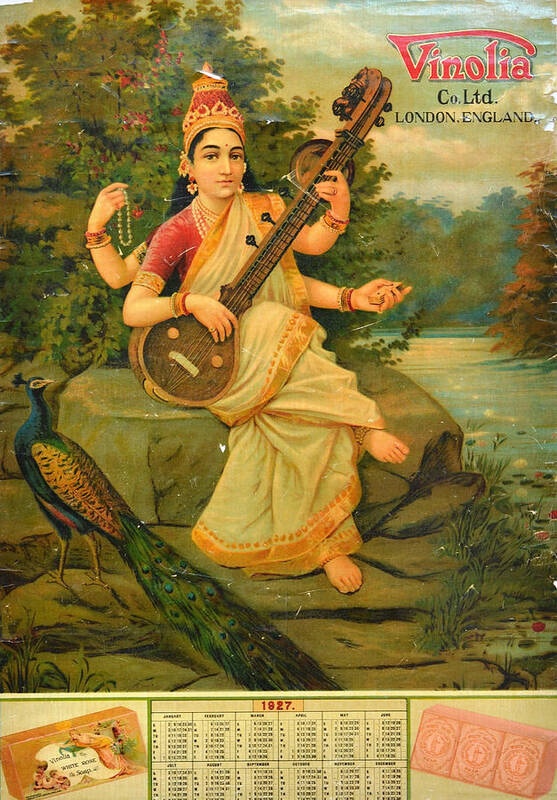
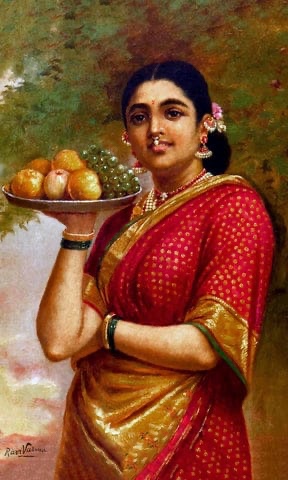
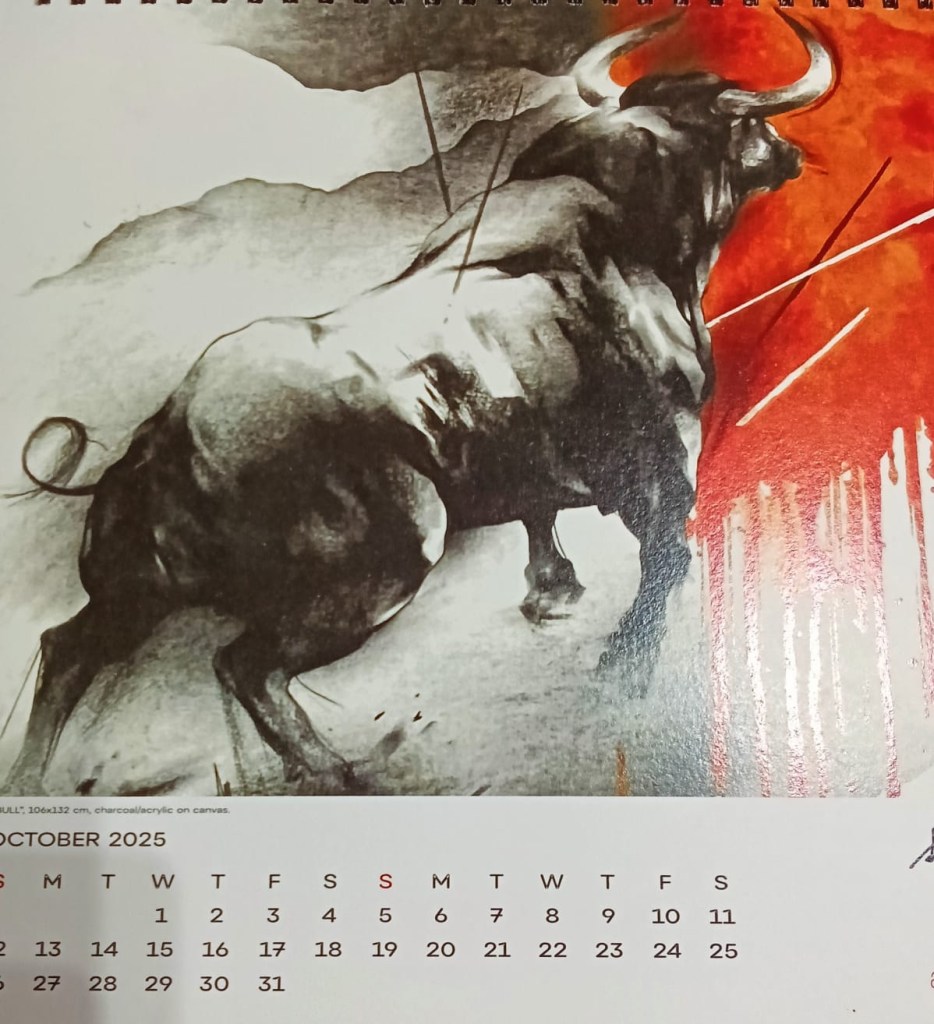

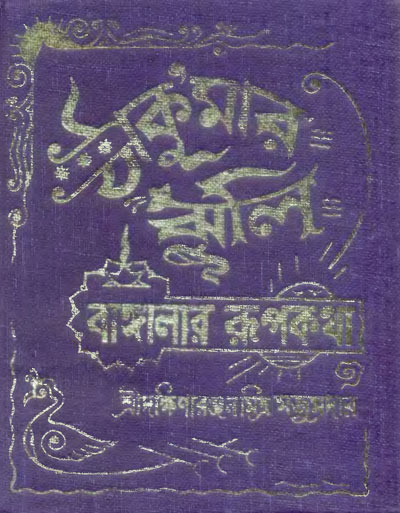
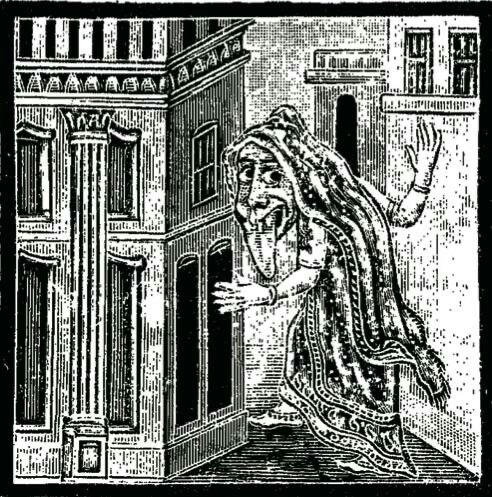

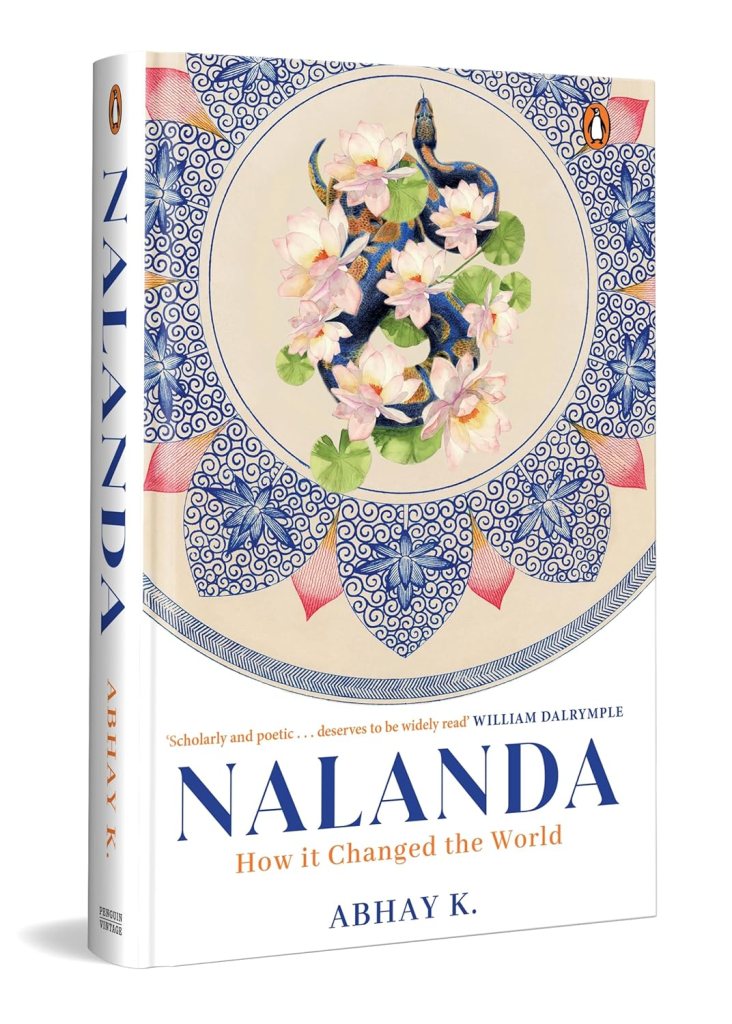
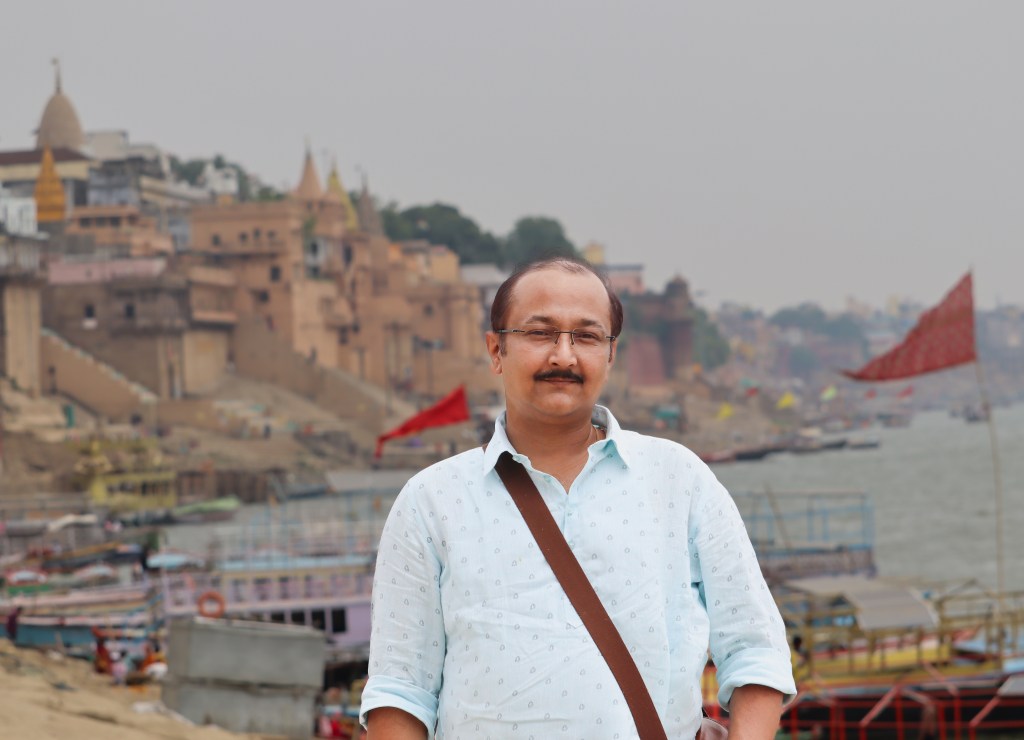


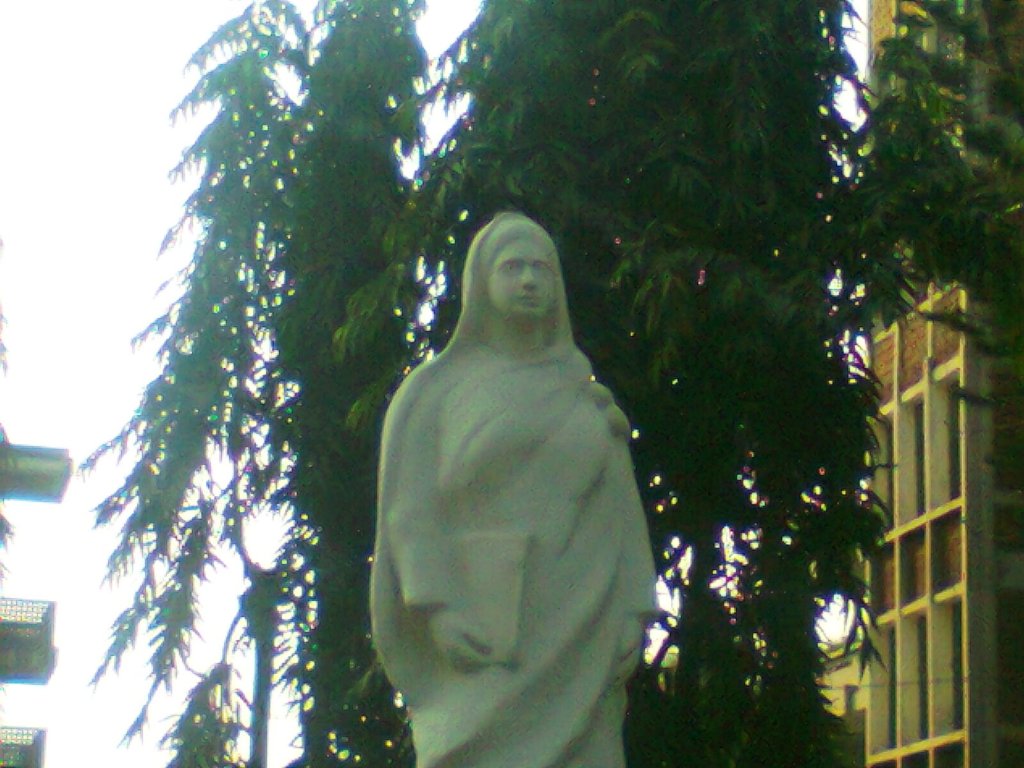
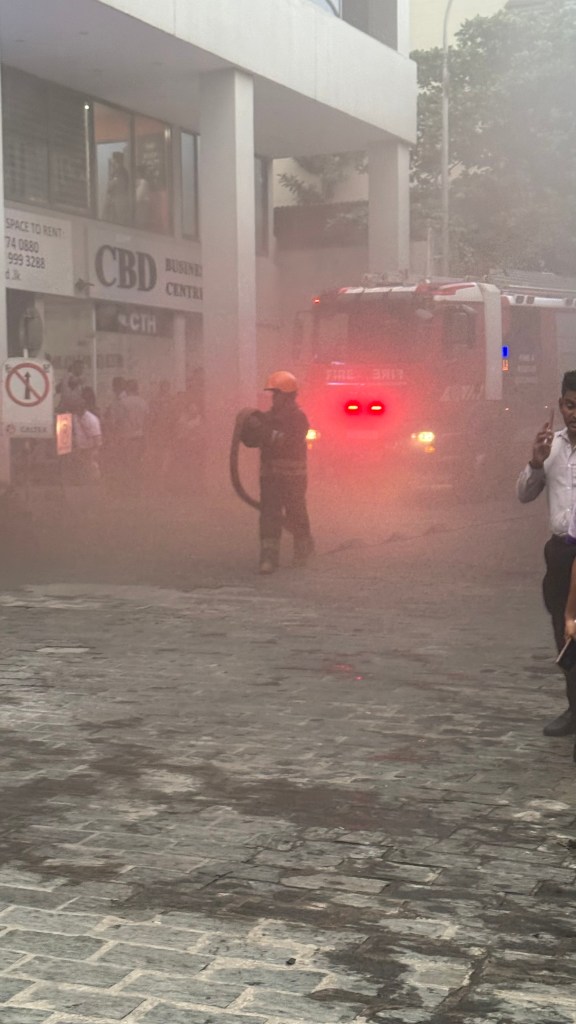
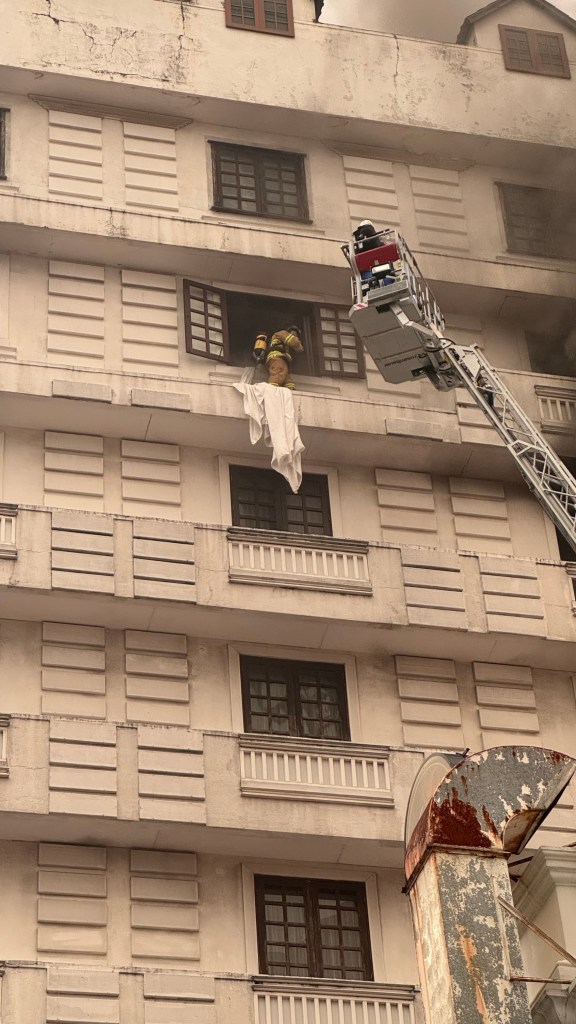
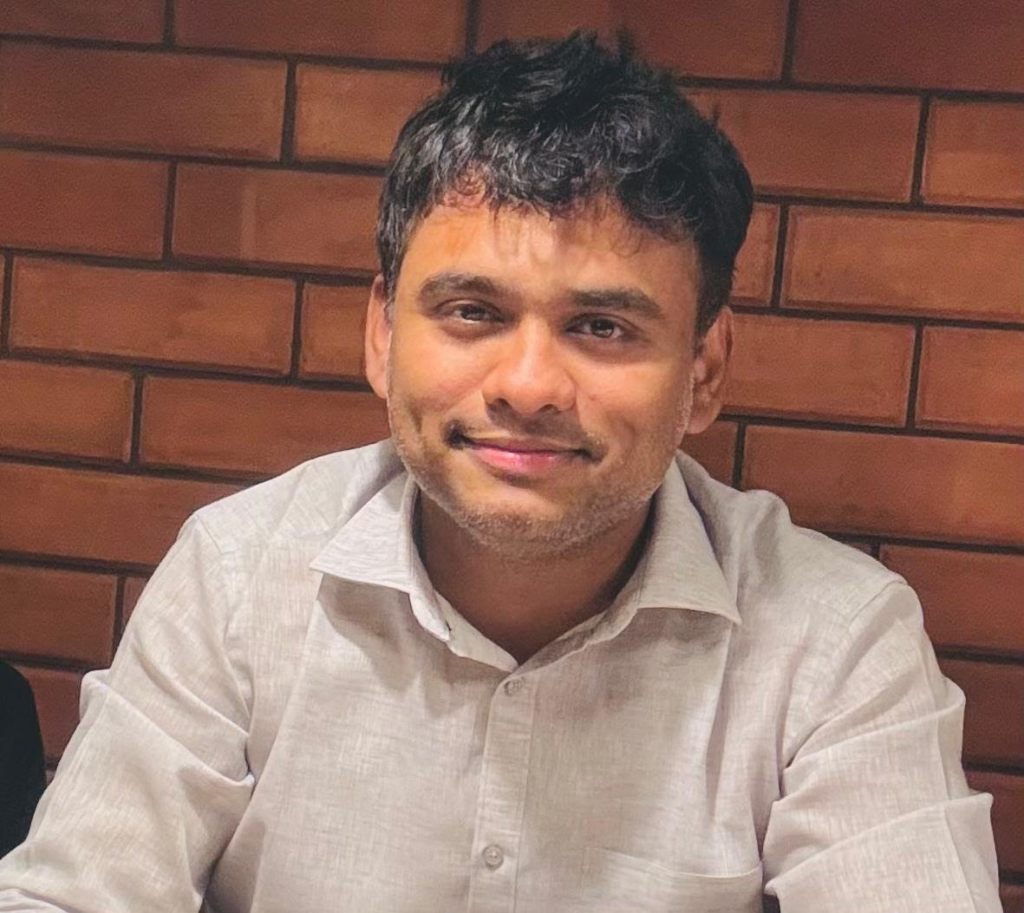
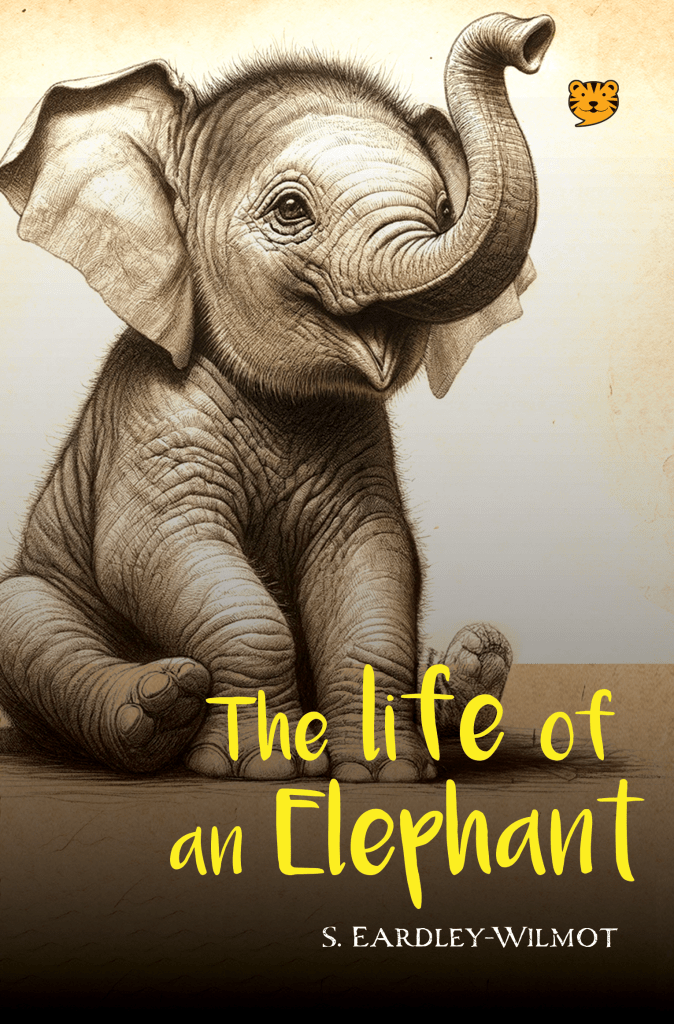
 Borderless