Title: The Collected Short Stories of Kazi Nazrul Islam
Editors: Syed Manzoorul Islam and Kaustav Chakraborty
Publisher: Orient Blackswan
He dons many mantles. Kazi Nazrul Islam (1899 – 1976), the national poet of Bangladesh, was a prolific Bengali poet, revolutionary, essayist, journalist, editor, activist and composer of songs. The very mention of his name conjures up the figure of a fiery iconoclast who fought against the structures of oppression and orthodoxy in society to bring about progress and change. In fact, his self-styled image as the volatile bidrohior ‘rebel poet’ overshadows his other literary achievements and that is how ordinary people still remember him.
This unique volume presents all twenty of Kazi Nazrul Islam’s short stories for the first time in English translation. Done by different hands, they feature rich imagery, evocative landscapes, references to music, classical poetry, folktales and more. The prominent characteristics of these stories are simplicity, vivacity and emotionality. They have been sourced from different anthologies. The first six stories are from the collection Harvest of Sorrow1. The opening story of the collection titled “Harvest of Sorrow”, is a collage of tales narrated by the three characters: Dara, Bedoura and Saiful Mulk. Dara, located in Iran’s Golestan, narrates his tale of love, separation and devotion to his motherland through a series of reminiscences. After that, we hear the same set of events narrated from Bedoura’s perspective. Then follows the account narrated by Saiful Mulk, portrayed as a sinner who tempted Bedoura into losing her virginity. Overcome by guilt, he joins the freedom struggle where he encounters Dara. What follows is a tale of redemption loss and transcendence of physical love to a more spiritual kind of love. “Hena”, the second story of the collection, is narrated by Sohrab, and its theme is also love and war – both internal and external battle. “In the Relentless Rain” is basically a story of love between strangers. The author doesn’t provide us the names of the lovers – rather both are addressed as dark-skinned. The next story, “Half Asleep”, is divided into two parts: Azhar’s story and Pari’s story. Azhar’s story is mainly about his sacrifices and why he favours detachment from the sensuousness. His renunciation of carnal pleasures towards attaining greater contentment ends his relationship with Pari, whose marriage he arranges with one of his friends. He ensures that Pari remains confined within the household structure. By making Pari assert that she will not betray her role as a loving wife without pretending to erase the love that she has for her former lover, Nazrul offers a critique of the conventional notion of ‘loyalty’ of wives to serve their husbands. The first-person narrator of “Insatiate Desire” soliloquizes on a saga of disunited love where the narrator falls in love with his childhood friend, feigns disinterest in her when her marriage is arranged to another man, and characterises his own actions as stemming from the most noble impulses. The final piece of the volume, “Letter from a Political Prisoner”, is an epistolary story of a political prisoner who has also been diagnosed with fatal tuberculosis. The story is addressed to the lady of his dreams, Manashi, who does not seem to have reciprocated his love.
The title story of the next section is from an anthology of the same name, The Agony of the Destitute2. The story centres around the glorification of war but in the process, it also raises questions related to war and gender. In sharp contrast to the narrator-protagonist of this narrative who detaches himself from domesticity to join the war, the protagonist of the very next story, “Autobiography of a Vagabond” suffers a tragic end to his domestic life and thereafter joins the army and eventually dies while fighting in Baghdad. “Meher Negar”, the third story of this section, is another tale of war and conflicts in love. Yusuf Khan, the protagonist, is a Pathan from the mountains of Waziristan who meets Meher Negar (whose actual name is Gulshan) after reaching a distant land to learn music. Later he joins the War of Independence for Afghanistan. Unable to forget her, he visits Meher Negar one last time only to discover that she is no more. As an allegorical piece of writing, “Evening Star” is about a man’s love for a distant beloved that is ultimately futile because of the probable demise of the beloved.
“Rakshasi” is written in the language spoken by the Bagdi community of the Birbhum district in West Bengal in which the speaker Bindi is a woman who complains to her friend about how society has stigmatized her as a demoness because she has killed her husband to save him from abandoning her and getting remarried to a notorious girl.“Salek” is a short moral story where, through a series of events, a dervish (later revealed to be Hafiz) shows an arrogant Kazi the path to salvation; the former becomes the latter’s salek or the one who shows the way. In “The Widow”, Begum, the narrator, speaks of her sorrowful youth, her happy married life and the miseries of her widowhood to her friend Salima. The story challenge multiple stereotypes that are often associated with the women of South Asia. The concluding tale of this volume is titled “The Restless Traveller” which is an impressionistic story centered round the urge towards finding freedom by restless youth.
The four stories that comprise the third volume of Nazrul’s stories and the next section, called The Shiuli Mala3, speak about Nazrul’s ecological sensitivity. The opening story “The Lotus-Cobras” is about Zohra and her human and non-human intimacies. As the editors rightly point out, “In the portrayal of Zohra’s attachment with her serpent sons, Nazrul seems to be very close to the essence of posthumanism where radical posthuman subjectivity is understood on the basis of an intersectional ethics of plurality”. “The King of the Djinns” is a tragicomic story about how Alla-Rakha, the protagonist, resorts to a series of tricks to get married to Chan Bhanu, the woman he desires. “The Volcano” deals with the disaster that is caused by the sudden eruption of repressed anger and egotistic pride in Sabur, the humble, helpful and uncomplaining protagonist of the story. It is a study of the anxiety of manliness. “The Shiuli Mala”, the concluding story of this section, is a testimony to Nazrul’s love for the trope of separated lovers or unrequited love. Set in Shillong, it primarily deals with a platonic and disunited love between Azhar, a well-known chess player, and Shiuli, the daughter of another brilliant chess player, Professor Chowdhury. Structured as a flashback, Azhar narrates the story to his friends who are part of a regular chess adda.
Two unanthologised stories end the collection. “Letter from a Lost Boy” is an epistolary account of a boy who writes to his mother about some incidents in his life that have occurred since he had left her until the time of his return. The story is a critique of child marriage and the consequent early widowhood that brings never-ending misery in the life of a woman. “The Hawk-Cuckoo from the Woods” tells the story of a marital discord between Dushasan Mitra and his wife Romola. Their friction widens after Romola becomes too attached to an injured hawk-cuckoo and her husband feels agitated by her gradual disconnect from their conjugal life. The story ends with Romola flaying her husband for throwing the bird away, finding and hugging the dying bird to her heart and plunging into the waters of the Padma.
All these twenty stories invite the reader to re-evaluate the ‘rebel poet’ as an empathetic humanitarian who also excelled in human relationships. Nazrul is essentially multilingual – he uses Hindi, Urdu, Arabic and Persian words along with Bangla. This book is the outcome of a project sponsored by the Nazrul Centre for Social and Cultural Studies, Kazi Nazrul University, Asansol, West Bengal. The volume is a transnational, collaborative labour of love bringing together the editors and translators from Bangladesh and India. Most of them are academics and have taken up the challenge to translate the stories, which in their infinite variety, is indeed a difficult task. The stories are accompanied by a timeline of Nazrul’s life and a detailed critical introduction that not only provides foundational context for the stories, but also highlights Nazrul’s attempt to counter majoritarianism and various hegemonies by dismantling hierarchies and celebrating intimate pluralities. In fact, at the end of their introduction, the editors Syed Manzoorul Islam and Kaustav Chakraborty ask two very pertinent questions. “In which category can we place Nazrul? Is there a need to formulate a different category altogether in order to position him?” The answers of course lie with the readers of the translated stories to decide. All said and done, this volume of short stories is strongly recommended for all classes of readers who are keen to discover the multi-faceted genius of Kazi Nazrul Islam and who could not earlier savour their uniqueness because they were only written in Bangla.
Byathar Daan (Harvest of Sorrows) published in March 1922 ↩︎
Rikter Bedon (Agony of the Destitute) published in January 1925 ↩︎
Shiuli Mala (Garland of Jasmines) published in October 1931 ↩︎
Somdatta Mandal, critic, academic and translator, is a former Professor of English at Visva-Bharati University, Santiniketan, India.
PLEASE NOTE: ARTICLES CAN ONLY BE REPRODUCED IN OTHER SITES WITH DUE ACKNOWLEDGEMENT TO BORDERLESS JOURNAL
I’m a cyclone, a whirlwind,
	I pommel all that lie in my path,
	I am a dance-driven swing,
I dance to my own beat, I’m a free spirit, high on life...

-- Kazi Nazrul Islam, Rebel or Bidrohi, translated by Prof Fakrul Alam.
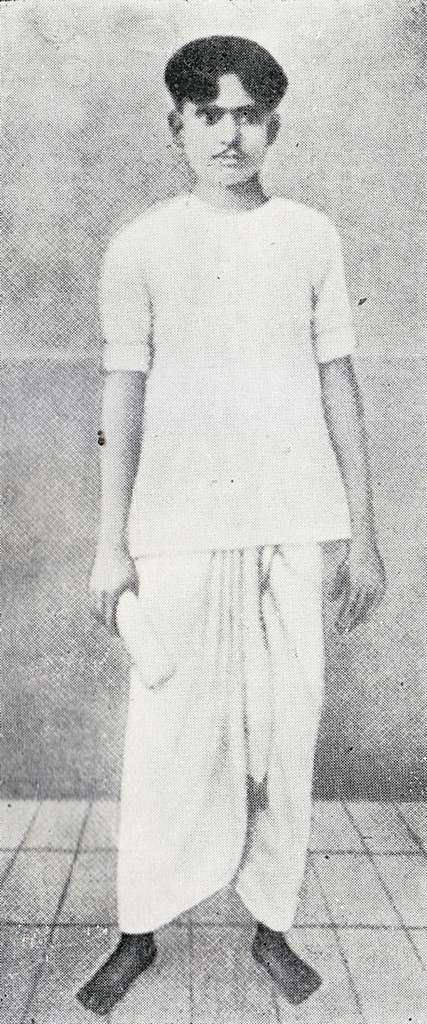
Young Nazrul
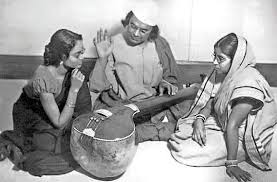
Nazrul’s writing has the power of whirlwind or a tornado — it can break with its force and make with love. His songs are a law unto themselves and called Nazrul geeti. And all this remains popular and still relevant more than a century after he was born.
Kazi Nazrul Islam (1899-1976) was born in Burdwan, a part of the Bengal Presidency that stretched from Bengal to Singapore during colonial times. Nazrul lived through the colonial rule, the independence of the subcontinent, the Partition and the creation of Bangladesh. He was multifaceted — he had tried his hand at soldiering and then settled for being a poet, writer, journalist, and musician. He is now regarded as the national poet of Bangladesh, the Bidrohi Kobi or the rebel poet.
Nazrul teaching Nazrul Geeti
Here, we have tried to gather flavours of his writing and life. We start with the translation of his lyrics (a Nazrul geeti) on butterflies, translated by Fakrul Alam performed by the legendary Feroza Begum, move on to his response to Tagore’s poetry — they had a vibrant relationship as Somdatta Mandal has reflected in her discussion on Radha Chakravarty’s recent translation of his Selected Essays. It’s followed by more translations of three of his poems by Niaz Zaman, who has also written about Nazrul’s support for women. A searing essay on religious divides and socio economic gaps, translated by Sohana Manzoor, also brings to focus the plight of a beggar woman torn by poverty. A short story , showcasing him as a fiction writer, is borne of his experiences as a soldier. Last but not the least, we have a fiery speech by Nazrul from Chakravarty’s translation.
On Nazrul’s 125th birth anniversary, we welcome you to muse on him and his world…
Poetry
Projapoti (Butterfly) by Nazrul has been translated by Fakrul Alam from Bengali. Click here to read.
Somdatta Mandal writes about Radha Chakravarty’s translation of Selected Essays: Kazi Nazrul Islam and in the process explores his life and times. Click here to read.
Shadows, a poem in Korean, has been translated by the poet himself, Ihlwha Choi. Click hereto read.
Pranor Lifeby Tagore has been translated from Bengali by Mitali Chakravarty. Click hereto read.
Conversations
Shantanu Ray Chaudhuri converses withVinta Nanda about the Shout, a documentary by Vinta Nanda that documents the position of women in Indian society against the backdrop of the #MeToo movement and centuries of oppression and injustice. Click here to read.
First published in the collection titled Baethar Daan (Offerings of Pain, 1922), Kazi Nazrul Islam’s short story, Hena, is set against the backdrop of the First World War where the writer himself had fought as a young soldier (1917-1919). It has been translated by Sohana Manzoorand brought out to commemorate Nazrul’s 124th Birth Anniversary.
Nazrul in British Army uniformBaethar Daan or Offerings of Pain book cover
A trench in Verdun,France
This must be what they call rain of fire! And the sounds! The roaring sound of the artillery! Not a speck of blue sky can be seen– as if the whole sky has been set on fire. The thick rain of fire that pours down from the exploding cannonballs and bombs is so intense that if those were real raindrops trickling out of the blue eyes of the sky, the entire world would have been flooded just in a day. And if these sounds that were louder and more intense than any thunderstorm, would continue like this, people’s eardrums would split, turning them deaf. Today, we the soldiers could only recall the song that is sung during Holi celebrations:
“We will play holi with swords today,
All the soldiers of the world are gathered here
Shields playing the trumpets, cannon balls the squirt pumps
Ammunitions are colourful, the battle is intense.”
It is very true that the ammunition has caused the sky and ground to turn completely red. The reddest are the congealed blood on the bayonetted chests of the unfortunate ones! No other colour but red! As soldiers fall one by one, each one a martyr, they lie on the ground, dressed in red like bridegrooms!
Agh! The worst of all is the smoky smell. It is enough to turn your stomach. Are not human beings the best of all creations? Then why have them killed in such ugly and terrifying ways? When the inanimate lead bullets, hit someone’s bones, they explode with a horrid force and tear through the flesh.
If human beings used their intelligence in more productive ways, they could have claimed a place close to the angels. Oh, and this heart-rending thirst! The friend lying next to you, his rifle slipping from his hand, cannot be awakened even if a thousand cannons roar by his ear. No general can ever make him obey his orders. After fighting for seven days at a stretch in this muddy trench he has finally fallen asleep. He is finally at peace! A rare touch of soothing contentment lingers on his cold and dry lips.
But I feel so thirsty. Let me take the water-bottle from his waist and take a sip! I haven’t had a drop since yesterday. No one cared to offer me a drink. Aah…! This one sip feels so sweet! My Lewis gun doesn’t work anymore. It grew tired after days of continuous shooting. I will take the gun of my deceased friend then. If his mother, sister or wife were present here, they would surely have taken his broken skull on their laps and cry their hearts out! Well, I guess, in a few minutes, a heavy shell will land in front of the trench and bury the two of us! It won’t be too bad actually!
It is really funny as I think of the women crying. All of us will die one day, what is there to weep? Death is an eternal truth — why should one grieve over something that is so normal and inevitable?
I am going through so much pain, after receiving so many wounds, but my heart is filled with a demonic joy! I cannot sketch this feeling with this wooden pencil! There is often a joy that lies asleep at the heart of extreme pain which we can’t really feel! And is this habit of writing something bad? I have been swimming in fire, with scores of dead bodies under my feet and bombs dropped from aircraft bursting over my head, artillery shells are exploding and rifle and machinegun bullets are zooming past, still, deep inside, I feel restless because I couldn’t write down my innermost thoughts in the past seven days! But today, I feel relieved that I could start writing again!
Let me rest for a while, leaning against my dead friend. Ah, it feels so good!…
An unknown young girl of this distant land across the sea gave me some pickles and two slices of bread with butter which I haven’t had time to eat… The women of this country look at us with affection and pity! . . . . Ha ha ha, look at the bread here—these are dry and seem roasted! Let’s see if the bread is tougher than my teeth. I have no other option but to eat these — I am so hungry. The pickle is still quite fresh though!
That girl who was thirteen or fourteen (in our country, she would be wedded by now, if not already a mother), put her hands around my neck and kissed me. She said, “Brother, you must drive the enemy out with full force.” I broke into a pure, sad smile.
Ah! I can finally see the sky. A strip of blue sky can be seen behind the mass of heavy clouds. It is so beautiful– like a pair of blue eyes filled with tears! Anyway, I will write down my other thoughts later. The spirit of my dead friend must be mad at me by now. What, my friend, you want a drop of water? See, how he is staring at me! No, my friend, I tell you your beloved is waiting for you with a glass of lemonade in the other world. I would not want to disappoint her, would I?
Ah, I seem to remember so many things today. But no! There’s nothing to remember! These are all lies. Let me pick up the Lewis gun and start shooting. I see some of those who are helping me have stolen a nap!
But there, I can hear the sound of footsteps. They are all marching– left-right-left. That sound is so melodious! Are they coming to relieve us from duty?
Ouch! A moment of distraction has allowed a bullet to bruise my arm! Let me dress it. I hate those nurses. If a woman cares for me without loving me, why should I accept it? Ah! A war shows how killing others can be addictive.
The man who has fallen beside me is far stronger and healthier than me! But I have also seen how one’s mind has more strength than one’s body.
This Lewis gun is shooting about six to seven hundred rounds per minute. If only I could know how many I have killed! But the two Lewis guns here are keeping the enemies confined to their position. You can hear the loud groans of the enemies as they die in droves! The beauty of such youthful deaths is boundless!
A tent at the river Seine, France
I slept for all forty-eight hours of the last two days. And now I have to get dressed for battle and go out to destroy God’s creatures once again. The killing game is the right kind of activity for stone-hearted person like me.
Today that kind girl took me to visit her house… How clean and pretty are the houses here! The girl has clearly fallen in love with me. And I, too, have begun to love her… In our country, people would have said that the girl has gone bad… They would not have liked to see a young girl going out with a young man of twenty or twenty-one.
People look at love in such ugly ways these days! Are these human beings, or vultures? There is so much sin in the world! How did the people become so petty? The sky above is so vast and blue, but beneath the same sky human beings are so mean and narrow-minded!
Fire, you keep raining down! Let the curse of God float downward like frozen chunks of ice… Oh the horn of Israfil[1]! Do blow and immobilize the world! Oh, the thunder of destruction, strike inside the human brains, like the bombs and the artillery shells. And let the entire sky fall on the heads of those people who slander love, and blight the flowers…
If I could dress up one of my countrymen the way I am dressed now, and pushed him down, I am sure he wouldn’t be able to get up, no matter how hard he tried. I am highly amused at my bulky and sluggish appearance.
A ‘wicked’ friend once commented “What pleasing looks!” What a weird adjective! And another one is supposed have said, “The bullock looks like a katla fish!”
A thick forest near Paris, France
All on a sudden, we were sent to this dense forest yesterday. I have no clue why we had to fall back. This is the beauty of military life—an order is given and you are told “Get it done!” You can never ask “Why do I have to do this,” or ask for an explanation. It’s an order –that’s all!”
If I say, “I am going to die,” a stern voice will reply, “As long as you breathe, keep on doing what you are doing, if you fall dead on your right foot while you are marching, let your left foot keep up the pace!”
There is a strange beauty in obeying orders with blind obedience! What tenderness it is that lies at the heart of a thunder! If the entire world could come under one (and only) such military regime, then it would turn out so beautiful that even calling it a heaven on earth would not be enough.
The British nation is so great now because of the discipline they exercise on everything they do. They walk so tall that we can never see the crown of their heads no matter how hard we crane our necks — and let our headgears fall off while doing that! To speak frankly, their empire is like a huge clock that is always correct and faultless. Its two hands run in precision. The clock is oiled every day so there is no speck of rust anywhere.
We were the ones who chased the Germans to the Hindenburg Line and then we had to retreat so far! Only the maker of the clock knows which hand has to move at what pace, but the hands don’t know anything about it. But the hands have to keep ticking because these are continuously driven by a spring from the rear.
We badly need a disciplined, clockwork system like this. This reckless nation of ours really needs to be tied up and disciplined; otherwise, there is no hope of it rising anytime in future! If everybody wants to be the leader, who will do the work?
Oh, the artillery shells raining on us even at this distance! This is really uncanny… The war is being fought so far away but cannon-balls are dropping on us in the forest!
Well, an elephant might think that it is the biggest animal in the world. But even a mosquito can cause it enough trouble through a single bite in its head.
It’s cool in this shady darkness here. How my heart had been yearning for this solace in darkness.
Alas! Darkness seems to trigger in my mind so many fond memories! But, no, let me just climb up the tree and see if any enemy is hiding nearby.
How charming that distant ice-covered river looks from the tree! But there are also some big houses around which shells have torn through, leaving ugly gaping holes! This game of destruction reminds me of my childhood when we used to build clay doll’s houses. After we were done with our play, we used to crush them with our feet and sing:
“We made them gleefully with our hands
We broke them gleefully with our feet!”
The cannon-balls are flying through the air and dropping on distant planes, and from my vantage point, they look like falling stars.
And the sound these fighter planes are making! Oh! The way they are climbing and diving– it looks as if an expert kite flier is maneuvering his fighter-kite to hurtle through the sky in search of a rival. That plane is ours! The German zeppelins look from a distant more like big, flying caterpillars.
Anyway, let me get a bit of pickle out of my haversack. That foreign girl is so far away from me today but the pickle seems to retain her touch! Hell! What am I doing? Why do I keep on thinking of all this gibberish? I don’t need the pain that arises from nowhere and tortures me!
Well, well! What do I see there? A friend of mine is trying to take a nap on that tree. See, he has tied himself with his belt to a branch quite tightly. If he somehow falls in the water below, it will be quite a hassle for him! But then why not? Oh God, let him fall!
Should I shoot a bullet past his ear? Ah, no! Poor thing! Let him sleep awhile. Nobody except me has such hapless eyes that sleep never touches, or a blasted mind like mine which gets sick thinking about the goings on in the world. It’s night – quite deep into the night, I guess! I will have to stay here in this crouching position till dawn…. Perhaps when I am old (if I live that long), the trials I am going through will turn into sweet memories.
The light of the moon, which will turn into a full moon tomorrow night, is creating patterns of light and shadow in the forest below, which make the forest look like a giant cheetah! The heavy, dark clouds over my head are slowly drifting towards some unknown destination. A few drops of cool water fall on my head. Ah, how sad these drops feel! Ah!
The moon is now hidden by a cloud, and now it shoots out and hides behind another cloud! It seems like a game of peekaboo played by beauties living in the glass palace of a king. Who is running in the sky now? The clouds or the moon? I would say the clouds but a simple child might say the moon. Who is right? Aha! How lovely is the play of light and shadow!
What’s that bird cooing in the distance? The delicate tones of the bird songs of this country seem to evoke a sweet laziness… I find them intoxicating.
In this light and shadow, I remember so many things! But the memory is so full of pain.
I recall telling her, “I love you so much, Hena.”
Hena shook her raven black silky hair and replied, “But Sohrab, I haven’t been able to love you.”
That day, the bright saffron flowers seemed to be playing a game to welcome the new day in the garden of Balochistan. Unmindfully, I broke a branch of walnut and collected some flowers from the deodar tree and threw them at her feet.
A few drops of tears trickled down her dark eyes lined with Istanbul kohl! Her face turned redder than her henna dyed hands!
I picked up a bunch of raw plums and threw them at the nightingale sitting in bush of screw pine flowers. The birds stopped singing and few away.
What Human beings think is the closest turns out to be the farthest from them! This is indeed a profound mystery! Hena! Oh Hena! There’s just so much regret…!
Hindenburg Line
Oh! What is this place? I cannot believe that this is an underground land of fairies and monsters! Can a trench built during the wartimes be really as huge as a city full of houses? Who could have imagined this? What a gigantic venture so deep down underground! This is indeed another wonder of the world! One can live as luxuriously as the Nabobs of Bengal in this place!
But I did not come here for the peace it offers! I did not ask for comfort. I only wanted pain and suffering. I am not made for enjoyment and comfort! I would have to seek out another path then. It seems like I found a house under the tamarind tree in trying to escape from tasting sour things.
No, I need to be active. I want to drown myself in work. But this life of comfort here is embarrassing!
I heard that iron turns into steel when it burns in fire. What about human beings? Only ‘baptised’?
Being freed of restraints, my mind has fled again to that room full of grapes and pomegranates! I recall those days again!
“Hena, I’m about to jump into the fire that burns in a free country. I am burning inside, so let my body burn too! Maybe, I will never return. But what means do I have? How do I find travel expenses? How will I live in the foreign land?”
Hena’s henna-dyed fingers trembled like young shoots in my hands. She replied in a clear voice, “But that’s not how your life becomes meaningful, Sohrab! This is only the hot-headed youthfulness! You’re clinging to a lie! There is still time for you to get the message!… See I’ve not been able to love you yet.”
All is empty. Nothing remains. A gusty wind blew through the thick tamarisk trees and cried, “Ah!… Ah!… Ah! When the first battalion of our Baloch Regiment 127 started off for this country from Quetta, one of my friends, a young Bengali doctor, sang while sitting under a pear tree:
“How will you make him return
The one you bade farewell in tears.
In this languid air
At night in the garden
Have you recalled him under the bakul tree?
How will you make him return!
The honeymoon of the full moon
Returns from time to time,
But the one who has gone, does not come back!
Now how will you make him return?”
How weak I am! No wonder I did not want to come to this place. What would I do in this palatial life? Fellows of my regiment think there is no one as carefree and happy as I am. It’s because I laugh a lot. Does anybody know how much blood is hidden in the heart of the henna leaves?
I played “Home sweet home” on the piano and sang along so beautifully that the French were amazed! It was as if we are not human beings and so we cannot do anything as well as them! We have to break such preconceived notions.
Hindenburg Line
What else can I do if there’s no work? I have to find something to do. So last night I crawled for about a couple of miles and cut through much of their wires. Nobody seemed to notice.
My commanding officer said, “You’ll be rewarded for this.”
So, I became a corporal today.
The other day, I met that foreign girl too. She has grown much prettier in these two years! She told me directly that if I had no objection, she would like to have me as her partner! I told her, “That’s impossible!”
I said to myself, “A blind man loses his staff only once. Again? No way. I have had enough.”
The way her blue eyes filled with tears and her bosom heaved made a stone-hearted person like me cry!
She controlled herself and said, “But you’ll allow me to love you? Like a brother at least…?”
I am just a god forsaken wayfarer. So, I showed a lot of interest and replied, “Of course.” Then she left bidding me adieu. She never came back! I can only recall that line, “But the one who has gone does not come back.” Oh!
Anyway, the day was well-spent with the Gurkhas. These Gurkhas were really like big babies. I would not have believed that grown men could be so naive and innocent. These Gurkhas and their brothers-in-law, the Garwhals– both turn into killing machines in the battle field! Each of them turns into a tiger, a “Sher-e-Babbar.” Even the Germans throw away their rifles and run off at the sight of their kukri knives. If these two fighter groups did not exist, we would never be able to achieve this much. Only a handful of them are still alive. Entire regiments of them have perished. Yet, the few of them that are still alive are so full of life, as if nothing has happened!
Nobody can make them understand what great feat they have achieved. And those tall and sturdy Sikhs—what betrayers they have turned out to be! Some shot themselves in the arm and ended up at the hospital.
Look there! There is a battalion ‘march’ going on in the trench. We are marching at the beat of a French band! Left- right-left. A thousand people are all marching at the same pace– all at once. How amazing!
Balochistan
My cottage in Quetta
In the grapevine garden
What happened? I am trying to find out an answer to the question, sitting in this walnut and pear garden. All our Indian soldiers have returned home, and so have I. But how happily did those two years pass by!
I am looking at the blue sky washed by rain, which reminds me of the wide blue eyes of the young French woman. Looking at the mountain-yaks I remember her silky curly hair. And those ripe grapes– aren’t they exactly like the sparkling tears of her eyes?
After becoming an ‘officer’ I also received the title “Sardar Bahadur.” My boss would not let go of me. How could I make him understand that I was not there to form a permanent bond? I did not cross the seas with any high ideals. I only went to purify myself in fire — to hide myself too.
And I never thought I would return here of all places. But I had to– it seems I am tied to this land!
I have no one, I have nothing. And yet I feel, everything is here. Who am I trying to comfort?
I have not hurt anybody; nobody hurt me. Then why was I reluctant to come here? But that’s a matter of unspeakable agony. I can’t articulate it well enough. Hena! Oh! There’s nobody around, still the wind carries the broken echo “na…na”. “No” it is then!
The brook still flows through the hill; only the girl Hena, whose footprints are still etched on the stone-steps, is no longer there. There are so many things lying around that remind me of her soft touch.
Hena! Hena! Hena! Again that echo! Na –Na- Na!
***
I have found her! She is — here. Hena! My Hena! I saw you here today, here in Peshawar! Why do you keep hiding the truth behind those lies? She watched me from a distance and cried. She did not utter a word; she only looked at me and shed tears.
In such meetings, tears are the most articulate language of the heart. She told me again that she could not bring herself to love me. The moment she uttered the word “no” she cried so dejectedly that even the morning air became mournful!
The biggest puzzle in this world is the mind of a woman!
Kabul
Dakka camp
When I heard that the great man Ameer Habibullah Khan had been martyred, I felt that the top of the Hindukush had collapsed! And Suleiman Mountain must have been torn out of its base!
And I wondered what I should do. For ten days, I kept on thinking. It was no easy task!
I decided that I would fight for Ameer. Why? Well, there’s no answer to that question. But let me say candidly that I do not consider the British as my enemy. I have always thought of them as my best friends. But even if I say the reason for my joining the war this time was to protect the weak, even if it meant sacrificing my life, it won’t be quite the right answer. Even I do not understand my own whims!
That morning, someone seemed to have set fire to the pomegranates. They looked bright red! That was perhaps the blood from the hearts of many like me!
The vast sky had just paused after crying incessantly. Its eyes are still misty, so it would start crying again. A broken-hearted cuckoo had also been weeping somewhere, turning its eyes red and its voice rang through the damp winds of the autumnal morning. Someone on the other side of the dried river was playing the Asawari raga[2]on the shehnai. Its notes echoed the doleful cries of a lonely heart. I felt the sadness more than anyone else. The strong smell of henna flowers intoxicated me.
I said, “Hena, I am going to war again, to fight for the Ameer. I won’t come back. Even if I live, I won’t come back.”
Hena buried herself in my chest and cried, “Sohrab, my love! Yes, go wherever you will. Now is the time to tell you how much I love you. I won’t hide the truth anymore. I won’t cause my love further pain….”
I understood. She was a warrior-woman, a daughter of the Afghans. Even though being an Afghan myself I have spent my entire life fighting, she had wanted me to sacrifice my life at the feet of our country. She wanted me to sacrifice my life for our land.
O, the heart of a woman! How could you hide yourself like this? What perseverance! How could such a soft-hearted woman be so tough at the same time?
Kabul
My body has taken five bullets. But until the moment I lost consciousness, I had defended my soldiers with all my strength!
O my God! If protecting my country with my blood makes me a martyr, then I am a martyr.
I came back. Hena followed me like a shadow. How could she hold back so much love that flowed like a rapid tumbling uncontrollably down the mountain with her fragile ribcage!
The Ameer has given me a place in his court. I am one of the commanders of his army.
And Hena? There is Hena, sleeping by my side, clinging to my chest…. Her heart is still fluttering with some unknown fear. Her sighs are still pervading the winds with some dissatisfaction.
The poor girl has also been badly wounded like me! Let her sleep. No, we’ll sleep together. O God — don’t give us any more pain by waking us up from this pleasurable sleep! Hena! Hena! –na—na—Ah!
.
[1] The angel who blows the trumpet on the day of judgement in Islam.
[2] A morning raga or melodic composition in the Hindustani classical tradition.
.
Kazi Nazrul Islam(1899-1976) was born in united Bengal, long before the Partition. Known as the Bidrohi Kobi, or “rebel poet”. Nazrul is now regarded as the national poet of Bangladesh though he continues a revered name in the Indian subcontinent. In addition to his prose and poetry, Nazrul wrote about 4000 songs.
Sohana Manzoor is an Associate Professor at the Department of English and Humanities at ULAB, a short story writer, a translator, an essayist and an artist.
PLEASE NOTE: ARTICLES CAN ONLY BE REPRODUCED IN OTHER SITES WITH DUE ACKNOWLEDGEMENT TO BORDERLESS JOURNAL




 Borderless